Focale
The focale was a neck wrapping or scarf. In Roman military dress, cloth at the neck of armour could reduce chafing; it could also provide warmth. The word did not refer exclusively to military equipment.
Quintilian mentions neck wrappings when discussing an orator’s appearance, allowing them on grounds of ill health. This concerns public speaking, not army regulations. Reliefs show cloth tied at the front or partly concealed by clothing and armour. They do not establish a compulsory width or tying method.
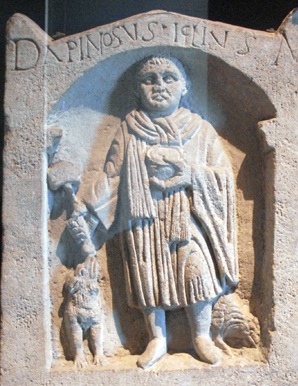 Roman funerary relief showing a craftsman wearing a neck scarf. Nièvre, France; inv. 52733. Second century CE.
 Funerary monument of the auxiliary standard-bearer Tiberius Iulius Pancuius, with a neck scarf. Lusitanian cohort; Neuss-Grimlinghausen. Inv. R 5017; first–second century CE.
 Auxiliary soldiers with neck scarves. Trajan’s Column, early second century CE.
A small rectangular textile fragment is difficult to identify securely as a focale. Study is not limited to images, however: ancient texts help establish the word’s meaning and contexts of use. Width, fibre and the parts concealed beneath armour often remain unknown.
Cloth visible at the neck does not prove that it formed a thick shoulder pad or carried the armour’s weight. That is a separate hypothesis, not something established by the visible edge of a scarf alone.
Reconstruction
Choose soft cloth and test it together with the tunic and armour. Wool and linen are possible materials, but an image usually does not distinguish between them. Size should suit the intended arrangement.
The cloth must not restrict head movement or breathing. Reproduce a knot, brooch or fringe from a particular example; do not automatically add a metal fastening where armour presses against the neck. Practical protection from chafing should be distinguished from a claim about compulsory historical equipment.
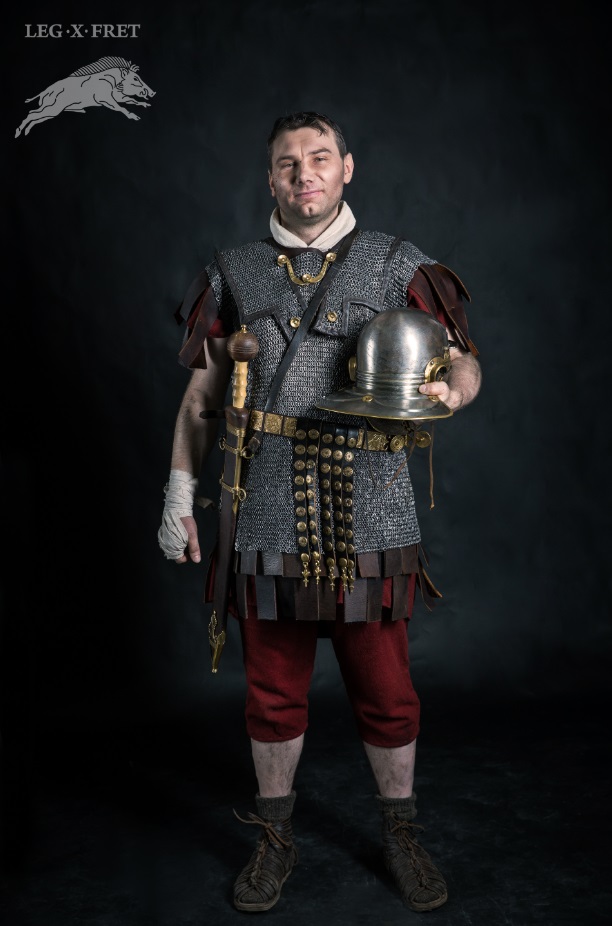 Modern reconstruction of a legionary wearing mail armour and a focale.
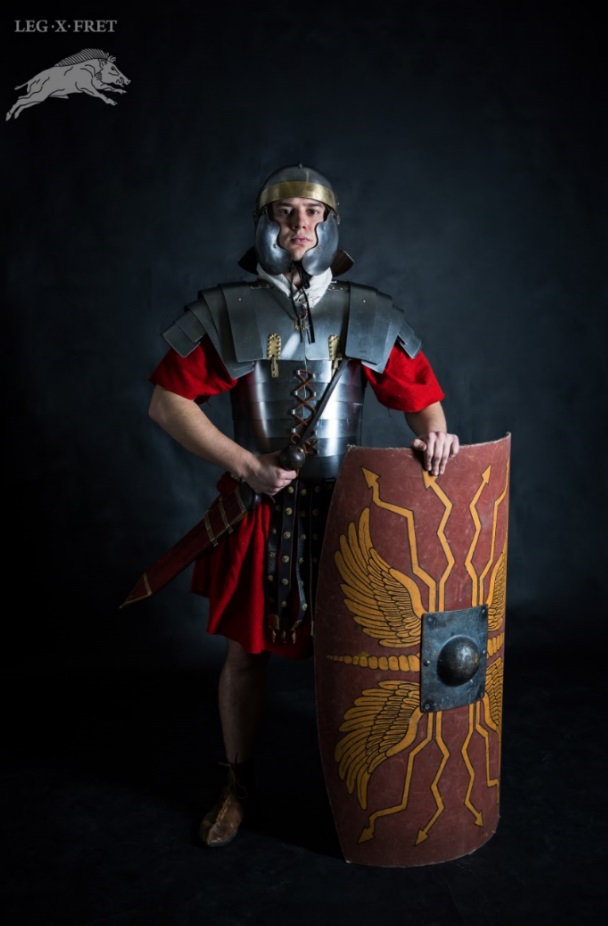 Modern reconstruction of a legionary wearing segmented armour and a focale.
 Modern reconstruction of an auxiliary wearing mail armour and a focale.
Related topics
Legionary · Auxilia · Brooch · Tunic · Subarmalis
Literature and sources
- Quintilian. Institutio Oratoria, 11.3.144.
- Graham Sumner. Roman Military Dress. 2009.
Interested in Ancient Rome beyond reading? Join Legio X Fretensis or explore our reenactment directions.


