Hetaera
Lupana is a Latin term connected with prostitution and the lupanarium, but it should be distinguished from the Greek hetaera. In Greek contexts a hetaera could be an educated companion involved in cultural life, while Roman terms such as meretrix, lupana and scortum described different shades of sex work and social status.
In brief:
- lupana is linked with lupanaria and Roman prostitution;
- hetaera is a Greek term with a different cultural context;
- meaning depends on period, language and a woman's status.
Hetaera (Greek ἑταίρα, "companion") designated a female companion in Greek settings, often associated with paid relationships and participation in male drinking parties. Some famous hetaerae were known for education or independence, but these qualities should not be attributed to every woman described by the term. Status varied with period, city and whether the woman was free or enslaved.
Greek hetaera should be distinguished from Latin terms for prostitution. Meretrix and lupa belong to Roman vocabulary, while lupanar denotes a brothel; these are not interchangeable labels for one social category.
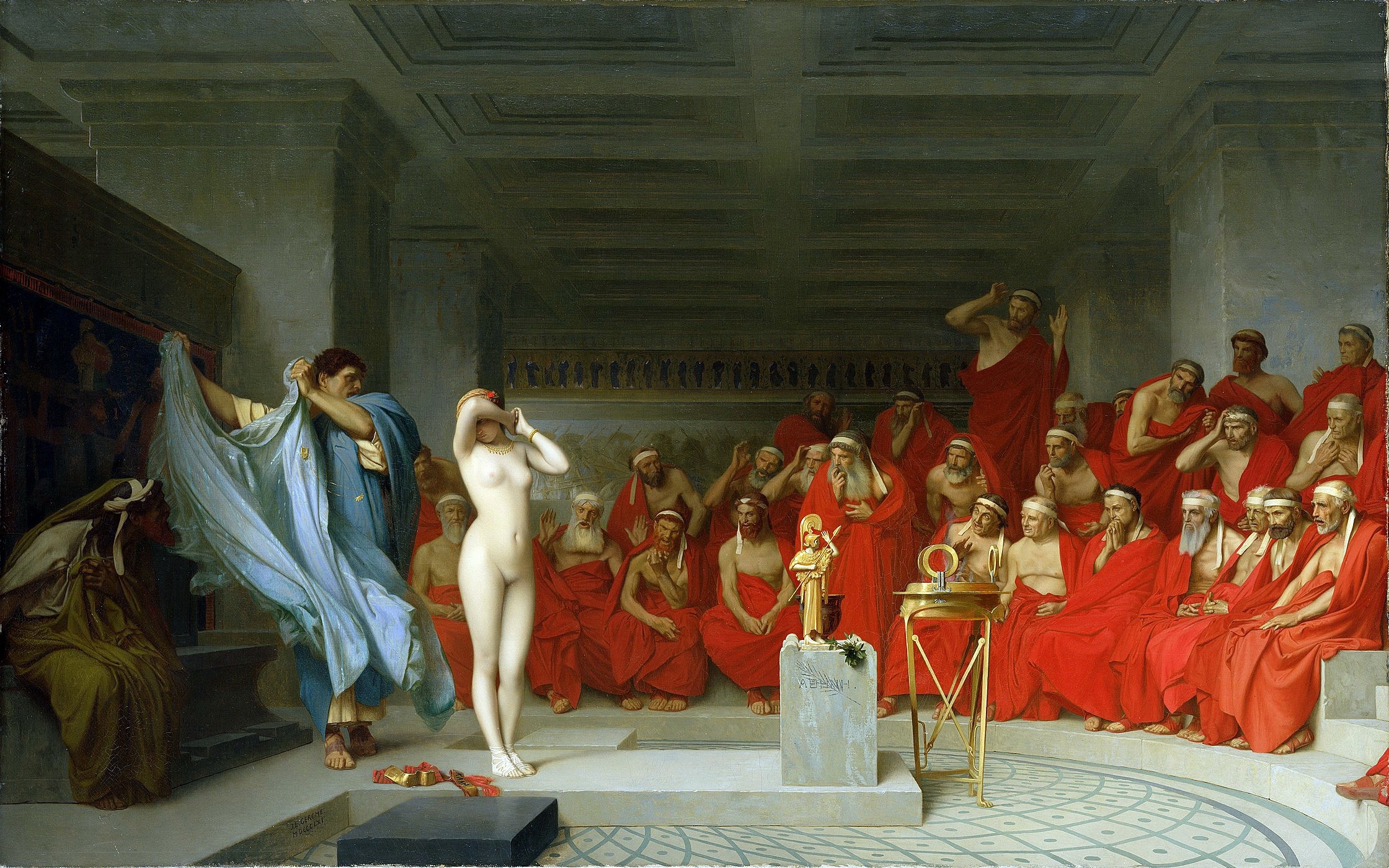 "Phryne's Hetaera before the Areopagus". Painting by J.-L. Jerome. Kunsthalle,Hamburg,1861,
Evidence about hetaerae often comes from male rhetoric, comedy and later biographical accounts. These express social attitudes rather than neutral statistics. Women could be free, freed or enslaved, and a relationship with a patron was not necessarily freely chosen.
The familiar contrast between hetaerae, concubines and wives occurs in Against Neaera, preserved in the Demosthenic corpus. It is a courtroom argument, not a universal description of Greek households. Aspasia is associated with Pericles, but her position should not be described as an ordinary lawful Athenian marriage.
 Hetaera Phryne. 4th century BC
 Hetaera Aspasia. 5th century BC
 Hetaera dancing at a symposium. 5th-3rd century BC
FAQ
Are lupana and hetaera the same thing? No. Hetaera is a Greek term with the cultural nuance of an educated companion, while lupana belongs to the Roman context of prostitution.
What was a lupanarium? A lupanarium was a Roman brothel; the name is connected with the Latin image of lupa and words for prostitution.
Why distinguish the terms? They belong to different languages and social contexts, so direct translation can distort the meaning.
Related topics
Literature and sources
Interested in Ancient Rome beyond reading? Join Legio X Fretensis or explore our reenactment directions.


