Tessera
Tessera is a Latin term with several meanings: a token, gaming piece, sign of admission or tablet carrying a short inscription. It is not a single archaeological category. A military watchword tablet, civic token and mosaic cube share a name, not a function.
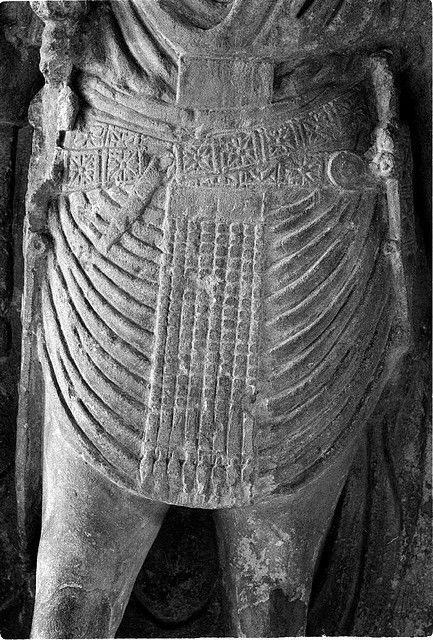 Detail of the tombstone of Annaius Daverzus of Cohors IIII Delmatarum; first century CE. The belt details cannot securely be identified as military watchword tablets.
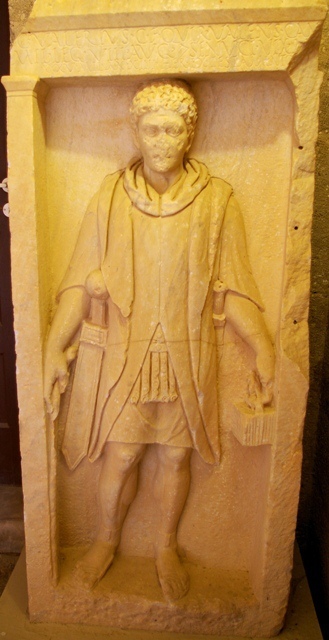 Tombstone of Gaius Valerius Valens, centurion of Legio VIII Augusta; first century CE. Archaeological Museum, Corinth. The hanging belt details are not proven tesserae.
 Detail of the tombstone of Oclatius, signifer of the ala Afrorum, Neuss; first century CE. The relief depicts a standard bearer but does not establish that he carried a set of watchword tablets.
Meanings of the word tessera
Material, inscription, numeral, image and findspot help establish a tessera’s function. A coin-like shape does not make a token state currency. An ordinary wax tablet likewise does not become a tessera simply because it carries a short note.
Army, city and accounting
Polybius (VI.34.7–12) describes a nightly watchword written on a wooden tablet, passed along a chain and returned to the tribune so that its circulation could be checked. This is specific evidence for the Republican army. The term is related to the office of tesserarius, but Polybius alone does not establish the full procedure of later Imperial service.
Archaeological forms and contexts
Urban tokens could serve admission, distributions or games, but many examples remain disputed. Bone and ivory pieces bearing names and numerals are sometimes identified as gaming tesserae; theatre ticket should not be a blanket label. Palmyrene clay banqueting tesserae form a separate tradition associated with local religious life.
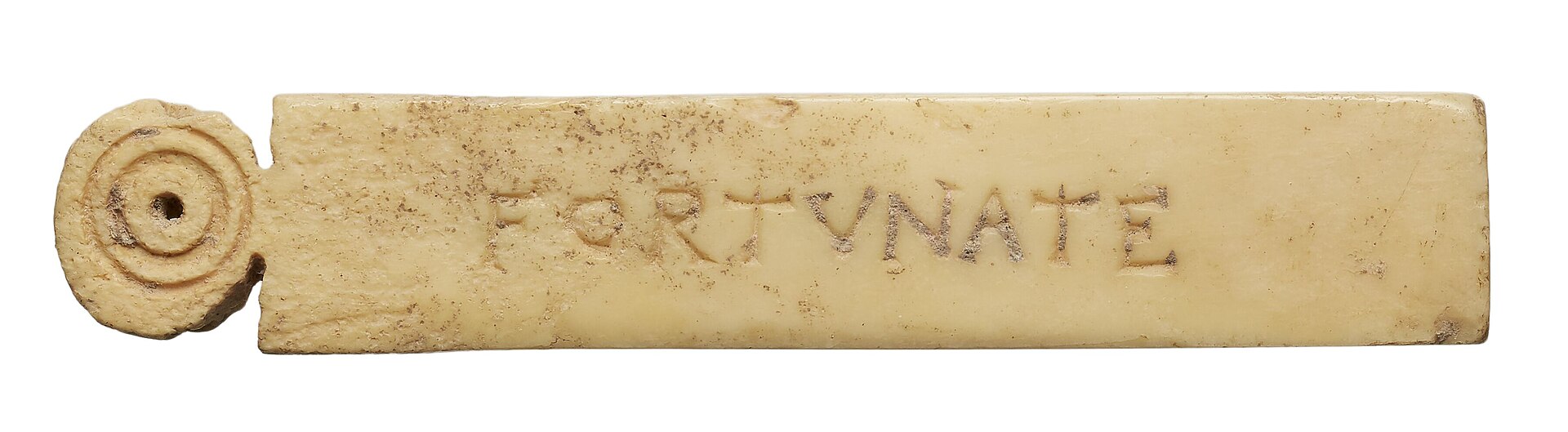 Bone tessera lusoria with inscription and numeral: obverse. BnF/Gallica, public domain.
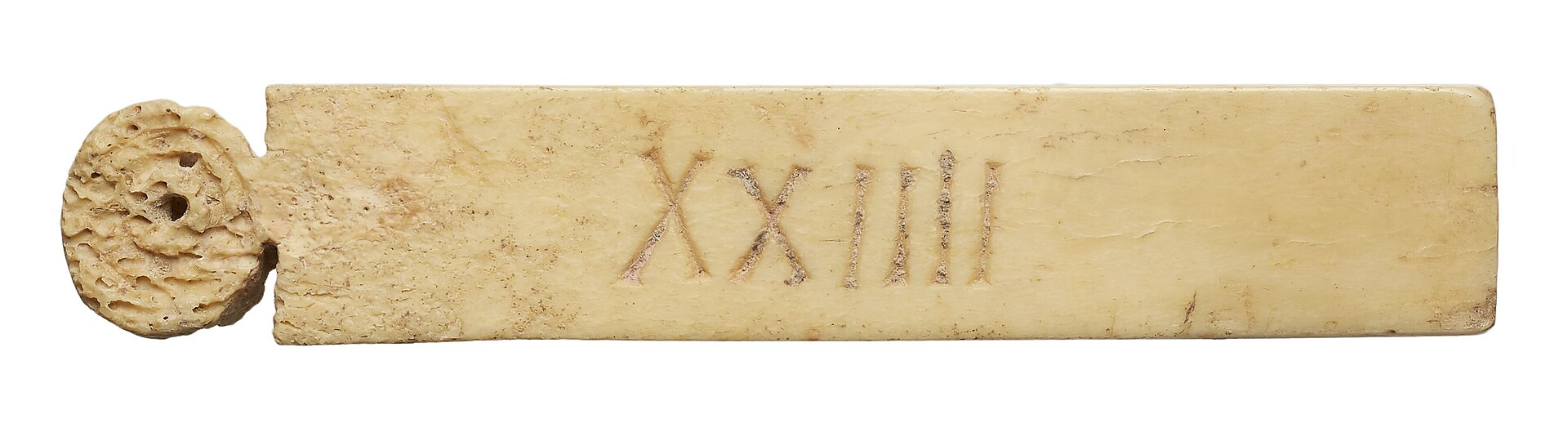 The same bone tessera lusoria: reverse. Such objects are usually linked with gaming or counting, but their function is debated.
Materials and manufacture
Lead and copper alloys allowed tokens to be cast with repeated designs. Bone and ivory could be inscribed with words and numerals. A wooden watchword tablet used a different technique. Material helps narrow an interpretation without establishing function independently of inscription and context.
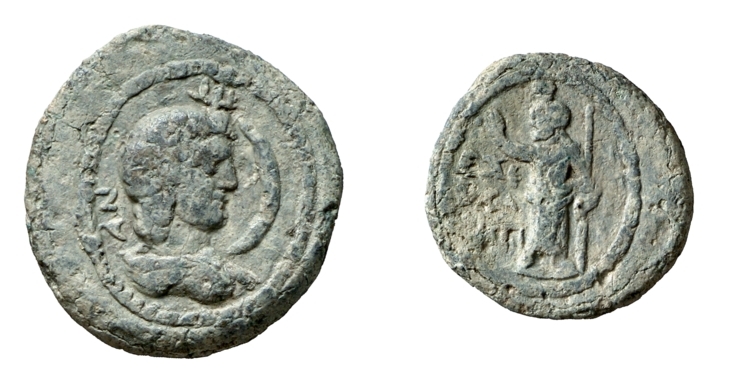 Lead tessera from Hadrianic Alexandria: an example of a token with image and reverse. Photo: Marcus Cyron, CC BY-SA 3.0.
Images and written culture
The Pompeian woman with a stylus and tablets holds writing equipment, not a token tessera. The portrait of Hermione Grammatike from Hawara belongs to the culture of Roman Egypt but does not depict a military watchword or admission token. Such images provide comparative context, not substitutes for token finds.
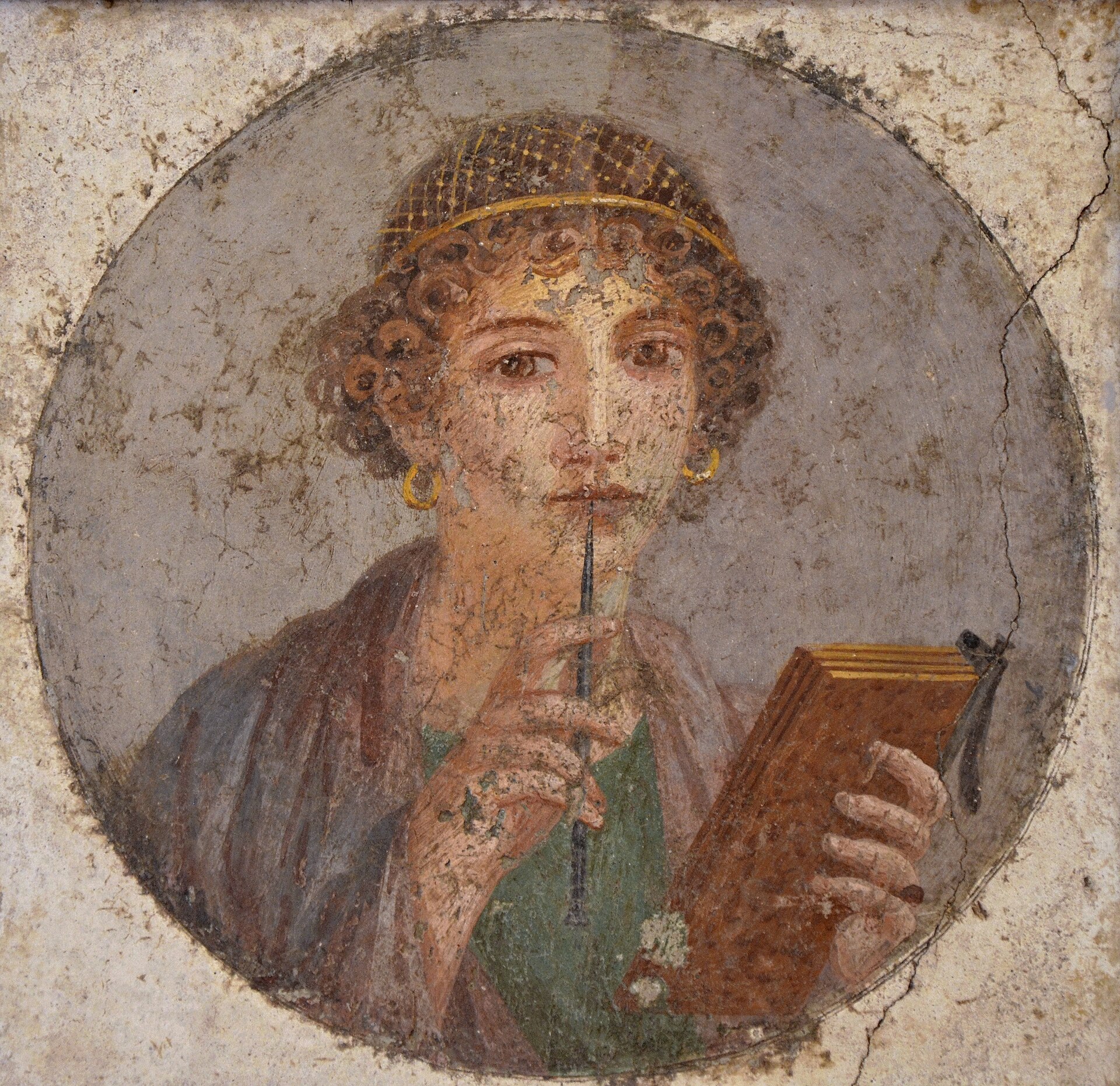 Pompeian fresco of a woman with wax tablet and stylus. This is not a token tessera, but an important visual parallel for written culture. Photo: Carole Raddato, CC BY-SA 2.0.
Related topics
Tesserarius, Roman whistle, Spintria, Contubernium, Roman numerals, Pompeii
Literature and sources
- M. C. Bishop, J. C. N. Coulston. Roman Military Equipment.
- Alan K. Bowman. Life and Letters on the Roman Frontier.
- R. S. O. Tomlin. Roman London's First Voices.
- J. Paul Getty Museum. Tessera (Game Counter?), 75.AI.16.
- Bibliothèque nationale de France / Gallica. Tessera lusoria, Froehner.77bis.
- Catalogue of Roman Lead Tesserae in the British Museum.
- Rubina Raja. The Banqueting Tesserae from Palmyra: Tokens for Religious Events.
- Polybius. Histories, VI.34.7–12.
- Getty Museum: Tessera, 75.AI.16.


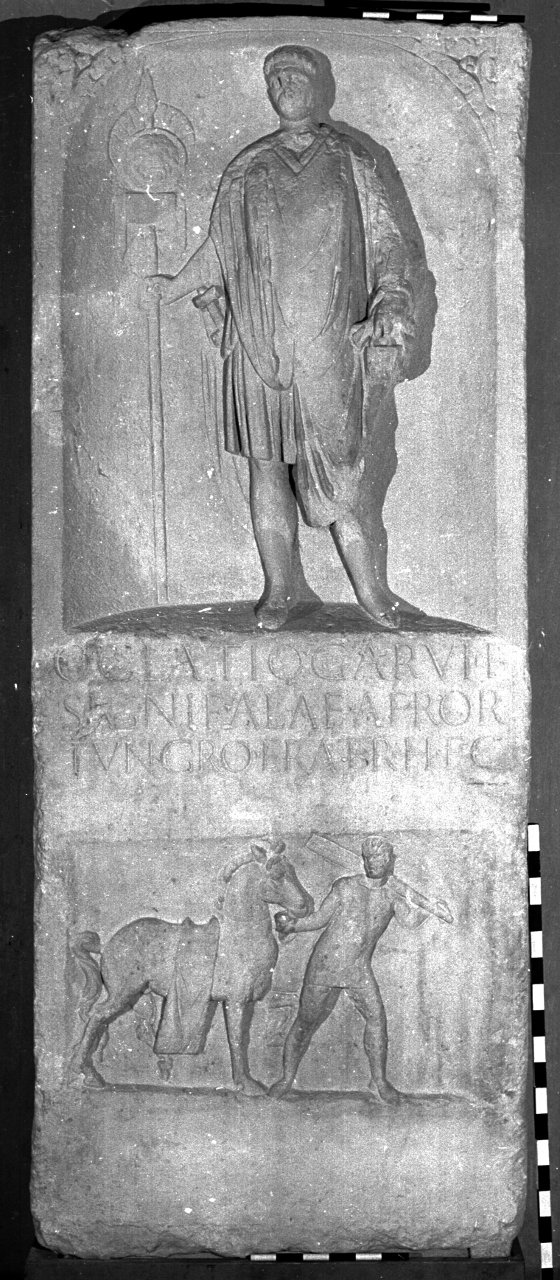 Tombstone of Oclatius, signifer of the ala Afrorum. Neuss, Germany; first century CE.
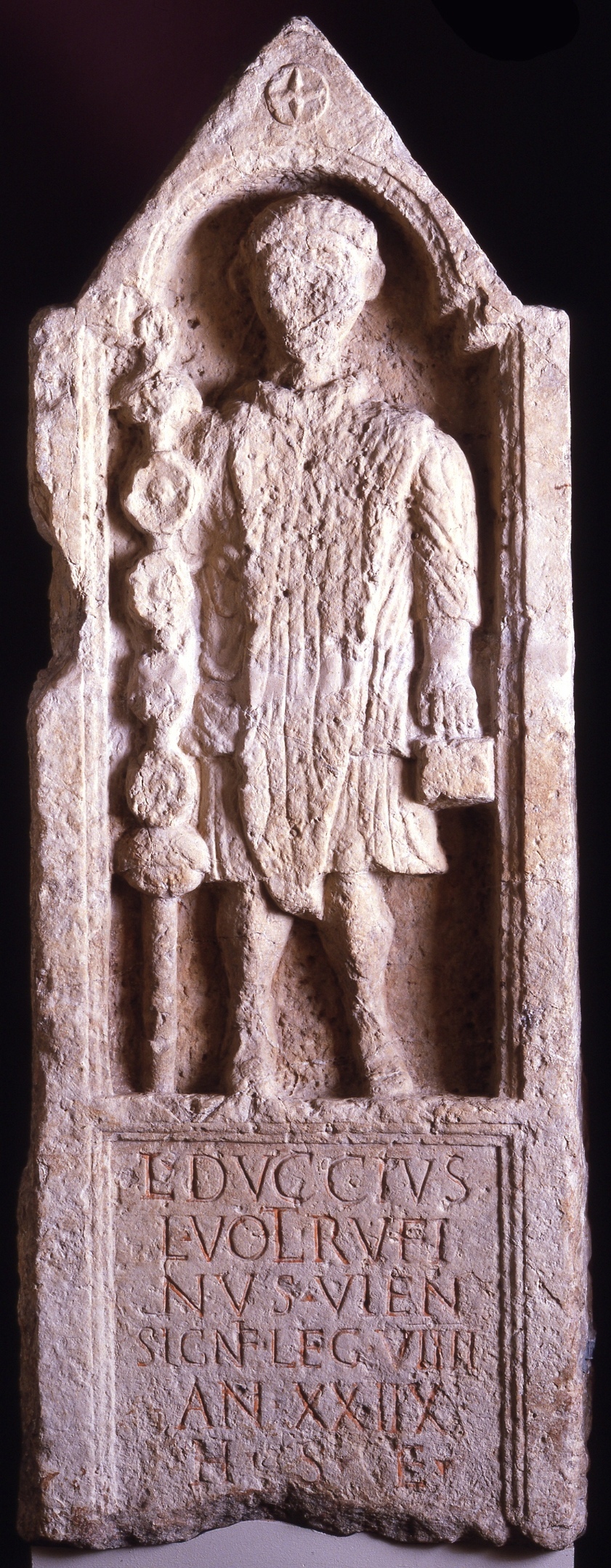 Tombstone of Lucius Duccius Rufinus, signifer of Legio IX Hispana. Yorkshire Museum, York; late first–early second century CE.
Interested in Ancient Rome beyond reading? Join Legio X Fretensis or explore our reenactment directions.


