Cauldron
A cauldron is a vessel for cooking and heating liquids. The Latin cortina could mean a rounded kettle; in a religious context the same word could denote Apollo's sacred vessel or tripod. Its meaning depends on context rather than a single dictionary equivalent.
Cooking cauldrons served in homes, farms and travelling groups. Vessels with comparable functions are known from Greek, Roman and other European settings. A shared use does not imply identical construction or a universal standard of camp equipment.
Metal cauldrons were made from iron and copper alloys. Walls could be hammered from sheet metal and joined with rivets, with handles and fittings made separately. Repairs can document the prolonged use of an individual vessel.
A situla generally carried or served liquids, whereas a cauldron was intended for heating. Similar appearance and a suspension handle do not make the names interchangeable. Large vessels in Celtic contexts could take part in feasts and ritual acts, but brewing needs evidence from the particular find.
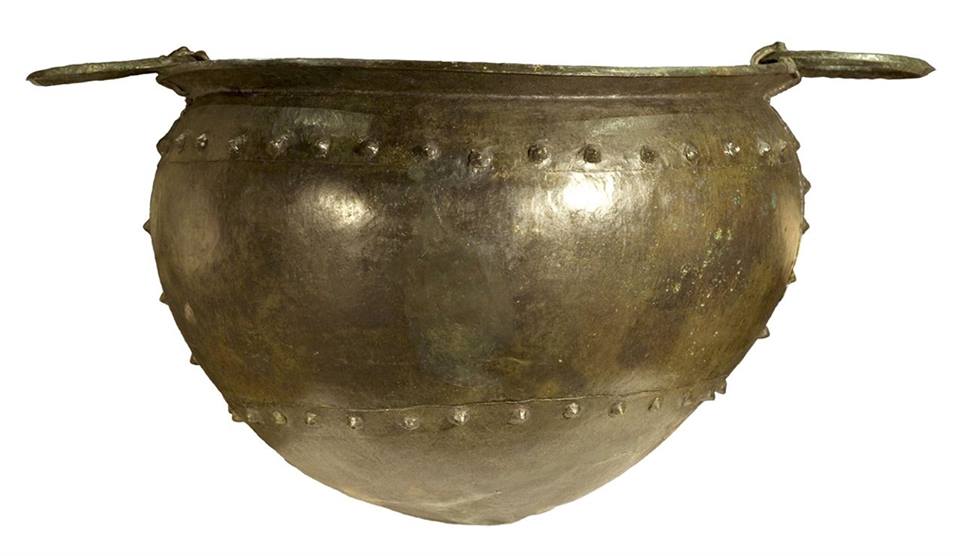 Cauldron made of Lyos,bronze. Gaul. 3-1 century BC
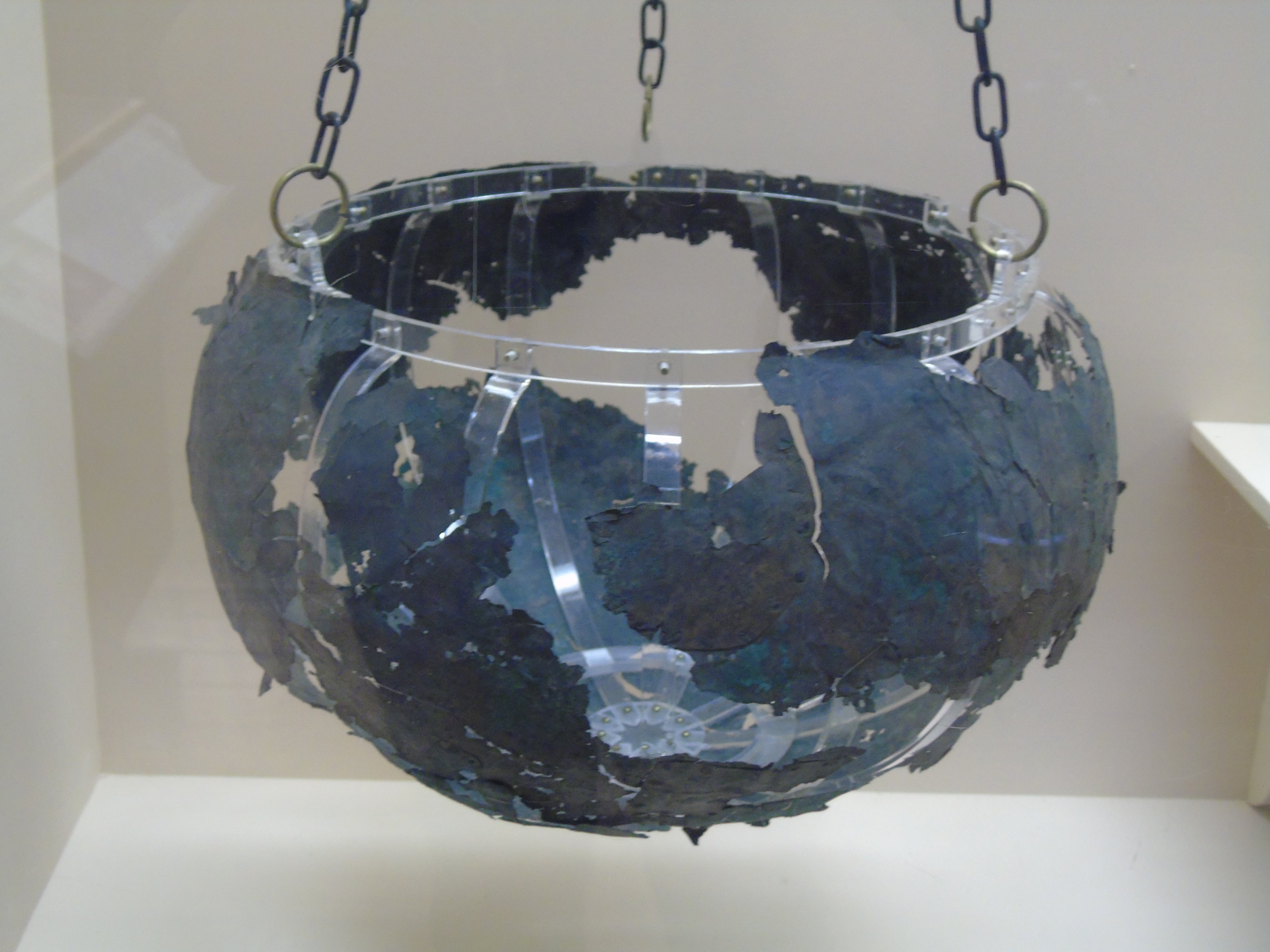 Roman cauldron from a military camp in Chester. 1-3 century AD
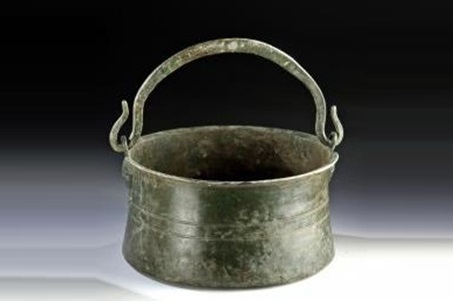 Cast bronze capsule. Ex Malter Galleries,USA. 1-3 century AD
Construction
For practical use, the shape of the base, wall height, suspension method, and handles are important. A cauldron could stand on a hearth, hang above the fire, or be used with a tripod. Wall thickness affected heating speed and durability: thinner vessels are easier to carry on campaign, but require more careful handling over an open flame.
Archaeological Context
Soot on the exterior and heat marks help establish use over a fire. Patches and worn fittings provide evidence of repairs and mechanical strain. Rivets alone show an assembly method, not necessarily repair.
A cauldron from a settlement, camp, grave or water deposit may have a different history. An expensive vessel might first have served for cooking and later become an offering or burial object. The findspot matters, but does not always directly reflect the original function.
Reconstruction
Reconstruction should follow a dated find whose construction is understood, reproducing its profile, capacity, handles and suspension. Size alone does not identify a vessel as standard contubernium equipment; that attribution requires separate support.
Heating a replica and cooking in it are practical tests of a modern object. Materials, joints and coatings must suit food contact and use over a fire. Tinning on one example does not establish that all ancient cauldrons were tinned.
Literature
- Lewis and Short: cortina.
- H. E. M. Cool. Eating and Drinking in Roman Britain. Cambridge University Press, 2006.
- J. P. Alcock. Food in Roman Britain. Tempus, 2001.
- M. C. Bishop, J. C. N. Coulston. Roman Military Equipment from the Punic Wars to the Fall of Rome. 2nd edition. Oxbow Books, 2006.
Related topics
Ancient military campaigns · Situla · Patera · Tripod


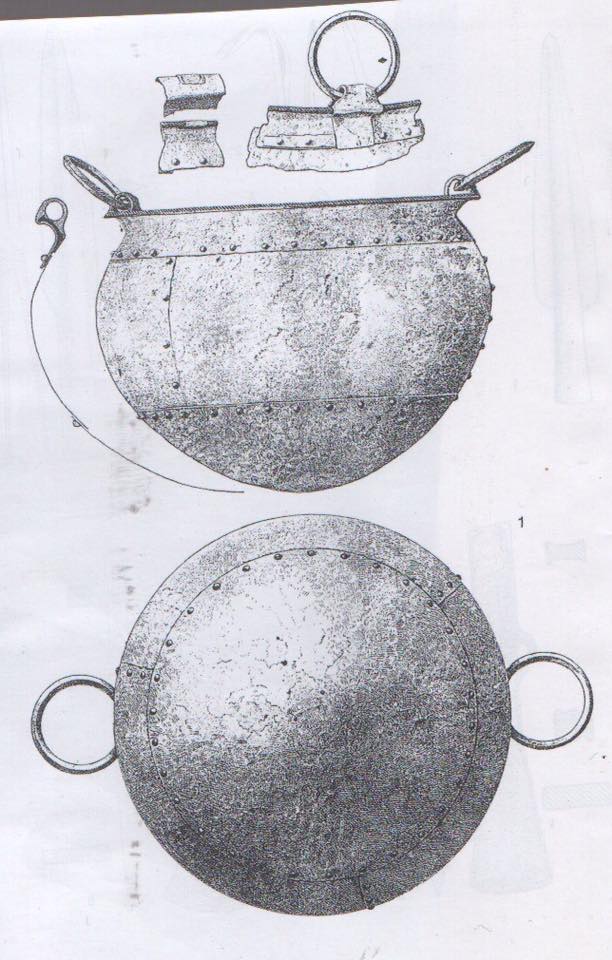 Cauldron made of Lyos,bronze. Gaul. 3-1 century BC
Interested in Ancient Rome beyond reading? Join Legio X Fretensis or explore our reenactment directions.


