Necklace
A necklace (Latin monile) is an ornament worn around the neck. Greek and Roman examples include metal chains, strings of beads and chains with pendants. Gold and silver could be combined with stones, glass and pearls; necklaces were not necessarily made entirely from precious materials.
They are particularly prominent in images of women, but the name alone does not establish an owner's gender or status. The Latin catella means a small chain and can refer to jewellery in an appropriate context.
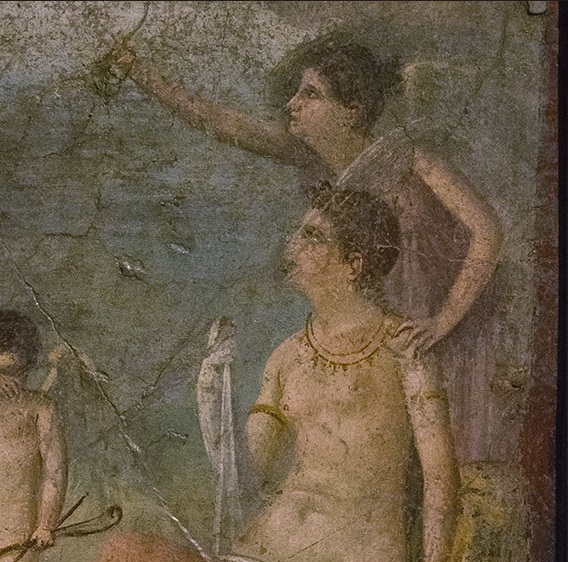 Ariadne wearing a necklace. Fresco from Pompeii; National Archaeological Museum, Naples, inv. 9047. 60–79 CE.
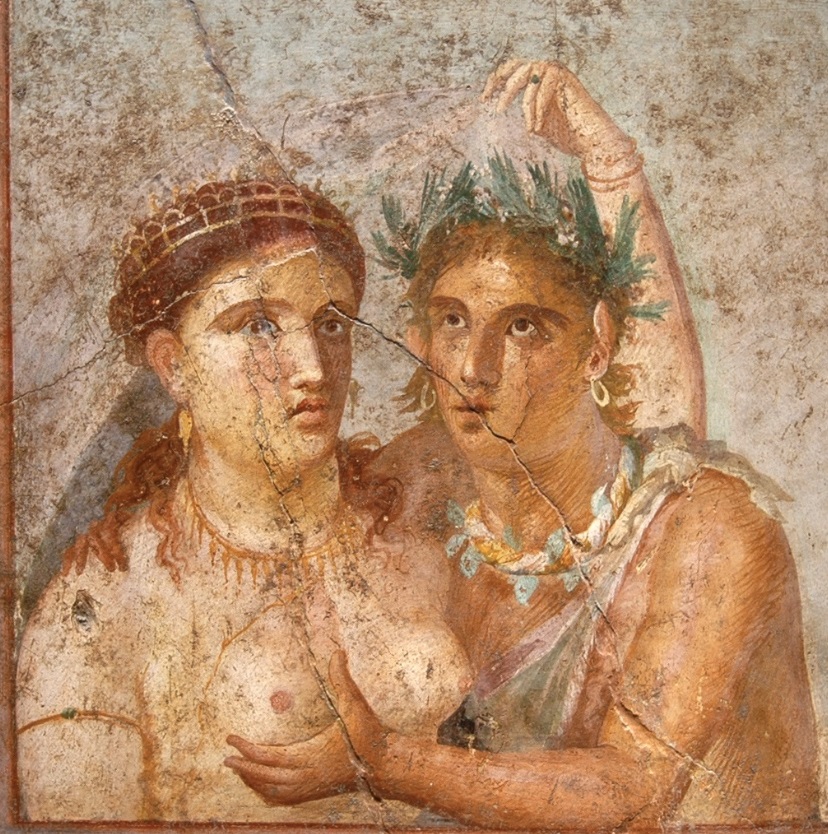 Satyr embracing a maenad wearing a necklace. Pompeii; National Archaeological Museum, Naples, inv. 110590. Early first century CE.
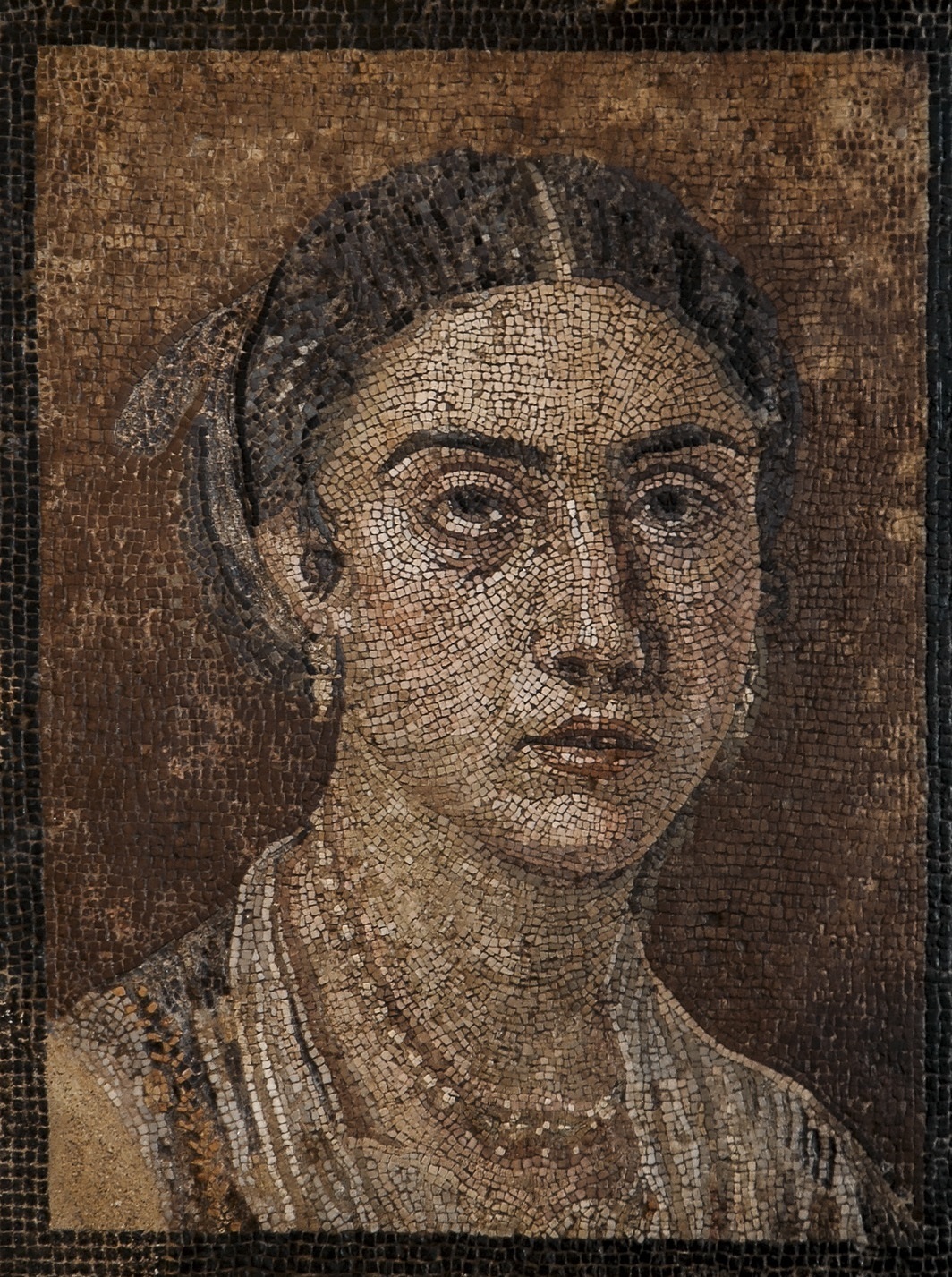 Mosaic portrait of a woman wearing a pearl necklace, from Pompeii. National Archaeological Museum, Naples, inv. 124666. Second half of the first century CE, before 79 CE.
Necklaces are known from finds, portraits and wall painting. Survival depends on material and burial conditions: gold links may remain after a string, fastening or some beads have been lost. Elaborate museum pieces do not automatically represent the jewellery of the population as a whole.
The illustrations include ancient objects and modern replicas, including work by the club's craftsperson Minacia Polla. A replica should be distinguished from its original: fastenings, dimensions and bead arrangements may include reconstructed details.
 Roman gold necklace with chalcedony. British Museum, London; first–third century CE.
 Modern reconstruction of a Roman-style chalcedony necklace.
Form and Materials
A necklace should be described in terms of chain links, beads, pendant and clasp. Glass could accompany gold and pearls rather than merely replace an expensive stone. The Metropolitan Museum's first-century CE necklace of gold, pearls and glass (21.29.1) provides a specific example of this combination.
A reconstruction should record the order of the components, length and joining method. A visually similar string of beads does not necessarily reproduce ancient construction, particularly when the original thread has not survived.
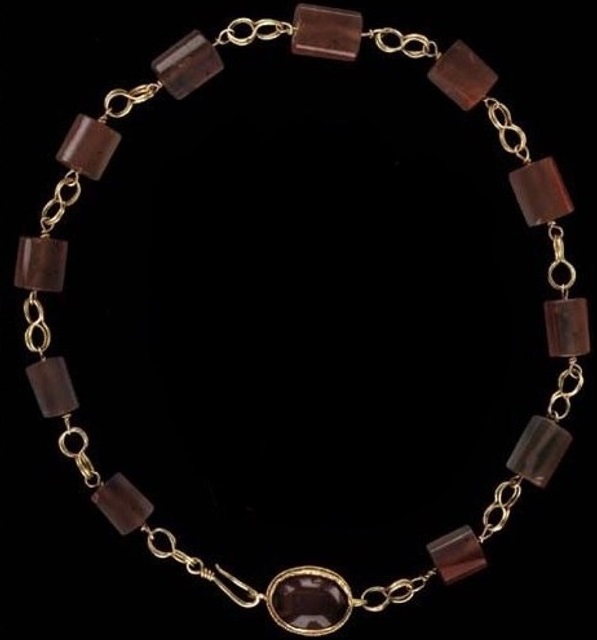 Gold necklace with carnelian, described as Roman, second century CE. Private collection, Christie’s auction; archaeological provenance not confirmed here.
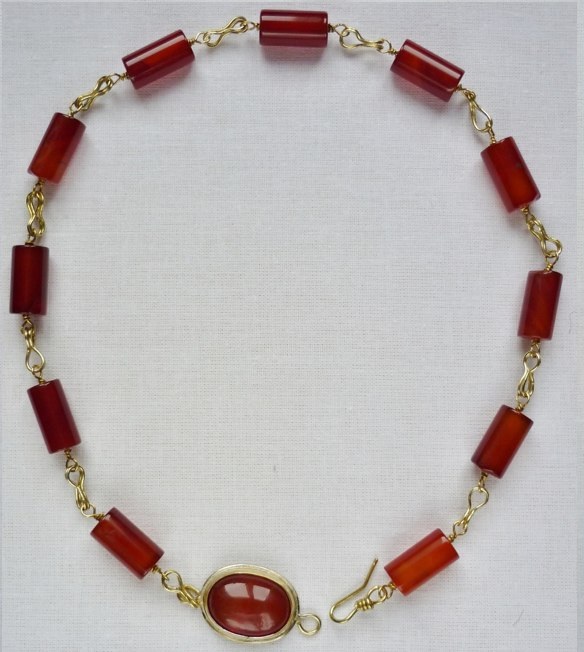 Modern reconstruction of a carnelian necklace.
Wearing Context
A necklace might accompany earrings, bracelets, fibulae and hair ornaments. Objects displayed together in a case were not necessarily an original set: their find context and dates must be checked.
For a male or military portrayal, distinguish a decorative chain from a torc or military award. Select an object by period, region and a specific source, not simply by the label “Roman jewellery”.
Literature and sources
- A. T. Croom, Roman Clothing and Fashion.
- Maureen Carroll, Spirits of the Dead: Roman Funerary Commemoration in Western Europe.
- Martin Henig, A Handbook of Roman Art.
- Gold, pearl and glass necklace, 21.29.1: Metropolitan Museum.
Related topics
Interested in Ancient Rome beyond reading? Join Legio X Fretensis or explore our reenactment directions.


