Earrings
Earrings were ornaments worn through pierced ears in the Greek and Roman world. Surviving forms include simple hoops, earrings with figural terminals and designs with pendants. Materials included gold, silver and copper alloys, with stones, glass beads and pearls.
Ancient names do not form one consistent modern classification. The Latin auris means “ear”, not a separate earring type. Crotalia referred to pendants that could touch and rattle; stalagmium denotes a drop-like or pendant ornament. Such words need to be interpreted in a particular text, not assigned to every museum object solely by its shape.
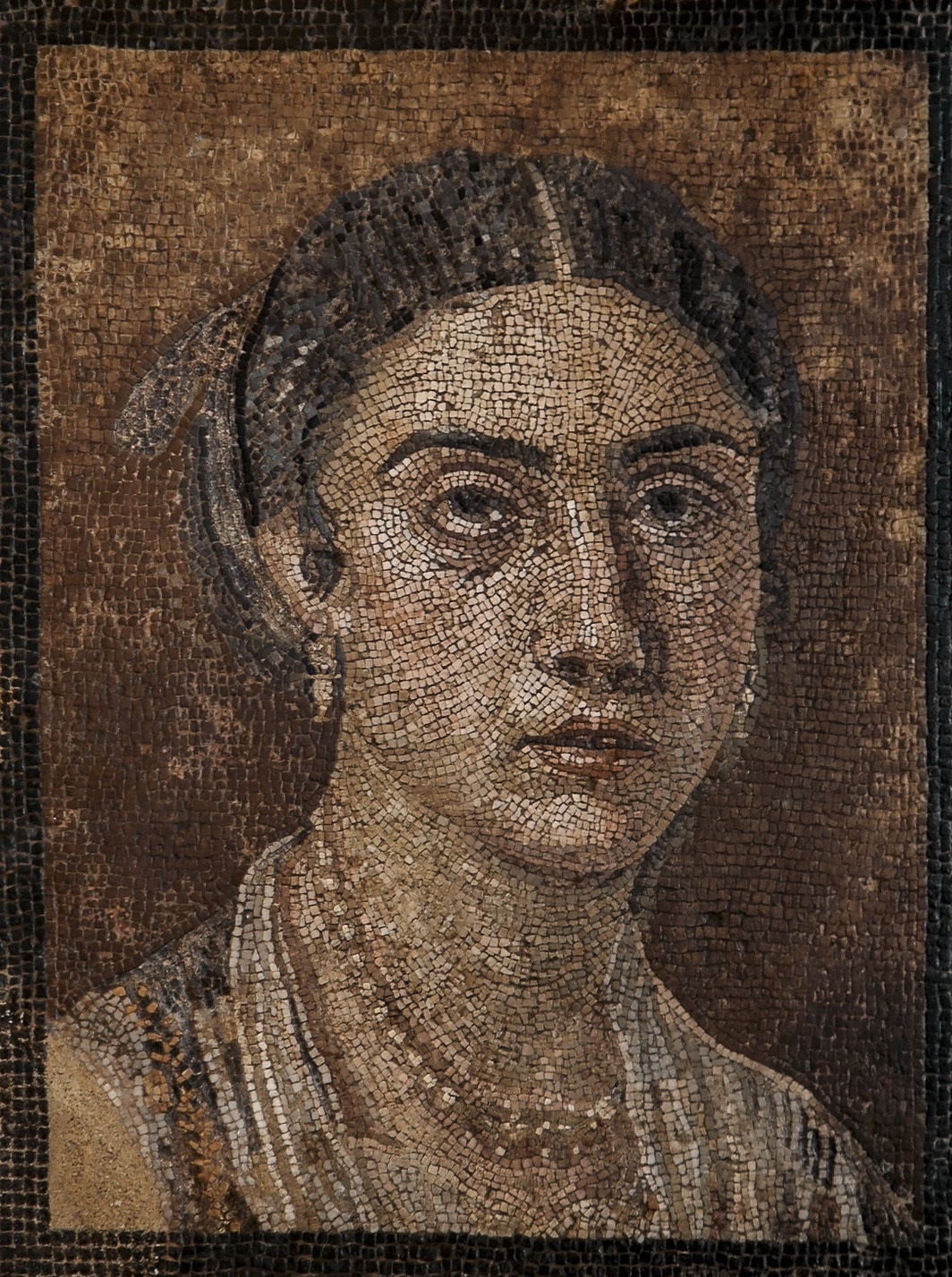 Mosaic portrait of a woman wearing earrings, from Pompeii. National Archaeological Museum, Naples; inv. 124666. Second half of the first century CE, before 79 CE.
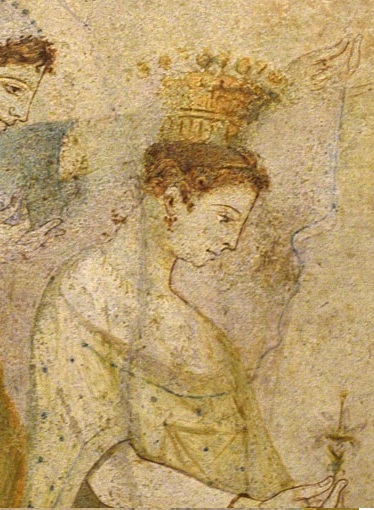 Fresco from a cubiculum of the Villa Farnesina. National Roman Museum, Rome; first century BCE–first century CE.
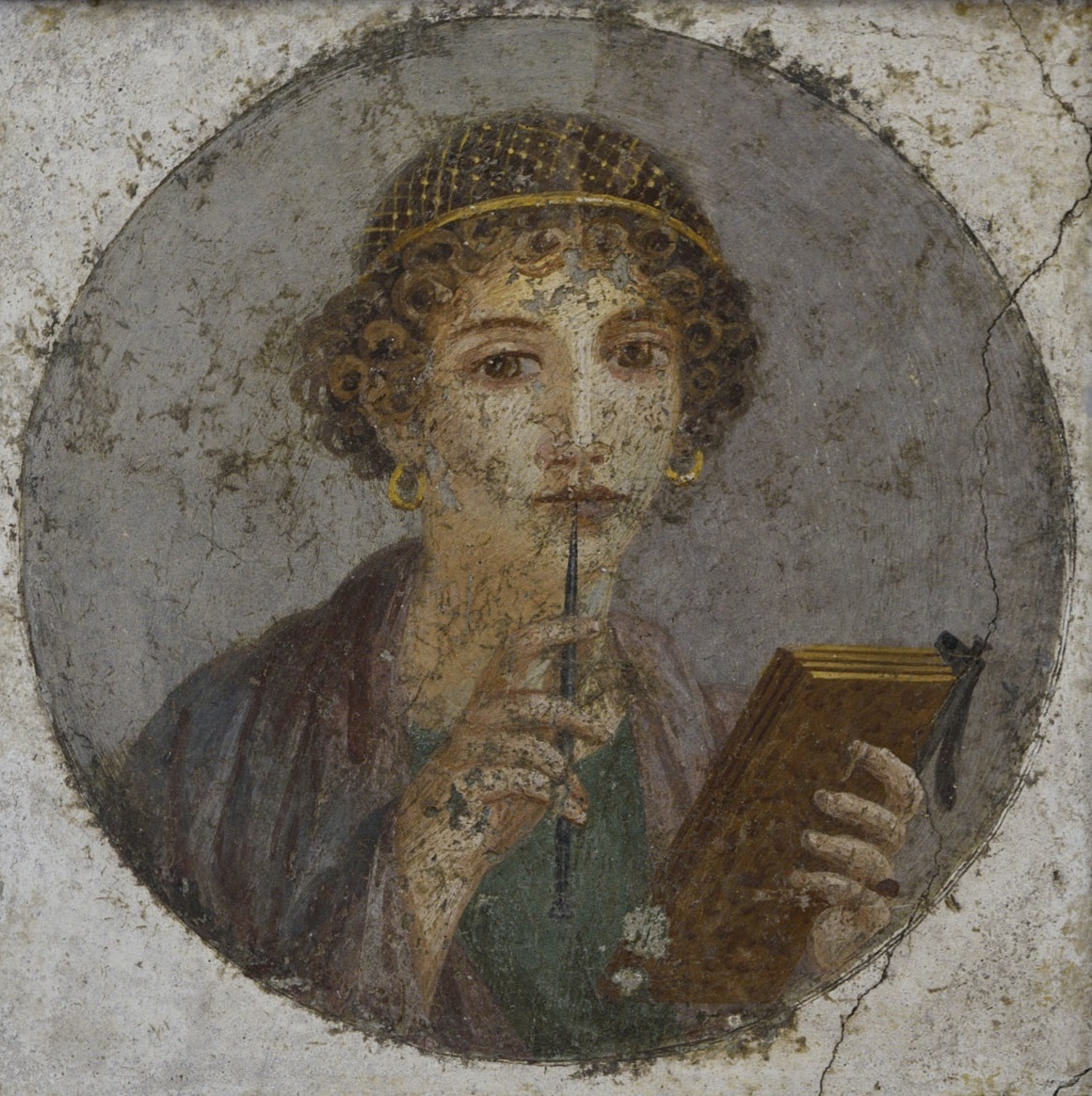 Woman wearing earrings, fresco from Pompeii. National Archaeological Museum, Naples; inv. 9084. 55–79 CE.
Earrings are known from graves, hoards and other archaeological contexts. Gold resists corrosion well, but a metal setting may survive better than its pearls, organic components or glass details. A single surviving earring does not prove that it was originally worn without a pair.
Museum selections of precious jewellery do not automatically represent everyday dress across the population. Date and provenance should follow the record for the individual find, especially when an object was acquired without a documented findspot.
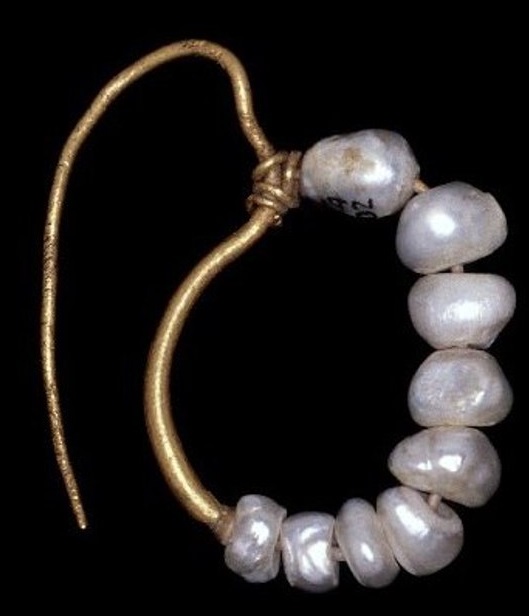 Roman earrings. British Museum, London; first–second century CE.
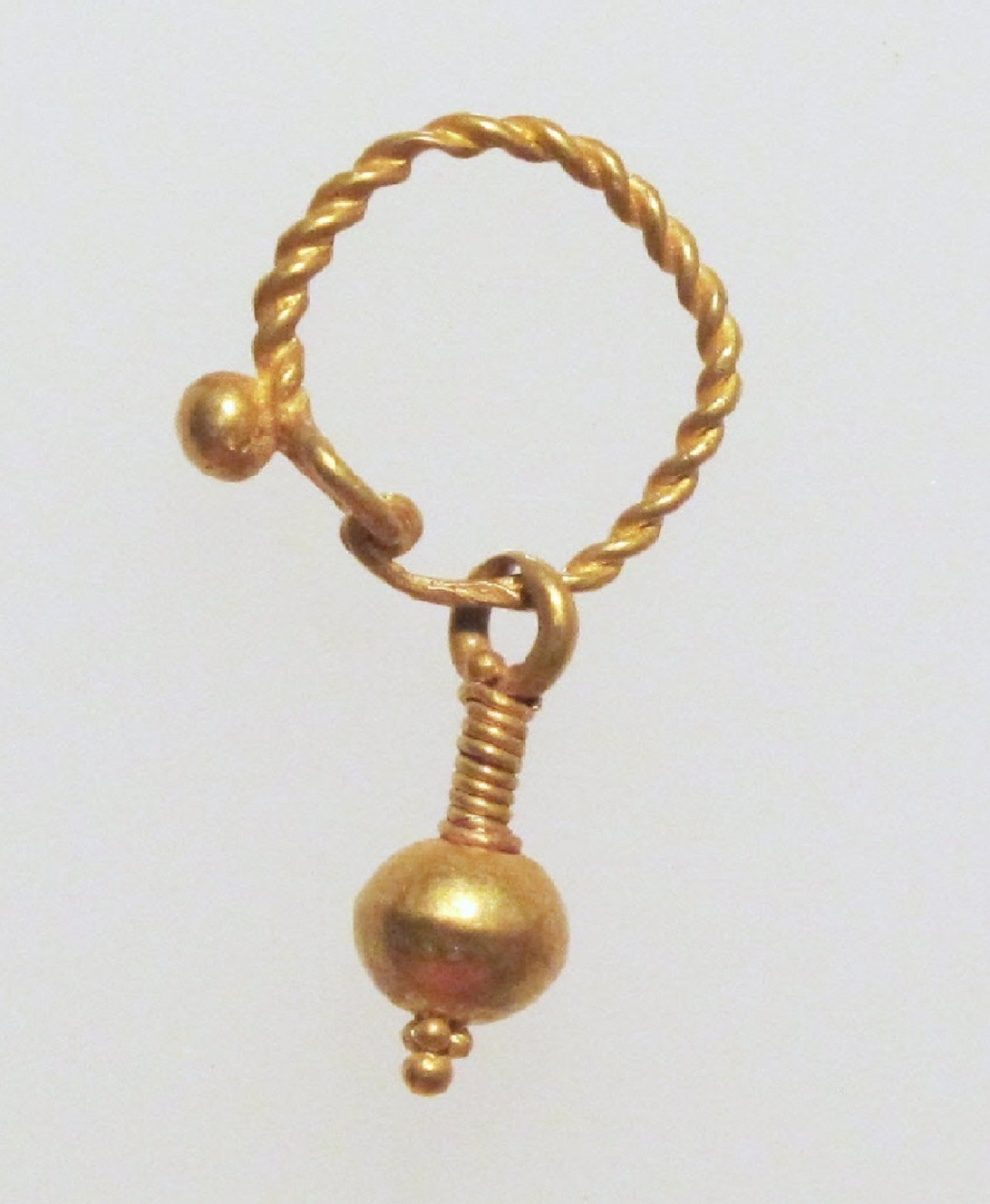 Gold earring with a ball and pendant, Roman, second century CE. Metropolitan Museum of Art, New York; 74.51.3767. 1.2 × 0.4 × 2.3 cm.
Jewelry Form
An earring can be described in terms of the part passing through the ear, its decorative base and any movable pendants. A fastening might use a hook and eye; pendants altered the outline and moved with the wearer. A simple hoop need not belong to the same period or region as an elaborate multi-tiered design.
The Metropolitan Museum holds a gold earring with a ring and hook dated to the second–third century CE (74.51.3920). It provides a specific example of fastening construction, not a universal model for Roman earrings.
Reconstruction
For reconstruction, the weight of the pendant and its attachment method are important: an overly heavy element is uncomfortable and can damage the ear or the earring itself. A good replica starts from a specific find or image and follows the proportions, pendant rhythm, and level of finish appropriate to the character's social position.
Literature and sources
- A. T. Croom, Roman Clothing and Fashion.
- Martin Henig, A Handbook of Roman Art.
- Maureen Carroll, Spirits of the Dead: Roman Funerary Commemoration in Western Europe.
- Gold earring with ring and hook, 74.51.3920: Metropolitan Museum.
- Pliny the Elder. Natural History: pearls and crotalia.
Related topics


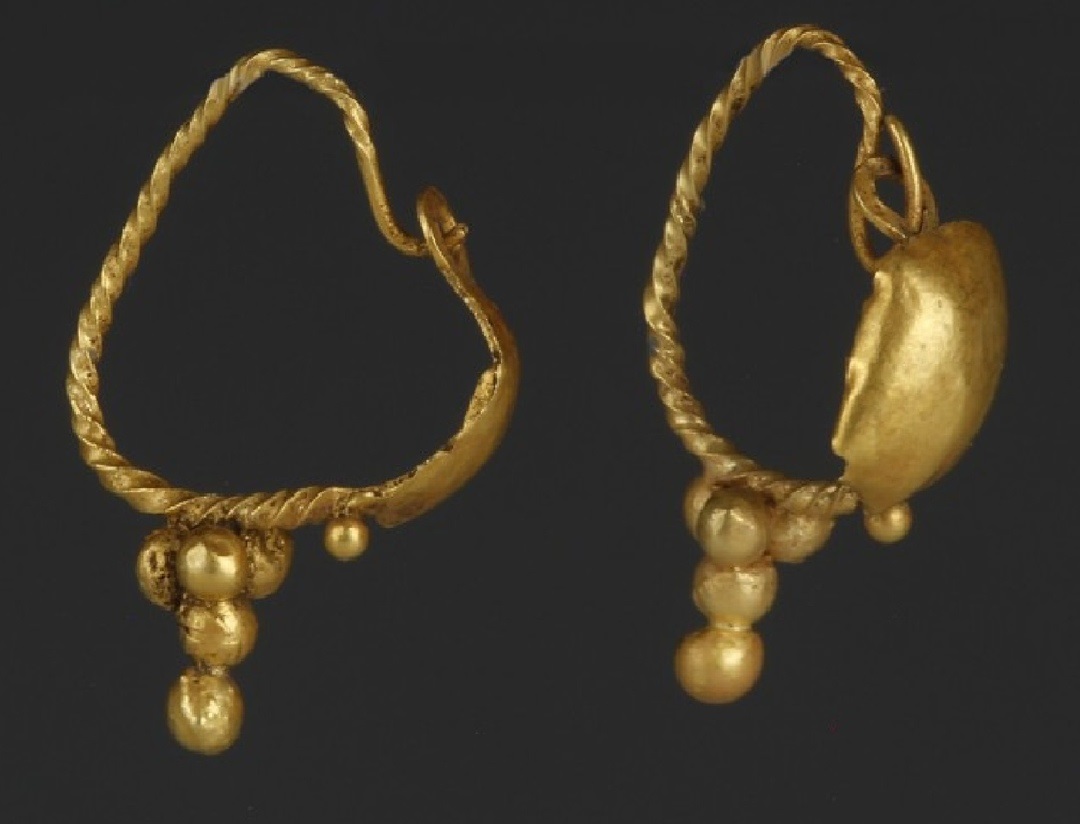 Gold earrings described as Roman, 2.5 cm long. Private collection, Ancient & Oriental, EN-001; reported date: second century CE. Provenance and date not independently confirmed.
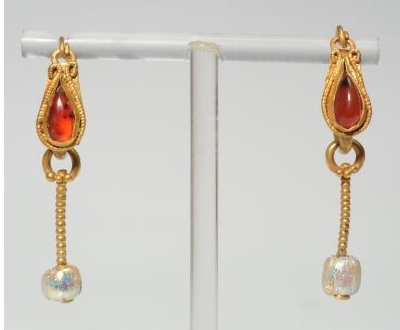 Gold earrings with carnelian and glass, attributed to Roman Syria. Private collection; reported date: second century CE. Provenance and date not independently confirmed.
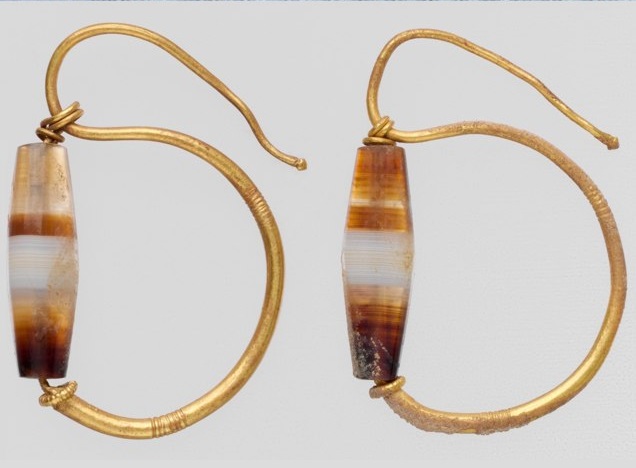 Roman earrings reported as found on Crete. Metropolitan Museum of Art, New York; first century BCE–second century CE.
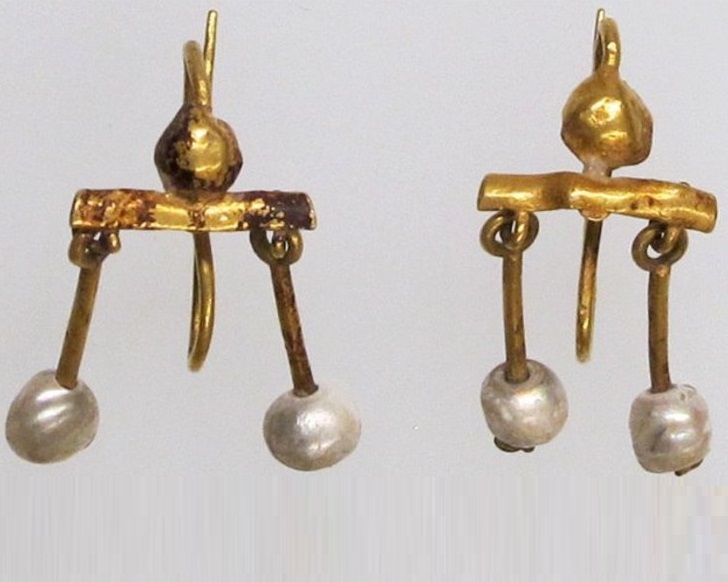 Roman earrings with pearls. Metropolitan Museum of Art, New York; first century CE.
 Roman-period Cypriot earrings. Metropolitan Museum of Art, New York; second century CE.
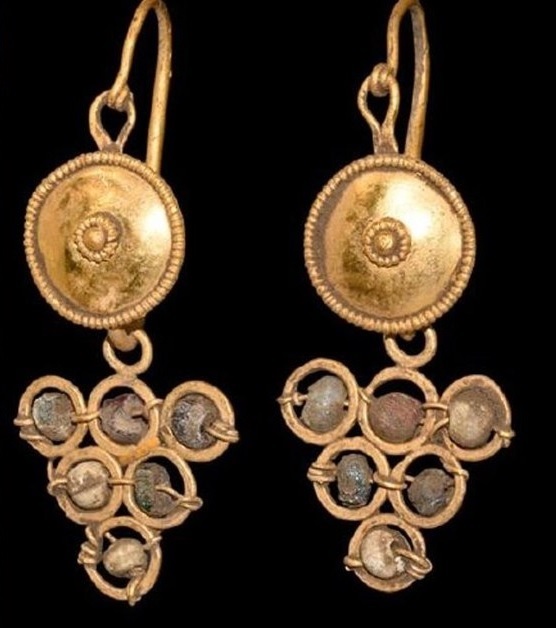 Earrings described as Roman. Private collection, Timeline Auctions; reported date: second century CE. Provenance and date not independently confirmed.
Interested in Ancient Rome beyond reading? Join Legio X Fretensis or explore our reenactment directions.


