Frixorium
Frixorium is a Latin term for frying equipment, commonly rendered as frying pan. Roman metal finds include shallow vessels with a handle and low rim. Handle and bowl forms varied; not every long-handled vessel was a frying pan.
 Bronze cooking vessels from the Gragnano area, displayed in the Pompeii Archaeological Park; first century CE.
 Shallow bronze cooking vessel from the Gragnano area, displayed in the Pompeii Archaeological Park; first century CE.
Kitchen and Campaign Life
Frying pans occur in domestic and military contexts. They could be used for frying or reheating food, but the contents cannot normally be established from vessel shape alone. A fort find does not prove that each soldier was issued a pan. Cookware should be compared with cauldrons and other vessels from the same assemblage.
Archaeological Features
Function is assessed through bowl profile, handle attachment, soot, wear and repairs. Fire traces can support a cooking interpretation without revealing a recipe. Copper alloys and iron require different care; local manufacture and cost also influenced the choice of material.
Related topics
Household utensils, Ancient military campaigns, Patera, Cauldron
Literature and sources
1. J. P. Oleson. The Oxford Handbook of Engineering and Technology in the Classical World. 2. H. Cool. Eating and Drinking in Roman Britain. 3. A. Croom. Roman Furniture and Household Objects. - British Museum: frying-pan, 1856,1226.1008.


 Iron frying pan reported from Judaea, attributed to the first–second century CE.
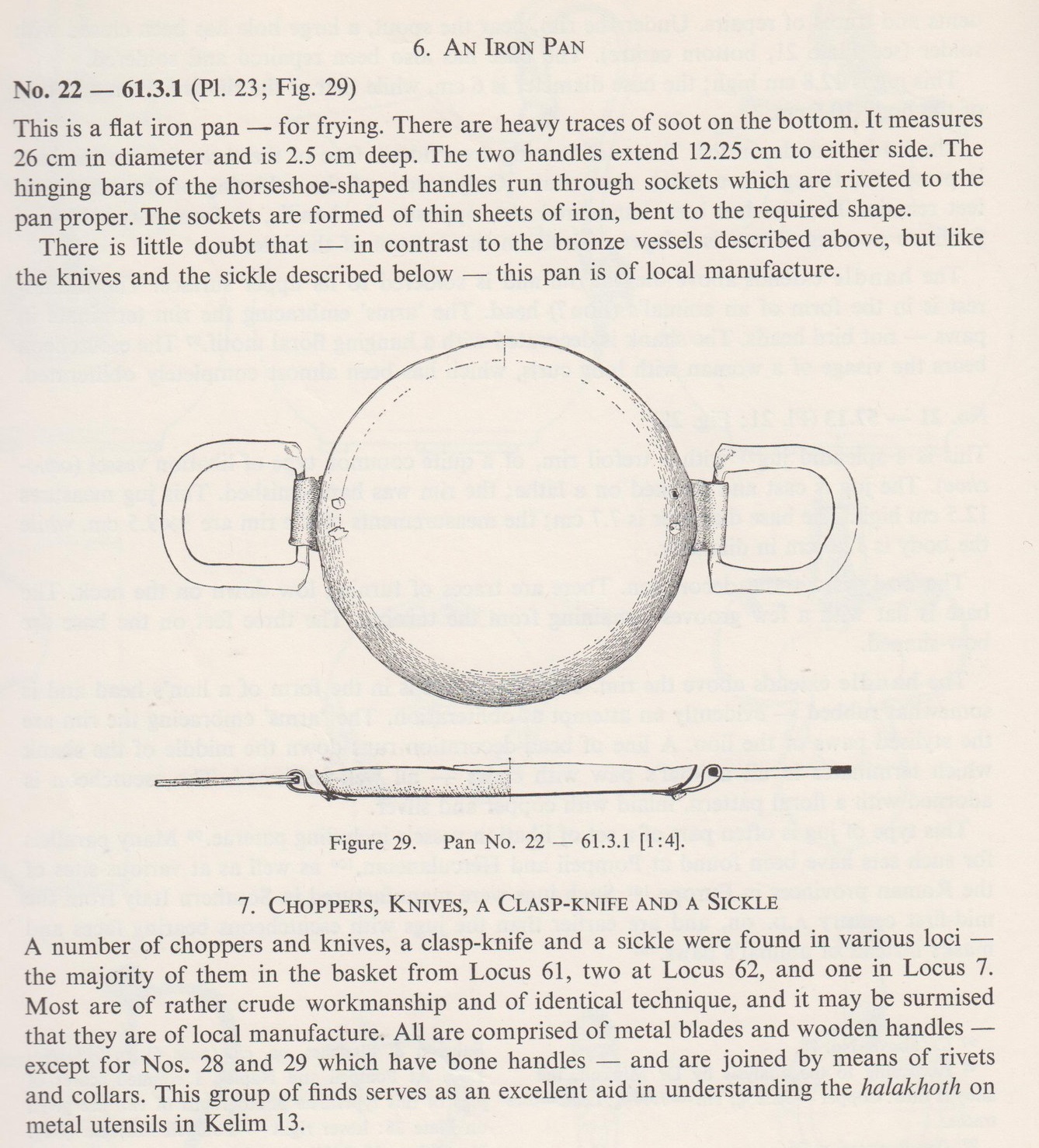 Iron frying pan reported from Judaea, attributed to the first–second century CE. Another view.
Interested in Ancient Rome beyond reading? Join Legio X Fretensis or explore our reenactment directions.


