Calix
A calix was a cup or goblet used for drinking. In the dictionary entry calix, -icis, the second part gives the genitive form calicis; “icis” is not another name for the vessel. The Latin word did not identify one unchanging archaeological shape.
Drinking vessels were made from pottery, glass and metals, including silver. Names for cups could overlap in meaning, but a cantharus with distinctive handles and a fritillus used for throwing dice should not simply be classified as variants of one drinking cup.
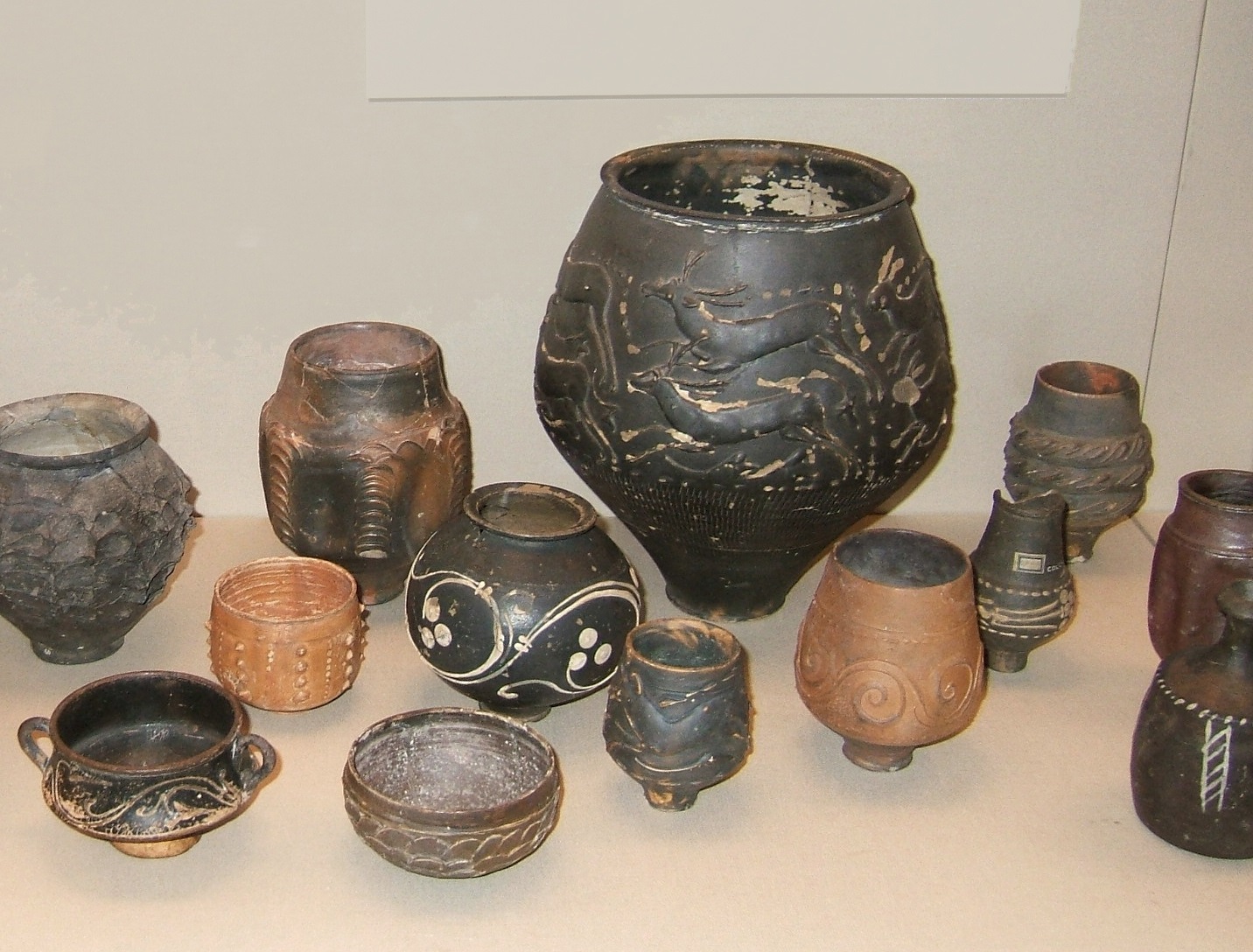 Ceramics from Britain. 3rd century AD
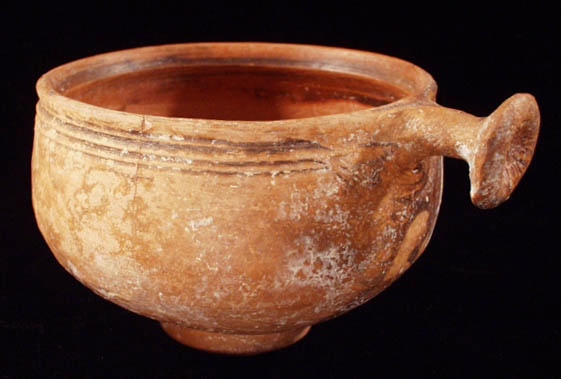 Ceramic mug. 1st century AD
 A glass tumbler. Pompeii. 1st century AD
Pottery tableware was widespread in the ancient Mediterranean. Painted Greek cups, Roman red-slipped pottery and plain local products differed in manufacture, decoration and price. Glass tableware became prominent in Roman daily life, especially following the spread of glassblowing.
Materials do not define rigid divisions between peoples or social groups. A particular cup is better understood through its date, production area, wear and associated finds. An ornate silver goblet and a plain pottery beaker could both serve for drinking while occupying different places at the table.
Form and Function
Cups varied in depth, rim diameter, foot height and handles. These features affected the grip, stability and serving of drinks. The term calix does not prescribe fixed dimensions or an obligatory stem: ancient vocabulary and modern museum classifications do not always coincide.
Wine, water and mixed drinks could be served in vessels of different forms. A cup without residues or a clear context does not securely identify the drink it once held.
Use Context
Drinking vessels occur in homes, taverns, military settlements and graves. Some were costly gifts or parts of formal table services. A cup found in a camp does not establish that every soldier used one; a burial vessel need not represent everyday table settings.
Reconstruction should follow a specific dated example, including its material, dimensions, handles and finish. A modern replica intended for eating or drinking needs materials suitable for food contact.
Literature
- Lewis and Short: calix.
- H. E. M. Cool. Eating and Drinking in Roman Britain. Cambridge University Press, 2006.
- J. P. Alcock. Food in Roman Britain. Tempus, 2001.
- John W. Hayes. Handbook of Mediterranean Roman Pottery. British Museum Press, 1997.
Related topics
Food in antiquity · Household utensils · Flask · Spoon · Catinum


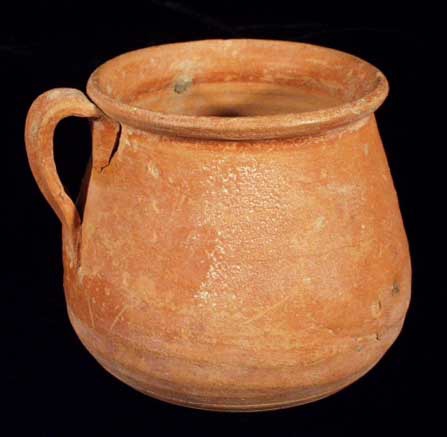 Ceramic mug. 1st century AD
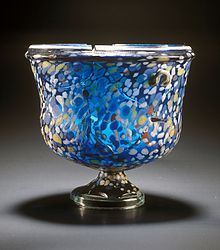 Roman glass bowl. City Museum of Ljubljana’s collection. 1st century AD
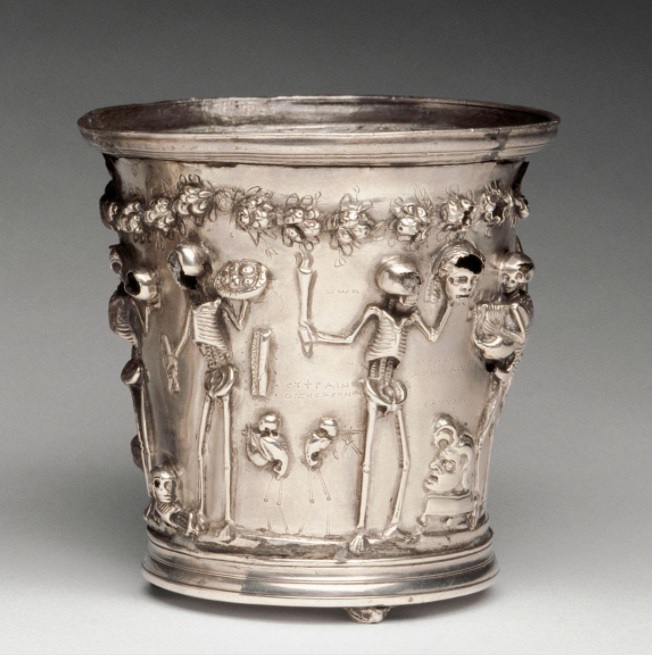 Silver cup from Pompeii. Louvre, AD 79.
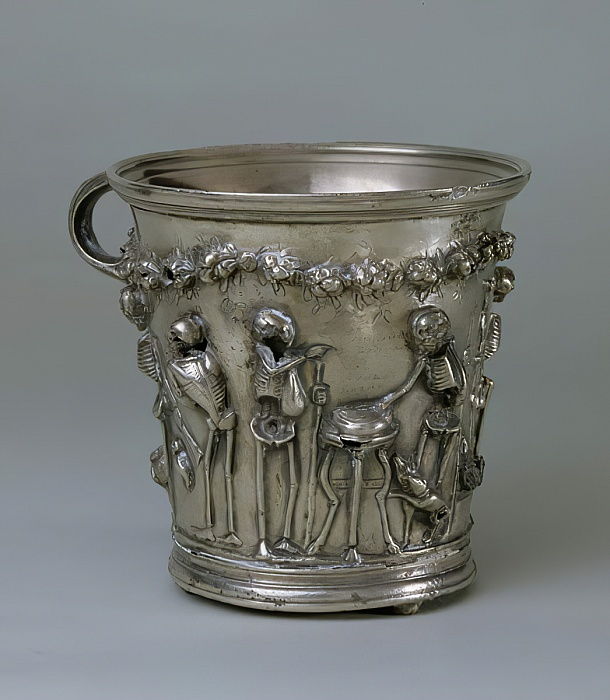 Silver cup from Pompeii. The Louvre Museum. 79 A.D.
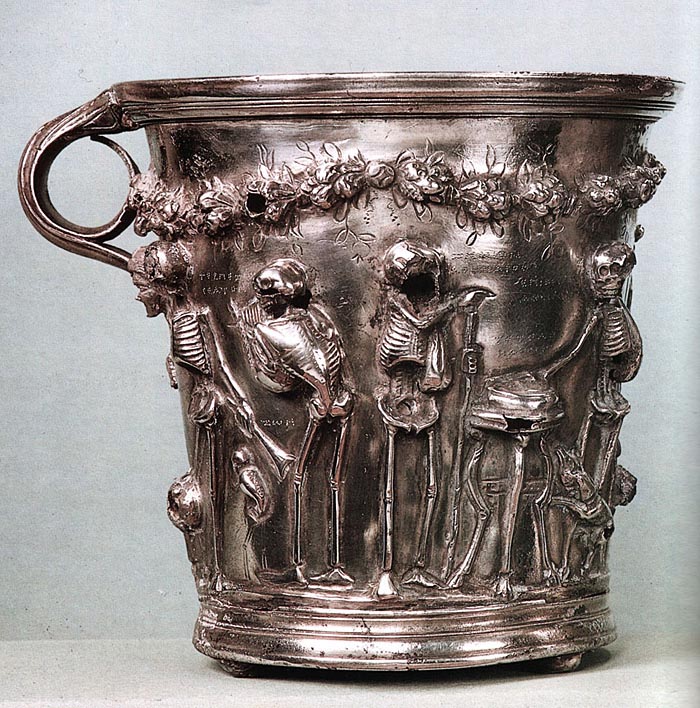 Silver cup from Pompeii. The Louvre Museum. 79 A.D.
 Silver cup with lovers. It was found in the vicinity of Jerusalem. Early 1st century AD
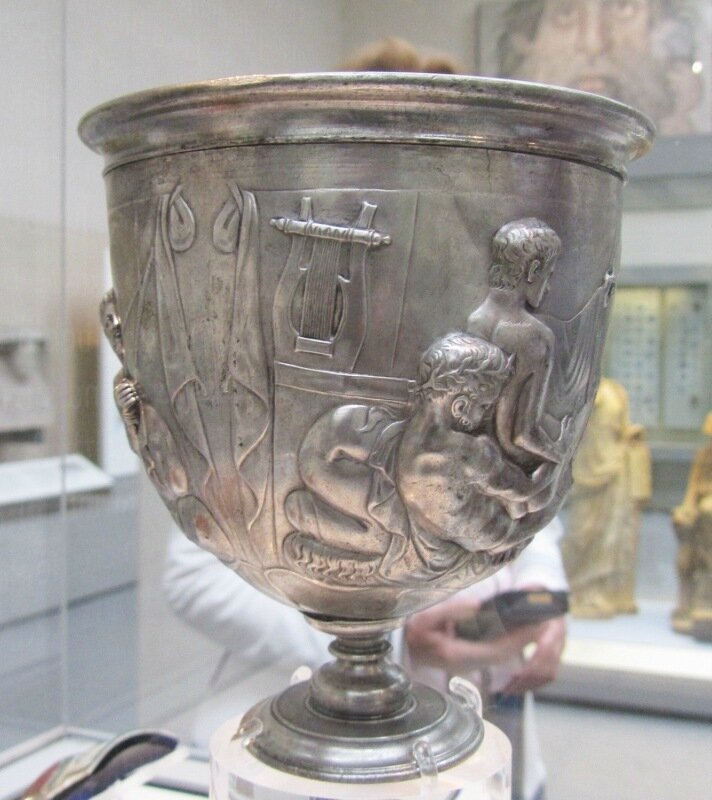 Silver cup with lovers. It was found in the vicinity of Jerusalem. Early 1st century AD
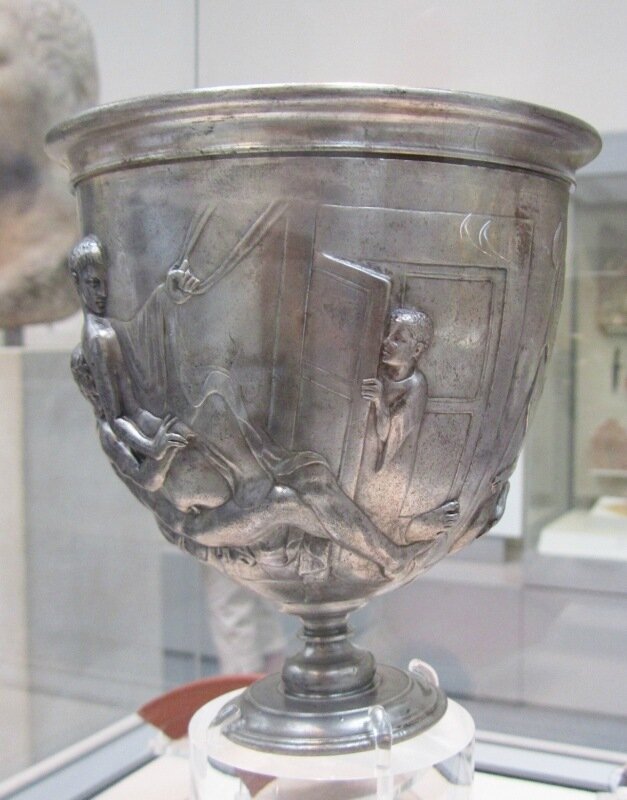 Silver cup with lovers. It was found in the vicinity of Jerusalem. Early 1st century AD
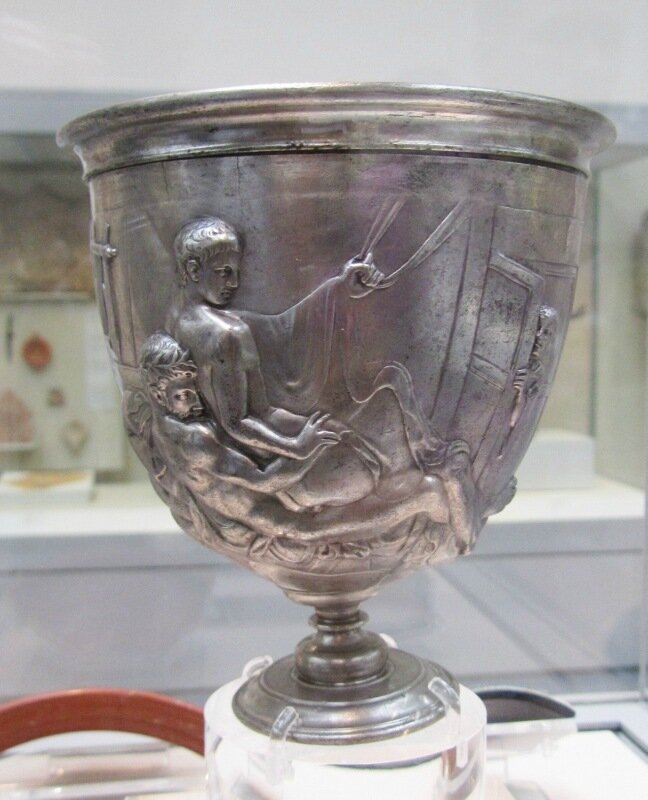 Silver cup with lovers. It was found in the vicinity of Jerusalem. Early 1st century AD
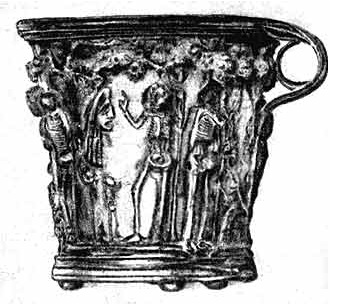 Silver cup from Pompeii. The Louvre Museum. 79 A.D.
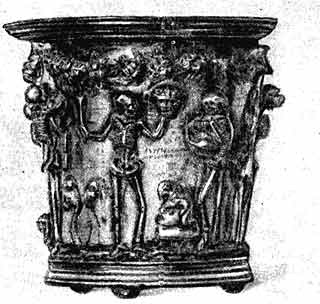 Silver cup from Pompeii. The Louvre Museum. 79 A.D.
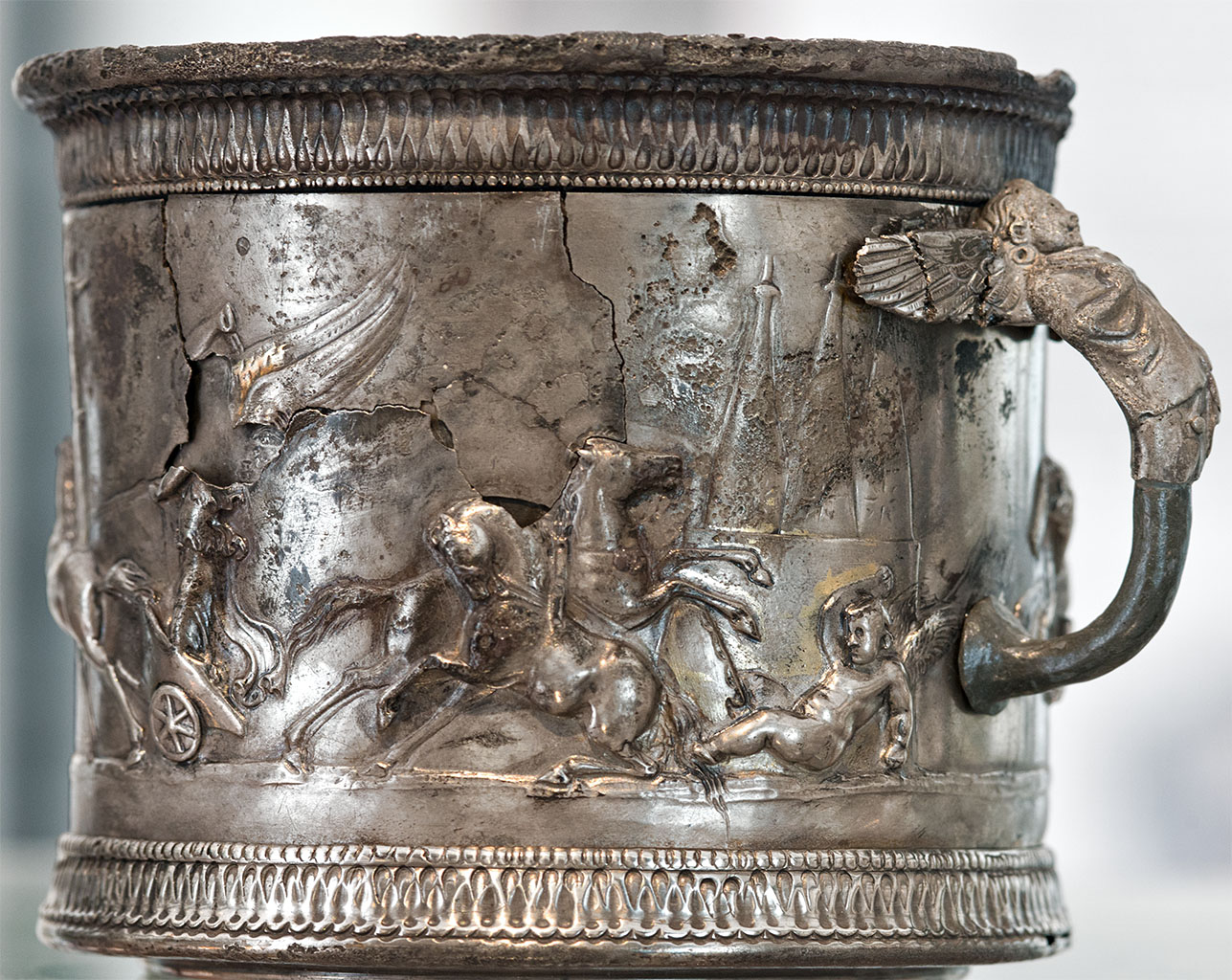 Silver bowl with the image of Circus Maximus. Pompeii. Height: 8 cm,width-9.5 cm. Weight-355 g. Inv. No. 145510. 1st century AD
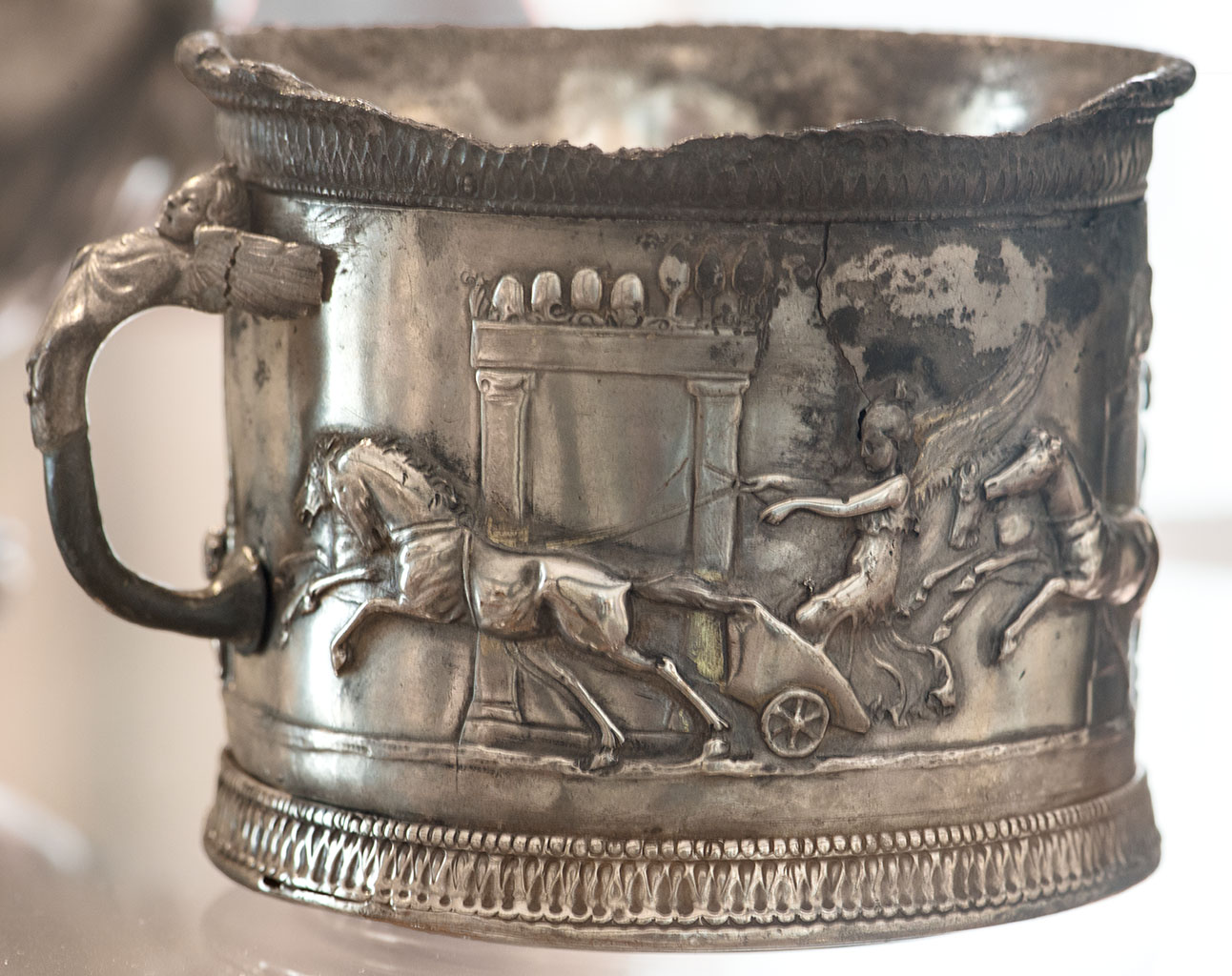 Silver bowl with the image of Circus Maximus. Pompeii. Height: 8 cm,width-9.5 cm. Weight-355 g. Inv. No. 145510. 1st century AD
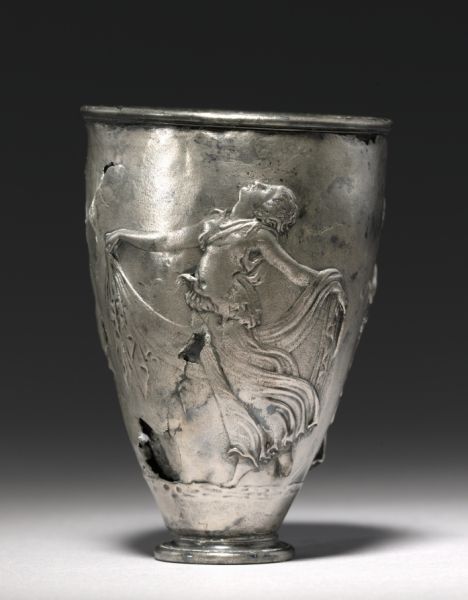 Vicarello Cup. Silver. Dimensions: 12.2 x 7.8 cm Weight: 15.649 g. Purchased by J. H. Wade Fund 1966.371. Late 1st century BC-early 1st century AD
 Vicarello Cup. Silver. Dimensions: 12.2 x 7.8 cm Weight: 15.649 g. Purchased by J. H. Wade Fund 1966.371. Late 1st century BC-early 1st century AD
 Vicarello Cup. Silver. Dimensions: 12.2 x 7.8 cm Weight: 15.649 g. Purchased by J. H. Wade Fund 1966.371. Late 1st century BC-early 1st century AD
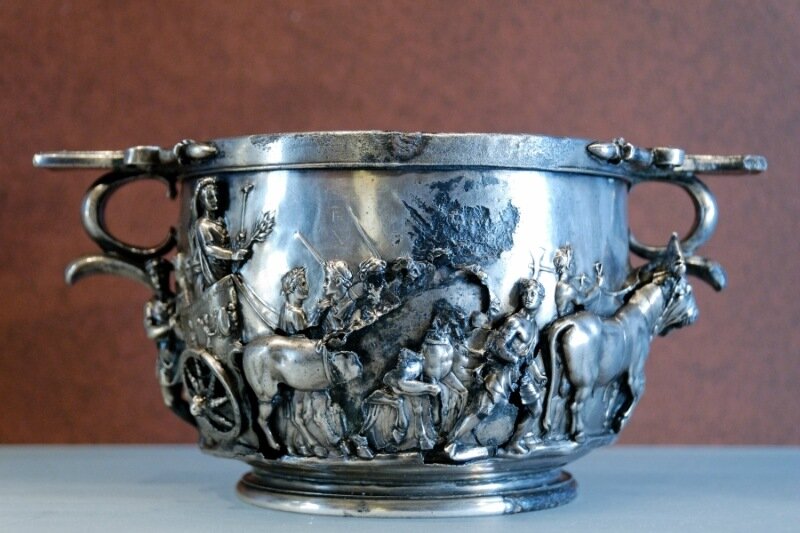 Silver cup from Boscoreale. 1st century AD
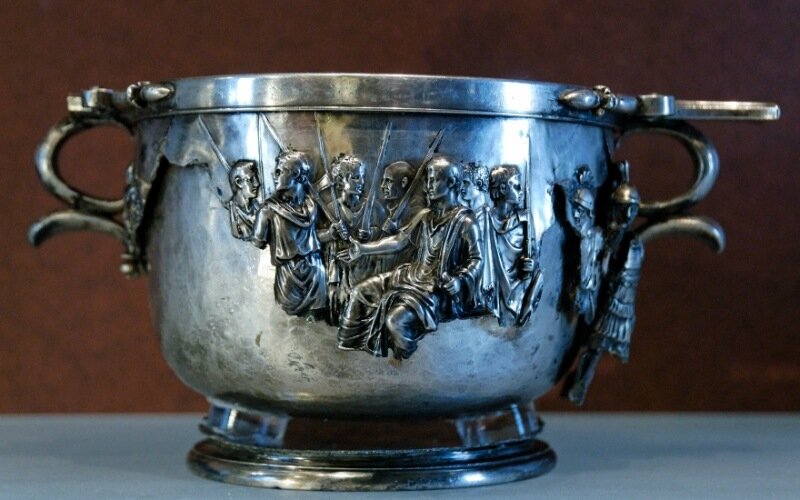 Silver cup from Boscoreale. 1st century AD
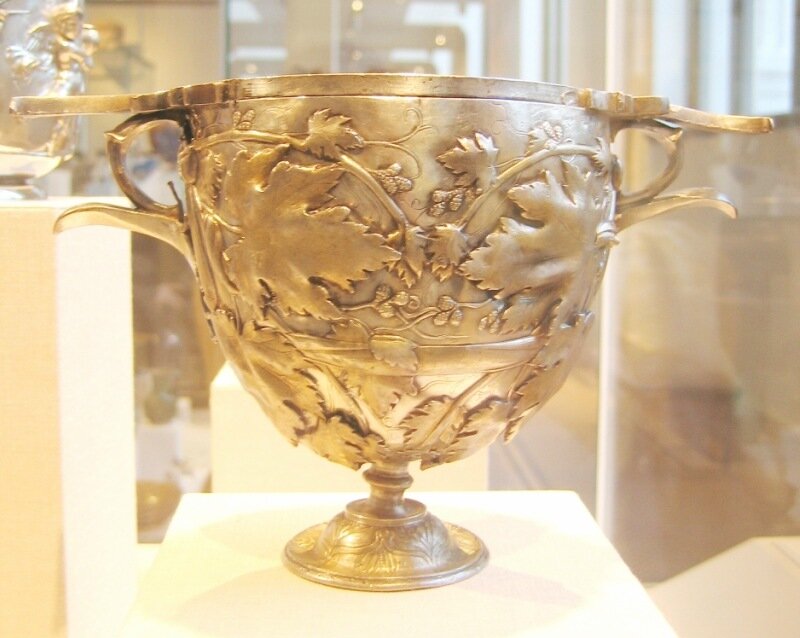 Silver cup. From the collection of the Metropolitan Museum of Art in New York. 1st century BC - 1st century AD
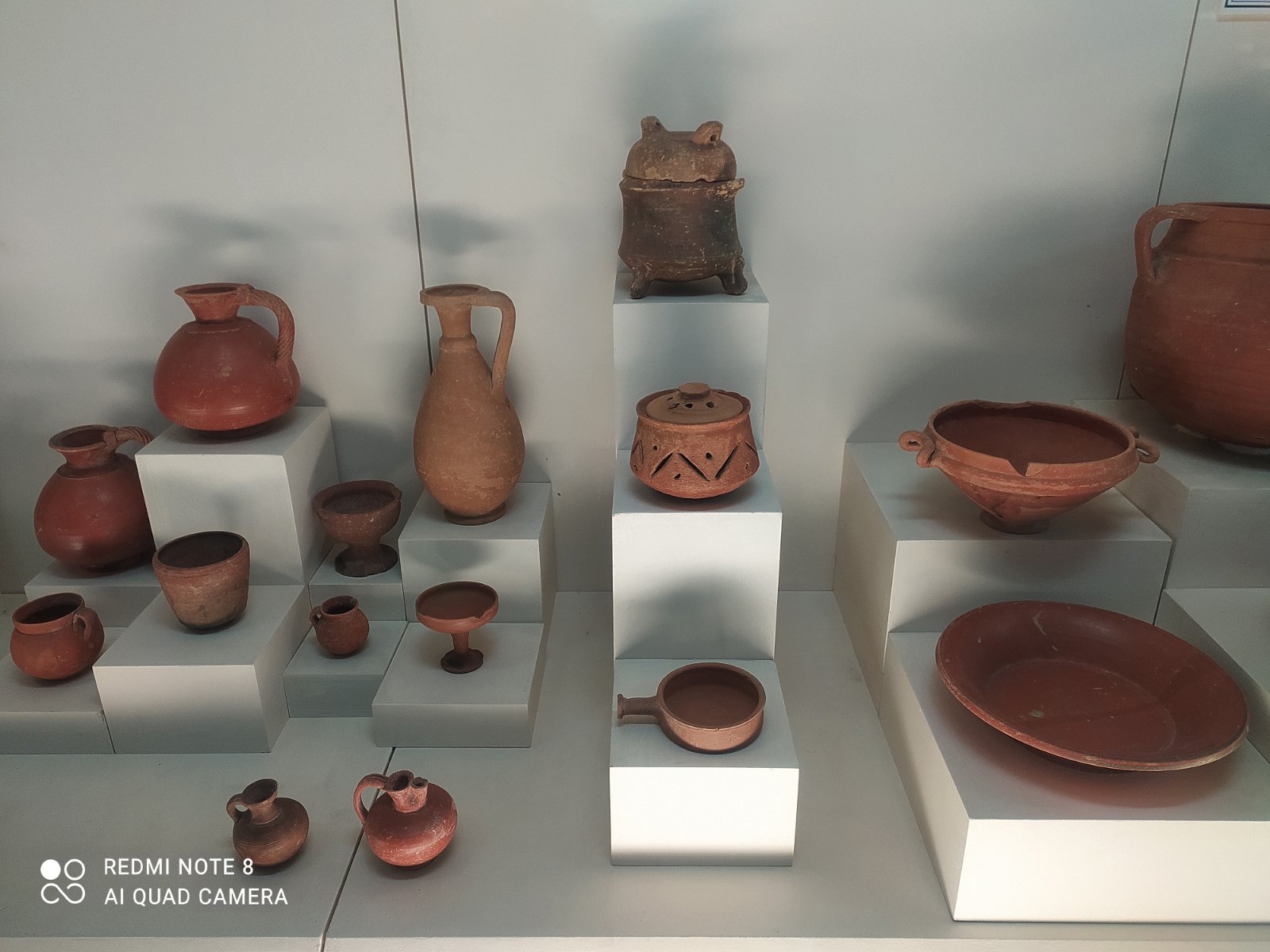 Ceramic products,I century BC-IV century AD,Antalya City Museum
 Ceramic products,I century BC-IV century AD,Antalya City Museum
Interested in Ancient Rome beyond reading? Join Legio X Fretensis or explore our reenactment directions.


