Paludamentum
The paludamentum was a Roman military cloak associated above all with a commander and military authority. Ancient writers occasionally used the term more broadly, but in representations of generals and emperors its significance differed from that of the ordinary soldier's sagum.
It was secured with a fibula at the shoulder and draped over clothing or armour. The clasp's position varied with the arrangement of the cloth: fastening at the left shoulder was not a compulsory standard. On coins and sculpted portraits it emphasised a ruler's military identity while retaining a cloak's practical function.
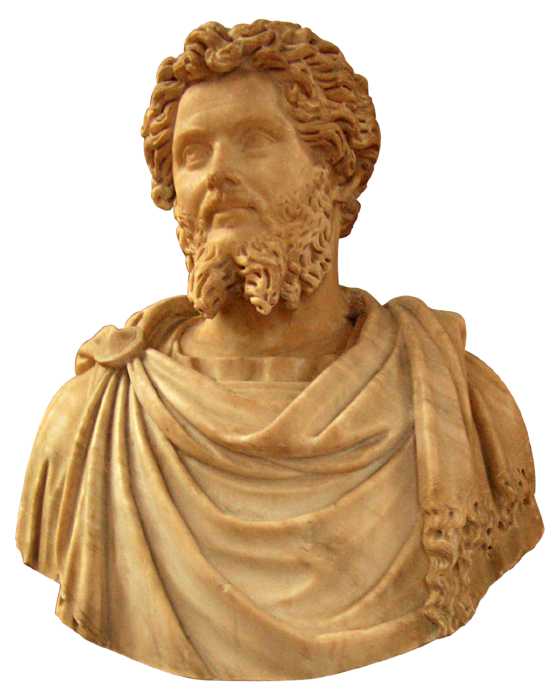 Bust of Septimius Severus wearing a military cloak interpreted as a paludamentum, late second–early third century CE.
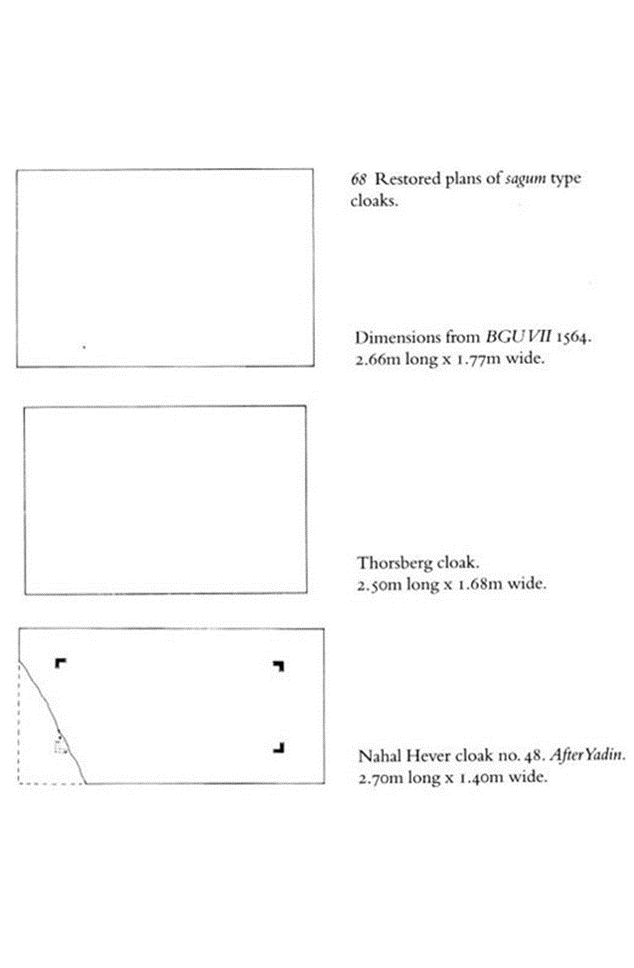 Modern comparative diagrams of Roman cloak patterns; not a single standard paludamentum pattern.
Who wore the paludamentum
A general's adoption of the paludamentum on leaving Rome was associated with taking up military command. The contrast between toga and military cloak expressed a transition from civic life to war. Under the Empire, the cloak became an established feature of the ruler's image as commander of the army.
A cloak on a relief is not enough to determine a precise rank. Inscriptions, pose, equipment and the figure's place in the composition must also be considered. Ancient terminology and modern classifications of depicted mantles do not always coincide.
Cloak, color and fibula
Sources associate a commander's paludamentum with purple and scarlet cloth, but this does not establish one shade for every period. Colour on a modern replica or museum reconstruction is not surviving evidence for the original garment's dye.
A replica requires a chosen prototype, suitable proportions, cloth weight and a functional fibula. Elegant sculpted folds do not prove that every paludamentum was made from especially thin fabric. The clasp should suit the period and hold the cloth securely, rather than serve as an invented rank badge.
Paludamentum and authority
A military cloak on a portrait could communicate authority even when the monument did not depict a campaign or battle. Together with armour, weapons and gestures of command, it created a recognisable image of a military leader.
Such a portrait can help explain draping, but need not show a complete everyday outfit. Late Roman and subsequent court mantles require their own chronology rather than being treated as an unchanged Early Imperial paludamentum.
Related topics
Literature and sources
- Paludamentum: Lewis and Short Latin Dictionary.
- Graham Sumner. Roman Military Dress. 2009.
Interested in Ancient Rome beyond reading? Join Legio X Fretensis or explore our reenactment directions.


