Eastern Roman Empire
The Eastern Roman Empire was the eastern part of the Roman state that survived the collapse of the Western Empire and continued with its centre at Constantinople. Contemporaries called it the Roman Empire and its inhabitants Romans; the name 'Byzantium' was introduced later by historians.
For ancient history, Eastern Rome matters as a continuation of the Late Roman Empire. Imperial authority, taxation, Roman law, the army and the idea of a universal empire survived there, while Greek language, Christian culture and new forms of administration gradually became stronger.
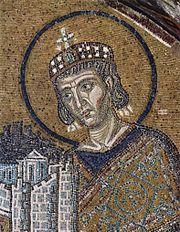 Constantine the Great brings the City as a gift to the Mother of God. Mosaic over the entrance to the Hagia Sophia
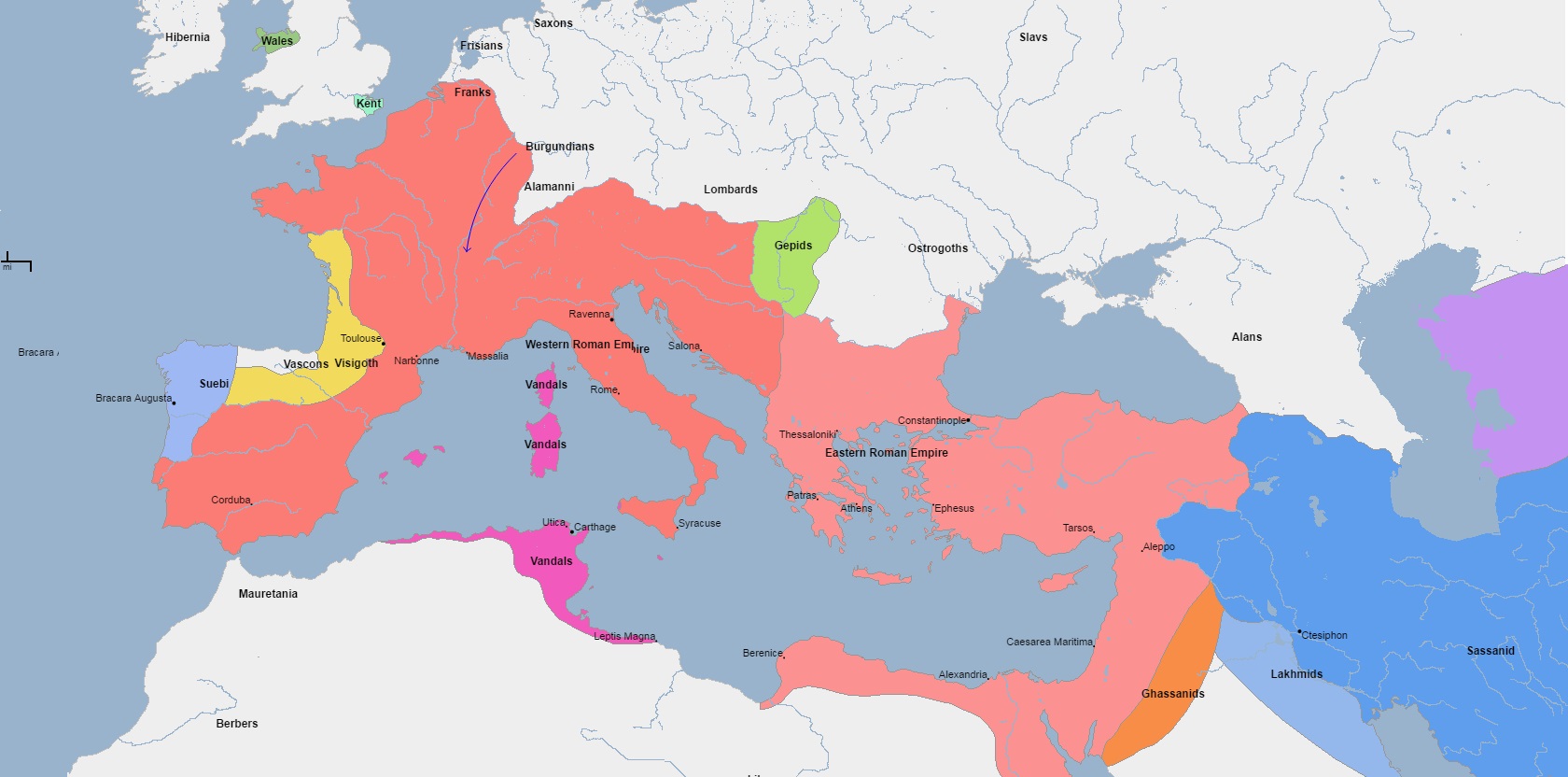 Roman Empire under Constantine I
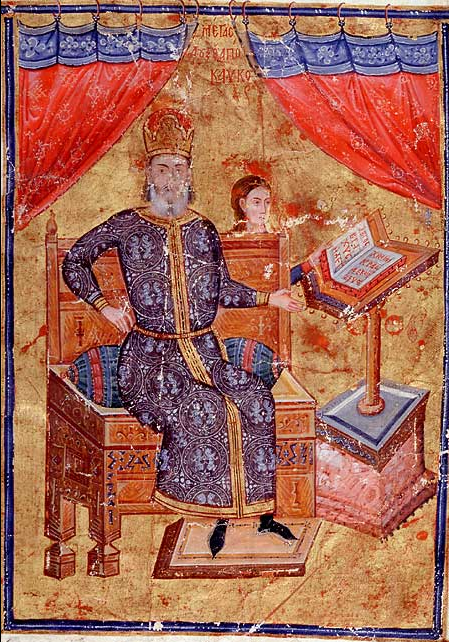 Image of one of the commanders of the fleet of the Eastern Roman Empire (Byzantine) – megaduke
Constantinople
The new capital, founded by Constantine on the site of Byzantium, had an exceptional position. It controlled the straits between the Mediterranean and the Black Sea, was well defended and became a major centre of court life, trade, church politics and imperial ideology.
Constantinople did not replace Rome instantly, but it became the main node of eastern power. The senate, palace services, prefectures, mints and church councils linked the city to the late Roman administrative system.
State and army
The Eastern Empire inherited the reforms of the Dominate: a strong court, developed bureaucracy, fiscal planning and divided military commands. The army included frontier troops, field armies, palace units and federates. In the fifth century the East preserved its tax base and administrative apparatus better than the West.
This did not mean an absence of crises. The Empire faced Goths, Huns, Persians, internal revolts and the heavy cost of frontier defence. Yet the eastern provinces were richer, cities more resilient and the capital better protected, allowing the state to survive 476.
Justinian and the Roman legacy
In the sixth century Justinian attempted to restore direct imperial rule over parts of the former West. His armies recovered North Africa, Italy and part of Spain, while the codification of law preserved Roman legal tradition in the form of the Corpus iuris civilis.
These successes were costly. Wars, plague, fiscal strain and new threats in the Balkans and the East revealed the limits of restoration. Nevertheless, the Eastern Roman Empire preserved many Roman institutions and transmitted them to the medieval world.
Related topics
Literature and sources
- Procopius. Wars.
- Ostrogorsky G. History of the Byzantine State.
- Cameron A. The Mediterranean World in Late Antiquity.
- Haldon J. Byzantium in the Seventh Century.
- Treadgold W. A History of the Byzantine State and Society.
Interested in Ancient Rome beyond reading? Join Legio X Fretensis or explore our reenactment directions.


