Great Migration of Peoples
The Great Migration of Peoples is a conventional name for long migrations, wars and political restructurings of the fourth to sixth centuries CE. During this period groups of Goths, Vandals, Alans, Suebi, Franks, Burgundians, Lombards, Angles, Saxons and others moved within and around the Roman world.
This was not a single 'flood of barbarians'. Some groups fled pressure from neighbours, others sought land and service, others entered the Empire as federates and later became independent powers. The result was a deep reshaping of western Europe and the rise of barbarian kingdoms on the territory of the former Western Roman Empire.
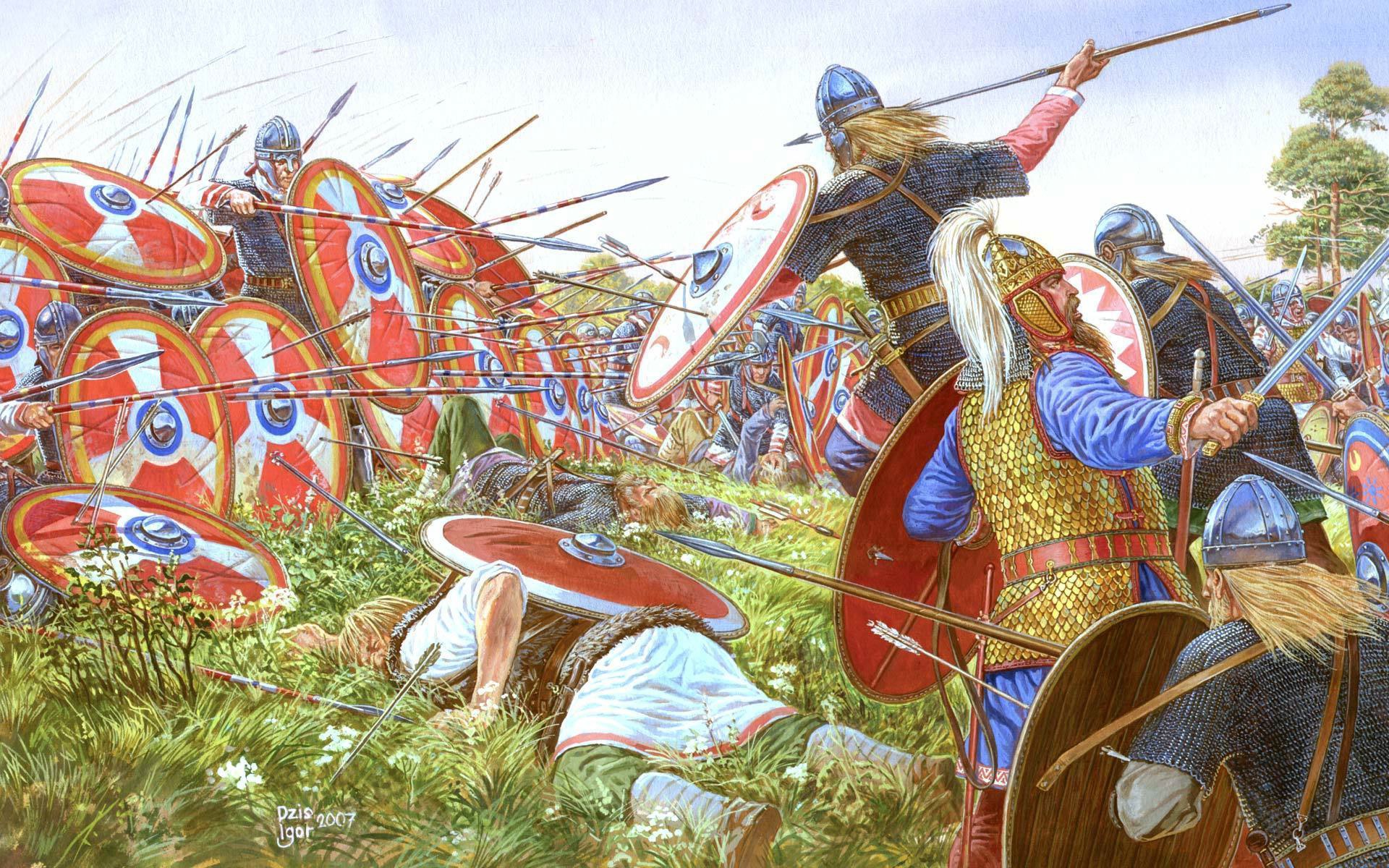 Romans take on Goths
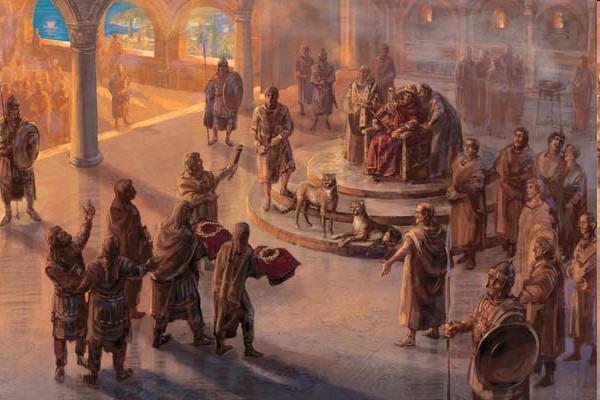 Odoacer's ambassadors hand over symbols of the Western Emperor's power to the Byzantine Emperor Zeno
Causes and movement
The causes of migration were mixed. Frontier zones were shaped by demographic pressure, elite competition, the search for plunder, trade interests, climatic fluctuations and the attraction of the Roman economy. The arrival of the Huns in the Pontic steppe in the second half of the fourth century was especially important: it disrupted the balance among the Goths and neighbouring groups.
For Rome, migration was both a threat and a resource. The Empire had long used settlers as soldiers and farmers, but under civil conflict and fiscal strain large armed groups became increasingly difficult to control.
Goths and the crisis of the fourth-fifth centuries
A turning point was the crossing of the Danube by Gothic groups in 376 and the disaster at Adrianople in 378, where Emperor Valens was killed. The Goths did not then disappear: they made treaties, served in the imperial army, took part in struggles for power and, under Alaric, captured Rome in 410.
In the fifth century similar patterns appeared in different regions. Vandals and Alans moved through Gaul and Spain, then founded a kingdom in North Africa. Franks grew stronger in Gaul. Burgundians and Visigoths received their own zones of power. The Western Empire increasingly depended on military leaders of barbarian origin.
Roman system and new kingdoms
The migrations did not mean the instant disappearance of the Roman world. New rulers used Roman taxation, cities, offices, titles and law. A king could be the military leader of his people and at the same time a Roman official in the eyes of the emperor or local aristocracy.
Thus the fall of the West in 476 is an important date, but not the end of all Roman institutions. In Italy, Gaul, Spain and Africa mixed societies emerged: Roman landowners, bishops, civic communities and the military elites of new kingdoms gradually learned to live within one political system.
Related topics
Literature and sources
- Ammianus Marcellinus. Res Gestae.
- Jordanes. Getica.
- Heather P. The Fall of the Roman Empire.
- Halsall G. Barbarian Migrations and the Roman West.
- Wolfram H. History of the Goths.
Interested in Ancient Rome beyond reading? Join Legio X Fretensis or explore our reenactment directions.


