Ancient Rome
Rome (Italian and Latin: Roma) is the city on the Tiber that became the centre of the Roman state. “Ancient Rome” may refer either to the city or to the power that grew around it. The epithet “Eternal City” was already used in ancient literature.
Roman tradition dates the foundation to 21 April 753 BCE. This is a traditional date, not an archaeological timestamp: settlements on the hills developed and coalesced over time. Dating “from the foundation of the city” was one method of reckoning years, not the Romans’ only chronological system.
Rome lies approximately 25 km from the Tyrrhenian Sea. Its traditional seven hills are the Palatine, Capitoline, Quirinal, Viminal, Esquiline, Caelian and Aventine.
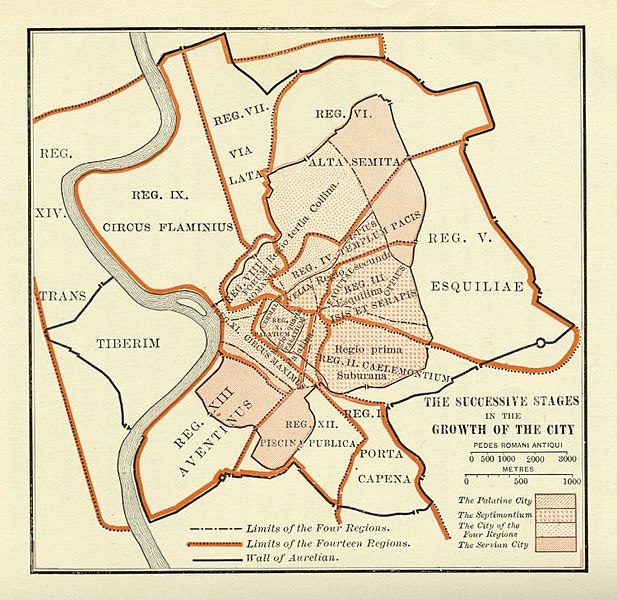 Rome City Plan
Periodization of Roman history
- Kingship — traditionally 753–509 BCE. Early urban history and institutions are known chiefly through later traditions and archaeology.
- Republic — conventionally 509–27 BCE. Broad subdivisions distinguish the early Republic, the middle Republic and its third- and second-century conquests, and the late Republic’s conflicts in the second and first centuries BCE.
- Empire — imperial rule is usually dated from Augustus’ settlement in 27 BCE. The Principate developed into late Roman monarchy, often termed the Dominate; Diocletian’s accession in 284 CE marks an important transition.
The third-century crisis is commonly dated to 235–284 CE. Gallic and Palmyrene regimes broke away from central authority during the crisis; imperial unity was subsequently restored.
In 476 Odoacer deposed Romulus Augustulus but spared his life. The year is a conventional endpoint for western imperial rule, not the instant disappearance of antiquity. The Eastern Roman Empire continued, and transitions to the medieval world differed by region.
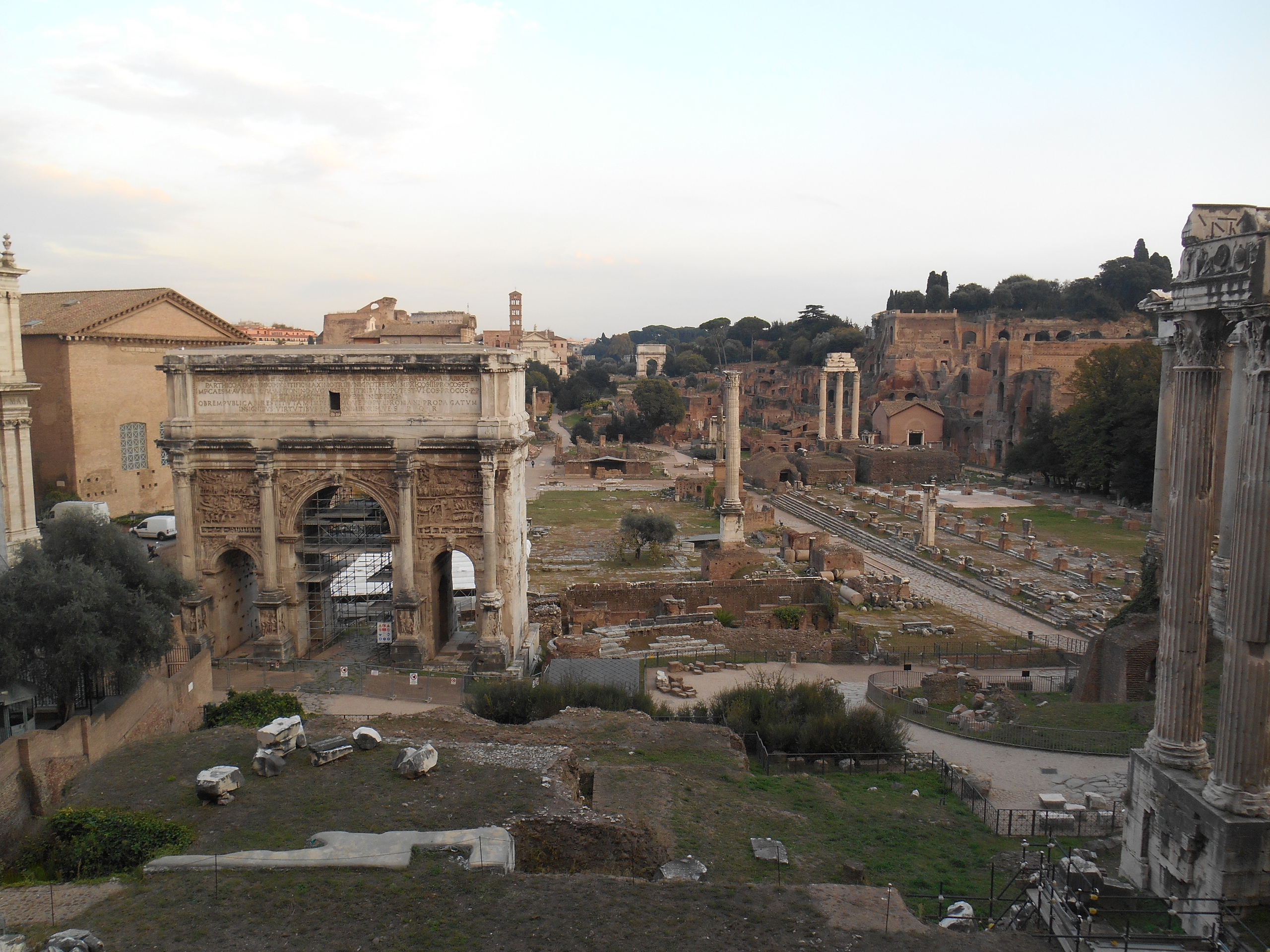 Roman Forum. Modern look.
Related topics
Literature and sources
1. Belkin M. V., Verzhbitsky K. V. Istoriya Drevnego Rima [History of Ancient Rome]. Training manual. 2nd ed., ispr. and add. - St. Petersburg: SPbU,2007. - 197 p. 2. Kovalev S. I. Istoriya Rima [History of Rome]. New edition, revised and expanded/Ed. by Prof. E. D. Frolov. - St. Petersburg.:"Polygon Publishing House. - 2002. -864 p. 3. Mashkin N. A. Istoriya Drevnego Rima [History of Ancient Rome], Moscow: Vysshaya shkola Publ.,2006,753 p.
Interested in Ancient Rome beyond reading? Join Legio X Fretensis or explore our reenactment directions.


