Recruitment in the Roman Army
The Roman army changed profoundly between the age of the kings and late antiquity. Its recruits were men, but their age, legal status, social background and route into service varied. Recruitment systems responded to political institutions, military demand and changes within Roman society.
The Regal Period (Eighth–Sixth Centuries BCE)
Under the Roman kings, military service is traditionally described as a citizen levy raised for war rather than a permanent professional army.
Recruitment Service was an obligation of men considered capable of bearing arms.
Social basis Property mattered because soldiers generally had to provide equipment.
Organisation Ancient tradition linked the levy to the city’s early tribal and curiate divisions. The details are difficult to recover securely.
Equipment Wealth influenced the quality and quantity of arms a man could bring.
The Early Republic (Fifth–Fourth Centuries BCE)
The Republic inherited and developed institutions that Roman tradition attributed to Servius Tullius. These were not simply invented after the expulsion of the kings.
The census system Citizens were grouped by property, with corresponding obligations for service and equipment.
The citizen levy Armies were raised for campaigns, after which many soldiers returned to civilian life.
Tactical development The transition towards manipular organisation made Roman infantry more flexible. Its chronology and causes remain debated.
Service obligations Republican service was counted in campaigns or years of duty, not necessarily one continuous term. The familiar obligation of sixteen infantry campaigns belongs to the system described by Polybius for a later period.
The Middle and Late Republic (Third–First Centuries BCE)
Expansion brought longer campaigns, including the Punic Wars, and placed increasing pressure on the citizen levy. Service overseas could separate men from their farms and families for years.
Recruitment and property The admission of poorer citizens became increasingly important. Marius’ recruitment in 107 BCE is a famous episode, but the change should not be reduced to a single reform that instantly created a professional army. Property thresholds had already been lowered, and emergencies had prompted wider recruitment before Marius. Voluntary service and the need for men with campaign experience gradually weakened the practical importance of a recruit’s wealth.
Longer service Repeated campaigns encouraged experienced soldiers to remain with the army. Compulsory levies nevertheless continued alongside volunteers. The Republican obligation to complete a number of campaigns was not the same as an imperial legionary’s continuous term of service; a fixed sixteen-year contract should not be attributed to all soldiers of Marius’ time.
Allied contingents Italian allies, or socii, supplied substantial forces. As Roman power expanded, communities and dependent rulers in Spain, Greece, Macedonia, Africa and Asia Minor also contributed troops. They could retain their own commanders and organisation while operating with Roman armies. Their equipment, pay and supply arrangements depended on the particular agreement and campaign.
Pay, equipment and veterans Soldiers received pay, with deductions for supplies and equipment. Caesar increased legionary pay, and the conventional early imperial annual rate before Domitian’s increase was 225 denarii. A regular imperial framework for discharge rewards did not yet exist during the Republic. Commanders sought land settlements and distributed booty, so a veteran’s prospects were closely connected with political decisions as well as battlefield success.
Loyalty to commanders Dependence on a general for rewards helped strengthen personal ties between soldiers and successful commanders, including Julius Caesar. This did not erase civic loyalties, but it gave military patronage increasing political importance.
The levy described by Polybius Writing in the second century BCE, Polybius describes twenty-four military tribunes assigned to four legions, six per legion: fourteen had at least five years’ service and ten had at least ten. Lots determined the order in which the tribes were called. Four men of comparable age and physique appeared together, and the legion representatives took turns choosing first, distributing recruits of similar quality among the units.
Enrolment continued until each legion reached its appointed strength, normally 4,200 infantry in this account or 5,000 in an emergency, with 300 cavalry. One selected recruit pronounced the military oath; the others then undertook the same obligation. The tribunes announced the place and date of assembly and dismissed the men until then. Allied communities received separate orders specifying their contribution and rendezvous. This describes a particular Republican system, not an unchanging procedure followed throughout Roman history.
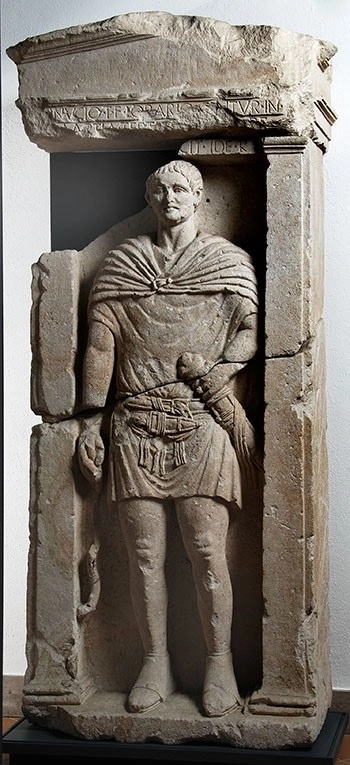 Tombstone of Centurion Minucius, 1st century BC
The Principate (First Century BCE–Third Century CE)
Under Augustus, the standing army acquired a more stable framework of service, pay and discharge rewards.
Length of service Terms differed between branches and changed over time. A legionary’s formal term was eventually twenty years, often with further service, while auxiliaries commonly served twenty-five years.
Selection and training Volunteers were important, but compulsory recruitment remained available when needed. Recruits underwent examination, or probatio, including checks on suitability and status. Initial training and the military oath marked their incorporation into the army. Evidence for identification tokens and training schedules must be read in its particular chronological context.
Deployment Most legions and auxiliary units were stationed in the provinces, especially frontier regions.
Auxiliary troops The diverse allied forces of the Republic developed into the regular auxilia. Many recruits were peregrini—free subjects without Roman citizenship—who could receive citizenship after qualifying service.
A new recruit could be described as a tiro, while probatus referred to one who had been approved. The military oath, sacramentum, established the soldier’s obligation to obey. Vegetius recommends a four-month training period and describes identifying recruits after they have proved suitable; his late Roman prescriptions should not be imposed as a universal timetable for all early imperial recruits. Likewise, identification tokens known as signacula require attention to the date and context of the evidence.
The Julio-Claudian Period (27 BCE–68 CE)
The early imperial legions retained a strong Italian element, although recruitment patterns differed between regions. Units in the Balkans and the East increasingly drew on local populations. In some circumstances, men received citizenship on enlistment in a legion.
Recruitment difficulties already existed under Augustus and Tiberius. Ancient writers describe reluctance to serve, emergency levies and abuses by recruiting officials. Major crises, including the Illyrian revolt and the loss of Varus’ legions, required exceptional measures. These episodes should not be mistaken for normal recruitment practice.
Augustus lengthened formal service in the legions from sixteen to twenty years and in the Praetorian Guard from twelve to sixteen. Men could nevertheless remain under arms beyond their expected discharge. Corbulo’s reorganisation of the eastern army under Nero illustrates how age, health and inadequate replacements could undermine the effective strength of established units.
Auxiliary service was also becoming more regular, but terms and privileges were not yet uniform everywhere. The Batavians supplied valued troops under a distinctive arrangement with Rome. Other formations emerged from the forces of dependent rulers; Legio XXII Deiotariana, for example, had roots in a Galatian royal army trained on Roman lines.
Citizen auxiliary cohorts also existed. The distinction between legionary citizens and non-citizen auxiliaries was therefore never absolute.
The Batavians’ special arrangement included exemption from ordinary taxation in exchange for supplying troops. Their men served not only in auxiliary units but also in the imperial bodyguard. Citizen auxiliary cohorts, including formations styled voluntariorum civium Romanorum, show that legal status and branch of service did not correspond perfectly even in the first century.
 Tombstone of legionnaire Gaius Valerius Crispus,who served in the VIII Augustan Legion. Wiesbaden. First half of the first century AD
The Flavian Period (69–96 CE)
Under Vespasian, Titus and Domitian, provincial communities supplied an increasing share of legionary recruits. Urban development and the spread of Roman civic institutions enlarged the pool of men eligible and willing to serve.
Italian recruitment became less dominant in the legions, while Italy remained particularly important to the Praetorian Guard. The army increasingly reflected the populations of the empire rather than the Italian peninsula alone. Centurions still often came from Italy or long-established Roman communities, and transfers between units helped sustain shared military practices.
Domitian increased legionary pay from 225 to 300 denarii a year. Slaves remained excluded from ordinary military enlistment, despite the exceptional arrangements recorded in some earlier emergencies.
The changing origins of recruits can be followed in particular units rather than only in army-wide generalisations. Legio XV Apollinaris is one example used to illustrate the diminishing Italian element. Recruitment from cities and established veteran colonies helped transmit Roman civic and military culture to the provincial army. Senior soldiers and centurions could also carry experience between the legions and the Praetorian or urban cohorts, maintaining shared practices across formations with increasingly diverse recruits.
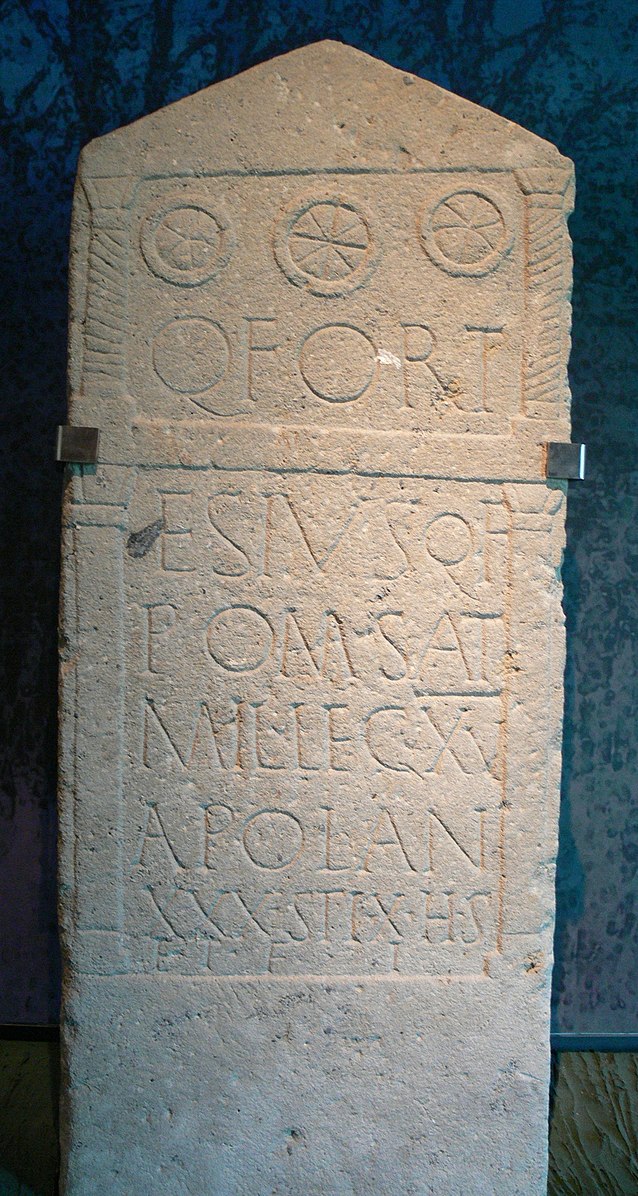 Monument of the legionnaire Quintus Fortesius Saturninus from the XV Apollinaris, second half of the first century.
The Antonine Period (96–192 CE)
During the second century, recruitment became increasingly provincial and local. The declining Italian share can be traced through inscriptions, although precise percentages depend on the surviving sample and should not be treated as a census of the entire army. Trajan’s alimenta supported children in Italy through a scheme involving loans secured on land. The programme has been discussed in connection with concerns about the future citizen population and military manpower, but its purpose cannot be reduced to supplying recruits alone.
New auxiliary units included mounted and specialist troops drawn from different regions. The value attached to particular skills could lead to special privileges, while a unit’s original ethnic name did not necessarily describe the origins of all its later recruits. Mounted archers and heavily armoured cavalry added capabilities beyond those of the legionary infantry.
Soldiers’ families and the settlements surrounding military bases became important sources of recruits. Camp communities housed soldiers’ partners and children even when serving men could not contract a legally recognised marriage. Inscriptions sometimes record a recruit’s origin as the camp rather than a conventional city of birth. Such evidence helps explain how military service could become a family occupation.
Under Hadrian and his successors, regional recruitment became more firmly established. A frontier army could draw on neighbouring provinces as well as its immediate surroundings: the Rhine armies, for example, recruited across the German provinces and adjacent western regions. This did not prevent transfers, exceptional levies or recruitment outside a unit’s usual area. Provincial complaints about recruitment reflect the burden that military demands could place on communities.
Citizens could serve in the auxilia, while some men acquired citizenship when entering a legion. Transfers from the fleet also occurred. A particularly useful document is PSI IX 1026, dated 22 January 150 CE: twenty-two veterans of Legio X Fretensis petitioned the governor of Syria Palaestina for documentary confirmation of their privileges. They had previously served in the fleet at Misenum and had been transferred to the legion under Hadrian. Their intended return to Alexandria made proof of status important to them. The case illustrates the difference between completing service and being able to demonstrate the rights that followed from it.
The Antonine epidemic and the Marcomannic Wars created severe manpower demands. Literary sources describe emergency recruitment from groups outside the normal pool, including freedmen, gladiators and men supplied by defeated or allied peoples. Some accounts also mention slaves and armed groups from the Balkan regions. Exceptional wartime expedients were not necessarily permanent changes in eligibility, and the reliability of each account must be assessed separately.
Auxiliary discharge grants changed their treatment of veterans’ children around 140 CE. Earlier grants commonly included children already born during service; the later formula generally omitted them, although exceptions survive. This is distinct from the citizenship of future children born within a legally recognised marriage. The exact scope and motives of the change remain debated.
The increasing presence of Roman citizens in auxiliary units blurred older legal distinctions without erasing differences in unit organisation. Alongside regular formations, troops with distinctive regional equipment and methods continued to serve in units described by terms such as numeri and nationes. These labels do not identify a single uniform category with identical pay and conditions.
A petition from Theadelphia, dated to 113–117 CE, gives another concrete example of enlistment: the recruit Gaius Valerius Saturninus asks the prefect of Egypt, Marcus Rutilius Lupus, to approve him for service in a cohort. Lupus is the recipient, not the recruit (P. Thead. inv. 31; CEL I 149).
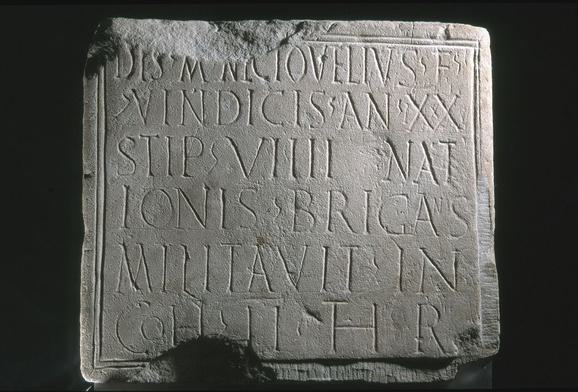 Monument to Nektovelius, a fighter of the II Thracian cohort from the Brigante tribe. Served 9 years, lived 29. II century Kept at the National Museum of Scotland
The Severan Dynasty (193–235 CE)
After winning power, Septimius Severus dismissed the existing Praetorian Guard, which he held responsible for the murder of Pertinax. He replaced it with selected legionaries, many from the Danubian armies. The Guard thus became less closely tied to Italian recruitment.
Severus raised the three Parthian legions. Legio II Parthica was stationed at Albanum near Rome, an important departure from the earlier concentration of legions in the provinces. Military detachments and other units also increased the army’s presence in Italy.
Experienced officers of provincial origin gained opportunities for advancement. Equestrian commands became more prominent, and the relationship between military success, regional connections and political power grew stronger. This was a continuing development, not the result of one measure affecting every officer at once.
In 212 CE, Caracalla’s citizenship grant extended Roman citizenship to nearly all free inhabitants of the empire. It sharply reduced the legal distinction between the normal recruiting populations of legions and auxilia, although the formations themselves did not thereby become identical.
Severan measures also improved soldiers’ pay and altered the recognition of their domestic lives. Military families around the bases remained an increasingly important source of recruits.
The new legions were I, II and III Parthica. II Parthica’s base in the Alban Hills gave the emperor a legionary force close to the capital, in addition to the Guard and other units in Italy. Their equestrian commanders exemplify the expanding range of senior posts available outside the traditional senatorial career. This does not mean that every centurion automatically entered the equestrian order.
The recognition of soldiers’ family lives under Severus is usually discussed in connection with the earlier restriction on legal marriage during service. Whatever the precise scope of the measure, households near military bases reinforced the recruitment of soldiers’ sons. Increased pay and provisions for military subsistence likewise strengthened the state’s commitment to supporting long-term service.
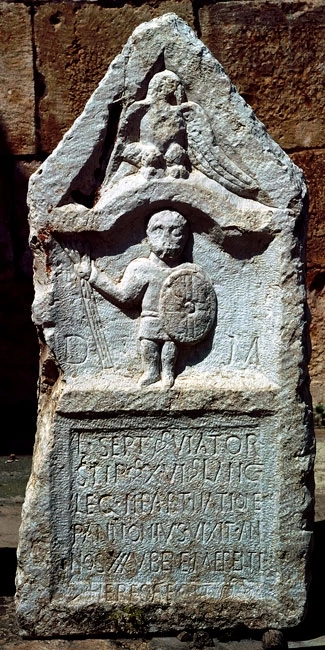 Tombstone of legionnaire Lucius Septimius Viator from II Parthica, AD 218
The Soldier-Emperors (235–284 CE)
The third-century crisis combined repeated civil wars with pressure on the Rhine and Danube frontiers and conflict with the Sasanian Empire in the East. Recruitment for this period is less fully documented than for the early empire, but the need to replace losses was persistent.
Rome drew on provincial populations, military families and groups settled or recruited under agreements with the imperial authorities. The terminology used for such troops changed, and the later system of foederati should not be projected unchanged into every third-century arrangement.
Equestrian officers and men promoted through military service became increasingly prominent. Under Gallienus and his successors, senatorial command of legions declined. A succession of emperors with strong Danubian military backgrounds reorganised the state and restored its position on several fronts. Their careers show how far the army’s leadership had moved beyond an exclusively Italian elite.
Commanders from the Danubian regions became especially influential in the later third century. The succession from Claudius II to Diocletian is often discussed as a phase of leadership by men with such military backgrounds. Their response to civil conflict and external pressure involved both campaigns and institutional reform; common regional origins did not make them a single permanent political faction.
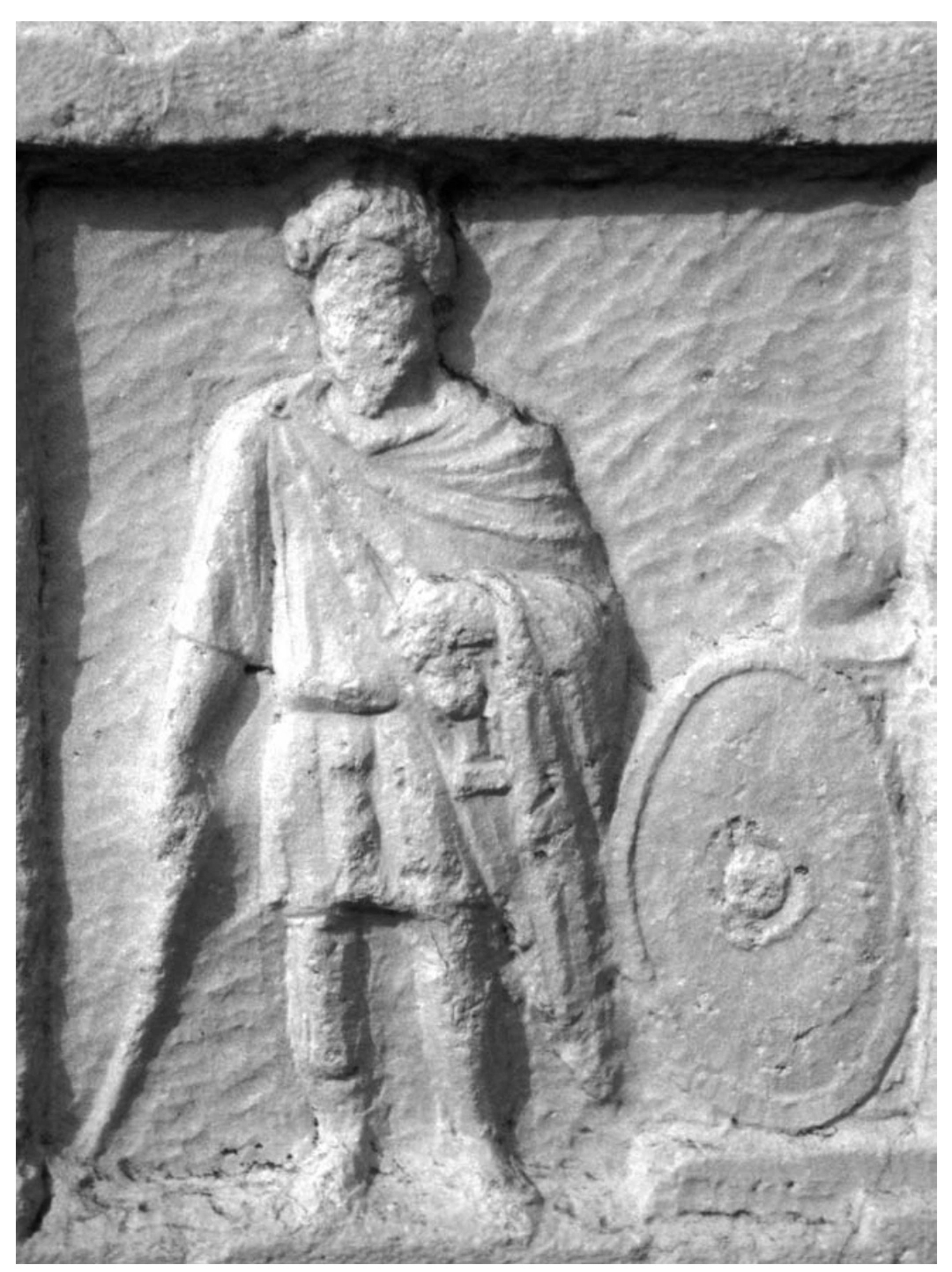 Tombstone of legionnaire Julius Aufidius from the XVI Flavia Firma, III century. Veria Museum, Greece
 The Dominate (From 284 CE)
The demands of the late Roman army could not be met by volunteers alone. Compulsory recruitment became a major component of the system. Landowners or groups of taxpayers could be required to supply men, while military service obligations were increasingly imposed on veterans’ sons.
These rules did not operate identically throughout the empire. Local conditions, exemptions, substitutions and official enforcement affected the men who actually reached the army. Groups settled on imperial land could also be required to furnish recruits.
Men from beyond the frontier served under various arrangements, but a simple opposition between “Roman” and “barbarian” recruits obscures differences in citizenship, training, residence and loyalty. Recruitment remained an imperial administrative problem as much as an ethnic question.
Under Constantine and his successors, legislation addressed the obligation of veterans’ sons to serve. The system could also require landowners to provide recruits in proportion to assessed obligations. Attempts to offer substitutes or unsuitable men reveal the conflict between a community’s labour needs and the army’s demand for effective soldiers. Ancient judgements about recruits from particular regions are evidence of contemporary reputations, not reliable measures of the abilities of every recruit from those provinces.
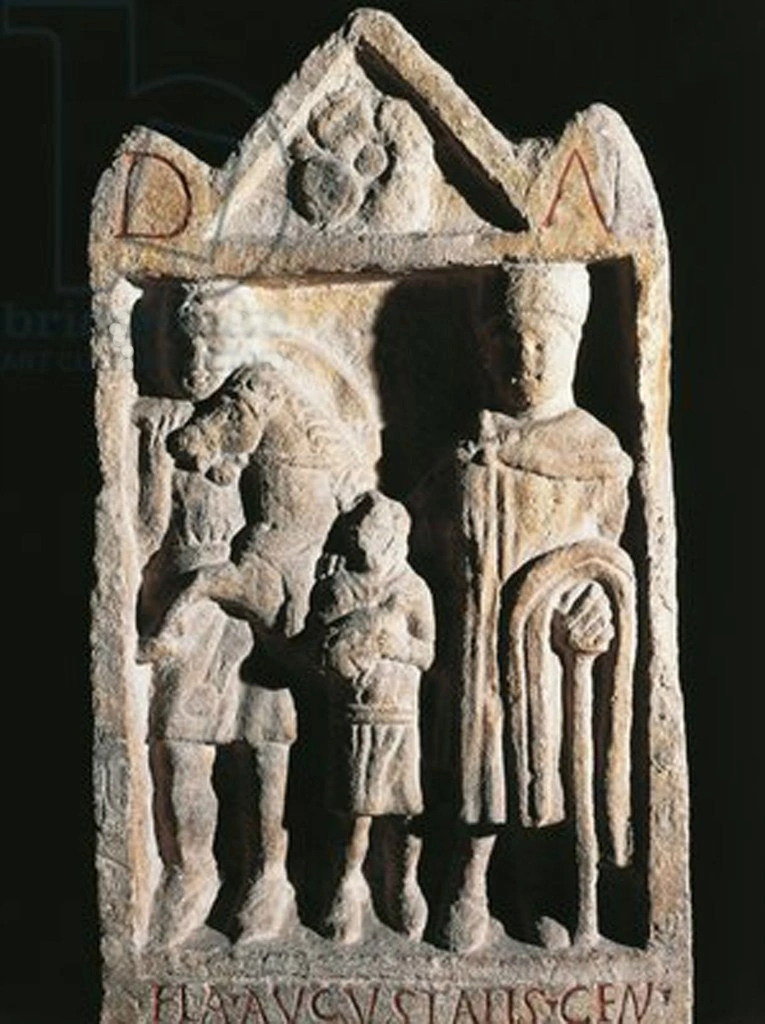 Tombstone of Flavius Augustalius from IX Claudia. IV century, Aquileia. Museum of Roman Civilization, Rome, Italy.
Recruitment for the Roman Navy
The fleets recruited more broadly than the legions, including non-citizens and freedmen. Men from the eastern Mediterranean were prominent, but recruitment was not confined to one region. Naval personnel could also be transferred into land forces; in exceptional circumstances, new legions were formed from fleet manpower.
Naval service was long, commonly twenty-six years in the early imperial discharge evidence. Storms, accidents, disease and warfare all affected a sailor’s prospects of completing it. The circumstances of discharge mattered for the privileges a veteran received.
A bronze diploma could certify an imperial grant of citizenship and marriage rights. These documents were particularly valuable to men whose status and family relationships required formal recognition after service. The British Museum’s diploma for the rower Marcus Papirius records discharge after twenty-six years.
Naval ranks included centurions, and ships carried men able to fight as well as handle a vessel; the size of the fighting complement varied with the ship and mission. Transfer into a land formation could change a sailor’s career, but did not by itself remove the need to document his legal status.
Honourable discharge and discharge for medical reasons, missio causaria, were not interchangeable. A man who left service through illness might have a different entitlement to privileges, depending on the rules then in force. The grant of conubium regularised qualifying marriages under Roman law; citizenship for children depended on the wording and date of the grant rather than following one unchanged rule for all naval veterans.
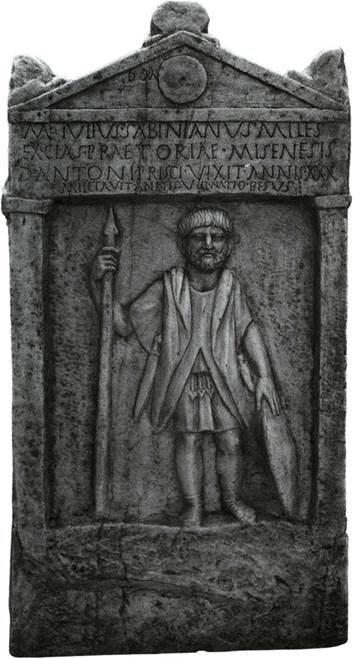 Tombstone of Marcus Julius Sabinianus, a soldier of the Misenian Fleet from the century of Antony Priscus, a native of the Bessoi tribe. Lived 30 years, served 8. The second half of the first-beginning of the second century.
Military Diplomas
Military diplomas were certified bronze copies of imperial grants to qualifying servicemen and veterans. They are especially associated with the auxilia and the fleet. Their provisions could include Roman citizenship and conubium, the right to a legally recognised marriage under Roman law.
A diploma normally consisted of two joined bronze tablets. The grant was recorded on the outside and repeated on the sealed inner surfaces, while witnesses authenticated the copy. Individual documents name the recipient and supply valuable details about units, commanders and service.
Diplomas also survive for some other forces, including the Praetorian Guard, whose members already possessed citizenship but could receive other privileges. Ordinary legionaries did not normally require citizenship diplomas because citizenship was usually a condition of their enlistment. This general distinction allows for exceptional cases.
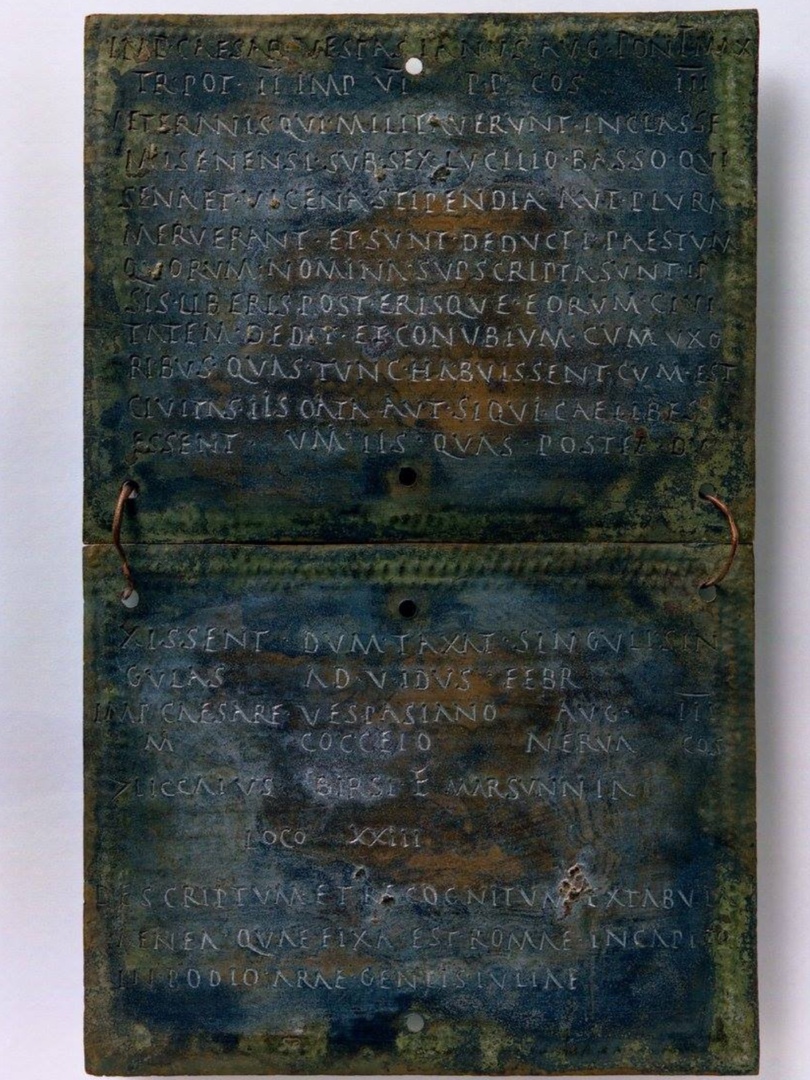 Diploma of a naval officer, 1st century AD. Found in the Sava River, Croatia
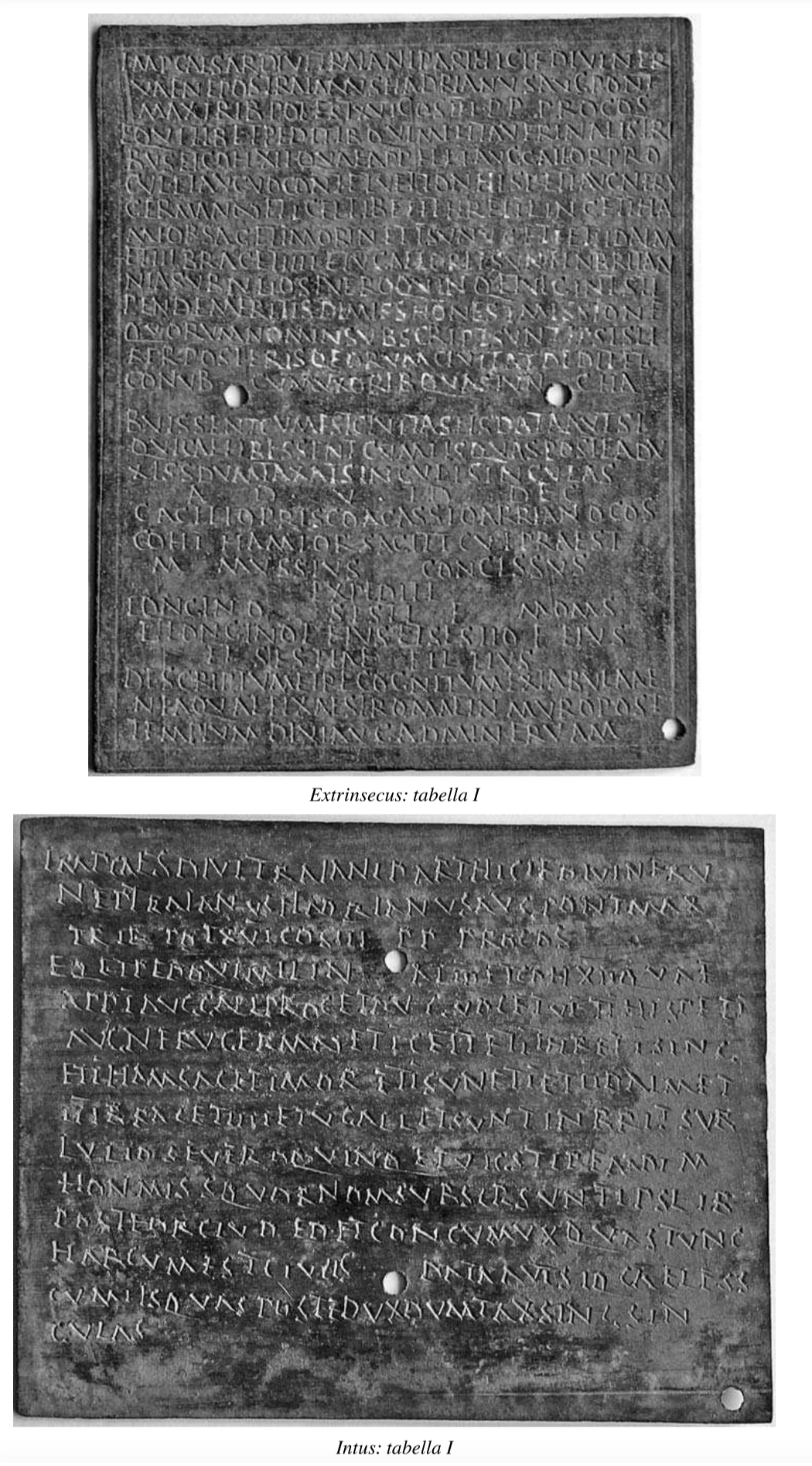 The first tablet of the military diploma issued to the veteran of auxiliary troops Longinus Sestius from Momsa in 132. Private collection
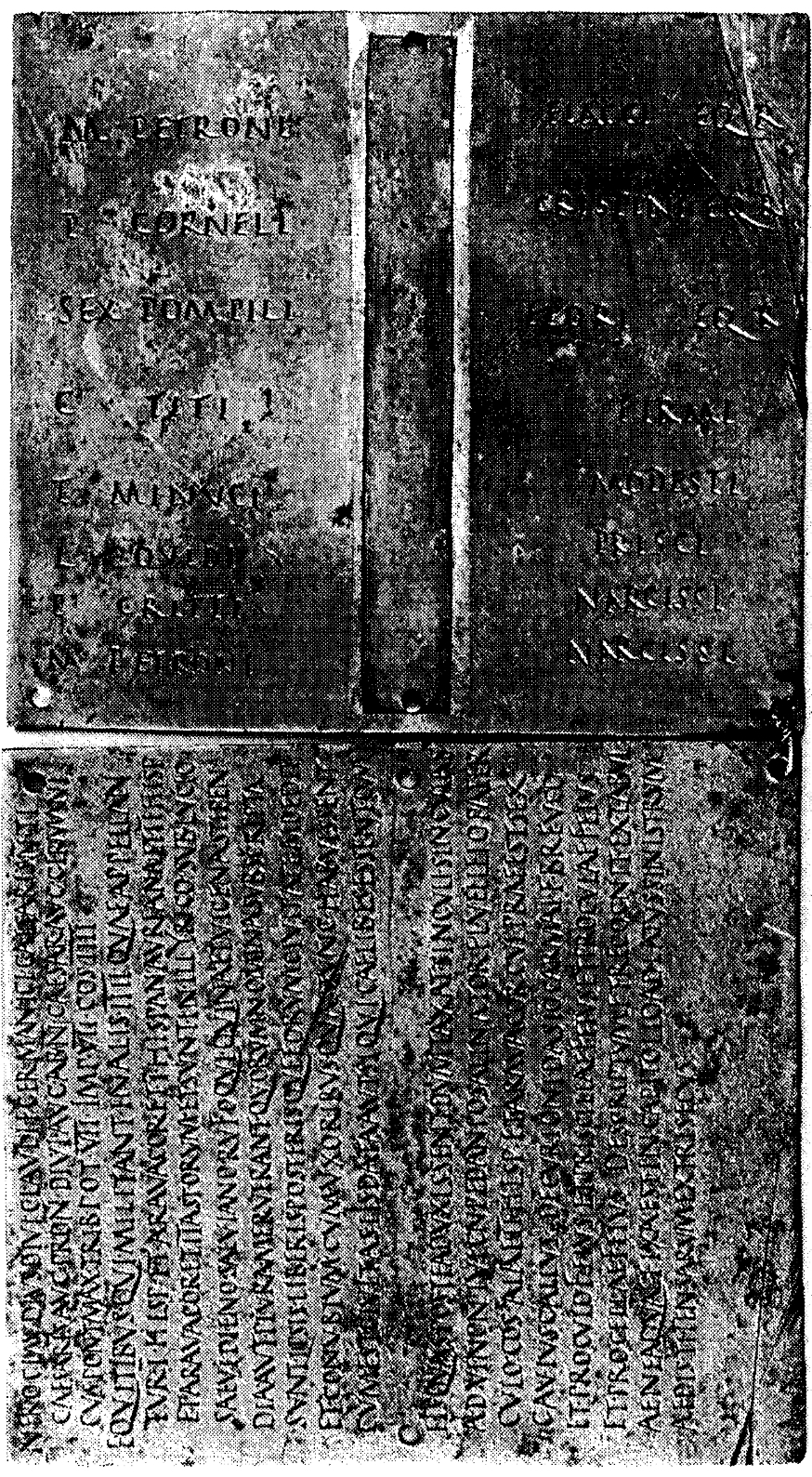 Military diploma of an Ala fighter named Dasii, son of Karmai of the Brevk tribe. Issued on May 2, 60 on behalf of the Emperor Nero
Citizenship grants helped integrate veterans and their families into the legal and civic life of the empire. The surviving diplomas are therefore important evidence for both military organisation and provincial society.
Caracalla’s grant of 212 CE changed their significance, but did not cause every category of military diploma to disappear immediately. Their issue and provisions must be considered separately for different branches of service.
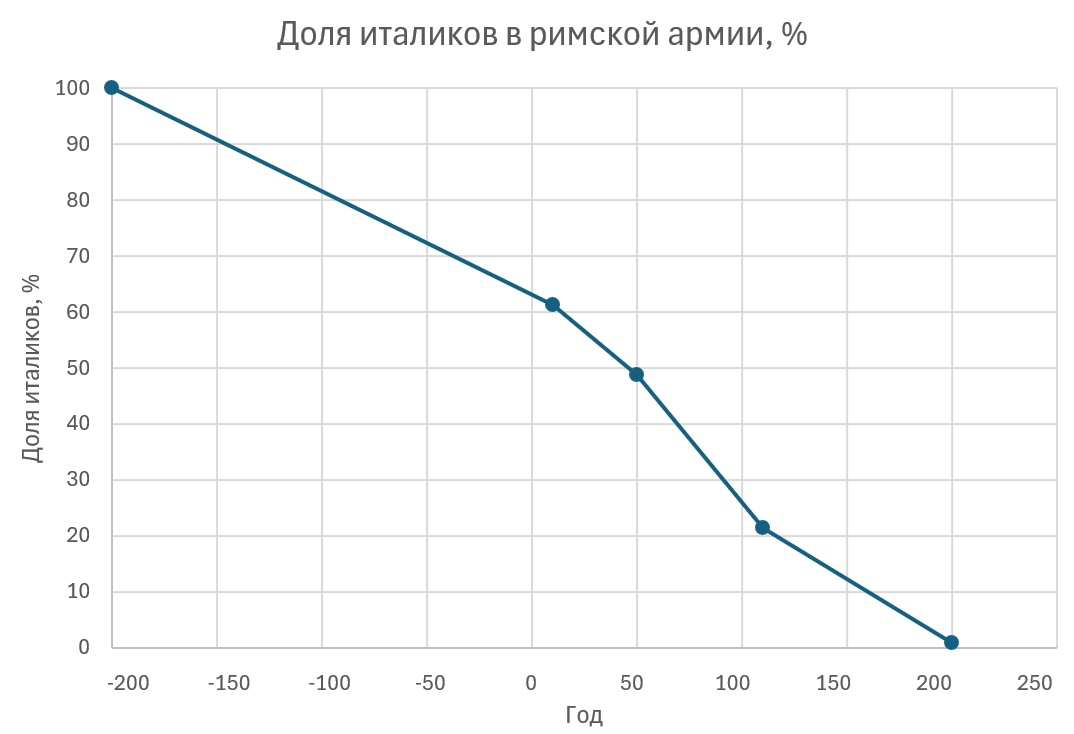 The proportion of Italians in the Roman army
Conclusion
Rome developed from a city-state levy into an imperial military system drawing recruits from a vast and diverse population. Italian allies were essential to its Republican expansion, and provincial communities later supplied an increasing share of both ordinary soldiers and officers.
Citizenship, military service and settlement reinforced one another. Soldiers could gain legal privileges, establish families near their bases and see their sons enter the same profession. At the same time, Rome continued to use contingents supplied by allied rulers and peoples beyond its borders.
The standing army’s scale and longevity were remarkable. It maintained regular training, supply and administrative practices across many generations. Military careers also provided routes of advancement, particularly in the later empire, when some men rose from relatively modest backgrounds to senior commands and the imperial throne.
These achievements depended on a changing mixture of volunteers, compulsory levies, family obligations and negotiated recruitment. No single formula describes the whole history of the Roman army.
Literature
The Cambridge Ancient History. Vol. X: The Augustan Empire, 43 B.C.–A.D. 69. Cambridge University Press.
The Cambridge Ancient History. Vol. XI: The High Empire, A.D. 70–192. Cambridge University Press.
The Cambridge Ancient History. Vol. XII: The Crisis of Empire, A.D. 193–337. Cambridge University Press.
Guy de la Bédoyère. Gladius: The World of the Roman Soldier.
A. V. Bannikov. The Evolution of the Roman Military System in the First–Third Centuries. St Petersburg: Eurasia, 2013 (in Russian).
A. V. Bannikov. The Roman Army in the Fourth Century: From Constantine to Theodosius (in Russian).
Werner Eck, Paul Holder and Andreas Pangerl. “A Diploma for the British Army in 132 and Hadrian’s Return to Rome from the East”. Zeitschrift für Papyrologie und Epigraphik 174, 2010, pp. 189–200.
Alastair Scott. Roman Military Tombstones. Shire Publications, 1984.
Polybius. Histories, Book 6: Read the text
Metropolitan Museum of Art. Bronze military diploma, 149 CE: Museum catalogue
British Museum. Legion exhibition guide: Exhibition guide
PSI IX 1026 (22 January 150 CE), petition of veterans of Legio X Fretensis: Papyrus record
Sofie Waebens. “Imperial Policy and Changed Composition of the Auxilia: The ‘Change in A.D. 140’ Revisited”. Chiron 42, 2012, pp. 1–23: Online source
P. Thead. inv. 31; CEL I 149, petition of Gaius Valerius Saturninus to Marcus Rutilius Lupus. University of Pisa Latin corpus.
Related topics
Legion, Auxilia, Roman navy, Regal Rome, Roman Republic, Roman Empire, Military campaigns of the Roman Republic, Late Roman army
Interested in Ancient Rome beyond reading? Join Legio X Fretensis or explore our reenactment directions.


