Sumerians
The Sumerians were the people of southern Mesopotamia associated with early cities, cuneiform administration, temple economies, urban politics and one of the most influential written traditions of the ancient Near East. Their world took shape in the lower Tigris and Euphrates, where agriculture depended on canals, collective labour organisation and the accounting of grain, livestock, textiles and dues.
Uruk, Ur, Lagash, Umma, Nippur, Kish, Eridu and other cities were not merely settlements but centres of power, cult, craft and writing. Sumerian civilisation was not a single state with permanent borders: more often it was a network of city-states, alliances, rivalries and temporary dominance by strong rulers. Later the Sumerian language ceased to be spoken, but it long survived in schools, temples, learned texts and royal ideology.
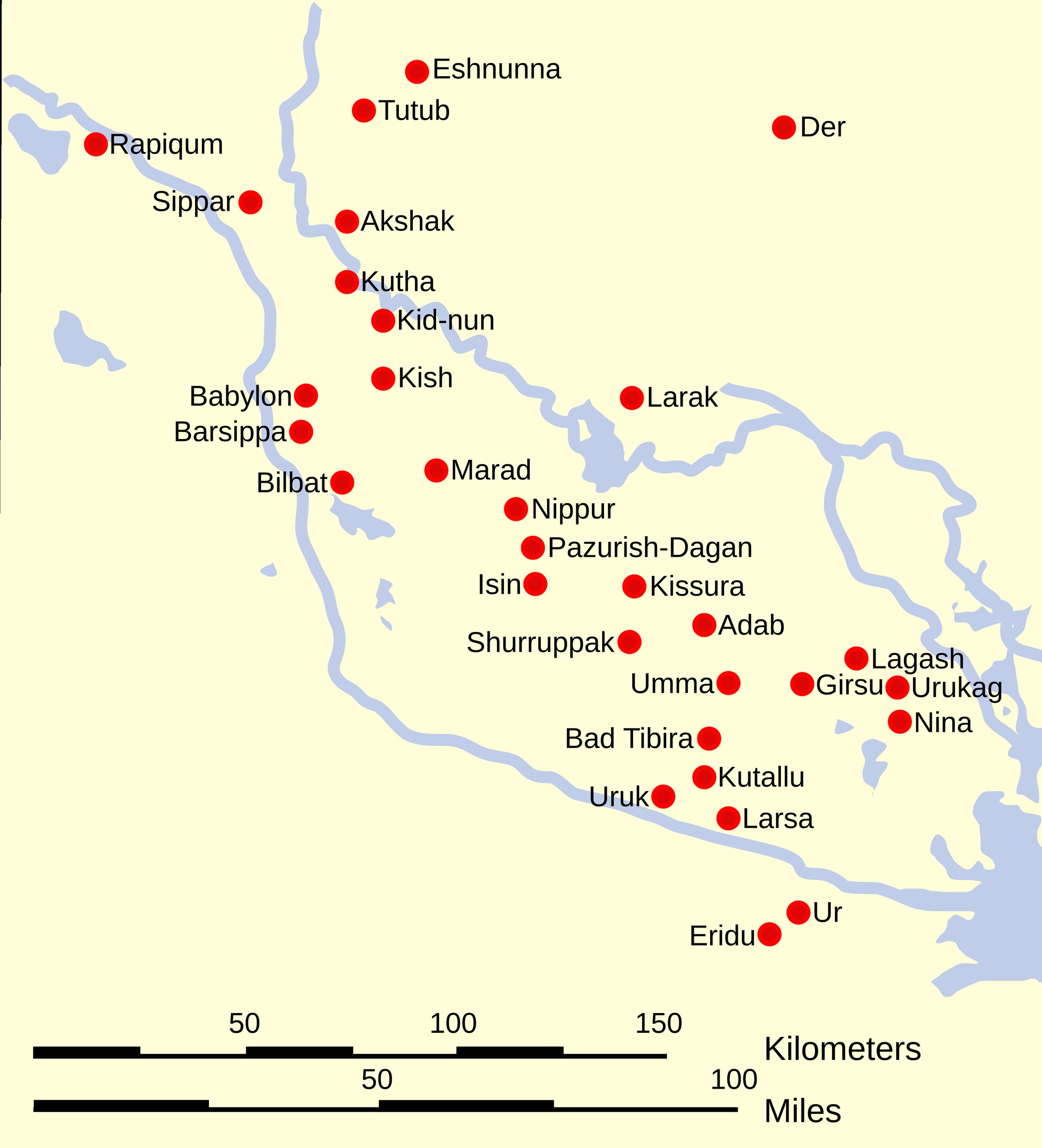 Map of the main cities of Sumer and Elam: Ur, Uruk, Lagash, Umma, Nippur, Kish, Eridu and neighbouring centres.
Cities of Southern Mesopotamia
The main form of the Sumerian world was the city with its fields, canals, temple, walls, storehouses and dependent settlements. Uruk early became a large urban centre with monumental sanctuaries and early writing. Ur is known for its royal cemetery, ziggurat and the memory of the Third Dynasty of Ur. Lagash and Umma show the rivalry of neighbouring states over land and water. Nippur held a special place as the sacred centre of Enlil, important even when it was not a political capital.
City plans and excavation plans are especially useful for Sumerian history. They show that temple, palace, residential quarters, canals and city wall were connected. In Nippur the ancient city plan is known not only through modern archaeology but also through Mesopotamian tradition itself: a clay tablet with a city plan shows that inhabitants could think of the city as a system of sacred and practical spaces.
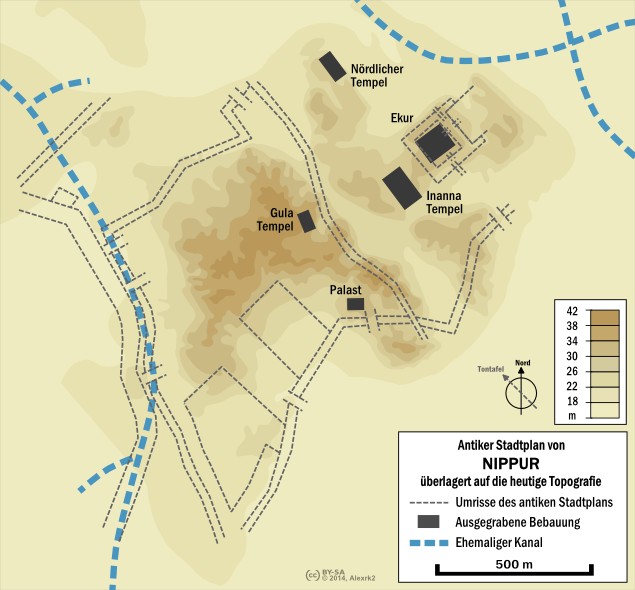 Plan of ancient Nippur over modern topography, showing ancient canals, the urban shape and excavation areas after S. N. Kramer and McGuire Gibson.
The Uruk Period and Early Cities
The Uruk period of the fourth millennium BC is connected with rapid settlement growth, complex labour organisation, temple complexes and the emergence of writing. The Warka Vase shows processions and offerings to the goddess Inanna: it is not a domestic scene in the narrow sense, but an image of society in which products, people, power and cult converge at the temple centre. The Mask of Warka already shows a developed tradition of monumental human representation.
Proto-cuneiform tablets reveal the practical basis of early writing. At first signs recorded accounting: grain, livestock, vessels, workers, issues and receipts. Gradually this administrative technique developed into a system capable of transmitting names, titles, formulas, hymns, myths, letters and scholarly lists.
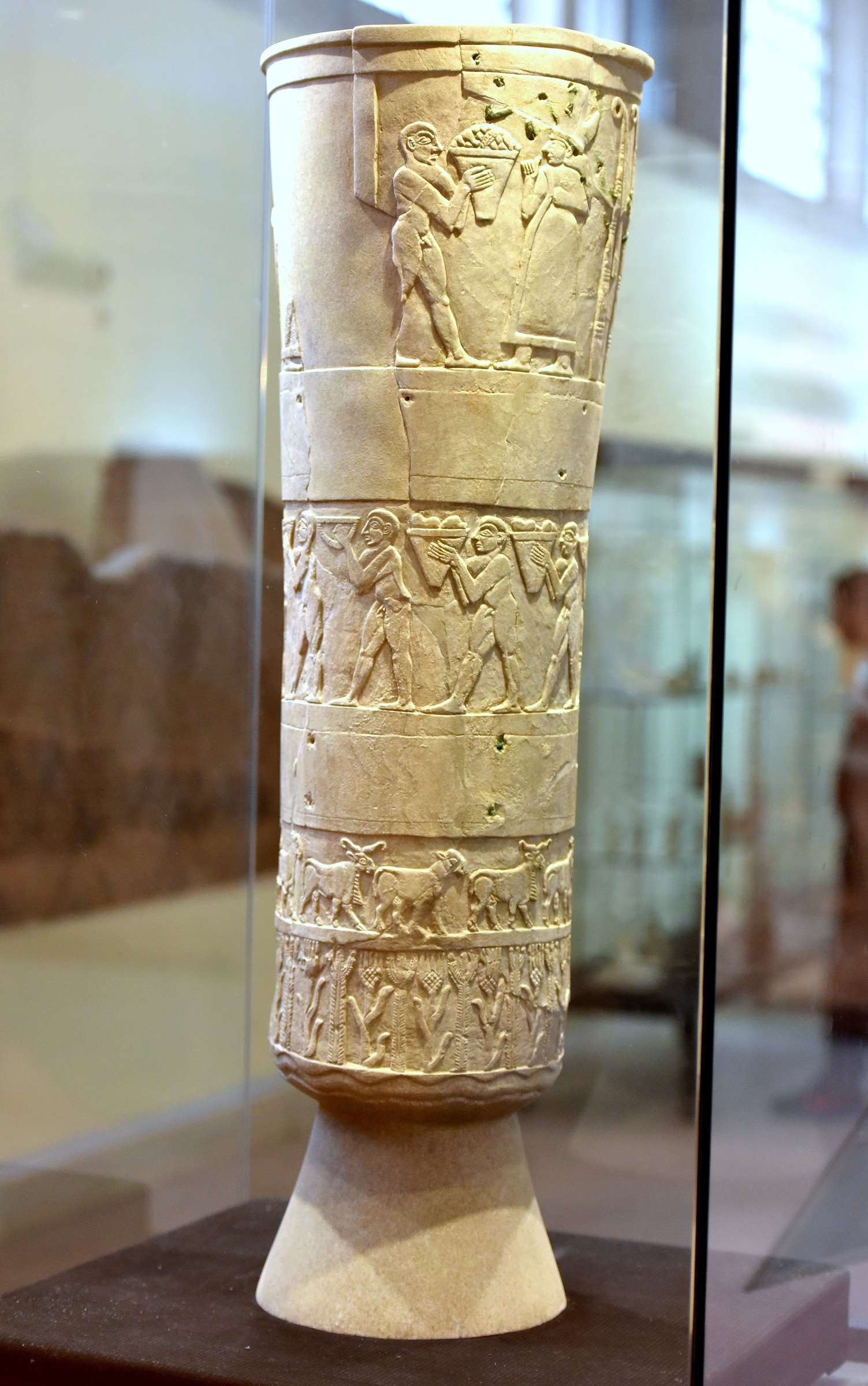 The Warka Vase from Uruk, c. 3200-3000 BC; an alabaster relief with procession and offerings to Inanna, National Museum of Iraq.
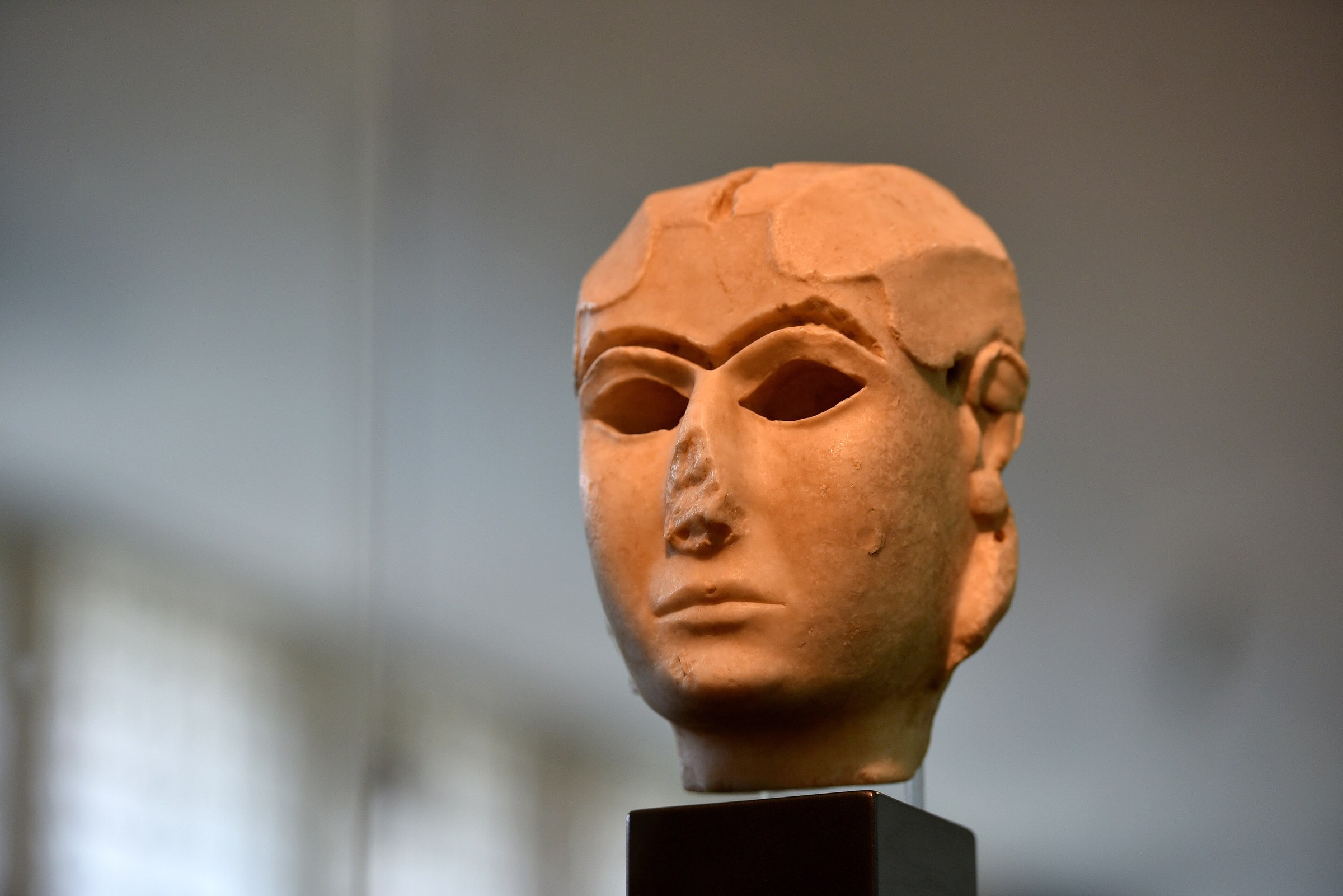 The Mask of Warka, or Lady of Uruk, c. 3300-3000 BC; found at Uruk, National Museum of Iraq.
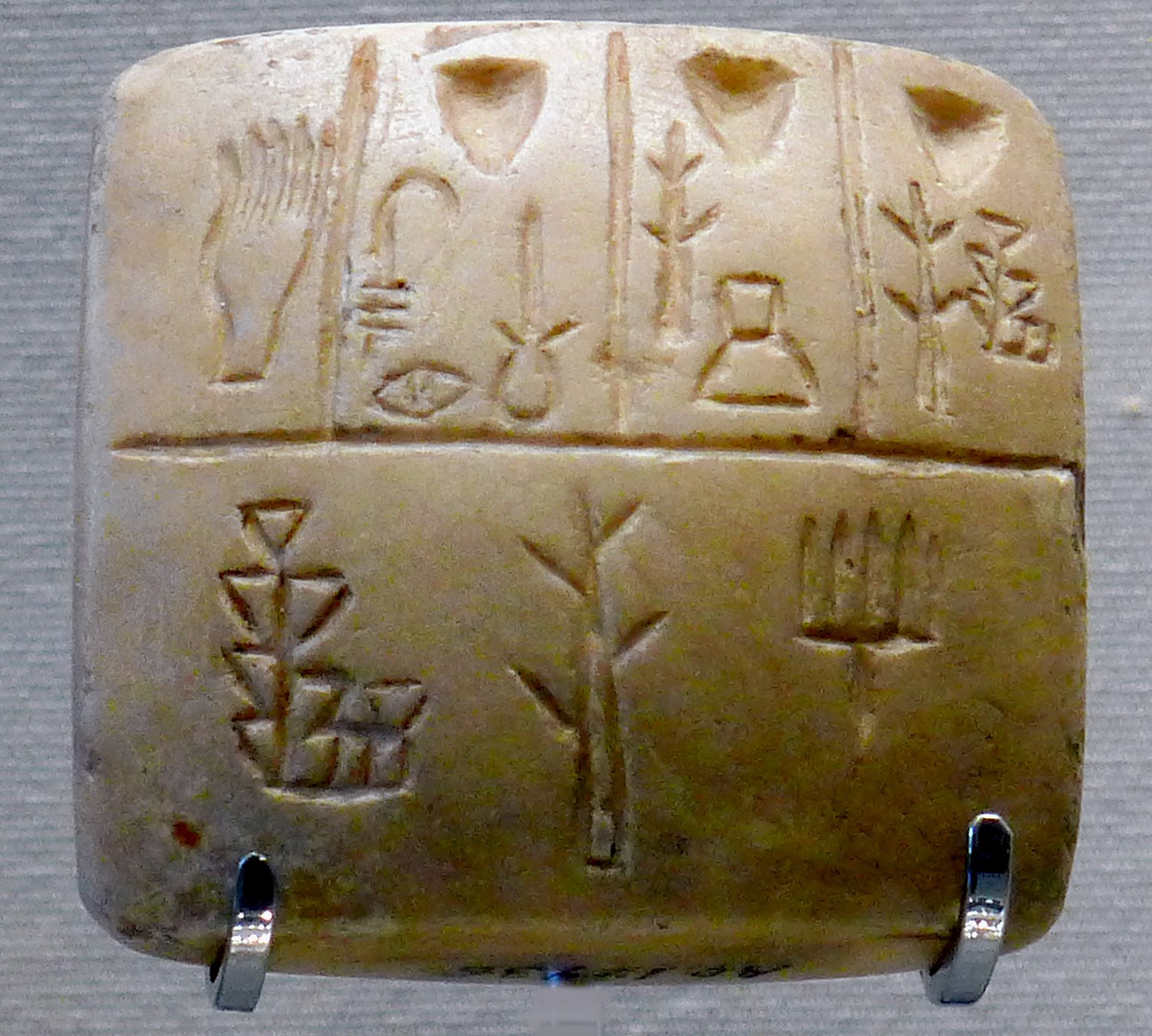 Clay tablet with proto-cuneiform writing, Uruk III, c. 3200-3000 BC; Louvre, AO 19936.
Rulers, Wars and Urban Politics
Sumerian cities were constantly in competition. Land, canals, field boundaries, access to water and the prestige of patron gods could all become causes of conflict. In inscriptions rulers call themselves builders of temples, protectors of the city and executors of divine will, but archaeological monuments also show the military side of power.
The Stele of the Vultures, associated with Eannatum of Lagash, depicts victory over Umma and shows troops, enemy bodies and divine protection. The Standard of Ur complements this picture: one panel shows battle order, wheeled vehicles and captives, while the other shows banquet, offerings and economic abundance. Power is visible in two dimensions at once: victory and the ability to distribute wealth.
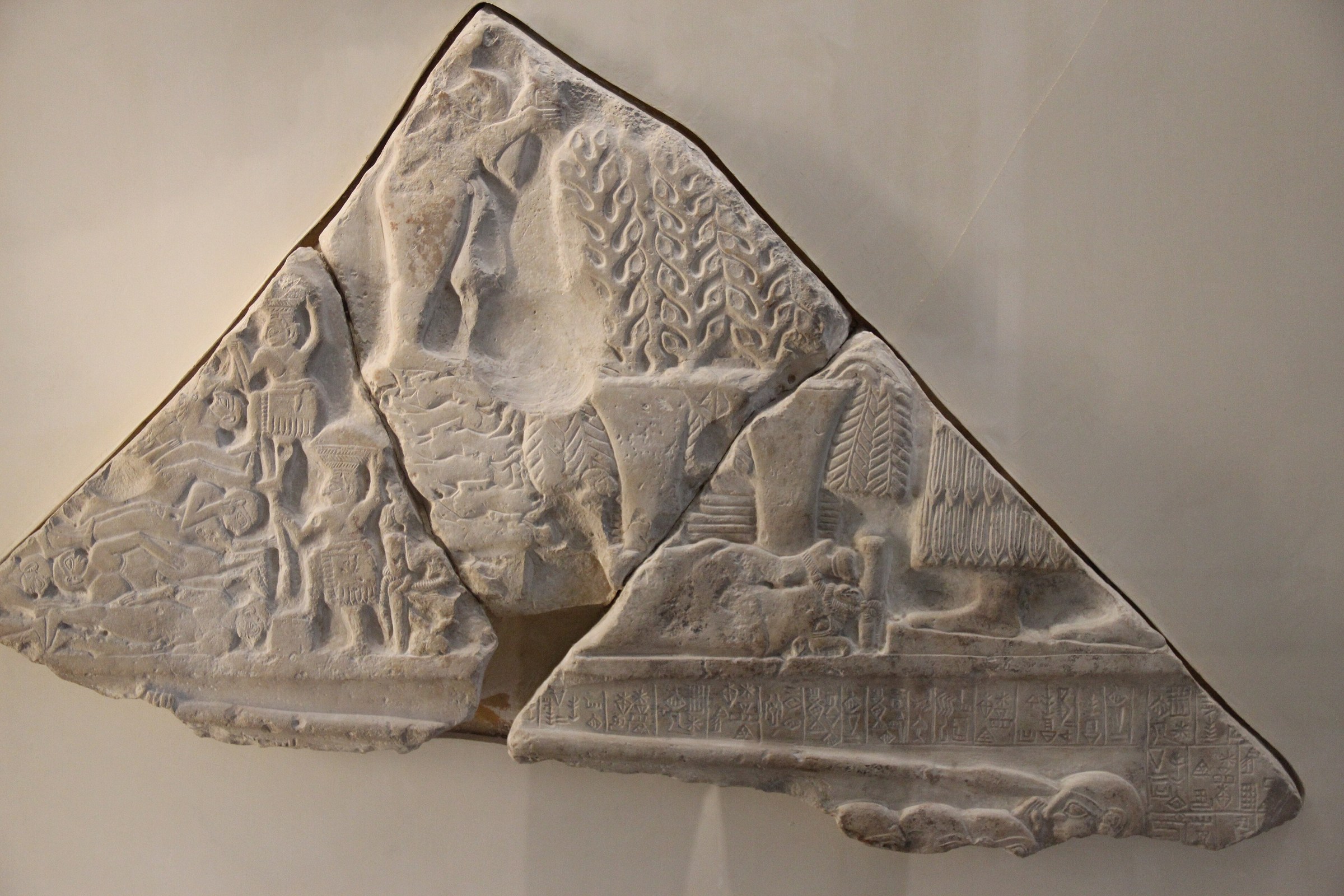 The Stele of the Vultures: victory monument of Eannatum, ruler of Lagash, over Umma, c. 2450 BC; fragment from Tello/Girsu, Louvre.
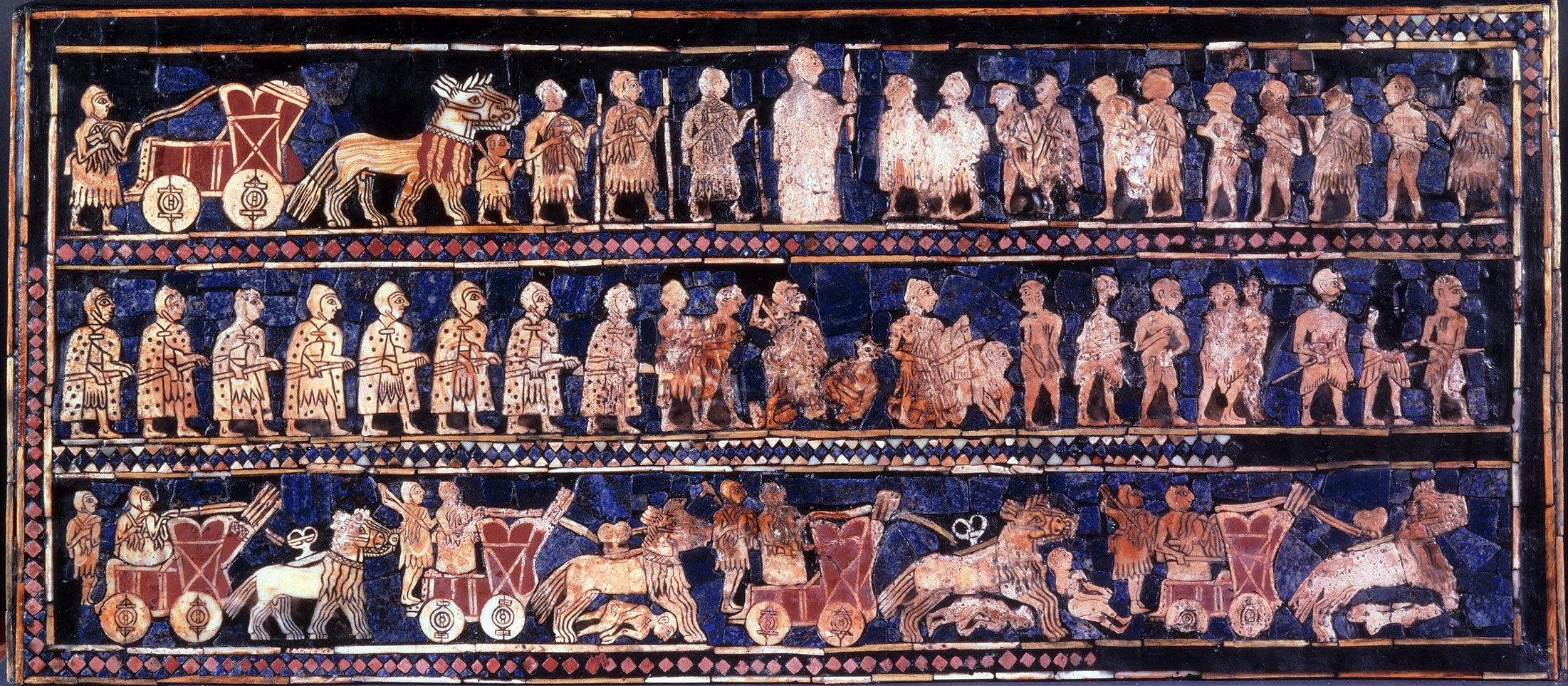 Standard of Ur, War panel, c. 2600 BC; inlaid object from the Royal Cemetery of Ur, British Museum, ME 121201.
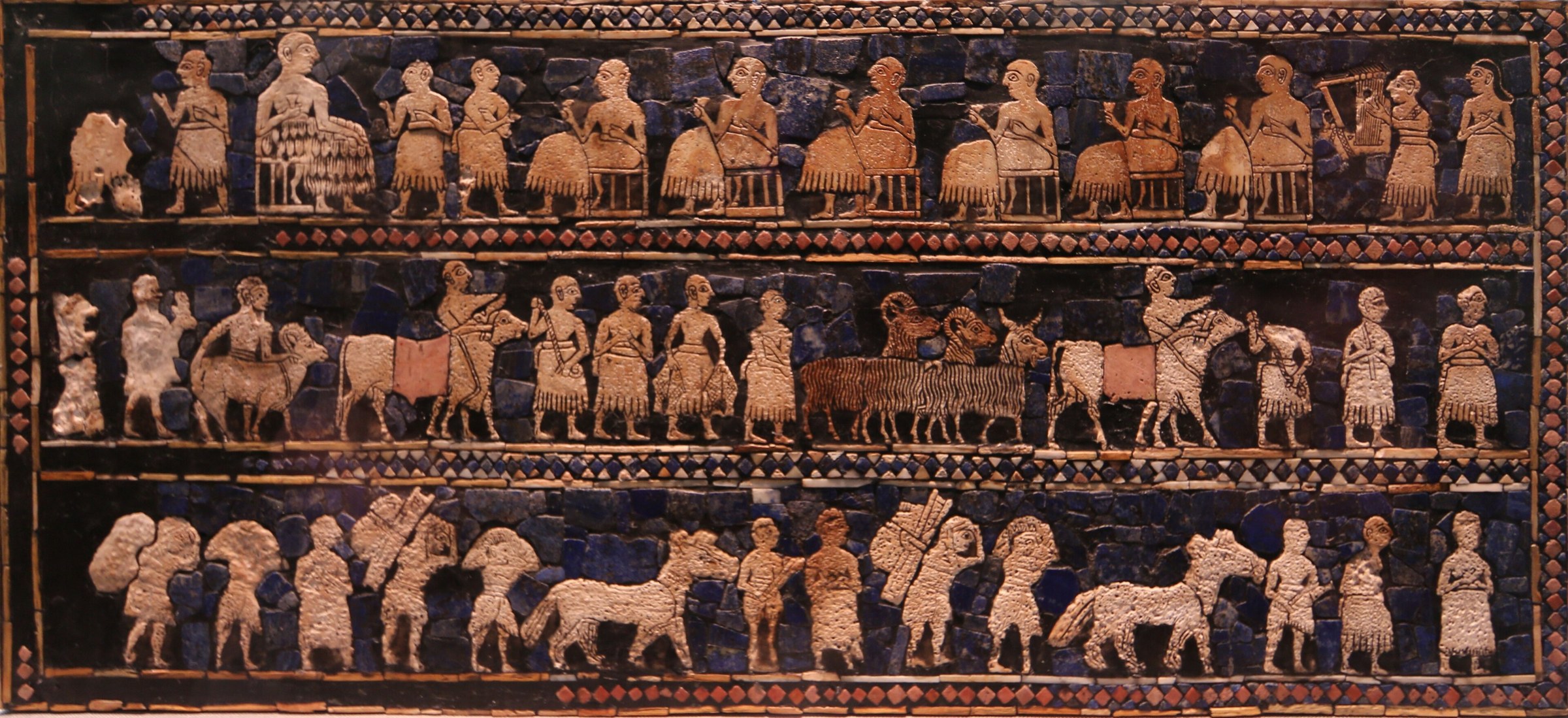 Standard of Ur, Peace panel, c. 2600 BC; scenes of banquet, offerings and economy, British Museum, ME 121201.
Temples, Gods and Economy
The Sumerian temple was not only a place of prayer. It owned land, received workers, kept accounts, stored produce, organised craft production and framed the city's power through the cult of its patron god. Nippur was linked with Enlil, Ur with Nanna, Uruk with Inanna and Anu, Eridu with Enki. Such ties formed a political geography: the city gained a face through its god and main temple.
Ziggurats later became the most recognisable image of Mesopotamian temple architecture, but they grew from a long tradition of elevated sanctuaries. The ziggurat of Ur is connected with Ur-Nammu and the Third Dynasty of Ur. It shows how a ruler linked construction, the cult of Nanna and his authority over the city.
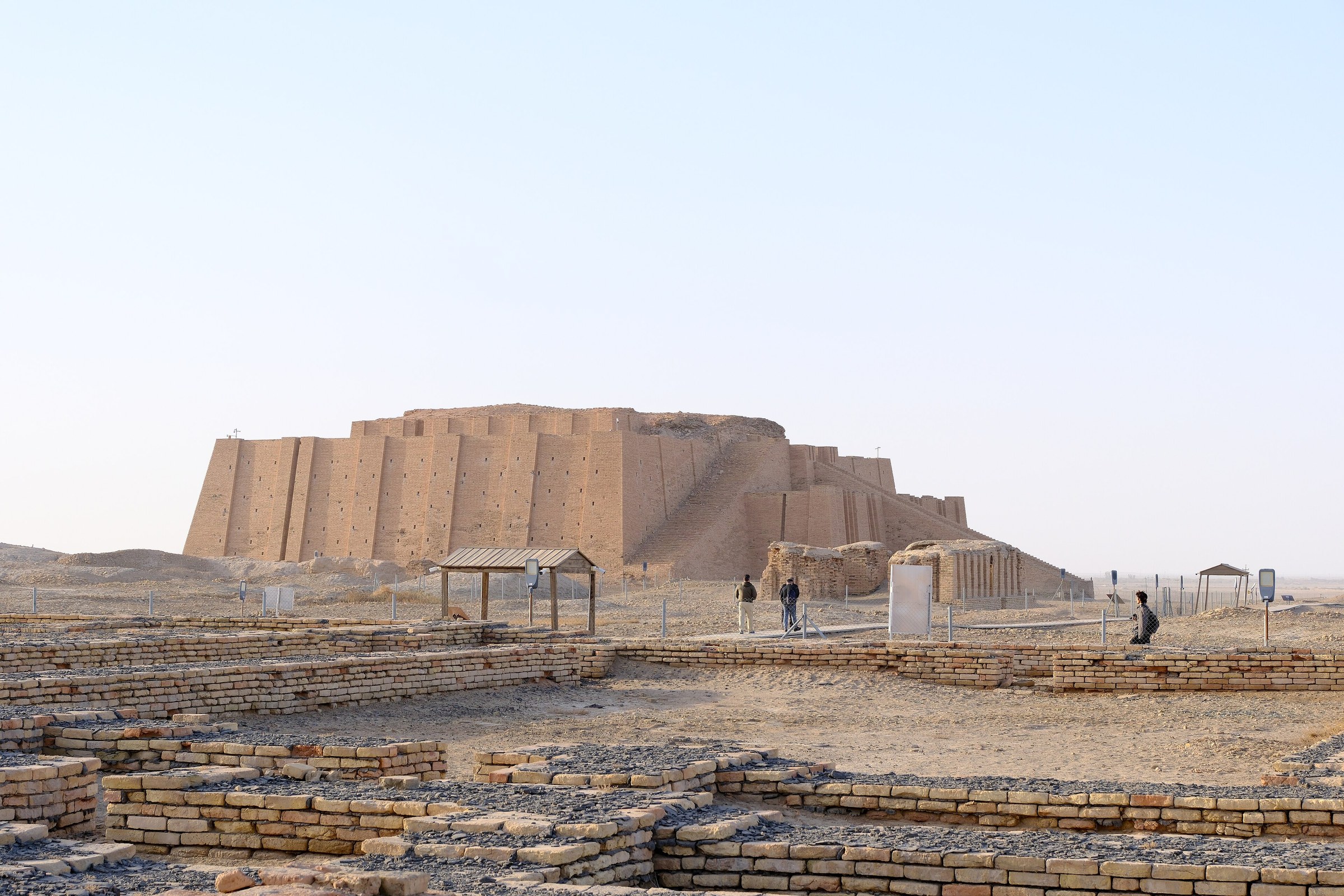 Ziggurat of Ur, dedicated to Nanna; its main construction is associated with Ur-Nammu and the Third Dynasty of Ur, twenty-first century BC, Nasiriyah, Iraq.
Gudea, Ur-Nammu and the Later Sumerian Tradition
After Akkadian dominance the Sumerian tradition rose again in Lagash and under the Third Dynasty of Ur. Gudea, ruler of Lagash, is known through many statues and building inscriptions. His image is far from a warlike display: he appears as a pious builder, patron of temples and guardian of proper order.
Ur-Nammu and his successors created a strong bureaucratic state. This period is connected with the Code of Ur-Nammu, a huge stream of administrative tablets, the construction of ziggurats and the strengthening of royal ideology. Although the political history of Sumer came to an end, the Sumerian language and literary tradition continued to live in scribal schools and later Mesopotamian scholarship.
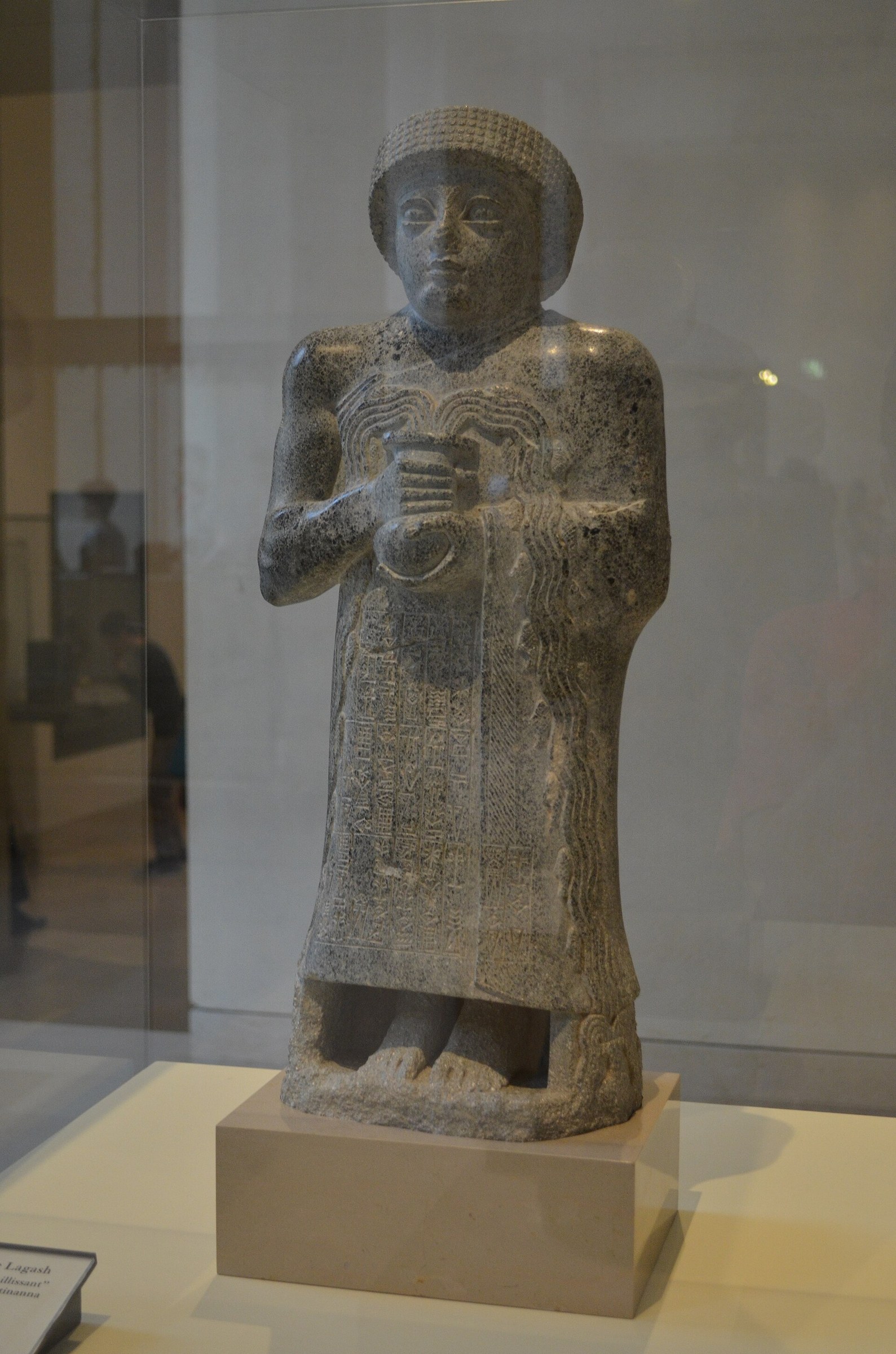 Statue of Gudea, ruler of Lagash, c. 2120 BC; diorite, Louvre, AO 22126.
Everyday Life and Exchange
Most Sumerians did not live in the world of royal inscriptions but in the economy of fields, herds, canals, crafts and family obligations. Grain, dates, wool, oil, beer, fish and livestock formed the basis of accounting. Women often worked in textile production, temples and palaces organised large labour groups, and private households existed beside institutional ones.
Southern Mesopotamia lacked stone, metal and good timber, so exchange was essential. Copper, lapis lazuli, diorite, timber and other materials arrived from afar. Sumerian objects of stone, metal and shell are often traces of these distant connections: urban civilisation rested not only on local fields but also on exchange networks.
Archaeological Sources
Sumer is studied through different kinds of evidence. Excavations provide city plans, temples, ziggurats, cemeteries, houses, workshops, seals, vessels and statues. Tablets provide accounts, lexical lists, school exercises, letters, hymns, myths and royal inscriptions. Visual monuments show processions, banquets, war, gods, rulers and workers, but they cannot be read as direct photographs of life: they are selected and conventional scenes.
Maps and plans are not decoration. They help connect an object with city, canal, temple and political setting. The Warka Vase, the Stele of the Vultures, the Standard of Ur or the statue of Gudea become clearer when Uruk, Lagash, Umma, Ur and Nippur are visible as real centres of southern Mesopotamia.
Related Topics
Literature and sources
- Kramer S. N. The Sumerians.
- Postgate J. N. Early Mesopotamia: Society and Economy at the Dawn of History.
- Van de Mieroop M. A History of the Ancient Near East, ca. 3000-323 BC.
- Crawford H. Sumer and the Sumerians.
- Pollock S. Ancient Mesopotamia: The Eden That Never Was.
- McGuire Gibson. Nippur, Volume 3: Kassite Buildings in Area WC-1.
- Wikimedia Commons: Cities of Sumer (en).svg; Crates/Phirosiberia, CC BY 3.0/GFDL.
- Wikimedia Commons: Karte mit dem antiken Stadtplan von Nippur.png; Alexrk2.
- Museum and Wikimedia image records for the Warka Vase, Mask of Warka, proto-cuneiform tablet, Stele of the Vultures, Standard of Ur, Gudea statue and ziggurat of Ur.
Interested in Ancient Rome beyond reading? Join Legio X Fretensis or explore our reenactment directions.


