Babylon
Babylon was one of the chief cities of ancient Mesopotamia, the capital of several kingdoms, the centre of the cult of Marduk and a major node of written, temple and urban culture in western Asia. It stood on the Euphrates, in a zone of canals, river agriculture and trade routes, where power depended on control of water, taxes, temple economies and writing.
The history of Babylon is not one single "golden age". The city rose under the Amorite dynasty of Hammurabi, lived on within the Kassite and Assyrian worlds, reached a new height under Nebuchadnezzar II, entered the Achaemenid empire, hosted Alexander the Great and gradually lost political weight to Seleucia on the Tigris. Babylon therefore matters both as a real city and as a symbol of kingship, written law, temple tradition and later memory of antiquity.
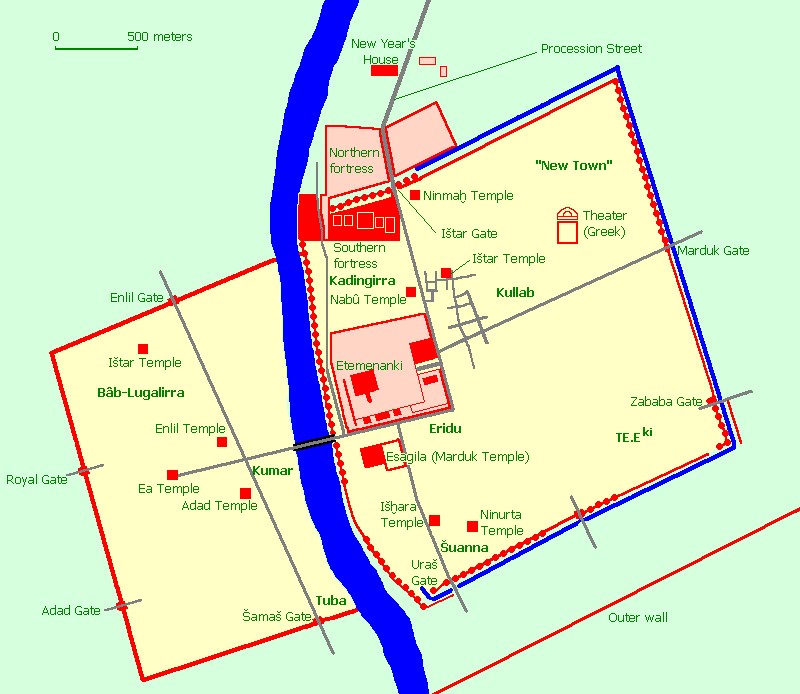 Plan of Neo-Babylonian Babylon: Euphrates, walls, palace zone, Ishtar Gate, Processional Way, Esagila and Etemenanki. Wikimedia Commons, map from Livius.org, CC BY-SA/GFDL.
Site on the Euphrates and Urban Plan
The city developed on both banks of the Euphrates. The river and canals watered the fields, connected quarters and at the same time created the danger of floods, silting and shifts in the river course. Babylonian power was therefore inseparable from hydraulic works: canals, embankments, bridges, harbours and gates were part of urban policy.
In the Neo-Babylonian period the city is described as a fortified capital with outer and inner walls, a palace district, the Processional Way, the Ishtar Gate, the temple Esagila and the ziggurat Etemenanki. Even if ancient narratives exaggerated the size of the walls, archaeology confirms the basic pattern: Babylon was a city of major axes, sacred routes, monumental gates and ceremonies attached to them.
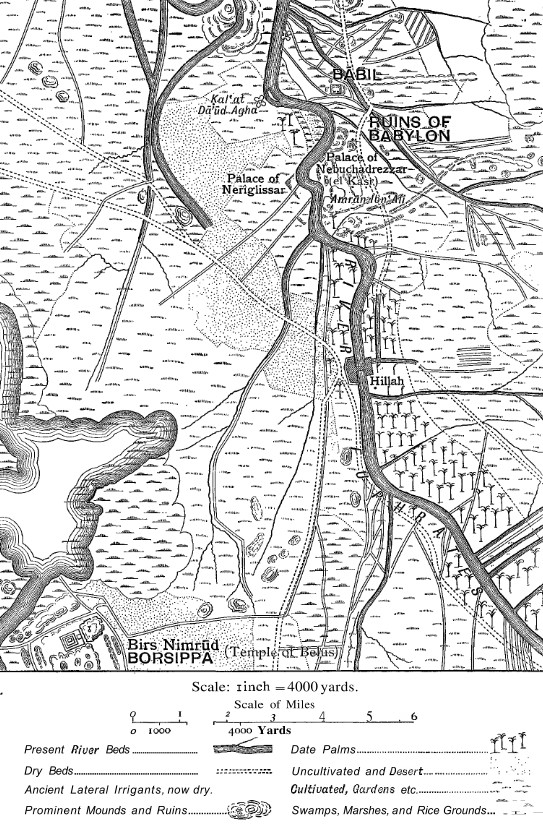 Plan of the ruins of Babylon from Encyclopaedia Biblica, 1903; compiled from surveys by Jones, Selby, Bewsher and Collingwood, 1845-1865, with corrections to 1885. Wikimedia Commons, Public Domain.
The Old Babylonian Kingdom
In the early second millennium BC Babylon rose among the cities of southern Mesopotamia through its Amorite dynasty. The best-known ruler of this period was Hammurabi, who reigned in the eighteenth century BC. He brought Larsa, Eshnunna, Mari and other centres under his authority, turning Babylon from one regional city into the capital of a large kingdom.
The stele with the laws of Hammurabi matters not only as a "law code". It is a royal inscription in which the ruler appears as one who receives authority from the gods and establishes just order. Babylonian statehood is visible here through writing, judgement, taxes, debt, family, slavery, leasing, craft labour and the responsibility of officials. Such texts show how urban power turned economy and law into an administrable system.
Kassites, Assyria and Changing Status
After the end of the Old Babylonian dynasty the city did not disappear. Babylon remained a prestigious centre under the Kassites, and its name and the cult of Marduk retained importance far beyond any single dynasty. Kassite kings strengthened their ties with temples, used the Babylonian scribal tradition and continued to present the city as the centre of southern Mesopotamia.
In the first millennium BC Babylon often stood in tense relations with Assyria. Assyrian kings sometimes recognised the city's special status and at other times suppressed rebellions. The harshest episode was the destruction of Babylon by Sennacherib in 689 BC; later Esarhaddon began to rebuild the city, understanding that Babylon's symbolic weight was too great simply to remove it from the political world.
The Neo-Babylonian Capital
The new rise accompanied Assyria’s weakening. Nabopolassar founded the Neo-Babylonian dynasty, and his son Nebuchadnezzar II made Babylon one of the most famous capitals of the ancient world. His building inscriptions stress the restoration of temples, strengthening of walls, construction of palaces and adornment of sacred routes.
The most recognisable monuments of this age are the Ishtar Gate and the Processional Way. Glazed bricks with bulls, mushhushshu dragons and lions were part not merely of decoration but of the city's ritual geography. Along this route the procession of Marduk moved during the Akitu festival, and royal power was linked with the renewal of cosmic and urban order.
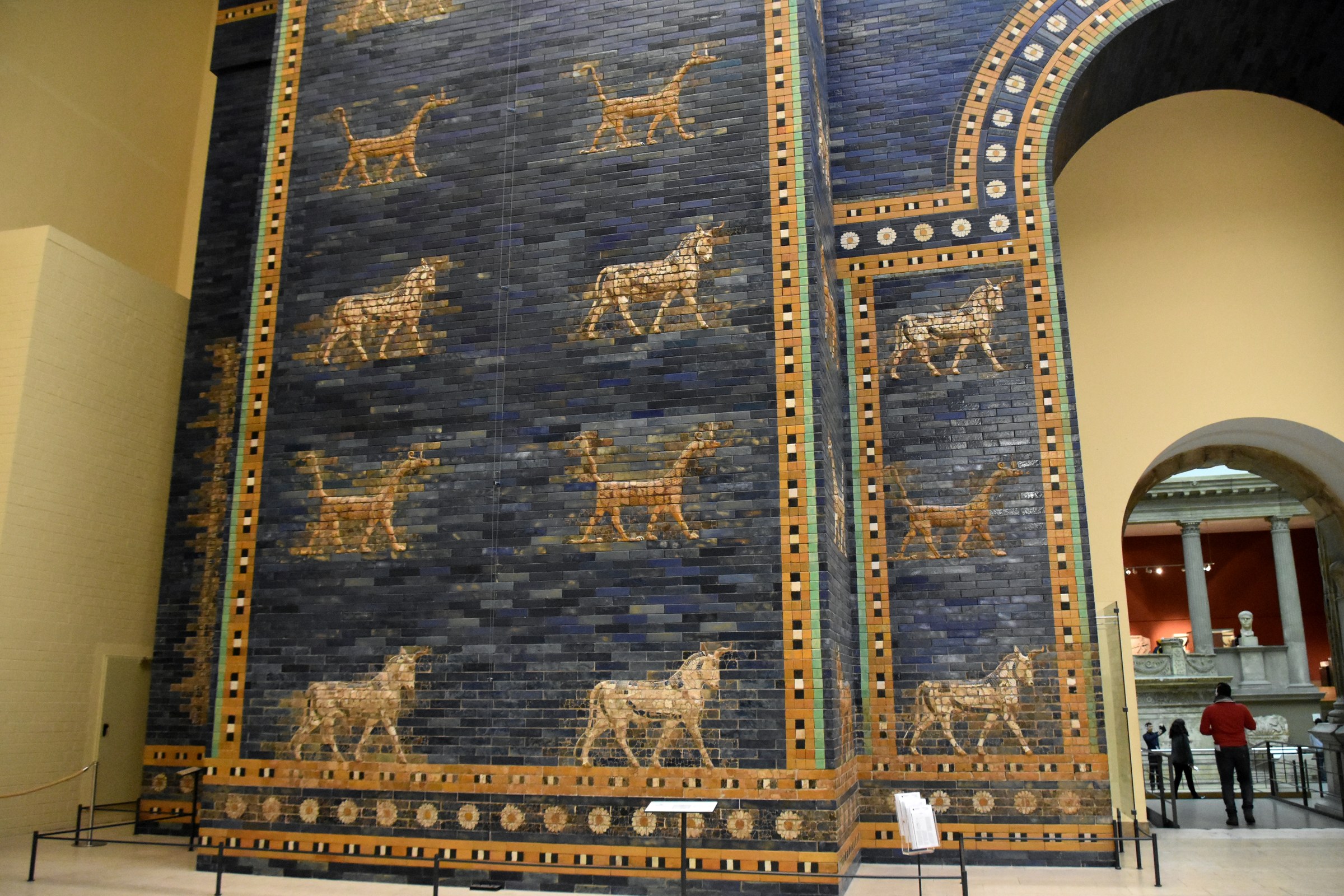 The Ishtar Gate from Babylon, reconstructed from original glazed bricks of Nebuchadnezzar II's reign, c. 575 BC; Pergamon Museum, Berlin.
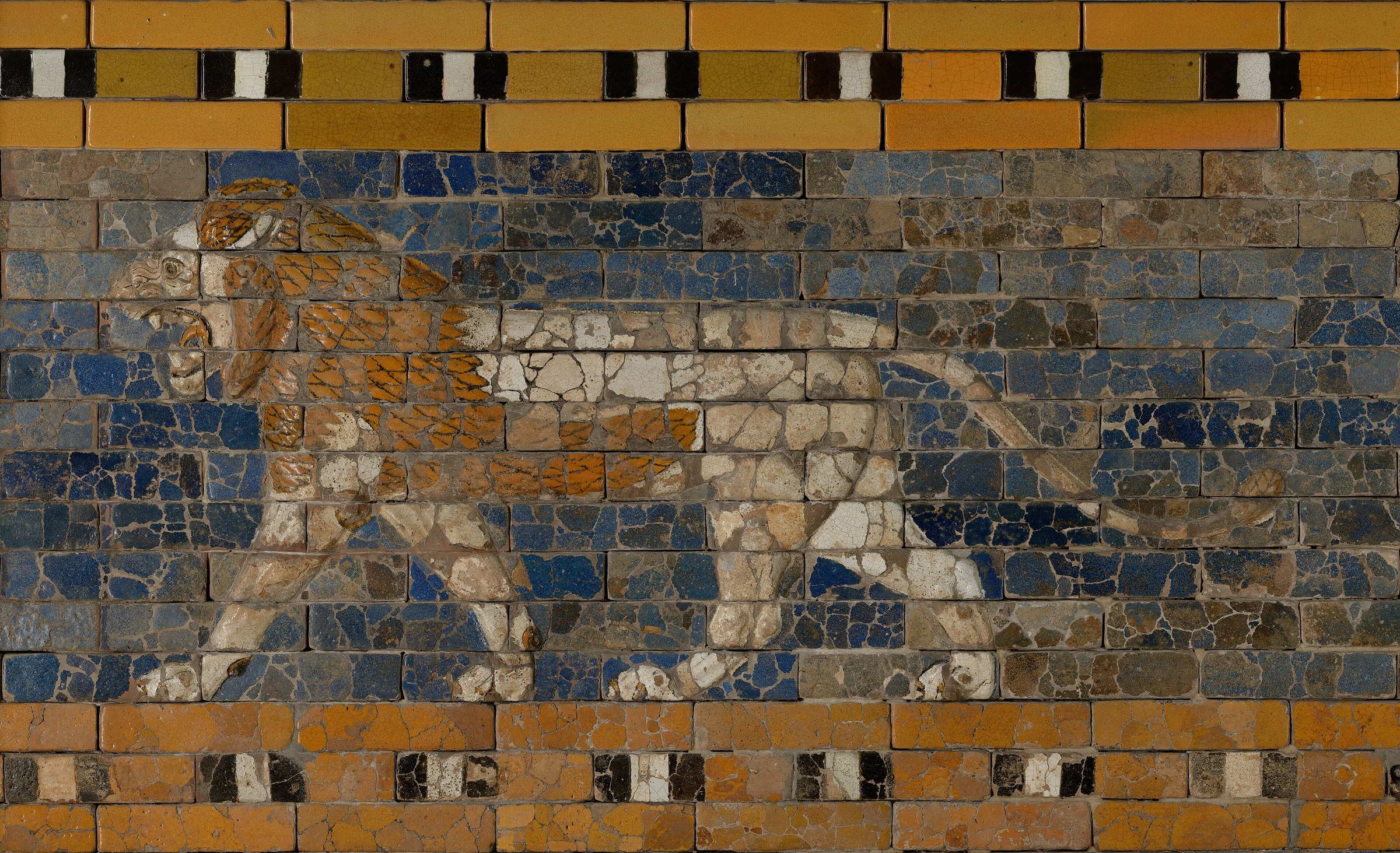 Lion from Babylon's Processional Way, glazed brick relief of the Neo-Babylonian period; Brooklyn Museum.
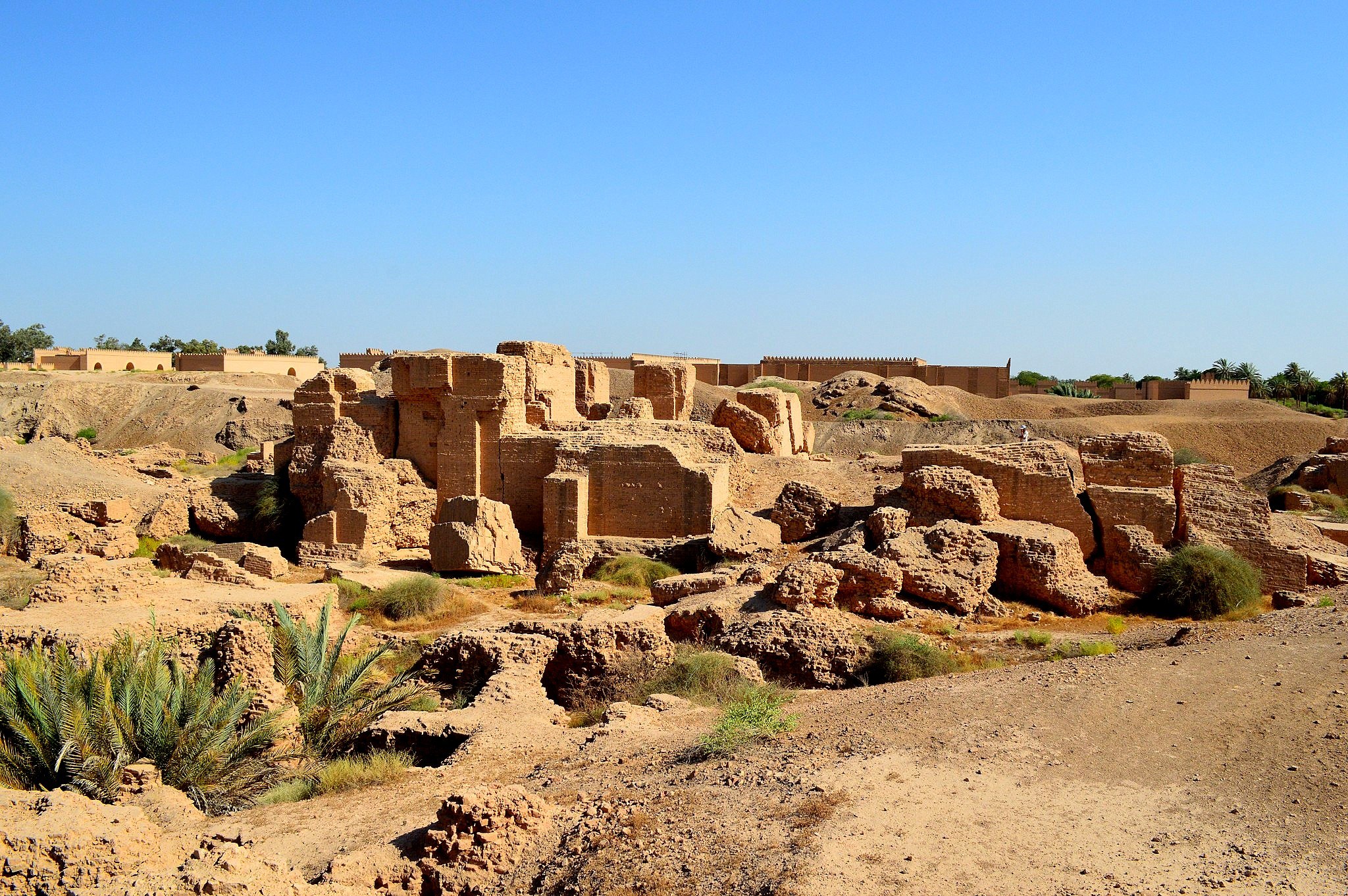 Ruins of the North Palace of Nebuchadnezzar II in ancient Babylon, Iraq.
Temples, Marduk and Etemenanki
The religious heart of Babylon was the Esagila complex, connected with Marduk. Nearby stood the ziggurat Etemenanki, later associated with the image of the Tower of Babel. For the city's inhabitants the temple was at once a sacred place, economic centre, archive, landholder and participant in political life.
The building cylinders of Nebuchadnezzar II show how the king described his power through the restoration of sanctuaries. Such an inscription does not merely report construction; it creates the image of the ruler as servant of the god, guardian of ancient order and organiser of the city. The archaeological object therefore connects architecture, ideology and written tradition.
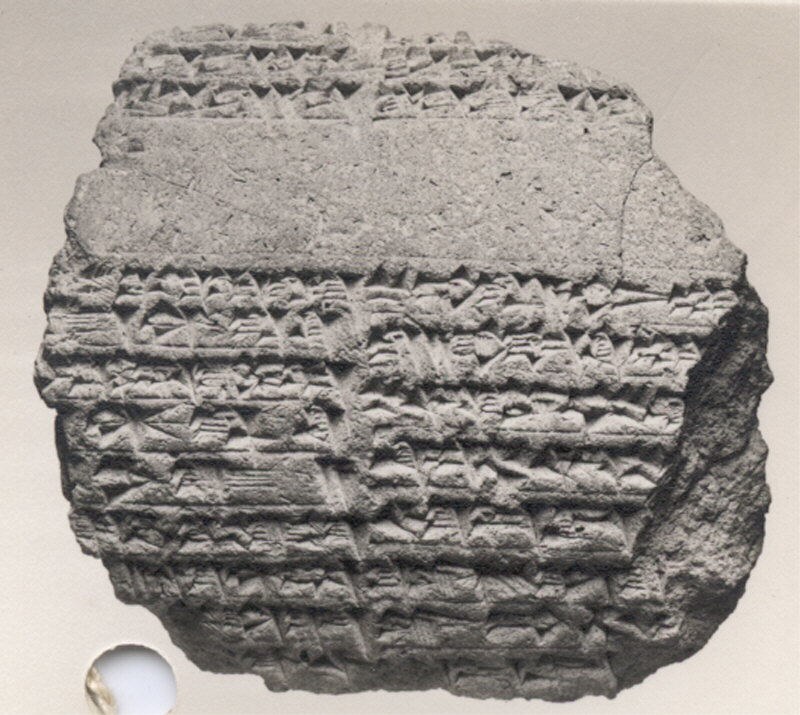 Cuneiform cylinder of Nebuchadnezzar II commemorating the reconstruction of Etemenanki, the ziggurat of Babylon, c. 604-562 BC; Metropolitan Museum of Art, 86.11.284.
Last Kings and the Persian Conquest
After Nebuchadnezzar II power passed quickly and tensely several times. Nabonidus, the last king of the Neo-Babylonian kingdom, left many building and religious inscriptions, but his policy provoked resistance from part of the Babylonian elite. Relations with Marduk, the priests and other urban cults were especially important.
In 539 BC Babylon entered the empire of Cyrus II. The Cyrus Cylinder presents the conquest as a restoration of order and respect for the gods, but it too is royal ideology rather than a neutral report. For the city's history another point is more important: Babylon was not destroyed and long remained a major administrative, religious and scholarly centre within the Achaemenid empire.
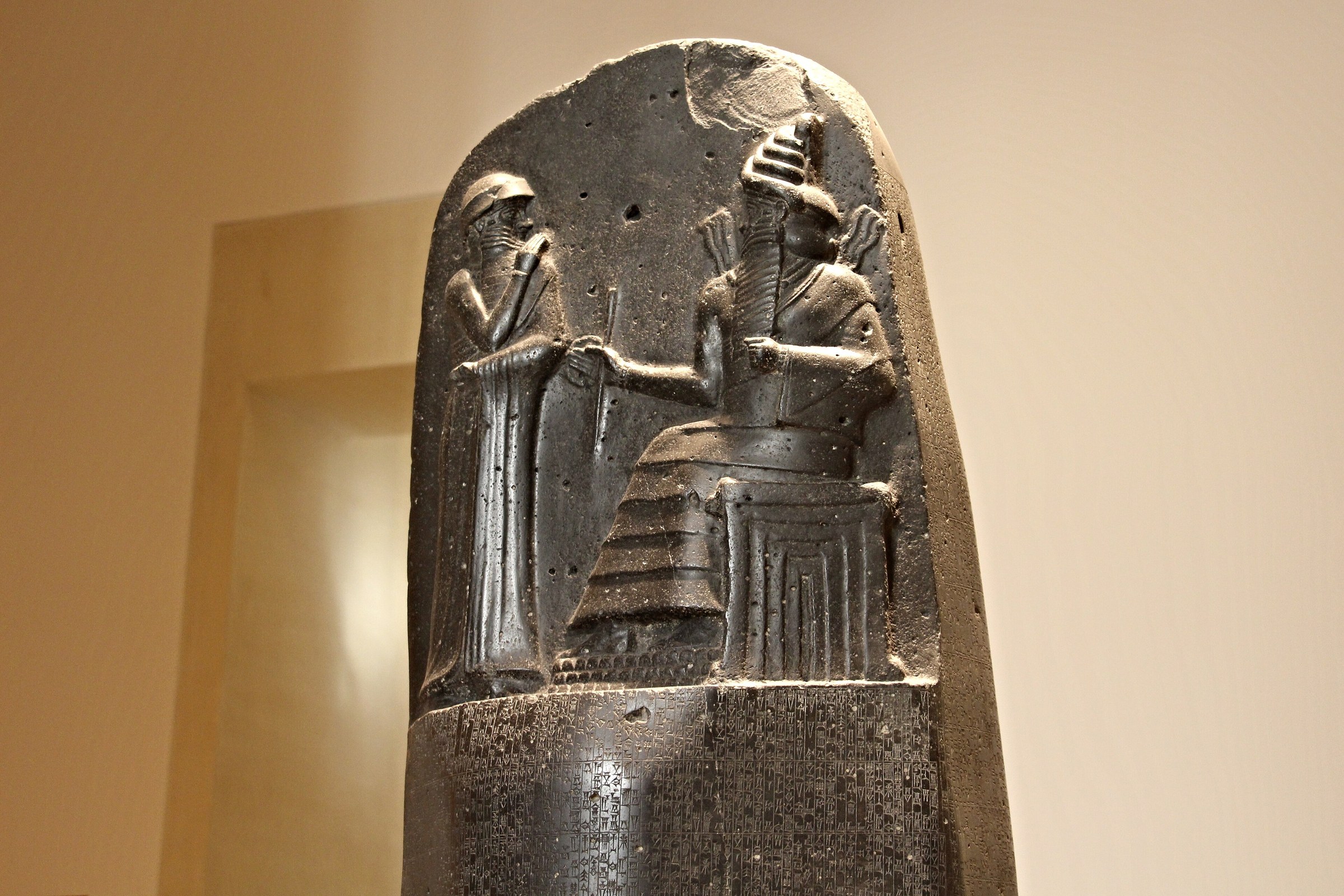 Stele with the laws of Hammurabi, eighteenth century BC; basalt, Louvre, Sb 8. The inscription and relief present kingship as a source of justice and order.
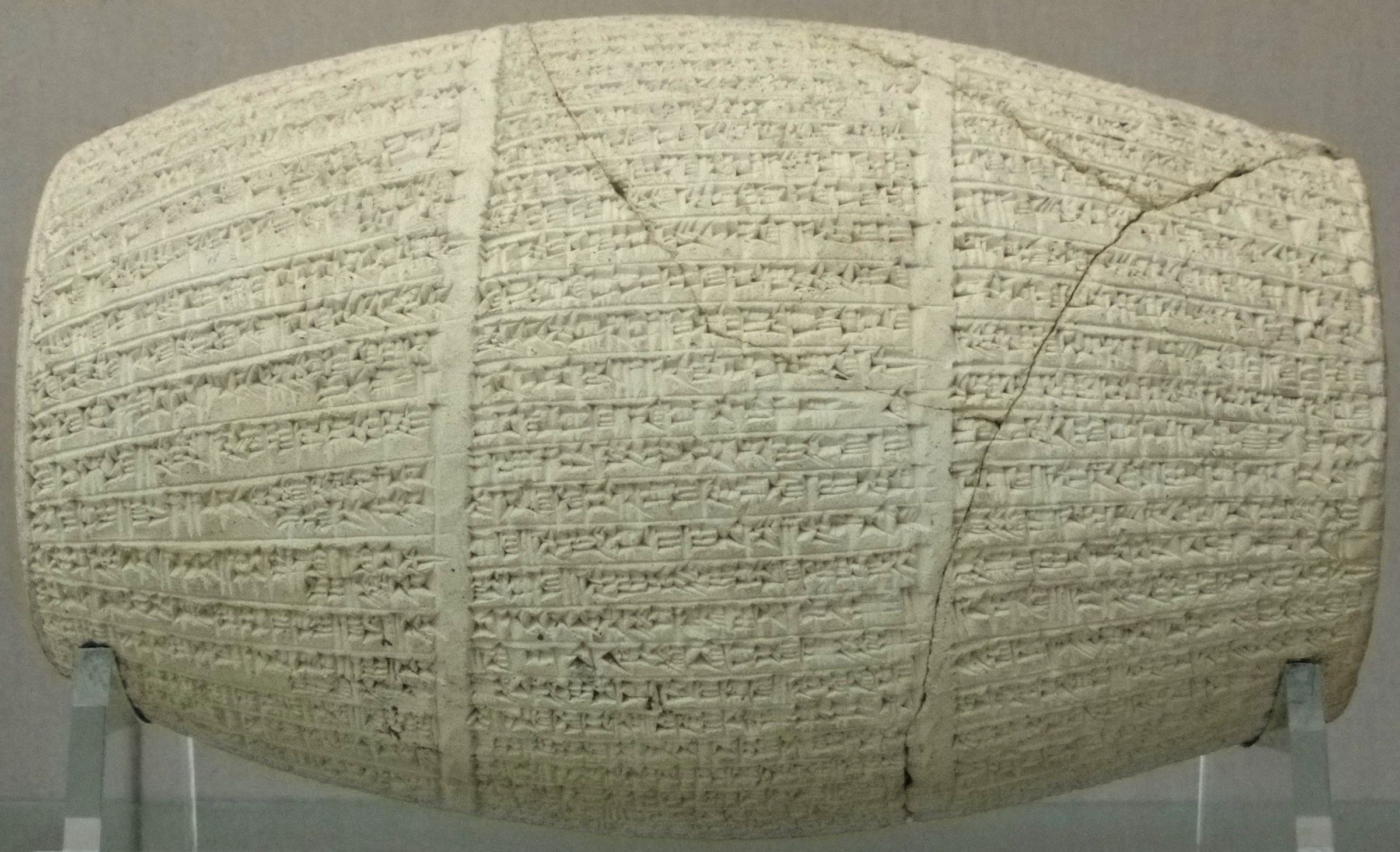 Clay foundation cylinder of Nabonidus, the last king of the Neo-Babylonian kingdom; a cuneiform inscription on temple construction, British Museum, 1882,0714.1025.
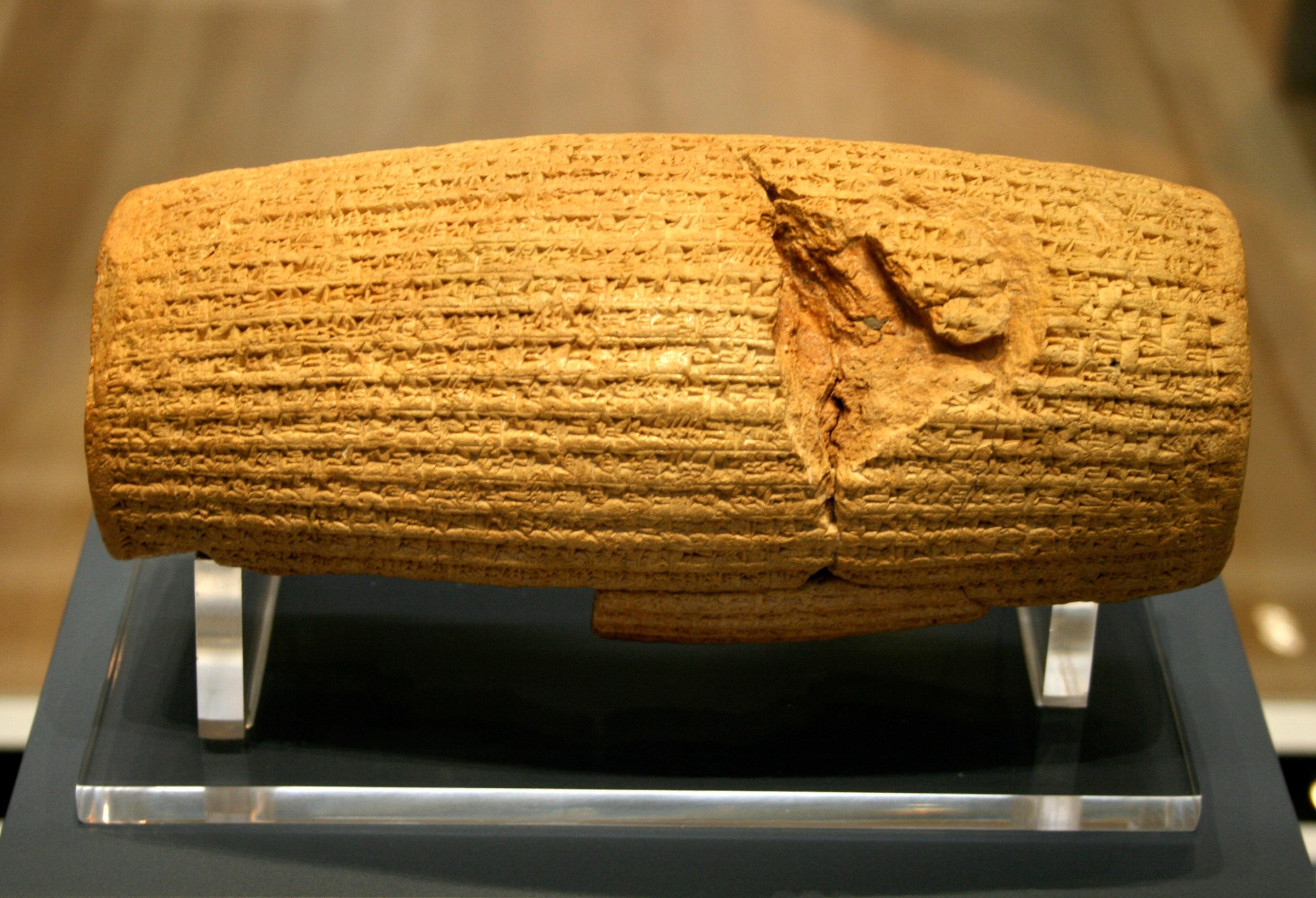 The Cyrus Cylinder, made after the capture of Babylon in 539 BC; clay cuneiform inscription, British Museum.
Alexander and the Hellenistic Period
In 331 BC Babylon passed to Alexander the Great after his victory over Darius III. Alexander entered the city as heir to Near Eastern kingship, sacrificed to local gods and planned restoration works. In 323 BC he died in Babylon, making the city part of the memory of the end of his campaigns.
Under the Seleucids Babylon's importance gradually changed. The new centre, Seleucia on the Tigris, drew away part of the population, administration and trade. Yet Babylon did not vanish at once: in the Hellenistic period priests, astronomers and scribes continued to work there, and cuneiform records, sky observations and temple affairs were still maintained.
Archaeological Sources
Modern knowledge of Babylon rests on several groups of sources. Excavations by Robert Koldewey and the German expedition from 1899 uncovered walls, gates, palace zones, parts of the Processional Way and temple districts. Some glazed bricks were removed and reconstructed in museums, so images of the Ishtar Gate and the lions of the Processional Way must be read together with data on their original location.
The second layer is cuneiform texts: royal cylinders, administrative tablets, astronomical diaries, temple documents and later chronicles. They show not so much the city's appearance as its administration, calendar, rituals, royal ideology and temple life. Maps and plans are useful because they connect these written and material sources with the real space on the Euphrates.
Related Topics
Literature and sources
- Kuhrt A. The Ancient Near East c. 3000-330 BC.
- Oates J. Babylon.
- Van de Mieroop M. A History of the Ancient Near East, ca. 3000-323 BC.
- George A. R. Babylonian Topographical Texts.
- Beaulieu P.-A. The Reign of Nabonidus, King of Babylon 556-539 B.C.
- Koldewey R. The Excavations at Babylon.
- Encyclopaedia Biblica, 1903: plan of the ruins of Babylon.
- Wikimedia Commons: Babylon_map.png; map from Livius.org, CC BY-SA/GFDL.
- Wikimedia Commons: C+B-Babylon-Map.PNG; Public Domain.
- Museum and Wikimedia image records for the Ishtar Gate, Processional Way, Hammurabi stele, Nebuchadnezzar cylinder, Nabonidus cylinder and Cyrus Cylinder.
Interested in Ancient Rome beyond reading? Join Legio X Fretensis or explore our reenactment directions.


