Trimontium / Newstead
Trimontium at Newstead in the Scottish Borders is one of the most important Roman military complexes in northern Britain. It stood by Dere Street, east of Melrose, beneath the three Eildon Hills, with which the Latin name Trimontium, "three mountains", is connected. Unlike a small watch-post, Newstead was a large military and civilian complex: fort, annexes, roads, fields, a bridge over the Tweed, shrines, cemetery, amphitheatre, working areas and vicus formed a broad zone of Roman presence beyond the stable line of Hadrian's Wall.
The importance of Trimontium is especially clear from the combination of plan and finds. The site preserves traces not of a single building, but of several phases of military activity from the late first century AD to the early third century. The archaeology of Newstead shows the Roman army in motion: a garrison arrives, builds, expands the camp, leaves workshops and rubbish pits, uses the road, keeps cavalry, maintains contact with local settlements and then withdraws or returns during a new northern campaign.
Northern Britain and Dere Street
Roman power in northern Britain developed differently from the southern provincial regions. A dense network of towns and villas did not emerge here, and military presence remained the main instrument of control. Dere Street connected southern bases with the Tweed valley and the space of Caledonia beyond. Trimontium stood where road, river, hills and routes through the landscape made the fort a useful node of movement and observation.
The first Roman advance into this area belongs to Agricola's campaigns in the late first century. Later northern policy changed: Hadrian's Wall fixed a more southerly line, while in the mid-second century, during the move toward the Antonine Wall, Newstead again became an important base. In the early third century the Severan northern campaigns made such points useful for supply and road control once more. Trimontium therefore cannot be reduced to one "flourishing period": it reflects repeated Roman attempts to hold or use the northern corridor.
Local communities did not disappear from the picture. Native settlements and hillforts lay near the Roman complex, and the Tweed zone kept its own social geography. For Romans the fort was a military instrument; for local groups it was a new centre of pressure, trade, recruitment, exchange and display of power.
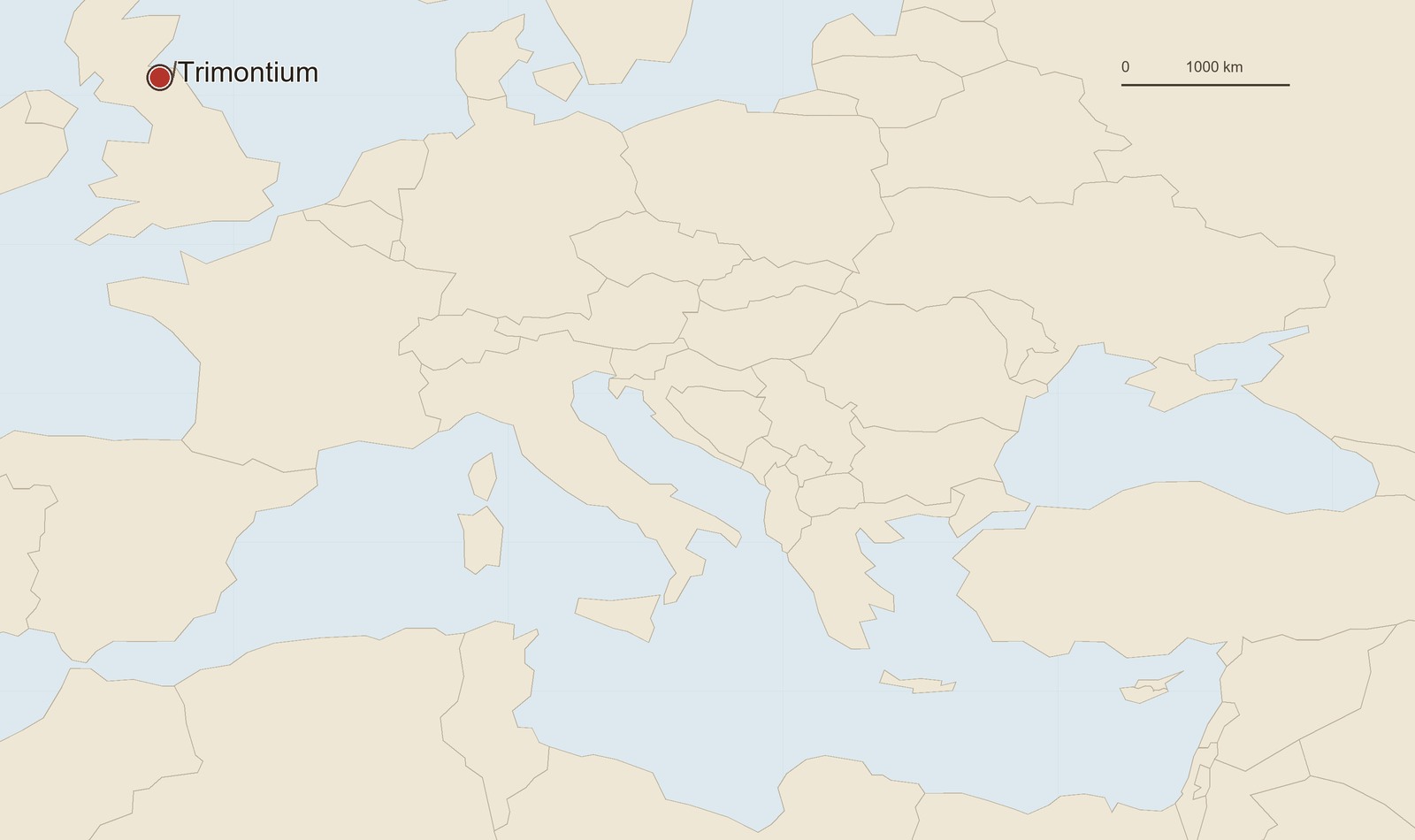 Location map: Trimontium / Newstead. The marker shows the ancient site or main archaeological complex.
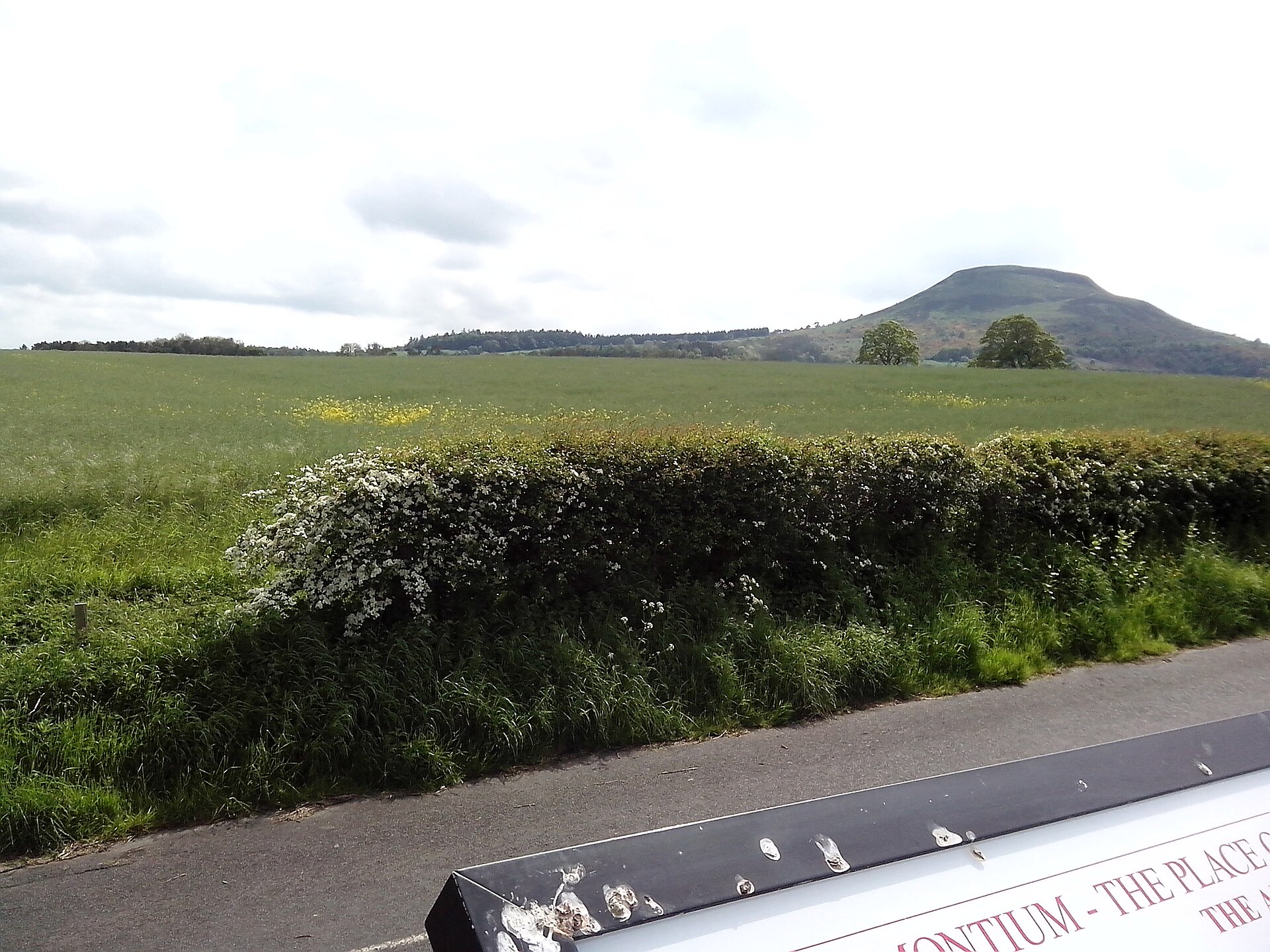 Site of the Roman fort of Trimontium at Newstead, view from the north-eastern corner.
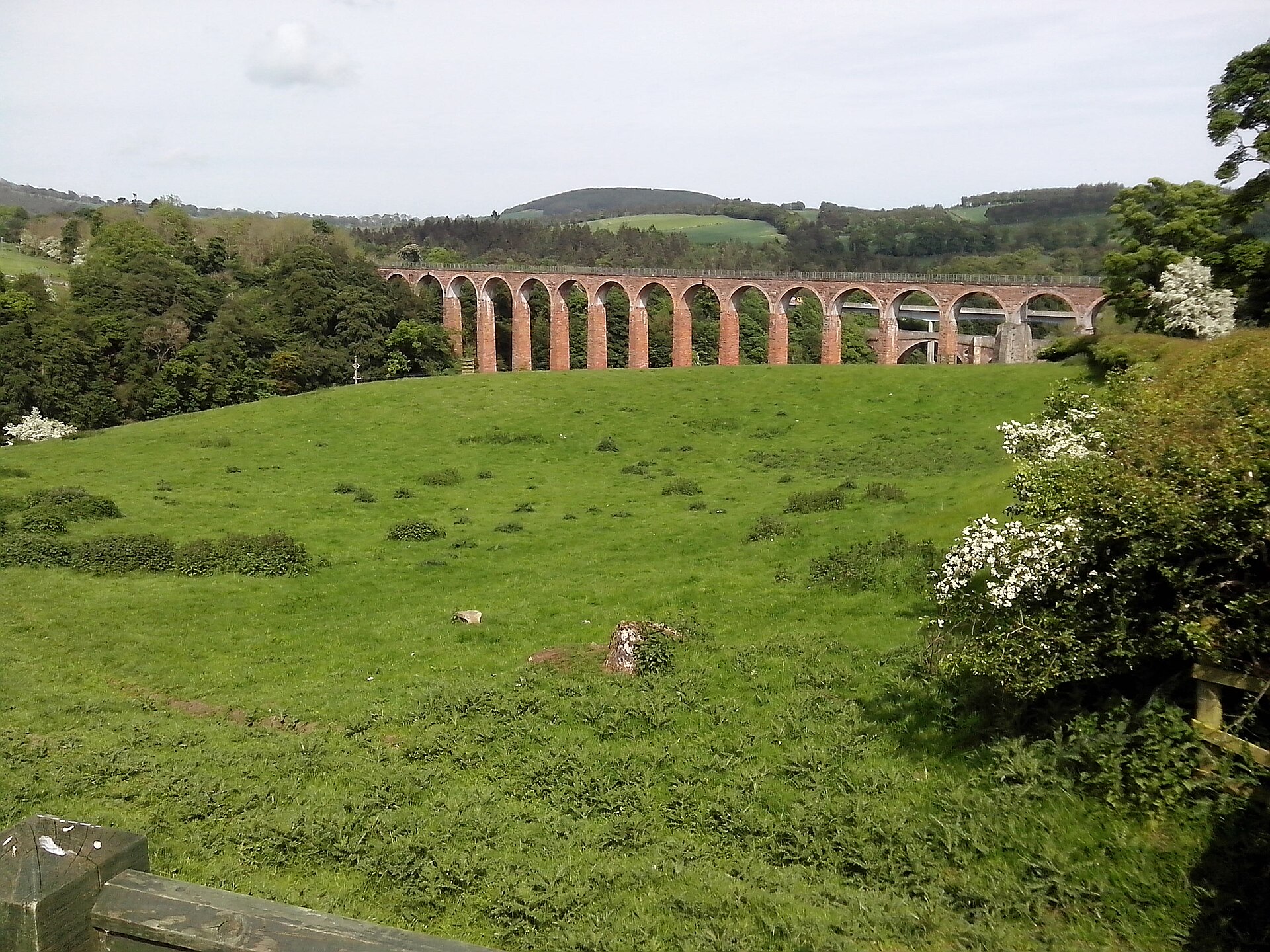 Site of the Trimontium amphitheatre and the Victorian viaduct near Newstead.
Plan and Phases of the Complex
The plan of Trimontium shows more than the rectangle of the fort. Around the main enclosure are annexes, roads, working areas and zones connected with civilian life. The complex is best treated as a military landscape: the central camp controlled people and supplies, annexes took on additional functions, and outer zones connected the garrison with road, craft, trade, animals and ritual.
The early phases reflect rapid military establishment in a new zone. Later the plan became more complex: lines of defence changed, additional spaces appeared, and the surroundings filled with traces of economic activity. The amphitheatre at Trimontium is especially important because it shows more than guard duty and drill. The military complex included training, spectacle, ceremonies and forms of collective life that connected soldiers, command and the population around the fort.
The Newstead phases also matter for dating. If the finds are treated without the plan, a helmet, manica or altar become isolated museum objects. Connected with ditches, annexes, wells, roads and pits, they become evidence for changing garrisons, building work, repair, loss, ritual action and episodes of abandonment.
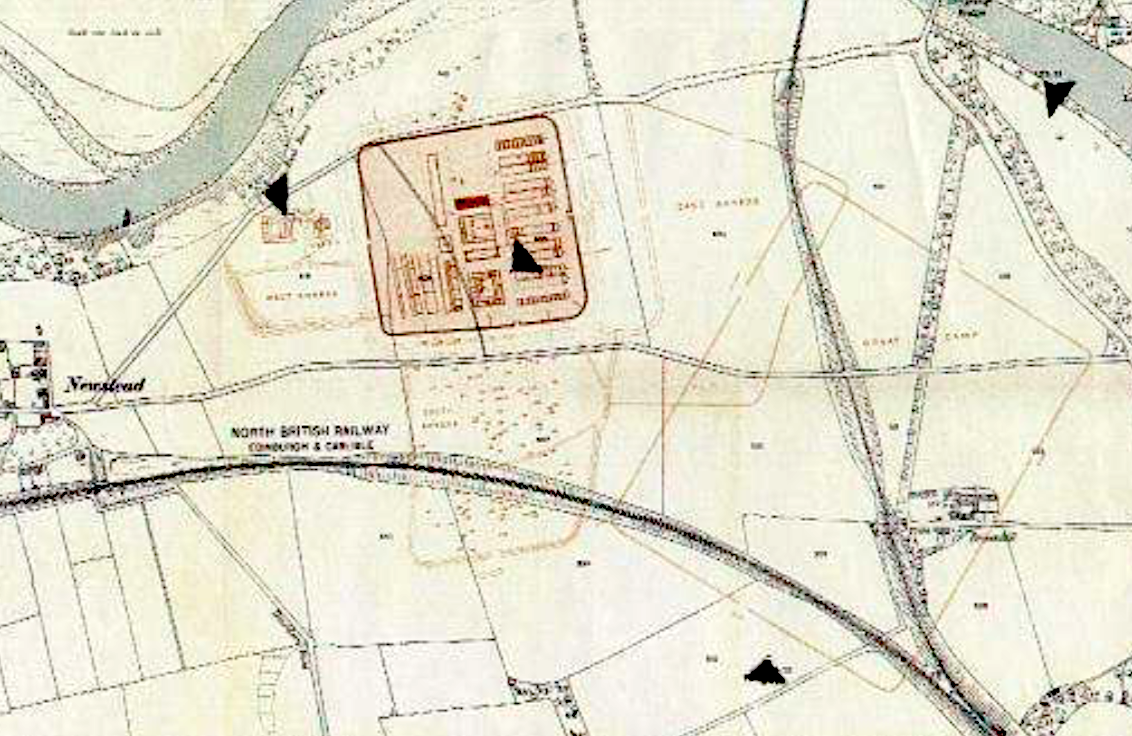 Plan of the Trimontium complex at Newstead: fort, annexes, roads and surrounding landscape.
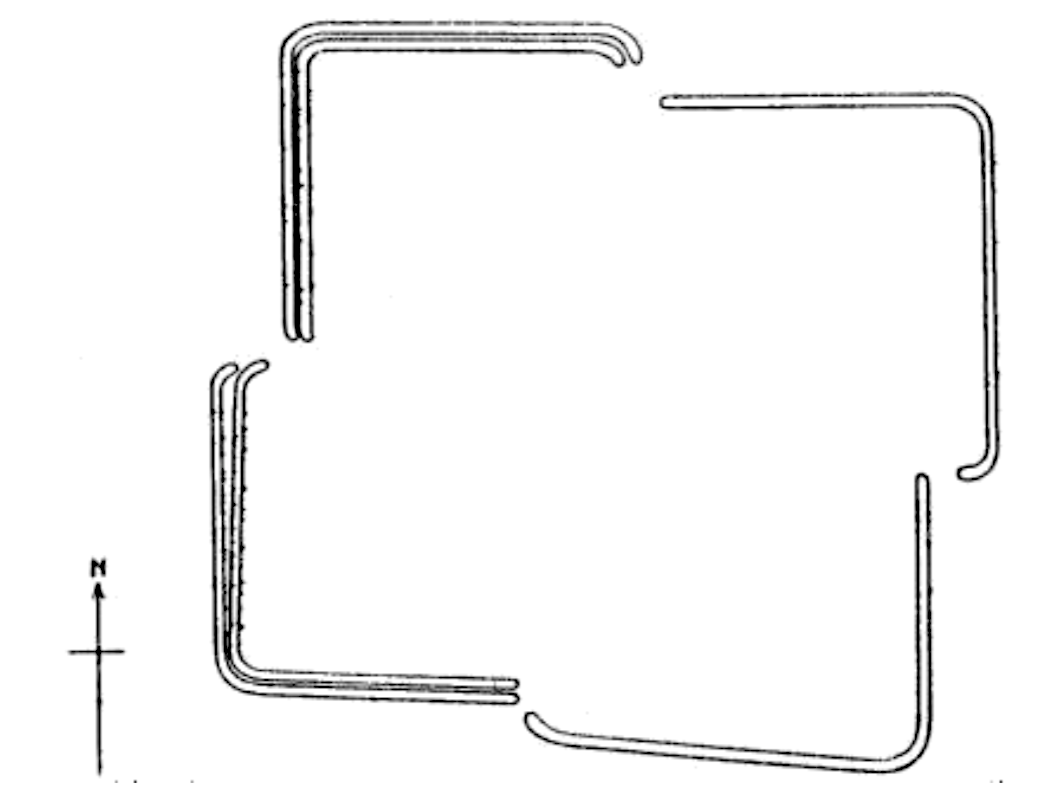 Scheme of an early phase of the Trimontium complex. The plan helps distinguish the first military works from later expansion of the fort and annexes.
Garrison and Cavalry
Trimontium is often associated with cavalry, and this fits the northern setting. Patrols, reconnaissance, escorting supplies and rapid response mattered in a landscape of hills, wide river valleys and long roads. A mounted garrison could operate over a wider area than an infantry unit and suited a district where the army had to control not only the fort walls but movement through the landscape.
The Newstead cavalry helmet became the most famous object from the complex. It is not the ordinary campaign helmet of every soldier. Masked or parade-training helmets of this kind belong to the elite side of mounted service, exercises and display of status. Its find at Newstead shows that the garrison environment included not only the rough routine of campaigning, but also a complex culture of military display, training and prestigious equipment.
Horse gear, strap fittings, metal mounts and protective elements for rider or animal make the army visible as more than a static mass inside walls. Trimontium was a place where people, horses, carts, supplies and orders constantly passed through road, gates, outer yards and workshops.
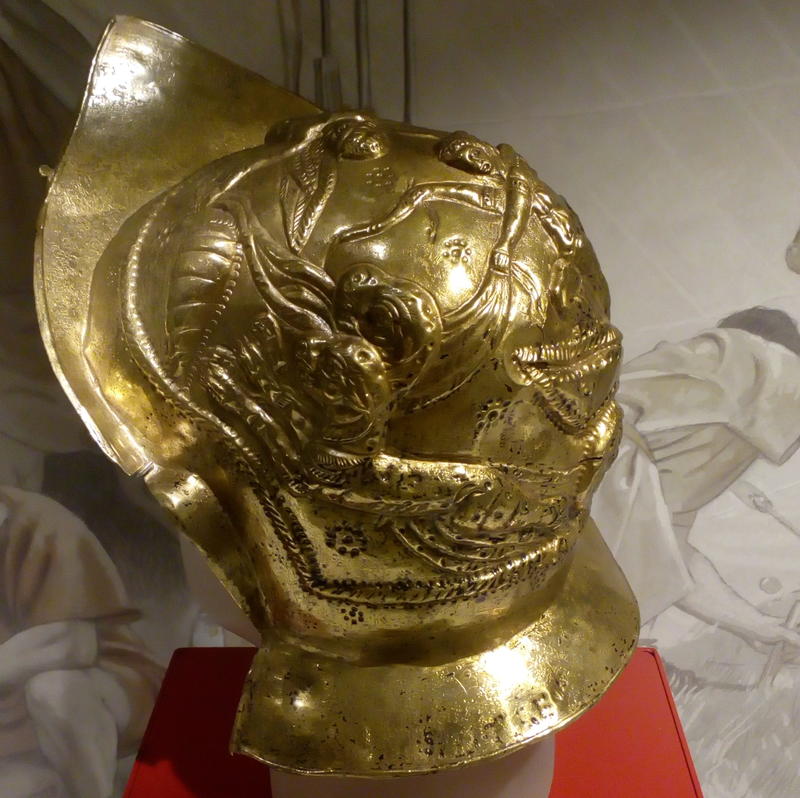 The Newstead cavalry helmet. Iron and bronze; c. AD 80-100; found in 1905 at the Roman fort of Newstead, now in the National Museum of Scotland.
Armour, Weapons and Discarded Objects
The military finds from Newstead are among the most important groups of Roman equipment from Britain. The manica, fragments of lorica squamata, belt fittings, horse harness, weapon elements and metal mounts show the garrison not as an ideal textbook image, but through repair, loss, storage and discard. Pits, wells and rubbish contexts are especially important: objects often survive in groups there and reveal not only form, but the moment when an item went out of use.
The Newstead manica is important for the history of Roman arm protection. It cannot simply be transferred to every legionary or cavalryman: it is a rare and specialised object. Together with other armour fittings, however, it shows that northern garrisons had varied equipment and that frontier military practice was more flexible than the simple scheme of "shield, sword and helmet".
Scale armour, belt details and votive objects complete the picture. Some objects belong to combat and service, others to cult, personal memory or acts of thanks. They appear in one complex because garrison life did not fully separate war, craft, religion and daily routine.
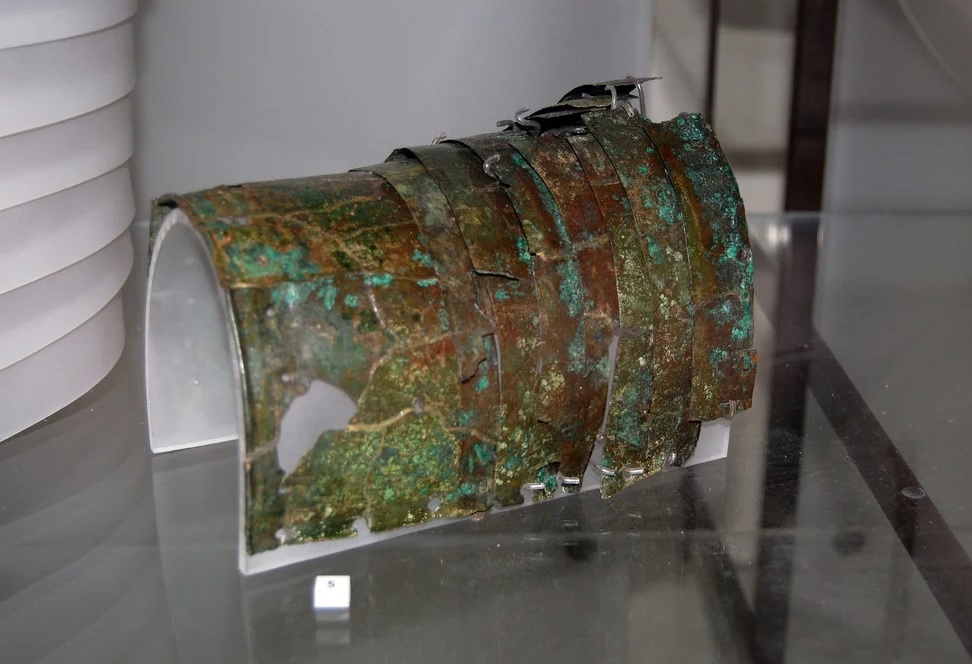 Manica from Newstead. Bronze; c. AD 80-180; National Museum of Scotland. General view of the arm defence.
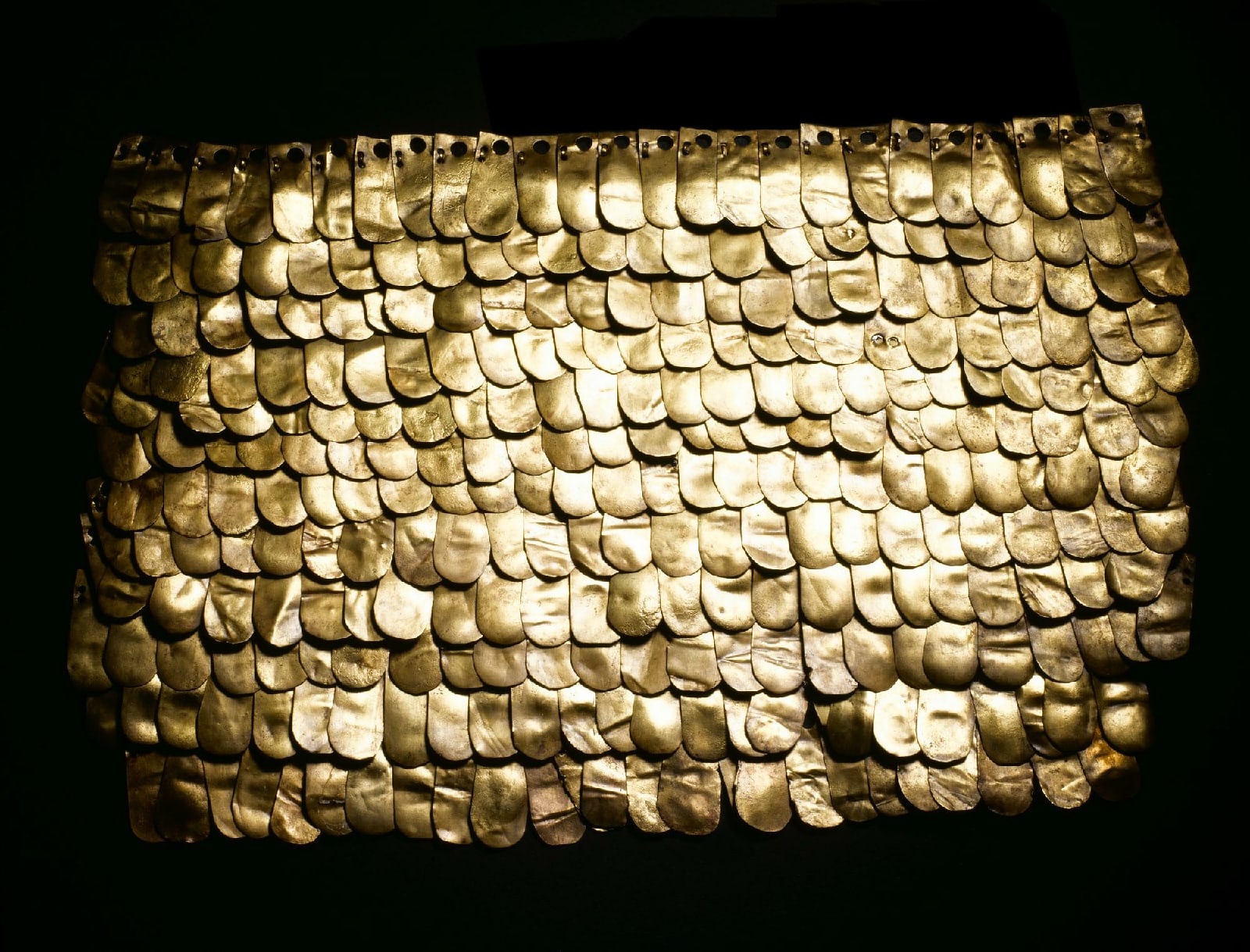 Fragment of lorica squamata from Newstead. C. AD 140-180; the find shows scale armour in the Trimontium complex.
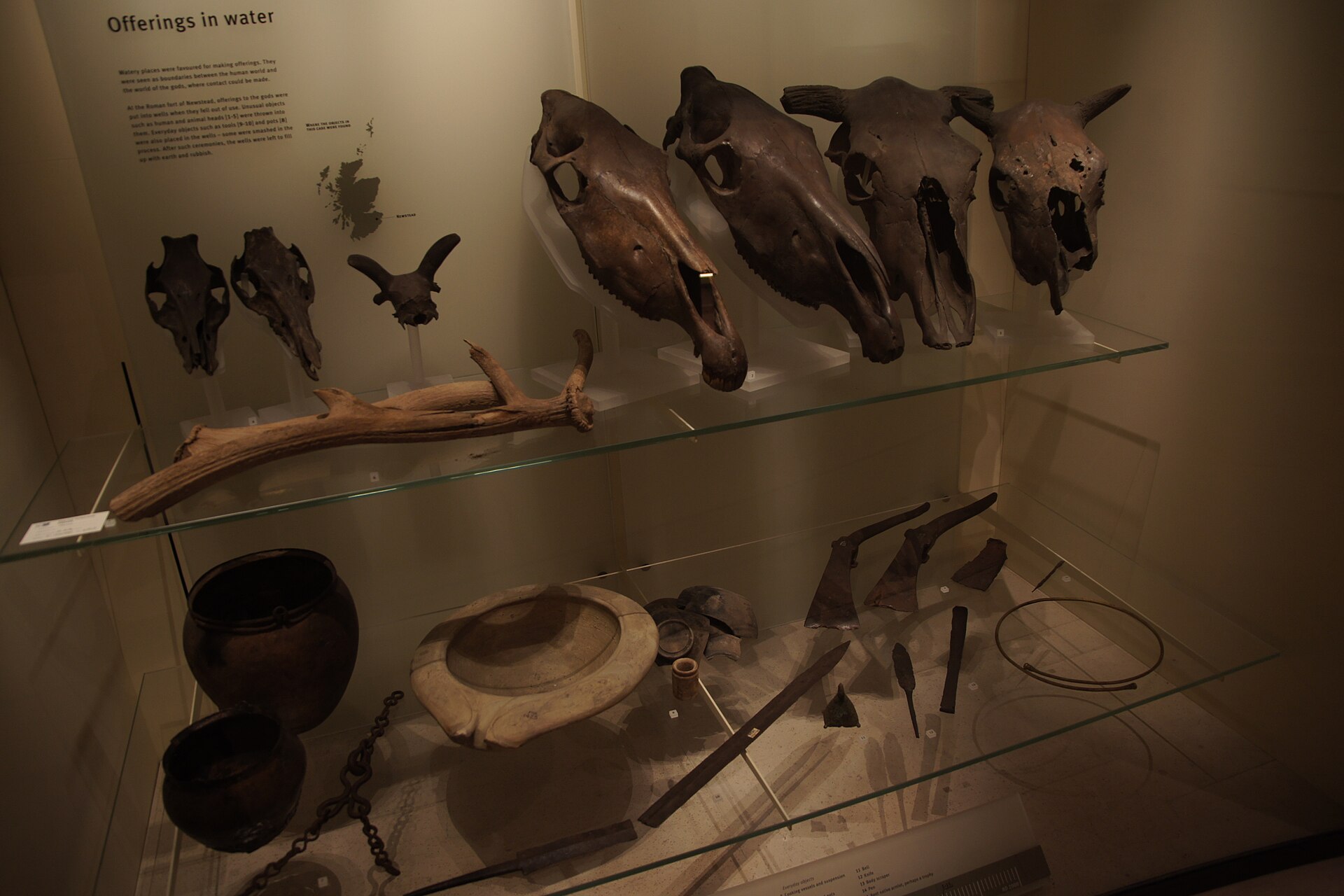 Roman votive objects from Newstead, National Museum of Scotland. Finds of this kind show the religious side of the garrison environment.
Vicus, Craft and Daily Life
Trimontium was not only a place of military discipline. Around the fort developed annexes, craft areas, places of trade and zones connected with servicing the garrison. Smiths, carpenters, leatherworkers, cooks, carriers, sellers and people responsible for animals, grain, fuel, water and repair were all needed. Everyday finds - pottery, querns, shoes, glass, tiles and tools - are therefore not secondary: they show how the military machine existed from day to day.
Pottery helps date layers and trace supply. Shoes and leather show the body of the soldier or worker in motion. Querns and vessels speak of food preparation, storage and distribution. Small metal objects in museum cases look less dramatic than a helmet, but they connect the fort with workshops, stores, repair, market and the people who lived beside the army.
The civilian environment around a northern fort was not a full city, but it was a necessary part of Roman presence. Without vicus, roads and craft, the garrison could not support itself for long in the northern zone.
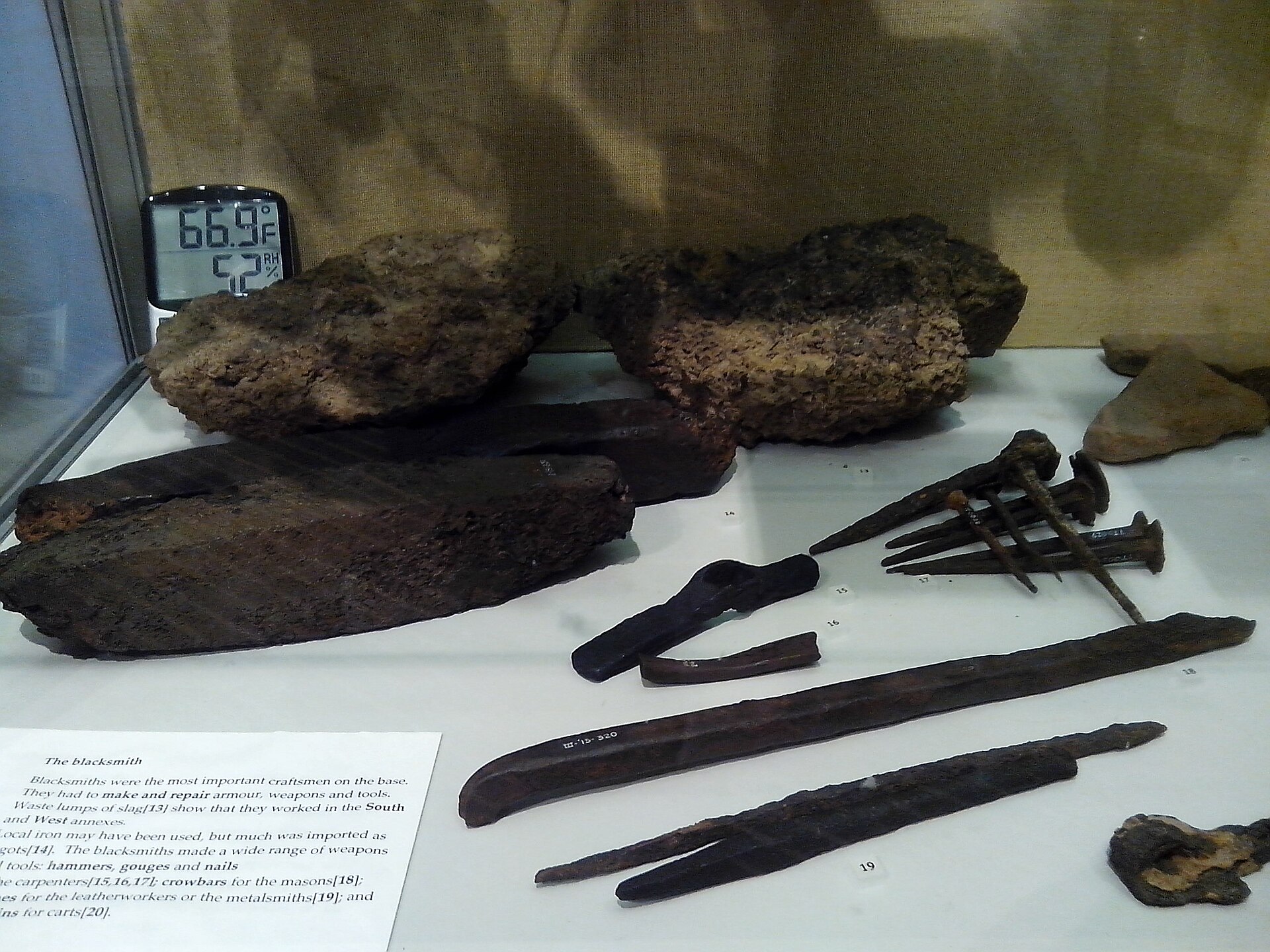 Metal finds from Trimontium: equipment fittings, tools and objects from the garrison environment. Roman period; Trimontium Museum, Melrose.
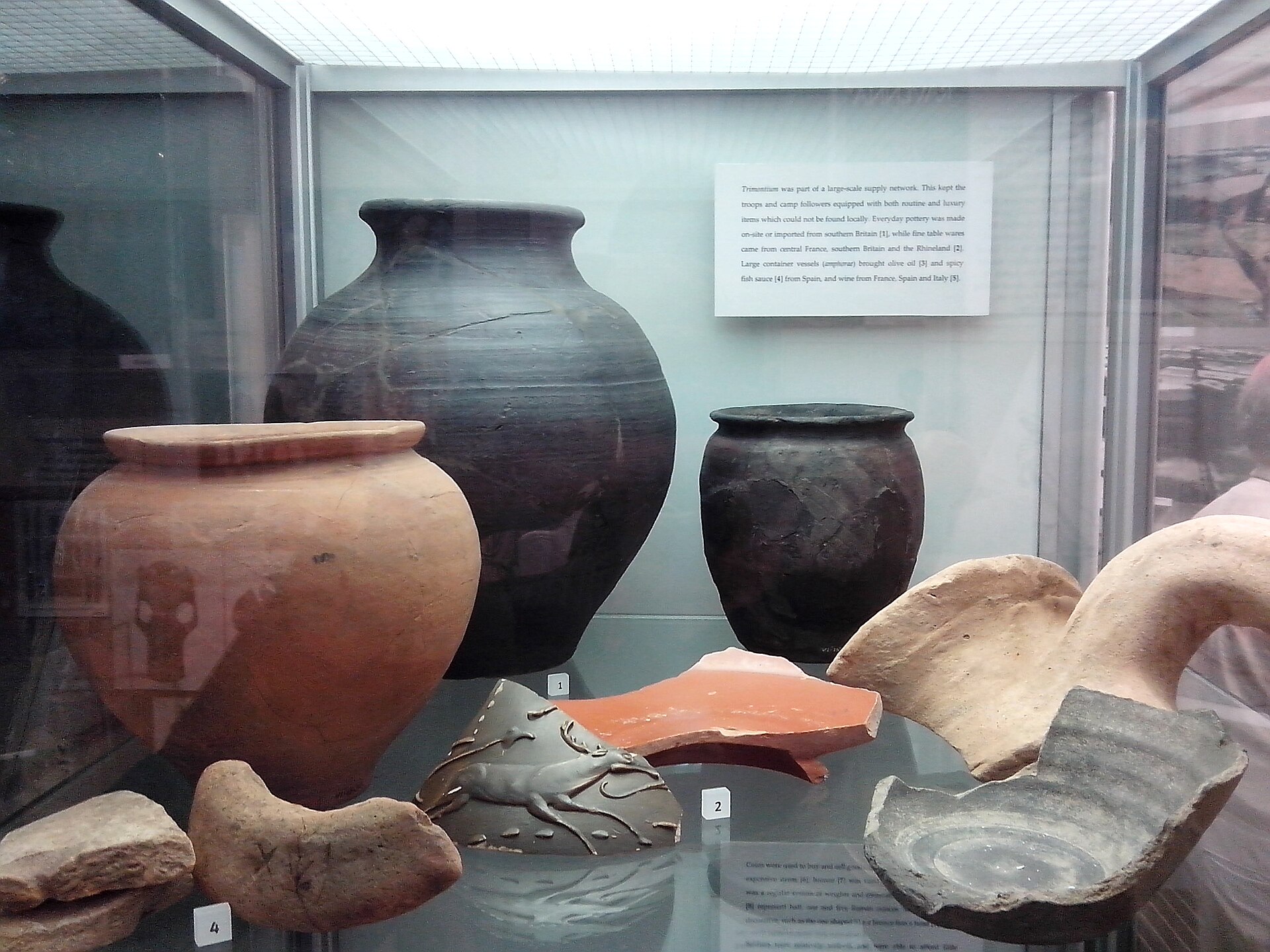 Pottery from Trimontium. Roman period; Trimontium Museum, Melrose.
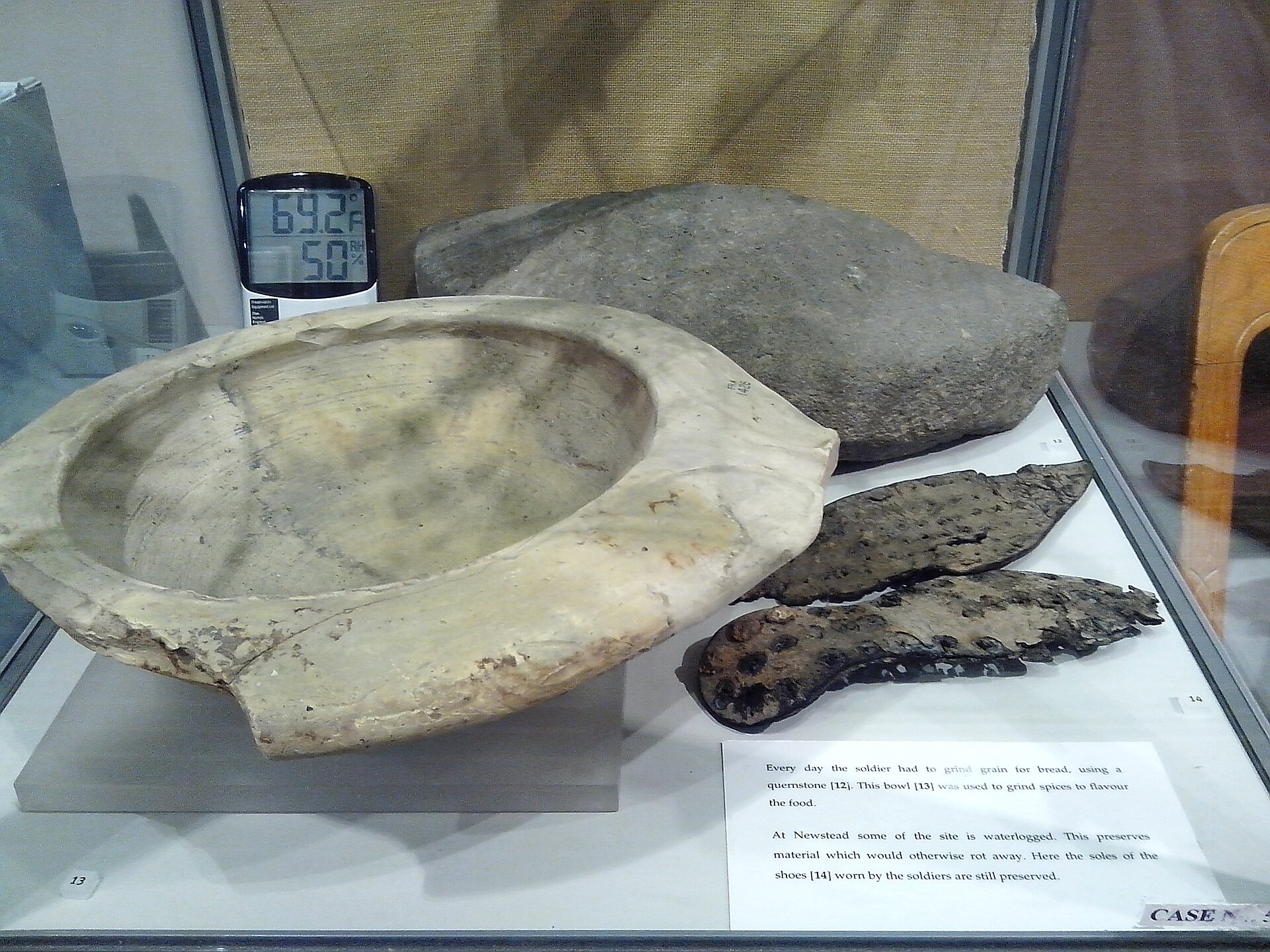 Quern, vessel and shoe from Trimontium. Roman period; Trimontium Museum, Melrose.
Ritual and Local Connections
Shrines, altars and votive objects show the religious side of Trimontium. A military fort was not only a store of weapons: soldiers made vows, thanked gods, took part in cults of unit and emperor, and marked membership in a military community. Inscriptions and dedications provide names, offices, origins and the language of public memory.
The local population of northern Britain is also visible through the landscape. Native forts and settlements lay near the Roman complex, and the fort stood in an area where contact could take many forms: service in auxiliary units, trade, coercion, gift exchange, observation and resistance. Archaeology cannot always name individual people, but it shows the space in which the Roman army and local societies existed side by side.
This is why Trimontium matters not only for the history of the Roman army. It shows the frontier as a social zone where road, garrison, vicus, local settlements and museum objects form one picture of northern Britain under Roman pressure.
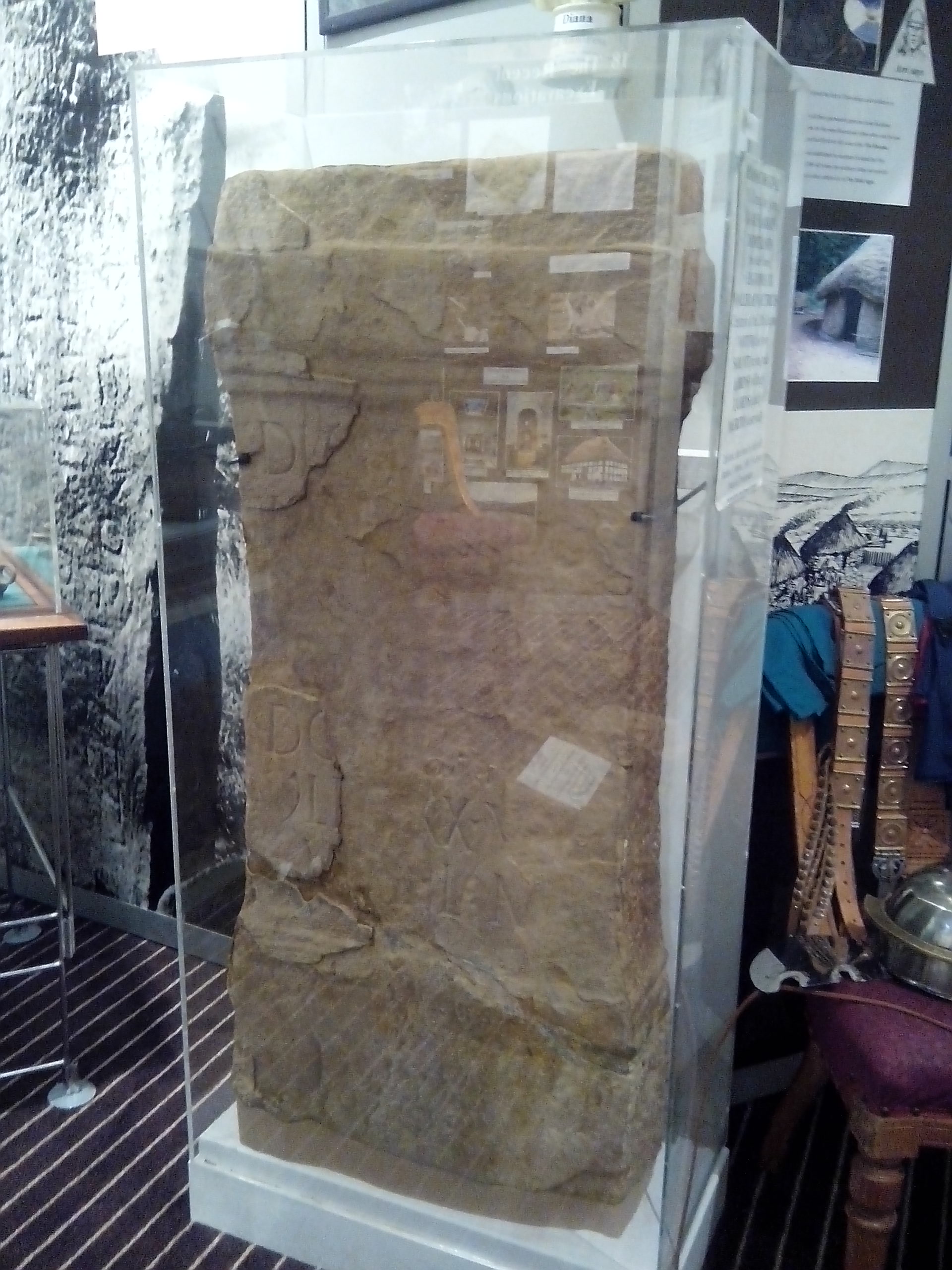 Roman altar from the Trimontium complex, display in the Melrose museum.
 Manica from Newstead, another view of the same find. Bronze; c. AD 80-180; National Museum of Scotland.
Chronology
- Late first century AD - Roman advance into northern Britain under Agricola; the Newstead area enters the network of military points along Dere Street.
- Around AD 80-100 - early phases of Trimontium; the famous cavalry helmets belong to this horizon.
- Second century AD - rebuilding and expansion of the complex; fort, annexes, roads, vicus and amphitheatre form a large military landscape.
- Around the AD 140s - during Antonine policy Trimontium serves as a northern base and supports movement toward the Antonine Wall line.
- Late second century AD - after withdrawal toward Hadrian's Wall, the role of northern posts changes, but contact with the region continues.
- Early third century AD - Severan northern campaigns renew attention to roads and bases beyond Hadrian's Wall.
- 1905 - James Curle begins excavations that make Newstead one of the key monuments of Roman military archaeology in Britain.
- 1911 - Curle's A Roman Frontier Post and Its People establishes Trimontium as a classic complex for fort, garrison and finds.
Excavation and Museum History
The modern importance of Newstead is closely connected with the excavations of James Curle. The work of the early twentieth century produced not only striking finds, but also a large body of plans, descriptions, plates and object groups. The 1911 publication did for Trimontium what classic Limes reports did for many Roman forts: it established the site as a place where an entire military environment, not one object type, could be studied.
Later research refined the picture. Work on annexes, pits, extramural settlement and the west annexe showed that a complex zone of activity existed around the fort. This is especially important for interpreting old collections: objects taken from wells and pits are not merely "rich finds", but traces of specific actions - repair, discard, ritual deposition, garrison withdrawal or clearance before a new phase.
The museum history of Trimontium is also significant. Some famous objects are held in the National Museum of Scotland, while part of the local story is presented in the Trimontium Museum in Melrose. This division is normal for a major monument: the national collection shows Newstead's importance for Roman Scotland as a whole, while the local museum returns objects to the landscape, road, Eildon Hills and the site of the fort itself.
Archaeological Sources
The main sources for Trimontium are James Curle's excavations, plans of the fort and annexes, later research at Newstead, objects in the National Museum of Scotland and the display of the Trimontium Museum in Melrose. Find contexts are especially important: a well, pit, annexe, road, workshop or museum case answers different questions. An object without findspot shows form; an object in a layer shows action, date and circumstance.
Newstead is strong precisely through assemblages: helmets, manica, scale armour, votive objects, pottery, footwear, metalwork, altars and plans. They allow discussion not only of what a Roman soldier looked like, but also of supply, repair, cavalry, religion, garrison withdrawal, relations with local societies and the history of research on northern Britain.
Related Topics
- Archaeology and museums
- Roman Empire
- Roman Army
- Auxilia
- Roman Legion
- Hadrian's Wall
- Castrum
- Projectiles, Ballistae and Burnswark
- Roman Equestrian Equipment
- Caligae
Literature and sources
- Curle J. A Roman Frontier Post and Its People: The Fort of Newstead in the Parish of Melrose. Glasgow, 1911.
- Hunter F., Keppie L. (eds.). A Roman Frontier Post and Its People: Newstead 1911-2011. National Museums Scotland / Trimontium Trust, 2012.
- Richmond I. A. Excavations at the Roman Fort of Newstead 1947. Proceedings of the Society of Antiquaries of Scotland 84, 1952.
- Clarke S., Wise A. Evidence for extramural settlement north of the Roman fort at Newstead (Trimontium), Roxburghshire. Proceedings of the Society of Antiquaries of Scotland 129, 1999.
- Clarke S. The west annexe at Newstead (Trimontium), Roxburghshire. Proceedings of the Society of Antiquaries of Scotland 130, 2000.
- Manning W. H. The Roman Fort at Newstead: the weapons and the garrisons. In: Romanitas. Oxford, 2006.
- Hanson W. S., Maxwell G. S. Rome's North West Frontier: The Antonine Wall. Edinburgh, 1983.
- Trimontium Museum: material on the fort history and museum display.
- Historic Environment Scotland: Newstead Roman military complex, SM12869.
- National Museums Scotland: material on Roman finds from Scotland and Newstead.
- Wikimedia Commons: images of Trimontium, the Newstead fort and museum objects used in the article.


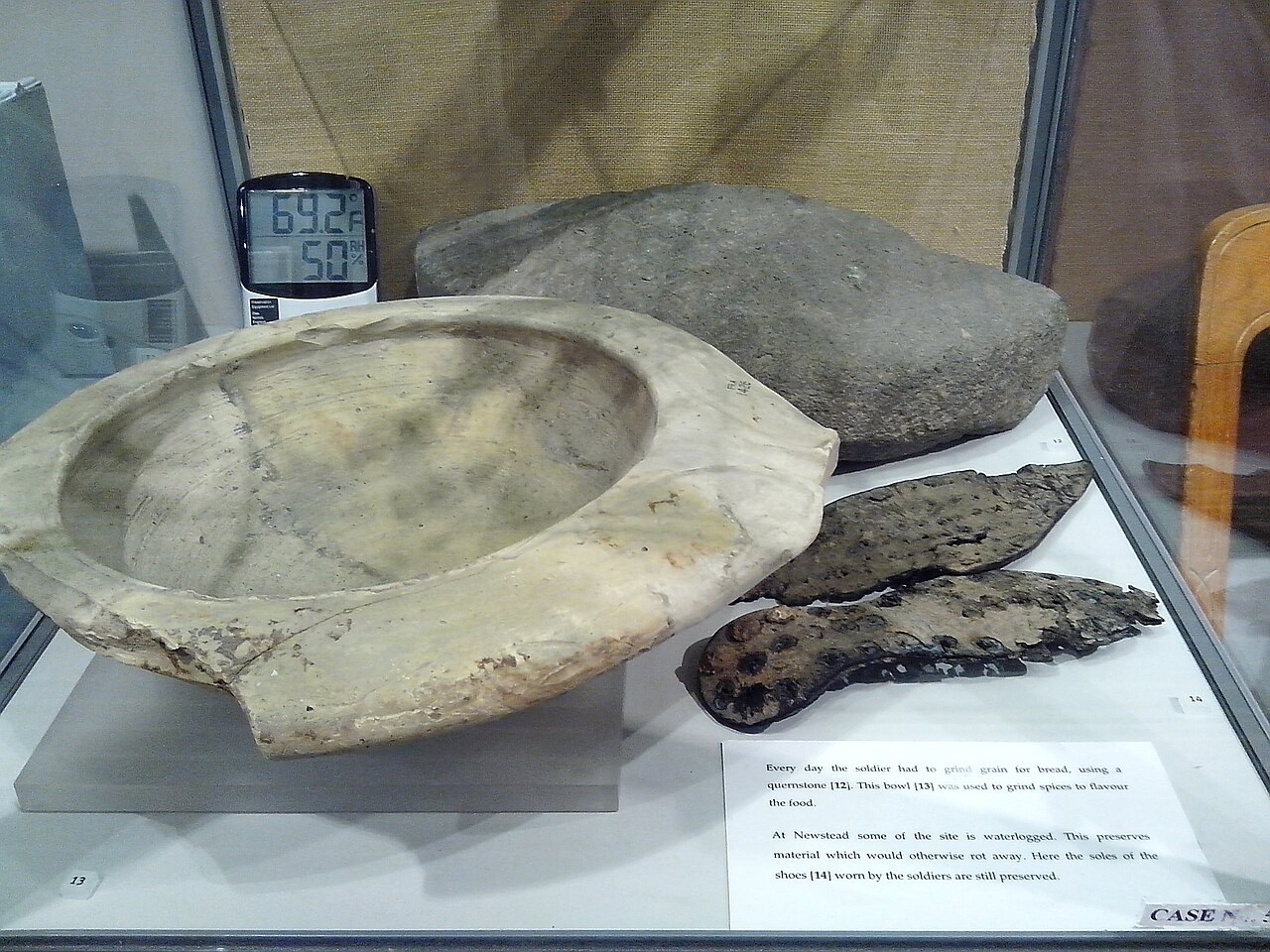 Trimontium / Newstead: Trimontium quern bowl shoes Melrose museum 20140527; material-culture object or museum find connected with the site, Roman period or local archaeological context.
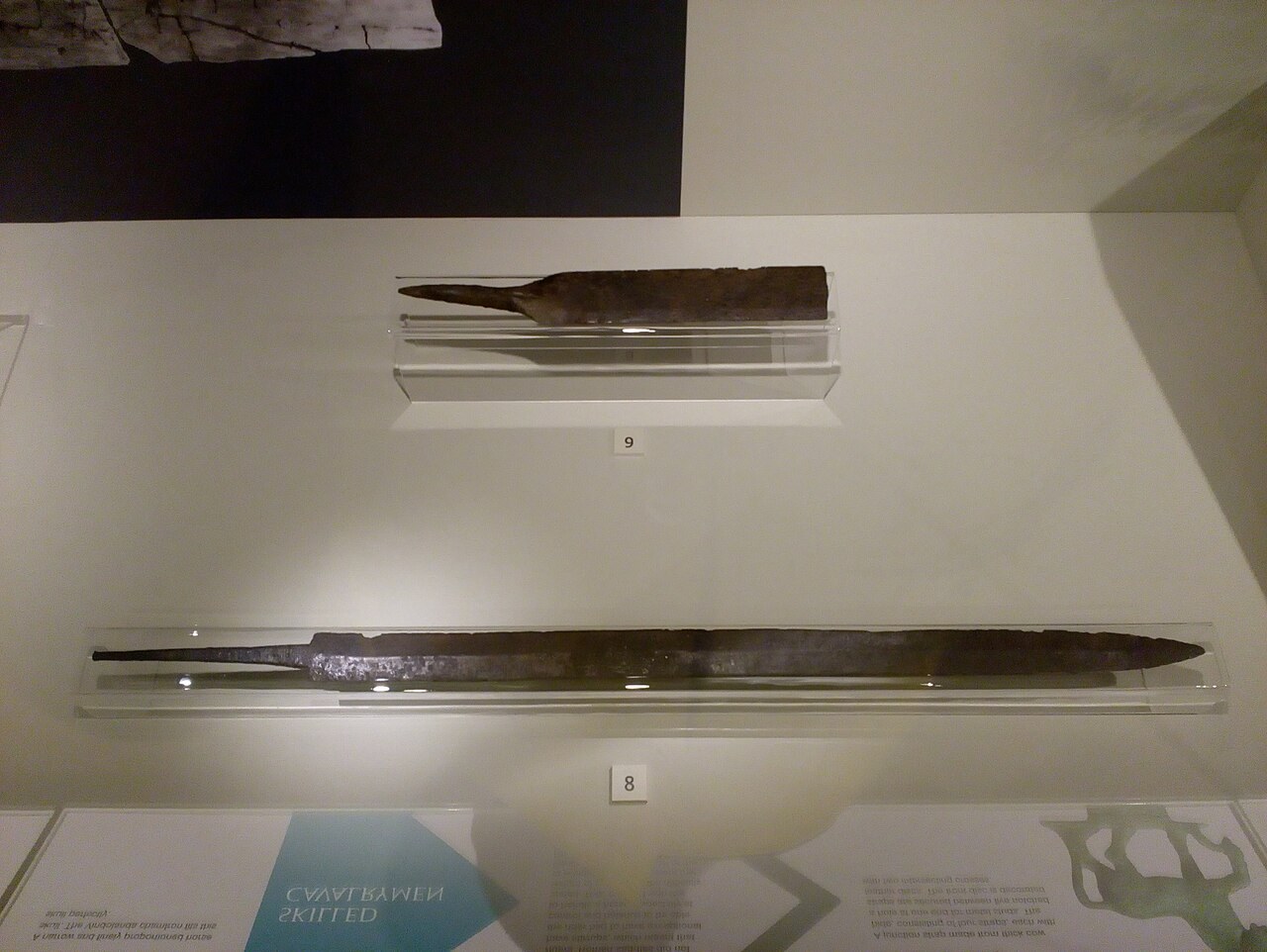 Trimontium / Newstead: The Newstead Sword on load to Vindalanfa museum; material-culture object or museum find connected with the site, Roman period or local archaeological context.
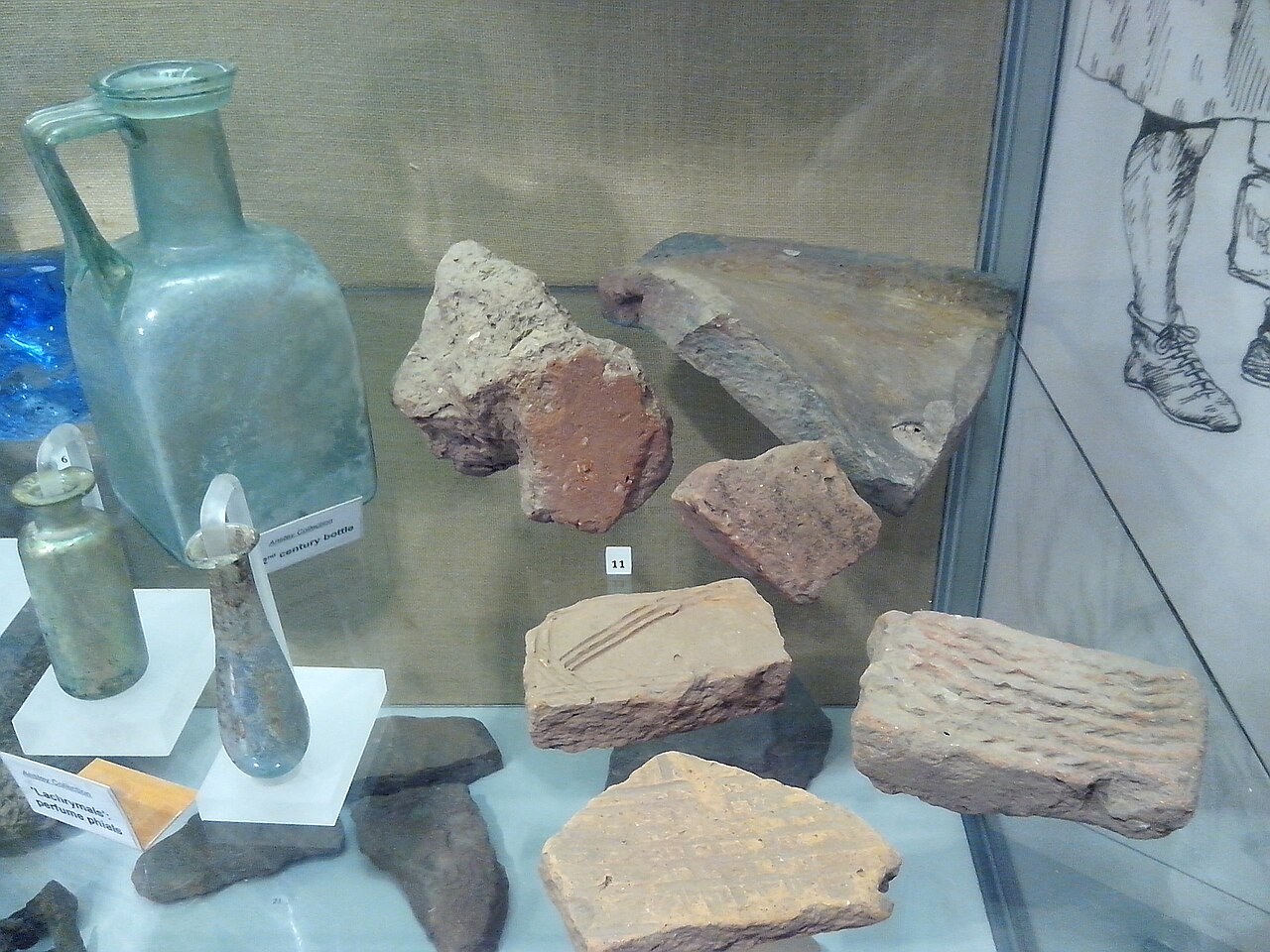 Trimontium / Newstead: Trimontium glass and tiles Melrose museum 20140527; material-culture object or museum find connected with the site, Roman period or local archaeological context.
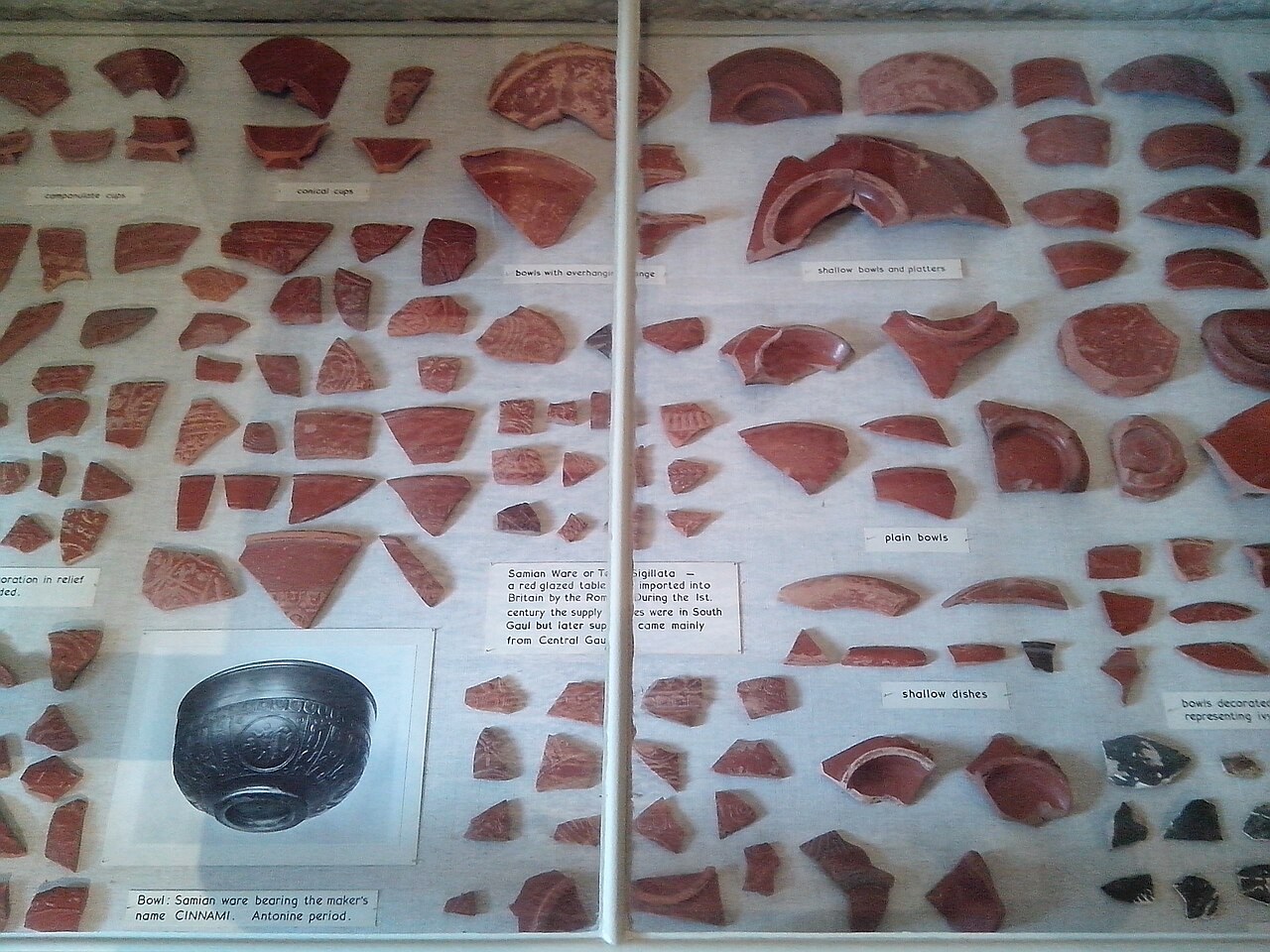 Trimontium / Newstead: Trimontium pottery fragments Melrose Abbey 20140527; material-culture object or museum find connected with the site, Roman period or local archaeological context.
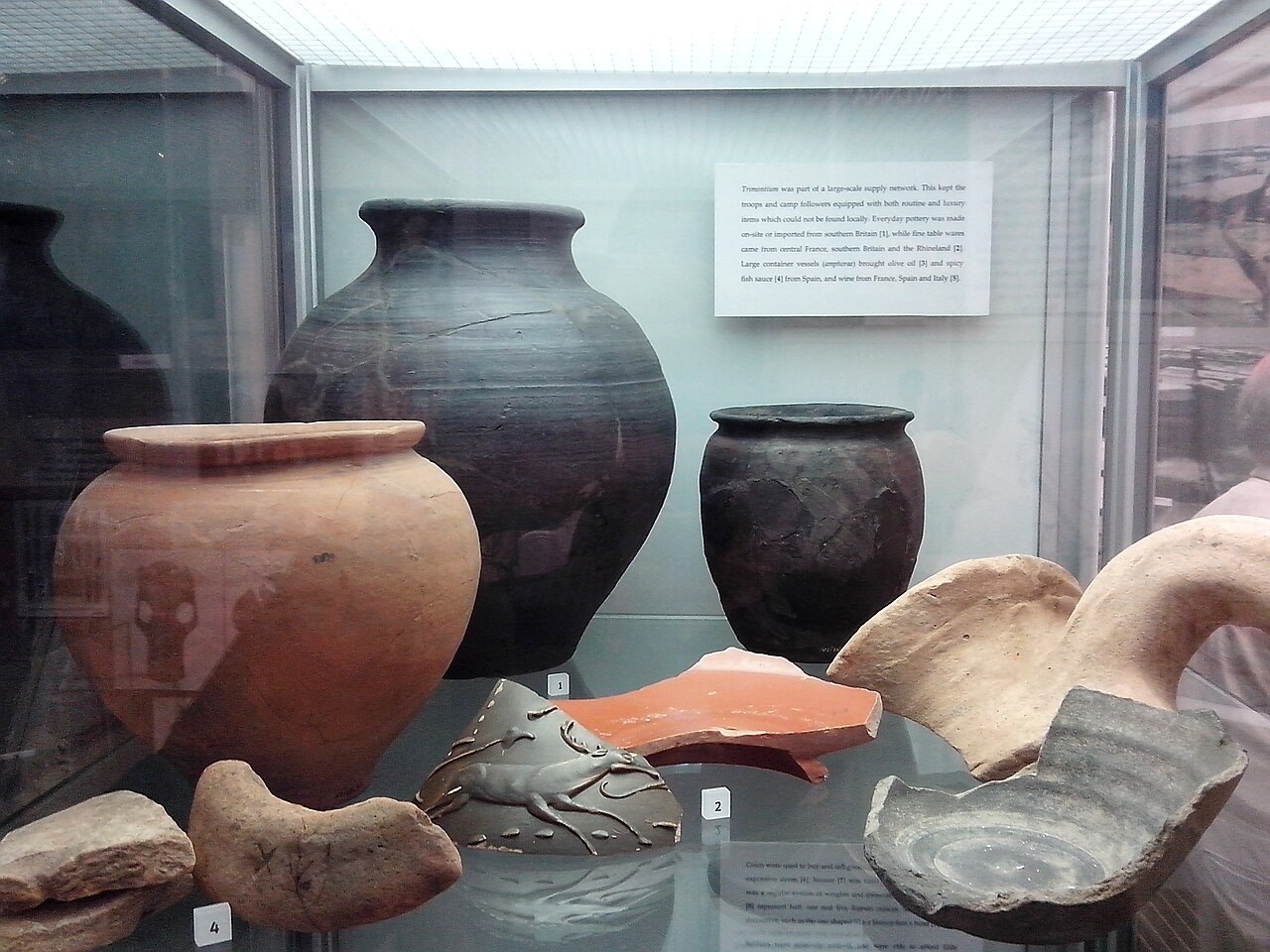 Trimontium / Newstead: Trimontium pottery Melrose museum 20140527; material-culture object or museum find connected with the site, Roman period or local archaeological context.
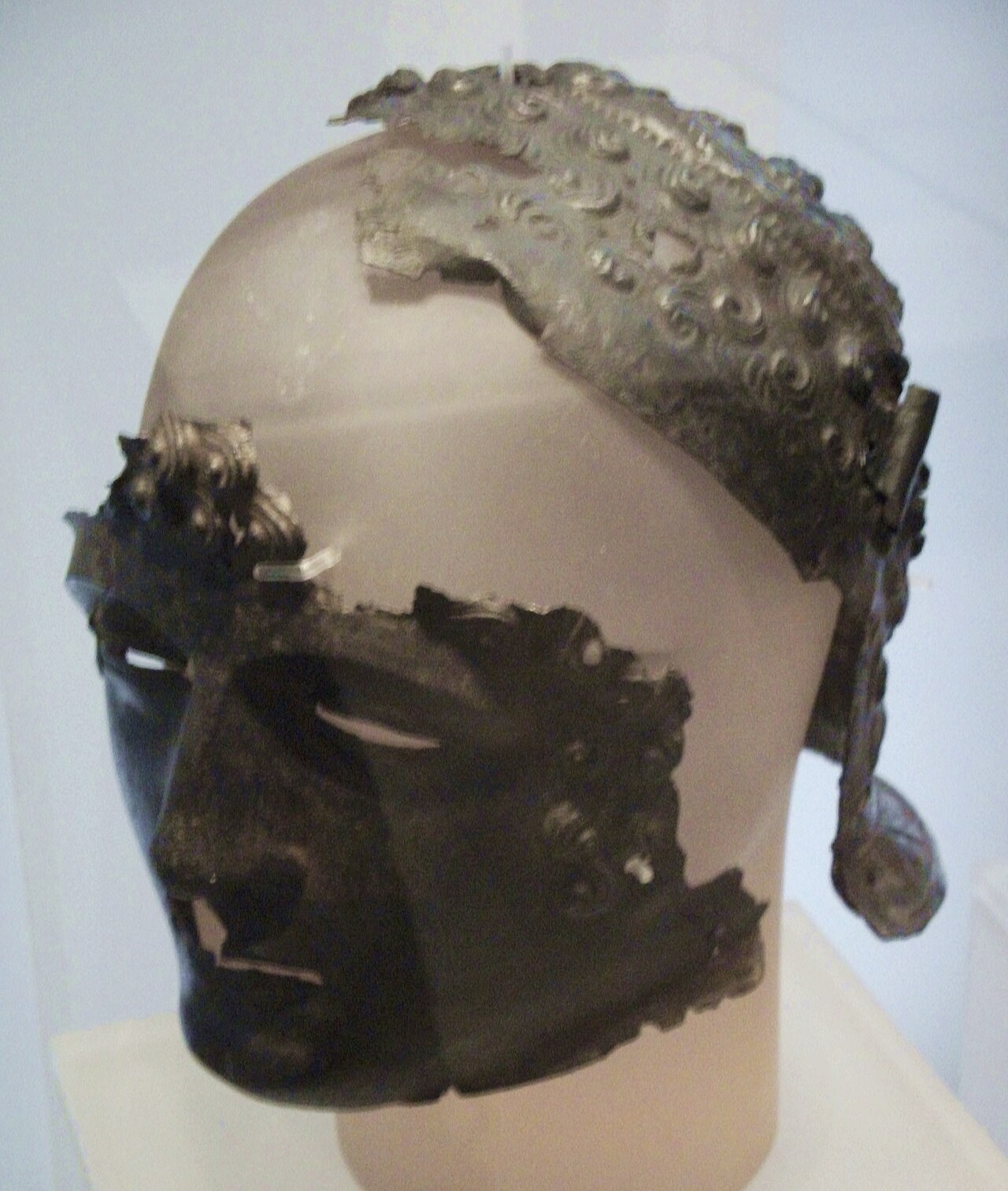 Trimontium / Newstead: Museum of ScotlandDSCF6331; material-culture object or museum find connected with the site, Roman period or local archaeological context.
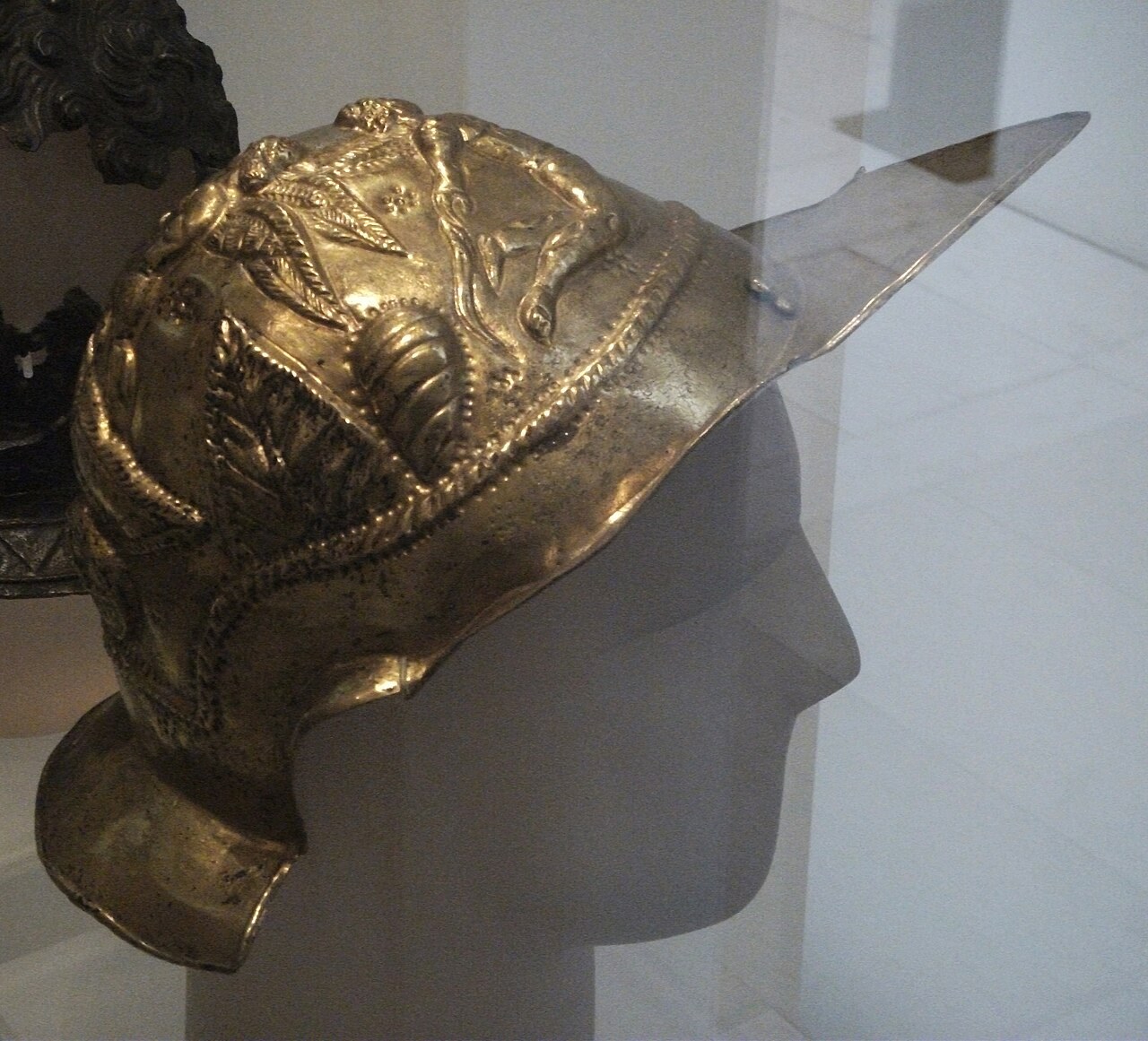 Trimontium / Newstead: Museum of ScotlandDSCF6333; material-culture object or museum find connected with the site, Roman period or local archaeological context.
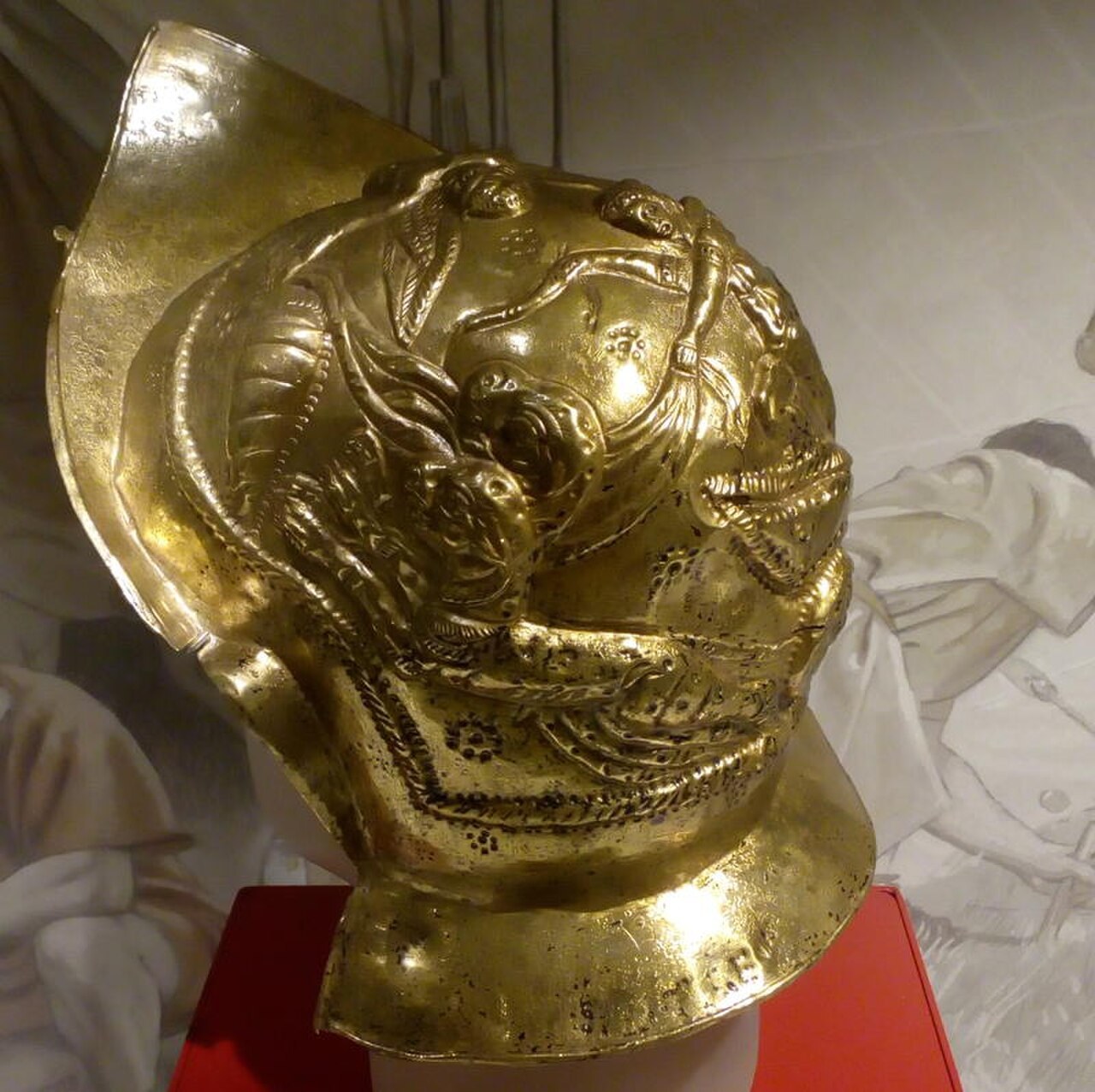 Trimontium / Newstead: Newstead Helmet 5; material-culture object or museum find connected with the site, Roman period or local archaeological context.
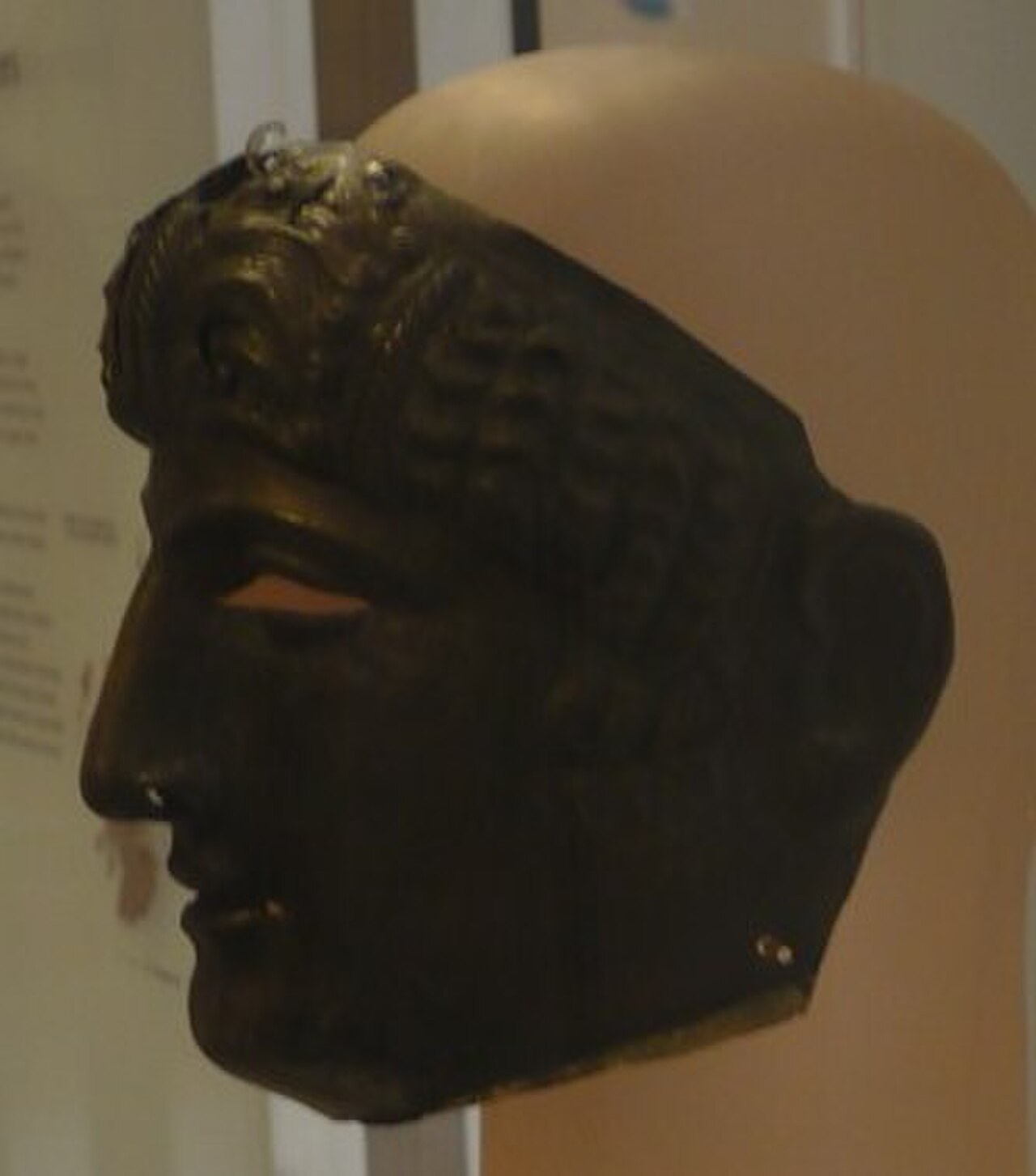 Trimontium / Newstead: Newstead helmet; material-culture object or museum find connected with the site, Roman period or local archaeological context.
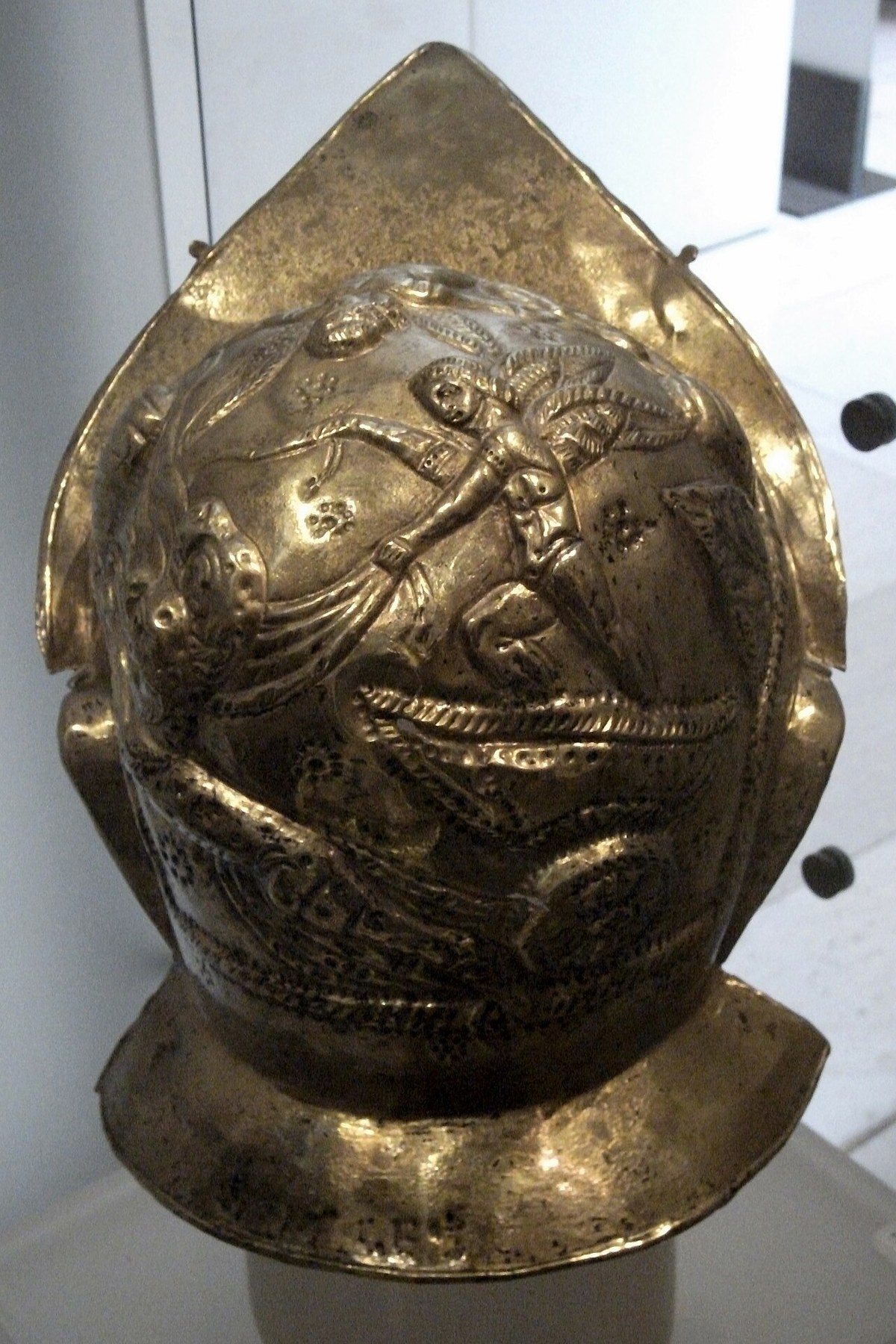 Trimontium / Newstead: Museum of ScotlandDSCF6334; material-culture object or museum find connected with the site, Roman period or local archaeological context.
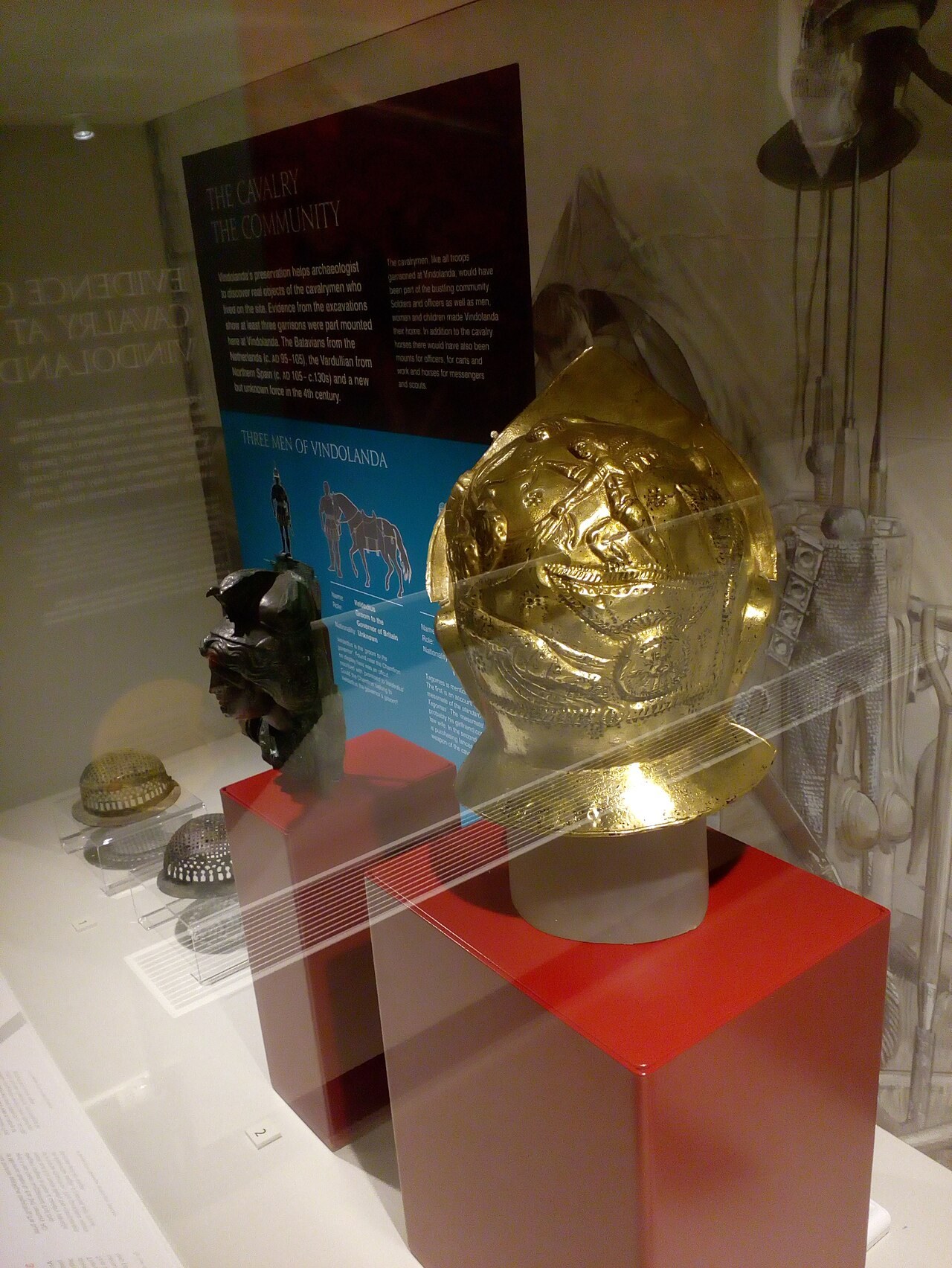 Trimontium / Newstead: The Newstead helmet on load to Vindalanfa museum; material-culture object or museum find connected with the site, Roman period or local archaeological context.
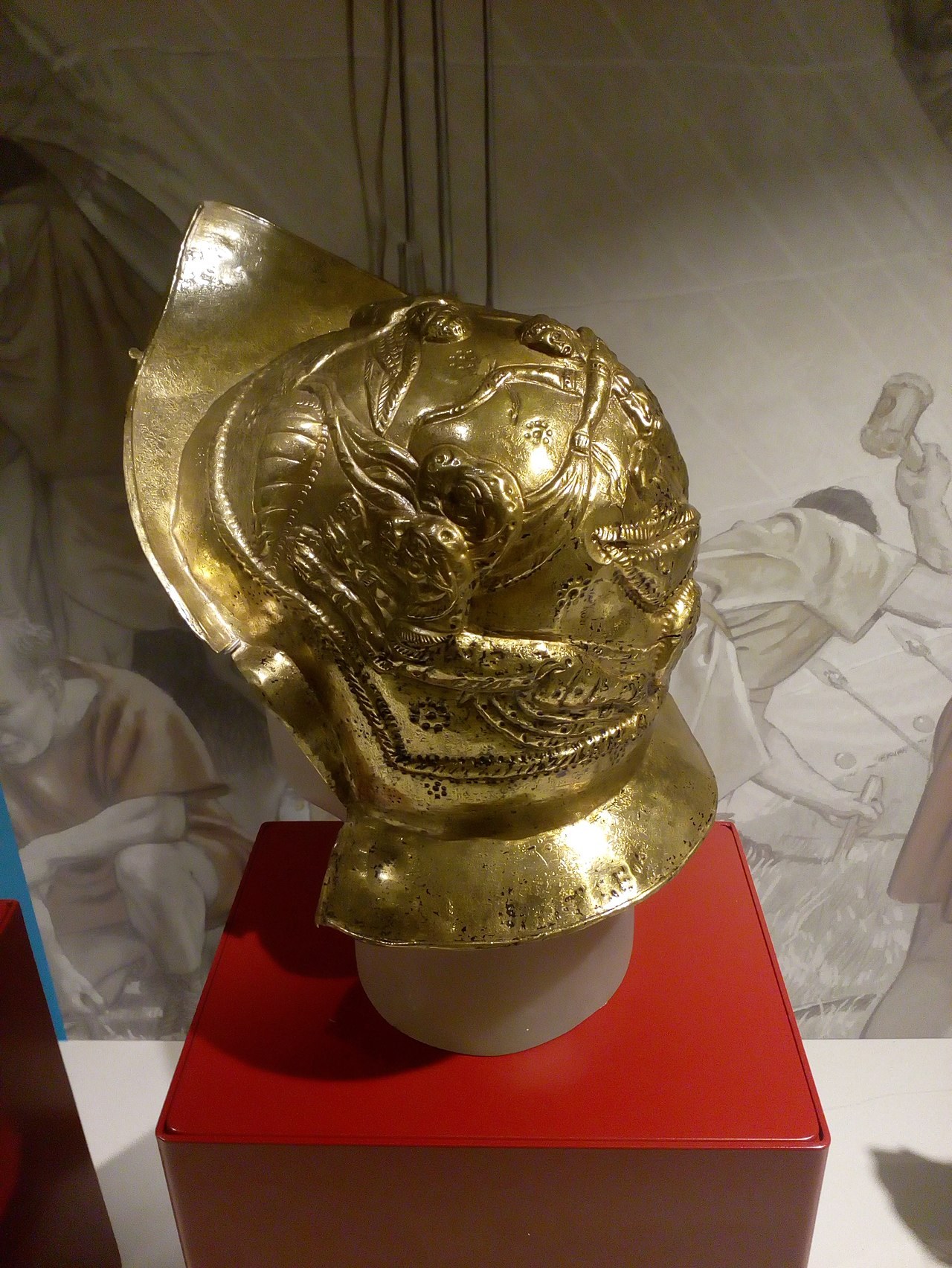 Trimontium / Newstead: The Newstead helmet on loan to Vindalanfa museum; material-culture object or museum find connected with the site, Roman period or local archaeological context.
Interested in Ancient Rome beyond reading? Join Legio X Fretensis or explore our reenactment directions.


