Londinium
Londinium was the Roman town on the Thames that emerged soon after the conquest of Britain in the mid-first century AD. Its importance came from the river, crossing point, roads, trade, harbour and administrative links with the province. Unlike older Celtic centres, Londinium was above all a new Roman town: it grew from a military and commercial node and then became one of the principal centres of Britain.
The Bloomberg tablets are a central part of this history, but not the whole article. They reveal the early written culture of the town; walls, roads, waterfronts, workshops, coins, pottery and shrines show Londinium as an urban organism.
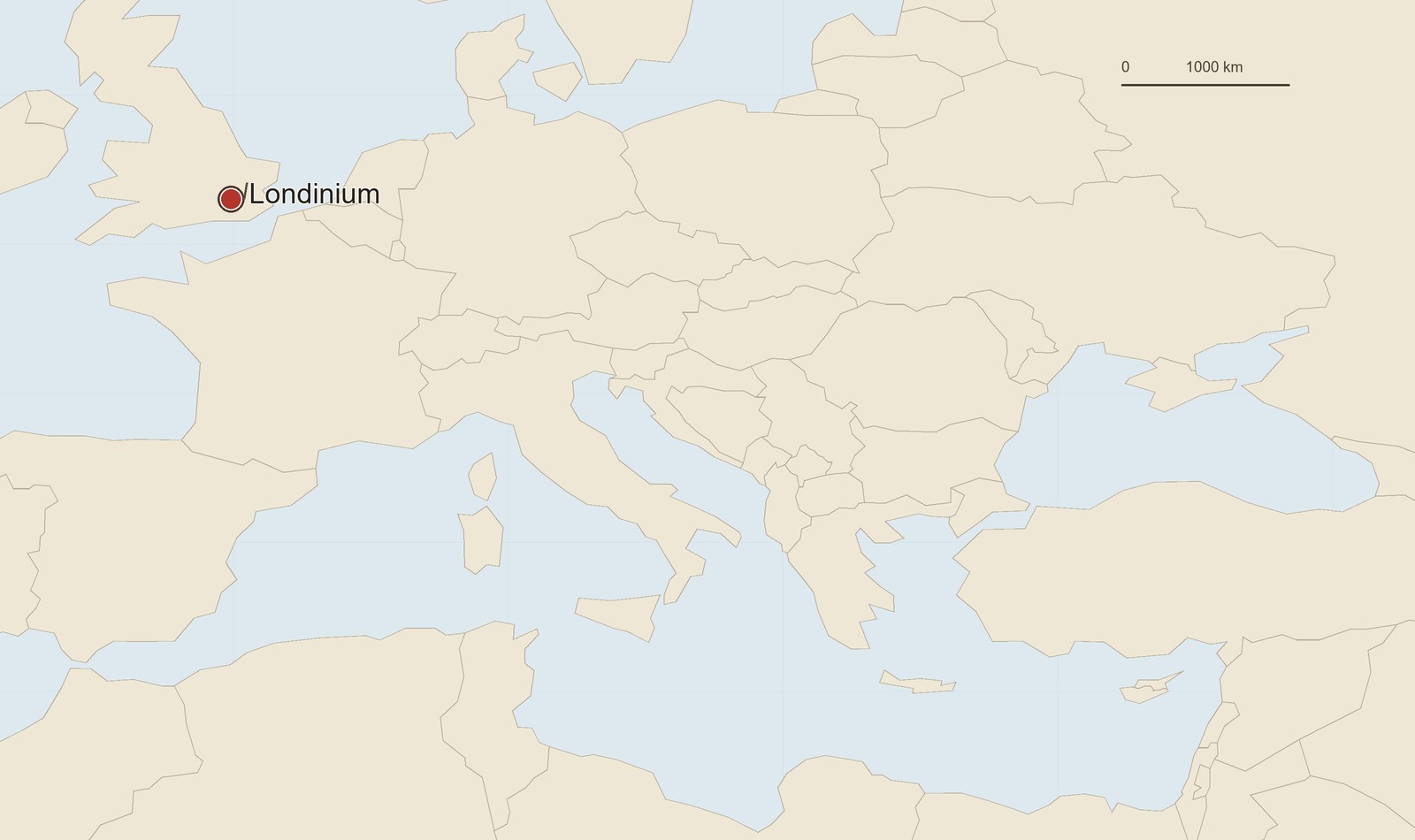 Location map: Londinium. The marker shows the ancient site or main archaeological complex.
A Town on the Thames
During the second century Londinium developed its urban fabric: forum and basilica, baths, temples, workshops, houses and harbour. The town wall was built around AD 200. Londinium was not simply a military fortress, but remained connected with army supply and provincial administration.
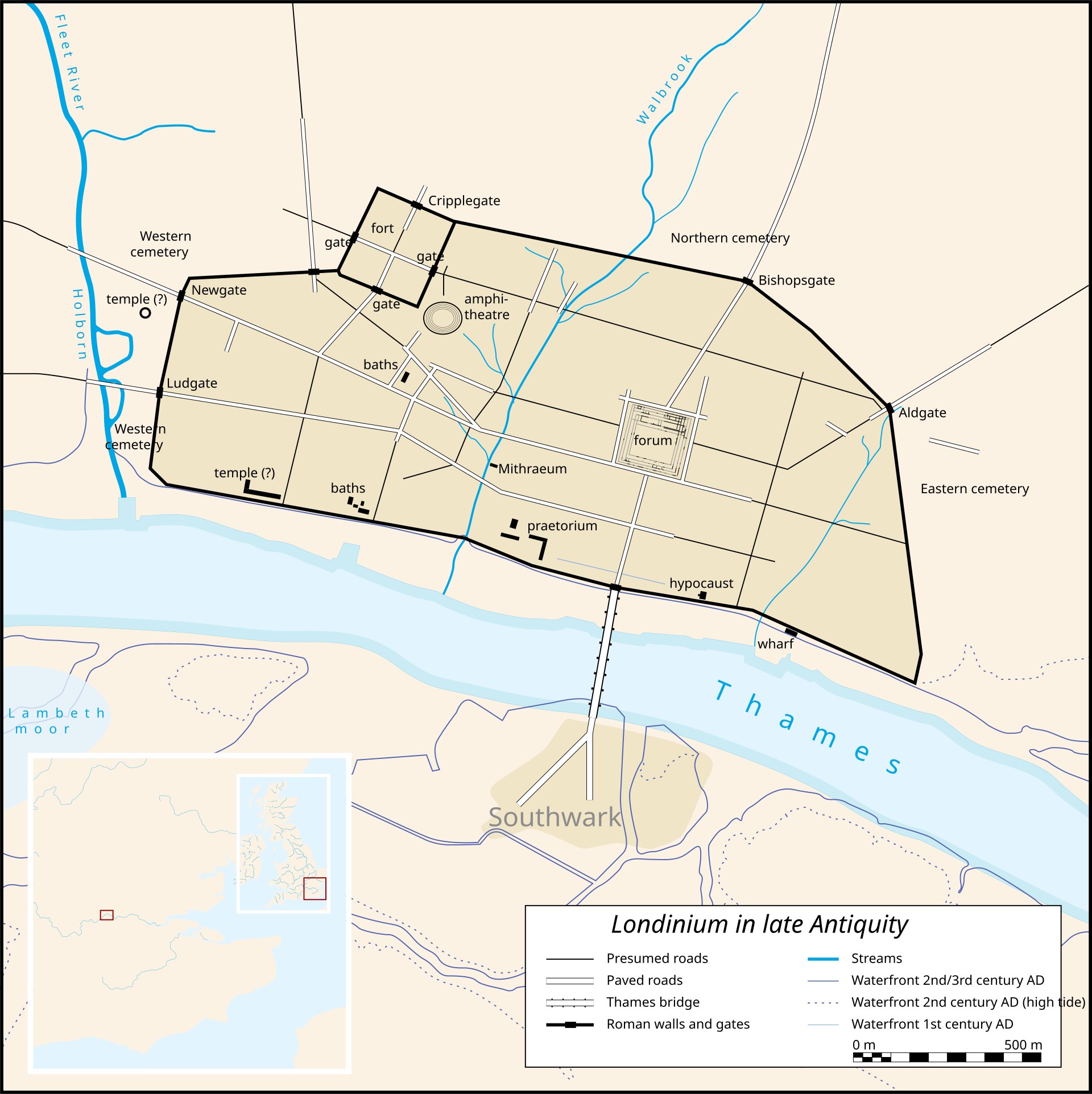 Plan of Londinium in the Late Roman period: walls, gates, roads, the Thames and the main urban zones. The map is schematic but helps locate the later urban core in relation to river and roads.
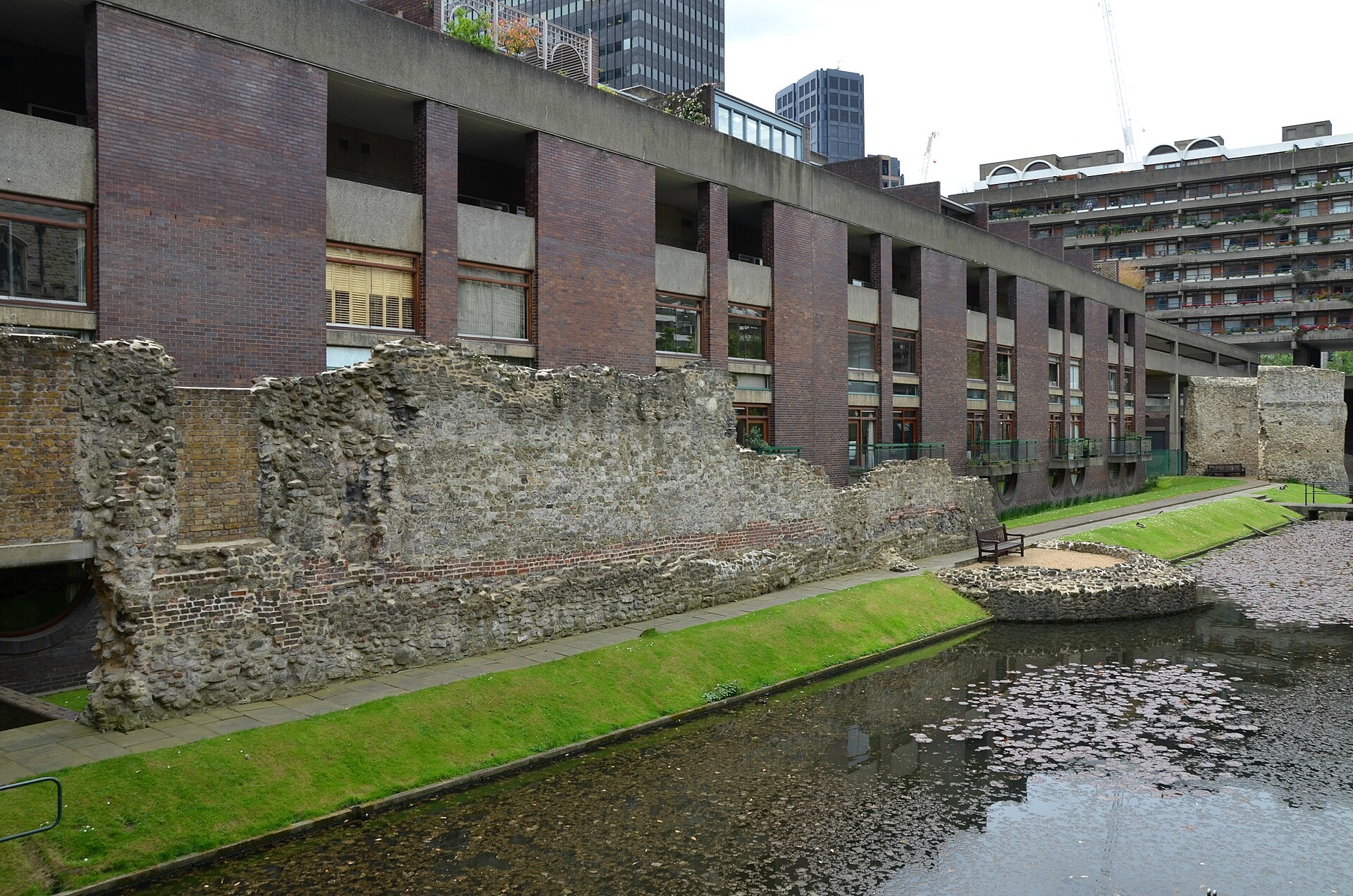 Surviving section of the Roman wall of Londinium. The stone town wall was built in the late second or early third century AD.
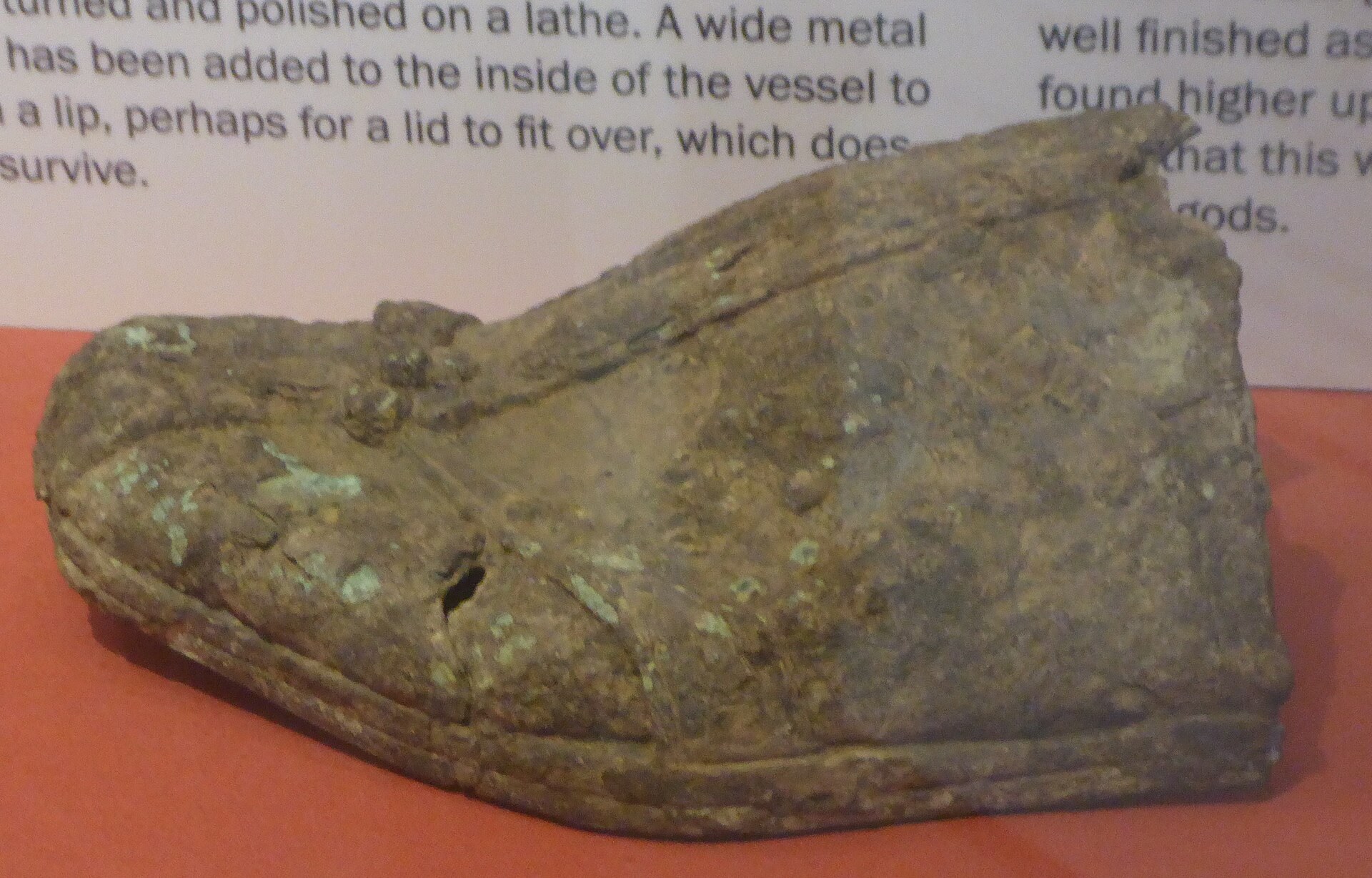 Bronze sandal from Roman London. Roman period; museum display at London Mithraeum Bloomberg SPACE.
The Bloomberg Tablets
The tablet assemblage was found during excavations beneath the new Bloomberg headquarters in the City of London. It is the largest and earliest collection of Roman waxed writing tablets from Britain. The wooden tablets were normally coated with wax and written on with a stylus; the wax disappeared, but scratched letter traces survived on the wood.
The tablets record names, debts, deliveries, receipts, legal and commercial formulae, school exercises and everyday literacy. They show Londinium not as an abstract "Roman town", but as a place of specific people: merchants, debtors, witnesses, scribes, craftsmen, women, enslaved people and freed persons.
Streets, Harbour and Craft
Early Londinium was tied to water. Waterfronts, timber quays, bank revetments and warehouses show that the Thames was road, market and boundary at the same time. Cargoes, building material, pottery, food and people arrived by river. Streets connected the harbour with the forum, workshops, residential quarters and roads into the province.
Urban archaeology provides many small objects: shoes, brooches, styli, vessels, coins, seals, tools, amulets and dress fittings. Such objects matter as an assemblage: they show which habits and crafts took root in Roman Britain already in the first and second centuries AD.
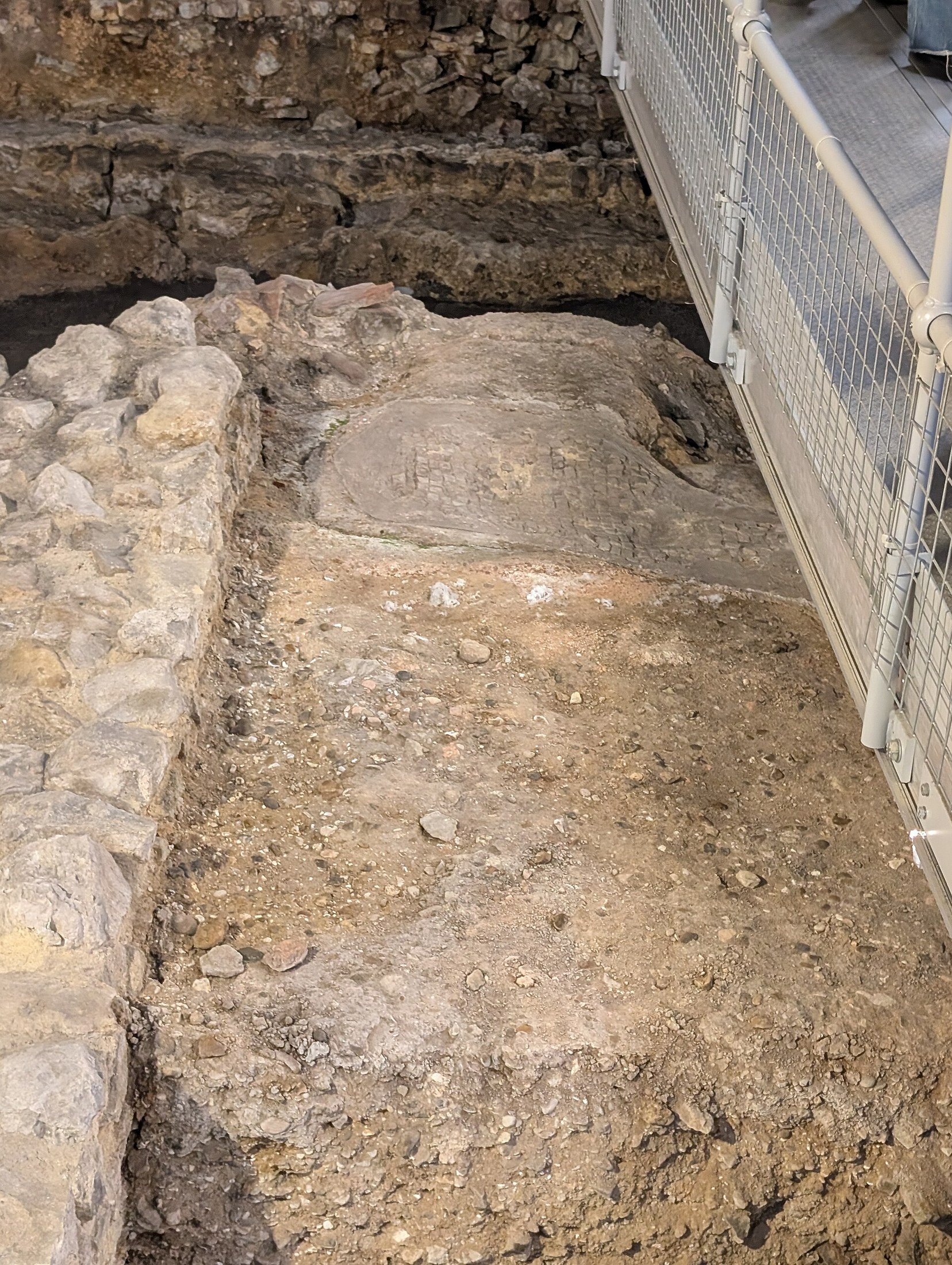 Billingsgate Roman House and Baths in London: surviving walls and heating structures of an urban complex.
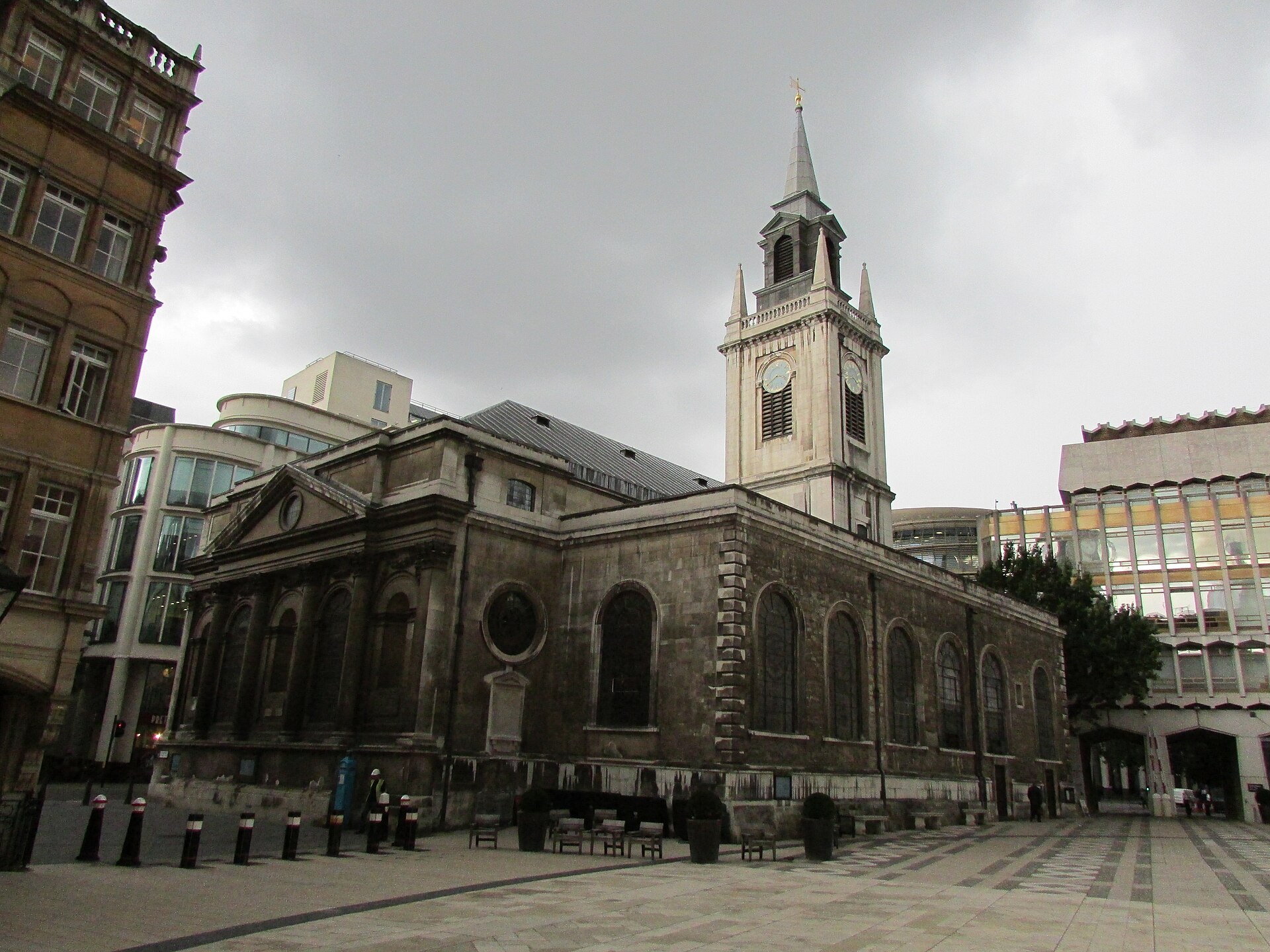 Outline of Londinium's Roman amphitheatre at Guildhall Yard. The structure belongs to the public life and spectacles of the town.
Archaeological Sources
Londinium is studied through several kinds of evidence. The tablets provide writing and named people. Timber waterfront structures show building technique in wet ground. Pottery and amphorae reveal trade links. Coins help date layers and show monetary circulation. The town wall, baths, Mithraeum, amphitheatre and cemeteries show public spaces, cult and memory of the dead.
Evidence from later London should not be transferred automatically to the early town. First-century Londinium, the town after Boudica's revolt, the town enclosed by walls around AD 200 and the late Roman centre are different states of the same place.
Forum, Wall and Cult
Forum and basilica show Londinium as an administrative centre. Law, trade, announcements, contracts and the presence of authority met there. Even when large buildings survive only as foundations, drains, pits and wall lines, they allow the scale of public space and the connection with provincial administration to be reconstructed.
The town wall built around AD 200 changed the appearance of Londinium. It defended the town, but also marked its status. Within and around it archaeologists find traces of baths, workshops, houses, warehouses and cult places. The Mithraeum is especially important as an example of an eastern cult in a Roman urban setting: religion in Londinium was not a single system, but a combination of household, local, military and imperial practices.
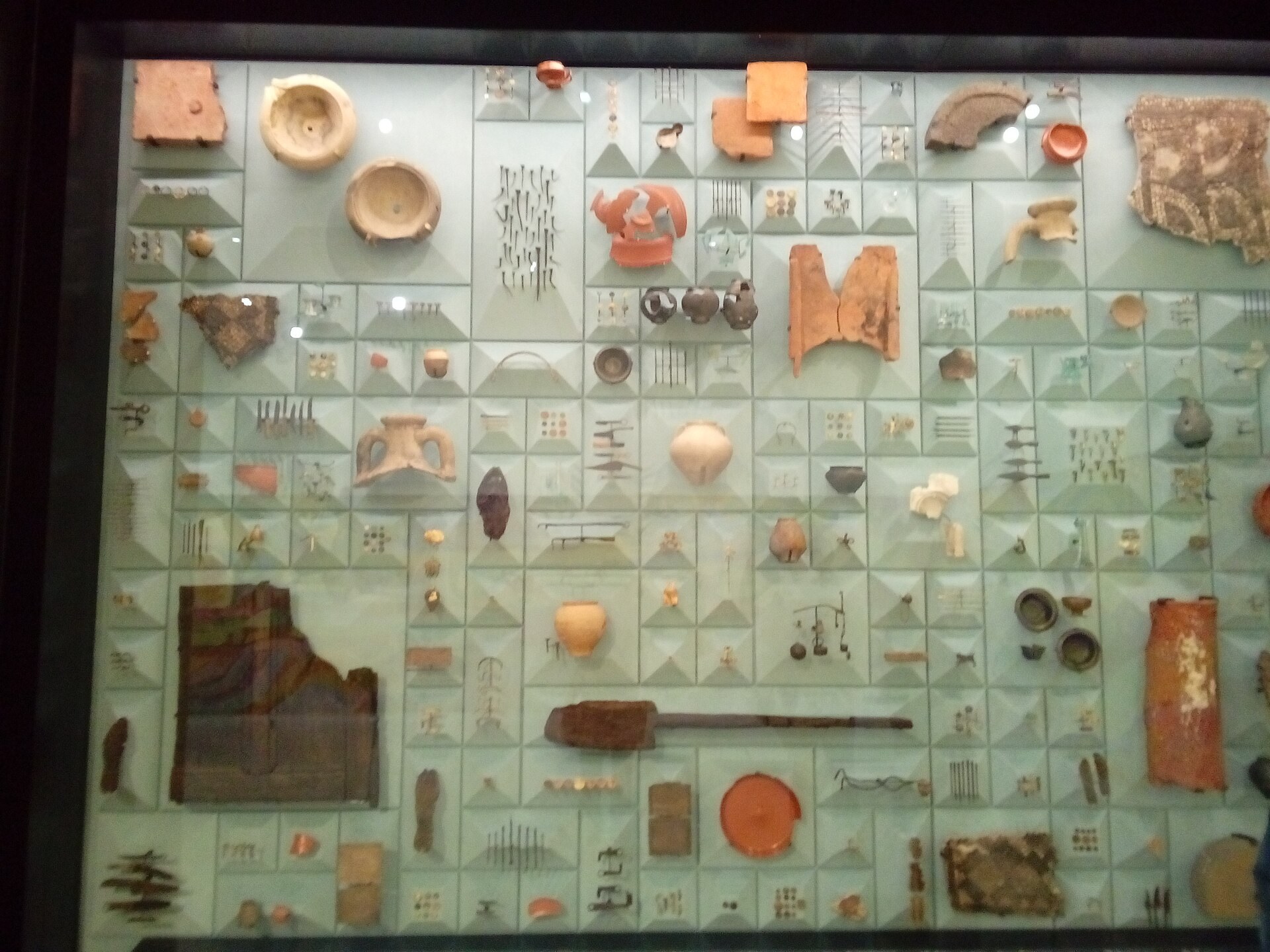 Archaeological finds from the area of the London Mithraeum, displayed in the Bloomberg building. The group shows the religious and domestic side of later Roman Londinium.
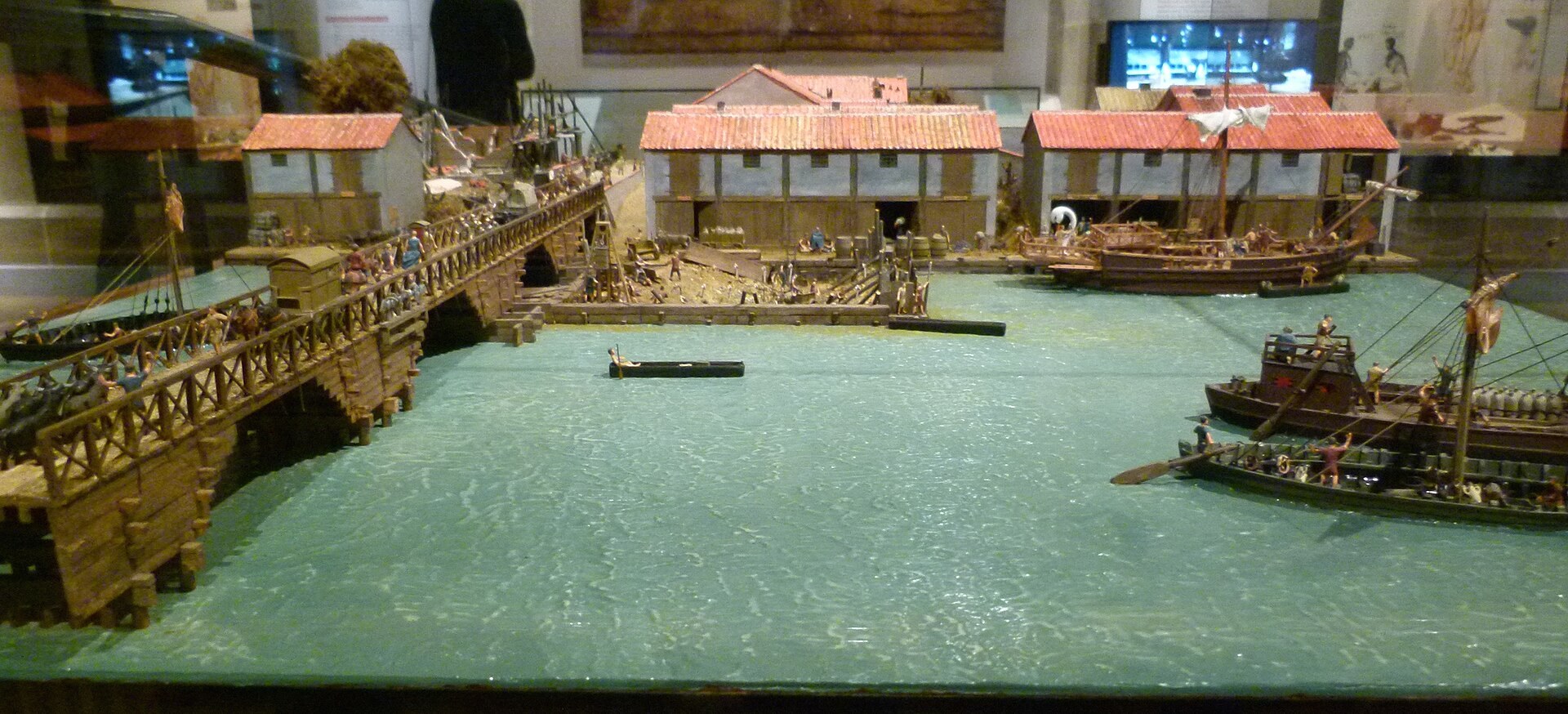 Model of Londinium around AD 100. Museum of London.
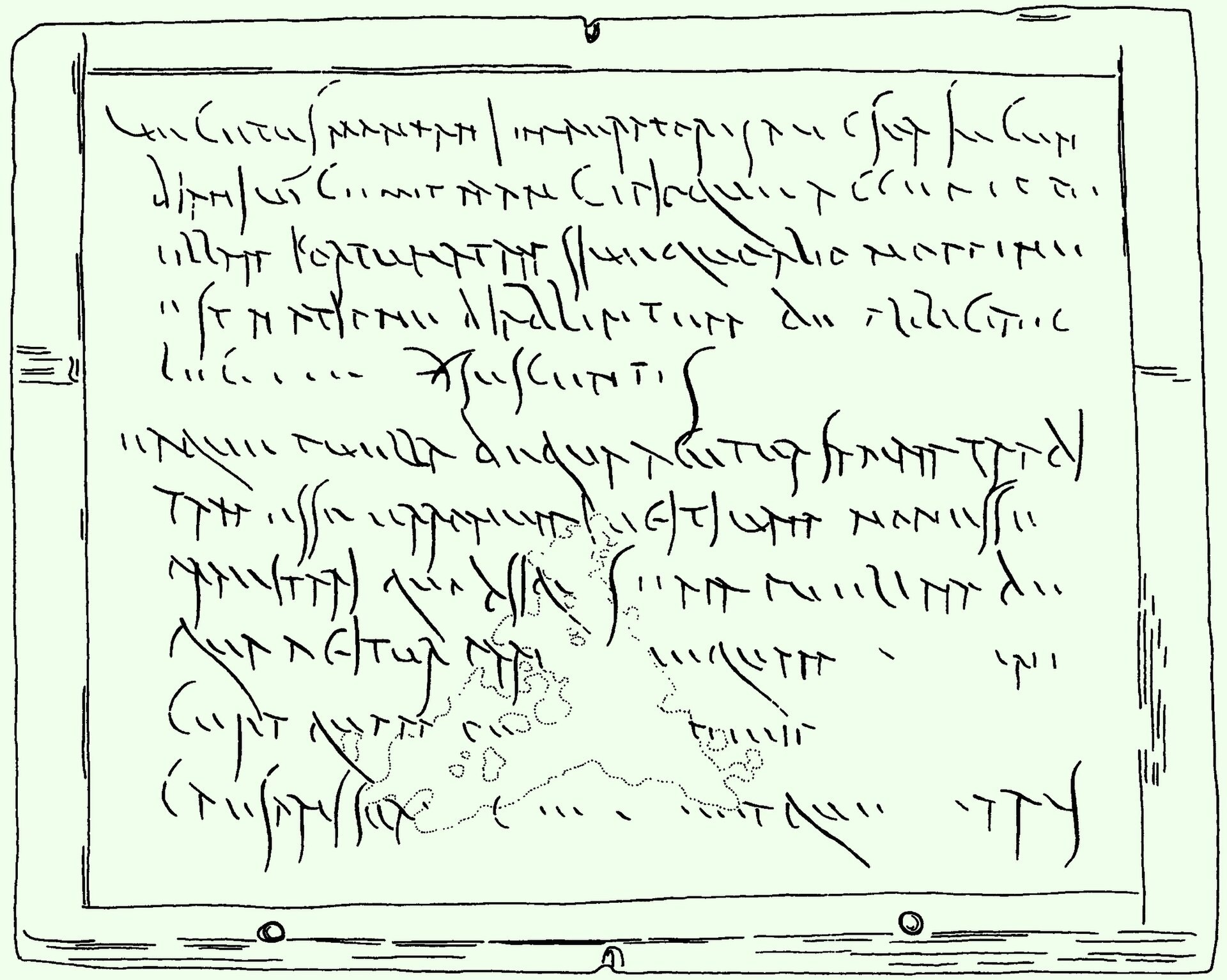 Roman wooden tablet with the text of Fortunata's contract, Londinium. First century AD; London Mithraeum Bloomberg SPACE.
Names and Society
The tablets are valuable because they bring names to the surface. Latin, Celtic and mixed names appear, along with offices, statuses, witnesses and participants in transactions. These documents show early Londinium as a multilingual and socially mixed environment. Roman citizens, provincials, enslaved people, freed persons, merchants and people involved in supply operated side by side.
The archaeology of the town confirms this through objects of different origins. Imported pottery, local products, coins, shoes, ornaments and tools show how quickly Roman habits joined a local environment. Londinium was not a copy of Rome; it was a Roman town in Britain with its own economy, climate, materials and population.
Short Chronology
- AD 43: Roman conquest of Britain.
- AD 47-50s: early Londinium developed near the crossing and harbour.
- AD 60/61: Boudica's revolt; Londinium was destroyed.
- Late 1st-2nd century AD: rebuilding, trade growth, forum, baths, roads and a stronger urban structure.
- Around AD 200 and the 3rd century: construction and development of the town wall, changes in districts and public buildings.
- 4th century AD: the late Roman town remained important, but changed with the crises of the empire.
Related Topics
- Roman archaeological sources
- The Roman Empire
- Roman society
- Roman names
- Roman streets
- The Roman army
Literature and sources
- Tomlin R. S. O. Roman London's First Voices: Writing Tablets from the Bloomberg Excavations, 2010-14. MOLA Monograph 72. London, 2016.
- Perring D. Roman London. London: Routledge.
- Wallace L. The Origin of Roman London. Cambridge University Press.
- Watson B. Roman London: Recent Archaeological Work. Journal of Roman Archaeology.
- Bateman N., Cowan C., Wroe-Brown R. London's Roman Amphitheatre. MOLA Monograph.
- Marsden P. Roman London. Thames and Hudson.
- Wikimedia Commons: 2016 Museum of London, scale model Londinium, c 100 AD.jpg; Fortunata's contract.jpg; Bronze sandal roman.jpg. - Wikimedia Commons: Map Londinium 400 AD-en.svg; Londinium Roman Wall; London (Londinium) - Billingsgate Roman Bathhouse; Roman amphitheatre on the Guildhall Yard; Archaeological finds at Temple of Mithras.
- London Wall: English Heritage


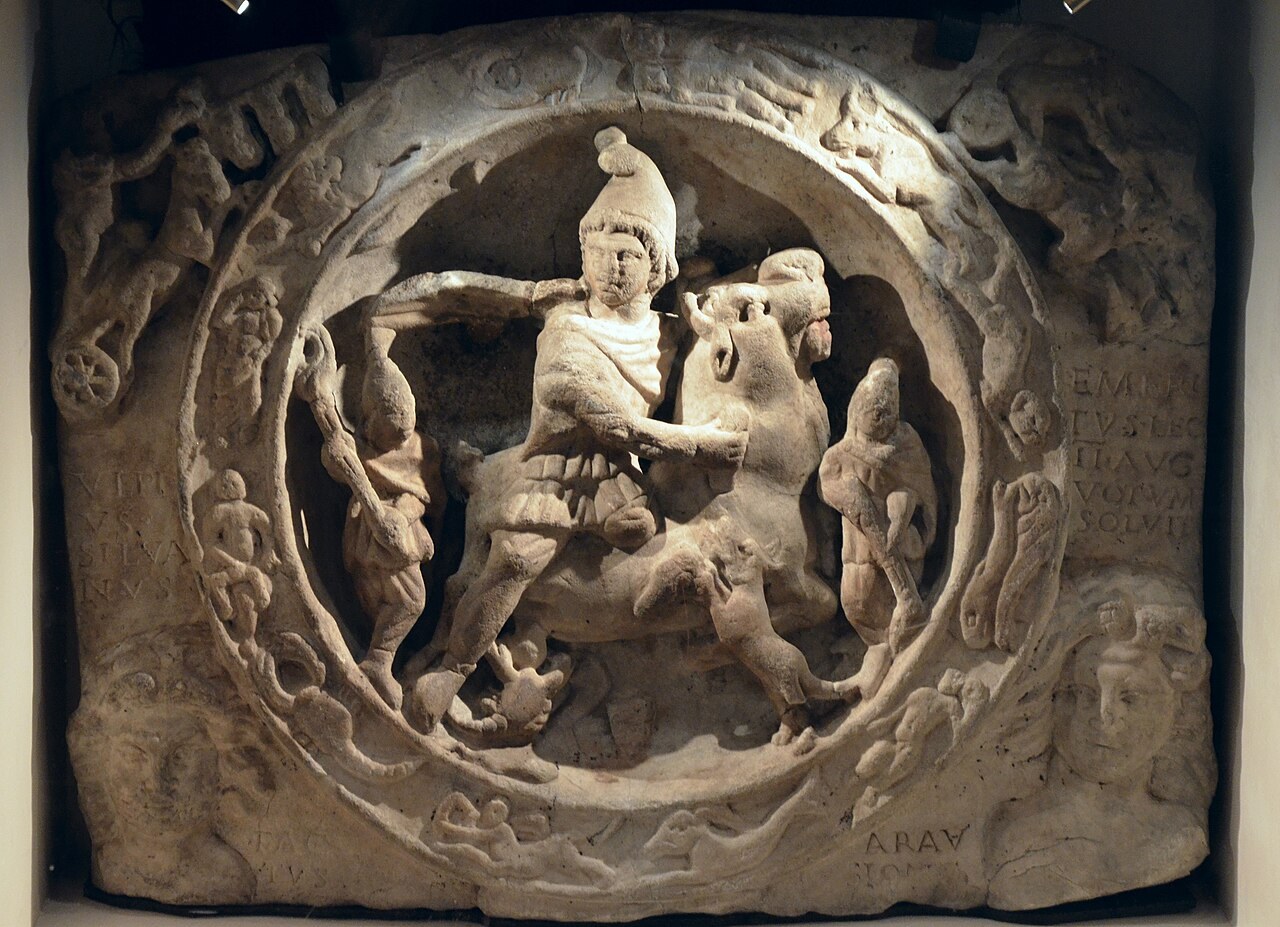 Londinium: White marble relief with Mithras bull-slaying scene (CIMRM 810-811), from Walbrook Mith...; material-culture object or museum find connected with the site, Roman period or local archaeological context.
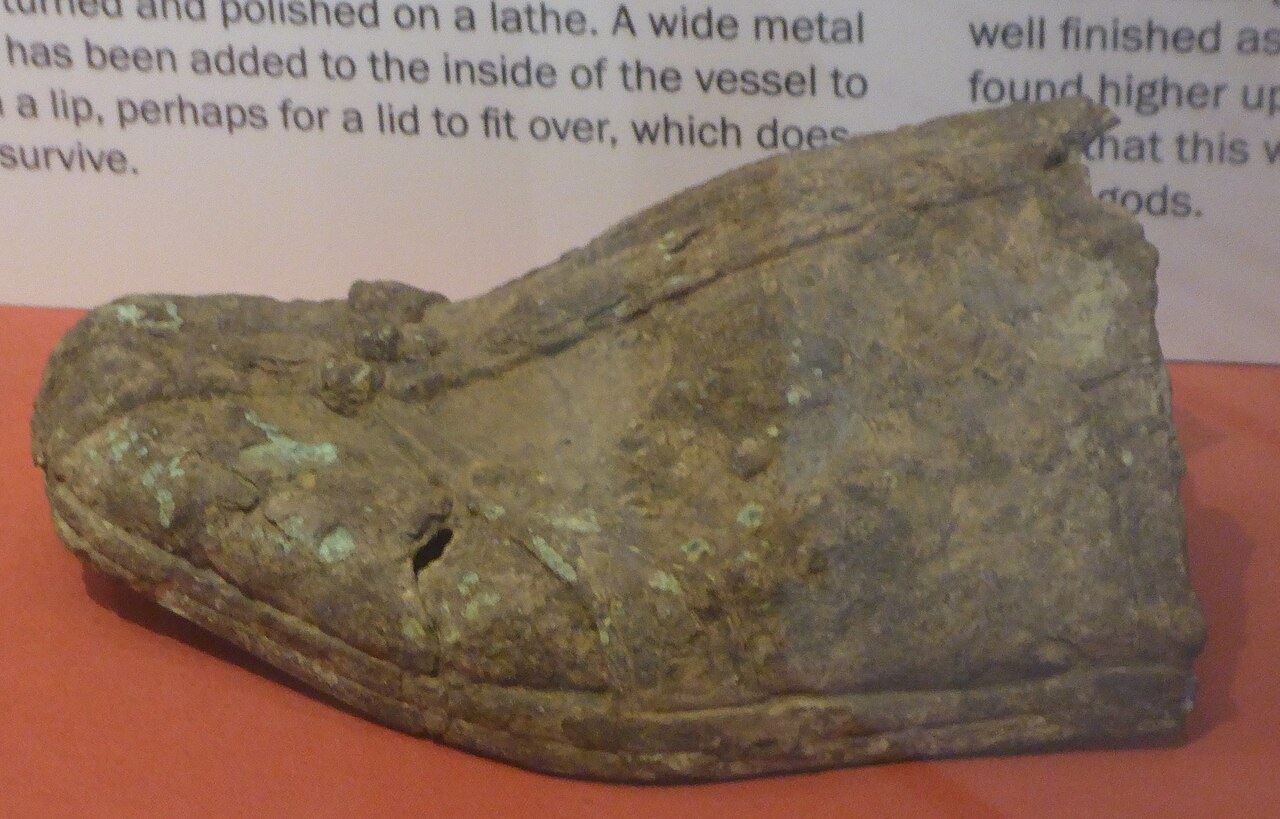 Londinium: Bronze sandal roman; material-culture object or museum find connected with the site, Roman period or local archaeological context.
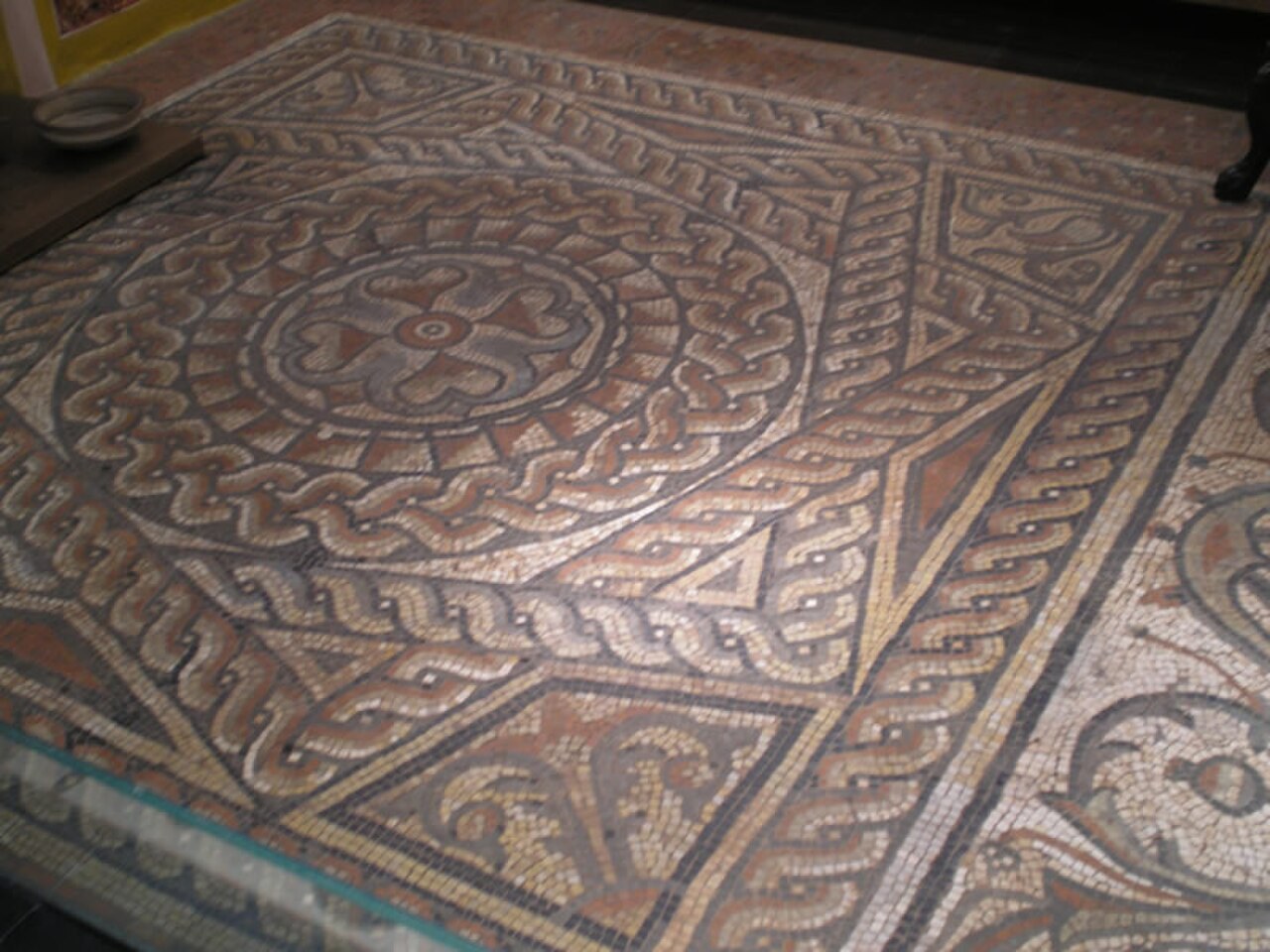 Londinium: Roman mosaic london; material-culture object or museum find connected with the site, Roman period or local archaeological context.
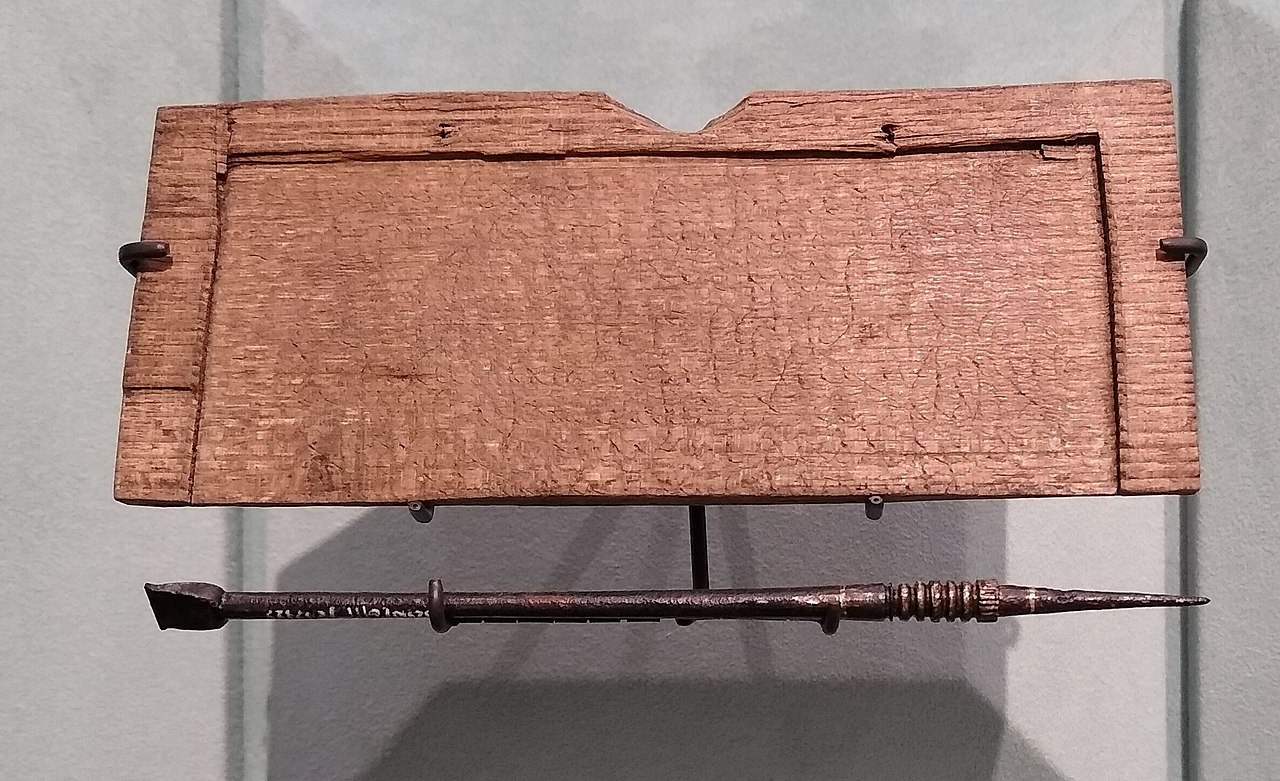 Londinium: Writing tablet and stylus - oldest record of a commercial transaction in the City of Lo...; material-culture object or museum find connected with the site, Roman period or local archaeological context.
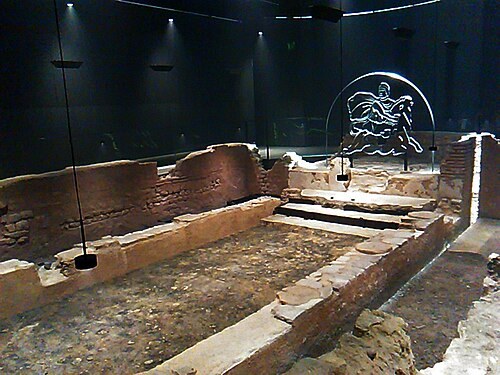 Londinium: London Mithraeum; archaeological view, find or museum context connected with the site, Roman period or local archaeological context.
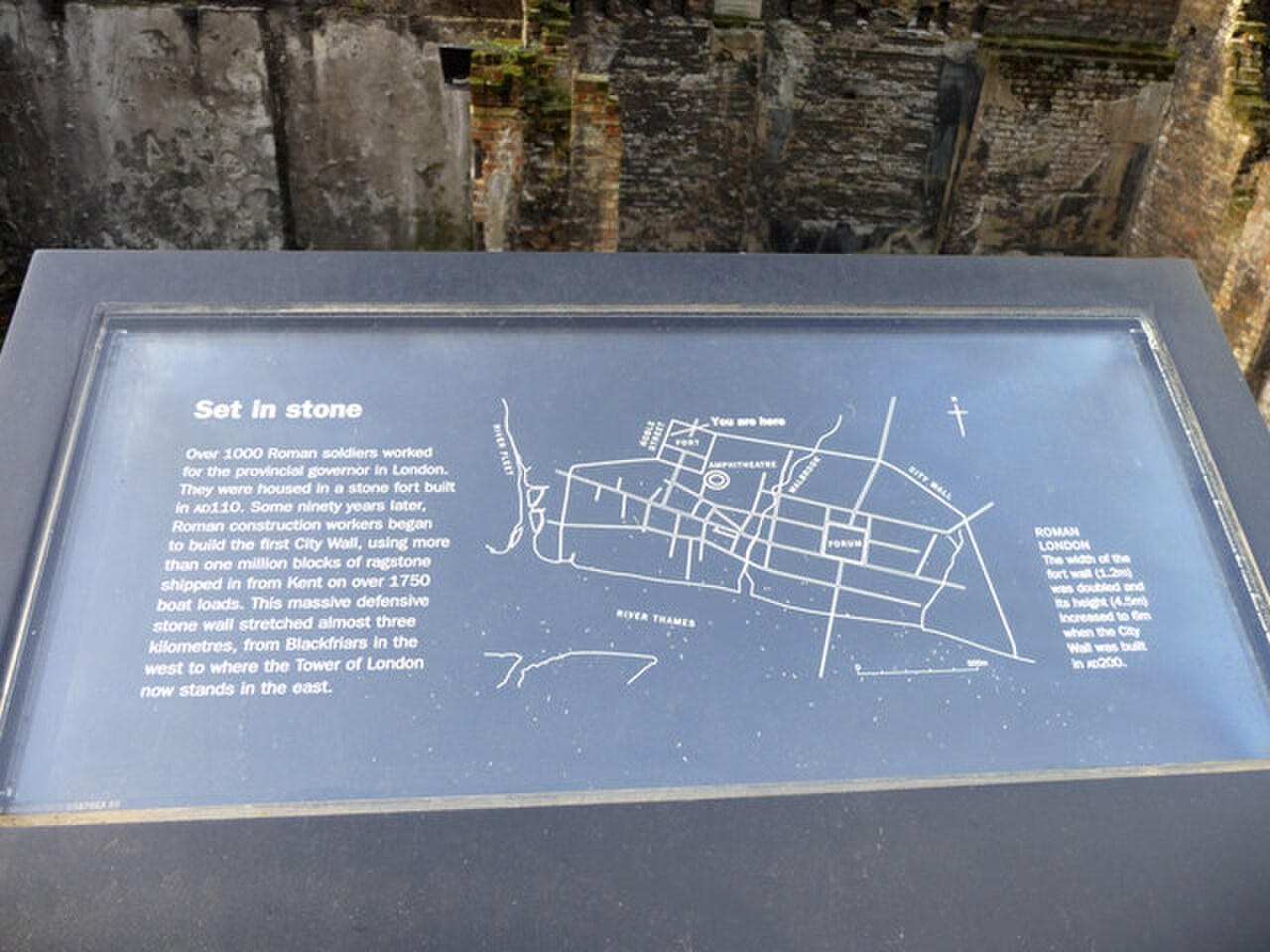 Londinium: Information Board, Noble Street, London EC1 - geograph.org.uk - 1087884; archaeological view, find or museum context connected with the site, Roman period or local archaeological context.
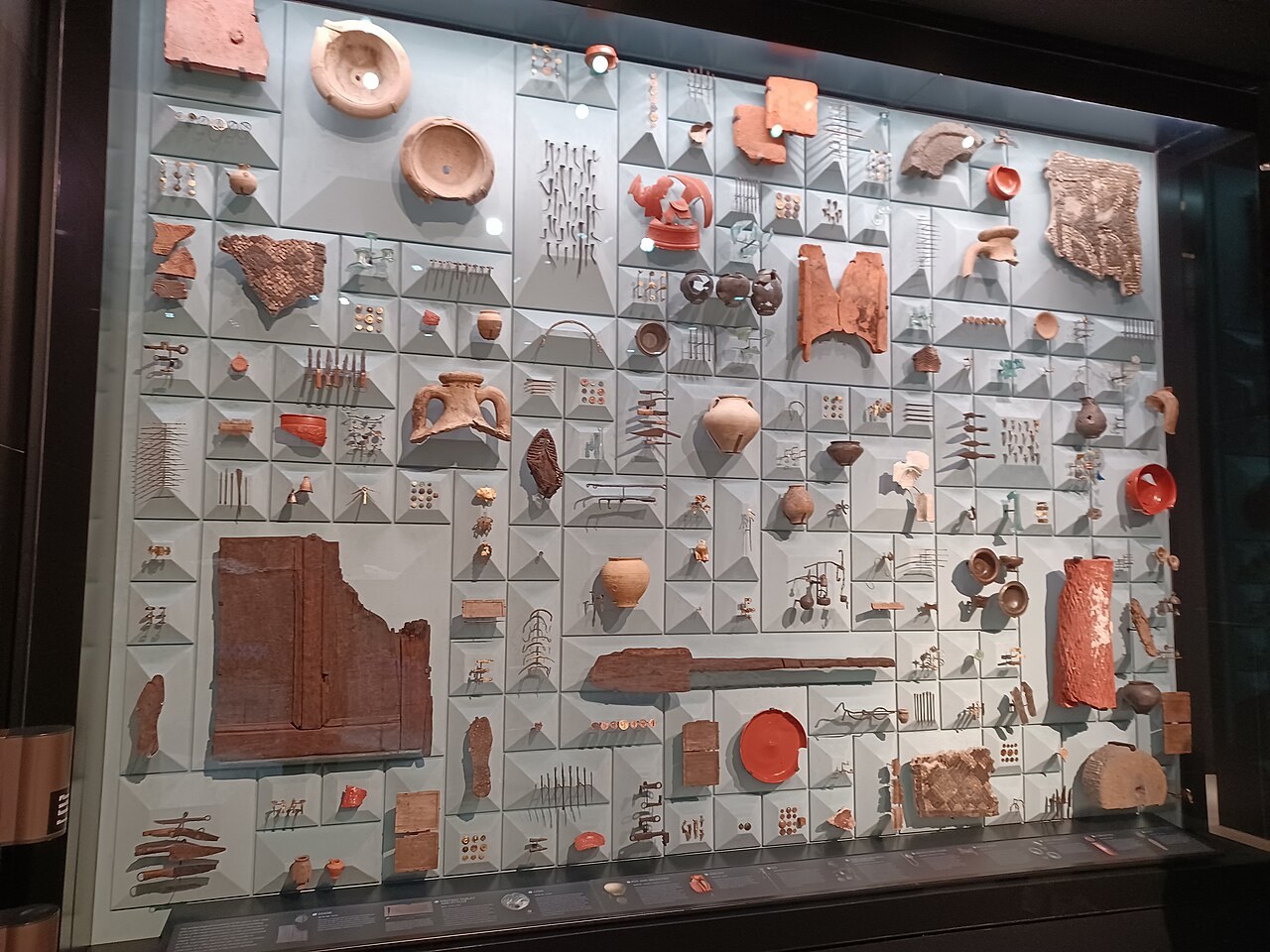 Londinium: London Mithraeum 01; archaeological view, find or museum context connected with the site, Roman period or local archaeological context.
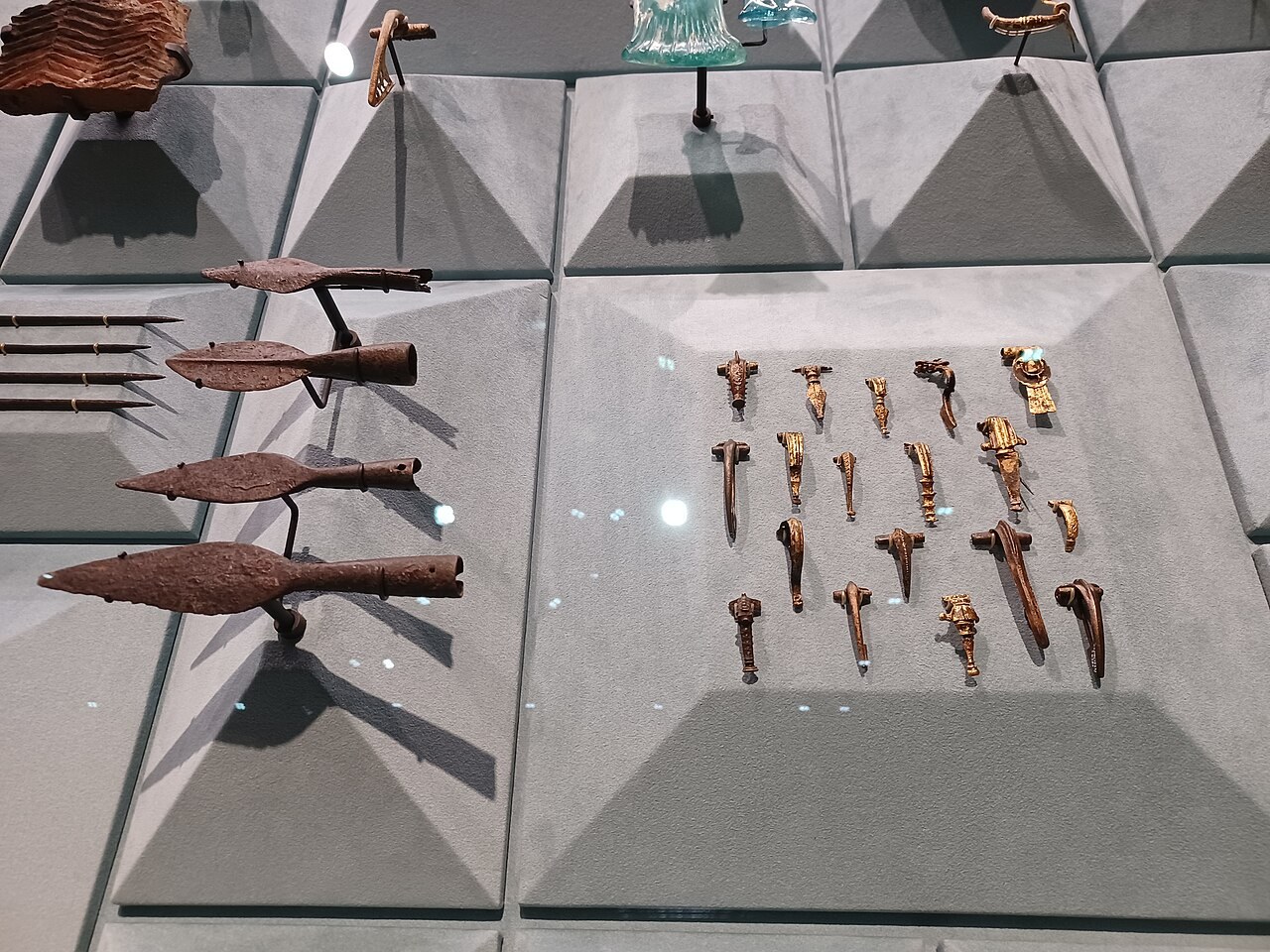 Londinium: London Mithraeum 02; archaeological view, find or museum context connected with the site, Roman period or local archaeological context.
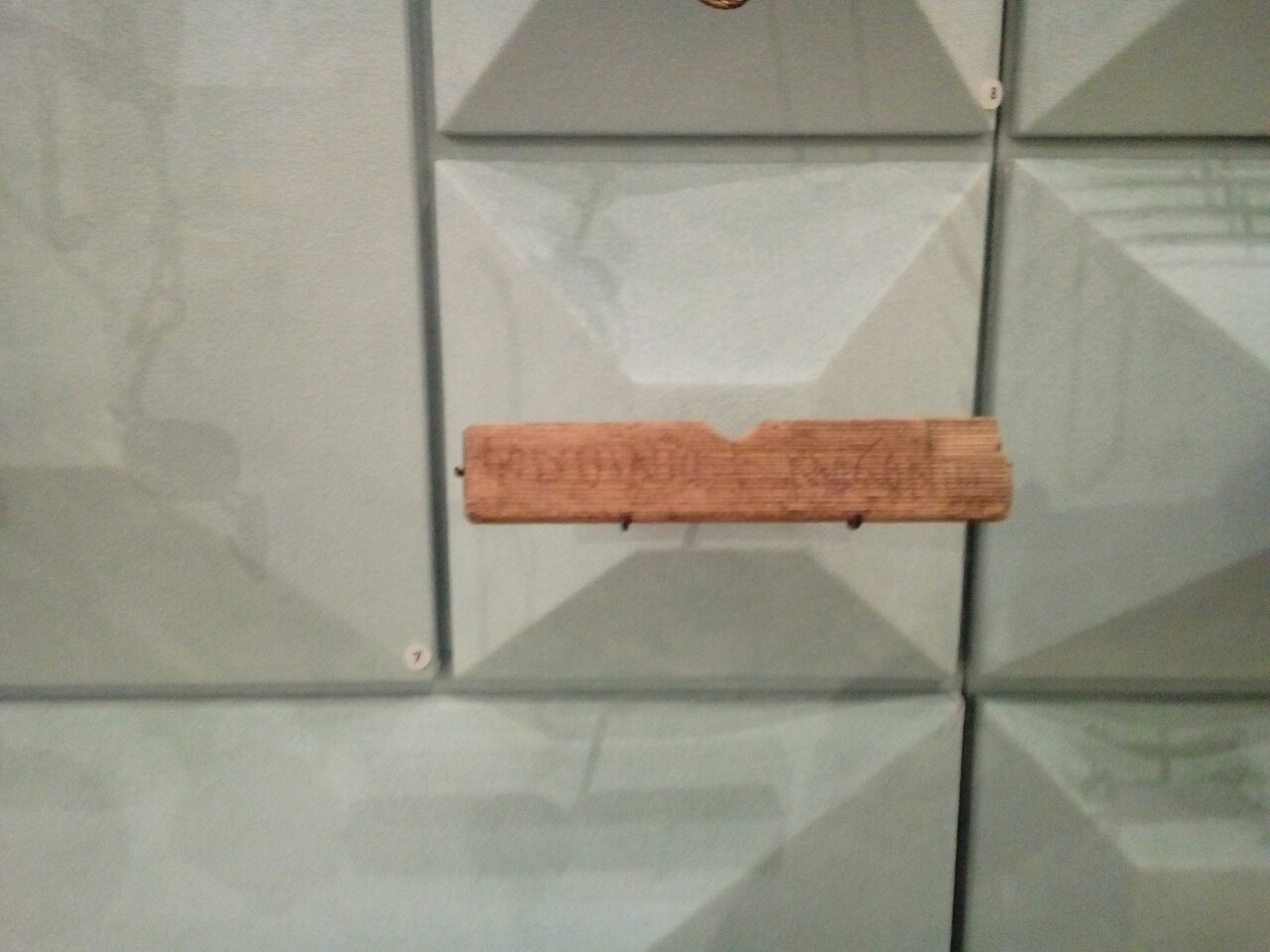 Wooden writing tablet from the Bloomberg site excavations in London.
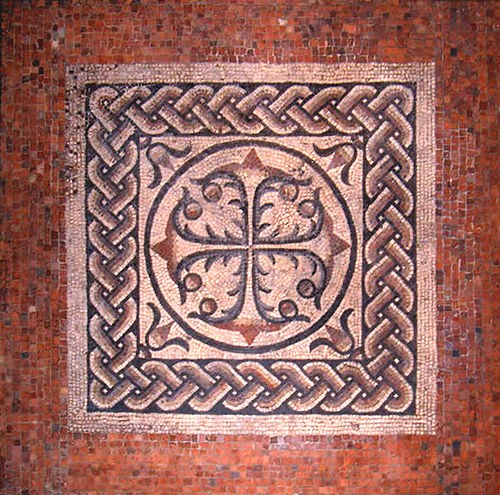 Londinium: Londinium mosaic retouched; material-culture object or museum find connected with the site, Roman period or local archaeological context.
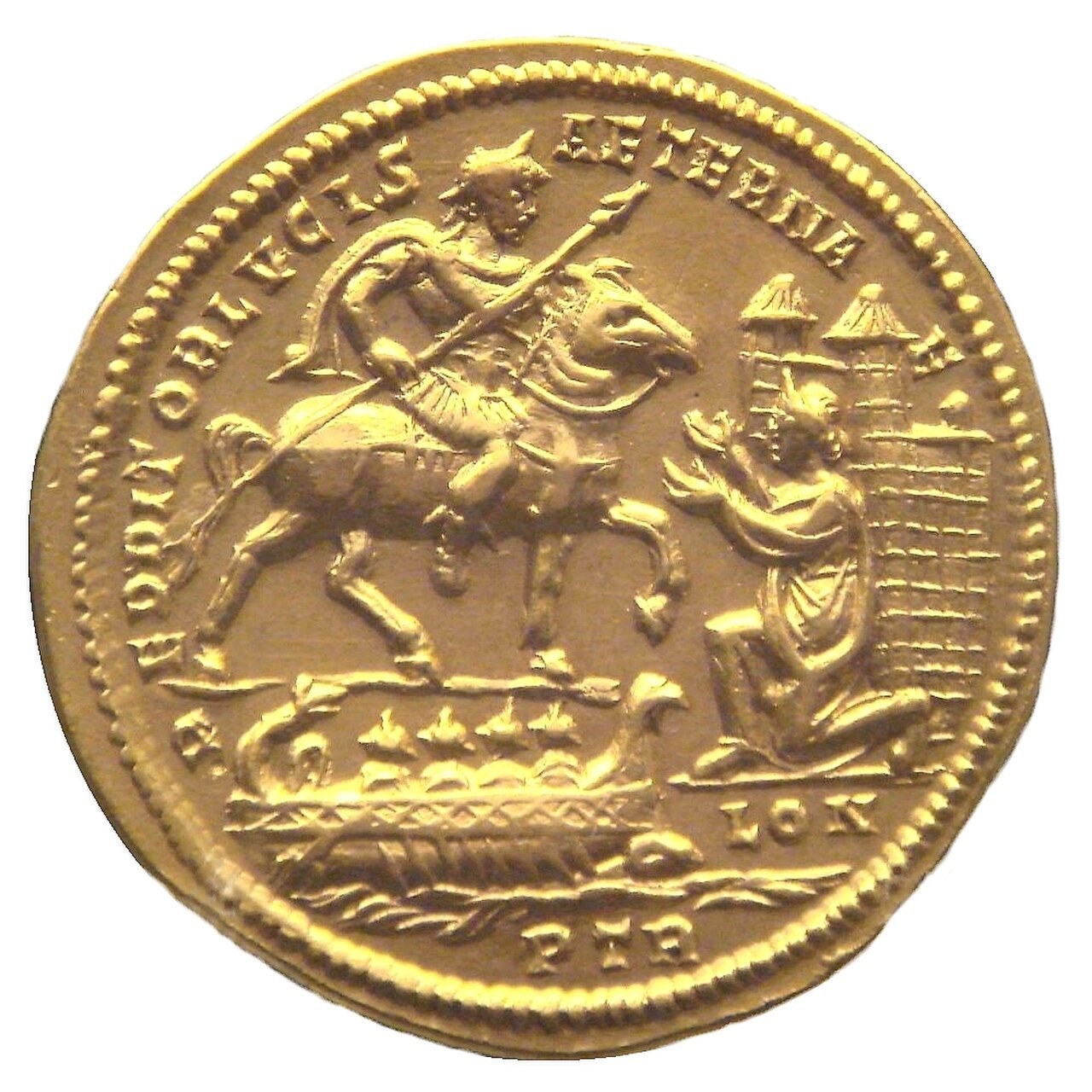 Londinium: Constantius I capturing London after defeating Allectus Beaurains hoard reverse; material-culture object or museum find connected with the site, Roman period or local archaeological context.
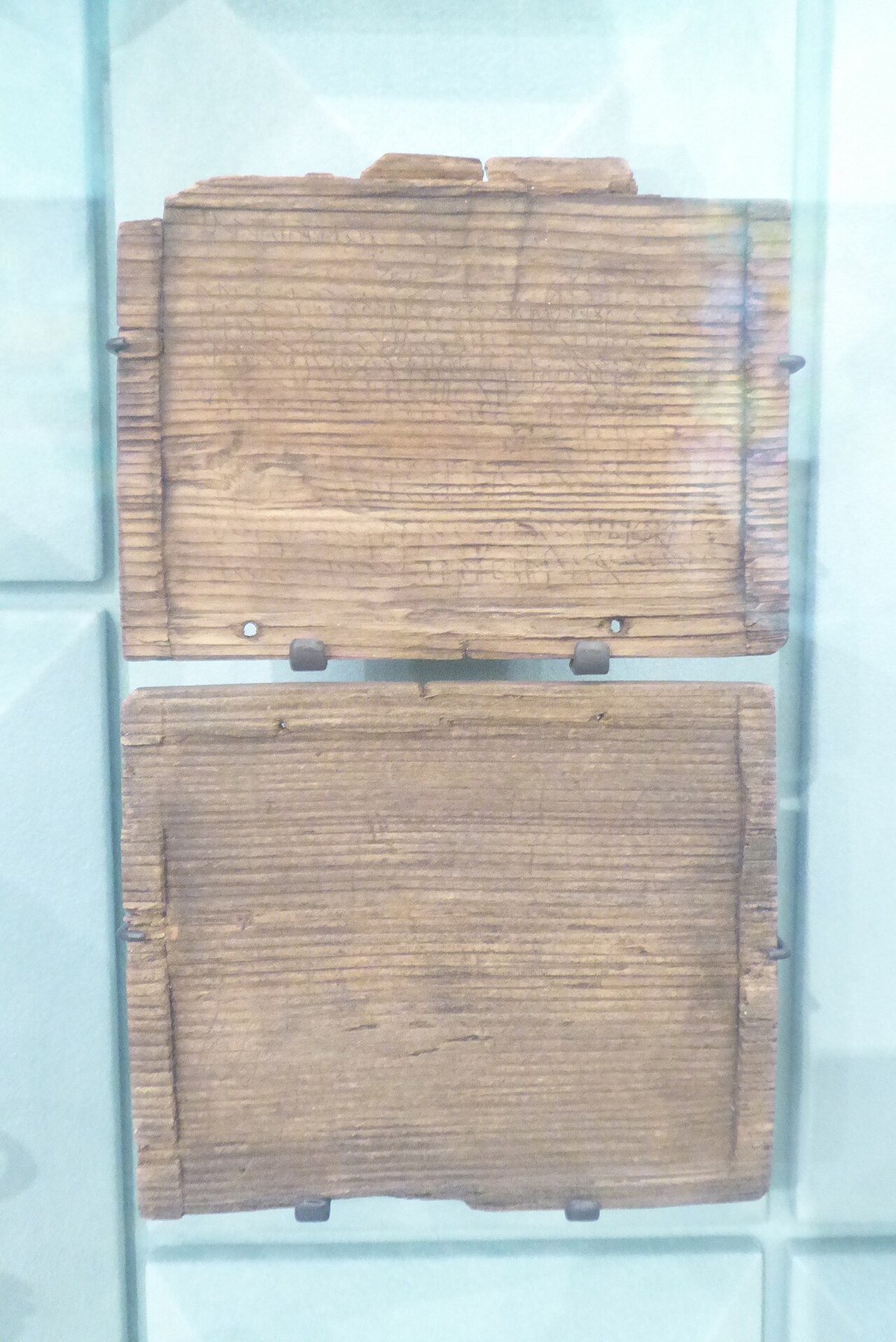 Writing tablets from the Bloomberg excavations, London.
Interested in Ancient Rome beyond reading? Join Legio X Fretensis or explore our reenactment directions.


