Nero
Nero Claudius Caesar Augustus Germanicus (AD 37-68) was a Roman emperor of the Julio-Claudian dynasty. His reign is one of the most controversial in early imperial history and ended in the civil war of AD 68-69. In brief: - state: Roman Empire; - reign: AD 54-68; - main themes: court, senate, the fire of Rome, persecutions and revolts; - historical outcome: the end of the Julio-Claudian dynasty.
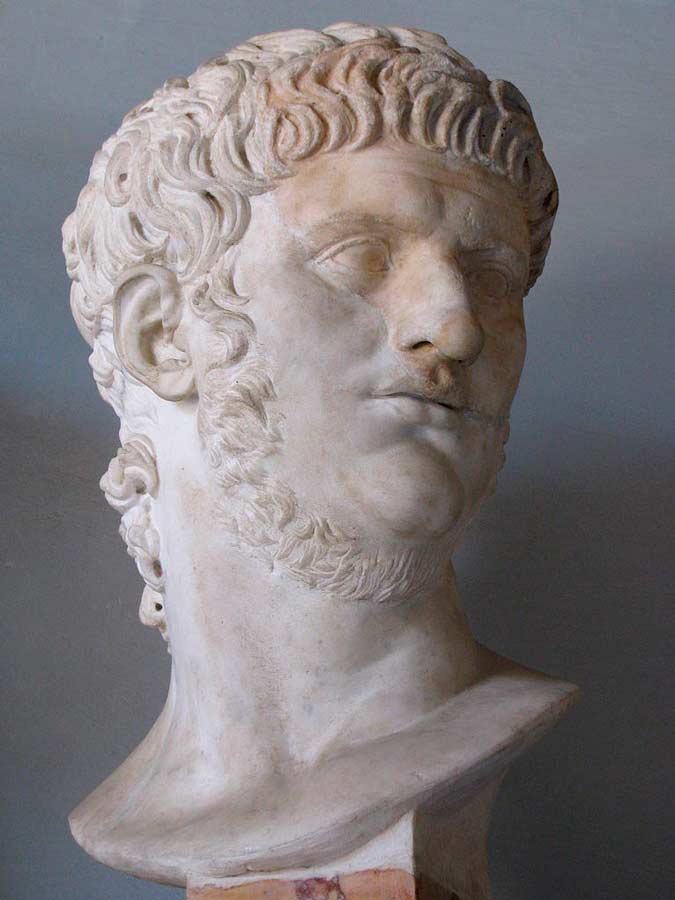 Bust of Emperor Nero,1st century AD
Rise to Power
Nero was the son of Agrippina the Younger and was adopted by Emperor Claudius. After Claudius' death he took the throne with the support of the Praetorians and the court. In the early years Seneca and Burrus played important roles. Ancient tradition often contrasts this early period with the later years, when Nero's personal rule became harsher and more unpredictable.
Court and Senate
Nero's reign was marked by court conflicts. The killing of Agrippina, executions of political opponents and the Pisonian conspiracy became part of the image of the tyrant emperor in senatorial tradition. The sources on Nero are largely hostile. Tacitus, Suetonius and Cassius Dio wrote after the dynasty's fall, so their evidence is important but must be read with attention to political perspective.
The Fire of Rome and Building
In AD 64 Rome suffered a great fire. Nero organized relief and new building regulations, but rumors accused him of starting the blaze. According to Tacitus, blame was shifted onto Christians. After the fire construction began on the Golden House. The luxurious palace complex deepened elite resentment and became a symbol of excessive imperial power.
Culture and Public Image
Nero sought to perform as singer, cithara player and participant in Greek contests. Such spectacles may have appealed to parts of the population, but for the senatorial elite they violated the expected dignity of the princeps. His philhellenism and love of performance show a cultural tension in the early empire: a ruler could patronize spectacles, but public performance by the emperor blurred status in a dangerous way.
Fall
In AD 68 provincial revolts and loss of Praetorian support brought Nero down. He took his own life, and power passed to Galba. Nero's death opened the Year of the Four Emperors and the path to the Flavian dynasty. His reign therefore matters not only in itself, but as a boundary between the early principate and a new political reality.
Related topics
- Great Figures of Antiquity
- Julio-Claudians
- Flavians
- Roman Empire
- Rome
- Christianity and Paganism in the Roman Empire
Literature and sources
1. Tacitus. Annals. 2. Suetonius. Nero. 3. Cassius Dio. Roman History. 4. Josephus. The Jewish War. 5. Pliny the Elder. Natural History.
Interested in Ancient Rome beyond reading? Join Legio X Fretensis or explore our reenactment directions.


