Themistocles
Themistocles (c. 524-459 BC) was an Athenian statesman and general, one of the main organizers of the naval power of Athens. His name is linked with the Greek fleet's victory at Salamis during Xerxes' campaign. In brief: - city: Athens; - main idea: reliance on fleet and walls; - key event: Salamis,480 BC; - significance: the statesman who made naval strategy the basis of Athenian power.
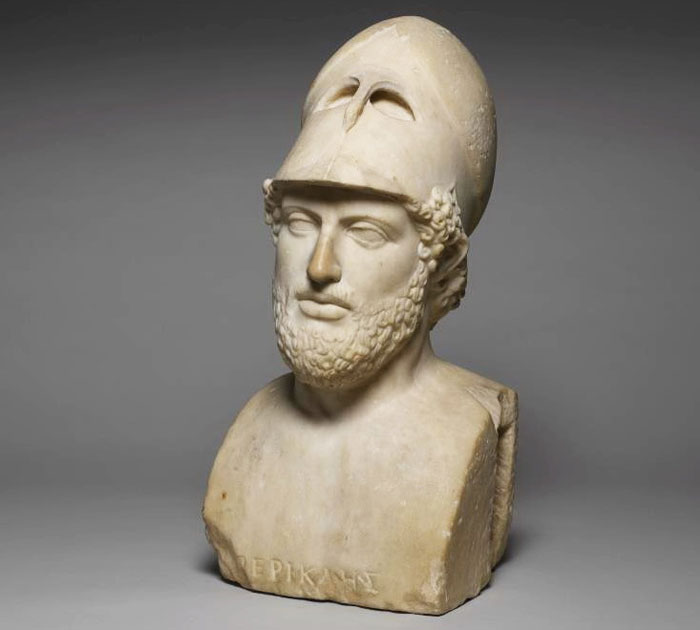 Themistocles. VI-V centuries BC
Athenian Politics
Themistocles operated within early Athenian democracy, where a politician's influence depended on persuading the assembly. He did not belong to the oldest aristocratic circles, but rose through a military and political program. His career shows that Athenian democracy could elevate new leaders when they offered a convincing answer to a civic problem.
Naval Program
Themistocles' key decision was reliance on the fleet. Revenue from the Laurion silver mines was directed toward building triremes. This changed the military and social balance of Athens. The fleet increased the importance of poorer citizens who served as rowers. Naval strategy was therefore connected not only with war, but also with democratic development.
Salamis
After Thermopylae and the Persian occupation of Athens, Themistocles insisted on fighting in the narrow waters off Salamis. There Persian numerical superiority was harder to use. The victory at Salamis became the turning point of the campaign of 480 BC. If Leonidas became the symbol of endurance on land, Themistocles became the symbol of calculation, maneuver and naval initiative.
Walls and Postwar Athens
After the war Themistocles supported rebuilding the city walls and fortifying Piraeus. This matched his vision of Athens as a naval power able to survive invasions of Attica. This policy prepared future Athenian strength, but also increased the suspicion of Sparta and other poleis.
Ostracism and Exile
Themistocles was ostracized and eventually went into exile. Later tradition connects him with the Persian court, giving his biography a dramatic turn. His fate shows the vulnerability of an outstanding politician in the polis system. A leader who saved the city could become dangerous to that same city because of the scale of his fame.
Related topics
Literature and sources
1. Herodotus. Histories. 2. Thucydides. History of the Peloponnesian War. 3. Plutarch. Parallel Lives. 4. Diodorus Siculus. Library of History.
Interested in Ancient Rome beyond reading? Join Legio X Fretensis or explore our reenactment directions.


