Leonidas I
Leonidas I (d. 480 BC) was a king of Sparta from the Agiad dynasty, famous for the defense of the Thermopylae pass during Xerxes' campaign. His death became one of the most durable symbols of martial endurance in ancient memory. In brief: - city: Sparta; - event: Battle of Thermopylae,480 BC; - enemy: the Persian army of Xerxes; - significance: an example of politically meaningful sacrifice by a small force.
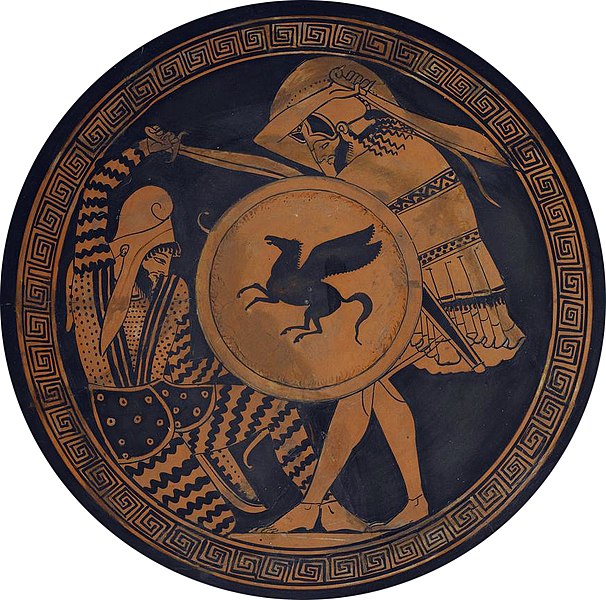 A Greek hoplite fighting a Persian archer warrior. Both are armed with kopis. National Archaeological Museum,Athens. Drawing from an ancient kilika (vase). 5th century BC
A Spartan King
Sparta had a dual kingship: two kings from different dynasties performed military and religious roles at the same time. Leonidas belonged to the Agiads and became king as a mature man. Spartan society was organized around civic military training, discipline and subordination of personal interest to the polis. For that reason Leonidas' image soon came to embody the Spartan ideal.
Xerxes' Campaign
In 480 BC the Persian king Xerxes moved a huge army and fleet against the Greek poleis. The Greeks tried to delay the enemy in narrow places where Persian numerical superiority mattered less. Thermopylae was one such pass. Its defense was meant to buy time for the Greek coalition and coordinate fleet and land operations.
Thermopylae
Leonidas commanded a force of Spartans and allies. The number "300 Spartans" became the main symbol of the battle, but other Greeks fought beside them, including the Thespians who also remained to the end. After the Persians outflanked the position, Leonidas dismissed some allies and stayed with those who continued the fight. The battle's military result was limited, but its moral and political effect was enormous.
Memory and Myth
The story of Leonidas comes through Herodotus and later tradition. Already in antiquity Thermopylae became an example of how defeat could become a memory of courage. It is important to remember that myth does not erase context. Leonidas was not a lone hero outside politics, but a king of a polis acting within a Greek coalition.
Connection with the Later War
After Thermopylae the Persians occupied Athens, but the Greek fleet won at Salamis. In this wider picture, Leonidas and Themistocles represent different sides of Greek resistance: Spartan land endurance and Athenian naval strategy. The combination of these elements helped the Greeks survive the crisis of 480 BC.
Related topics
Literature and sources
1. Herodotus. Histories. 2. Diodorus Siculus. Library of History. 3. Plutarch. Sayings of the Spartans. 4. Pausanias. Description of Greece. 5. Thucydides. History of the Peloponnesian War.
Interested in Ancient Rome beyond reading? Join Legio X Fretensis or explore our reenactment directions.


