Warriors of Ancient Egypt
Warriors of Ancient Egypt are known not from a single type of evidence, but from reliefs, tomb models, weapons, inscriptions and administrative texts taken together. For that reason the Egyptian warrior cannot be described as one unchanged figure across three thousand years of history. An Old Kingdom archer, a Middle Kingdom spearman, a New Kingdom chariot warrior and a Ptolemaic mercenary belonged to different military worlds.
The focus here is not only the structure of the army of Ancient Egypt, but also the individual soldier within it: appearance, weapons, service, status and the way images of warriors also expressed royal power.
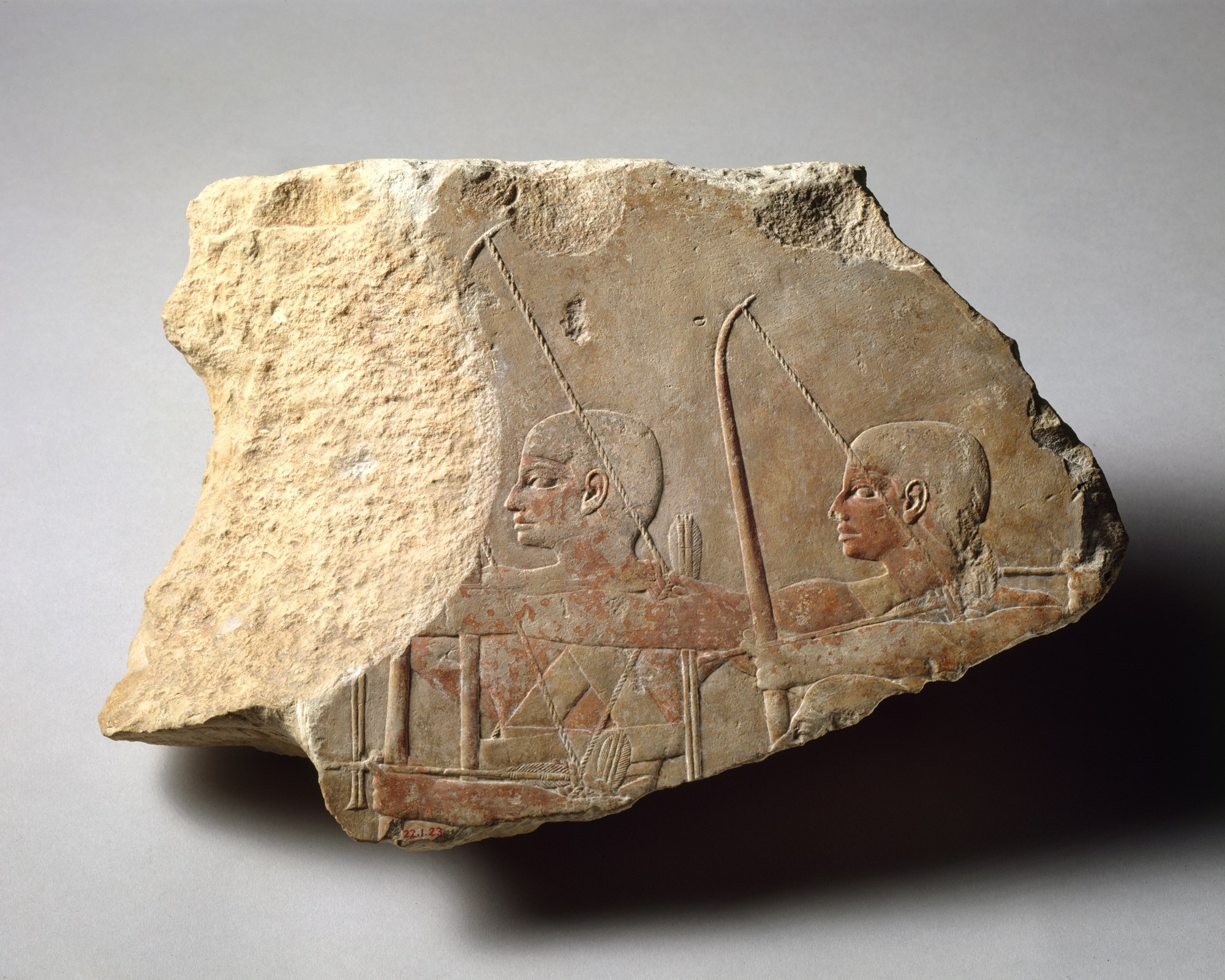 Relief with archers, probably reign of Khufu or Khafre, Dynasty 4, Old Kingdom. Metropolitan Museum of Art.
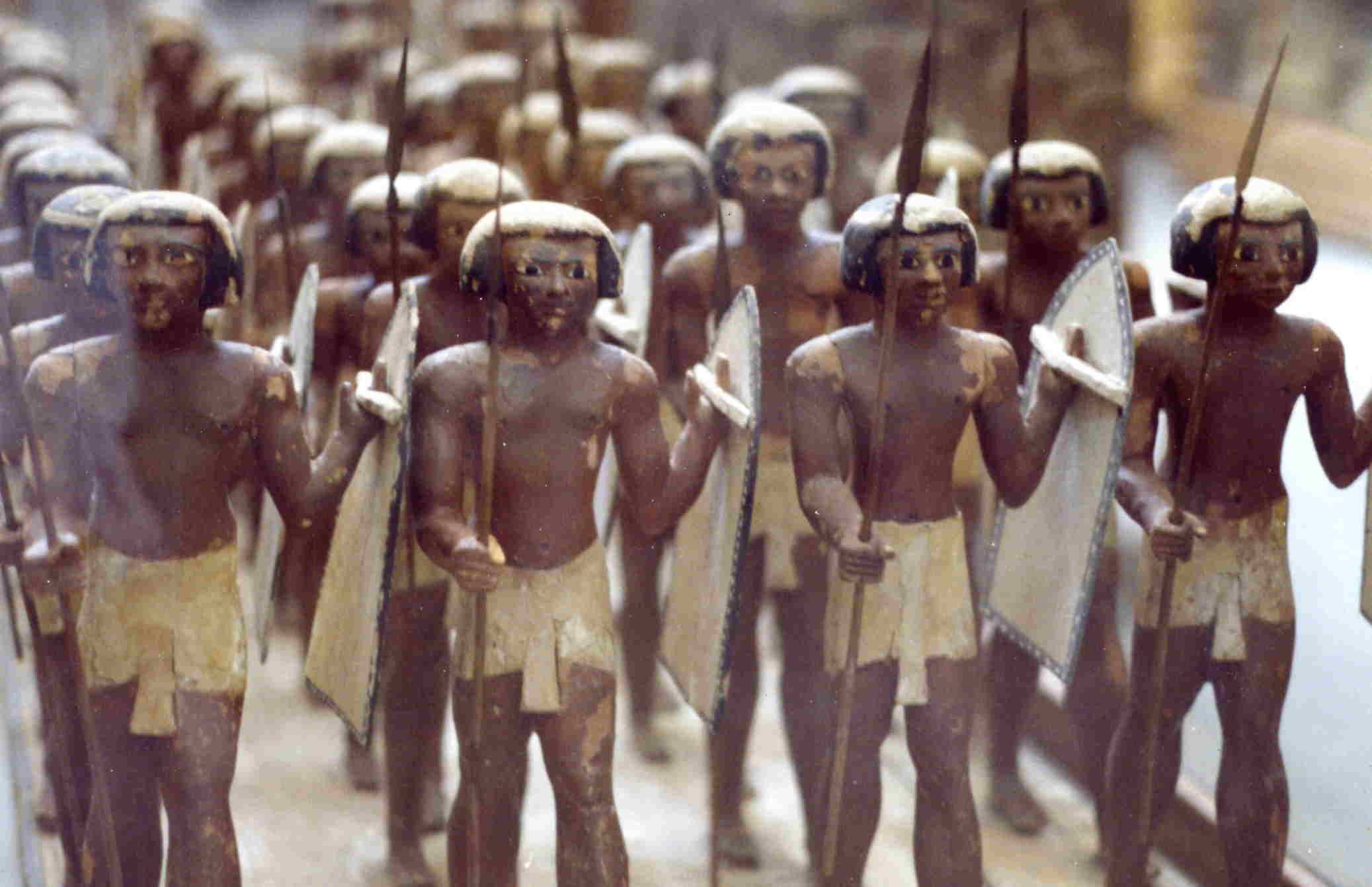 Wooden model of Egyptian spearmen from the tomb of Mesehti, Dynasty 11, Asyut.
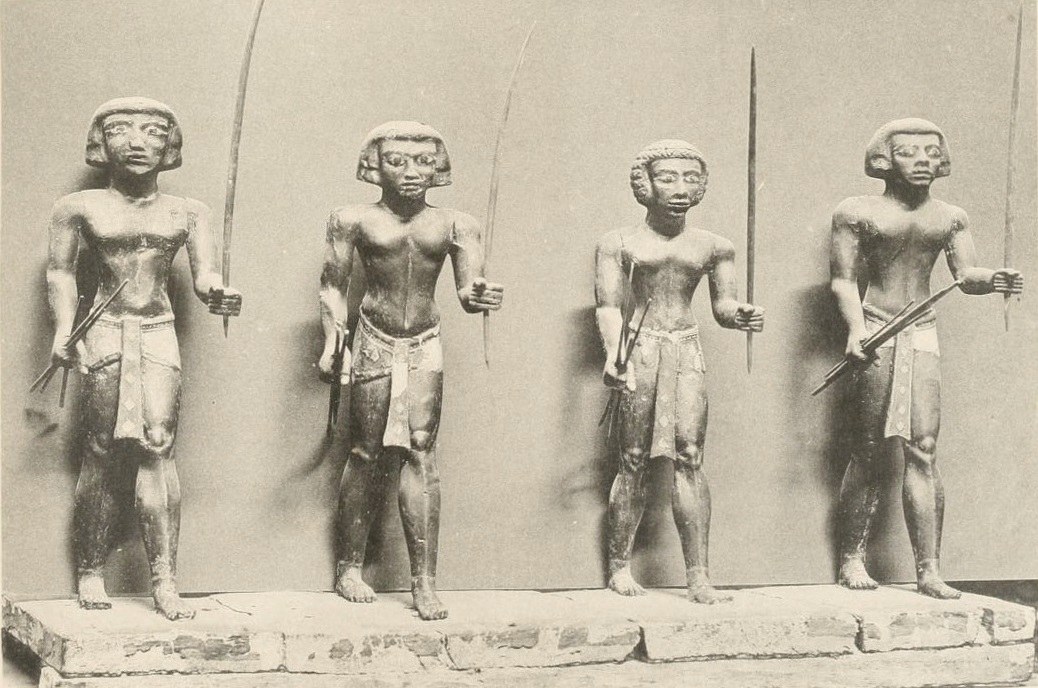 Model of Nubian archers from the tomb of Mesehti at Asyut, ca. 2000 BC. Illustration from Ludwig Borchardt's catalogue, Egyptian Museum Cairo CG 257 / JE 30969.
Early Units and Infantry
In the early kingdoms, warfare was tied to royal authority, control of the Nile, desert routes and neighboring regions. Old Kingdom reliefs show archers, spearmen, captives and scenes of enemy submission. They present both military force and the idea of order: the pharaoh protects Egypt, punishes disorder and holds the borders.
The ordinary warrior of these periods is usually shown lightly dressed. He might wear a short kilt and carry a bow, arrows, spear, axe or shield. Metal armor is almost absent. Climate, fighting style and the cost of materials made lighter equipment more practical. This does not mean that the army was weak. Egyptians relied on discipline, missile weapons, river transport and the ability to mobilize men through royal and local administration.
Middle Kingdom tomb models are especially useful for understanding formation. The units from Mesehti's tomb at Asyut show spearmen and archers as an ordered group: the figures stand in ranks and are distinguished by weapons rather than individual portraiture. This is military order carried into the burial world.
Archers, Spearmen and Chariot Warriors
Infantry formed the base of the Egyptian army. Spearmen held formations, guarded passages, accompanied expeditions and defended camps. Archers acted before close contact, supported infantry and were especially valuable in open terrain. Nubian archers had a strong reputation as skilled bowmen; they appear both as opponents of Egypt and as soldiers in royal service.
In the New Kingdom chariot warriors became increasingly important beside the infantry. A fighting crew usually included a driver and an archer. The chariot gave speed, allowed mobile archery, helped pursue fleeing enemies and displayed royal power. In actual battle chariots depended on infantry, grooms, craftsmen, spare horses and supplies, so the chariot warrior belonged to a wider system.
Warriors differed not only by weapons but also by origin. Nubians, Libyans, Asiatics, Sherden and, later, Greek and Galatian mercenaries all appear in Egyptian service. Some served in garrisons, others in campaign forces, and others entered Egypt as settlers or military specialists. This diversity is especially visible in later periods, but foreign units were already significant in the New Kingdom.
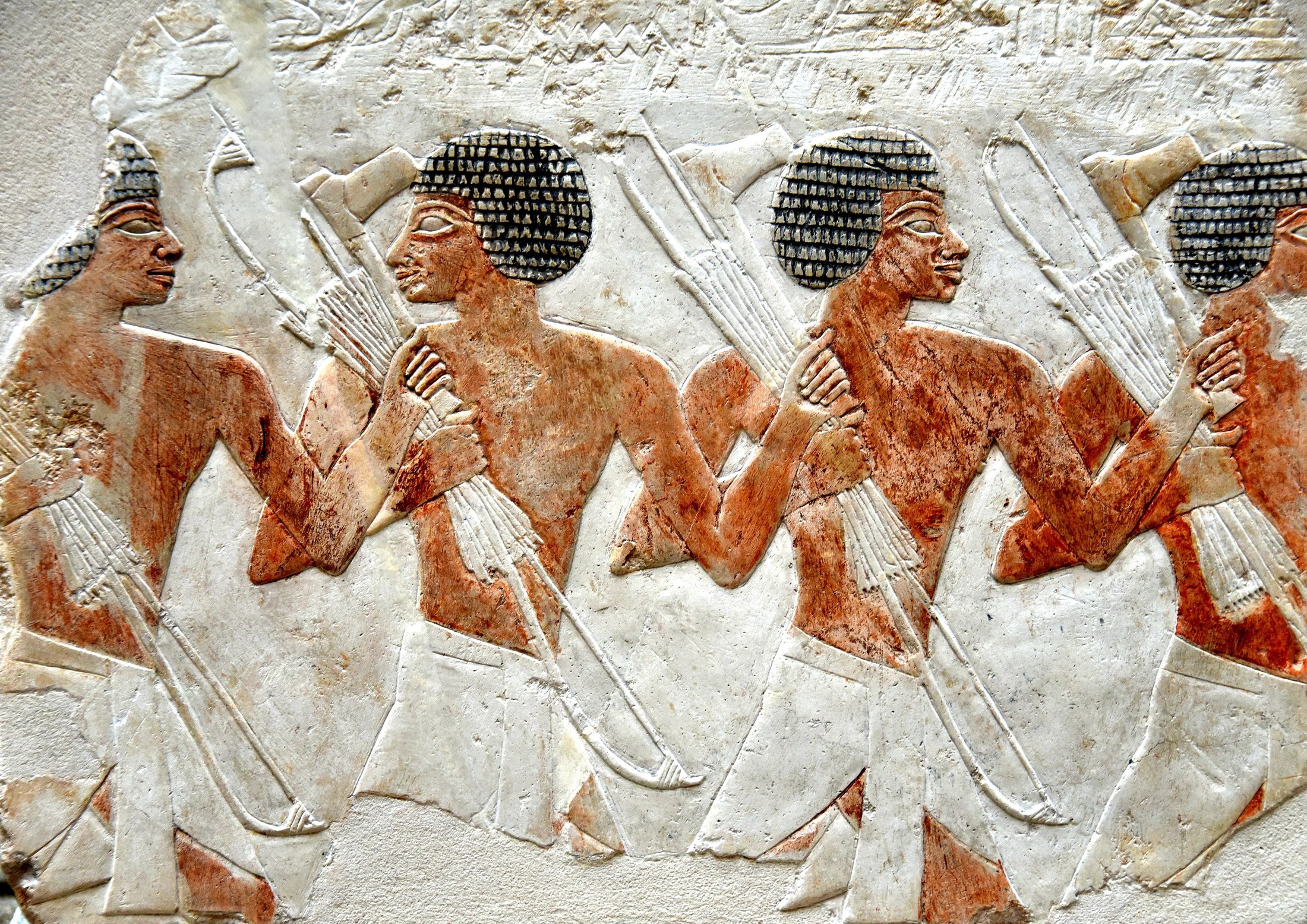 Egyptian soldiers with bows, quivers and axes on a relief from Hatshepsut's mortuary temple at Deir el-Bahri. Dynasty 18, ca. 1470 BC; Neues Museum, Berlin.
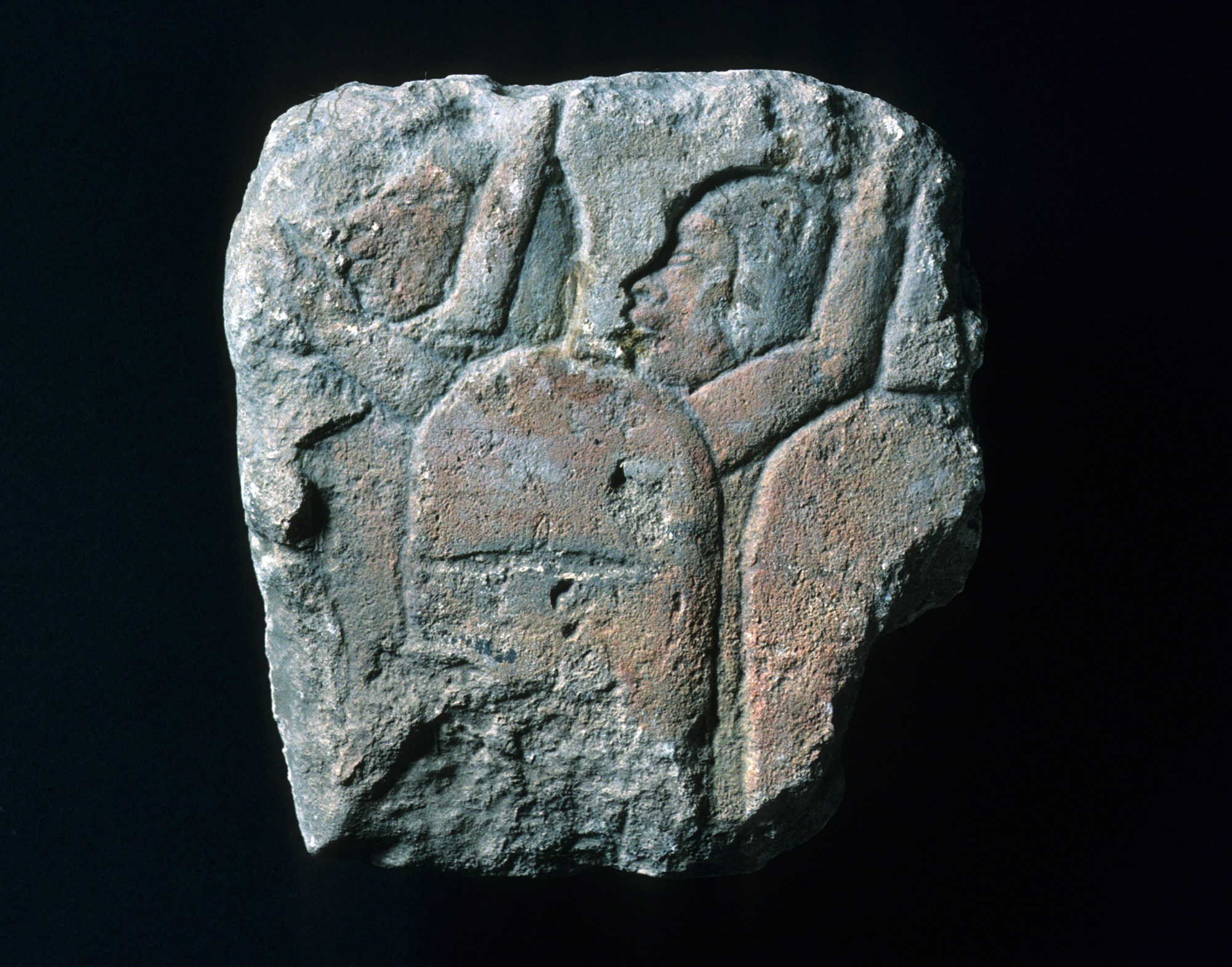 Amarna relief fragment with Nubian soldiers, Dynasty 18. Metropolitan Museum of Art.
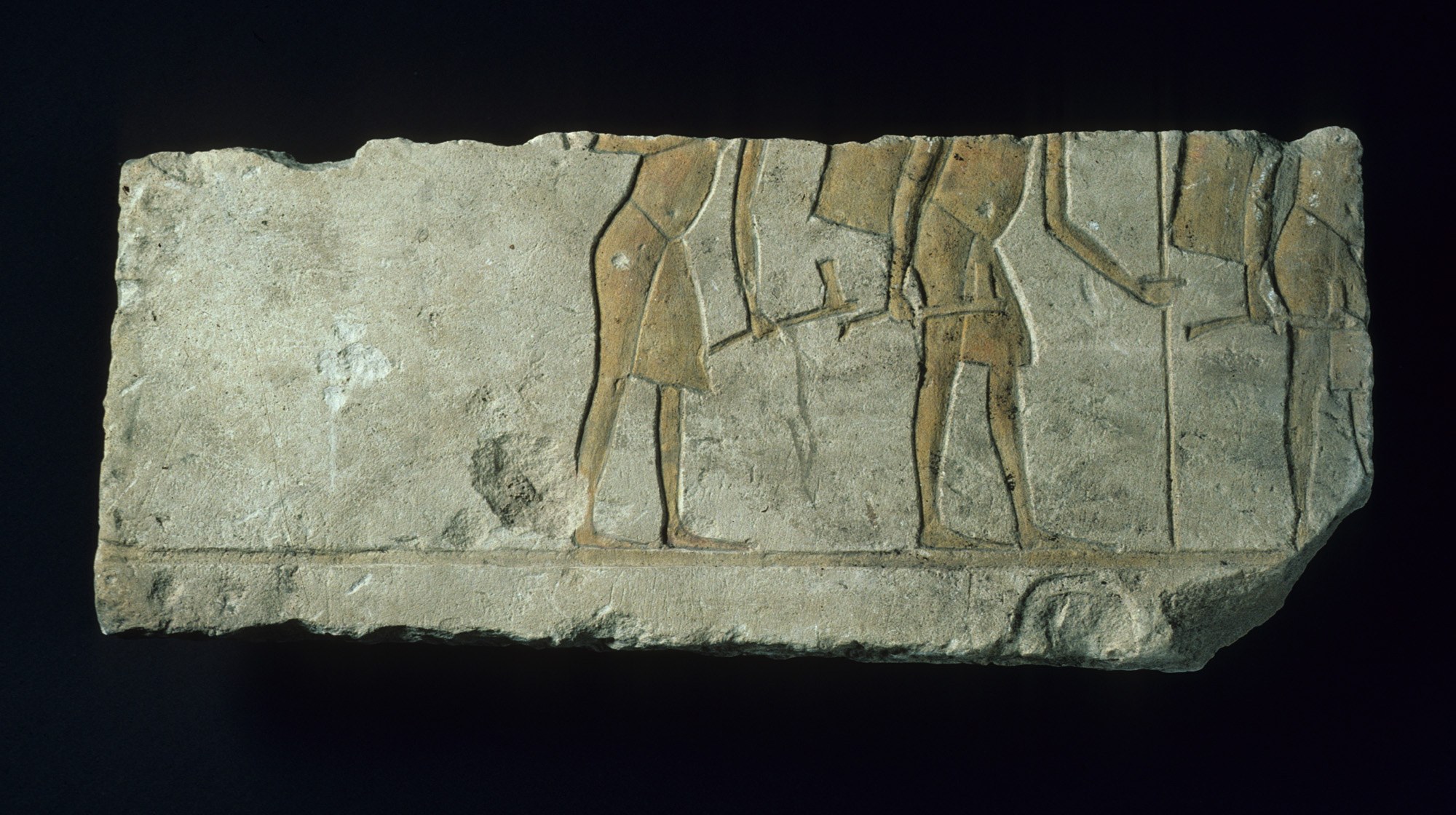 Amarna relief with three soldiers, Dynasty 18. Metropolitan Museum of Art.
Service, Recruitment and Status
Service could be seasonal, garrison-based or professional. In peacetime soldiers guarded frontiers, escorted officials, protected expeditions to mines and quarries, controlled roads and suppressed revolt. In the south the Nubian fortresses were important; in the northeast the route to Sinai, the Delta and the roads into western Asia mattered.
Recruitment changed over time. The state could mobilize labor through local administrations and temple estates, but expanding foreign wars created more permanent military groups. In the New Kingdom officers, chariot elites, military scribes, standard-bearers and supply specialists become more visible. An army needed records of grain, weapons, horses, vehicles and men, so bureaucracy stood close behind the warrior.
Service carried danger, but it could also bring status. Texts mention rewards in gold, booty, captives, offices and land. For a military man, advancement depended on closeness to the palace, personal courage, origin and the ability to fit into the administrative system.
Clothing and Equipment
A warrior's clothing was simple and functional. Reliefs and models often show short kilts, belts and sometimes straps for quivers or bow cases. Feet are often bare, though sandals are also known. In a hot climate and on rapid marches, light clothing was a practical choice.
The main protective item for an infantryman was the shield. It could be made of wood, leather or woven materials, often with a rounded top. The shield protected the body, helped maintain a line and was cheaper than metal armor. Scale armor, helmets and complex protective pieces existed, but they were not standard equipment for every soldier. They are better associated with elites, chariotry and the New Kingdom.
Weapons depended on role. An archer carried a bow, arrows, wrist guard and quiver; a spearman carried spear and shield; a close-fighting warrior could use an axe, dagger, mace or khopesh. The weapon types are treated in more detail in Weapons of Ancient Egypt, but for the image of the warrior it is important that weapons were not only tools of combat. A decorated blade, chariot bow case or royal bow also expressed status and connection with the palace.
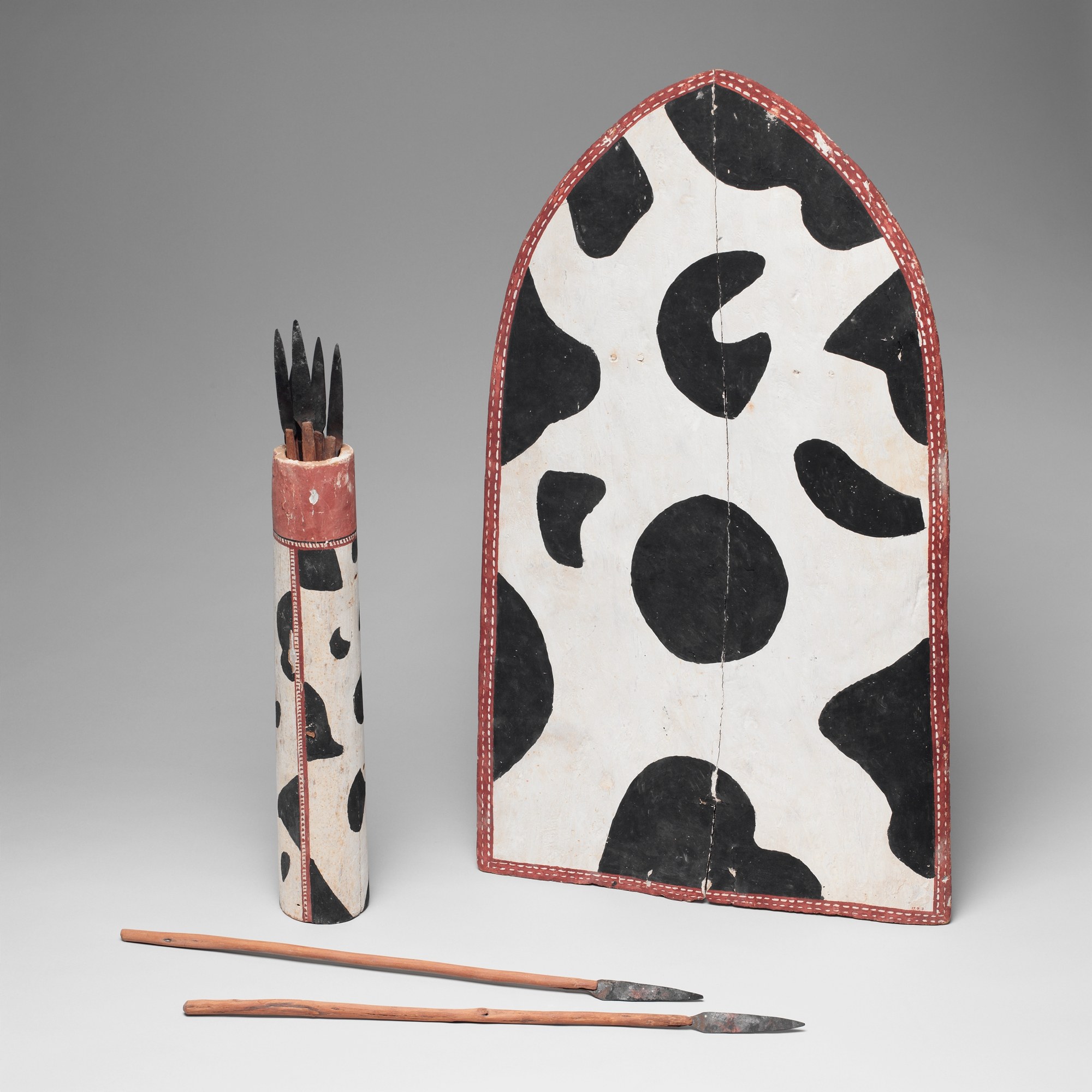 Model shield, spear case and spears, Dynasty 12, Middle Kingdom. Metropolitan Museum of Art.
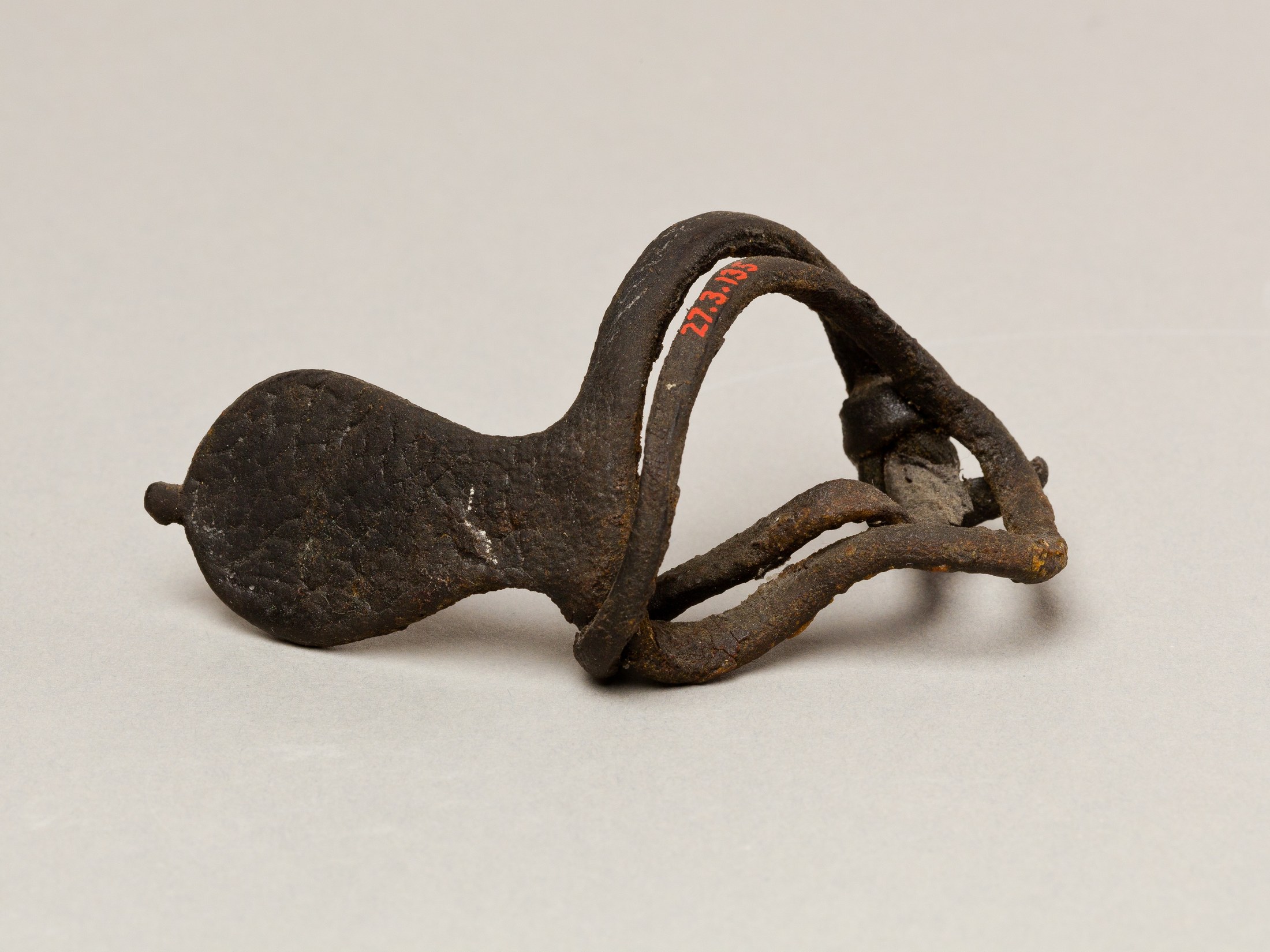 Leather archer's wrist guard, possibly reign of Senwosret I, Dynasty 12. Metropolitan Museum of Art.
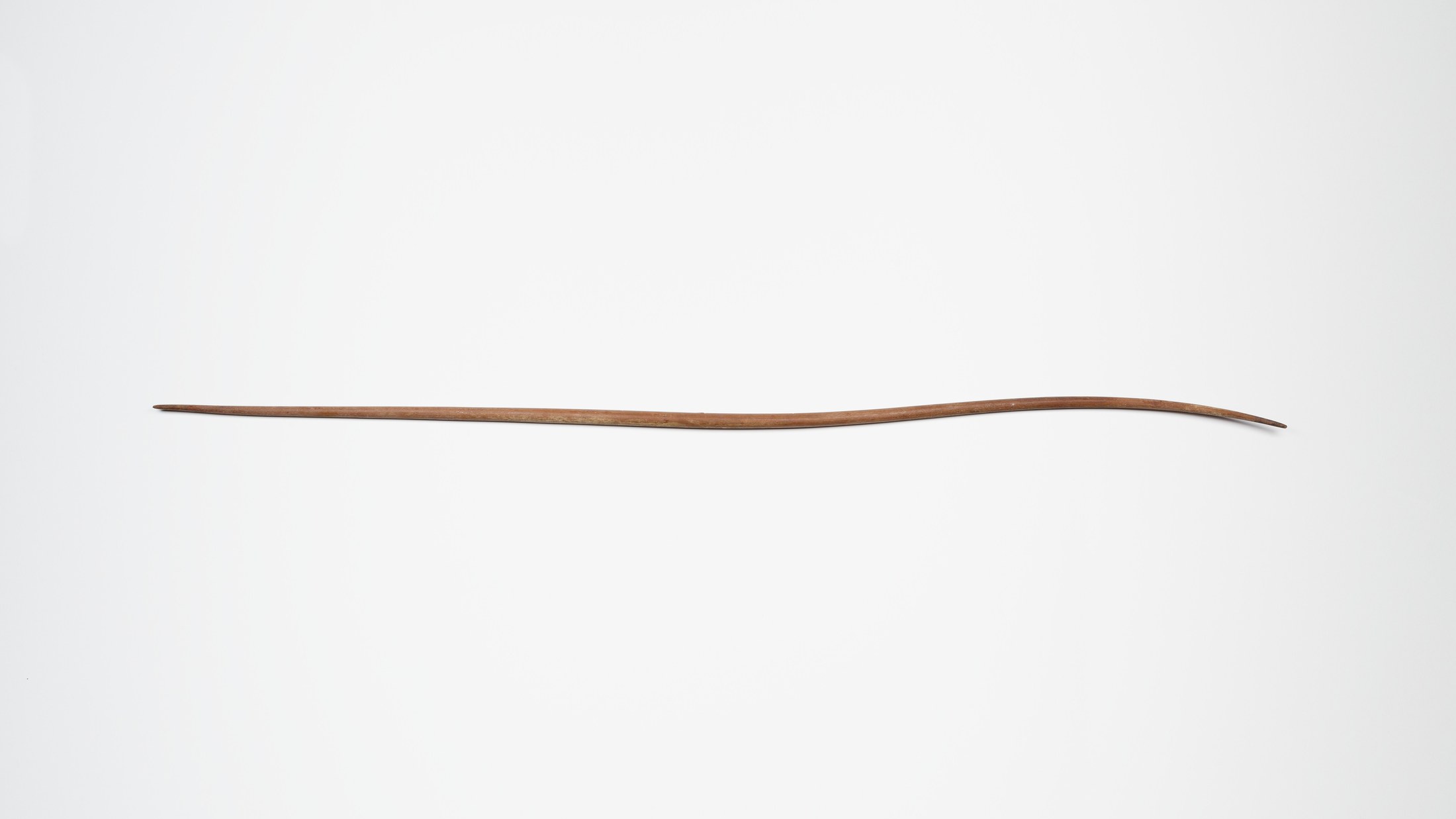 Wooden bow, Dynasty 11, Middle Kingdom. Metropolitan Museum of Art.
The Warrior and the Image of Pharaoh
Royal images present the pharaoh as the ideal warrior. He smites enemies with a mace, shoots from a chariot, leads the army and towers above ordinary men. This should not be read as an everyday scene. It expresses the principle of kingship: the king alone restores order, even when real victory depended on thousands of soldiers, scribes, craftsmen and transport workers.
Ordinary soldiers on temple reliefs are often smaller and more standardized. That is not accidental: the relief subordinates them to royal action. Tomb scenes and museum objects, by contrast, often show equipment more clearly: quivers, bow cases, axes, shields, musical signals and harness details.
The Battle of Kadesh illustrates the gap between ideology and actual fighting. Ramesses II's inscriptions emphasize the king's personal courage, but the campaign itself reveals the importance of scouting, allies, camp organization, chariots, infantry and logistics.
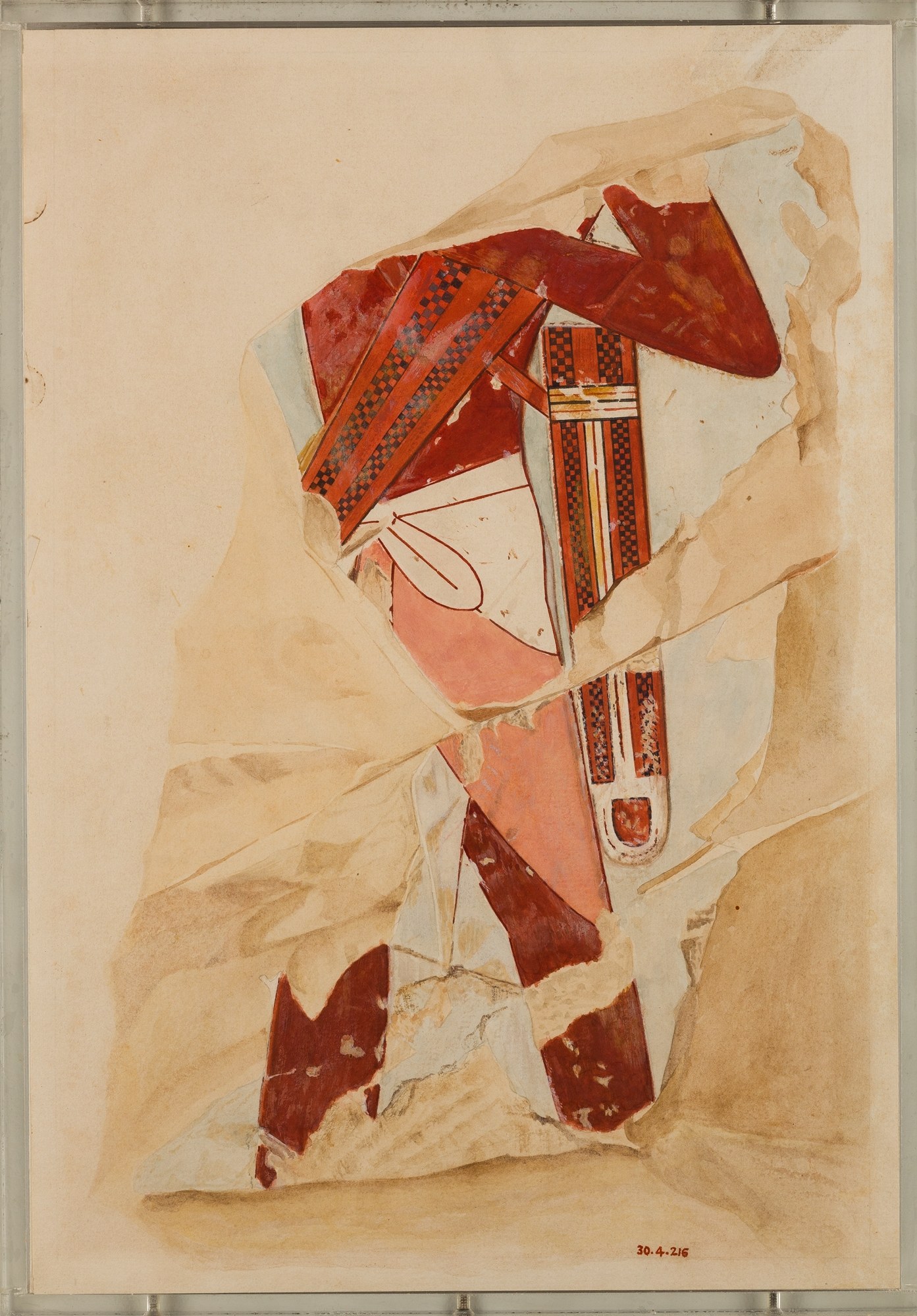 Man with bow case and quiver: museum facsimile of a tomb scene from the reign of Hatshepsut and Thutmose III. Metropolitan Museum of Art.
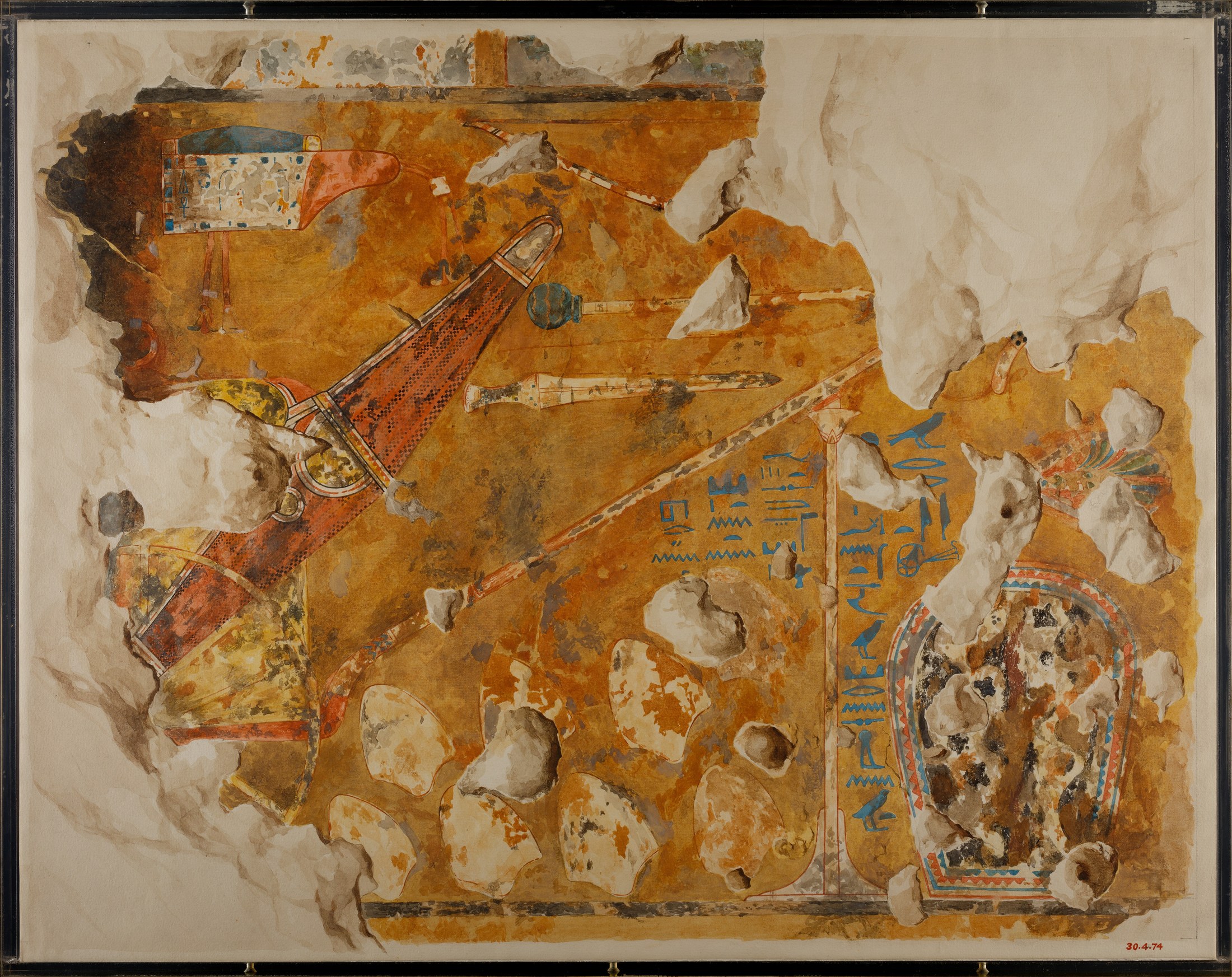 Chariot and weapons in the tomb of Qenamun, reign of Amenhotep II. Metropolitan Museum of Art.
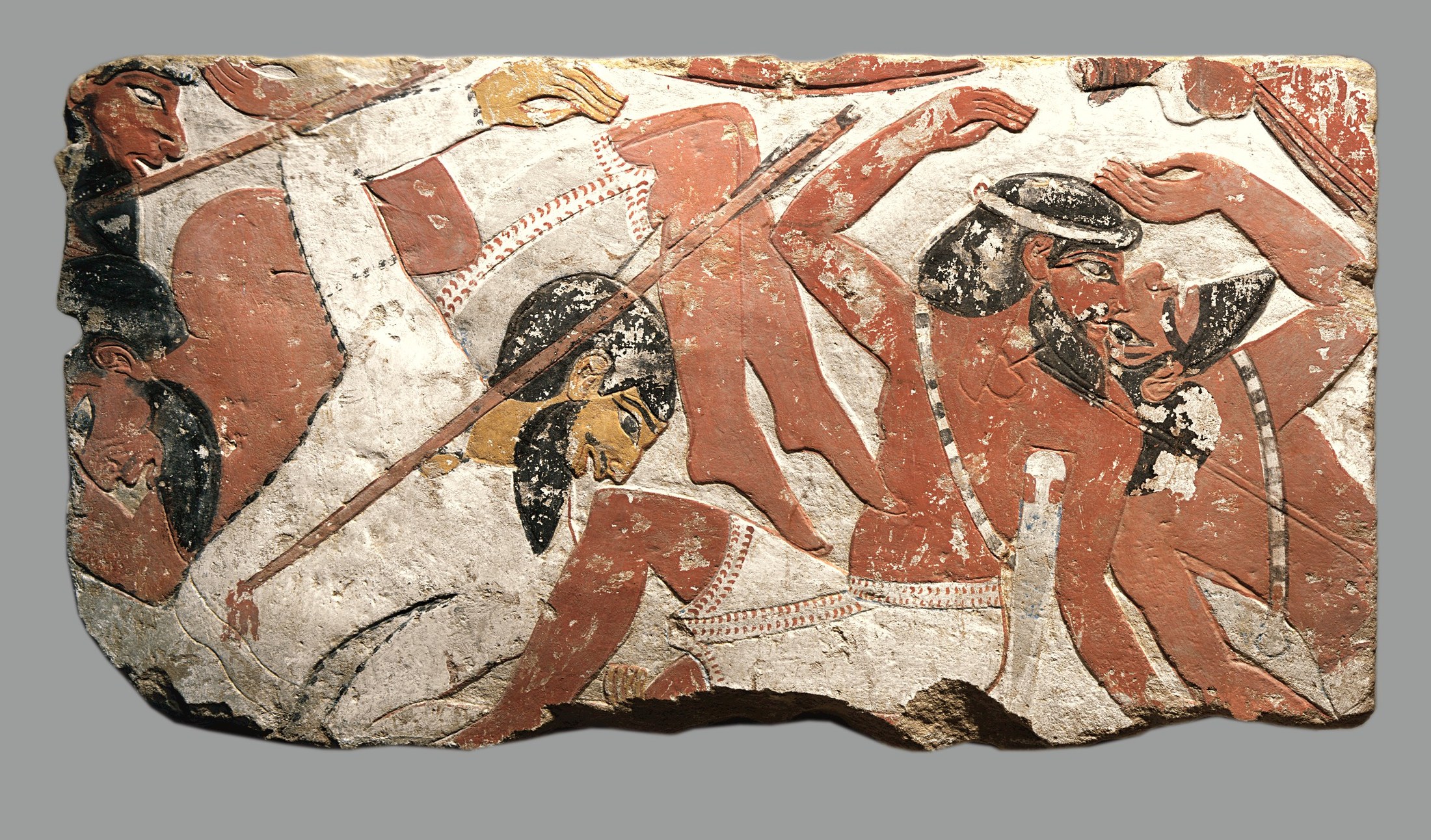 Relief block with a battle scene, probably reign of Amenhotep II, Dynasty 18. Metropolitan Museum of Art.
Archaeology and Images
Archaeological and pictorial sources show different sides of the warrior. A real bow or spearhead gives material and size; a model unit shows formation; a relief shows the soldier's place in royal imagery; a tomb painting preserves dress, gesture and equipment. The more precisely date, place and function are known, the stronger the conclusions.
New Kingdom reliefs are especially rich, but they do not replace earlier material. An Old Kingdom warrior was not the same as a Dynasty 18 chariot warrior, and a Ptolemaic mercenary is not a direct model for pharaonic infantry. Early units, infantry, chariotry and later foreign troops therefore need to be treated separately.
For the appearance of the warrior, the most useful evidence is not always the most spectacular. A broken relief fragment, a small bronze armor scale, an archer's wrist guard or a row of wooden figures from a tomb can provide more concrete details than a grand royal composition.
Late and Hellenistic Egypt
In Late and Hellenistic Egypt, the military world became even more mixed. Persian, Greek, Macedonian, Thracian, Galatian and local Egyptian elements could exist side by side. After Alexander's conquest and under the Ptolemies the army kept an Egyptian territorial base, but its command language, some tactics and elite units belonged to the Hellenistic world.
Such monuments are important for Egyptian history, but they cannot be transferred automatically to the age of the pyramids or Thutmose III. The Galatian mercenary from Sidon belongs to the Ptolemaic world, foreign service and the eastern Mediterranean of the 2nd century BC, not to an ordinary Old Kingdom soldier.
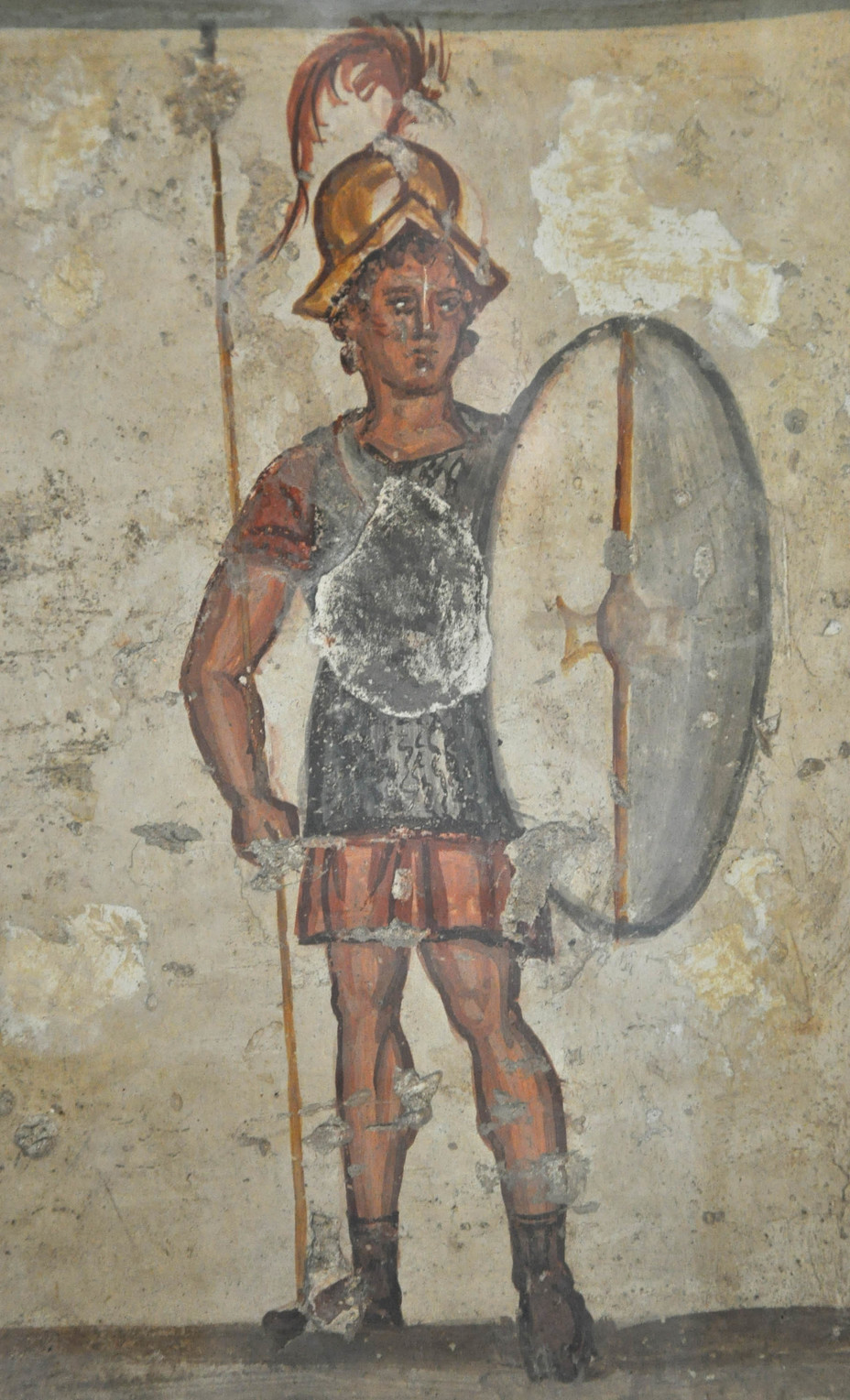 Galatian mercenary in Ptolemaic service. Funerary stele from Sidon, 2nd century BC. Istanbul Archaeological Museums.
Chronology
- 3rd millennium BC
- Old Kingdom warriors are known from reliefs with archers, captives and expedition scenes.
- Ca. 2000 BC
- the Mesehti models from Asyut show spearmen and Nubian archers in ordered units.
- Dynasty 12
- southern fortresses and Nubian campaigns increase the importance of garrisons, spearmen and archers.
- 17th-16th centuries BC
- conflict with the Hyksos and contact with western Asia bring the horse, chariot and new weapon types into the Egyptian military world.
- 15th-13th centuries BC
- the New Kingdom develops infantry, chariot forces, foreign units and military administration.
- 1274 BC
- the Battle of Kadesh becomes the major example of royal military propaganda and chariot warfare.
- 12th century BC
- the reliefs of Ramesses III at Medinet Habu show late New Kingdom armies, enemies and naval fighting.
- 1st millennium BC
- Libyan, Nubian, Greek and other foreign warriors become increasingly important in Egyptian armies.
- 3rd-1st centuries BC
- under the Ptolemies Egyptian military life combines local traditions with Hellenistic armies and mercenaries.
Related topics
- Army of Ancient Egypt
- Weapons of Ancient Egypt
- War Chariots of Ancient Egypt
- Battle of Kadesh
- New Kingdom Egypt
- Hellenistic Egypt
Literature and sources
- Avdiev V. I. Military History of Ancient Egypt.
- Spalinger A. J. War in Ancient Egypt: The New Kingdom.
- Shaw I. Egyptian Warfare and Weapons.
- Schulman A. R. Military Rank, Title and Organization in the Egyptian New Kingdom.
- Faulkner R. O. Egyptian Military Organization.
- McDermott B. Warfare in Ancient Egypt.
- Darnell J. C., Manassa C. Tutankhamun's Armies.
- Wilkinson T. The Rise and Fall of Ancient Egypt.
Interested in Ancient Rome beyond reading? Join Legio X Fretensis or explore our reenactment directions.


