British Museum and Antiquity
The British Museum matters for antiquity not only because of famous marbles, vases and large sculpture. In one building it brings together museum architecture, older collections, study rooms, the online catalogue and displays where Greek, Roman, Etruscan, Hellenistic and provincial objects stand close to one another. The museum is therefore useful as a visual map of the ancient world: it shows not one city or one monument, but many kinds of objects that entered the collection from different historical contexts.
For reconstruction, small objects are often the most useful: weapons, sword grips, scabbard fittings, shield bosses, brooches, belt sets, footwear, jewellery, vessels, tools and household items. They often preserve scale, technical detail and traces of use better than monumental sculpture, while museum records help separate an object's date, findspot and collecting history.
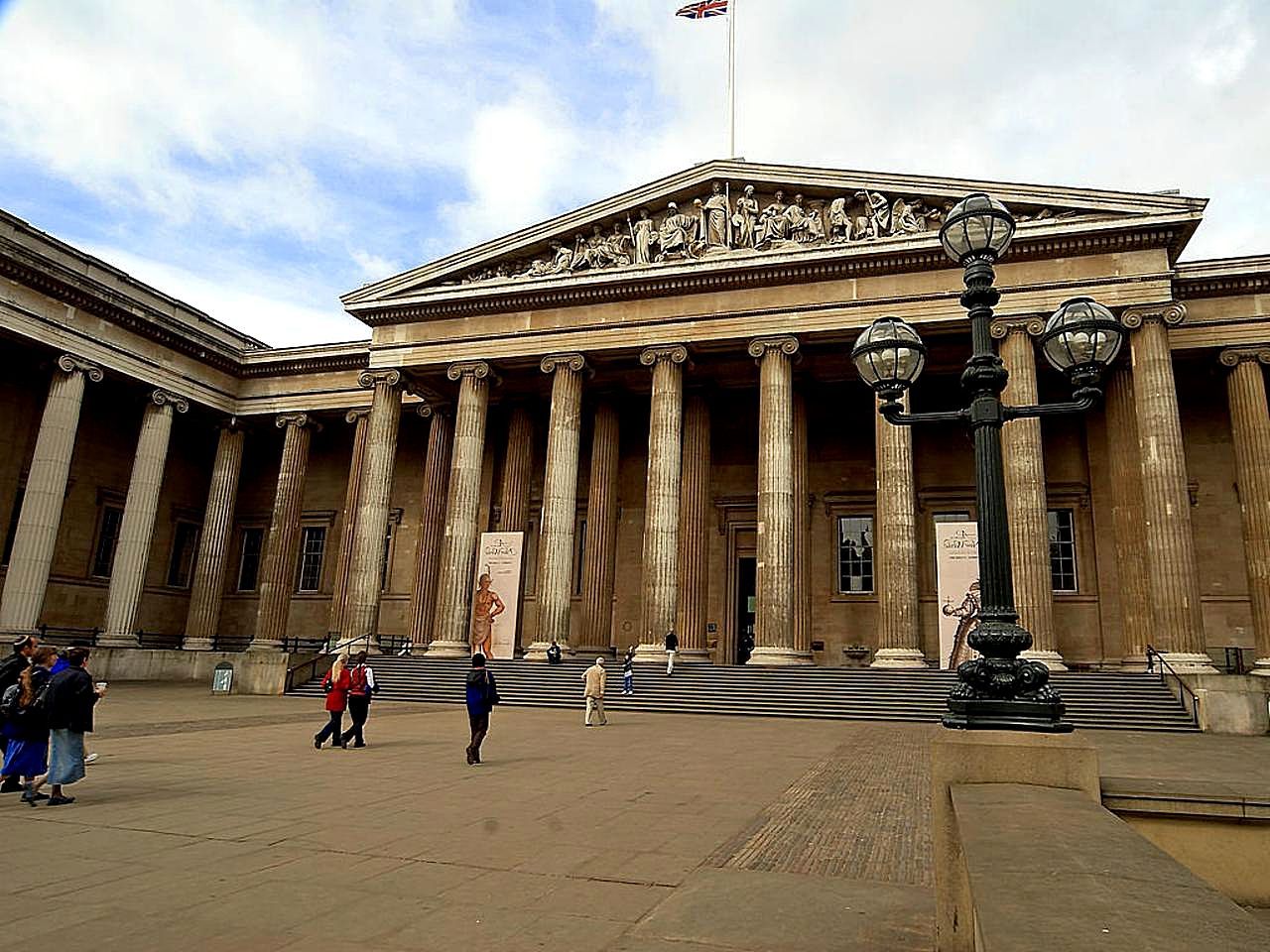 Main entrance of the British Museum on Great Russell Street, London.
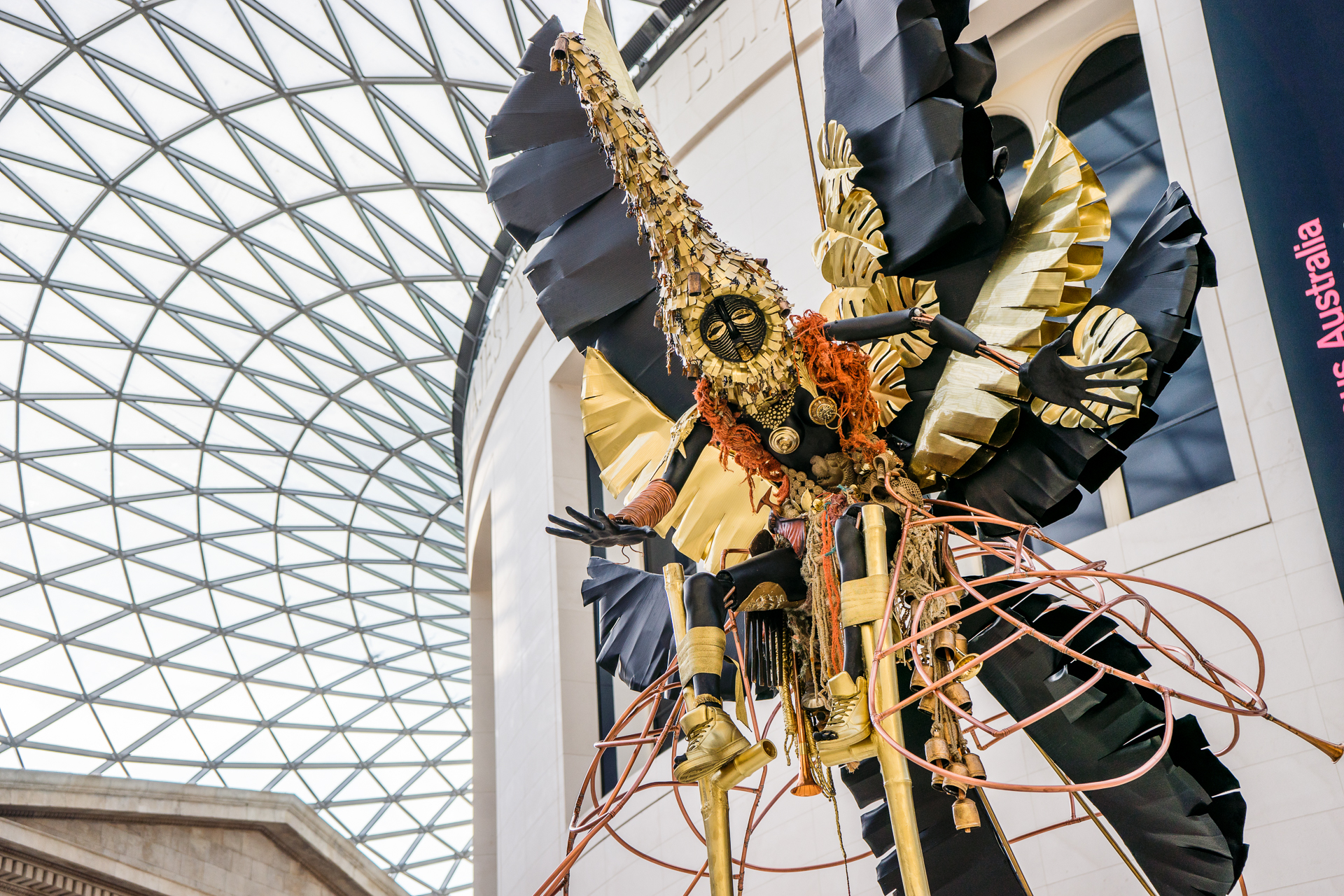 The Great Court of the British Museum: the covered central space around the Round Reading Room.
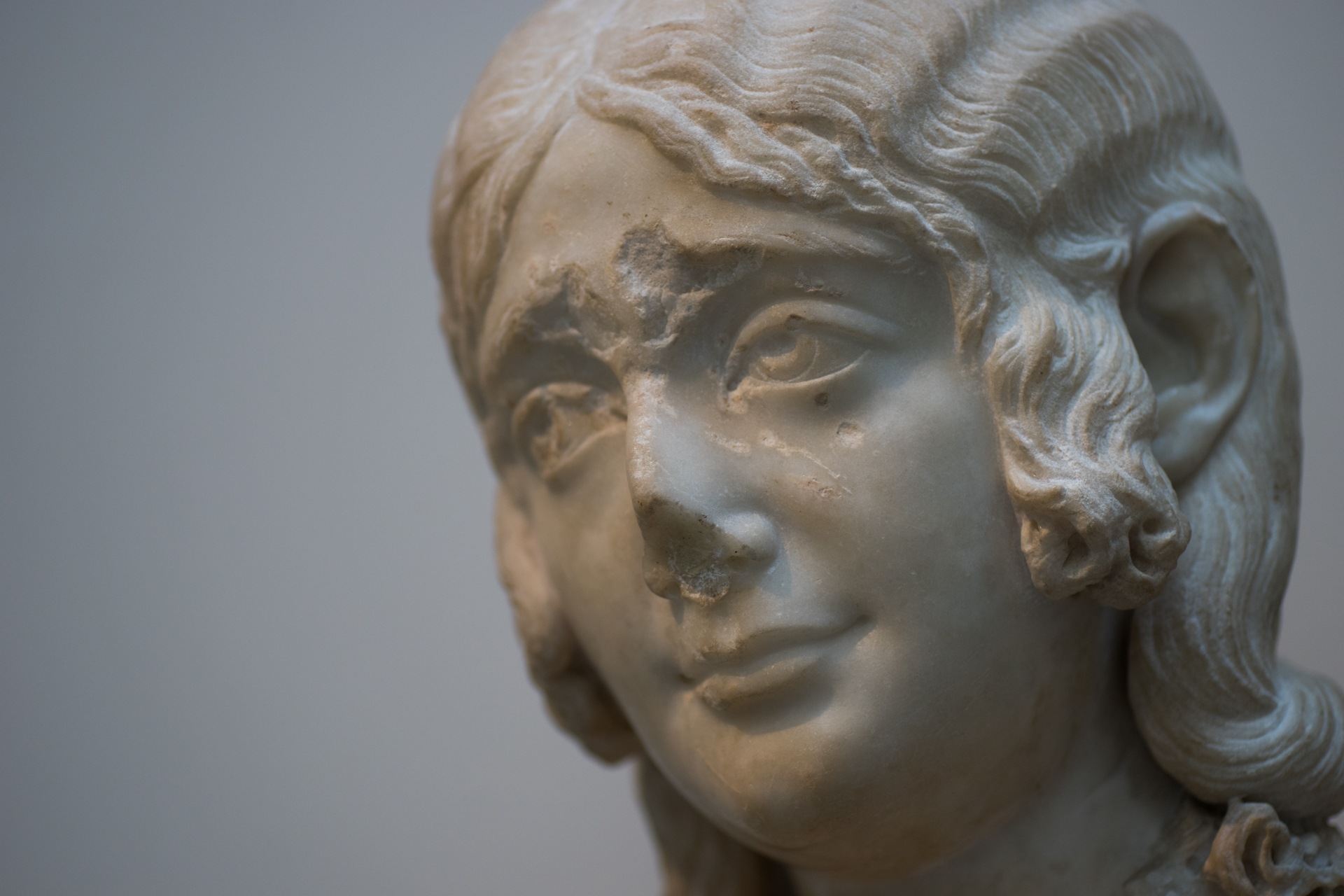 Room 70, Roman Empire: an overview display of Rome, the empire and its provinces.
The Museum and Its Classical Display
A modern visit to the British Museum begins before the display cases: the neoclassical facade, the Great Court and the visitor routes all shape the museum context. Ancient objects are not shown in a neutral space. They are displayed in a nineteenth- to twenty-first-century building where old collections, architectural reconstructions and modern navigation together shape the reading of antiquity.
The Department of Greece and Rome covers material from the Aegean Bronze Age and Archaic Greece to the Roman Empire and late antiquity. One of the museum's strengths is the proximity of objects at different scales: architectural fragments, sculpture, inscriptions, coins, glass, pottery and everyday objects can be read together. This makes it easier to see not only style, but also function.
Greece, Rome and Roman Britain
Room 69 presents Greek and Roman daily life through themes close to ordinary experience: childhood, family, craft, sport, trade, music, cult, death and warfare. This arrangement is useful when working with object types: the display case does not merely present an attractive object, but places it in a social situation.
Room 70, Roman Empire, is useful as an overview of the imperial world. It covers a long period from early Rome to the age of Constantine and brings together objects from many regions of the empire. This geographical range matters: a Roman object may come from Italy, Britain, Egypt, Syria or Gaul, and it cannot automatically be moved into every provincial context without checking.
Material from Roman Britain in the British Museum is also connected with other departments, especially Britain, Europe and Prehistory. When looking for Romano-British parallels, it is therefore necessary to check not only the Greek and Roman galleries, but also catalogue records for findspot, registration number and former collection.
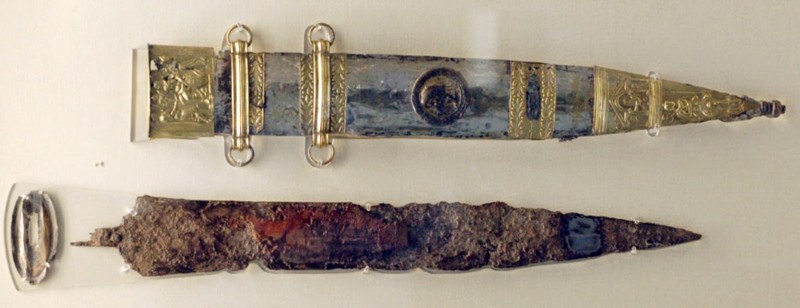 Mainz-type gladius found in the Rhine. Early first century AD; British Museum, London.
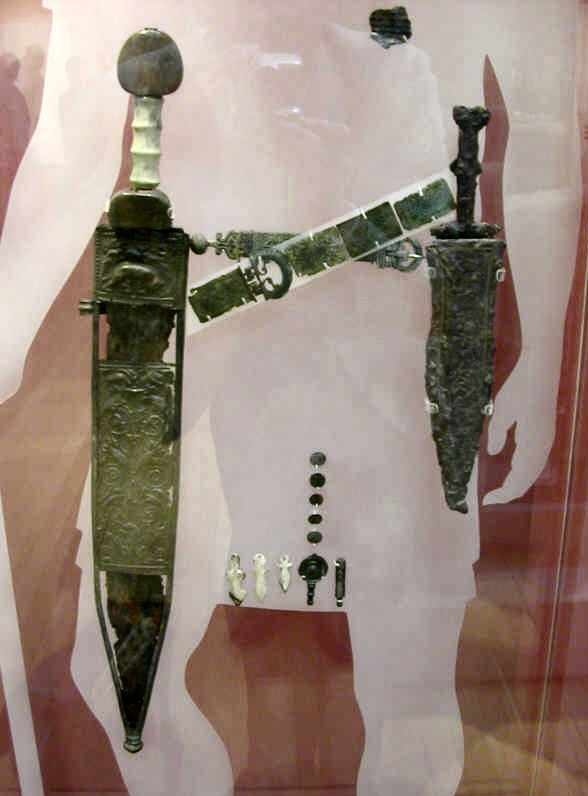 Military belt fittings with pugio and gladius. British Museum, London; first century CE.
 Decorated shield boss associated by its inscription with Legio VIII Augusta. First half of the second century CE; found in the River Tyne, Britain. British Museum.
Main Materials
- Roman weapons, scabbard fittings, shield bosses and military equipment;
- material from Roman Britain and the north-western provinces;
- brooches, belt sets, jewellery, footwear and textile remains;
- Greek and Roman pottery, terracottas, bronzes and glass;
- inscriptions, coins, weights and small objects of exchange;
- architectural fragments, sculpture and Roman copies of Greek originals.
The British Museum is especially useful because objects can be compared not only as attractive pieces, but as repeated types. One helmet, brooch or vessel may be exceptional; a series of similar objects shows the norm, regional variants and the limits of responsible reconstruction.
Catalogue, Display and Careful Reading
The display case gives the first impression, but precise work requires comparison with the catalogue. Date, culture or period, material, technique, dimensions, findspot, former owner and acquisition history all matter. A place of purchase or an old collection is not the same as an archaeological context. For reconstruction this distinction is fundamental: an object may be securely ancient while its regional use remains uncertain.
The museum biography of an object also matters. Objects may have been restored, assembled from fragments, cleaned, supplemented or displayed in ways that work better in the gallery. This does not make them less valuable, but it requires caution: shape, surface and completeness sometimes reflect not only the ancient state, but also the history of preservation.
Context and Limits
When using British Museum photographs, it is important to distinguish objects found in Britain from Mediterranean objects that entered the collection through older collecting. This is especially visible in military and everyday material: a form may be Roman without being specifically Romano-British.
A second limitation is the scale of the museum. Much of the material is known through catalogue records, publications and archives rather than the permanent display. The best way to use the British Museum is therefore to combine gallery study, the online catalogue and publications on specific object types. In that form the museum becomes not a set of attractive isolated pieces, but a system of sources.
Related Topics
Sources
- British Museum: Department of Greece and Rome
- British Museum: Greek and Roman life, Room 69
- British Museum: Roman Empire, Room 70
- British Museum: The world of Alexander, Room 22
- British Museum: Great Court
- Wikimedia Commons: British Museum facade, Great Court and gallery-room image records


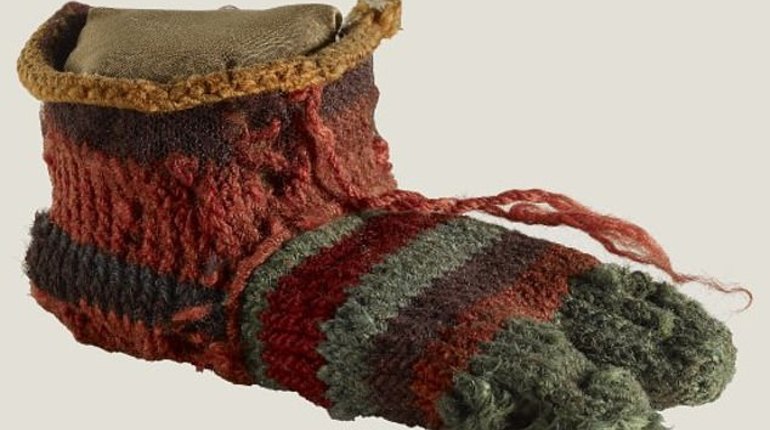 Sock from Antinoopolis, Egypt. British Museum; Late Antiquity, around the fourth–fifth century CE.
 Wool sock with a divided toe. British Museum; around 100–350 CE. Evidence for ancient foot coverings, not proof of one standard sock pattern.
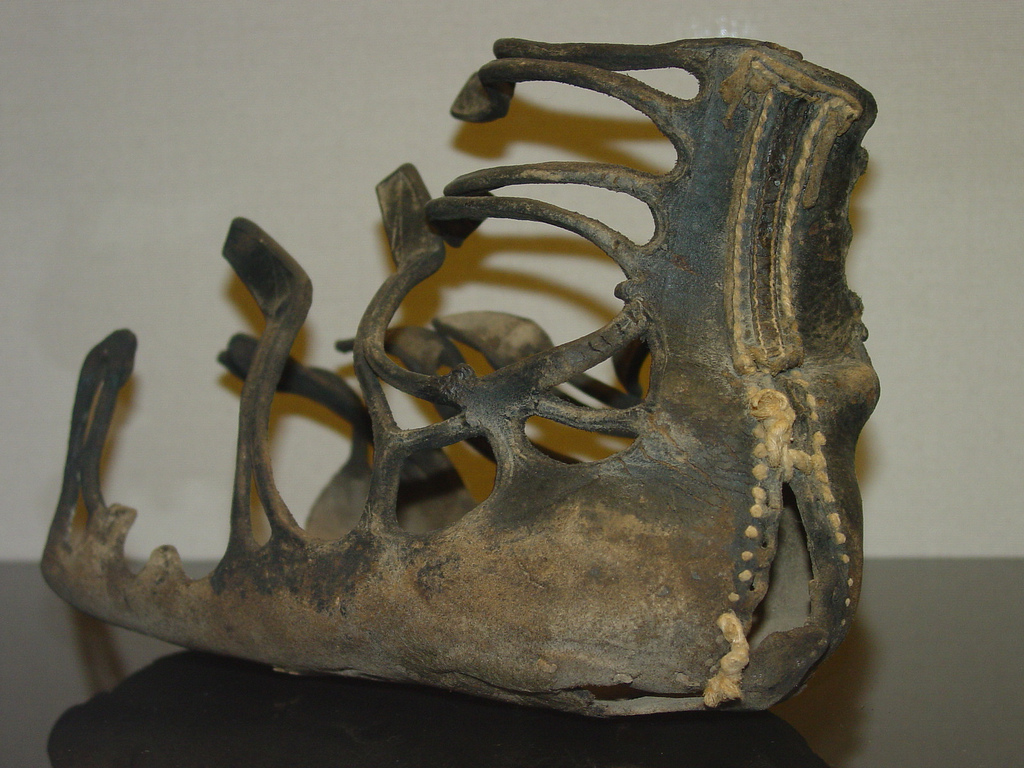 Rear view of a Roman caliga. British Museum; first century BCE–first century CE.
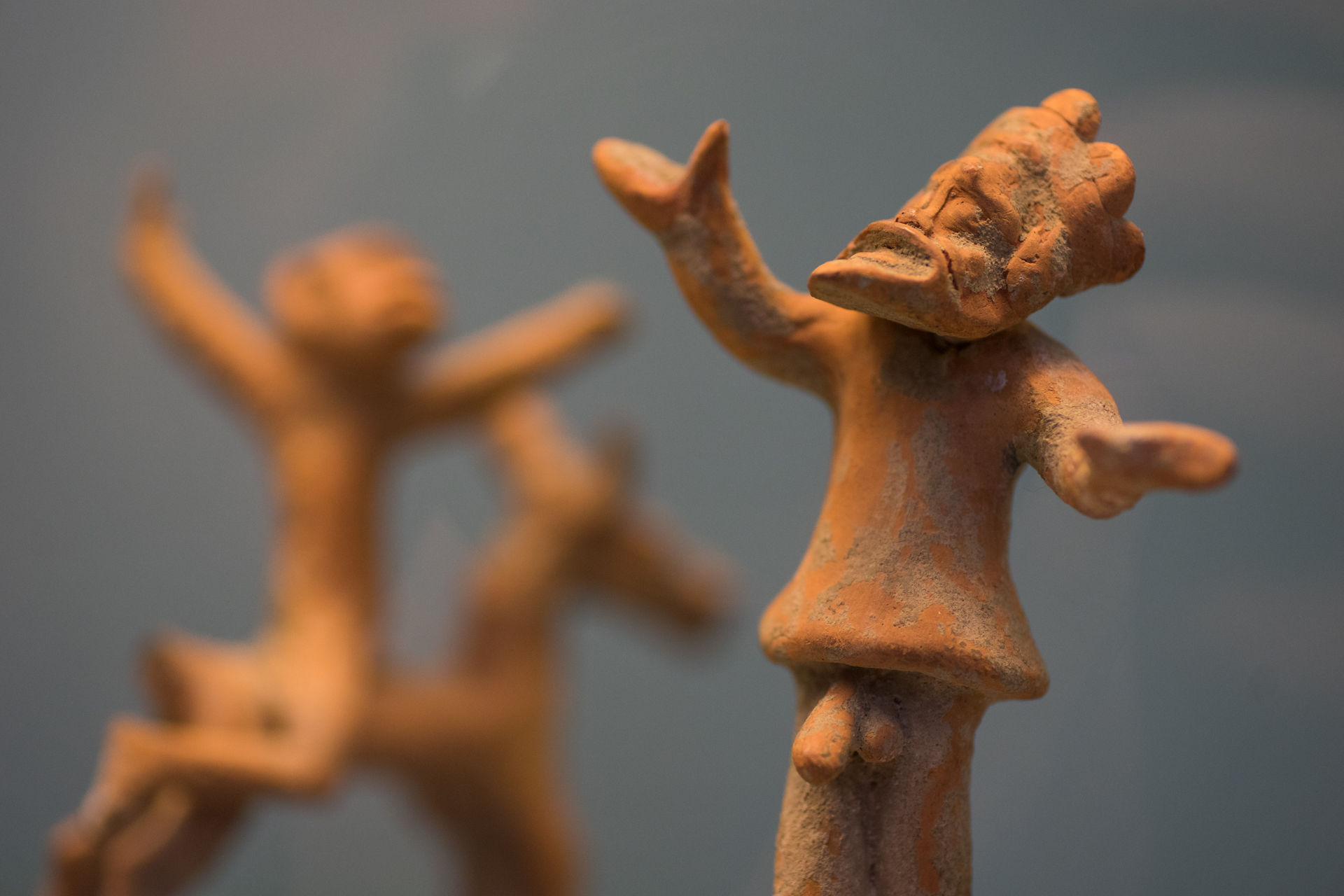 Room 69, Greek and Roman life: displays of everyday and ritual objects.
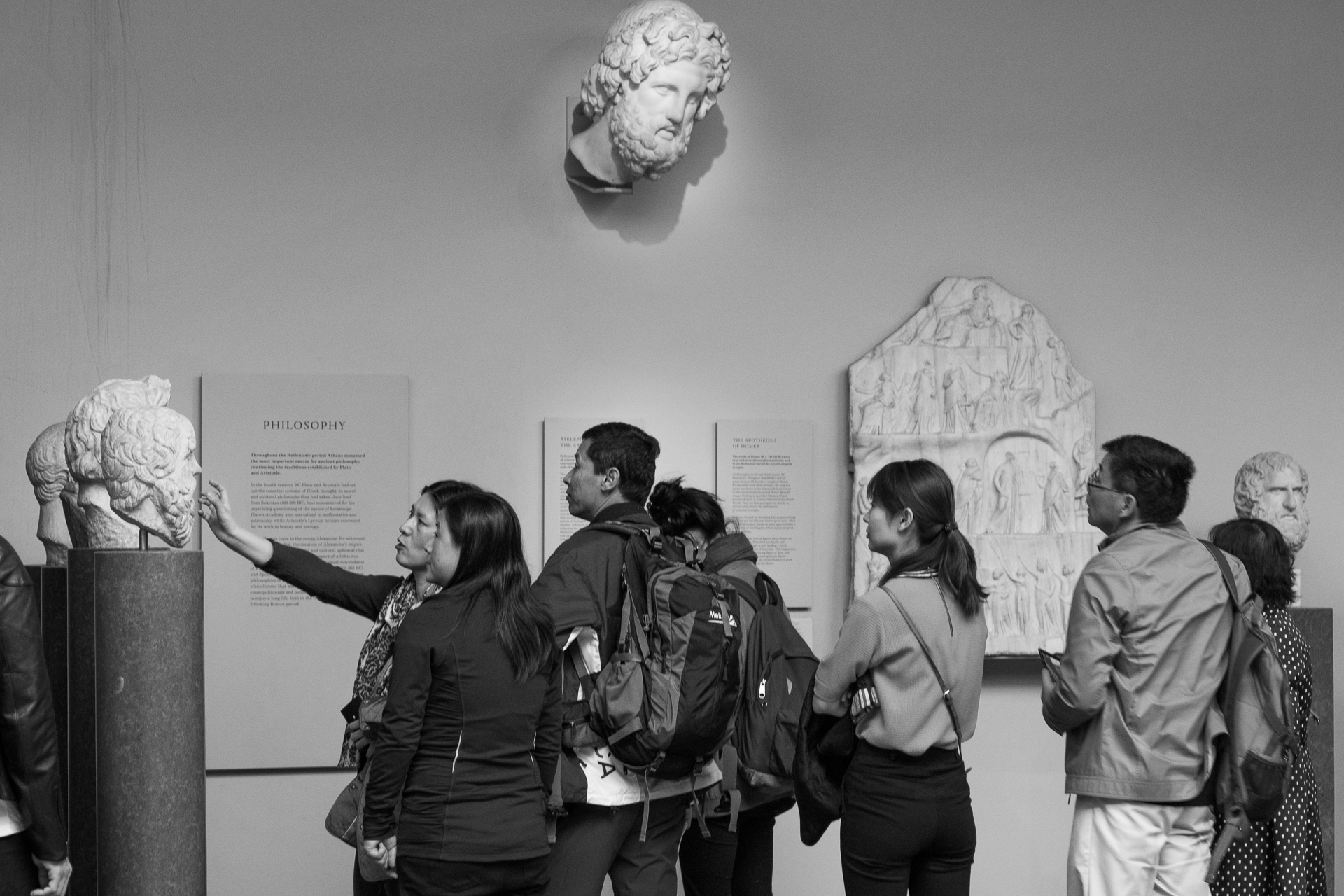 Room 22, The world of Alexander: Hellenistic sculpture and small finds.
 Room 70, Roman Empire: displays of objects from different regions of the Roman Empire.
Interested in Ancient Rome beyond reading? Join Legio X Fretensis or explore our reenactment directions.


