Practical Reconstruction Experience
Practical reconstruction begins when a museum object, relief or ancient image has to become an object with weight, size, fit and material. At that point typology is no longer enough: the source must be separated into what it shows securely, where parallels are needed and which choices will be visible in the finished kit.
Such articles matter beside reference pages because they show the path from source to object: a shield is not only the word "hoplon", a kausia is not only the name of a headgear, and an image of Augustus or a primipilus is not a set of museum quotations, but a test of form, craft and acceptable compromise.
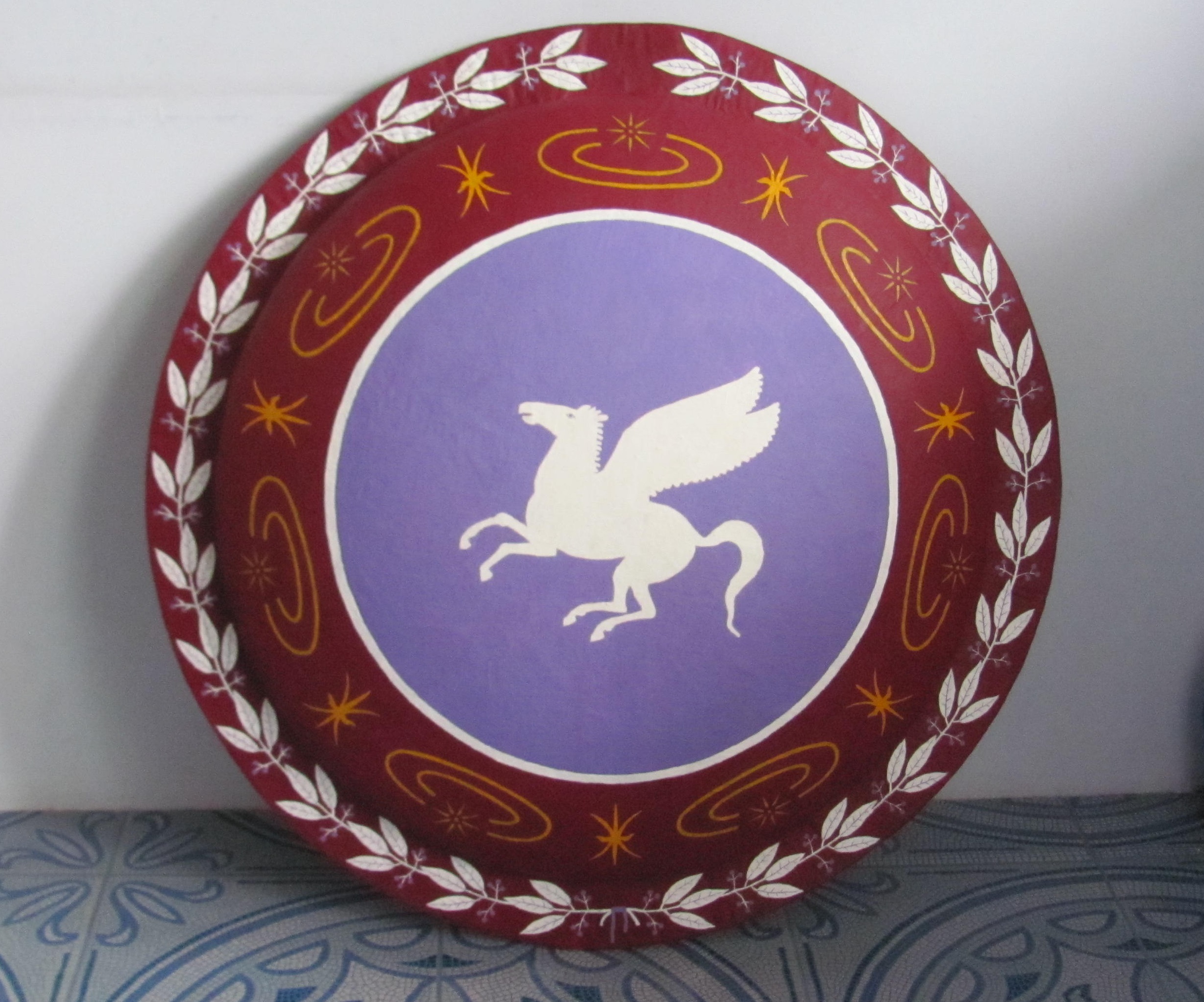 Completed hoplon with the final painting on the outer face.
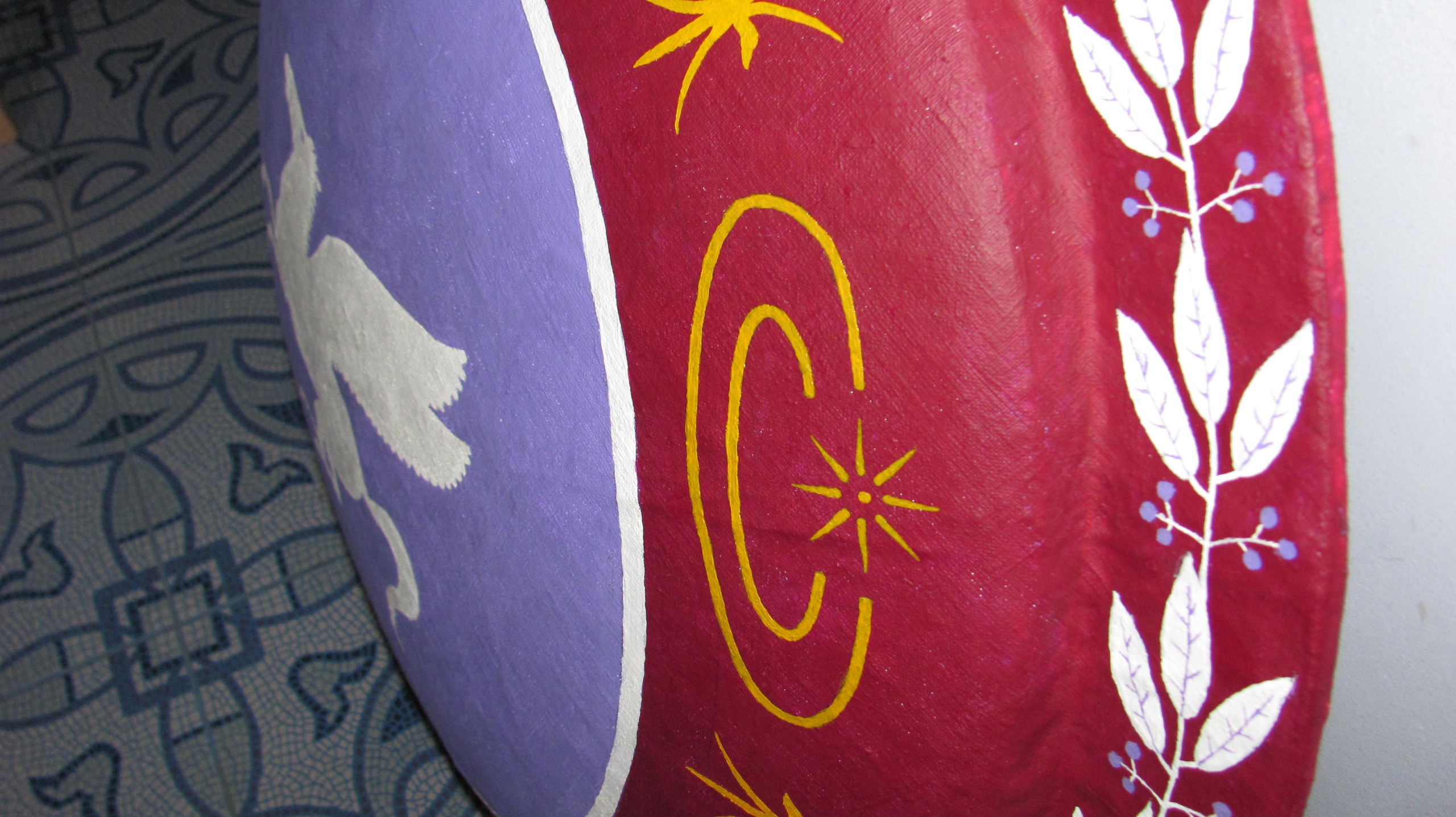 The result of painting hoplon
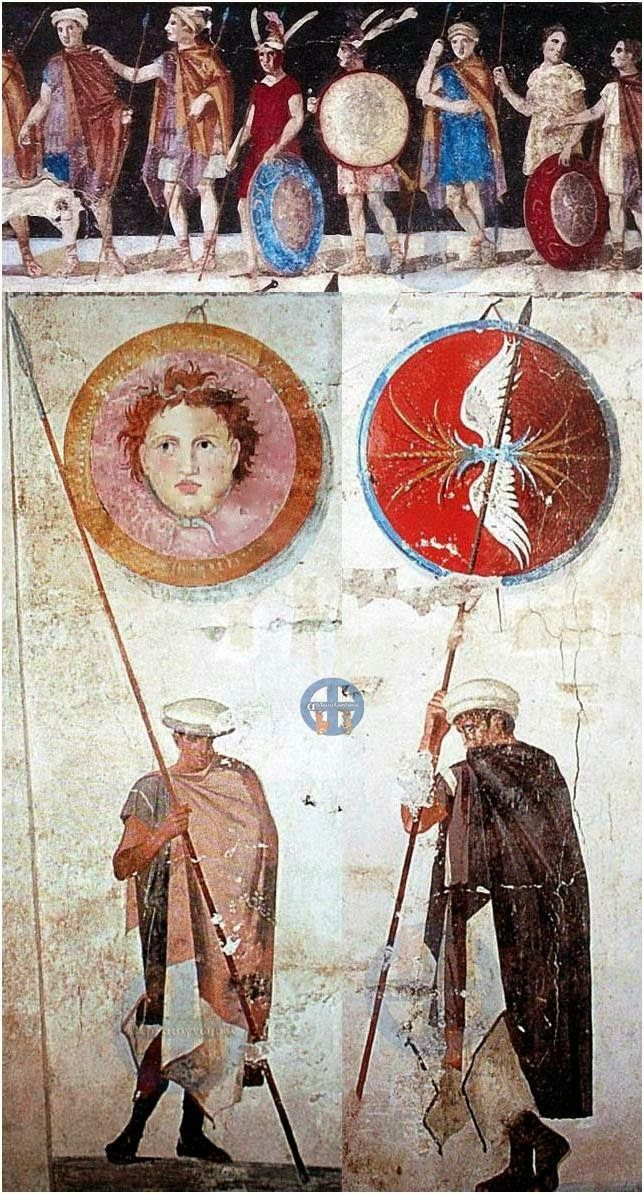 Ancient wall painting with round shields; evidence for colour treatment and shield devices.
Greek and Hellenistic Equipment
- Hoplon: Reconstruction Experience
- shield-making with attention to form, weight, wooden core, facing and surface finish.
- Kausia
- Macedonian and Hellenistic headgear, where the sources are tested through cut and fit.
Roman Images and Officer Kits
- Reconstruction of Augustus of Prima Porta
- imperial kit based on the Vatican Museums statue and supporting sources.
- Reconstruction of a Primipilus of the Late First Century
- officer kit based on tomb reliefs and finds.
- Recreating an Imperial Subarmalis
- making a leather under-armour garment for an imperial kit: comparison with the Augustus of Prima Porta statue, fitting mock-up, leather choice and finish, hand stitching, pteruges and final weight.
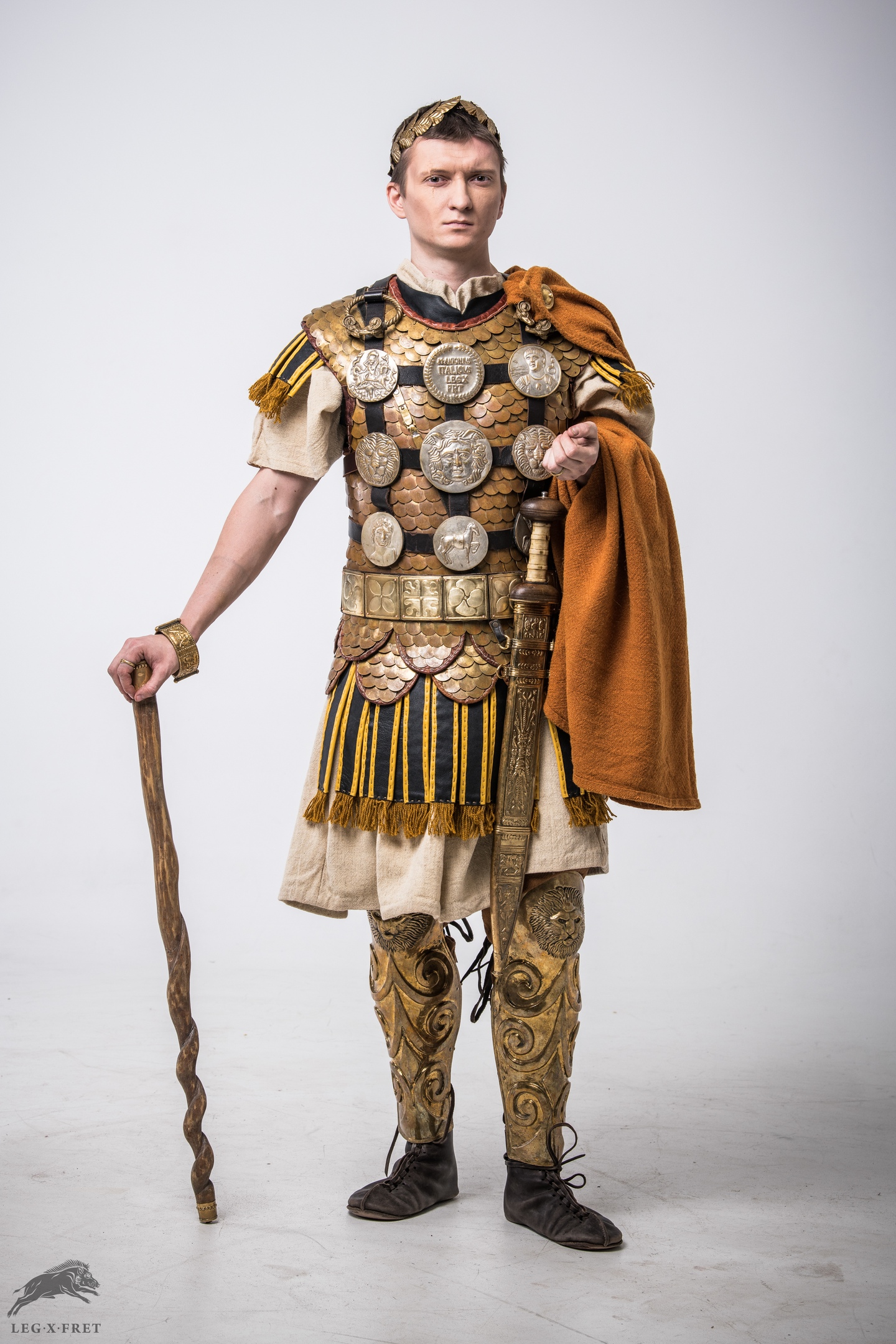 Primipilus, reenactment
Source and Finished Object
There is always a distance between source and finished object. A relief may show silhouette but not material thickness; a statue gives pose and drapery but not always cut; an archaeological find preserves form while sometimes losing straps, textile or colour. Practical experience matters because it makes that distance visible instead of hiding it behind a finished photograph.
The articles therefore place museum source, work in progress and finished kit side by side. Captions separate ancient evidence from modern reproduction and show where a decision rests on a direct source and where it uses a cautious parallel.
Leather and Footwear
- Recreating Roman Footwear from Mainz - a practical outline from Mainz evidence and measurements to pattern, assembly, sole and field testing.
Textile and Headwear
- Recreating a Celtic Sprang Cap - sprang work after the Bredmose / Arden Woman find: linen yarn, simple sticks, elastic fabric and shrinkage control.
Related Topics
- Hoplon: Reconstruction Experience
- Kausia
- Reconstruction of Augustus of Prima Porta
- Reconstruction of a Primipilus of the Late First Century
Literature and sources
Interested in Ancient Rome beyond reading? Join Legio X Fretensis or explore our reenactment directions.


