Reconstruction of a Primipilus of the Late First Century
The primipilus, or primus pilus, was the senior centurion of a legion, commanding the first century of the first cohort. For reconstruction it is one of the most complex Roman images: it requires not only weapon and armour, but also a system of status signs, decorations, clothing and command attributes.
The club kit is based on the image of Quintus Sertorius Festus, centurion of Legio XI Claudia Pia Fidelis, on a tomb relief from Verona. The analysis separates the main source, supporting reliefs, kit composition and practical conclusions.
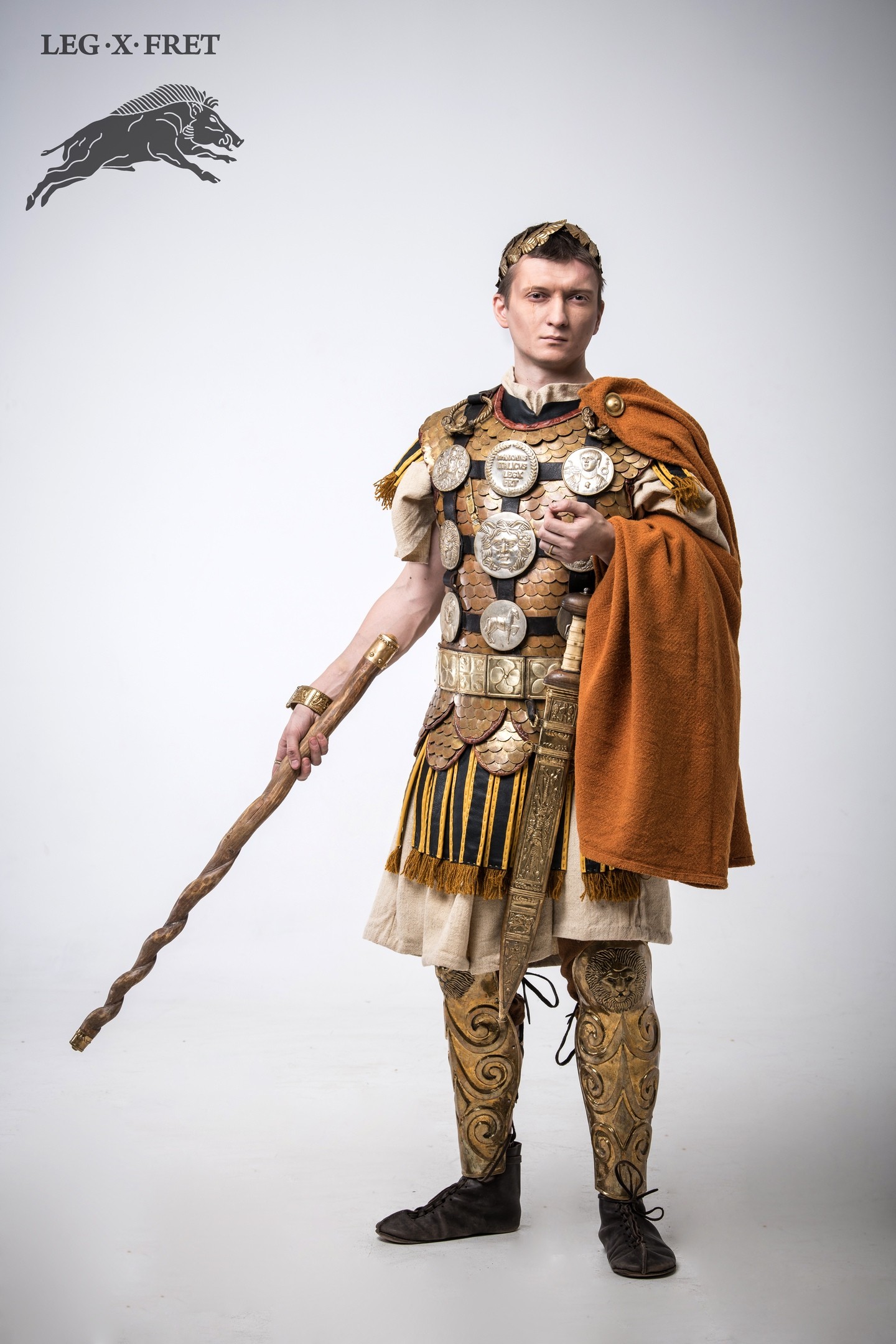 Primipilus reconstruction and the main relief source.
Main Source
The principal reference is the left stone of the Sertorii family funerary monument: Quintus Sertorius Festus, son of Lucius of the Publilia tribe, centurion of Legio XI Claudia Pia Fidelis. The monument is kept in Verona, Museo Lapidario Maffeiano, inv. 28160.
The relief matters because it shows not a random set of objects, but a status image of a centurion. It includes wreath, armillae, phalerae, scale armour, cloak, subarmalis, vitis, greaves, footwear and tunic. At the same time the image is clearly ceremonial: some combat equipment is absent.
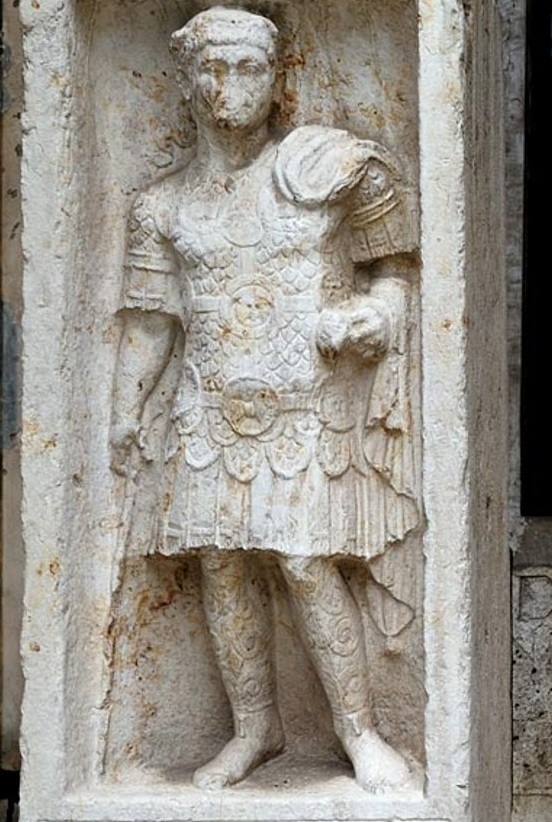 Tombstone of Quintus Sertorius Festus, centurion of XI Claudia Pia Fidelis. First century CE; Museo Lapidario Maffeiano, Verona, inv. 28160.
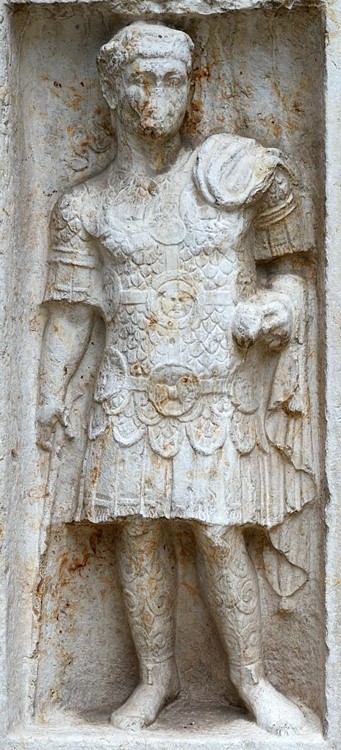 Relief of Quintus Sertorius Festus, primipilus of Legio XI Claudia, with a cloak over his arm. Inv. 28160; first century CE.
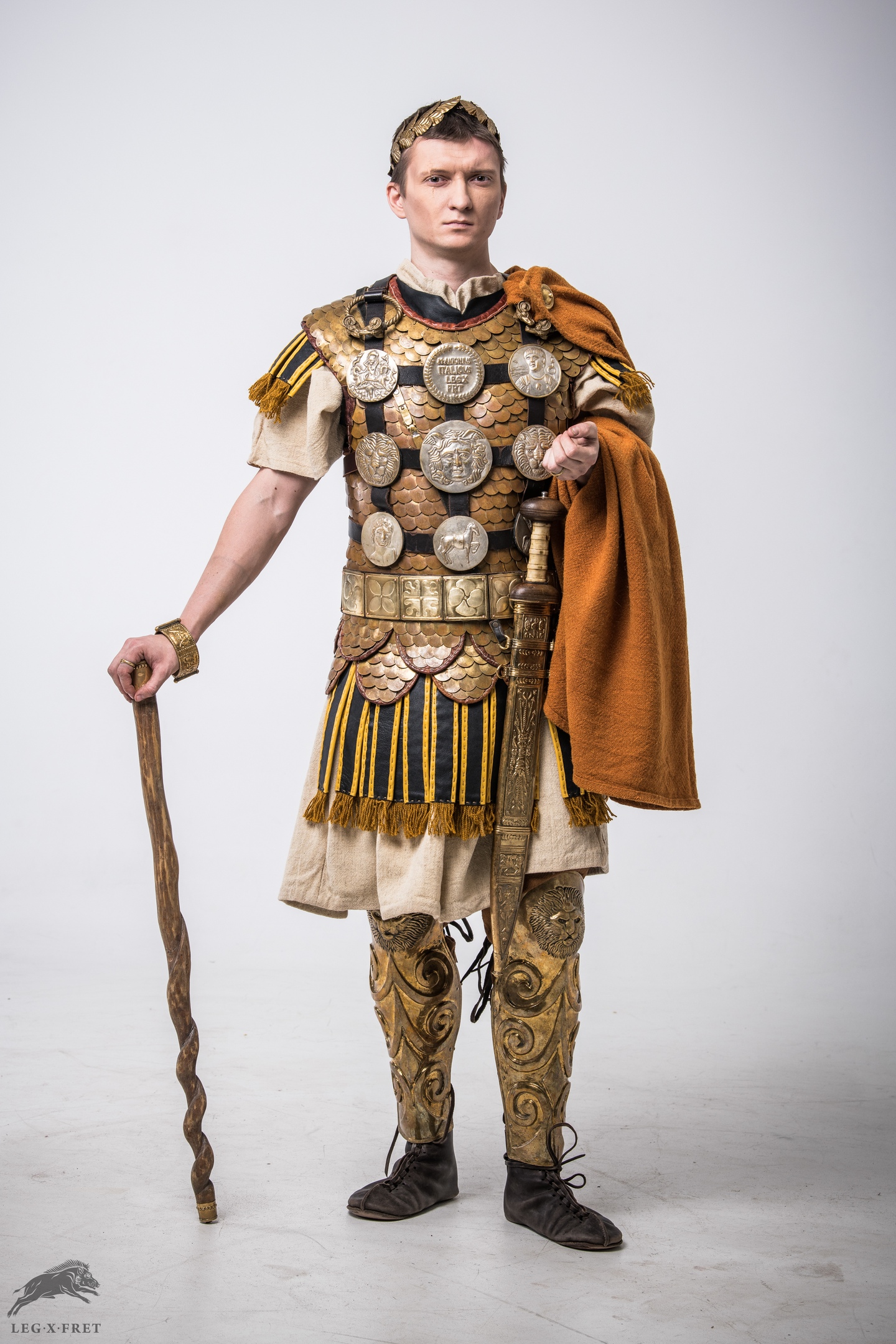 Primipilus, reenactment
Supporting Reliefs
To avoid turning a ceremonial image into an incomplete kit, close contemporary reliefs of senior centurions were used: Marcus Favonius Facilis of XX Valeria Victrix, Titus Calidius Severus of XV Apollinaris and Marcus Caelius of Legio XVIII. They help clarify belt, weapons, greaves, helmet and the visual language of the officer image.
Such parallels do not make every element automatically mandatory. They provide acceptable variants within a close social and chronological frame. Items visible on the main relief must therefore be separated from elements added by analogy.
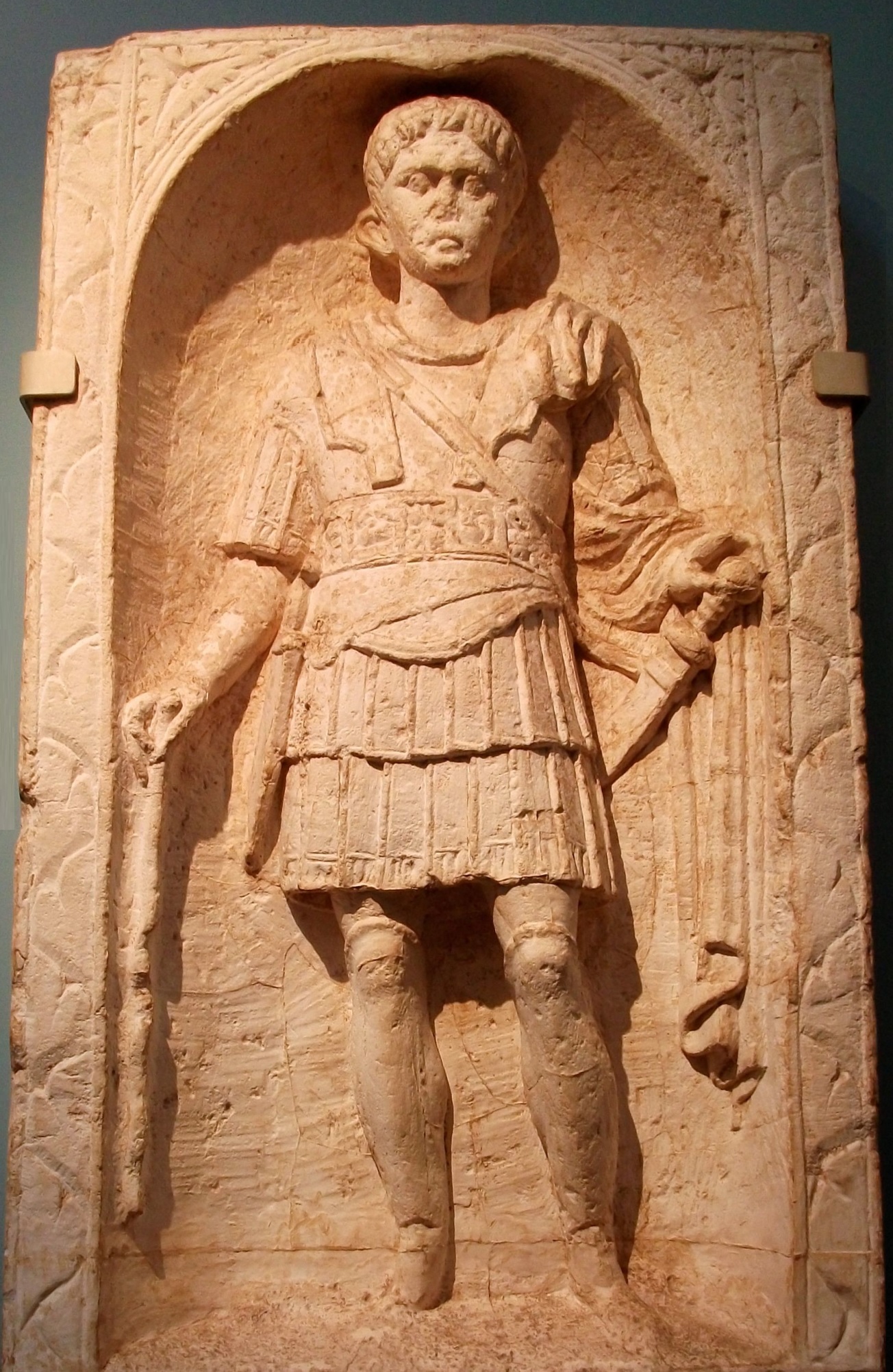 Tombstone of Marcus Favonius Facilis, centurion of the Twentieth Legion. Colchester, mid-first century CE; Colchester and Ipswich Museums.
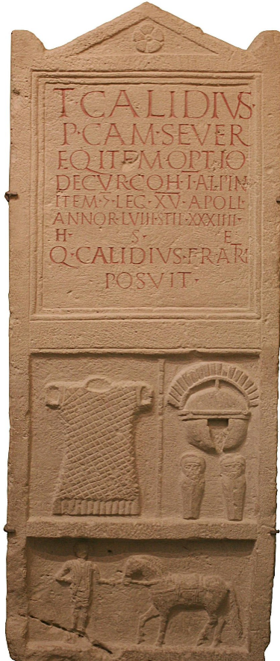 Tombstone of Titus Calidius Severus from Carnuntum, first century CE. Kunsthistorisches Museum, Vienna. Its inscription records service as cavalryman, optio and decurion of the First Cohort of Alpines, then centurion of XV Apollinaris.
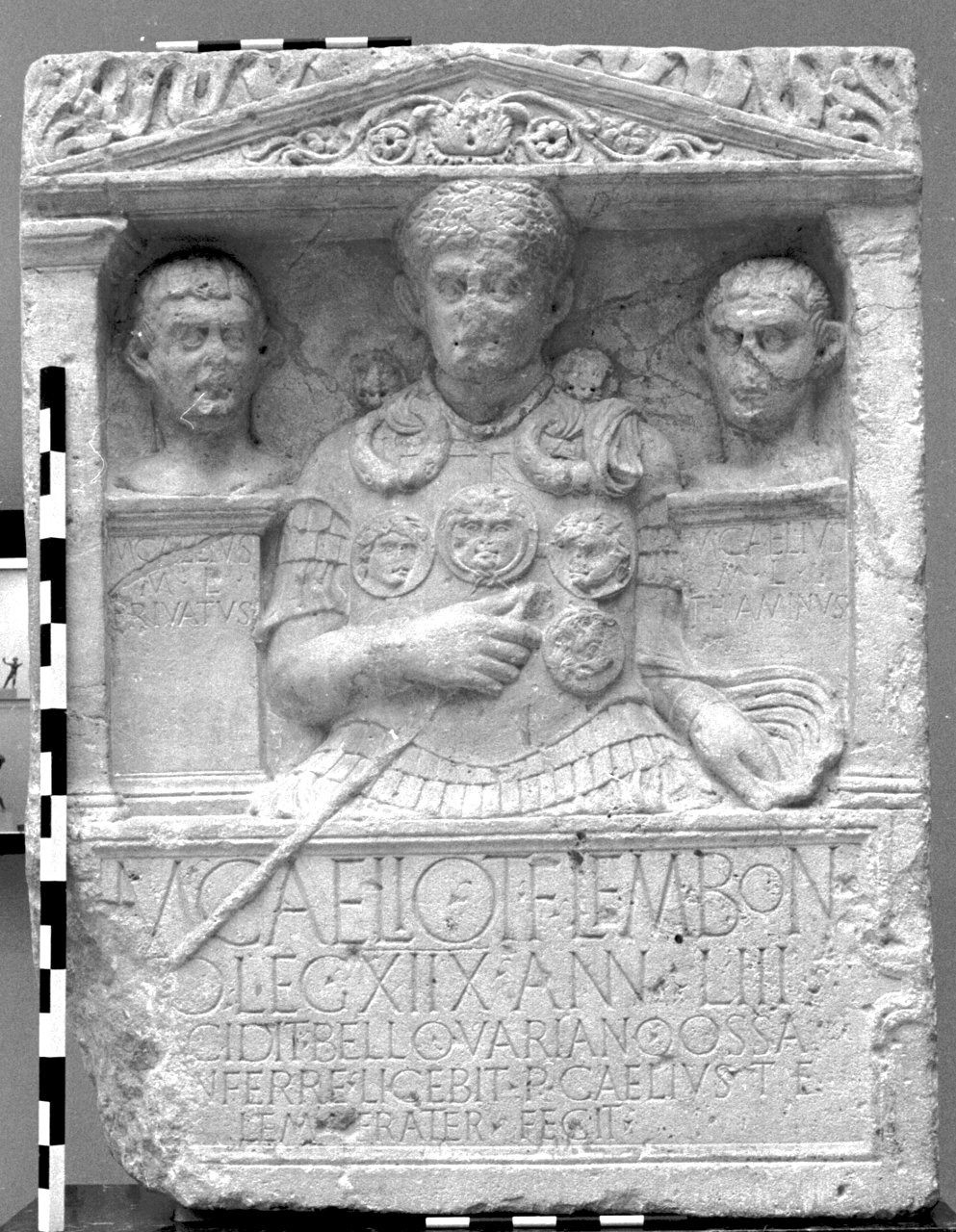 Tombstone of Marcus Caelius, centurion of the Eighteenth Legion, killed in the Varian war of 9 CE. LVR-LandesMuseum, Bonn. Decorations appear on his chest; the appointment of primus pilus should not be inferred from ornament alone.
Armour, Decorations and Belt
Scale armour was chosen because it is clearly visible on the relief of Quintus Sertorius Festus. Well-preserved complete lorica squamata examples are rare, so the form was checked through images, while material and attachment were checked through individual scales and published fragments.
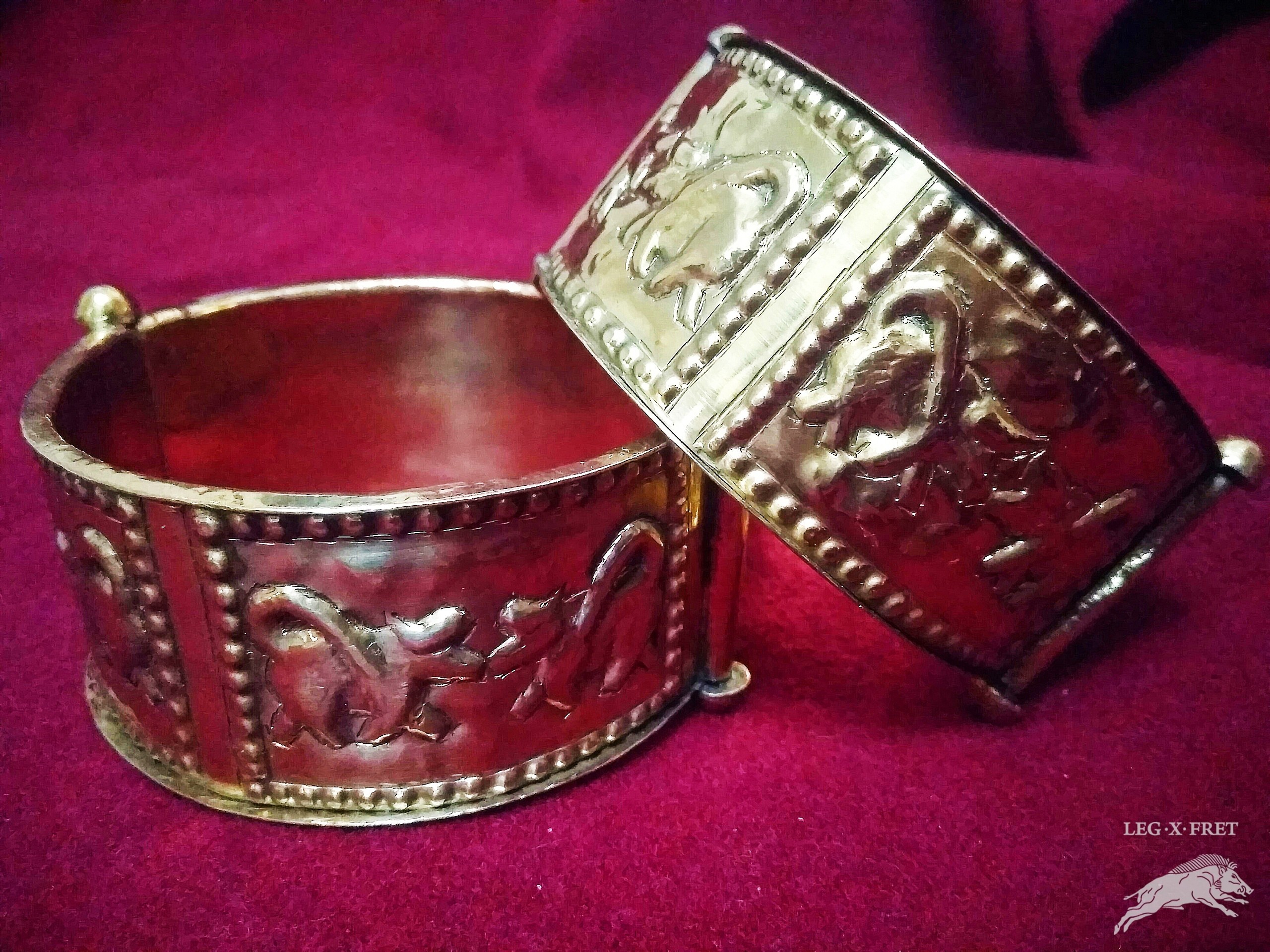
The decoration set includes nine phalerae and two armillae. No archaeological set exactly repeats the relief, so the layout follows the image, while the technique follows known repousse finds. The belt was selected as a wider officer version from related tombstones.
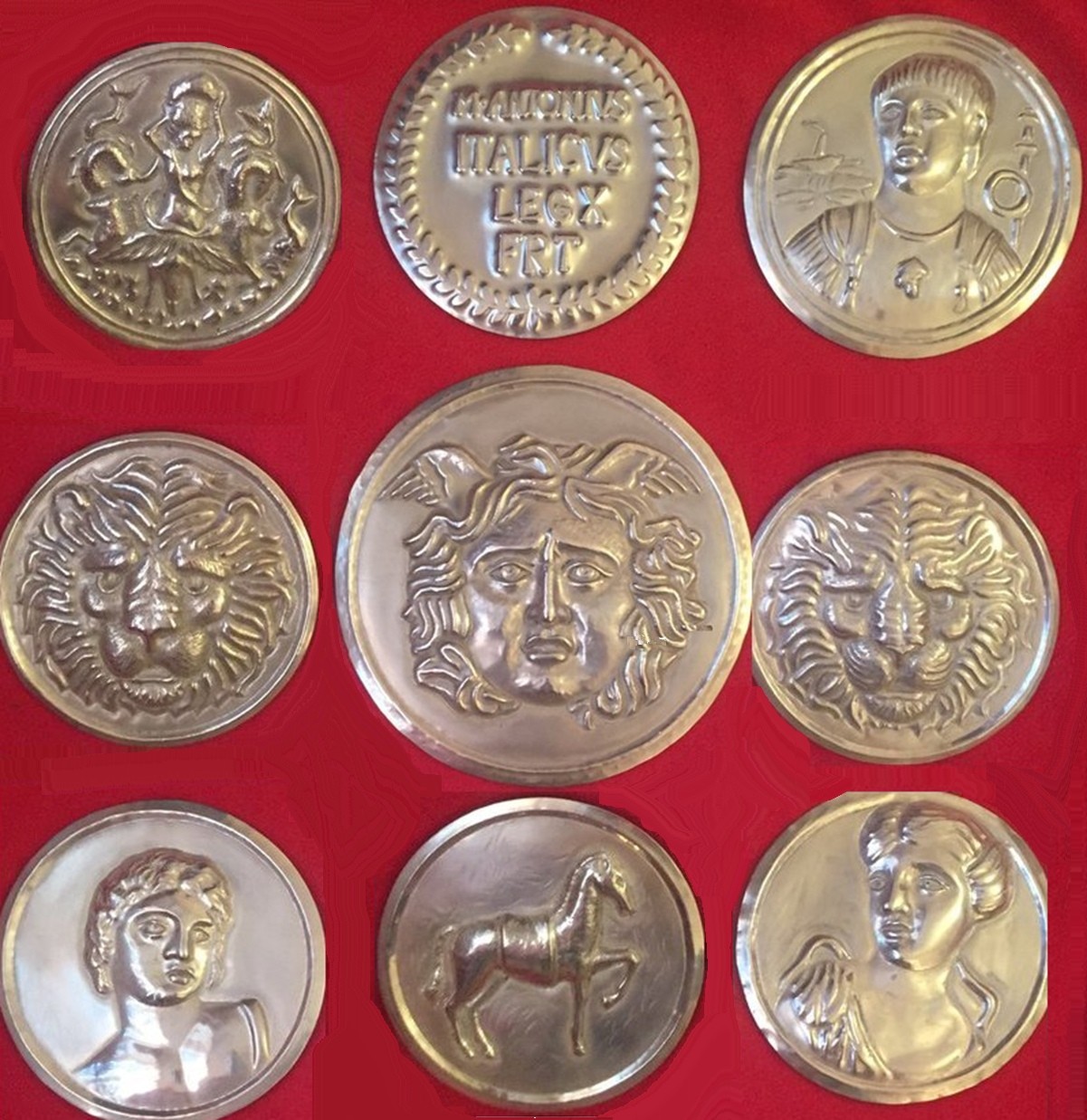 Phalerae and armillae in the reconstructed decoration set.
Weapons and Command Attributes
The gladius was chosen as a Mainz type, using the Vindonissa find as reference. The pugio was reconstructed as an officer element with richly decorated scabbard: a Carnuntum parallel was used for the scabbard, and a close type find for the blade. A helmet with transverse crest was added for the combat version, although it is not present on the main relief.
The vitis is one of the most recognizable symbols of the centurion. In reconstruction it is not a decorative stick, but a sign of authority and disciplinary function. Form and size were adjusted from reliefs, and practical use showed that its strength cannot be treated as a mere convention.
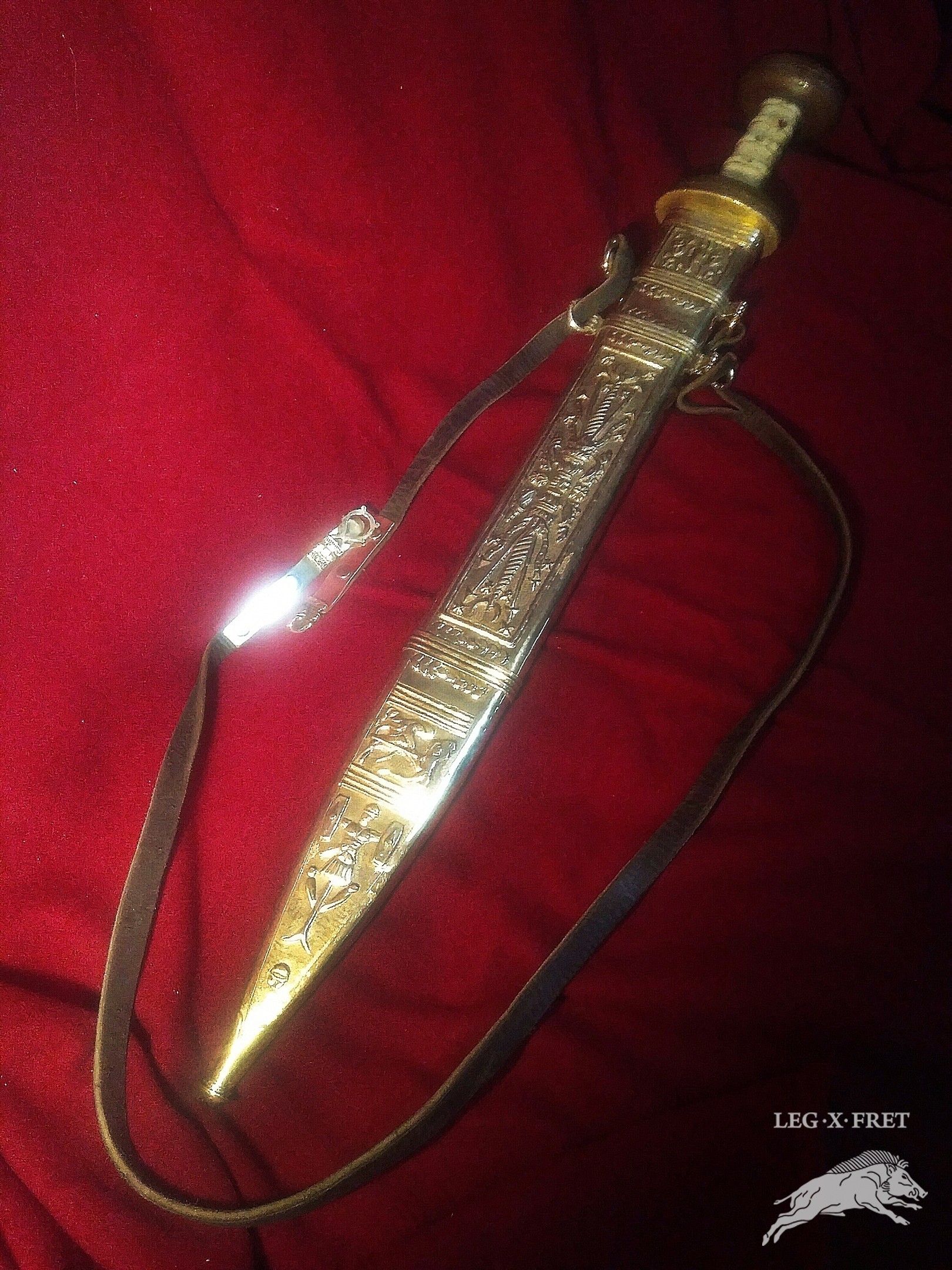 Pugio and sources for the officer's kit.
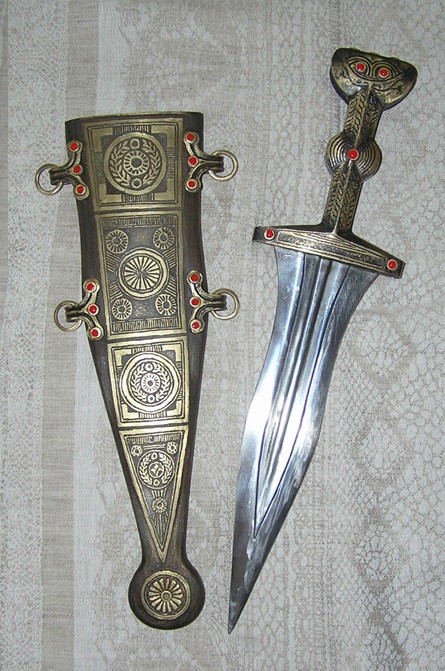 Helmet with transverse crest for the combat version of the kit.
 Vites as a symbol of centurion authority.
Clothing and Subarmalis
The subarmalis was reconstructed according to the pteruges on the relief: one row, stiff form, shoulder length to above the elbows and lower length above the knees. Extra rows were removed, fringe and hand-stitching remade, and the pteruges reinforced with layered leather.
The textile part of the kit - tunic, focale, cloak, trousers and sash - was remade from homespun plain-weave cloth. For an officer reconstruction this is not a background, but the basis of fit: armour and decorations look convincing only when they sit correctly on textile and subarmalis.
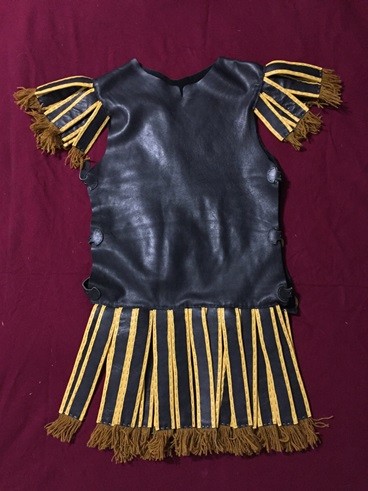 Textile elements of the primipilus kit.
Practical Conclusions
The primipilus kit shows why officer reconstruction cannot be assembled as a catalogue of attractive objects. Each item must be tied to the main relief, a close parallel or an archaeological find. Otherwise a status image quickly becomes an arbitrary display case.
The kit developed over several years and involved remaking elements. This is a normal part of reconstruction: new sources, better textile, more accurate pteruges length or improved repousse technique can change an already finished item. It is important to record not only the result, but the reason for change.
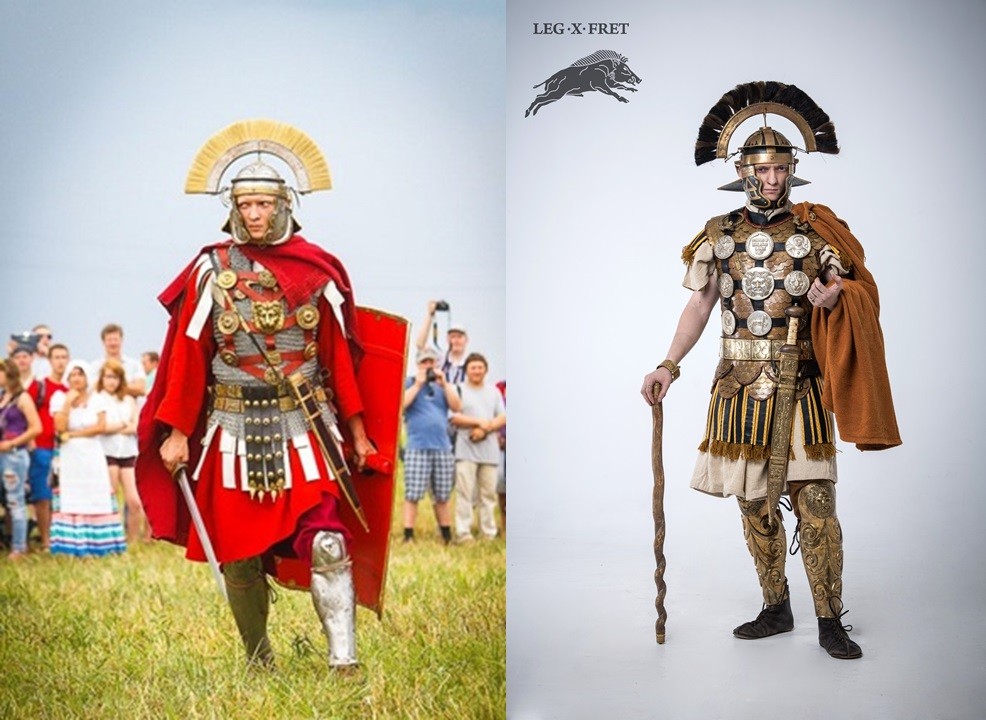 Comparison of the early and later versions of the primipilus reconstruction.
Related Topics
- Practical Reconstruction Experience
- Centurion
- Lorica Squamata
- Phalerae
- Armillae
- Vitis
- Gladius
- Pugio
- Subarmalis
Literature and sources
- Bishop, M.C., Coulston, J.C. Roman Military Equipment from the Punic Wars to the Fall of Rome. London, 1993.
- Curle J. A Roman Frontier Post and its People. The Fort at Newstead. Glasgow, 1911.
- Hofmann A. Römische Militärgrabsteine der Donauländer. Vienna, 1905.
- Maxfield V.A. The Military Decorations of the Roman Army. London, 1981.
- Robinson H.R. The Armour of Imperial Rome. London, 1975.


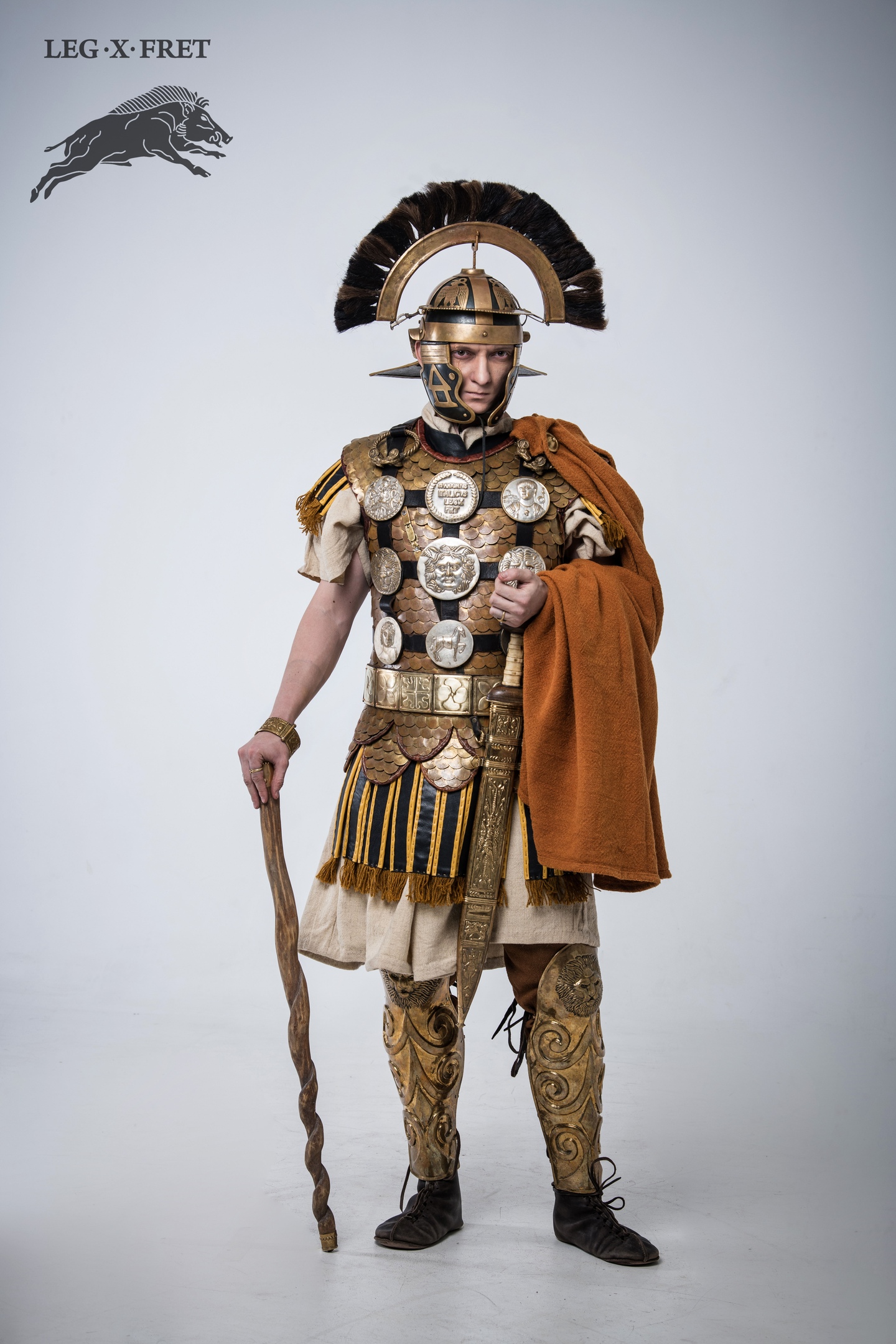 Primipil wearing a helmet
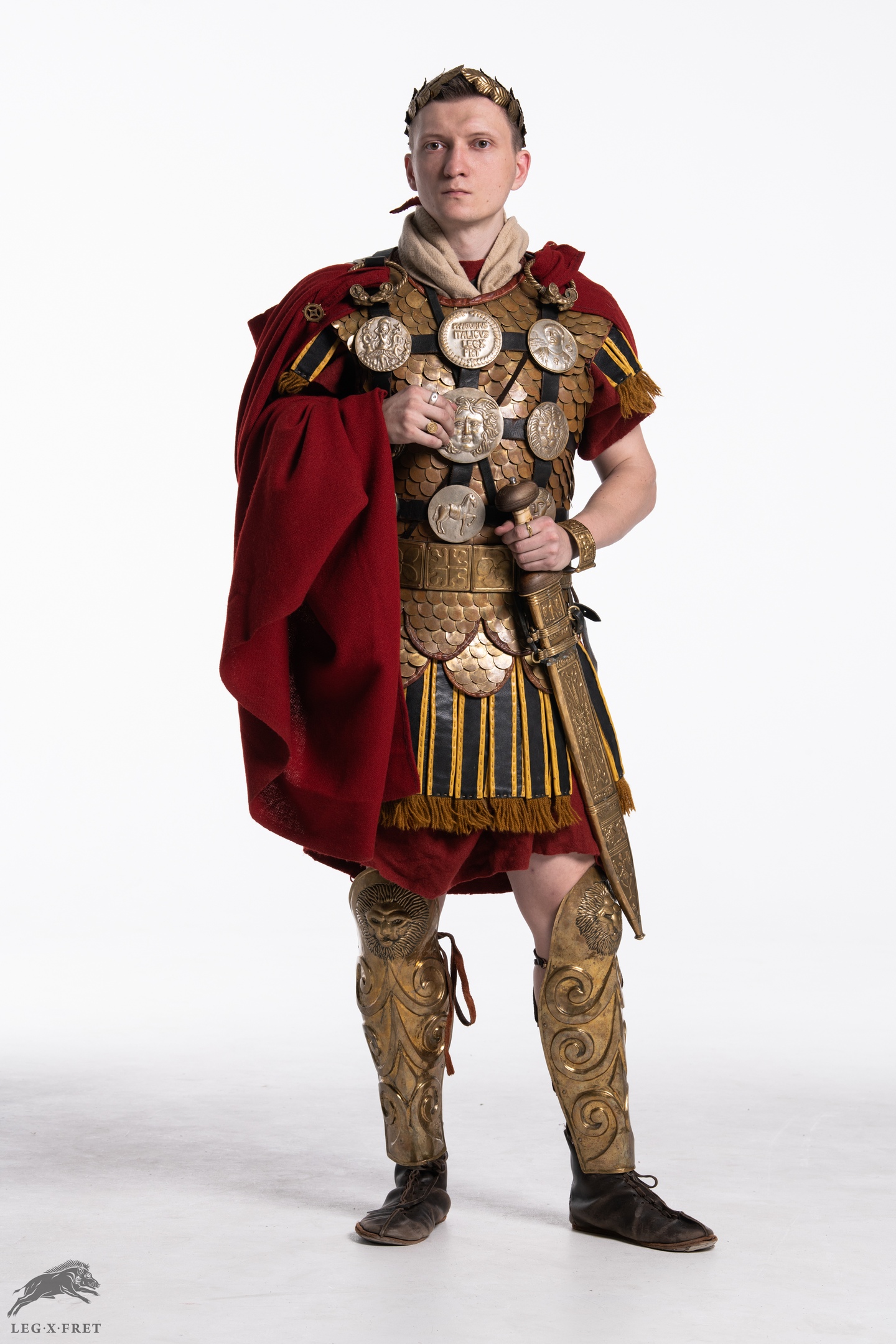 Primipil in a wreath
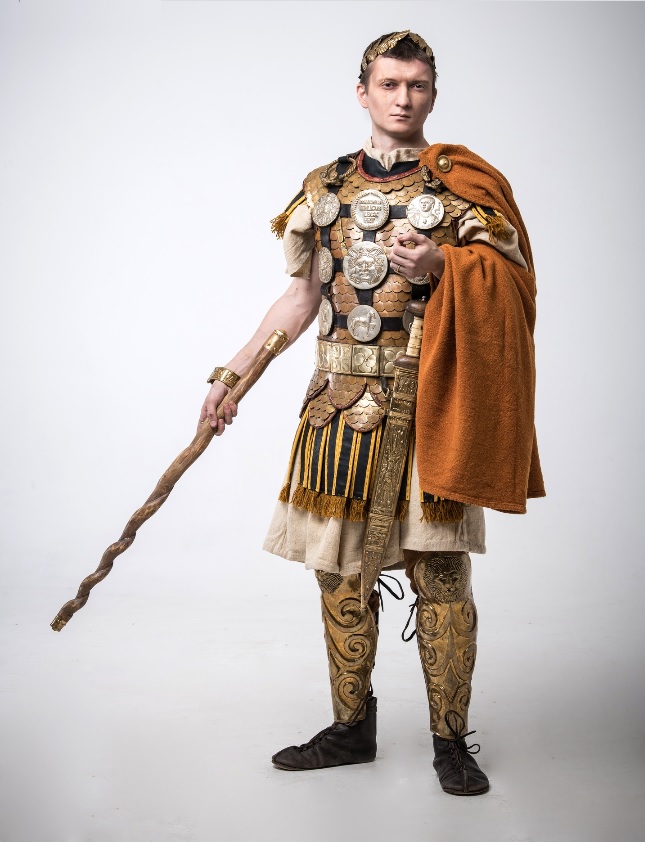 Primipil in a wreath
Interested in Ancient Rome beyond reading? Join Legio X Fretensis or explore our reenactment directions.


