Reconstruction of Augustus of Prima Porta
Reconstructing the First Emperor of Rome
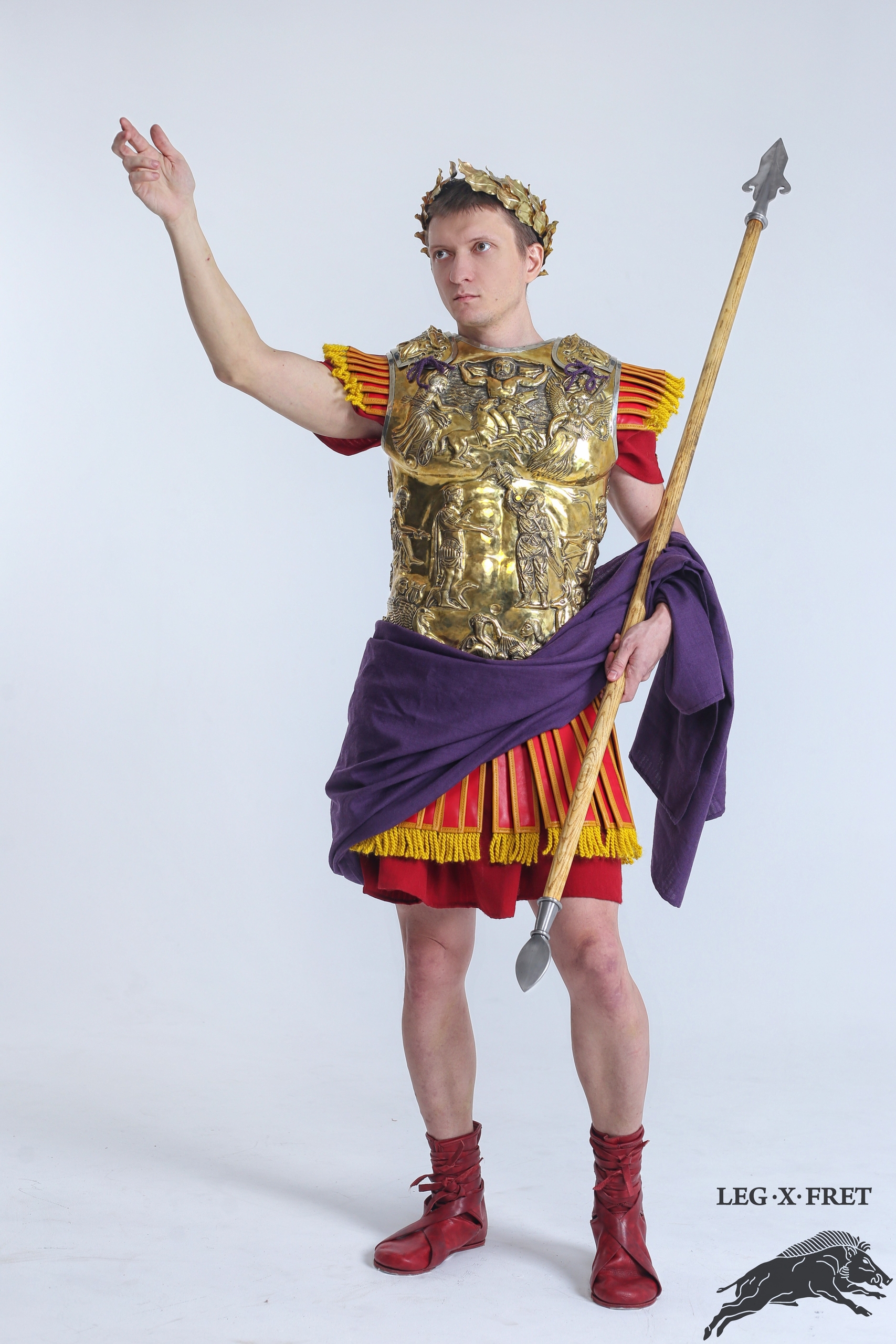
The Augustus of Prima Porta is one of the most recognisable images of ancient Rome. An extraordinarily effective work of imperial propaganda in its own time, it still inspires admiration today. It also inspired the head of Legio X Fretensis to attempt the reconstruction of this complex and iconic appearance.
That was the beginning of the club’s project to recreate the first Roman emperor, Augustus.
In the club’s account, this was Russia’s first reconstruction of Augustus.
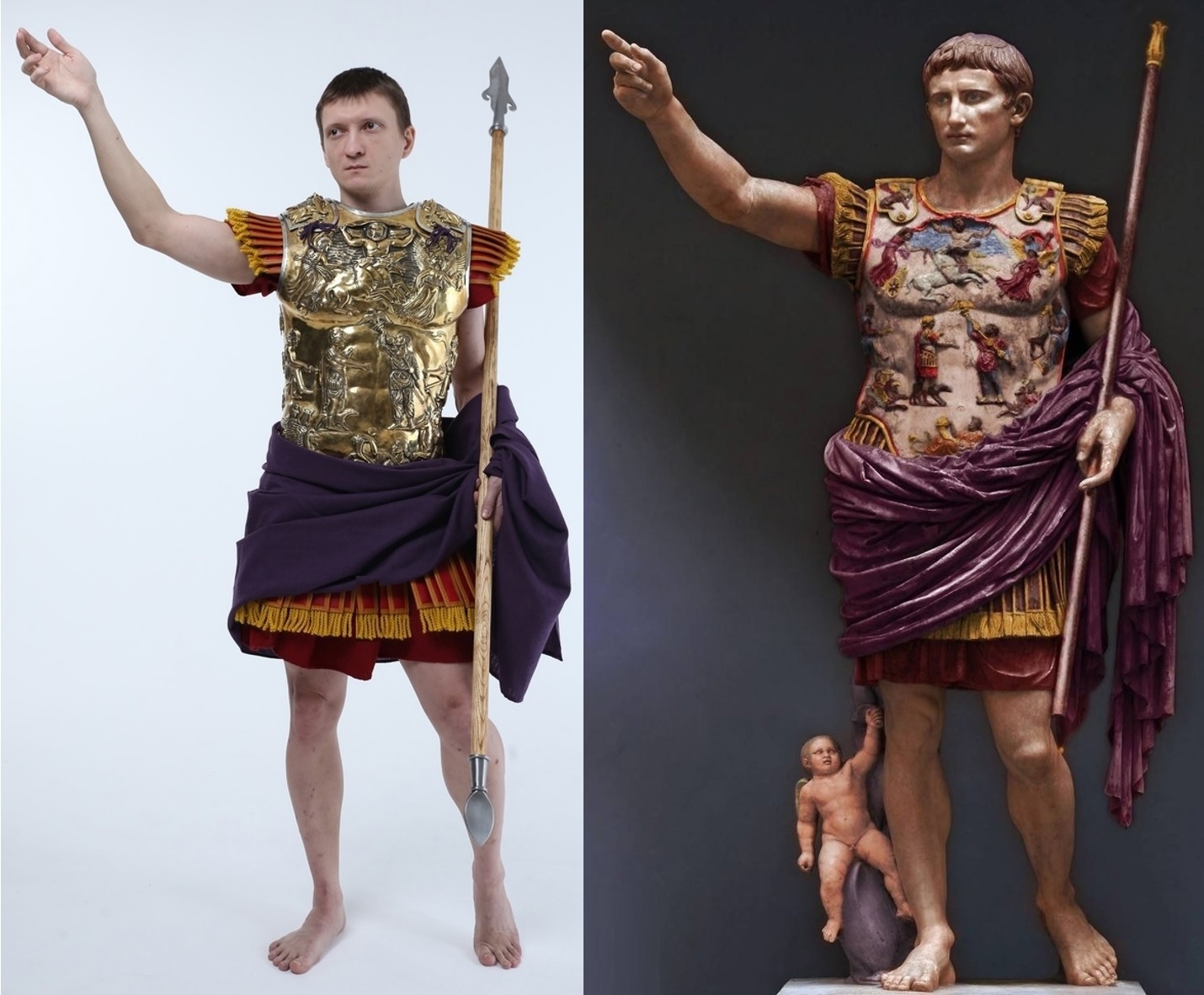
The aim was to follow the original as closely as possible, drawing on the best available research and craftsmanship. Recreating Rome’s foremost citizen was an ambitious undertaking, and a substantial budget was planned from the outset. Work began several years before completion. The central element, the muscle cuirass or lorica musculata, took the longest to make.
The armour was created by the craftsman known as Don Charisma. Only after it was finished did work begin on the other parts of the outfit, since they needed to fit both the cuirass and its wearer. With the ensemble complete, it is time to describe the project in detail.
The principal reference is the marble Augustus of Prima Porta, Vatican Museums, inventory no. 2290, displayed in the New Wing. The Vatican dates the surviving statue to the early first century CE; its breastplate refers to the return of Roman standards by Parthia in 20 BCE.
For the emperor’s life, see Octavian Augustus.
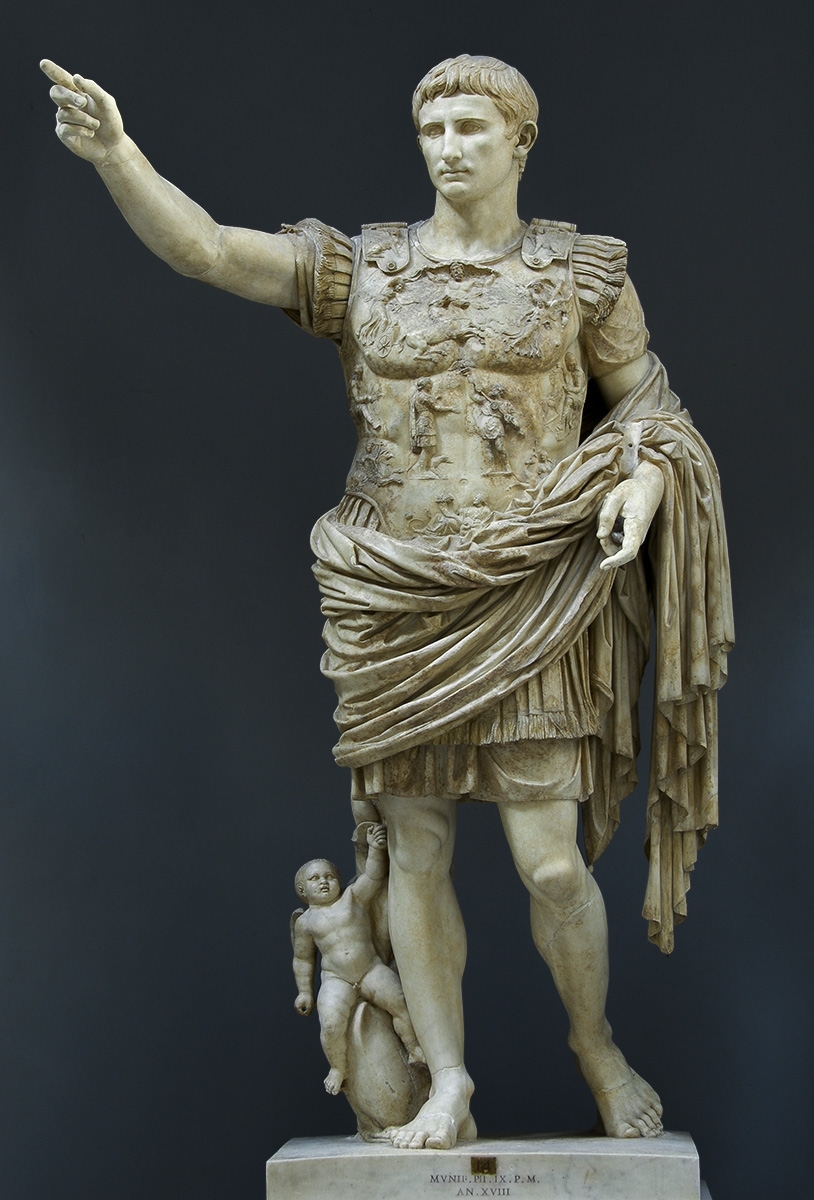 Augustus of Prima Porta, Tiberian period, early 1st century CE; Parian marble with traces of polychromy, height 217 cm. The marble statue repeats a bronze image created shortly after 20 BCE; found at Livia's villa near Prima Porta. Vatican Museums, inv. MV.2290.0.0.
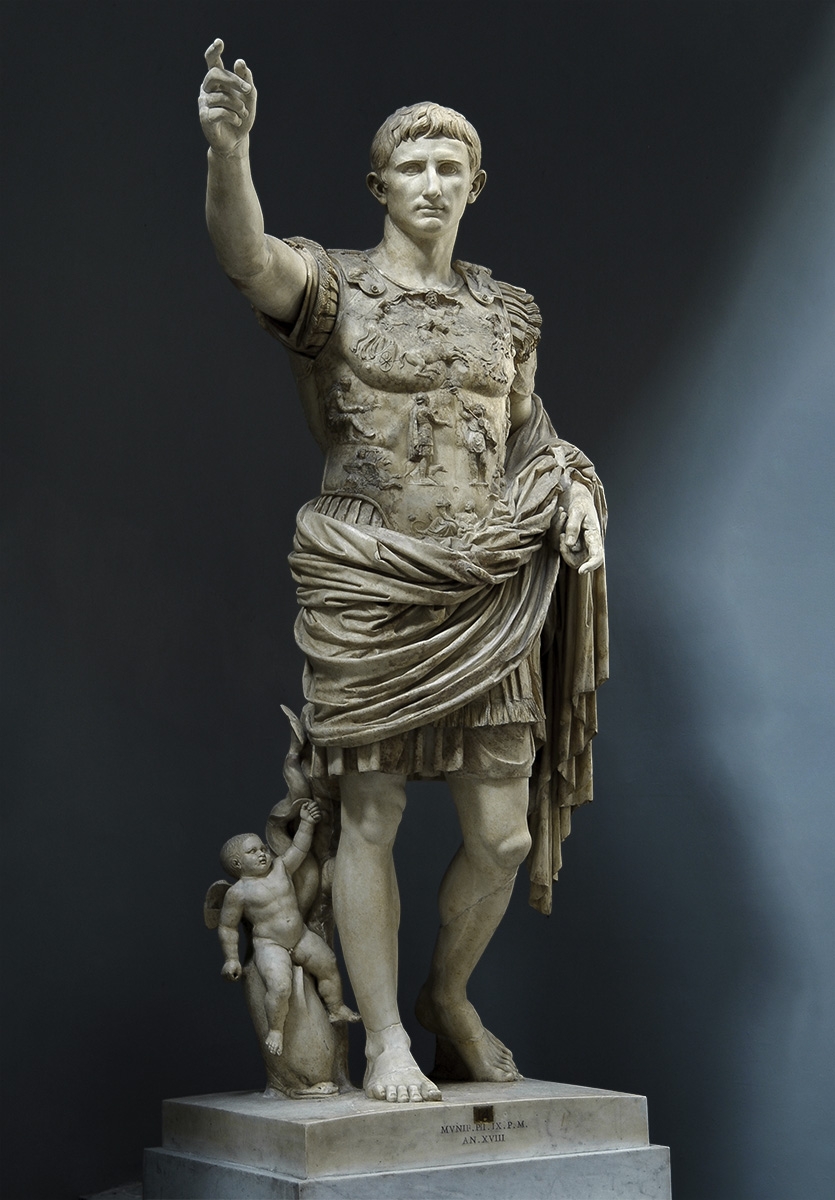 Statue of Emperor Gaius Julius Caesar Augustus from Prima Porta. Marble. Around 20-17 BC.
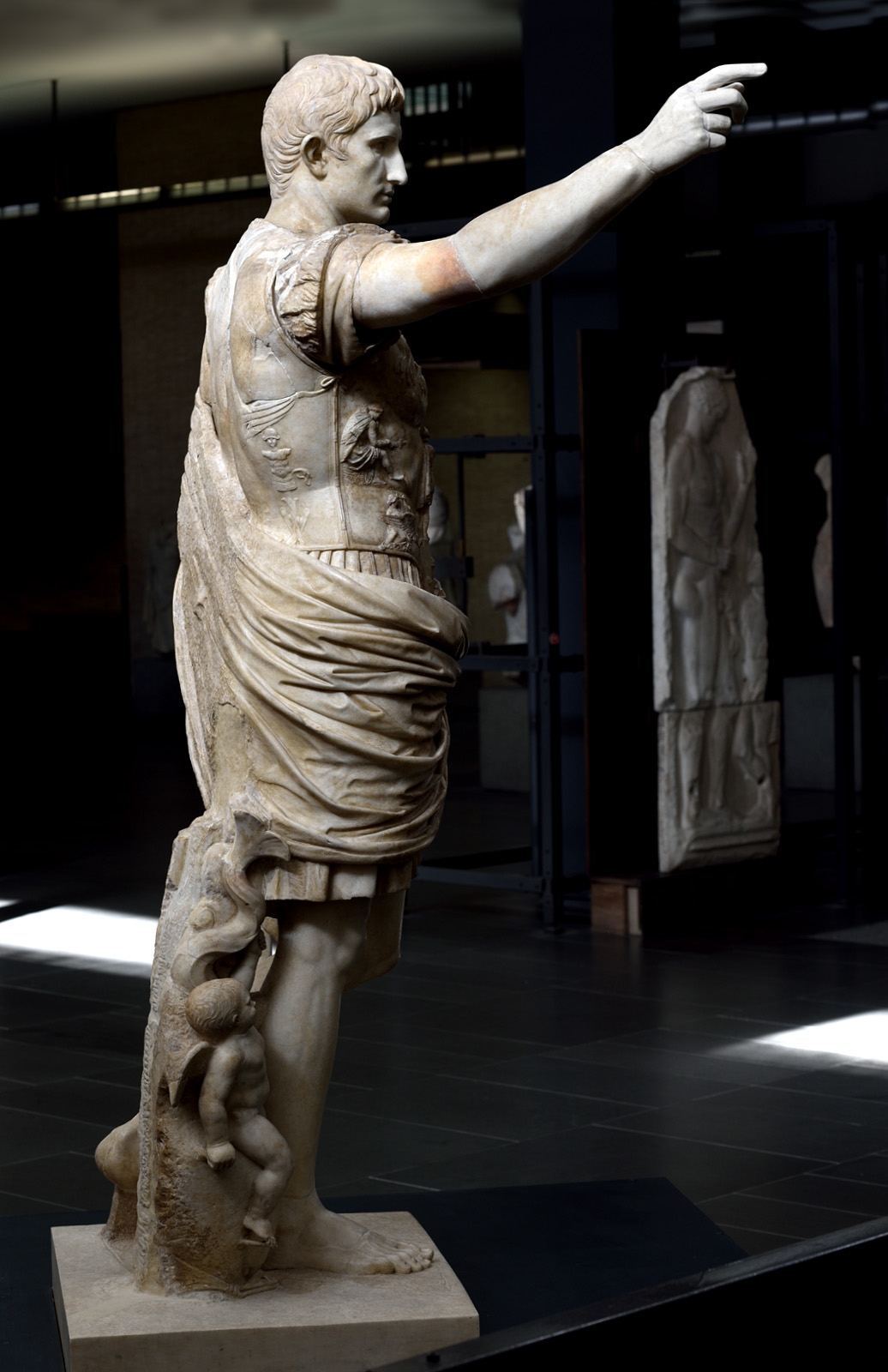 Statue of Emperor Gaius Julius Caesar Augustus from Prima Porta. Marble. Around 20-17 BC.
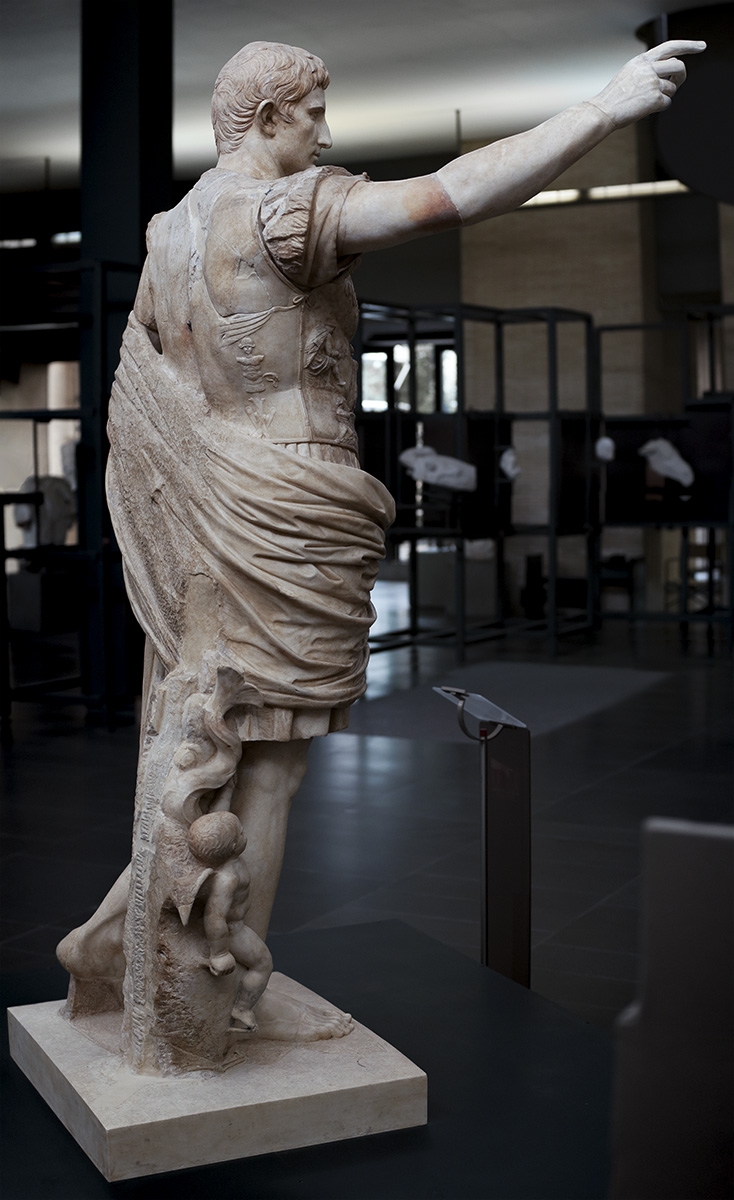 Statue of Emperor Gaius Julius Caesar Augustus from Prima Porta. Marble. Around 20-17 BC.
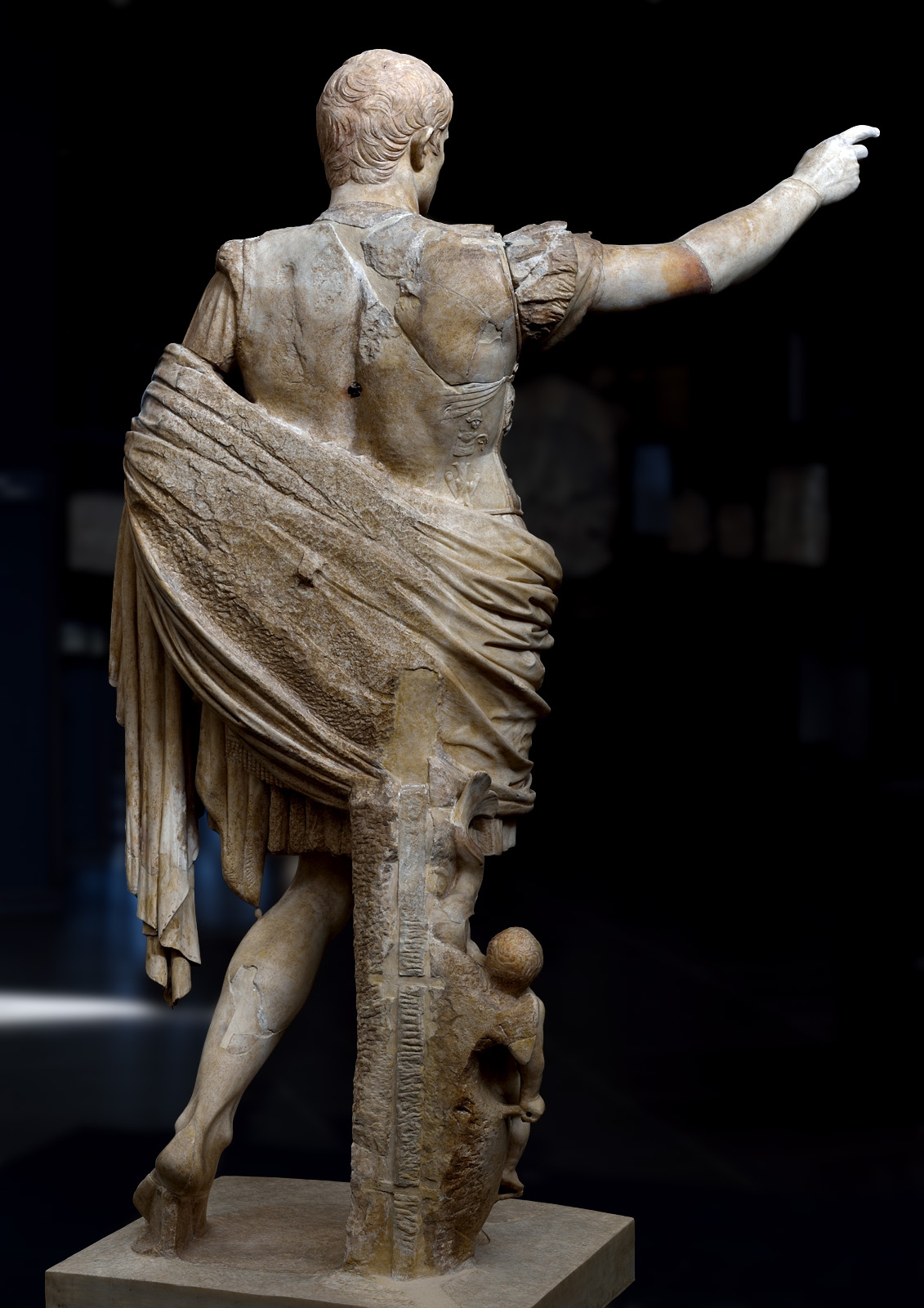 Statue of Emperor Gaius Julius Caesar Augustus from Prima Porta. Marble. Around 20-17 BC.
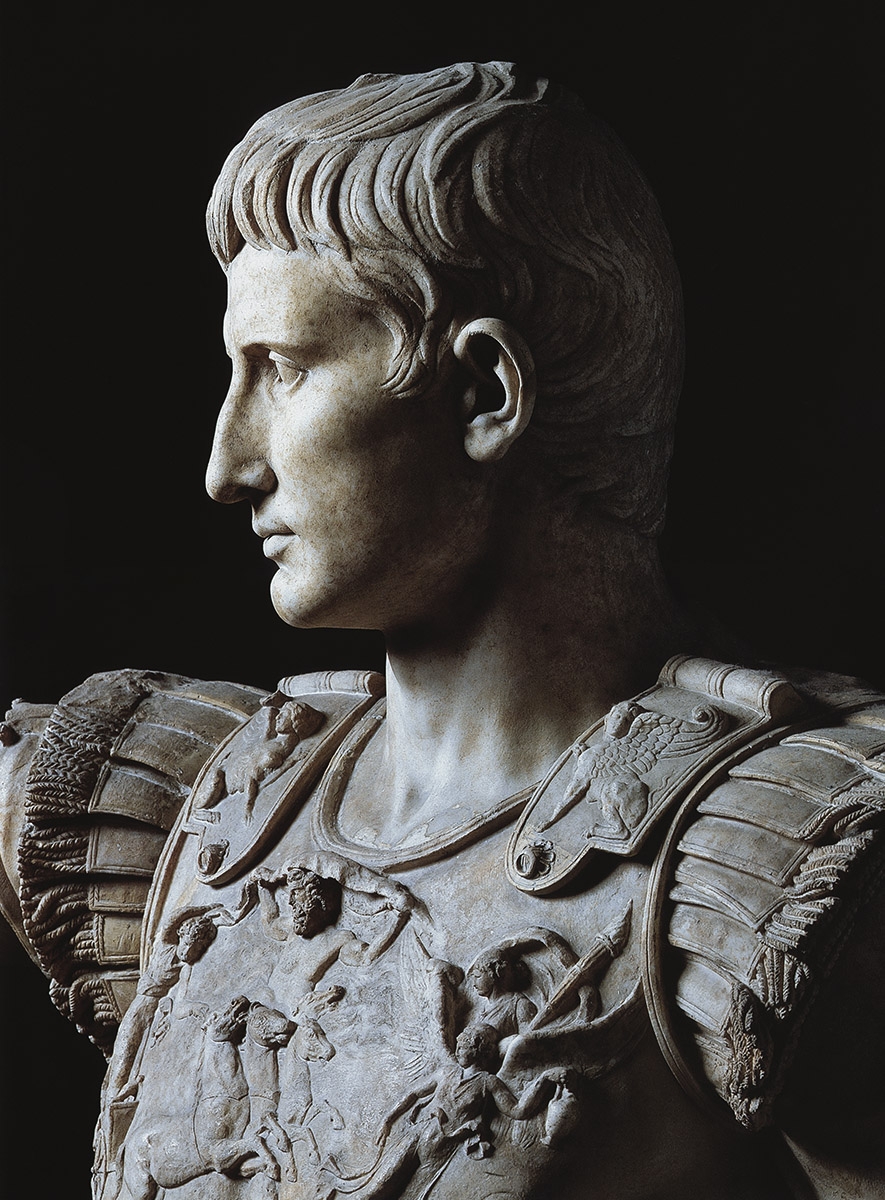 Statue of Emperor Gaius Julius Caesar Augustus from Prima Porta. Marble. Around 20-17 BC.
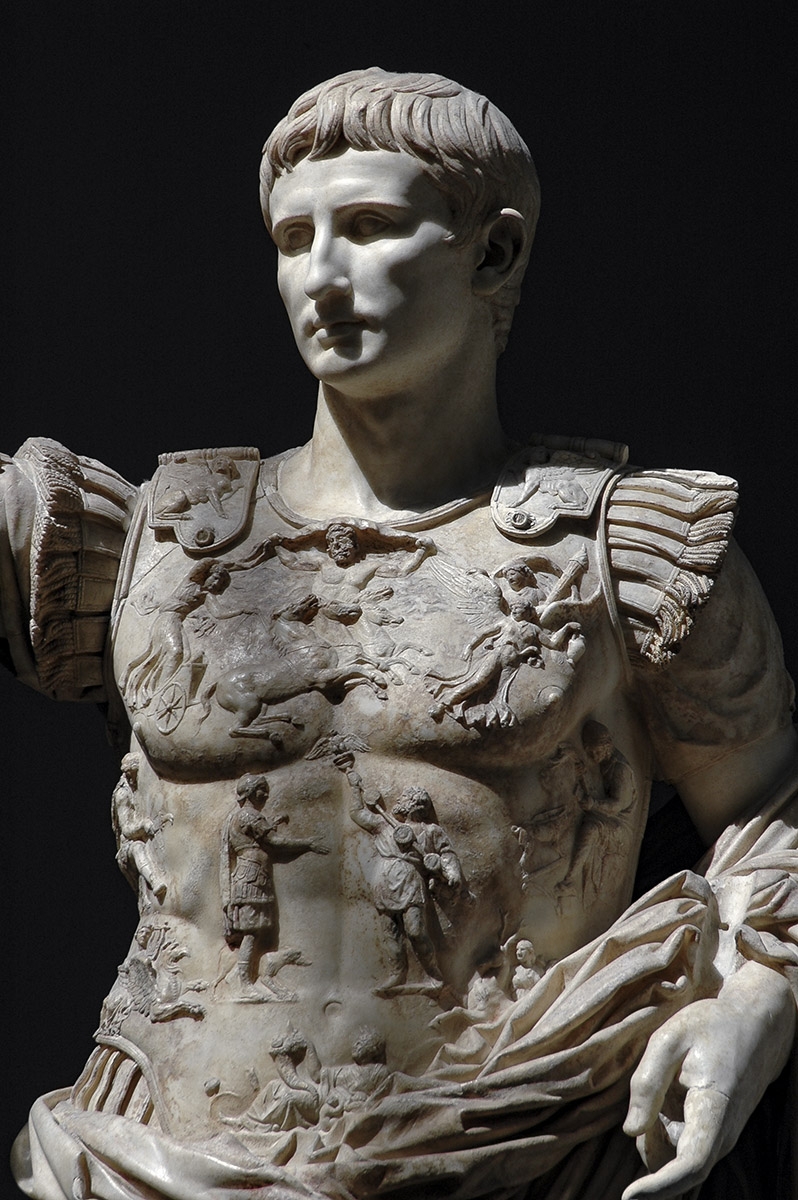 Statue of Emperor Gaius Julius Caesar Augustus from Prima Porta. Marble. Around 20-17 BC.
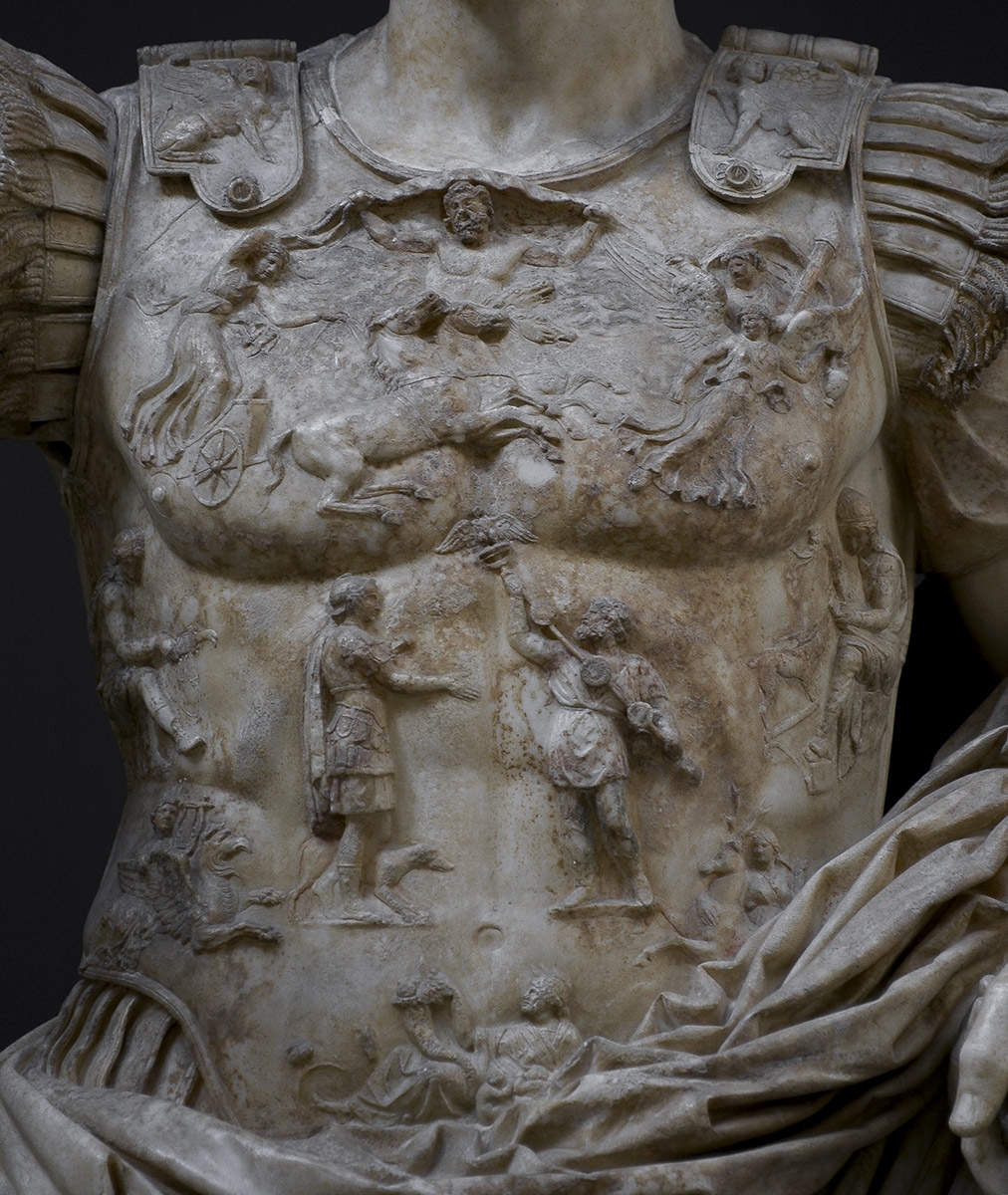 Statue of Emperor Gaius Julius Caesar Augustus from Prima Porta. Marble. Around 20-17 BC.
A great deal of time went into studying the statue’s intricate details. Augustus is presented in an idealised, divine manner rather than as a straightforward record of a practical military outfit. Some equipment is therefore absent. Other elements have been lost; the project interprets the surviving traces at the left hand as evidence for a spear.
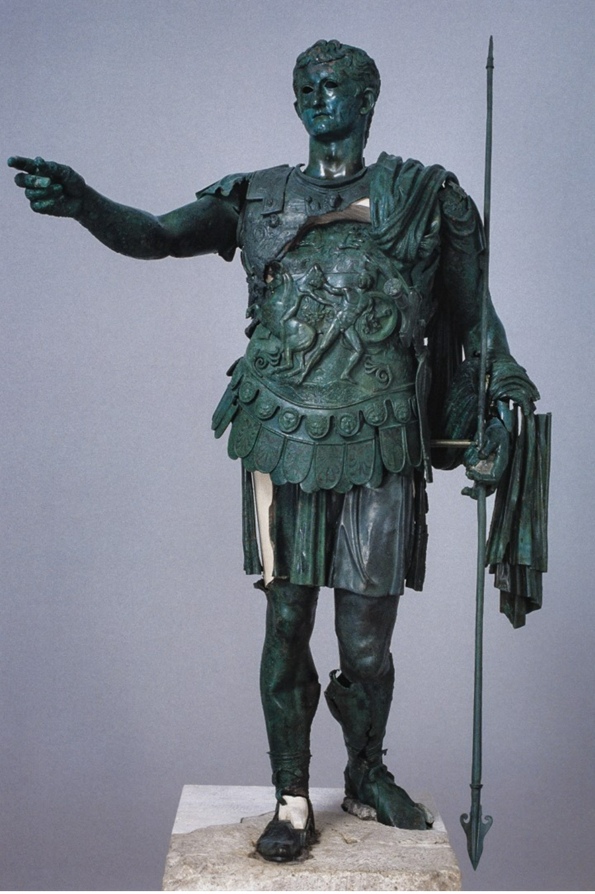 OK. 20 AD e. High 115 cm. Perugia, National Archaeological Museum of Umbria.
A statue of Germanicus was chosen as a supplementary reference because of its comparable date, style and elite military subject. Germanicus was both a senior commander and a member of the ruling dynasty. Although later than the model for the Prima Porta image, his representation belongs to the same broader tradition of imperial portraiture. It helped guide the reconstruction of elements missing from the principal statue.
Equipment based on the main reference:
1. Muscle cuirass (lorica musculata) 2. Leather under-armour garment (subarmalis) 3. Military cloak (paludamentum) 4. Tunic (tunica)
Equipment based on supplementary references:
5. Shoes (calcei) 6. Spear (hasta) 7. Civic crown (corona civica)
Each element is discussed below.
1. Muscle Cuirass (Lorica Musculata)
The cuirass is made from brass approximately 1 mm thick, worked from sheet initially 1.2 mm thick. Its decoration required deep repoussé and chasing, demanding both technical control and considerable artistic skill.
A wearable reconstruction cannot reproduce a marble sculpture in every detail. The condition of the statue and the limitations of the available photographs complicated the work; there was no opportunity to photograph it in person. Repoussé is also an interpretative craft, so individual figures inevitably differ in some artistic details.
There were structural problems too. On a statue, a cuirass can simply be carved into the surface; real armour must open, fit and remain comfortable enough to wear. Surviving archaeological cuirasses helped guide these practical decisions. The result aims at the closest achievable correspondence while acknowledging the necessary compromises.
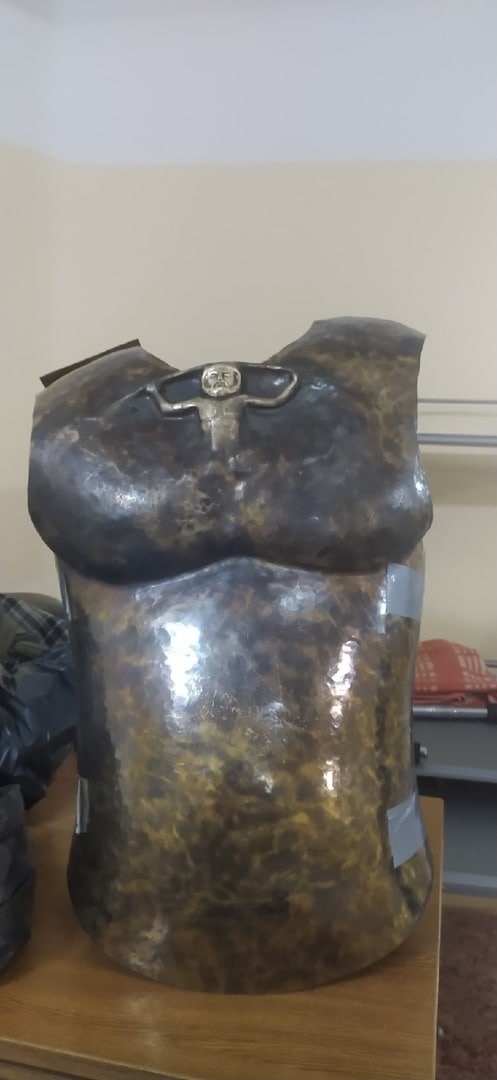 Manufacturing process Muscles
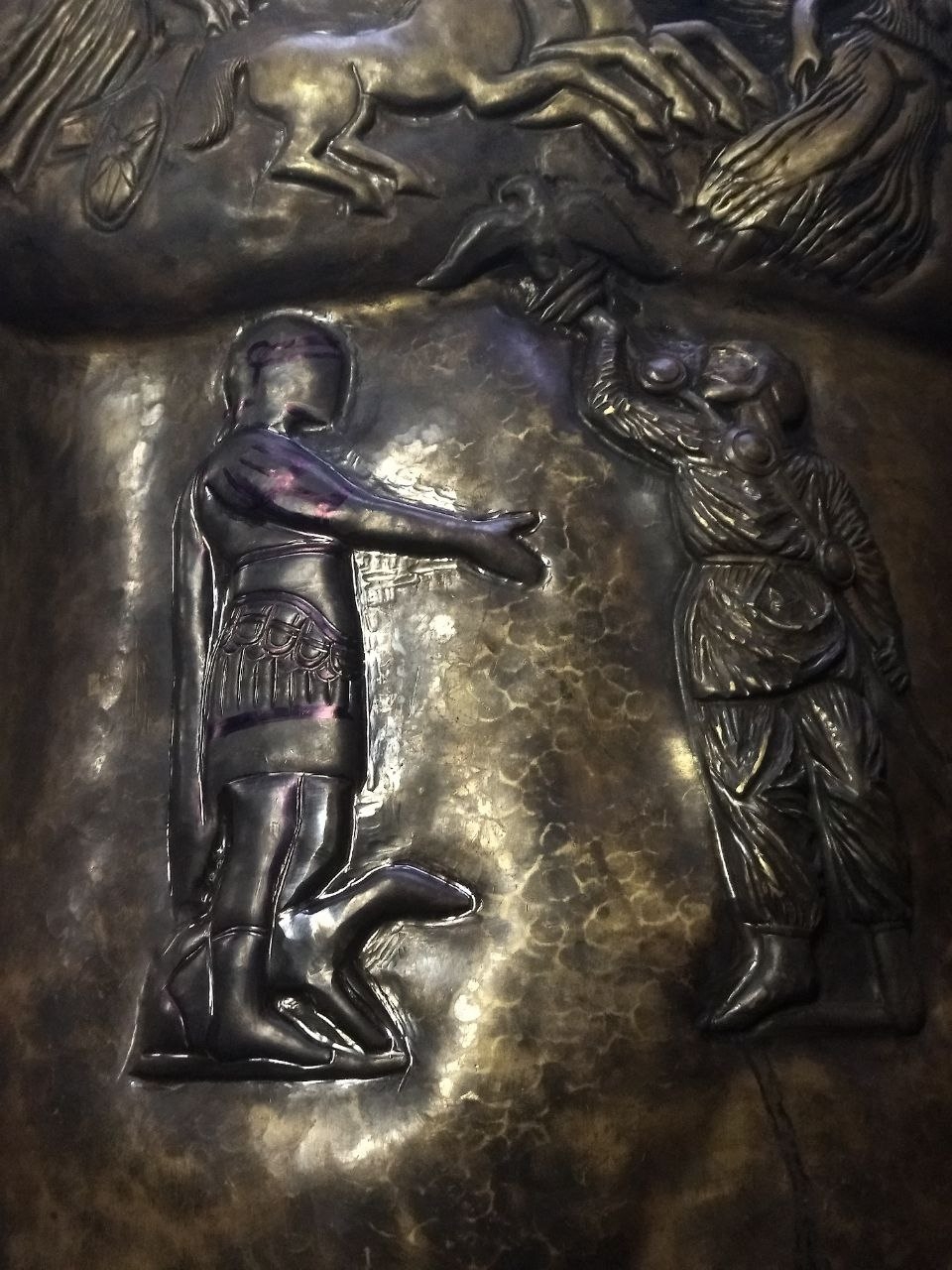 Manufacturing process Muscles
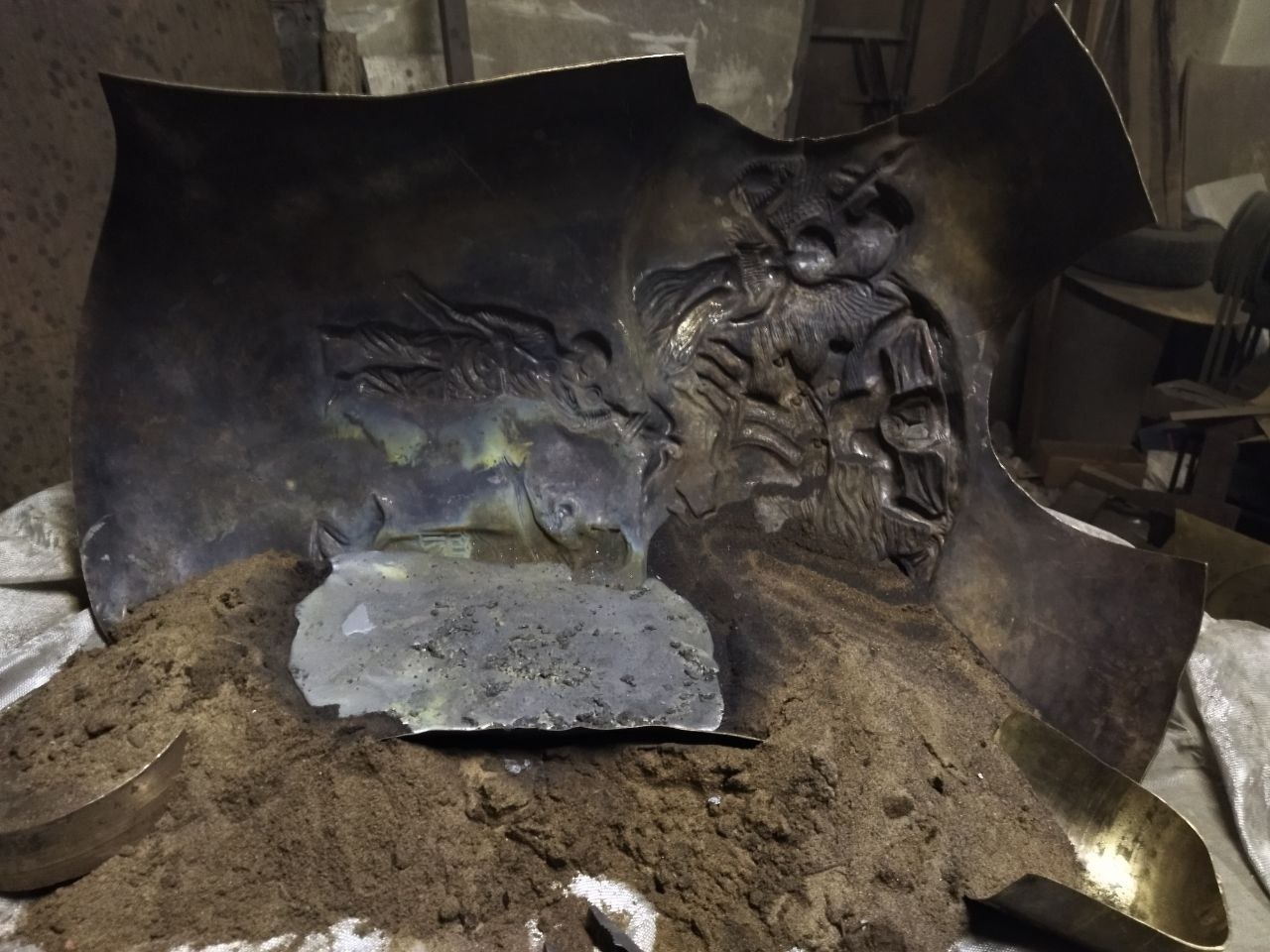 Manufacturing process Muscles
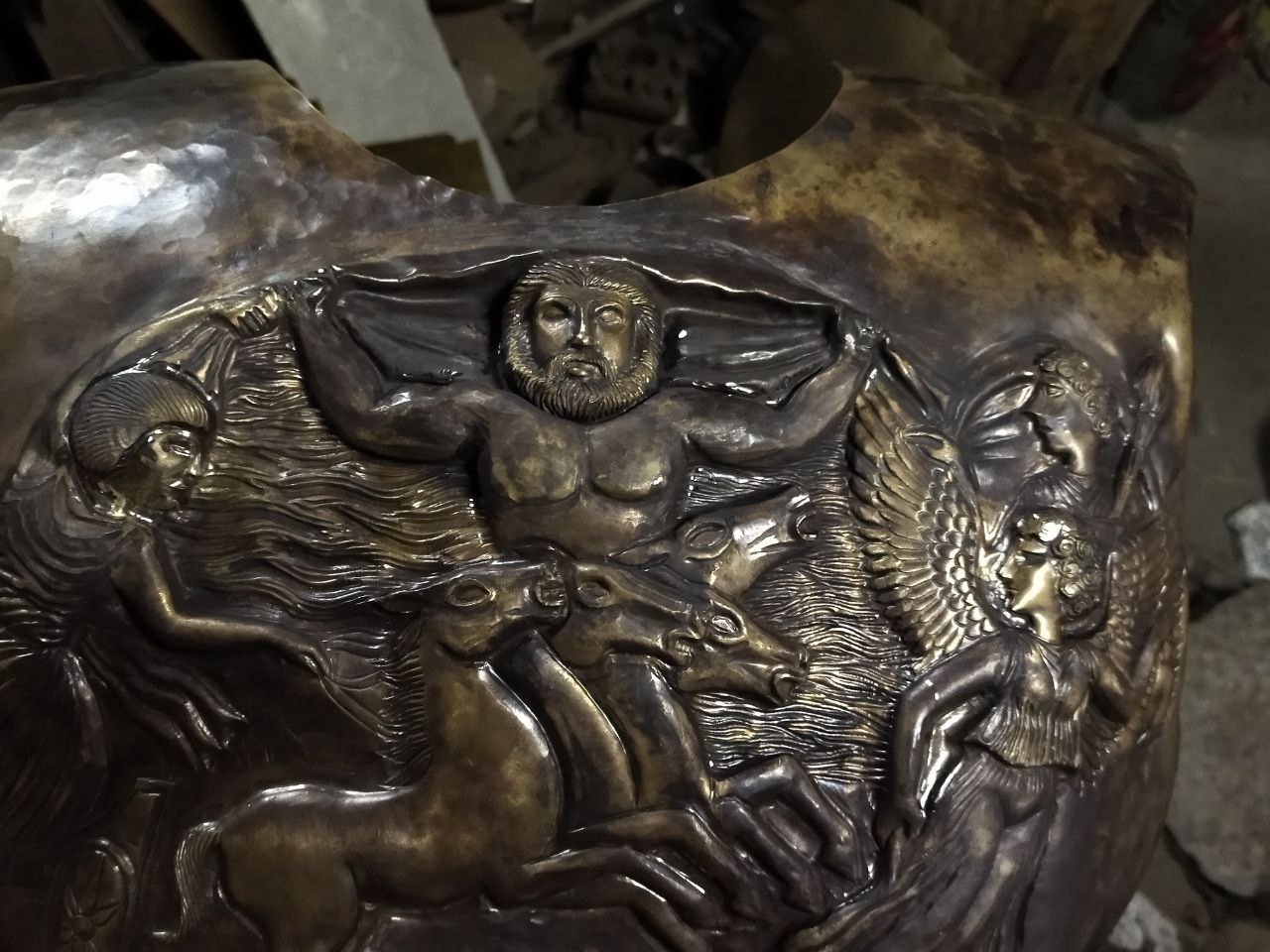 Manufacturing process Muscles
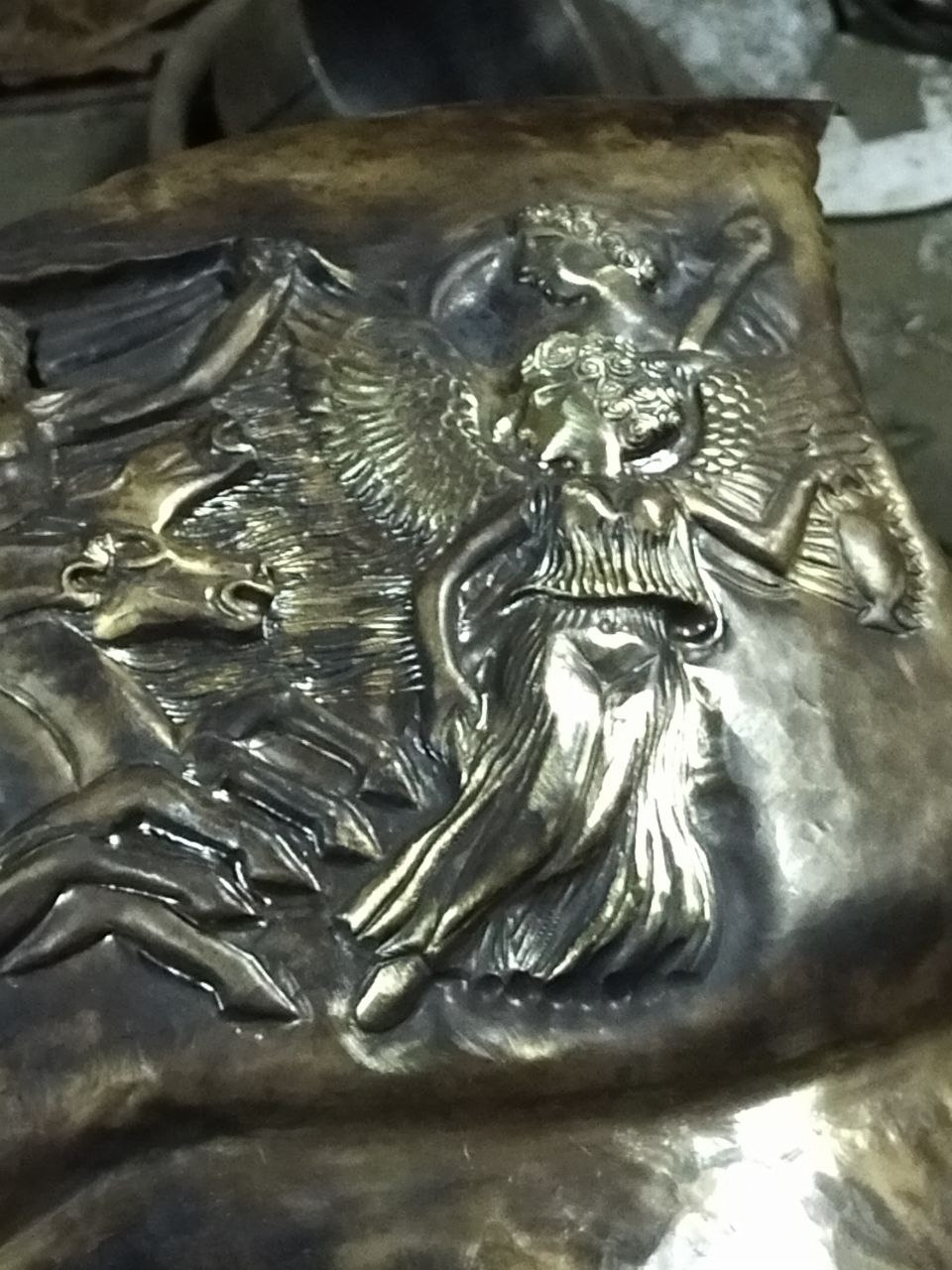 Manufacturing process Muscles
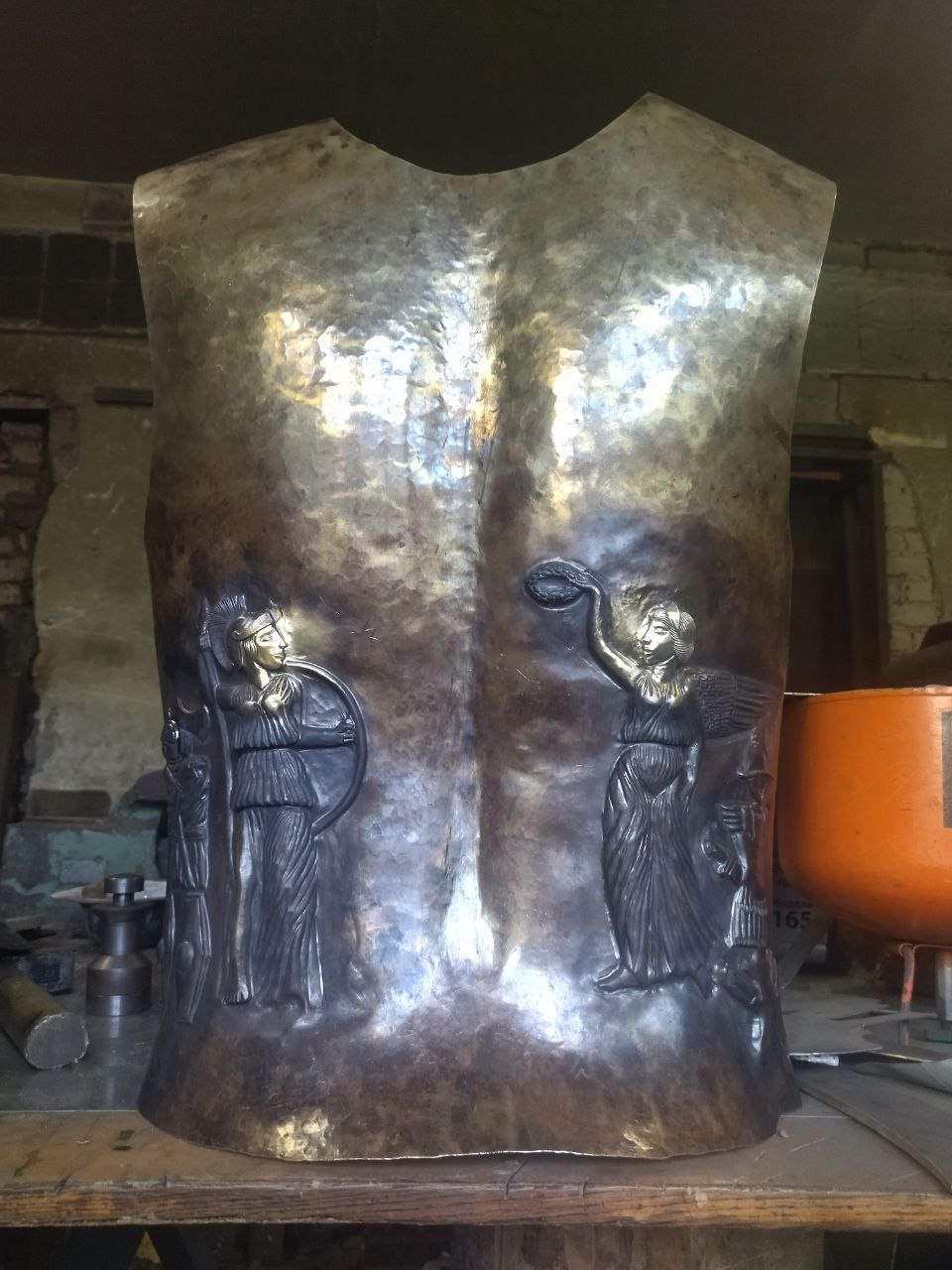 Manufacturing process Muscles
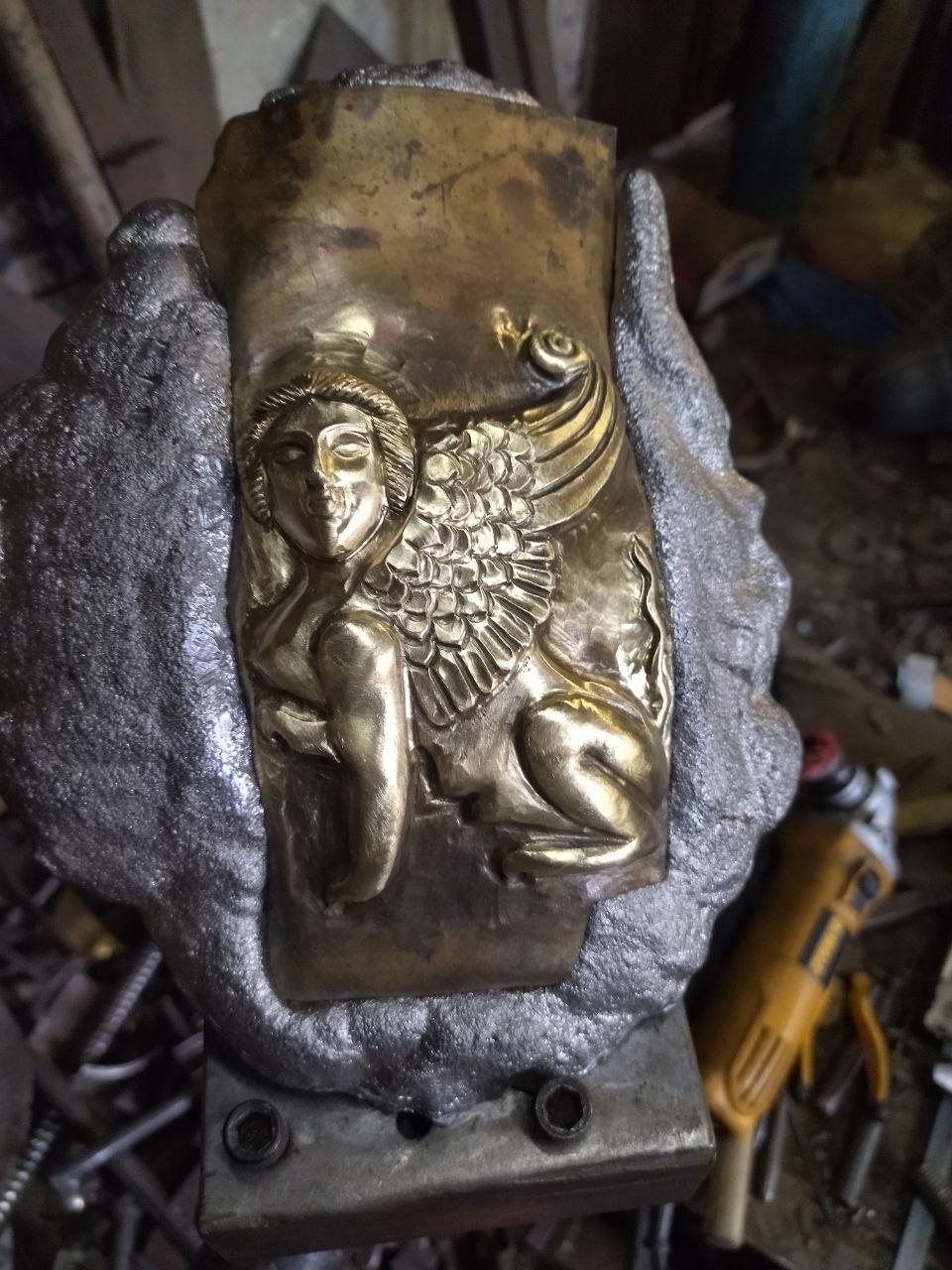 Manufacturing process Muscles
To work each figure, the cuirass was heated and filled with tin to support the metal during chasing. The process was repeated many times for individual elements. This required an immense amount of labour in addition to the artistic demands of modelling the figures.
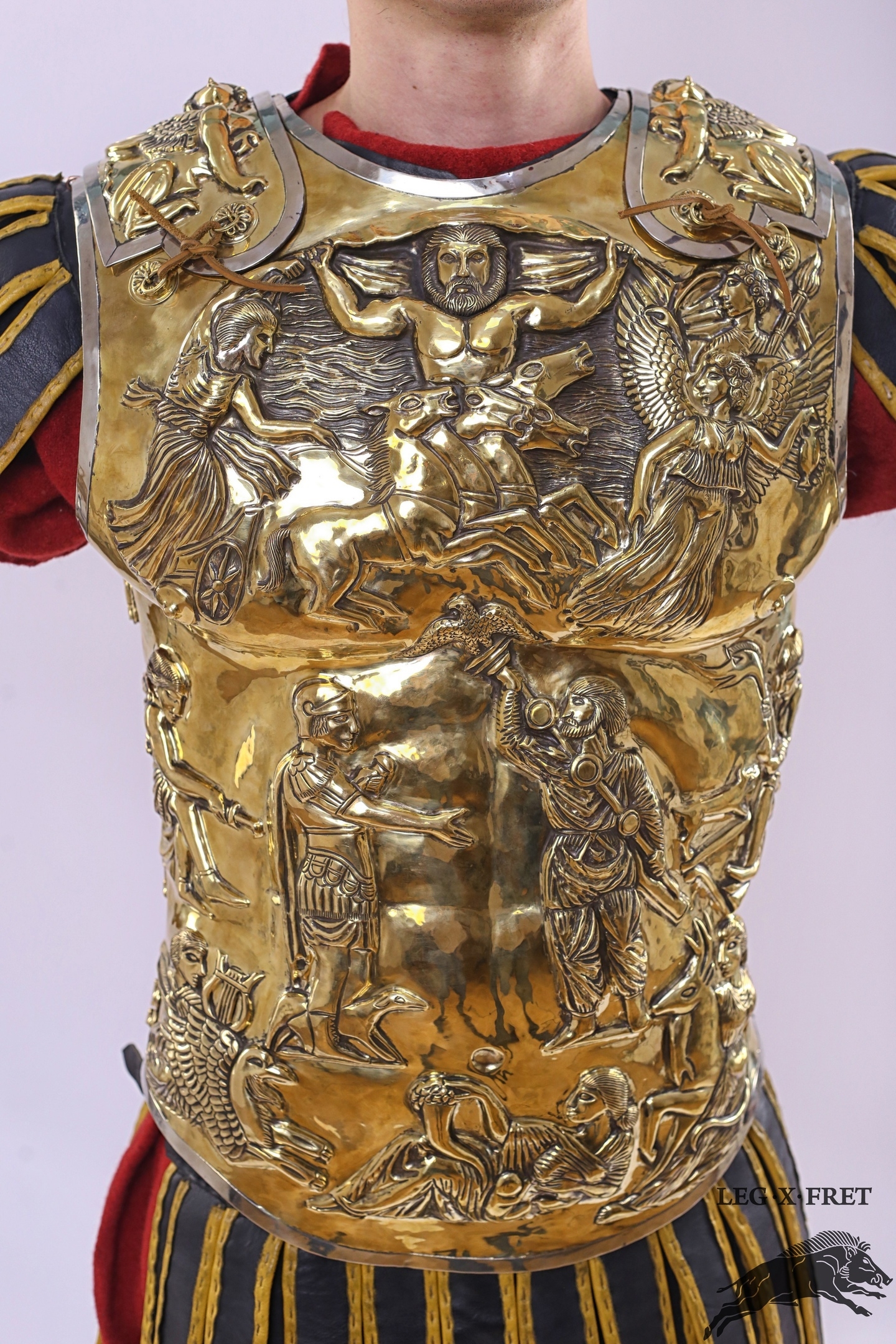 Imperial armor - lorica muscle
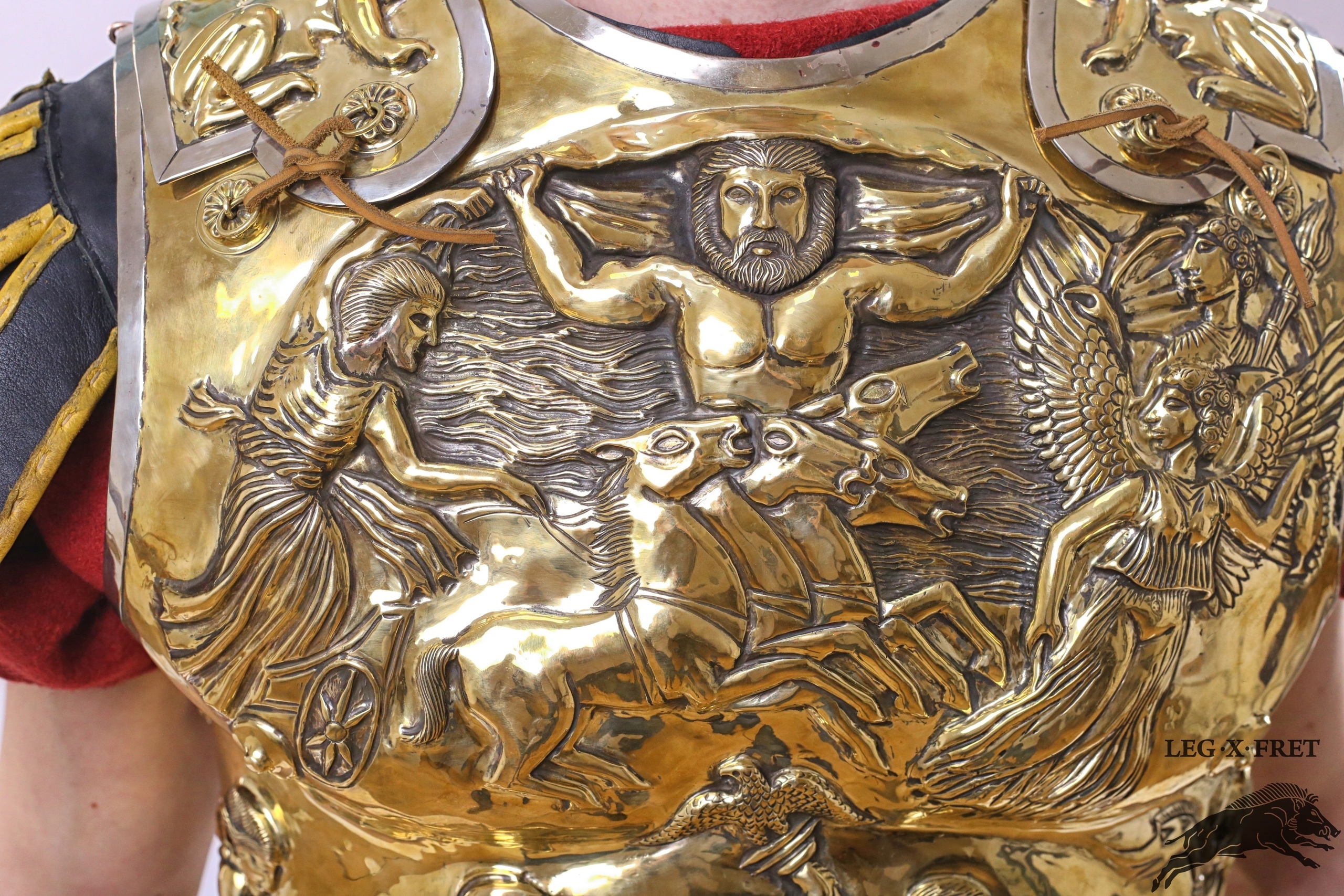 Imperial armor - lorica muscle
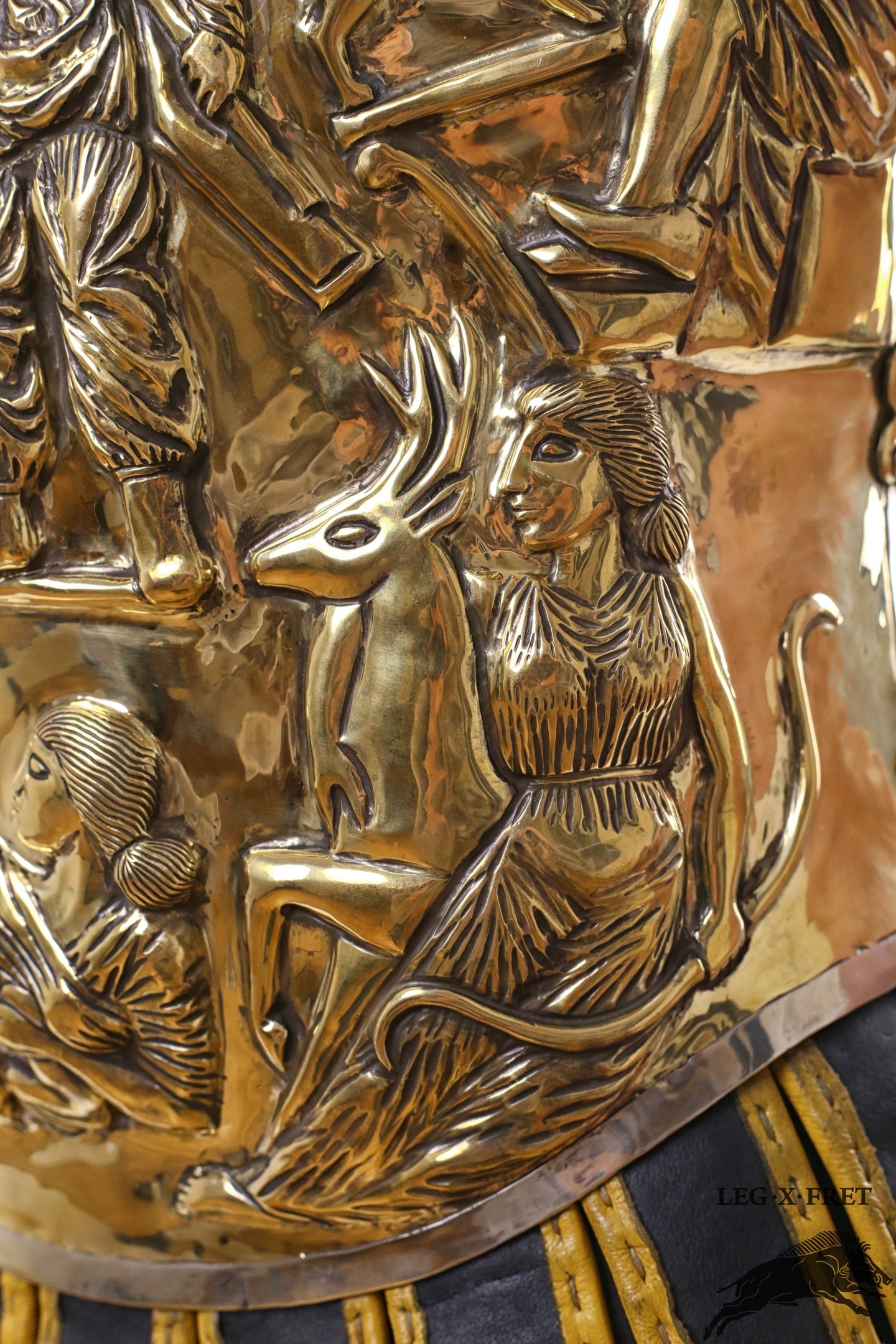 Imperial armor - lorica muscle
 Imperial armor - lorica muscle
 Imperial armor - lorica muscle
 Imperial armor - lorica muscle
 Imperial armor - lorica muscle
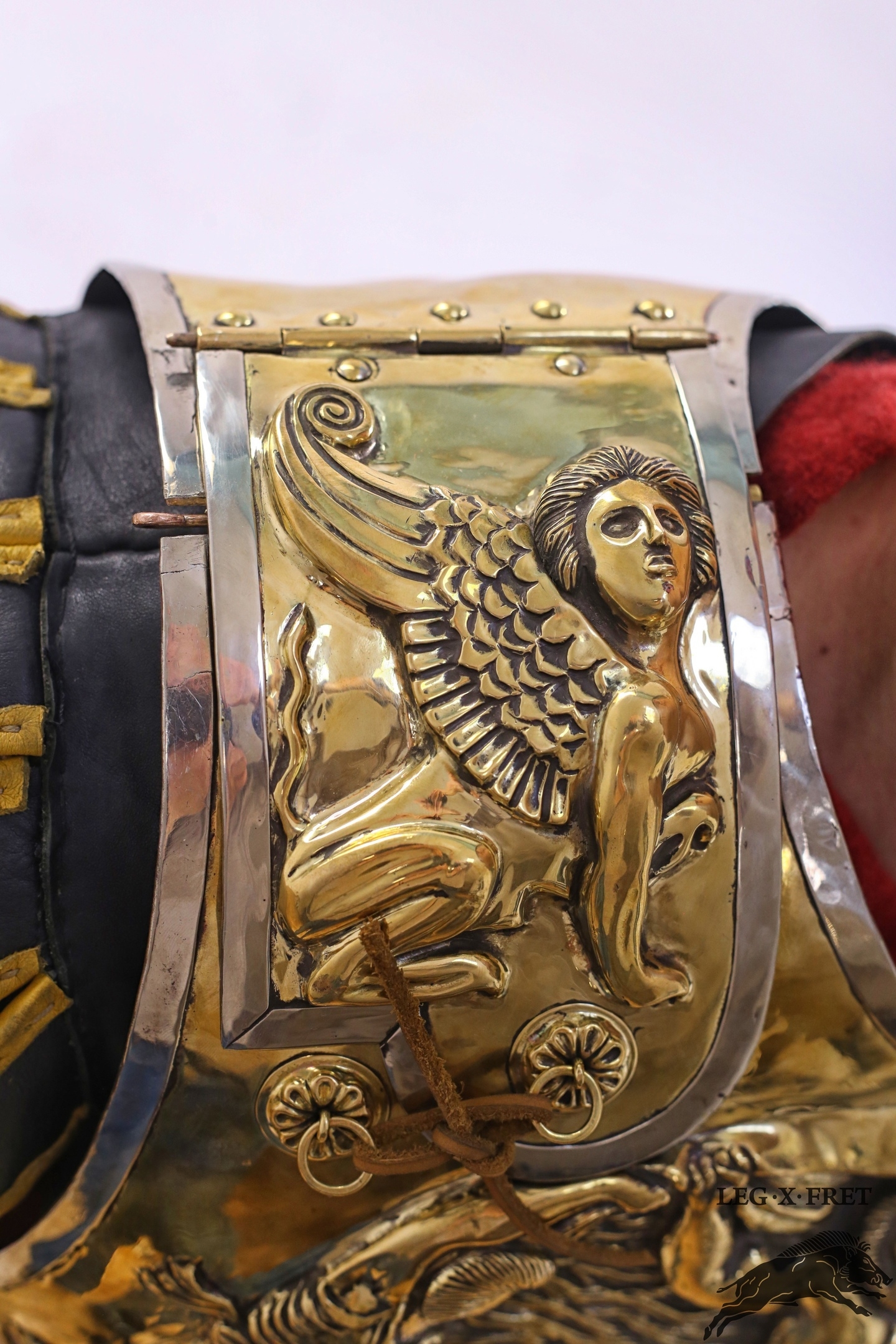 Imperial armor - lorica muscle
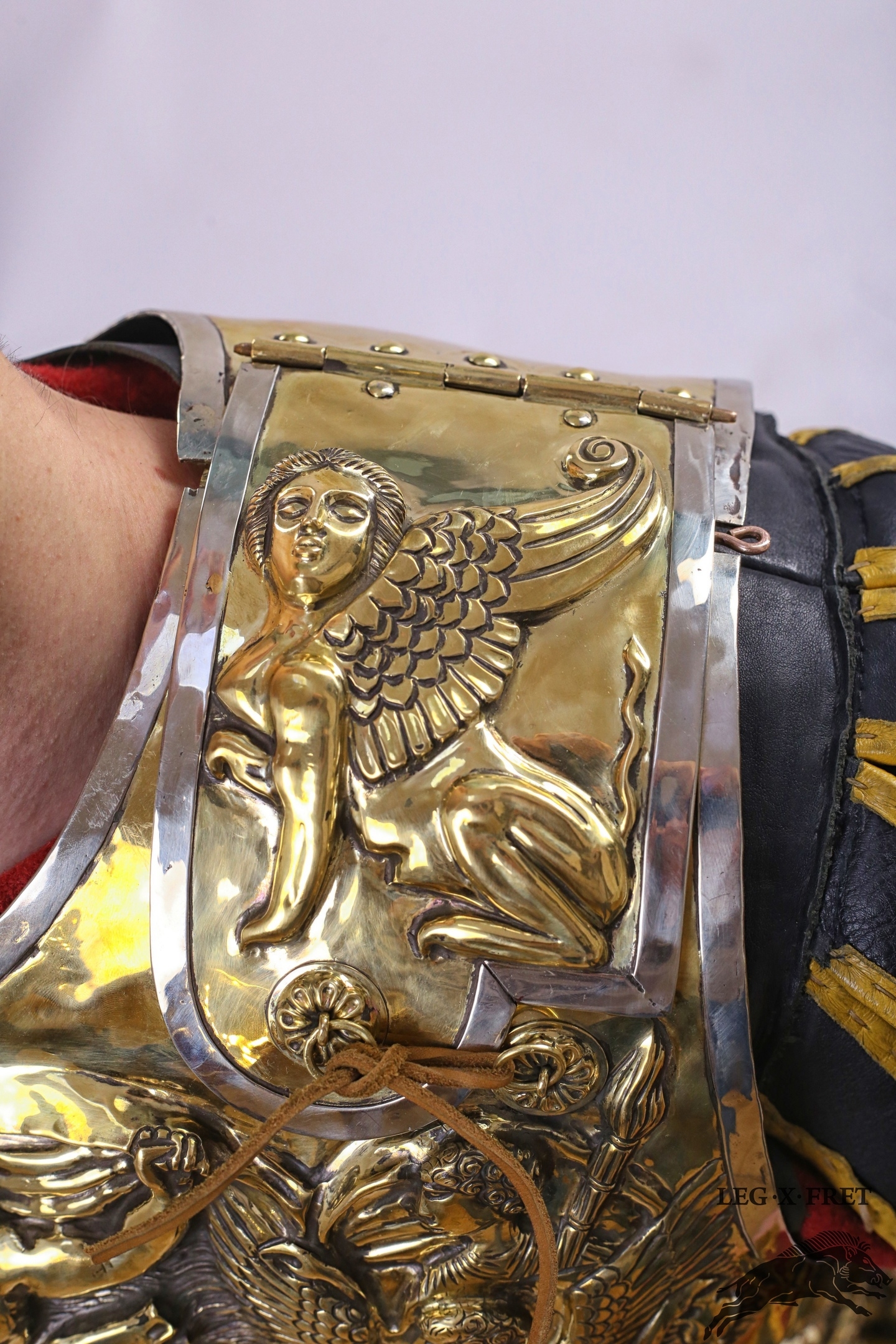 Imperial armor - lorica muscle
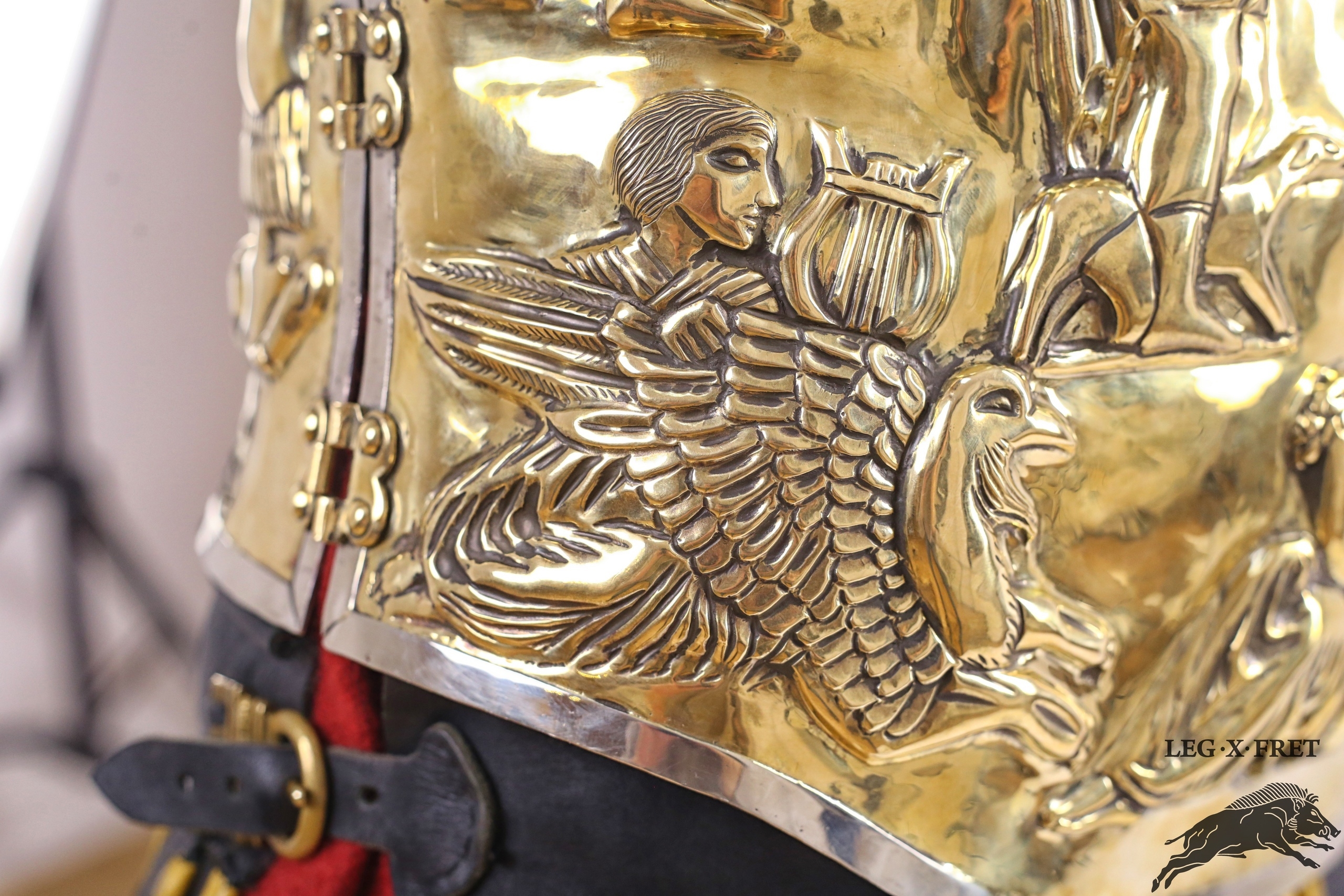
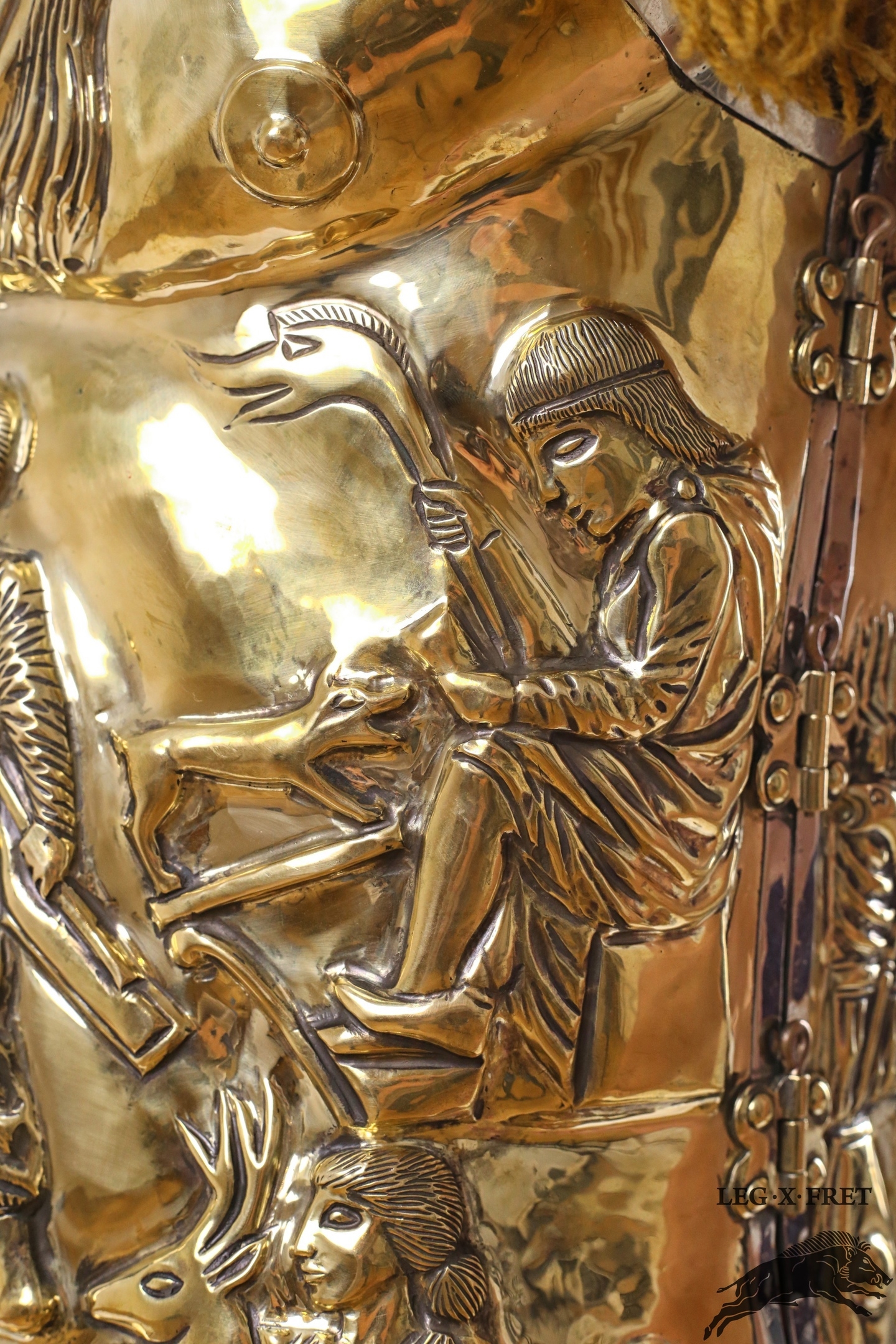
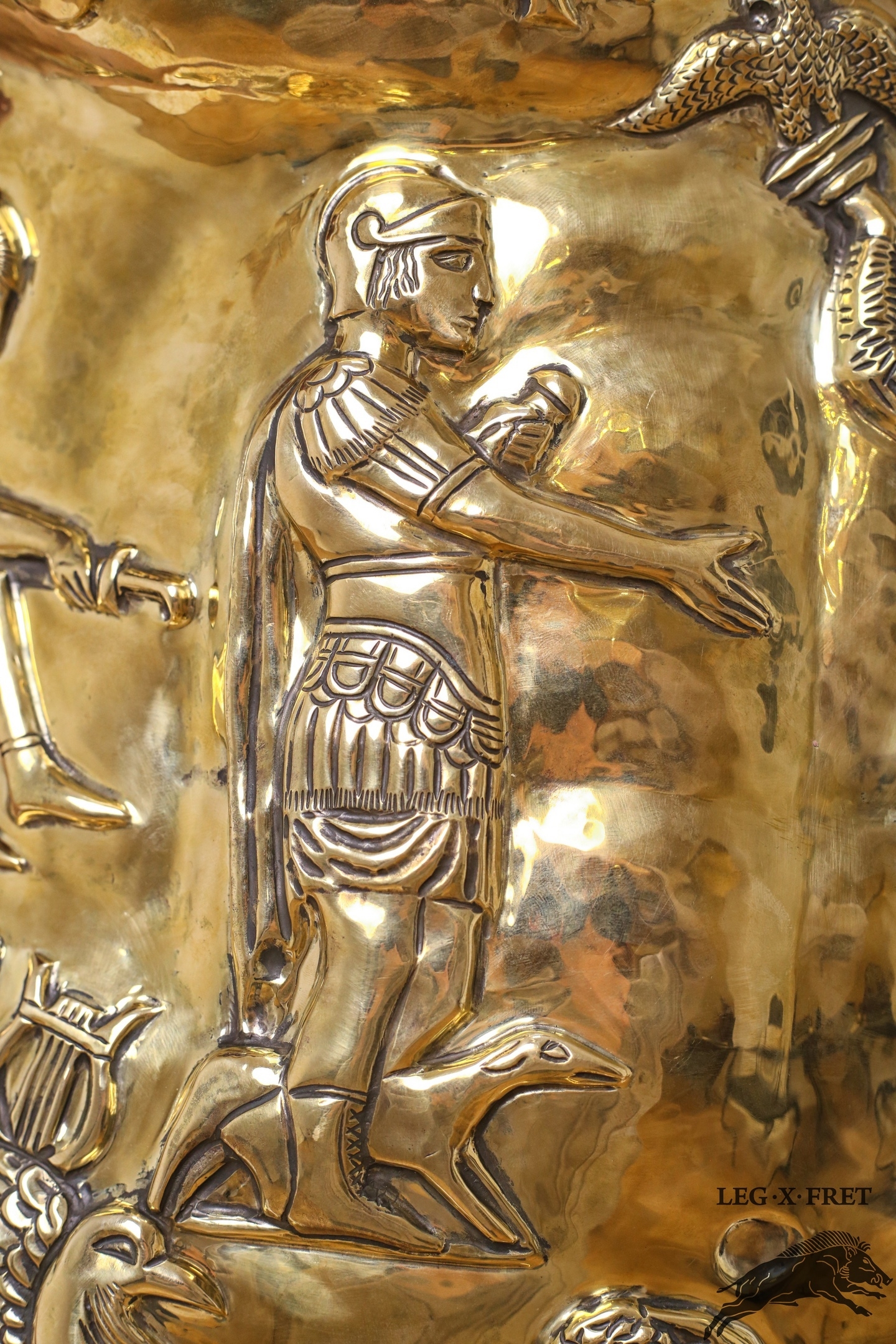
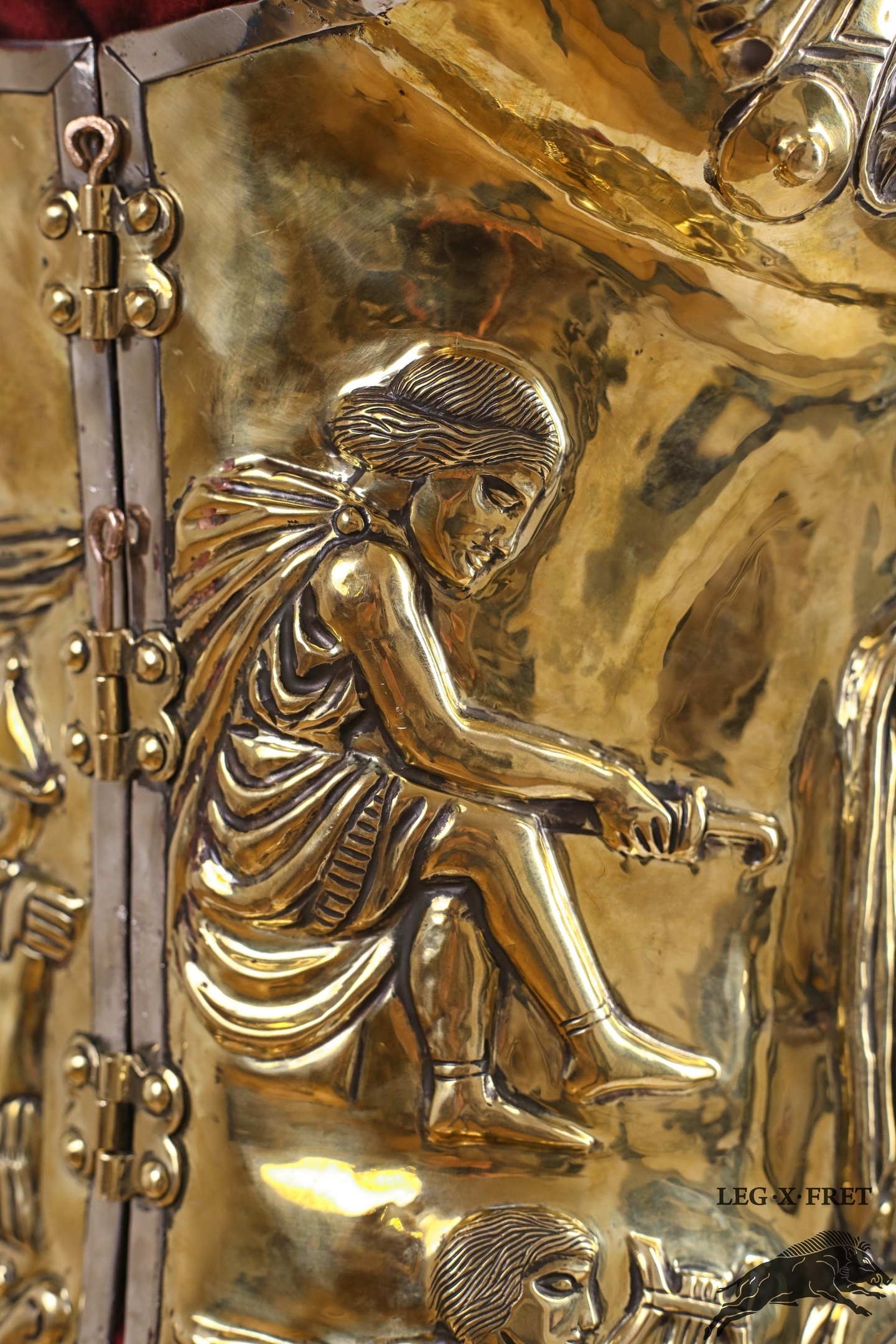
The breastplate is densely worked and rich in symbolism. The following is one interpretation of the figures used for the reconstruction; several identifications remain debated:
1. Jupiter, or a celestial figure associated with Helios/Sol 2. Aurora 3. Selene 4. Mars accompanied by a wolf, or Augustus himself 5. A Parthian returning a Roman eagle standard lost by Crassus 6. A personification of conquered Germania or Gaul 7. A personification of conquered Spain 8. Apollo riding a griffin 9. Diana with a doe 10. Tellus, also associated with Terra/Gaia, bearing a cornucopia 11. Female sphinxes
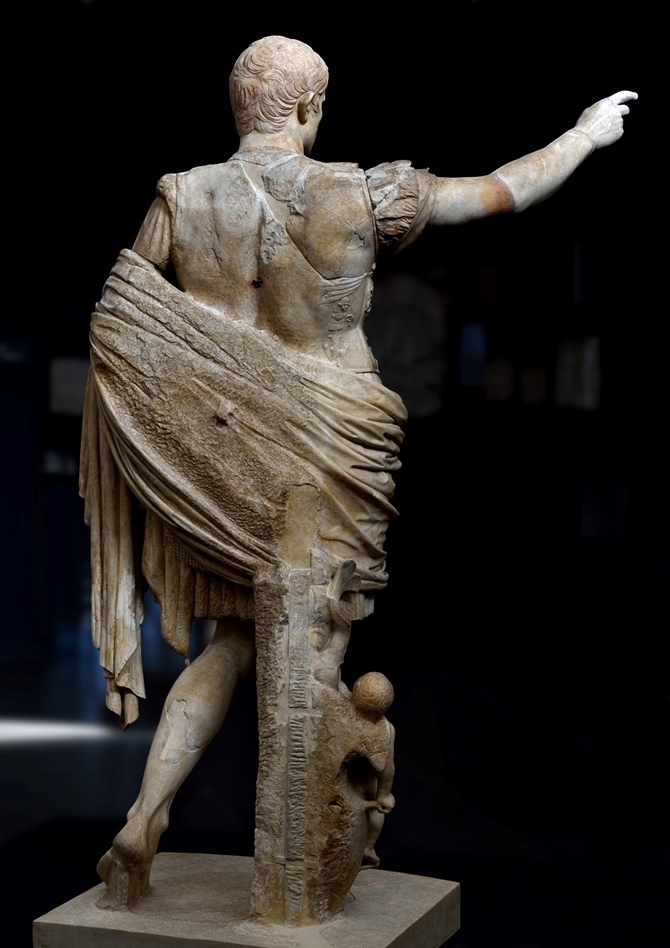 Reverse side of the statue of Augustus from Prima Porta
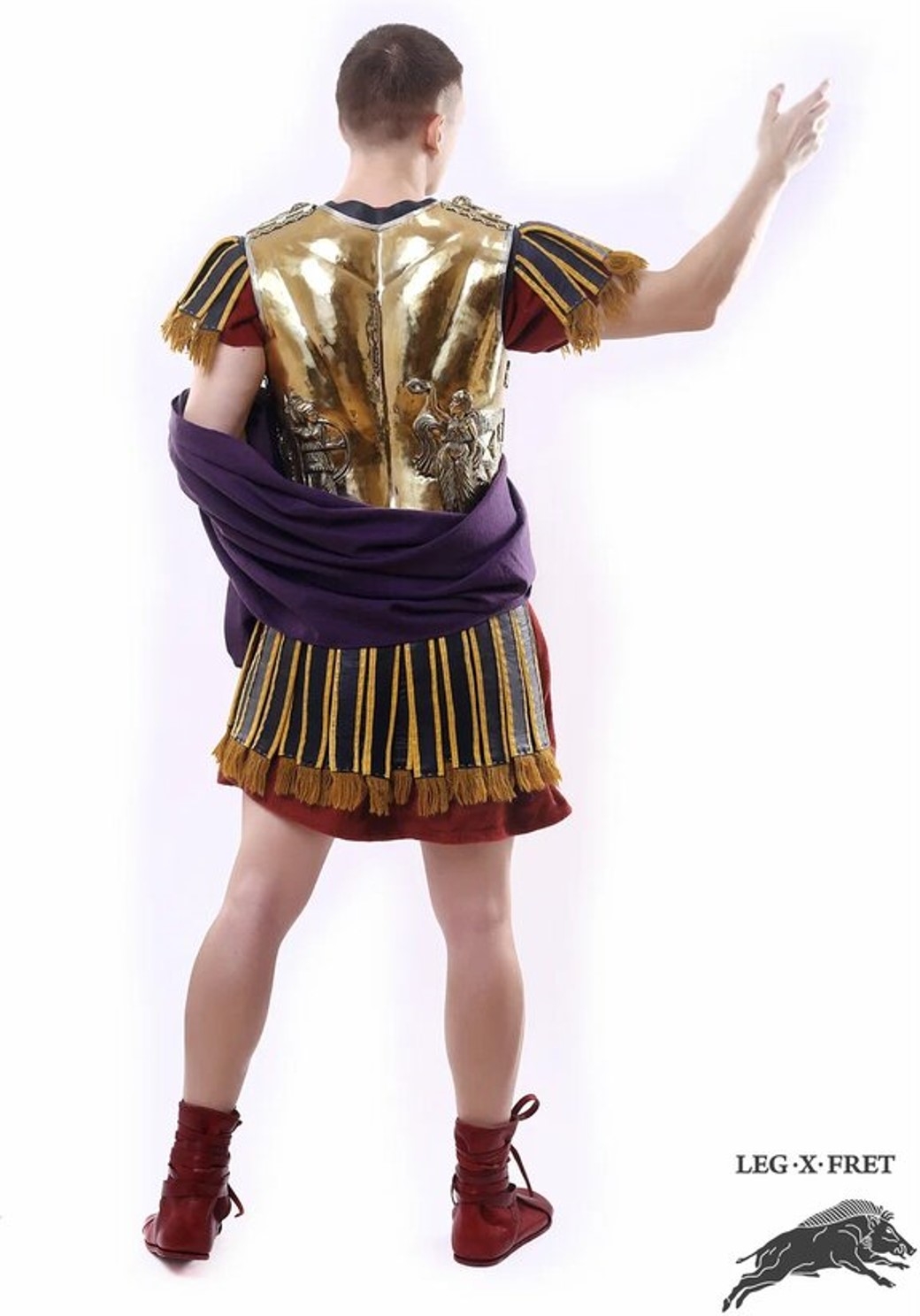 Reverse side of the statue of Augustus from Prima Porta
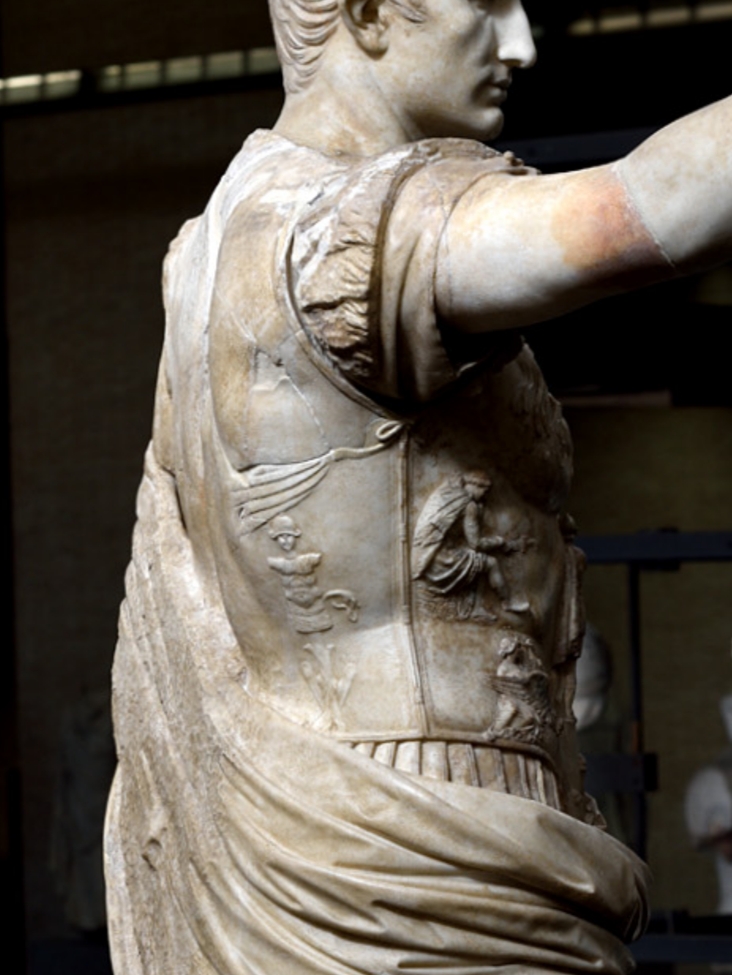 Reverse side of the statue of Augustus from Prima Porta
Reconstructing the back of the cuirass was especially difficult. Its decoration is much less clearly preserved than the front. The project treated the visible traces as evidence of relief decoration, an unusual feature even among sculpted imperial cuirasses. Whereas the breastplate could be copied with relatively limited interpretation, the back required a much greater degree of conjectural reconstruction.
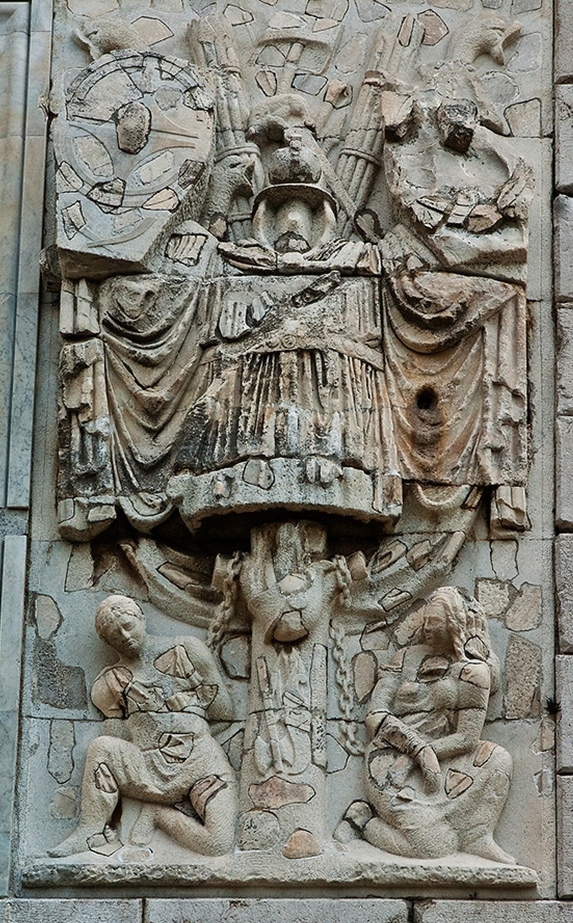 Trophy of Augustus (Latin Tropaeum Alpium, Tropaeum Augusti; French Trophée des Alpes)
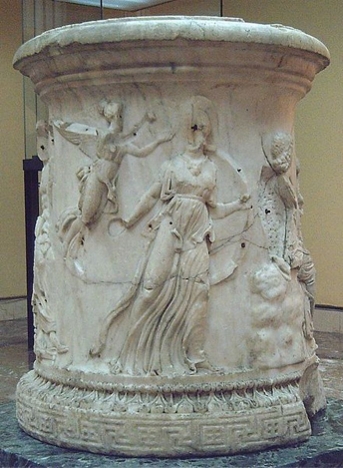 Statue of Victoria and Minerva. 1st century AD Possibly a copy of a Greek work from the 4th century BC. Museo Arqueológico Nacional
A trophy beside the figure interpreted as Spain is the clearest surviving detail on the back. For this reconstruction, a corresponding trophy was placed on the opposite side. The Trophy of Augustus at La Turbie, commemorating Roman victories over Alpine peoples, supplied a comparative model.
Traces interpreted as wings suggested Victoria. A representation of Victoria with Minerva in the Museo Arqueológico Nacional provided a further visual parallel, and the two goddesses were arranged to echo the paired figures on the breastplate. This composition is a modern reconstruction, not a securely recoverable ancient design. The remaining surface was given anatomical modelling.
Archaeological cuirasses also informed the material and construction. Many surviving examples are plain bronze pieces of the fourth and third centuries BCE, but later and more elaborate finds provide useful comparisons. The images below show a fourth-century BCE cuirass in the Metropolitan Museum of Art; an iron cuirass with gold fittings from the tomb at Prodromi, dated around 290–270 BCE; and armour elements from the burial at Kemnitz near Potsdam, attributed to the first or second century CE.
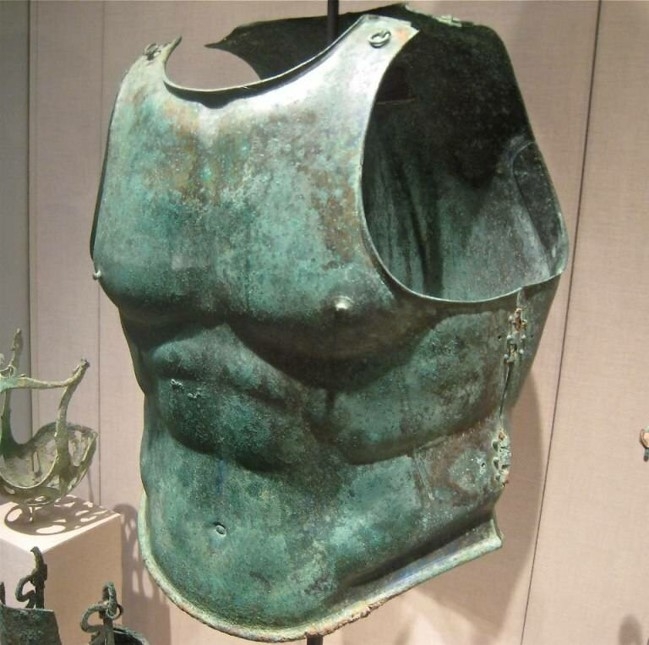
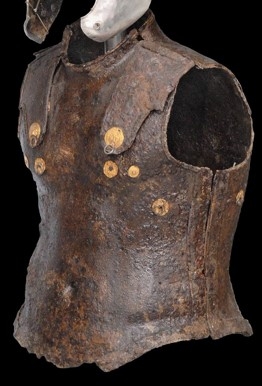
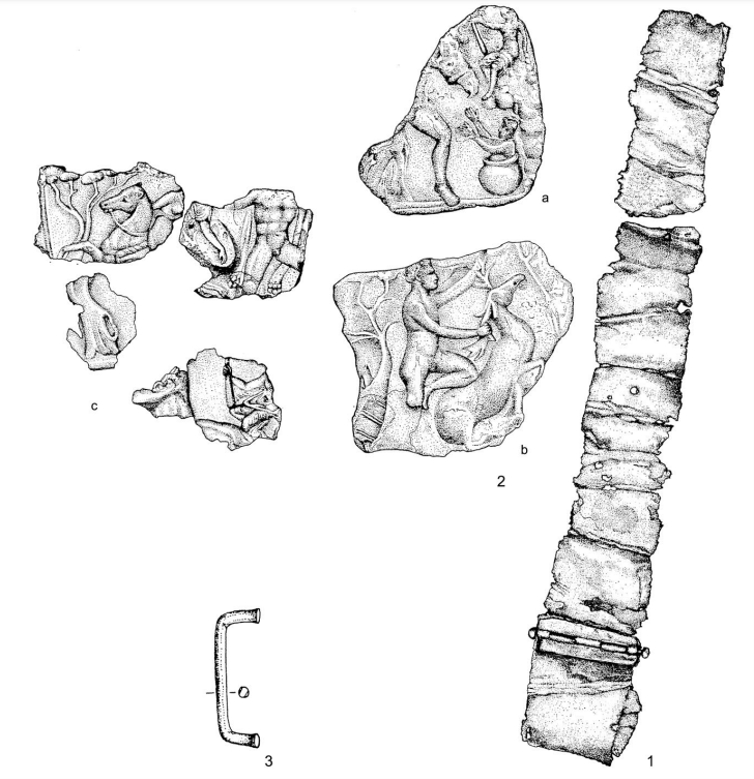
Craftsman: Don Charisma
2. Leather Under-Armour Garment (Subarmalis)
The subarmalis was made specifically to fit beneath the muscle cuirass. Together, these two pieces define the reconstructed appearance of Augustus. The colour scheme was informed by the polychromy reconstruction prepared by Emma Zahonero and Jesús Mendiola for Tarraco Viva 2014, presented at mvarte.com.
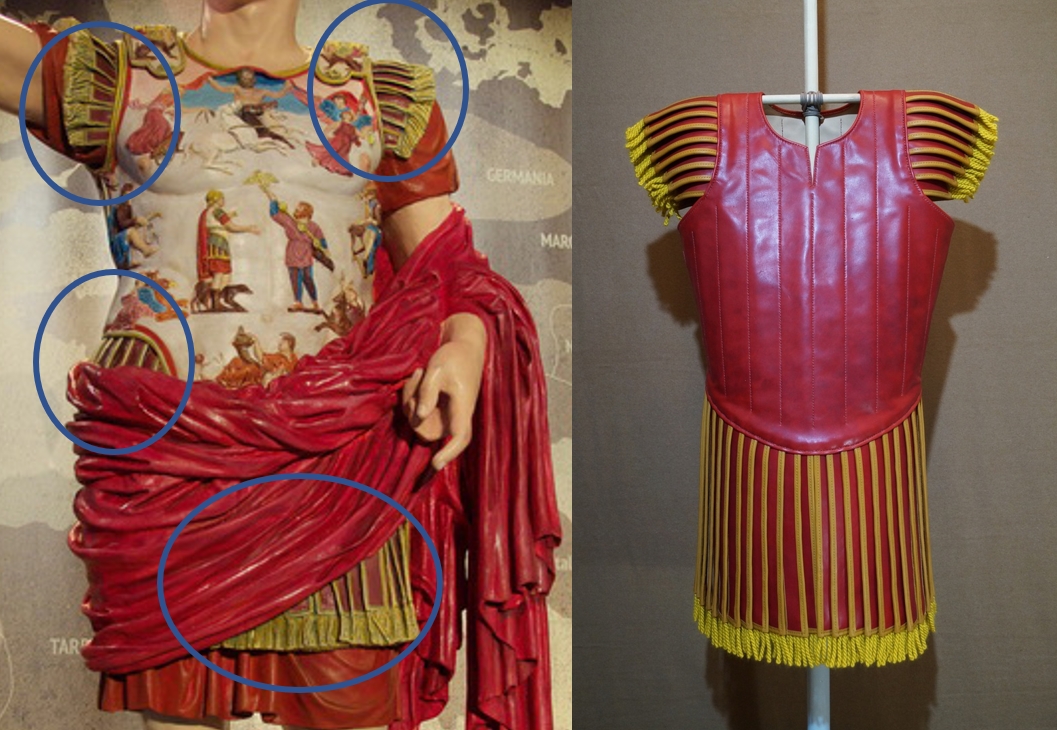
Selecting the leather, choosing its colours and studying the statue’s pteryges required extensive preparation. The most demanding stage, however, was the handwork itself.
The project counted 48 lower and 32 upper pteryges on the statue. The recorded lengths of hand stitching were:
- Shoulder pteryges: 2,568 cm
- Lower front pteryges: 7,544 cm
- Lower rear pteryges: 8,640 cm
- Front of the garment body: 3,338 cm
- Back of the garment body: 2,716 cm
Approximately 248 m of thread were used.
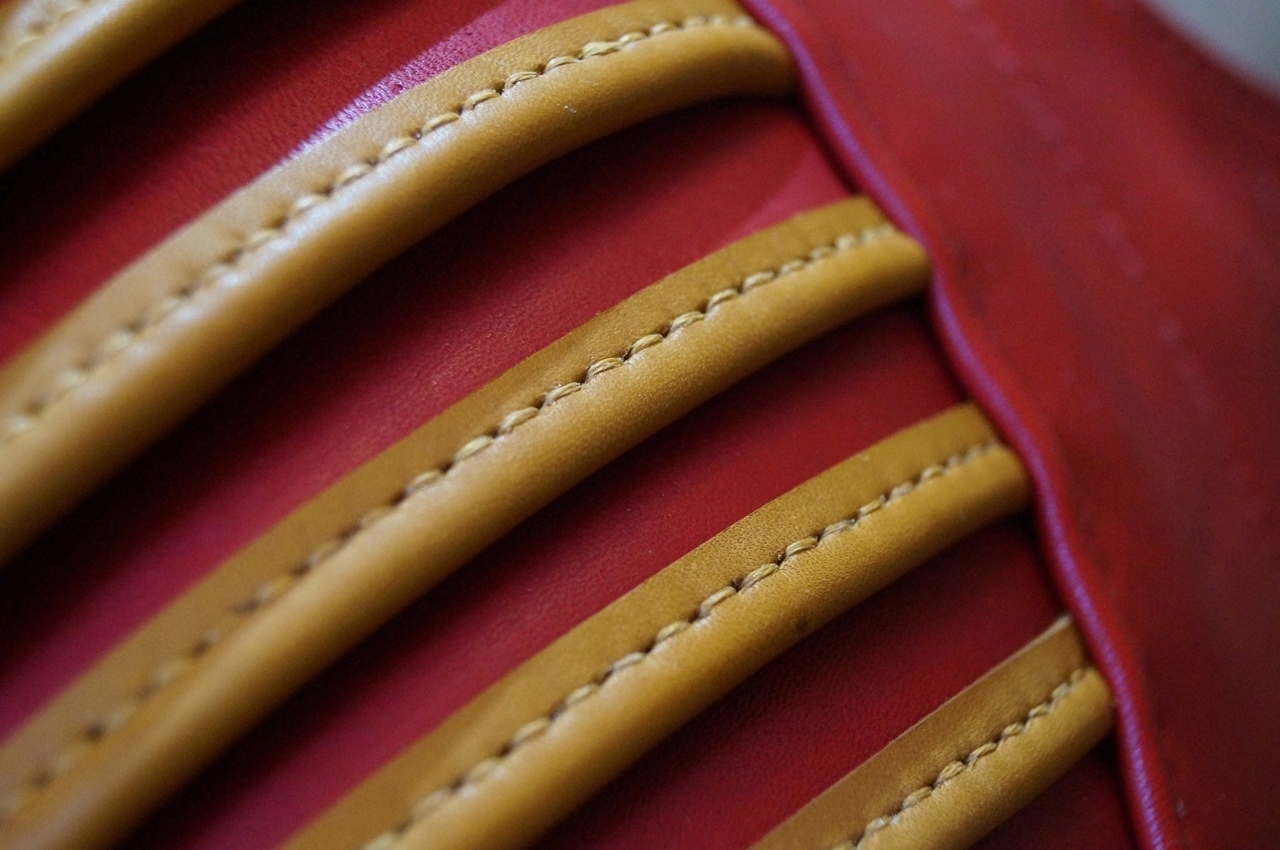 The process of creating the imperial subarmalis
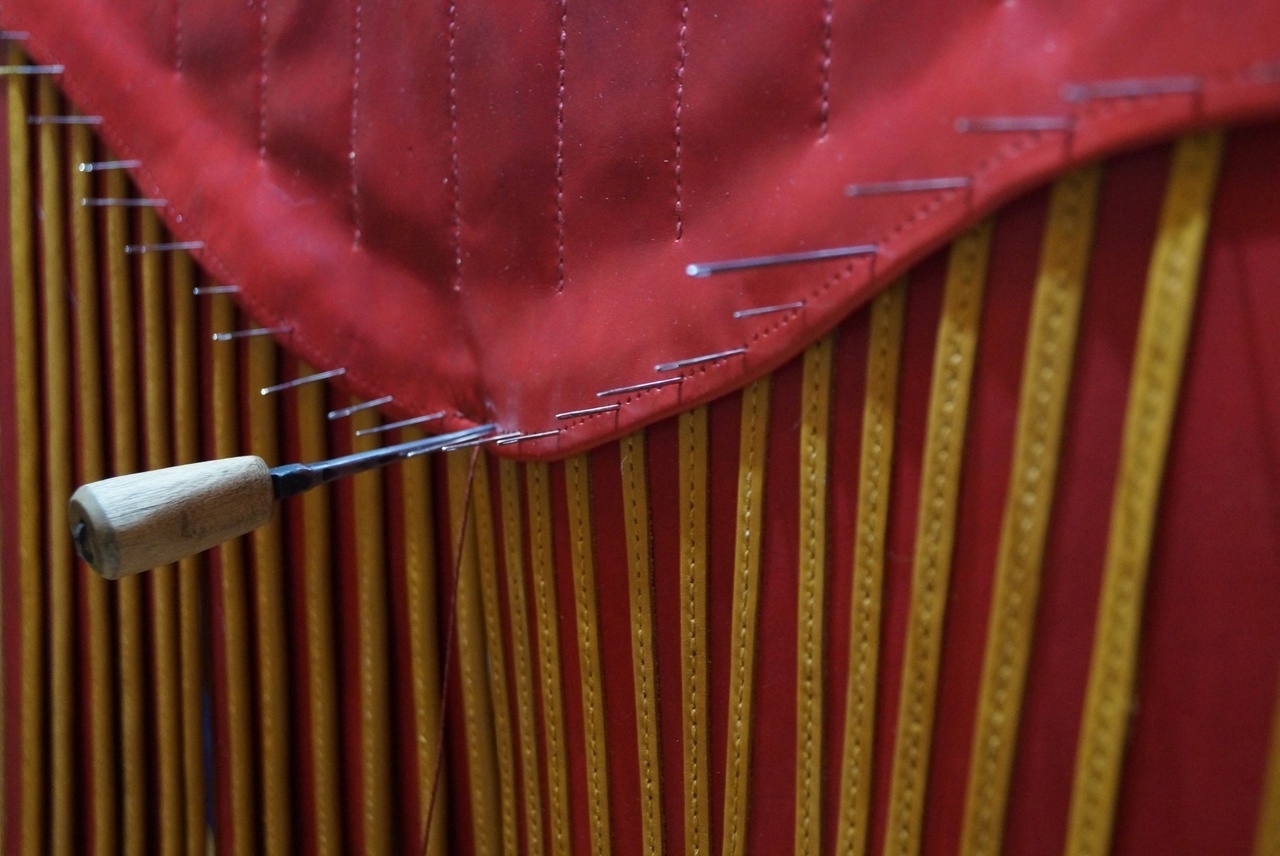 The process of creating the imperial subarmalis
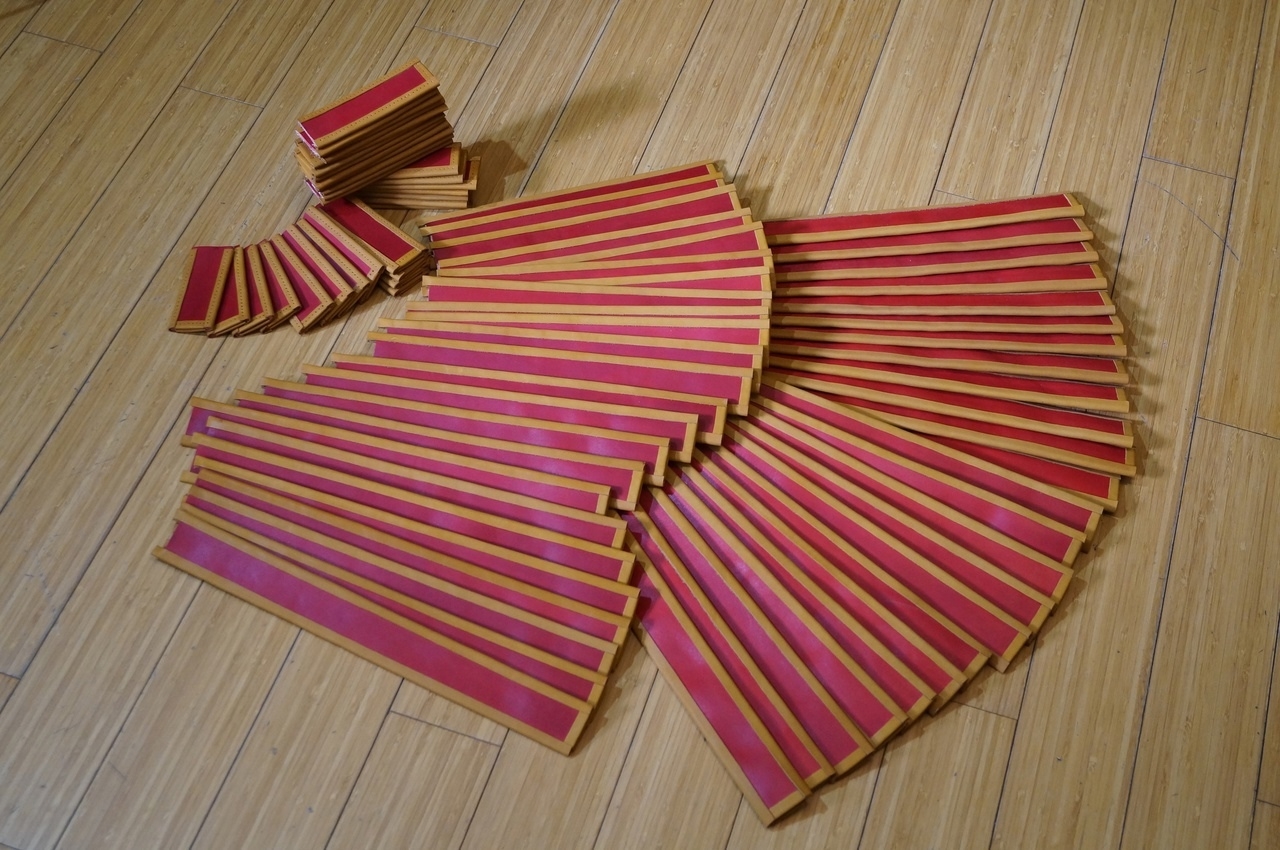 The process of creating the imperial subarmalis
The fringe was also made by hand, using 552 m of woollen yarn, weighing approximately 800 g.
Archaeological evidence for under-armour garments is limited, as are depictions in which they can be seen without a cuirass covering them. The comparative images below include a leather fragment from Dura-Europos, dated to the second or third century CE and interpreted as part of a subarmalis, and a third-century sculpture of Mars from near the fort of Bremenium, possibly showing a similar garment. These identifications should be treated with caution.
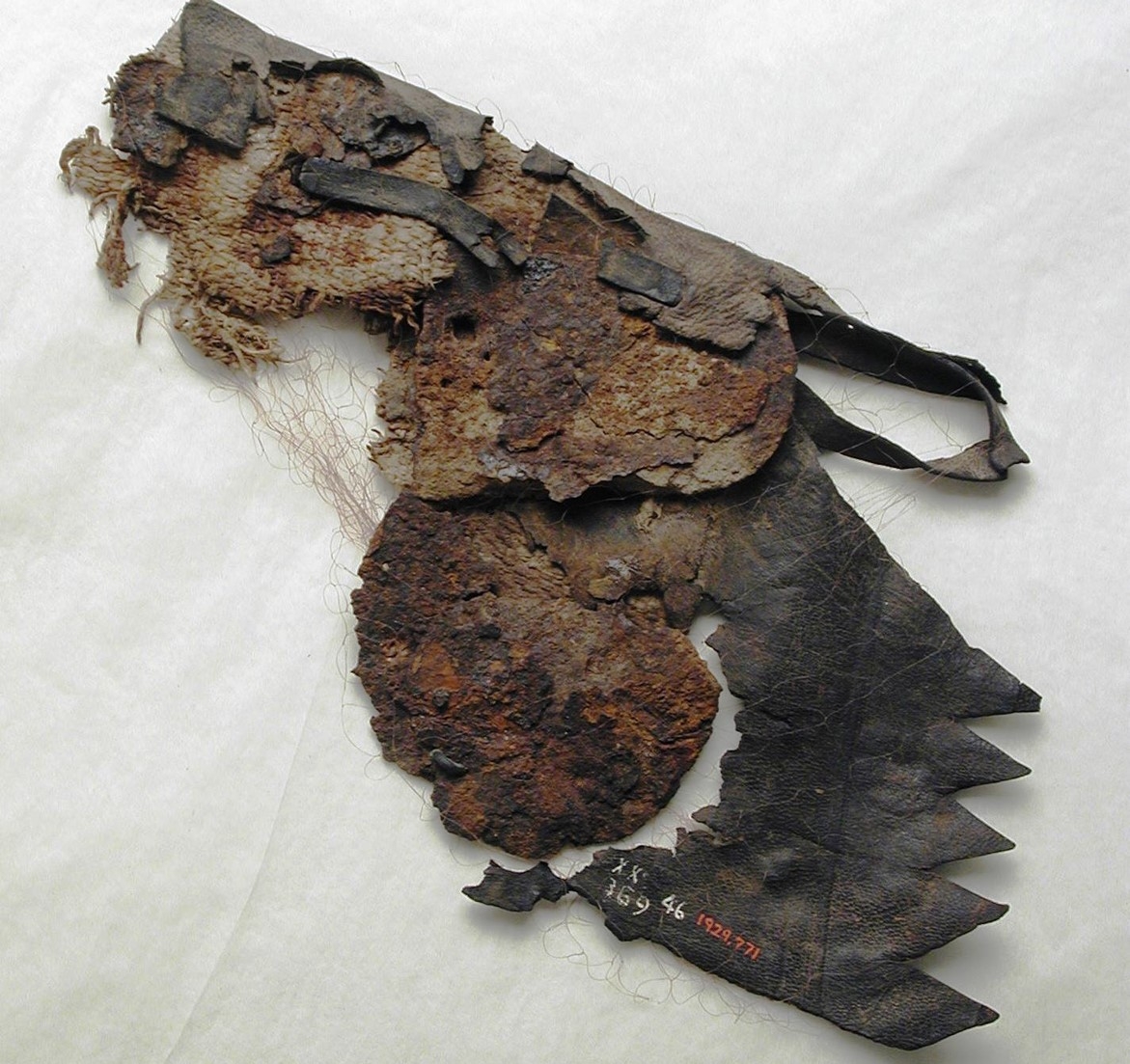
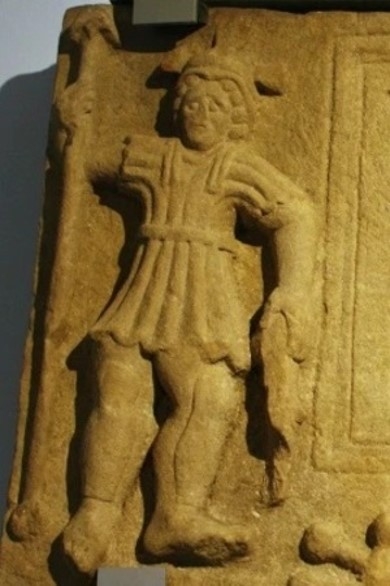
Craftsman: Ilya Kushnir
3. Cloak (Paludamentum)
The cloak presented a different challenge. On the Prima Porta statue, it is not draped around the shoulders in the usual manner. Instead, it passes around Augustus’ hips and over his arm, almost like a broad sash.
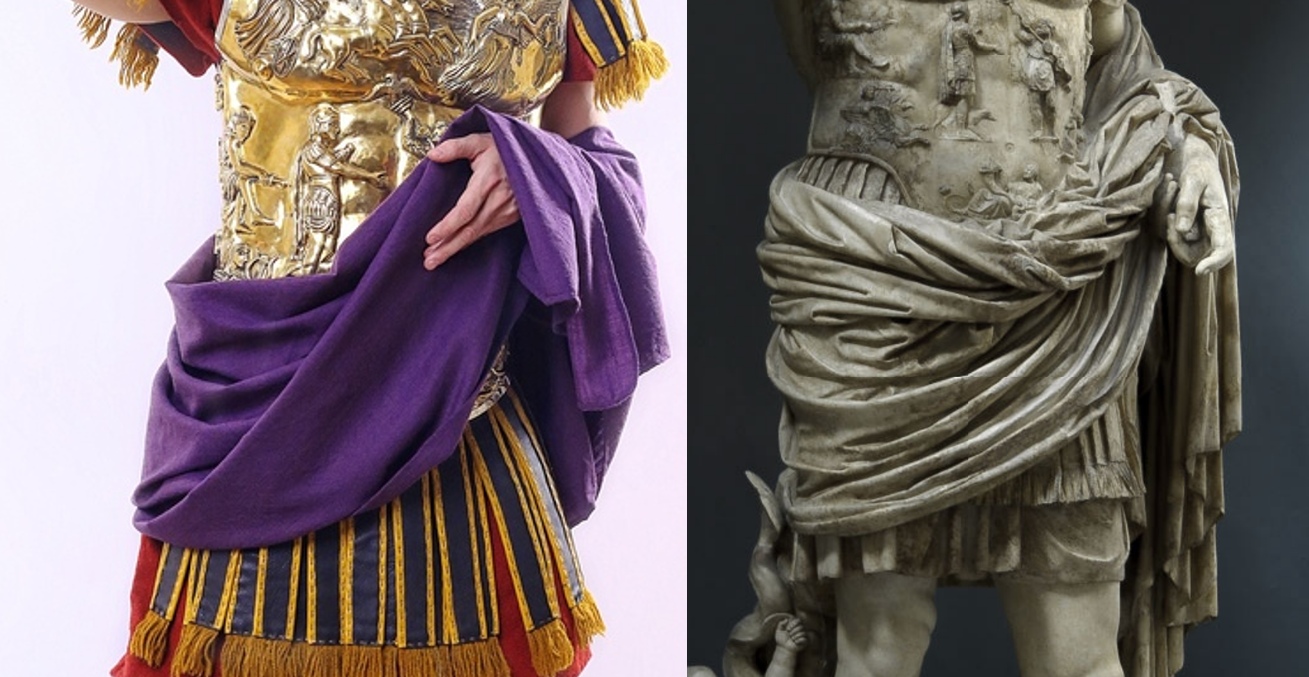
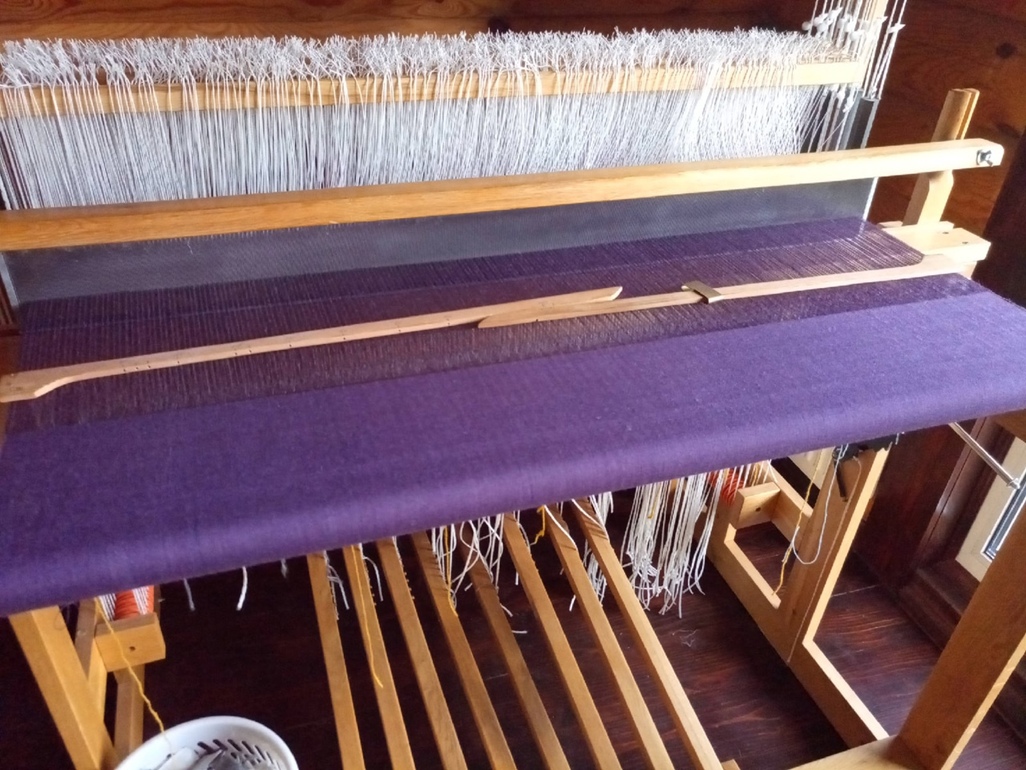 Fabric making process
This arrangement determined the choice of fabric. A fine, densely woven plain-weave woollen cloth was commissioned to reproduce the fall of the sculpted drapery as closely as possible. Archaeological parallels for plain-weave wool are illustrated at the end of the tunic section.
Weaver: Yulia Biryukova
Garment maker: Kira Kholodetskaya
4. Tunic (Tunica)
Even the tunic contains an unusual detail. The upper edges of the sleeves appear to be joined at intervals rather than continuously sewn. The reconstruction interprets these connections as buttons, a feature rarely encountered in depictions of Roman men’s clothing.
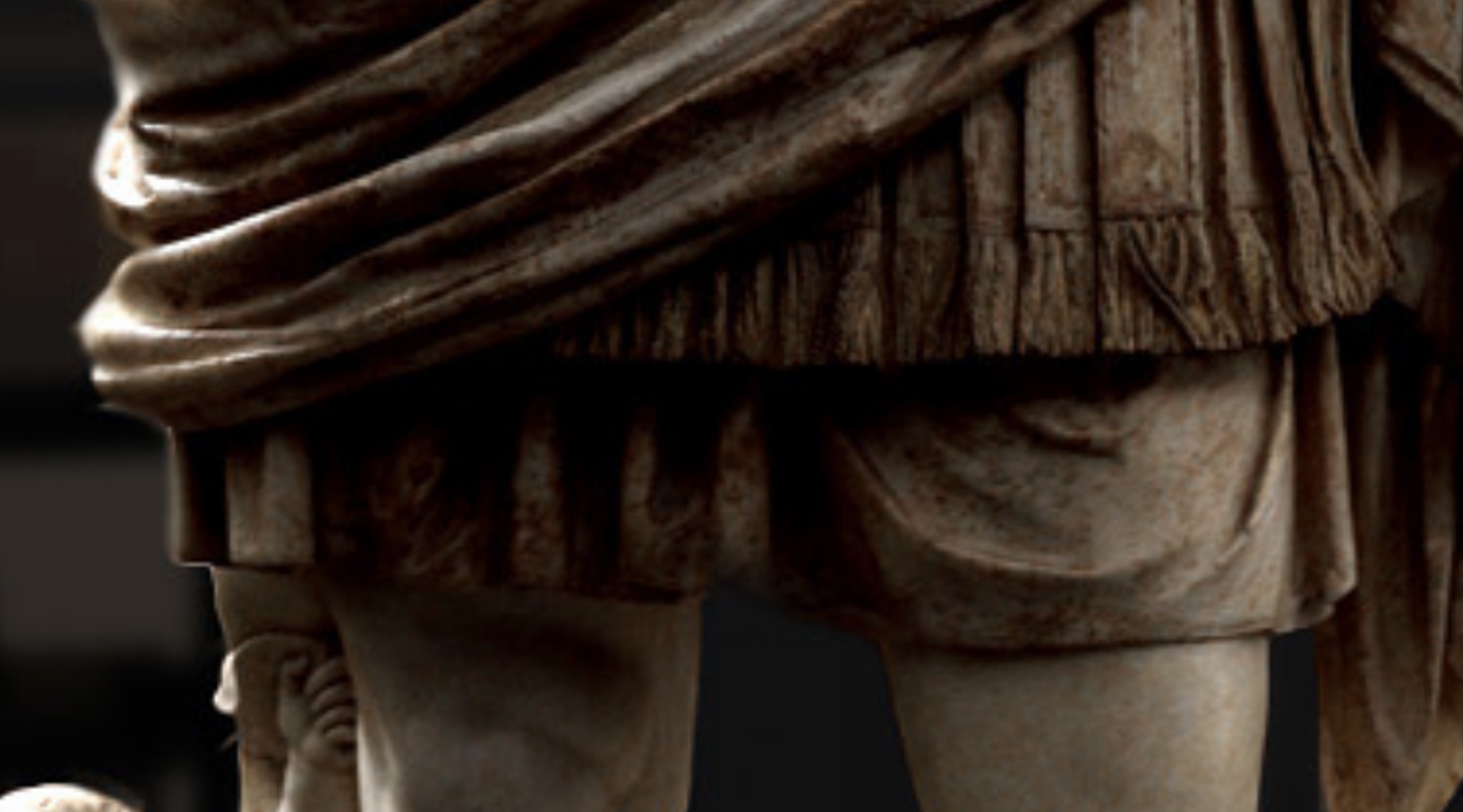 Fragments of a statue with a tunic
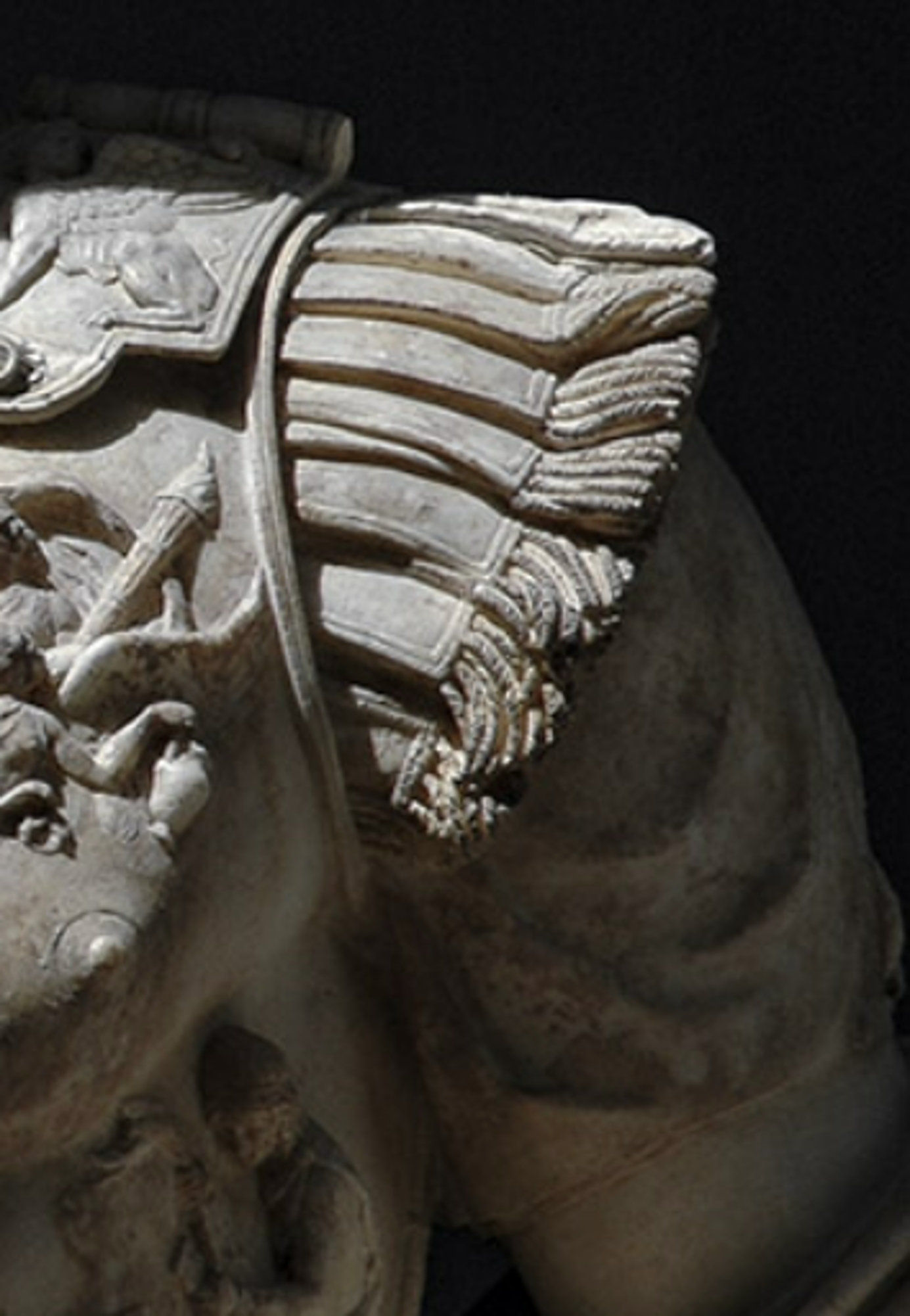 Fragments of a statue with a tunic
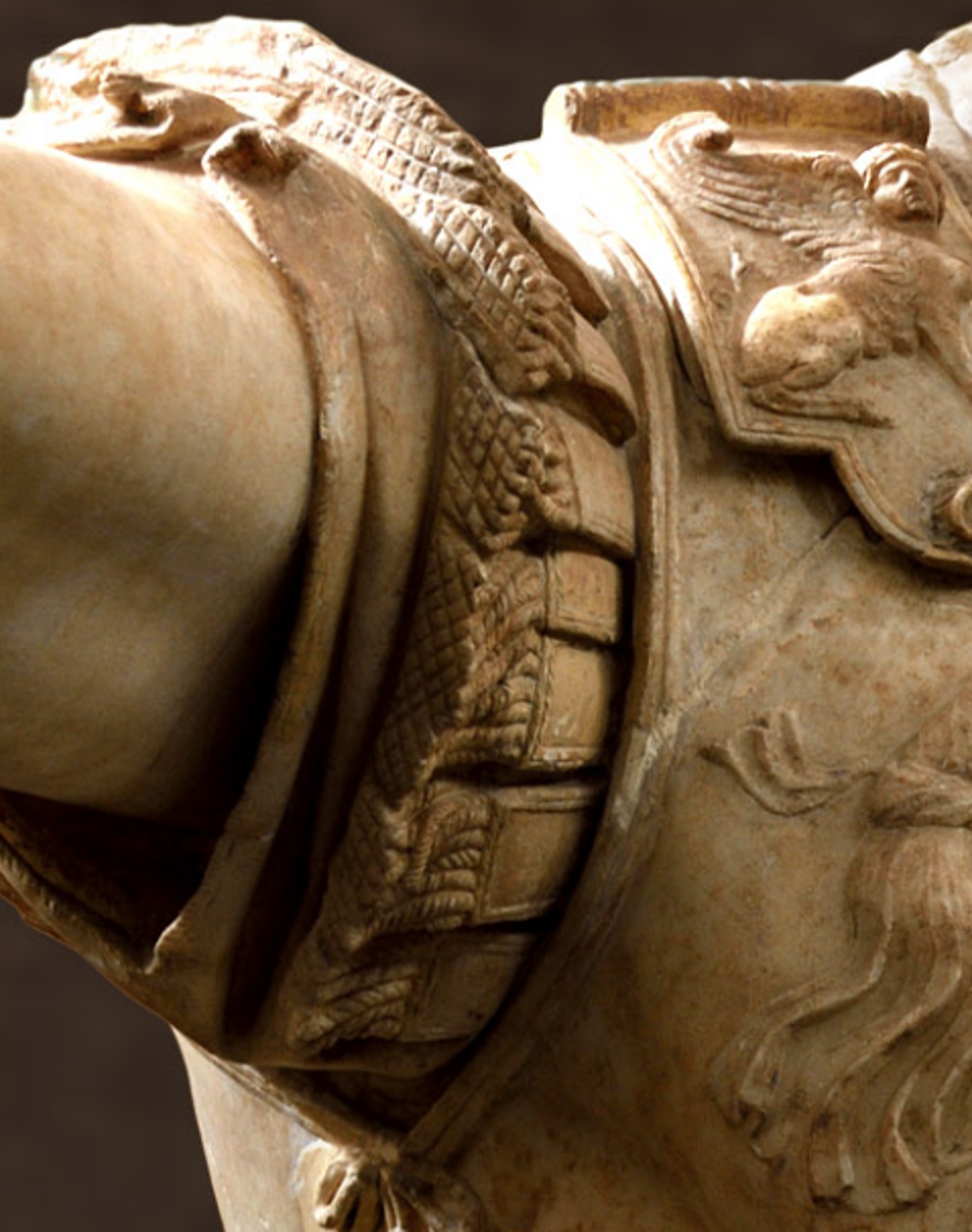 Fragments of a statue with a tunic
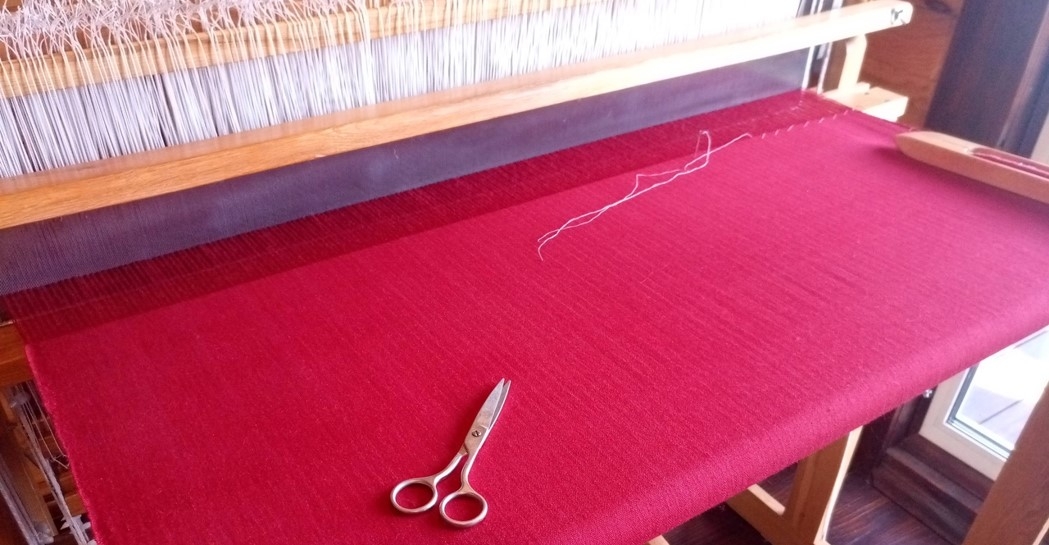 Fabric creation process
As with the cloak, the fabric was specially woven in plain weave. The cut and length were adjusted so that the tunic would resemble the statue as closely as possible once the subarmalis and cuirass were worn over it.
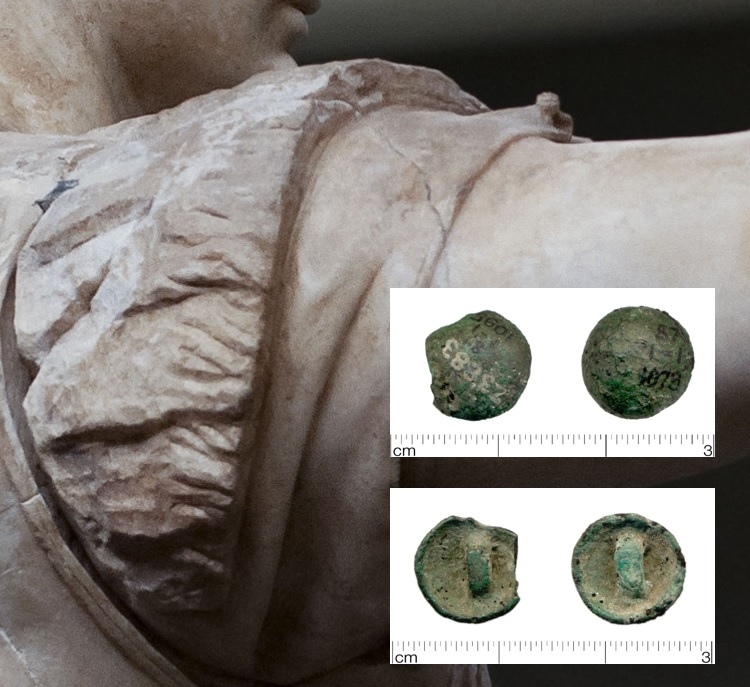
The exact shape of the fastenings could not be determined from the statue. First-century CE bronze buttons from Egypt were therefore used as a comparative model. Simple loops secure the upper sleeve edges to the buttons.
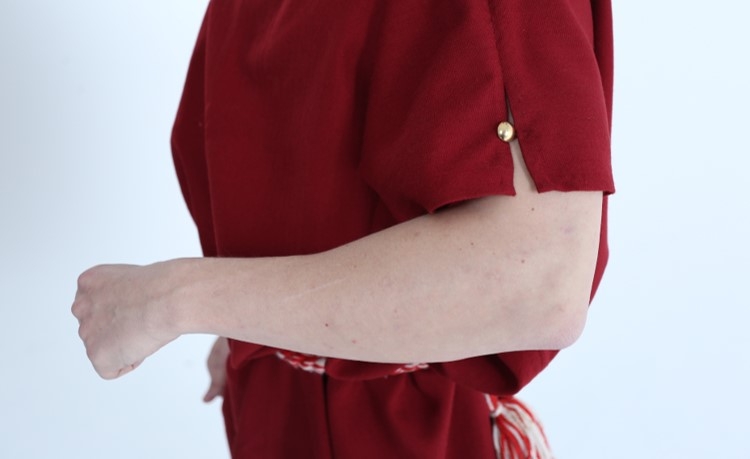 The final result of creating a tunic
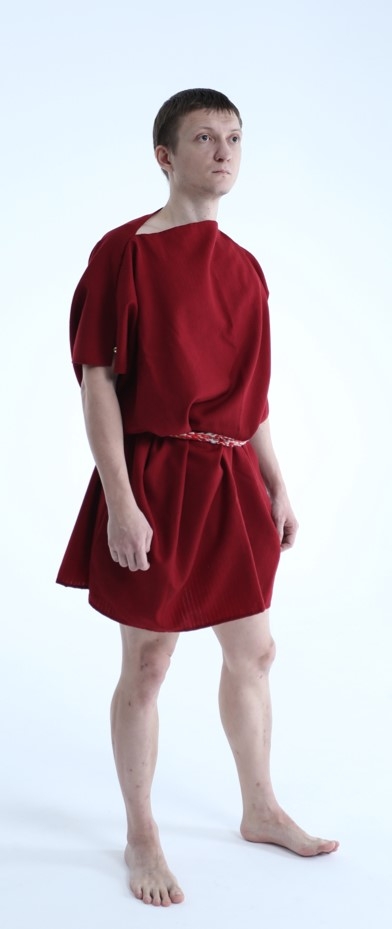 The final result of creating a tunic
Examples of archaeological plain-weave woollen fabrics are shown below. The first three photographs show finds from the Cave of Letters: Yigael Yadin, The Cave of Letters, Jerusalem, 1963, p. 236, pls. 68 and 83.
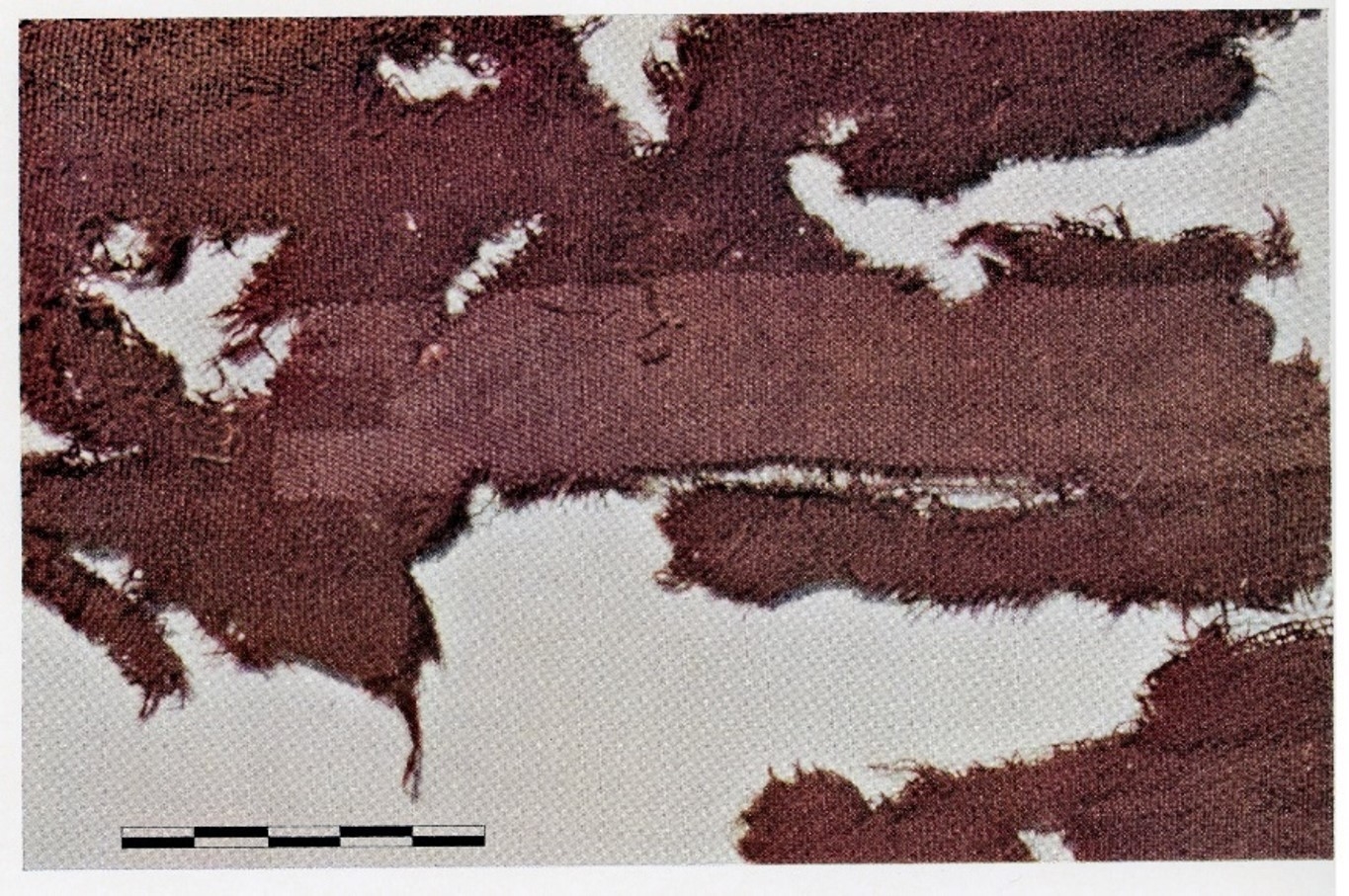 Archaeological finds of woolen tunics and cloaks
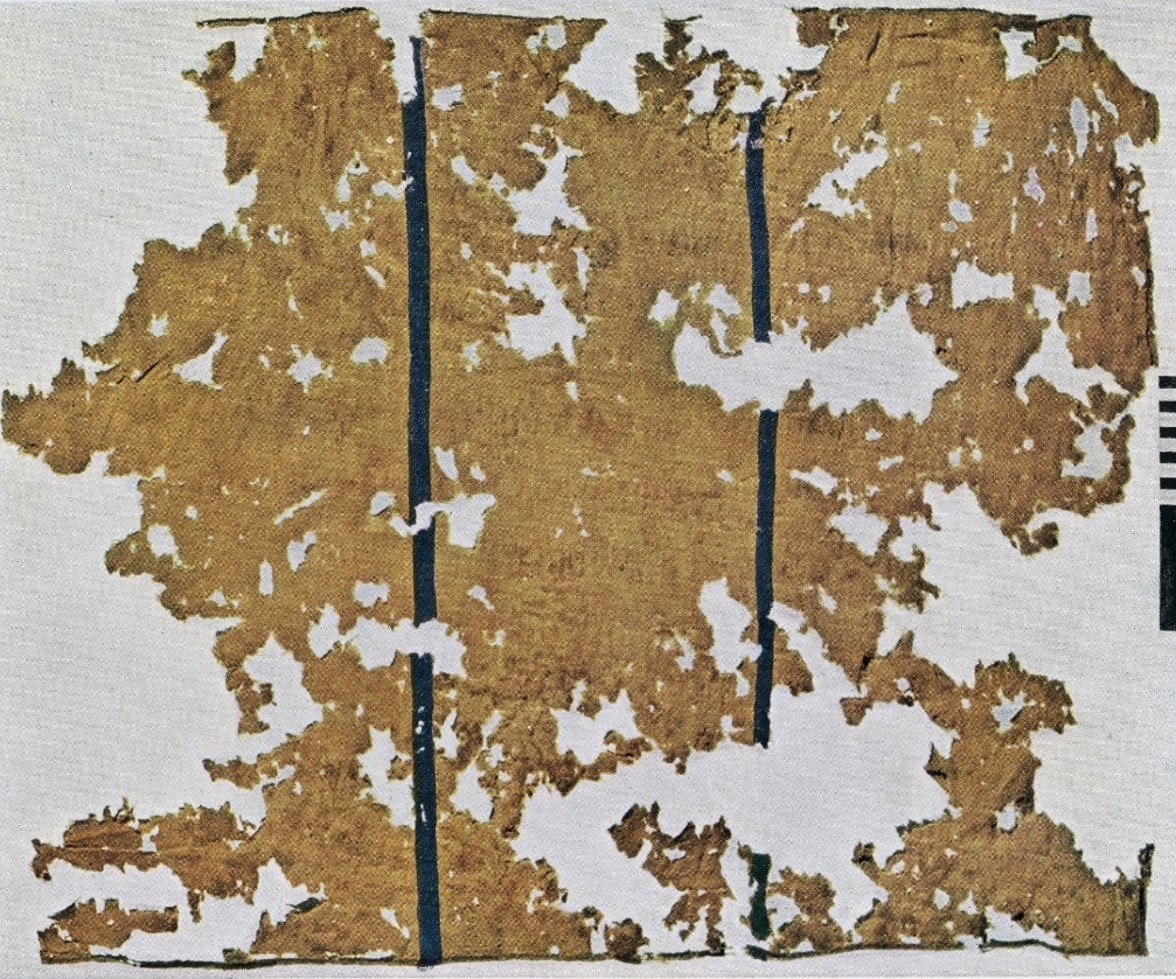 Archaeological finds of woolen tunics and cloaks
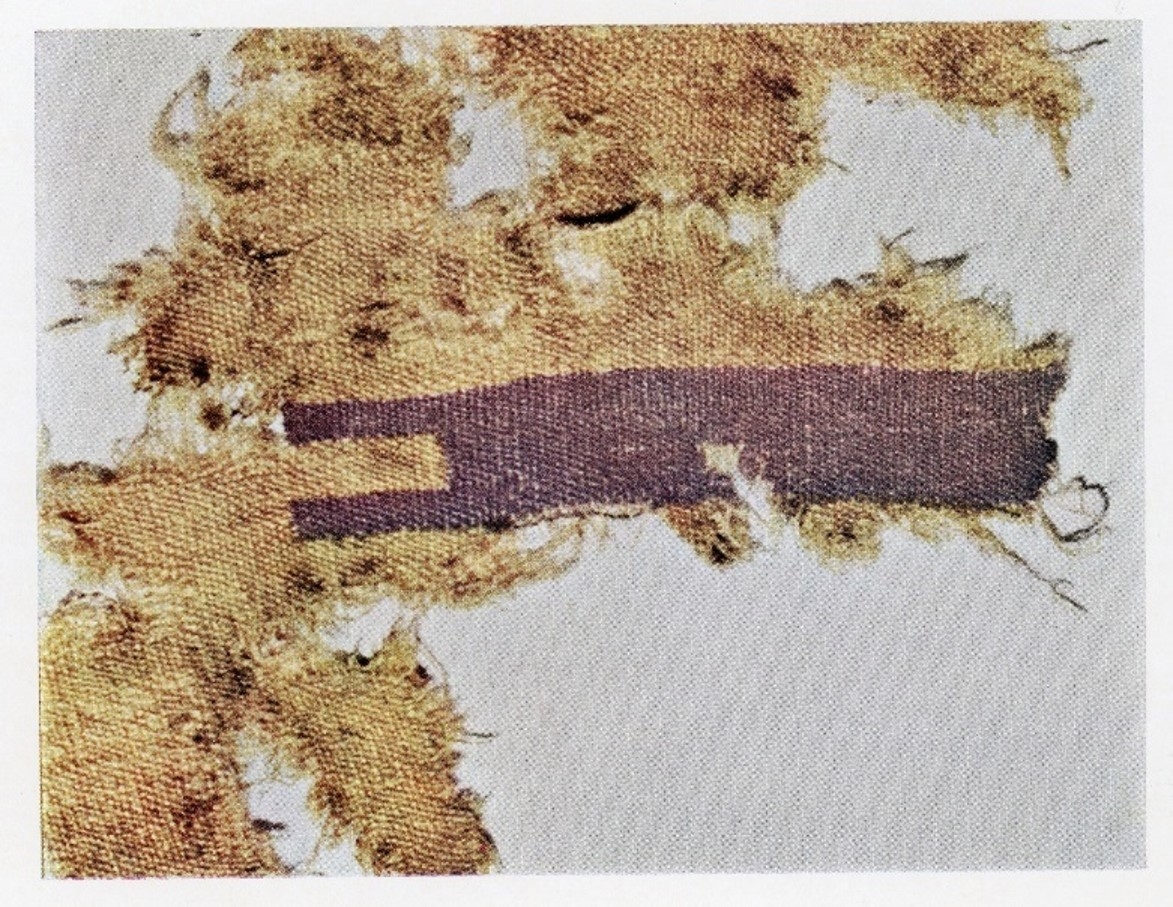 Archaeological finds of woolen tunics and cloaks
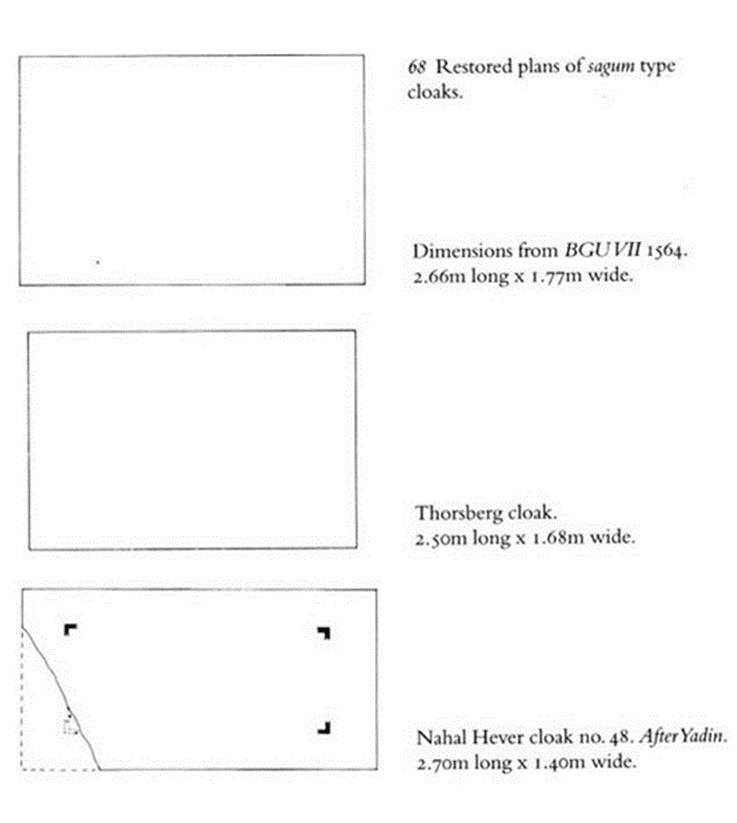 Archaeological finds of woolen tunics and cloaks
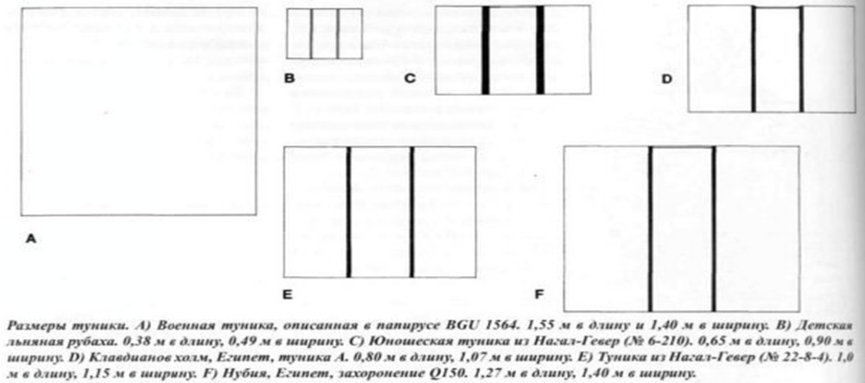 Archaeological finds of woolen tunics and cloaks
Weaver: Yulia Biryukova
Garment maker: Kira Kholodetskaya
5. Shoes (Calcei)
The Augustus of Prima Porta is barefoot. To create a wearable outfit, the project added calcei of a type depicted on other statues of Augustus and associated with senators and emperors.
The shoes have an elaborate lacing arrangement: two of the three straps rise from the sole and cross over the front. A small tongue-like piece, unusual in Roman footwear, reinforces the opening. A slit over the instep allows the shoe to be put on, and a leather strip sewn around much of the upper edge strengthens this area. The tongue also improves comfort and durability. The final sole seam was made using tunnel stitching.
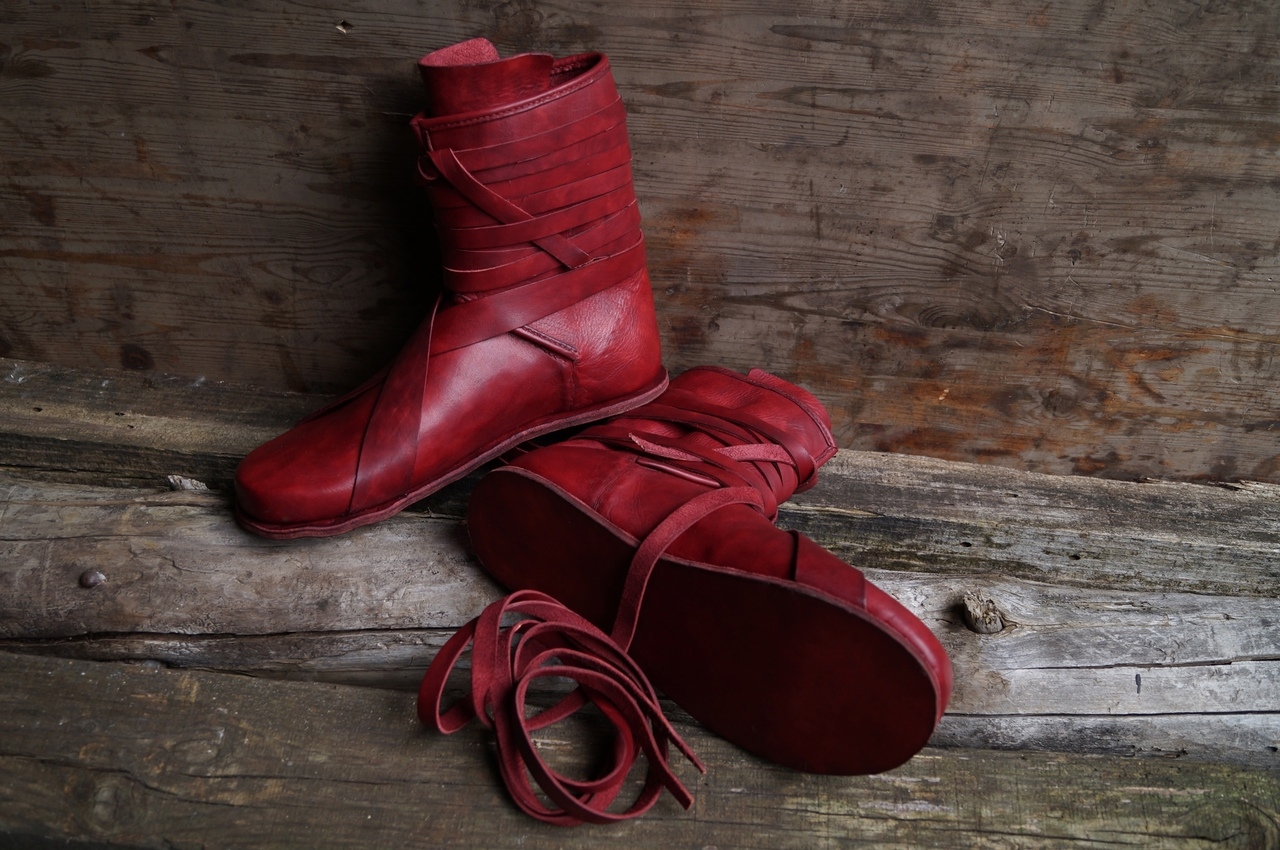 Emperor's Calcea
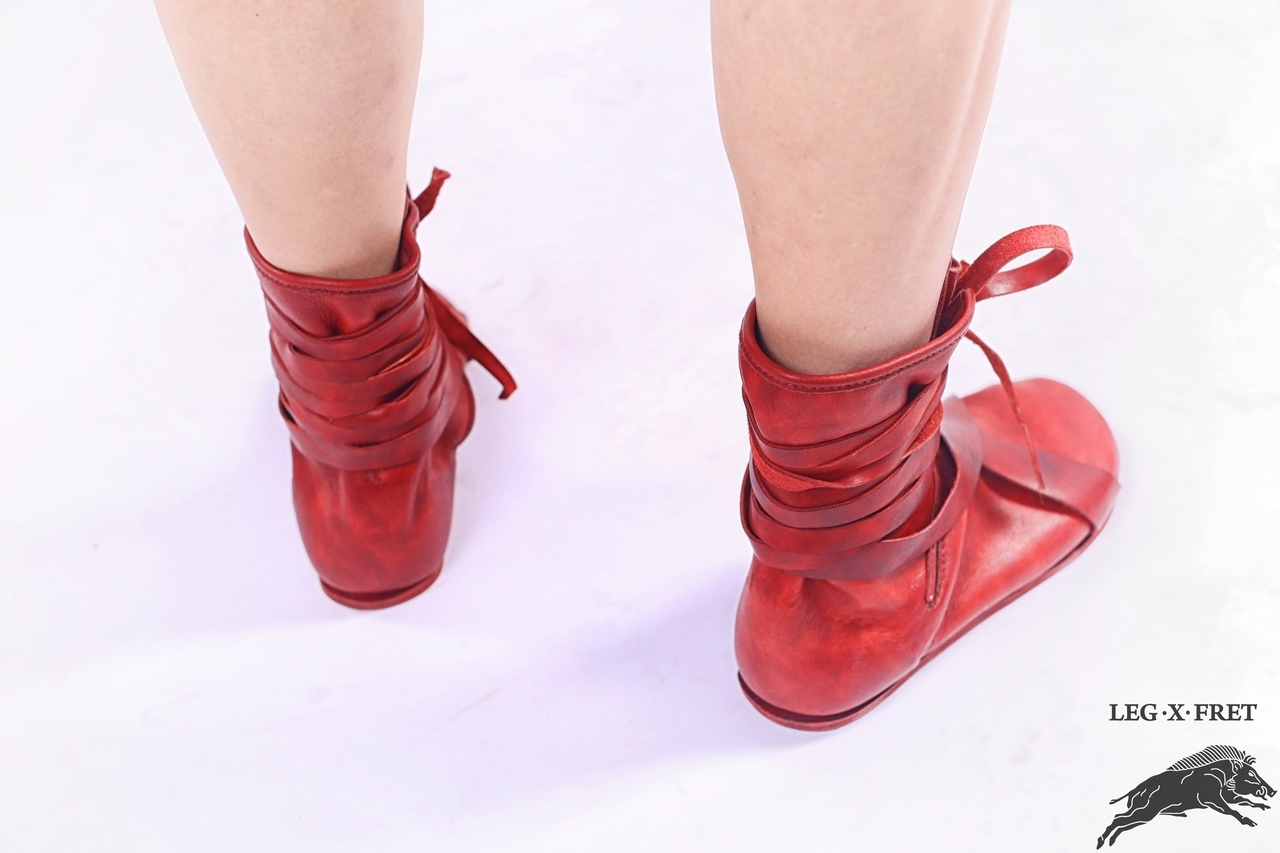 Emperor's Calcea
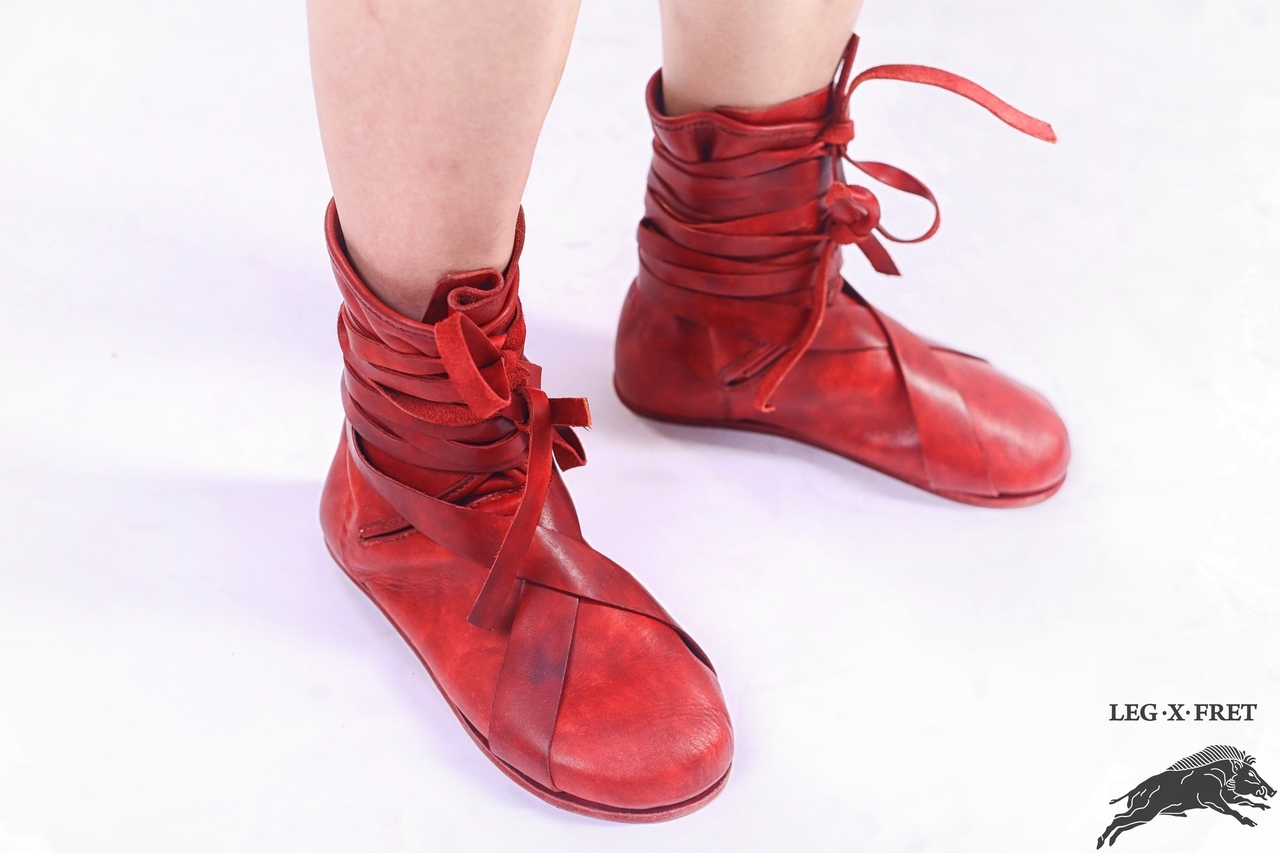 Emperor's Calcea
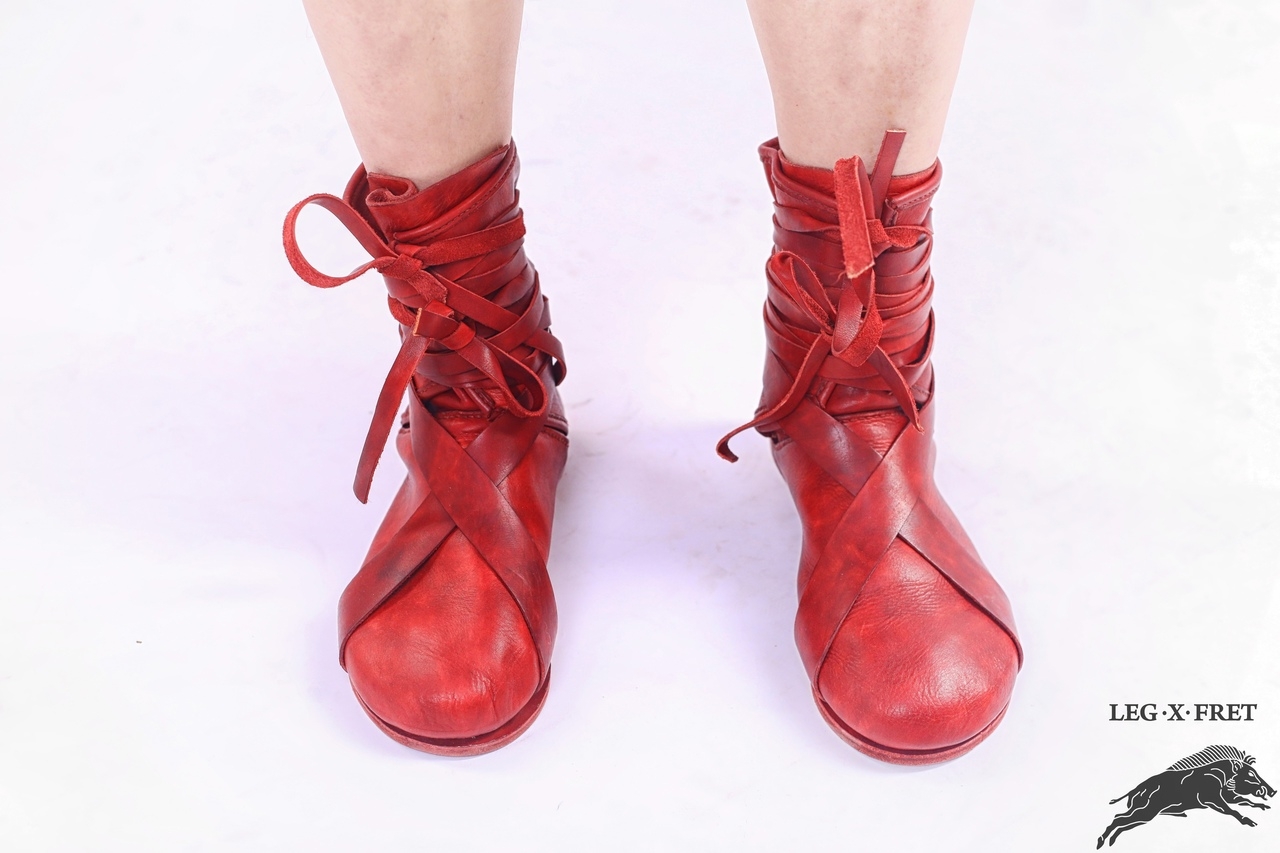 Emperor's Calcea
No complete archaeological example of this exact type was available for the reconstruction, so sculptural evidence was particularly important. The images below show: a marble statue of Augustus in the Museo Nazionale Romano, Palazzo Massimo alle Terme; a detail of the statue of Holconius Rufus in the Naples Archaeological Museum; the statue of Aulus Metellus in Florence’s National Archaeological Museum; and a detail of the second-century CE equestrian statue of Marcus Aurelius in Rome.
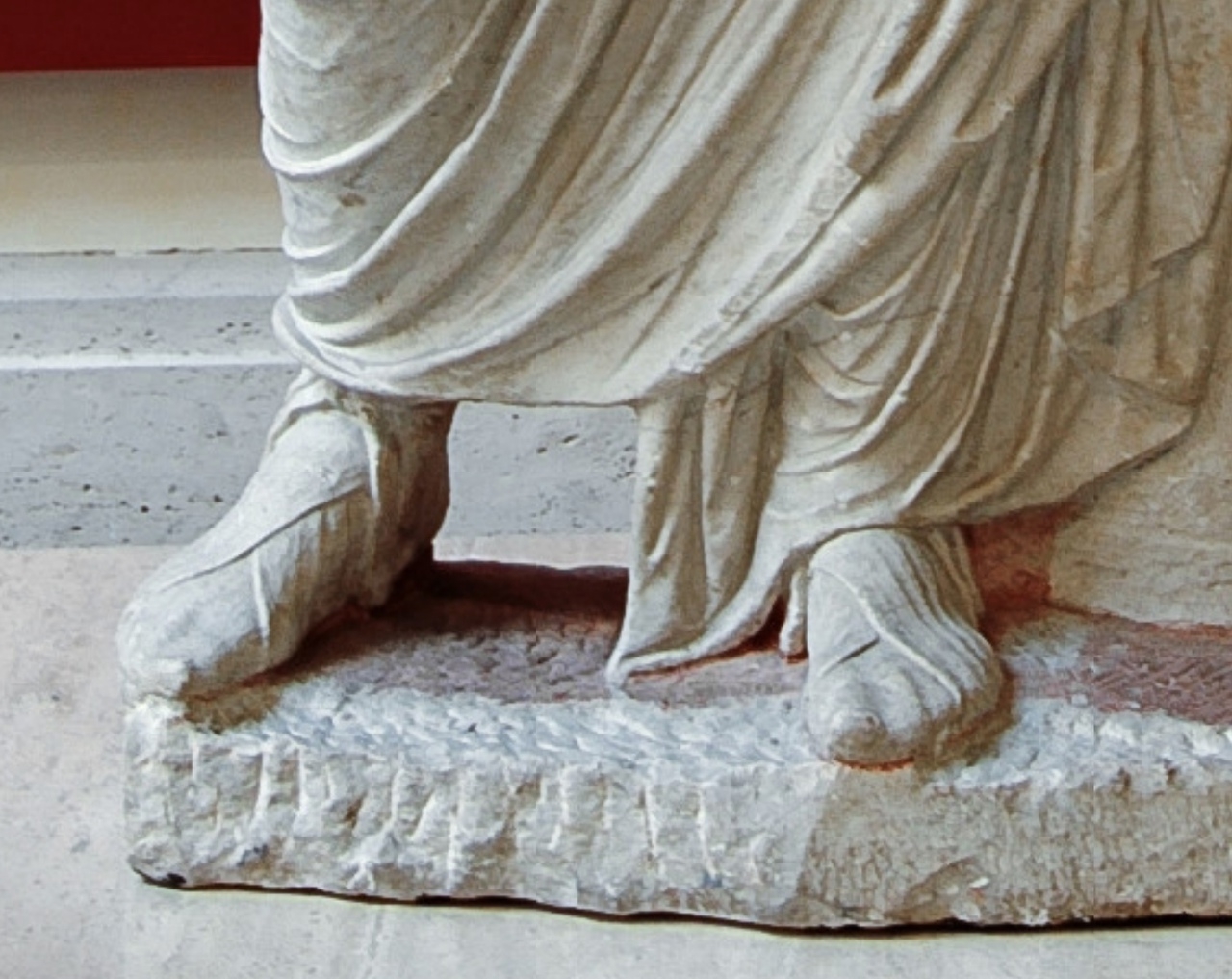 Pictorial sources on imperial calcei
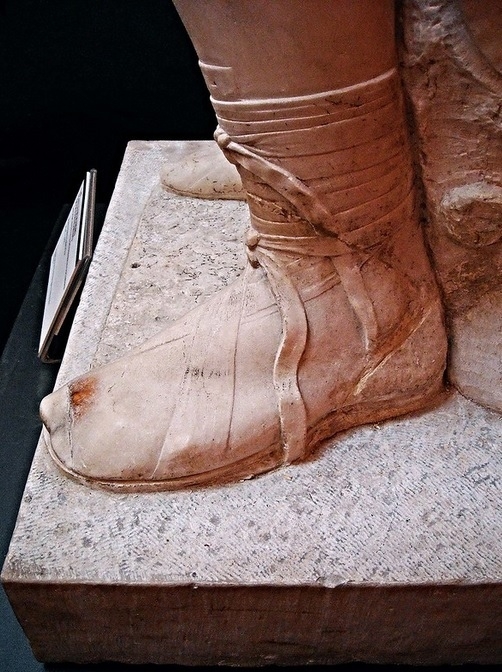 Pictorial sources on imperial calcei
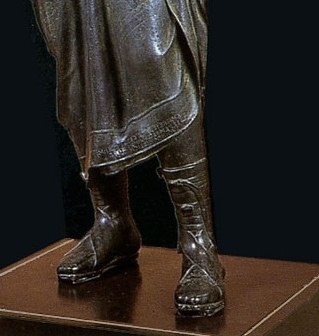 Pictorial sources on imperial calcei
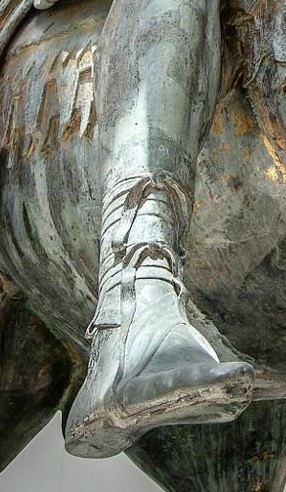 Pictorial sources on imperial calcei
Craftsman: Ilya Kushnir
6. Spear (Hasta)
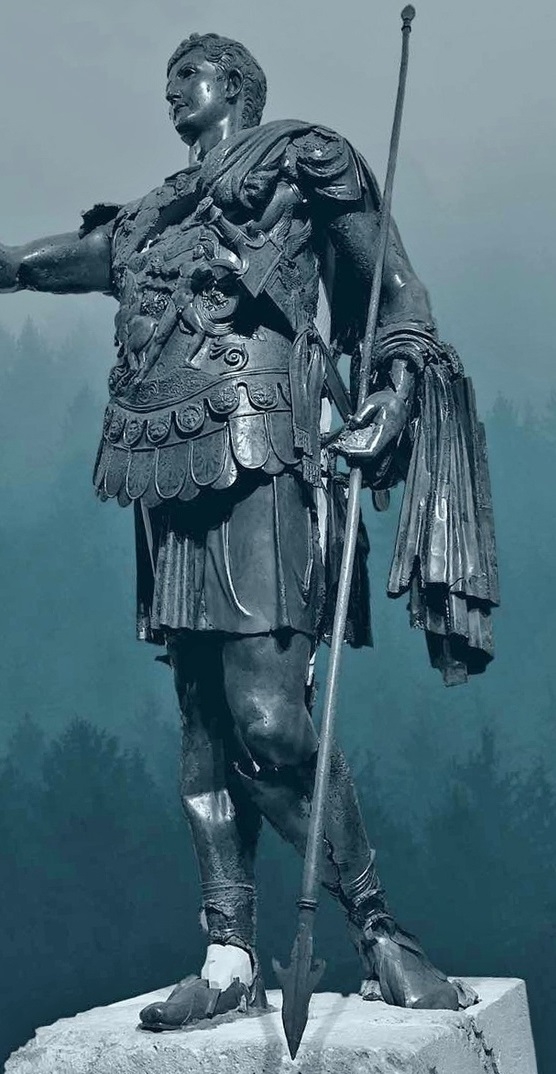
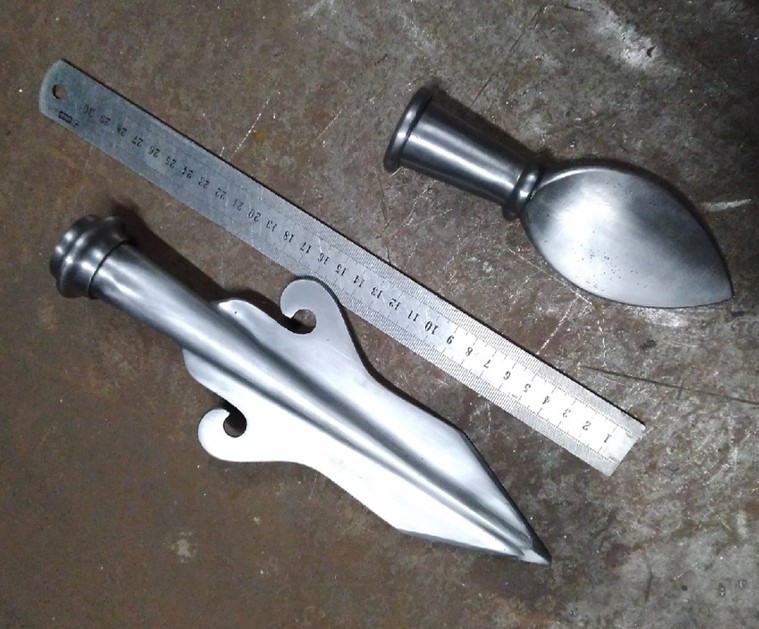
The object once held by the Prima Porta Augustus has not survived intact. The spear shown with the supplementary statue of Germanicus at Perugia was therefore used as the model. Both its head and its butt fitting have unusual forms. The head broadens into a diamond-like shape with two projecting branches, while the butt fitting is leaf-shaped.
For the reconstruction, these features were interpreted as ceremonial rather than practical battlefield fittings. This reading suits the symbolic character of the imperial image, but remains an interpretation of the sculptural evidence.
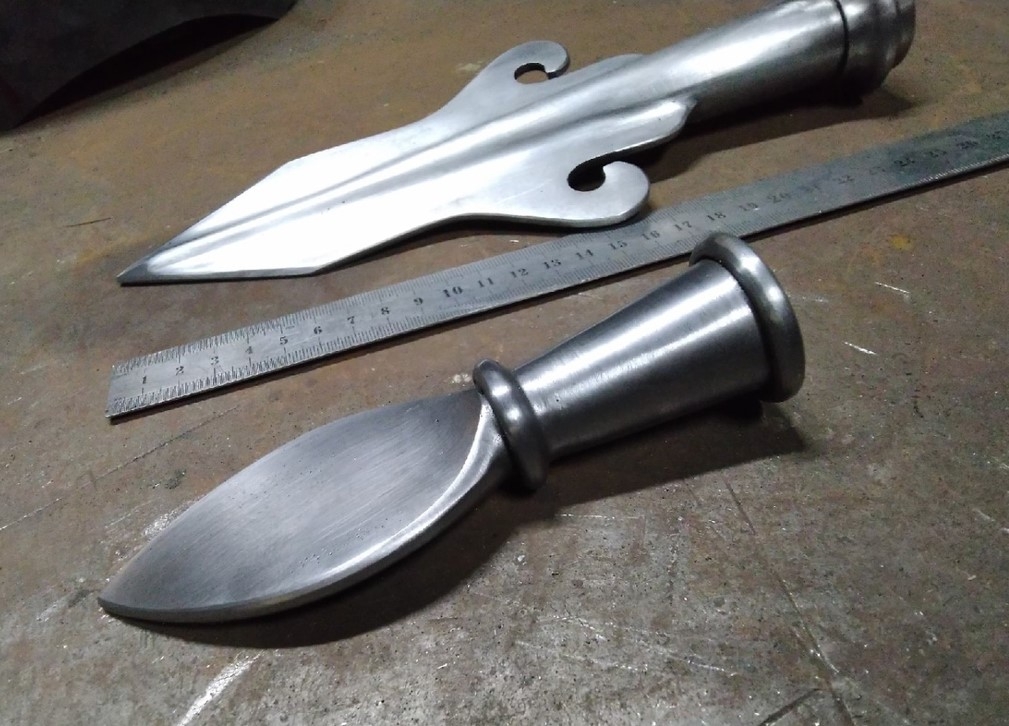 Final view of the spear reconstruction
 Final view of the spear reconstruction
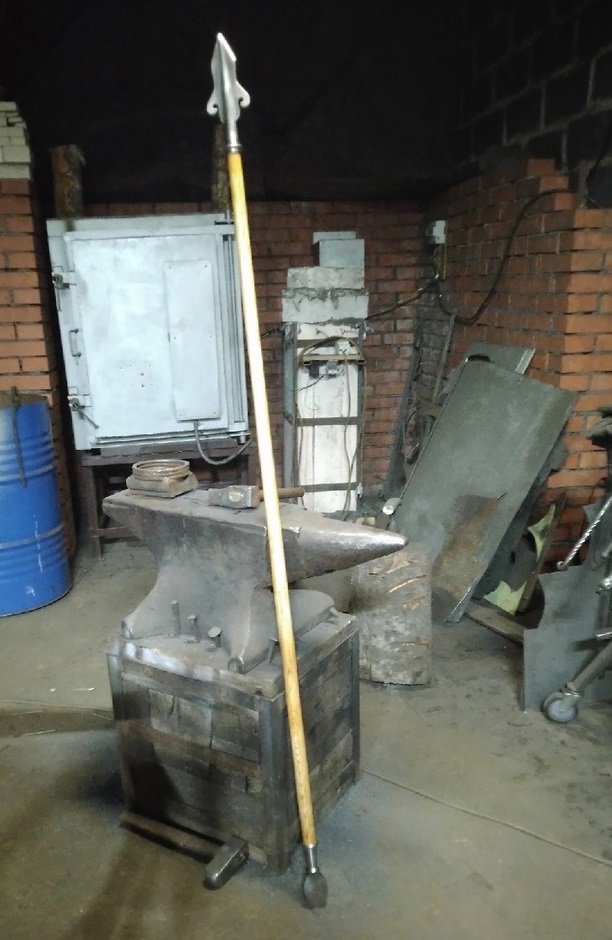 Final view of the spear reconstruction
Craftsman: Dmitry Koryagin
7. Civic Crown (Corona Civica)
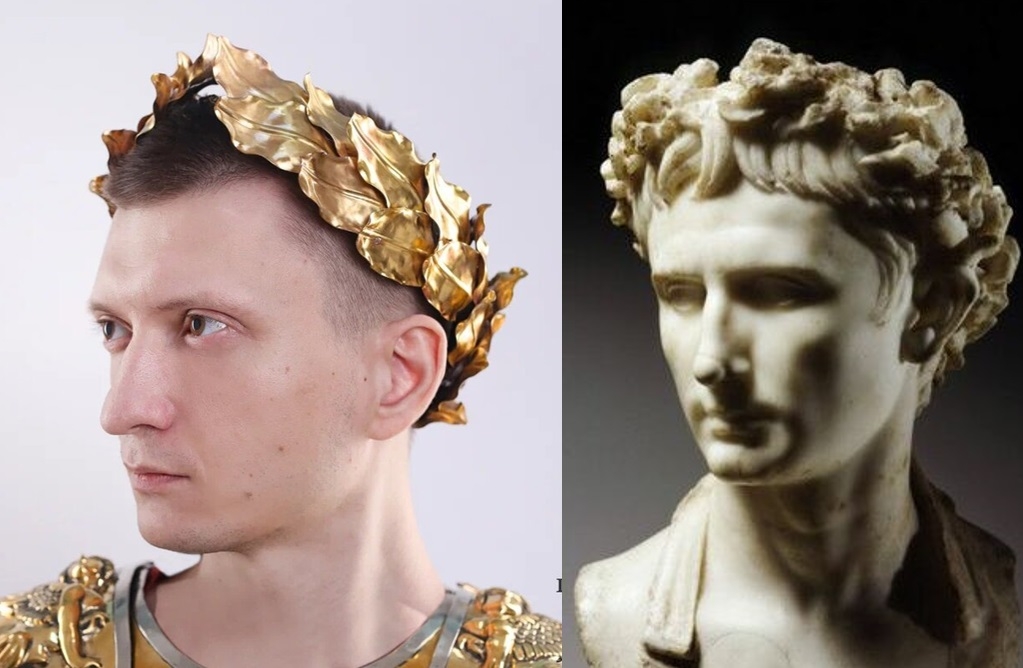
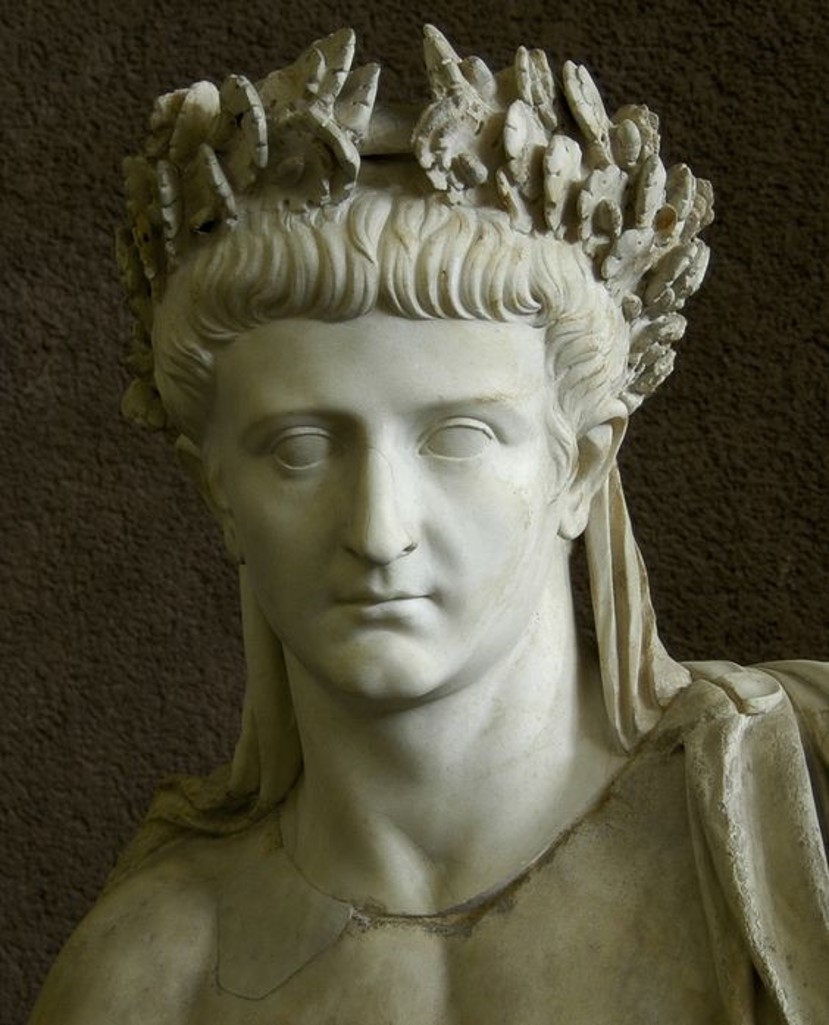
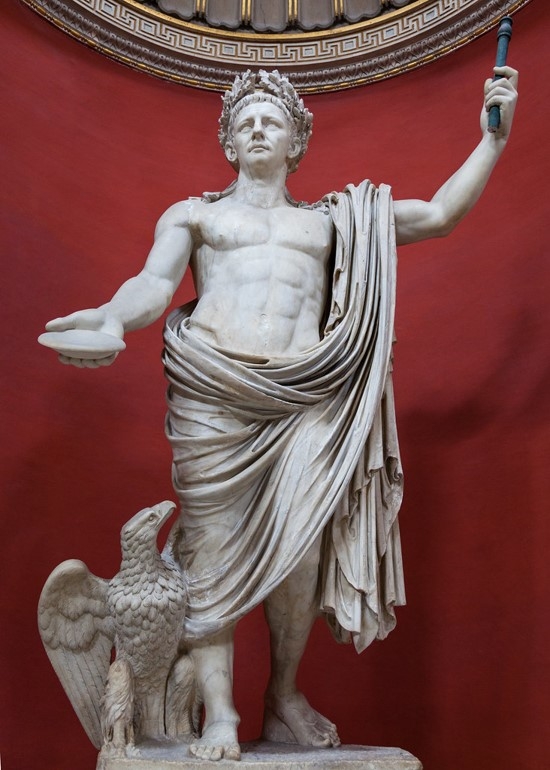
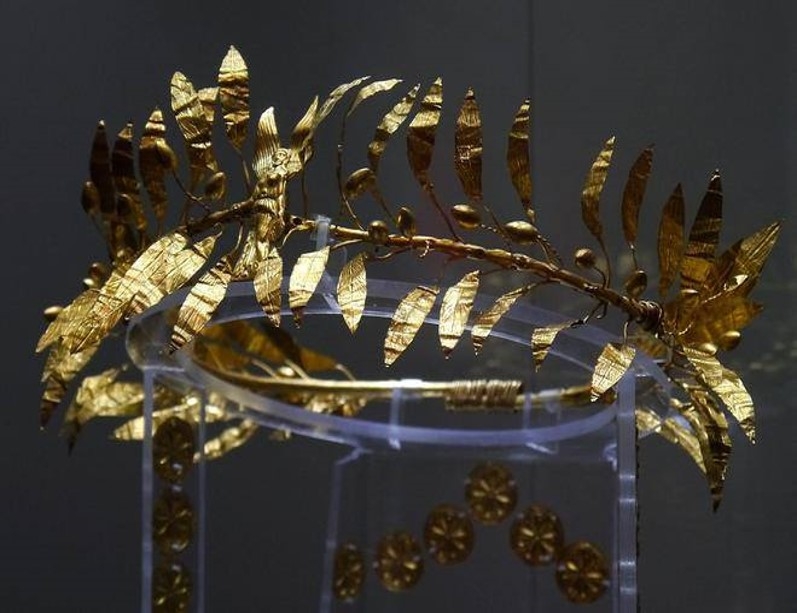
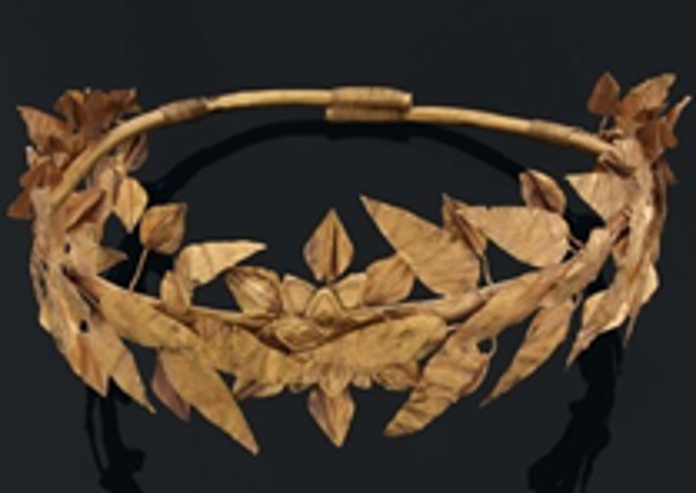
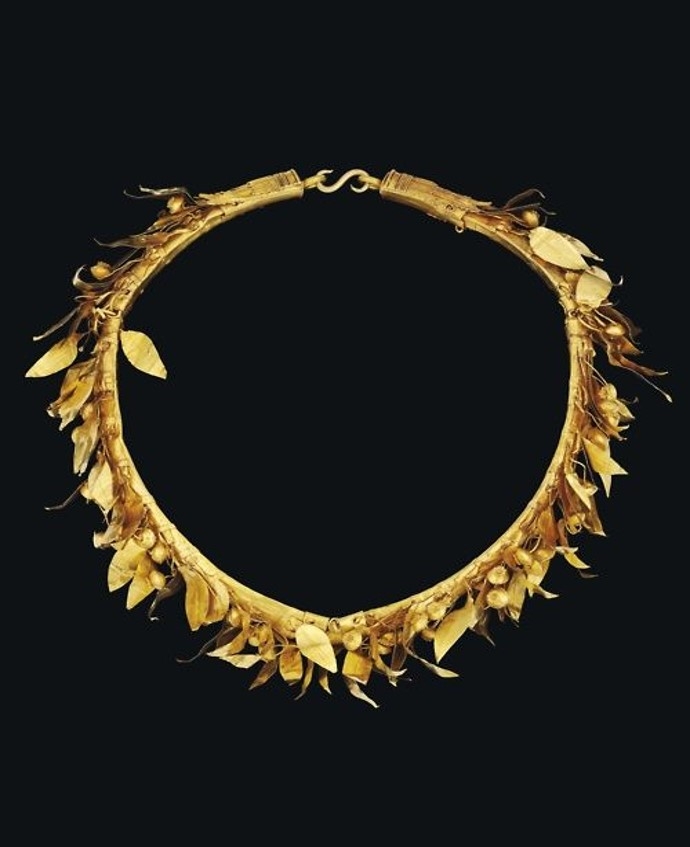
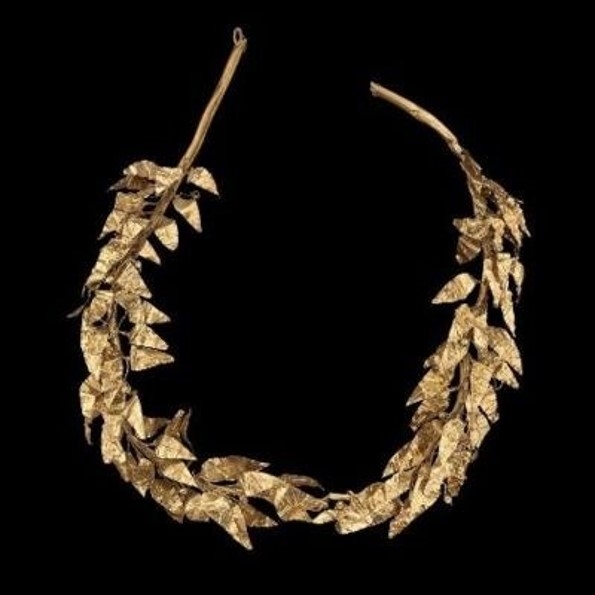
The final addition is the wreath, an attribute frequently shown in portraits of Augustus. The reconstruction uses a copper alloy with individually chased leaves. Sculptural representations are plentiful, whereas surviving metal wreaths used as technical comparisons are predominantly Greek.
The selection below includes a marble bust of Augustus; a mid-first-century CE statue of Tiberius in the Vatican’s Museo Gregoriano Profano; a first-century CE statue of Claudius; and Greek gold wreaths dating from the fifth to second centuries BCE.
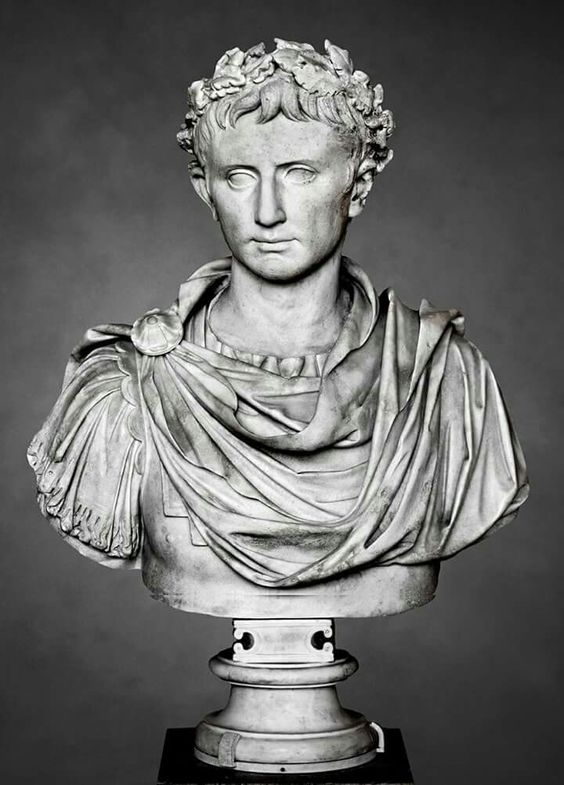 Fine and archaeological sources
 Fine and archaeological sources
 Fine and archaeological sources
 Fine and archaeological sources
 Fine and archaeological sources
 Fine and archaeological sources
 Fine and archaeological sources
The Finished Reconstruction
My reconstruction magnum opus is complete: an emperor’s outfit that brought together years of research and craftsmanship. The work was as rewarding as the finished result. Every small detail on the Prima Porta statue demanded attention, and each new discovery made the process more exciting.
I would like to thank the craftspeople who helped turn the idea into reality: Don Charisma, Ilya Kushnir, Yulia Biryukova and Kira Kholodetskaya. Without you, it would have remained an idea.
Augustus is my favourite figure from Roman history, and his Prima Porta statue has done much to inspire my interest in Rome and historical reconstruction. Once I decided to attempt an emperor’s outfit, there was never any doubt about which emperor to choose.
I hope this work encourages others to improve their equipment, begin new projects and explore the Augustan period. Perhaps it will help inspire a new flourishing of ancient reenactment in Russia.
AVE!
Reconstruction is a process as well as a result. The challenge of translating a sculpted image into an outfit that can actually be worn made this project especially rewarding. I hope others will find in it the same encouragement that the Prima Porta Augustus has given me: to look more closely, set more demanding goals and bring new reconstructions to life.
Literature
- Bemerkungen zu Grab 622 von Kemnitz, Kreis Potsdam in Brandenburg.
- Caesar. The Civil War. In Notes of Julius Caesar and His Continuators. Moscow, 2002 (Russian edition).
- Corpus Inscriptionum Latinarum. Vols. I–XVI. Berlin, 1863 onwards.
- H. Dessau. Inscriptiones Latinae Selectae. Vols. I–III. Berlin, 1892–1914; reprinted 1954–1955.
- Josephus. The Jewish War. Russian translation by Ya. L. Chertok. Minsk, 1991.
- Pliny. Naturalis Historia. Edited by D. Detlefsen. Vols. IV–V. Berlin, 1871–1873.
- Tacitus. Histories. Russian translation by G. S. Knabe. Moscow, 1993.
- Tacitus. Annals. Russian translation by A. S. Bobovich. In Works in Two Volumes, vol. I. Moscow, 1993.
- Tertullian. De Corona. In Works of Tertullian. St Petersburg, 1847 (Russian edition).
- Vegetius. Epitome of Military Science. Russian translation by S. P. Kondratiev. St Petersburg, 1996.
- M. C. Bishop and J. C. N. Coulston. Roman Military Equipment from the Punic Wars to the Fall of Rome. London, 1993.
- Peter Connolly. Greece and Rome at War. London, 1981.
- James Curle. A Roman Frontier Post and Its People. Glasgow, 1911.
- A. Hofmann. Römische Militärgrabsteine der Donauländer. Vienna, 1905.
- Otto Jahn. Die Lauersforter Phalerae. Bonn, 1860.
- H. Lehner. Die Einzelfunde von Novaesium. Bonner Jahrbücher 111–112, 1904, pp. 243–418.
- Valerie A. Maxfield. The Military Decorations of the Roman Army. London, 1981.
- H. Russell Robinson. The Armour of Imperial Rome. London, 1975.
- Vatican Museums. Augustus from Prima Porta: Museum catalogue
Related Topics
- Practical Reconstruction Experience
- Octavian Augustus
- Lorica Musculata
- Subarmalis
- Tunic
- Calceus
- Coronae
Publication Source
Interested in Ancient Rome beyond reading? Join Legio X Fretensis or explore our reenactment directions.


