Hoplon: Reconstruction Experience
"My Hoplon: Reconstruction Experience" is a practical account of a Greek shield: form, wooden body, rim, porpax, covering and painting. It is not a general history of the hoplon, but a record of work with source, material and finished object.
The practical work belongs to Timur Petrakov. General typology and the place of the hoplon in Greek equipment are covered in Hoplon, Hoplite and Shield.
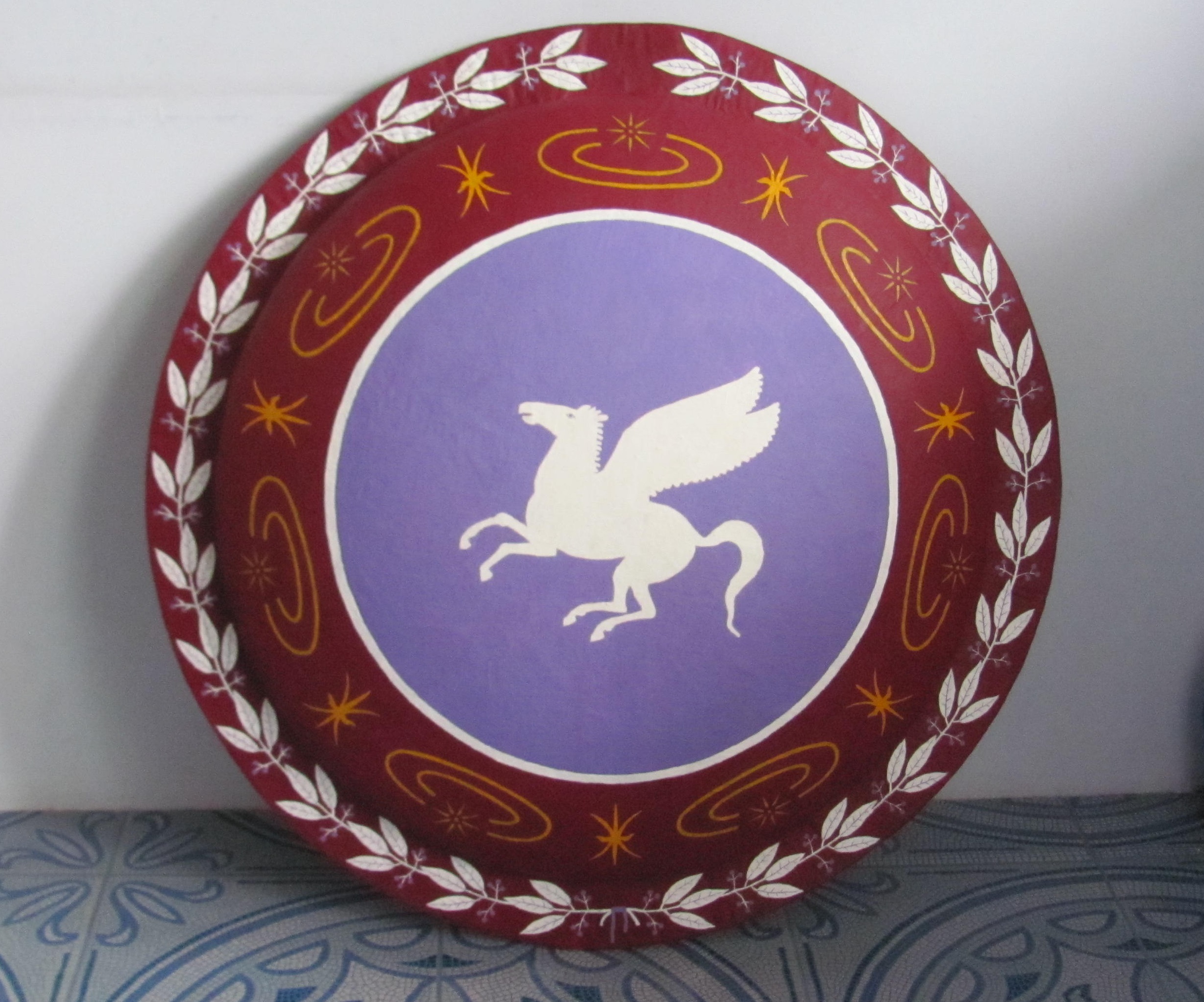 Completed hoplon with the final painting on the outer face.
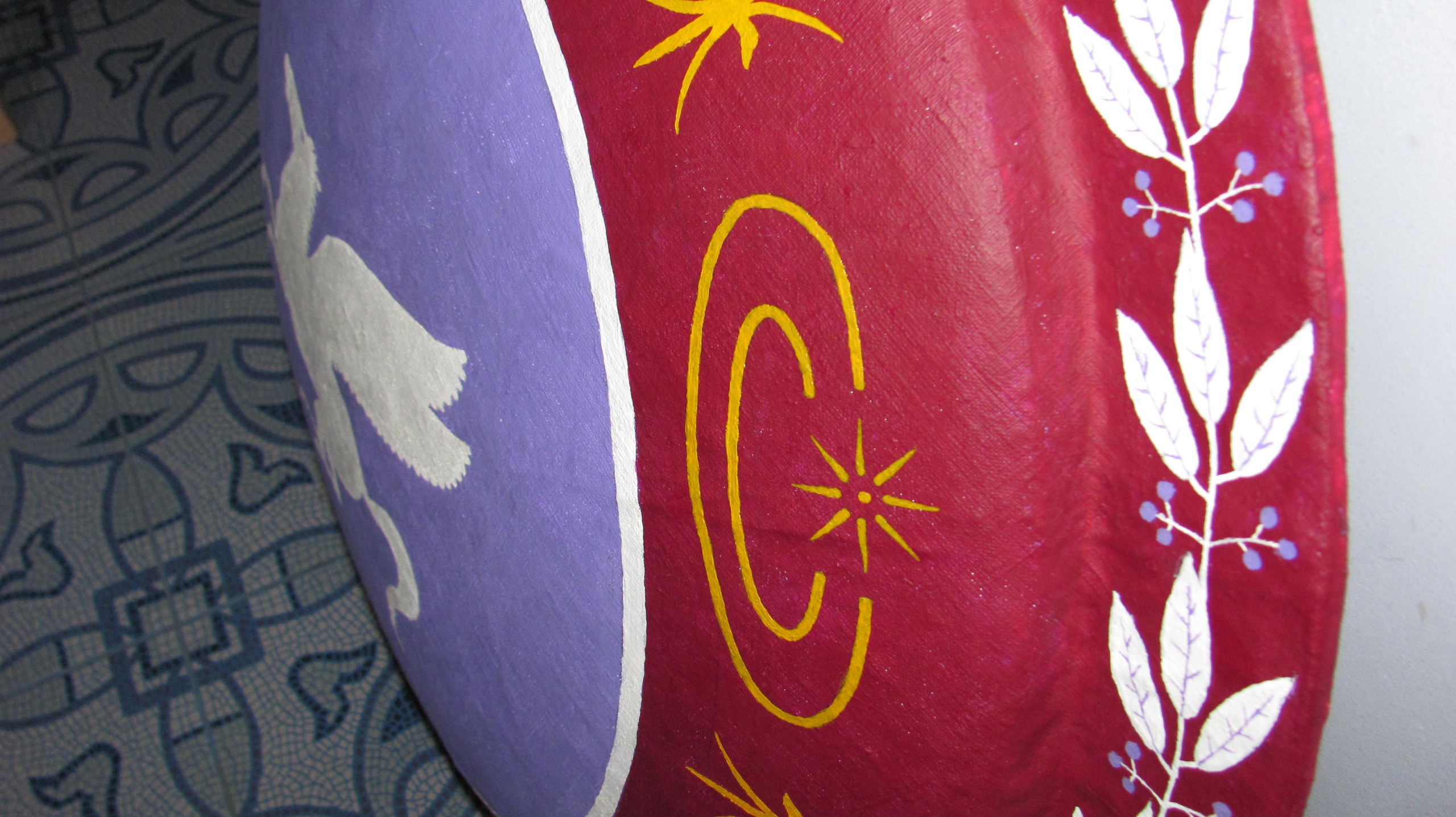 The result of painting hoplon
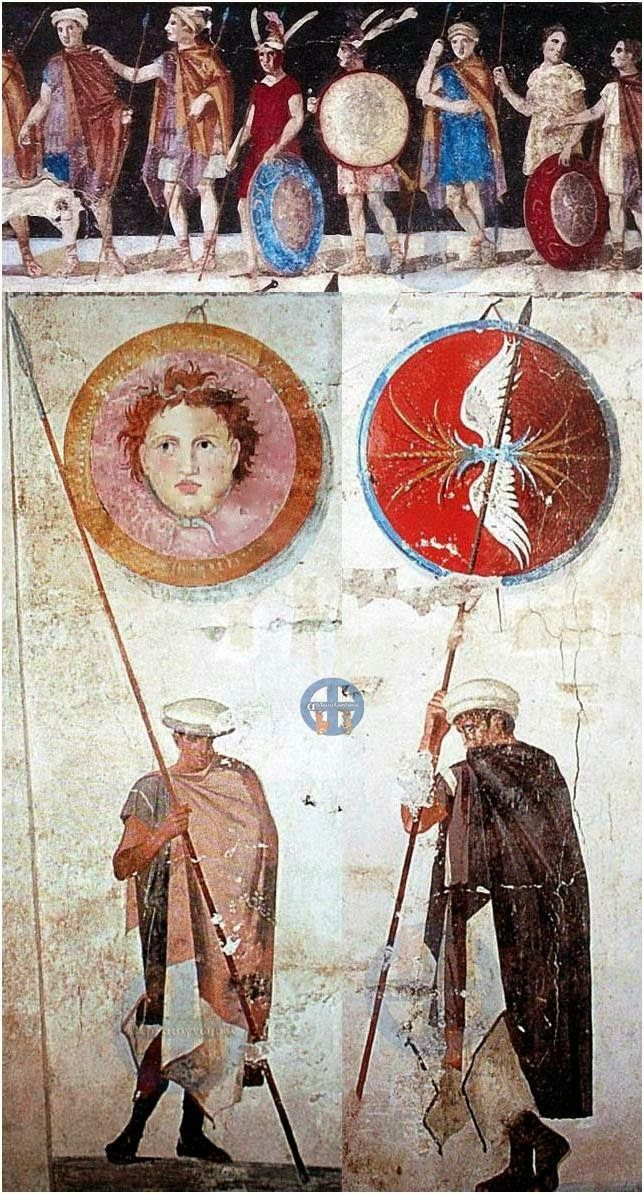 Ancient wall painting with round shields; evidence for colour treatment and shield devices.
Aim and Sources
The aim was to make a shield that reads as a hoplon not only from the front but also in profile: with a visible lens, separate ring, pronounced rim and the grip system of porpax and handhold. Images of warriors were therefore not enough; preserved examples, construction diagrams and modern reconstruction parallels also mattered.
Visual sources show silhouette and use, but not the full technology. Surviving finds and publications clarify thickness, edge shape and the attachment of fittings. Practical reconstruction combines these groups of evidence, but each step must be kept distinct from a secure archaeological fact.
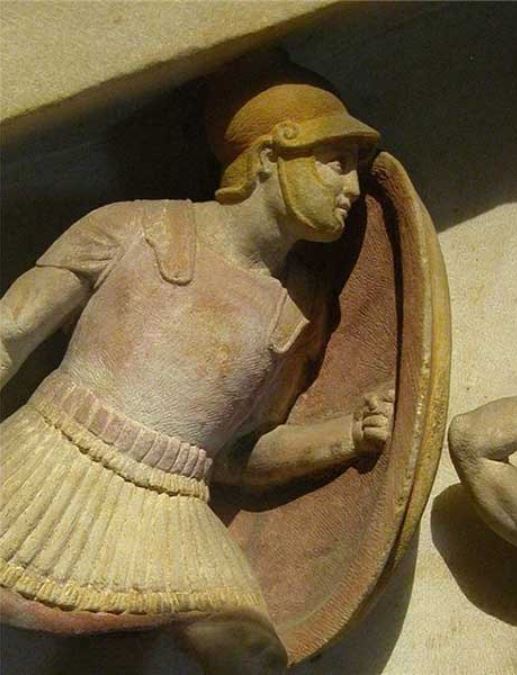
 Ancient stone sculpture of a warrior with a round shield; evidence for how the shield sits against the body and for its visible profile.
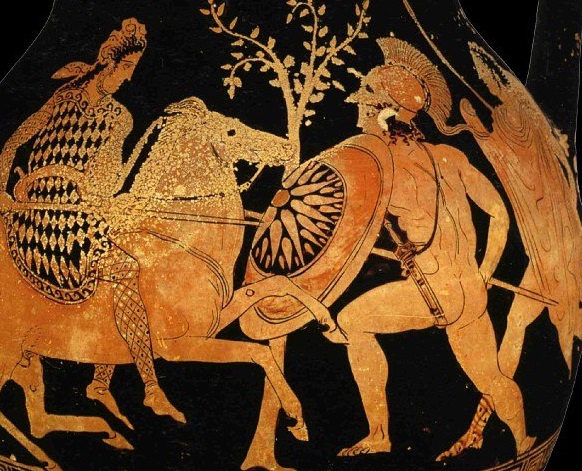 Greek vase painting with a warrior and a round shield, Archaic-Classical tradition; evidence for shield diameter and position.
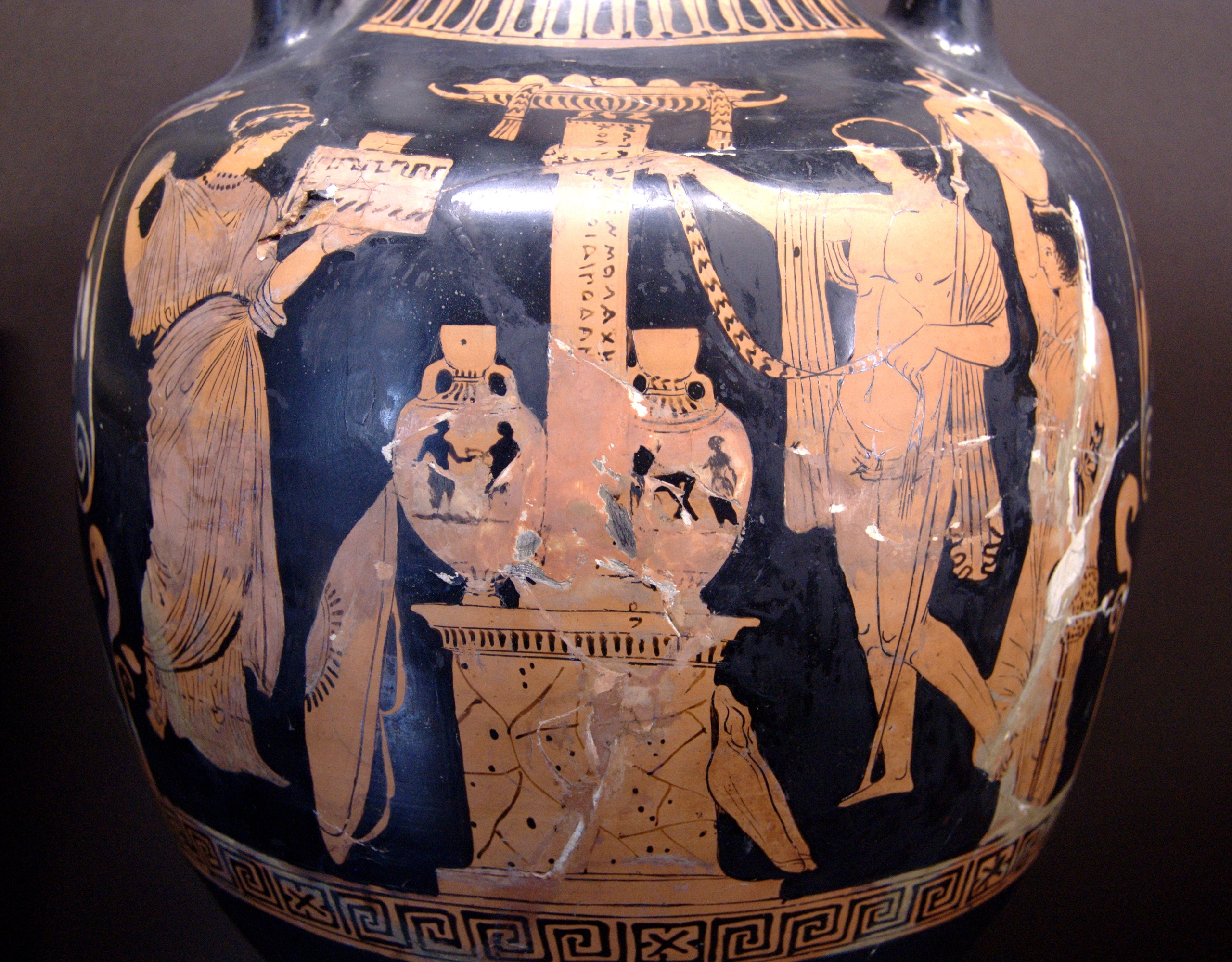 Greek red-figure vase painting with armed warriors; evidence for shield painting and hoplon silhouette.
Form: Lens, Ring and Rim
A hoplon cannot be reduced to a flat circle. Its working geometry depends on a convex lens and a ring that helps keep the form, adds rigidity and creates the characteristic profile. A wrong curve changes both the look of the shield and its behaviour on the arm.
Before assembly it is useful to fix several control measurements: outer diameter, ring thickness, lens deflection, rim height and the position of the porpax. These parameters prevent the form from drifting during gluing and covering.
 A curved shield protects the fighter
 Outer diameter of the ring
 Ring Thickness
Wooden Core
The reconstructed core was assembled from wooden elements while preserving the curvature of the shield. In practice this is one of the most labour-intensive stages: the pieces must not only form a circle but work together as a three-dimensional surface. Templates, temporary fixing and repeated symmetry checks are essential.
Covering and rim cannot be expected to correct the body later. Leather, linen and fittings usually make core errors more visible. Early control of form therefore saves more time than late adjustments.
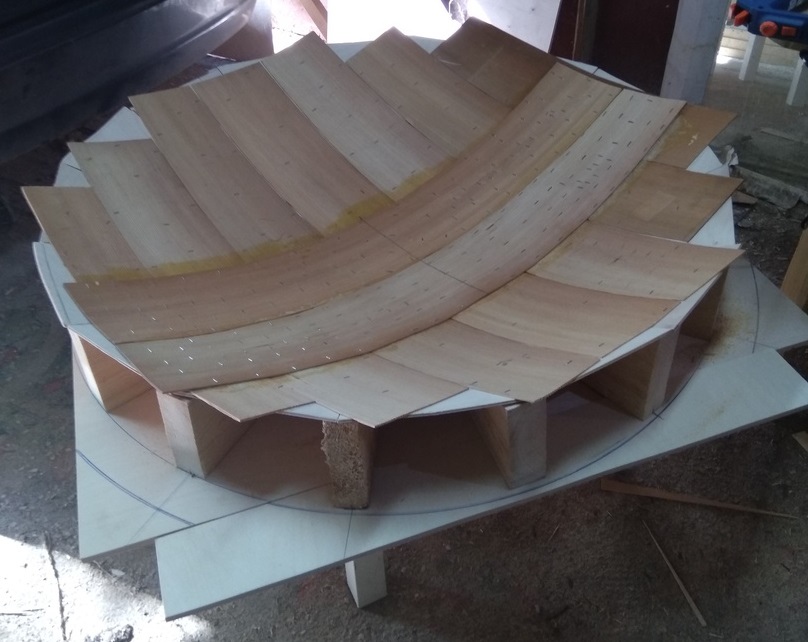 Reconstruction of hoplon from glued plates
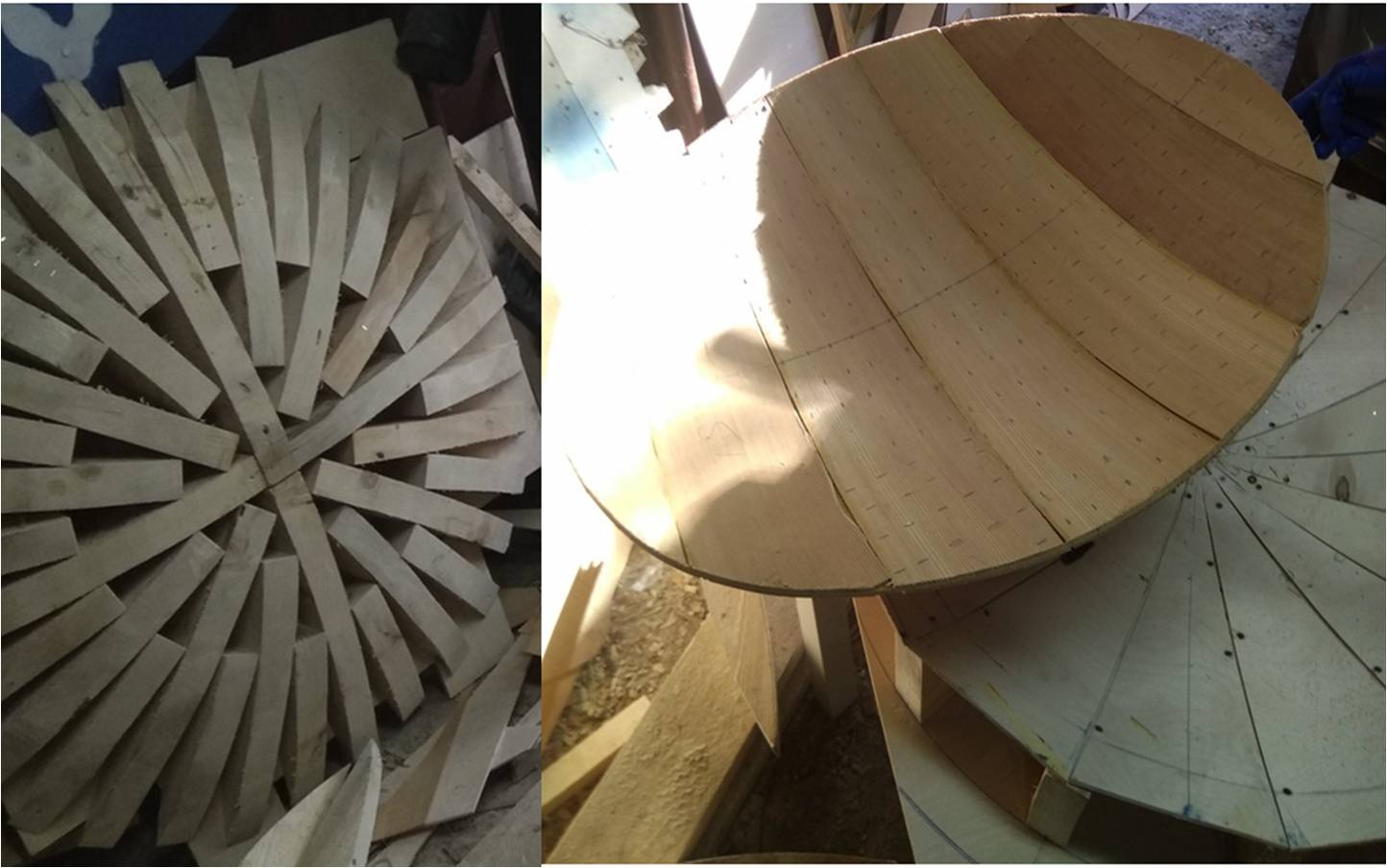 Two-piece hoplon mold
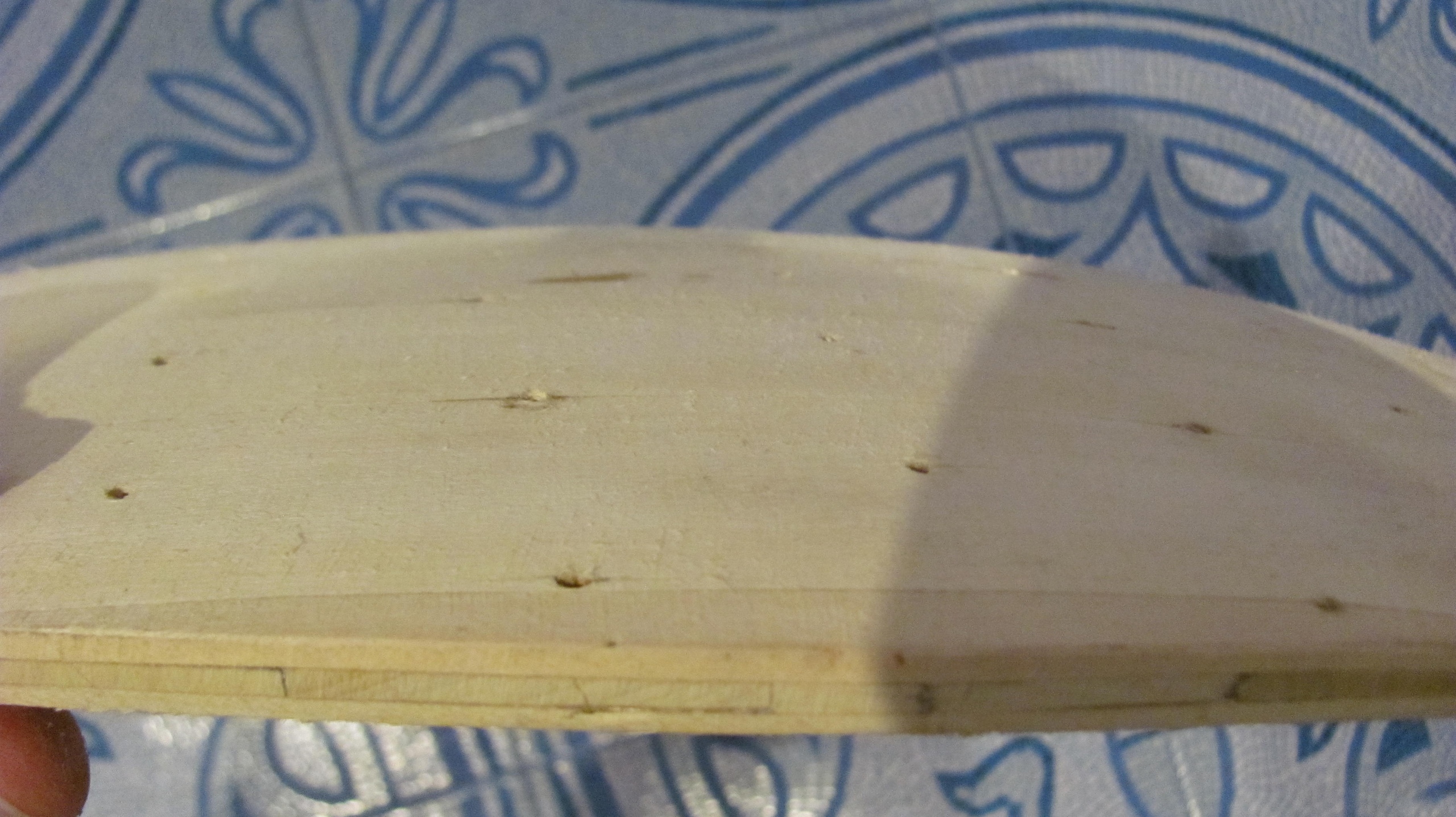
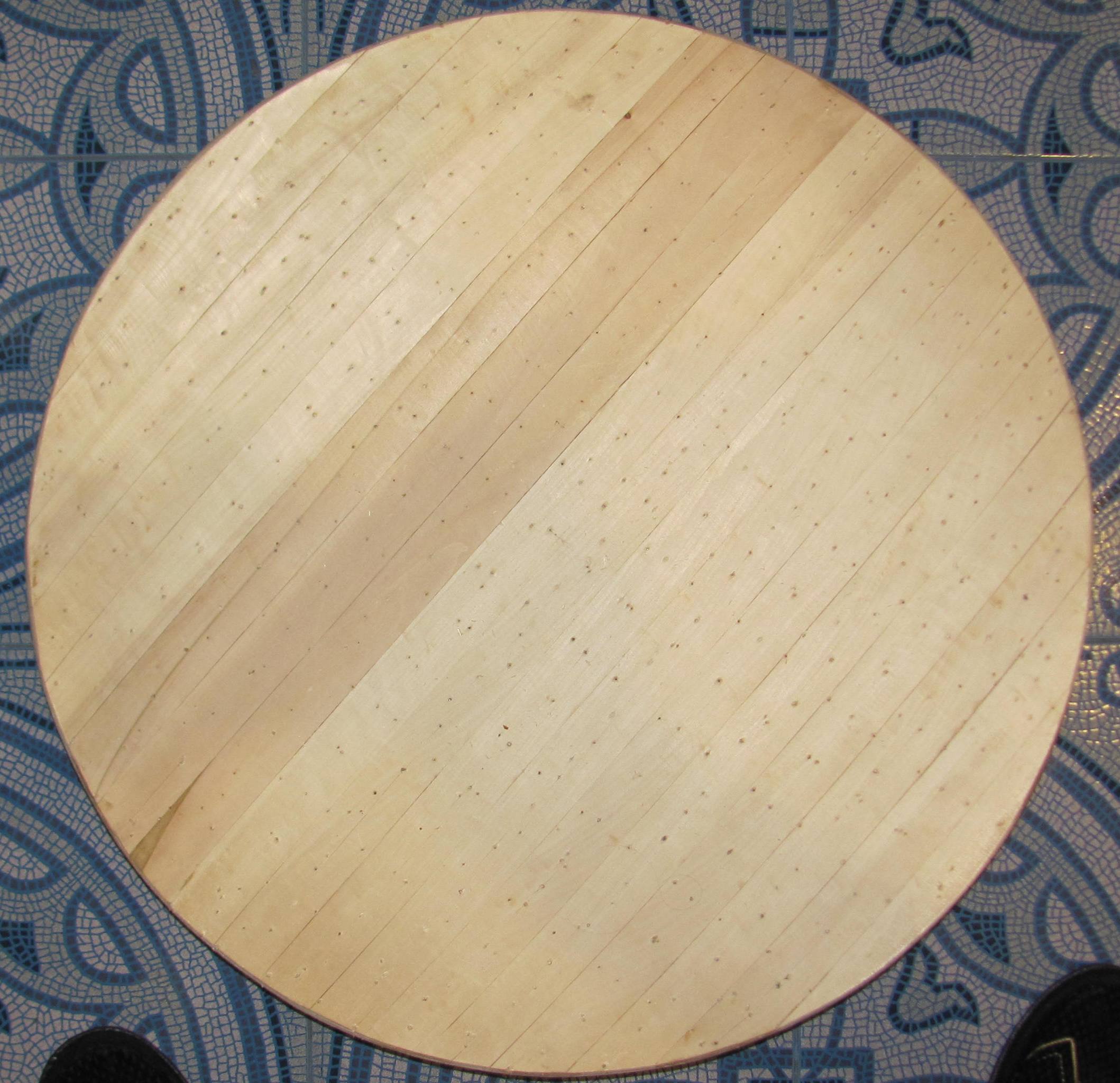 Narrow strips of lens veneer
Ring, Rim and Assembly
Ring and rim solve several problems at once: they protect the edge, hold the outline, add stiffness and give the shield its recognizable profile. In reconstruction this is not a decorative frame, but a structural element that must match the lens.
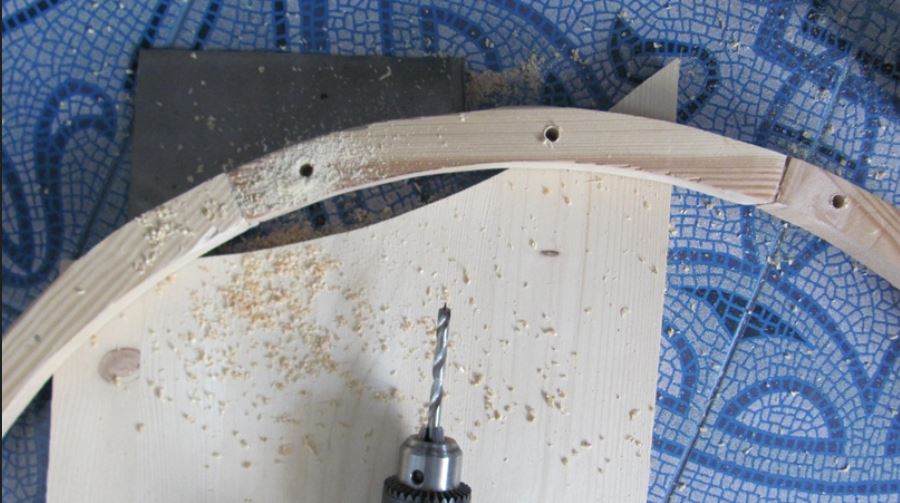
Assembly requires careful drilling, checking of joints and step-by-step fixing. If the holes for fasteners or the porpax are placed too early, later fitting becomes harder. The order of operations is therefore as important as the material.
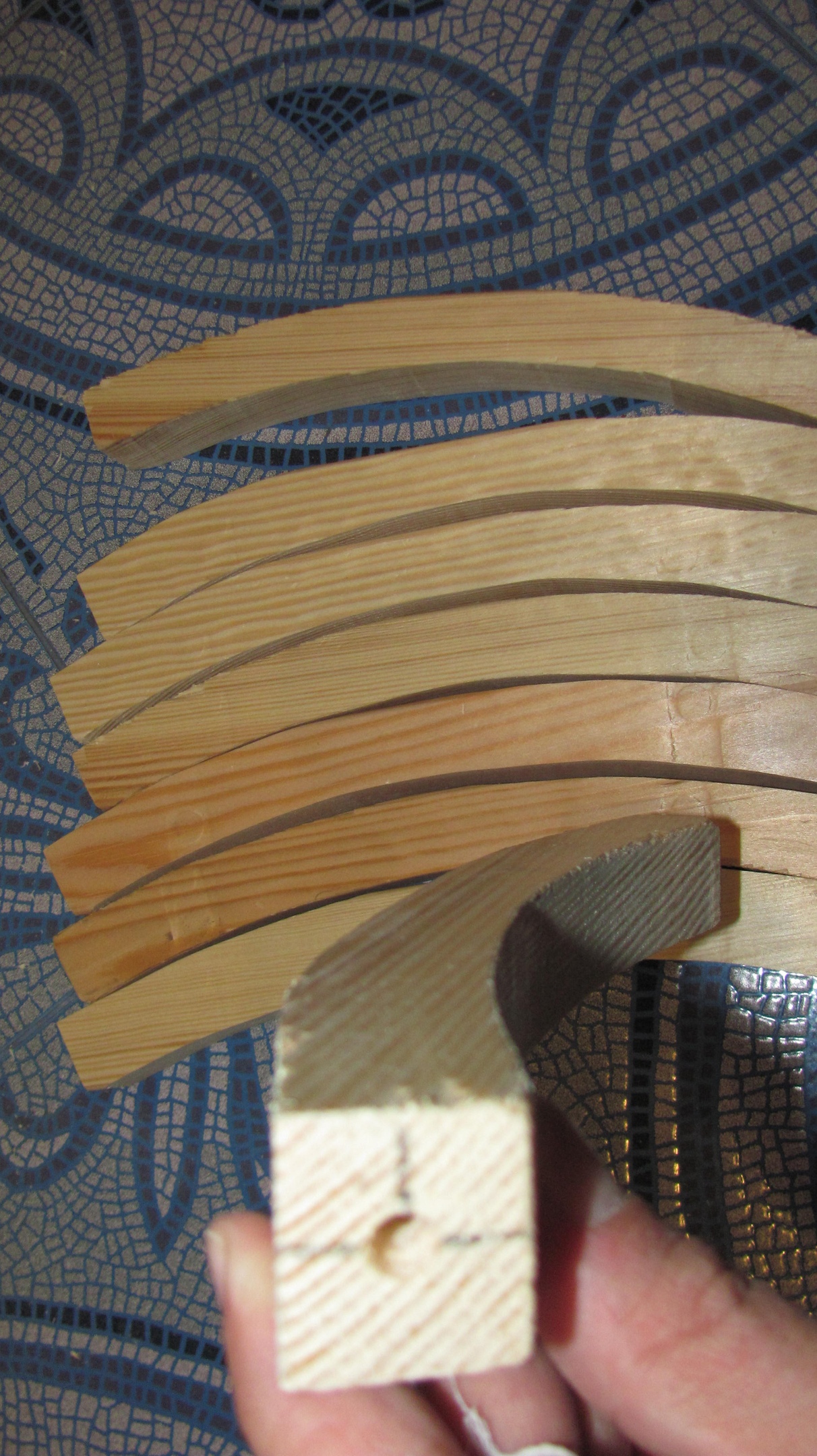 Test-fitting the ring segments around the shield before final adjustment.
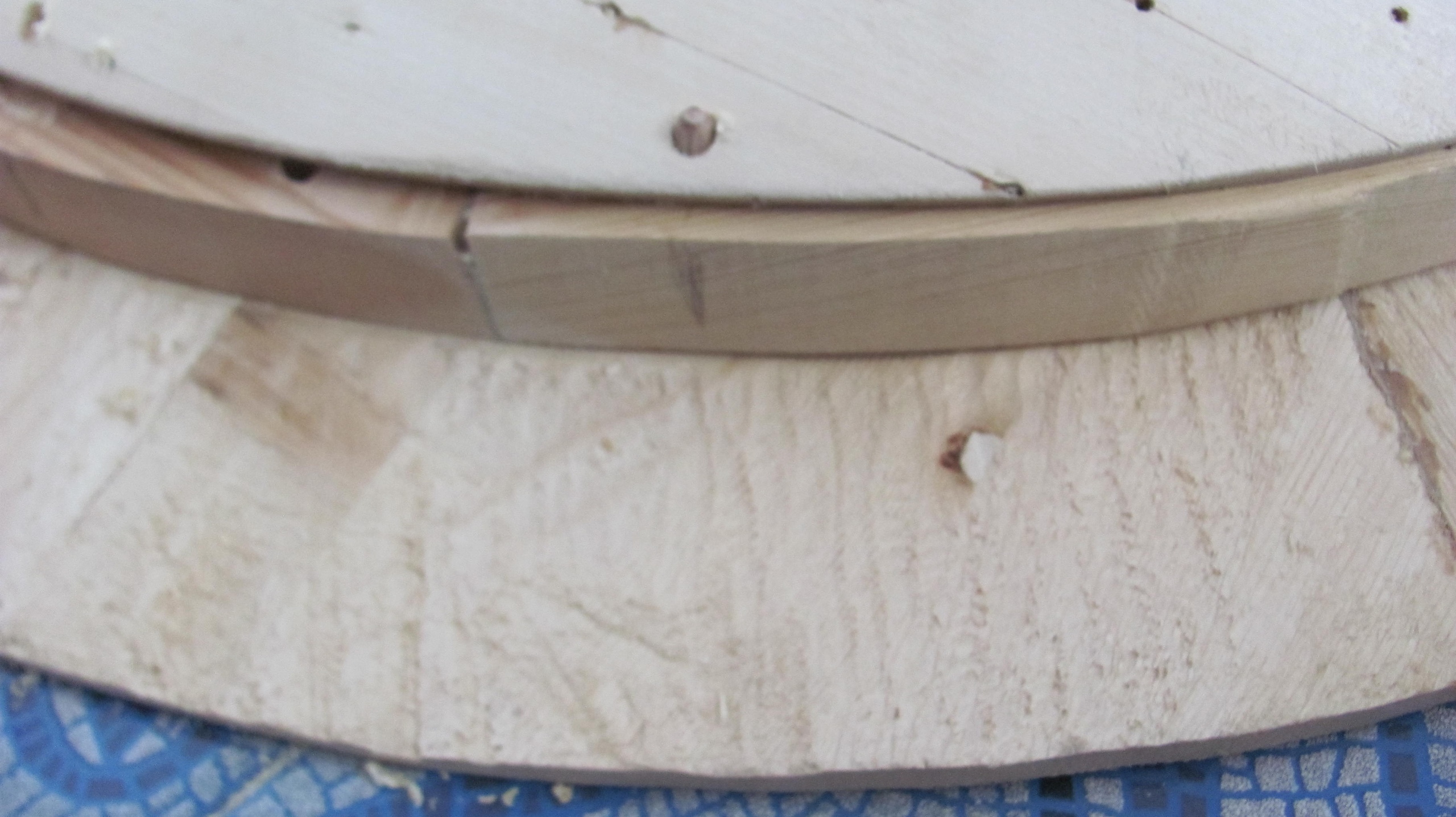 Not quite a "perfect" circle))
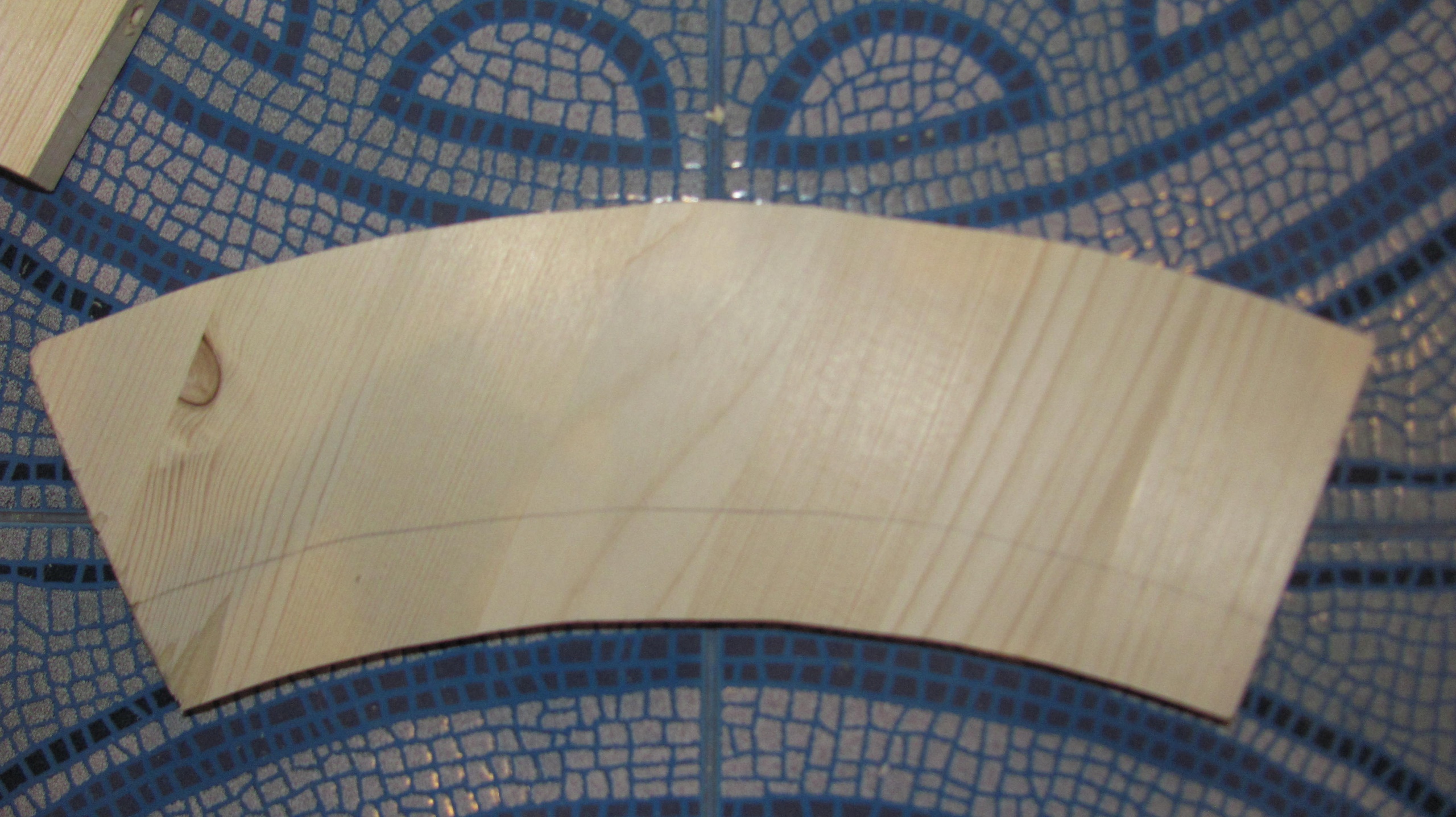
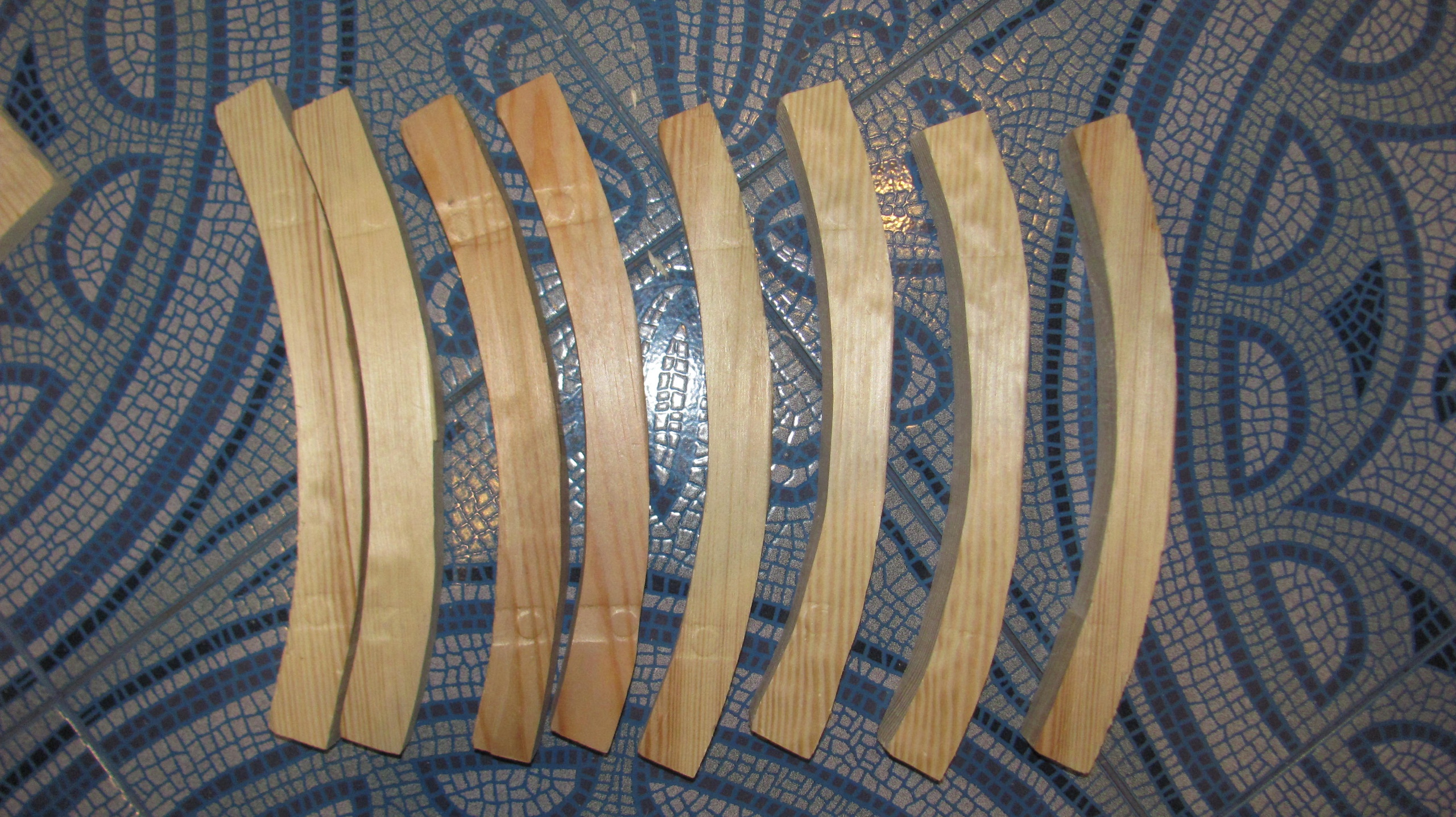 Ring Segments
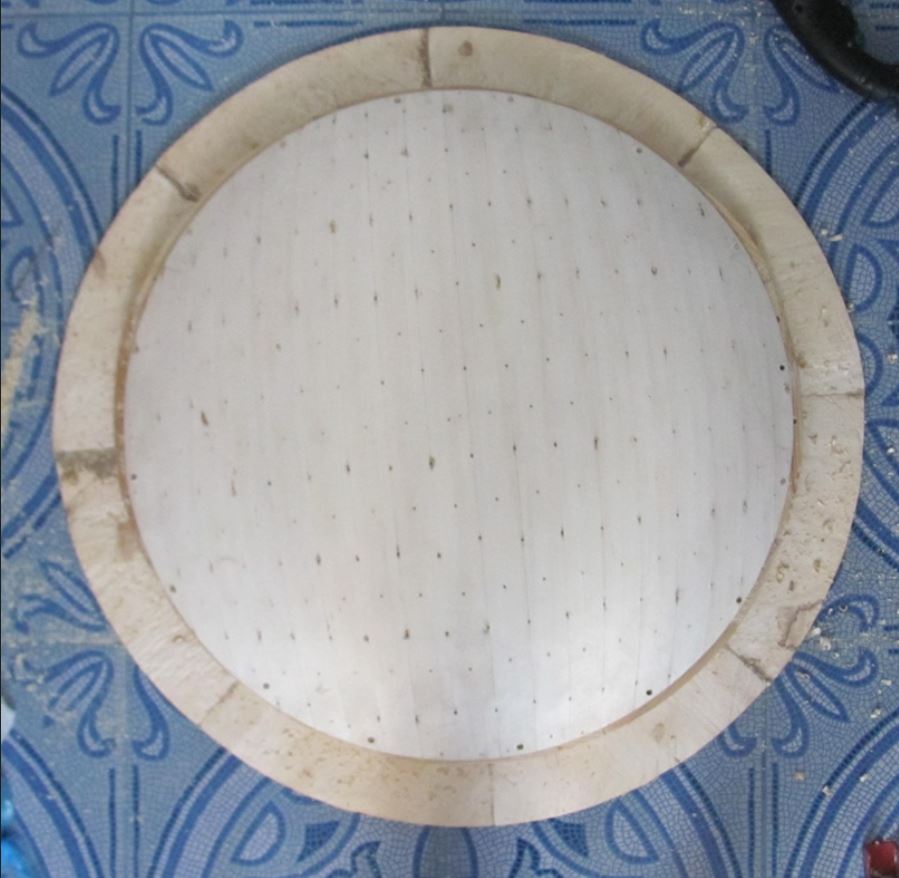 Hoplon rim on the floor
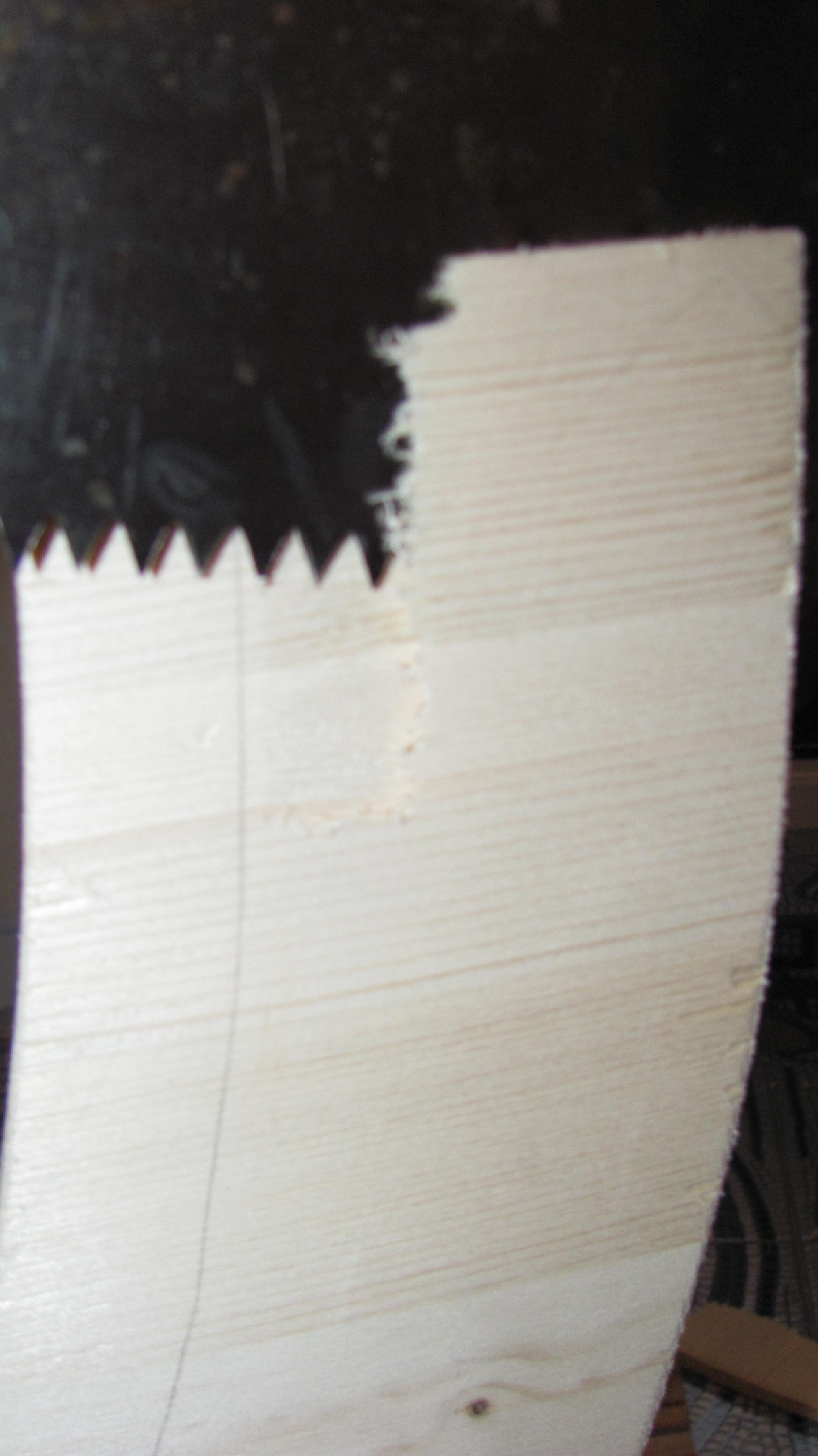
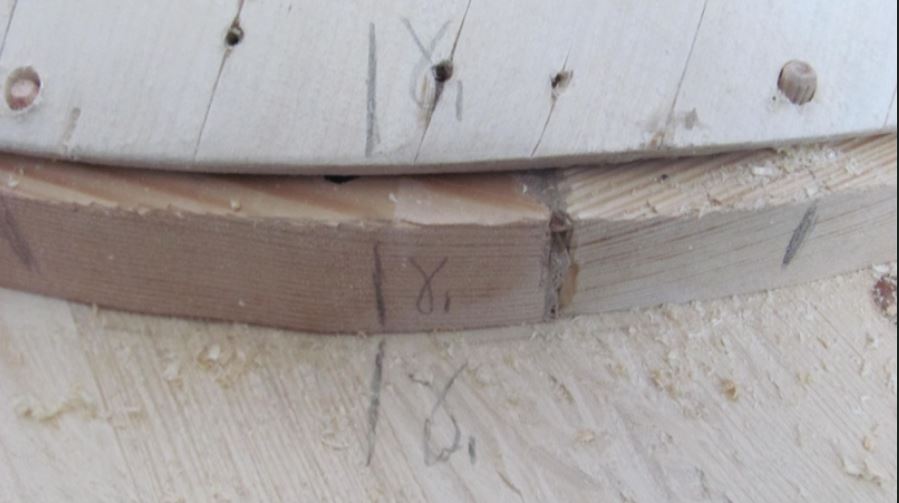 Drilling holes
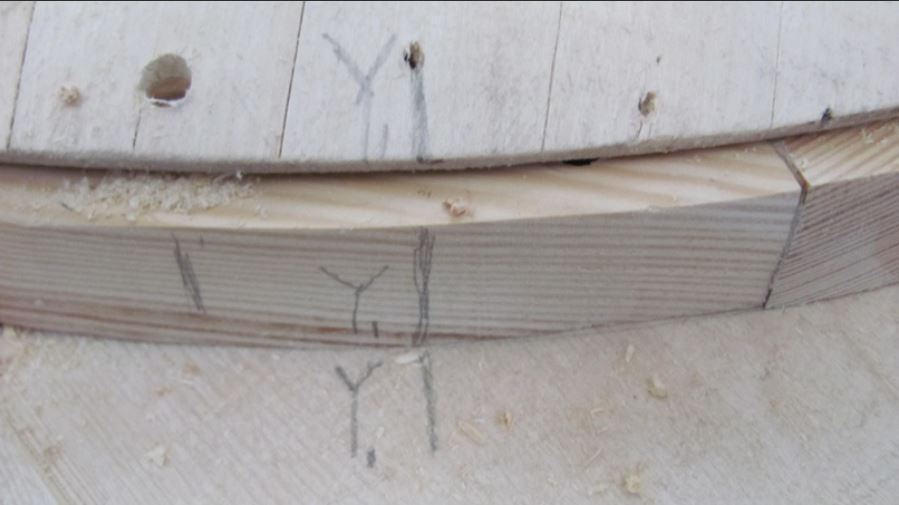
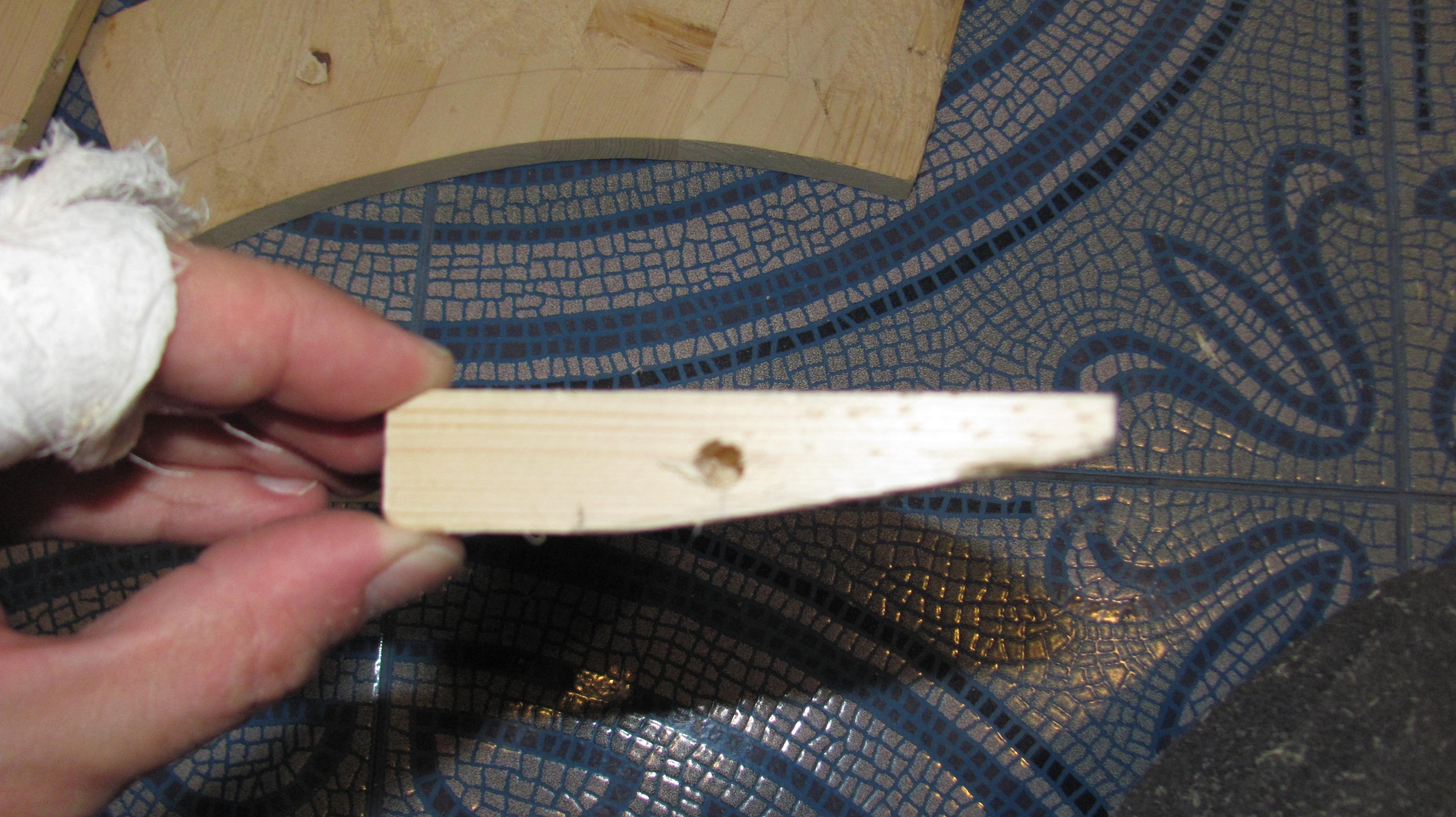
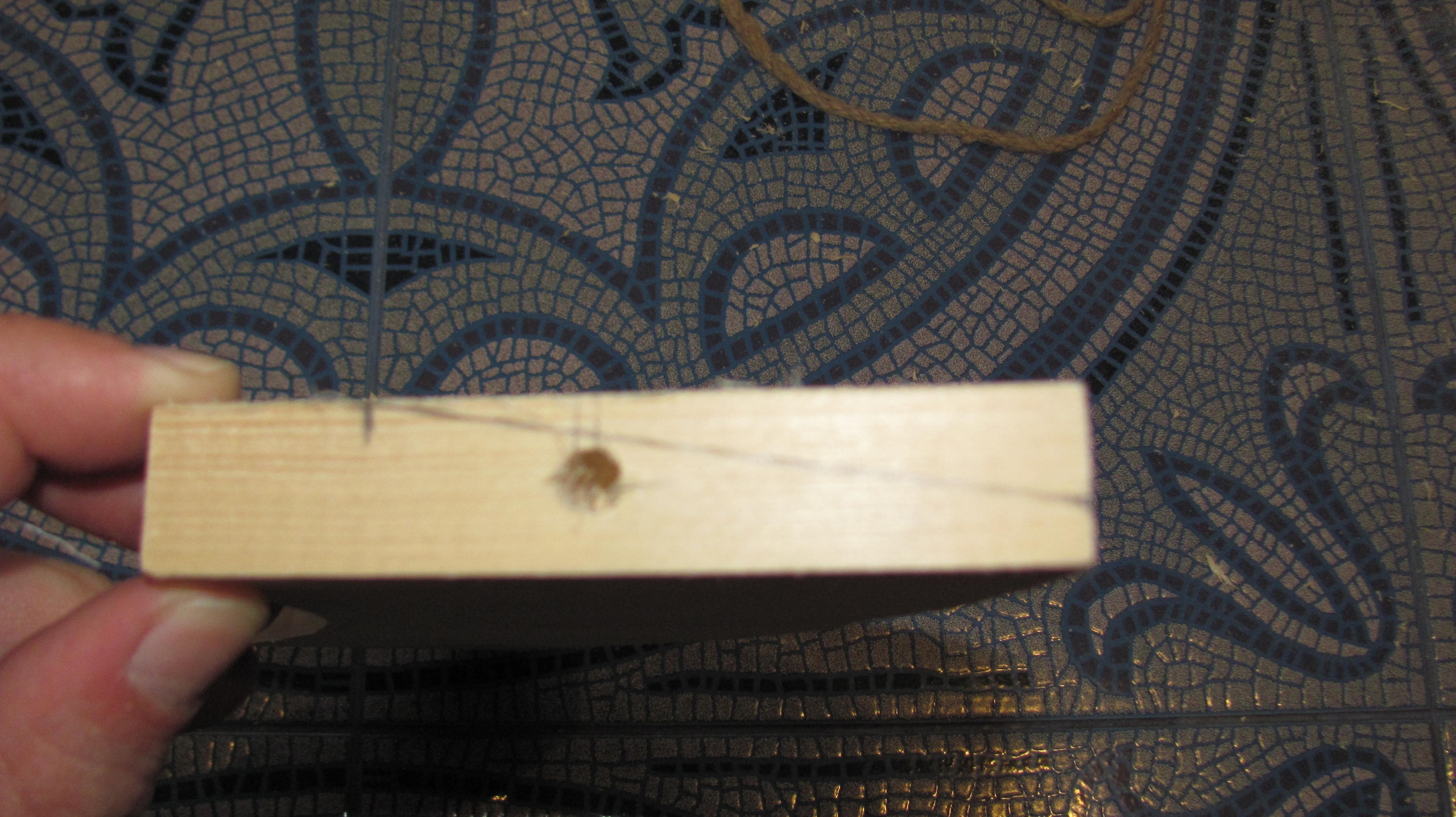
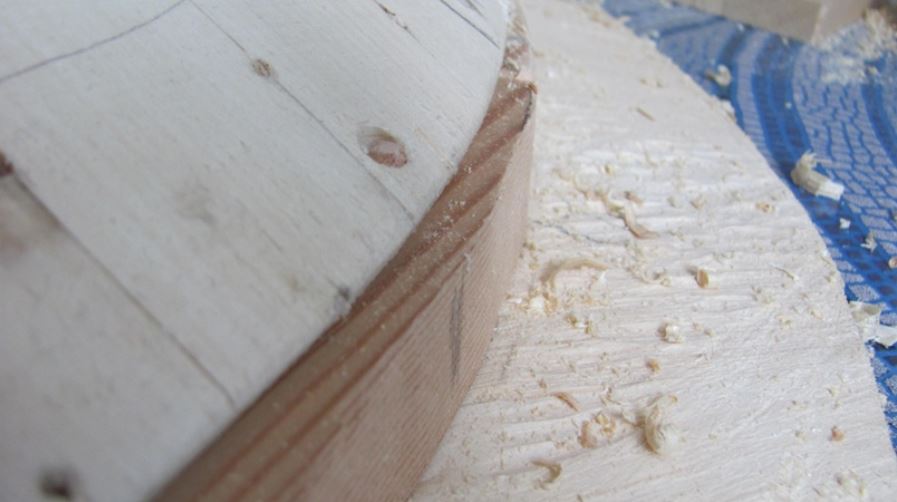 Ring edge extending beyond the lens edge
Porpax, Padding and Covering
The porpax turns a round shield into a controllable tool. Its position affects balance, body coverage and how quickly the fighter can change pressure. The fittings were therefore checked not only visually but also on the arm.
Padding, leather and linen work together: they protect the body, change grip and appearance, but can also add unwanted thickness. In practical reconstruction this is where the difference between a good drawing and a wearable object appears very quickly.
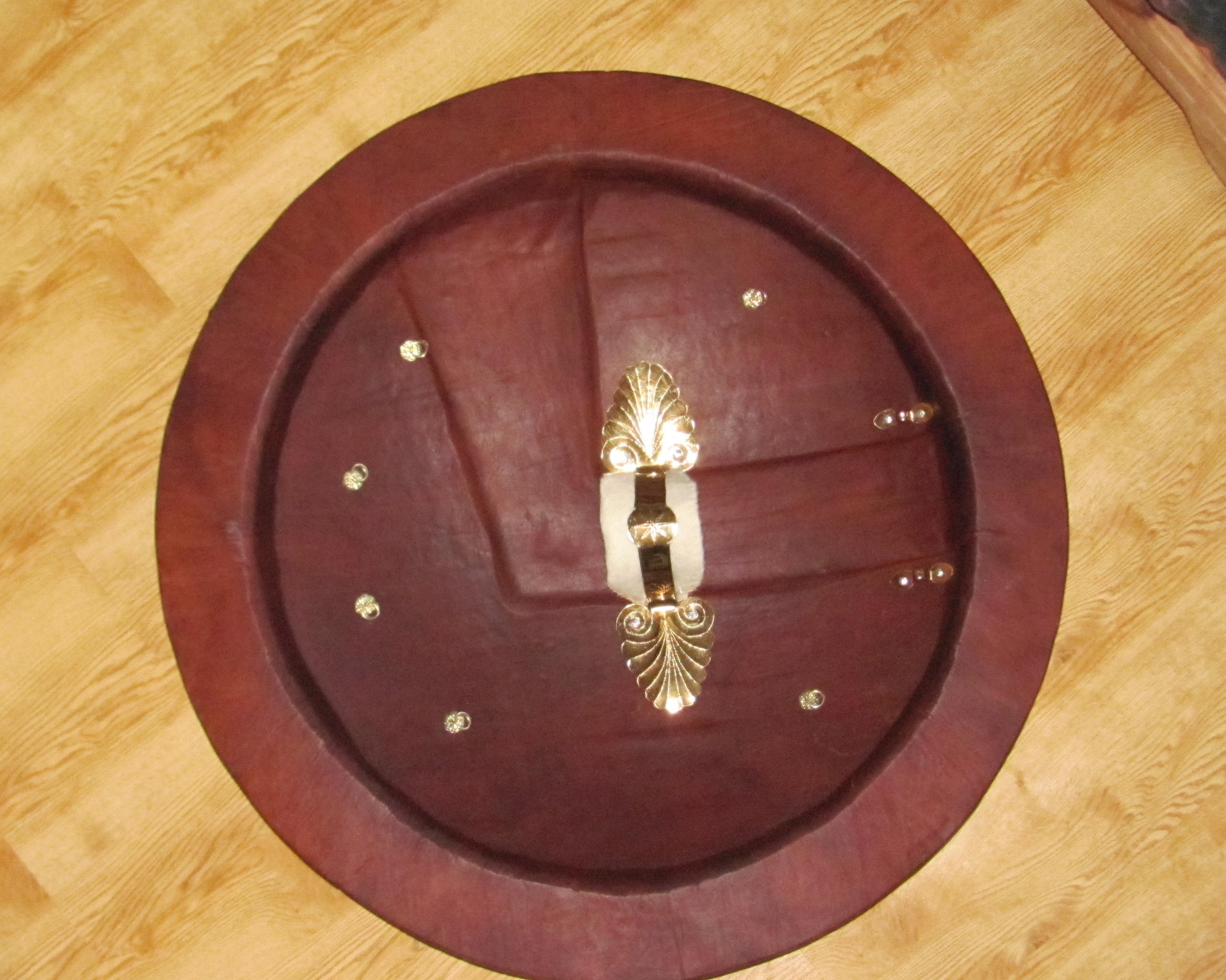
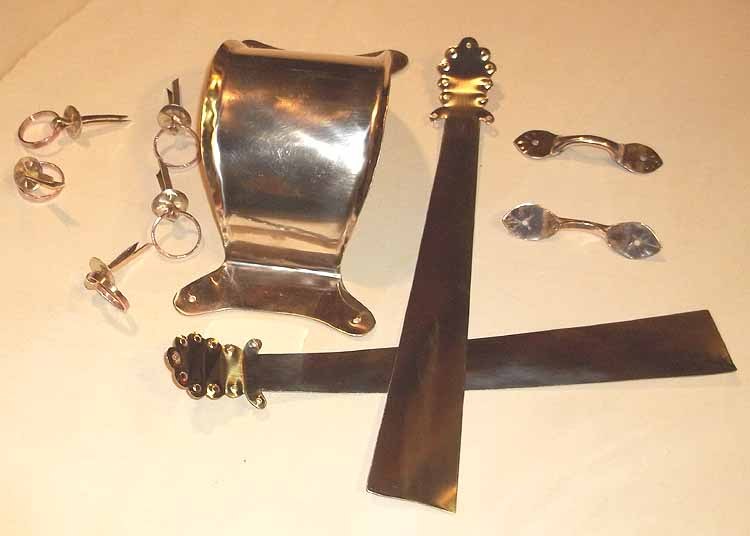 Porpax handle,loops and rings
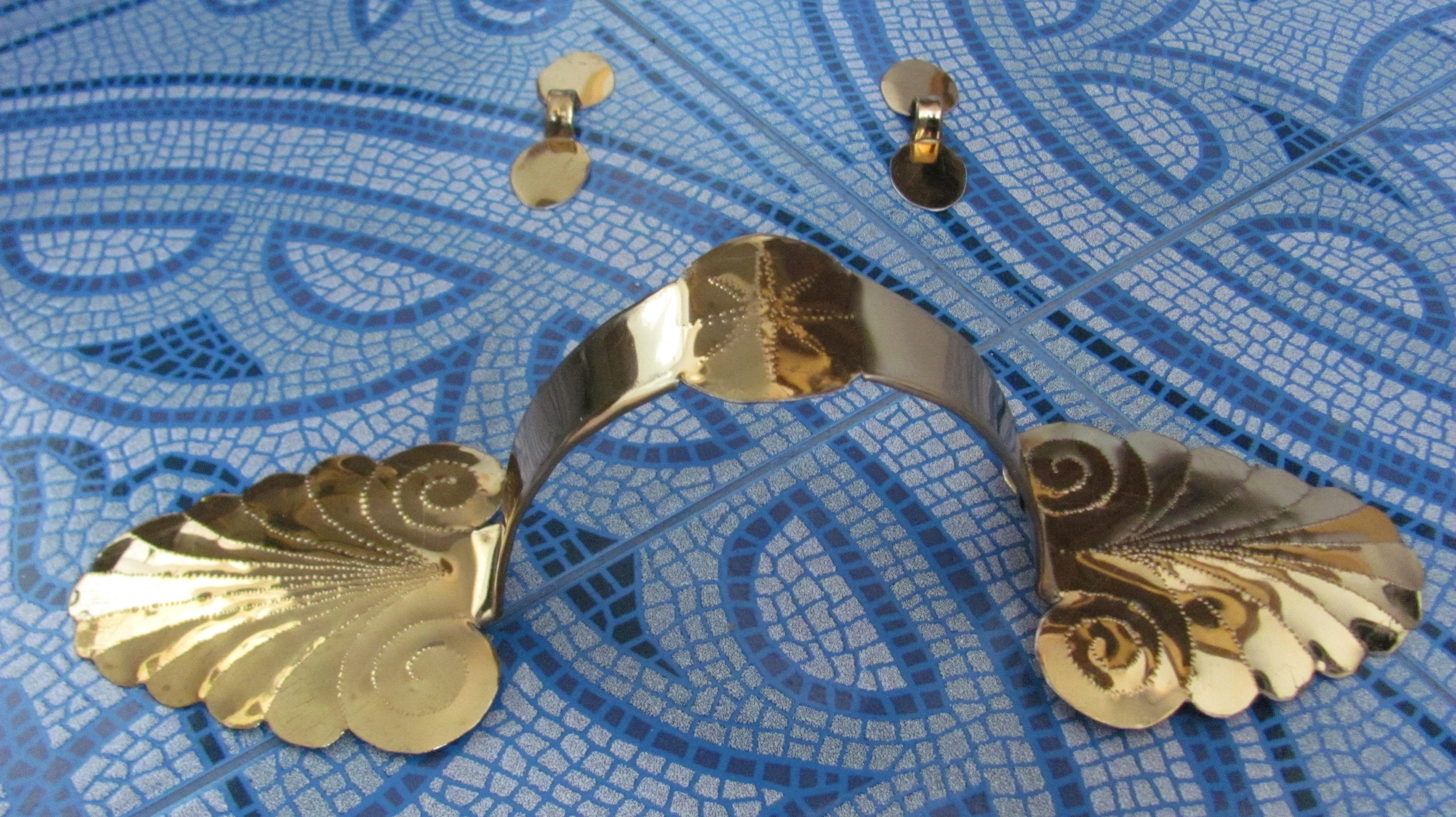 Porpacks and self-made hinges
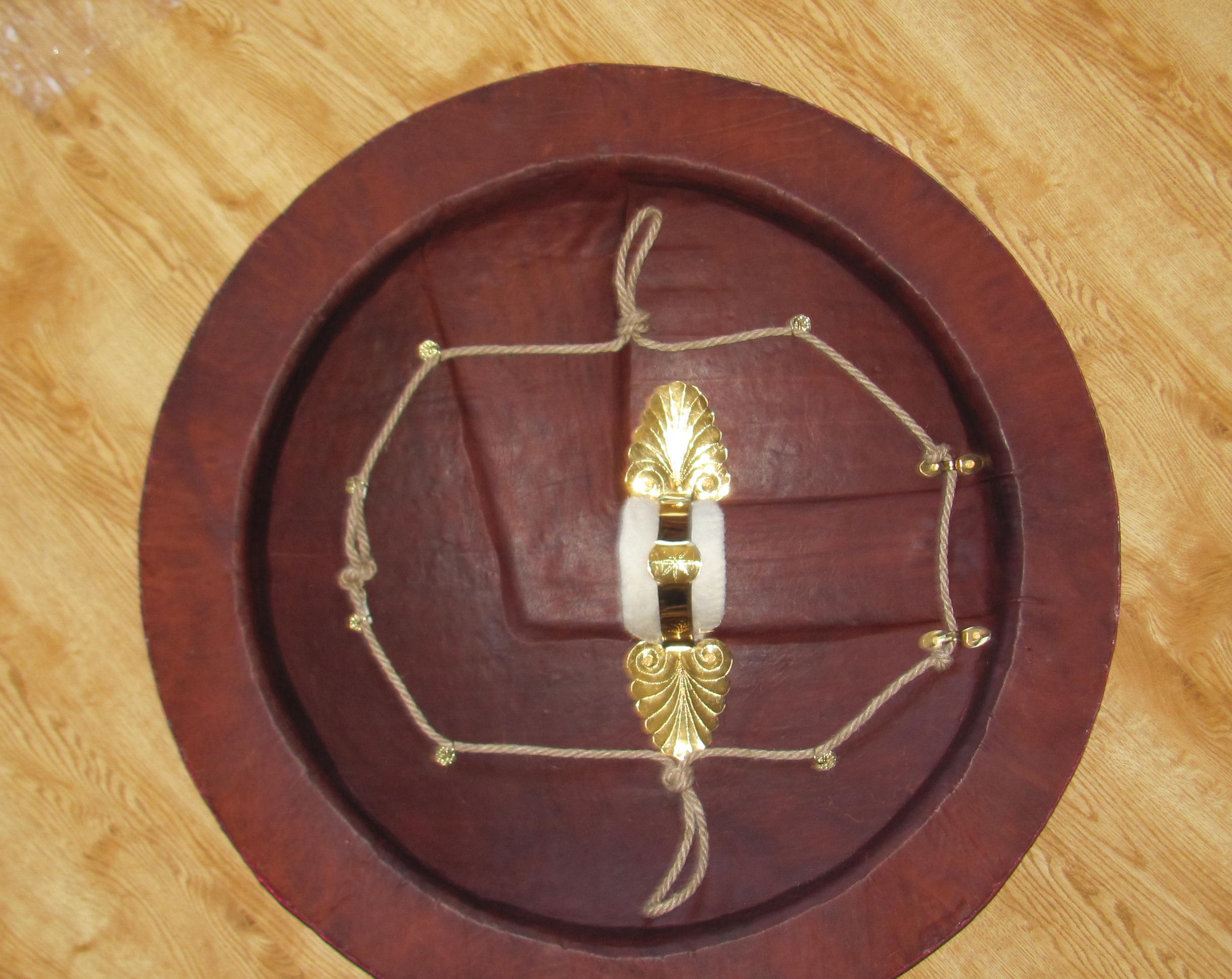 Ready-made type of hoplon with accessories
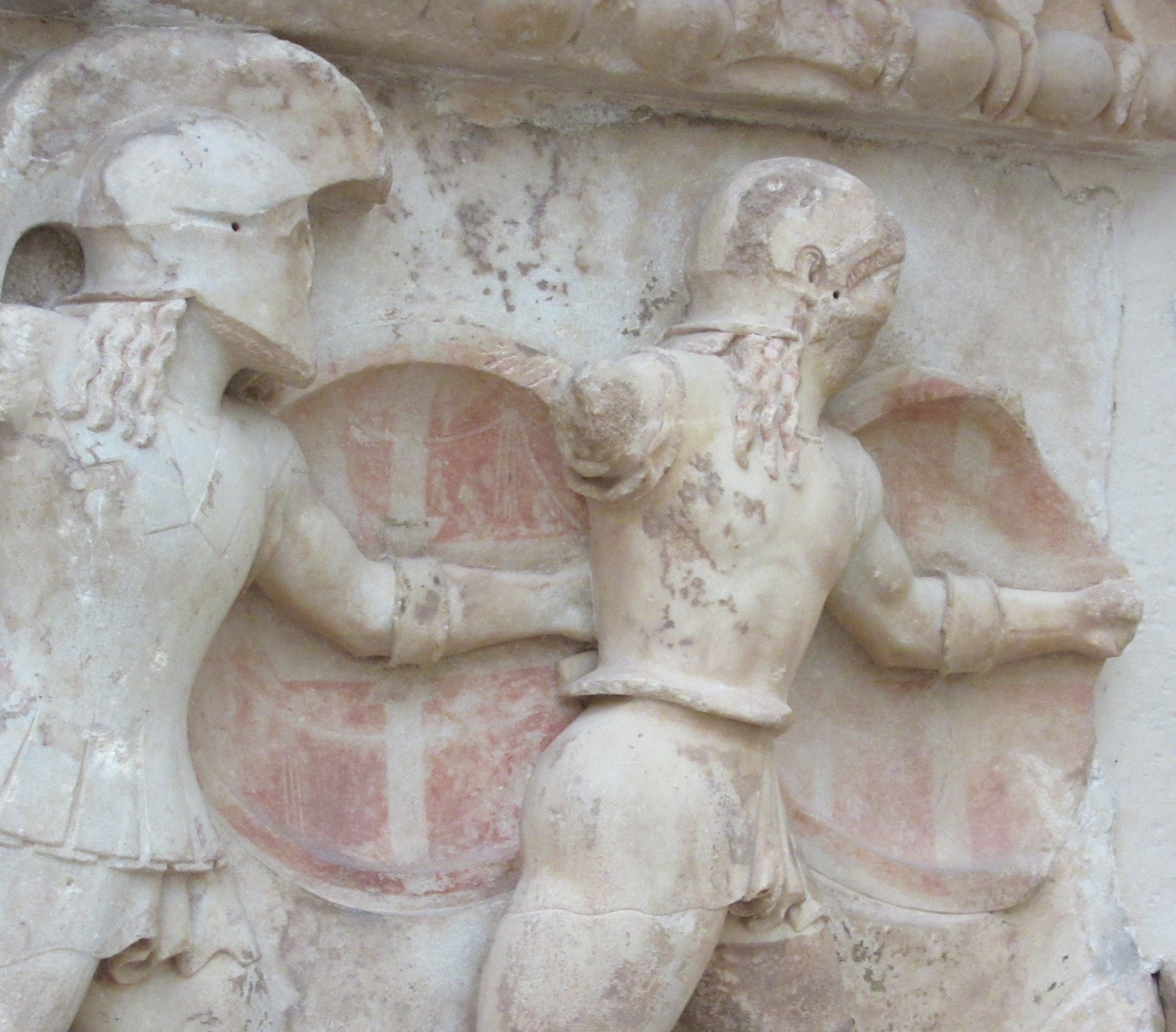 Ancient relief with round shields; evidence for the soft backing and inner side of the hoplon.
 Silhouette of the substrate on the hoplon
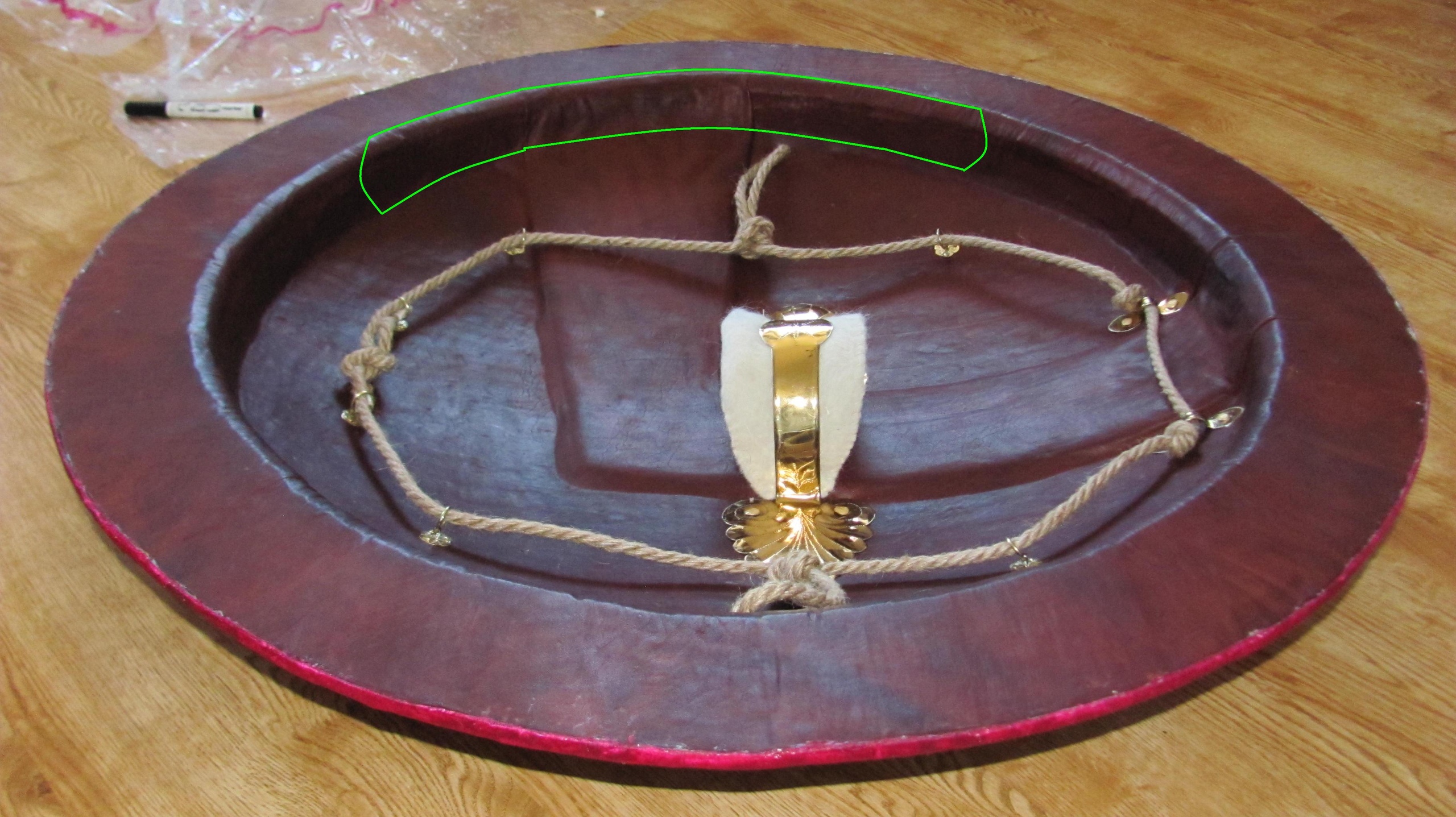 Backing on the inner side of the ring
Painting and Result
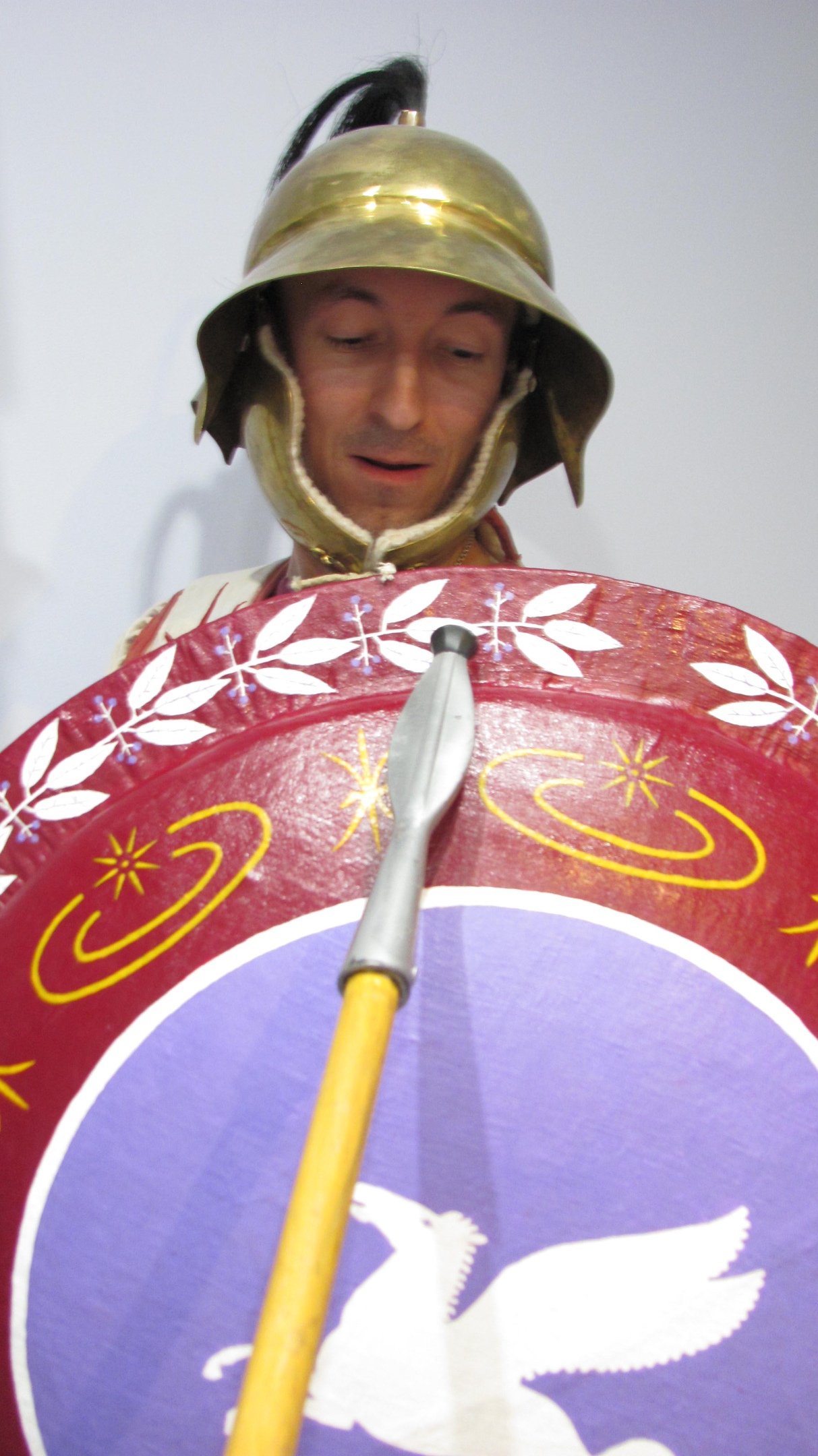
Final painting has to account for the shield surface: a line that looks correct on a plane changes visually on a convex lens. Test marking and checks from several angles are useful before painting.
The main conclusion is simple: a hoplon is not a set of separate parts, but a system. Wood, rim, porpax, padding, leather, linen and painting work only when they are subordinated from the start to the overall form and way of carrying.
 Marking the outer side of the shield before covering and painting.
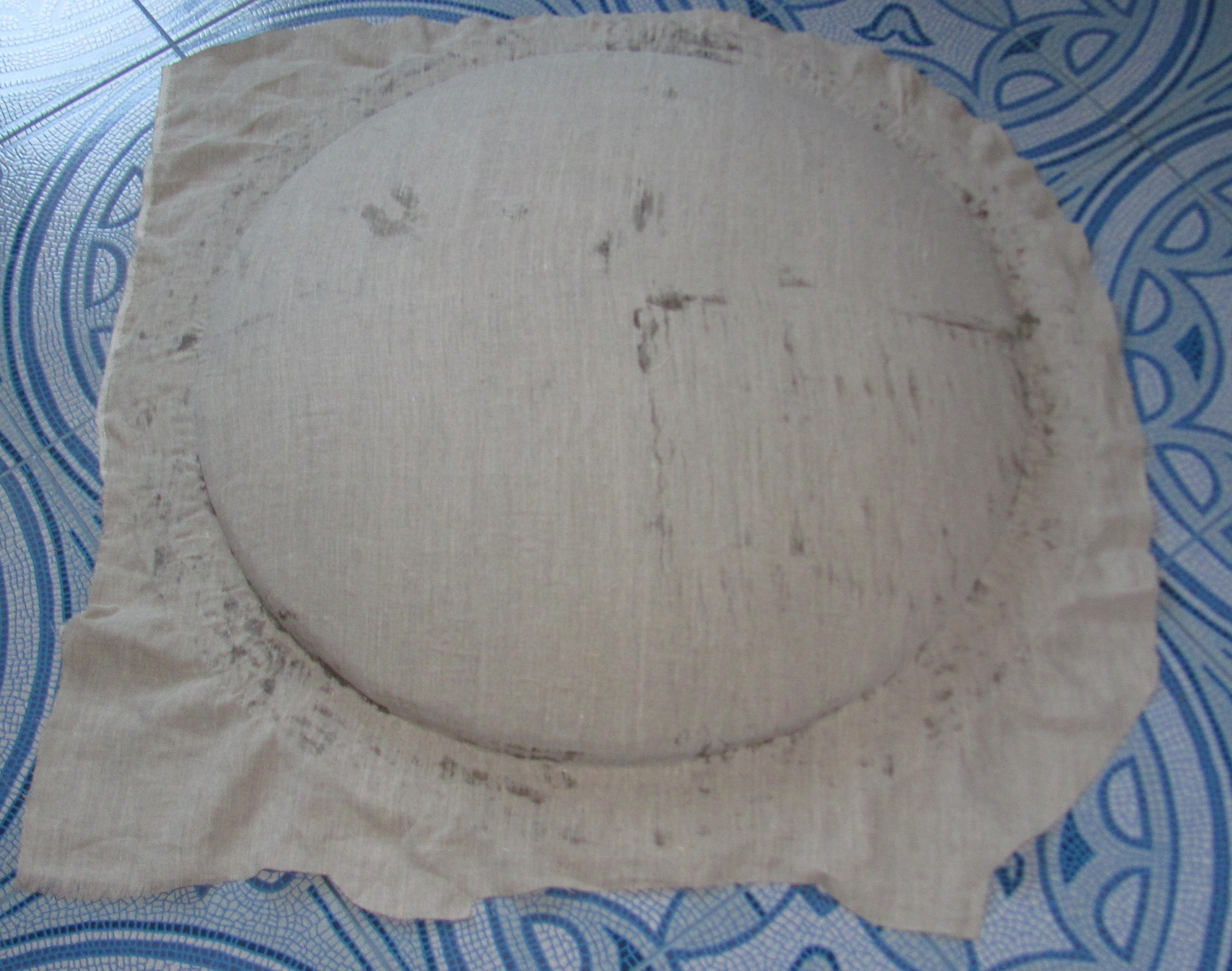 Fitting the ring should be done more carefully
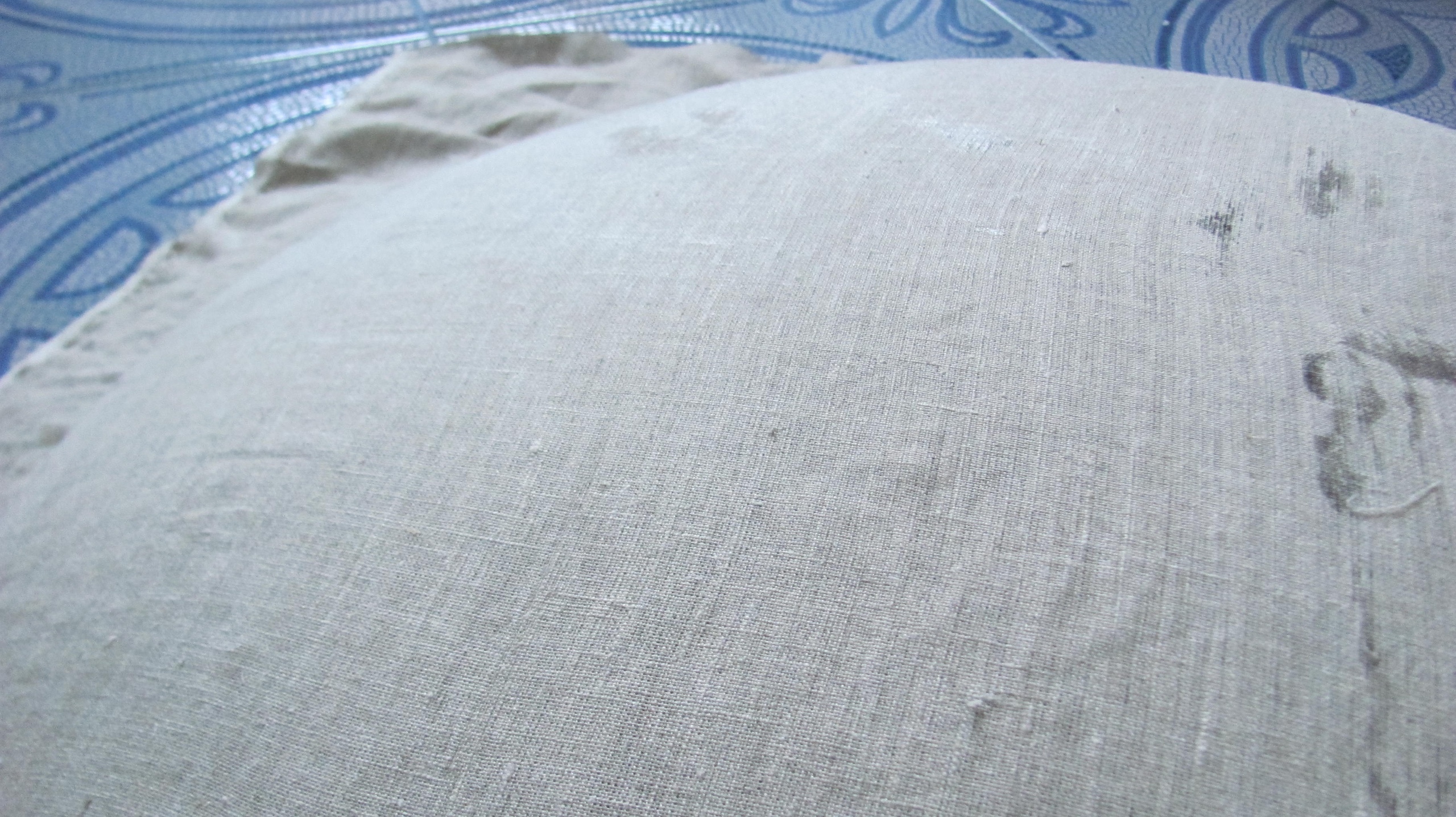 Covering the outer side of the shield with linen
Construction in the Original Material
The original club material discusses the shield as a structure: a curved lens-like core, a ring, an outer rim, the porpax, the hand grip and perimeter rings for a cord. The ring is not decoration. It increases the shield's depth, helps it rest on the shoulder and, together with the rim, creates the profile visible in the sources.
The rim is also more than edge protection. In reconstruction it holds the outline, connects the edge of the lens with the ring and prevents a sliding thrust from moving up off the edge. Its profile and transition into the lens therefore have to be planned before assembly, not after covering.
Core, Ring and Assembly
The practical version was built from wooden elements calculated for the shield's curvature. Curved shields are better made from glued layers or carefully fitted segments; a flat blank will not become a proper lens by itself. The ring was assembled from separate pieces cut from timber, while the rim can be made from eight glued and pegged segments.
The ring is first joined to the rim, then the lens is placed on top and drilled in position. This avoids trying to align holes in advance on parts with a complex shape. After fitting, the edge of the ring projected about 1-1.5 cm beyond the lens and was planed into a smooth transition. The older description gives the finished shield a depth of 13 cm, an overall thickness with the lens of 14.5 cm, an outer diameter of 84-85 cm and an inner diameter between the ring edges of about 65 cm.
Fittings and Fit on the Arm
The inner side needs a porpax, loops or a hand grip, and rings for a cord around the perimeter. Exact measurements of ancient fittings were not available for every part, so some decisions remain reconstructive. In the older experiment the fittings were made from thin brass sheet, with the edges of the porpax and loops bent over as stiffening ribs.
The porpax position is critical for balance: it has to be centred, otherwise a large shield starts to pull the arm. The lens diameter must leave enough space for the knuckles so that they do not hit the ring and rim. Padding is useful under the hand, elbow and shoulder; part of the inner ring can also be padded for the shoulder because the shield may rest on it at different points during movement.
Covering, Painting and Final Measurements
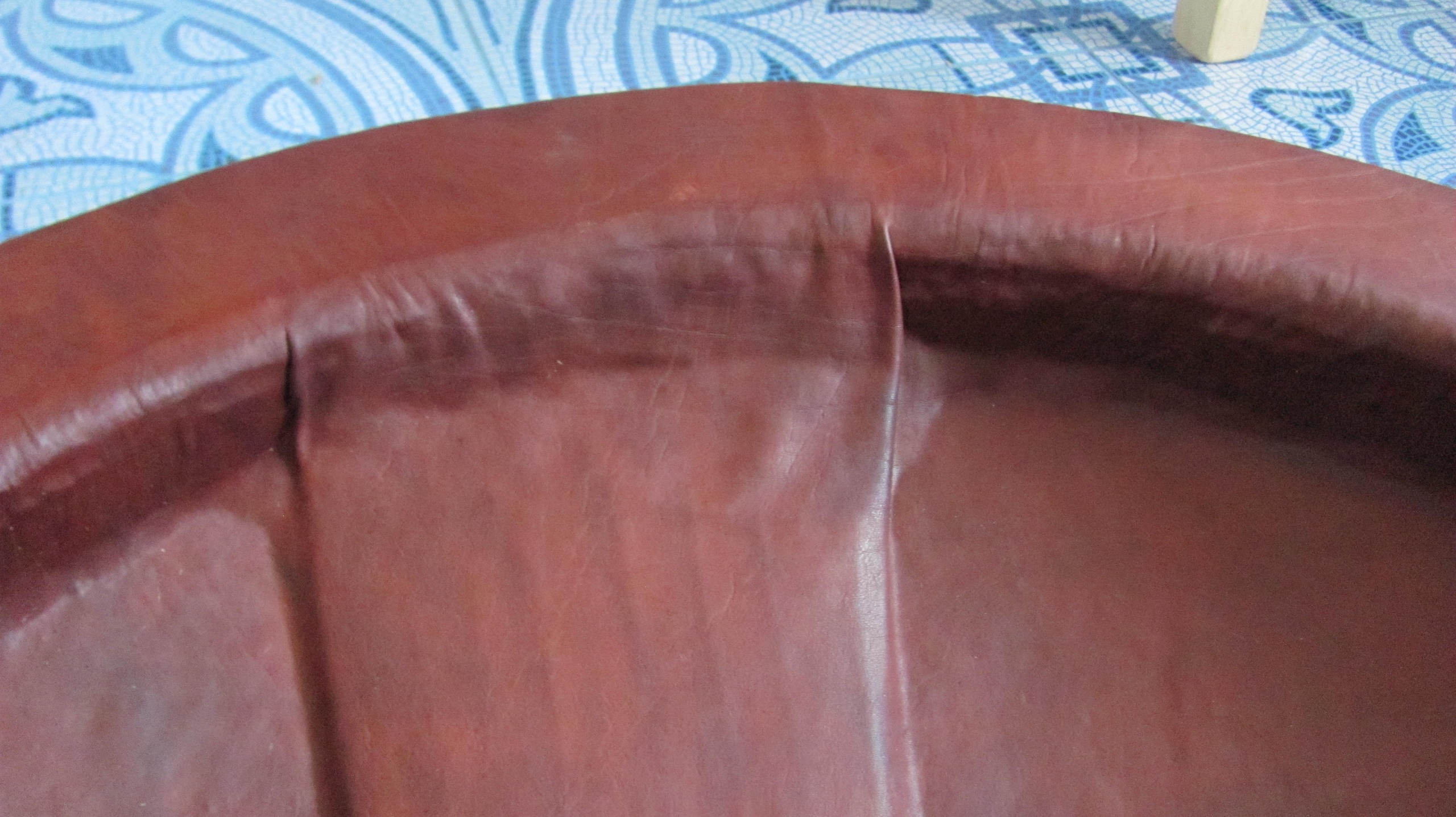
The inner side was covered with wet leather from the centre toward the edges. This material stretches well over a complex form, but it also reveals every irregularity in the core, so covering cannot be treated as a way to hide errors in the body. The outer side was covered with two layers of linen: it is convenient for priming and painting, but wrinkles inevitably appear near the ring and rim unless cuts and tension are planned carefully.
The finished shield weighed about 5.9 kg. This is roughly 2 kg lighter than Peter Connolly's estimate and lighter than a version made from plywood rings, though the author of the experiment thought the weight could be reduced further by thinning the ring, rim and lens. The old material gives prices only as a 2018 reference point: ordered parts and materials totalled about 12,000 rubles, while making the brass fittings independently reduced the cost to about 8,000 rubles, not counting labour.
Related Topics
Literature and sources
- Club material "My Hoplon: reconstruction experience", Timur Petrakov.
- Peter Connolly. Greece and Rome at War. London, 1981.
- Nick Sekunda. Greek Hoplite 480-323 BC. Osprey, 2000.
- Hoplon: X-Legio reference article.


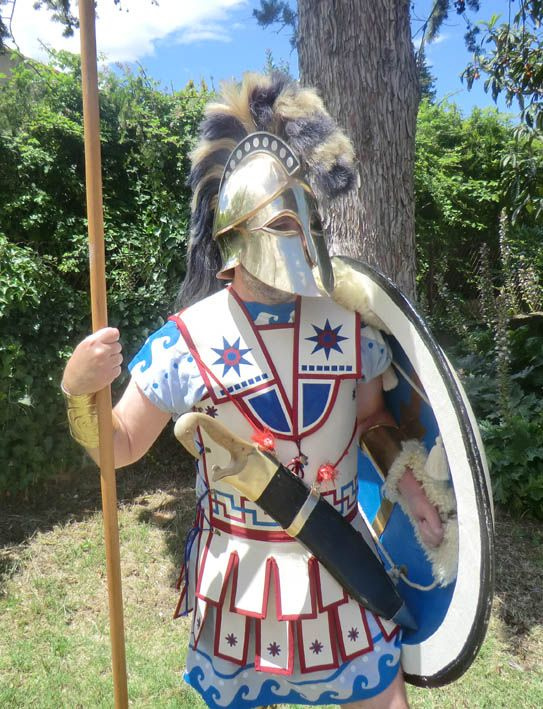
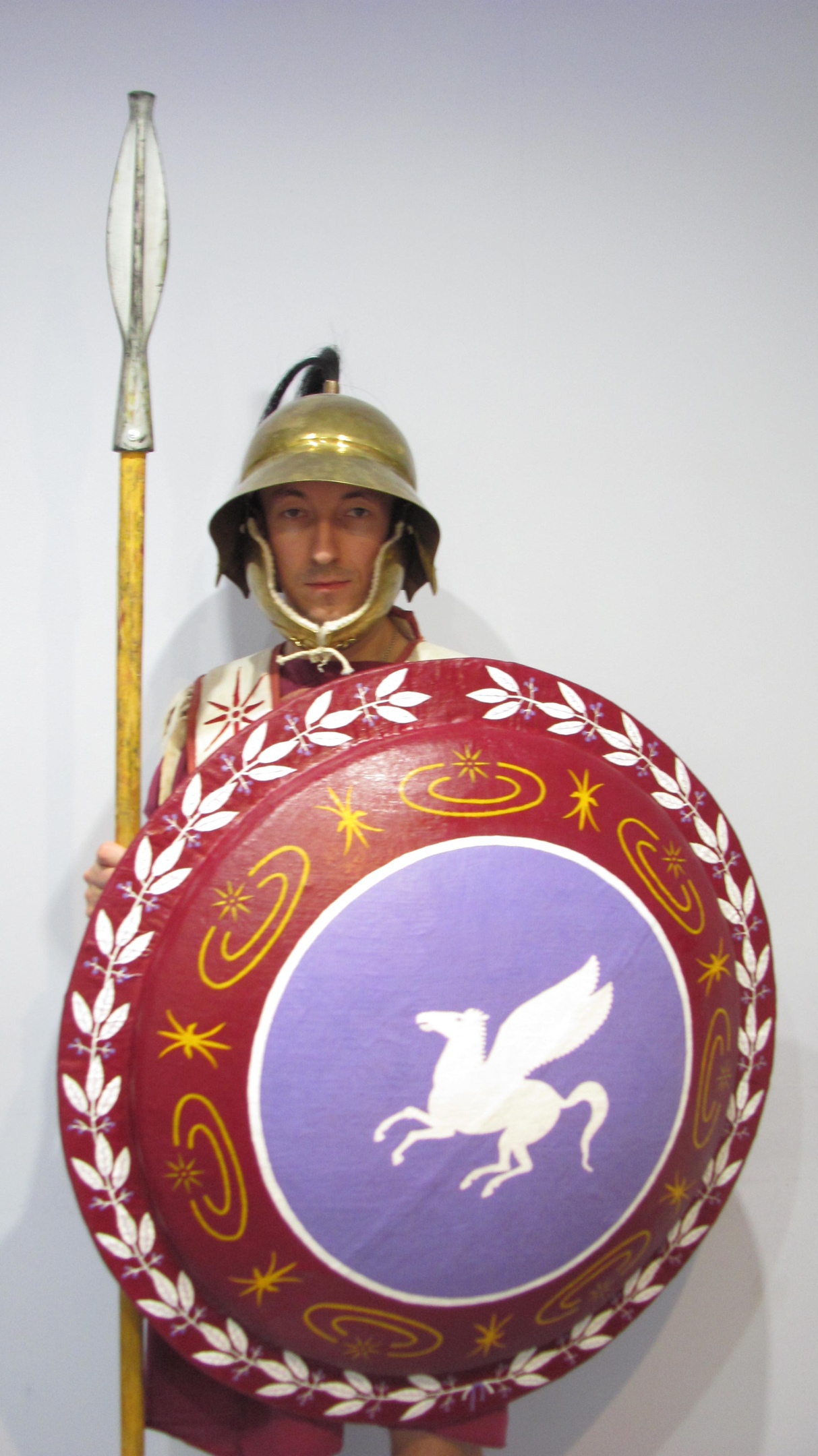 Modern reconstruction of a hoplite with a painted hoplon; an example of the completed shield exterior.
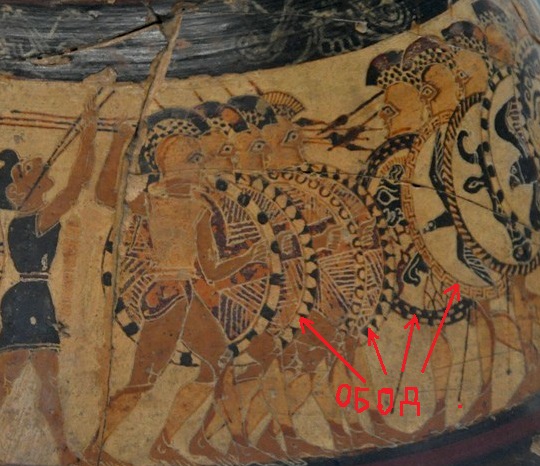 The Chigi Vase: a Protocorinthian olpe with a hoplite phalanx scene, c. 650-640 BC; National Etruscan Museum of Villa Giulia, Rome.
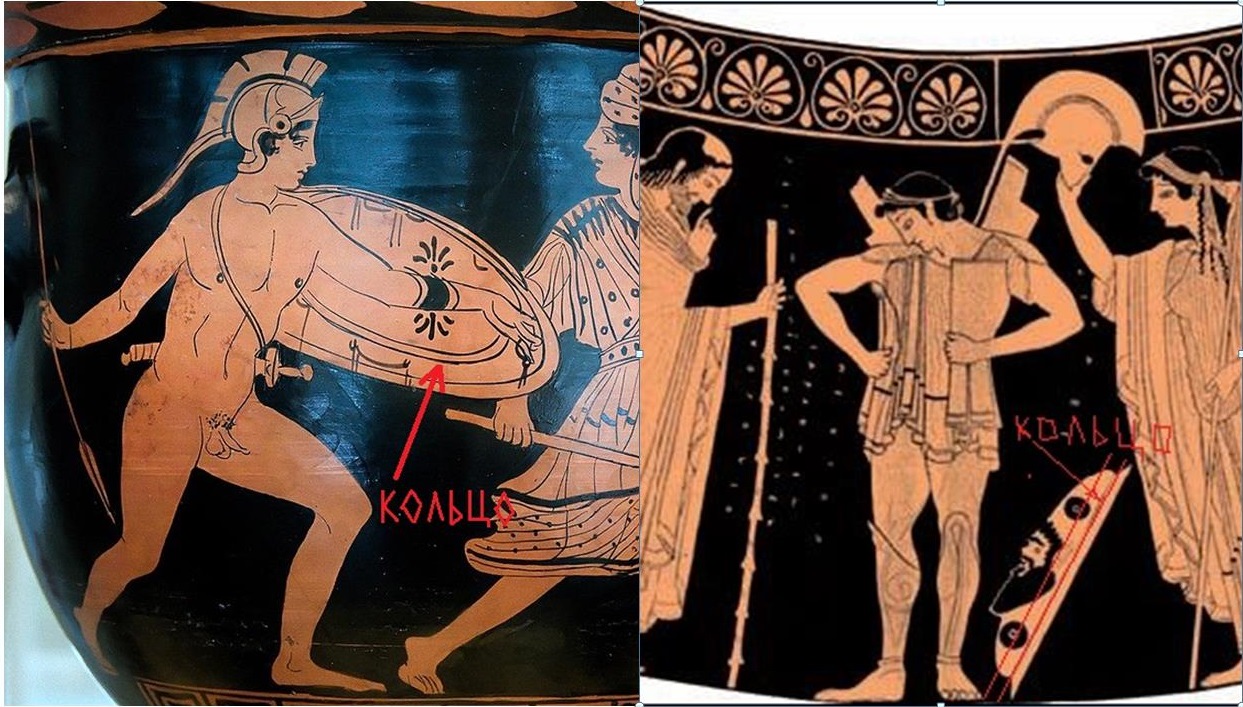 Attic vase painting with a warrior and a round shield; evidence for the rim shape, shield silhouette and exterior painting.
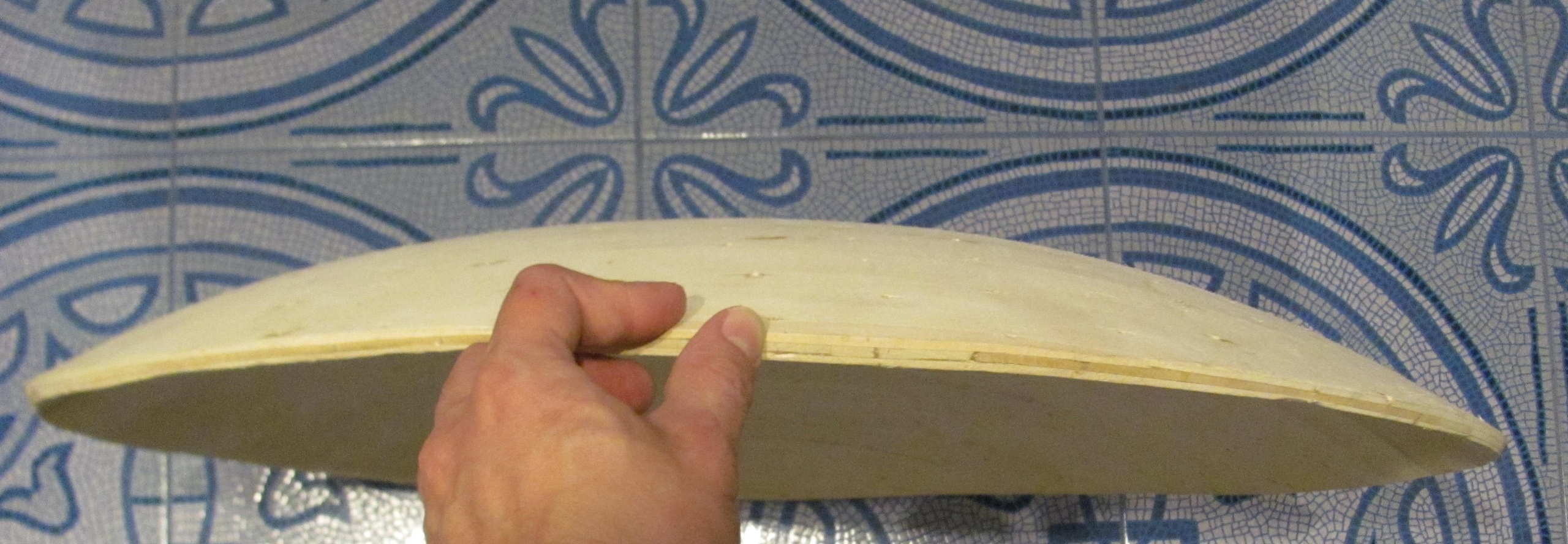 Profile of the wooden rim and convex bowl on the hoplon reconstruction.
 Rim of the reconstructed hoplon, showing the transition from the ring to the outer shield surface.
 Reconstruction of the hoplon ring in use: the shield reads as a convex bowl rather than a flat disc.
 Ancient wall painting with warriors and round shields; evidence for coloured fields and decorative shield painting.
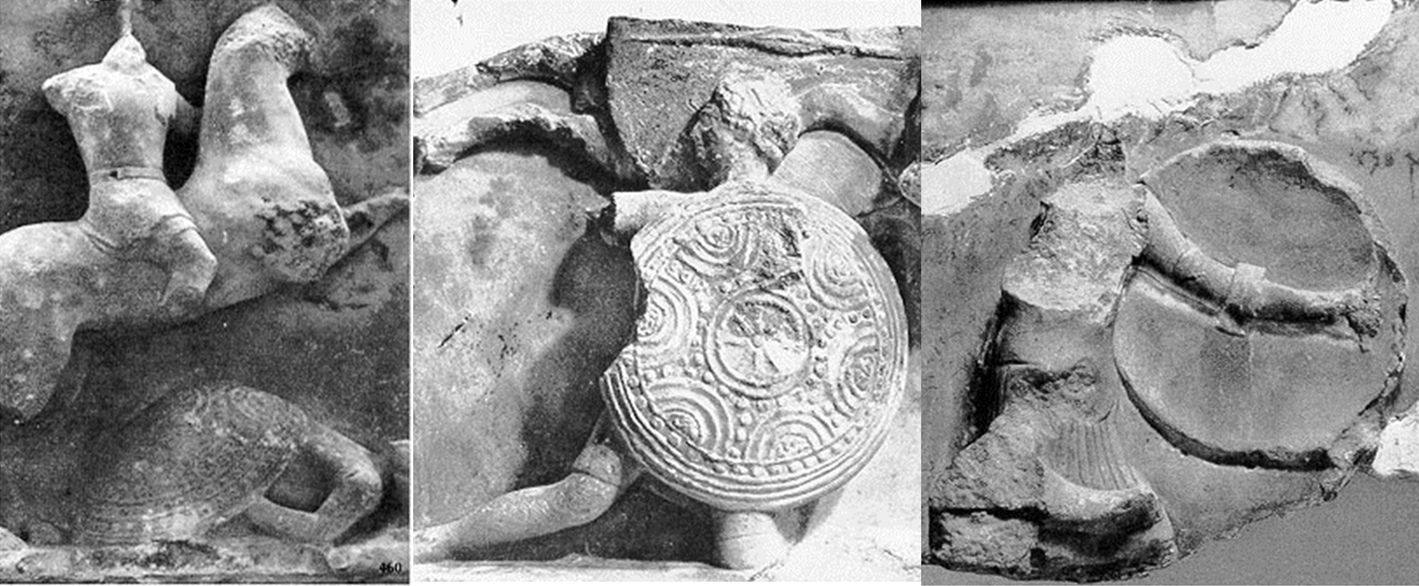 Stone relief with a warrior and round shield; evidence for the convex form, rim and forearm position of the shield.
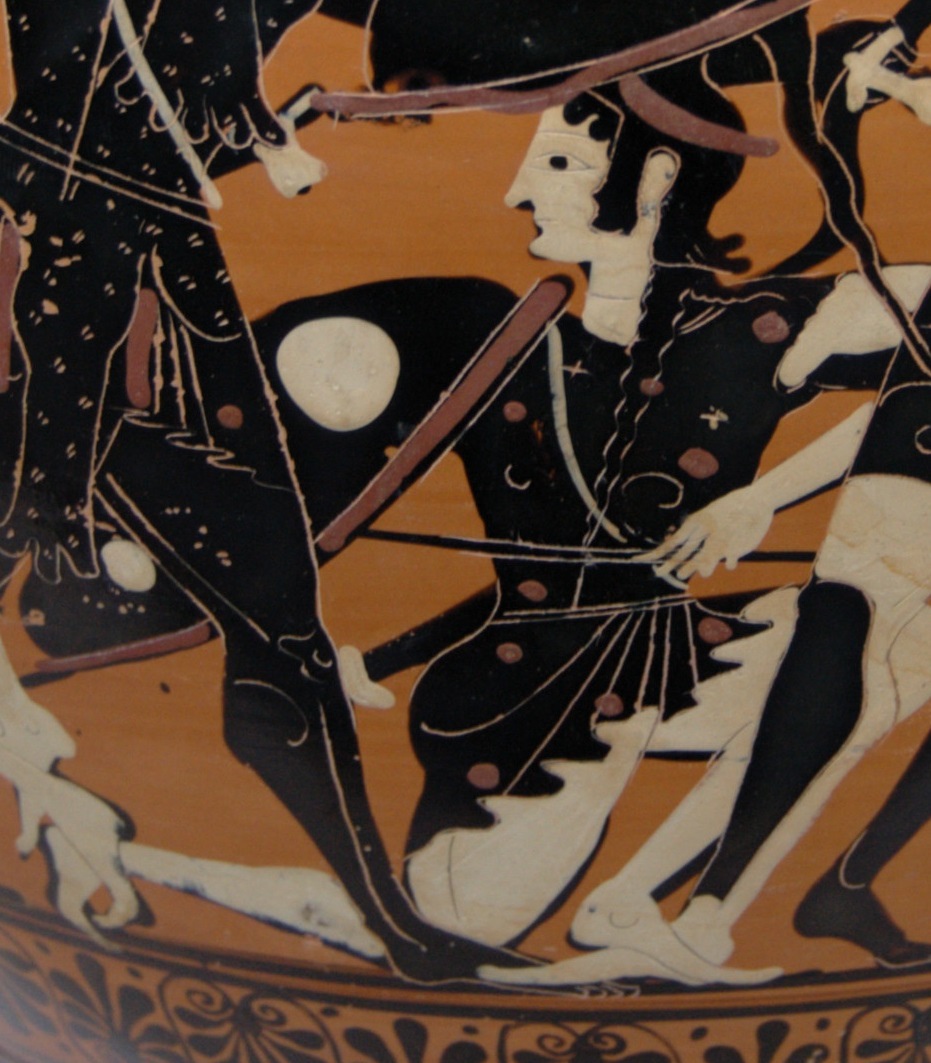 Detail of Greek vase painting with a round shield; evidence for the edge shape and inner geometry of the shield.
 Illustration of the hoplon assembly
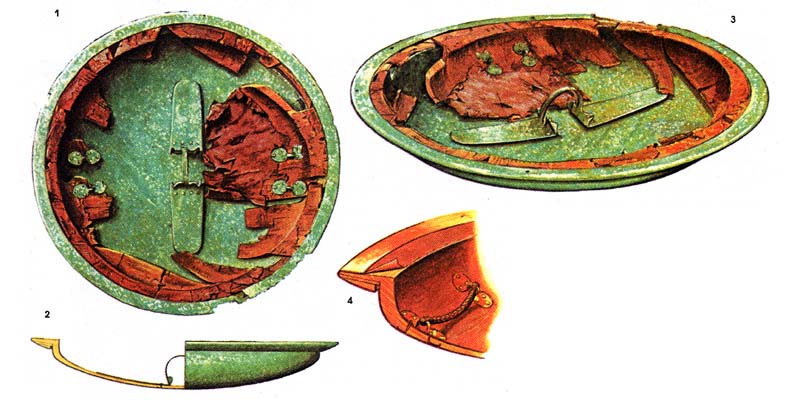 Drawn sections and schemes of ancient round shields; evidence for the bowl profile, rim and bronze facing.
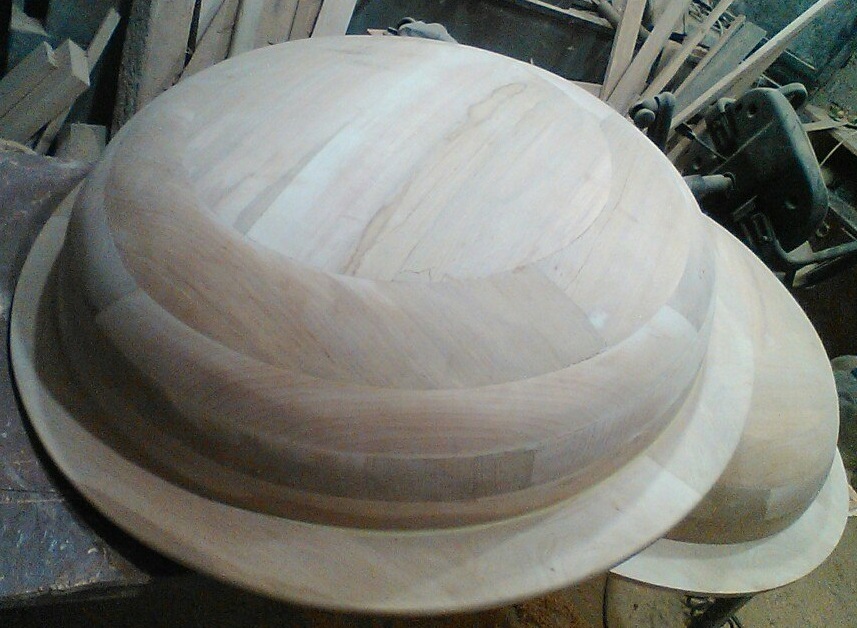 Variant of modern reconstruction of Hoplon
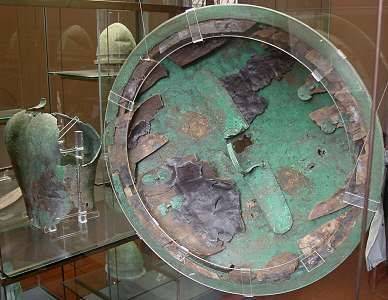 Preserved Greek hoplon/aspis-type shield with bronze facing, Archaic-Classical period; museum display.
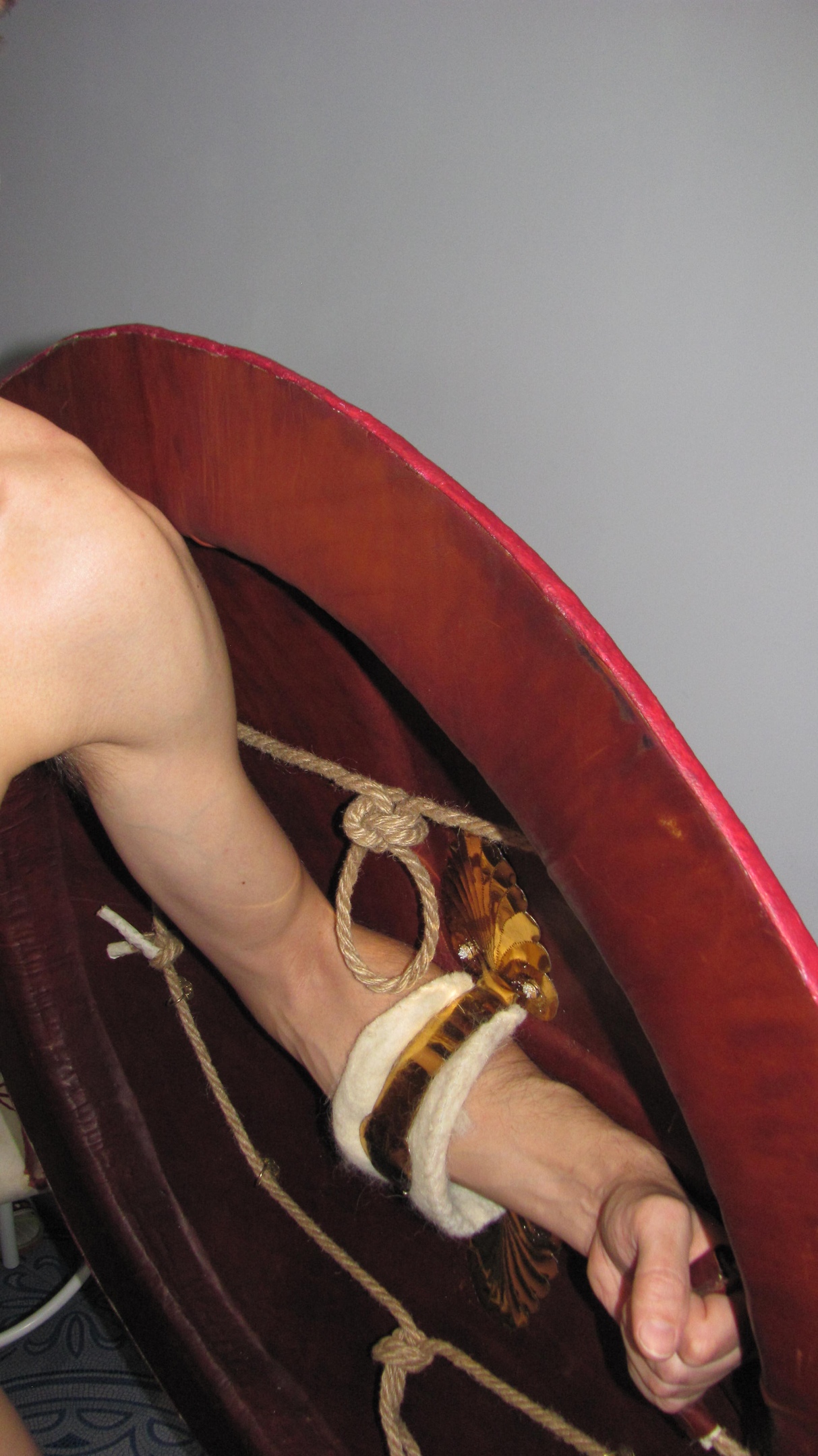 Interior of the reconstruction: position of the porpax and antilabe relative to the arm.
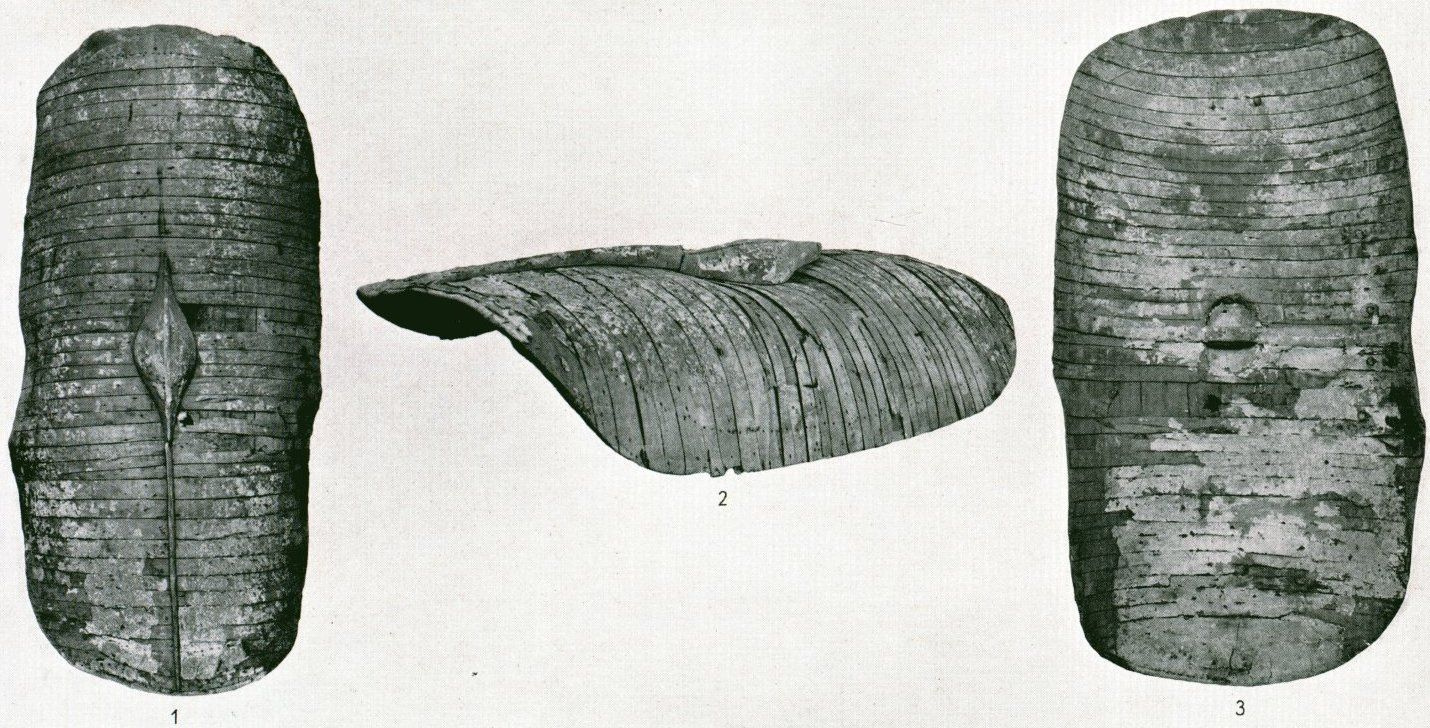 Wooden Roman scutum from the Faiyum Oasis, Egypt, Roman period; comparative evidence for the preservation of a wooden shield core.
 Maximum curved lens
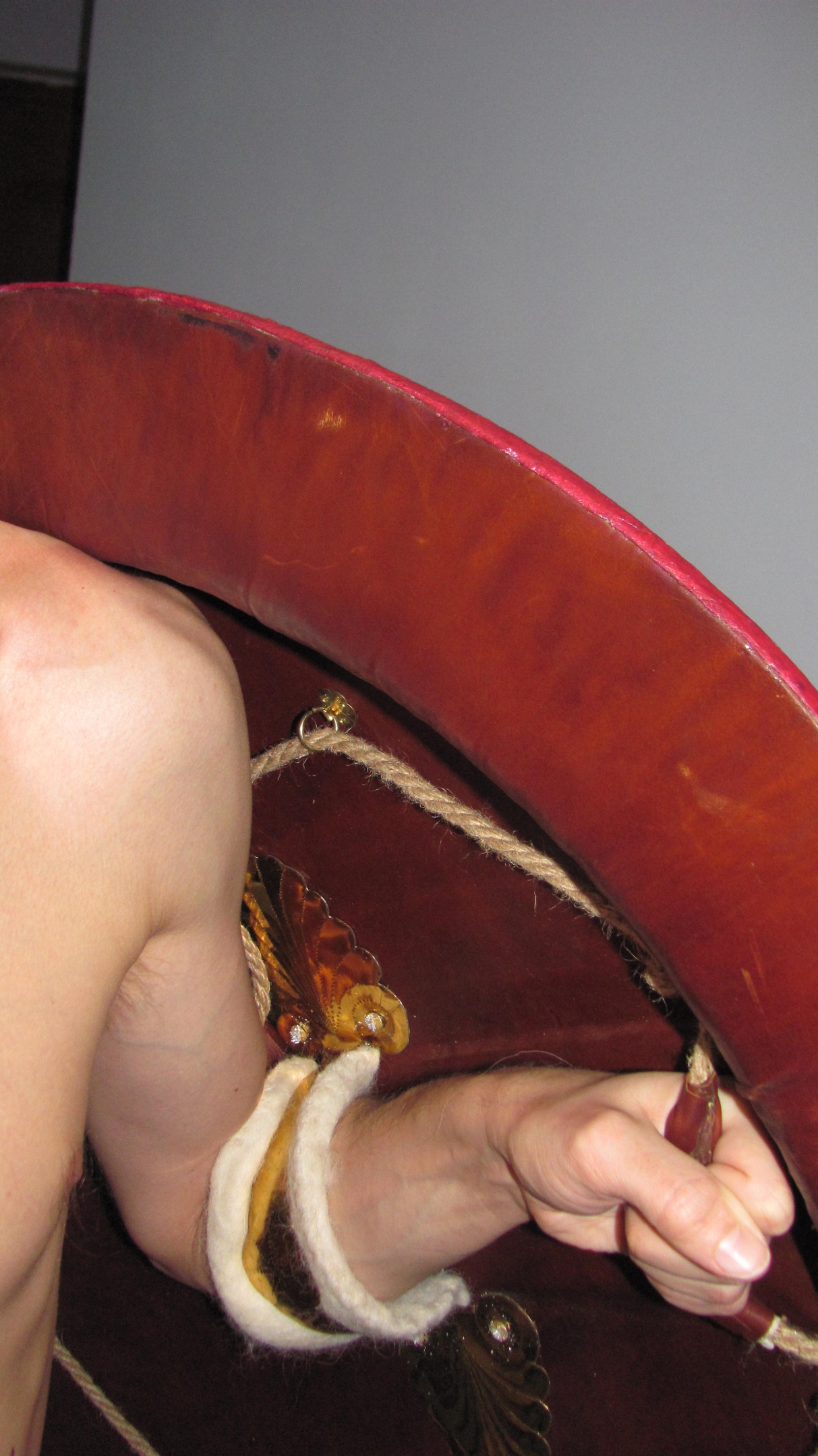 Grip test on the inside of the shield: porpax, antilabe and working arm position.
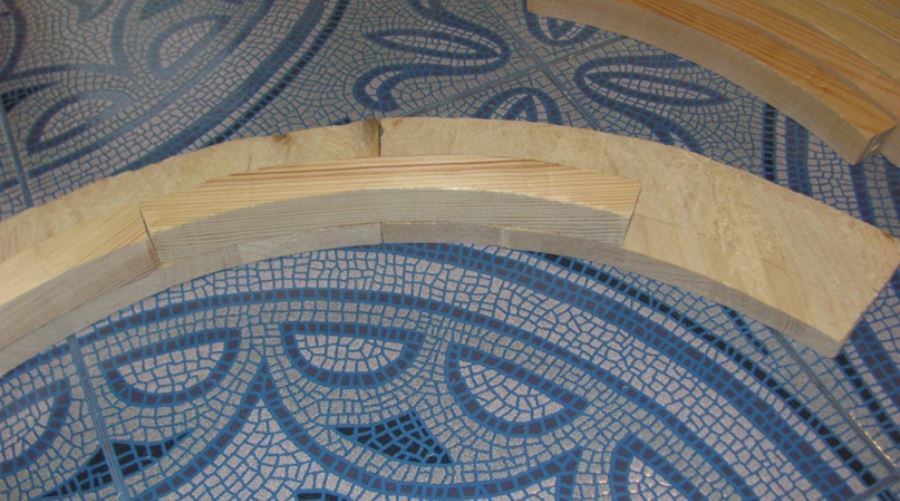 Rim and lens deflection
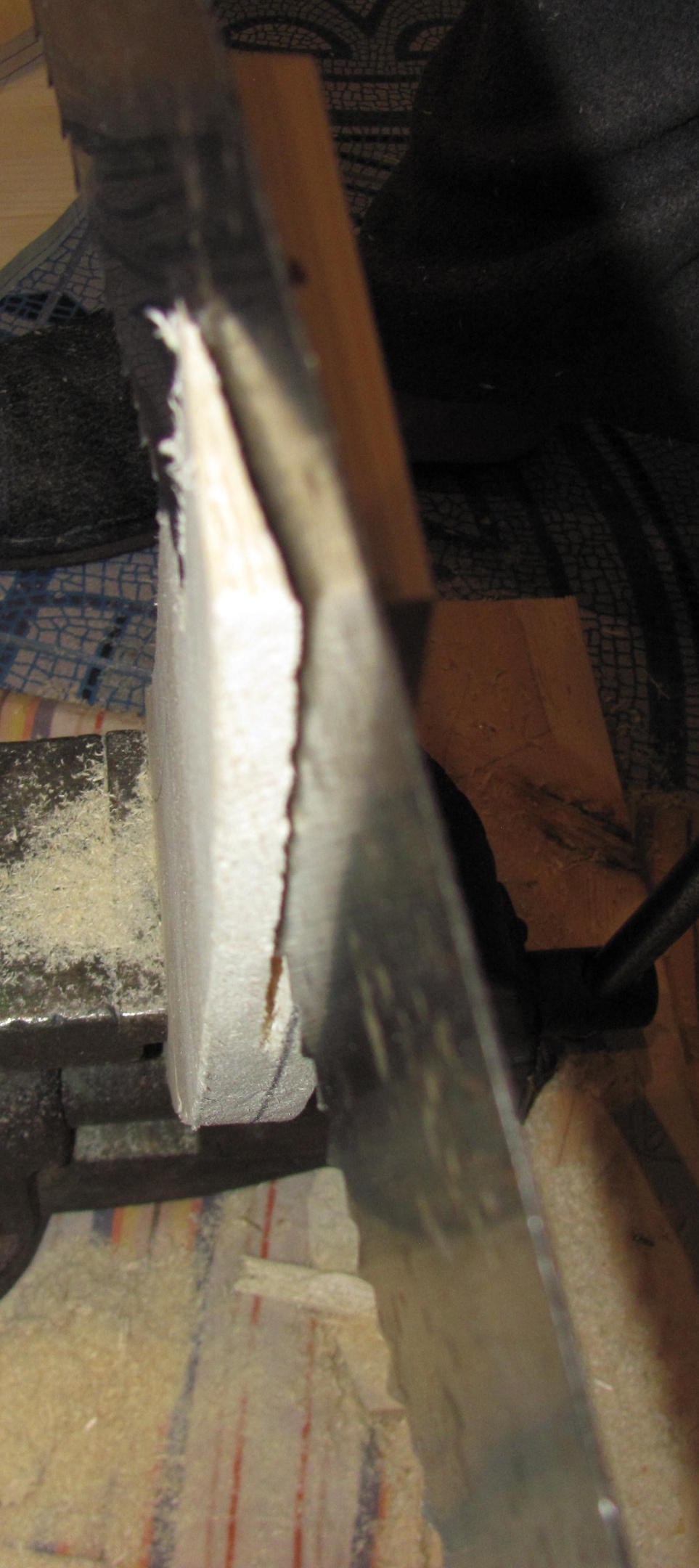 Rim forming process
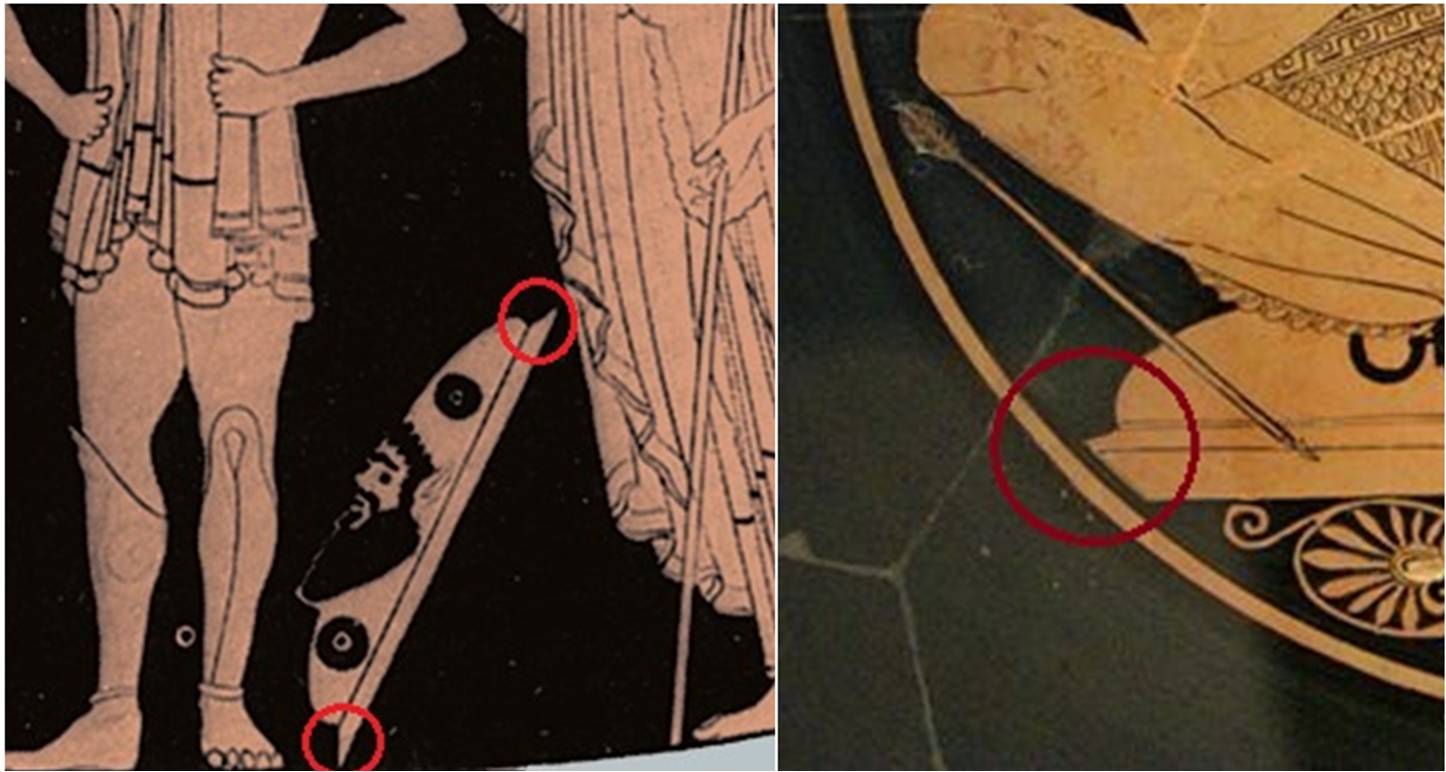 Details of Greek vase painting with round shields, showing the narrowed rim and edge profile.
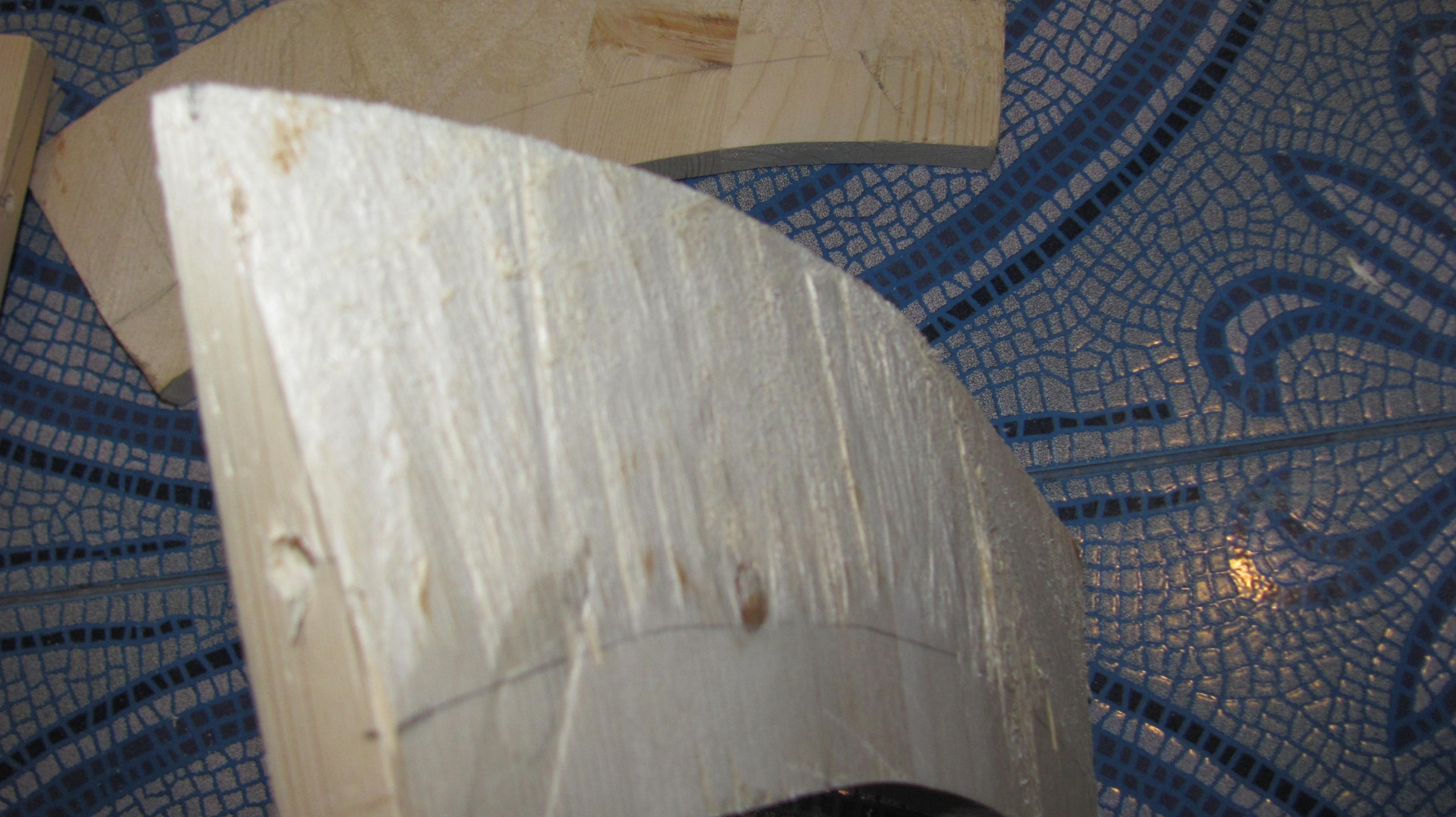 Split rim
 Border of the ring overlay
 Rim width with marked ring thickness
 Adjusting the transition between the ring and the shield bowl.
 Checking how the rim sits around the circumference of the hoplon.
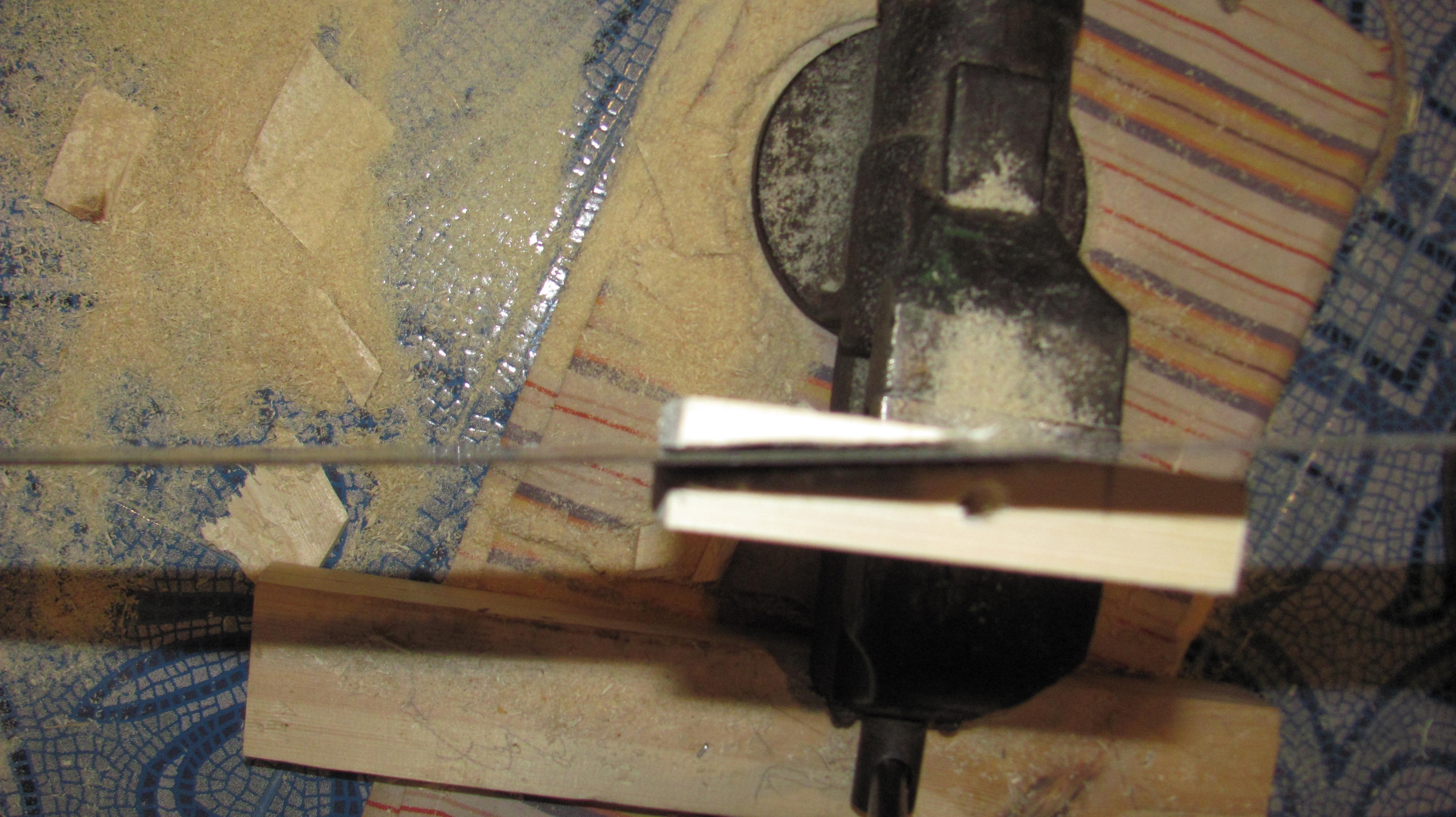 Manual work when forming the rim
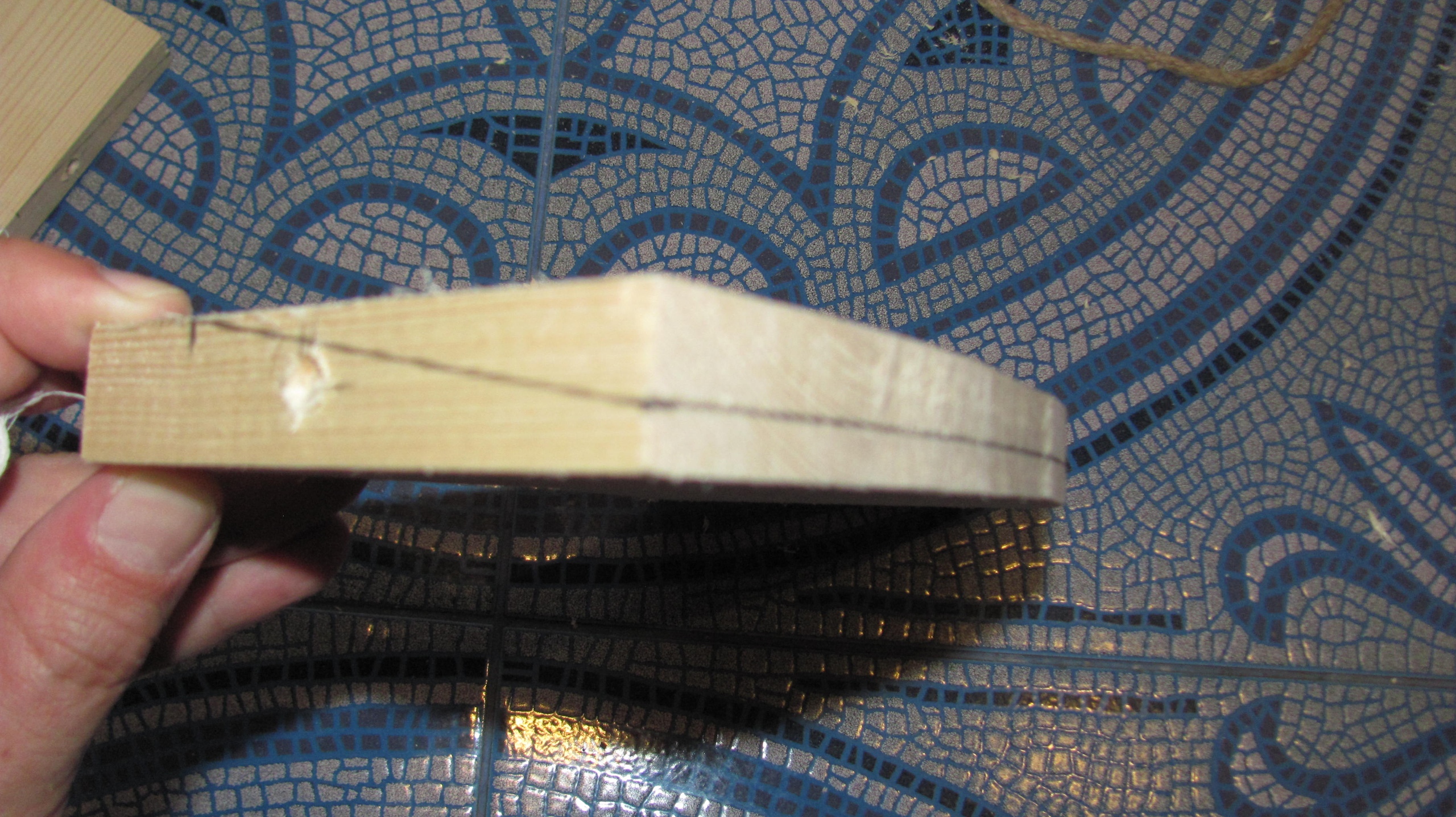 Split rim
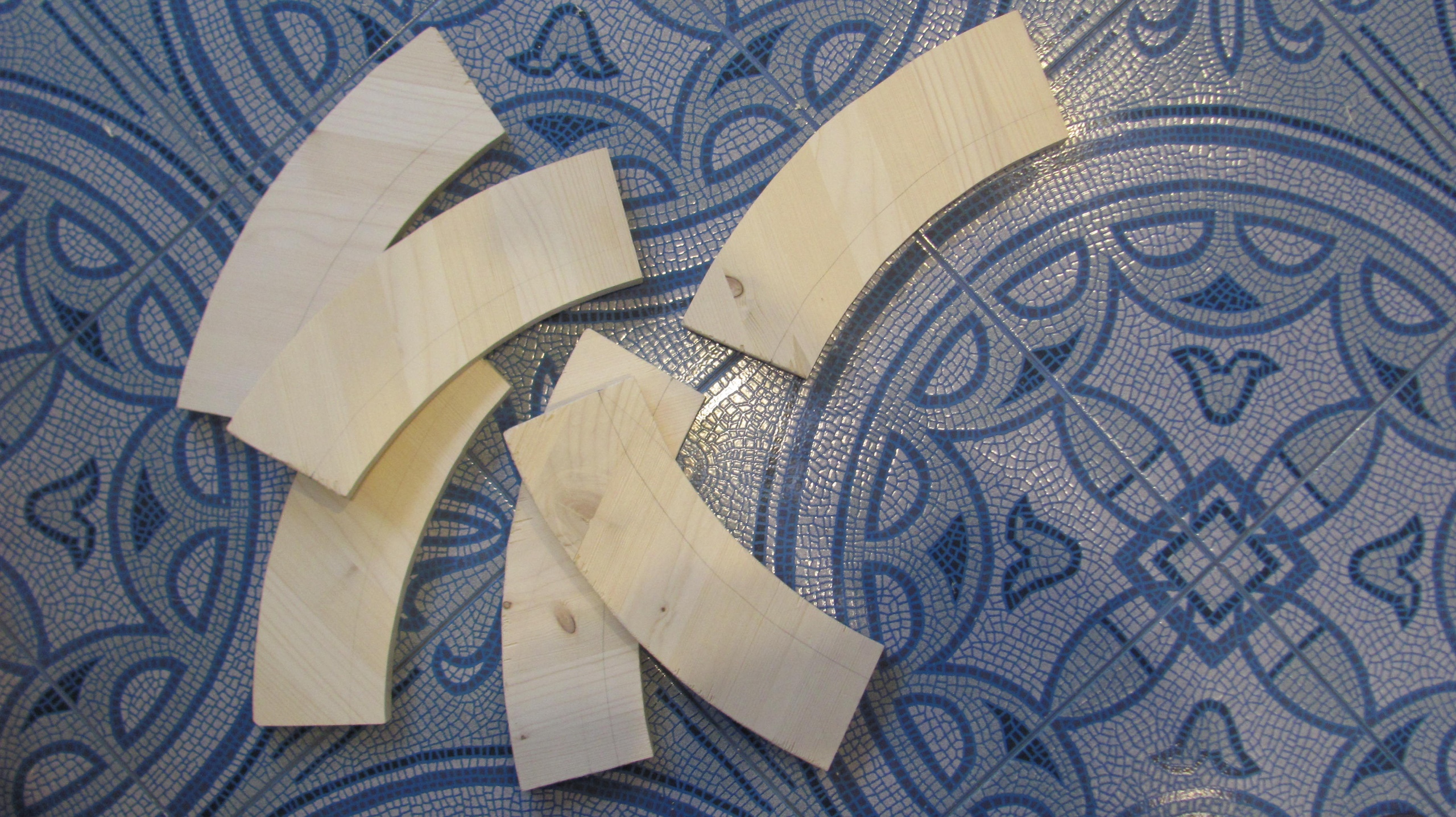 Rim Segments
 Marking and fitting the rim before rounding the radius.
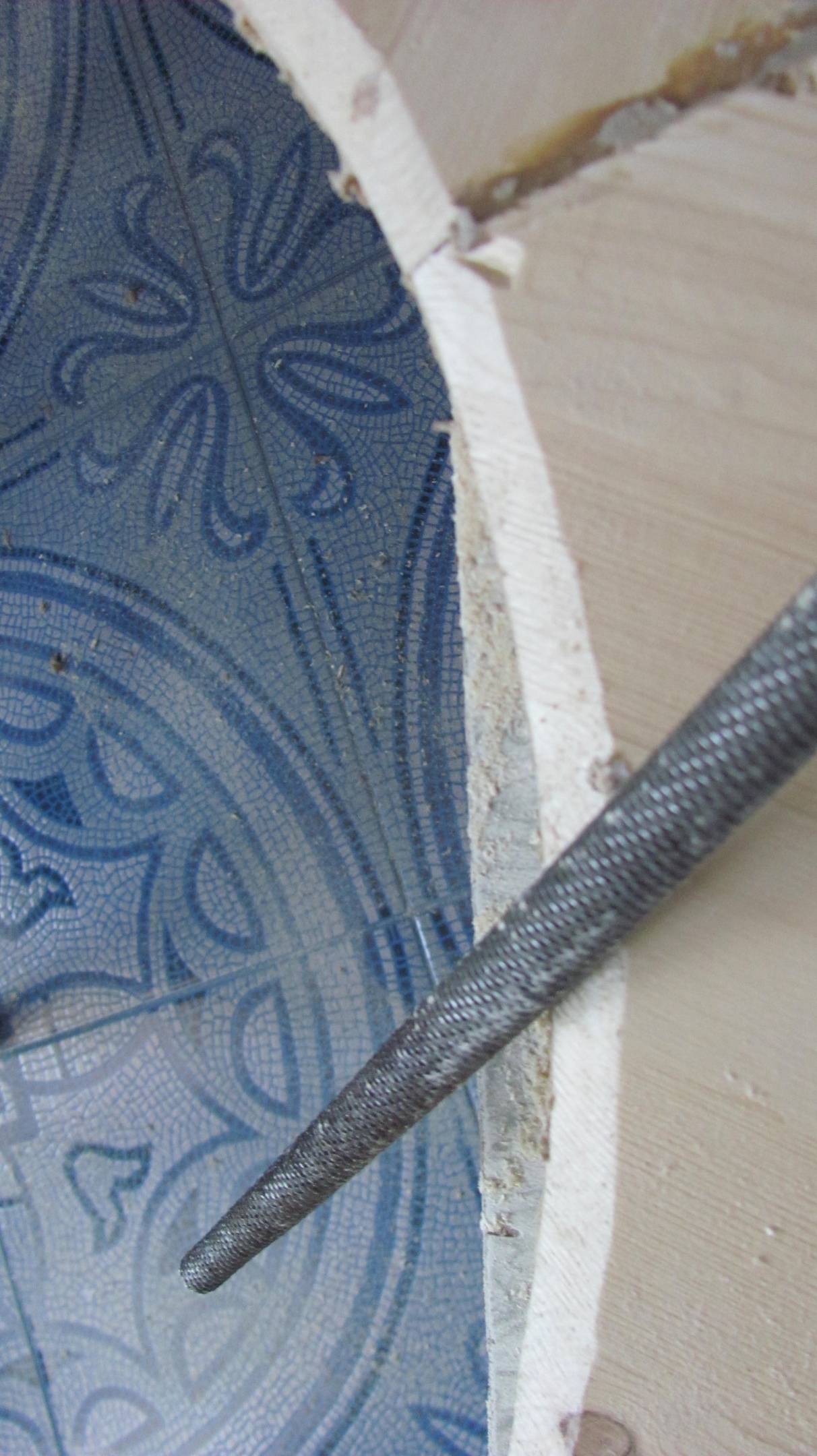 Rounding the radius
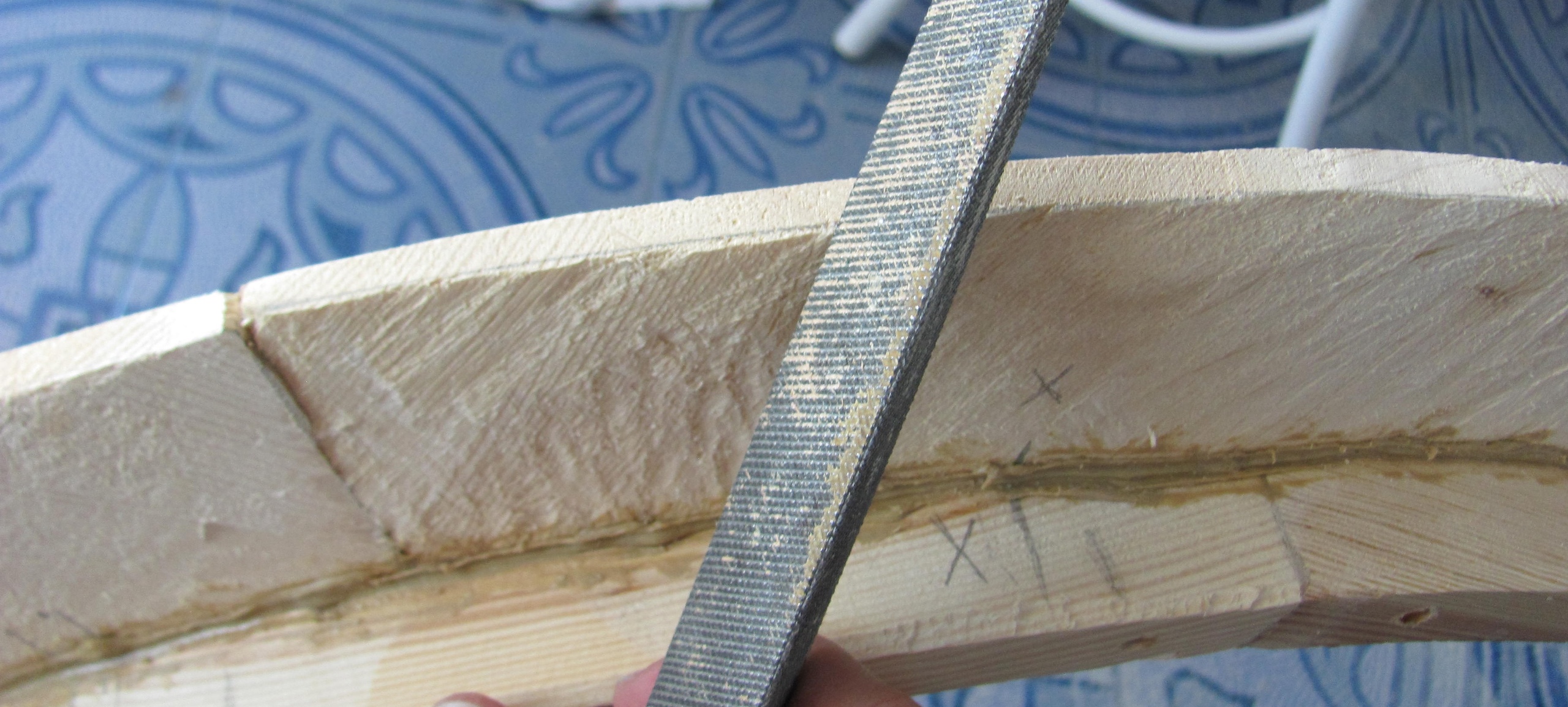 Rounding the rim edge
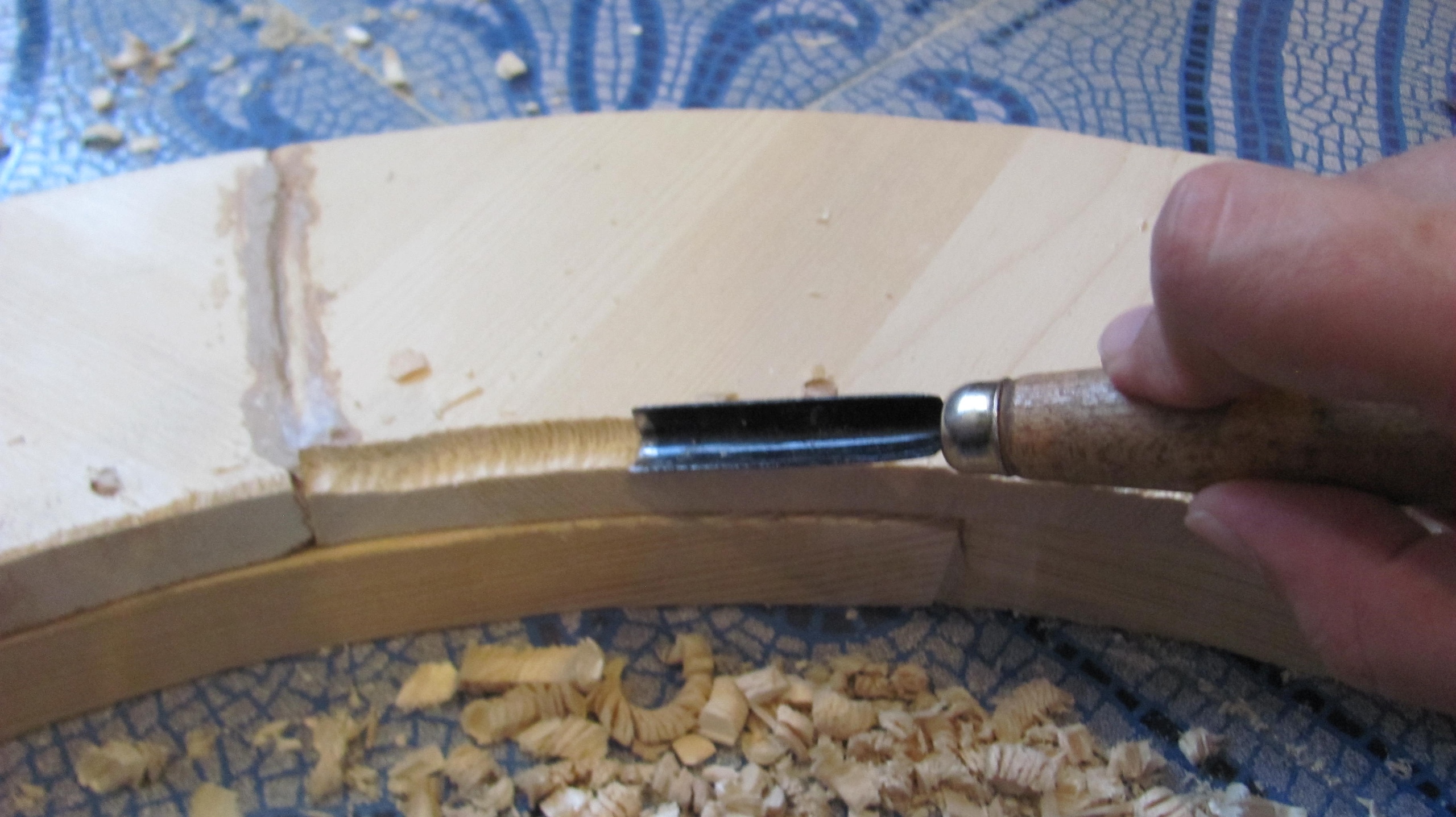 We grind off the rim corner
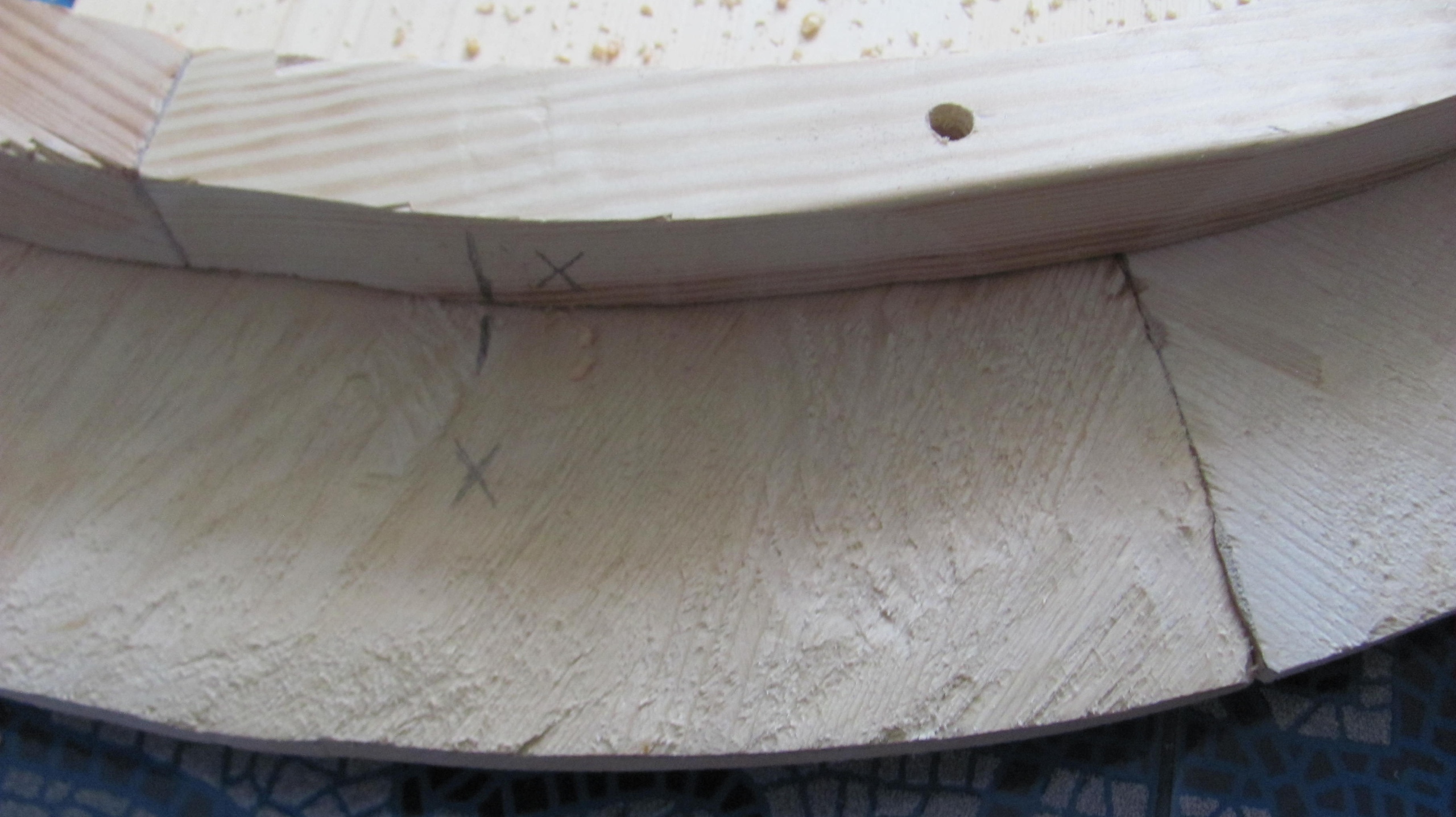
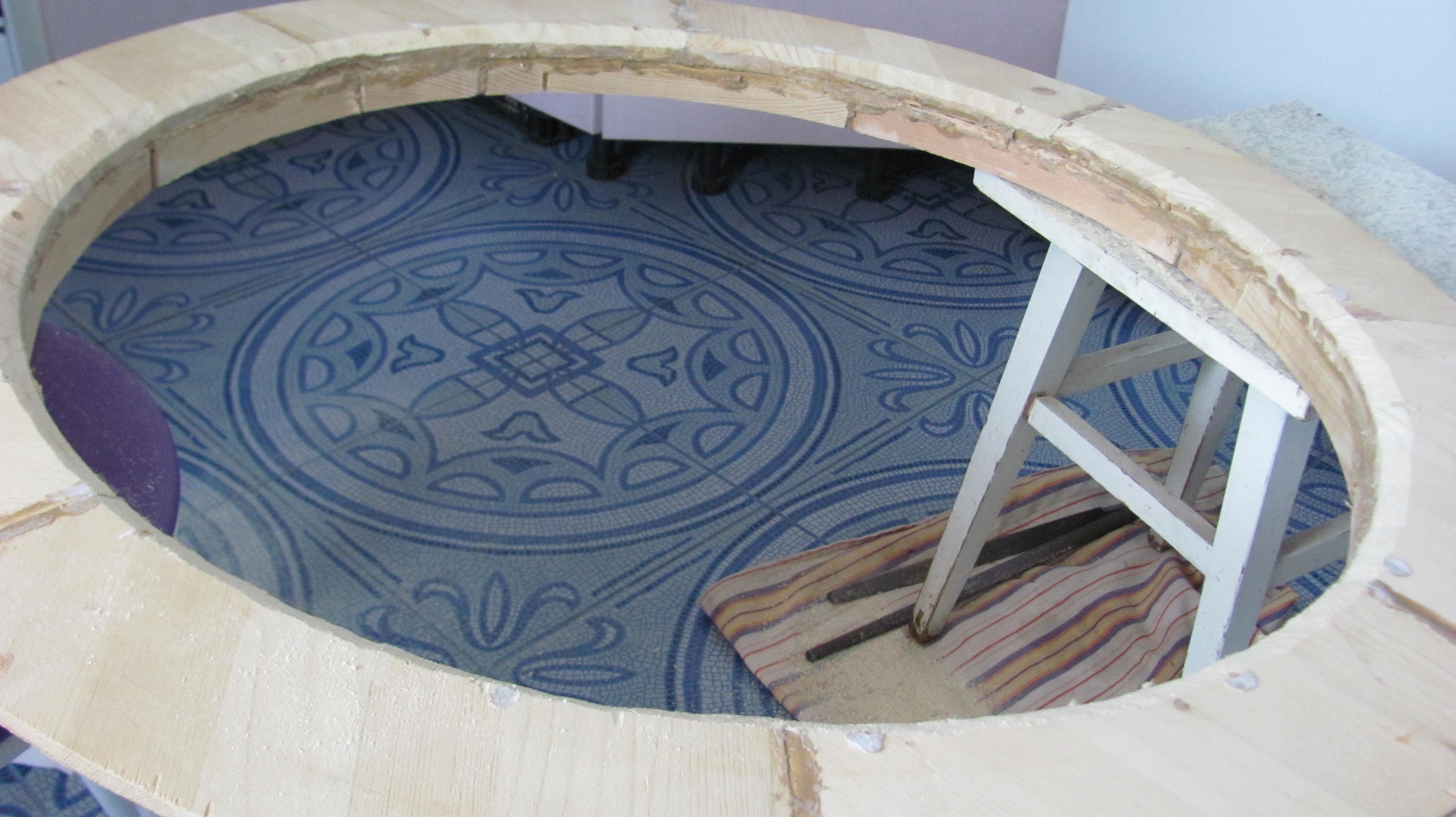 Matching the rim with the ring
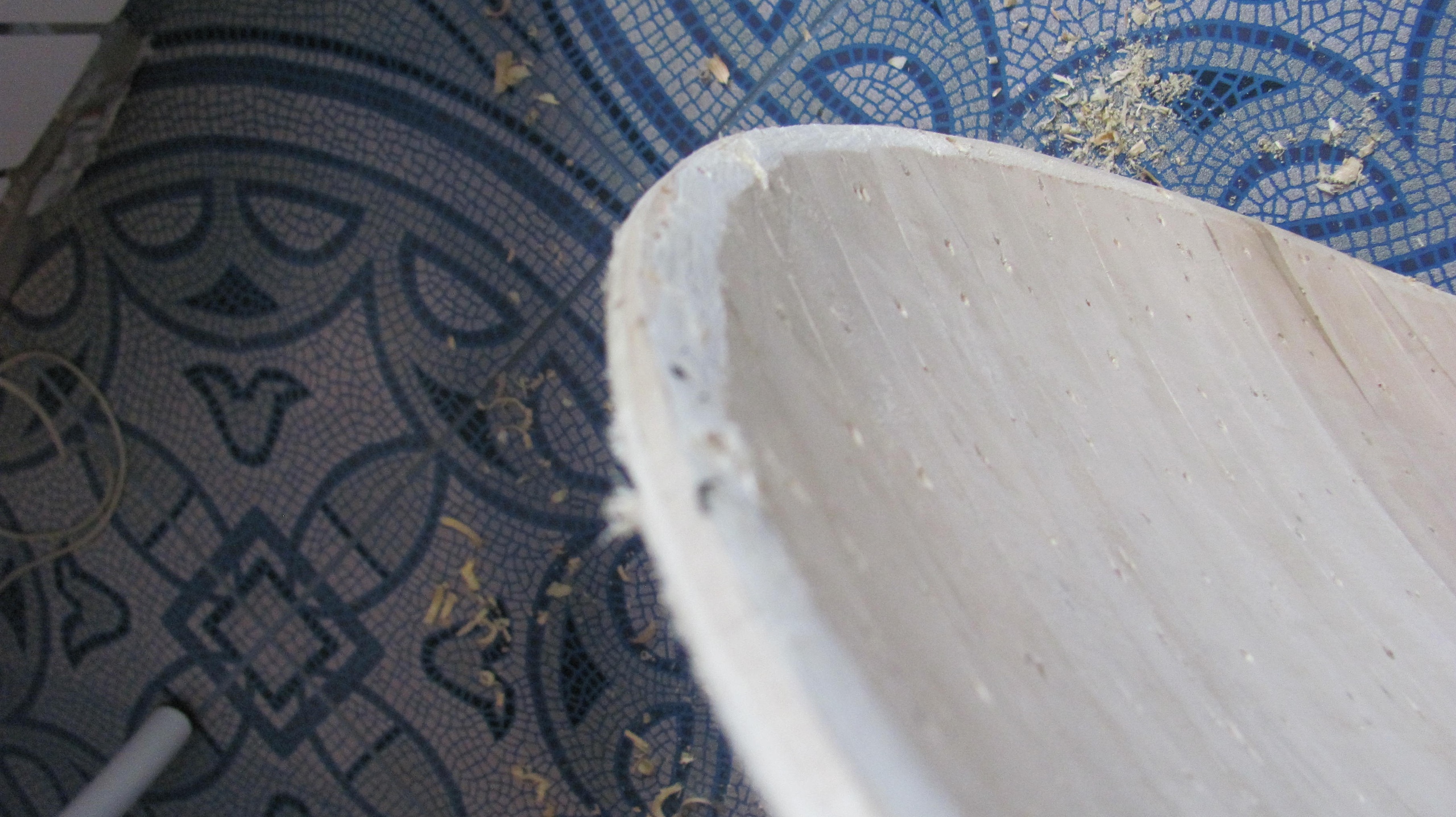 Worn-out rib
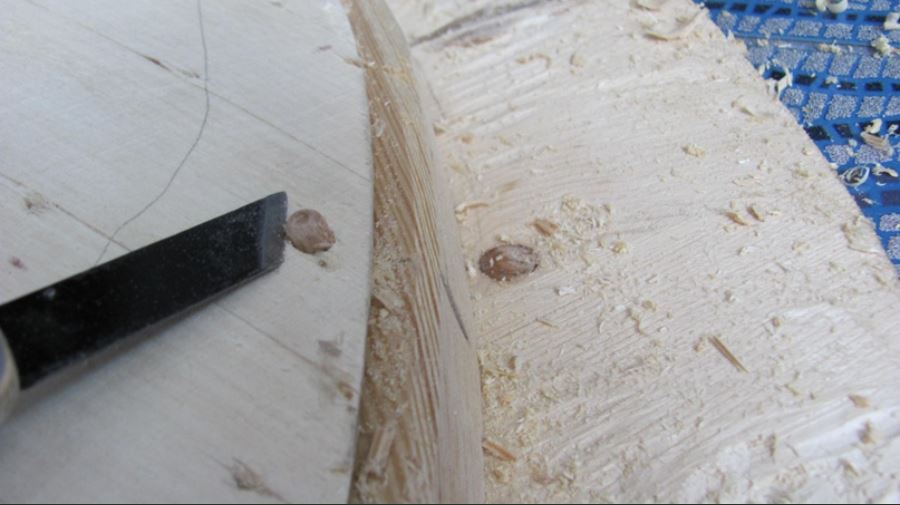 Grind to a smooth transition
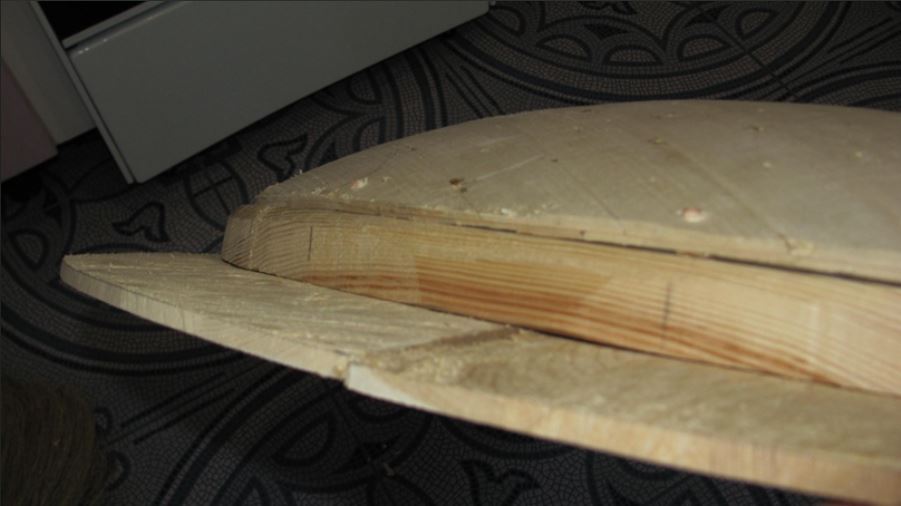 Loosely adjacent edge of the lens
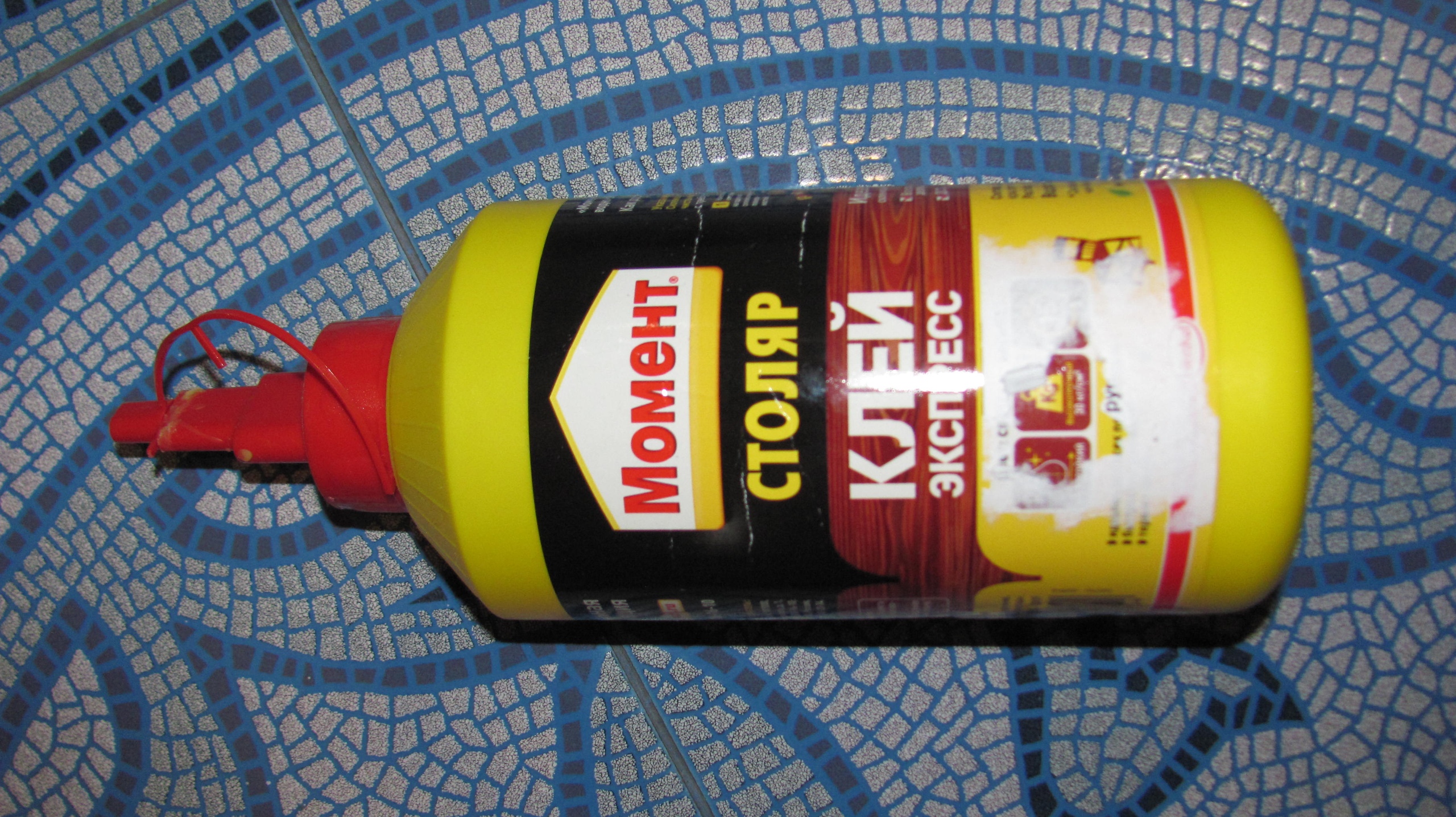
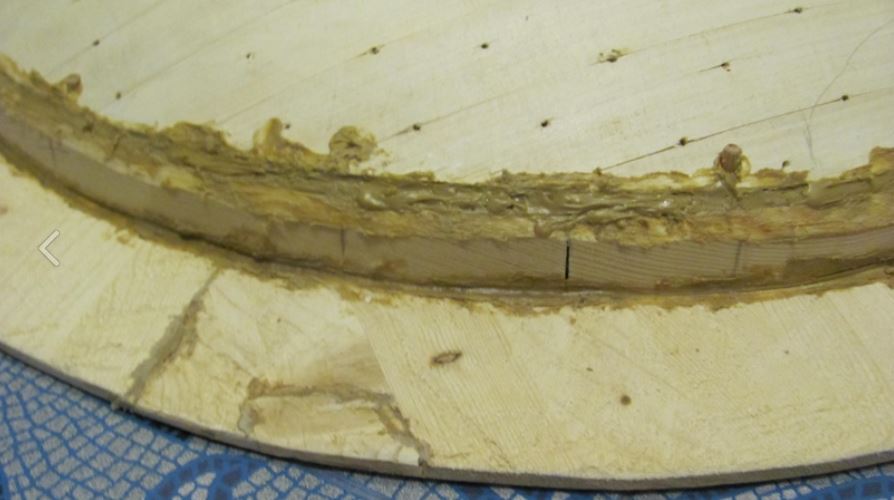 Filling with glue
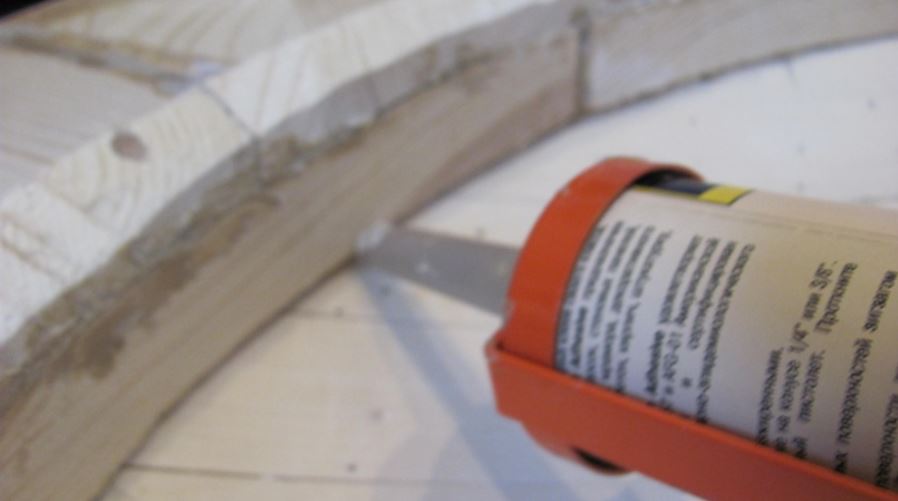 Filling the internal joint with glue
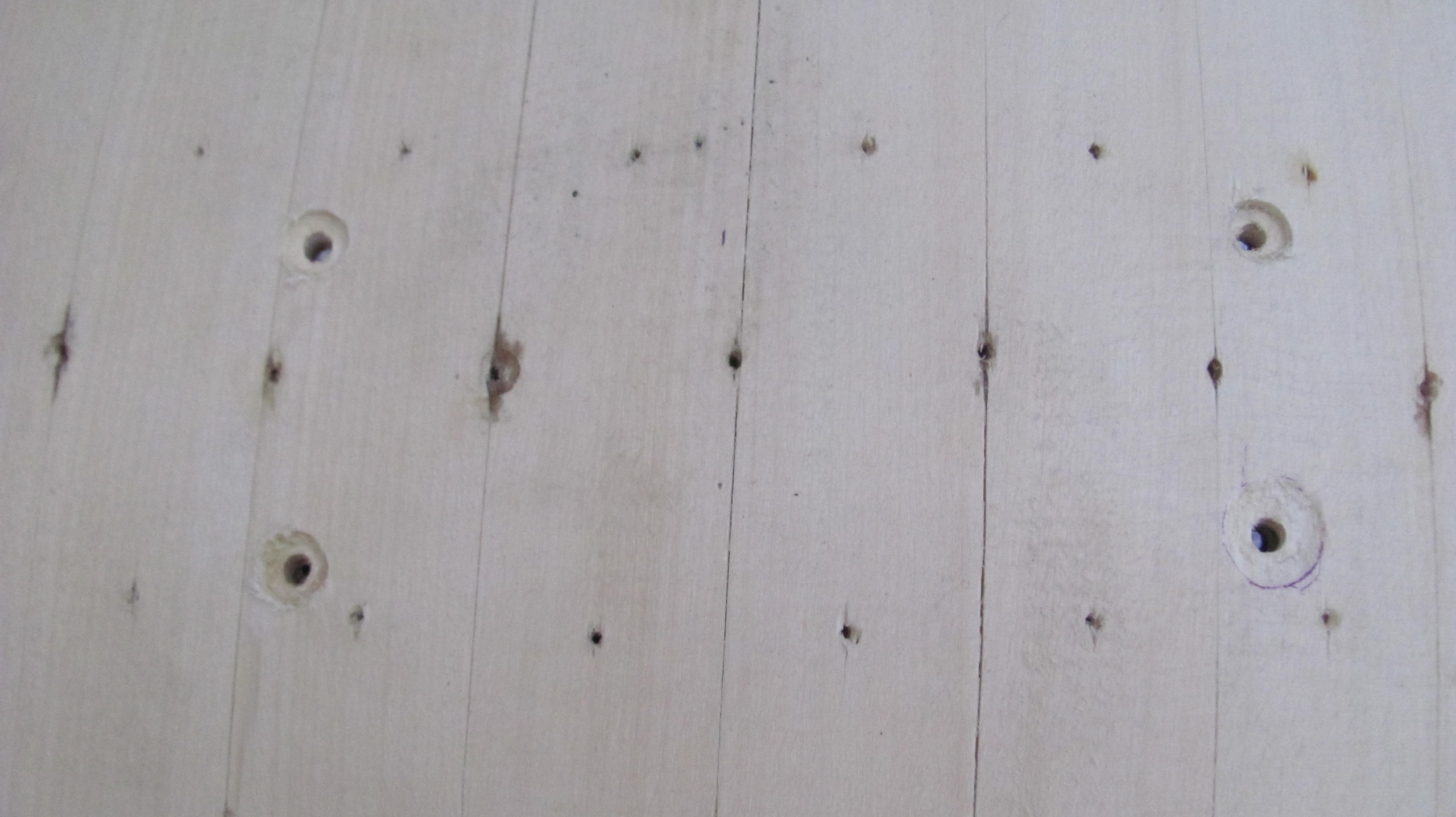 Holes for fixing porpacks,hinges and rings
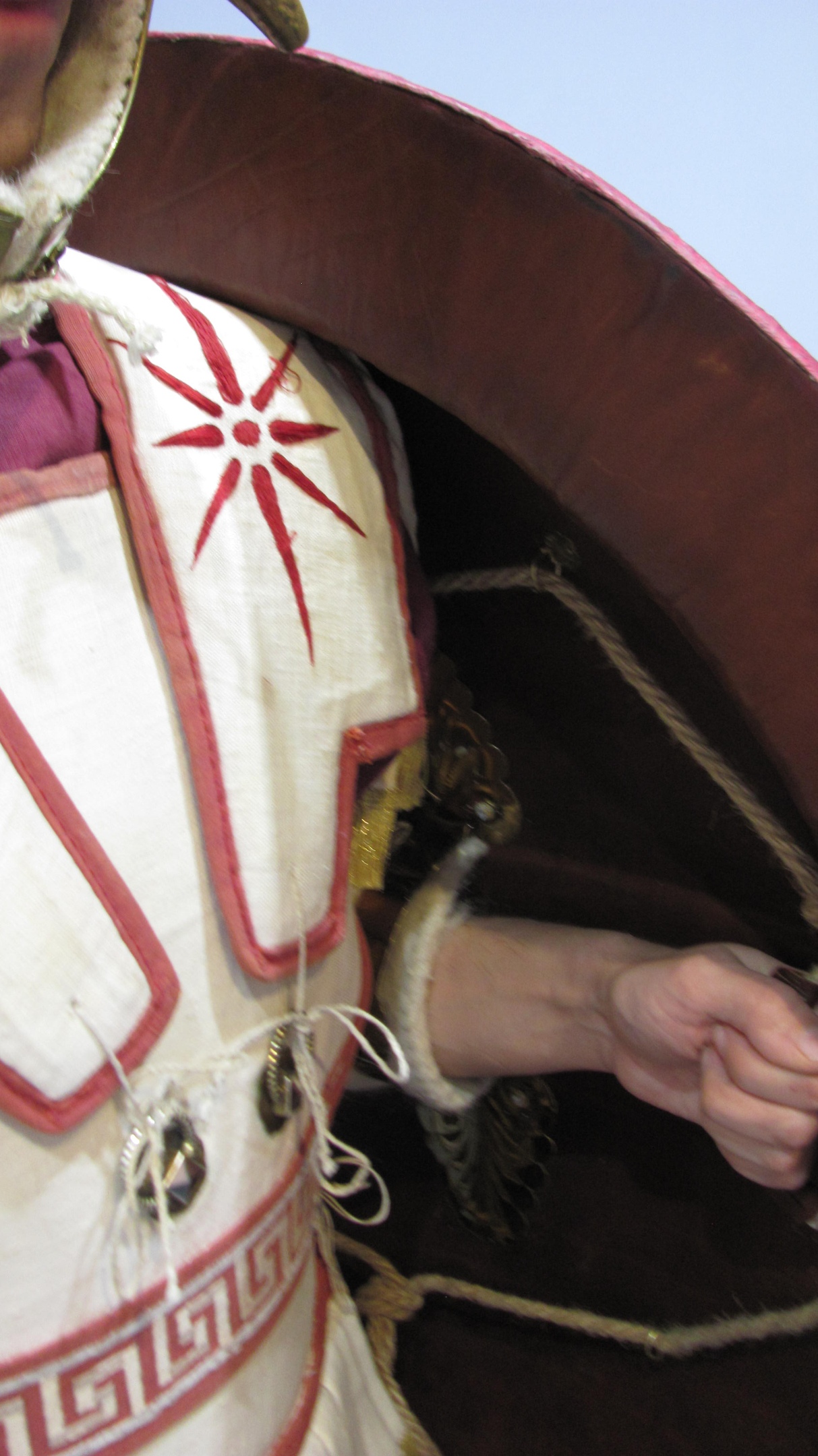 Option of wearing a hoplon with linothorax
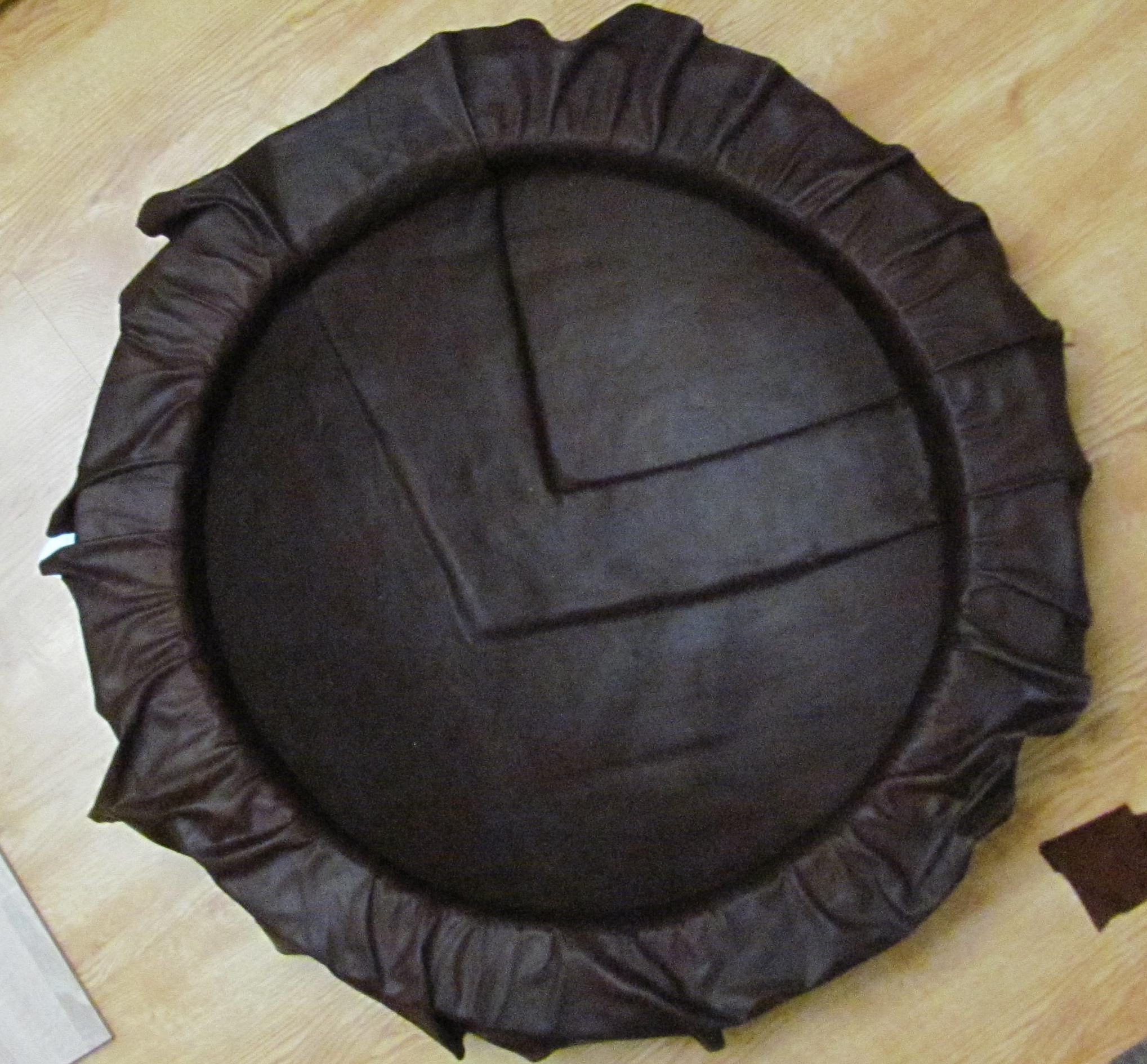 Skin-tightness of the inner surface
 Fitting the leather covering on the inside of the shield.
 Outer shield surface after covering, before final finishing and painting.
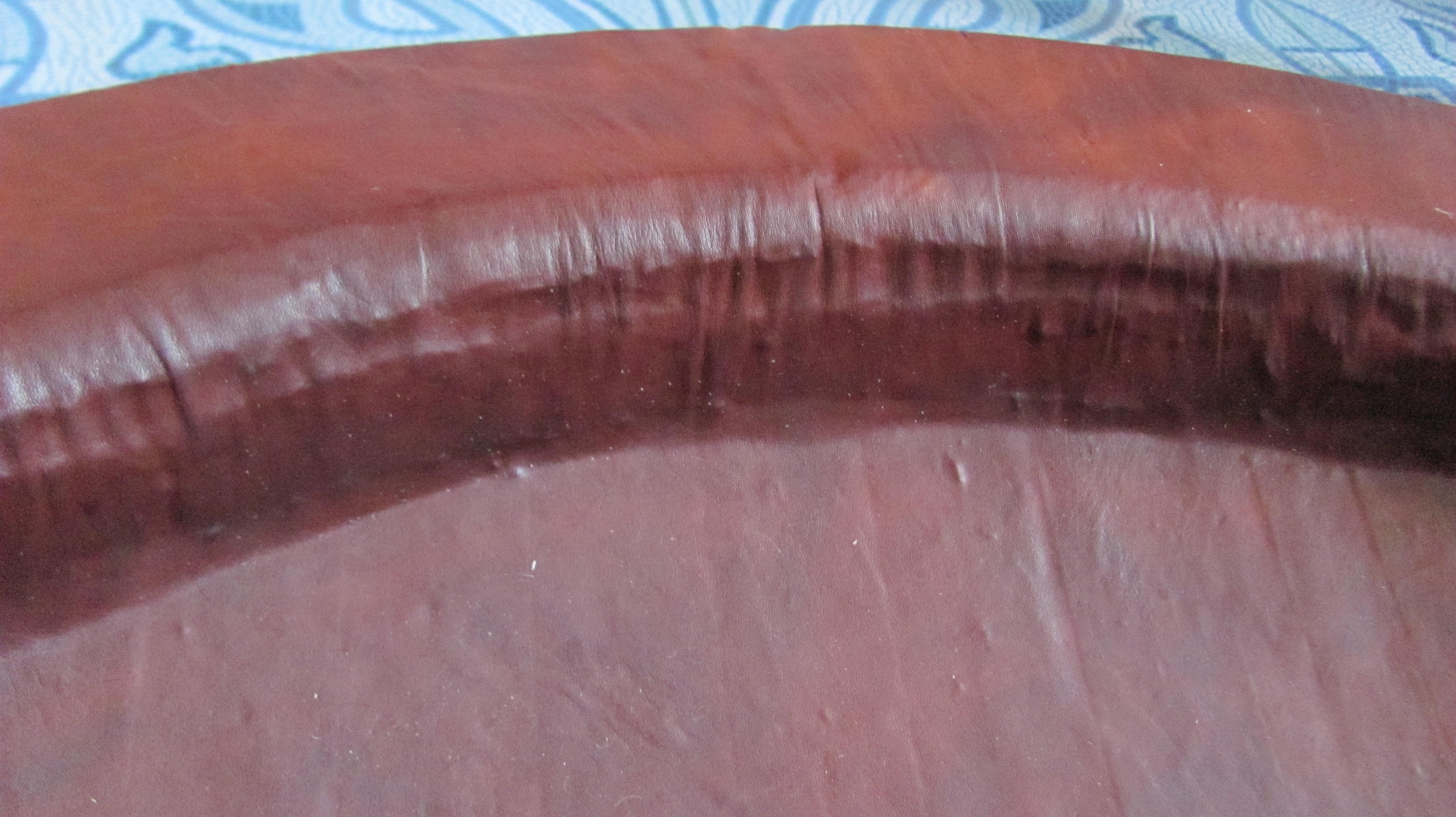 Irregularities in the design of the hoplon under the skin
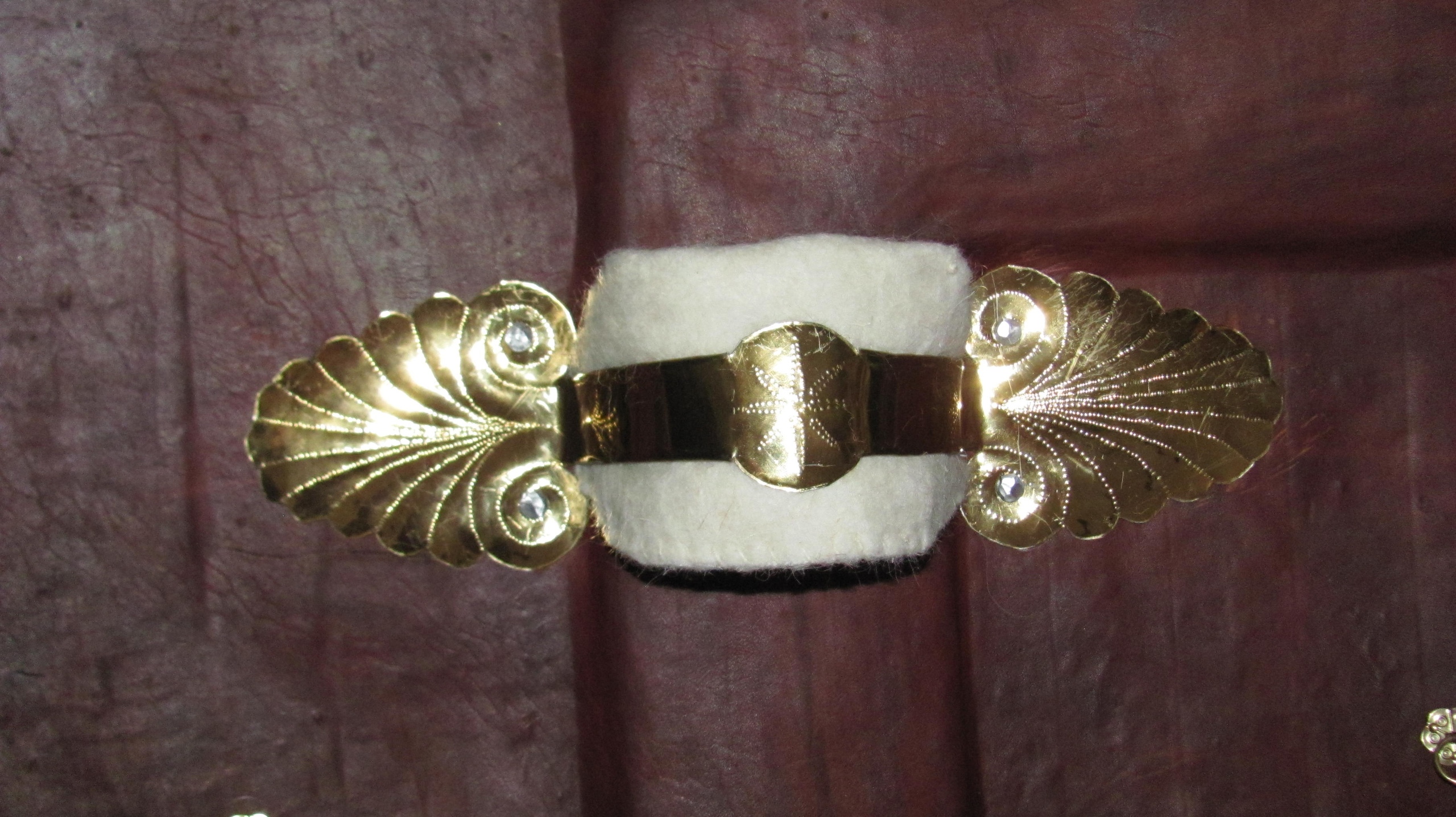 Handle with felt pad
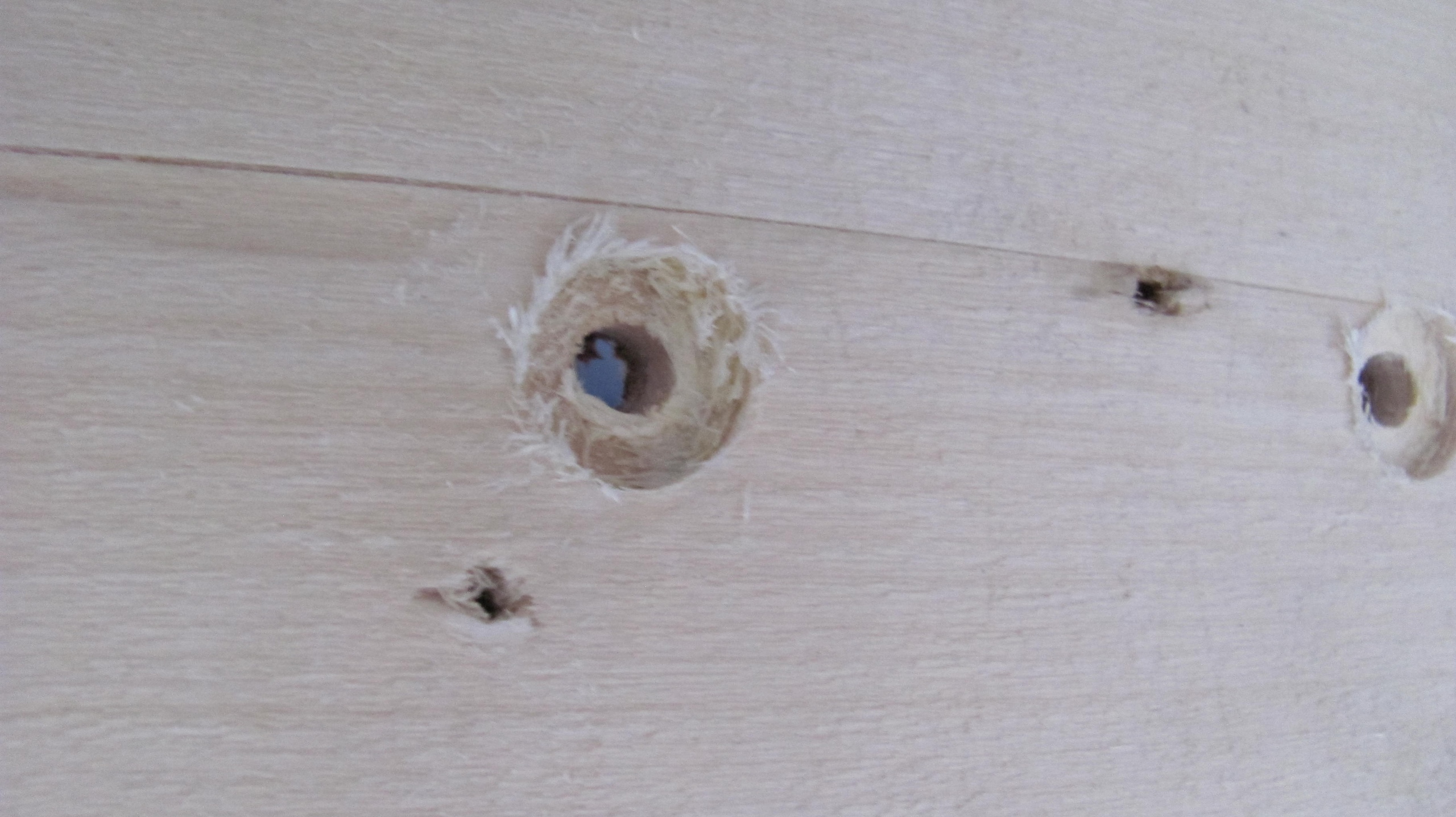 Recesses for fixing rings
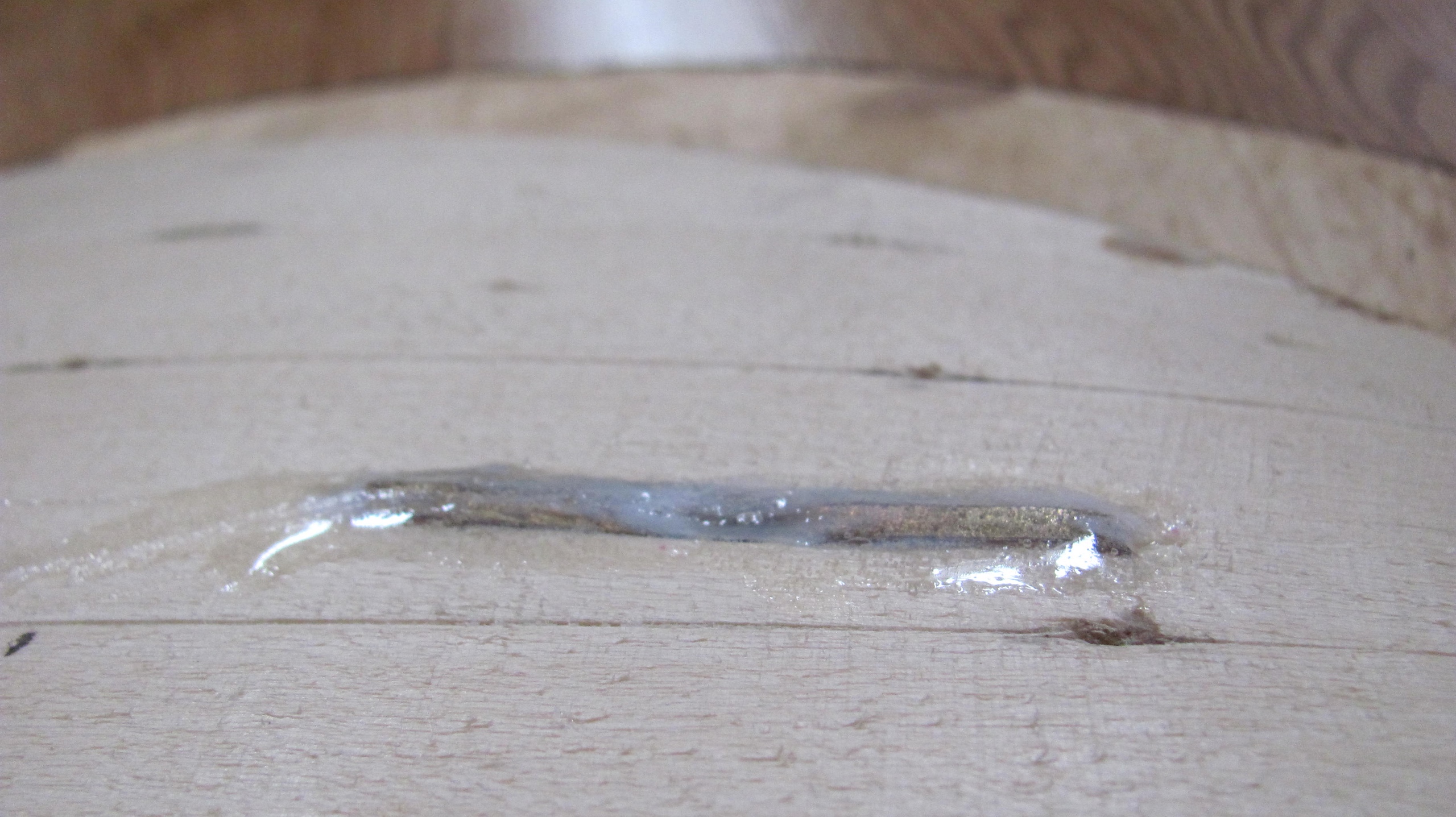 Final processing of ring lugs
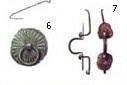 Archaeological finds of porpax and shield-loop fittings; evidence for fastening the inner grip.
Interested in Ancient Rome beyond reading? Join Legio X Fretensis or explore our reenactment directions.


