Camulodunum / Colchester
Camulodunum, modern Colchester in Essex, was one of the chief centres of early Roman Britain. Before the Roman conquest the site was a major south-eastern British centre connected with the Catuvellauni, the Trinovantes and the power of Cunobelinus. After the conquest of AD 43 the Romans used it as a military base and then turned it into a veterans' colony, Colonia Claudia Victricensis.
The town held a special place in the history of the province. It was the first Roman colonia in Britain, an early symbol of Claudian power and one of the centres destroyed during the Boudican revolt in AD 60 or 61. Camulodunum was later rebuilt, enclosed by walls and supplied with public buildings, temples, craft quarters and spectacle venues. Its archaeology connects the military phase of conquest, the urban life of a colony and the memory of a crisis that reshaped south-eastern Britain.
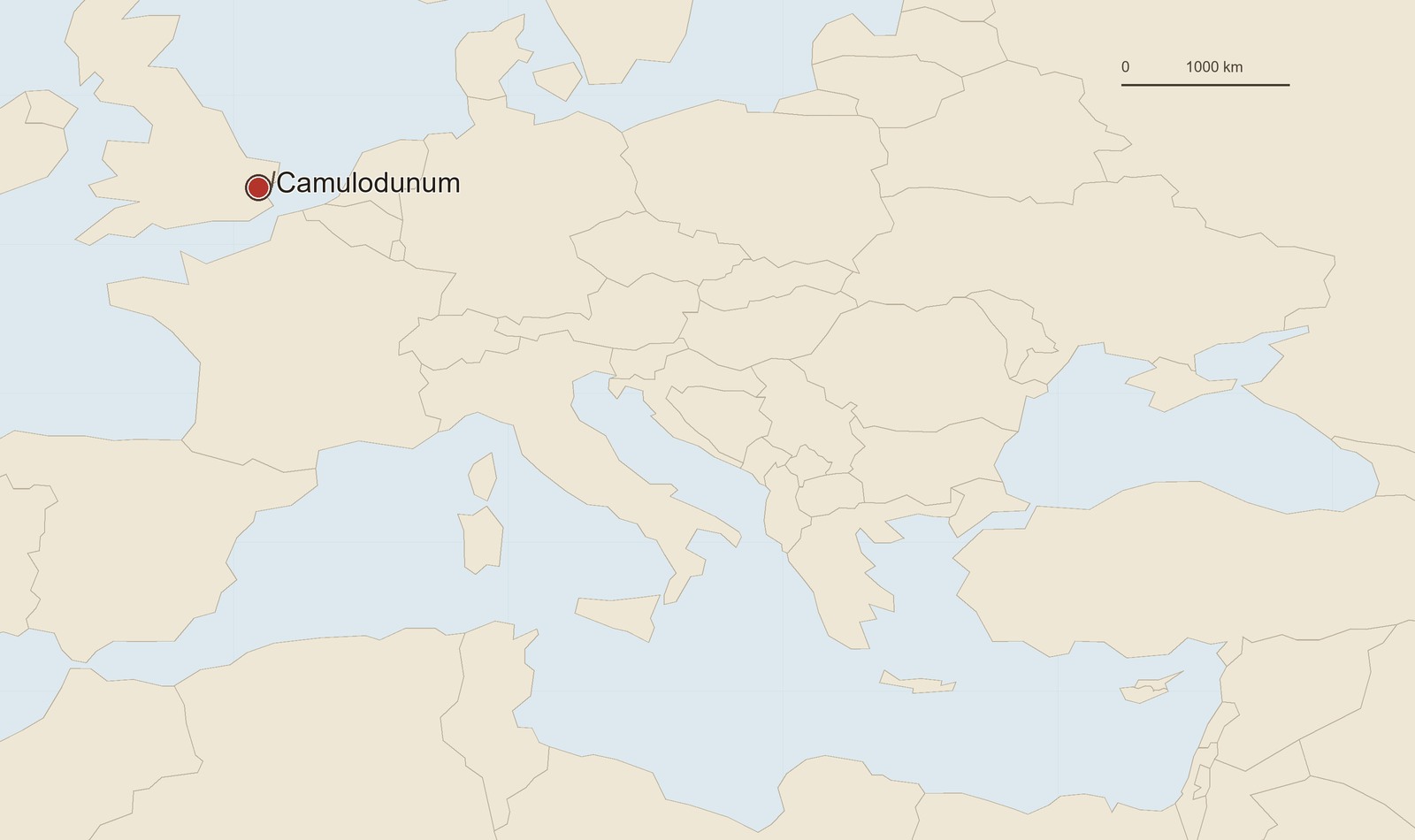 Location map: Camulodunum / Colchester. The marker shows the ancient site or main archaeological complex.
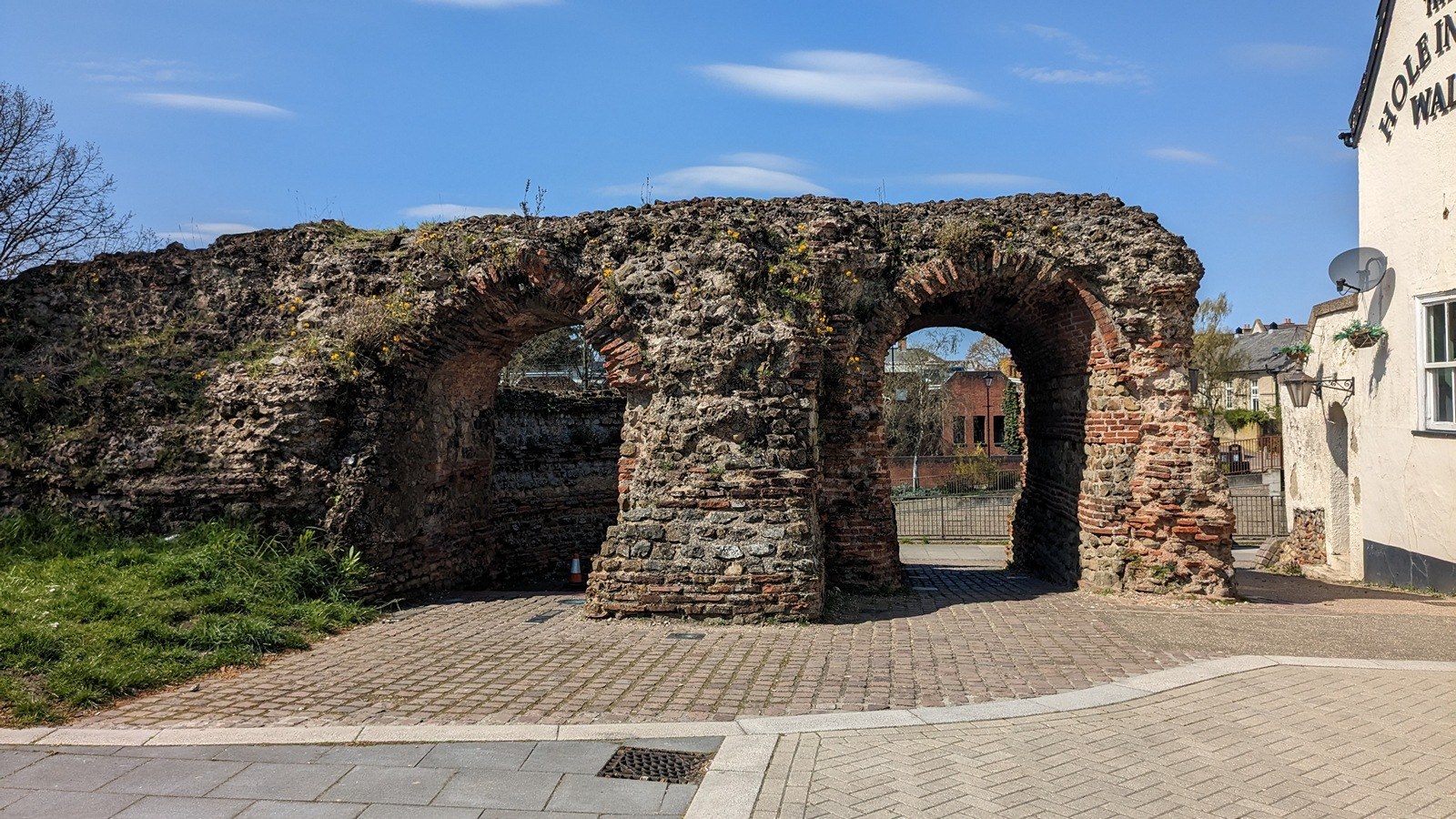 Balkerne Gate in Colchester: the western gateway of Roman Camulodunum and part of the town wall. Present state of the monument.
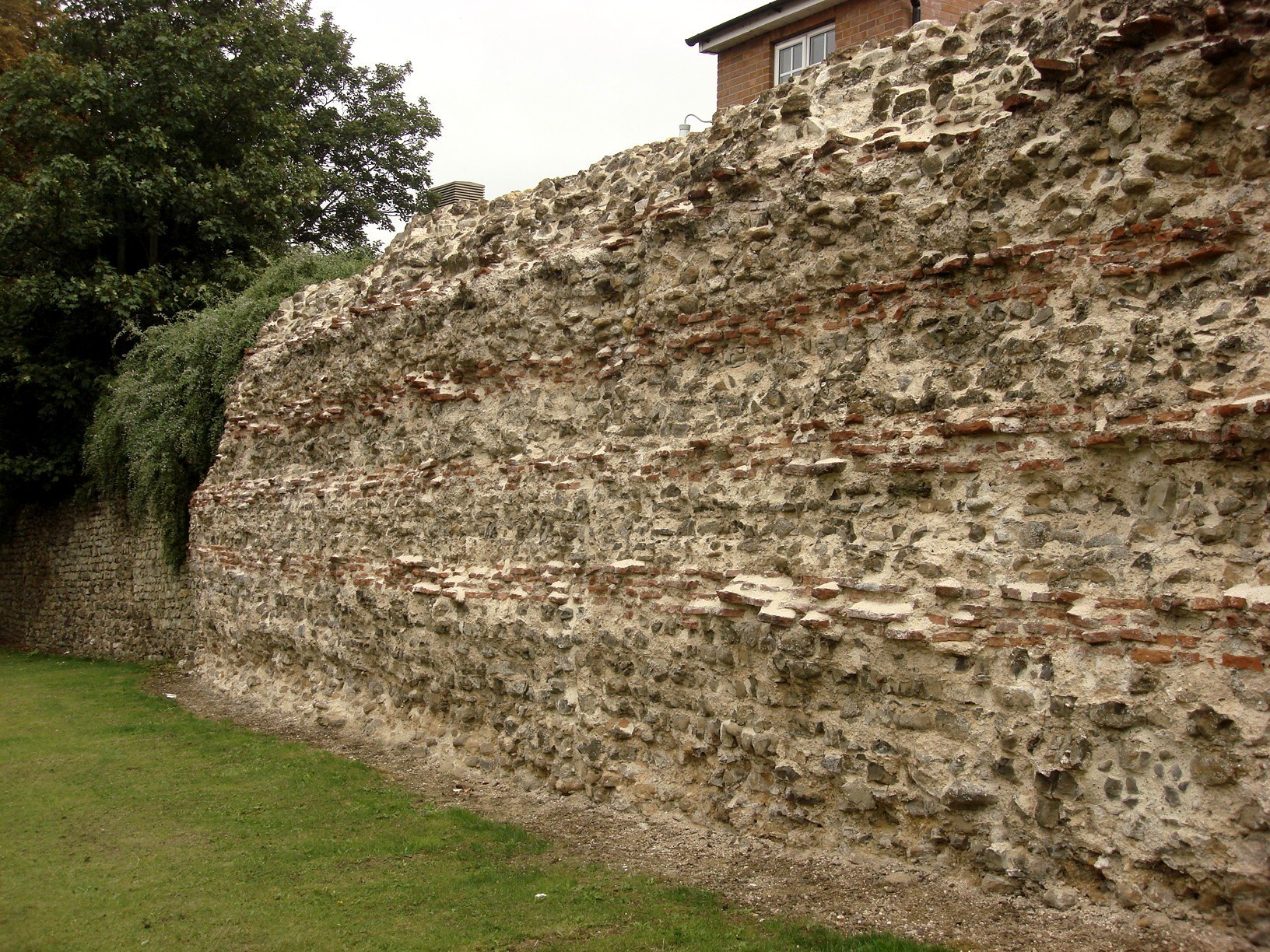 A section of the Roman town wall between Balkerne Gate and North Hill. The stone wall belongs to the rebuilding of the town after the Boudican revolt.
The Pre-Roman Centre
The name Camulodunum is usually connected with the Celtic god Camulos and a word for a fortress or fortified place. In the late Iron Age the Colchester area was not an isolated village, but a political centre with earthworks, roads, coinage, craft production and continental contacts. Coins of Tasciovanus and Cunobelinus show that local power already used written and monetary forms of prestige before the creation of a Roman provincial administration.
For the Romans this centre was an obvious target. It lay in a region where internal conflicts among British rulers, trade links and diplomacy with Rome had long overlapped. The conquest of AD 43 therefore did not confront the local elite with an entirely unknown world: Roman goods, coins, amphorae, metalwork and political contacts had been present in south-eastern Britain long before the army landed.
The Conquest of AD 43
The invasion under Claudius began as a major military operation involving several legions and auxiliary units. At Camulodunum the early military phase is especially important: after the advance into south-eastern Britain, a legionary base was established there. In written sources and archaeology the town is tied to the beginning of Roman control over the new province, with roads, supply, veterans and the first administrative decisions.
Units later prominent in British history took part in operations on the island: Legio XIIII Gemina Martia Victrix served in the campaigns, while Legio XX Valeria Victrix left in Colchester one of the best-known monuments, the tombstone of the centurion Marcus Favonius Facilis. Such monuments show that conquest was not only a political event, but also the movement of particular soldiers, objects, status signs and funerary practices.
The Veterans' Colony
Around AD 49 the military base was converted into a veterans' colony. For the Roman Empire a colonia was not simply a settlement: it was an urban form connected with Roman law, land, citizen status and the memory of victory. At Camulodunum veterans received plots and a position sharply different from that of the local population. This strengthened the province, but also created tension.
The colony received the name Claudia Victricensis, tied to Claudius and the idea of victory. In urban space this appeared through streets, plots, public buildings, imperial cult and Latin forms of civic life. For former soldiers Camulodunum was a reward and a new home; for some Britons it could appear as confiscated land, imposed authority and a constant reminder of defeat.
The Temple of Claudius
The main symbol of the early colony was the temple of the deified Claudius. Its podium stood where Colchester Castle was later built, so the present appearance of the site hides the Roman foundation. The temple belonged to the imperial cult: it showed that Roman power in Britain had not only military and administrative expression, but also a religious and political form.
For the inhabitants of the colony the temple was a centre of public prestige. For opponents of Roman order it could be the most visible sign of subjection. Tacitus explicitly connects hostility to this cult and to the colonists with the tension before the revolt. In the narrative of the town's fall the temple becomes a place of last resistance: some Romans and allies took shelter there when Camulodunum was captured by the rebels.
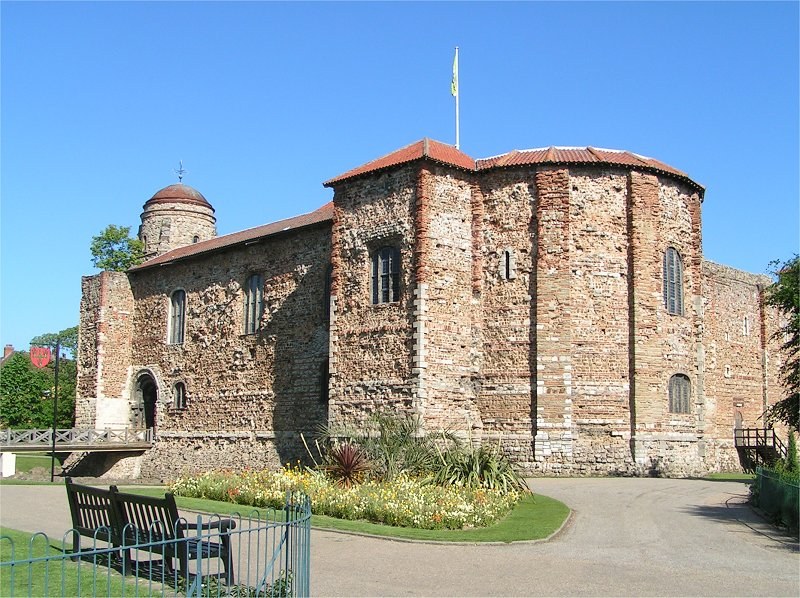 Colchester Castle stands on the podium of the Roman temple of the deified Claudius. The Norman keep covers one of the main monuments of early Camulodunum.
The Boudican Revolt
The Boudican revolt was caused not by a single incident, but by an accumulation of conflicts in the province. The death of Prasutagus, king of the Iceni, Roman administrative intervention, violence against the royal family, debts, confiscations and resentment toward the colonists turned a local crisis into a wider movement. Camulodunum became the first major target because it embodied the Roman conquest in the south-east.
The town was poorly prepared for defence. The early colony did not yet have sufficient fortifications, and its inhabitants relied on status and the expectation of military assistance. The rebels destroyed Camulodunum, killed much of the population and burned public buildings. Burnt deposits and destruction layers in the town remain among the main archaeological markers of these events.
After Camulodunum the revolt spread to Londinium and Verulamium. For Roman power this was a severe blow: not merely one town had been destroyed, but the confidence that the province could be secured quickly and unconditionally. Suetonius Paulinus' victory ended the revolt, yet policy in Britain could no longer ignore the scale of local resistance.
The Rebuilt Town
Camulodunum did not disappear after its destruction. The town was rebuilt and eventually received a stone defensive wall with gates and towers. Balkerne Gate, surviving wall stretches and the street plan show that Colchester remained a significant urban centre, even though administrative and commercial primacy gradually passed to Londinium.
The rebuilt town included residential quarters, craft zones, baths, sanctuaries, cemeteries, workshops and roads. The stone wall was not only a defensive structure: it marked the boundary of the urban community and underlined a new stage after catastrophe. In this respect Camulodunum resembles other provincial towns, where the trauma of war and ordinary urban life existed in the same space.
Layout, Roads and Suburbs
The urban structure of Camulodunum developed around roads, gates and blocks that connected the colony with the coast, inland Britain and its rural territory. Roman planning did not erase the pre-Roman landscape completely, but it imposed new rules on it: streets, plots, public buildings and cemeteries distributed space into legal, economic and ritual zones.
The suburbs were no less important than the centre. Roads, cemeteries, craft areas, villas, sanctuaries and spectacle buildings stood outside the walls. The Roman circus south of the town shows that Camulodunum occupied more space than the inner circuit of the walls. For its inhabitants it was not only a fortified centre, but a broad urban territory moving from public buildings to workshops, cemeteries and suburban complexes.
Military Memory and Tombstones
The tombstone of Marcus Favonius Facilis is one of the most expressive monuments of early Roman Colchester. The centurion is shown in military dress, with belt, cloak and staff of authority. The monument does not merely give the dead man's name: it shows how a Roman officer wished to be seen in a new province, as a man of rank, discipline and connection with the legion.
The details of the tombstone matter for understanding the material culture of the army. Elements of military costume, belt equipment, caligae, hand position and signs of command status can be read on it. Objects such as the gladius, dagger, belt and footwear in such monuments are not a set of accessories, but a language through which the army represented itself in society.
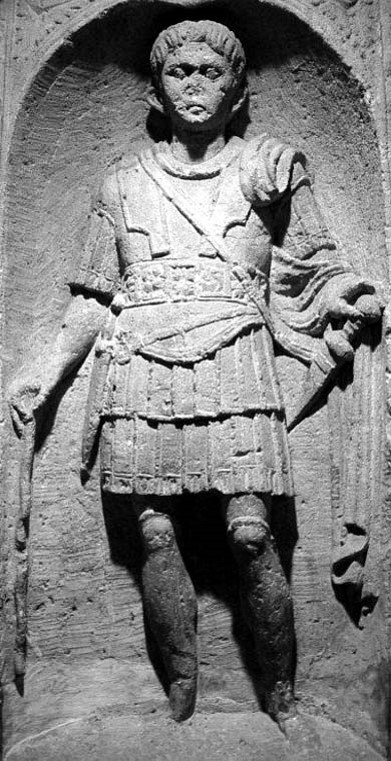 Tombstone of the centurion Marcus Favonius Facilis of Legio XX Valeria Victrix. Colchester, 1st century AD; Colchester and Essex Museum.
Spectacles and Urban Culture
Camulodunum was not only an early colony and a place remembered for revolt. In the second and third centuries it lived as a provincial town with craft, trade, household cult and spectacles. A relief vessel with gladiators found in Colchester shows a secutor; thematically it belongs beside images of the murmillo and other fighter types in Roman art.
Such images do not necessarily prove a particular fight on the day the object was made, but they show a repertoire of popular scenes and an urban environment in which spectacles were a recognizable language. Colchester is also connected with a Roman circus, the only securely identified circus in Britain. Its discovery south of the town makes Camulodunum especially important for the history of provincial entertainment and urban topography.
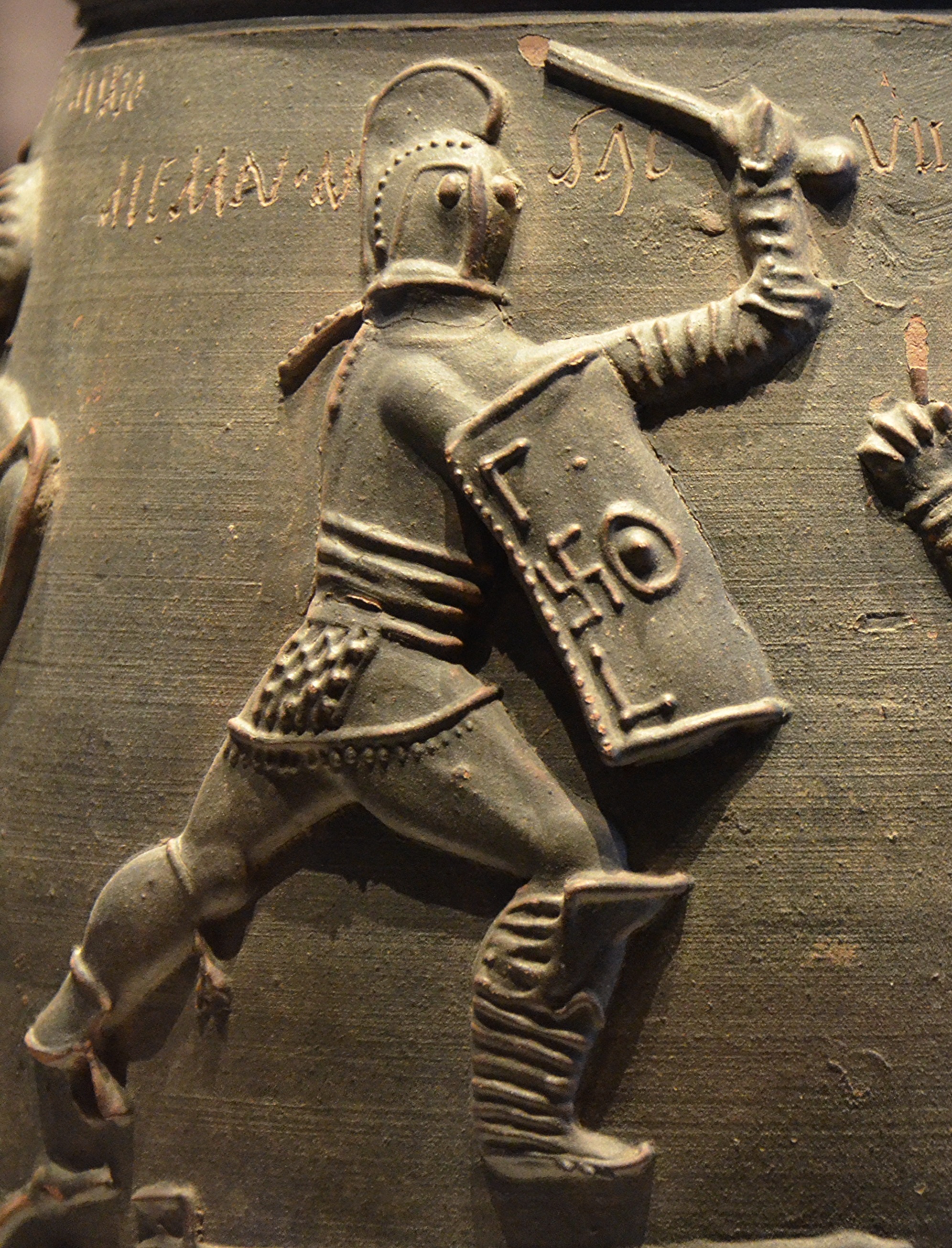 A secutor on a relief vessel from Colchester. Second half of the 2nd century AD; Colchester Castle Museum. The image shows that spectacle culture formed part of life in the provincial town.
Painting, Pottery and Everyday Finds
Finds from Colchester are varied: tombstones, vessels, structural remains, coins, pottery, fragments of wall painting, military fittings and objects from burials. The gladiatorial painting from Balkerne Lane belongs to the urban culture of a later period. It shows that spectacle imagery appeared not only in formal arenas, but also in the decoration of urban rooms.
For the history of the town, combinations of objects and layers are especially important. A burning layer speaks of the catastrophe of AD 60/61; wall and gates of rebuilding and defence; tombstones of military people; vessels and paintings of domestic taste and spectacle memory; the temple podium of early imperial cult. Camulodunum can therefore be read not as one monument, but as several successive towns on the same site.
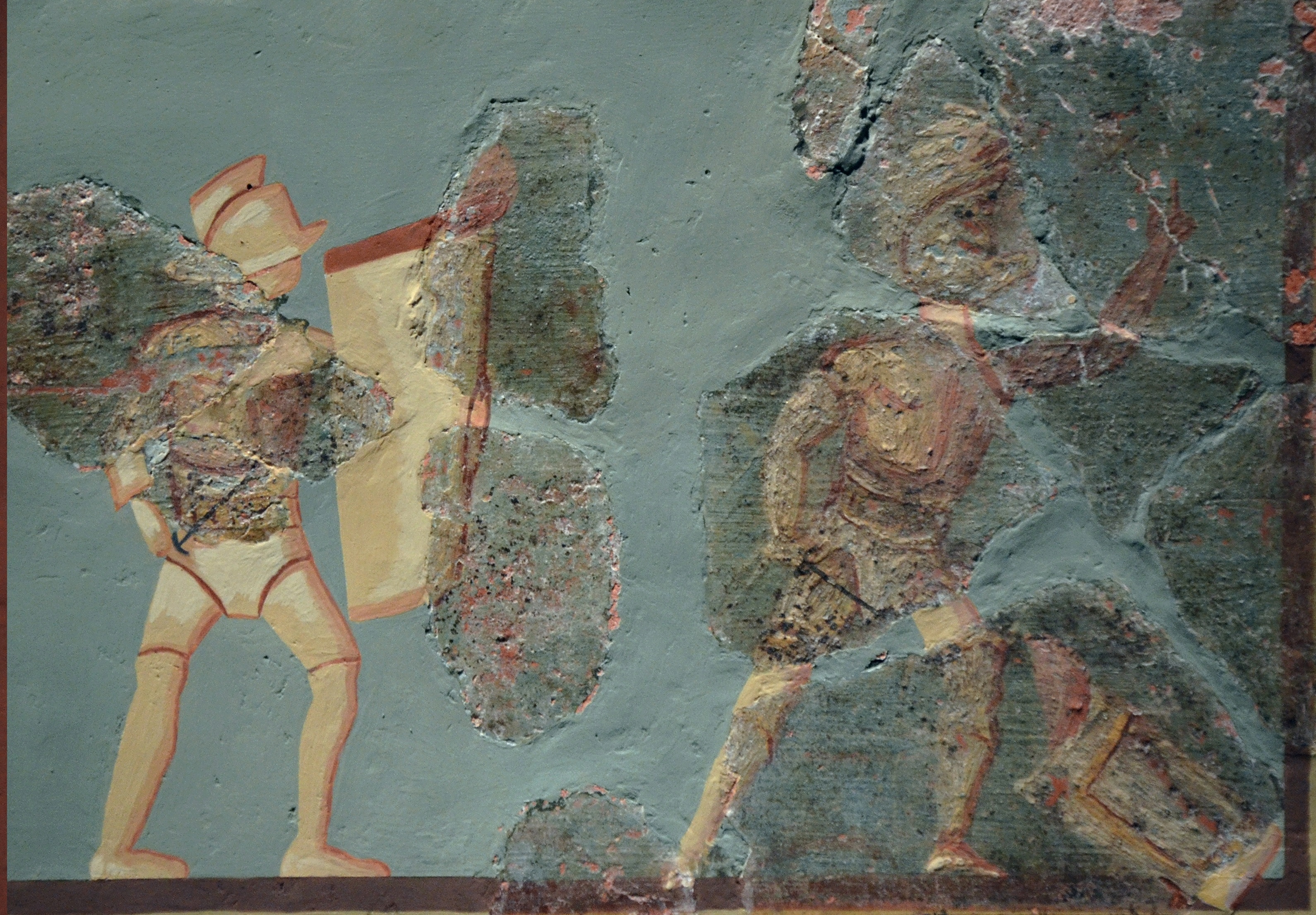 Wall painting with a gladiatorial scene, found at Balkerne Lane in Colchester. 2nd-3rd century AD; Colchester Castle Museum.
Short Chronology
- Late 1st century BC - early 1st century AD: the Colchester area becomes one of the chief centres of south-eastern Britain; local rulers mint coins and maintain continental connections.
- AD 43: the Roman invasion under Claudius; the Camulodunum area enters the system of early military control.
- Around AD 49: foundation of the veterans' colony, Colonia Claudia Victricensis.
- AD 54-60: development of the temple of the deified Claudius and of the public centre of the colony.
- AD 60 or 61: the Boudican revolt; Camulodunum is destroyed and burned.
- Late 1st-2nd century AD: rebuilding of the town, formation of stone walls, gates and stable urban infrastructure.
- 2nd-3rd century AD: development of provincial urban culture, spectacles, craft and suburban complexes, including the Roman circus.
- Late Antiquity and the Middle Ages: Roman structures are partly dismantled and reused; the podium of the temple of Claudius becomes the foundation of Colchester Castle.
Related Topics
- Roman Empire
- Rome
- Roman Legion
- Legio XX Valeria Victrix
- Legio XIIII Gemina Martia Victrix
- Londinium
- Roman Archaeological Evidence
- Secutor
- Murmillo
- Gladius
- Caligae
Literature and sources
- Tacitus. Annals, XIV, 31-33.
- Cassius Dio. Roman History, LX, LXII.
- Crummy P. City of Victory: The Story of Colchester - Britain's First Roman Town. Colchester Archaeological Trust, 1997.
- Crummy N., Crummy P., Crossan C. Excavations of Roman and Later Cemeteries, Churches and Monastic Sites in Colchester, 1971-88. Colchester Archaeological Report 9, 1993.
- Hull M. R. Roman Colchester. Reports of the Research Committee of the Society of Antiquaries of London, 1958.
- Wilson R. J. A. A Guide to the Roman Remains in Britain. London, 2002.
- Colchester Archaeological Trust: reports and publications on the Roman town, circus and urban excavations.
- Wikimedia Commons: Balkerne Gate, Roman City Wall, Colchester - geograph.org.uk - 7542498.jpg; photo by Sandy Gerrard, CC BY-SA 2.0.
- Wikimedia Commons: The Roman Town Wall, Balkerne Gate to North Hill 1.JPG; photo by Maria, CC BY-SA 3.0.
- Wikimedia Commons: Colchester castle 800.jpg; photo by Sannse, CC BY-SA 3.0 / GFDL.


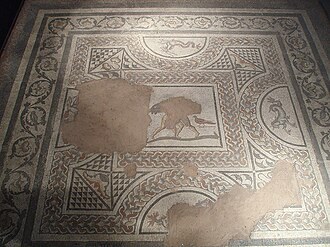 Camulodunum / Colchester: Colchester mosaic; material-culture object or museum find connected with the site, Roman period or local archaeological context.
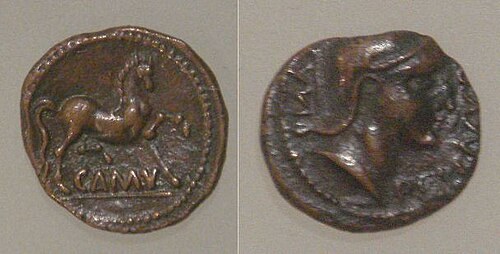 Camulodunum / Colchester: Bronze coins of Cunobelin 1 to 42 CE; material-culture object or museum find connected with the site, Roman period or local archaeological context.
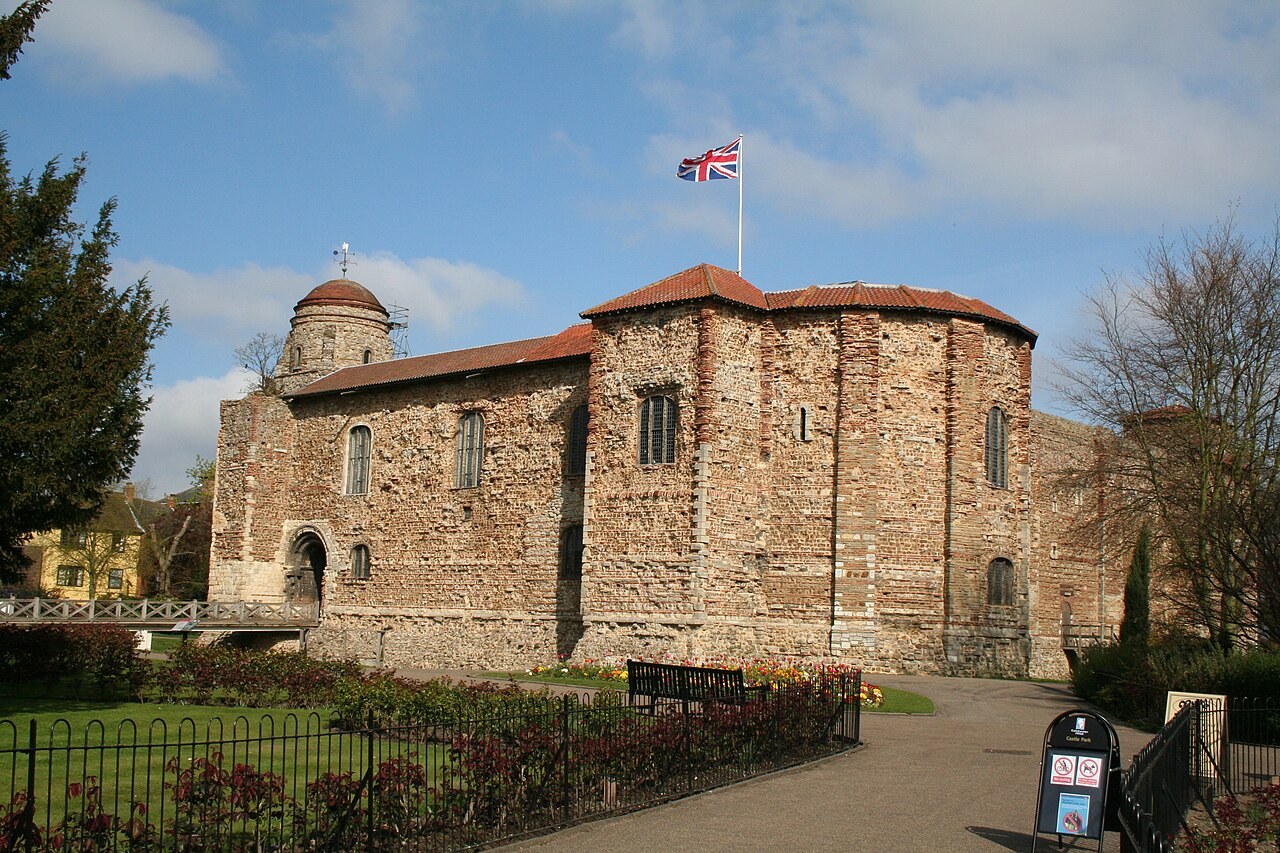 Camulodunum / Colchester: Colchester Castle (geograph 4444025); archaeological view, find or museum context connected with the site, Roman period or local archaeological context.
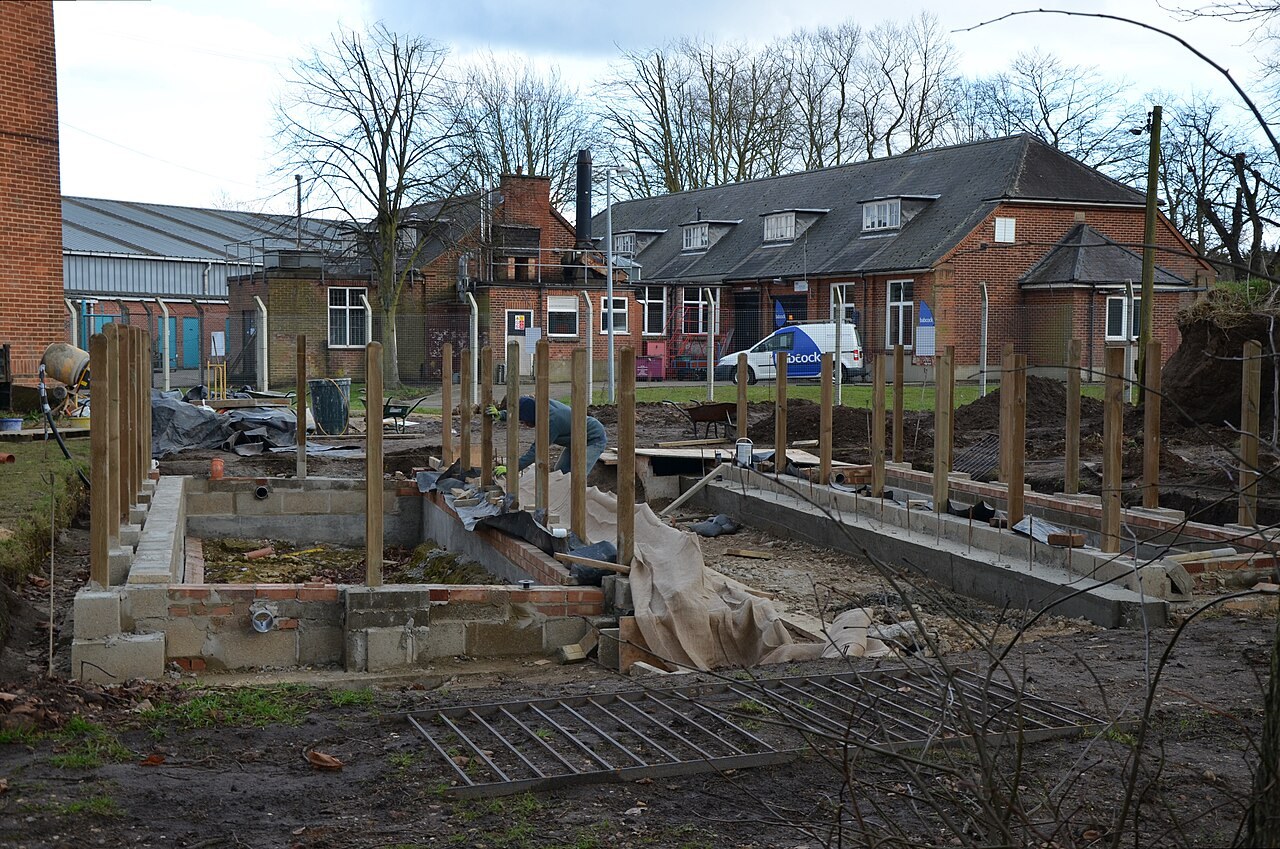 Camulodunum / Colchester: Walkway for visitors being built over the remains of the Roman circus, Roman Circus of...; archaeological view, find or museum context connected with the site, Roman period or local archaeological context.
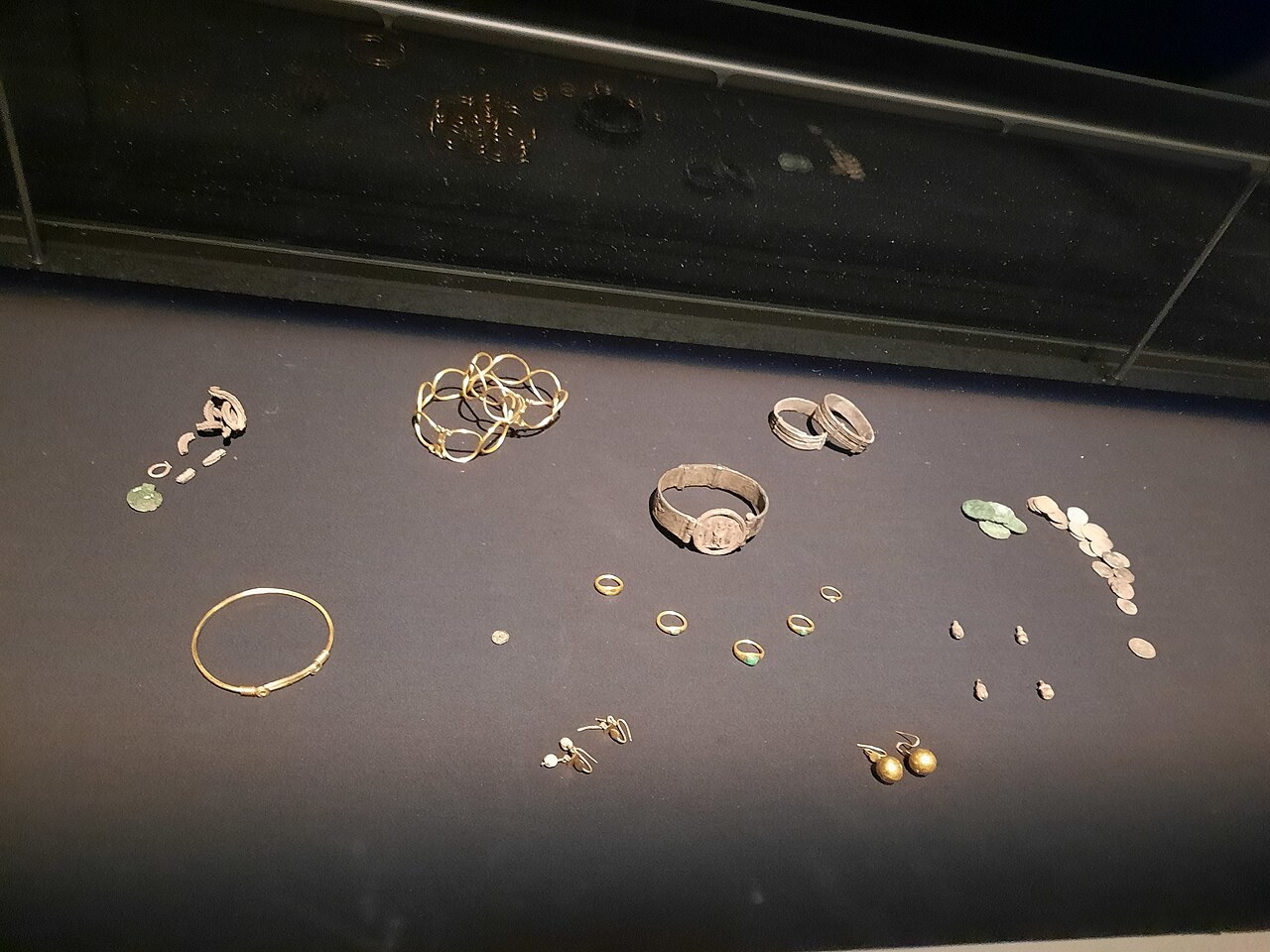 Camulodunum / Colchester: Fenwick Treasure 01; archaeological view, find or museum context connected with the site, Roman period or local archaeological context.
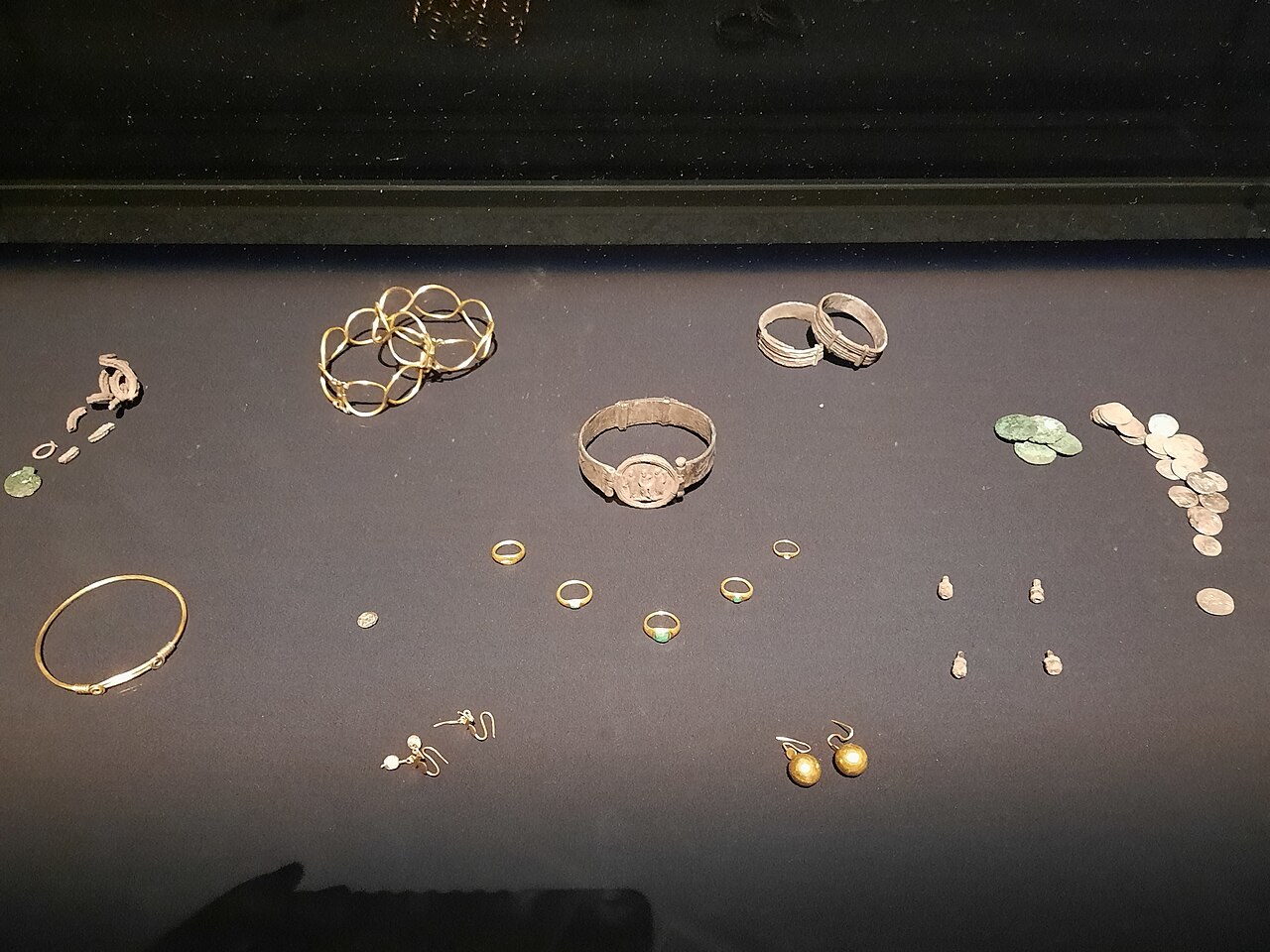 Camulodunum / Colchester: Fenwick Treasure 02; archaeological view, find or museum context connected with the site, Roman period or local archaeological context.
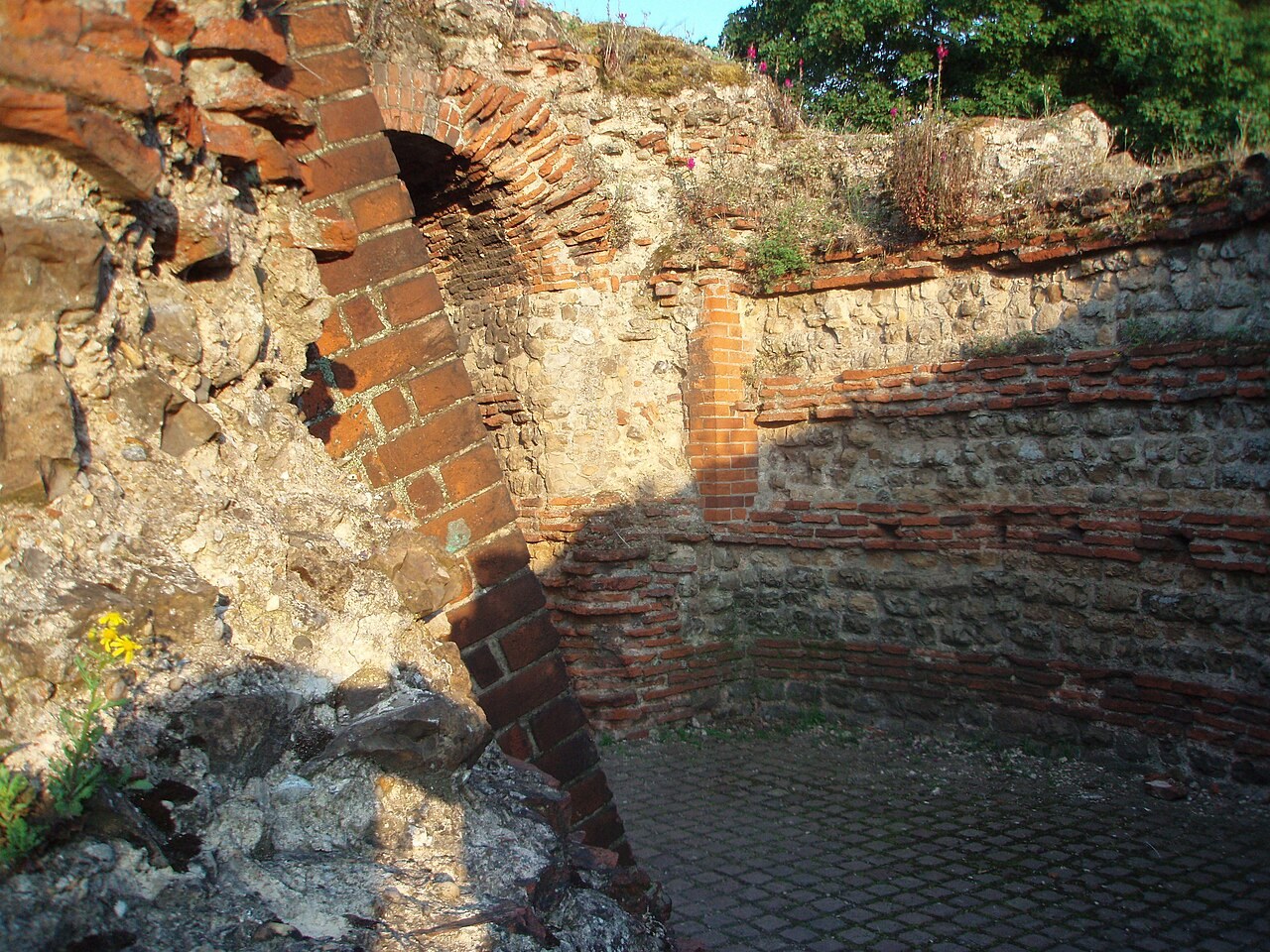 Camulodunum / Colchester: Camulodunum Roman Wall, Colchester; archaeological view, find or museum context connected with the site, Roman period or local archaeological context.
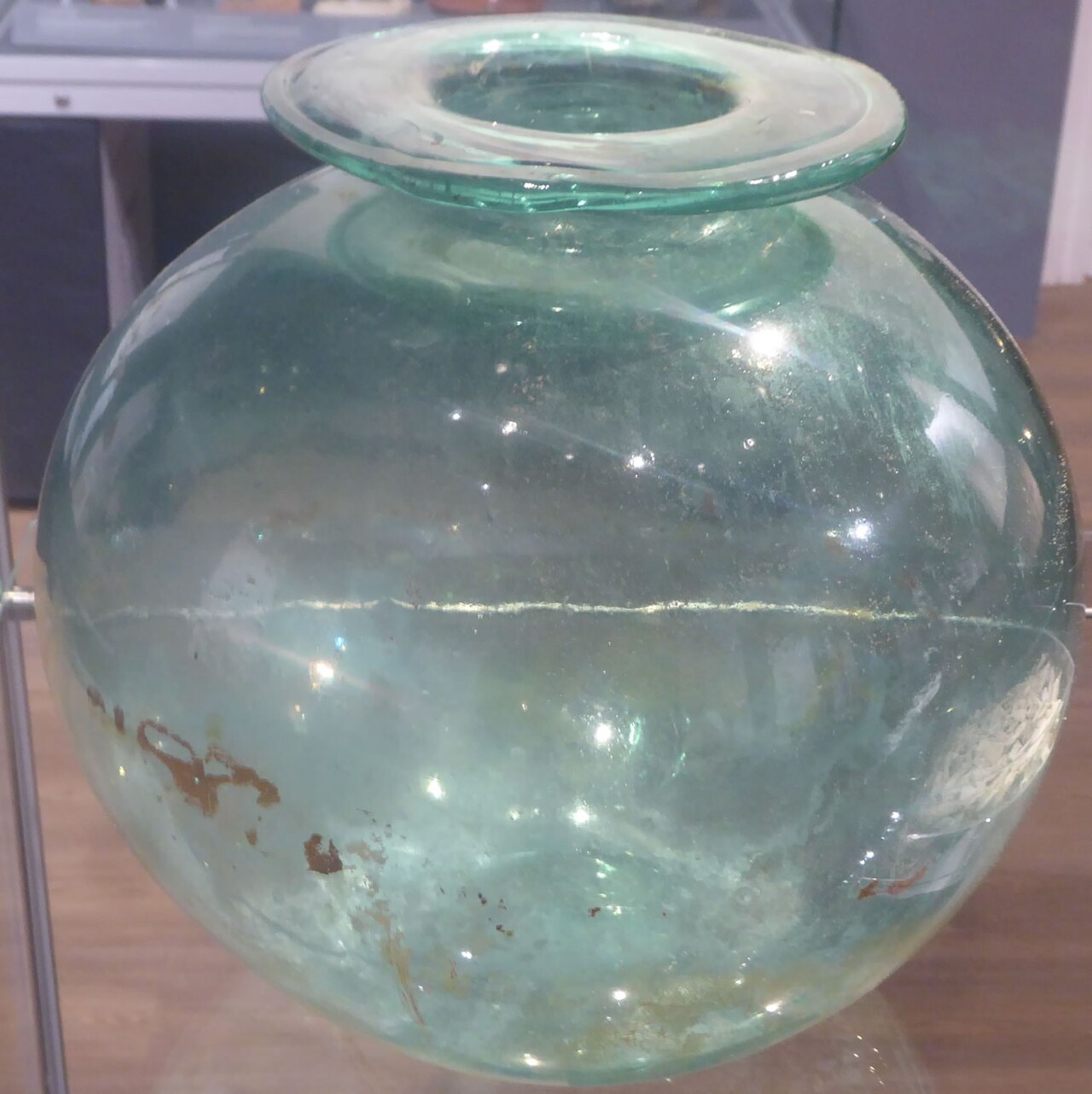 Camulodunum / Colchester: Glass urn; material-culture object or museum find connected with the site, Roman period or local archaeological context.
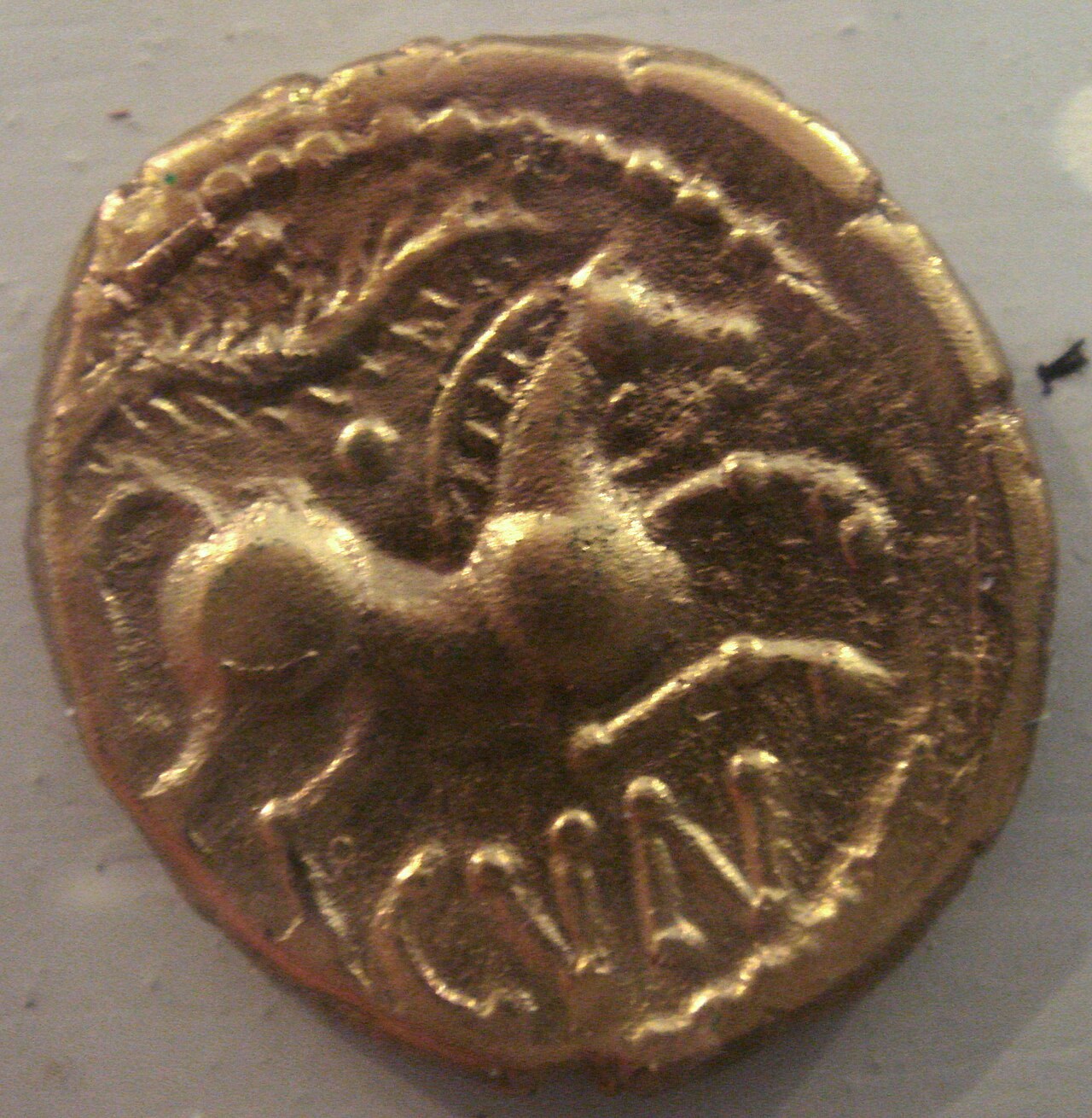 Camulodunum / Colchester: Cunobelin coin 2; material-culture object or museum find connected with the site, Roman period or local archaeological context.
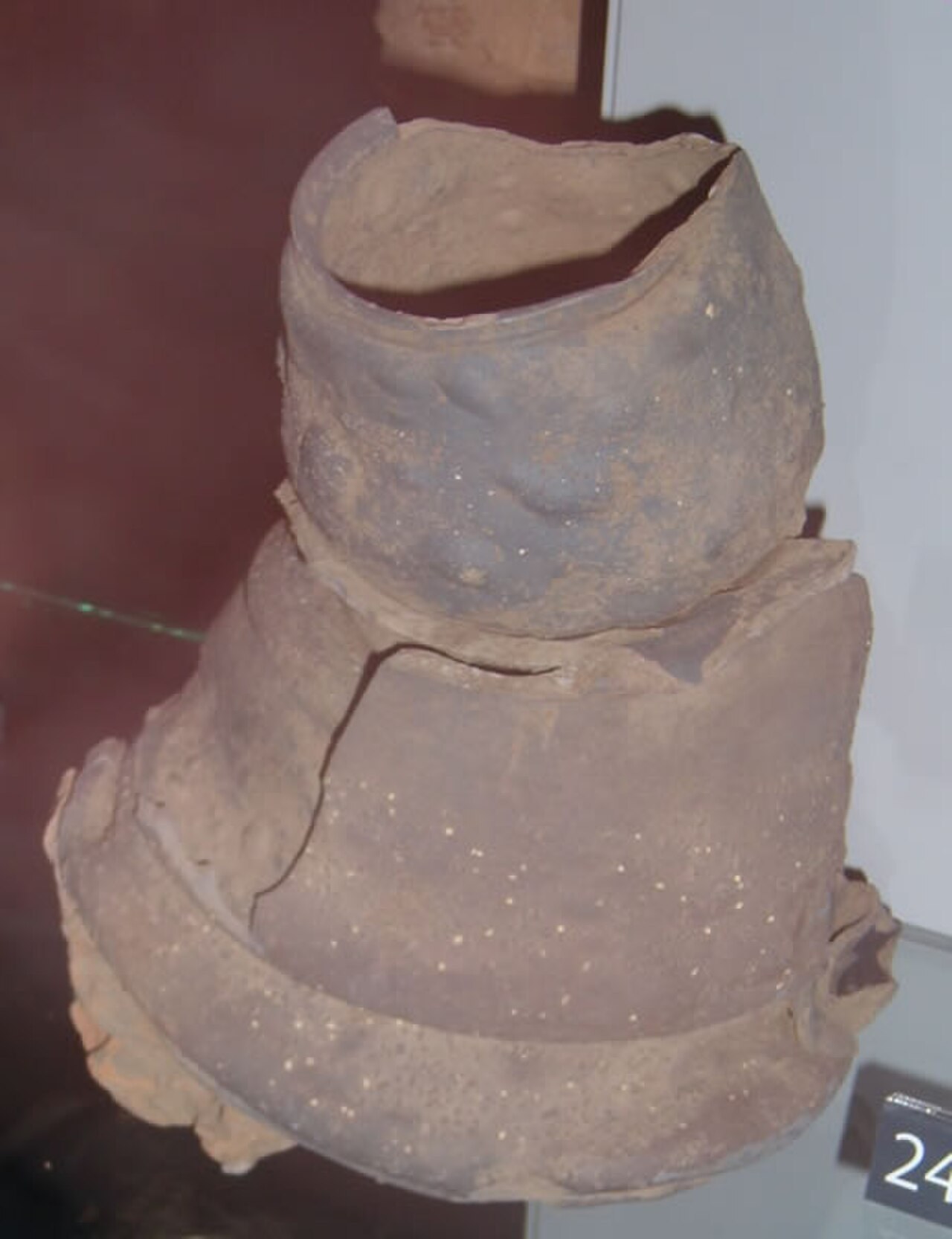 Camulodunum / Colchester: Pottery colchester museum; material-culture object or museum find connected with the site, Roman period or local archaeological context.
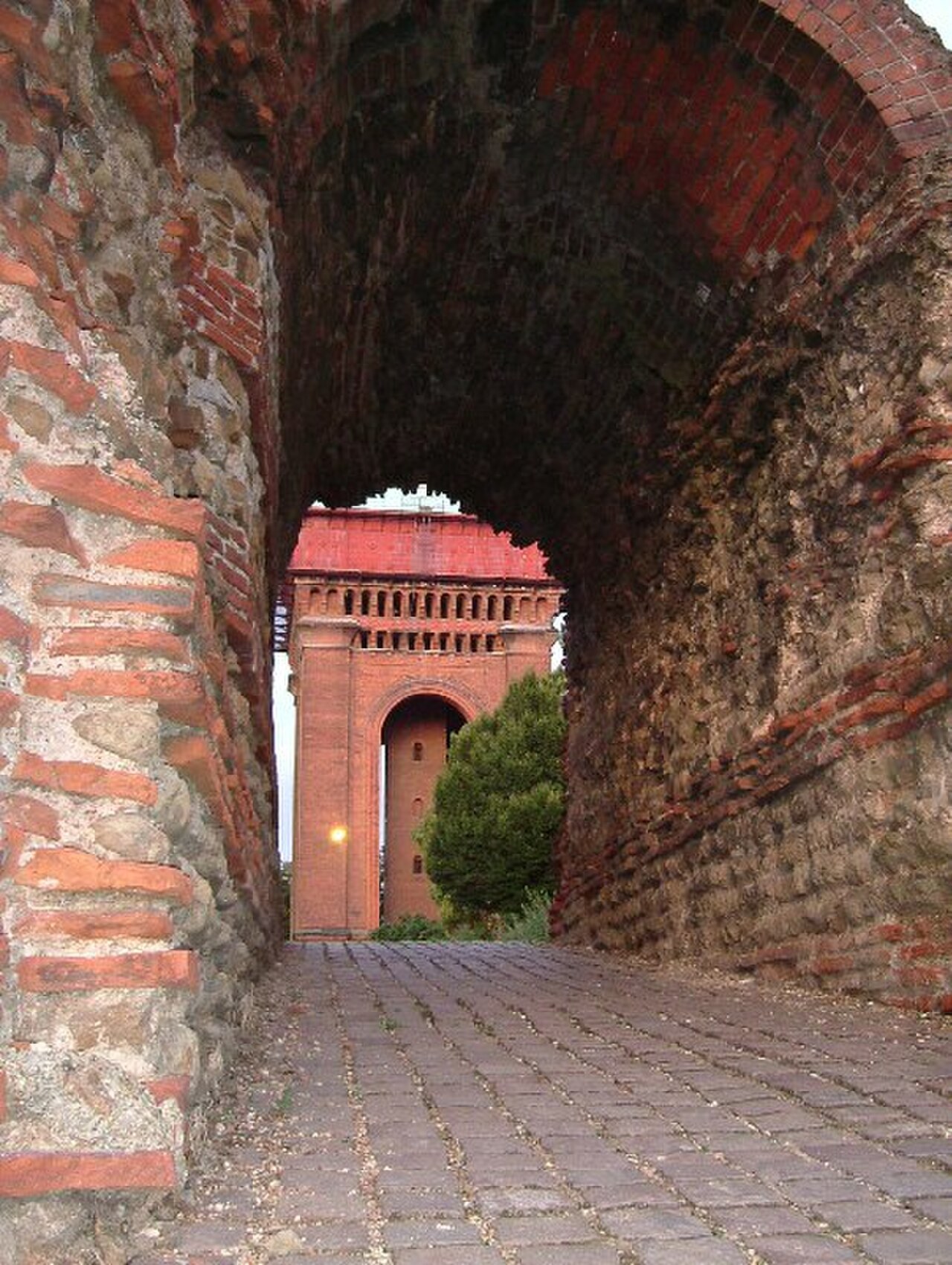 Camulodunum / Colchester: Colchester Icons - geograph.org.uk - 40664; archaeological view, find or museum context connected with the site, Roman period or local archaeological context.
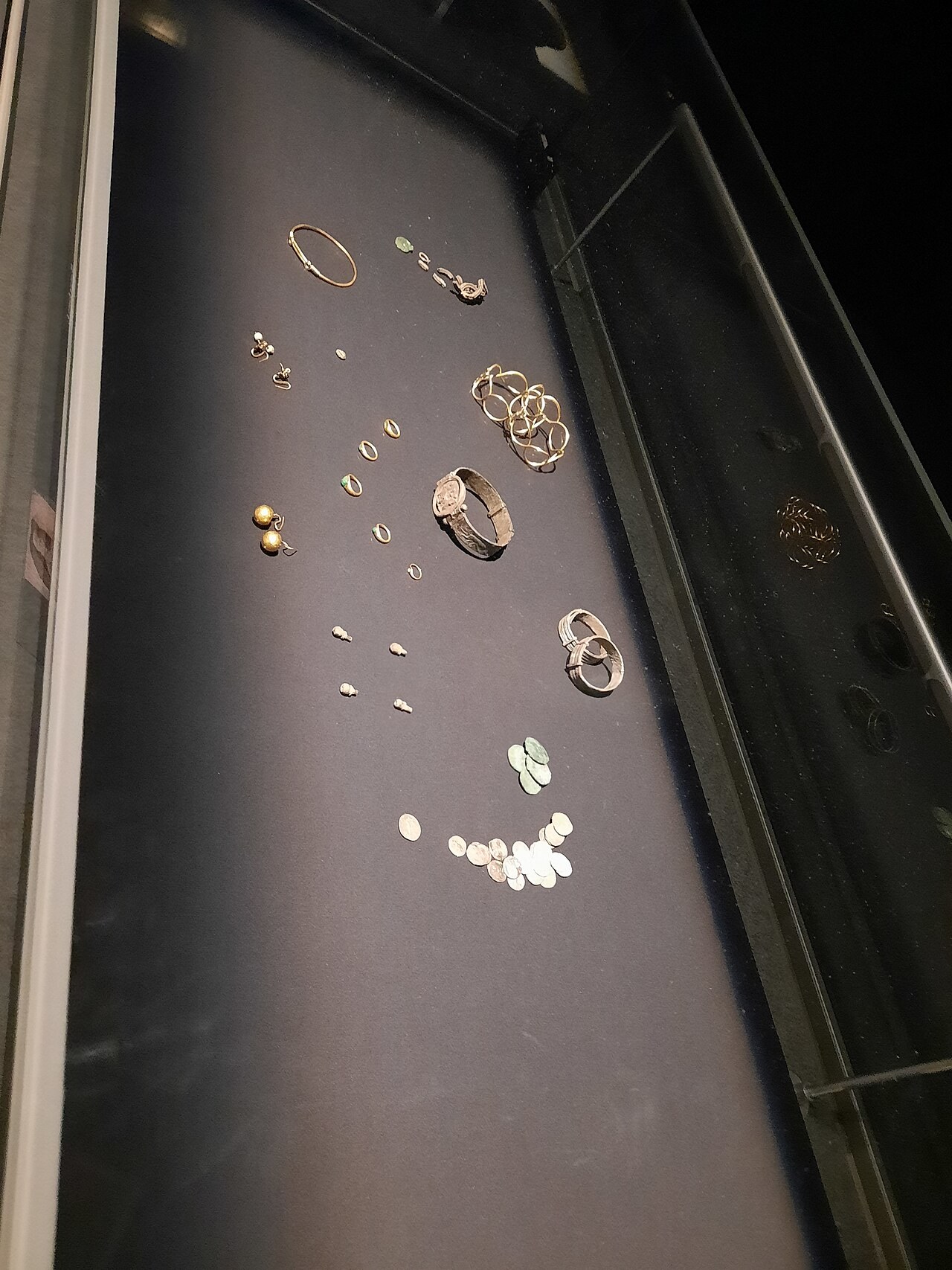 Camulodunum / Colchester: Fenwick Treasure 03; archaeological view, find or museum context connected with the site, Roman period or local archaeological context.
Interested in Ancient Rome beyond reading? Join Legio X Fretensis or explore our reenactment directions.


