People of Ancient Egypt
The people of Ancient Egypt lived in a society where the natural rhythm of the Nile was joined to the power of the court, temples and local estates. Flood, sowing, harvest, grain accounting, transport, building, festivals and family obligations formed the yearly cycle of life. Farmers made up most of the population, but alongside them stood craftsmen, herdsmen, fishermen, boatmen, scribes, soldiers, servants, priests, officials, nobles and the royal court.
Daily life was not the same for everyone. The life of a farmer in a village, a craftsman in a royal workshop, a scribe attached to a storehouse, a priestess in a temple estate or a noble with his own tomb differed in food, clothing, access to writing, control of property and closeness to power. Yet all social groups were connected by one system: grain, labour, craft, temple festivals, family alliances and state obligations held the country together as a single economic space.
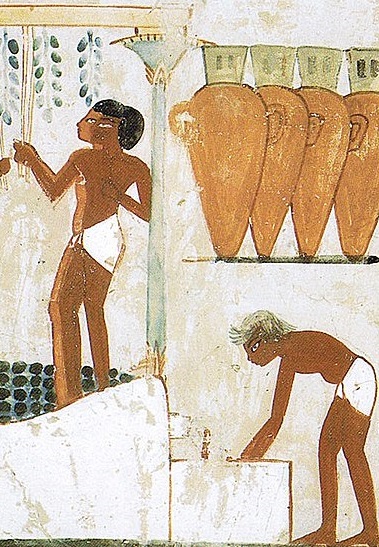 Scene with amphorae from the Theban tomb of Nakht. Dynasty 18, 15th century BC; Metropolitan Museum of Art.
Social Groups
At the top of society stood the pharaoh and his household. The king was regarded as the guarantor of ma'at, but daily government was carried out by people around him: viziers, treasurers, overseers of works, commanders, courtiers and provincial officials. Their power depended on office, access to the king and the ability to direct people, land, storehouses and workshops.
Below them stood various groups of dependent and free workers. Farmers cultivated fields, paid taxes in produce and took part in labour obligations. Craftsmen produced pottery, textiles, furniture, metalwork, jewellery, boats and building elements. Scribes turned harvests, cattle, work crews and deliveries into records. Priests served the cult, but also managed temple lands and storehouses.
Social position was not defined by wealth alone. Origin, office, closeness to palace or temple, literacy, professional skill and participation in the distribution of resources all mattered. A person could rise through service, especially through writing, but society remained hierarchical: power, prestige goods and the right to command the labour of others were concentrated among the upper groups.
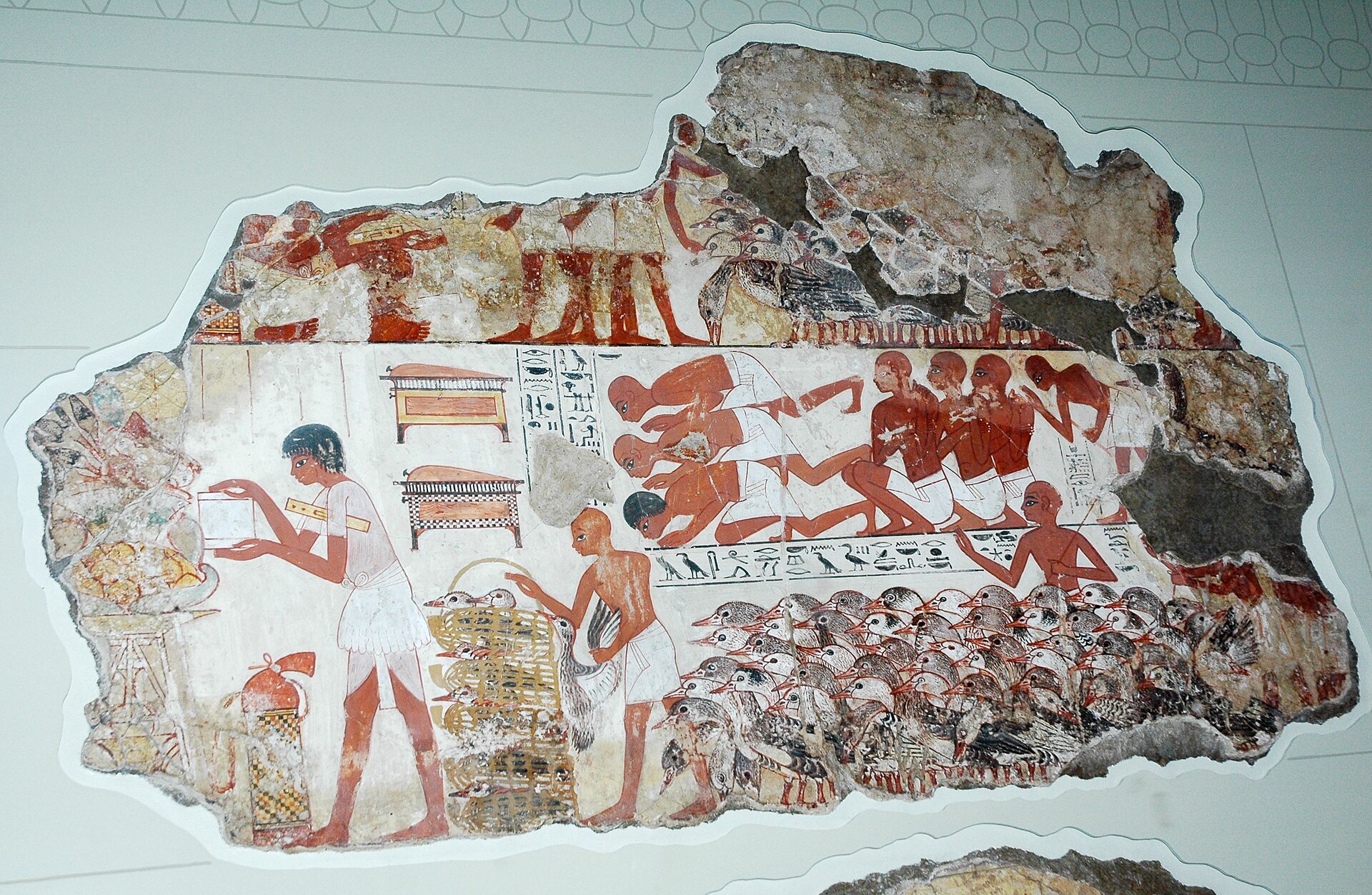 Presentation of flocks and geese from the tomb-chapel of Nebamun at Thebes. c. 1350 BC; British Museum, EA 37978.
Farmers, Craftsmen and Workers
Farmers depended on the Nile flood, irrigation, the condition of canals and decisions made by local administration. They grew barley, emmer wheat, flax, vegetables, dates and grapes, kept large and small animals, and caught fish and birds. After harvest part of the produce went into taxes and temple or state storehouses; agricultural labour therefore immediately became part of a larger system of accounting.
Craftsmen worked on different scales: within the household, for the local market, for a temple, in a noble's workshop or on royal building projects. Potters, weavers, stonecutters, carpenters, brewers, leatherworkers, jewellers and metalworkers depended on raw materials and patrons. Some objects were simple and mass-produced, while others required rare materials, precise tools and control by palace or temple.
Organized work crews formed a special group. At Deir el-Medina, the settlement connected with New Kingdom royal tombs, rations, work schedules, complaints, family ties, professional skills and conflicts are visible. These people were not a faceless mass: they had houses, names, offices, inherited professions, personal relationships and their own sense of fair payment.
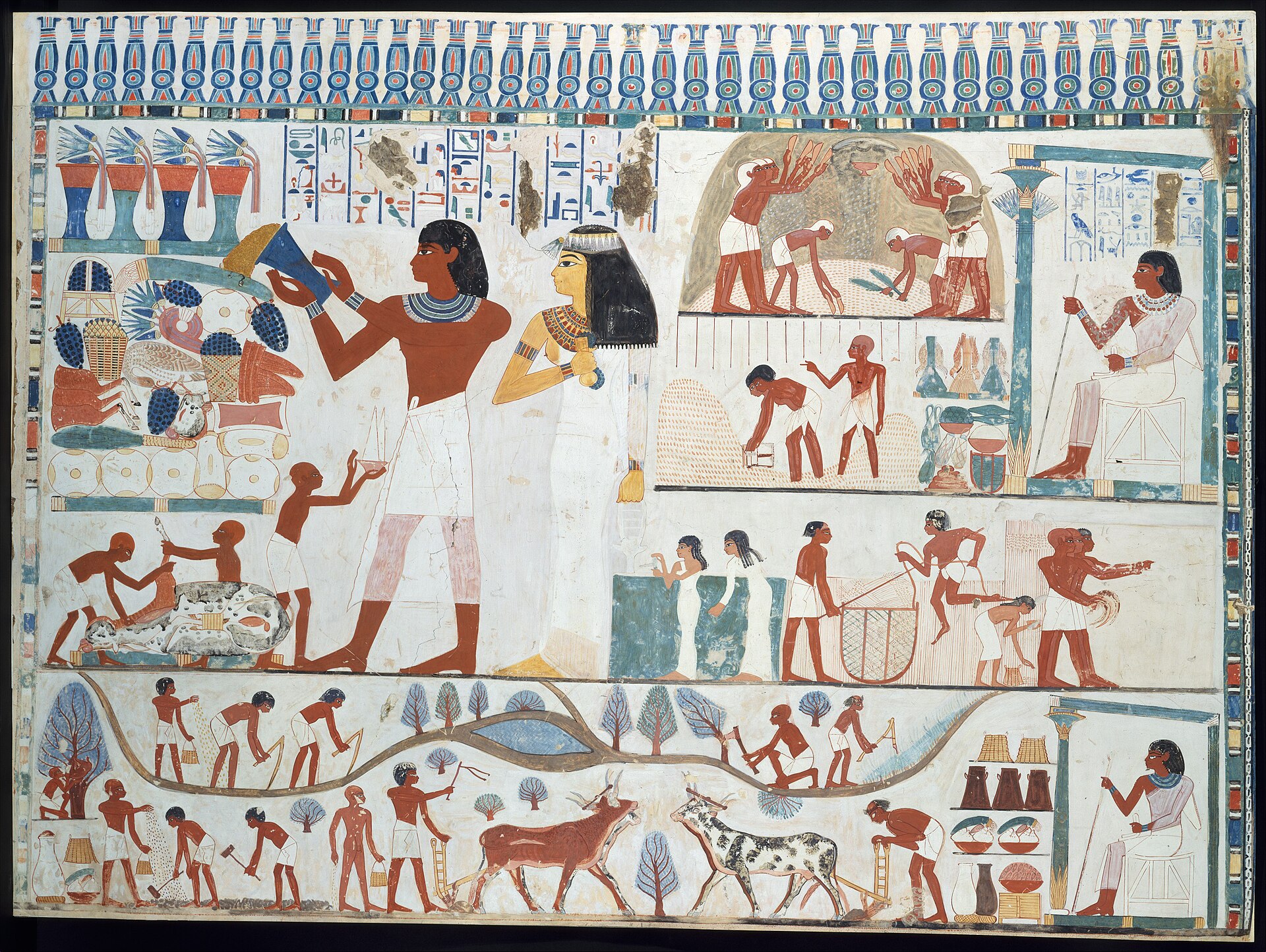 Agricultural scenes from the tomb of Nakht, Thebes, Dynasty 18, c. 1400-1390 BC. Facsimile by Norman de Garis Davies; Metropolitan Museum of Art, 15.5.19b.
Scribes, Officials and Education
Scribes held a special place because literacy opened a path into administration. They recorded land, grain, cattle, people, taxes, court cases, letters, building materials and work crews. Writing was not only a cultural skill but an instrument of power: a person who could count, write and read orders became the intermediary between superior and estate.
Education was usually connected with family, temple or administrative surroundings. Boys from scribal and official families learned writing, arithmetic, copying of model texts, letter writing and business documents. They mastered hieroglyphic writing for monuments and hieratic writing for everyday records. School texts often contrasted the quiet career of the scribe with the hard labour of farmer, soldier or craftsman; this was professional ideology rather than a neutral description of every occupation.
Access to learning was unequal. Most people remained illiterate and transmitted skills through family, workshop and practice. Girls could receive household training, learn economic and professional skills, and participate in temple or musical environments; rare high-status women could know writing or use scribes for legal affairs. Education in Egypt was therefore not universal schooling, but preparation for a specific social role.
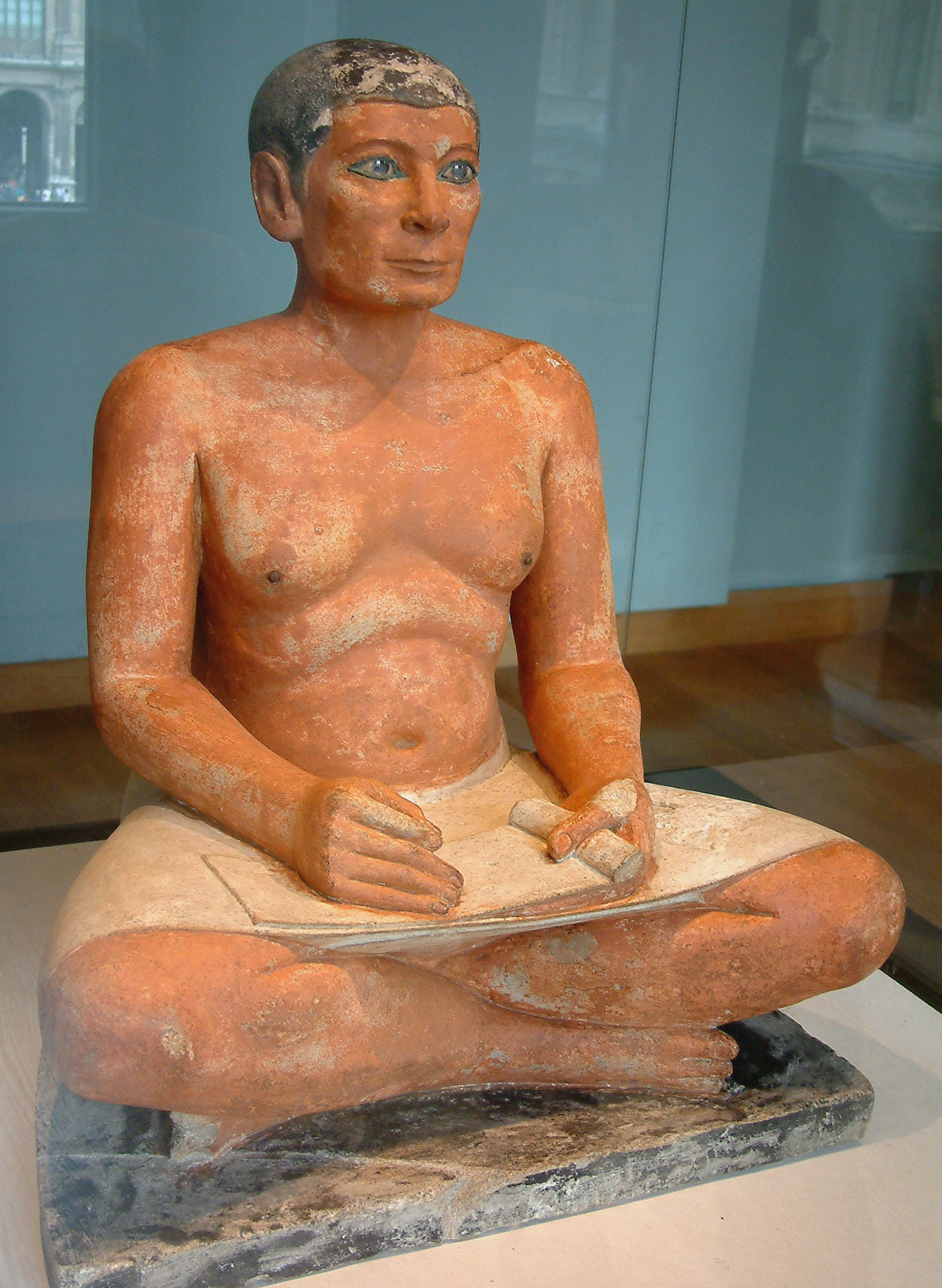 The Seated Scribe from Saqqara. Painted limestone, Dynasty 4-5, c. 2600-2350 BC; Louvre, E 3023.
Family, Household and Property
The family was the basic unit of daily life. Marriage usually organized a shared household, children and the transfer of property, but Egyptian documents also show the contractual sides of family relations: dowry, inheritance, divorce, child support and disputes over property. The house was a place for sleep, food preparation, storage, small-scale craft, child care and the veneration of deceased relatives.
Housing depended on wealth and location. In villages and workers' settlements houses were built of mudbrick; they could include a courtyard, sleeping rooms, work areas, ovens, storage rooms and a roof used as work or living space. Wealthier houses had more rooms, furniture, vessels, textiles, jewellery and servants, but even elite life remained connected with the management of supplies, water, grain, animals and workers.
Property could belong to both men and women, especially through marriage, inheritance and contracts. A woman could be party to a transaction, inherit, transfer goods, approach a scribe and take part in a legal dispute. Real independence depended on family status, period and local circumstances, but Egyptian practice did not reduce women to anonymous dependence.
Men and Women
Male roles were more often connected with ploughing, heavy building labour, military service, official careers, craft workshops and the public display of office. In tomb scenes men appear as owners of fields, overseers of works, hunters, scribes, soldiers and priests. This image emphasized responsibility for household and service, but it does not mean that all male life was prestigious: most men performed hard labour and depended on superiors.
Women's roles were broader than a simple formula of house and children. Women managed the household, cared for children, took part in food preparation, weaving, storage, religious festivals, music and funerary rites. In elite settings women could be property holders, priestesses, chantresses of Amun, members of the court and mediators in dynastic marriage. Queens and royal mothers sometimes played political roles, and Hatshepsut in the New Kingdom became a full pharaoh.
The division of roles was real, but not mechanical. Men and women acted within family, estate and status; much depended on wealth, origin and closeness to temple or court. Tomb images often show an ideal pair: the man receives offerings or supervises the estate, while the woman stands beside him as legitimate wife, mother and participant in the cult of memory. Behind this formula lay many different lives, from poor female workers to influential owners of property.
Children and Growing Up
Children entered family life early. In wealthy houses childhood could be more protected by servants, toys, jewellery and education; in poorer families a child more quickly helped in the household, herded animals, carried water, took part in craft or learned the parents' profession. High child mortality made birth and survival important parts of family and religious concern.
There was no single rite of passage for every social layer. For a boy from a scribal family, learning writing and entering service mattered; for a craftsman, mastery of skill; for a farmer, participation in the full cycle of fieldwork; for a girl, entry into household management, marriage, motherhood or temple and musical service depending on status. Growing up was tied not to age alone, but to a useful role in family and society.
Food, Clothing and Leisure
The basis of diet was bread and beer. These were supplemented by onions, garlic, pulses, vegetables, fruit, fish, birds, dairy products and, at times, meat and wine. Differences between social layers were clear: the elite could hold banquets with music, meat, wine and expensive vessels, while most people lived on a simpler diet dependent on harvest, rations and local stores.
Clothing was usually made of linen. Ordinary people wore practical kilts, dresses and wraps; wealthier men and women used fine fabrics, jewellery, wigs, perfumes and cosmetics. Appearance was connected not only with beauty but also with cleanliness, status, ritual and profession. Jewellery could be family property, amulet and sign of wealth at the same time.
Leisure included music, dance, festivals, hunting, fishing, games, stories and attendance at temple celebrations. The board game senet and other games are known from finds and images. A festival was important not only as rest: it connected family, neighbours, temple, deceased ancestors and power in a shared public rhythm.
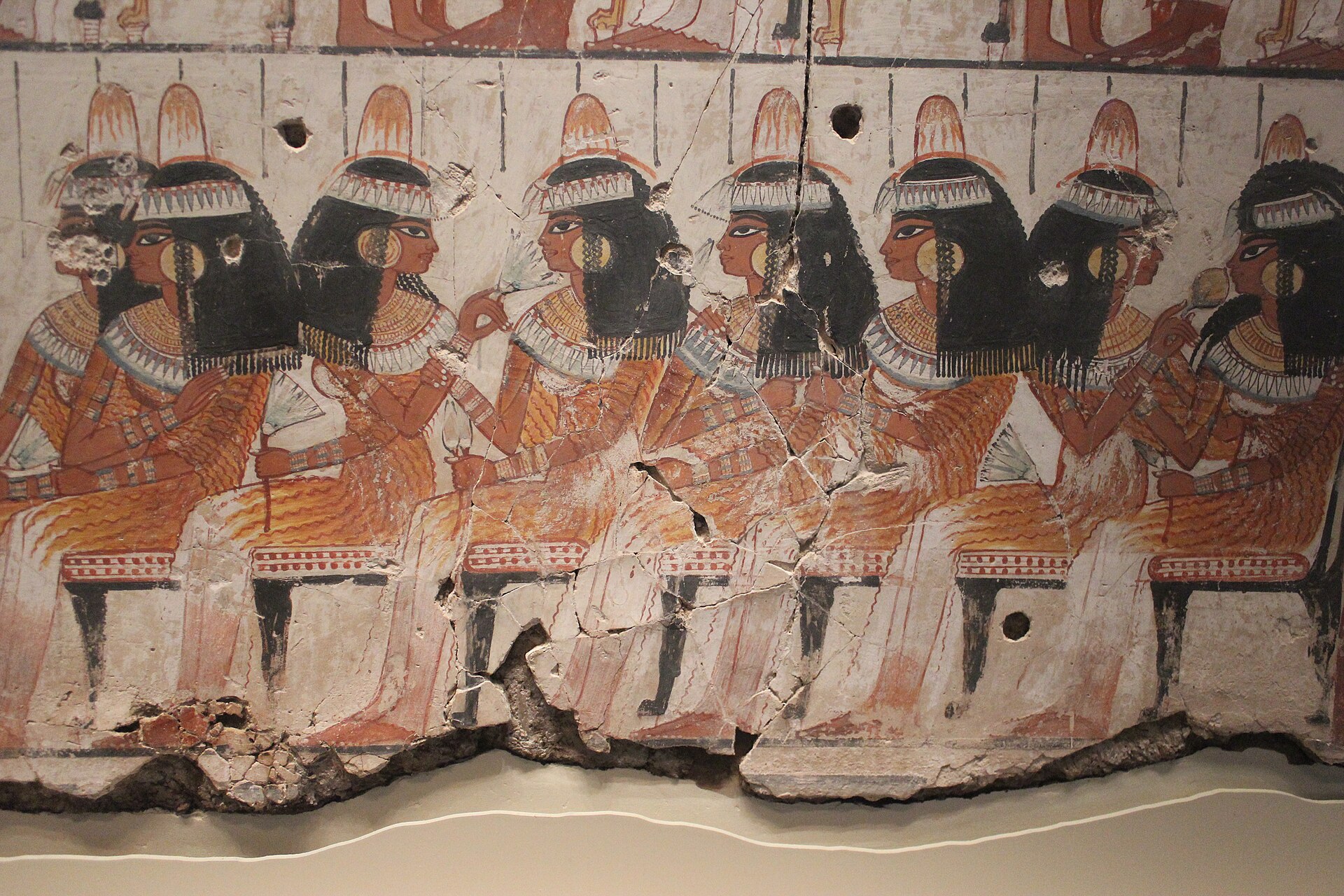 Banquet scene from the tomb-chapel of Nebamun at Thebes. c. 1350 BC; British Museum. The scene shows elite dining, music, clothing and banquet gestures.
Town, Village and Dependence on Power
Egypt was not a land only of large cities. Most of the population lived in villages and small settlements near fields, canals and necropoleis. Towns, residences, fortresses and workers' villages appeared where power concentrated people: near palace, temple, building site, frontier or trade route. The map of daily life therefore changed from period to period.
The state and temples distributed land, labour and supplies, but local life did not disappear. Headmen, scribes, overseers of work, craft families and neighbours handled many practical questions: who went to work, who received rations, how inheritance was divided, who was responsible for debt and who took part in a festival. For an ordinary person power was not abstract: it arrived through a scribe, storehouse, crew chief, temple festival or court case.
Dependent People and Foreigners
Egyptian society knew dependent labour. Servants, captives, debtors, workers of temple and private estates, foreign settlers and prisoners of war could live under different forms of dependence. Their position cannot be described with a single word: some lived in a master's house, others worked in an estate or workshop, and others were incorporated into military and administrative structures.
Foreigners were especially visible in periods of active warfare and contact. Nubians, Libyans, people from western Asia and the Aegean world could appear as captives, mercenaries, craftsmen, traders, diplomats or members of settlements. Egyptian ideology often represented foreigners as defeated enemies, but real life was more complex: people crossed borders, served the king, entered economic ties and gradually became part of local surroundings.
This material matters for daily life because it shows more than the prosperous picture of elite tombs. Egypt was a society of inequality, compulsion, debts, punishments and dependence on distribution. Beside images of order stood conflicts, complaints, court cases and attempts to defend rights.
Related Topics
- Ancient Egypt
- Pharaohs of Ancient Egypt
- Priests of Ancient Egypt
- Ancient Egyptian religion
- Temples of Ancient Egypt
- Mummies of Ancient Egypt
Literature and sources
- Kemp B. Ancient Egypt: Anatomy of a Civilization.
- Trigger B. G., Kemp B. J., O'Connor D., Lloyd A. B. Ancient Egypt: A Social History.
- Janssen J. J., Janssen R. M. Growing Up in Ancient Egypt.
- Robins G. Women in Ancient Egypt.
- Toivari-Viitala J. Women at Deir el-Medina.
- Meskell L. Private Life in New Kingdom Egypt.
- Szpakowska K. Daily Life in Ancient Egypt.


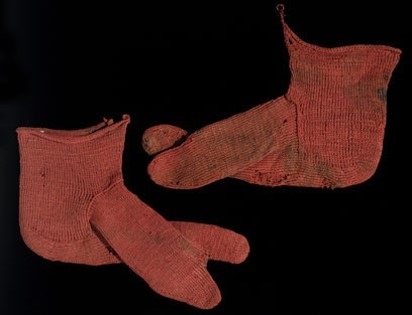 Red wool socks with a divided toe from Egypt; Late Antiquity, third–fifth century CE. Single-needle looping, not knitting with paired needles.
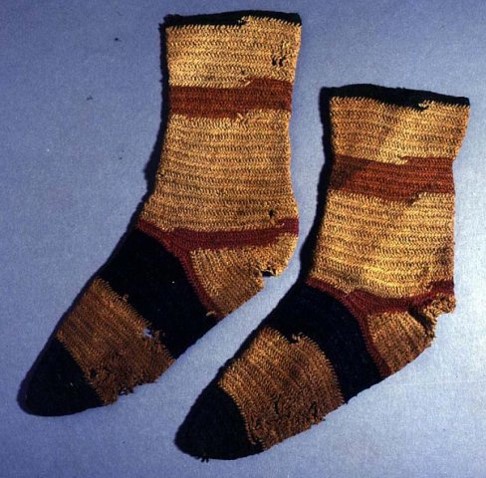 Multicoloured wool socks from Egypt; Late Antiquity. Looping technique. Exact date and collection of this example are not established.
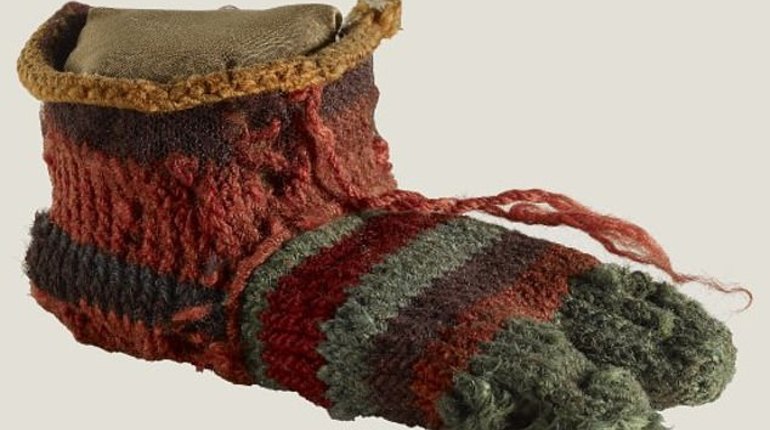 Sock from Antinoopolis, Egypt. British Museum; Late Antiquity, around the fourth–fifth century CE.
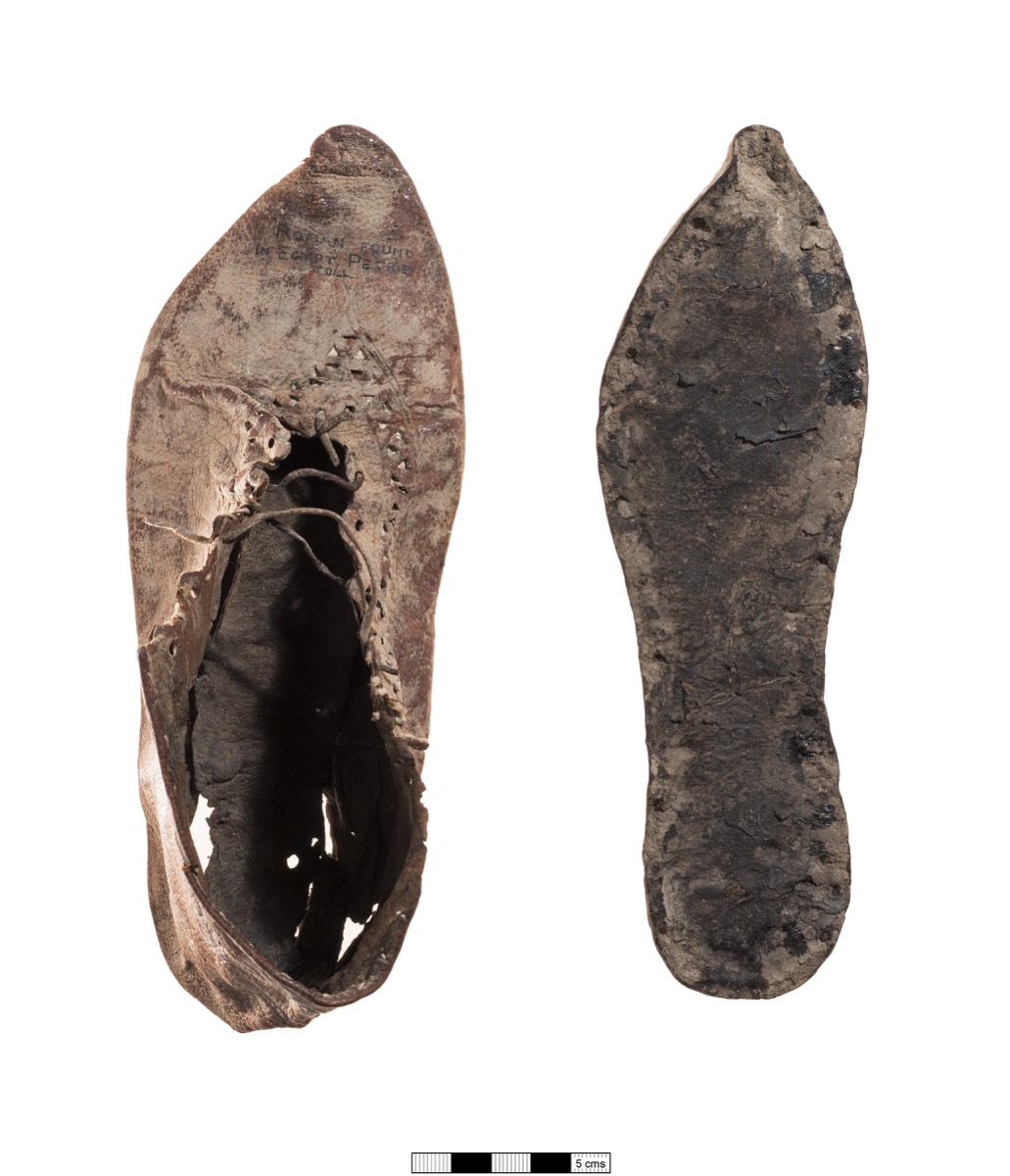 Calceae from Egypt,1st century BC-3rd century AD,Pitt Rivers Museum
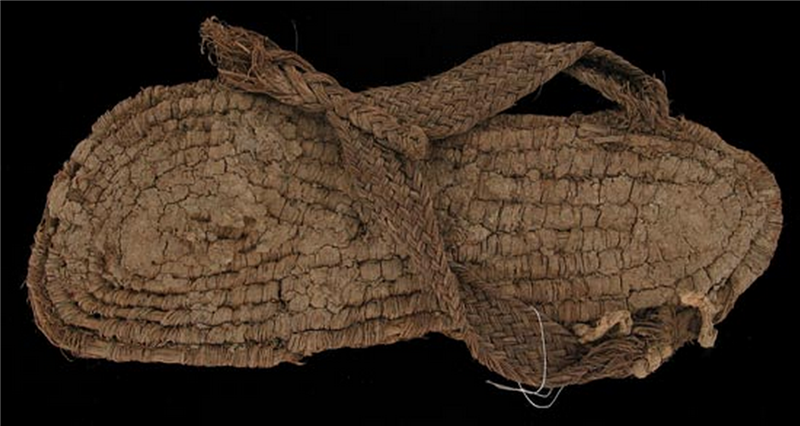 Palm-fibre sandal from Karanis, Roman Egypt, first–fourth century CE.
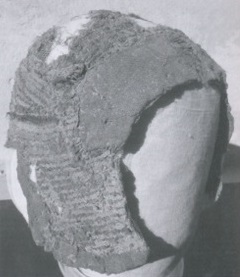 Cap with cheek flaps from Didymoi, Egypt; first century CE.
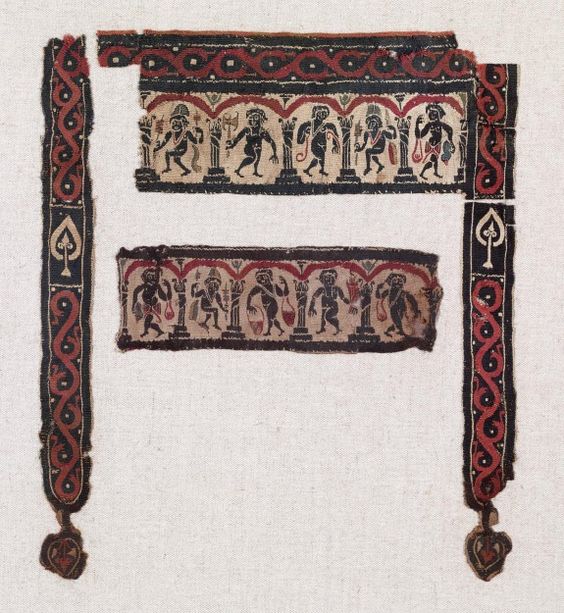 Garment decoration from Egypt, fifth–sixth century CE; wool and linen. Walters Art Museum, Baltimore, inv. 83.485.
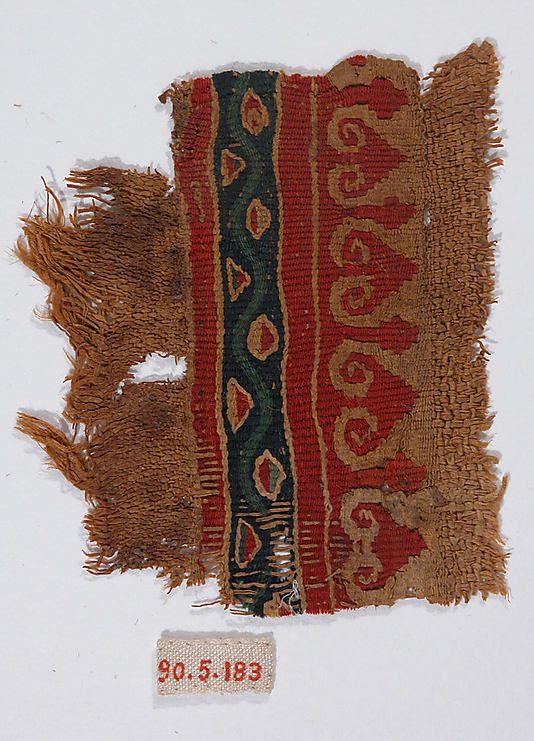 Tunic fragment attributed to Egypt, fifth century CE; wool and linen, 8.5 × 7 cm. Metropolitan Museum of Art, inv. 90.5.183.
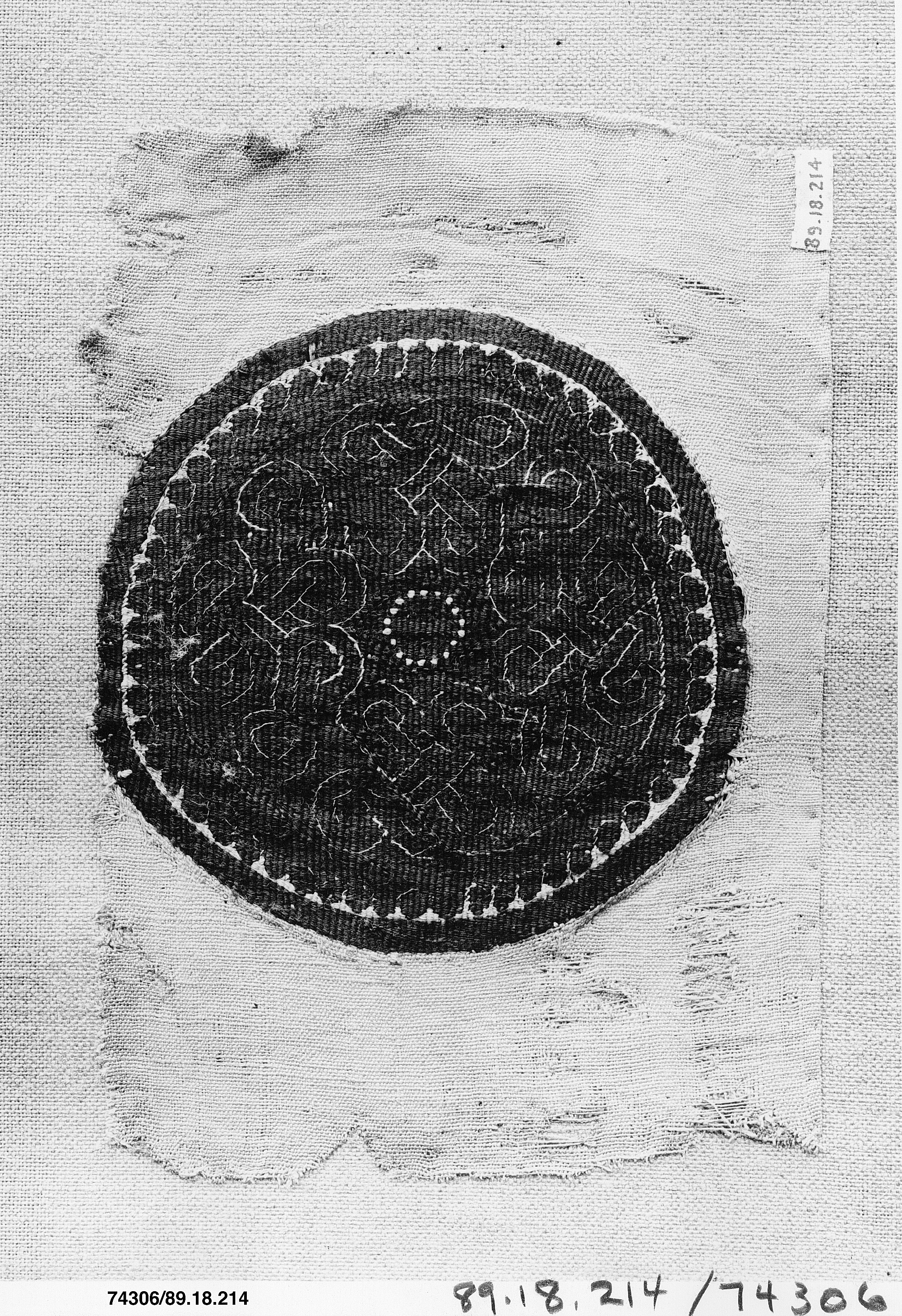 Textile fragment from Egypt, third–fourth century CE; wool and linen, plain and tapestry weave. Metropolitan Museum of Art, inv. 89.18.214.
Interested in Ancient Rome beyond reading? Join Legio X Fretensis or explore our reenactment directions.


