Gladiatorial games
Gladiatorial games were public spectacles in which specially trained fighters battled in the arena before spectators. In Rome they were called munera, 'duties' or 'gifts', because early tradition connected them with funerary honours and the obligations of the elite toward society.
By the imperial period the games had become part of urban politics and imperial representation. They combined entertainment, display of power, social hierarchy, religious elements and control over the image of violence.
The name of the gladiators is connected with the gladius, although individual fighter types used different swords, spears, shields and specialised weapons.
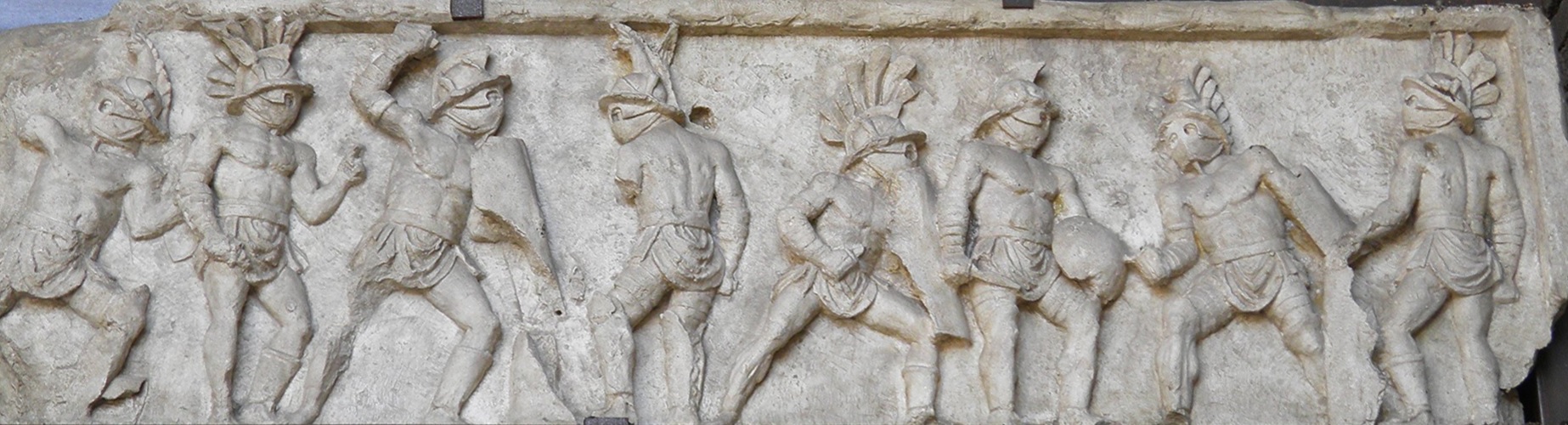 Bas-relief in honor of the gladiator games in the city of Teate (Chieti). Colosseum Alley,Rome,AD 20-40
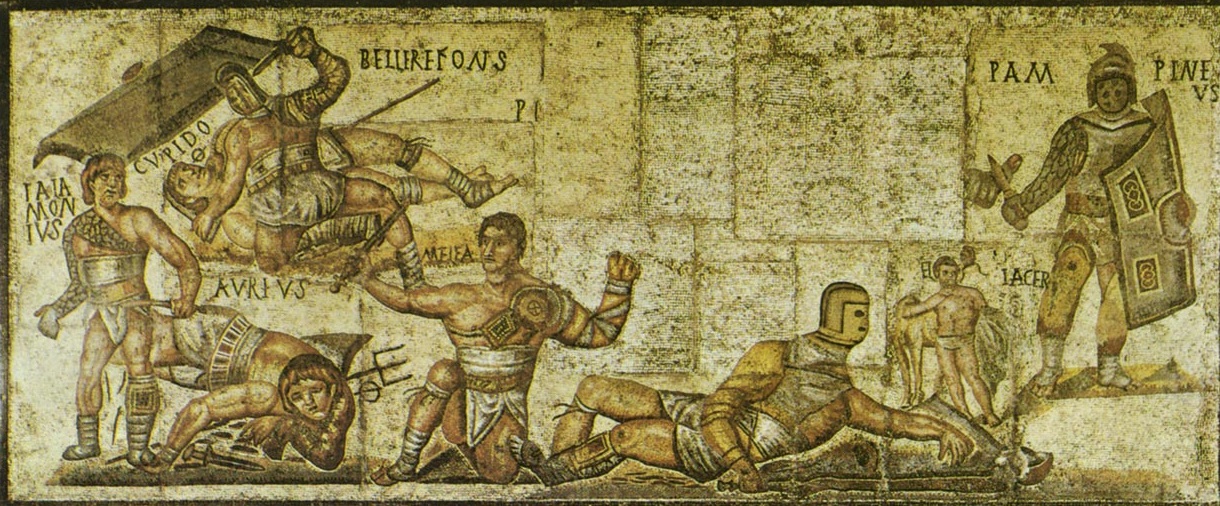 Mosaic with gladiators from Villa Borghese. 3rd century AD
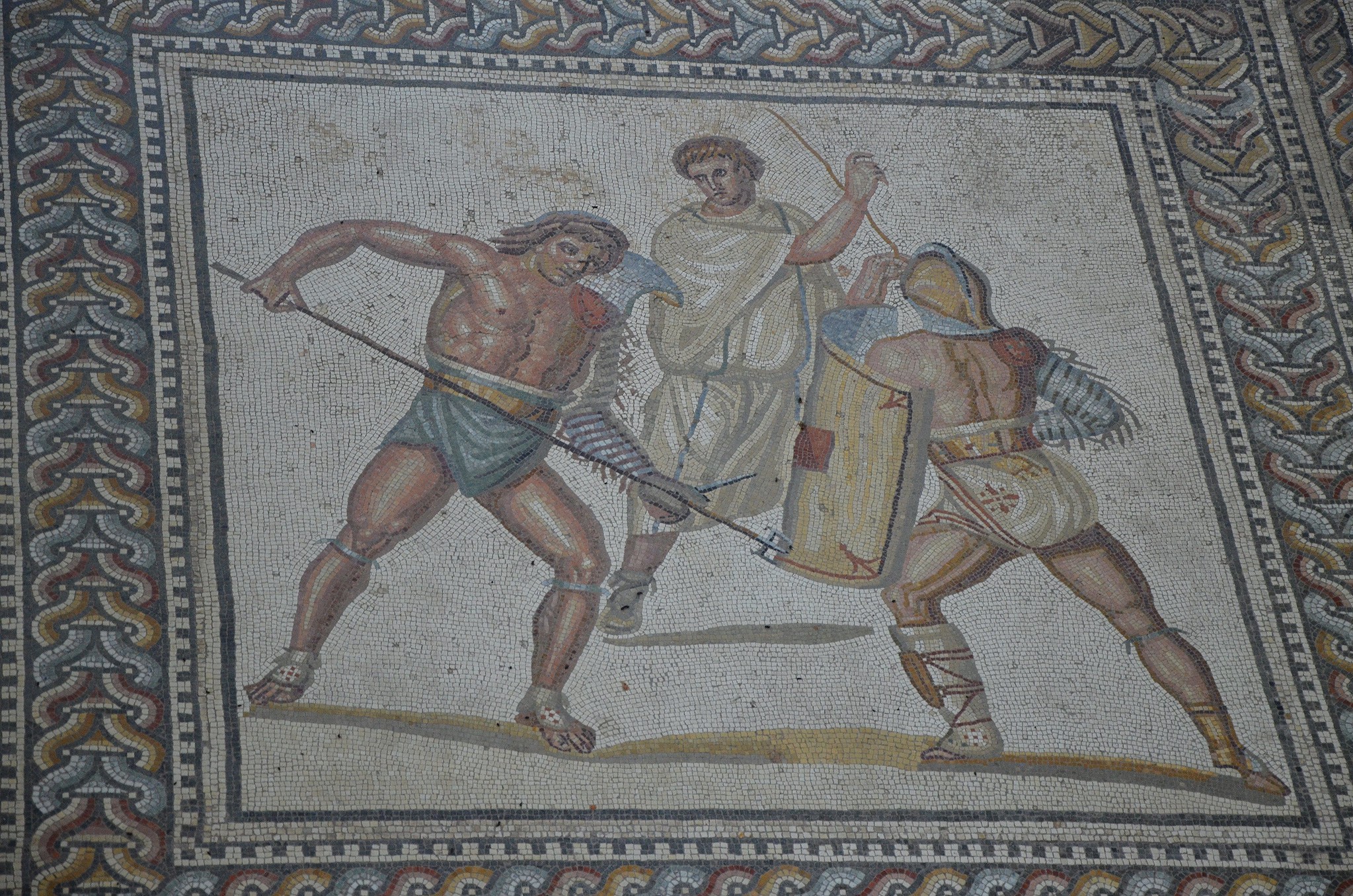 Battle of retiarius against secutor. Mosaic of gladiators in a Roman villa in Nennig, Germany. Early 3rd century AD
Origins and organization
Early gladiatorial combats in Italy were connected with aristocratic funerary ceremonies. Later they moved beyond the family rite and became civic events. The organizer, whether magistrate or emperor, gained political capital: a generous spectacle strengthened his prestige.
Preparation involved gladiator schools, troop owners, trainers, doctors and service staff. A gladiator could be a slave, prisoner of war or condemned criminal, but also a free volunteer who signed a contract for money, fame or protection.
Programme of the day
A major spectacle could consist of several parts. In the morning came venationes, animal hunts and displays by venatores. At midday executions could be shown, sometimes staged as mythological scenes. The main gladiatorial combats usually belonged to the more prestigious part of the programme.
The games were carefully staged. Pairings, weapons, costume, music, announcements, referees and crowd reaction all mattered. Victory did not always mean the death of the opponent: the outcome depended on rules, the organizer's will, the fighter's conduct and public response.
Types of gladiators
Gladiators appeared in recognizable equipment types. The murmillo usually carried a large shield and crested helmet, the retiarius fought with net and trident, the secutor was adapted for fighting the retiarius, and the Thracian used a small shield and curved sword.
These types were not exact copies of real armies. They created spectacle through contrast: heavy against light, shield against net, short weapon against long. Spectators understood these roles and judged not only victory, but also skill, endurance and adherence to the arena's code.
Decline
In Late Antiquity gladiatorial games gradually lost their former importance. Costs, changes in urban life, Christian criticism of bloody spectacles and new forms of imperial politics all played a role. Animal hunts and other displays survived longer than classic gladiatorial combats.
The memory of the games outlived the practice itself. Amphitheatres, mosaics, inscriptions and images of gladiators show how important the world of the arena was within Roman culture.
Related topics
Literature and sources
- Martial. Liber Spectaculorum.
- Futrell A. The Roman Games.
- Wiedemann T. Emperors and Gladiators.
- Kyle D. G. Spectacles of Death in Ancient Rome.
- Ville G. La gladiature en Occident.
- Theater and Amphitheater in the Roman World — Metropolitan Museum of Art
Interested in Ancient Rome beyond reading? Join Legio X Fretensis or explore our reenactment directions.


