Greek and Roman Gods
Greek and Roman gods often have familiar pairs: Zeus and Jupiter, Hera and Juno, Athena and Minerva, Aphrodite and Venus, Ares and Mars. These pairs are useful, but they do not mean a simple translation of names. Romans did compare their deities with Greek ones through interpretatio graeca and interpretatio romana, yet similar iconography could stand behind different cults, festivals, social functions and political meanings.
The merged topic requires looking at three levels at once: mythological narrative, cult practice and archaeological object. In poetry Ares may appear as dangerous battle rage, while Mars at Rome is father of the Roman people and protector of the citizen army. Athena and Minerva look similar through helmet and spear, but Minerva belongs to the Capitoline Triad and the Roman world of craft collegia. Venus inherits traits of Aphrodite, but gains special importance through Aeneas, Caesar and Augustan ideology.
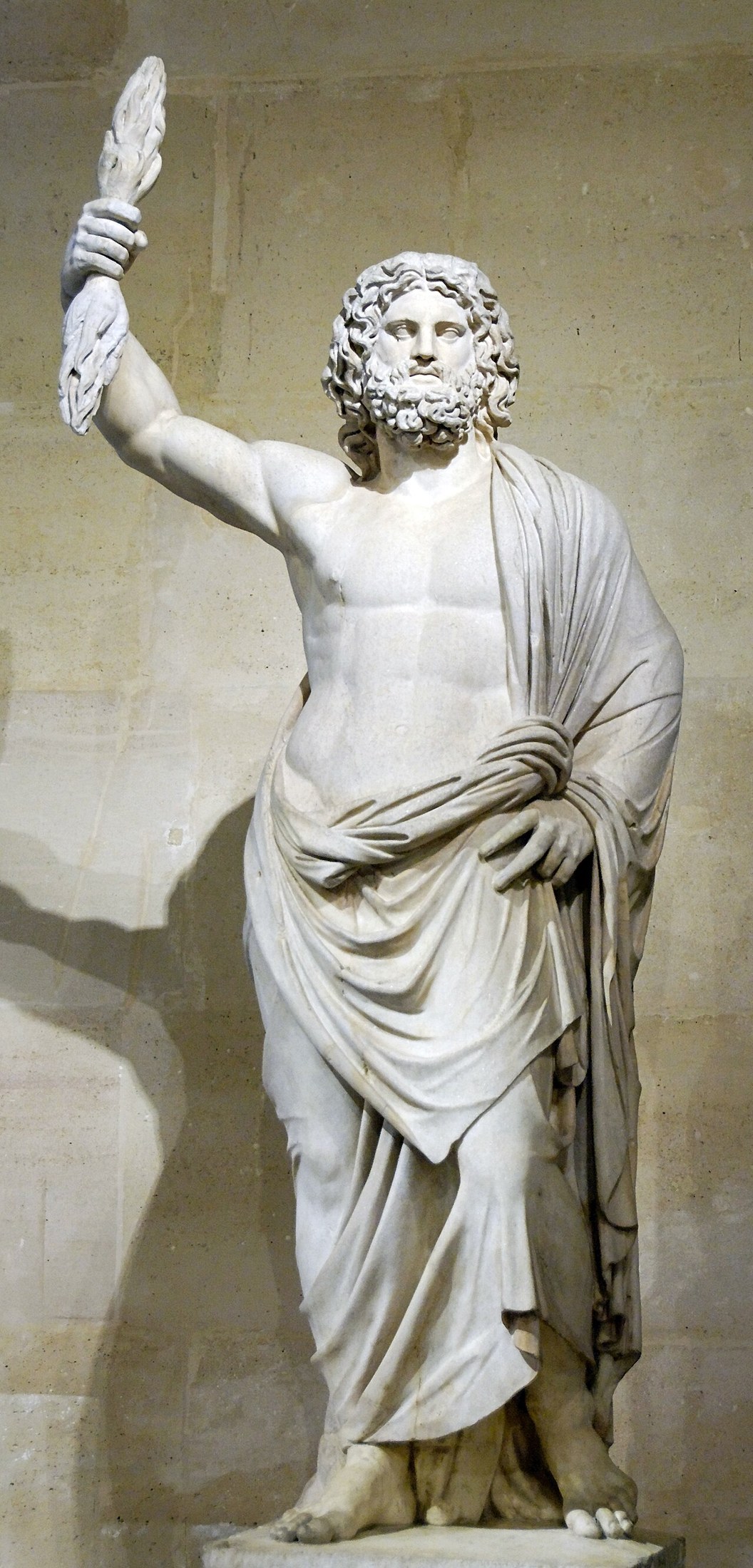 Zeus of Smyrna, marble statue around AD 250; Louvre, Ma 13.
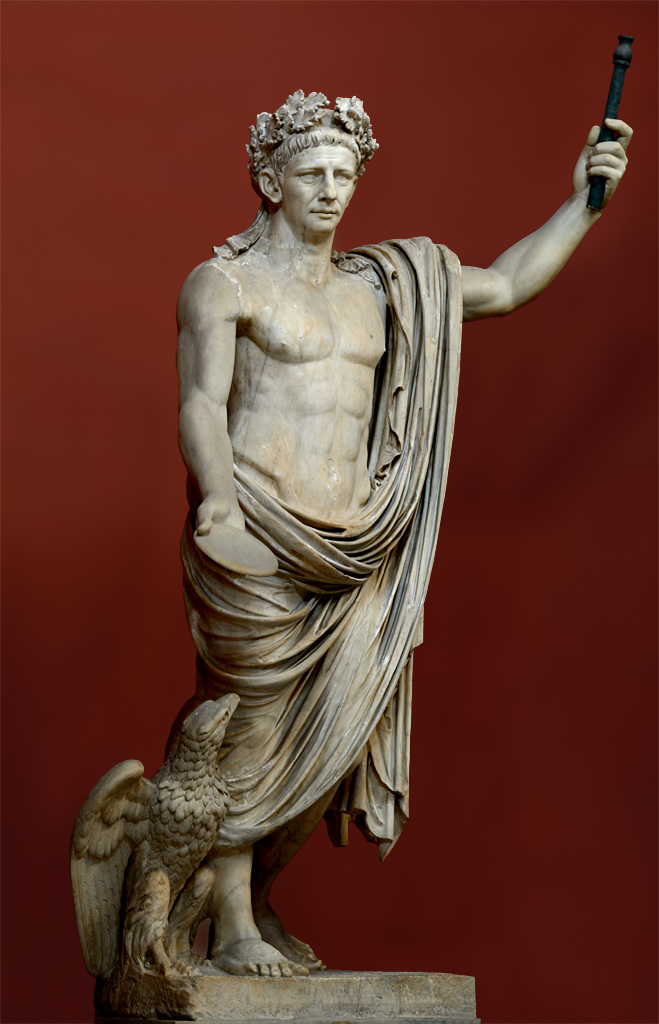 Emperor Claudius represented as Jupiter. Marble, 1st century AD; Vatican Museums.
 Roman gold cameo ring with a bust of Minerva in a Corinthian helmet, 1st century AD; Los Angeles County Museum of Art.
Brief Equivalence Table
| Greek name | Roman name | Meaning of the equivalence |
|---|---|---|
|
Zeus |
Jupiter |
supreme authority, sky, oath and victory; at Rome the state cult is stronger |
|
Hera |
Juno |
marriage and female status; at Rome also civic fortune, Juno Moneta and local Italic forms |
|
Athena |
Minerva |
intelligent warfare and craft; at Rome tied to the Capitoline Triad and craft collegia |
|
Ares |
Mars |
war; at Rome higher status, link with Romulus, spring, purification and the citizen army |
|
Aphrodite |
Venus |
love and beauty; at Rome also descent through Aeneas, the Julian family and power |
|
Hestia |
Vesta |
hearth; at Rome the public sacred fire and the exceptional status of the Vestals |
|
Hermes |
Mercury |
messenger, boundaries and roads; at Rome especially trade, profit and exchange |
|
Artemis |
Diana |
hunting, maidenhood and nature; at Rome also the Aventine, enslaved people and Latin tradition |
|
Demeter |
Ceres |
grain and fertility; at Rome plebeian memory, bread and public order |
|
Hephaestus |
Vulcan |
forge and fire; at Rome dangerous heat, fires and protective rites |
|
Poseidon |
Neptune |
sea and horses; at Rome long less central than Greek Poseidon in maritime cities |
|
Dionysus |
Liber / Bacchus |
wine, ecstasy and theatre; at Rome the Liberalia, Bacchanalia and state regulation matter |
|
Apollo |
Apollo |
the name changes little; at Rome the cult grows through healing, the Sibylline Books and Augustan power |
|
Hades |
Pluto / Dis Pater |
underworld and earth's riches; Roman names are more tied to the law of the dead and earthly wealth |
Where Equivalence Stops Working
Equivalence is useful as a first orientation, but it impoverishes the material if it becomes the only explanation. For a Greek god, genealogy, epic role, local polis myth, sanctuary and epithet are often central. For a Roman god, legal precision of ritual, public calendar, priestly college, vow, magistrate and link with authority are more visible. The same visual type can therefore speak about different social worlds.
The difference is especially clear in the evidence. A Greek vase may show gods as participants in myth or heroic action; a Roman altar often records the dedicator, deity and legally framed act. A Greek sanctuary lives through a local festival and polis memory; a Roman temple may fulfil a public vow after victory. A household lararium at Pompeii shows not Olympian theory, but the everyday religion of family, enslaved people, clients and head of the house.
Supreme Authority: Zeus and Jupiter
Zeus and Jupiter are closer than many other pairs: both are linked with sky, thunderbolt, oath, supreme authority and victory. Yet Greek Zeus exists within a network of local cults: Olympios, Xenios, Horkios, Dodonaios, Lykaios. He is at once father of gods, protector of the guest, guarantor of the oath and participant in myths of generational change. His authority is explained by genealogy, victory over the Titans and local sanctuary memory.
Jupiter Optimus Maximus at Rome is more strongly tied to the state. The Capitoline temple, triumph, senatorial oath, treaties, auspices and military victory make Jupiter a god of public order. A relief of sacrifice to Jupiter Capitolinus or an altar from a legion shows not simply a "Roman Zeus", but a deity through whom army, magistrate and city formalise the legitimacy of action.
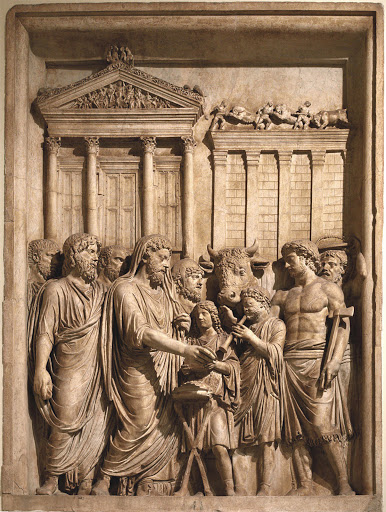 Sacrifice to Jupiter Capitolinus; relief panel from the Arch of Marcus Aurelius, AD 176-180; marble.
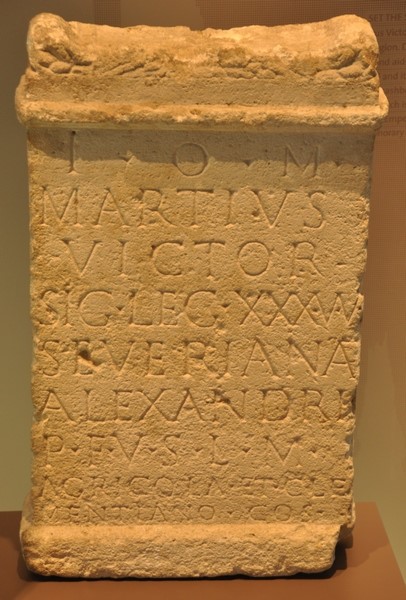 Altar dedicated to Jupiter by Legio XXX Ulpia Victrix. Xanten, AD 230; LVR-RömerMuseum, Xanten Archaeological Park.
City, Craft and Marriage: Hera, Juno, Athena, Minerva
Hera and Juno are linked with marriage and female status, but Roman Juno has several sharply public roles. Juno Moneta is connected with the Capitoline, warning and the mint; Juno Sospita preserves an Italic image of an armed protectress; Juno Regina belongs to the language of queenship and victory. She cannot therefore be described only as a Latin Hera.
Athena and Minerva resemble each other through helmet, spear, shield and protection of intelligent force. Athena is especially important for Athens as goddess of the polis, Acropolis, craft, victory and strategic war. Minerva at Rome belongs to the Capitoline Triad with Jupiter and Juno, and also becomes patroness of artisans, teachers, scribes, physicians, actors and professional associations. A Roman lamp, cameo or cup with Minerva shows her not only in myth, but also in daily life, education and status objects.
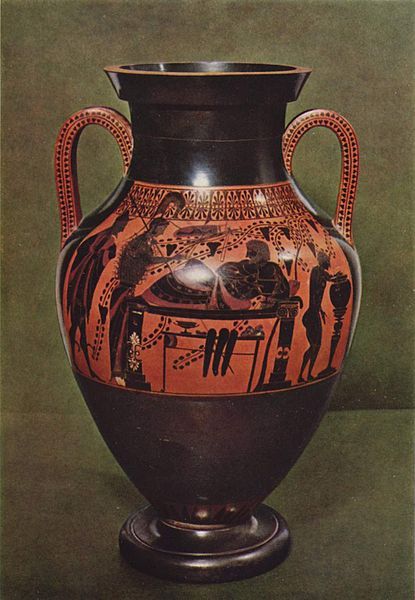 Athena beside Heracles on an Attic black-figure amphora, 520-510 BC; vase painting as evidence for myth.
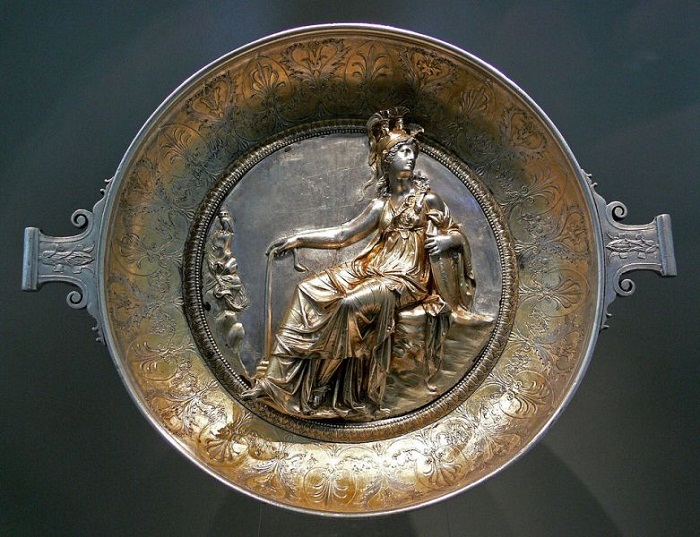 Gilded silver bowl from the Hildesheim treasure. Antikensammlung, Berlin, Misc. 3779, 1. Bowl: first century CE; Athena emblem: second century BCE, according to the museum catalogue.
Love, Descent and Power: Aphrodite and Venus
Aphrodite in the Greek world is linked with love, desire, beauty, marriage, the sea and the dangerous power of attraction. Her images can be solemn, erotic, maritime, familial or festive. In different cities the goddess had her own epithets and cults; she could be both a protectress of the female sphere and a force that disrupts ordinary order.
Venus inherits many traits of Aphrodite, but at Rome she gains an additional political meaning. Through Aeneas she becomes ancestress of the Romans, and through the Julian family the divine origin of Caesar and Augustus. Venus Genetrix, Venus Victrix and scenes with Mars speak about love, but also about genealogy, victory, power and Roman origins.
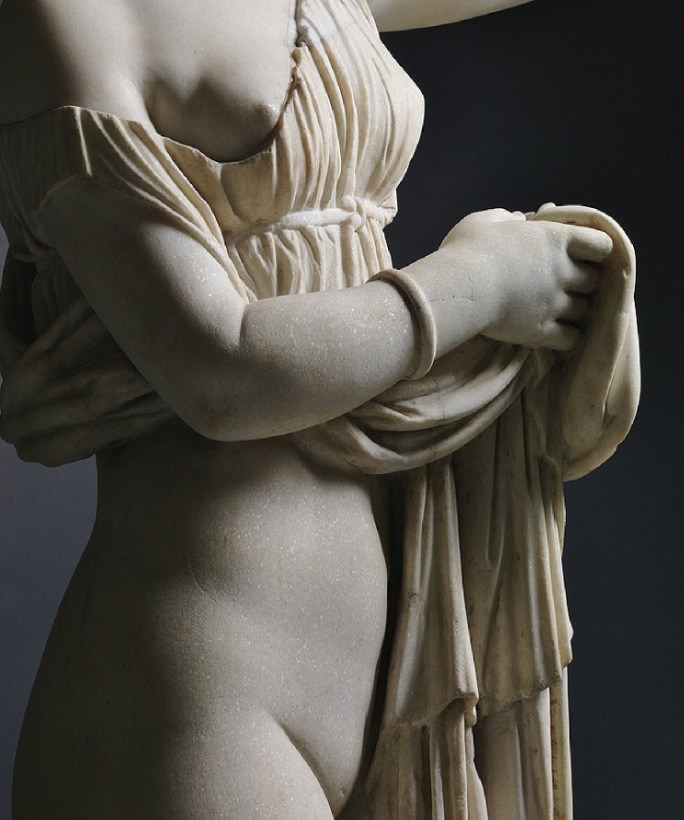 Aphrodite Kallipygos. Marble statue with later restorations; National Archaeological Museum, Naples, inv. 6020.
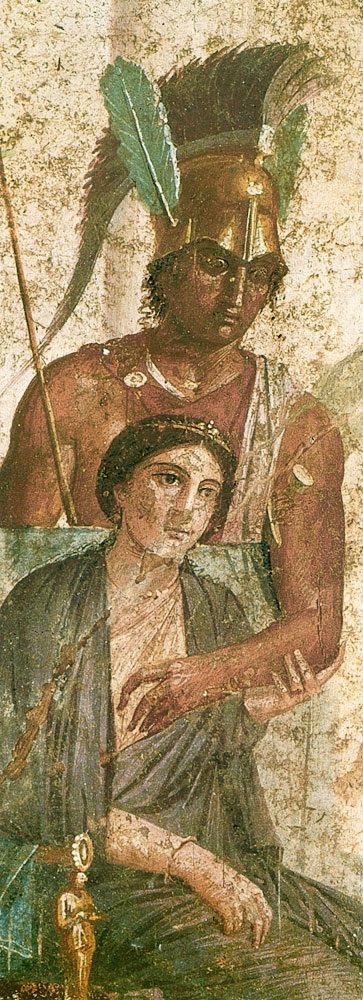 Venus and Mars on a fresco from Pompeii, 1st century AD; an image of love, war and Roman mythological memory.
Poetry and the Reinterpretation of Gods
Greek literature gave Rome a powerful language for describing the gods, but Roman authors used it for their own purposes. Epic, tragedy and hymns made the genealogies of the Olympians recognisable; through them a reader saw Hera's quarrels, Athena's anger, Dionysus' wanderings, Aphrodite's love and Zeus' authority. Roman poets accepted this material, but moved it into the history of city, family and empire. In the Aeneid Venus is no longer only a goddess of love: she is Aeneas' mother and a participant in the narrative of future Rome. Jupiter in the same tradition speaks the language of fate and world power, not only Olympian primacy.
This literary convergence can easily be mistaken for complete cultic identity, but the levels are different. Ovid, Virgil, Horace and other authors could combine Greek myth, the Roman calendar, private love, civil war and the image of a ruler in a single text. An archaeological object works differently: an Augustan coin with Apollo, a statue of Venus Genetrix, a fresco with Mars and Venus or a household lararium does not speak in the same way as a poem. Comparison of gods should therefore separate literary image from sanctuary, sacrifice, calendar date and object found in a specific place.
Roman Versions of Myths
Rome did not merely borrow Greek names and stories, but changed their meaning. The most important example is the Trojan cycle. In Greek memory Troy is above all linked with war, heroic death and the homecomings of the victors; in Roman tradition the flight of Aeneas becomes the beginning of future Rome. Venus in Latin poetry is therefore not only the Aphrodite of love, but the mother of Aeneas, ancestress of the Romans and the goddess through whom the Julian family explained its origin.
Mars also gains new mythological weight. In Greek stories Ares often appears as the dangerous force of battle, mocked or defeated by other gods. At Rome Mars is father of Romulus and Remus, part of the foundation narrative, protector of the citizen army and the spring military season. Saturn is identified with Cronus, yet the Roman Saturnalia and the image of a golden age give him a distinctive festive and social role. Janus has almost no Greek equivalent: his two faces, doors, new year and transitions belong to a specifically Roman way of thinking about time and boundaries.
The Augustan age strengthened such reinterpretations. Apollo after Actium became a god of victory, order and new rule; Venus and Mars entered the language of descent and peace; Jupiter spoke not only as an Olympian ruler, but as guarantor of imperial destiny. The question of "new Roman myths" is therefore best answered not by counting plots, but by seeing how older Greek images were built into Roman history, calendar, family memory and coin propaganda.
War, Hearth and the Household Level
Ares and Mars are the clearest example of unequal equivalence. Ares in Greek literature is often linked with the bloody side of battle, rage and destruction. Mars at Rome is much broader: he is father of Romulus, protector of the spring military season, purificatory rites, the citizen army and Roman masculinity. Roman Mars is therefore closer to the foundation of the community than Greek Ares is in most epic narratives.
Hestia and Vesta are both connected with the hearth, but Vesta at Rome became a symbol of the state's continuity. Vesta's fire in the Forum was maintained by the Vestals, and violation of their vow was perceived as a threat to the city. Beside the great gods stood the household layer: Lares, Penates, the genius of the head of the family and the Manes of the dead. This layer has no direct Greek set of equivalents, and archaeologically it is best seen in the lararia of Pompeii and Herculaneum.
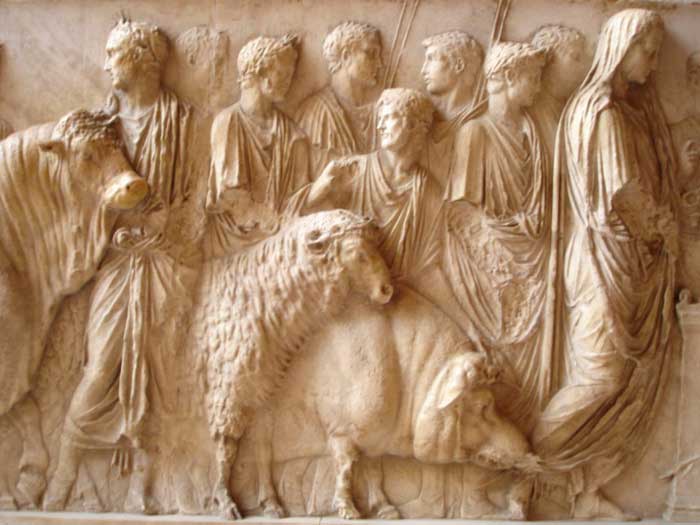 Sacrifice to Mars: suovetaurilia on a marble relief from the Louvre, first half of the 1st century AD.
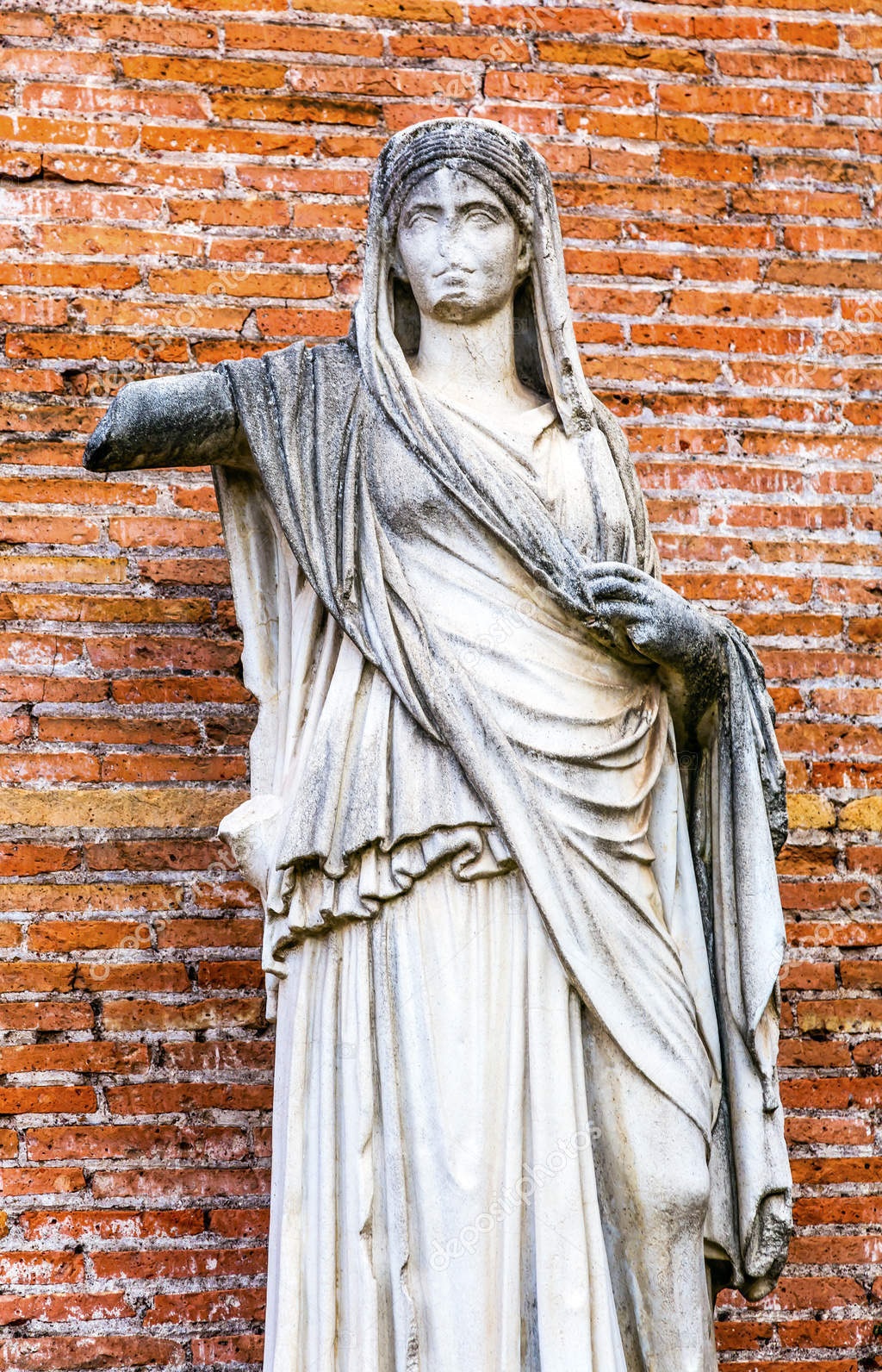 Statue of a Vestal from the Temple of Antoninus and Faustina in Rome, 2nd century AD.
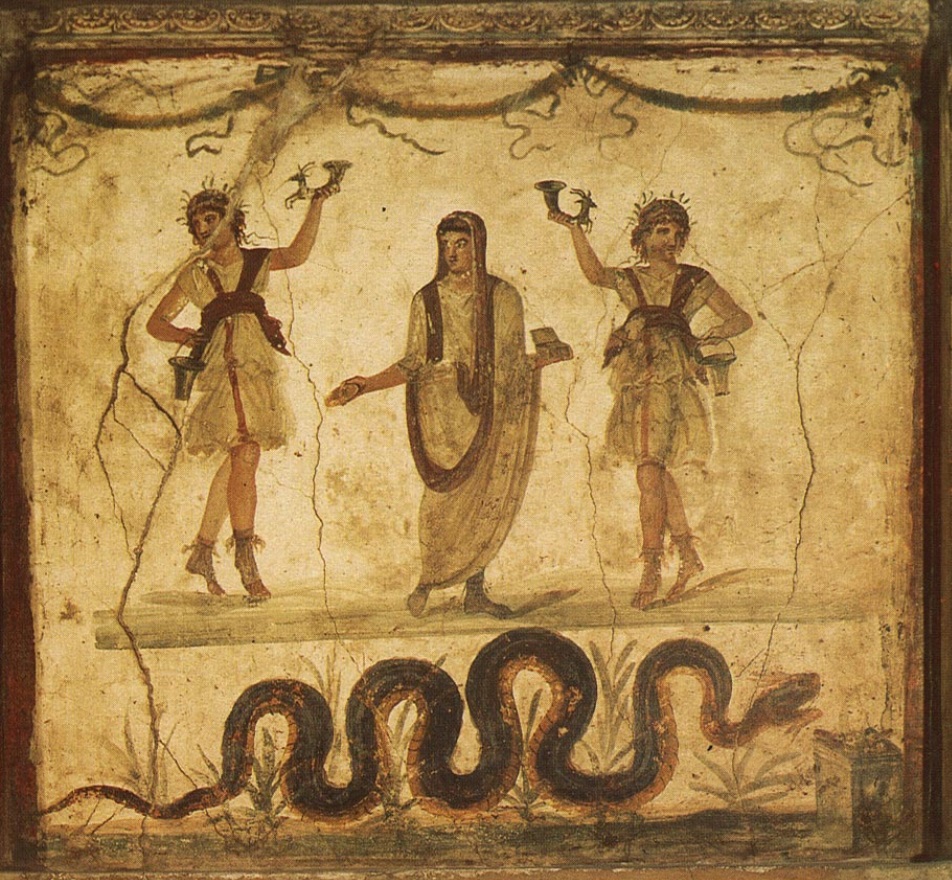 Lararium of the House of the Vettii in Pompeii (VI.15.1), kitchen area: the household genius between Lares, with serpent and altar; AD 60-79.
Names without a Simple Pair
Some Roman deities translate poorly into Greek terms. Janus, god of entrances, beginnings and transitions, has no exact Olympian double. Quirinus is linked with the citizen community, Romulus and early Roman identity. Terminus guards the boundary stone, Pales the pastoral world, Silvanus the wood, boundary and countryside, Fortuna changeable luck and human status. These gods show the Roman tendency to see divine force in a specific action, place or legal boundary.
Conversely, some Greek figures change character at Rome. Dionysus as Bacchus or Liber is tied not only to wine and ecstasy, but also to state control of the Bacchanalia. Apollo keeps his Greek name, but at Rome grows through the Sibylline Books, healing and the Augustan programme. Diana receives Latin and Aventine meanings connected with women, enslaved people and the alliances of Latin communities.
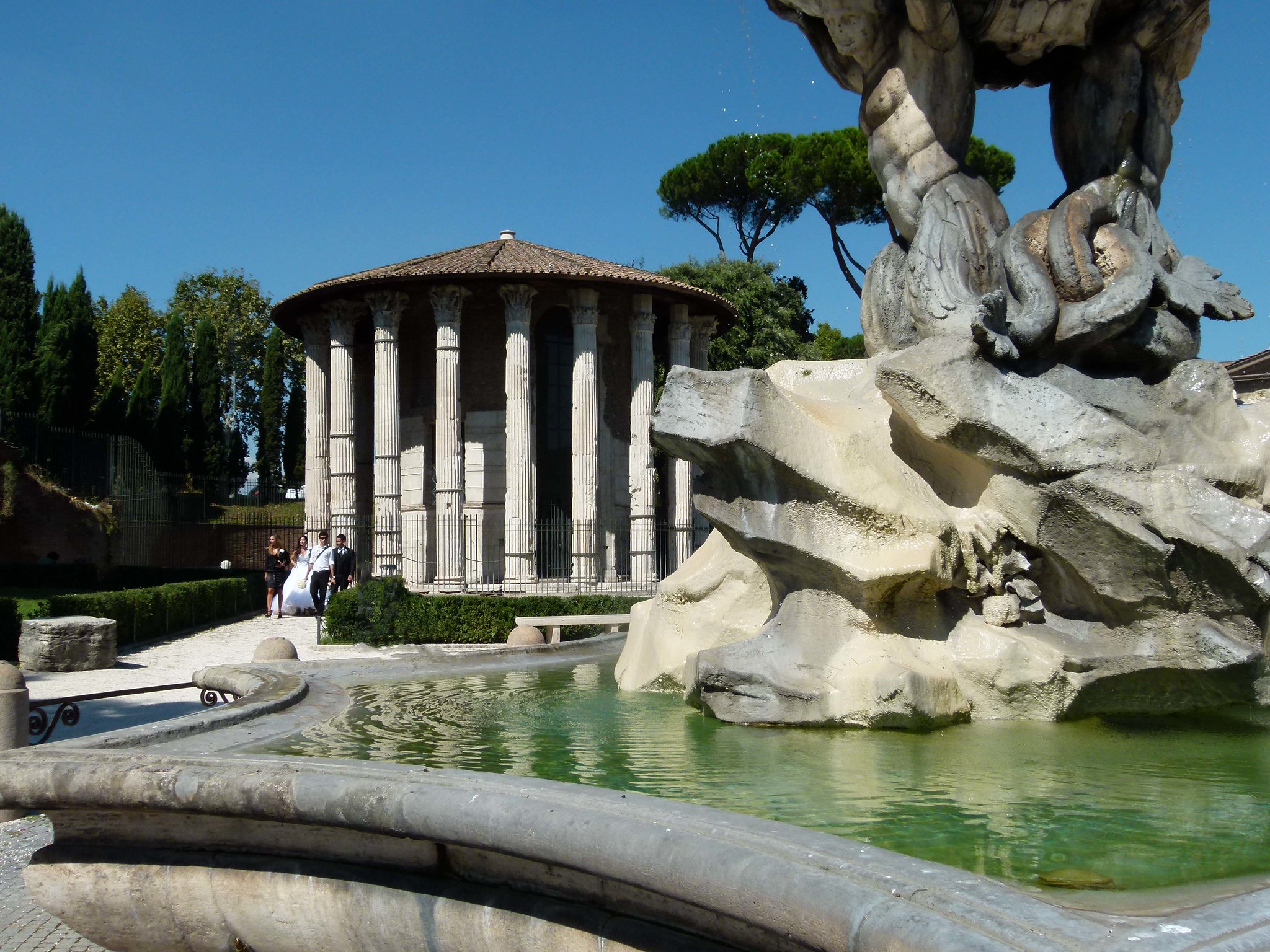 Temple of Vesta in the Roman Forum; the public sacred fire was understood as the hearth of the Roman people.
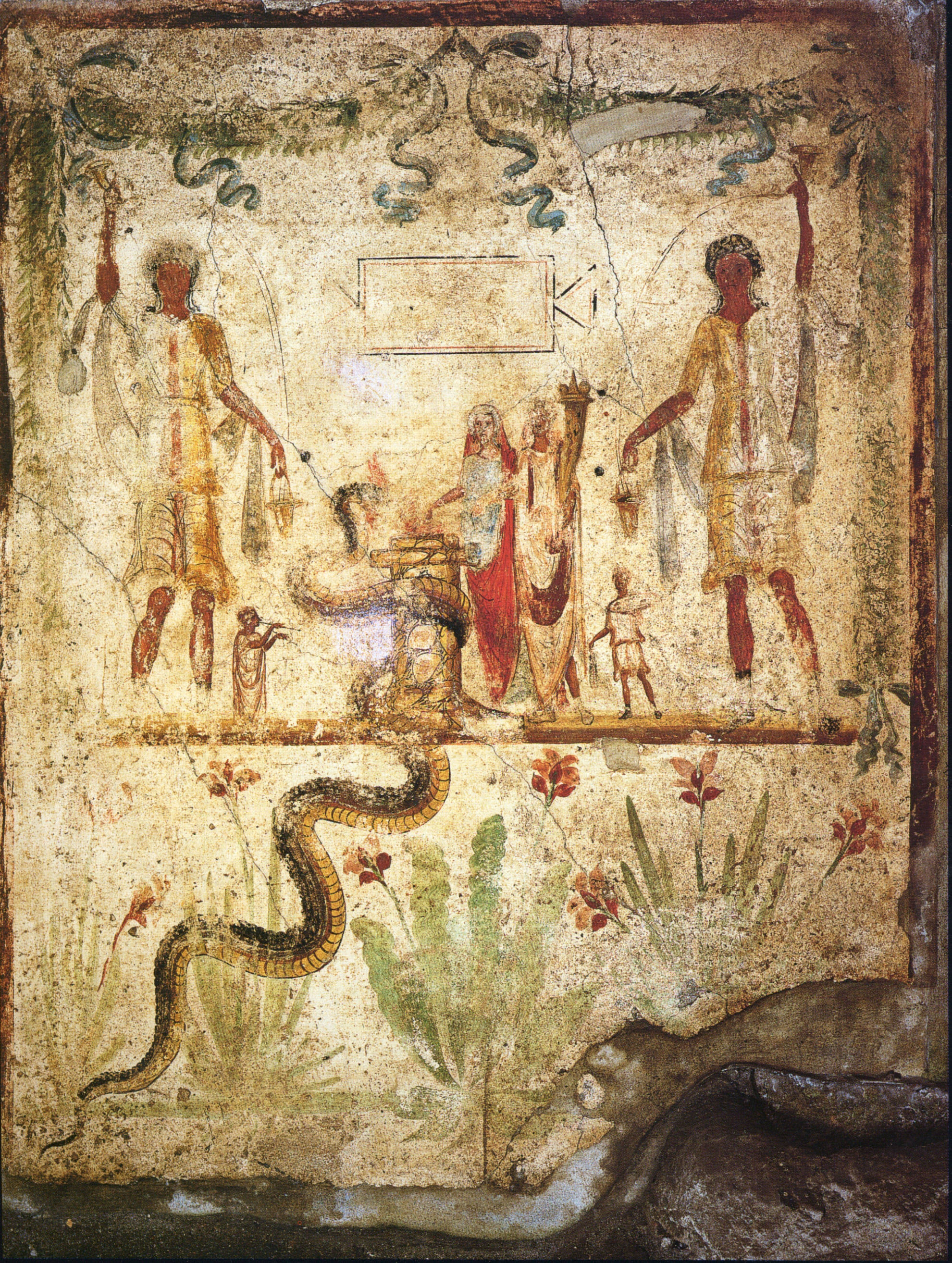 Fresco from the lararium of the House of Julius Polybius in Pompeii, 1st century AD; a household shrine with Lares, genius, serpents and altar.
Myth, Cult and Institutions
In Greek religion mythological language is especially visible: divine genealogies, epic, tragedy, hymns, local stories and heroic cycles explained relations between gods, humans and cities. Yet cult remained local: the same Apollo could be Delphic prophet, healer, musician or destroyer, and Artemis huntress, protector of girls, women in childbirth or boundaries.
At Rome the institutional side stands out more strongly. Pontifices, augurs, flamines, Vestals, magistrates, the Senate and the calendar determined when and how to address the gods. Romans accepted myths, but religious correctness was more often tested not by retelling a story, but by the formula of prayer, the right to perform a rite, auspices, fulfilment of a vow and the community's response. A comparison of gods must therefore consider not only name and attribute, but also the social mechanism of cult.
Provinces and Local Traditions
The convergence of Greek and Roman gods was not limited to Rome and classical Greece. In southern Italy and Sicily Romans encountered Greek sanctuaries long before the eastern conquests; in Asia Minor and Syria they received already Hellenistic forms of cult; in Gaul, Britain, Spain and along the Danube local gods were often named as Mars, Mercury, Apollo, Minerva or Jupiter. Such a name did not erase the local tradition. It allowed it to enter the shared language of the empire while preserving the sanctuary, dedications, votive objects and local festival.
A provincial inscription to Mars may therefore refer not to the same Mars as a Roman state relief, but to a local god of armed force, a spring, tribal memory or settlement protection. Mercury in Gaul is often linked with trade, roads and good fortune, yet receives traits of local patrons of prosperity. Isis, Serapis, Cybele, Mithras and other cults show another path: not simple equivalence with Olympians, but the inclusion of a foreign deity into the Roman calendar, military environment, private associations, urban processions and imperial ideology. In such cases name, image and actual cult setting must be kept distinct.
Festivals and Public Memory
Differences between gods are especially visible through festivals. Greek Athena is inseparable from the Athenian Panathenaia, the procession to the Acropolis, the peplos, sacrifices and the civic image of Athens. Demeter and Persephone are tied to Eleusis, the mysteries, hope for a different fate after death and the agricultural cycle. Dionysus appears through theatre, banquet, viticulture, mask and the move from ordinary order into festive disruption. These cults were not merely stories about characters, but the calendar of the polis and a way to gather the community and explain its past.
At Rome a festival is more often tied to the city's public order and to the memory of its institutions. The Lupercalia, Matronalia, Liberalia, Saturnalia, Vinalia and games for Jupiter, Apollo or the Great Mother included sacrifice, processions, banquets, temporary shifts in social roles, spectacles and magisterial organisation. Venus, Mars, Jupiter, Vesta or Ceres existed not only in statues and mythological scenes, but in calendar dates, priestly rights, procession routes, public vows and memories of war, harvest, marriage, citizenship and power.
Iconography and Archaeological Evidence
Iconography often brings Greek and Roman material close together. Jupiter looks like Zeus with thunderbolt and eagle, Minerva like Athena in a helmet, Diana like Artemis with a doe, Venus like Aphrodite with Cupid. Yet archaeological context changes the meaning. A statue of an emperor as Jupiter speaks about power; a domestic fresco with Lares about family; an altar of a legion about military dedication; a Greek kylix with Dionysus about myth, banquet and artistic tradition.
Images should therefore not be used as interchangeable illustrations. A Roman copy of a Greek statue, a Greek vase, a Pompeian lararium, a coin with a goddess, a votive relief and a temple complex answer different questions. Reliable comparison requires date, findspot, object function, inscription or accompanying context. At this level one can see where a shared tradition genuinely connects Greece and Rome, and where similarity conceals different religious practices.
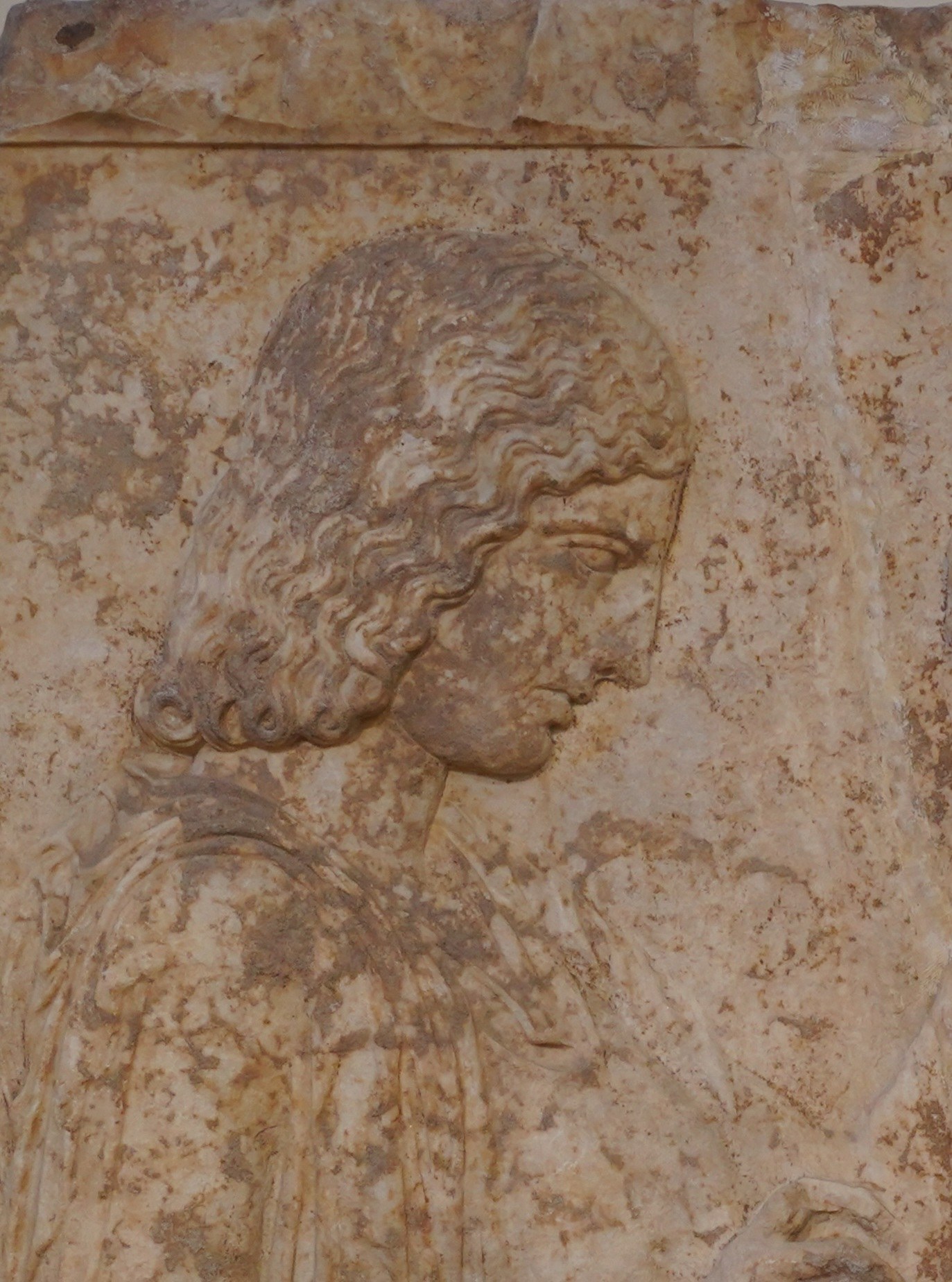 Great Eleusinian Relief: Demeter, Persephone and Triptolemos, 440-430 BC; sanctuary of Demeter and Kore at Eleusis.
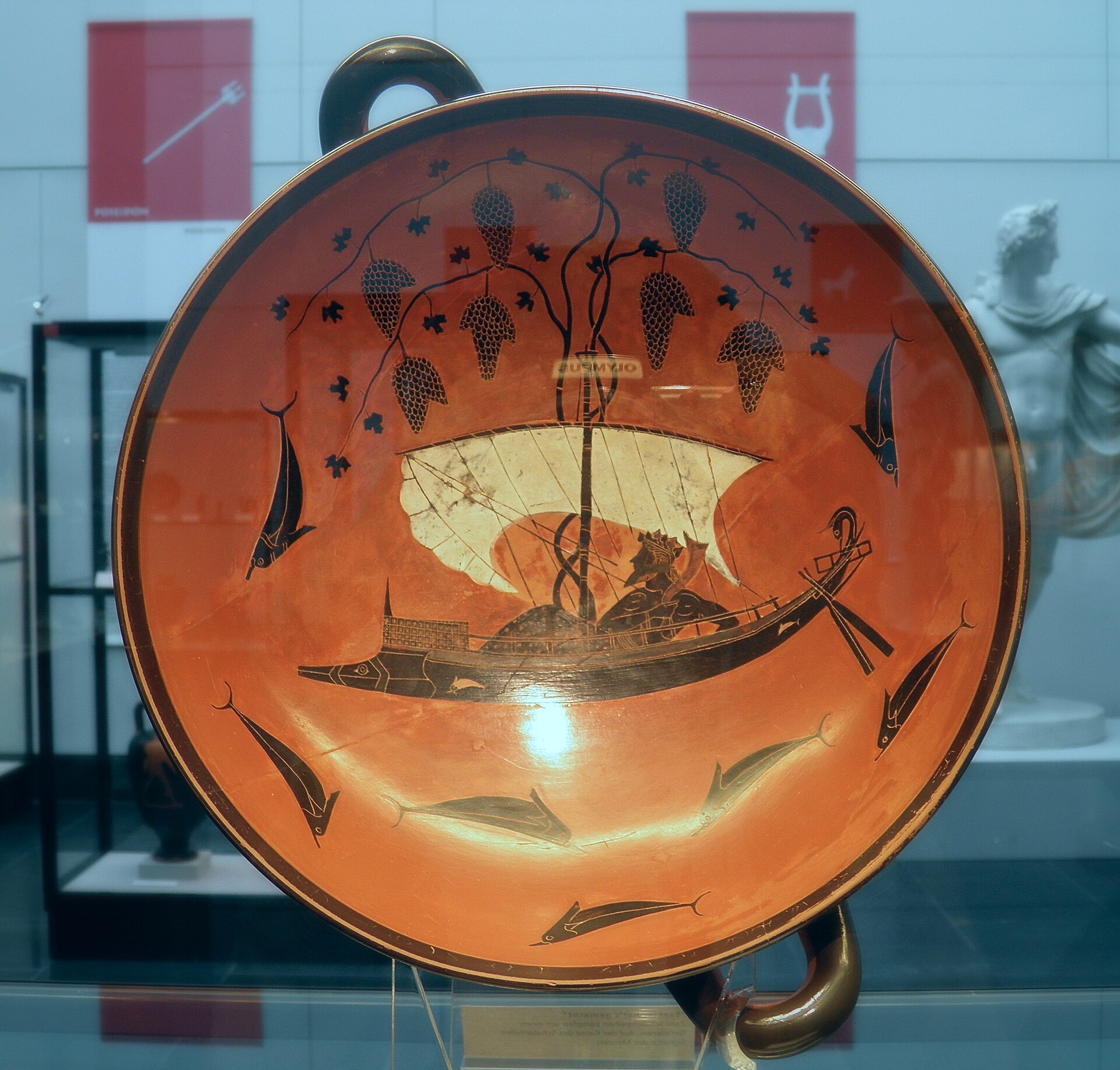 Kylix by Exekias showing Dionysus on a ship, around 530 BC; Staatliche Antikensammlungen, Munich.
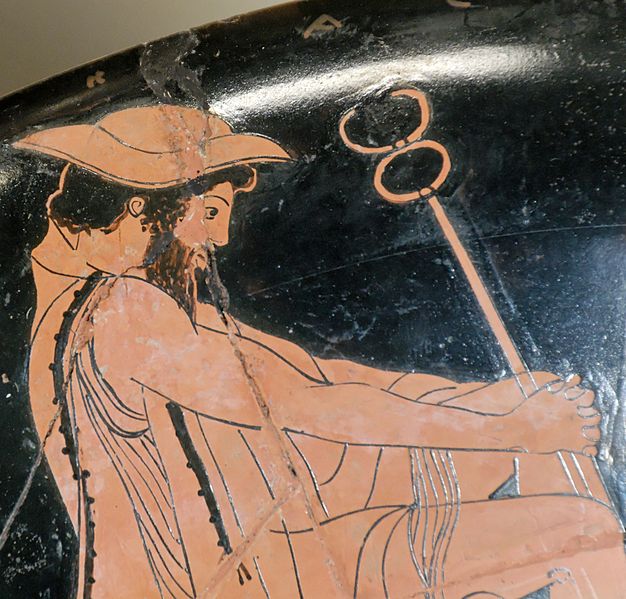 Hermes wearing a petasos and carrying a caduceus on an Attic vase from the Louvre, G 264, around 480-470 BC.
Short Chronology of Convergence
- 8th-6th centuries BC - Greek and Italic cults develop in different political settings: poleis, Latin communities and early Rome.
- 6th-5th centuries BC - Etruscan and Greek influence helps shape Roman temples, images and divinatory practices.
- 3rd-2nd centuries BC - wars in southern Italy, Sicily and the eastern Mediterranean sharply intensify Roman contact with Greek gods, statues and myths.
- 1st century BC - the Late Republic uses Venus, Mars, Apollo and Jupiter in the language of family politics, victory and civil war.
- 1st-3rd centuries AD - the empire combines Greek images, Roman state cult, provincial altars, coins, temples and household lararia.
- 4th century AD - traditional cults continue to exist, but their public status changes as Christianity grows stronger.
Related Topics
- Greek Gods
- Roman Gods
- Religion of Ancient Greece and Ancient Rome
- Greek Mythology
- Greco-Roman Mythology
- Roman Religion
- Roman Temples
- Roman Household Religion
- Lares
- Lararium
- Penates
- Sacrifices in Ancient Rome
Literature
- Beard M., North J., Price S. Religions of Rome. Cambridge University Press, 1998.
- Burkert W. Greek Religion. Harvard University Press, 1985.
- Feeney D. Literature and Religion at Rome. Cambridge University Press, 1998.
- Galinsky K. Augustan Culture. Princeton University Press, 1996.
- Graf F. Greek Mythology: An Introduction. Johns Hopkins University Press, 1993.
- Scheid J. An Introduction to Roman Religion. Indiana University Press, 2003.


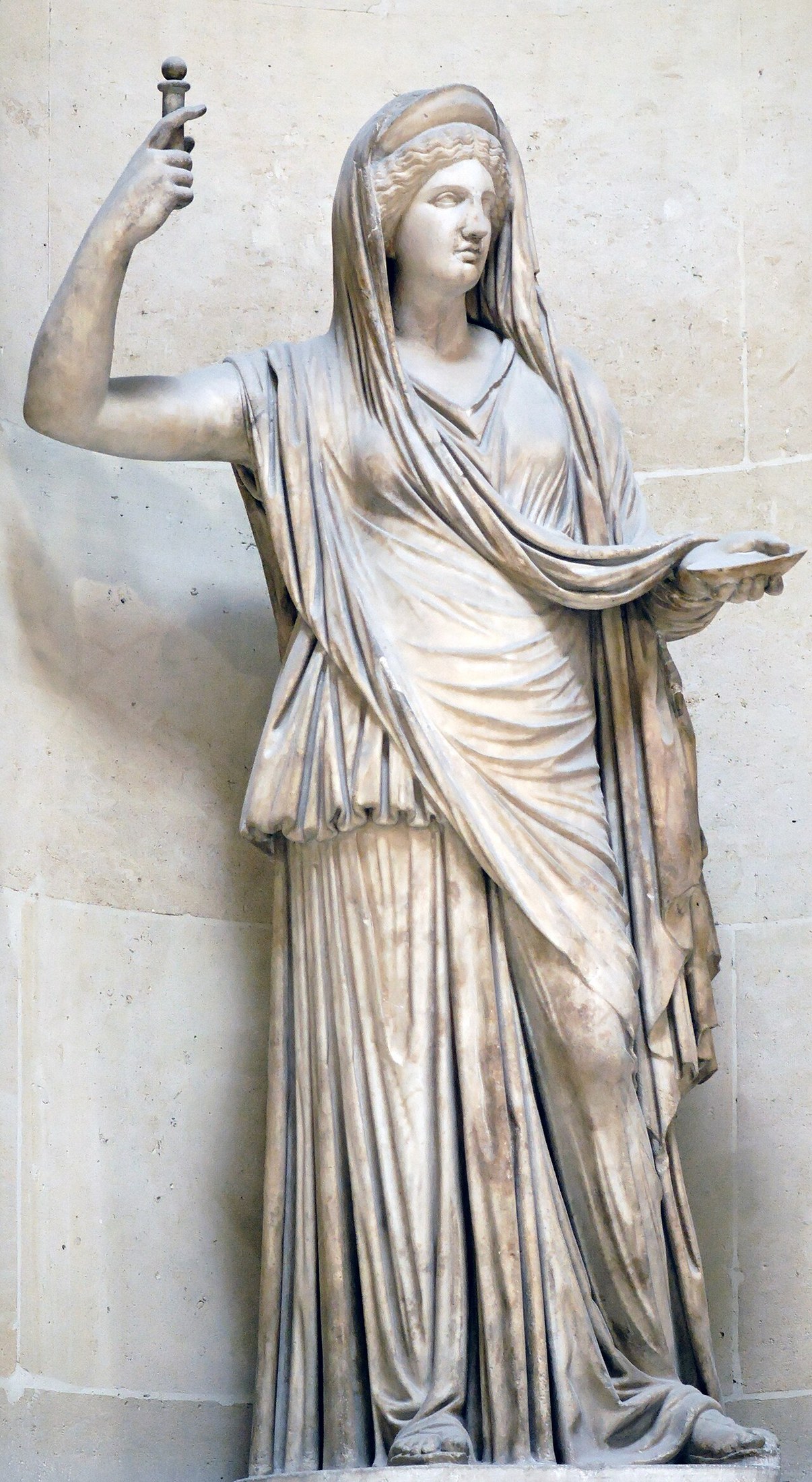 Hera Campana, Roman marble copy of a Hellenistic original, 2nd century AD; Louvre, Ma 2283.
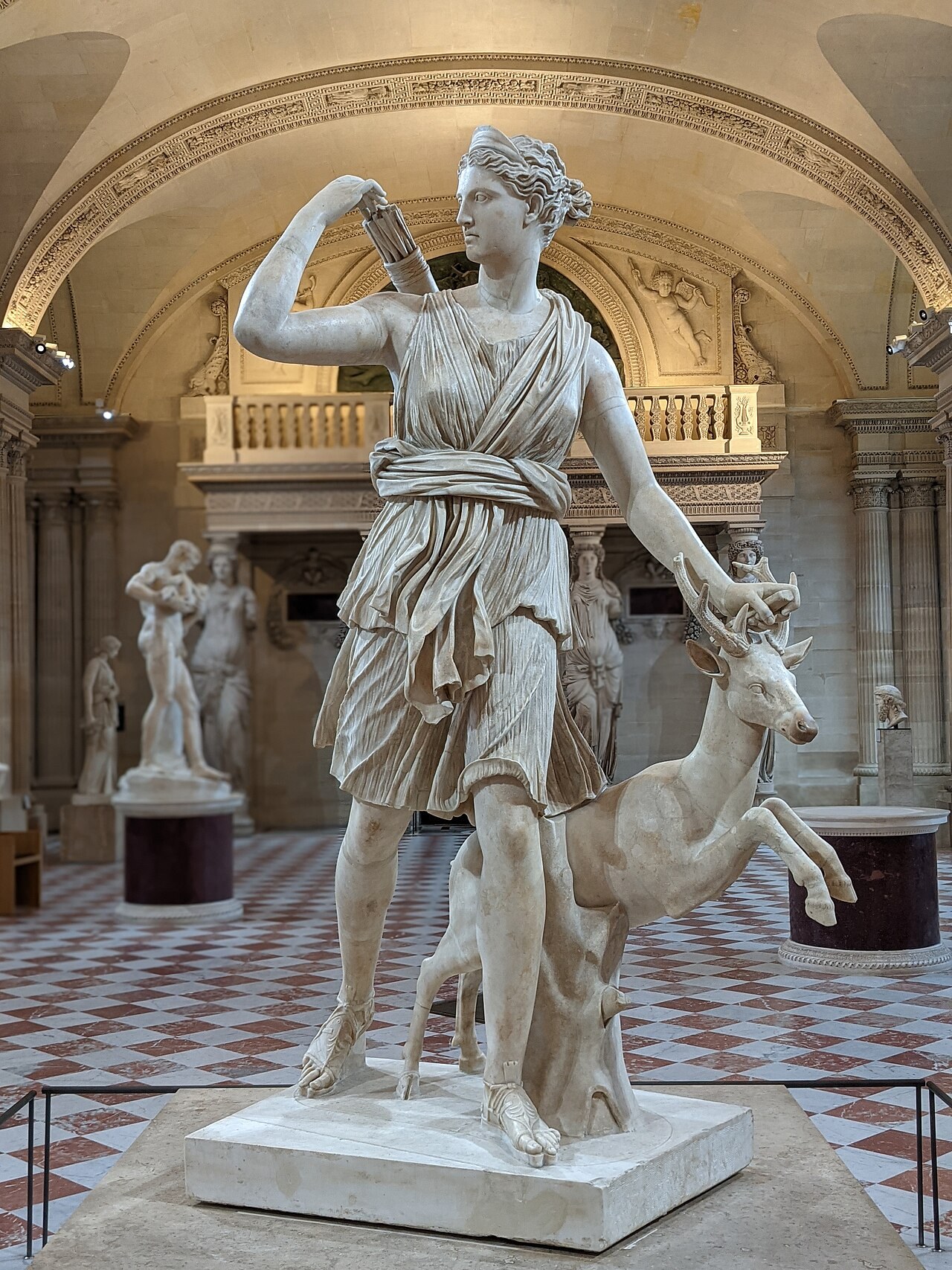 Artemis with a doe, the Diana of Versailles, Roman copy of the 1st-2nd centuries AD after a 4th-century BC Greek original; Louvre, Ma 589.
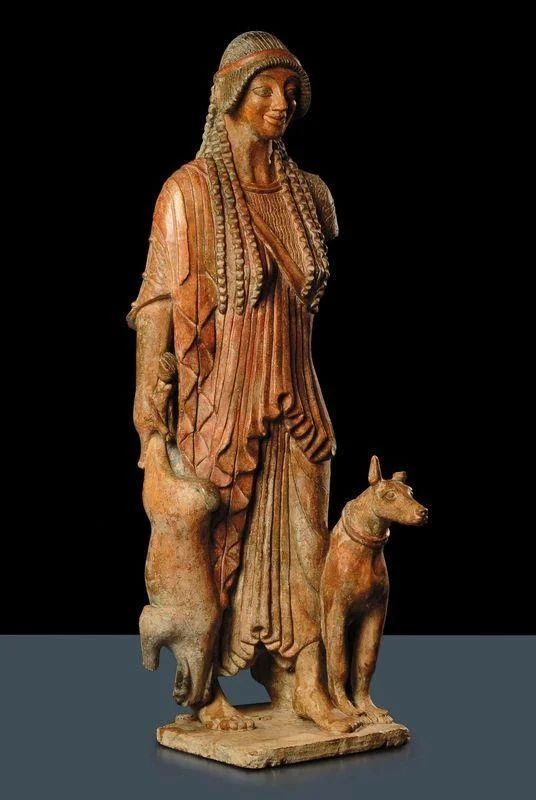 Etruscan sculpture of Diana, goddess of hunting, 5th century BC; an example of early Italic image tradition.
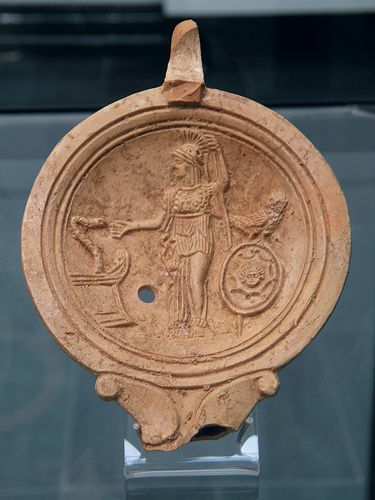 Roman ceramic lamp with Minerva, 1st century AD; Staatliche Antikensammlungen, Munich.
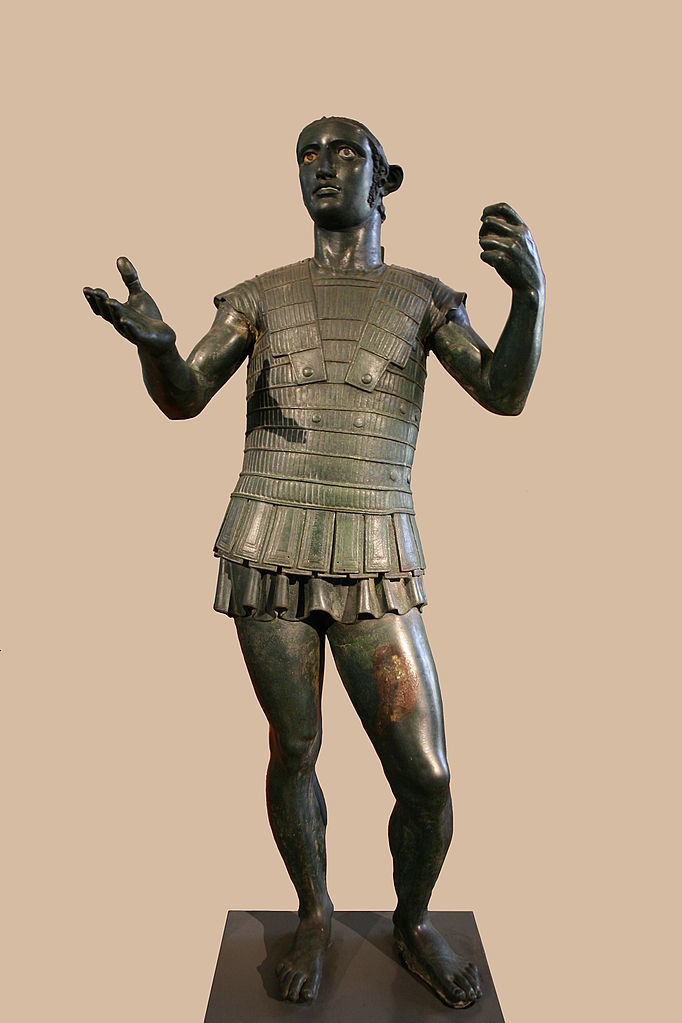 Mars of Todi, bronze statue in the Etruscan-Roman tradition, late 5th to early 4th century BC; Vatican Museums.
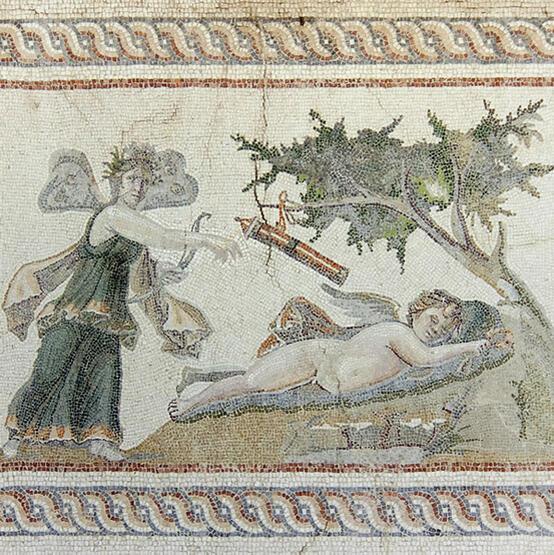 Venus and Cupid. Mosaic from Antioch, 4th century AD; a Late Antique image of the goddess of love.
Interested in Ancient Rome beyond reading? Join Legio X Fretensis or explore our reenactment directions.


