Differences Between Greek and Roman Religion
Greek and Roman religions are close, but not identical. Romans borrowed, translated and compared Greek myths, yet their own religious system retained a special concern for ritual, legal form, calendar, vow, omens and public order.
The main difference is not that Greeks had "myths" while Romans had "rituals". Both peoples had myths and cults. The difference lies in emphasis: the Greek tradition produced an especially powerful literary and artistic corpus of myths, while the Roman one embedded religion more strongly in state institutions and household practice.
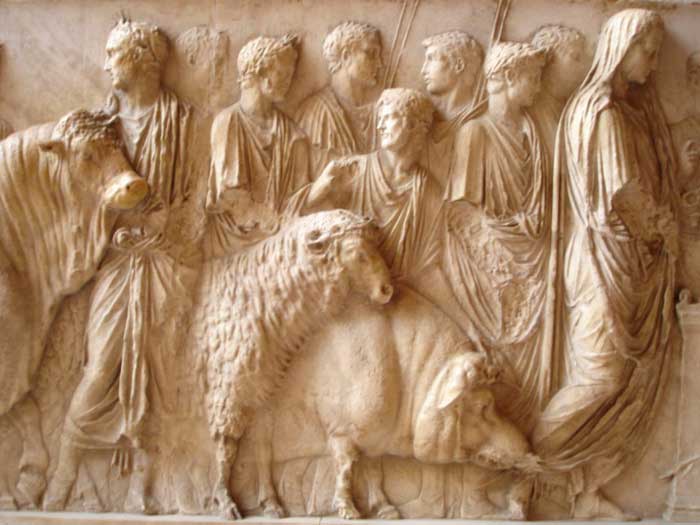 Sacrifice to Mars (Suovetaurilia). The Louvre Museum. Marble. First half of the first century AD
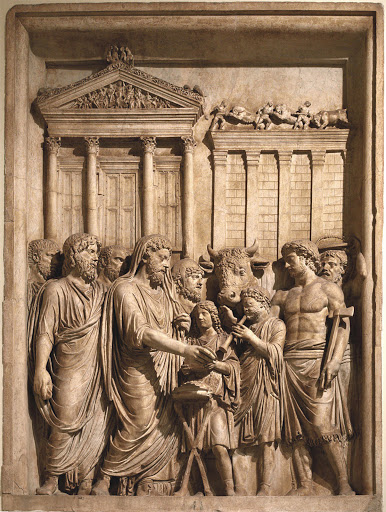 Sacrifice to Jupiter Capitoline. Relief panel from the triumphal arch of Marcus Aurelius (presumably). Marble. 176-180 AD
Mythological language
Greeks more often described gods through genealogies, epic, tragedy and local sacred stories. Romans adopted many stories, but used them to explain the origin of the city, family line, power and moral order.
Ritual and institutions
In Rome priestly colleges, public auspices, pontifical law, calendar and magistrates' responsibility for relations with gods are especially visible. In Greece cult was more strongly divided among poleis, sanctuaries and local festivals.
Household level
Roman Lares, Penates, genius and lararium make the household level of religion especially visible archaeologically. Greek homes also had religious practices, but the Roman evidence from Pompeii preserves them with unusual clarity.
Additional sources and visual checks
The differences between Greek and Roman religion are best explained through institutions: polis cults, Roman ritual law, state priesthoods, household religion and imperial ideology. The gallery shows sacrificial and domestic contexts rather than only divine names.
For source checks: - Perseus Digital Library - Archaeological Park of Pompeii - Arachne database, German Archaeological Institute
Related topics

 Sacrifice to Jupiter Capitoline. Relief panel from the triumphal arch of Marcus Aurelius (presumably). Marble. 176-180 AD
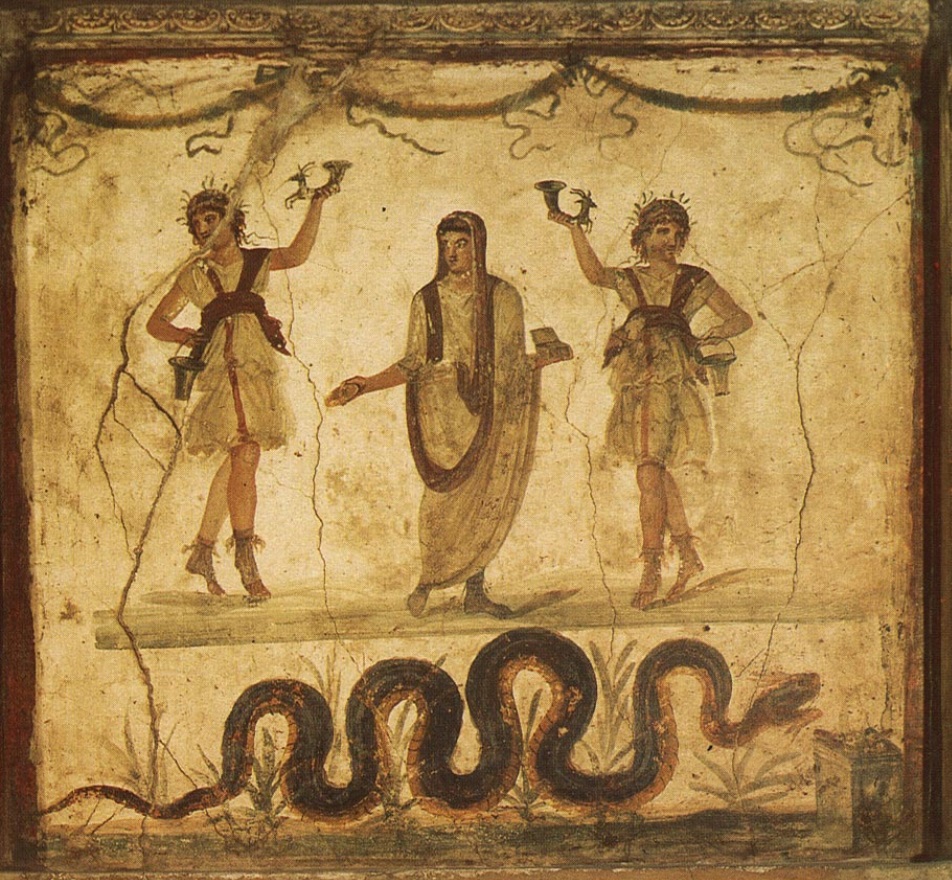 Genius loci and Lara. Often the central priest is interpreted as a pontiff. Fresco in the lararium of the House of Vettii in Pompeii,House of Vettii. A.D. 60-79
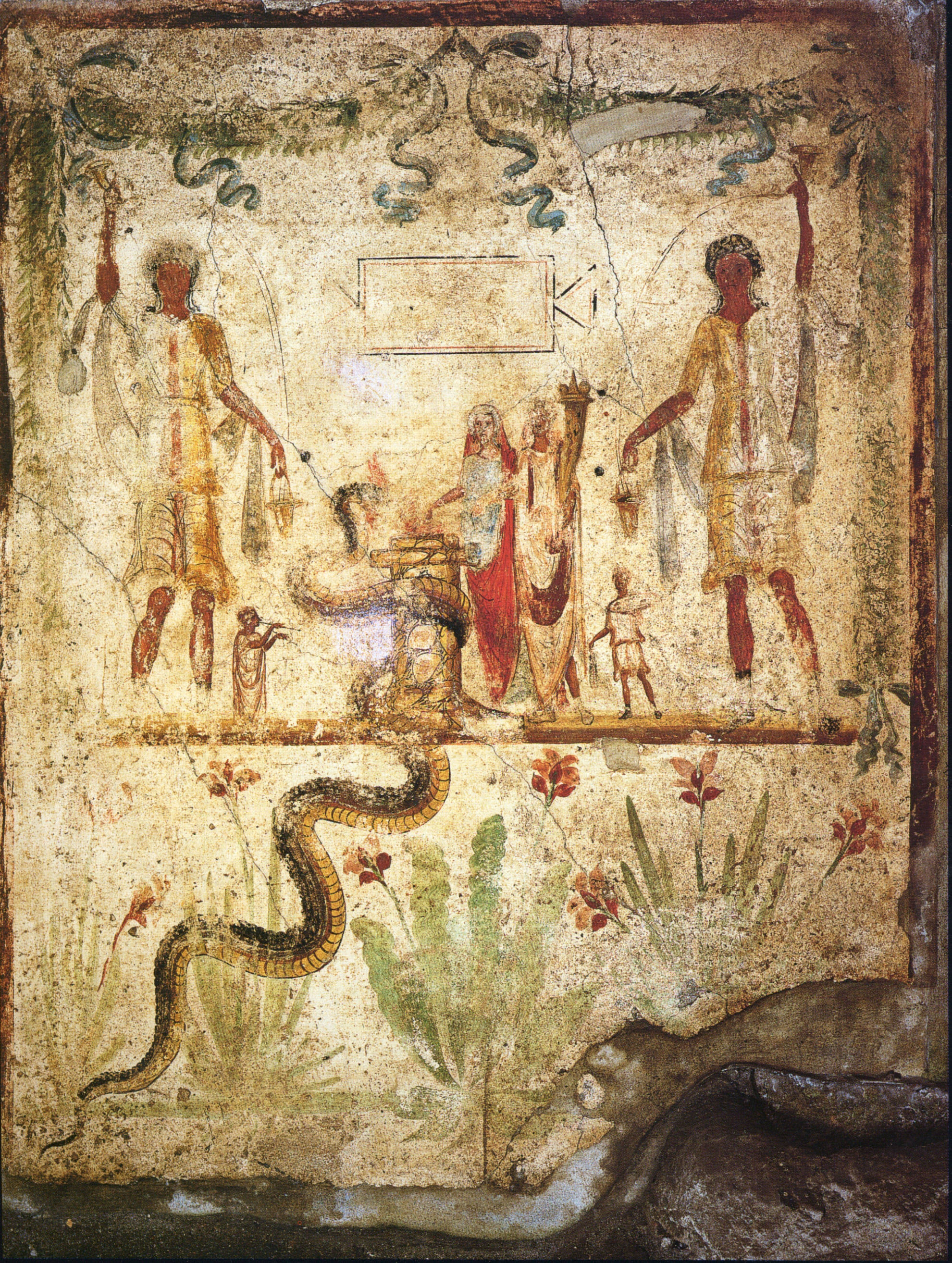 Roman fresco from the lararium of the house of Polybius. Pompeii. 1st century AD
Interested in Ancient Rome beyond reading? Join Legio X Fretensis or explore our reenactment directions. Reenactment


