Mainz Museums of Antiquity
Mainz grew on the site of Roman Mogontiacum, one of the key military centres on the Rhine. Its museums are therefore important not as a random collection of ancient objects, but as a connected system of sources: city, garrison, river port, funerary monuments, seafaring, craft and everyday objects can be read together.
Three points are especially useful: LEIZA as a research centre and museum infrastructure, the Museum für Antike Schifffahrt with the Roman ships of Mainz, models and material on ancient navigation, and the Landesmuseum Mainz with the Steinhalle, where Roman stone monuments from Mainz are concentrated. Together they provide not only objects, but the urban context of Mogontiacum.
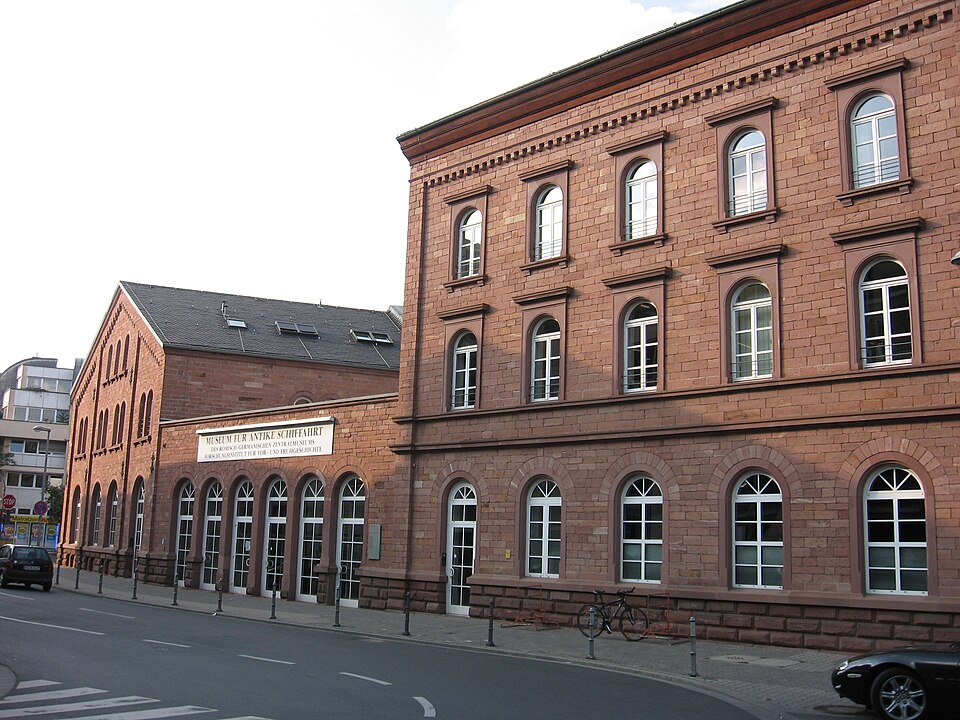 Museum für Antike Schifffahrt in Mainz, a LEIZA museum connected with the Roman ships of Mainz.
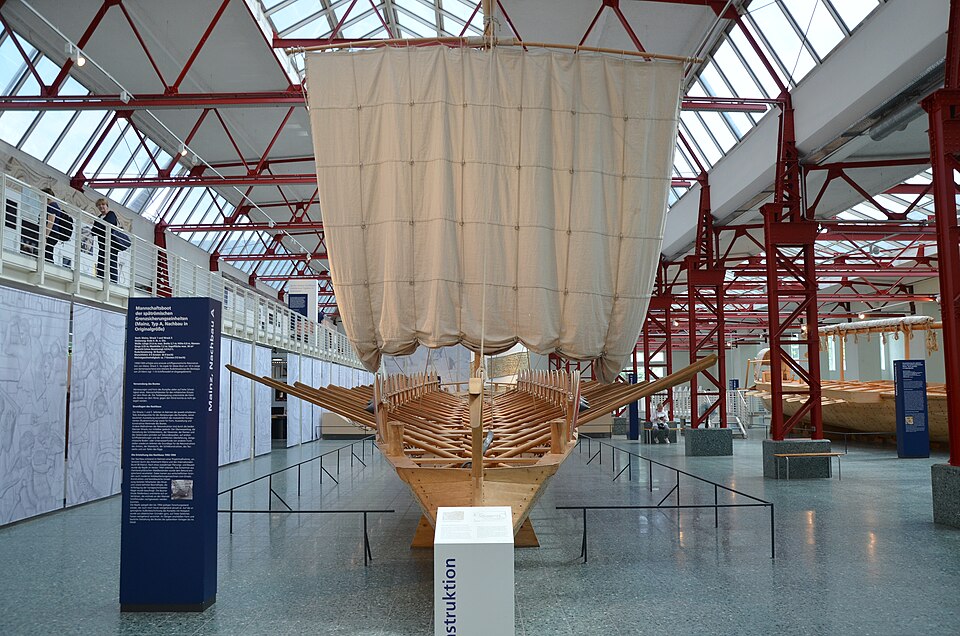 Exhibition hall of the Museum für Antike Schifffahrt with a reconstruction of an ancient sailing vessel.
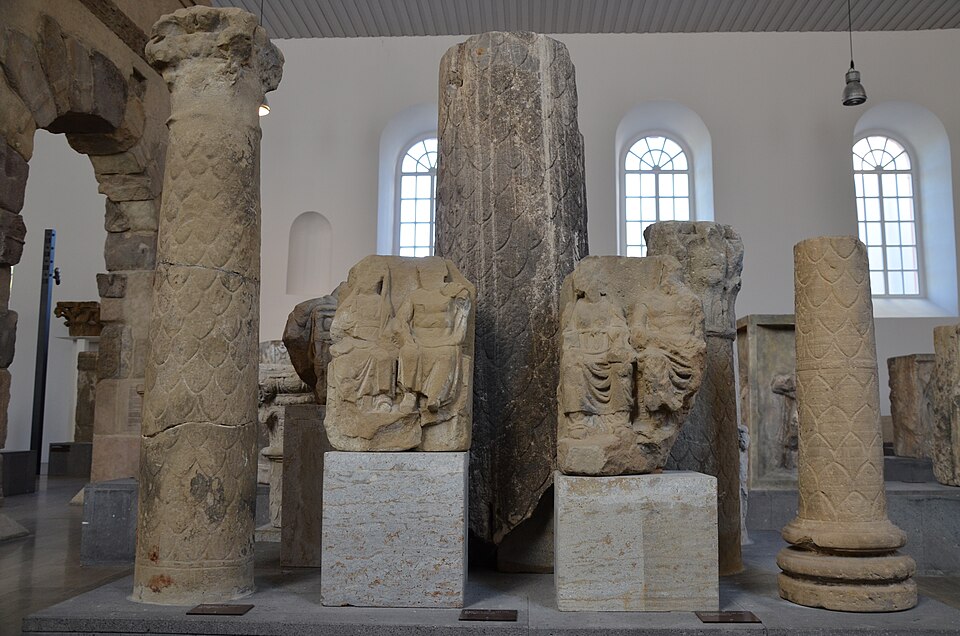 Steinhalle in the Landesmuseum Mainz: Roman stone monuments from Mogontiacum and its region.
A Museum Cluster for Mogontiacum
In Mainz, antiquity is especially clear through the relationship between place and collection. Mogontiacum was not only a legionary base, but also a river hub, craft zone, civilian settlement and centre of contact between the Roman army, local population and Rhine communications. Museum objects here are therefore best read not in isolation, but as traces of a city.
LEIZA continues the tradition of the Romano-Germanic Central Museum, but works beyond a normal display format: it is research infrastructure, collections, restoration, publications and museum work. For reconstruction this combination matters because display objects stand beside scholarly processing of the material.
LEIZA and the Museum für Antike Schifffahrt
The Museum für Antike Schifffahrt is important for the antiquity of Mainz above all through the river. The Rhine was not a background, but part of the military and economic system: people, goods, building material, troops and information moved by water. The Roman ships of Mainz, models of ancient vessels, trade goods and stone monuments connect technology with route, port and garrison.
Visually, the museum is also useful because large reconstructions show scale. In clothing, arms and equipment, scale is often lost in isolated object photographs; a hull or sail reconstruction returns objects to an active space. This helps explain why small details such as fittings, ropes, tools and transport vessels matter as much as the impressive form of a ship.
Landesmuseum Mainz and the Steinhalle
The Steinhalle in the Landesmuseum Mainz shows another side of the Roman city: stone monuments, funerary stones, altars, architectural details and images of people. Inscriptions and reliefs are especially important here. They connect names, military posts, families, gods, workshops and the memory of death with a concrete urban environment.
For a reenactor or reconstruction researcher, stone material is useful not only as iconography. It shows which images were public and stable: how soldiers were represented, which equipment details were placed on monuments, and how clothing, sacrificial scenes, standards and professional signs were shown. Such images cannot be copied mechanically as costume photographs, but they define a set of details that can be checked.
Main Materials
- tombstones and images of soldiers from Mogontiacum and the Rhine region;
- belt sets, armour details, scales, footwear and personal equipment;
- the Roman ships of Mainz, vessel models and material on river logistics;
- stone altars, architectural fragments, inscriptions and reliefs;
- finds from the civilian settlement, workshops and everyday urban life;
- scholarly copies and reconstructions where the original is poorly preserved or not on display.
The Mainz collections are especially useful when read with topography. The same city gives a military camp, port, civilian environment, cemeteries and craft traces. This makes it possible to compare an object with its probable function, not only with visually similar parallels from other regions.
 Belt set with pugio from Mainz. First century AD; the object connects personal equipment with the Rhine garrison.
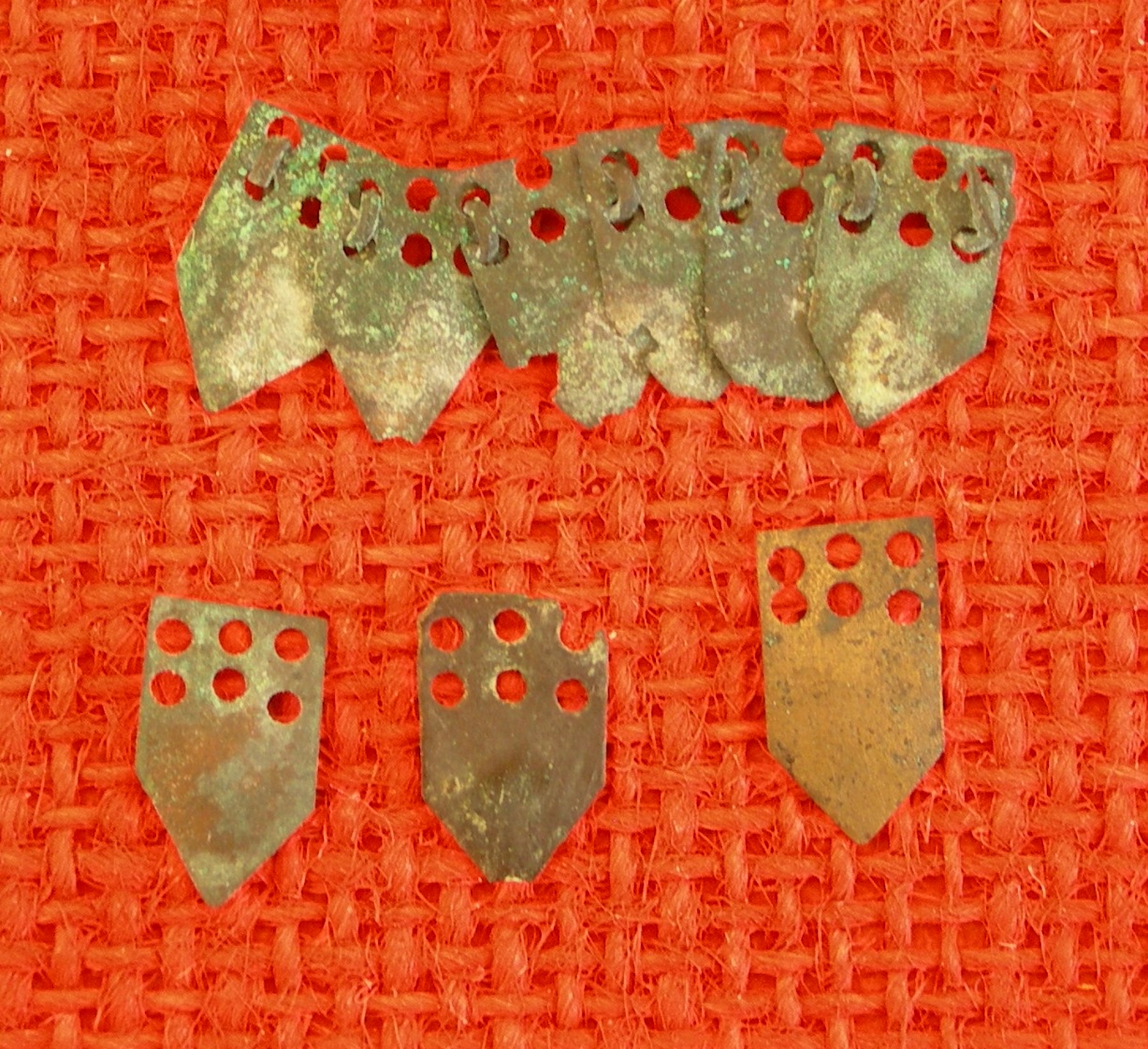 Scales, Mainz, I century CE
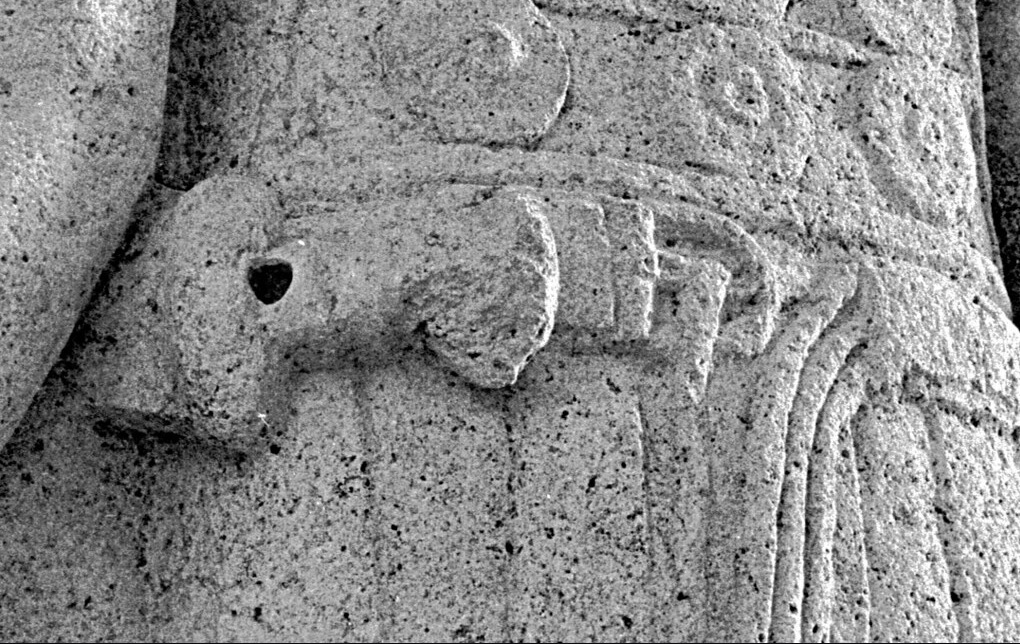 Part of the tombstone of Gnaeus Musius,aquilifer of the fourteenth Legion with pugio. The tombstone is located in the Mainz Museum,1st century AD.
Context and Limits
Mainz is useful not only as a place of individual finds, but as context: a Rhine garrison town shows how military equipment is connected with transport, supply, epigraphy and urban life. For that reason the material must be read carefully. A Roman object from Mainz is not a universal object for the whole empire, and a ship reconstruction is not a direct print of every surviving fragment.
Date, findspot, monument type and museum status all matter. An original, copy, reconstruction, teaching model and modern display have different evidential weight. In good work they do not exclude one another: a model helps with scale, an original provides material and manufacturing traces, and an inscription or findspot connects the object with people and the city.
Related Topics
Sources
- LEIZA: collections
- LEIZA: Museum für Antike Schifffahrt
- Landesmuseum Mainz: Steinhalle
- City of Mainz: Museum für Antike Schifffahrt
- Wikimedia Commons: Museum für Antike Schifffahrt
- Wikimedia Commons: Steinhalle


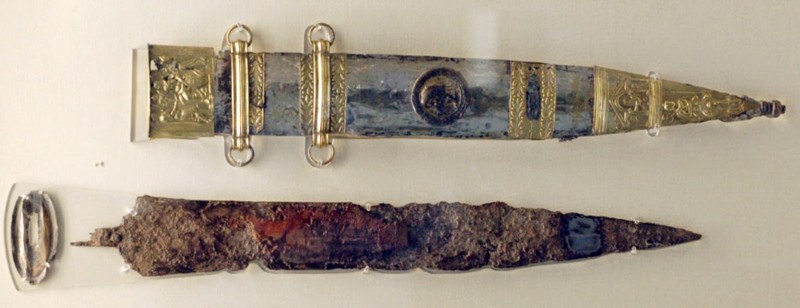 Mainz-type gladius found in the Rhine. Early first century AD; British Museum, London.
 Mainz-type gladius with silver handle,1st century AD,Museum Speyer
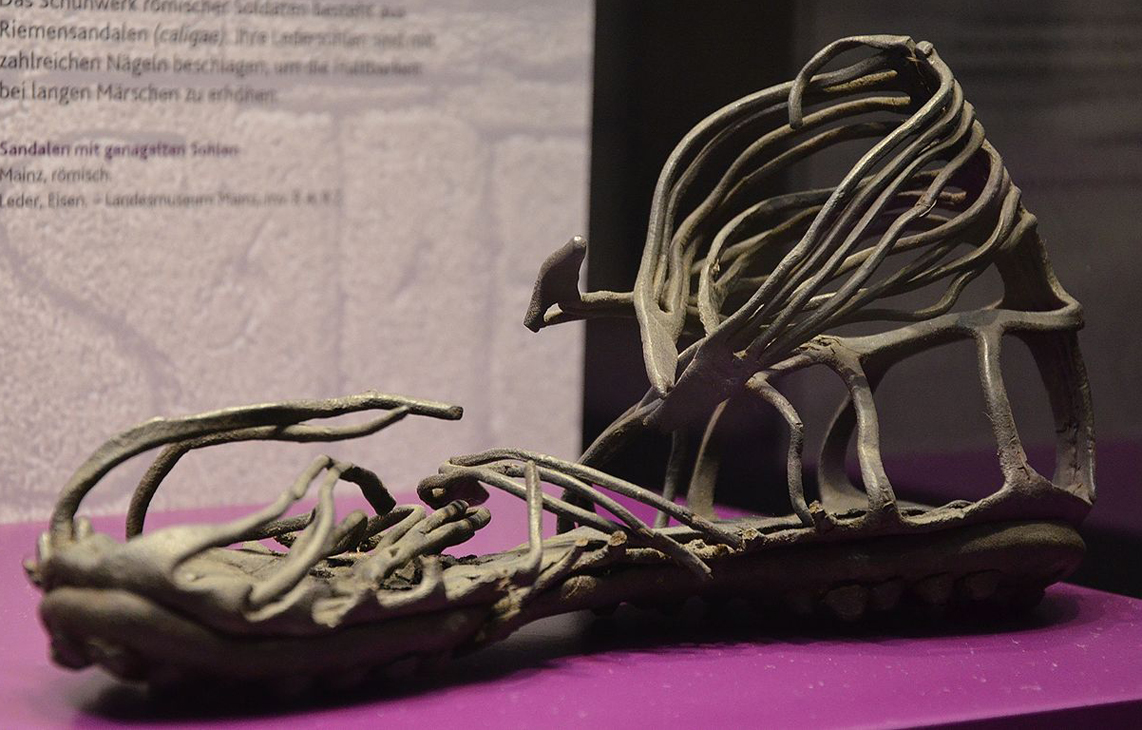 Roman caliga, first century CE. Mainz State Museum, Germany.
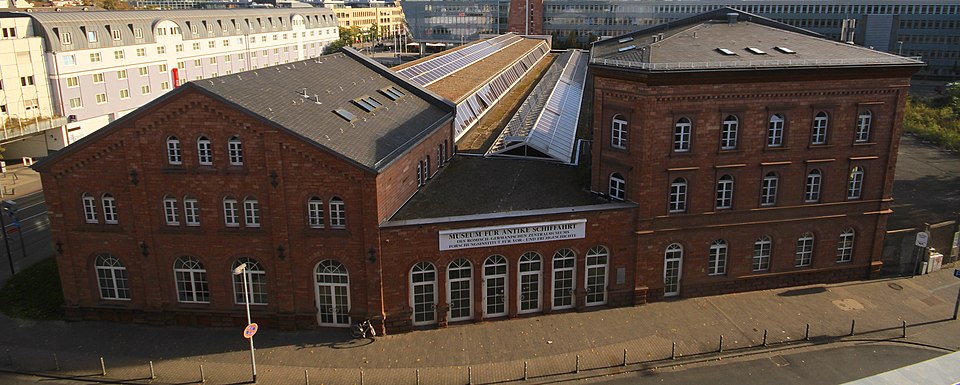 Museum für Antike Schifffahrt complex in a former industrial building in southern Mainz.
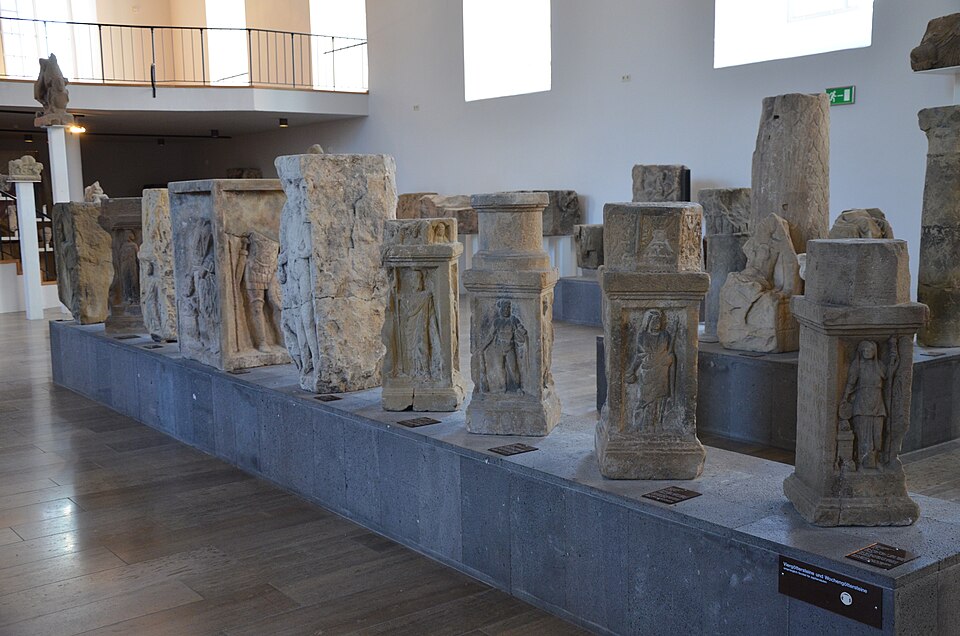 A row of funerary stones, altars and architectural fragments in the Steinhalle, Landesmuseum Mainz.
Interested in Ancient Rome beyond reading? Join Legio X Fretensis or explore our reenactment directions.


