Middle Kingdom Egypt
Middle Kingdom Egypt is usually dated to about 2055-1650 BC and is associated with the late Eleventh, Twelfth and part of the Thirteenth Dynasties. It was an age of recovery after the First Intermediate Period: Thebes rose from a regional centre to royal capital, the country was reunified and power later shifted to the new residence of Itjtawy near the entrance to the Faiyum. The Middle Kingdom was not a simple copy of the Old Kingdom; it created a monarchy more attentive to the provinces, an active Nubian policy and a rich literary tradition.
The central rulers of the period are Mentuhotep II, Amenemhat I, Senwosret I, Senwosret III and Amenemhat III. Their reigns show different tasks: restoration of unity, relocation of the centre of power, control of nomarchs, strengthening of the southern frontier, development of the Faiyum and a royal image in which force was joined to care for order. In Middle Kingdom art royal faces often appear tense and individual; this was part of a new language of power rather than accidental style.
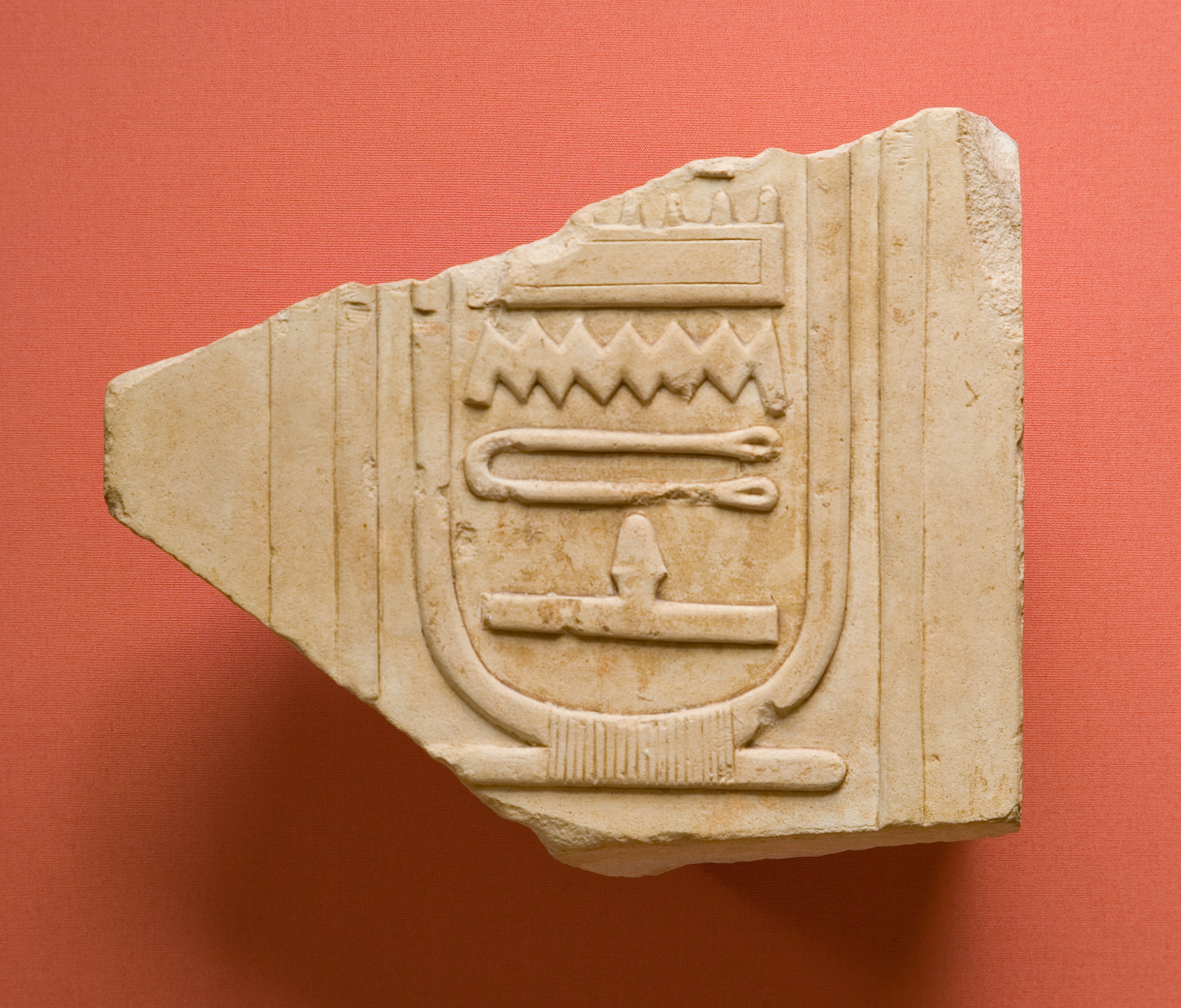 Relief with the name of Nebhepetre Mentuhotep II from his temple at Deir el-Bahri. Dynasty 11, ca. 2051-2030 BC; Metropolitan Museum of Art.
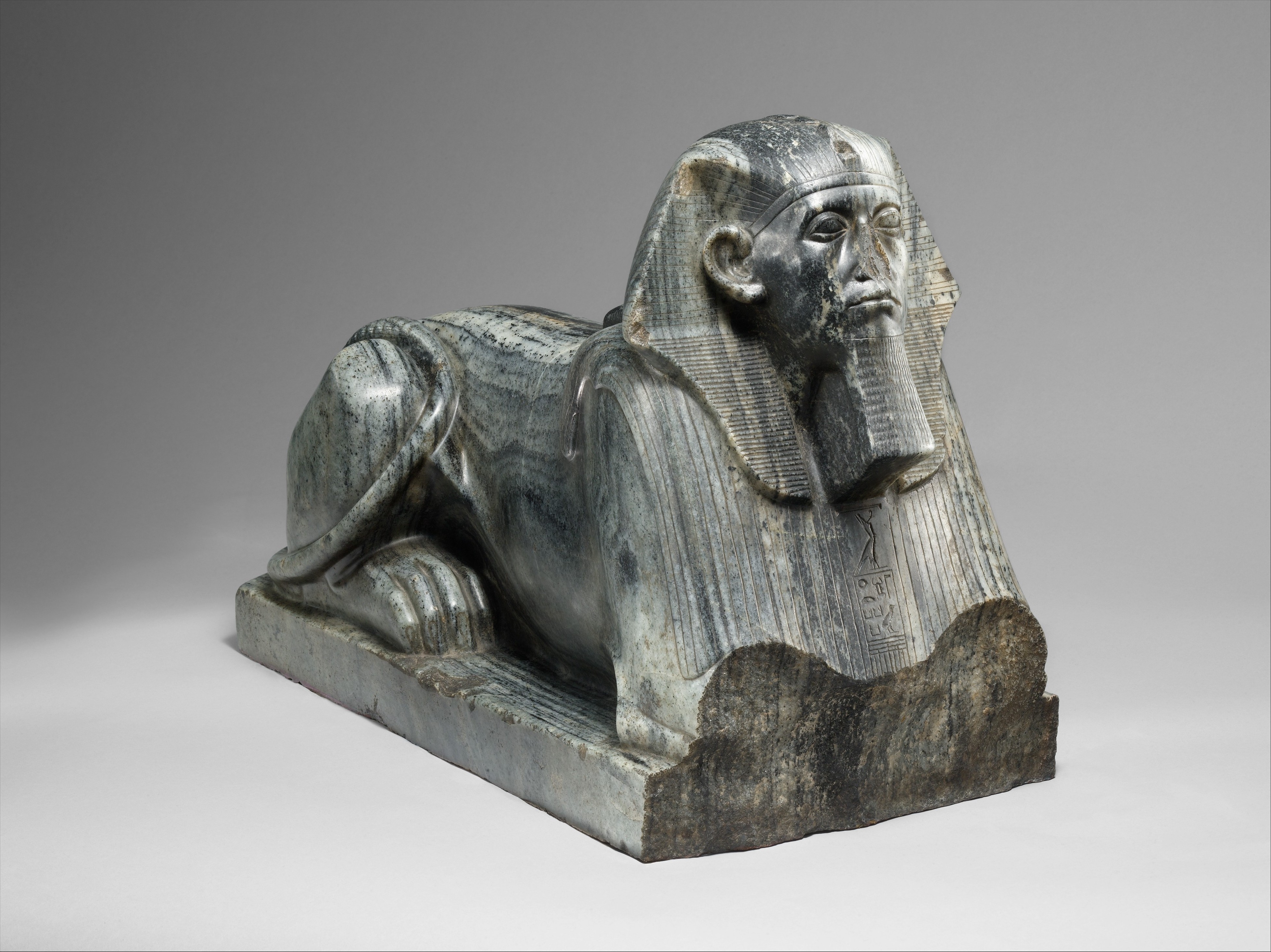 Sphinx of Senwosret III. Dynasty 12, ca. 1878-1840 BC; Metropolitan Museum of Art.
Eleventh Dynasty: Reunification and Theban Power
The beginning of the Middle Kingdom is associated with Mentuhotep II Nebhepetre. He came from the Theban line of rulers who fought Herakleopolis and gradually brought the Nile Valley under their control. Reunification was not a single act, but the result of military and political struggle after which kingship had to reconnect north and south, court and provinces, army and temple centres.
Mentuhotep II's mortuary complex at Deir el-Bahri shows the transitional character of the age. It did not return to the huge pyramid form of the Old Kingdom, but it created a monumental royal landscape at Thebes. Reliefs, names, burials of royal women and the connection of the complex with local cult show how the new power turned regional victory into national memory.
Twelfth Dynasty: Itjtawy and Government
Amenemhat I founded the Twelfth Dynasty and moved the centre of power from Thebes to Itjtawy, closer to Memphis and the Faiyum. This was a political move: the new residence allowed Upper and Lower Egypt to be governed without losing the dynasty's Theban background. Later literature preserved a dramatic memory of his death in the Instruction of Amenemhat, where the king warns his son about the unreliability of the court.
Senwosret I strengthened the system, built temples, supported quarrying and developed royal ideology. The administration is especially visible in the Twelfth Dynasty: viziers, treasurers, overseers of works, scribes and local elites operated within one field of royal power. Nomarchs did not disappear, but their independence was gradually limited; local tombs still show the high status of provincial houses, though this layer later became less independent.
Senwosret III, Nubia and the Southern Frontier
Senwosret III was one of the most important rulers of the Middle Kingdom. His campaigns in Nubia and the construction of fortresses near the Second Cataract show that the southern frontier became a permanent zone of royal policy. Buhen, Semna, Uronarti and other forts controlled the movement of people, cattle, gold, goods and military parties. Senwosret III's inscriptions stress strict frontier defence and the image of a king who personally maintains order.
Nubian policy was not only military. Egypt sought control over gold, stone, trade routes, labour and diplomatic contacts south of the First Cataract. The forts provide archaeologists with plans of walls, barracks, storerooms, sealings and administrative documents; through them the Middle Kingdom is visible not only in capitals but also in frontier infrastructure.
The Faiyum, Economy and Amenemhat III
The Faiyum became one of the key economic regions of the Twelfth Dynasty. Irrigation works, water control, new settlements and royal projects connect the region especially with Amenemhat III. His pyramids at Dahshur and Hawara, along with the memory of a great temple complex near Hawara, show that the late Middle Kingdom could join agriculture, building and cult ideology.
The Middle Kingdom economy relied on accounting for grain, cattle, work crews, craft workshops and temple holdings. Documents from Lahun and other sites show labour distribution, letters, lists, medical texts and mathematical material. These are not minor details beside kings: they show how the state worked every day and why the rule of the Twelfth Dynasty was later remembered as an image of order.
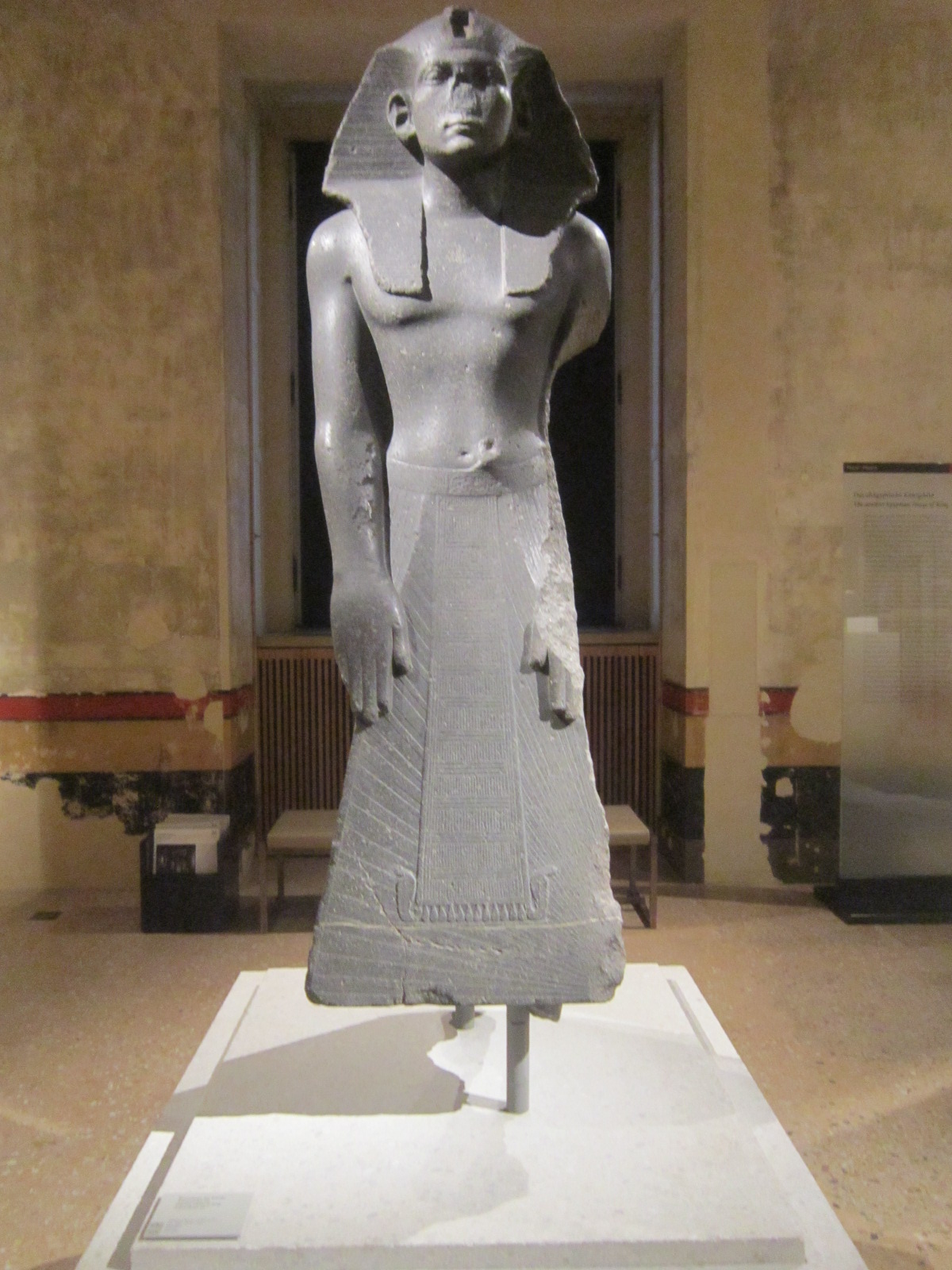 Statue of Amenemhat III. Dynasty 12, Middle Kingdom; Pushkin Museum, Moscow.
Culture, Literature and the End of the Period
The Middle Kingdom is often called the classical age of Egyptian literature. The Story of Sinuhe, the Instruction of Amenemhat, the Prophecy of Neferti, dialogues and instructions discuss loyalty to the king, the danger of disorder, the value of home, the career of the scribe and the fragility of order. These texts are not direct reports, but they show the themes important to the educated milieu: memory of fragmentation, service to the ruler and the boundary between Egypt and foreign lands.
By the Thirteenth Dynasty royal power became less stable. Kings changed more rapidly than in the Twelfth Dynasty, the northeastern Delta strengthened contacts with western Asiatic populations, and the administrative system gradually lost its former coherence. The Second Intermediate Period grew from this weakening: the Hyksos became powerful in the Delta, while Thebes again became one of the centres of resistance and future reunification.
Chronology of Main Events
- c. 2055 BC
- Mentuhotep II completes reunification after the First Intermediate Period.
- Beginning of the Twelfth Dynasty
- Amenemhat I founds a new royal line and creates the residence of Itjtawy.
- Reign of Senwosret I
- strengthening of temple building, administration and royal ideology.
- Twelfth Dynasty
- gradual limitation of nomarch independence and strengthening of the central apparatus.
- Reign of Senwosret III
- campaigns in Nubia and the fortress system near the Second Cataract.
- Reign of Amenemhat III
- economic development of the Faiyum and major building projects at Dahshur and Hawara.
- Thirteenth Dynasty
- more rapid turnover of kings while parts of the administrative tradition continue.
- c. 1650 BC
- transition to the Second Intermediate Period and the rise of Hyksos power in the Delta.
Archaeological Evidence
The Middle Kingdom is studied through temple and funerary complexes at Thebes, Lisht, Dahshur, Hawara, Lahun, Abydos and the Nubian fortresses. Reliefs of Mentuhotep II provide evidence for the early restoration of royal authority; statues of Senwosret III and Amenemhat III show a new type of royal portrait; documents from Lahun reveal economic and administrative work; the fortresses of Nubia give plans of actual military and frontier infrastructure.
The period is distinctive because written and material sources complement one another well. Literary texts speak in the language of ideology and memory, statues create the royal image, while papyri, sealings, houses, tombs and forts show the practical side of government. The Middle Kingdom therefore matters not only as a recovery after crisis, but also as an independent model of the Egyptian state.
Related Topics
Literature and sources
- Grajetzki W. The Middle Kingdom of Ancient Egypt.
- Kemp B. Ancient Egypt: Anatomy of a Civilization.
- Shaw I. The Oxford History of Ancient Egypt.
- Simpson W. K. The Literature of Ancient Egypt.
- Wilkinson T. The Rise and Fall of Ancient Egypt.
- Wegner J. The Mortuary Temple of Senwosret III at Abydos.
- Metropolitan Museum of Art: Relief from the temple of Nebhepetre Mentuhotep II, 06.1231.47.
- Metropolitan Museum of Art: Senwosret III as a Sphinx, 17.9.2.
Interested in Ancient Rome beyond reading? Join Legio X Fretensis or explore our reenactment directions.


