Sources of Greco-Roman Mythology
Additional sources and visual checks
The sources article now links Homer, Hesiod, Ovid, Virgil, vase-painting and museum objects into one reading method. The gallery adds examples of how a textual story becomes an object or image.
For source checks: - Perseus Digital Library - Beazley Archive - LIMC online - Getty Museum collection
Sources of Greco-Roman Mythology
Greco-Roman mythology is known from different kinds of sources. Epic gives large narratives, hymns and tragedy show cultic and theatrical versions, mythographers organise genealogies, and Roman poets reinterpret Greek heritage in a new political and literary setting.
Images are no less important. Vase painting, sculpture, reliefs, frescoes, coins and household shrines show which myths were recognisable, how gods and monsters were imagined, and which details artists and patrons selected.
Texts
Homer matters for the Iliad and Odyssey; Hesiod for the origins of the gods; Pseudo-Apollodorus for organising heroic cycles; Ovid for the Roman version of transformations; Virgil for Roman Trojan memory.
Images
Ancient vase painting is often closer to the living reception of myth than a later summary. On a vessel one can see a moment absent from a short textbook version: a hero's gesture, equipment, companions, inscriptions and local variants.
Related topics


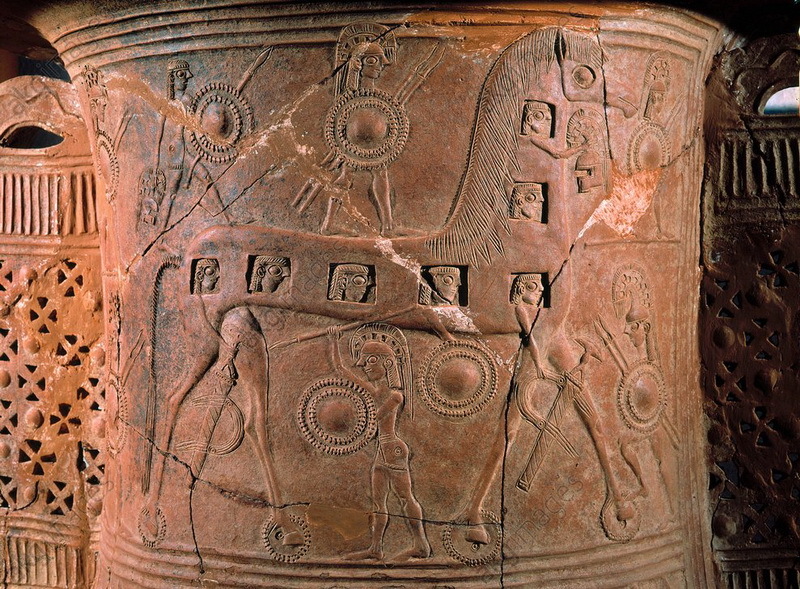 The Siege of Troy. Relief amphora. Mykonos. Around 670-640 BC.
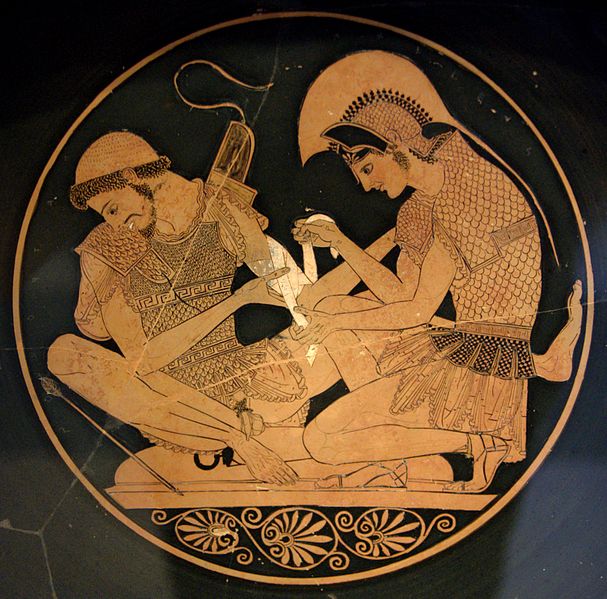 Achilles bandages the wounded Patroclus. Both figures were wearing linothorax plates reinforced with scales,and Patroclus ' untied left shoulder pad straightened up. Image from a red-figure vase from Vulci,circa 500 BC.
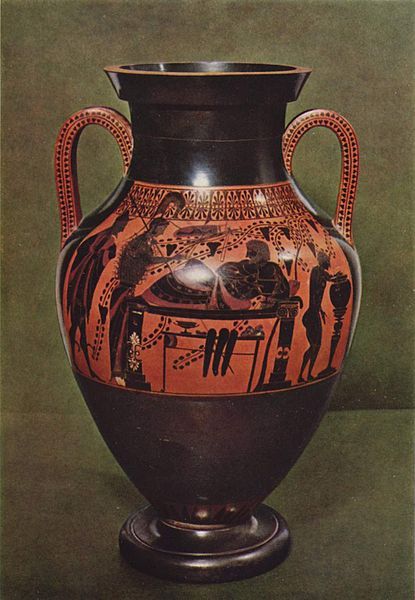 Amphora with the image of Hercules and Athena. Black-figure Attic painting. 520-510 BC
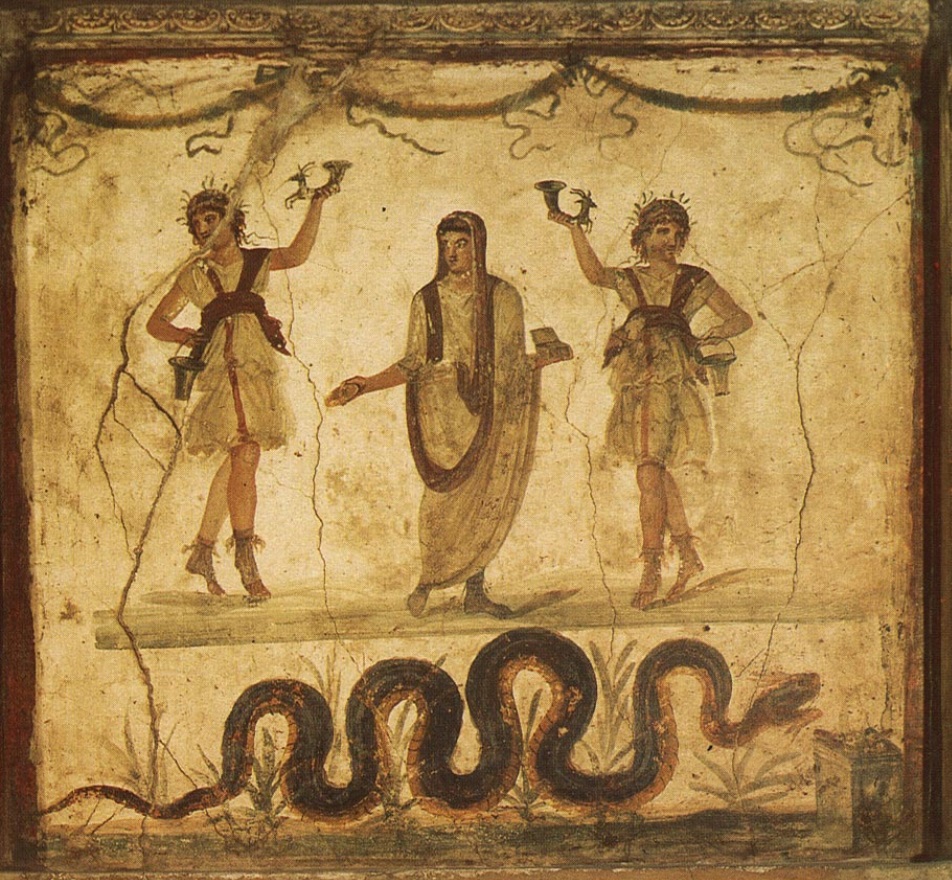 Genius loci and Lara. Often the central priest is interpreted as a pontiff. Fresco in the lararium of the House of Vettii in Pompeii,House of Vettii. A.D. 60-79
 Falera with Medusa. Rome. Silver,gold,bronze. 100-225 AD
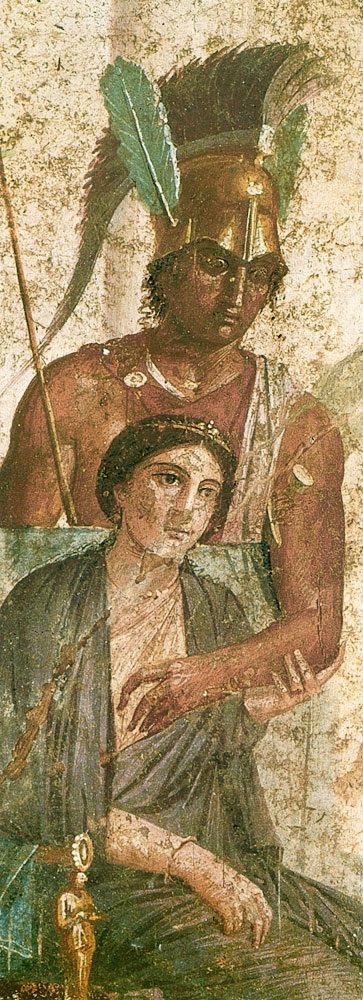 Mural with Venus and Mars. Pompeii. 1st century AD
Interested in Ancient Rome beyond reading? Join Legio X Fretensis or explore our reenactment directions. Reenactment


