Greco-Roman Mythology
Greco-Roman mythology was a shared cultural language of the ancient Mediterranean: stories about gods, heroes, monsters, genealogies, cities and wars. In the Greek tradition myths were tied to epic, tragedy, vase painting, local cults and family memory. In Rome they were reinterpreted through state cult, domestic memory, the origin of the city and the idea of continuity from Troy to Italy.
This cycle separates mythological narrative from religious practice, while showing their constant connection. Myth explains who Zeus, Athena, Medusa or Odysseus are; religion shows how people sacrificed, kept household shrines, addressed Lares and Penates, and placed the gods within civic life.
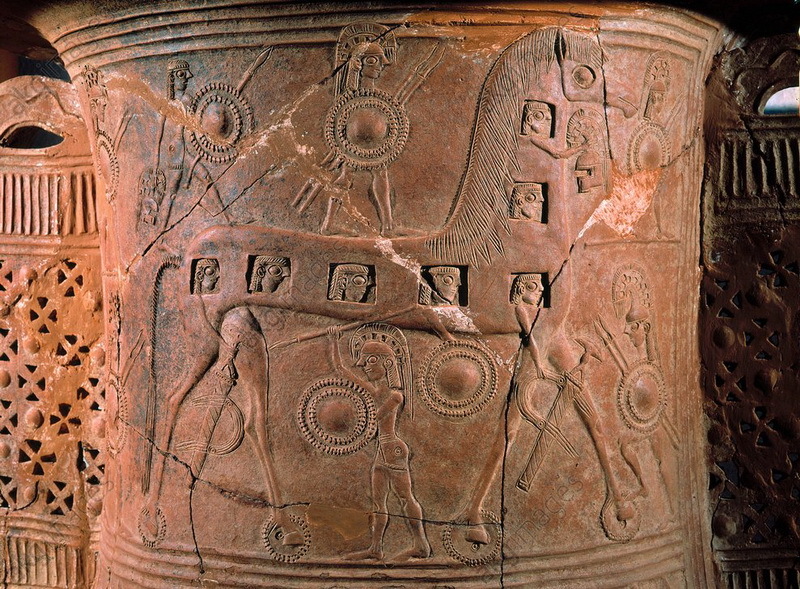 The Siege of Troy. Relief amphora. Mykonos. Around 670-640 BC.
How the cycle is organised
I. Gods and equivalences
II. Creatures and monsters
III. Epic and heroes
IV. Roman household cult
Myth, cult and image
Major ancient myths survive not only in texts. Vase painting, reliefs, statues, frescoes, coins and household shrines often preserve details absent from a literary version, or show which stories were especially recognisable. For that reason the articles in this cycle place museum objects beside Homer, Hesiod, Ovid and Virgil: they make myth visible as part of material culture.
Additional sources and visual checks
The mythology hub is strengthened as a source map: epic, poetry, Roman reworking, vase painting, relief, fresco and household cult give different versions of the same stories. The gallery shows that myths lived in objects as well as texts.
For source checks: - Perseus Digital Library - Beazley Archive - LIMC online - Getty Museum collection
Related topics

 The Siege of Troy. Relief amphora. Mykonos. Around 670-640 BC.
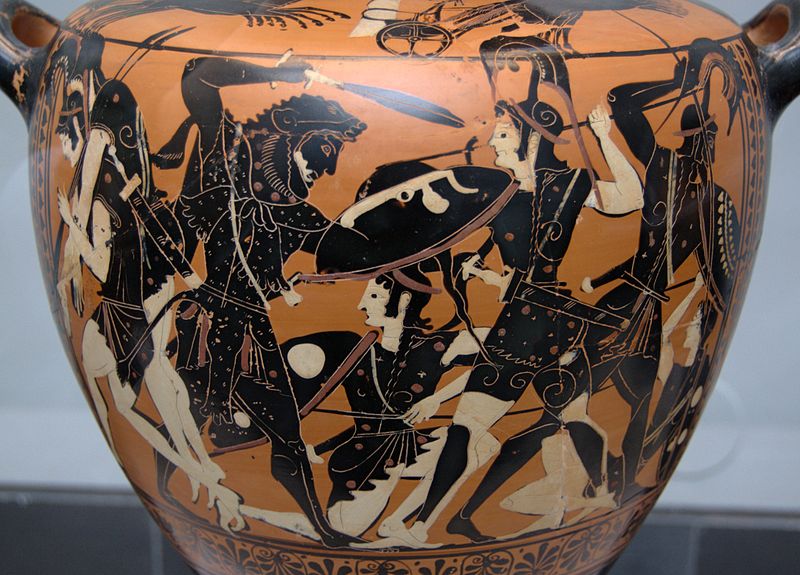 Hercules and the Amazons. Attic black-figure vase. Around 530 BC.
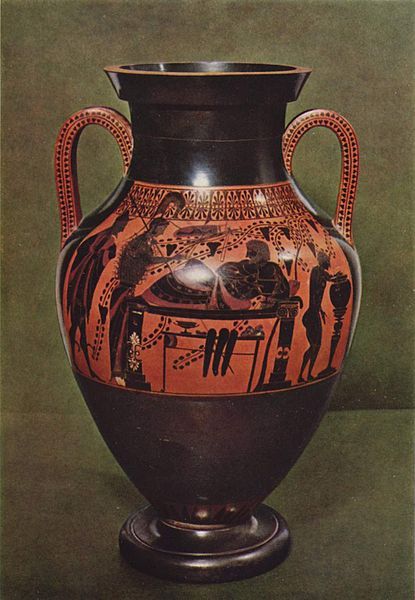 Amphora with the image of Hercules and Athena. Black-figure Attic painting. 520-510 BC
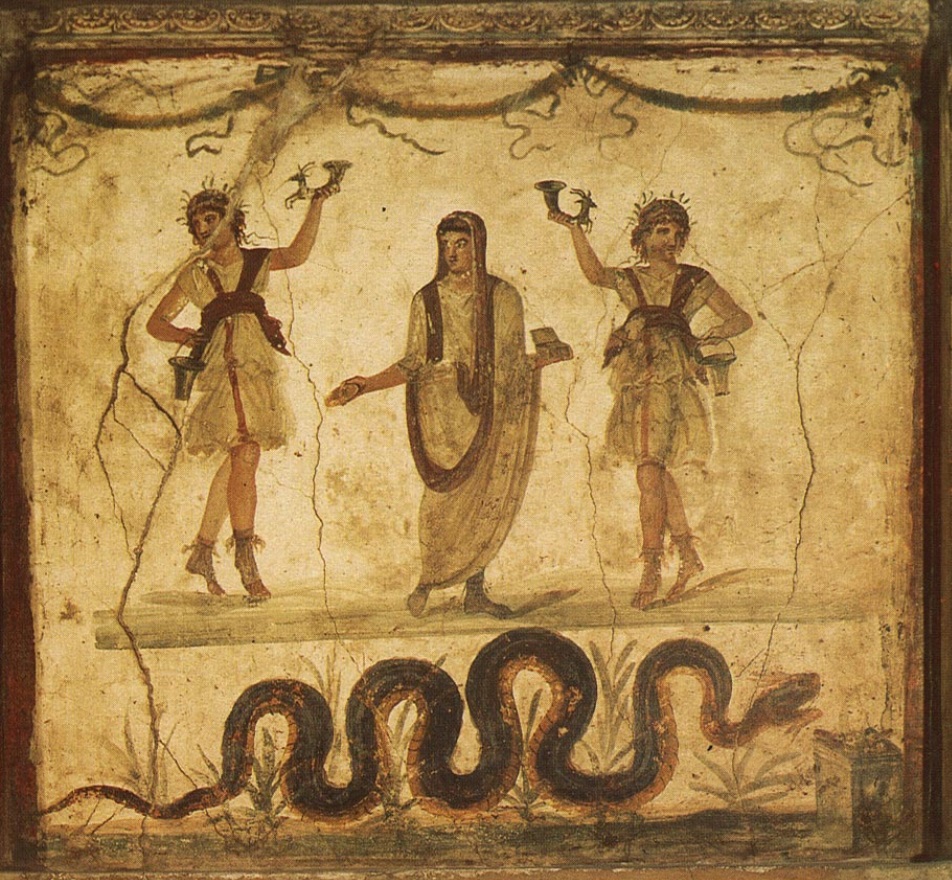 Genius loci and Lara. Often the central priest is interpreted as a pontiff. Fresco in the lararium of the House of Vettii in Pompeii,House of Vettii. A.D. 60-79
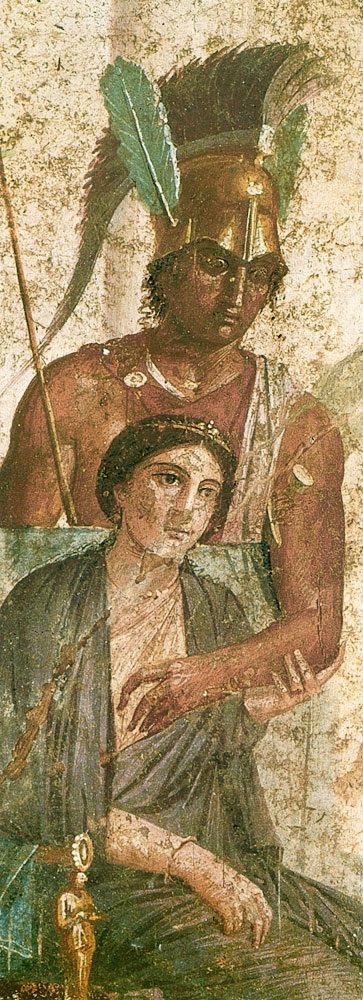 Mural with Venus and Mars. Pompeii. 1st century AD
 Falera with Medusa. Rome. Silver,gold,bronze. 100-225 AD
Interested in Ancient Rome beyond reading? Join Legio X Fretensis or explore our reenactment directions. Reenactment


