Nijmegen / Noviomagus
Nijmegen, Roman Noviomagus, was one of the most important centres of the Lower Rhine. Its history is connected with the Batavians, early military bases, Roman cavalry, the civilian town of Ulpia Noviomagus Batavorum and the river frontier along which troops, goods and people moved. Unlike a single fort, Nijmegen shows several levels of Roman presence at once: camp, command point, local elites, town, burials and museum collections.
Archaeologically Nijmegen is valuable because military and civilian environments are visible side by side. Cavalry helmets and masks speak to early Roman military culture on the Lower Rhine; an infantry helmet and gladius connect the region with first-century equipment; inscriptions and burial groups show the town's name, civic status and social memory.
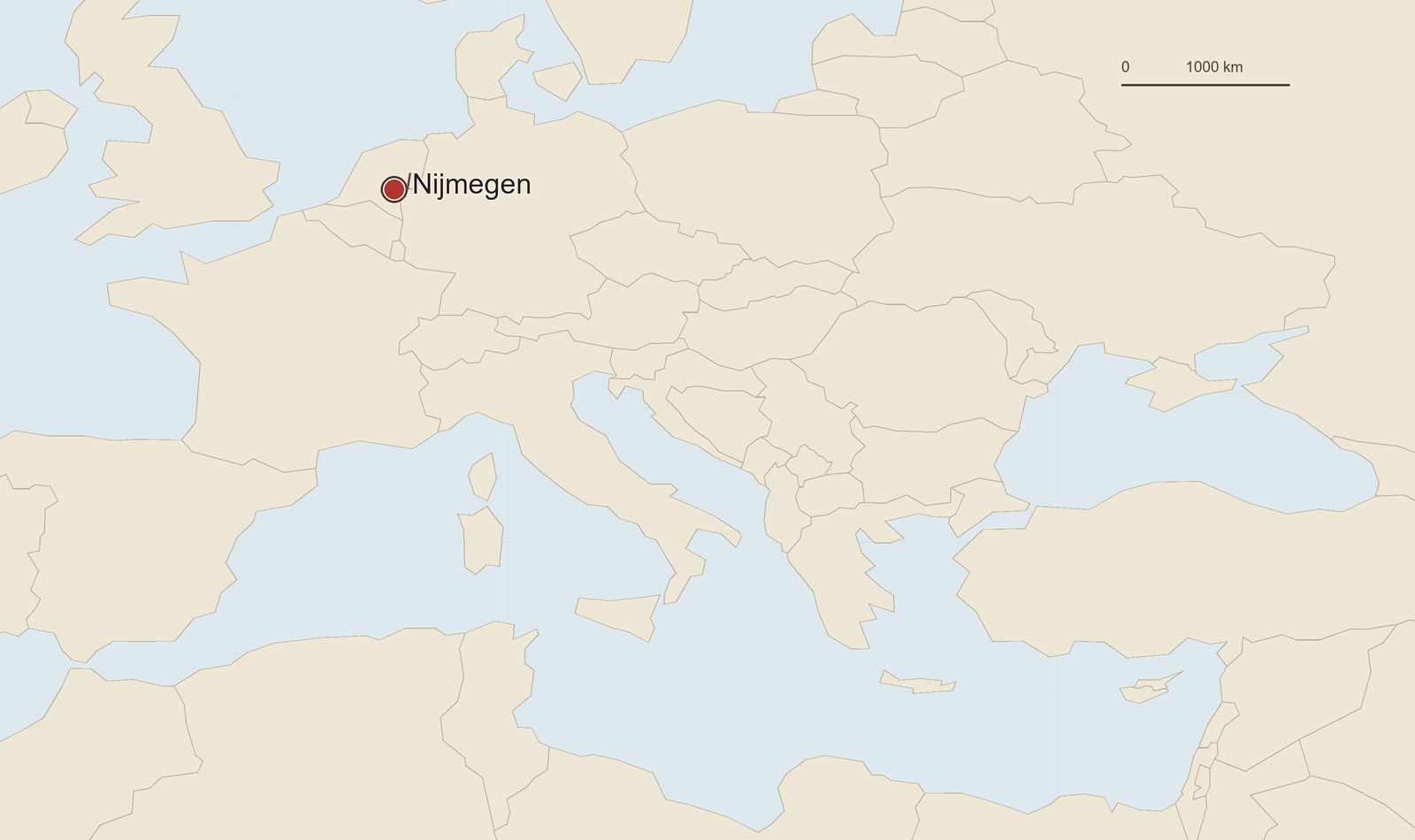 Location map: Nijmegen / Noviomagus. The marker shows the ancient site or main archaeological complex.
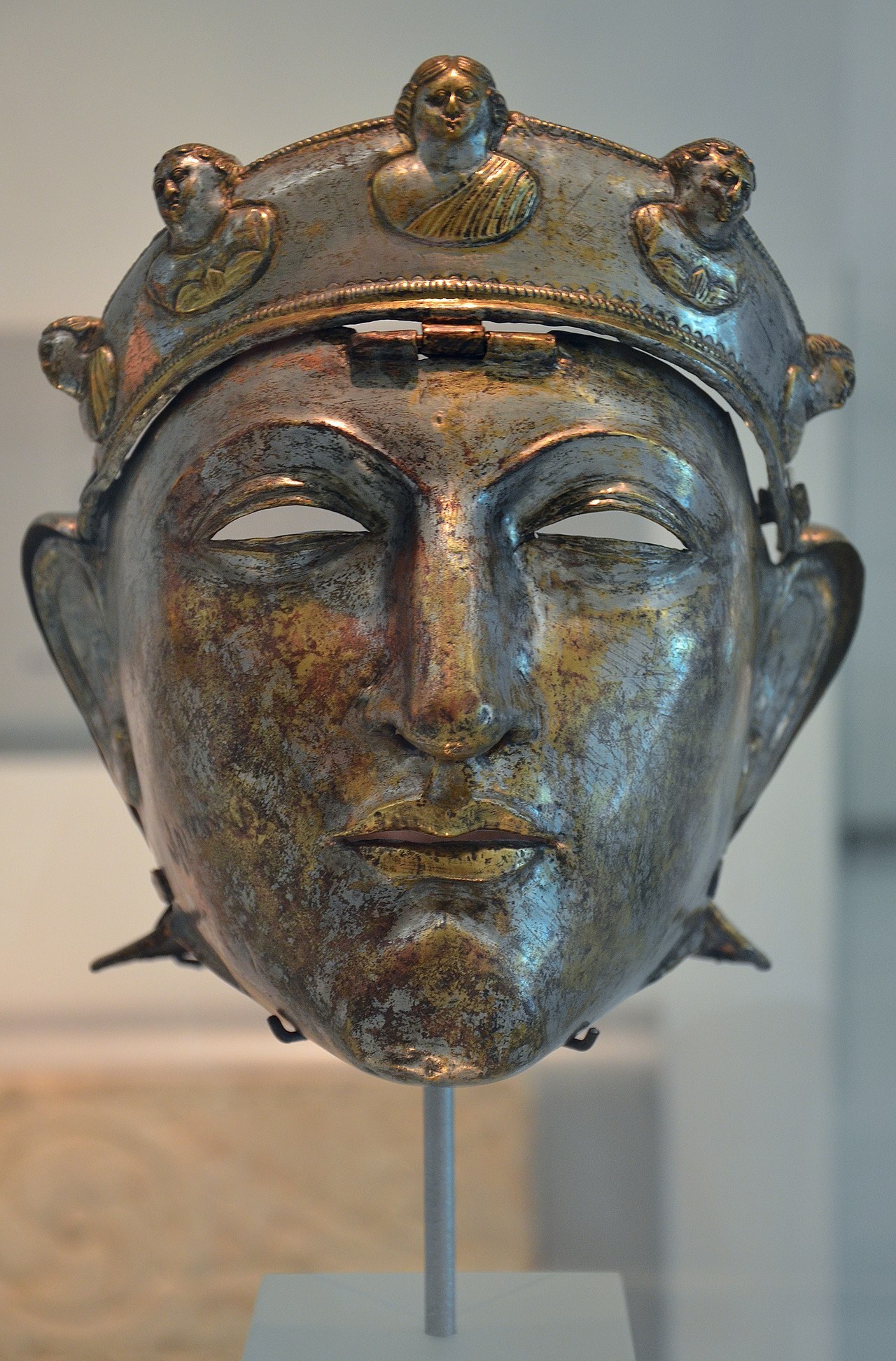 Nijmegen cavalry helmet: an iron mask with bronze and silver covering, found in 1915 on the left bank of the Waal near Nijmegen. Second half of the first century AD; Museum Het Valkhof, Nijmegen.
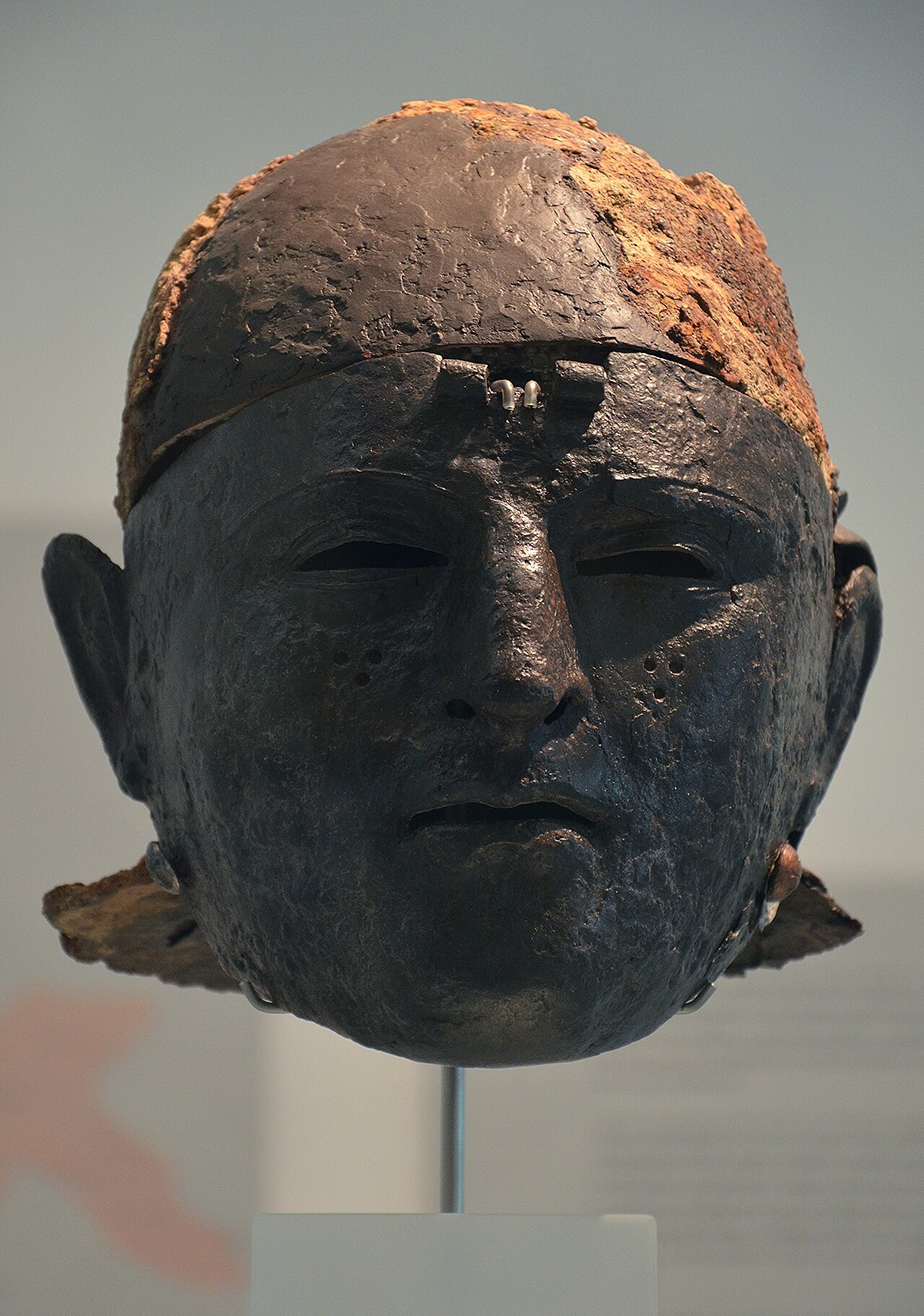 Cavalry mask helmet from Noviomagus, Kops Plateau. First century AD; Museum Het Valkhof, Nijmegen.
The Lower Rhine and the Batavians
The Lower Rhine was not a simple line on a map. It connected forts, crossings, roads, harbours, cemeteries, settlements and shrines. In the Nijmegen area the Romans encountered the world of the Batavians - allies, warriors and participants in imperial politics whose role is especially visible in the first century AD. Batavian horsemen and auxiliary units were important for the Roman army, but the local environment did not dissolve completely into the army.
Early military positions on the Hunerberg and Kops Plateau show why the Nijmegen area mattered to Rome: it controlled the river and the space beyond it. Units could be stationed here, crossings watched, communication maintained with other points of the limes, and local elites influenced. After the Batavian Revolt of AD 69-70 the system was reorganised: Rome kept the region, but had to reckon with the experience of a major frontier crisis.
Camps, Town and the Status of Noviomagus
Roman Nijmegen was not one settlement with an unchanged function. Early military bases, the Kops Plateau area, the Hunerberg camp, civilian settlement and the later town formed a developing complex. Legio X Gemina played an important role in the military history of the area, and after the unit's departure the military landscape did not disappear: it continued to shape roads, craft, trade and local memory.
The name Ulpia Noviomagus Batavorum is connected with civic status and the period in which the local settlement was incorporated into Roman civic life. This matters for understanding Nijmegen: the site shows not only soldiers and weapons, but also an urban community, market, workshops, houses, shrines and cemeteries. The military base gave an impulse, but the Roman town lived beyond the garrison.
Equipment and Burial Groups
Museum objects from Nijmegen are strong because they are not random illustrations of the Roman army. A cavalry mask, infantry helmet, gladius and other objects are tied to a specific region, the River Waal, Kops Plateau and the collections of Museum Het Valkhof. They help discuss not only object type, but also the environment in which the object appeared.
Burial groups are important for costume, status and daily life. Vessels, ornaments, coins, military fittings, imports and local forms could appear in one context. A single find therefore needs date, place and group. For Nijmegen it is especially important not to replace local material with any "Rhine" analogy: Noviomagus, the Batavian setting and the Lower German Limes have their own archaeological profile.
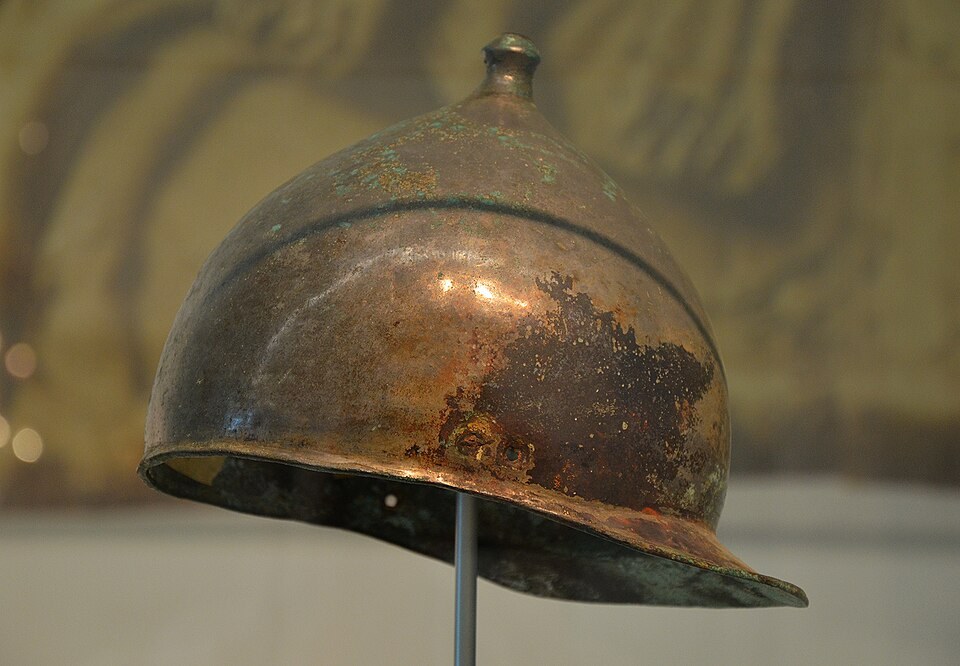 Bronze Buggenum-type infantry helmet found in the River Waal near Nijmegen. Early first century AD; Museum Het Valkhof, Nijmegen.
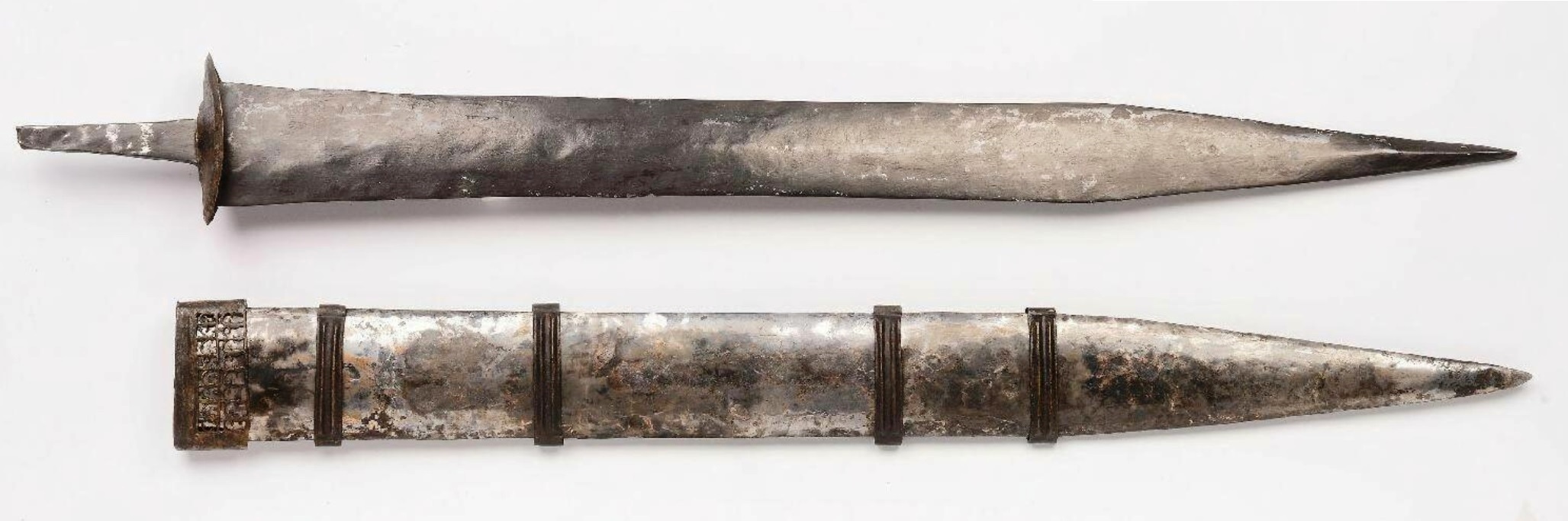 Mainz-type gladius with partly silvered bronze scabbard fittings. Length 66.5 cm; ca. AD 50; Museum Het Valkhof, Nijmegen.
The Town Name and Inscriptions
Inscriptions give Nijmegen what a single object cannot give: name, status and the language of public memory. The fragment mentioning ULPIA NOVIOMAGUS is important for that reason. It connects the archaeological complex with the Roman name of the town and shows that this is not only a zone of finds, but a community incorporated into the legal and administrative order of the empire.
Epigraphy of the Lower Rhine helps place people behind the material: soldiers, veterans, local inhabitants, craftsmen, dedicants and families who commemorated the dead. For Nijmegen this connection is especially important because the town stood between local Batavian tradition and Roman administrative form.
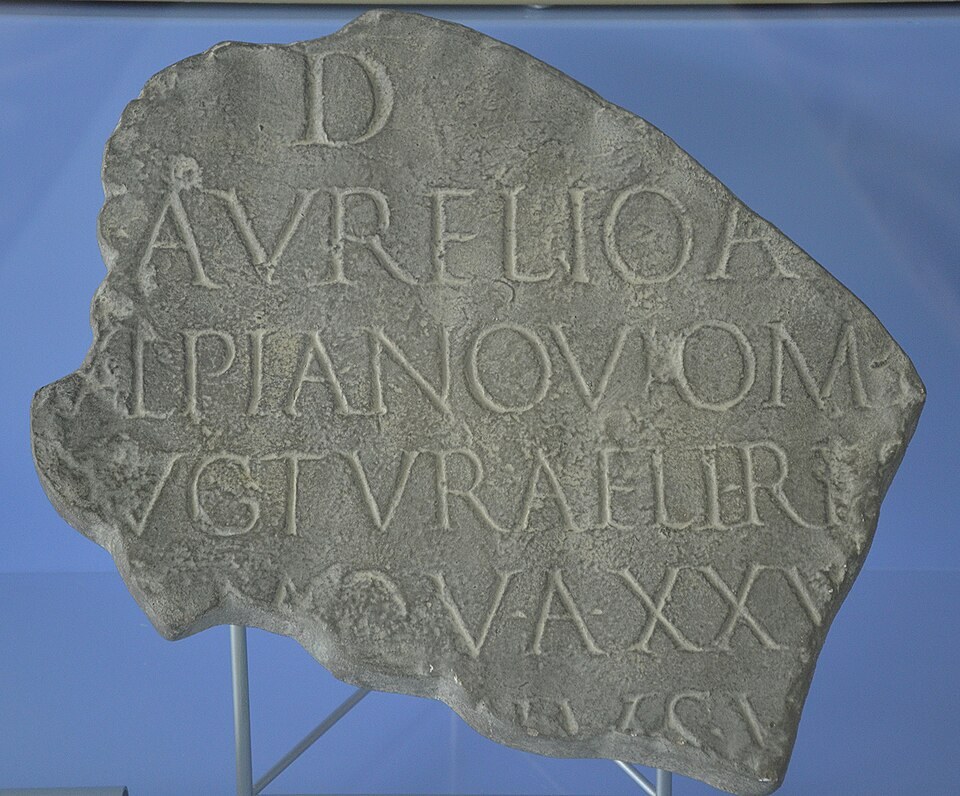 Fragment of a tombstone mentioning ULPIA NOVIOMAGUS, copy in Museum Het Valkhof, Nijmegen. Roman period; the inscription is important for the town's name and status.
Chronology
- Late first century BC - beginning of Roman military presence in the Nijmegen area and on the Lower Rhine.
- Early first century AD - development of military positions on the Hunerberg and Kops Plateau; the area is tied to control of the Waal and Batavian territory.
- AD 69-70 - the Batavian Revolt becomes the major crisis of the early Roman Lower Rhine.
- Late first-second century AD - civilian Noviomagus develops and the town is incorporated into the Roman provincial network.
- Second-third centuries AD - inscriptions, burials, imports and urban finds show the life of a Roman community on the Lower Rhine.
- Late Roman period - the area retains importance in a changed system of frontier defence and settlement.
Archaeological Sources
Nijmegen is studied through plans of military zones, burial groups, museum objects, inscriptions, coins, pottery, remains of civilian settlement and material from the Lower German Limes. Each group answers a different question: the camp shows military organisation, the burial social context, the inscription name and status, the object technique and appearance.
The strength of Noviomagus therefore lies in comparing different sources. A cavalry mask without Kops Plateau loses part of its meaning; an inscription without civic status becomes only a stone fragment; a gladius without the Lower Rhine becomes a generic weapon type. Together these materials show a specific Roman frontier town.
Related Topics
- Archaeology and museums
- Roman Empire
- Roman Army
- List of Roman Provinces
- Mogontiacum / Mainz
- Londinium
Literature and sources
- Willems W. J. H., Enckevort H. van, Thijssen J. R. A. M., Haalebos J. K. Vlpia Noviomagvs: Roman Nijmegen: The Batavian Capital at the Imperial Frontier. Nijmegen, 2005.
- Enckevort H. van, Heirbaut E., Thijssen J. Nijmegen, from Oppidum Batavorum to Ulpia Noviomagus, civitas of the Batavi.
- Roymans N. Ethnic Identity and Imperial Power: The Batavians in the Early Roman Empire.
- Derks T., Roymans N. Ethnic Constructs in Antiquity.
- Bishop M. C., Coulston J. C. N. Roman Military Equipment.
- Museum Het Valkhof and Wikimedia Commons: Nijmegen cavalry helmet, Kops Plateau face-mask helmet, Buggenum type helmet, Ulpia Noviomagus inscription.


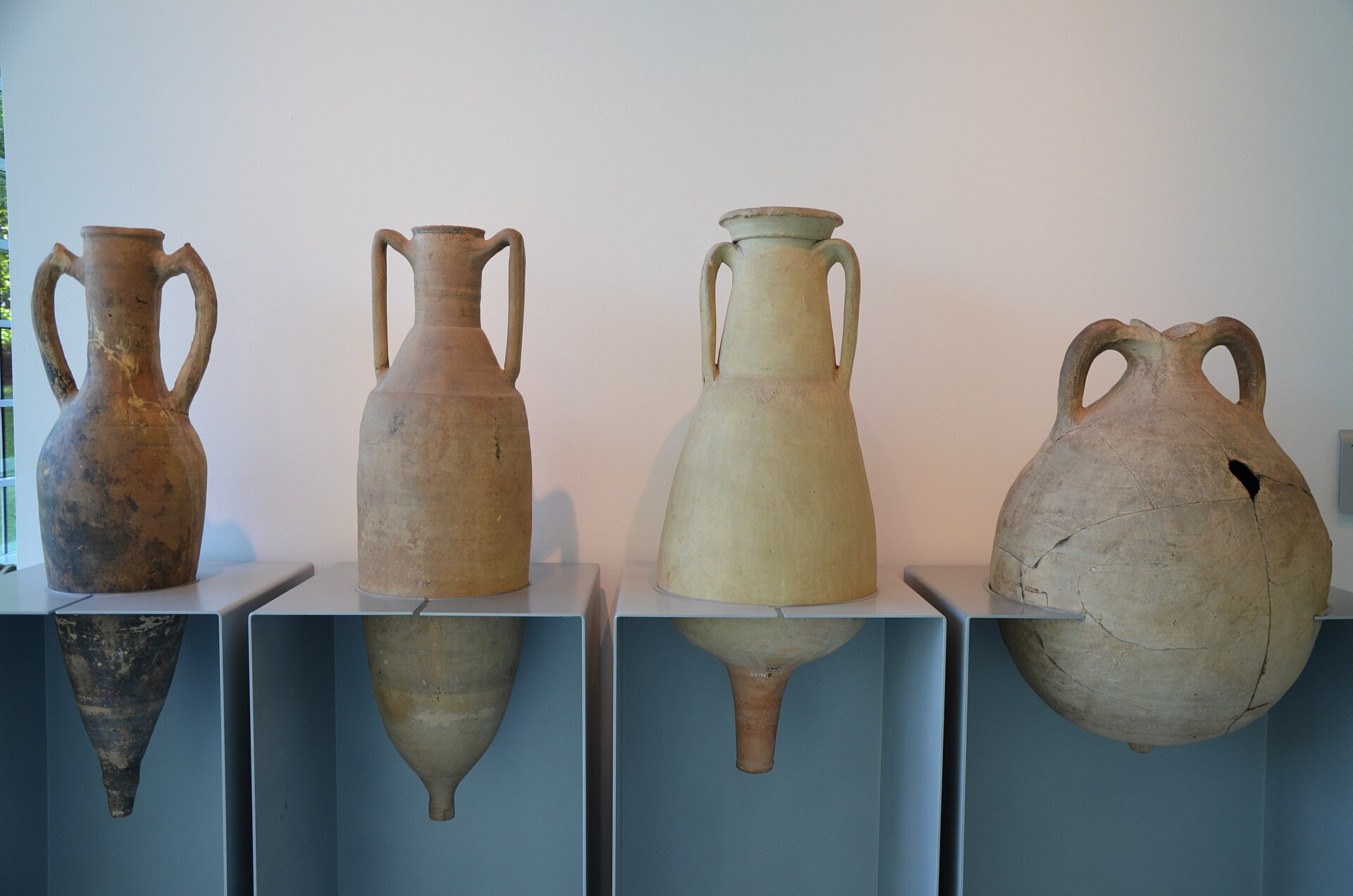 Roman amphorae in Museum Het Valkhof, Nijmegen: a Rhodian amphora, an Italic Dressel 2-4 and Baetican Dressel 7-11 and Dressel 20. Roman period, first-third century AD.
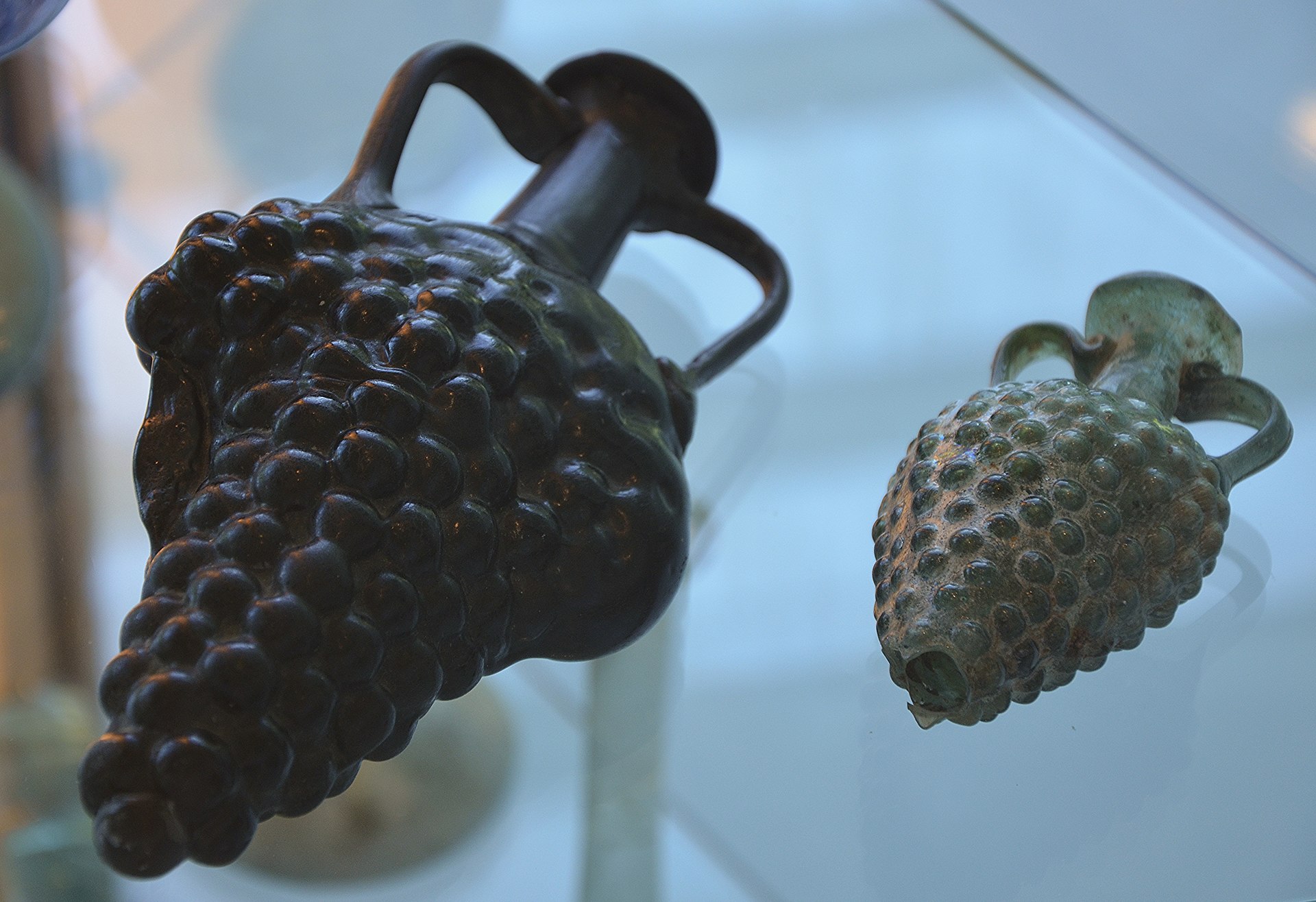 Roman glass bottle in the shape of a grape cluster. Roman period; Museum Het Valkhof, Nijmegen.
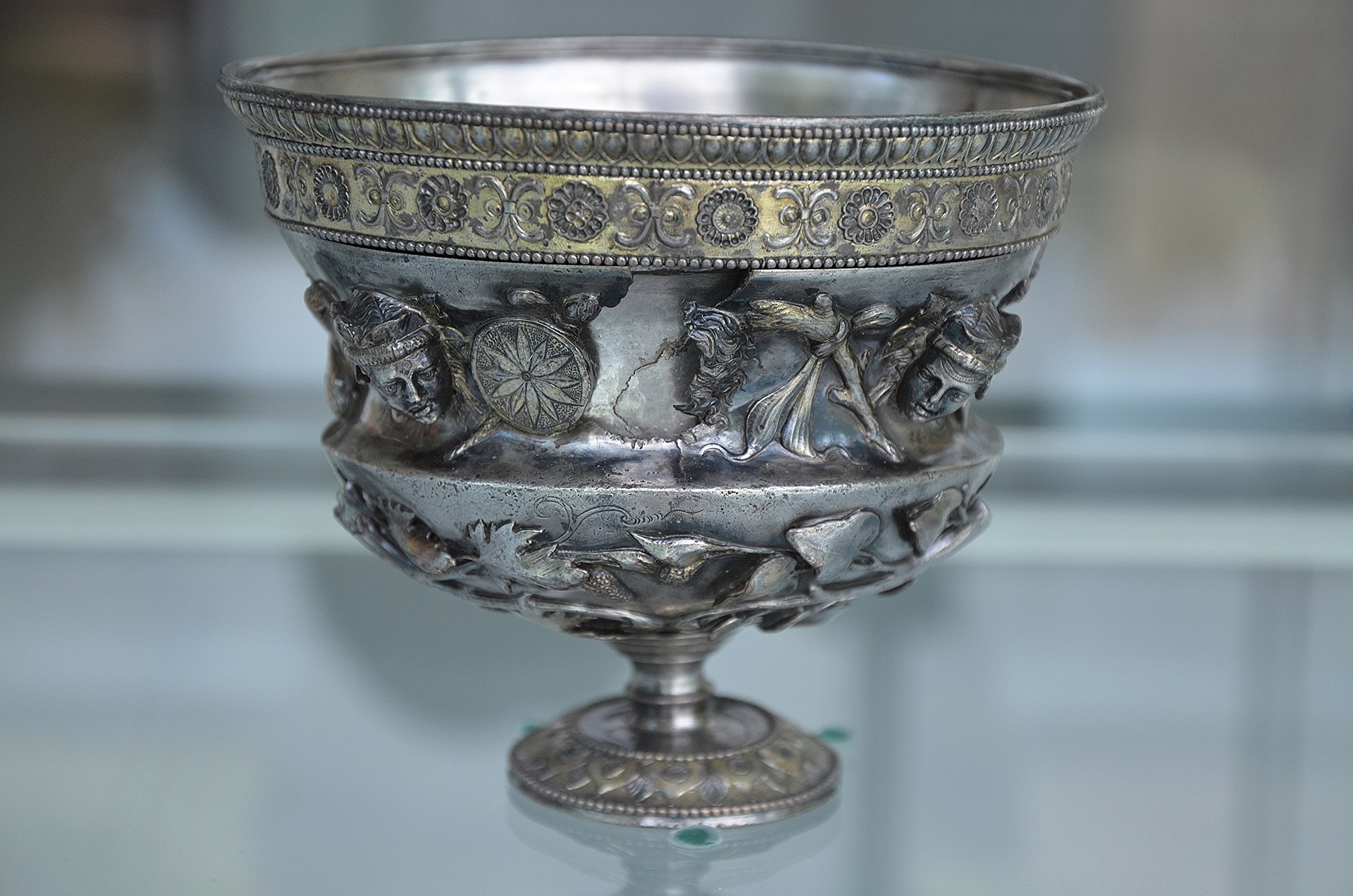 Roman silver cup with plant ornament and figures from the world of Bacchus. Roman period; Museum Het Valkhof, Nijmegen.
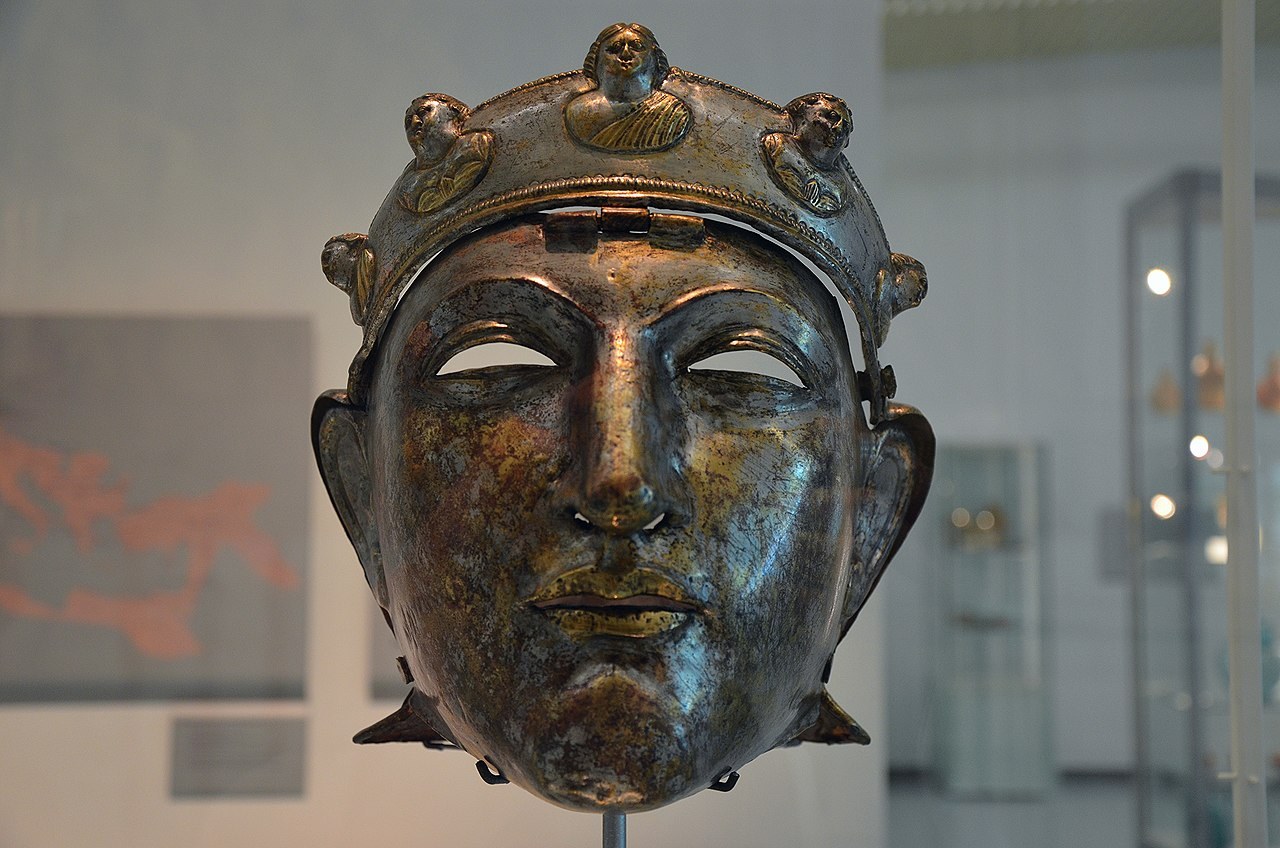 Nijmegen / Noviomagus: The Nijmegen cavalry helmet, an iron mask sheathed in bronze and silver discovered in 1...; material-culture object or museum find connected with the site, Roman period or local archaeological context.
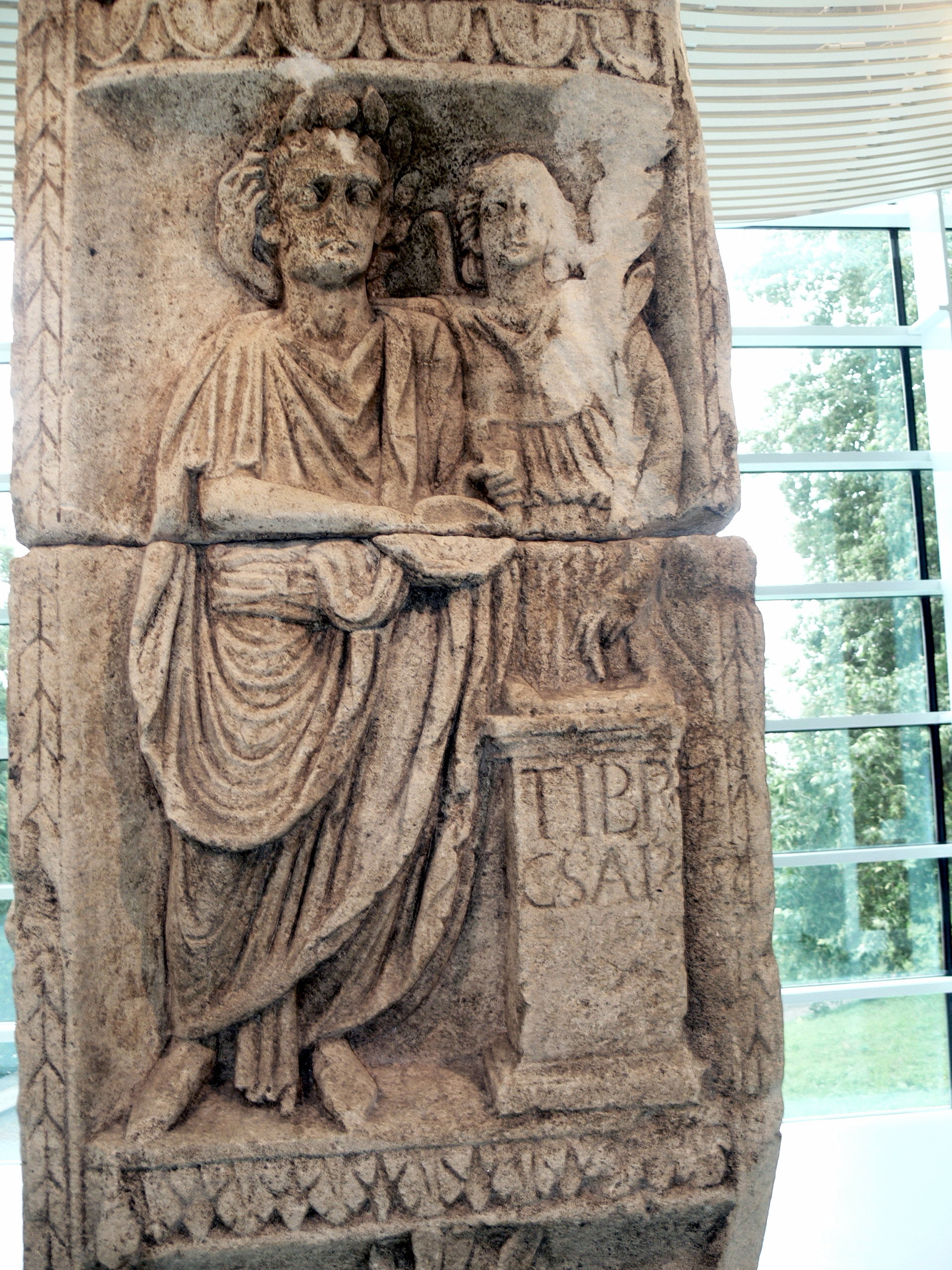 Image of Emperor Tiberius on a Roman victory monument. First century AD; Museum Het Valkhof, Nijmegen.
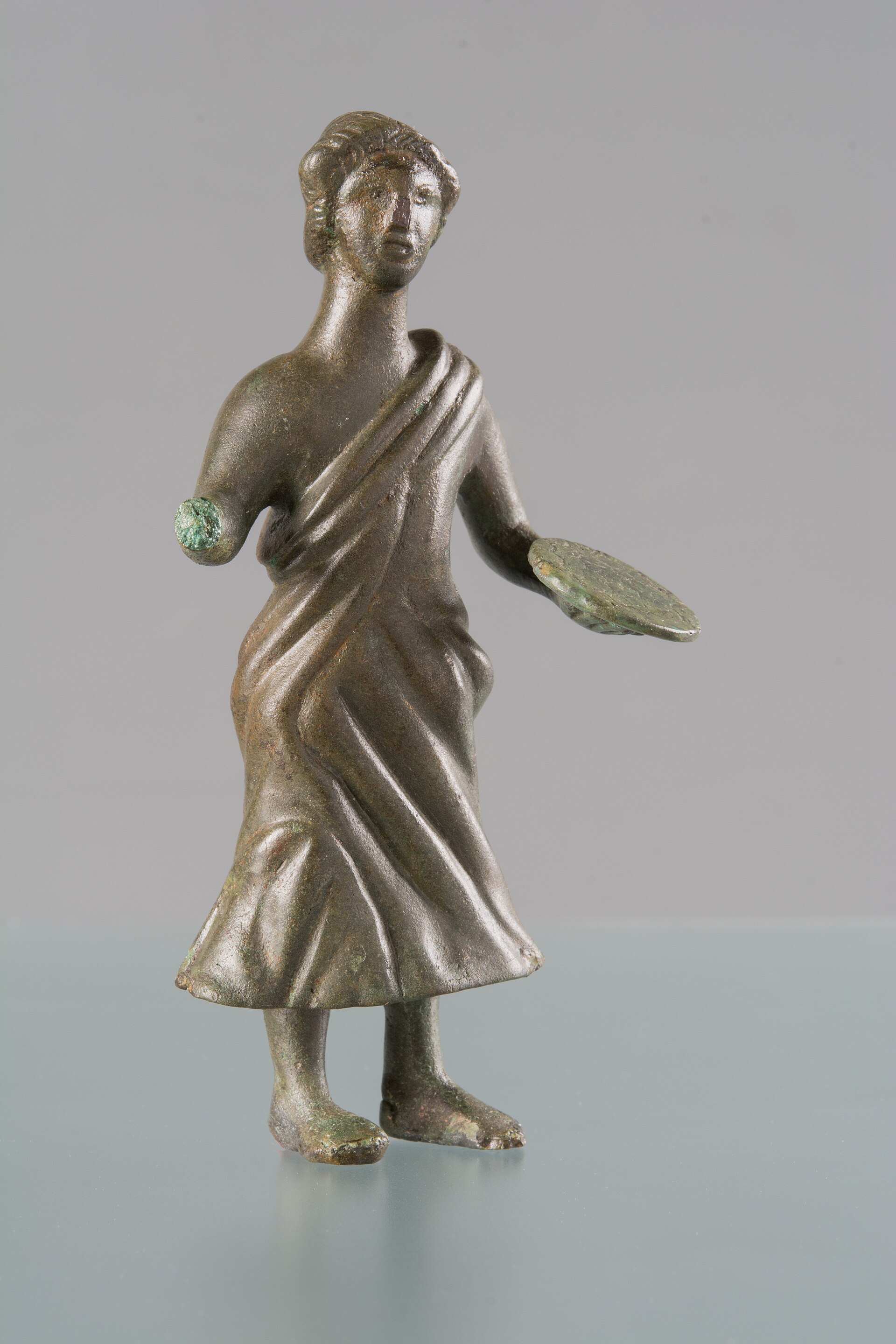 Bronze figurine from Ede-Veldhuizen. Roman period; Museum Het Valkhof, Nijmegen.
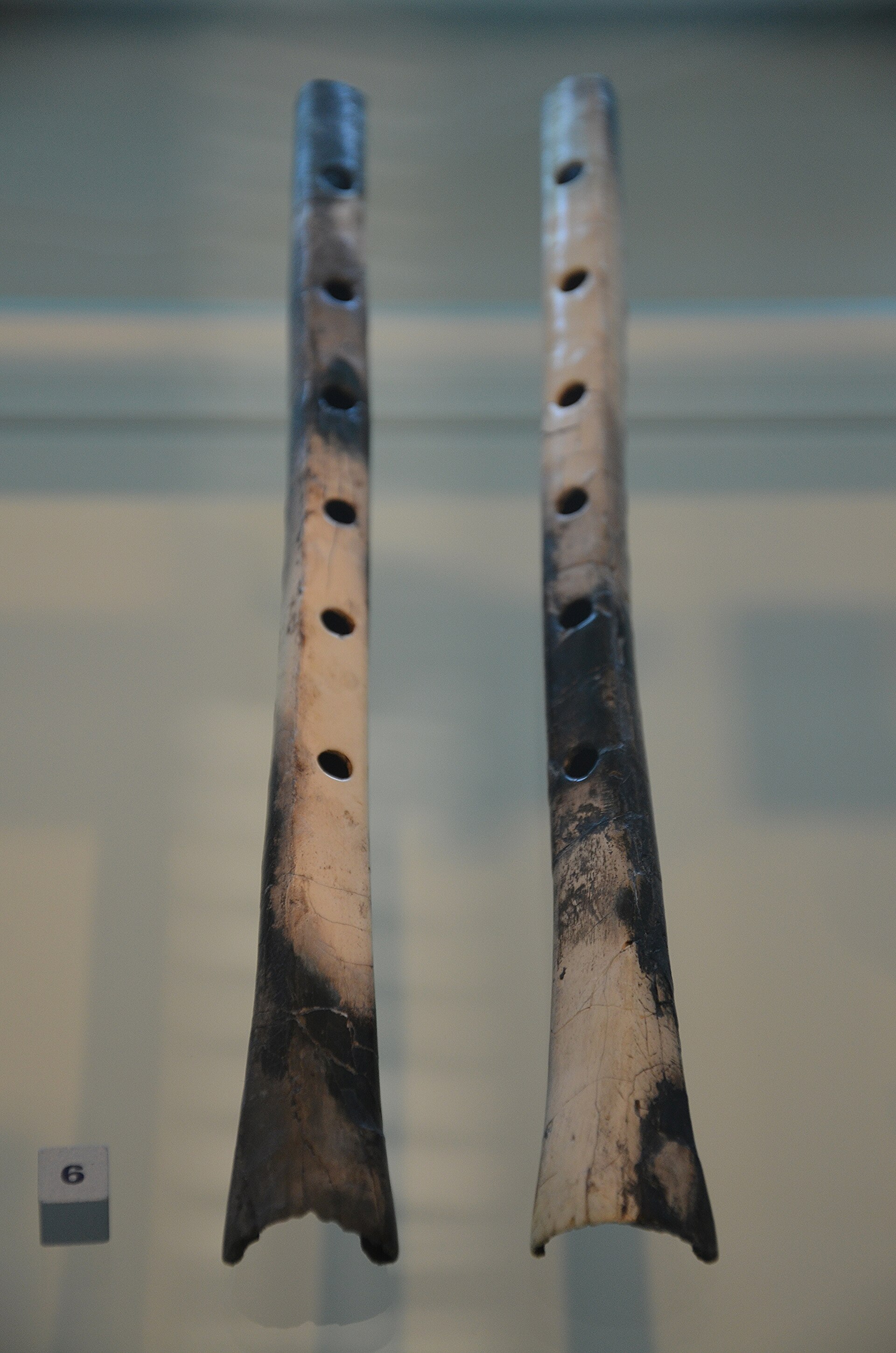 Two Roman bone flutes with six finger holes. Roman period; Museum Het Valkhof, Nijmegen.
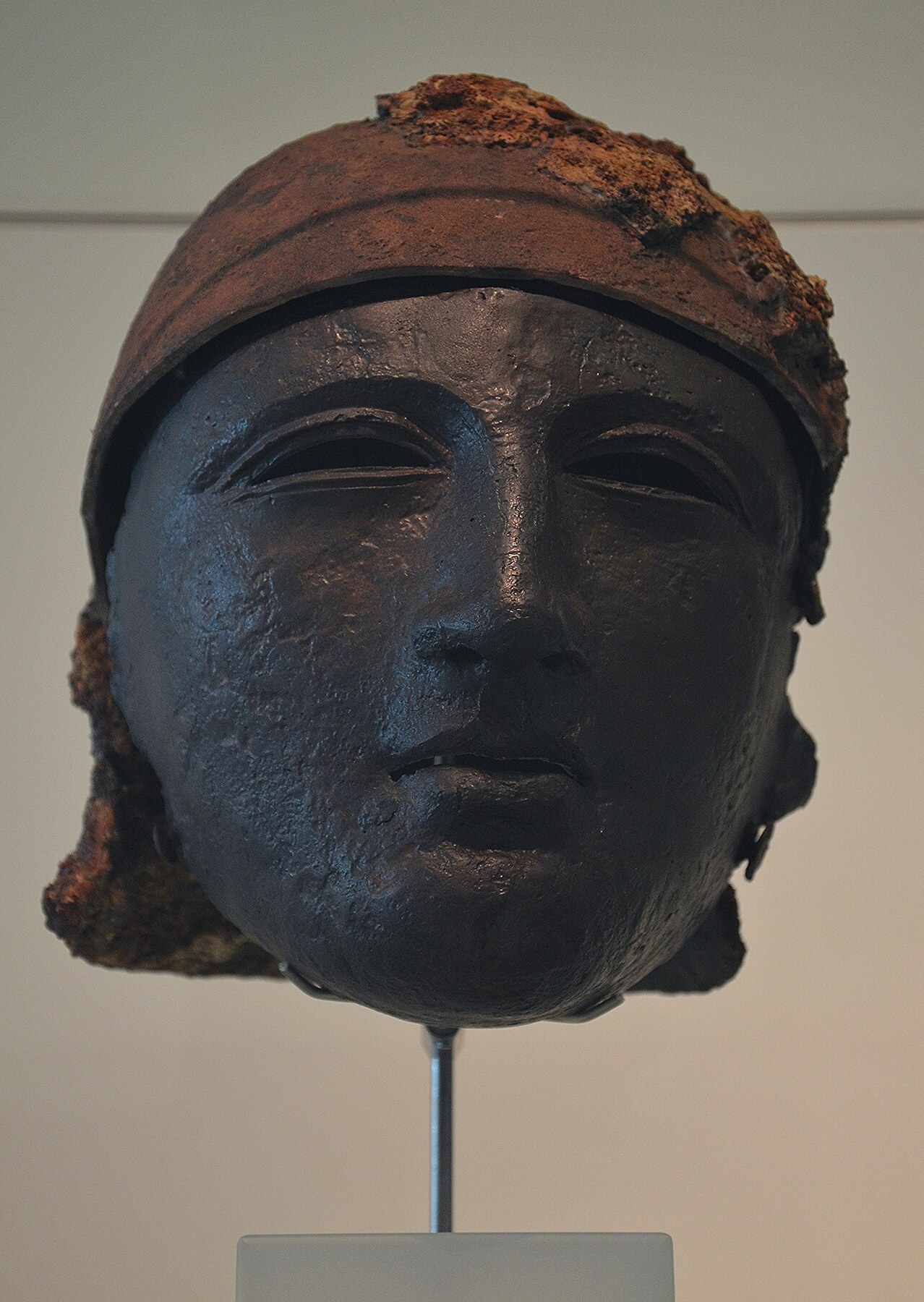 Nijmegen / Noviomagus: Bronze helmet with face mask, found at Noviomagus (Kops Plateau), Museum het Valkhof, N...; material-culture object or museum find connected with the site, Roman period or local archaeological context.
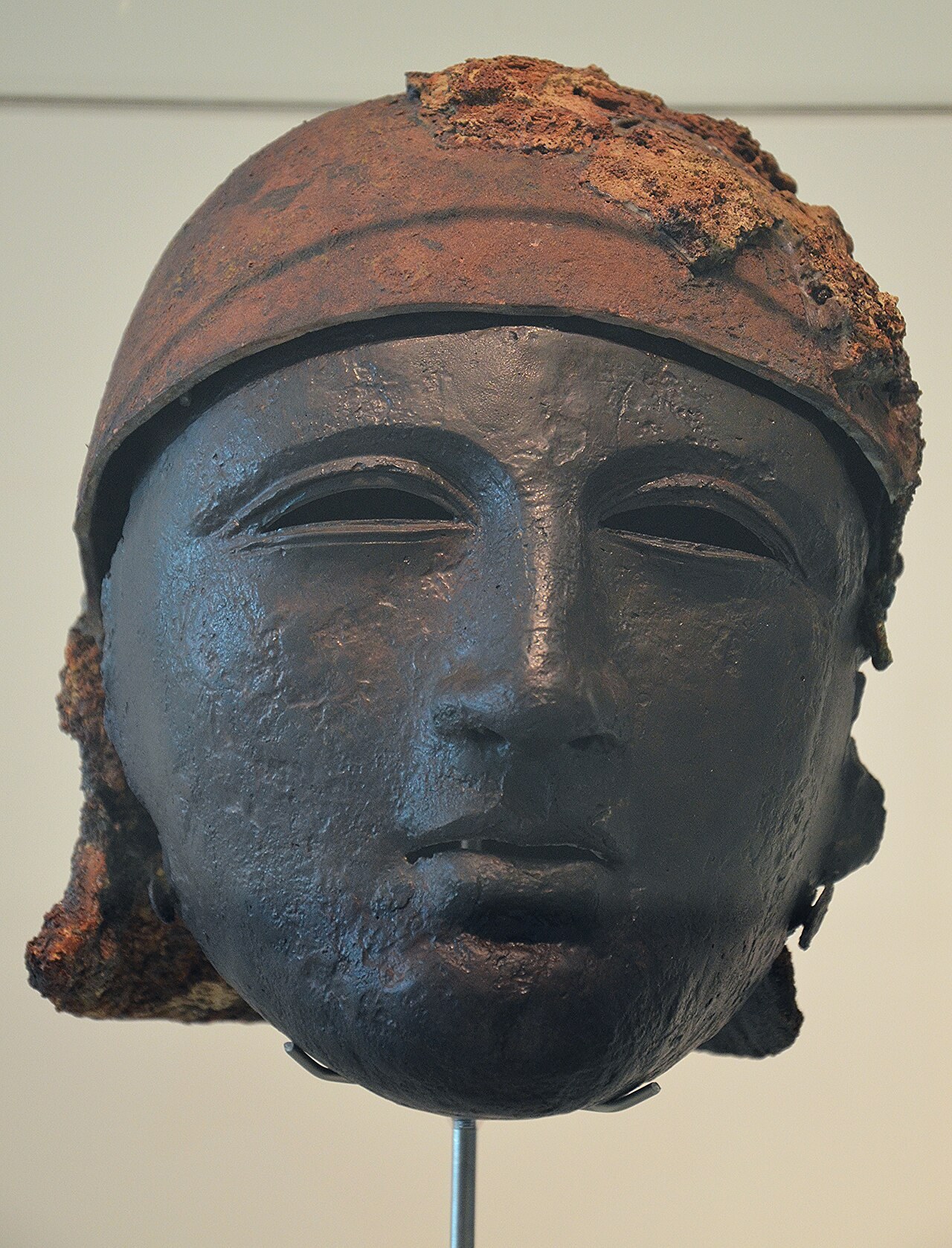 Nijmegen / Noviomagus: Bronze helmet with face mask, found at Noviomagus (Kops Plateau), Museum het Valkhof, N...; material-culture object or museum find connected with the site, Roman period or local archaeological context.
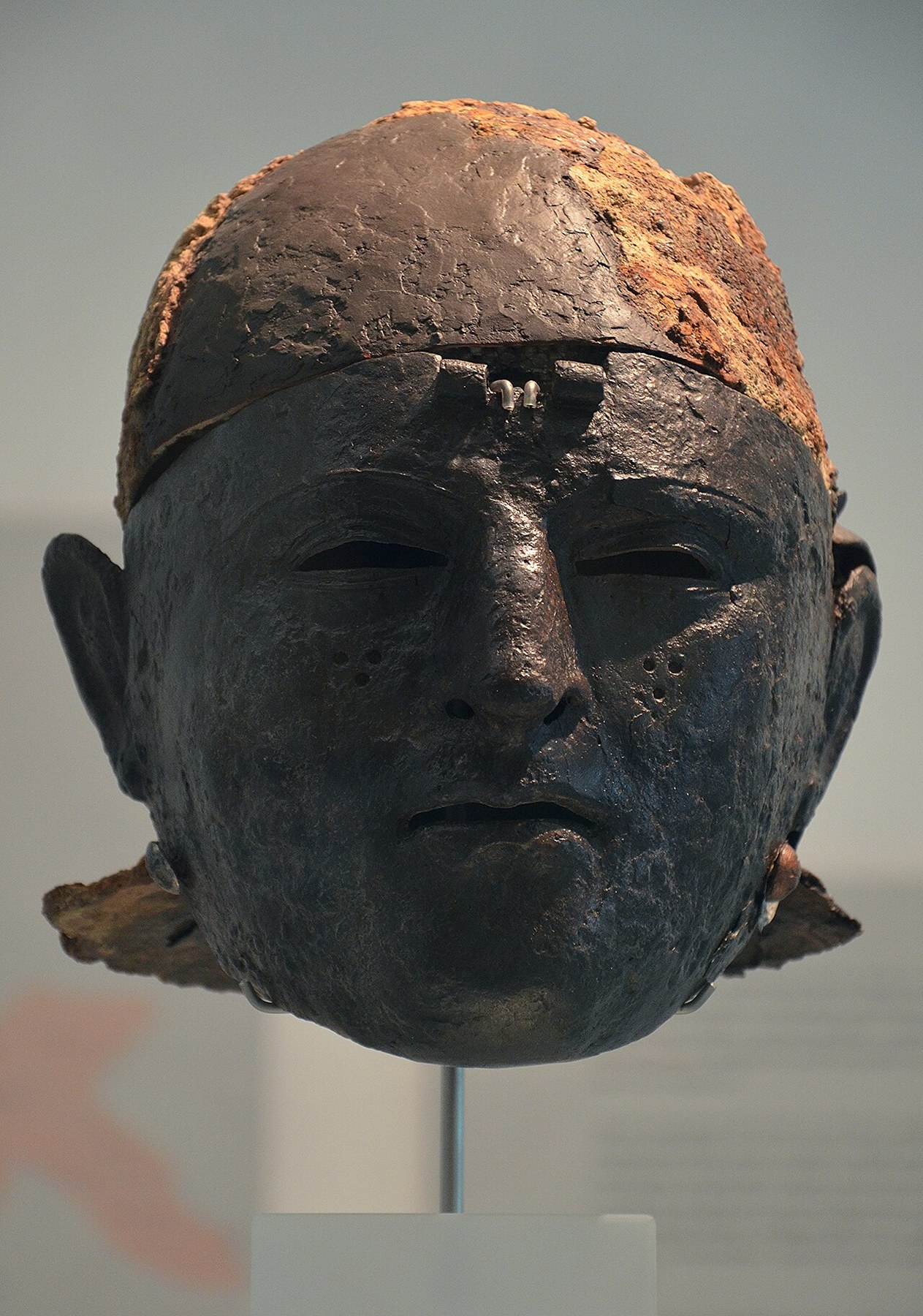 Nijmegen / Noviomagus: Cavalry Face-Mask Helmet, found at Noviomagus (Kops Plateau), Museum het Valkhof, Nijme...; material-culture object or museum find connected with the site, Roman period or local archaeological context.
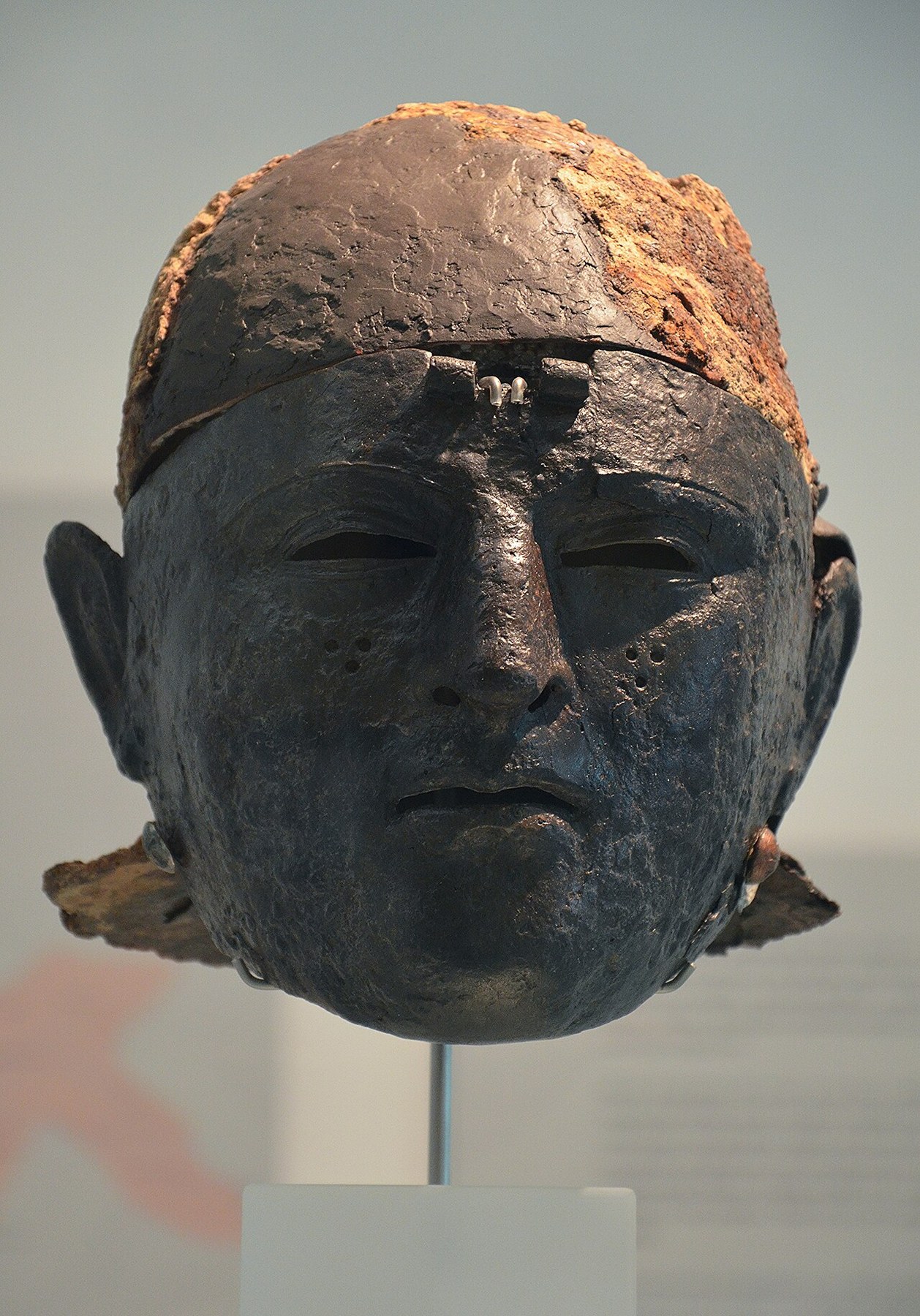 Nijmegen / Noviomagus: Cavalry Face-Mask Helmet, found at Noviomagus (Kops Plateau), Museum het Valkhof, Nijme...; material-culture object or museum find connected with the site, Roman period or local archaeological context.
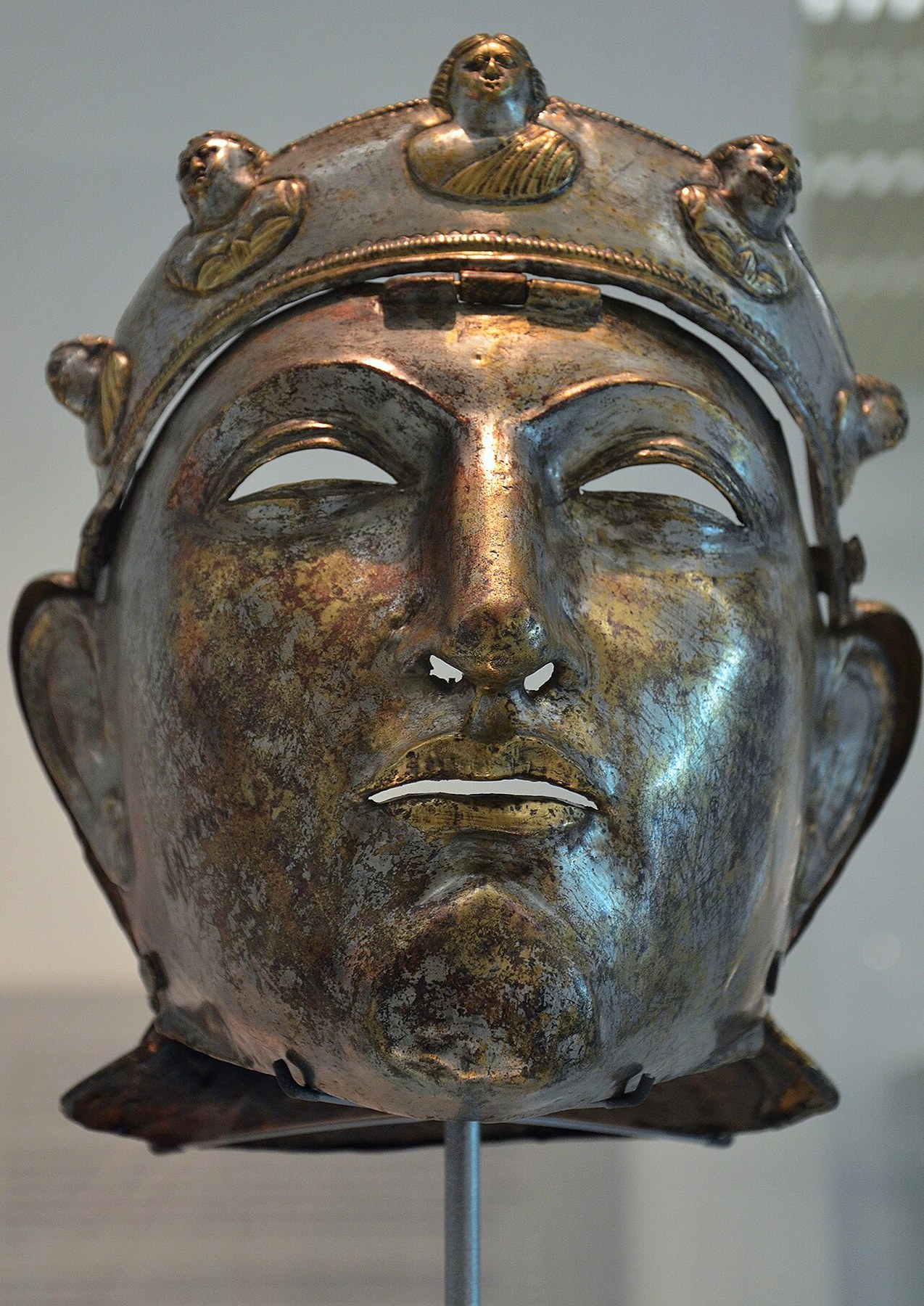 Nijmegen / Noviomagus: The Nijmegen cavalry helmet, an iron mask sheathed in bronze and silver discovered in 1...; material-culture object or museum find connected with the site, Roman period or local archaeological context.
Interested in Ancient Rome beyond reading? Join Legio X Fretensis or explore our reenactment directions.


