Roman Wine
Roman wine was one of the main products of the economy and daily culture of Ancient Rome. It was produced in Italy, Gaul, Spain, North Africa, the Balkans and the eastern provinces; transported in amphorae, stored in dolia, sold in shops, served at banquets and used in sacrificial libations. For Romans wine was not merely a drink, but a link between land, villa, market, urban life, medicine and ritual.
Roman culture knew both very expensive and very ordinary wines. Literature praised Falernian, Caecuban, Setine, Massic and other prestigious wines, but archaeology reveals a huge layer of everyday wine for taverns, soldiers, workers, sailors and urban households. The history of Roman wine therefore cannot be reduced to elite banquets. It includes vineyard, labour on the villa, press, vessel, road, tax, price, dilution with water and the social rules of drinking.
Exact production volumes for the whole empire cannot be reconstructed: no single statistical record survives, and vineyards served different markets. The scale is visible, however, in villas with presses, dozens of dolia in rural estates, thousands of transport amphorae on shipwrecks and the widespread presence of wine vessels. Even a modest estate could produce thousands of litres, while a sea cargo of several thousand amphorae meant tens or hundreds of thousands of litres of goods.
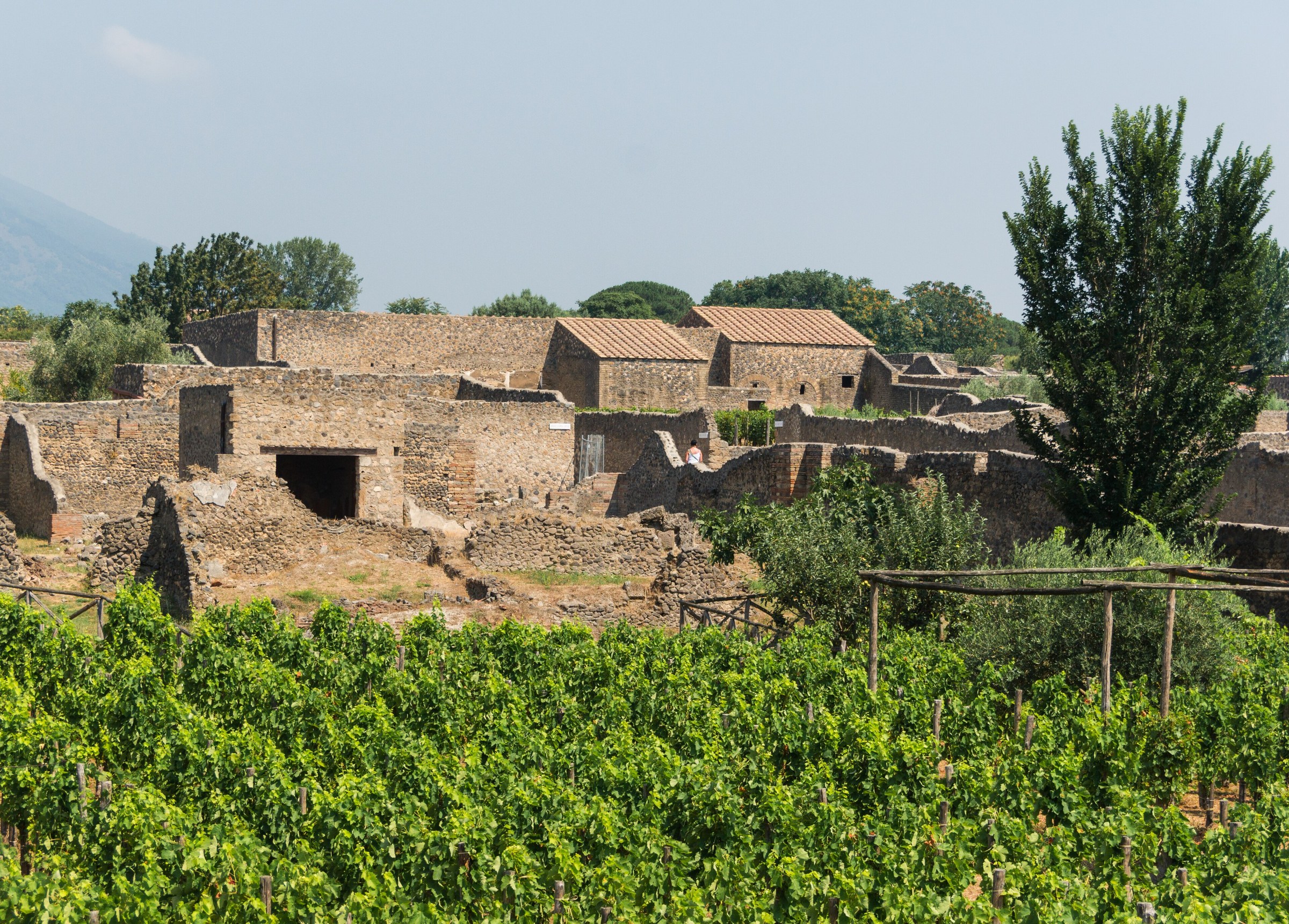 Vineyard in Pompeii: a modern planting inside the ancient city illustrates the scale of urban and suburban wine-growing.
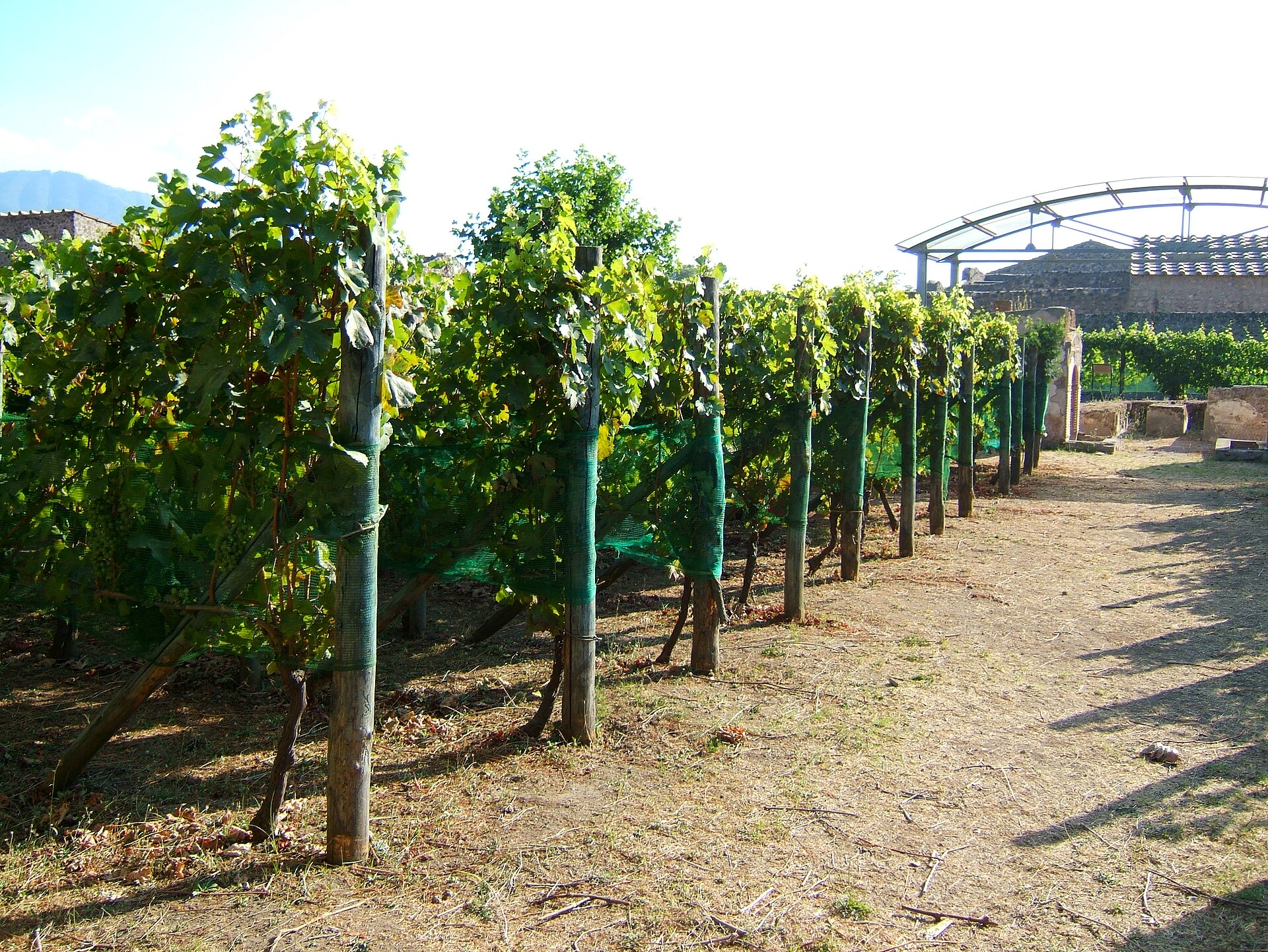 Vineyard in Pompeii, planted within the ancient city area as a reconstruction of its wine-growing environment.
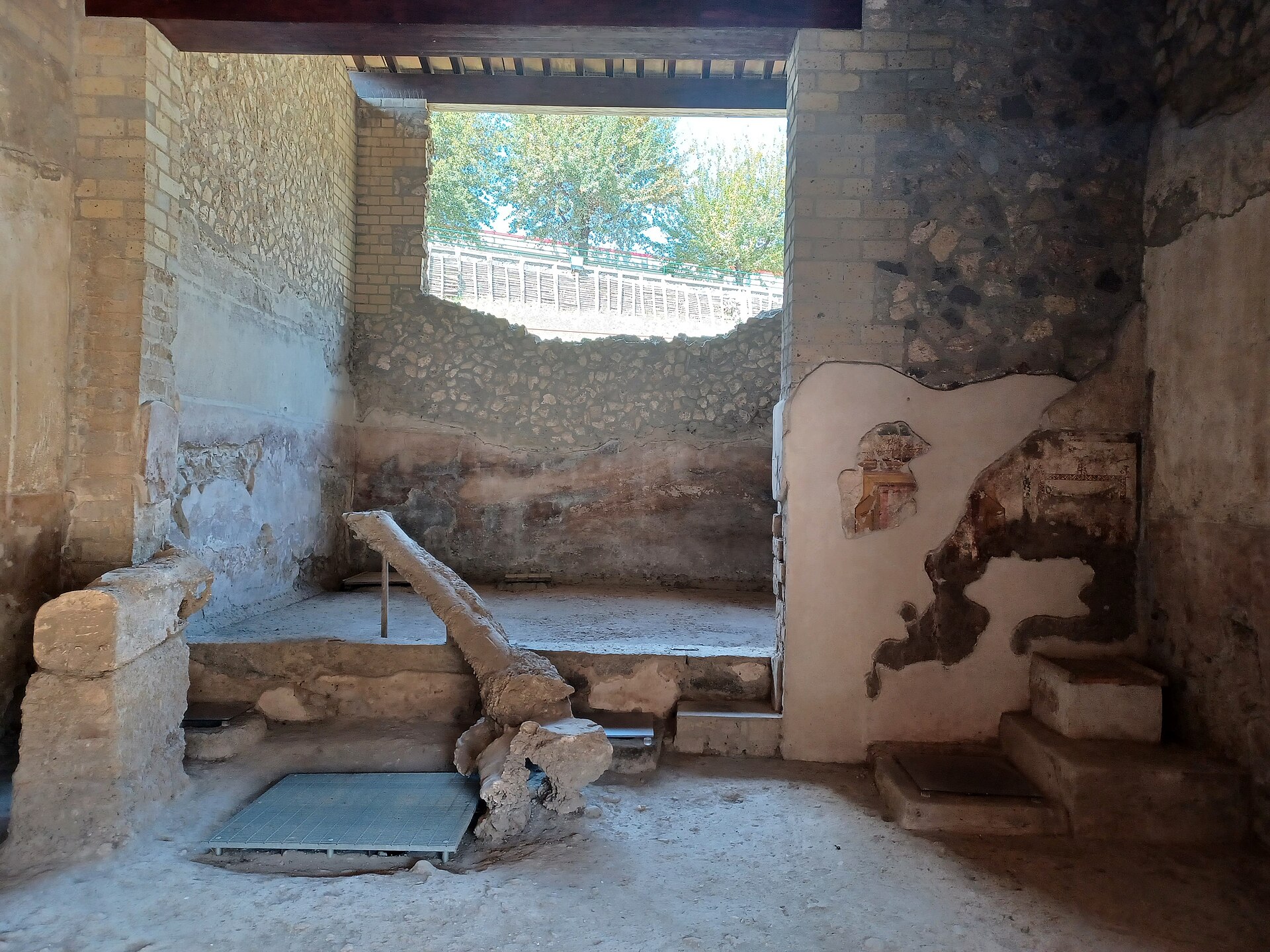 Wine press at Villa Regina in Boscoreale, a rural estate near Pompeii connected with wine production.
Vineyard and Agriculture
Roman winemaking began not in the tavern but on the land. Vines were planted in rows, pruned, tied to stakes or trees, and matched to slope, soil, moisture and cultivation method. In Italy there were both small plots and large estates where the vineyard formed part of a villa with press, store, slave or dependent labour and access to a road or harbour. Around Pompeii vines were not limited to suburban fields: excavations and reconstructions show planted areas within the urban environment and beside rural estates.
Agronomic writers described the vineyard as a calculated enterprise. Cato's agricultural treatise lists equipment for a villa with a large vineyard: presses, baskets, vessels, tools and slave labour. Varro and Columella discuss soil, planting, pruning, yield and storage. These texts should not be read as average statistics for the whole empire, but they show that a vineyard was an investment: land had to repay planting, labour, containers, equipment and transport.
Romans distinguished vines by taste, resilience, place of growth and suitability for storage. Names such as Aminaea, Apiana, Nomentana, Biturica and others appear in the sources. They do not correspond directly to modern grape varieties: one ancient name could indicate a group of vines, a region, berry colour, aroma or wine quality. It is therefore safer to speak of ancient names of vines and wines rather than searching for an exact modern equivalent for each.
Production and Storage
After harvest grapes were trodden by foot, pressed mechanically or processed by both methods. The first must produced better wine; later pressings could become cheap wines and secondary drinks such as lora. Fermentation and storage depended on the estate: some wine remained in dolia, some was transferred into amphorae, some was mixed, sweetened with reduced must, or flavoured with resin, herbs or seawater. Ancient wine rarely matched the modern idea of a pure bottled drink.
Dolia were large fixed storage vessels. The wine-producing Villa Regina at Boscoreale gives a useful scale: its cellar held 18 dolia with a total capacity of about 10,000 litres. This was not the capital and not a huge port, but a rural estate near Pompeii; the volume is therefore especially telling. If a small estate could store such quantities, a regional network of villas, warehouses and harbours explains the mass character of wine in Italy and the provinces.
Amphorae turned wine into a commodity of long-distance exchange. A common wine amphora held about 20-30 litres, and the widespread Dressel 1 about 26 litres. A ship with several thousand amphorae carried not symbolic luxury but an industrial cargo. The wreck at La Madrague de Giens, connected with late Republican trade, is often used as an example of a cargo of thousands of amphorae, or more than one hundred thousand litres of wine in a single voyage.
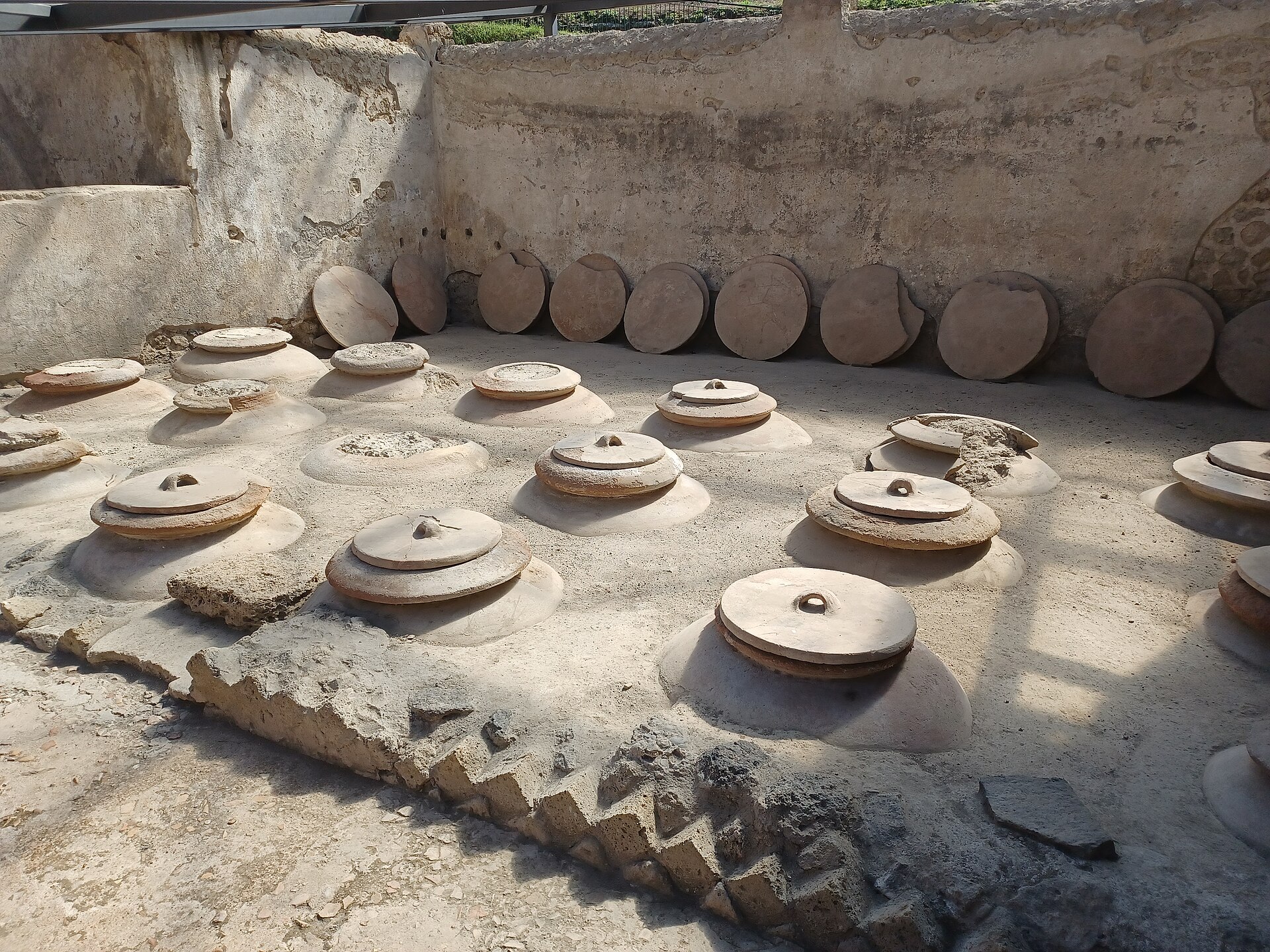 Dolia in situ at Villa Regina in Boscoreale: large vessels for fermenting and storing must.
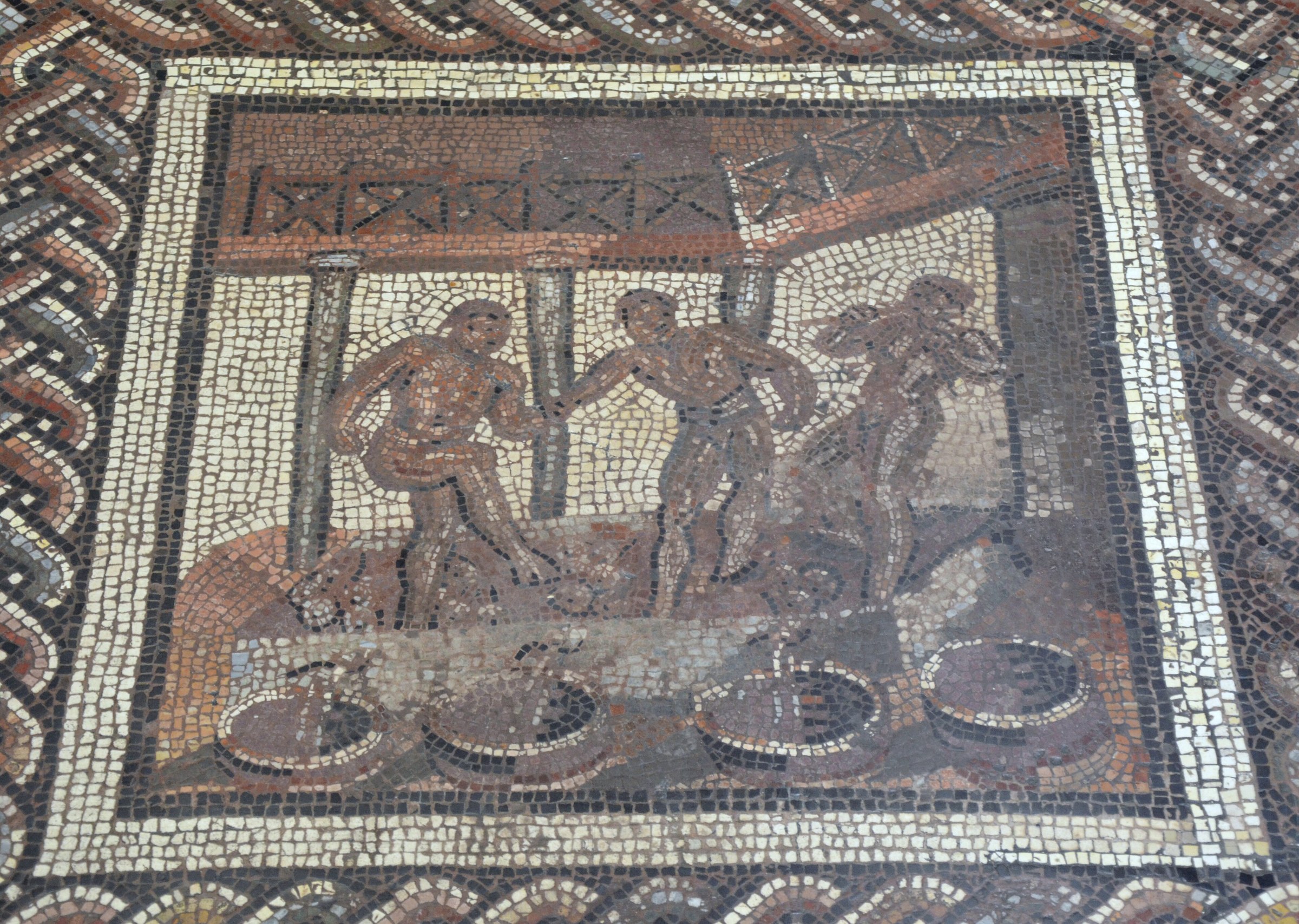 Mosaic with grape pressing from a rustic calendar. Saint-Romain-en-Gal, first quarter of the third century AD; Musée d'Archéologie Nationale, Saint-Germain-en-Laye.
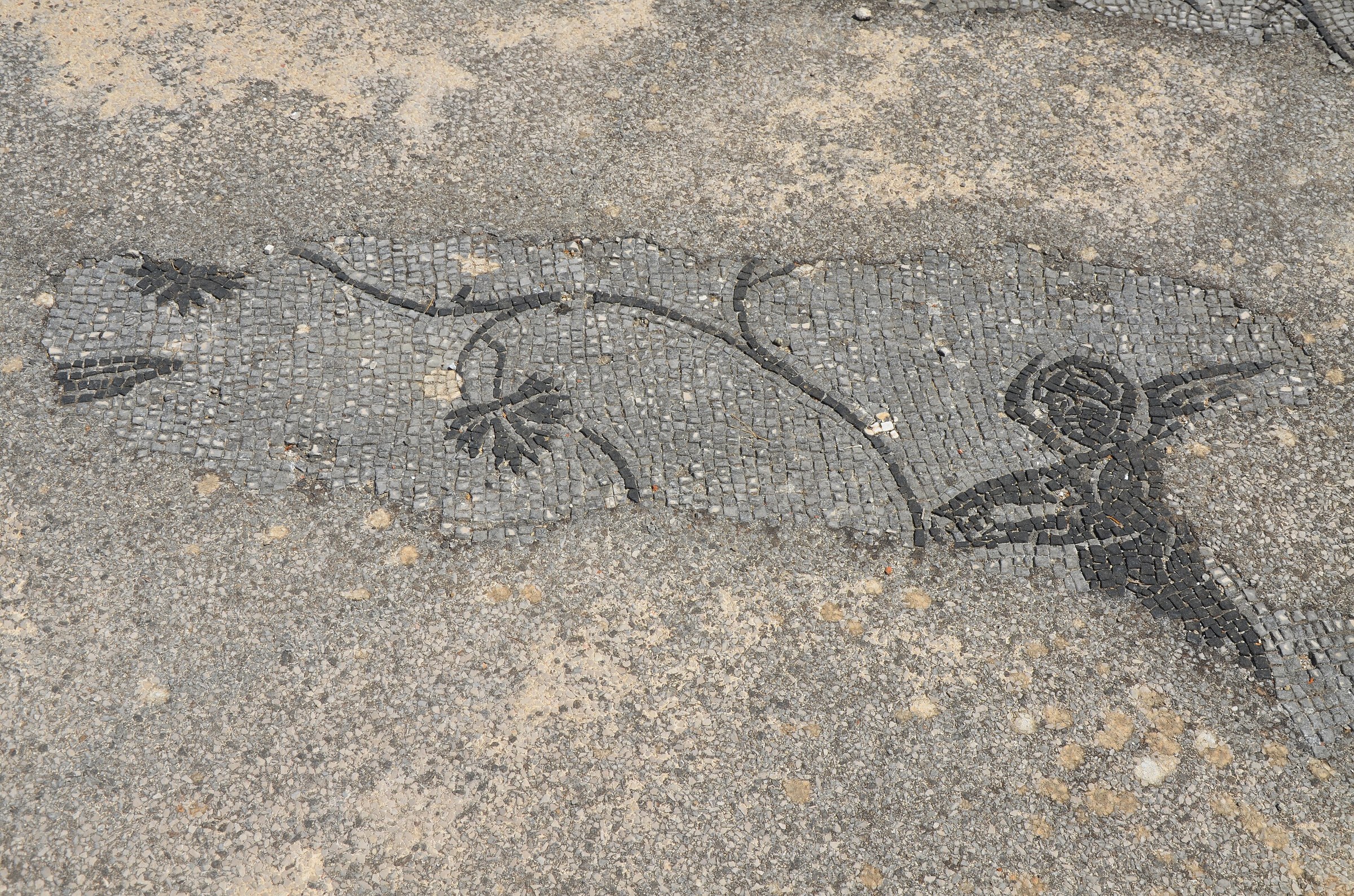 Black-and-white mosaic with erotes pressing grapes. Baths at Minturnae, Roman Italy.
Economy, Trade and Volumes
The Roman wine economy changed over time. In the second and first centuries BC Italy exported wine actively, especially to the western Mediterranean and Gaul. With the growth of the provinces the situation changed: Gaul, Spain, Africa and eastern regions developed their own vineyards, and some markets came to be supplied by local or regional production. This did not remove the prestige of certain Italian wines, but it made the market more complex: elite labels, mass local wine, military supply and urban retail existed side by side.
The city of Rome consumed enormous quantities of food and drink, but a reliable annual figure for wine alone cannot be given. Unlike some state grain supplies, the wine market was more fragmented: private estate owners, middlemen, merchants, carriers, shops and military purchases operated in parallel. Archaeologists and historians therefore estimate scale not from one central register, but from a combination of amphora types, stamps, shipwrecks, warehouses, rural presses, agronomic texts and traces of consumption in cities.
Wine price depended on origin, age, harvest, container, transport distance and the reputation of place. One part of the market served wealthy households and banquets, another served the cauponae, popinae, thermopolia, workshops, ships and camps. Cheap wine, sour wine, posca and lora matter as much as famous labels because they reveal mass daily consumption.
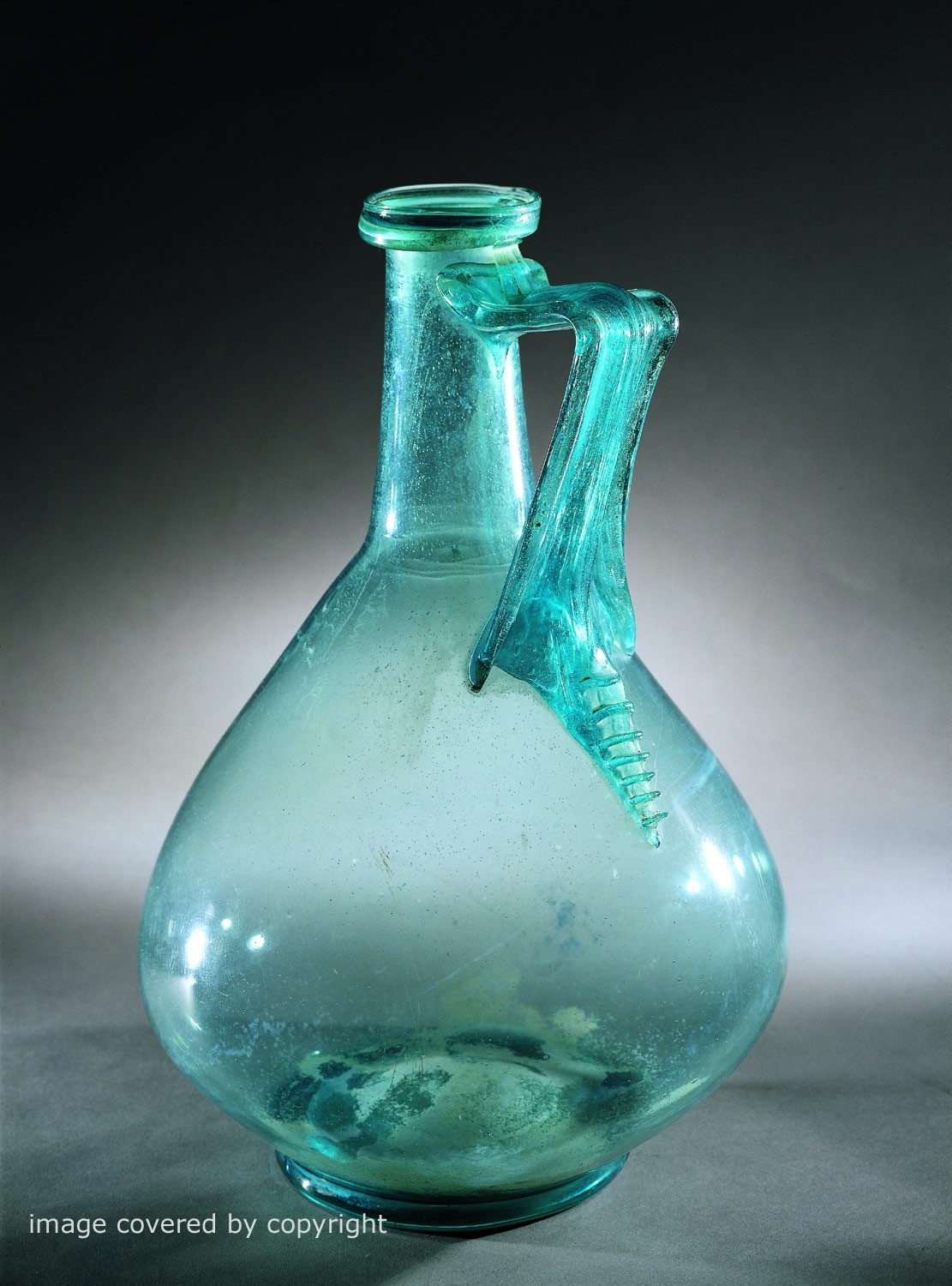 Glass amphora from Pompeii, first century AD; an expensive vessel form connected with storing and serving drinks.
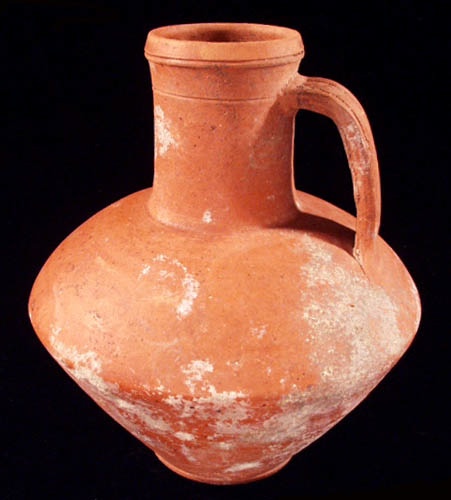 Roman ceramic amphora, first century AD; such vessels were the main transport containers for wine and other products.
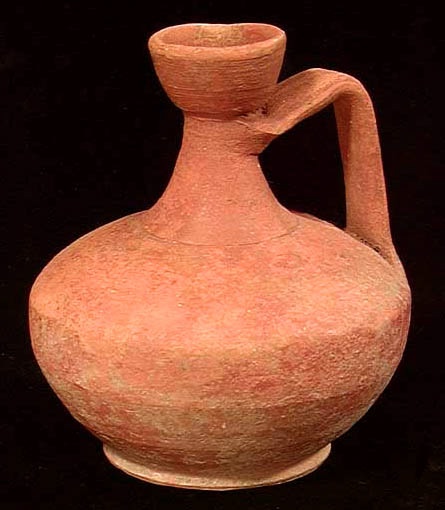 Roman ceramic amphora, first century AD; vessel form helps connect goods with region and trade route.
Vines and Famous Wines
Roman wine names were often connected not with a variety in the modern sense, but with place and reputation. Falernian wine from Campania was among the most prestigious; ancient authors stressed its strength, ability to age and high price. Caecuban was connected with the marshy area near Amyclae and Fundi; Setine with the district of Setia; Massic with Mount Massicus; Alban and Surrentine with other known wine-producing zones of Italy. These names functioned as geography, quality and social signal at the same time.
Vines themselves were described differently. Aminea could produce good wine and keep well; Apiana was associated with an aroma that attracted bees; Biturica is important for Gallic viticulture and later discussions of western grapes. Ancient ampelography, however, was practical rather than genetic. A Roman owner judged a vine by yield, resilience, taste, ripening time, suitability to soil and the possibility of selling the wine profitably.
Wine quality was regulated not only by variety. Wine could be aged, blended, sweetened, reduced, smoked, flavoured or corrected with additives. Mulsum, wine with honey, was served as an aperitif; sapa and defrutum, reduced grape must, added sweetness and body; resin and herbs altered flavour and preservation. Such practices were not necessarily fraud: for ancient taste they belonged to the technology of wine.
Drinking, Status and Ritual
Romans usually drank wine diluted with water. The custom came from Greek banquet culture and was considered a sign of moderation: drinking unmixed wine could be seen as barbarian or crude. The ratio varied by taste, season and situation. Wine could be cooled with snow, warmed, strained, sweetened, served in silver cups or in plain pottery. At the convivium the drink displayed the host's wealth, but it also required behaviour: order of serving, conversation, music and control of drunkenness were part of the social scene.
Wine also existed outside the elite banquet. In a shop or tavern price, strength, dilution, debt and rapid turnover of customers mattered more. In the army and in hard labour wine or sour wine drinks could be part of the normal ration. Posca, a mixture of water and vinegar or sour wine, was not a prestigious drink, but it shows the practical side: taste, heat, movement and discipline.
In religion wine was used for libations, sacrifices, oaths and festivals. It was poured on the altar from a patera, offered to the gods and included in domestic and state rites. In medicine wine served as a solvent for drugs, a warming agent, an antiseptic component and part of diet. The same liquid could therefore be commodity, medicine, status marker, ritual gift and daily drink.
 Relief of Trajan's Column: the emperor performs a sacrificial libation from a patera before a campaign. Rome, second century AD.
Finds and Archaeology of Wine
Ancient wine usually survives not as liquid but as vessel, stopper, resin, inscription, press or chemical trace. Amphorae with stamps and tituli picti show origin and movement of goods; dolia and presses show production scale; images of grape harvest and pressing help explain how Romans themselves imagined the labour of winemaking. At Pompeii and Boscoreale the archaeology of wine especially clearly joins agriculture, urban life and trade.
A very rare exception is the Speyer wine bottle. It was found in 1867 in a Roman tomb near Speyer and is dated to about AD 325-350. Liquid survives inside, probably connected with wine, while the mouth and upper layer were protected by sealing and an oil film. The bottle is often called the oldest surviving unopened bottle of wine, but caution is needed: it is not opened for conservation reasons, the contents are not a drink in the modern sense, and the find belongs to a funerary context.
For the history of Roman wine the Speyer bottle matters as a rare case of preserved organic liquid, but the mass picture comes from other sources. Thousands of amphorae, cellars with dolia, wine presses, rural villas, graffiti and traces of tartaric acid show production and consumption by ordinary people. They are less spectacular than a sealed bottle from a tomb, but they explain the economy of Roman wine better.
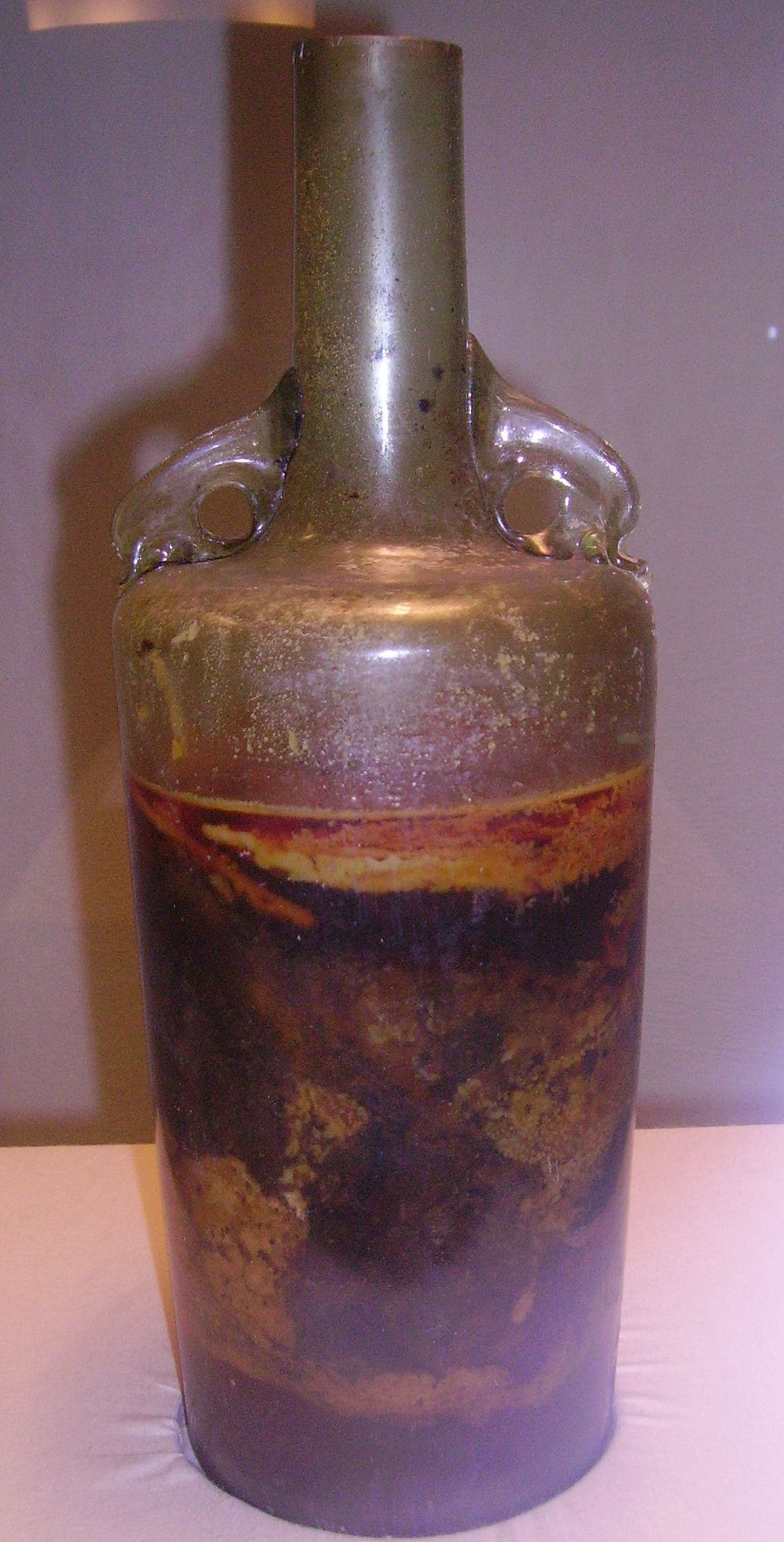 Speyer wine bottle: a glass vessel with liquid from a Roman tomb near Speyer, c. AD 325-350; Historisches Museum der Pfalz.
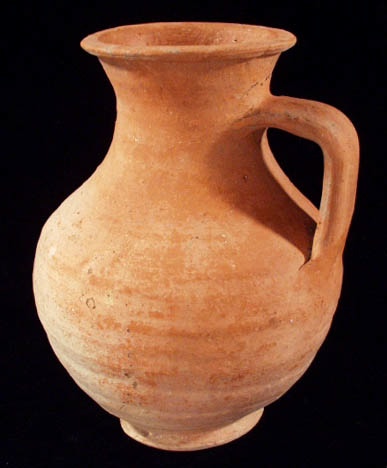 Roman ceramic amphora, first century AD; the elongated form was useful for stowage in ships and warehouses.
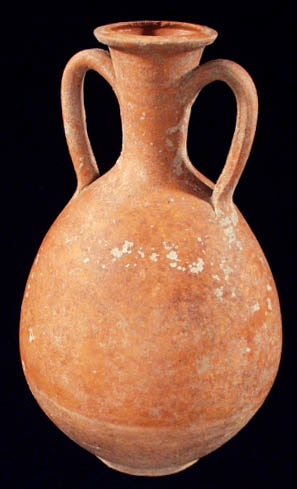 Roman ceramic amphora, first century AD; transport containers were a central part of the wine economy.
Chronology
- Eighth-sixth centuries BC
- grapevine and wine culture become established in Italy through Greek, Etruscan and local traditions.
- Third-second centuries BC
- the growth of Roman power in Italy strengthens villa agriculture, the land market and commercial wine production.
- Second-first centuries BC
- Italian wine is exported actively in the western Mediterranean; Dressel 1 amphorae become one of the main signs of this exchange.
- First century BC-first century AD
- prestigious Italian wines such as Falernian enter the literary and elite language of status.
- First-second centuries AD
- provinces develop their own vineyards; Gaul, Spain, Africa and the East participate more strongly in regional markets.
- Third-fourth centuries AD
- forms of trade and containers change, while barrels and local production become more important in north-western provinces.
- Around AD 325-350
- the Speyer wine bottle from a Roman tomb near Speyer belongs to this period.
Related Topics
Literature and sources
- Tchernia A. Le vin de l'Italie romaine.
- Purcell N. Wine and Wealth in Ancient Italy.
- Brun J.-P. Archéologie du vin et de l'huile dans l'Empire romain.
- Curtis R. I. Ancient Food Technology.
- Thurmond D. L. A Handbook of Food Processing in Classical Rome.
- Dalby A. Food in the Ancient World from A to Z.
- McGovern P. E. Ancient Wine: The Search for the Origins of Viniculture.
- Peña J. T. Roman Pottery in the Archaeological Record.
- Cato. De agricultura.
- Varro. De re rustica.
- Columella. De re rustica.
- Pliny the Elder. Naturalis Historia.
- Wikimedia Commons: Pompeii vineyards; Villa Regina at Boscoreale; Speyer wine bottle; Roman wine and amphora images.
Interested in Ancient Rome beyond reading? Join Legio X Fretensis or explore our reenactment directions.


