Saalburg
Saalburg is a Roman fort on the Upper German section of the Limes in the Taunus, near modern Bad Homburg. In antiquity it was a frontier military post connected with a road, watchtowers, a civilian settlement and a line of control between the Roman provincial zone and lands beyond the empire. Today Saalburg is known as a reconstructed castellum and museum complex, but its value is not limited to picturesque walls: behind the modern appearance stand excavations, plans, inscriptions, leather objects, military fittings, pottery and material from neighbouring stretches of the Limes.
Saalburg is best understood through three layers. The first is the ancient fort with its phases, garrison, road, bath-house and vicus. The second is the archaeological material through which the life of a military settlement can be studied. The third is the reconstruction of the late nineteenth and early twentieth centuries, connected with Louis Jacobi and Kaiser Wilhelm II. The reconstructed walls help with scale and layout, but they are not a direct image of the second century AD; they have to be compared with excavations and published evidence.
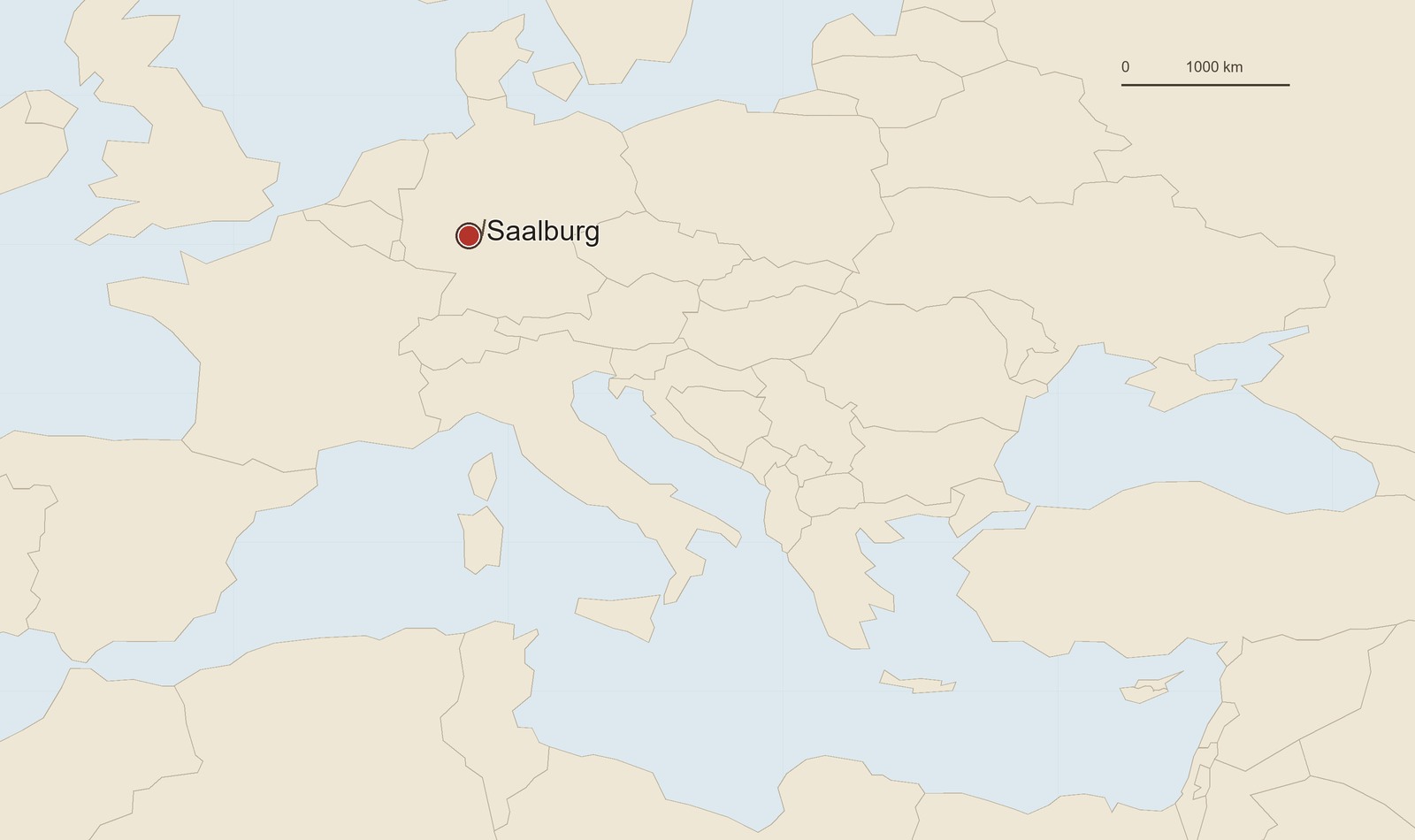 Location map: Saalburg. The marker shows the ancient site or main archaeological complex.
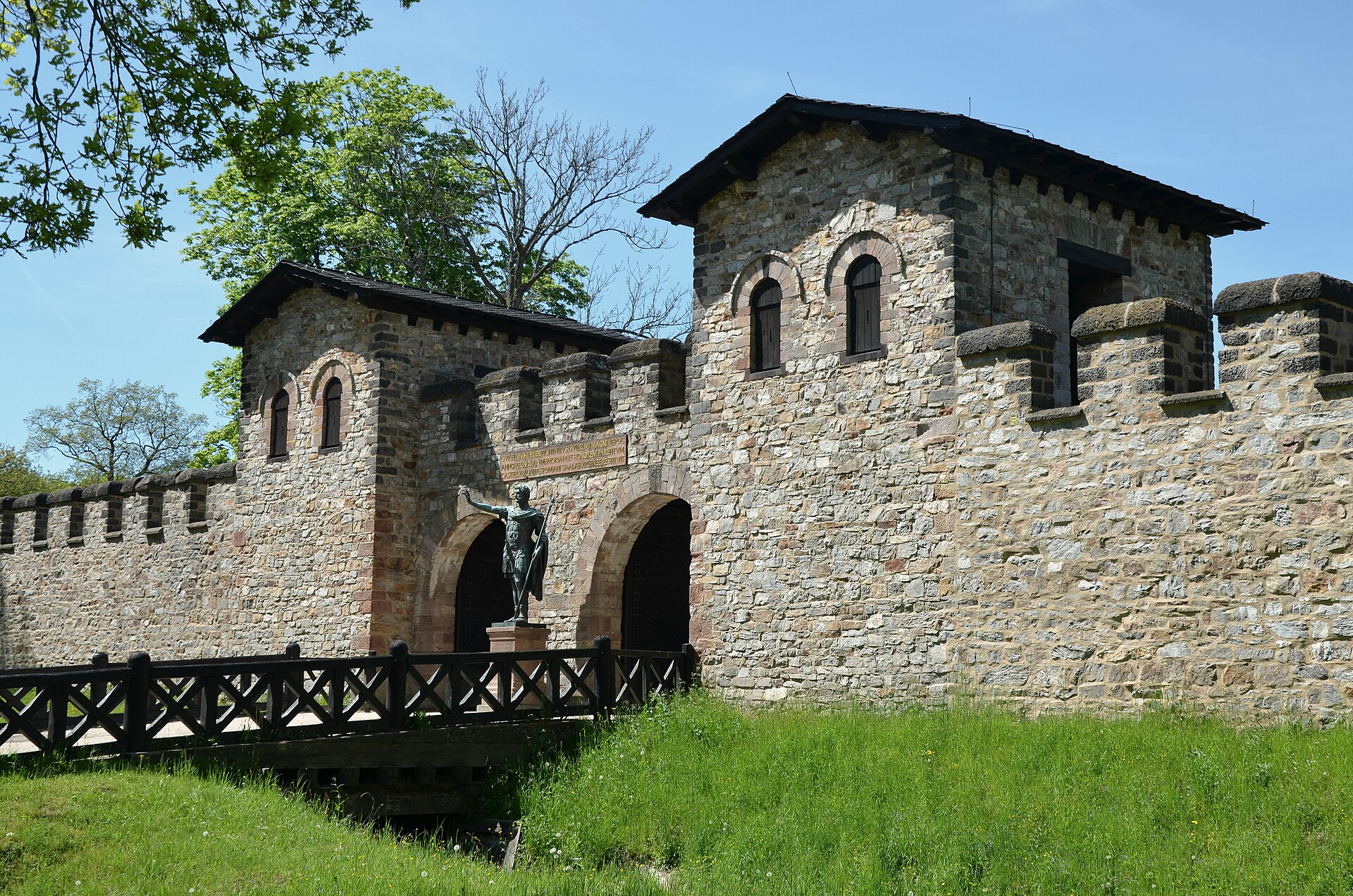 Porta praetoria, the main gate of the modern reconstructed Saalburg fort.
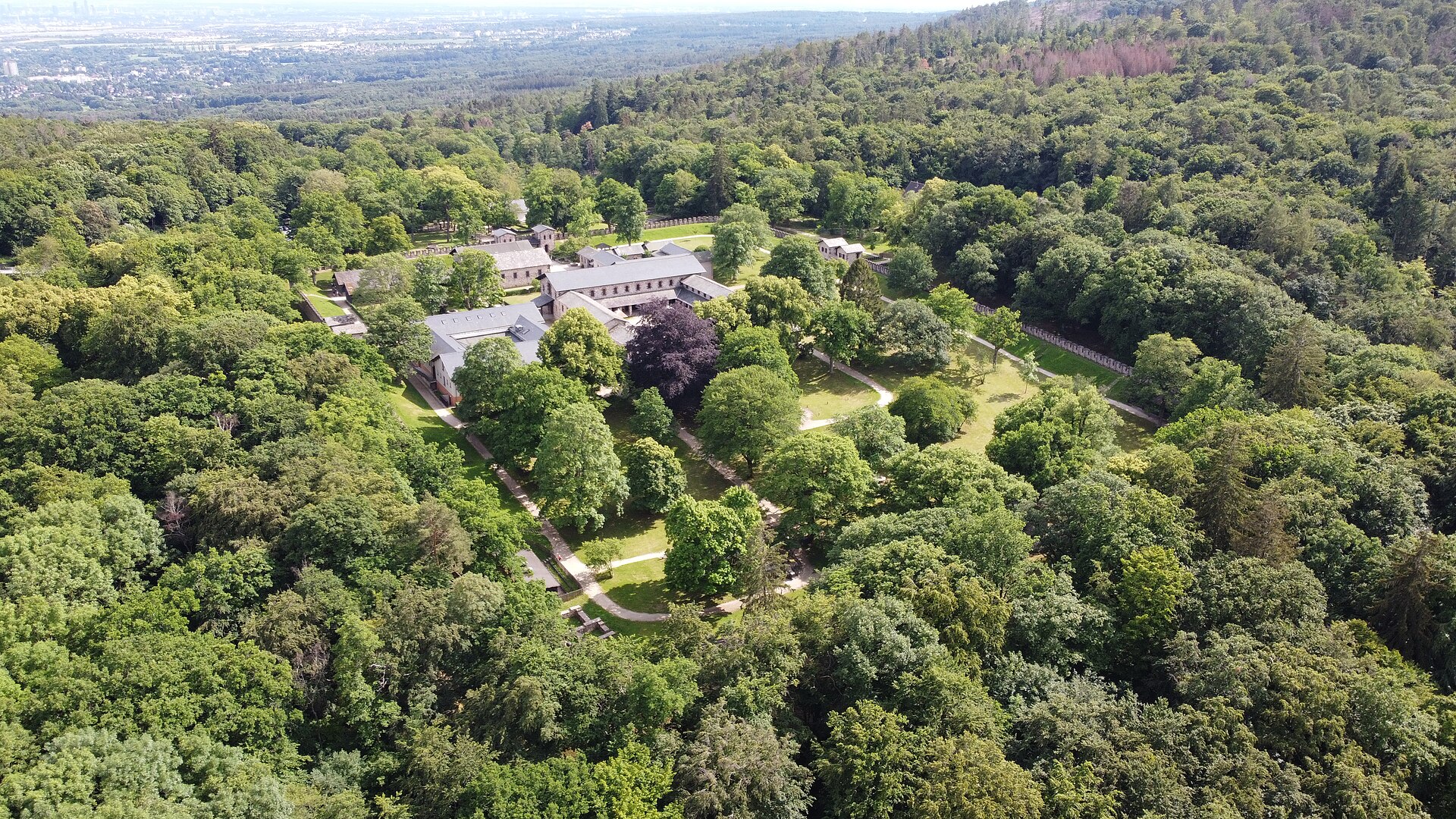 Aerial view of Saalburg: reconstructed walls, internal buildings and the surrounding archaeological park.
Fort on the Upper German Limes
The Upper German-Raetian Limes was not a single wall, but a long system of roads, ditches, palisades, towers, small posts, forts and civilian settlements. It developed in stages during the first and second centuries AD and connected military defence with observation, information gathering, movement and control of trade. Saalburg stood at an important point in the Taunus, where the terrain made it possible to watch routes through the upland zone and connect local roads with the wider network of the Roman Empire.
The fort should not be imagined as an isolated castle in a forest. Its meaning comes from the neighbouring towers, the course of the Limes, the road toward Nida and Mogontiacum, and the civilian environment outside the gates. Garrisons on the Limes lived beside craftsmen, traders, families, suppliers and local populations. A frontier fort was therefore a military point, administrative node, market, place of religious dedications and part of a larger provincial infrastructure.
On such stretches the frontier was not always an absolute line of prohibition. Romans wanted to observe movement, channel it through convenient places, mark territorial status and transmit signals quickly. Palisade, ditch and towers displayed power and created an obstacle, but they did not replace people, roads and supply. Saalburg shows that connection clearly: the fort matters together with its landscape, not only as a set of walls.
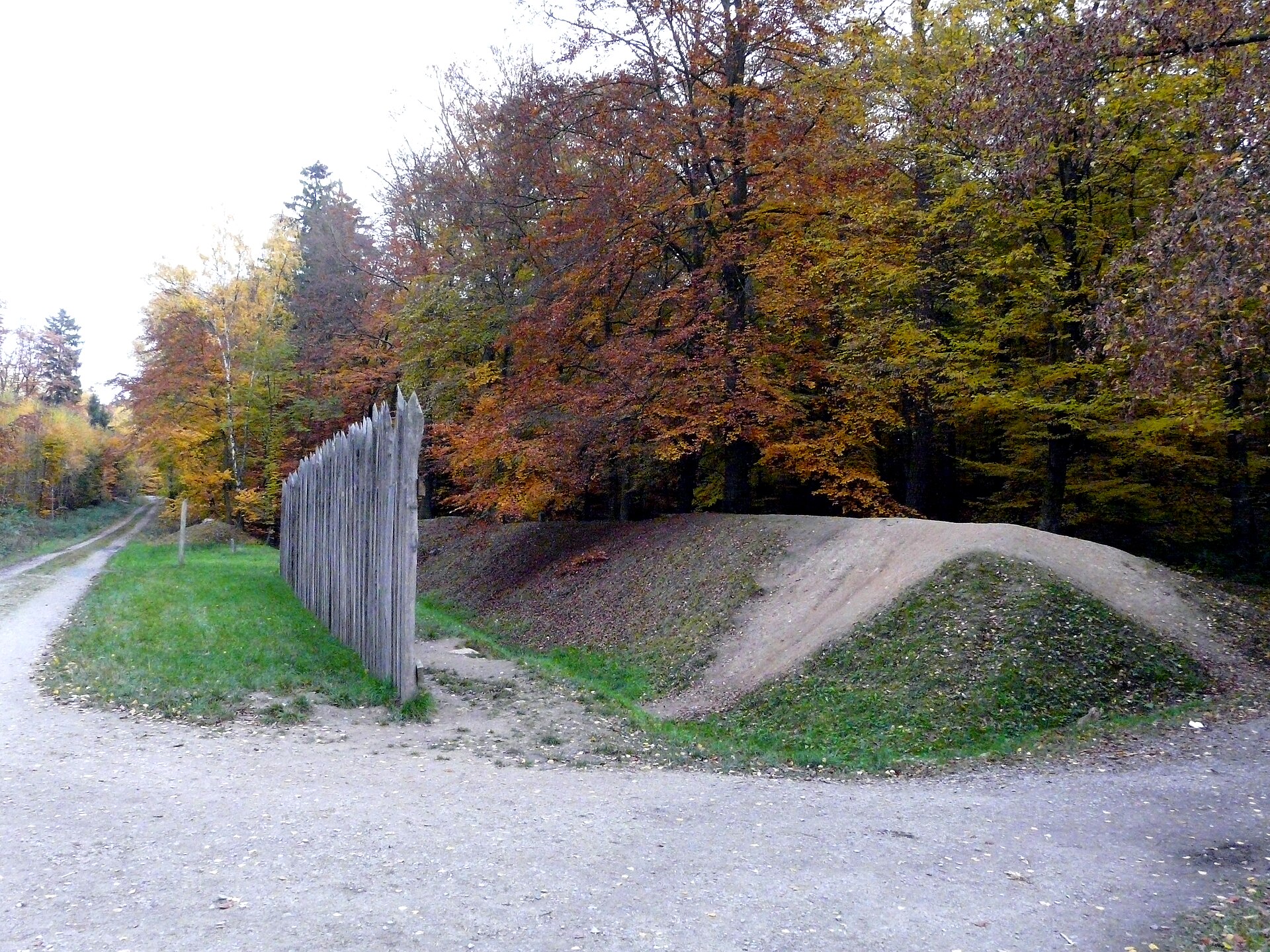 Reconstructed Limes palisade north of Saalburg.
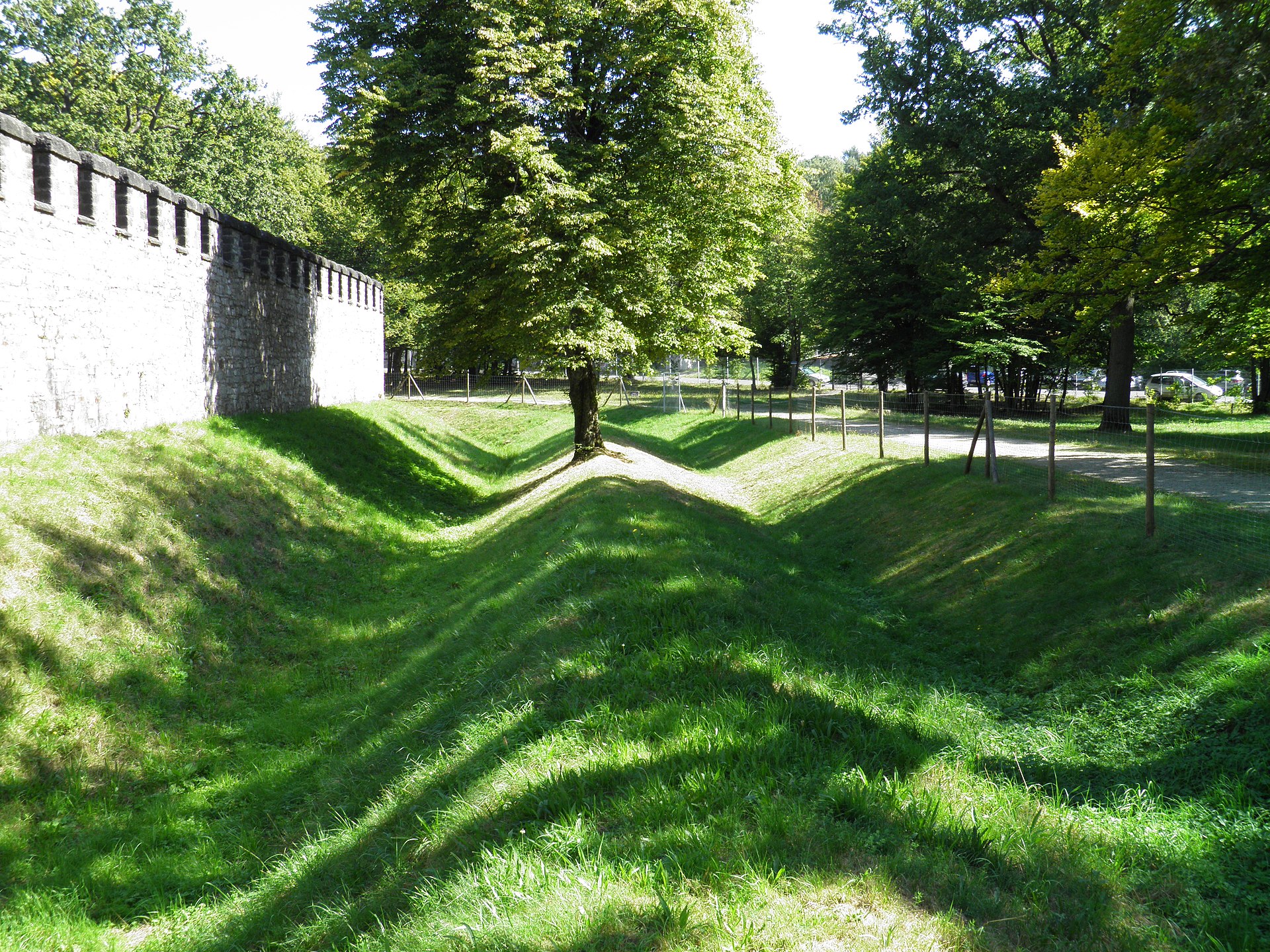 The reconstructed defences of Saalburg with two outer ditches.
Phases and Garrison
Saalburg did not begin with the stone fort visible to modern visitors. Early military phases of the late first century AD are recorded on and near the site, connected with timber-and-earth works and the gradual consolidation of Roman presence in the Taunus. In such early posts the walls are only part of the evidence; ditches, buildings, roads and find distributions show how temporary military control became a stable frontier system.
By the mid-second century a larger stone cohort fort had developed. It is usually connected with the cohors II Raetorum civium Romanorum equitata, a partly mounted auxiliary unit. Unlike a legion, such a cohort was a smaller unit and better suited to daily frontier service: patrols, gate duty, work with towers, escorting transport and controlling local roads. The connection with Mogontiacum, modern Mainz, matters because the Limes depended on major Rhine bases and on the command structure of Upper Germany.
The garrison of Saalburg lived according to the routines of a Roman military settlement. Soldiers did not only stand on walls: they built, repaired, kept watch, cared for animals, took part in religious ceremonies, received supplies, used the bath-house and interacted with the vicus. In the third century pressure on the frontier increased, and around AD 260 the Upper German-Raetian Limes was abandoned. After that Saalburg ceased to be an active Roman military post, but its ruins and finds preserve a picture of several generations of frontier service.
Fort Plan
The plan of Saalburg shows that a Roman castellum was not a random cluster of buildings, but an organised military environment. The gates opened toward roads and lines of movement, the main streets divided the interior, and the central place was occupied by the principia, the headquarters building with courtyard, hall, offices and shrine of the standards. Nearby stood barracks, the commander's house, storehouses, service buildings, workshops and areas connected with the maintenance of the garrison.
Saalburg shares the regular grid of streets, gates and service buildings with the wider form of the Roman castrum, but its value comes from its character as a specific Limes monument. It shows not abstract elements of a military camp, but their provincial version: a small garrison, limited space, and a connection with road, bath-house and vicus. Plans and sections are not decoration here, but evidence for movement inside the fort: where watches passed, where equipment was stored, where administration worked and how gates connected the garrison with the outside world.
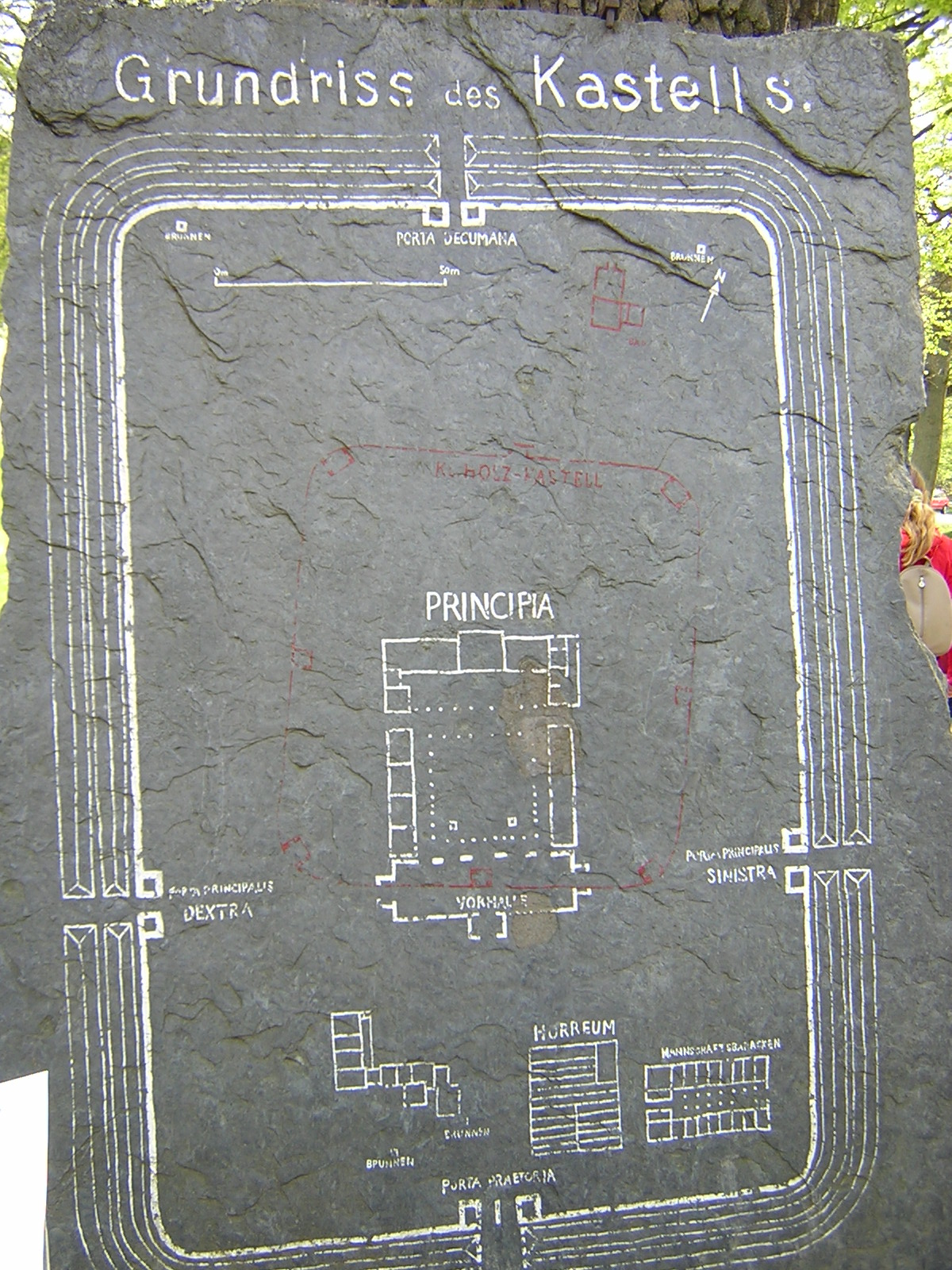 Plan of the Roman fort at Saalburg near Bad Homburg. The scheme helps read the gates, streets, principia, barracks and service buildings; Dominic Z.
Internal Buildings and Vicus
The principia of Saalburg show the administrative core of the fort. Such a building concentrated documents, unit symbols, financial operations, orders and the daily work of command. For a soldier it was not merely an impressive space in the centre of the camp, but the place where military service became a system of orders, lists, payments, stored standards and public ceremonies. Nearby stood barracks, where a contubernium, a small group of soldiers, shared cramped space, equipment and domestic duties.
Outside the walls lay the bath-house, road, cemeteries, craft areas and vicus. The bath-house is especially important: it shows that a frontier fort served not only watches and walls, but also the everyday bodily culture of the Roman world. Water, heating, changing rooms, hot and cold spaces required fuel, maintenance and labour. The vicus complemented the garrison: people lived there who traded, repaired, transported, cooked, served soldiers and connected the fort with local populations.
This complex explains why the archaeology of a fort extends beyond the wall line. The Roman frontier was an inhabited zone, not merely a fortification. Traces of pottery, shoes, tools, coins, inscriptions and funerary monuments show a world in which military, economic and private life constantly intersected.
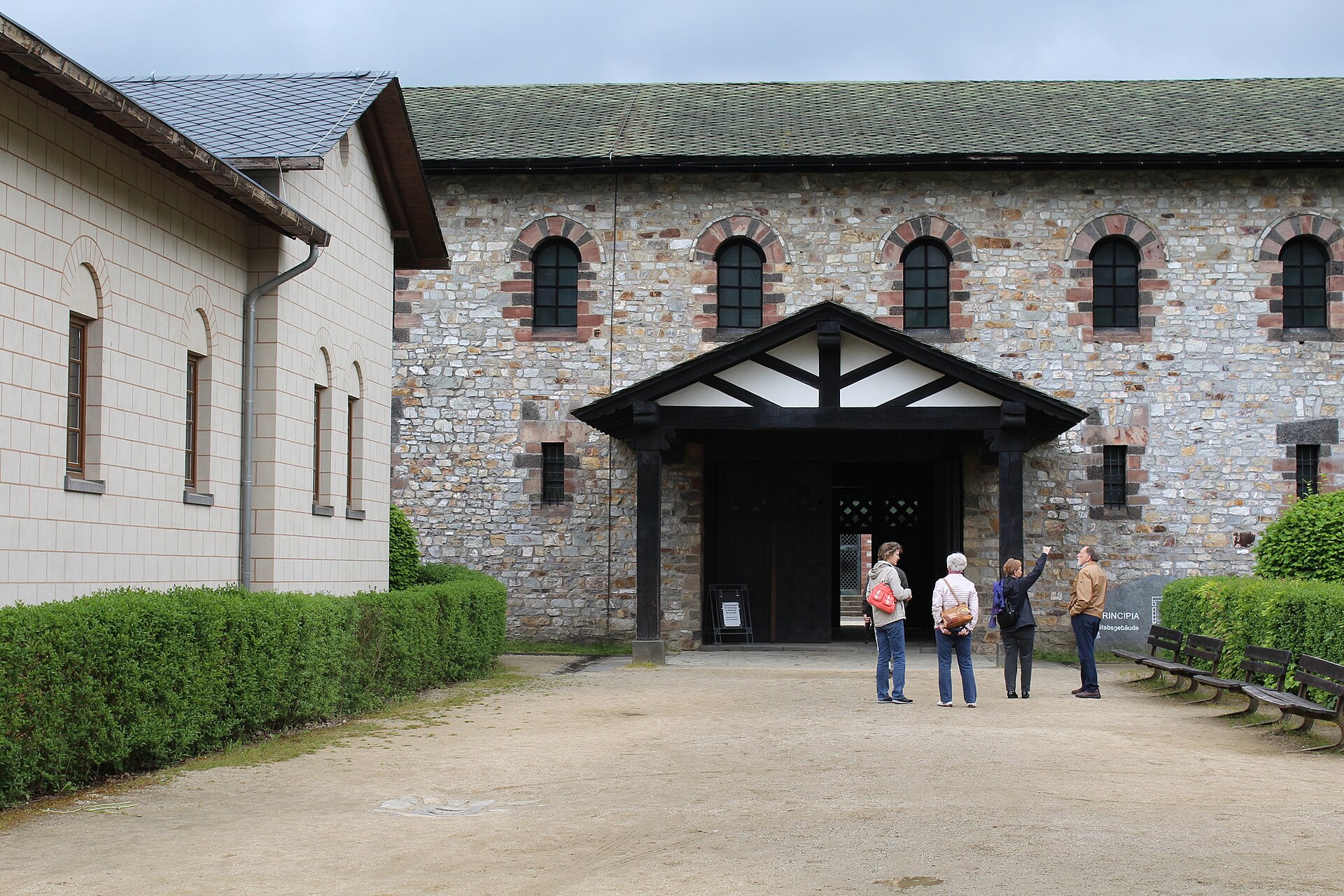 The reconstructed principia of Saalburg, the fort's central headquarters building.
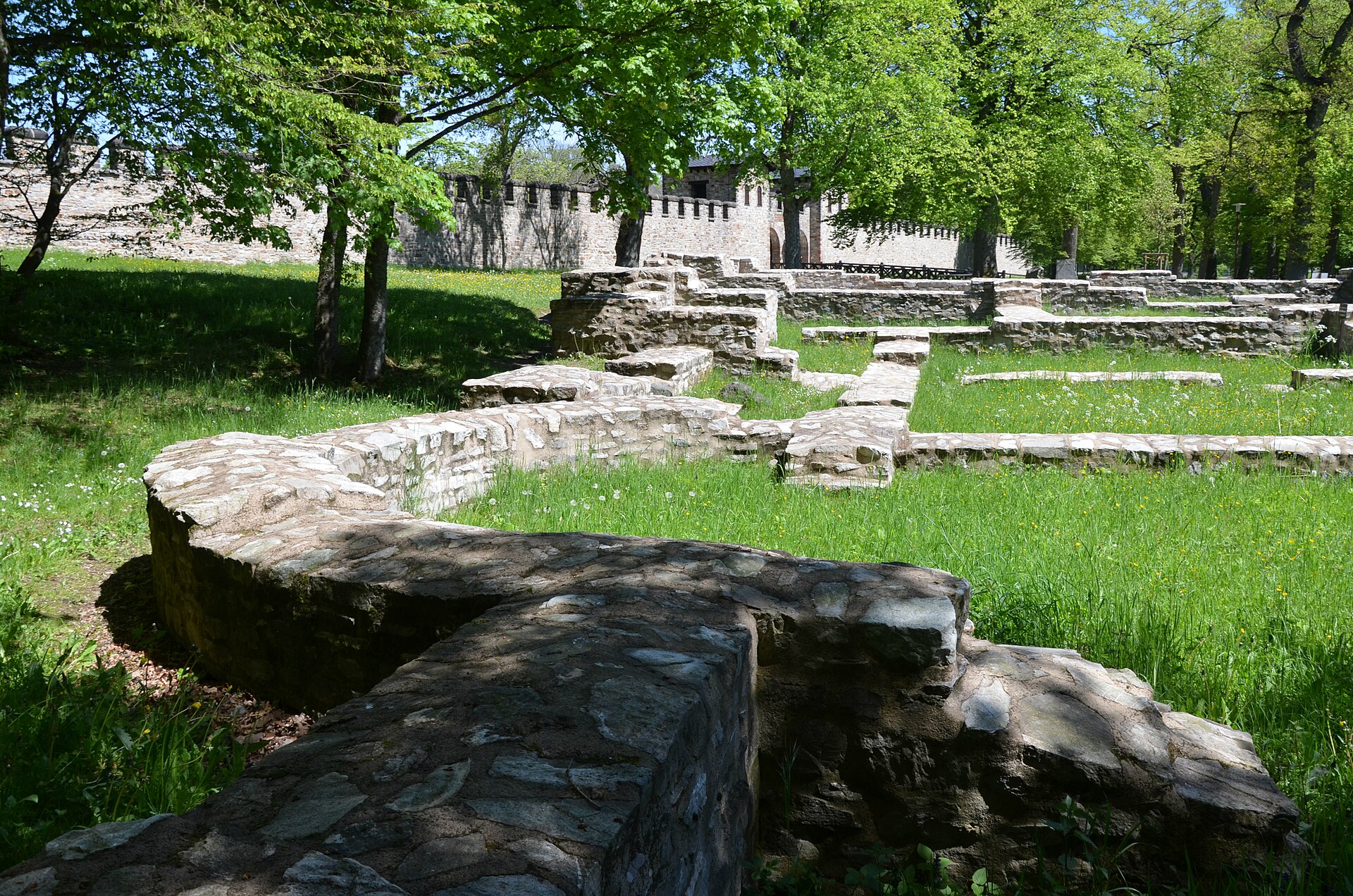 Remains of the large bath-house outside Saalburg fort, around AD 130.
Reconstruction and Museum
Saalburg became famous not only because of its ancient history, but also because of its modern reconstruction. Excavations began in the mid-nineteenth century, and in the 1870s a museum initiative grew around the finds. Louis Jacobi played a key role in researching and presenting the monument, and in 1897 Kaiser Wilhelm II supported a large-scale reconstruction of the fort. By 1907 important buildings had been rebuilt and Saalburg had become one of the main centres for the study of the Limes.
This reconstruction is valuable, but it requires caution. It was created from excavations and scholarly views of its own time, while also reflecting the German Empire's interest in the Roman frontier, military discipline and historical memory. Saalburg therefore matters in two ways: as a Roman archaeological monument and as a monument in the history of archaeology. A modern visitor sees not only traces of the ancient fort, but also how the turn of the twentieth century imagined Rome.
The museum exhibition helps preserve this distinction. The reconstructed buildings display original finds from Saalburg and neighbouring stretches of the Limes: bronze, iron, glass, pottery, wood, leather, military fittings and everyday objects. These objects, with findspot and date, give the reconstruction its archaeological base.
Archaeological Evidence
The material from Saalburg is especially strong where it connects military service with everyday life. Leather shoes show not the parade image of a soldier, but the real work of feet, roads and workshops. Mail fragments connect the garrison with weapons and repair. Tombstones and altars provide names, statuses, religious dedications and links between the fort and the wider military environment of Upper Germany.
Leather and wooden objects matter because they disappear at most ancient sites. When they survive, they reveal craft, dimensions, wear, repair and social difference better than stone architecture alone. At the same time, a museum object cannot be separated from its caption: date, findspot, material and function decide whether it belongs to Saalburg itself, a neighbouring fort, the road, a cemetery or the museum collection of the Limes.
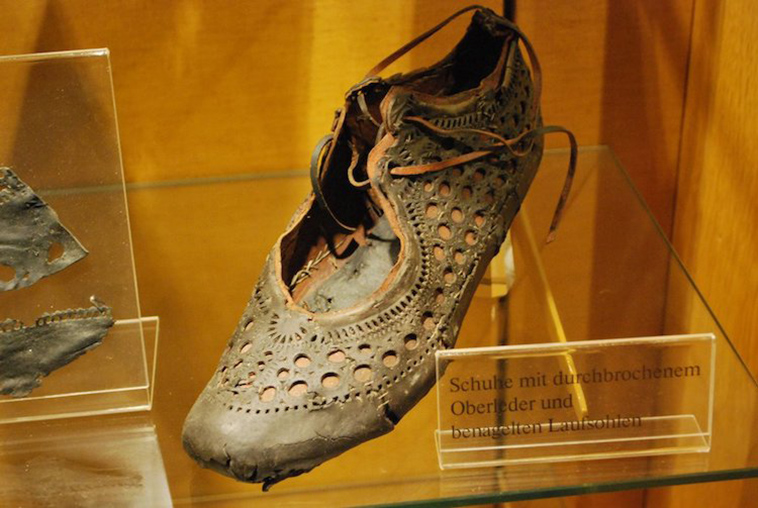 Women's calcei from Saalburg, first century AD; leather is among the more valuable finds from Limes forts because it usually preserves poorly.
 Fragment of Roman lorica hamata from the Saalburg Museum, Germany, first century AD; mail fragments show the military layer of the site's finds.
Epigraphy complements the objects. The tombstone from Wiesbaden kept in the Saalburg Museum does not make Saalburg a legionary fortress, but it shows the military environment of the region: legions, auxiliary units, civilian settlements, roads and cemeteries existed nearby. Altars and dedications from frontier complexes remind us that garrison life included cult, vows, thanksgiving inscriptions and public expressions of loyalty.
Saalburg therefore brings together different types of evidence. Plan and walls show the form of the fort, finds show people and actions, inscriptions show names and institutions, and the museum reconstruction shows the history of research. If these source types are mixed without distinction, the fort becomes attractive scenery. Considered together, they make Saalburg one of the clearest examples of how the Roman frontier worked in a province.
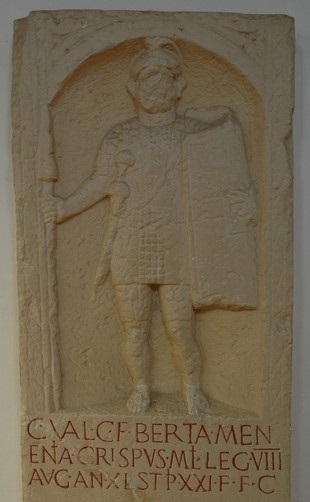 Tombstone of Gaius Valerius Crispus, a soldier of Legio XXII Primigenia, from Wiesbaden; Saalburg Museum, Germany, around AD 90.
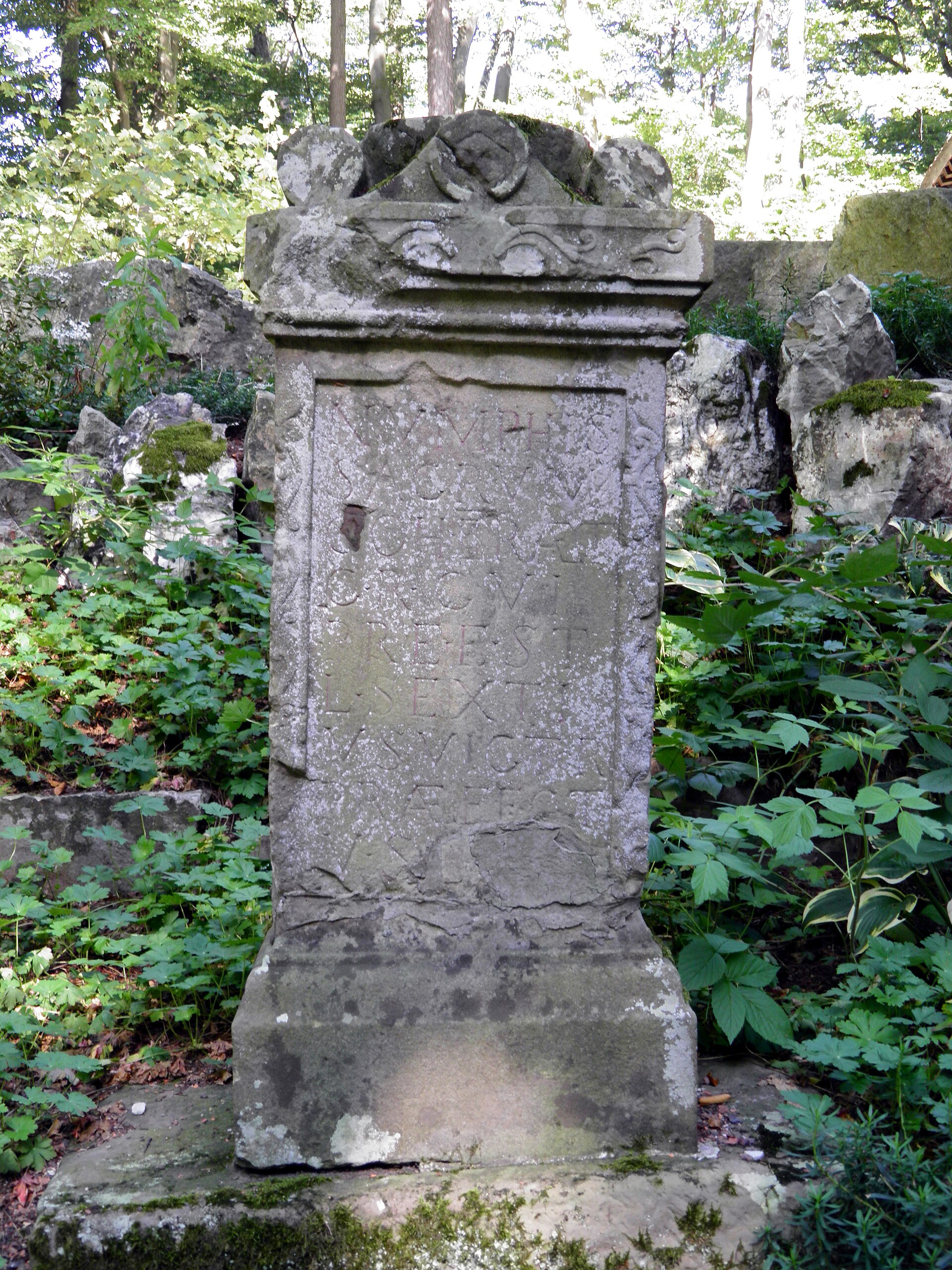 Roman altar from the Saalburg complex: epigraphic and cult material from a frontier fort. Roman period; Saalburgmuseum, Bad Homburg.
Chronology
- Late first century AD - early military phases in the Saalburg area, connected with the gradual advance of Roman control in the Taunus.
- Around AD 120-135 - development of a more stable Limes system and the cohort fort; the garrison is associated with cohors II Raetorum civium Romanorum equitata.
- Second century AD - main period of the stone fort, vicus, bath-house and frontier infrastructure.
- Third century AD - growing crisis on the Rhine-Danube frontier and the loss of the earlier stability of the Limes.
- Around AD 260 - abandonment of the Upper German-Raetian Limes; Saalburg ceases to function as an active Roman fort.
- 1853 - beginning of archaeological excavations at Saalburg.
- 1872 - foundation of the Saalburg Association, connected with research and preservation of the monument.
- 1879 - opening of the early museum of finds under Louis Jacobi.
- 1897-1907 - reconstruction of the fort with the support of Wilhelm II and the transformation of Saalburg into a central Limes museum.
- 2005 - the Upper German-Raetian Limes is included in the UNESCO World Heritage property Frontiers of the Roman Empire.
Related Topics
- Archaeology and museums
- Roman Empire
- Roman Army
- Auxilia
- Roman Legion
- Castrum
- Roman Architecture
- Mogontiacum
- Xanten / Colonia Ulpia Traiana
Literature and sources
- Dietwulf Baatz. Der römische Limes: Archäologische Ausflüge zwischen Rhein und Donau. Berlin, 2000.
- Anne Johnson. Roman Forts of the 1st and 2nd Centuries AD in Britain and the German Provinces. London, 1983.
- Dieter Planck, Andreas Thiel. Das Limes-Lexikon: Roms Grenzen von A bis Z. Munich, 2009.
- Ernst Fabricius, Felix Hettner, Oscar von Sarwey (eds.). Der obergermanisch-raetische Limes des Roemerreiches. Berlin, 1894-1937.
- Louis Jacobi. Das Römerkastell Saalburg bei Homburg vor der Höhe. Homburg, 1897.
- Saalburg-Jahrbuch: Bericht des Saalburgmuseums. Bad Homburg, various volumes.
- Römerkastell Saalburg. Permanent exhibition and collection history, Saalburg Museum.
- UNESCO World Heritage Centre. Frontiers of the Roman Empire.
- Wikimedia Commons: files on Saalburg, the Upper German Limes and the reconstructed fort used for illustrations.


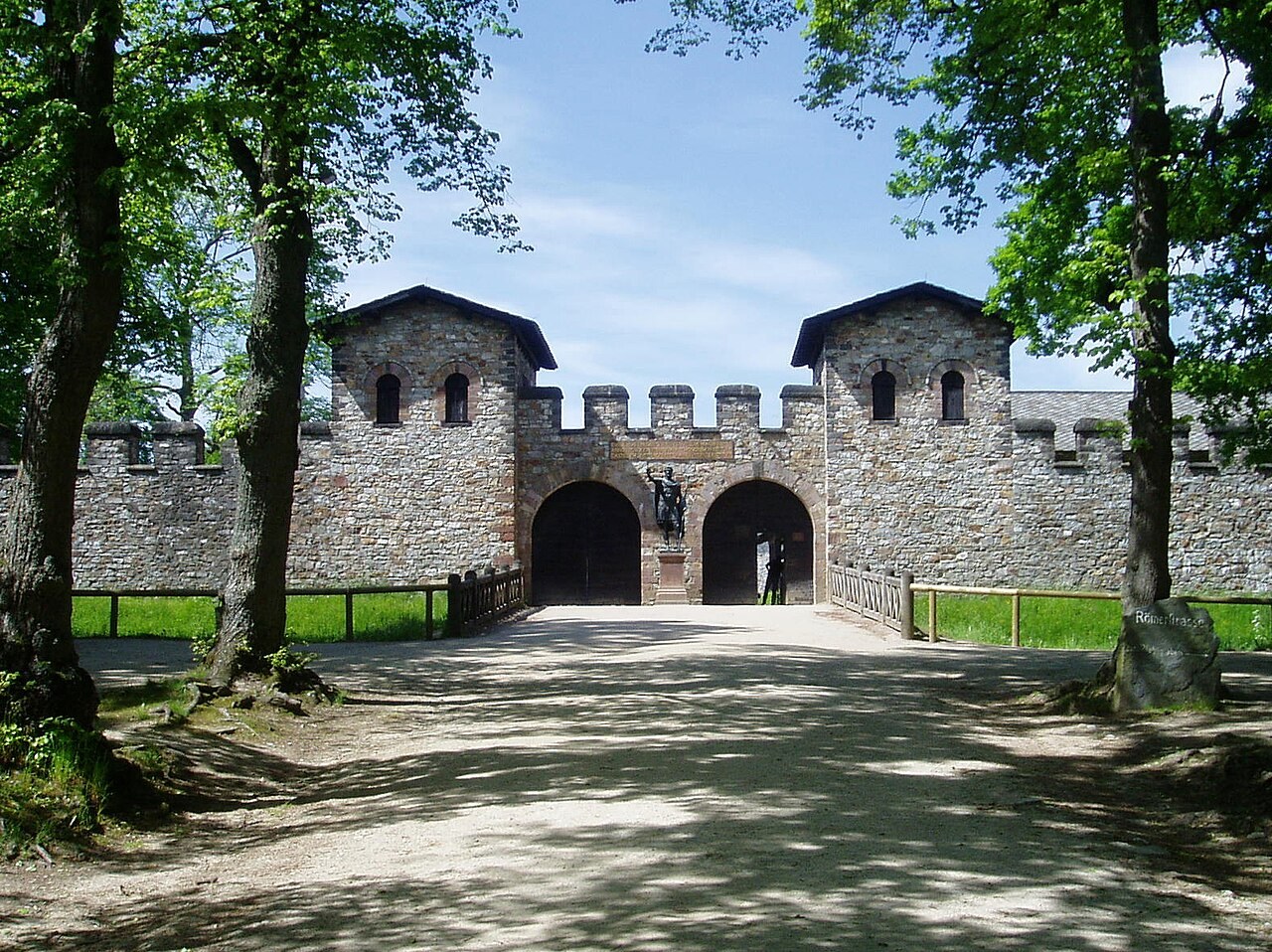 Porta praetoria, the main gate of the reconstructed Saalburg fort. Modern reconstruction.
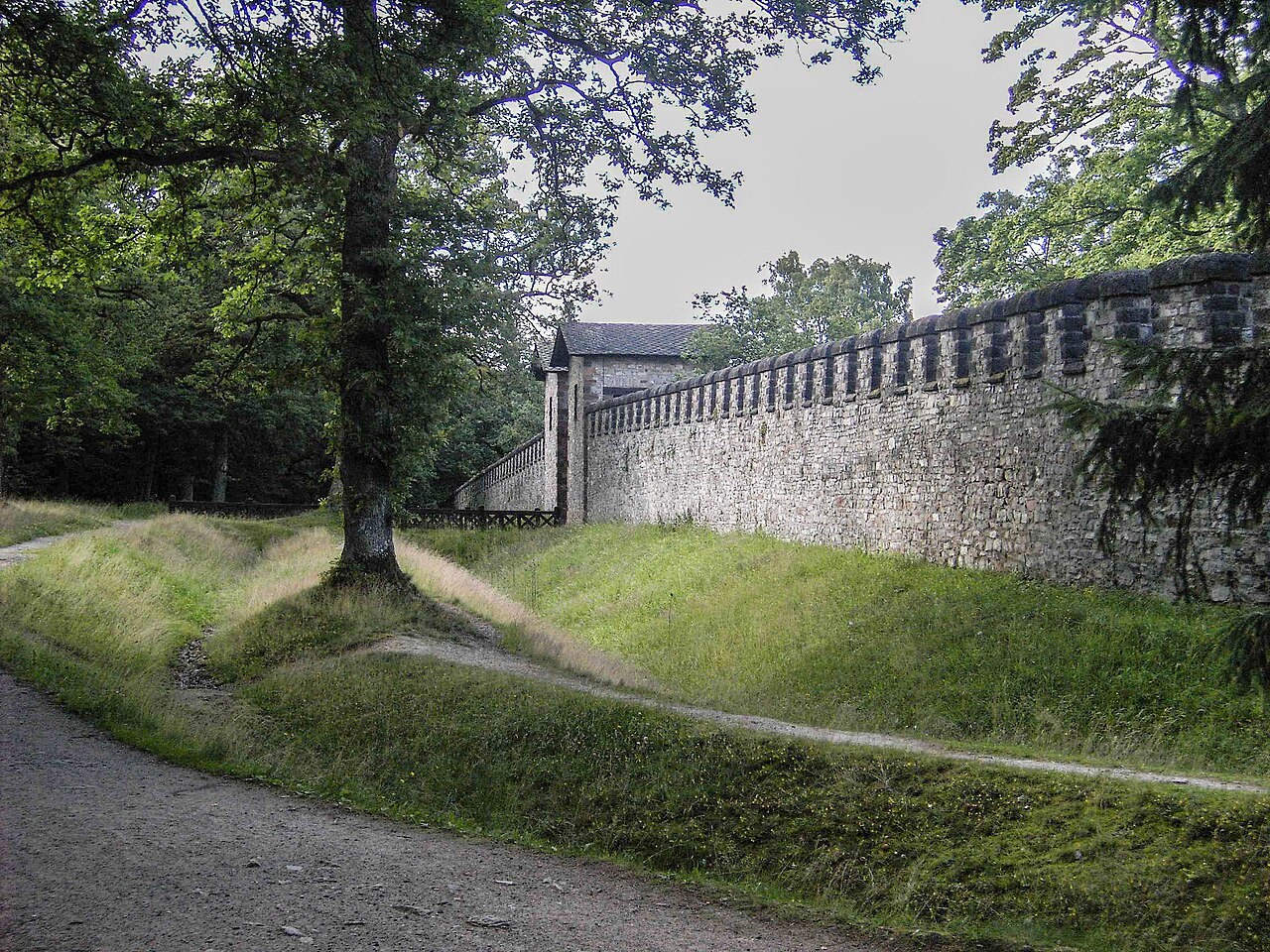 Porta principalis dextra of the reconstructed Saalburg fort, exterior view. Modern reconstruction.
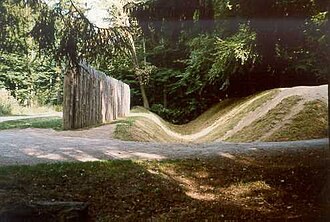 A section of the Limes near Saalburg.
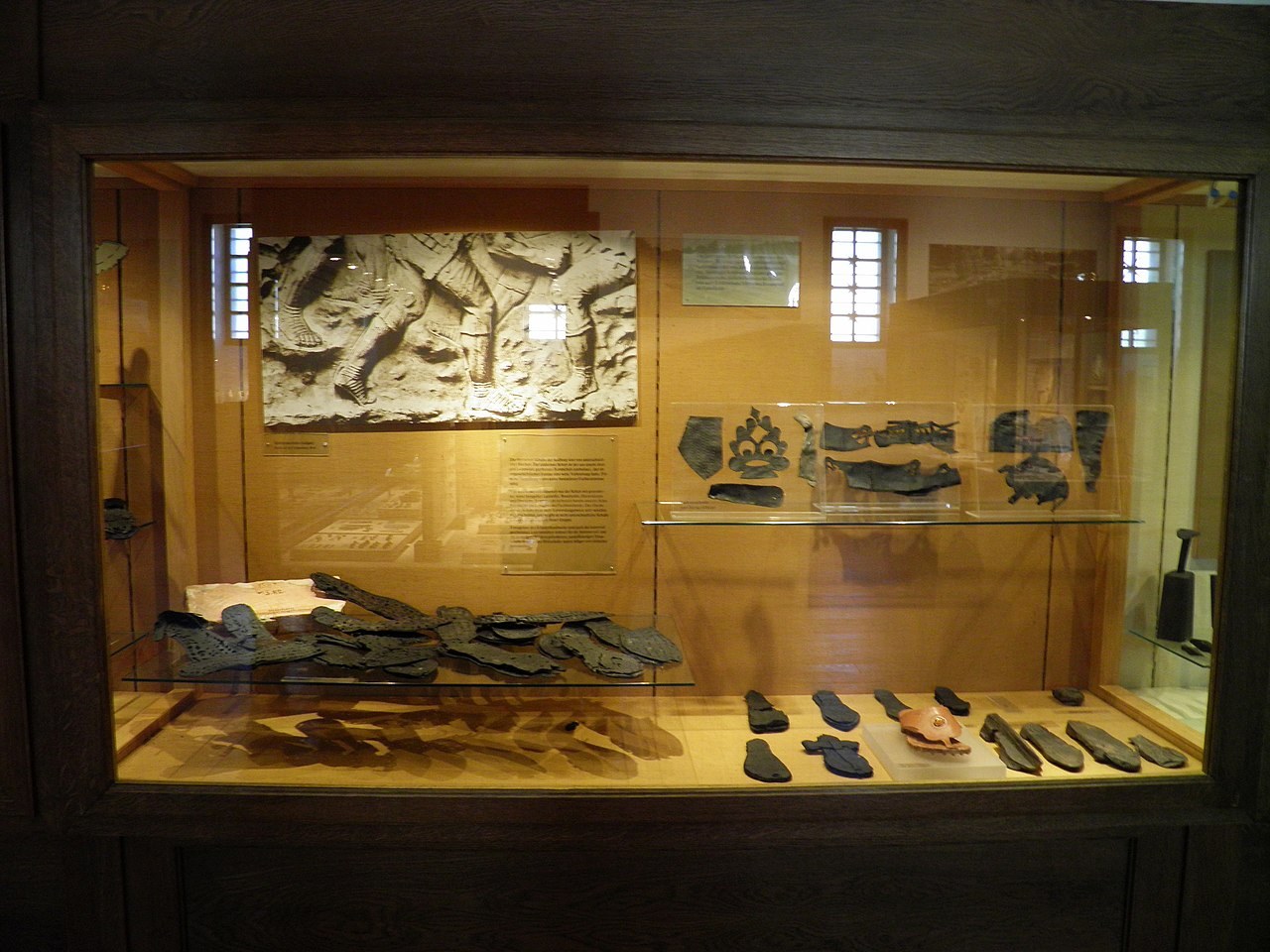 Saalburg: Roman shoes, Saalburgmuseum, Saalburg Roman Fort, Limes Germanicus, Germania (Germany); material-culture object or museum find connected with the site, Roman period or local archaeological context.
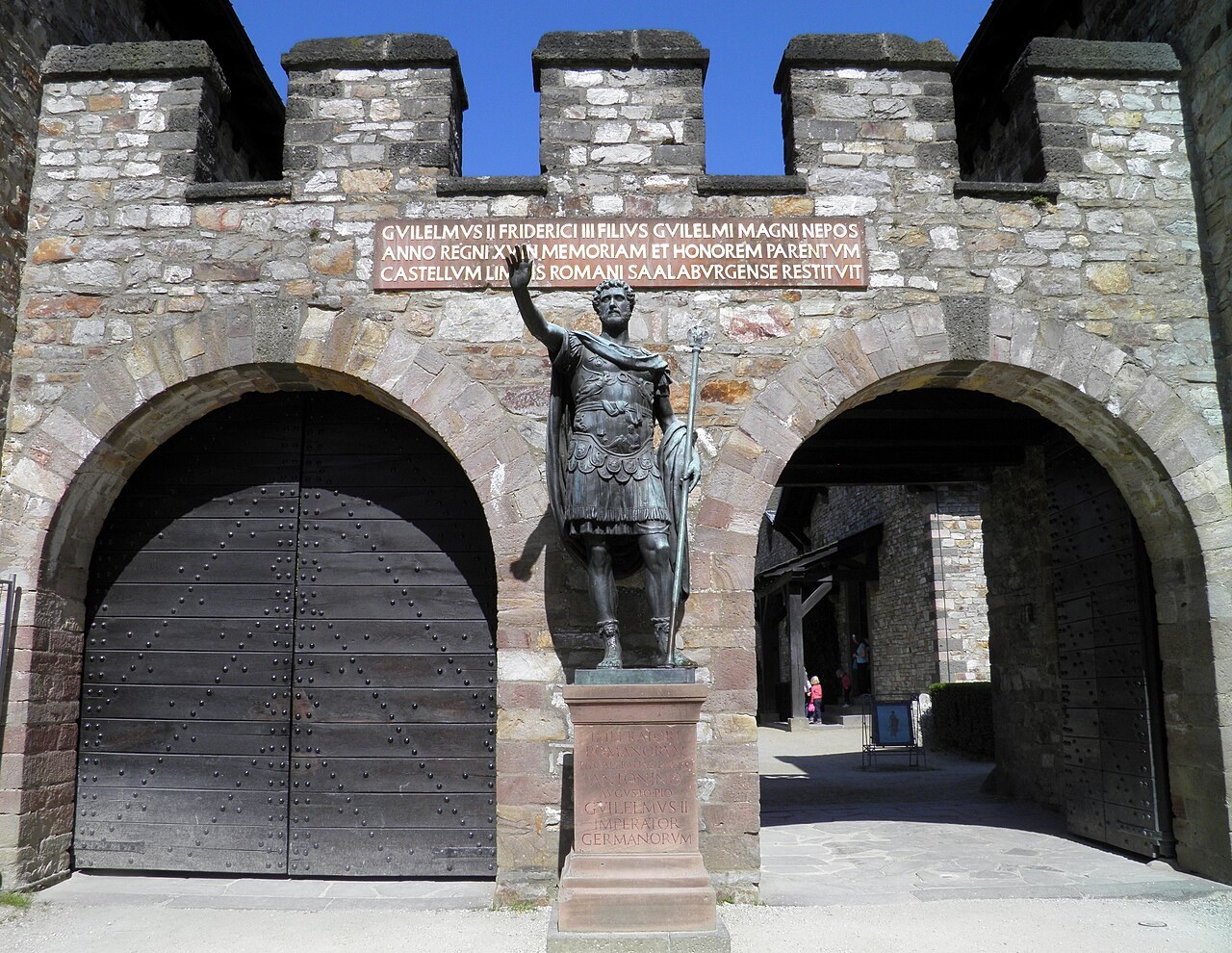 Modern copy of a statue of Antoninus Pius at the entrance to Saalburg.
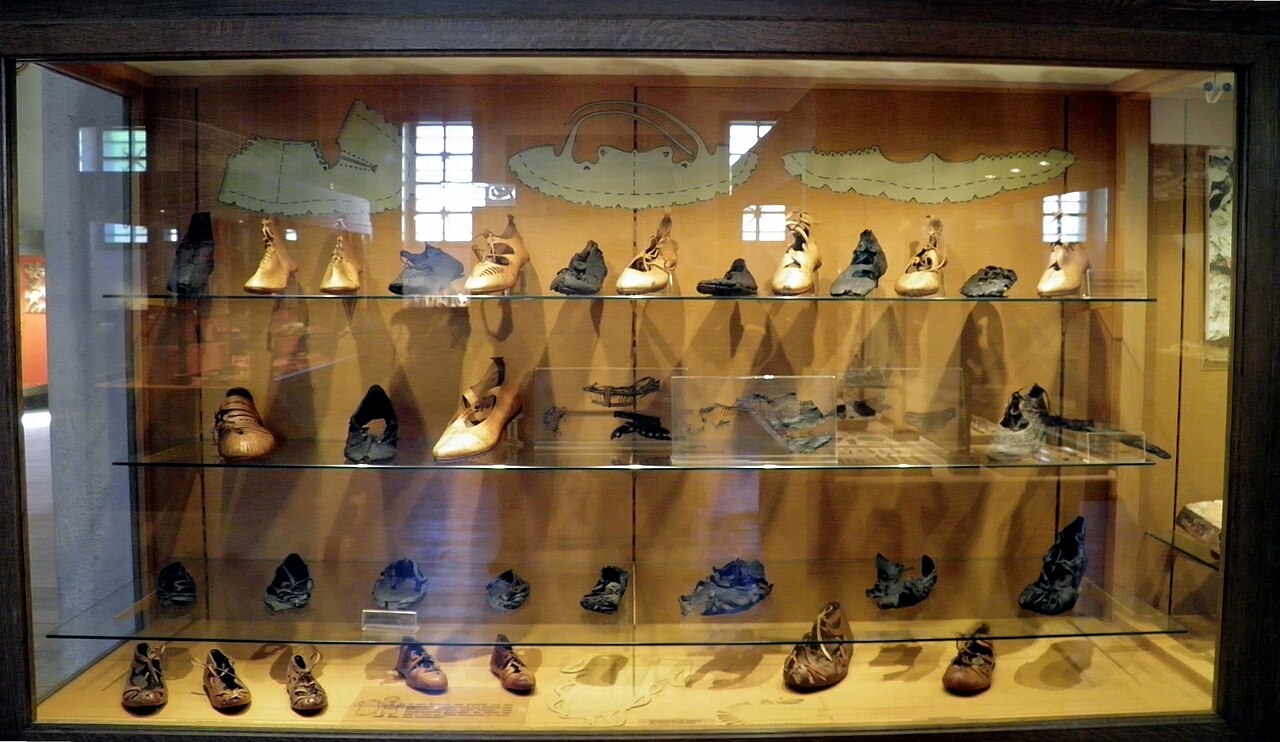 Saalburg: Roman shoes, Saalburgmuseum, Saalburg Roman Fort, Limes Germanicus, Germania (Germany); material-culture object or museum find connected with the site, Roman period or local archaeological context.
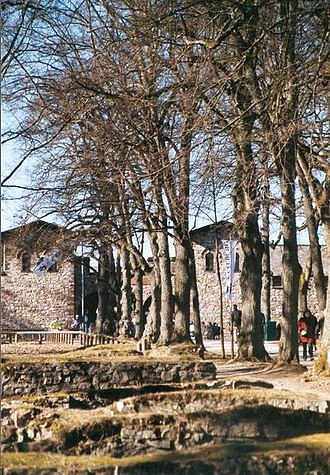 The reconstructed Saalburg fort. Modern buildings should be distinguished from ancient remains.
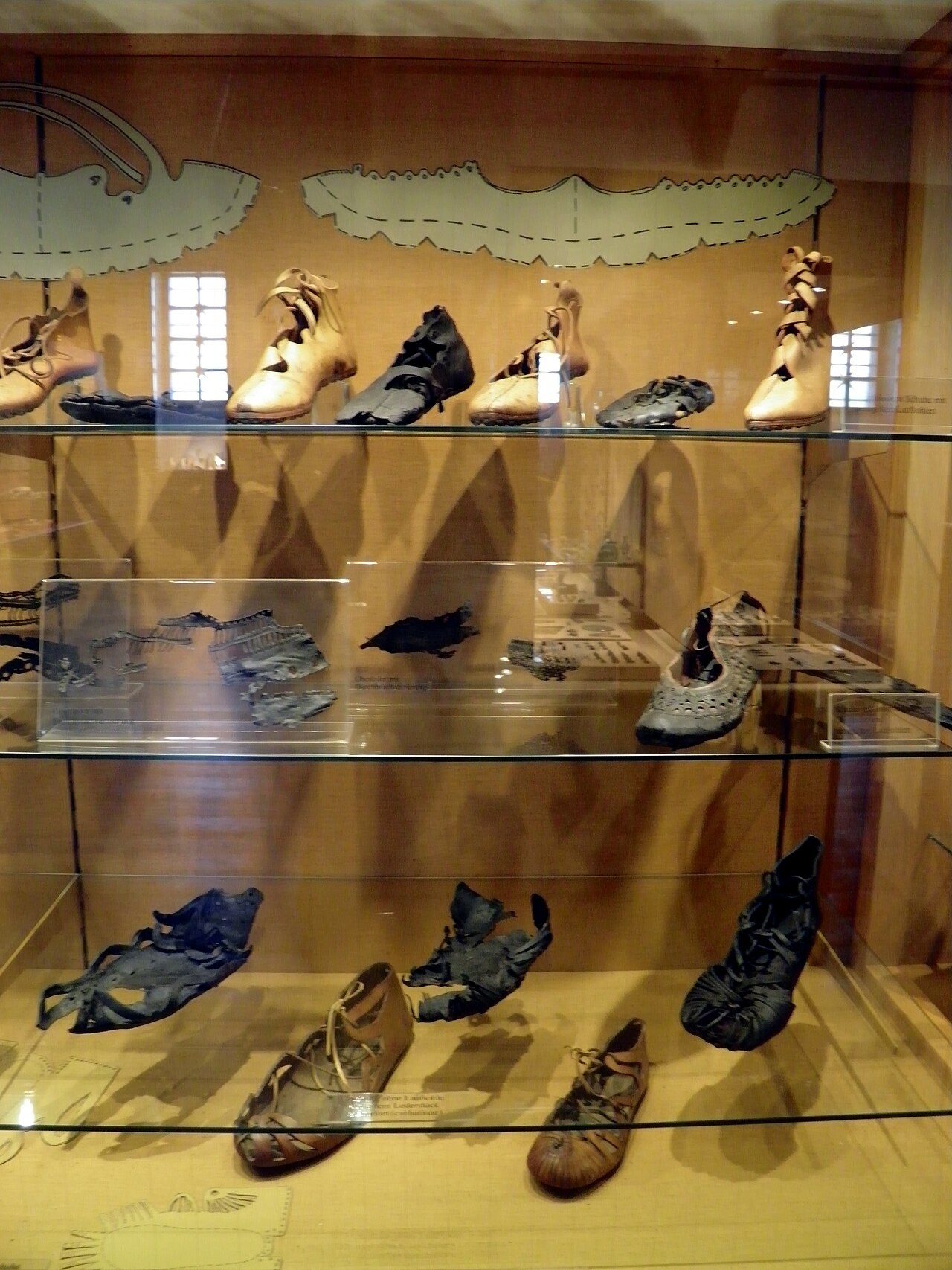 Saalburg: Roman shoes, Saalburgmuseum, Saalburg Roman Fort, Limes Germanicus, Germania (Germany); material-culture object or museum find connected with the site, Roman period or local archaeological context.
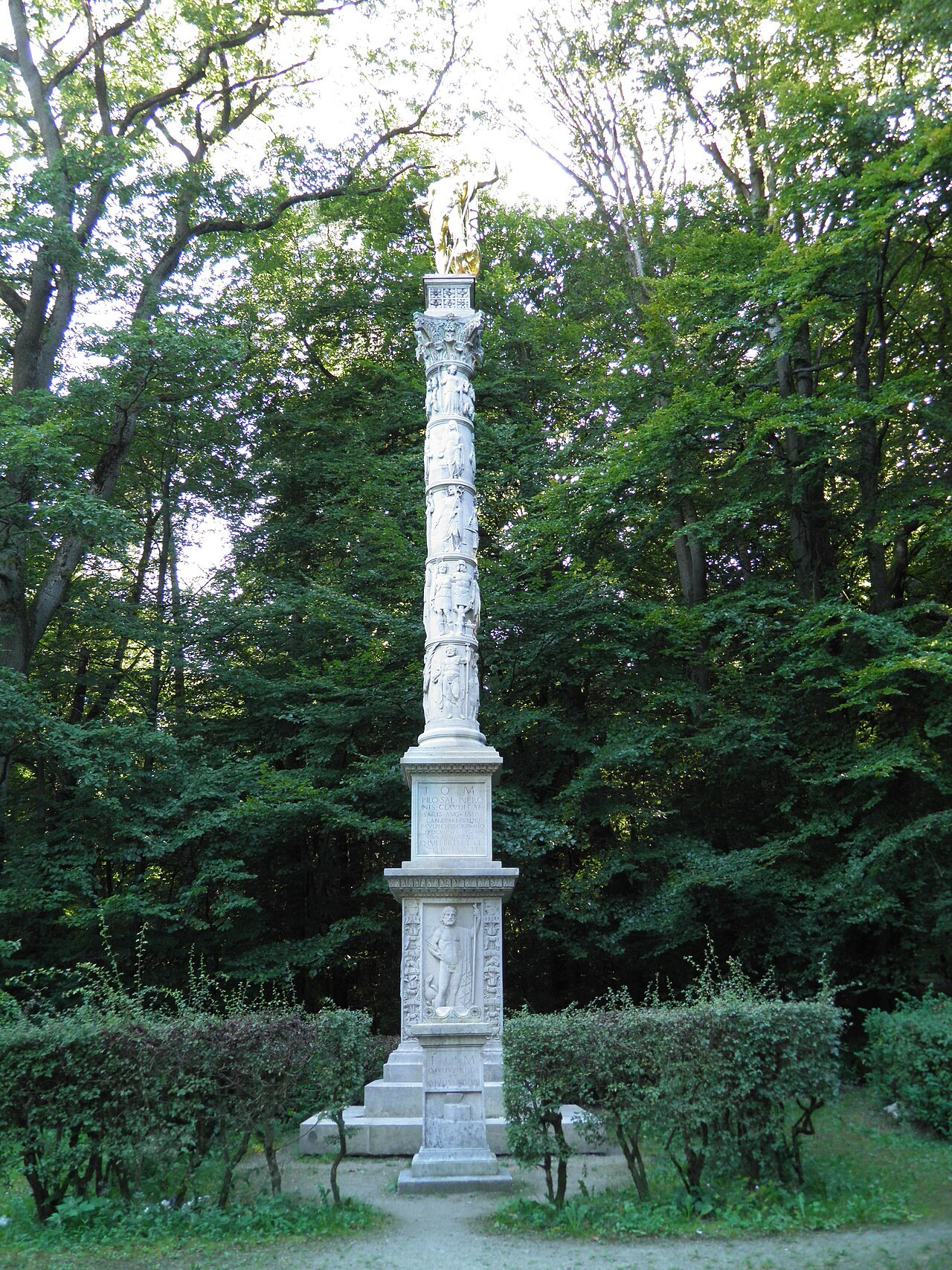 Modern reconstruction of a Jupiter column at Saalburg.
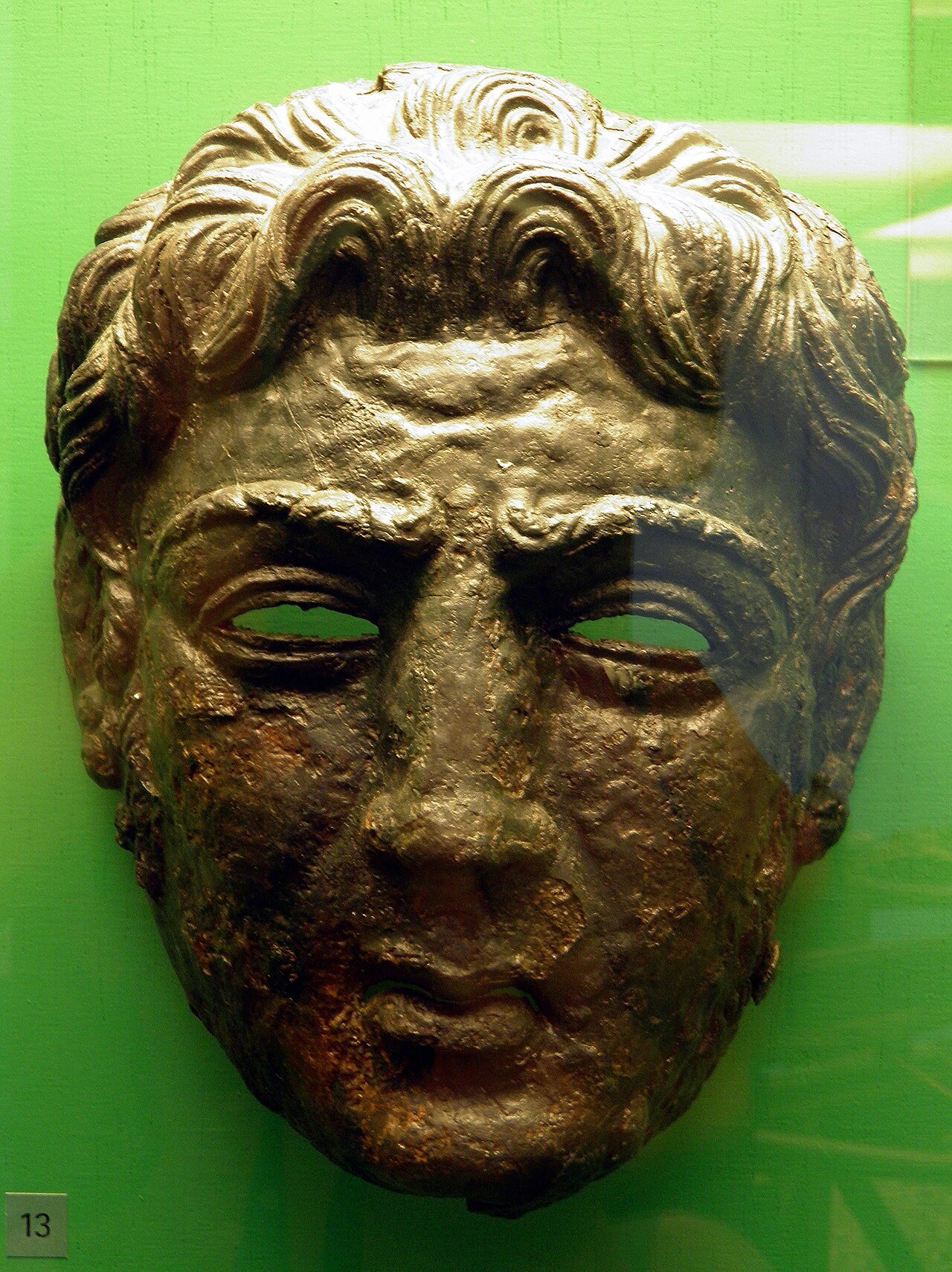 Cavalry face mask of the Alexander type. Saalburg Museum.
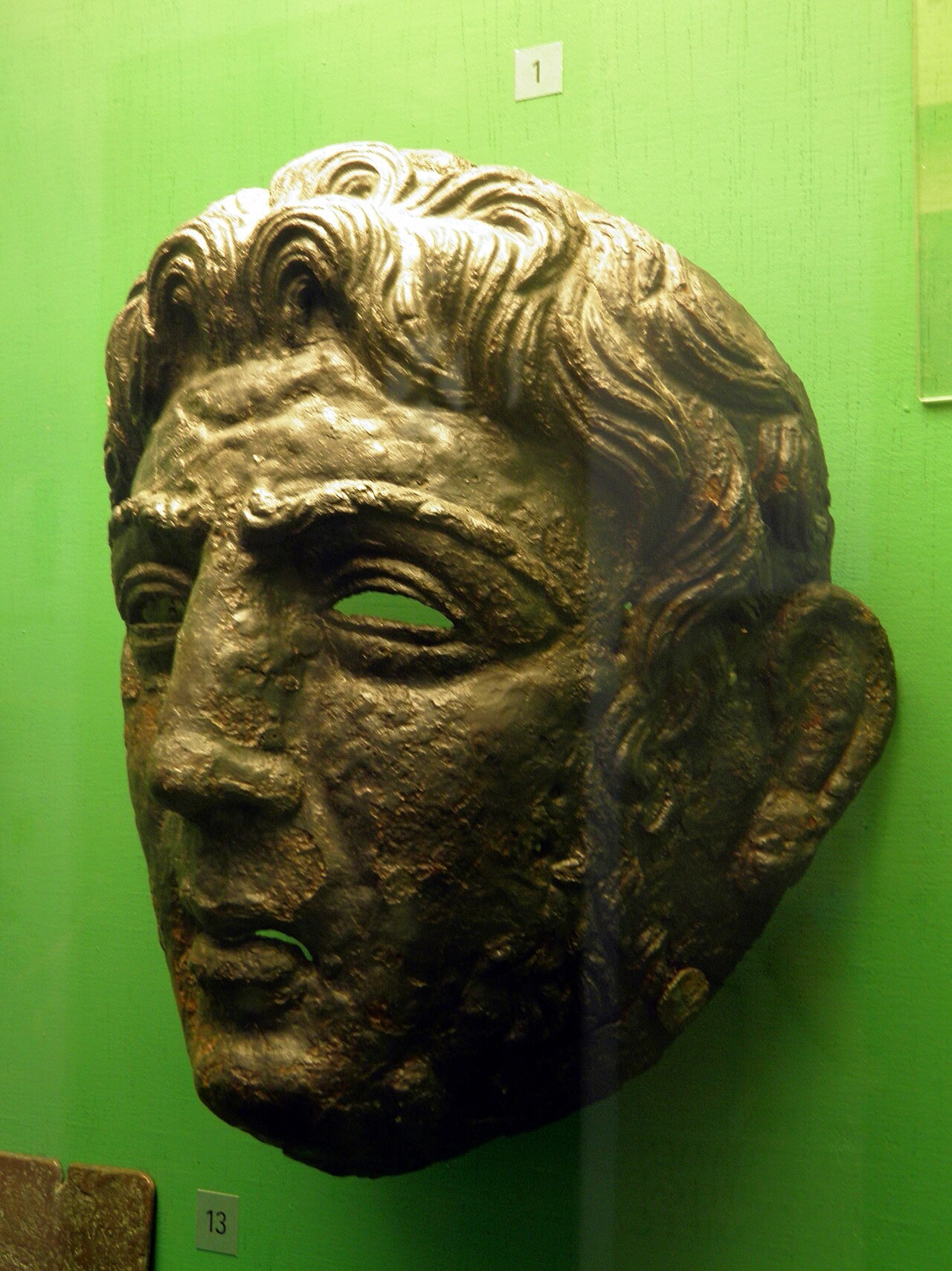 Cavalry face mask of the Alexander type, another view. Saalburg Museum.
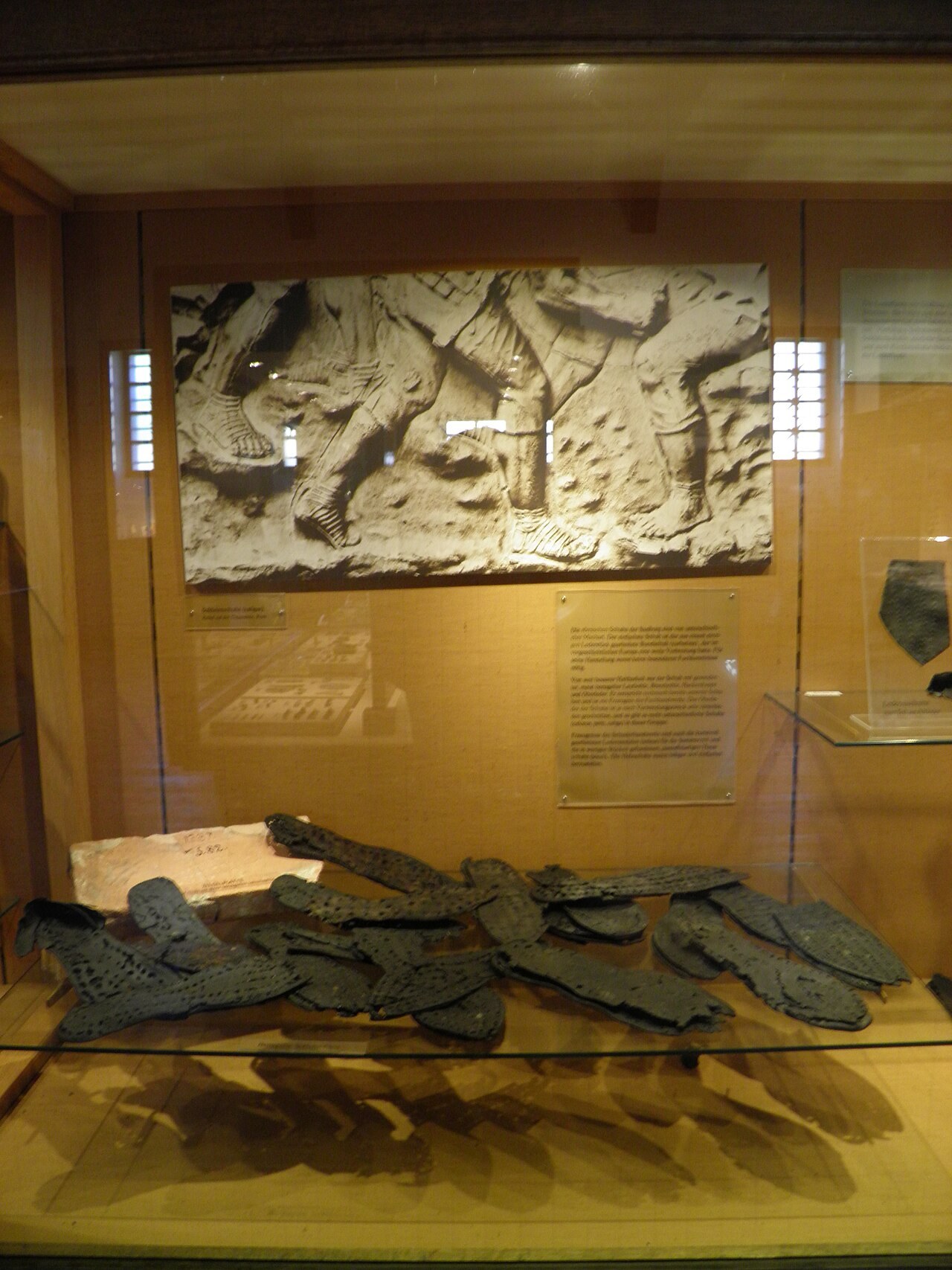 Saalburg: Roman shoes, Saalburgmuseum, Saalburg Roman Fort, Limes Germanicus, Germania (Germany); material-culture object or museum find connected with the site, Roman period or local archaeological context.
Interested in Ancient Rome beyond reading? Join Legio X Fretensis or explore our reenactment directions.


