Socrates
Socrates (469-399 BC) was an Athenian philosopher who left no writings of his own, but became a central figure of classical Greek philosophy. He is known mainly through the works of Plato, Xenophon, Aristophanes and later tradition. In brief: - city: Athens; - method: questions, testing concepts and seeking definitions; - main event: trial and execution in 399 BC; - significance: a starting point for Platonic and later ethical philosophy.
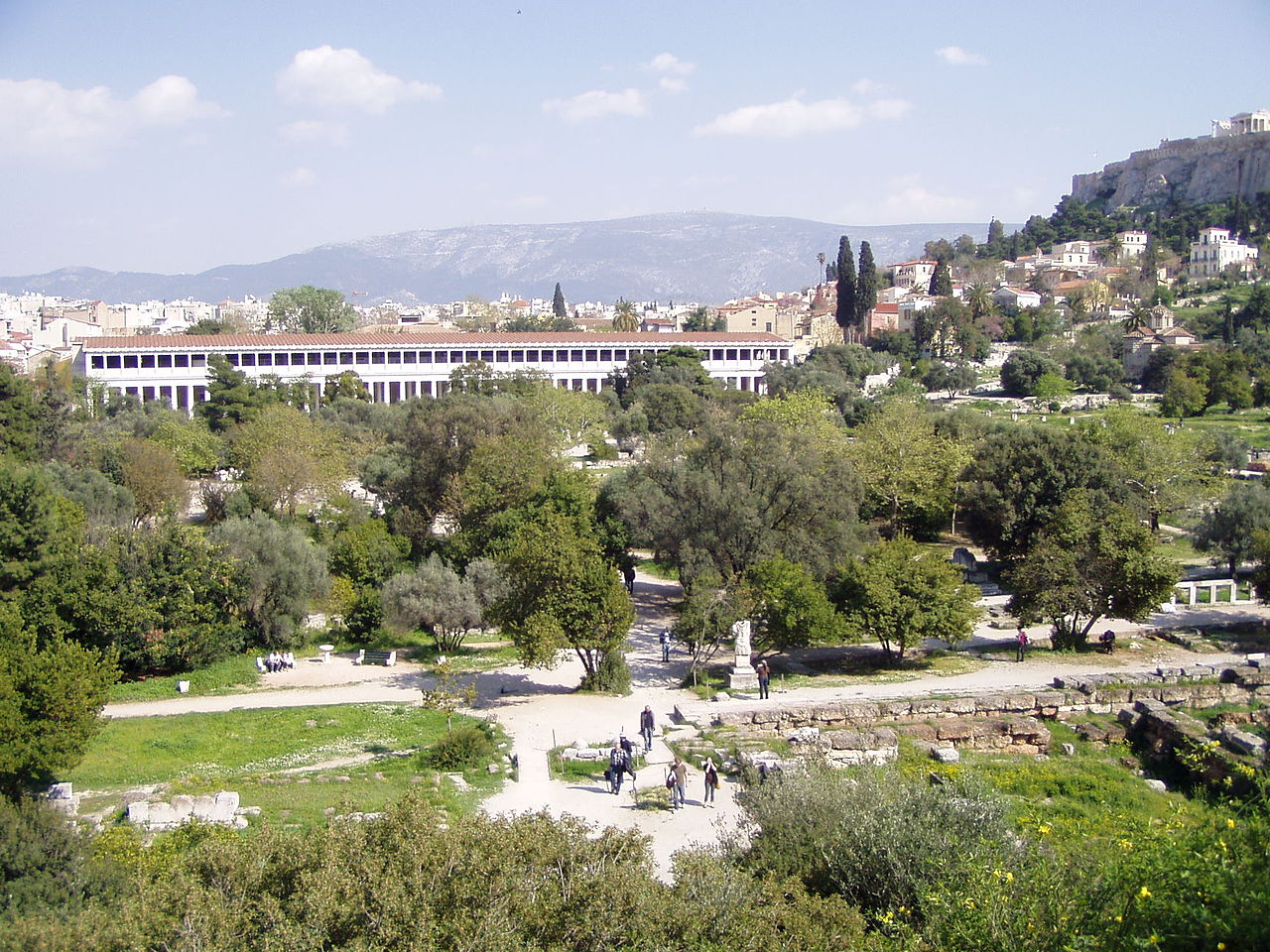 Athenian Agora
Sources for Socrates
The problem of Socrates is that he wrote no philosophical treatises himself. Plato made Socrates the central speaker of his dialogues, Xenophon offered a more practical and moralizing portrait, and Aristophanes in the comedy Clouds mocked him as a representative of new intellectual fashions. The historical Socrates therefore has to be reconstructed carefully. The sources tell us not only about the man, but also about the aims of their authors.
The Method of Questions
Socrates connected philosophy with conversation. He asked people about courage, justice, piety and knowledge, then exposed contradictions in ordinary answers. This way of speaking was not merely argument for victory. Its aim was to test one's own life and the concepts used in politics, family, courts and friendship.
Athens after the War
The trial of Socrates took place in Athens after defeat in the Peloponnesian War, oligarchic revolution and democratic restoration. The charges concerned impiety and corrupting the youth. The trial cannot be reduced only to philosophy or only to politics. Socrates angered some citizens by publicly testing authorities, and some of his associates were linked with anti-democratic circles.
Death and Philosophical Image
In the Platonic tradition, after the verdict Socrates refused to escape and accepted death by drinking poison. In the Apology, Crito and Phaedo this death becomes a philosophical example of loyalty to law, soul and the search for truth. This image made Socrates not only a historical figure, but also a model of the philosopher for whom truth matters more than safety.
Influence
Through Plato and the Socratic schools, Socrates became a starting point for ancient ethics. His question of how one should live proved more important than many cosmological schemes of earlier philosophers. The line from Socrates to Plato and Aristotle forms one of the main continuities of Greek philosophy.
Related topics
Literature and sources
1. Plato. Apology; Crito; Phaedo. 2. Xenophon. Memorabilia; Apology of Socrates. 3. Aristophanes. Clouds. 4. Diogenes Laertius. Lives and Opinions of Eminent Philosophers. 5. Aristotle. Metaphysics; Nicomachean Ethics.
Interested in Ancient Rome beyond reading? Join Legio X Fretensis or explore our reenactment directions.


