Vatican Museums and Antiquity
The Vatican Museums are important for the study of antiquity not as a single hall of masterpieces, but as a large museum system that grew from papal collections, archaeological finds and scholarly work with ancient sculpture. The Pio-Clementino Museum, the Chiaramonti Museum, the Braccio Nuovo, the Gregorian Etruscan Museum, the Gregorian Profane Museum and the departments responsible for Greek, Roman and Etrusco-Italic antiquities are especially relevant to the ancient material.
This complex is useful because it joins the ceremonial history of collecting with real archaeological questions. The visitor can study imperial portraiture, copies of Greek originals, Etruscan and Italic material, sarcophagi, inscriptions, decorative sculpture and museum ensembles in which an ancient object has already passed through early modern collecting, restoration and reinterpretation. The Vatican Museums therefore have to be read carefully: as a source for ancient form, for collection history and for modern museum reconstruction at the same time.
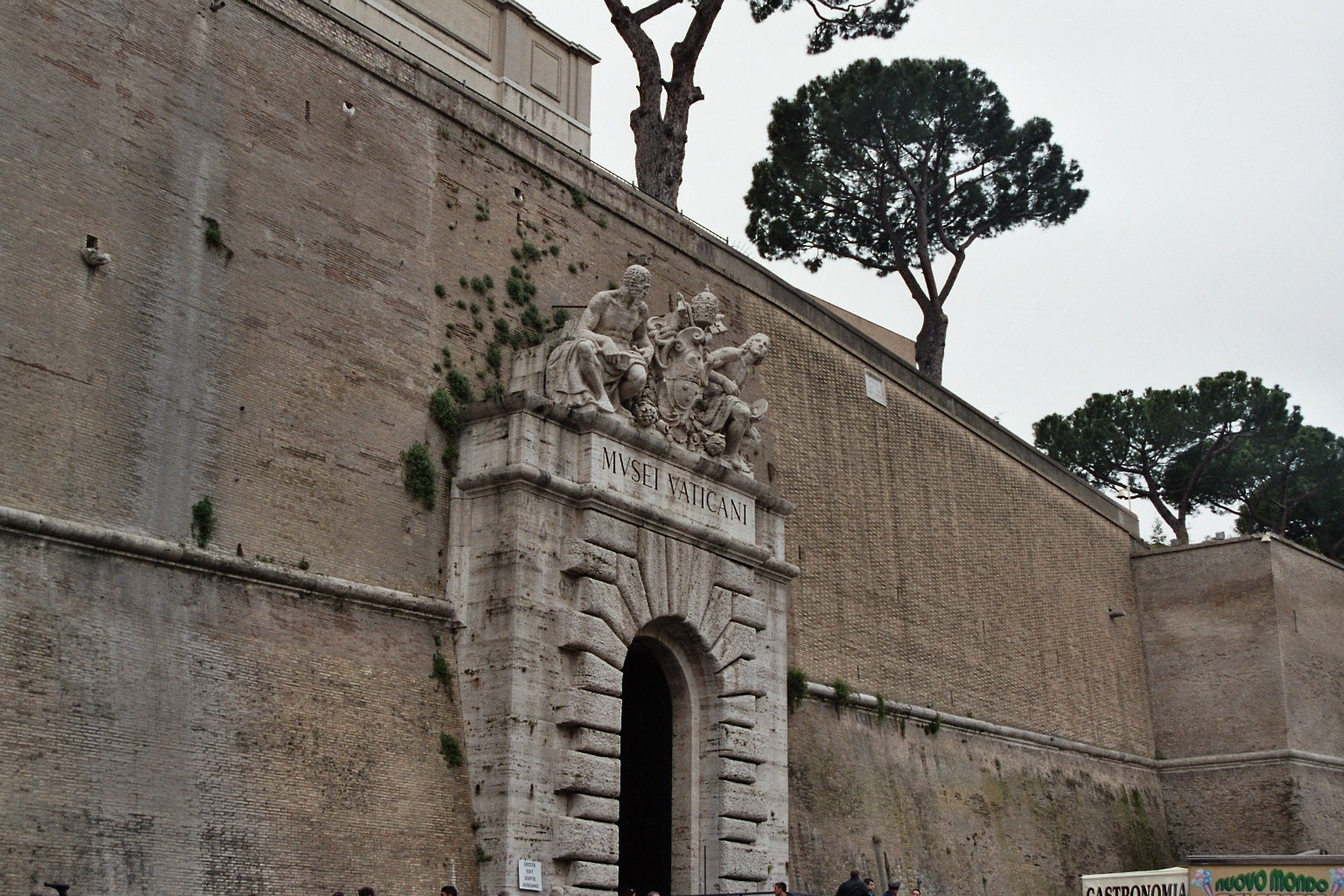 The entrance to the Vatican Museums by the Vatican wall; this is the beginning of the route toward the ancient collections.
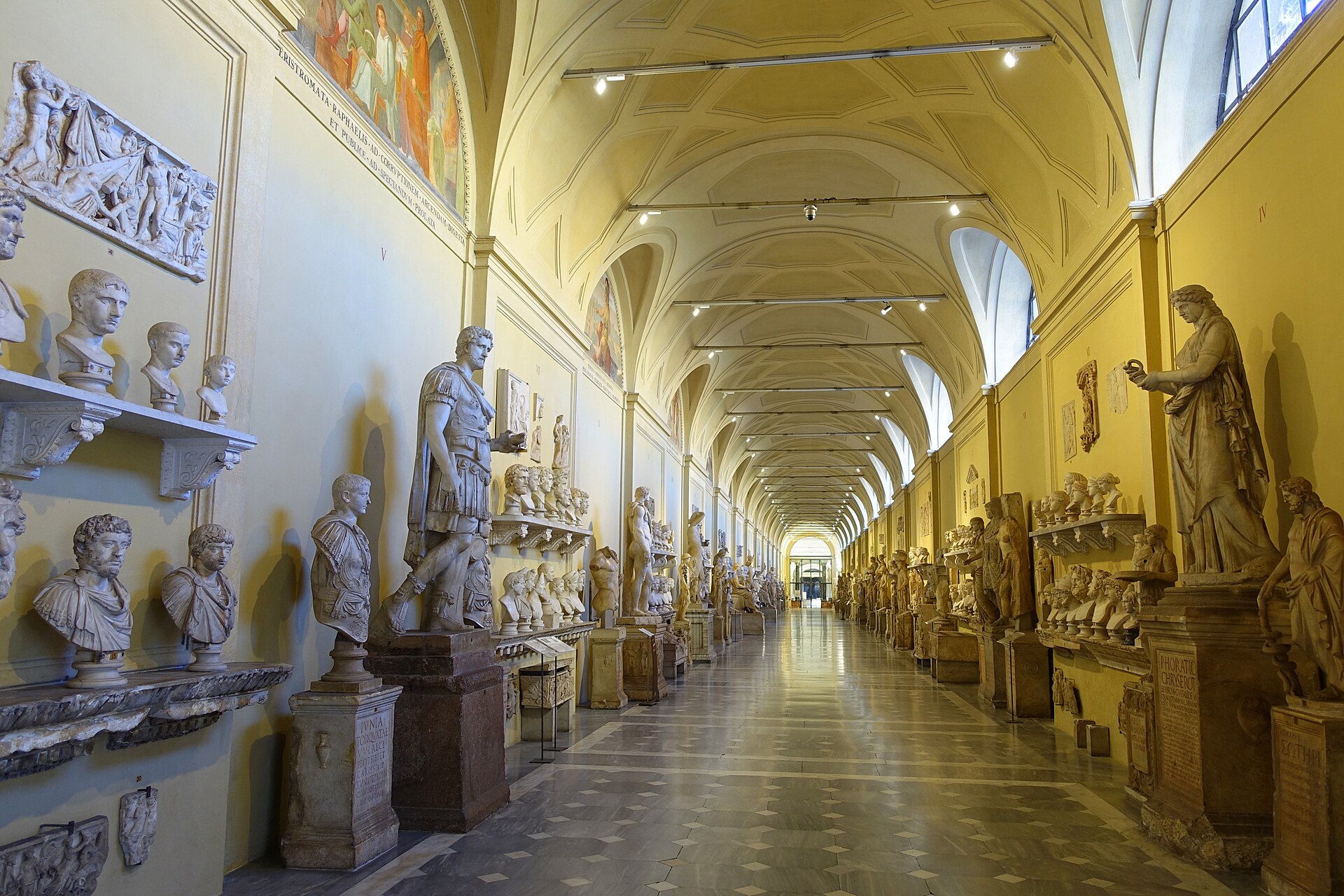 The Chiaramonti Museum gallery with Roman portraits, statues, reliefs and inscriptions.
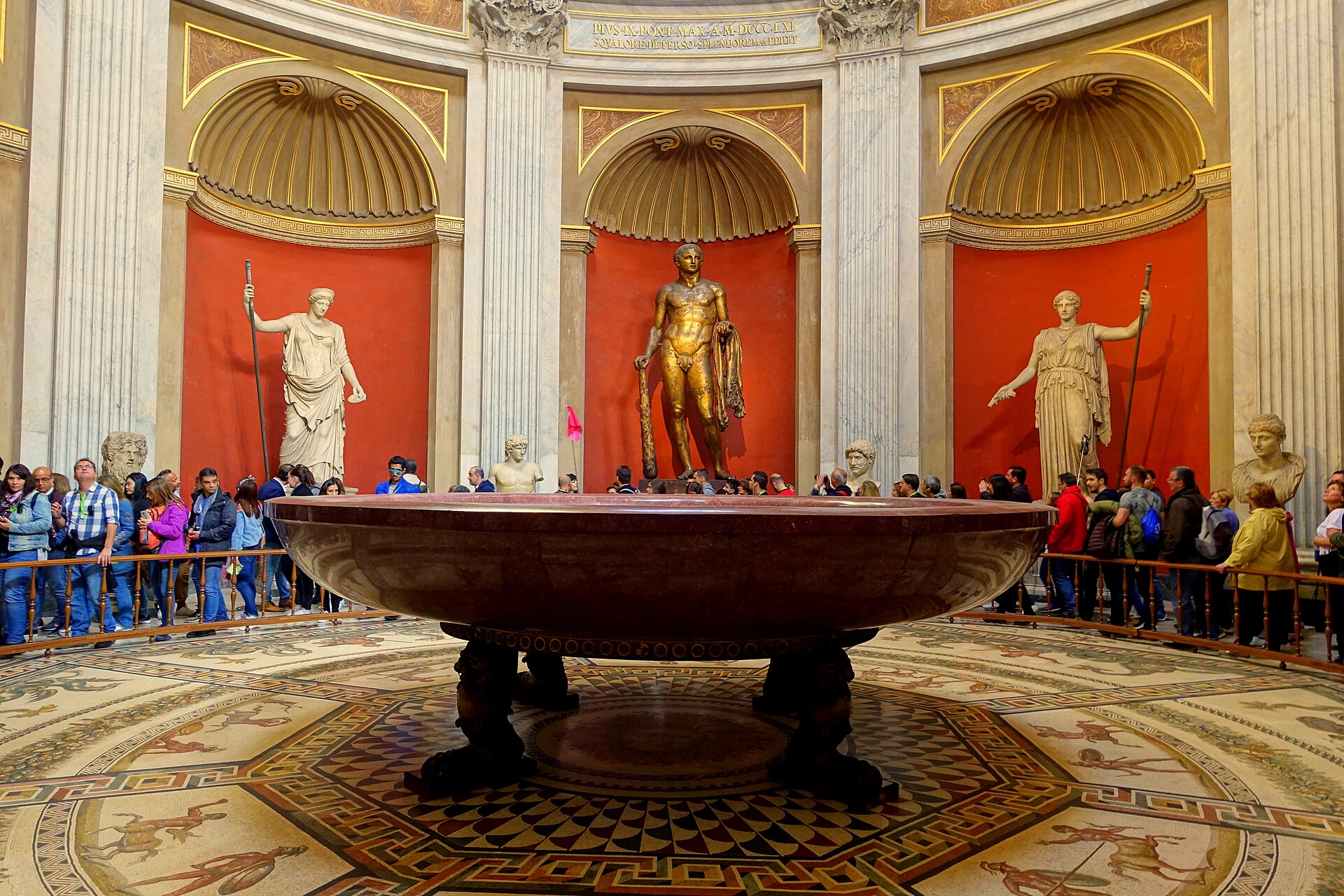 The Sala Rotonda of the Pio-Clementino Museum with large ancient sculpture and the porphyry basin.
A Museum System of Ancient Sculpture
The ancient section of the Vatican Museums is not a single route. The Pio-Clementino Museum presents the core of classical sculpture and the famous rooms in which ancient statues are seen as part of a major papal collection. The Chiaramonti Museum is arranged as a long gallery with hundreds of Roman portraits, reliefs, inscriptions and statues; it is especially useful for comparing types, repetitions, inscriptions and portrait formulae. The Braccio Nuovo continues this line, but places more emphasis on the ceremonial architecture of the gallery, large statues and Roman political imagery.
This structure gives several levels of reading. At the first level there is artistic form: pose, drapery, head, attributes, gesture and composition. At the second level there is museum history: what was found, what was restored, what became part of the papal collection and how the object is displayed in space. At the third level there is archaeological caution: not every attractive statue directly describes everyday dress, military equipment or daily practice. It is often an ideal, cultic, imperial or collecting image that has to be checked against other monuments.
The Pio-Clementino Museum and Imperial Imagery
The Pio-Clementino Museum is especially important for large marbles, imperial images and classical sculpture that became a language of Roman power. In its rooms the ancient object often exists in a ceremonial setting: a statue stands on the axis of a room, beside other antiquities, within architecture that itself stresses the dignity of the ancient image. This helps explain why the Roman elite used Greek artistic language so readily: it offered an established form for power, virtue, beauty, piety and memory.
For reconstruction and historical reading, statues of Augustus and Claudius, Roman copies of Greek models, portraits, sarcophagi and decorative groups are especially important. They cannot be treated as simple photographs of reality. An emperor in an idealized pose, a god with attributes, a hero with refined anatomy or a restored figure speaks not only about appearance, but also about political and aesthetic language. Such monuments are therefore best used together with coins, inscriptions, funerary reliefs and archaeological finds where status and function are clearer.
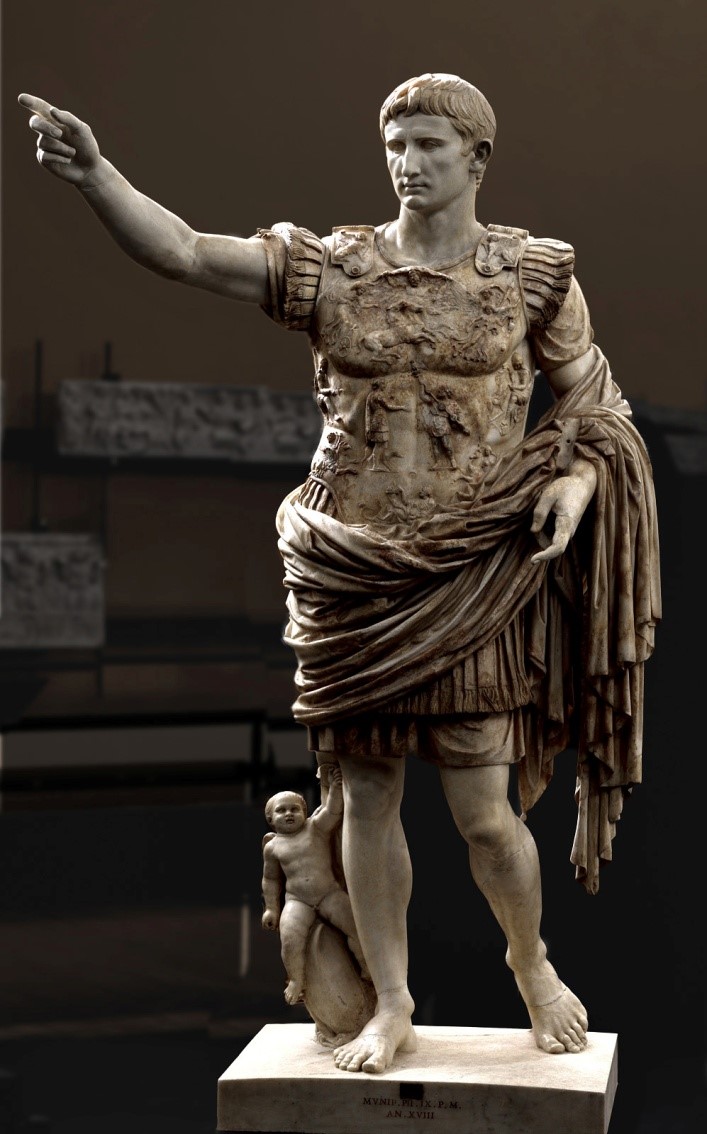 Statue of Augustus from Prima Porta. Marble. Rome,Vatican Museums,Chiaramonti Museum,New Wing,14. The last quarter of the 1st century BC (20-17 BC)
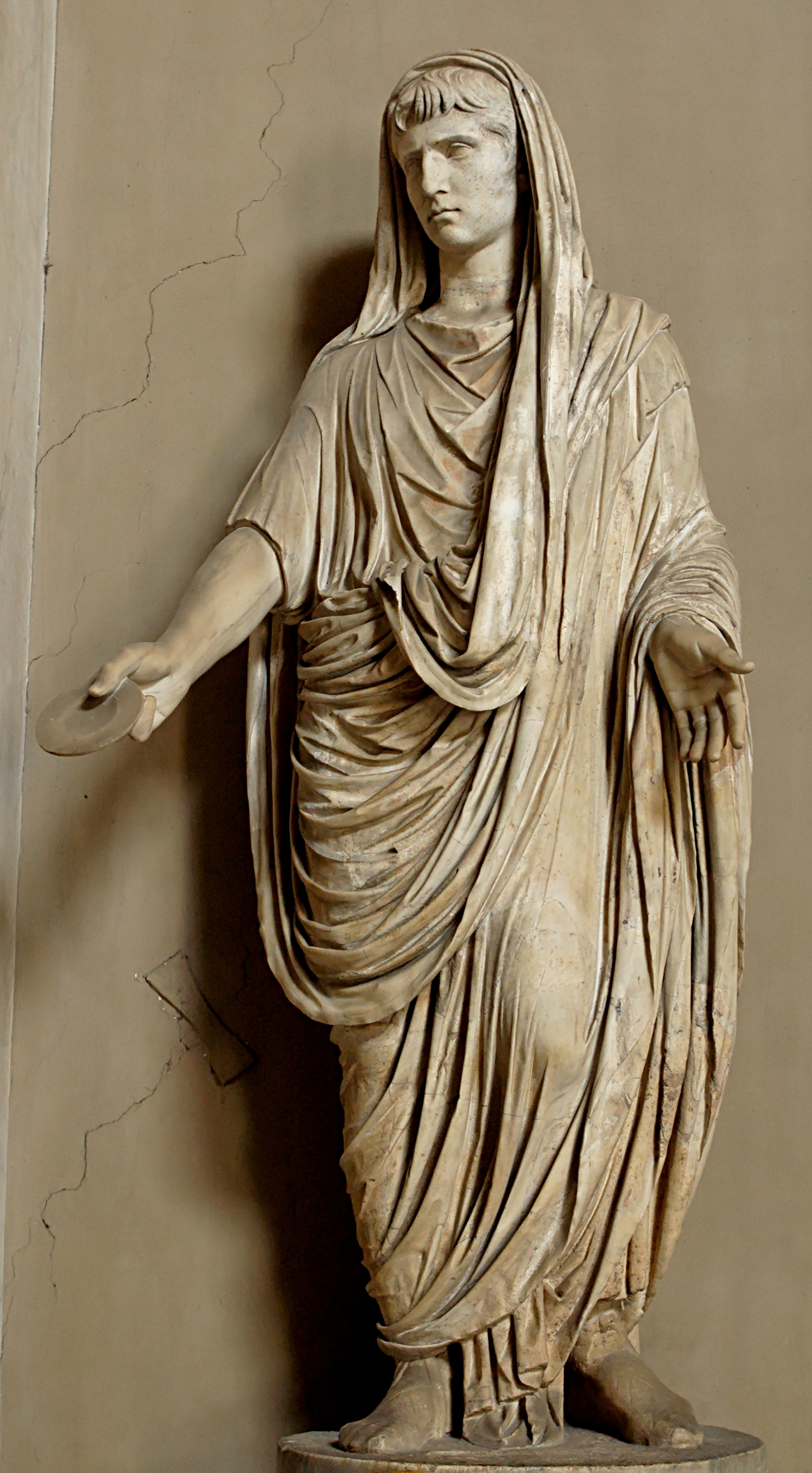 Statue of Emperor Augustus. Marble. Rome,Vatican Museum (the Greek Cross Room). Around 20 BC.
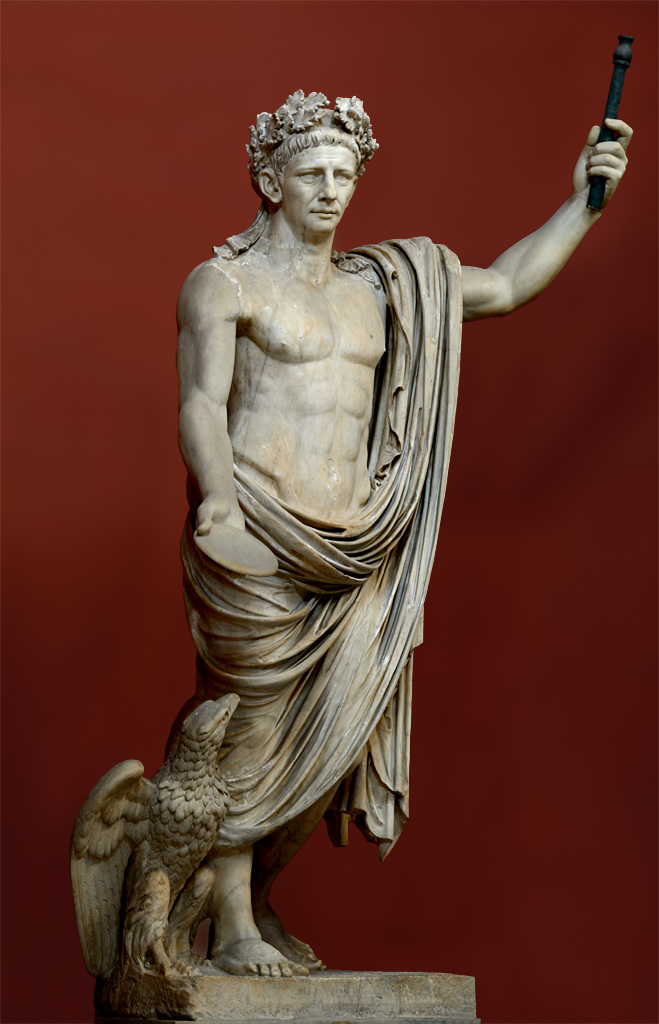 Emperor Claudius represented as Jupiter. Marble, 1st century AD; Vatican Museums.
Chiaramonti, the Braccio Nuovo and Repetition
The Chiaramonti Museum is valuable because it does not force the visitor to look only at isolated masterpieces. The long gallery allows comparison of many heads, busts, torsos, reliefs and inscriptions. For the history of portraiture this is especially useful: stable types of hairstyle, age formulae, beard treatment, folds of dress and status markers can be seen side by side. This material makes it easier to distinguish an individual portrait from the general fashion of a period and to see where the sculptor repeats a recognizable formula and where he works with a specific face.
The Braccio Nuovo adds political and architectural scale to this. The gallery does not merely store ancient statues; it builds a ceremonial museum scenario around them. When working with photographs, it is therefore important to separate the ancient object from the museum staging. The statue itself may be Roman, but the effect received by the modern viewer is also created by light, the axis of the gallery, neighbouring objects, the pedestal and restoration. Interpretation should take account of both the ancient object and the modern museum setting.
Etruscan, Italic and Funerary Material
Antiquity in the Vatican Museums is not limited to imperial Rome. The Gregorian Etruscan Museum and the department of Etrusco-Italic antiquities are important for earlier layers of Italy: ceramics, bronzes, funerary groups, votive objects and the connections between Greek, Etruscan and Roman cultures. This material shows that the Roman world did not develop in isolation, but in a dense environment of Italic traditions, exchange, borrowing and competition.
Funerary and epigraphic monuments provide a different scale from ceremonial sculpture. A sarcophagus, funerary relief, inscription or small grave object may be less spectacular, but it is often closer to social practice. Such sources show names, family ties, formulae of memory, age, status, profession, local fashion and sometimes a concrete ritual context. For reconstruction, these sources can be more reliable than a perfectly preserved statue without a clear provenance.
Main Materials
- classical and Roman marble sculpture: statues of gods, heroes, emperors, private individuals and decorative groups;
- portraits, busts and reliefs important for hairstyles, beards, age, status, gestures and drapery;
- Greek models in Roman reception: copies, adaptations, collecting versions and ideal types;
- Etruscan and Italic antiquities: bronzes, pottery, funerary groups, votive objects and early Italic imagery;
- sarcophagi, tombstones, inscriptions and epigraphic monuments that connect image with name, status and formulae of memory;
- museum spaces as a separate source: galleries, old collections, restorations, pedestals and the modern display system.
The collection supports comparison between different types of evidence. The same theme can be checked through different kinds of source: a statue shows an ideal image, a portrait gives social fashion, an inscription clarifies status, a funerary monument shows family formulae, and the museum room reminds us that modern display also shapes the perception of antiquity.
Context and Limits
The Vatican Museums are especially strong when the subject is the imagery of power, portrait culture, large sculpture and the history of ancient collections. But this does not make every object a direct witness to everyday life. Some statues are Roman copies of Greek works, some passed through restorations, and some are known from older collections with incomplete archaeological context. Even a well-dated object may be displayed in a modern ensemble where neighbouring objects and lighting have no connection with its ancient setting.
Photographs from the Vatican Museums are therefore best used with captions that distinguish object, date, presumed provenance, current location and museum setting. If an object is used for reconstructing clothing, equipment or ritual, it should be compared with more contextual finds: funerary reliefs, frescoes, coins, inscriptions, archaeological publications and excavated objects. In this sense the Vatican Museums do not provide a ready answer, but a strong visual corpus that has to be checked.
Related Topics
- Museums of Antiquity
- Roman Archaeological Sources for Reconstruction
- Reconstruction of the Augustus of Prima Porta
Sources
- Vatican Museums: Pio Clementino Museum
- Vatican Museums: Chiaramonti Museum
- Vatican Museums: Department of Greek and Roman Antiquities
- Vatican Museums: Gregorian Etruscan Museum
- Wikimedia Commons: Vatican Museums


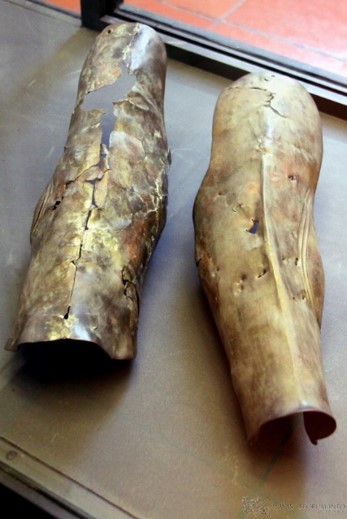 Roman armor greaves of the Republic. Vatican City Museum. 2-1 century BC
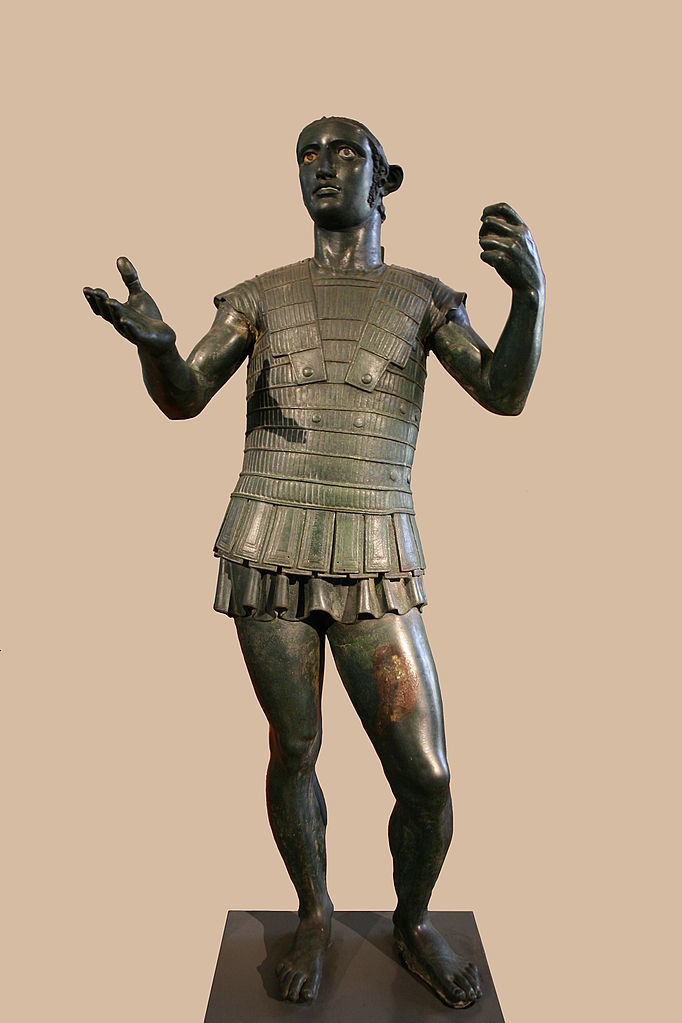 Mars of Todi, bronze statue in the Etruscan-Roman tradition, late 5th to early 4th century BC; Vatican Museums.
 Poultry,fish,dates,asparagus and seafood. I century. Mosaics,Vatican museums.
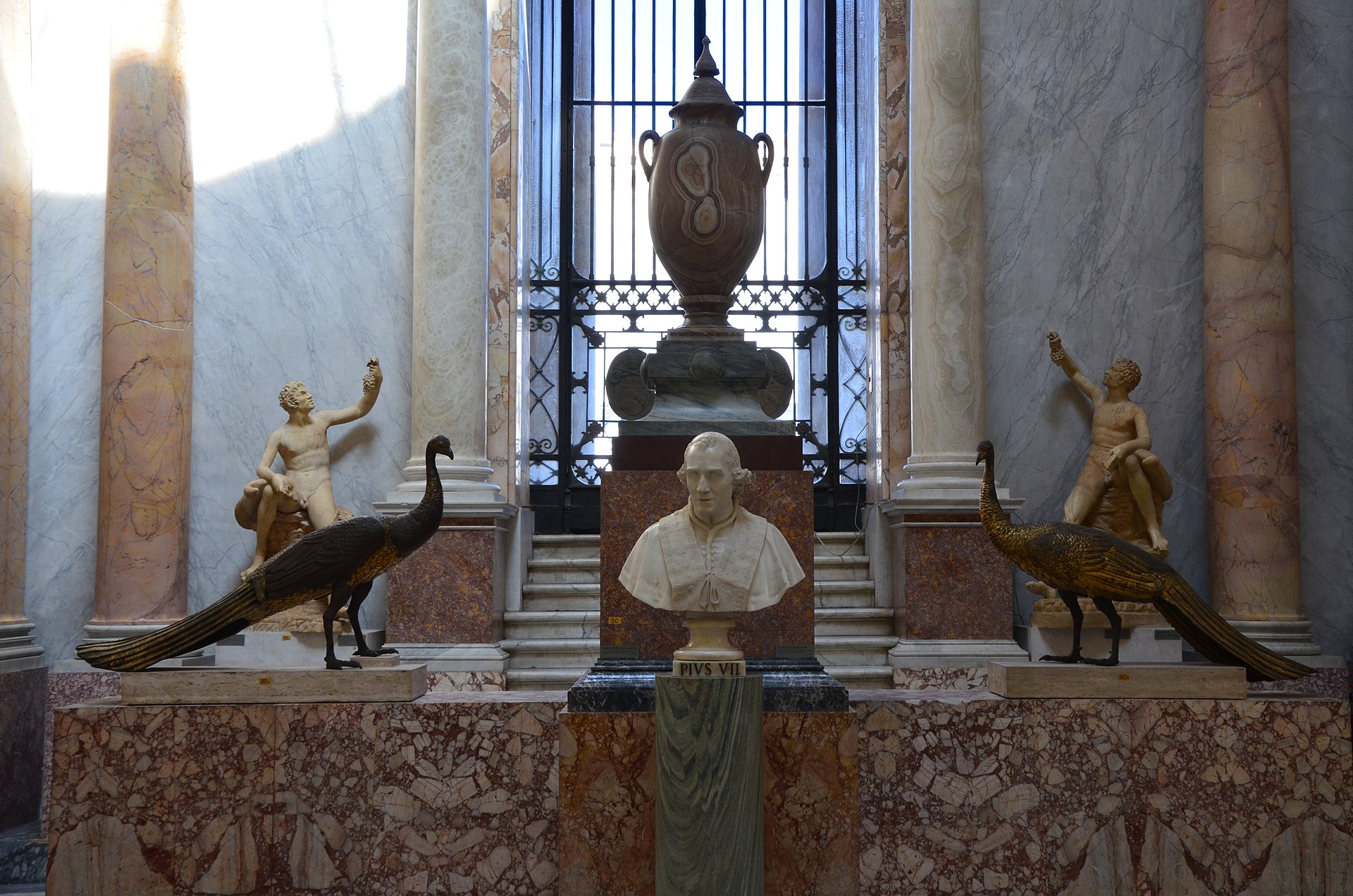 The Braccio Nuovo of the Chiaramonti Museum: a long gallery with ancient sculpture and Roman portraits.
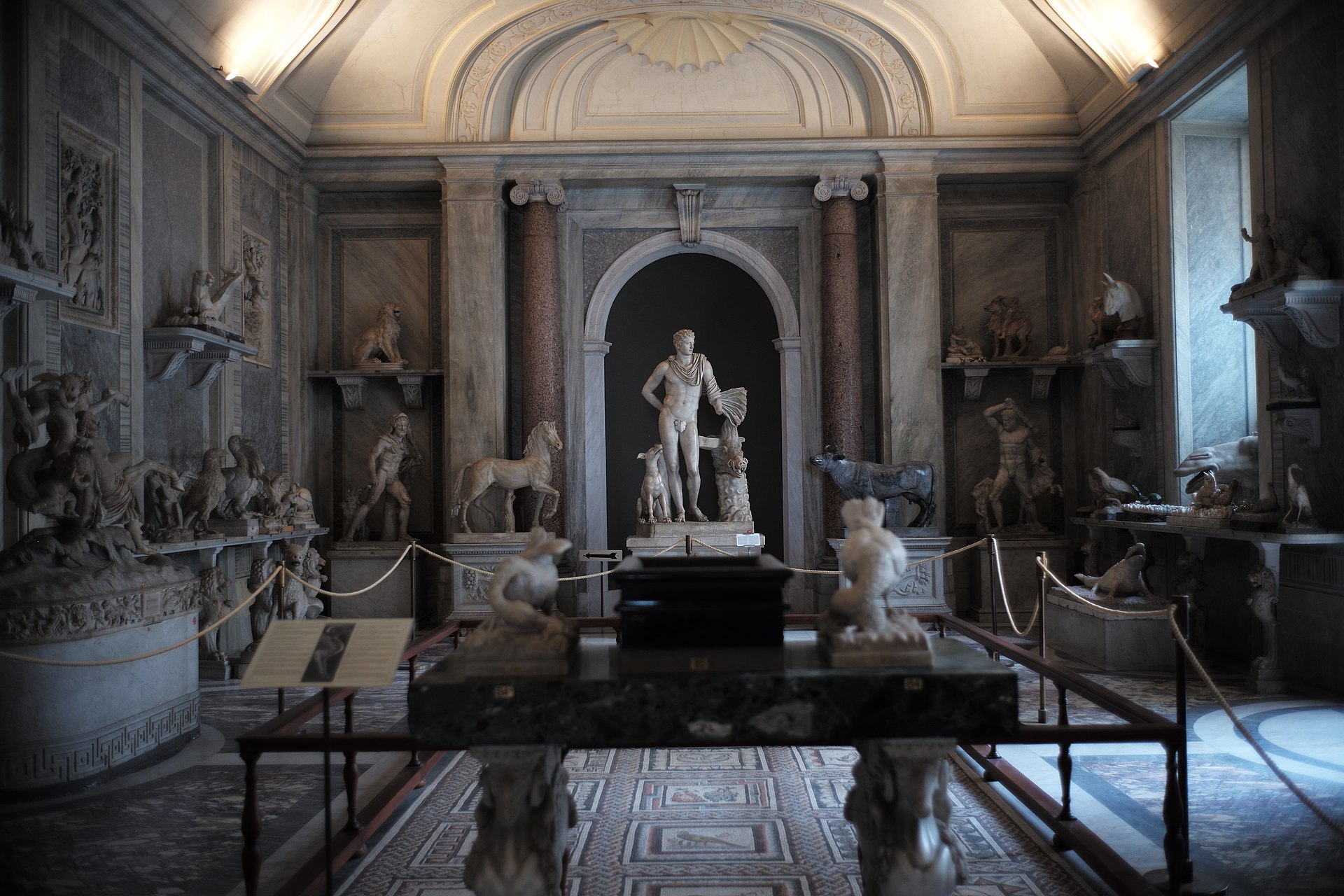 The Hall of Animals in the Pio-Clementino Museum, where ancient sculpture is displayed as a decorative and collecting environment.
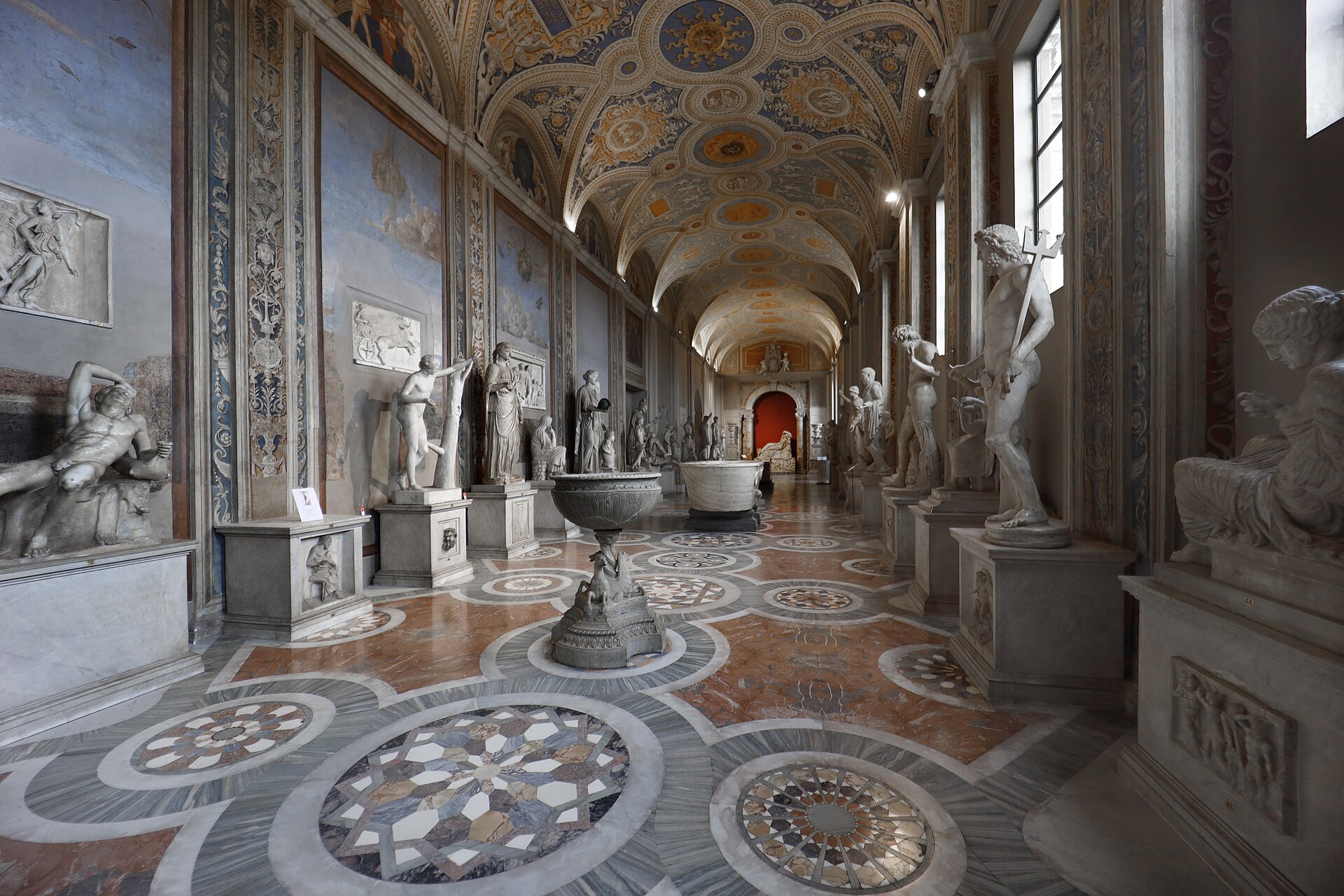 The Galleria delle Statue in the Pio-Clementino Museum, one of the key routes through ancient sculpture in the Vatican Museums.
Interested in Ancient Rome beyond reading? Join Legio X Fretensis or explore our reenactment directions.


