Vesuvius
Vesuvius is an active volcano in Campania, east of Naples. In antiquity it stood in a densely settled part of the Roman world, close to Pompeii, Herculaneum, Oplontis and the villas around the Bay of Naples.
Vesuvius is best known for the eruption of AD 79. The disaster destroyed several communities, yet it also preserved an exceptional archaeological record for the study of Rome, the Roman Empire and provincial Italy.
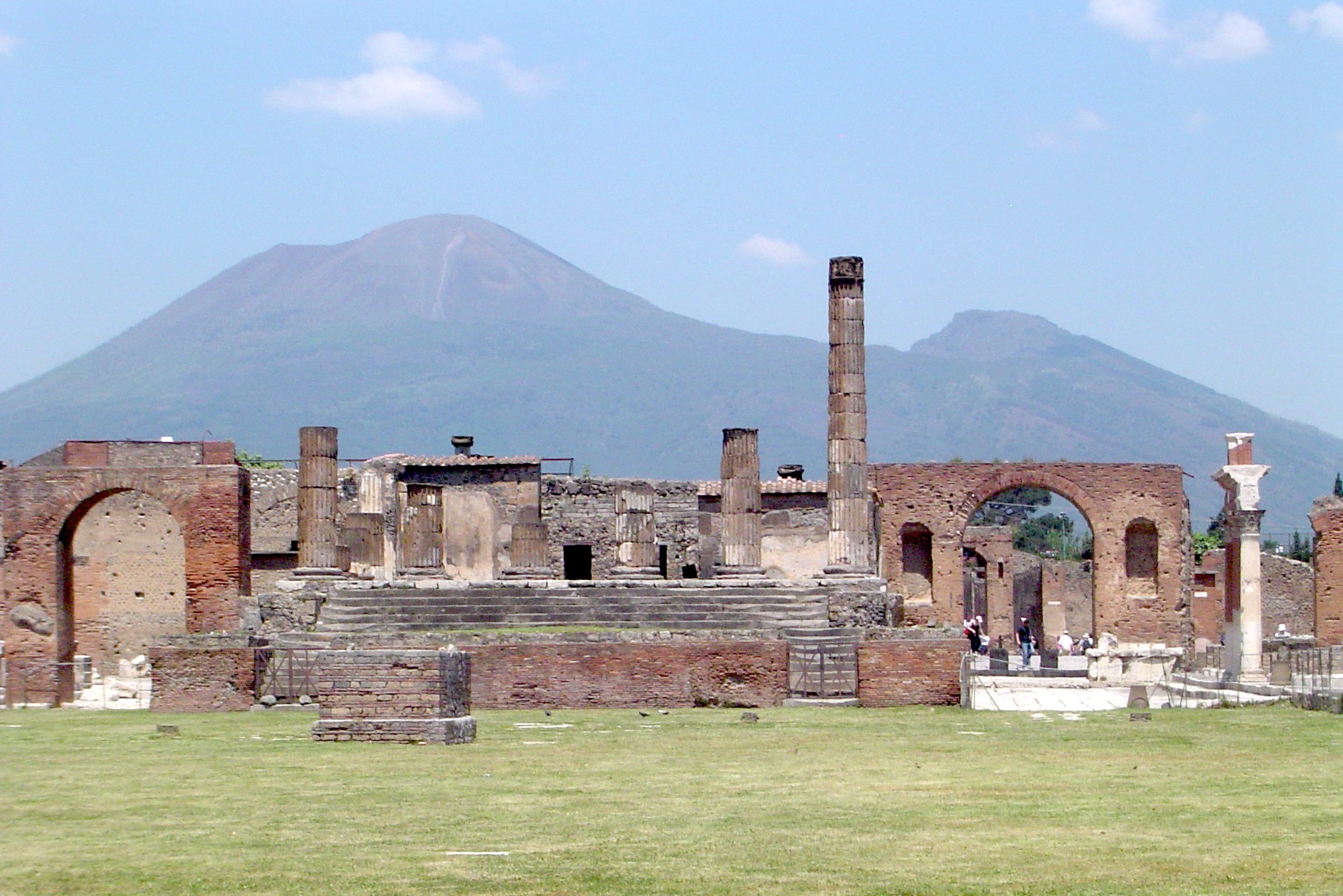 View of Pompeii and Vesuvius. Modern view.
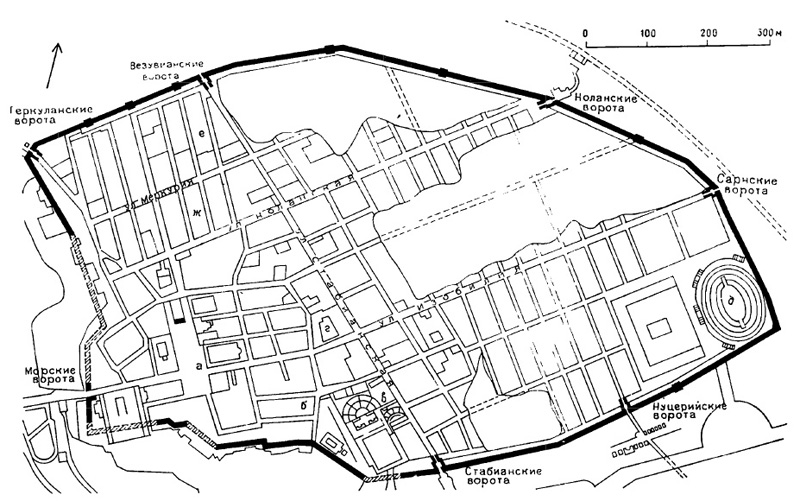 Map of Pompeii with the names of the main streets. 2nd floor of the 20th century.
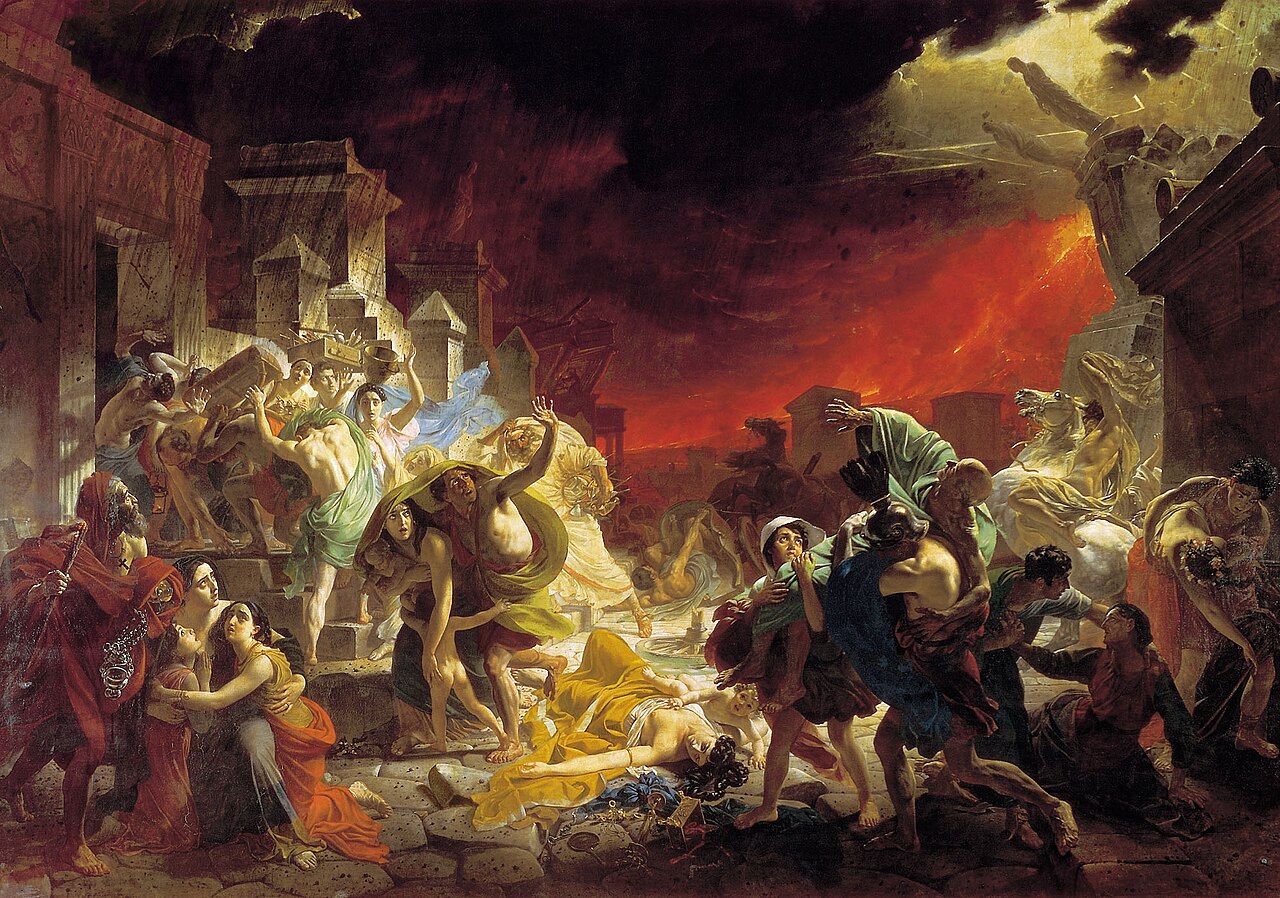 The eruption of Vesuvius in AD 79. Event reconstruction.
Geography
Vesuvius lies on the eastern side of the Bay of Naples. Its position made the volcano a dominant feature of Campania: it overlooked roads, rural villas, ports and towns connected by trade with Naples, Puteoli and Rome.
The area was economically valuable because of its fertile soils, vineyards and easy access to the sea. For that reason the foot of the volcano held not only towns, but also rural estates, storehouses, roads and workshops.
The volcano and Campania
Before AD 79 many inhabitants apparently did not see the mountain as an immediate threat: its slopes were used economically, and memories of earlier eruptions were distant and unclear. The earthquake of AD 62 had already damaged the towns of the region, and some buildings were still under repair when the new disaster struck.
The eruption of AD 79
The eruption began with a powerful column of ash, pumice and gases. Ash and lapilli fell on Pompeii for many hours; roofs collapsed under the weight of material, streets became impassable and inhabitants sought shelter or fled.
Later phases included hot pyroclastic flows and surges. They were especially destructive at Herculaneum and along the coast, where high temperatures and dense volcanic material preserved buildings and organic remains in a different way.
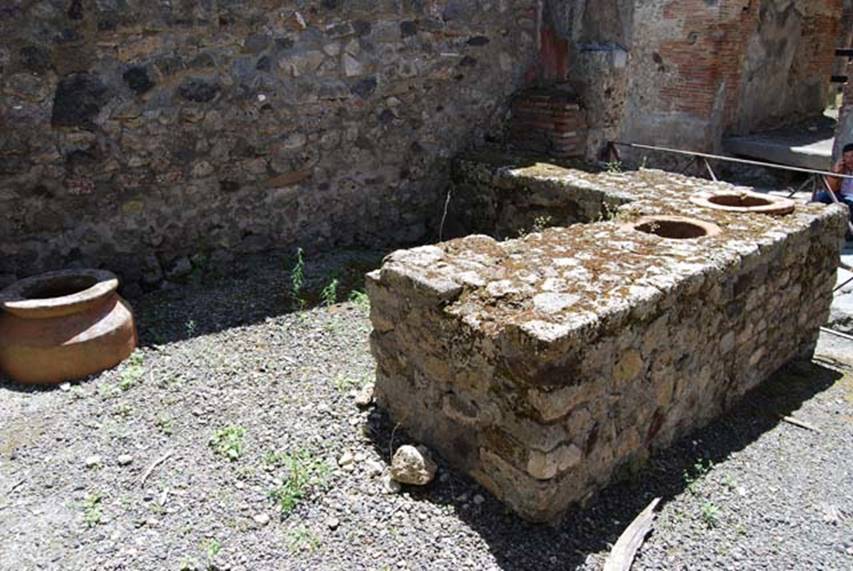 Caupona in Pompeii
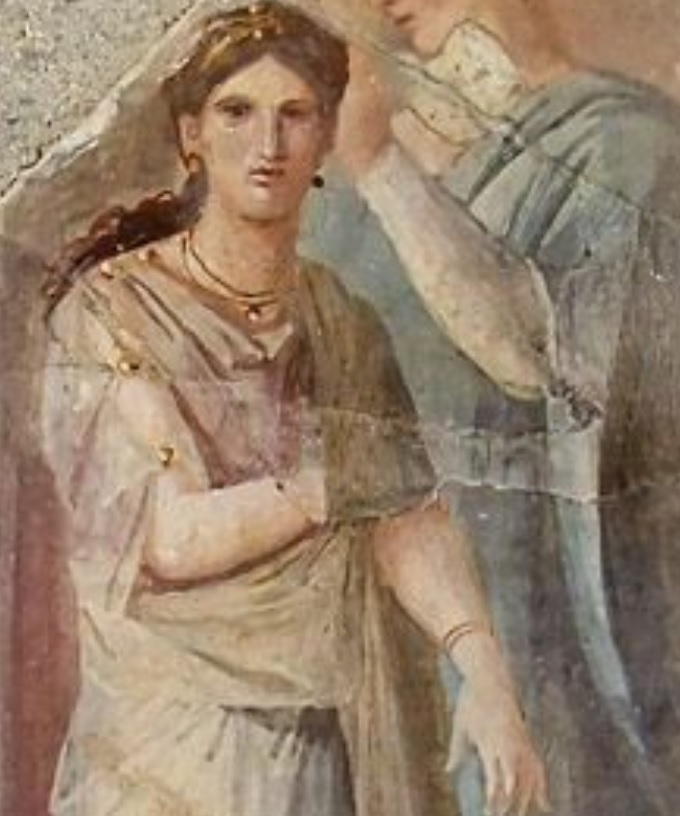 Woman wearing a bracelet, wall painting from Herculaneum; before 79 CE. Evidence for the depiction of arm jewellery.
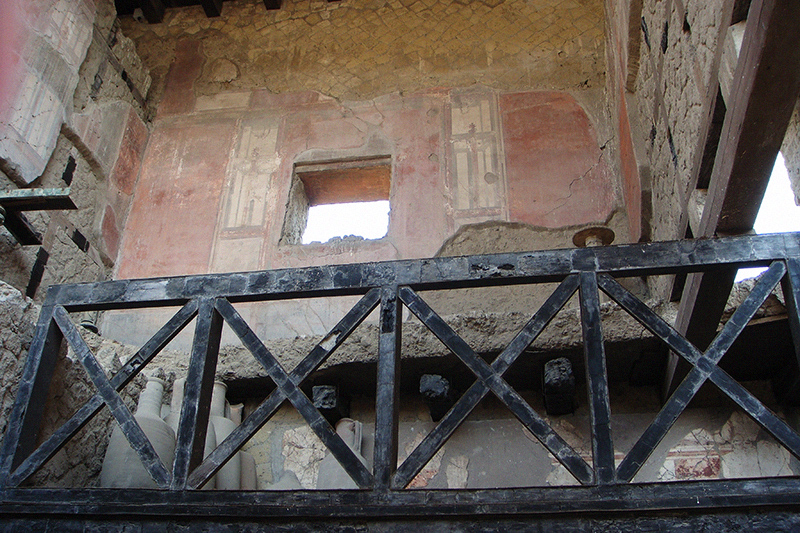 A thermopolium at Herculaneum. The counter with dolia shows the setting of street food and small-scale commerce in the Vesuvian town.
The testimony of Pliny the Younger
The main written source for the catastrophe is Pliny the Younger’s letters to Tacitus. Pliny described the unusual cloud, panic, darkness, ash fall and the death of his uncle, Pliny the Elder, who commanded the fleet at Misenum.
His account is important as the testimony of an observer who watched the eruption from the other side of the bay. Modern reconstructions compare the text with geology, stratigraphy and archaeological evidence.
Consequences for Pompeii and Herculaneum
For Pompeii the eruption meant the burial of the urban environment under ash and pumice. This preserved streets, houses, shops, inscriptions, frescoes and household objects.
At Herculaneum conditions were different: the town was covered by hot and dense volcanic material. Wood, furniture, doors, beams, food and papyri survived there better.
Archaeological significance
Vesuvius caused the destruction of ancient towns, yet the same disaster turned Campania into one of the chief archaeological archives of Roman history. Scholars study architecture, diet, trade, religion, social structure, art and urban infrastructure there.
Related topics
Literature and sources
Pliny the Younger. Letters 6.16 and 6.20.
Sigurdsson, Haraldur et al. The Eruption of Vesuvius in A.D. 79.
Wikimedia Commons: Pompeii&Vesuvius.JPG; Building in Herculaneum showing carbonized wood.


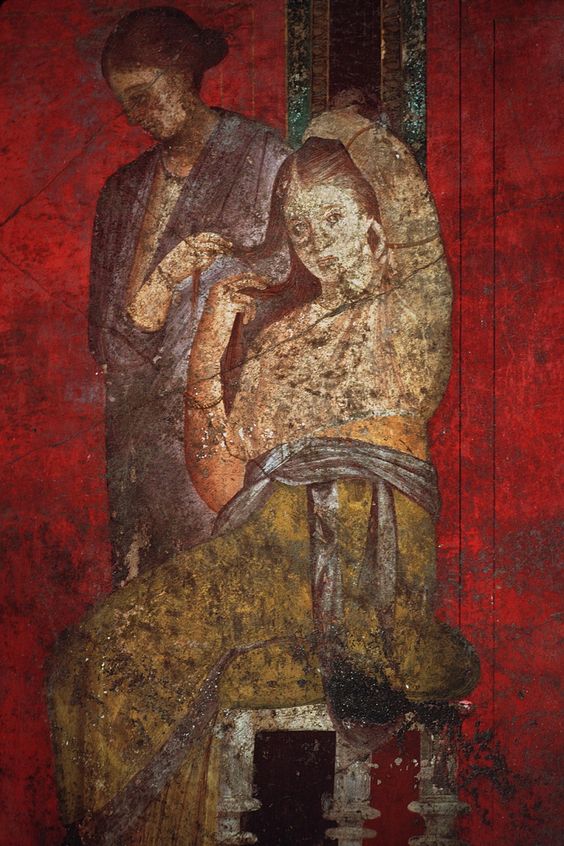 Fresco from the Villa of the Mysteries,Pompeii. 1st century AD
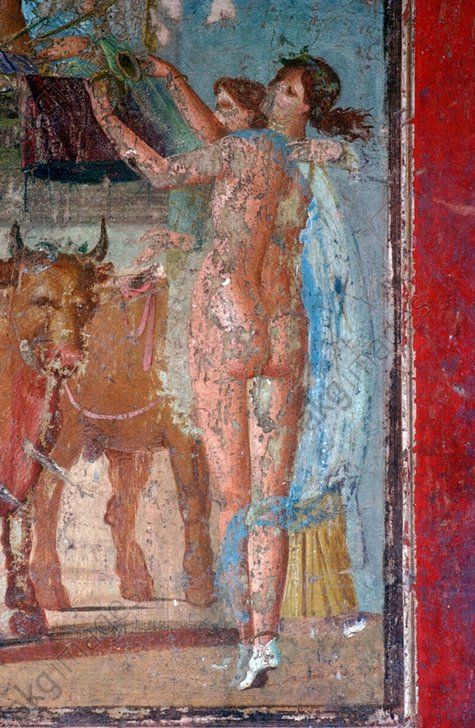 Fresco of a woman in closed shoes from Pompeii. Forum Baths (VII,5,built),Stucco Relief,Campania. 1st century AD
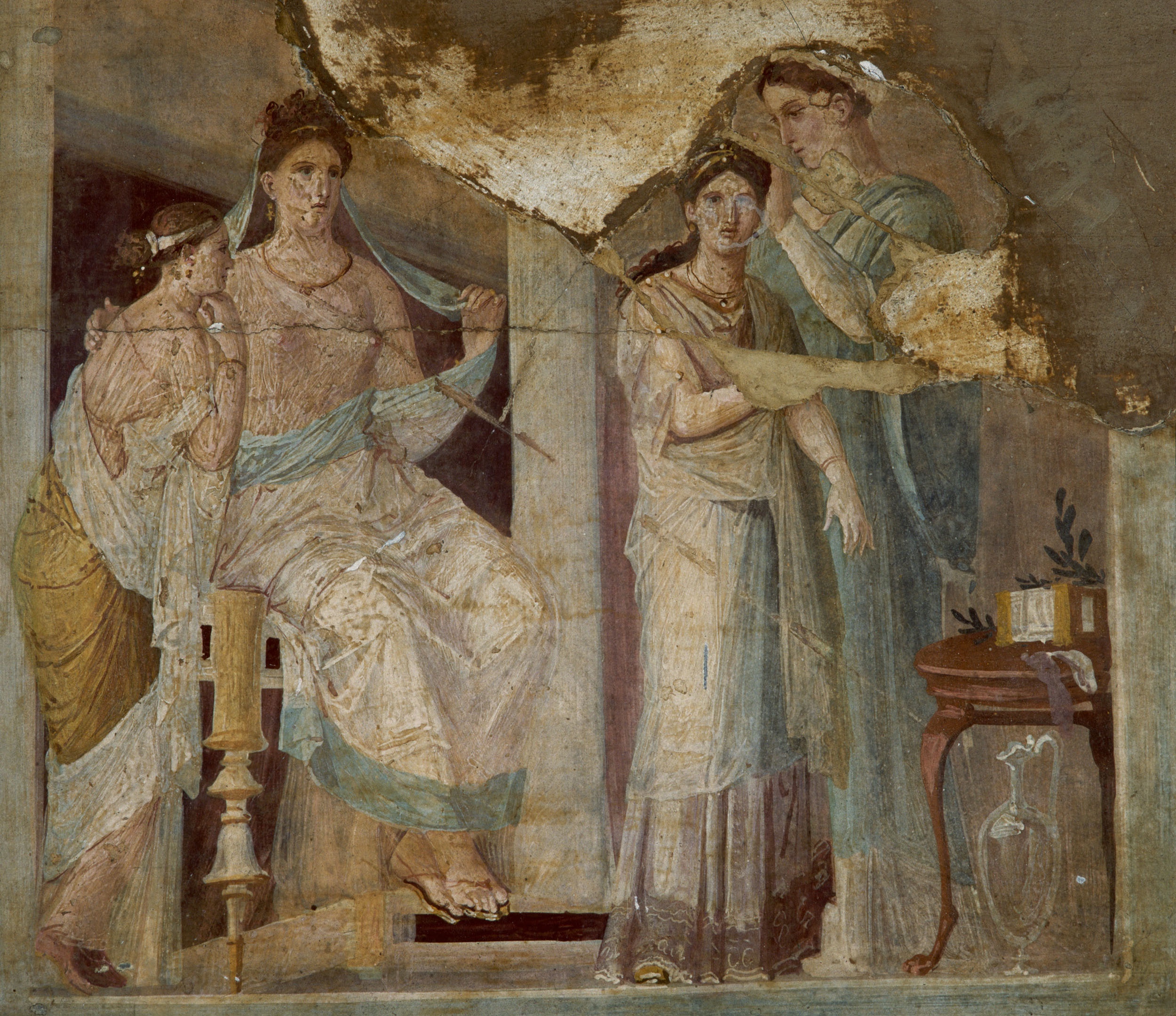 A fresco from Herculaneum with a female figure and footwear. Images of this type matter when read together with their room and archaeological context.
Interested in Ancient Rome beyond reading? Join Legio X Fretensis or explore our reenactment directions.


