Herculaneum
Herculaneum was an ancient town in Campania at the foot of Vesuvius, west of Pompeii. It was destroyed in AD 79 by the same eruption that buried Pompeii, but it was preserved in a different way: dense hot flows rapidly covered the town, carbonized wood and organic material, and then sealed buildings beneath a thick layer of volcanic deposits.
Herculaneum is therefore not simply "smaller Pompeii". It offers another view of Campanian life: a compact coastal town with houses, shops, baths, multi-storey buildings, wooden structures, furniture, food, papyri and objects that rarely survive in normal archaeological conditions.
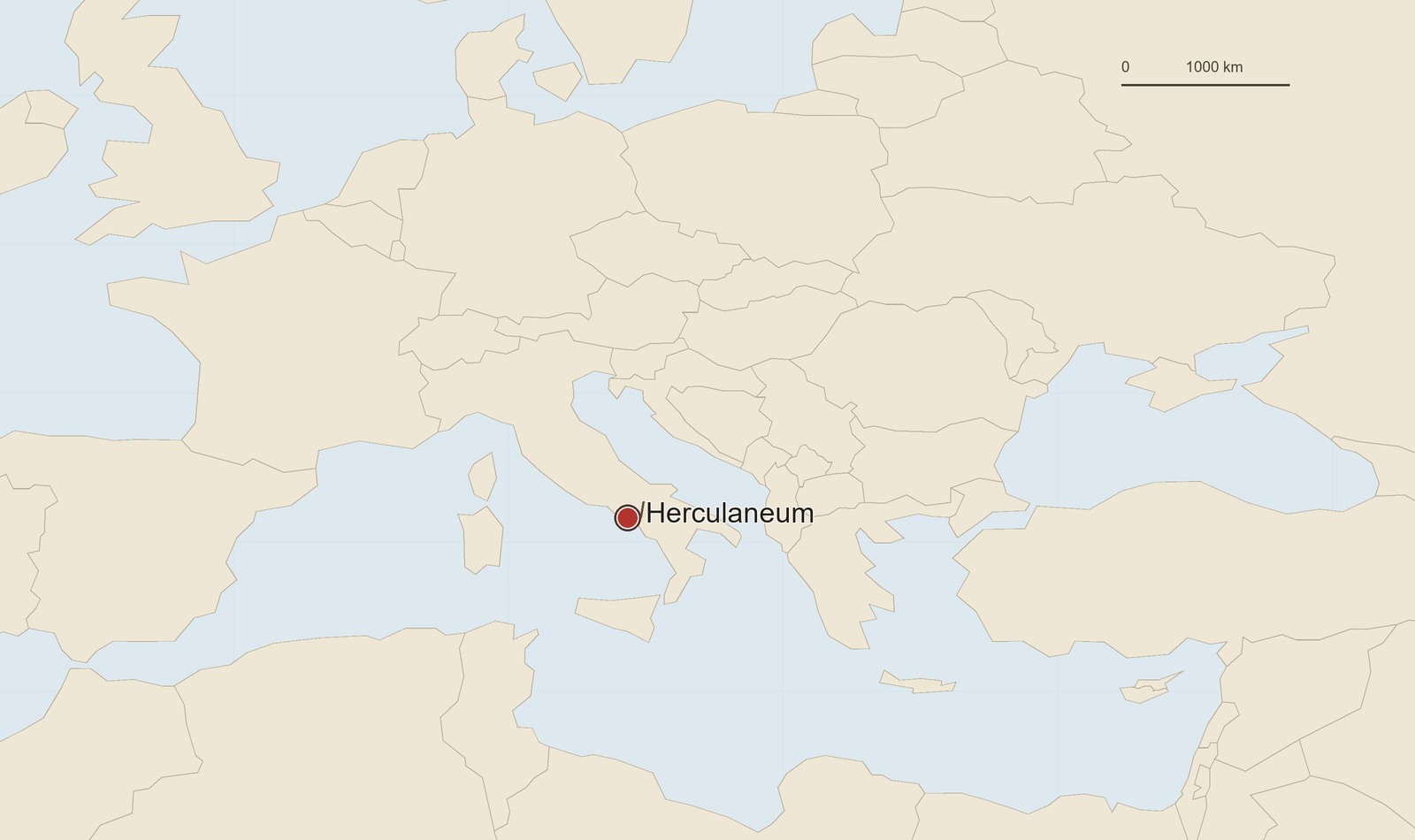 Location map: Herculaneum. The marker shows the ancient site or main archaeological complex.
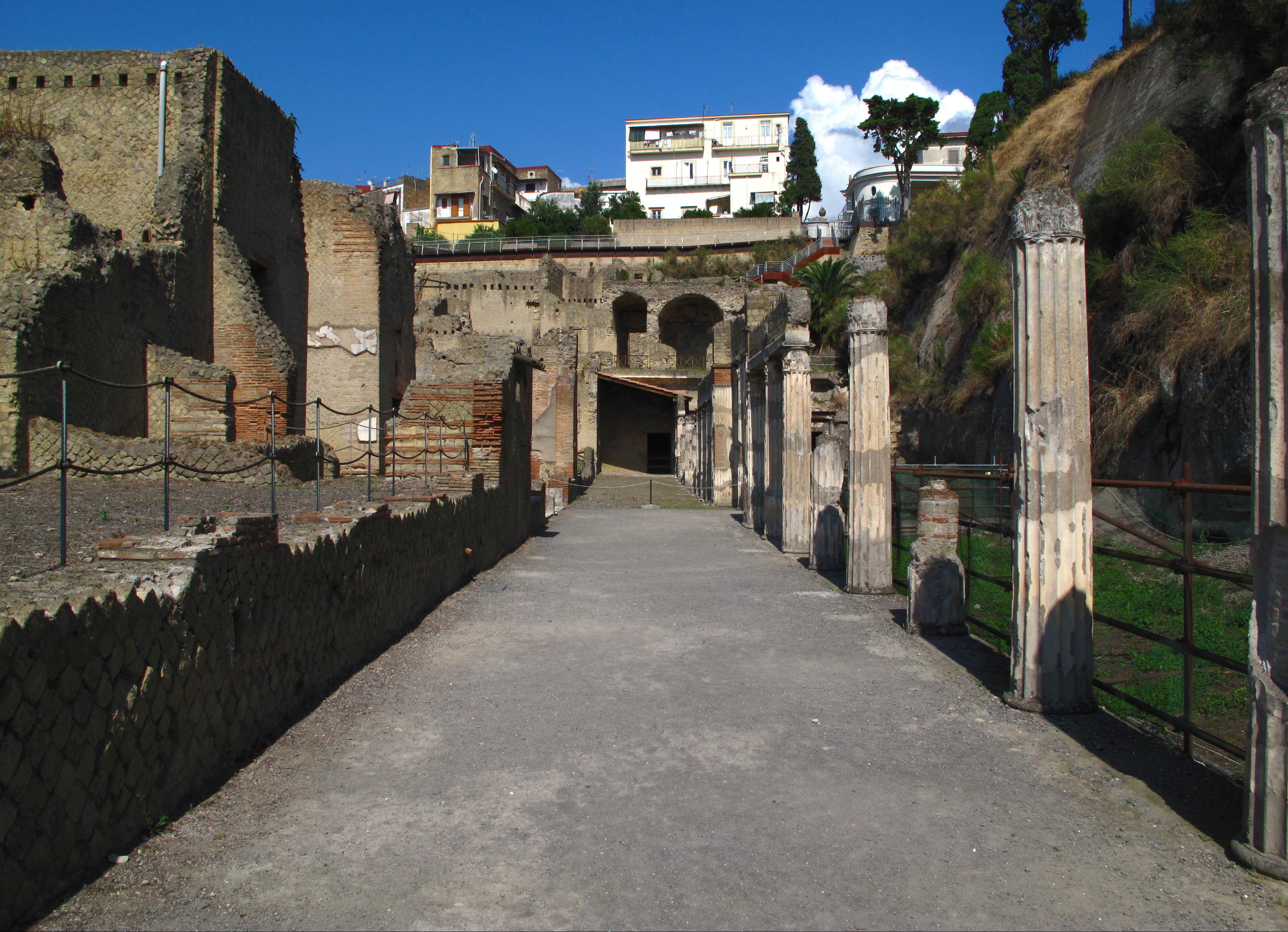 Herculaneum, general view of the excavations. AD 79, modern view.
The Town and Its People
Herculaneum was smaller than Pompeii, but its urban fabric is especially clear through its houses and streets. Residential blocks, shops, baths, a palaestra, cult spaces and houses of wealthy owners survived. Proximity to the sea, villas and the fertile slopes of Vesuvius connected the town with trade, craft, agriculture and the leisure culture of the Roman elite.
Streets and houses do not show one standard Roman interior, but different levels of wealth and different ways of using space. A shop could be connected with domestic rooms; upper floors and internal staircases remind us that the town was three-dimensional, not only a plan at the level of excavated walls.
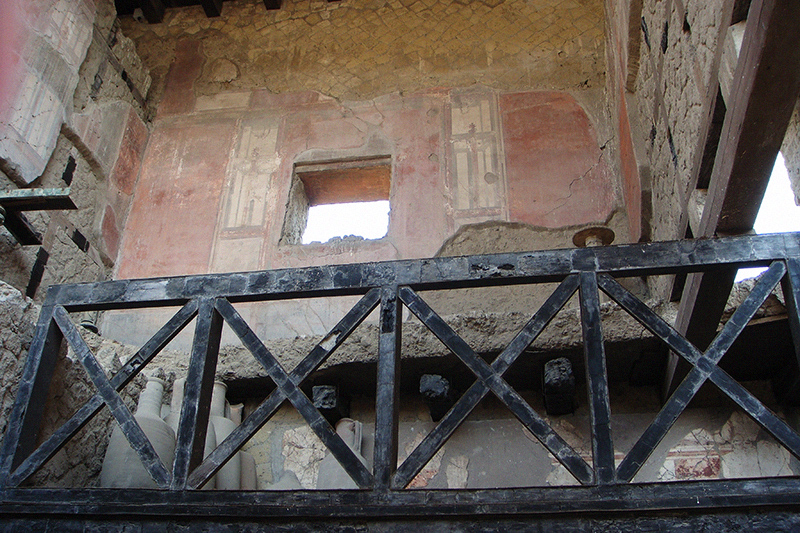 A thermopolium at Herculaneum. The counter with dolia shows the setting of street food and small-scale commerce in the Vesuvian town.
Destruction in AD 79
During the eruption of AD 79 Herculaneum was struck by pyroclastic flows and avalanches of hot volcanic material. Unlike Pompeii, where ash and lapilli played a major role, Herculaneum was filled by dense deposits that entered rooms, streets and the shoreline. This explains both the pattern of destruction and the unusual preservation.
Human remains were found near the shore, where people tried to shelter in the boat sheds and by the sea. These finds are important for understanding the catastrophe itself: the town did not die slowly or evenly, but through a sequence of events in which temperature, flow speed and the position of people within the town were decisive.
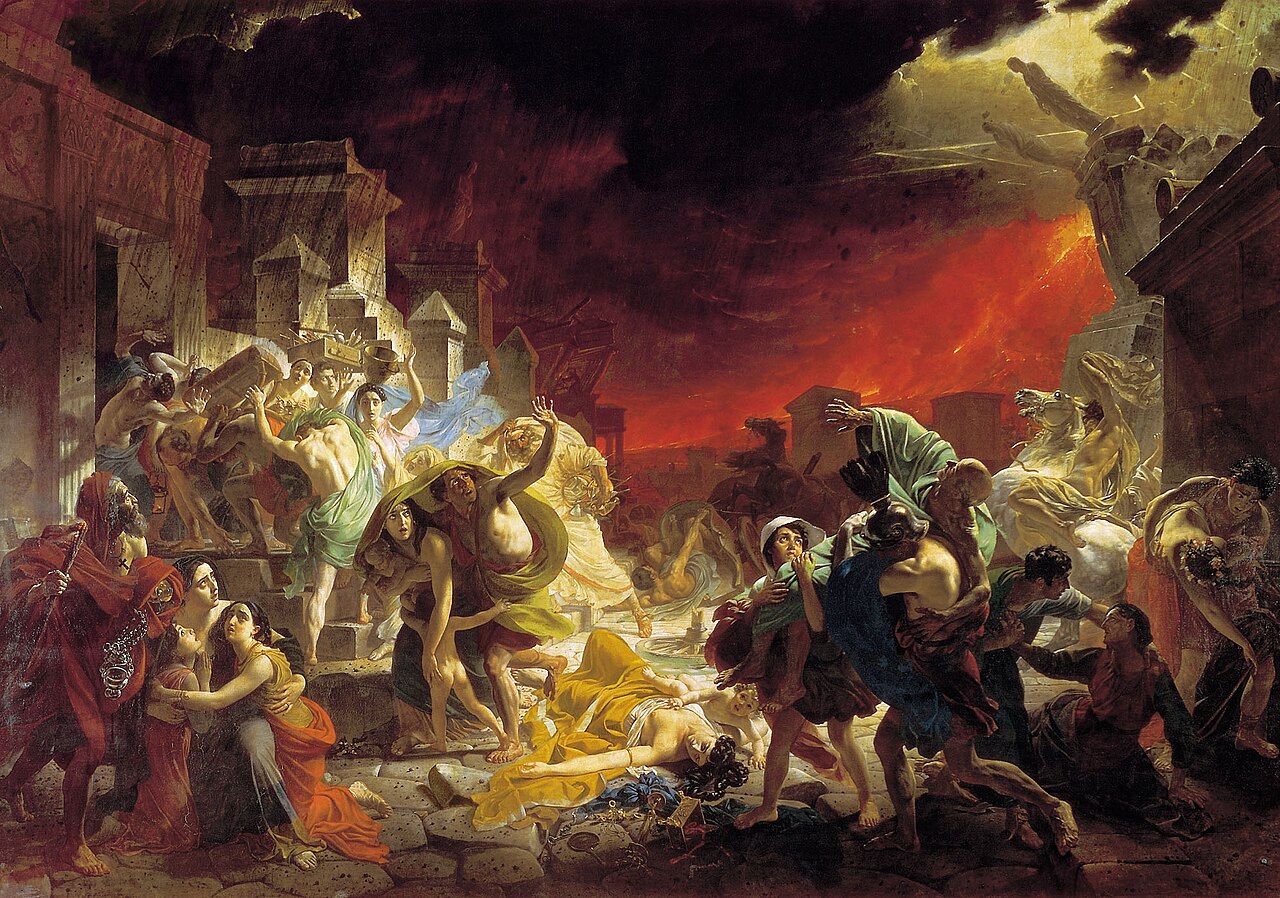 The eruption of Vesuvius in AD 79. Event reconstruction.
Wood, Furniture and Organic Material
The defining feature of Herculaneum is the preservation of organic material. Wooden beams, partitions, doors, staircases, beds, shelves, shutters and pieces of furniture usually disappear from the archaeological record, but here some of the wood was carbonized and kept its shape. This allows us to see not only the stone shell of a house, but its internal fittings.
Food remains, textiles, baskets, vessels and small domestic objects complete the picture. They show how rooms were arranged, where objects were stored, how shops worked, where people cooked and ate, and how service, display and private areas coexisted inside the house.
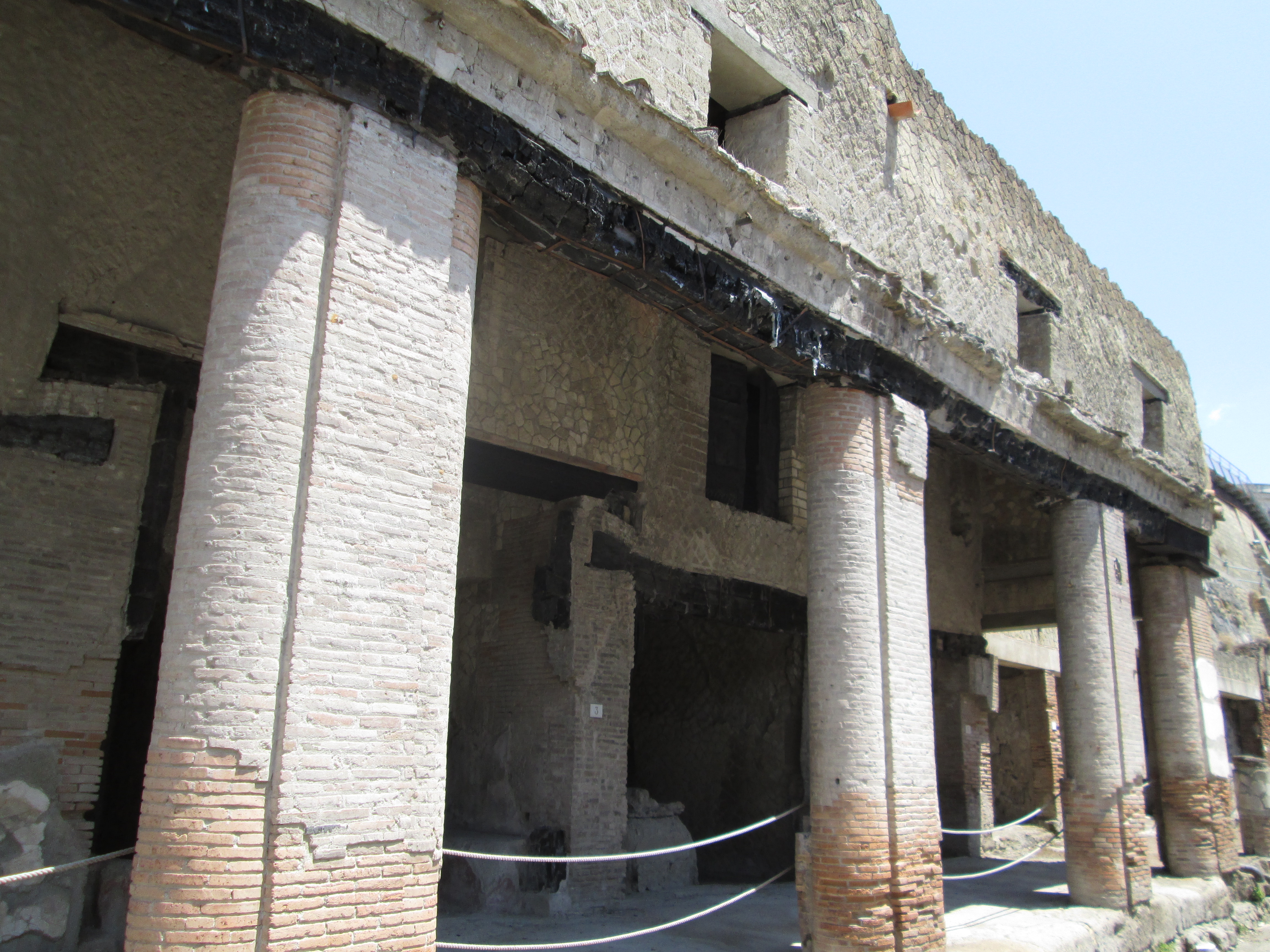 Carbonized wood in a building at Herculaneum, AD 79.
Villa of the Papyri
The Villa of the Papyri stood outside the town and belonged to the wealthy villa landscape of the Bay of Naples. It takes its name from its library of carbonized scrolls, one of the most famous ancient book collections preserved archaeologically.
The scrolls are important for the history of ancient philosophy and literature. They cannot simply be unrolled without risk of destruction, so their study depends on conservation, photography, digital imaging and gradual reading. The villa shows that Herculaneum is connected not only with daily life, but also with the culture of the educated Roman elite.
Images, Clothing and Objects
Paintings and small finds from Herculaneum help study clothing, footwear, jewellery, hairstyles, gestures and domestic scenes. But an image has to be read with its setting: a painting from the palaestra, a house or the baths does not say the same thing. Subject, room and wall function matter as much as the figure itself.
Objects with military or ceremonial associations, such as a pugio mount, belt elements and weapon fittings, belong to the urban environment of AD 79. They are useful as part of the material world of Campania, but they do not turn Herculaneum into a military camp. The important point is how domestic, spectacle-related, status and military objects could coexist in the same town.
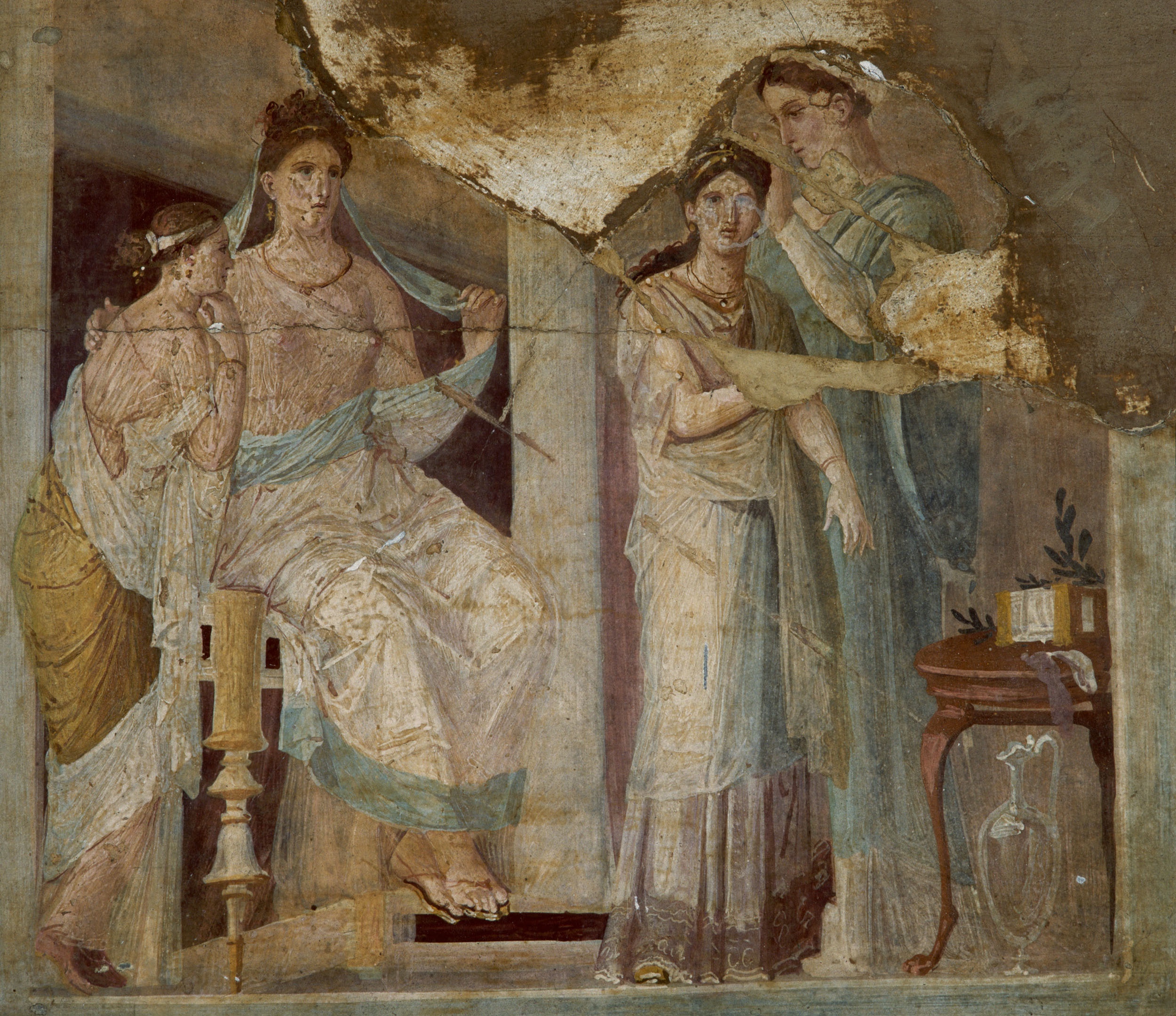 A fresco from Herculaneum with a female figure and footwear. Images of this type matter when read together with their room and archaeological context.
Pompeii and Herculaneum
Pompeii and Herculaneum are best read together. Pompeii provides a broad urban mass: long streets, forum, public buildings, many houses, shops, graffiti and scenes of urban life. Herculaneum is smaller, but stronger for organic material, wood, furniture, upper floors, compact blocks and villa culture.
The difference between the towns is not about which is "more important", but about conditions of destruction, excavation and preservation. For the first century AD they offer two sides of one catastrophe: Pompeii gives a broad urban cross-section, Herculaneum gives dense interior and organic evidence.
Excavation and Preservation
Excavations at Herculaneum began in the eighteenth century and were long conducted through tunnels because the town lay beneath a thick layer of compact volcanic material and later settlement. This method produced many discoveries, but it also created problems for documentation and preservation.
Today Herculaneum matters not only for new finds but also for the conservation of the exposed town. Wood, paintings, plaster and structures require constant care: preservation is what makes the site exceptional, and also what makes it fragile.
Related Topics
- Pompeii
- Vesuvius
- Archaeology and museums
- Roman Household Religion
- Thermopolium
- Thermae
- Roman Architecture
- Clothing in Ancient Rome
- Villa rustica
- National Archaeological Museum of Naples
Literature and sources
- Wallace-Hadrill, Andrew. Herculaneum: Past and Future. Frances Lincoln, 2011.
- Guidobaldi, Maria Paola; Esposito, Domenico. Herculaneum: Art of a Buried City.
- Cooley, A. E.; Cooley, M. G. L. Pompeii and Herculaneum: A Sourcebook. Routledge, 2014.
- Dobbins, J. J.; Foss, P. W. (eds.). The World of Pompeii. Routledge, 2007.
- UNESCO World Heritage Centre. Archaeological Areas of Pompei, Herculaneum and Torre Annunziata.


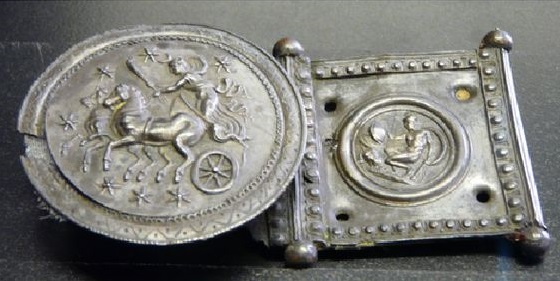 A bronze fitting from a pugio scabbard from the Vesuvian context. Small equipment details show the presence of military gear in Campanian towns.
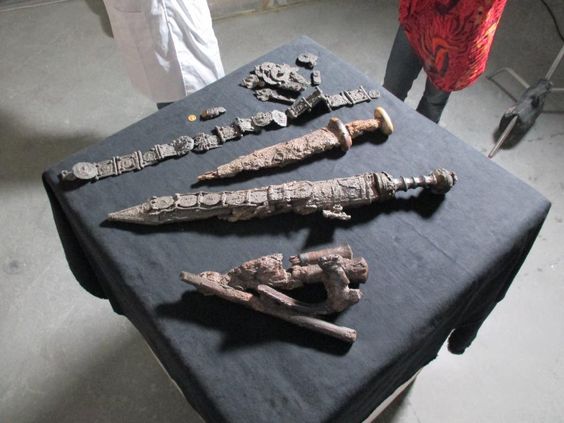 A group of Roman equipment elements from Herculaneum. Metal fittings are important for dating, repair and understanding how military objects entered an urban setting.
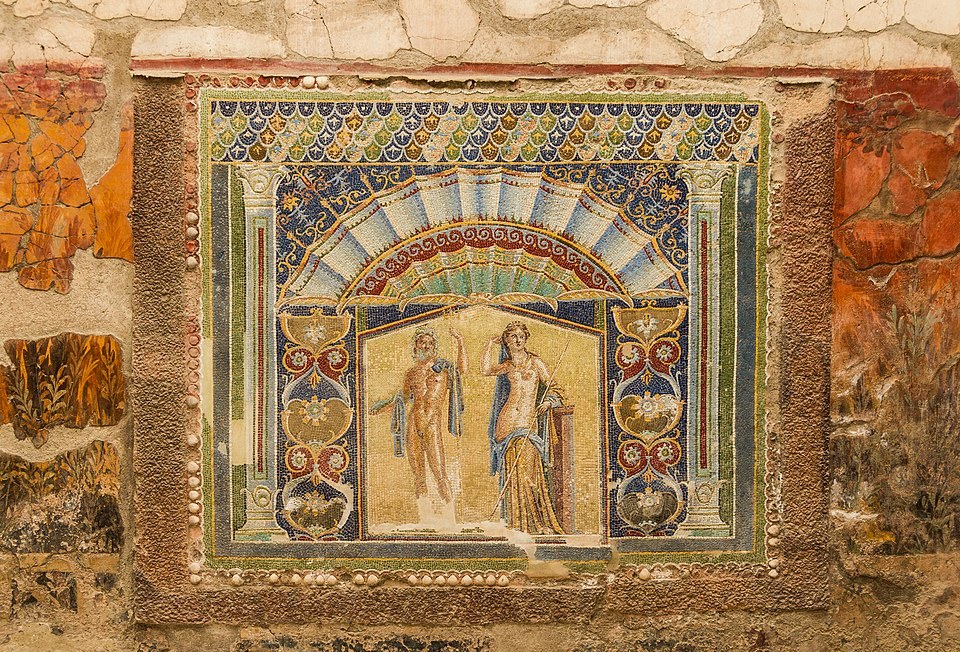 Mosaic of Neptune and Amphitrite in the summer triclinium of the house named after them at Herculaneum, before 79 CE. Glass paste, shells and architectural framing joined wall and nymphaeum into one decorative ensemble. Wikimedia Commons, CC0.
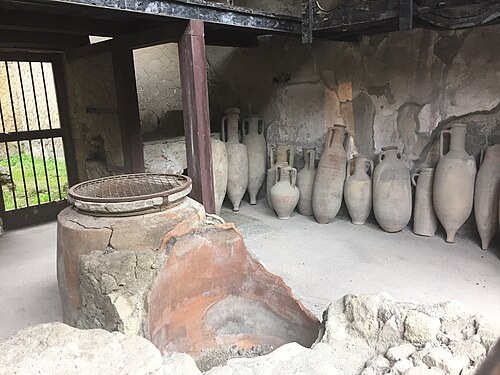 Herculaneum: Herculaneum Pottery in 2015; material-culture object or museum find connected with the site, Roman period or local archaeological context.
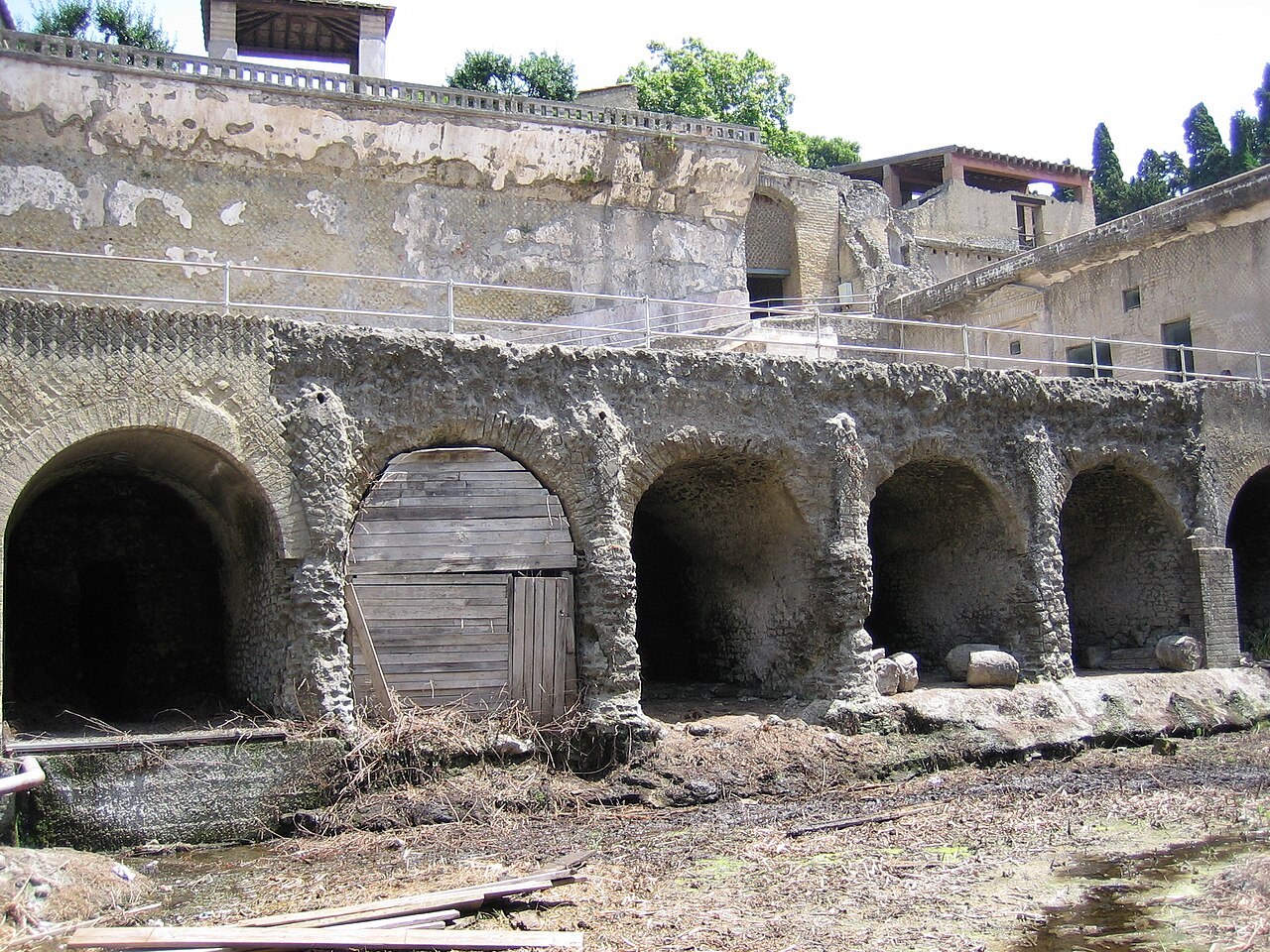 Herculaneum: Herculaneum Bootshaeuser; archaeological view, find or museum context connected with the site, Roman period or local archaeological context.
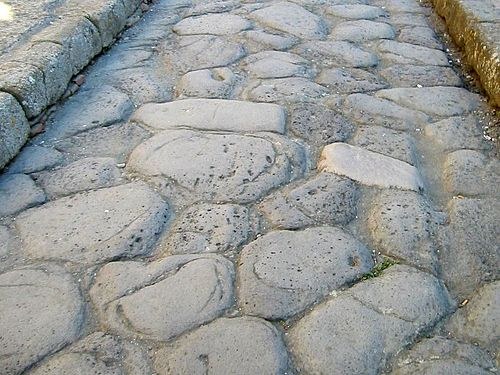 Herculaneum: Roman Road Surface at Herculaneum; archaeological view, find or museum context connected with the site, Roman period or local archaeological context.
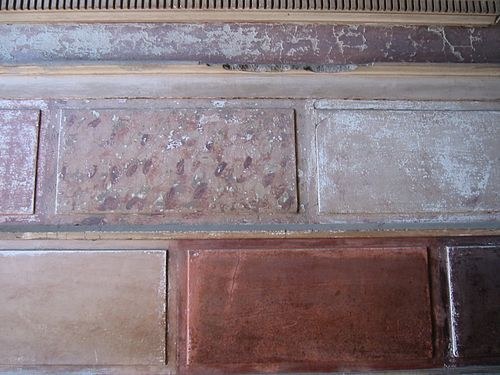 Herculaneum: Herculaneum Wall 1.Style; archaeological view, find or museum context connected with the site, Roman period or local archaeological context.
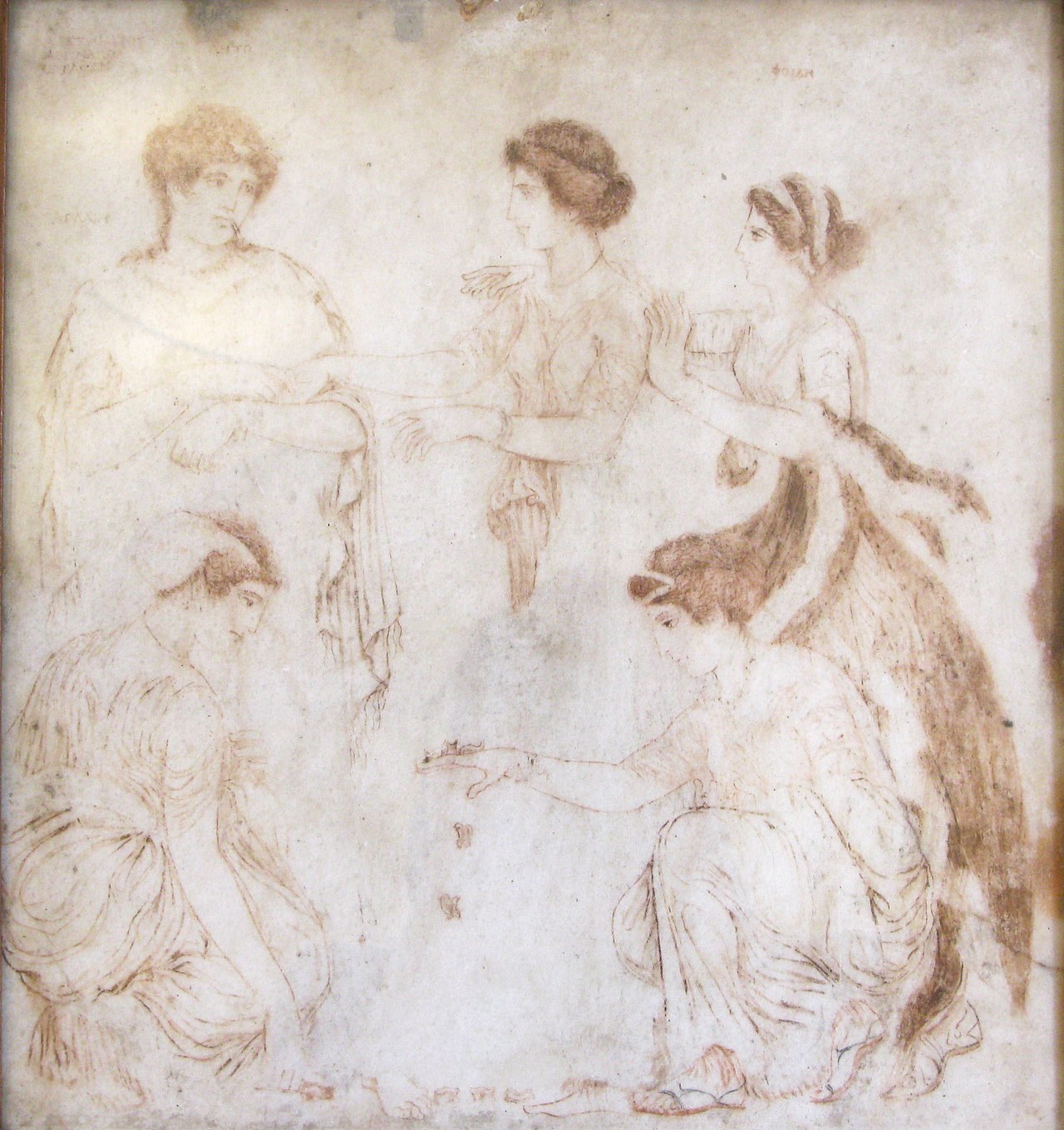 Herculaneum: Giocatrici-di-astragali; archaeological view, find or museum context connected with the site, Roman period or local archaeological context.
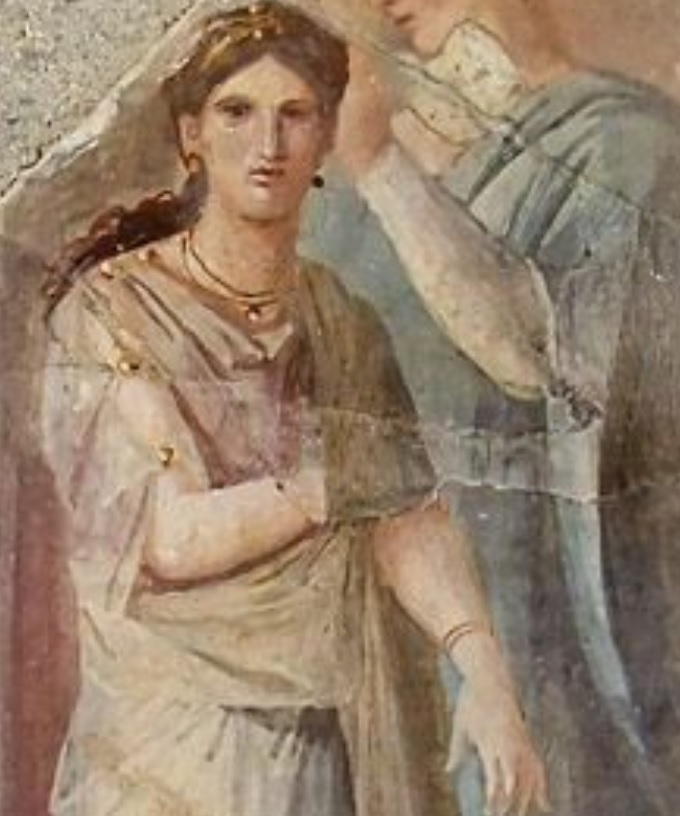 Woman wearing a bracelet, wall painting from Herculaneum; before 79 CE. Evidence for the depiction of arm jewellery.
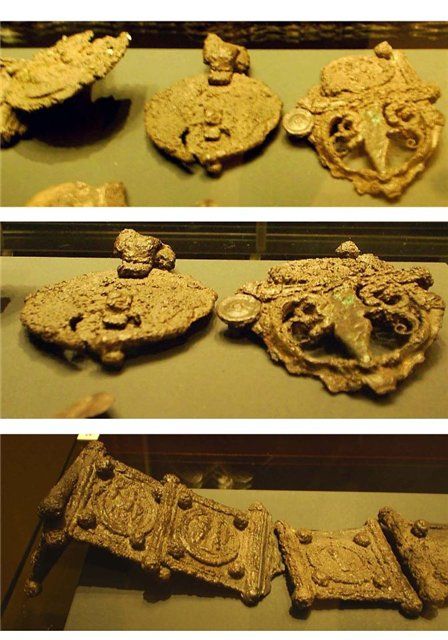 A fragment of a cingulum with metal mounts. Finds of this kind connect urban assemblages with the material culture of Roman soldiers.
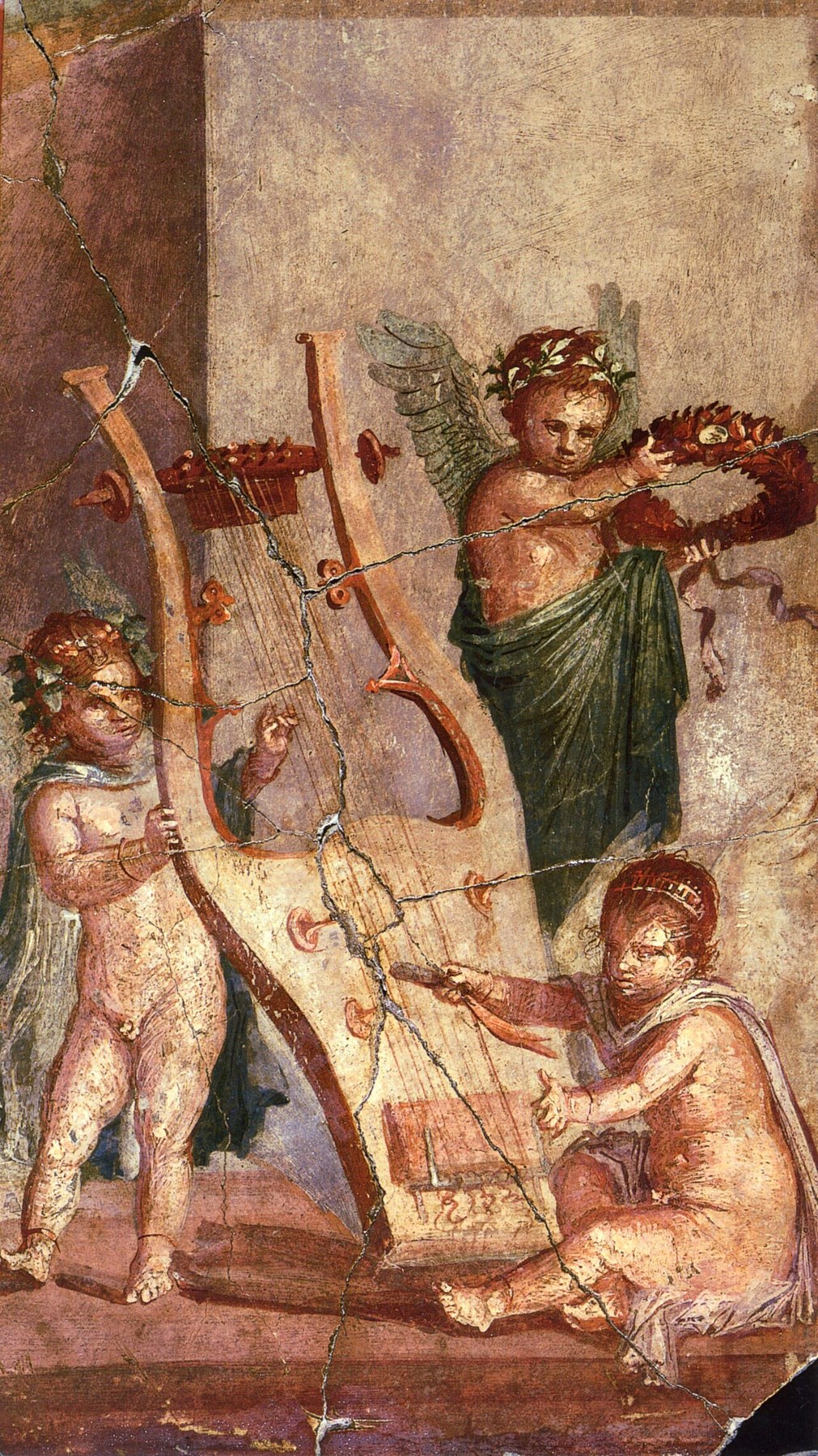 Herculaneum: Herculaneum - Lyre and Cupids; archaeological view, find or museum context connected with the site, Roman period or local archaeological context.
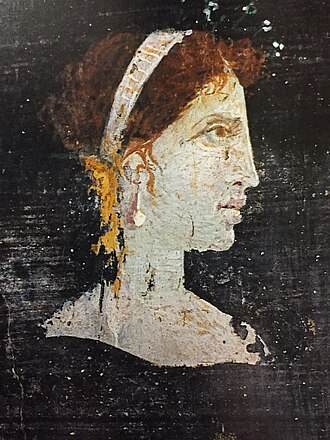 Herculaneum: Posthumous painted portrait of Cleopatra VII of Egypt, from Herculaneum, Italy; archaeological view, find or museum context connected with the site, Roman period or local archaeological context.
Interested in Ancient Rome beyond reading? Join Legio X Fretensis or explore our reenactment directions.


