Clothing in Ancient Rome
Clothing in Ancient Rome was not only protection from heat or cold, but also a language of status. Fabric, colour, footwear, draping and the right to wear particular garments could indicate gender, age, citizenship, social rank, office and even participation in mourning or elections. In brief: - the basic garment was the tunic; - the main civic symbol was the toga; - female status was often expressed through the stola and palla; - cloaks, shoes, belts and fasteners changed by situation, gender, profession and period; - reconstructing Roman dress requires attention to social status, not only to the appearance of an object.
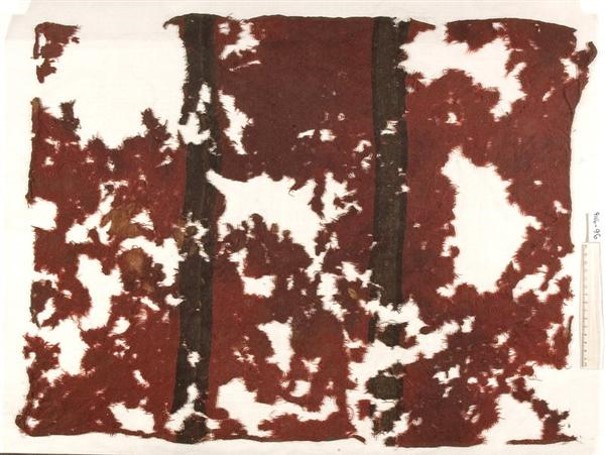 Tunic fragment with clavi from the Cave of Letters, Judaean Desert. Plain weave; first half of the second century CE.
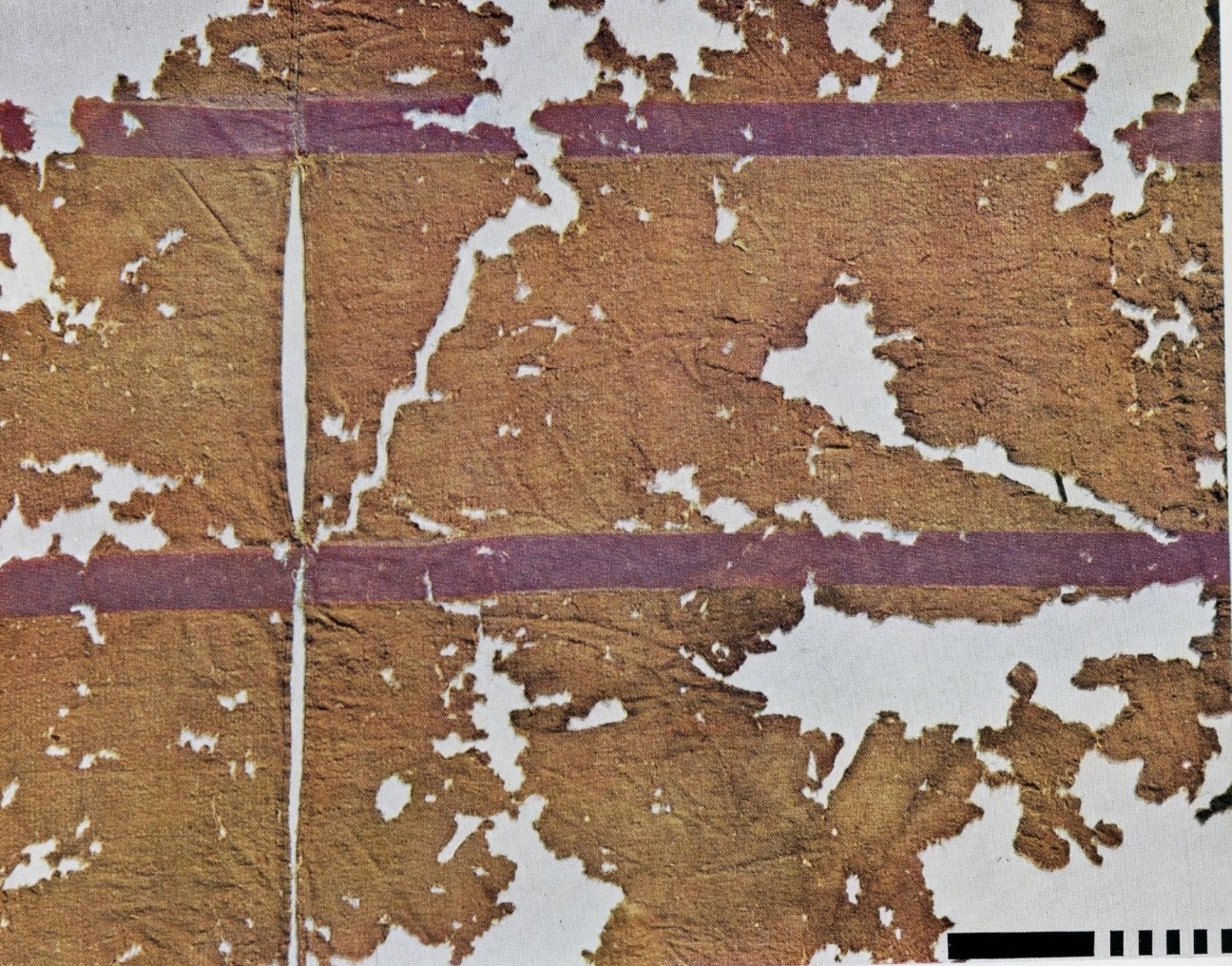 Wool tunic with clavi from the Cave of Letters, Judaean Desert. Plain weave; dimensions 90 × 65 cm; first half of the second century CE.
 Tunic fragment with clavi from the Cave of Letters, Judaean Desert. Plain weave; first half of the second century CE.
Main garments
The foundation of the wardrobe was the tunic. It was worn by men, women, children, free people and slaves, but length, fabric, colour and decoration could differ. Over the tunic a free citizen could wear the toga; it was not an ordinary cloak, but a sign of citizenship and public life. High-status female dress is usually described through the stola and palla. The stola marked the position of a married matron, while the palla served as an outer wrap. Cloaks such as the paenula,sagum and paludamentum were used for cold, rain, travel and military contexts. The paludamentum was especially associated with military command.
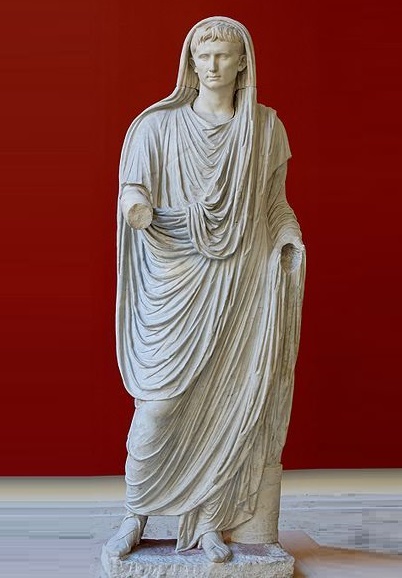 Statue of Octavian Augustus wearing a toga. 1st century AD
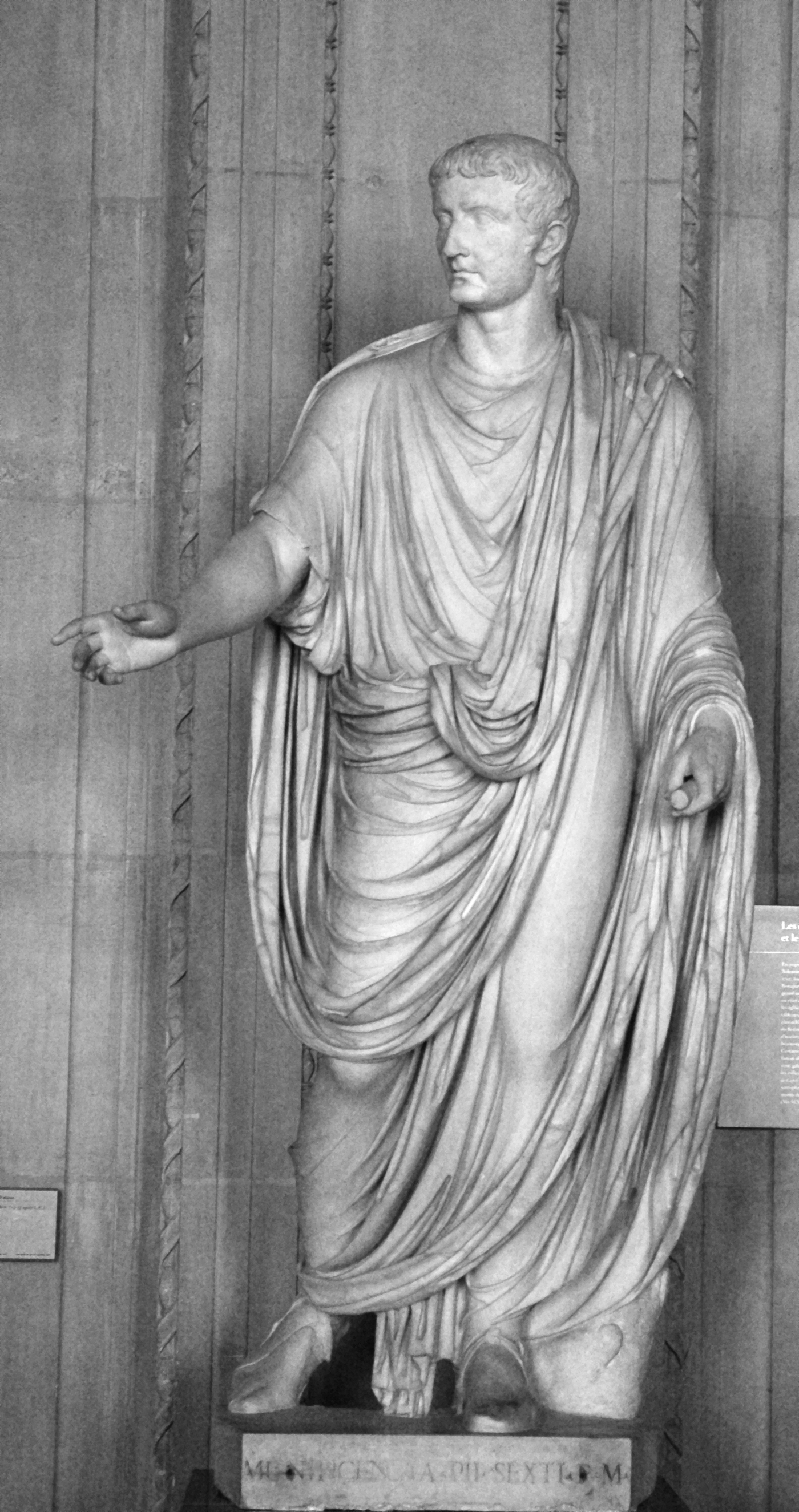 Statue of Emperor Tiberius wearing a toga. 1st century AD
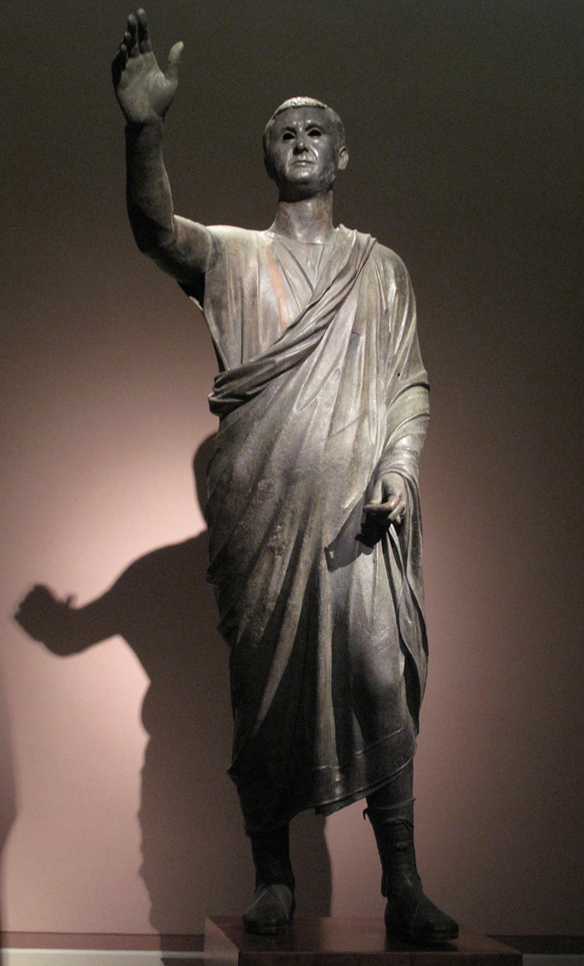 Etruscan-Roman bronze statue of an orator wearing a toga. 2-1 century BC
Status, gender and citizenship
Roman dress cannot be understood apart from society. For men, clothing showed citizenship, occupation and place in the public hierarchy: a senator, priest, soldier, craftsman, peregrinus or slave would not look the same. For women, dress emphasized family status, modesty, household wealth and membership in the urban elite. Some garments had legal or ritual meaning. The toga was associated with the free Roman citizen; the purple border of the toga praetexta distinguished magistrates, priests and freeborn children. Dark clothing could indicate mourning, and the specially whitened toga candida marked participation in elections.
Footwear, belts and details
Details completed the outfit. In daily life and outdoors Romans used sandals,calcei and caligae. Military and civilian footwear differed in form, durability and context. Belts and straps such as the balteus and cingulum could be practical items, signs of military status or parts of a reconstructed kit. Fasteners and accessories also mattered: the fibula fastened a cloak or garment, the focale protected the neck, and the subligaculum and strophium belonged to underclothing. In colder regions and provinces,braccae,leg wraps and heavier fabrics were more common.
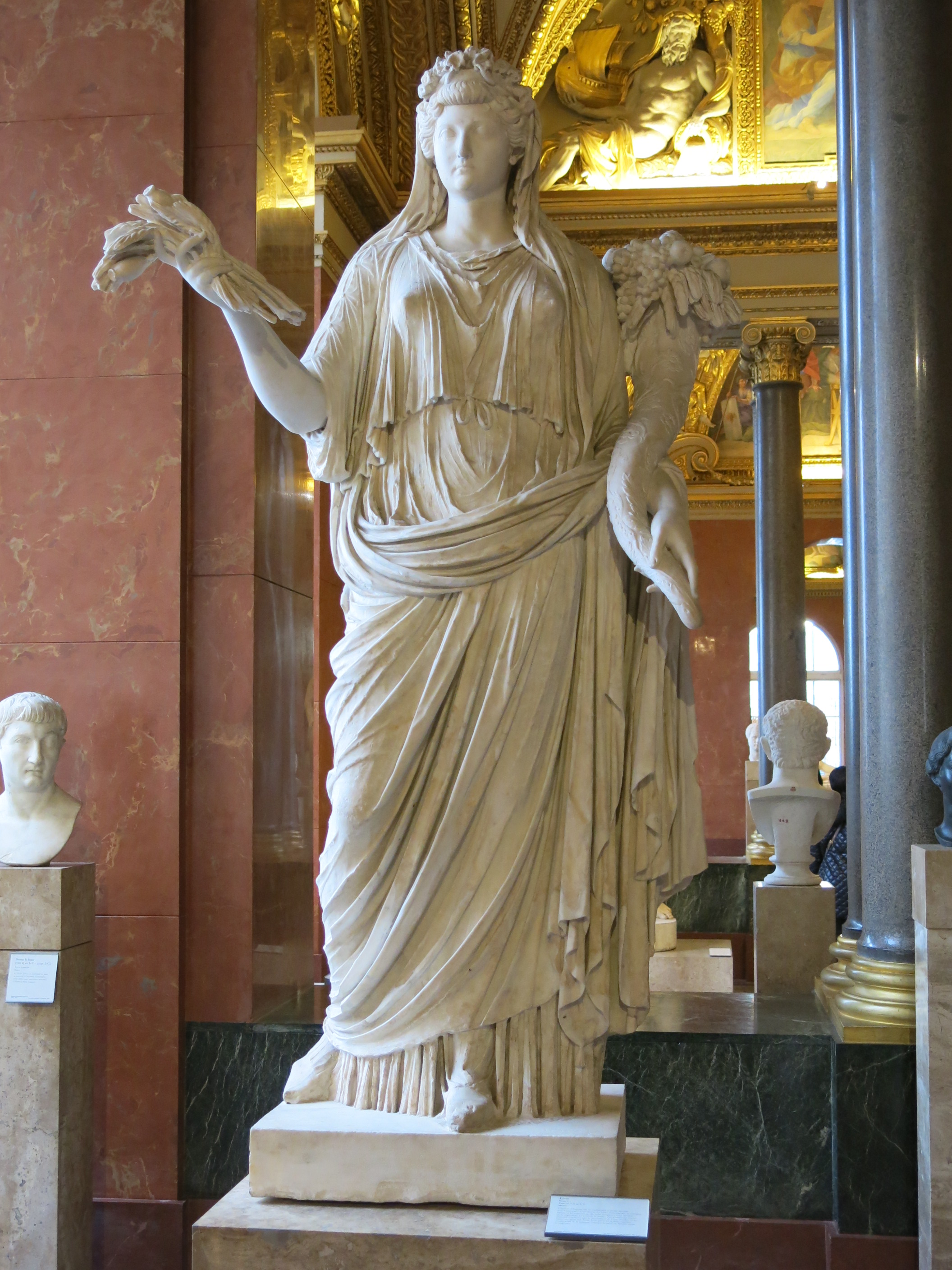 Statue traditionally identified as Livia in the guise of the goddess Ops, wearing long draped clothing. Louvre, Paris. Livia lived from 58 BCE to 29 CE; these are her life dates, not the dating of the statue.
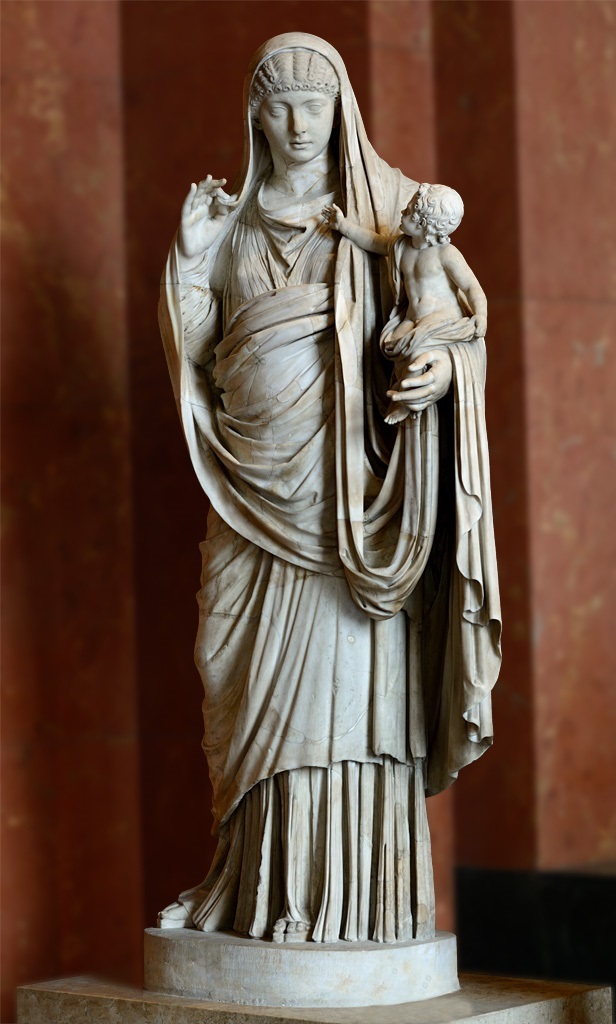 Valeria Messalina with her son Britannicus, wearing a long dress. Louvre, Paris; inv. Ma 1224. Found near Rome; around 45 CE.
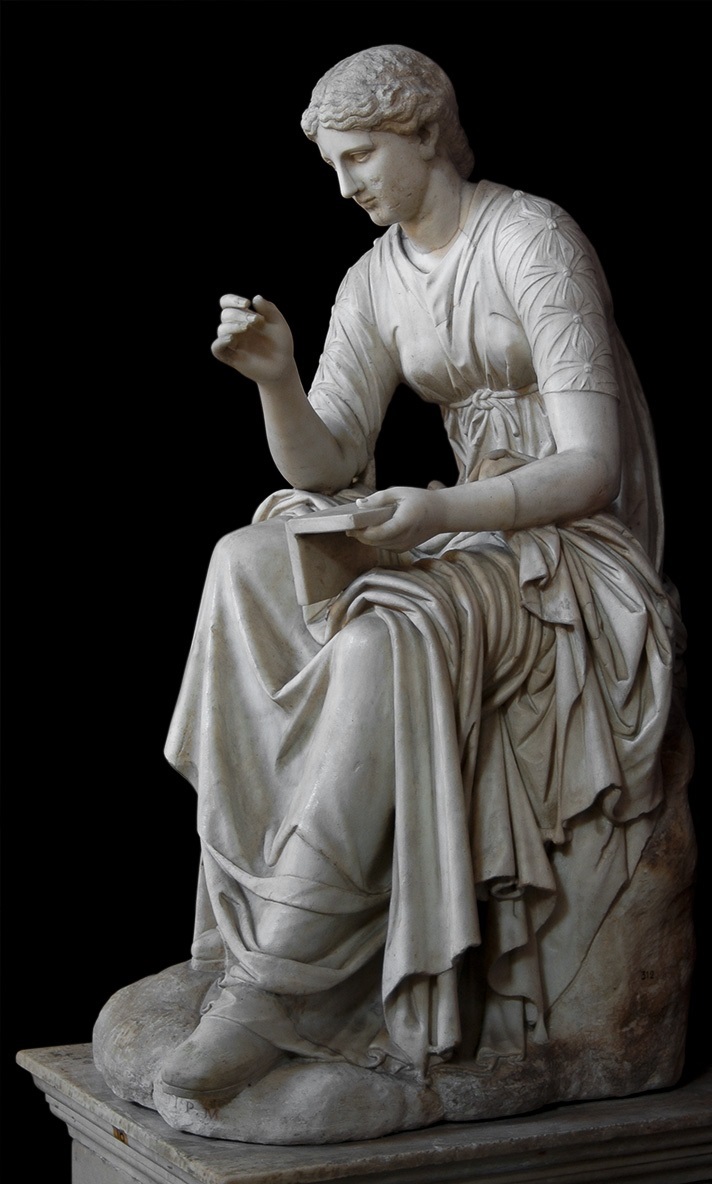 Statue of Calliope wearing a long dress. Vatican Museums, Museo Pio Clementino; inv. 312. Second century CE.
Reconstructing Roman dress
For reconstruction, the first choice is not the object but the persona: gender, age, citizenship, region, period and social status. The same tunic could look different on a craftsman, senator, matron or slave. The toga suits a civic public persona, but it is poorly suited to travel or workshop scenes. For military, travel or provincial impressions, cloaks, belts, practical footwear and heavier fabrics are often more appropriate. It is also useful to compare the costume with sources: reliefs, funerary monuments, frescoes, statues, archaeological textiles and shoes. Images show draping and social context, while finds help clarify material, seams, size and fastening.
Related topics
I. Overview articles - Men in Ancient Rome - Women in Ancient Rome - Textiles in Antiquity II. Main garments - Tunic - Toga - Stola - Palla - Paenula - Sagum - Paludamentum III. Footwear and details - Sandals - Calcei - Caligae - Fibula - Balteus - Cingulum - Subligaculum - Strophium - Fascia ventralis - Braccae - Leg wraps - Socks - Focale
Literature and sources
1. Judith Lynn Sebesta, Larissa Bonfante (eds.). The World of Roman Costume. 2. Kelly Olson. Dress and the Roman Woman. 3. Shelley Stone. The Toga: From National to Ceremonial Costume. 4. P. Guiraud. Private and Public Life of the Romans. 5. M. E. Sergeenko. Life in Ancient Rome.
Interested in Ancient Rome beyond reading? Join Legio X Fretensis or explore our reenactment directions.


