Carnuntum
Carnuntum was a major Roman city and military centre on the Danube, in modern Lower Austria between Vienna and Bratislava. Its importance rested on several connected factors: the Danubian frontier of the Roman Empire ran here, trade routes met here, a legionary fortress stood here, a civilian town developed here, and the administration of Upper Pannonia was centred here. Carnuntum was not a single fortress, but a complex site: fortress, canabae around the garrison, civilian municipium, later colonia, amphitheatres, baths, shrines, cemeteries and craft zones stood near one another but had different functions.
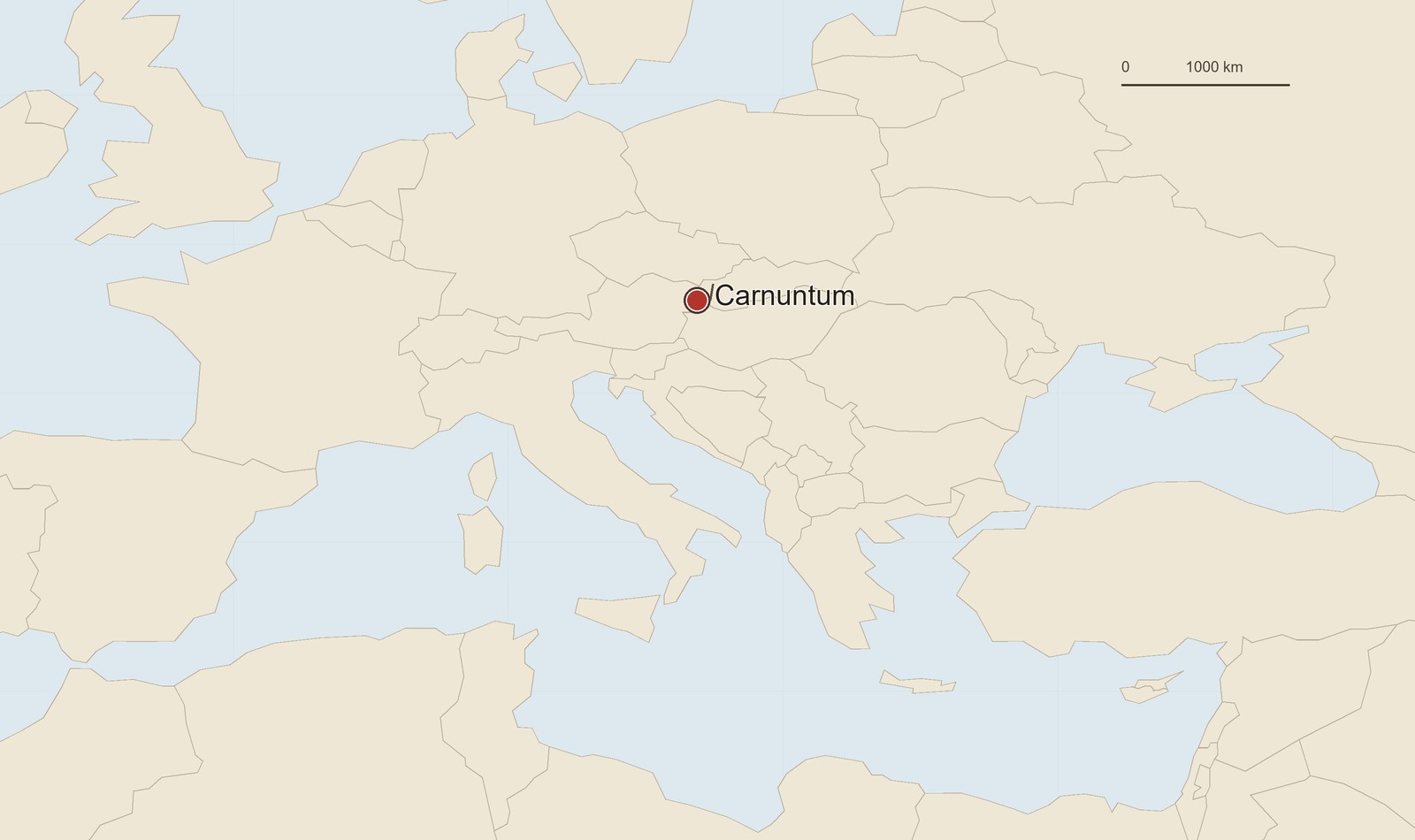 Location map: Carnuntum. The marker shows the ancient site or main archaeological complex.
Carnuntum illustrates the close relationship between the Roman army, urban life and imperial politics. It began as a frontier camp on the Danube; by the second century CE it was the capital of Upper Pannonia and an important centre near the Amber Road. Marcus Aurelius stayed here during the Marcomannic Wars. In 193 the Danubian troops proclaimed Septimius Severus emperor here, and in 308 Carnuntum hosted an imperial conference during the Tetrarchy. The site thus reveals both the daily life of a Danubian garrison and the role of a provincial city in events affecting the whole empire.
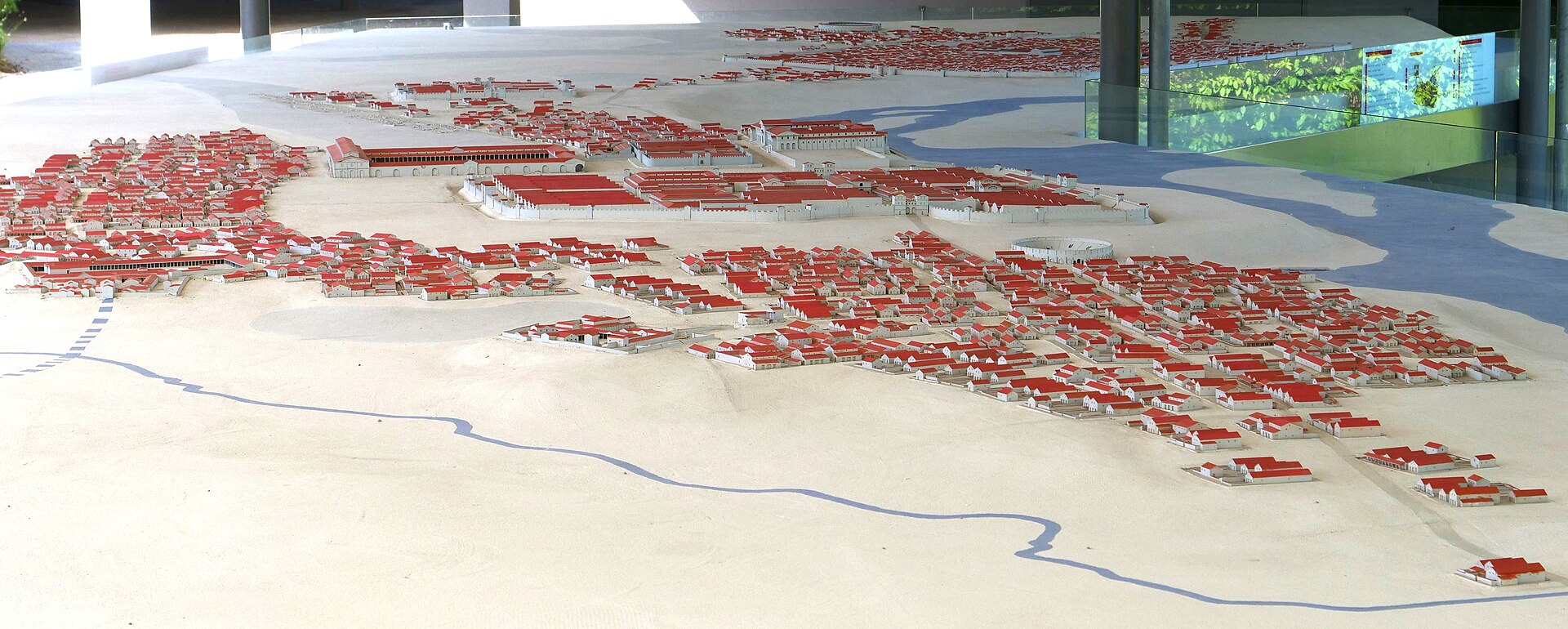 Model of Carnuntum: the legionary fortress in the foreground and the civilian town beyond it.
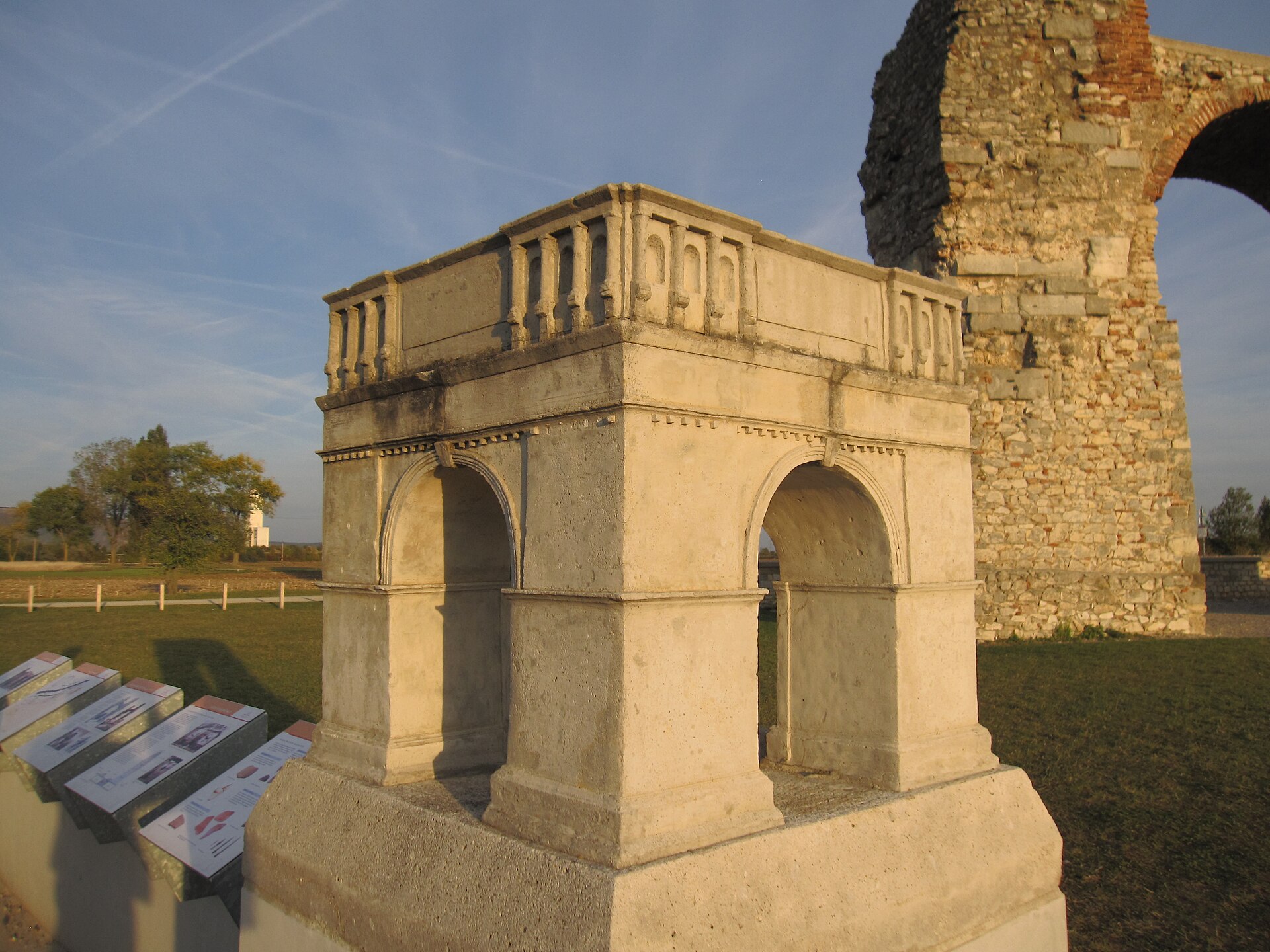 The Heidentor, a Late Roman quadrifrons near the civilian town of Carnuntum. Probably the reign of Constantius II, fourth century AD.
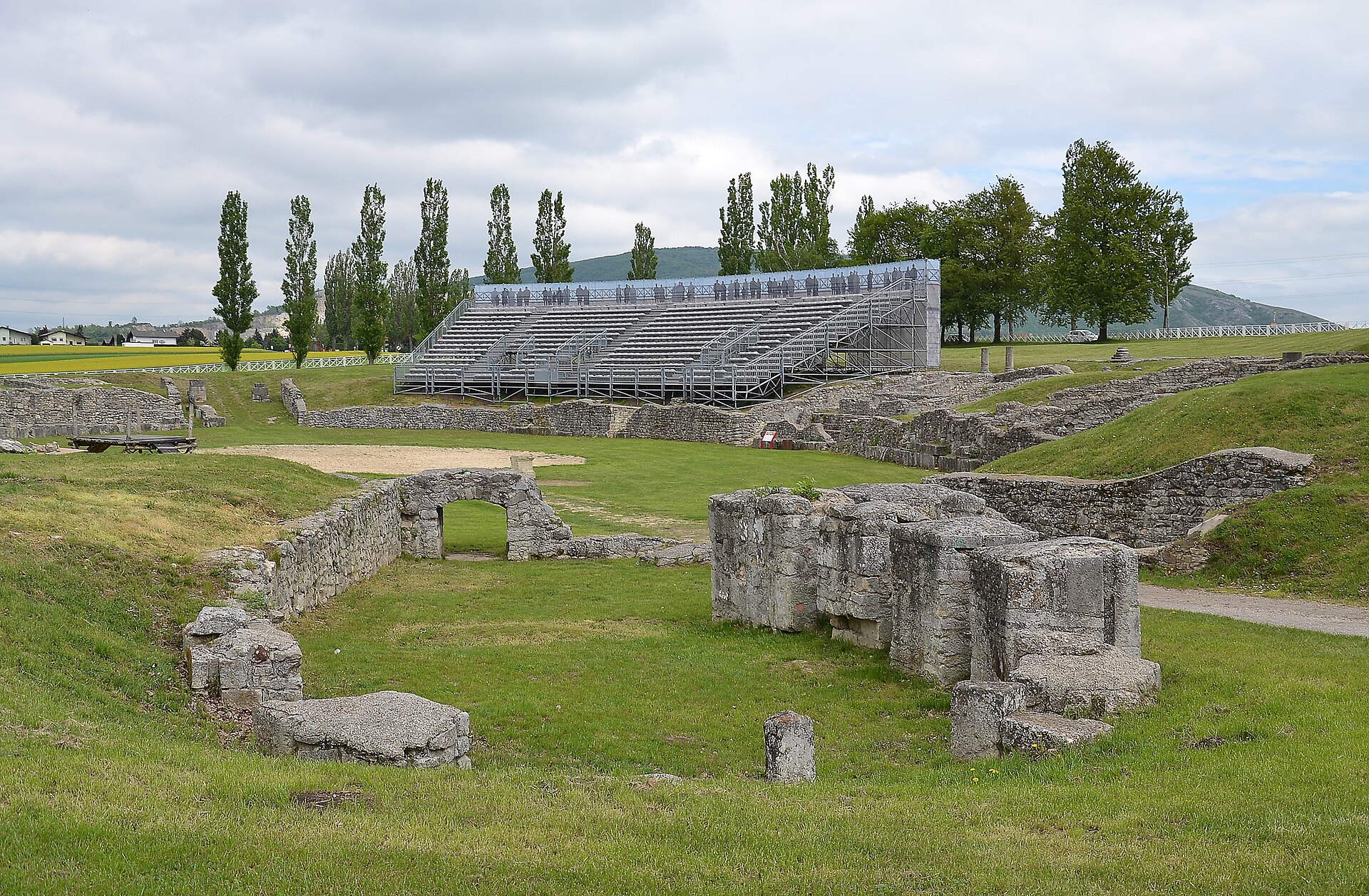 The military amphitheatre of Carnuntum in Bad Deutsch-Altenburg. It stood near the legionary fortress and was used not only for spectacles but also for training.
Position on the Danube and Urban Development
Roman presence in the Carnuntum area began as a military response to its position on the Danube. The river was a frontier, a road and a supply line at the same time. Roads of Pannonia approached it from the south, and in a wider setting Carnuntum was connected with the Amber Road, which linked northern Europe with Italy and the Mediterranean. For that reason the military base quickly stood beside commercial and civilian settlement.
In AD 6 ancient tradition connects the Carnuntum area with the winter camp of Tiberius. A permanent military camp developed in the first century, while the civilian town began to grow from the late first century onward. After Trajan divided Pannonia, Carnuntum became the capital of Upper Pannonia. Around AD 124, under Hadrian, the civilian town received the status of municipium Aelium Karnuntum. In AD 194, after the rise of Septimius Severus, Carnuntum became a colonia; this marked both local importance and the political memory of Danubian military support.
The urban area consisted of several zones. The legionary fortress and military town were tied to the garrison, the canabae served the army, and the civilian town had its own streets, houses, public buildings and sanctuaries. This structure explains why the finds from Carnuntum cannot be reduced to one type of monument: a centurion's inscription, a shop, baths, an amphitheatre and a Late Roman arch belong to different sides of one Roman centre.
The Legionary Fortress and Military Setting
The military history of Carnuntum is tied above all to the large legionary fortress and to units stationed on the Danubian frontier. In the first century Legio XV Apollinaris was important here; later Legio XIV Gemina became the main unit of Carnuntum. The legionary fortress was designed for a permanent garrison, headquarters, barracks, workshops, stores, stables, equipment repair and links with the river and road network. A military canabae developed beside it, where traders, craftsmen, families, veterans and people serving the garrison lived.
Military Carnuntum was not an isolated fortification. The base needed grain, fodder, leather, metal, timber, transport, craft work, clerks and suppliers. The archaeological material therefore includes not only weapons and armour, but also stamped building ceramics, tools, household objects, inscriptions, divine dedications and funerary monuments. This whole body of evidence shows how a legion existed inside a provincial economy.
Tombstones and inscriptions are especially important for military culture. They name a legion, century, origin, age, length of service and sometimes a man's career. Such monuments do not replace excavation of the fortress, but they add social data to the plan: who served here, how status was expressed, who dedicated the monument and what connections remained after death.
Civilian City, Houses and Baths
Civilian Carnuntum grew beside the military base, but it was not a simple annex to it. The town had streets, residential quarters, workshops, shops, baths, shrines and public spaces. Unlike many sites where only foundations are visible, part of the Roman quarter at Petronell-Carnuntum has been reconstructed on the original location. These are not fully preserved ancient walls, but modern archaeological reconstructions based on excavations, heating systems, building materials, plans and finds from rooms.
The Oil Merchant's House shows that Carnuntum was not only a garrison. Trade in oil, wine, grain, craft goods and imported objects depended on roads, the Danube and the needs of the army. A market always formed beside a large base: soldiers and officers bought food, clothing, pottery, ornaments and services, while civilians gained income from the permanent presence of the army.
The baths reveal another level of urban life. A bathhouse was a place for washing, rest, social contact, bodily care and the display of urban status. The hypocaust, pools, water supply and decoration show not only a daily habit, but also the engineering side of a Roman city. At Carnuntum this is especially useful because civilian and military baths can be compared with the fortress, houses and public buildings.
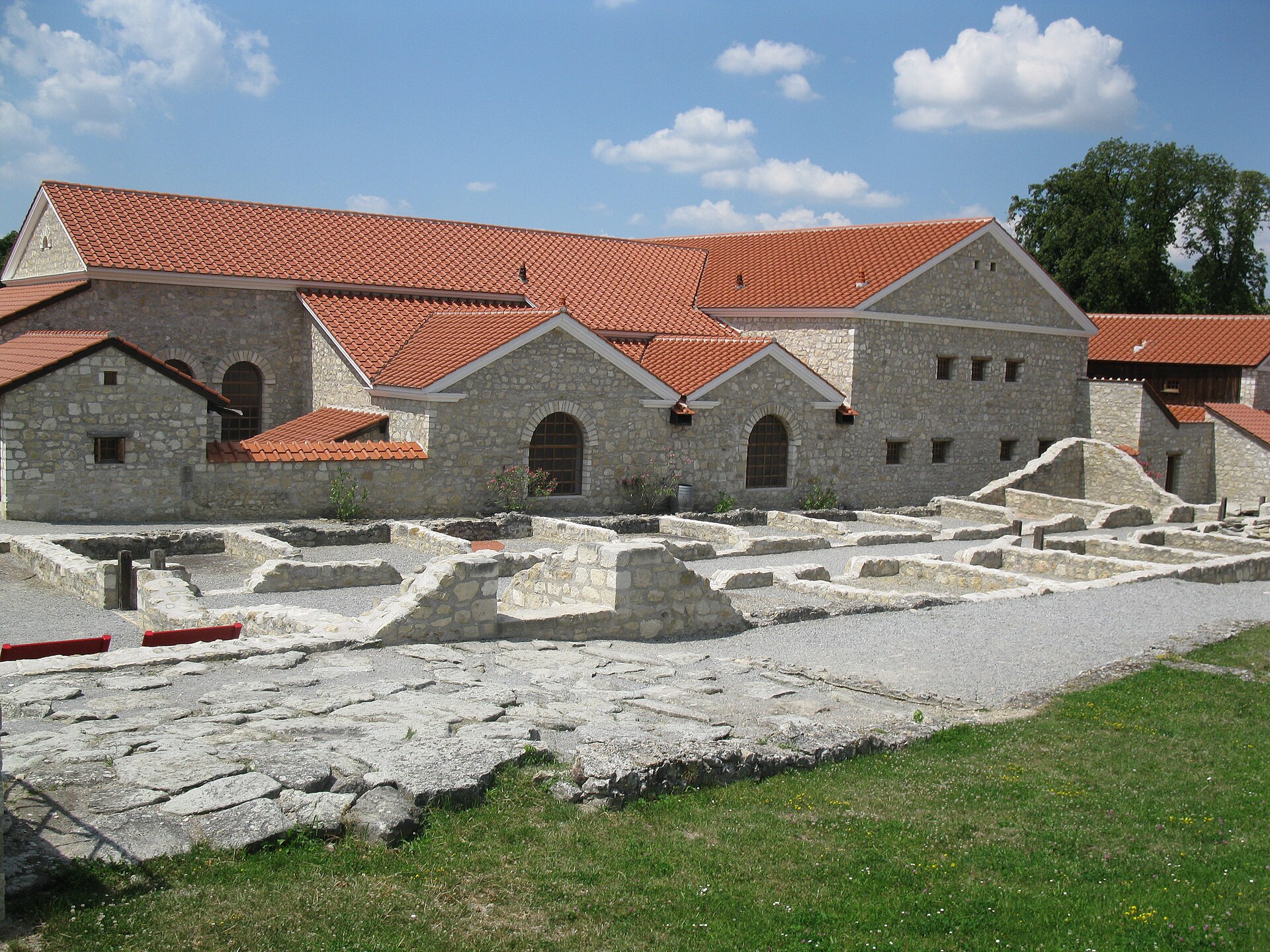 A reconstructed Roman house in the Carnuntum Archaeological Park. The modern building is based on excavations in the urban quarter.
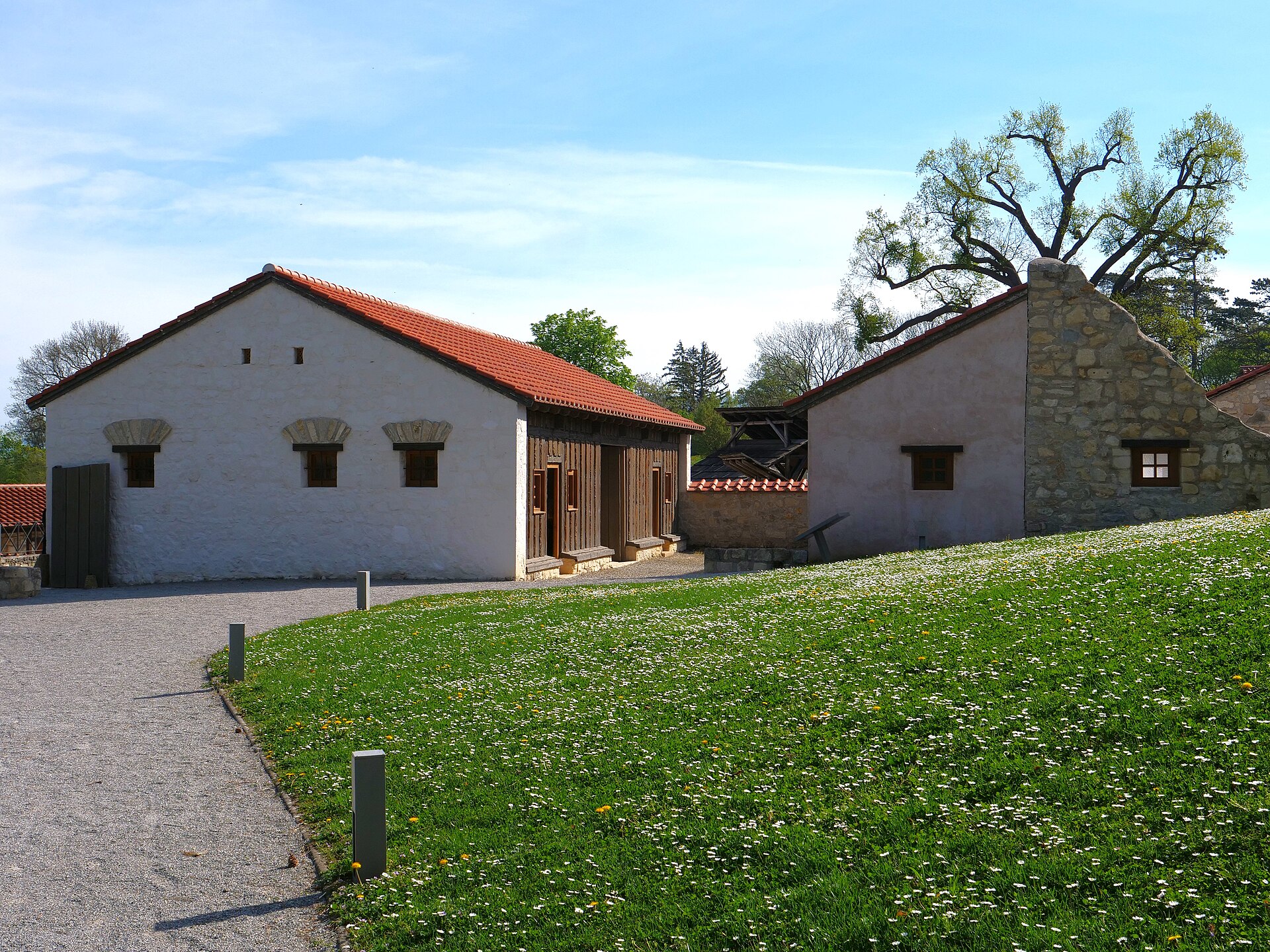 The Oil Merchant's House in the reconstructed quarter of Carnuntum. The building presents the economic side of a city on the Danube and the Amber Road.
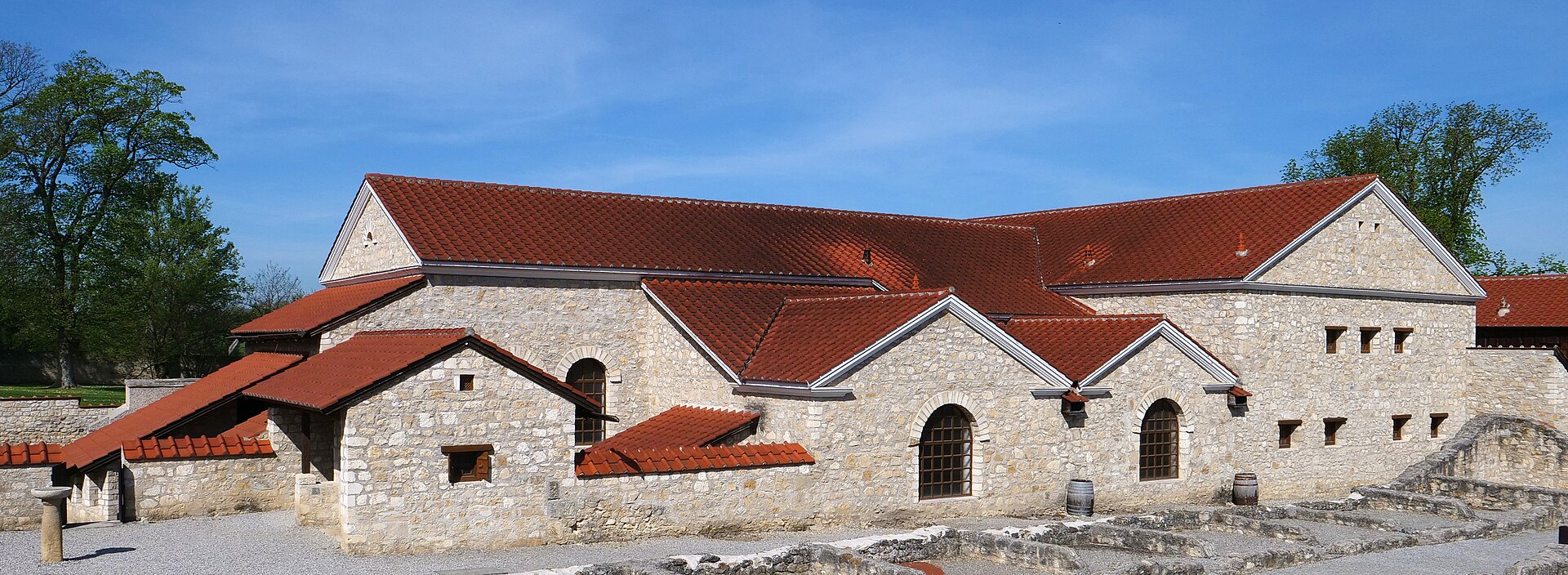 The reconstructed baths of Carnuntum. The bathhouse shows the level of urban infrastructure and heating technology in the Late Roman quarter.
Amphitheatres, Sanctuaries and Public Life
Carnuntum had two amphitheatres: one connected with the military town, the other with the civilian town. The military amphitheatre stood near the legionary fortress and could be used not only for spectacles, but also for drill, riding exercises and public events of the garrison. The civilian amphitheatre was built by the town and held a large audience; its existence shows that Carnuntum possessed a developed public culture, not only a military function.
The sanctuaries of Carnuntum reflect the mixed religious environment of a Danubian city. Cults of official Roman gods, local and eastern cults, dedications to Mithras and Jupiter Dolichenus are all known here. Such cults were especially natural for a garrison: military units moved between provinces, brought familiar images with them, adopted local forms of worship and left dedications in which the god, donor, military rank and unit stand together.
The Late Roman Heidentor belongs to another phase of Carnuntum's history. It is not a monument of the early fortress and not an ordinary city gate, but a monumental fourth-century quadrifrons that stood about 900 metres south of the civilian town. It is usually connected with the time of Constantius II. Set beside early imperial stelae, houses and the fortress, the Heidentor shows the later layer of the city, when Carnuntum remained a significant symbolic point on the Danube.
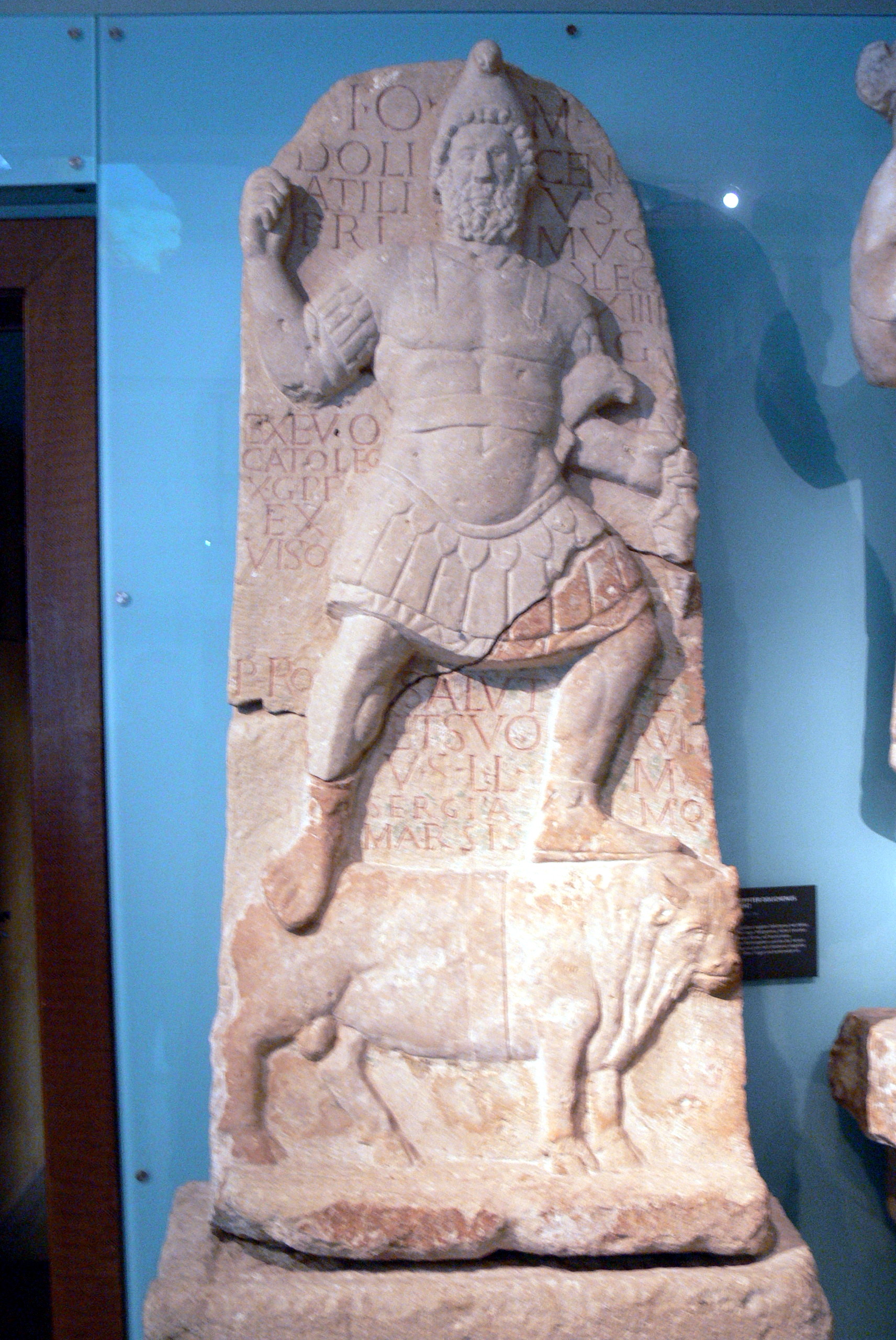 Votive relief of Jupiter Dolichenus from Carnuntum. The dedication was made by Attilius Primus, centurion of Legio XIV Gemina; found in the Dolichenum of the civilian town. Museum Carnuntinum.
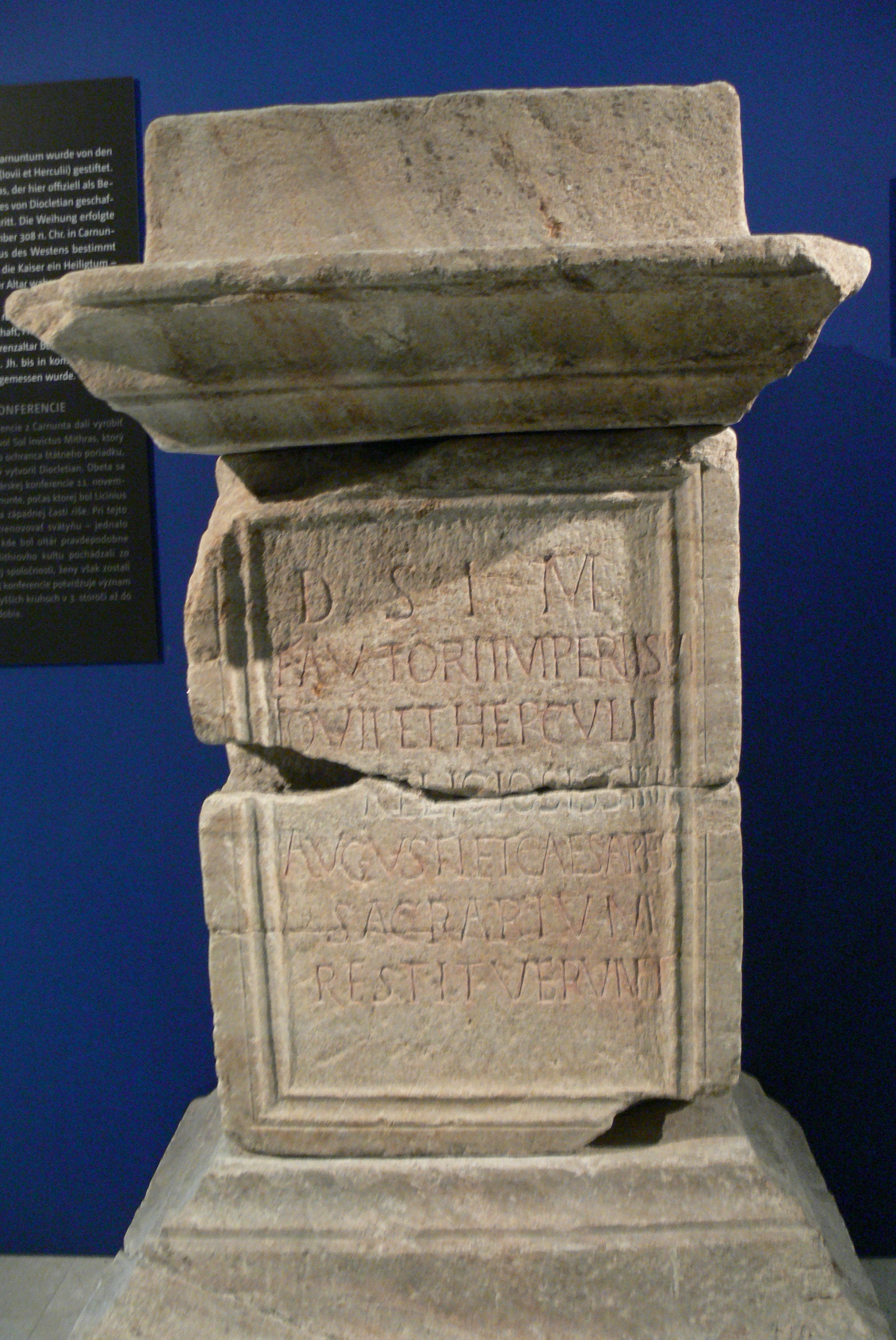 Altar to Sol Invictus Mithras connected with the imperial conference at Carnuntum in AD 308. Museum Carnuntinum.
Materials of the Complex
The materials of Carnuntum are best read through the environments from which they come. The military layer is represented by the fortress, canabae, weapons, armour fittings, pugio scabbards, protective fittings, legionary stamps and soldiers' stelae. The urban layer is represented by houses, shops, baths, pottery, tools, coins, decorative fragments and heating systems. The religious layer appears in altars, reliefs, dedicatory inscriptions, mithraea and sanctuaries of eastern cults. The funerary layer shows people who lived within this complex: soldiers, family members, freedmen, craftsmen and townspeople.
Visual archaeological sources from Carnuntum are especially important where written evidence is brief. The relief of Jupiter Dolichenus shows military religiosity and the connection of the cult with a centurion of Legio XIV Gemina. Soldiers' stelae provide clothing, equipment details, commemorative formulas and social status. Inscriptions help identify units, names, ranks and dates. Equipment objects such as armour scales, protective fragments and scabbards do not tell an event on their own, but together with findspot and fortress setting they show the daily material side of the garrison.
The strength of Carnuntum lies precisely in the combination of these groups. If only the reconstructed houses are considered, the city looks mainly like a museum of Late Roman domestic life. If only stelae and weapons are considered, the civilian part and economy disappear. If attention is limited to the Heidentor, the early imperial and military Carnuntum falls into the background. A full picture emerges by comparing the fortress, civilian town, sanctuaries, cemeteries and museum objects.
Chronology
- AD 6 - Tiberius establishes a winter camp in the Carnuntum area; this marks the early Roman phase of the site.
- AD 41-54 - a military camp develops; in the first century Carnuntum becomes an important point on the Danube.
- c. AD 70 - civilian settlement begins in the area of the later town quarter.
- AD 81-96 - under Domitian the military zone is strengthened; an auxiliary fort and an amphitheatre in the canabae appear.
- c. AD 103 - after the division of Pannonia, Carnuntum becomes the capital of Upper Pannonia.
- c. AD 124 - under Hadrian the civilian town receives the status of municipium Aelium Karnuntum.
- AD 171-173 - Marcus Aurelius stays at Carnuntum during the Marcomannic Wars; ancient tradition connects this place with work on part of the Meditations.
- 9 April AD 193 - Septimius Severus, governor of Upper Pannonia, is proclaimed emperor at Carnuntum.
- AD 194 - Carnuntum receives the status of colonia Septimia Aurelia Antoniniana Karnuntum.
- 11 November AD 308 - an imperial conference connected with the crisis of the Tetrarchy takes place at Carnuntum.
- Fourth century AD - the Late Roman Heidentor is erected; the city keeps symbolic importance, but its structure gradually changes.
- AD 433 - Pannonia is ceded to the Huns; Roman urban life in its previous form ends.
- Late nineteenth century onward - systematic research, excavation, museum work and the archaeological park develop at Carnuntum.
Related Topics
- Archaeology and museums
- Roman Army
- Roman Empire
- Legion
- Auxilia
- Equites
- Pugio
- Gladiator
- Marcus Aurelius
- Carnuntum Museum
Literature and sources
- Humer F. Carnuntum. Wiedergeborene Stadt der Kaiser. Vienna, 2011.
- Jobst W. Carnuntum: Das Erbe Roms an der Donau. Vienna, 1983.
- Mosser M. Die Steindenkmäler der legio XV Apollinaris. Vienna, 2003.
- Piso I. Fasti provinciae Daciae I: Die senatorischen Amtsträger. Bonn, 1993; material on Danubian provincial elites and careers.
- Fitz J. The Great Age of Pannonia. Budapest, 1982.
- Carnuntum Jahrbuch. Vienna: Austrian Academy of Sciences, various volumes.
- Corpus Inscriptionum Latinarum III; Epigraphische Datenbank Heidelberg, inscriptions from Carnuntum.
- Römerstadt Carnuntum: reference material of the archaeological park on history, the urban quarter, the Heidentor and amphitheatres.


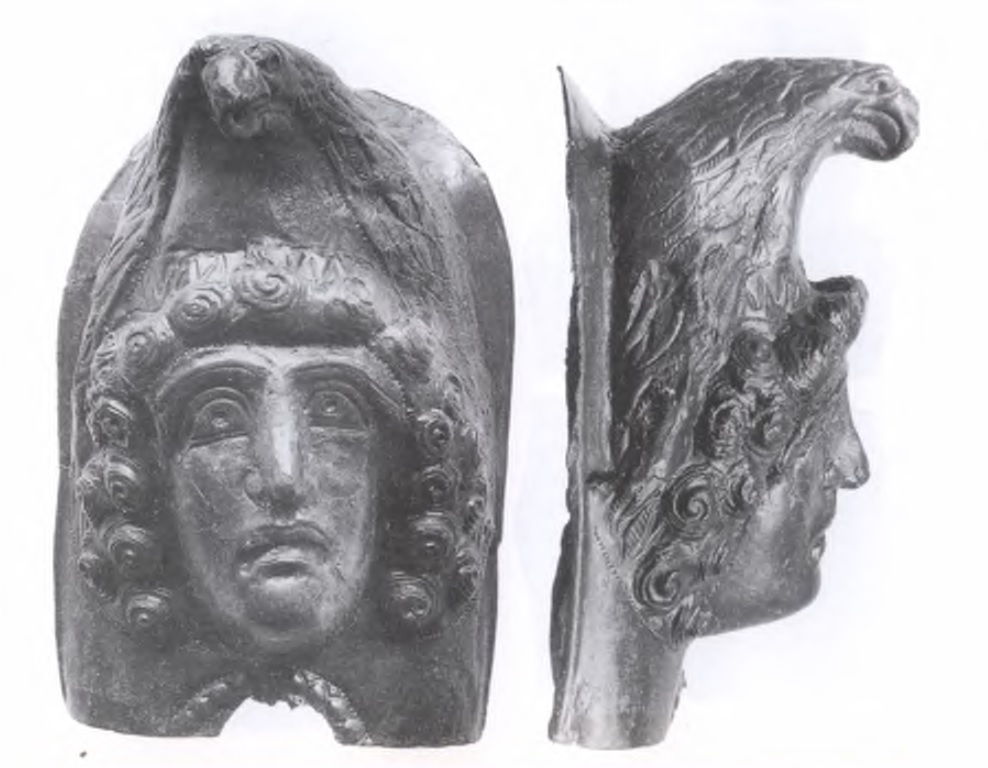 Roman protective leg fittings from the Carnuntum area. Objects of this type belong to military equipment and to mounted or infantry protection.
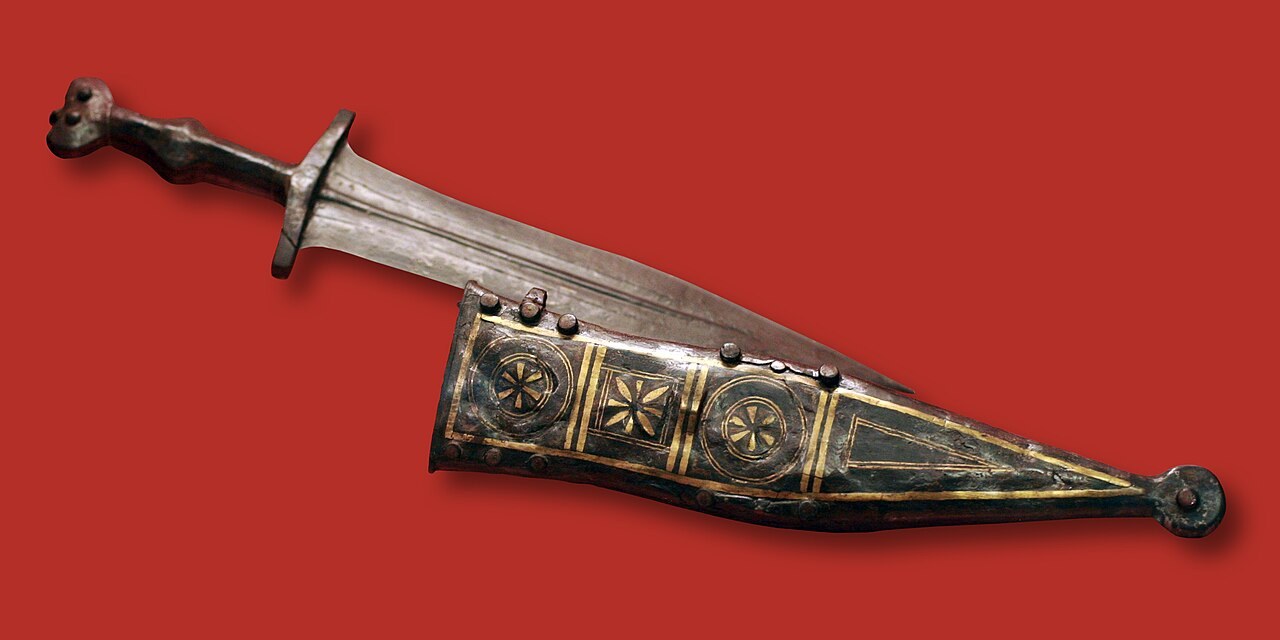 Restored pugio, second century AD. Carnuntum.
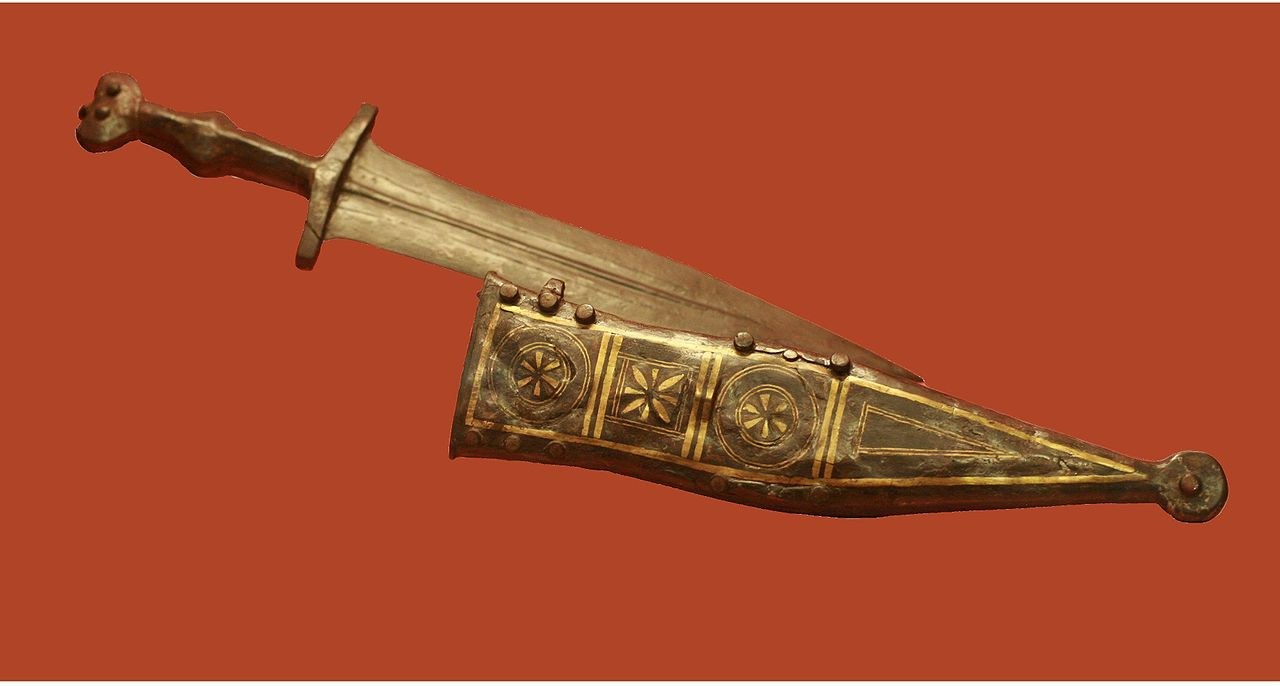 Pugio, second century AD. Carnuntum.
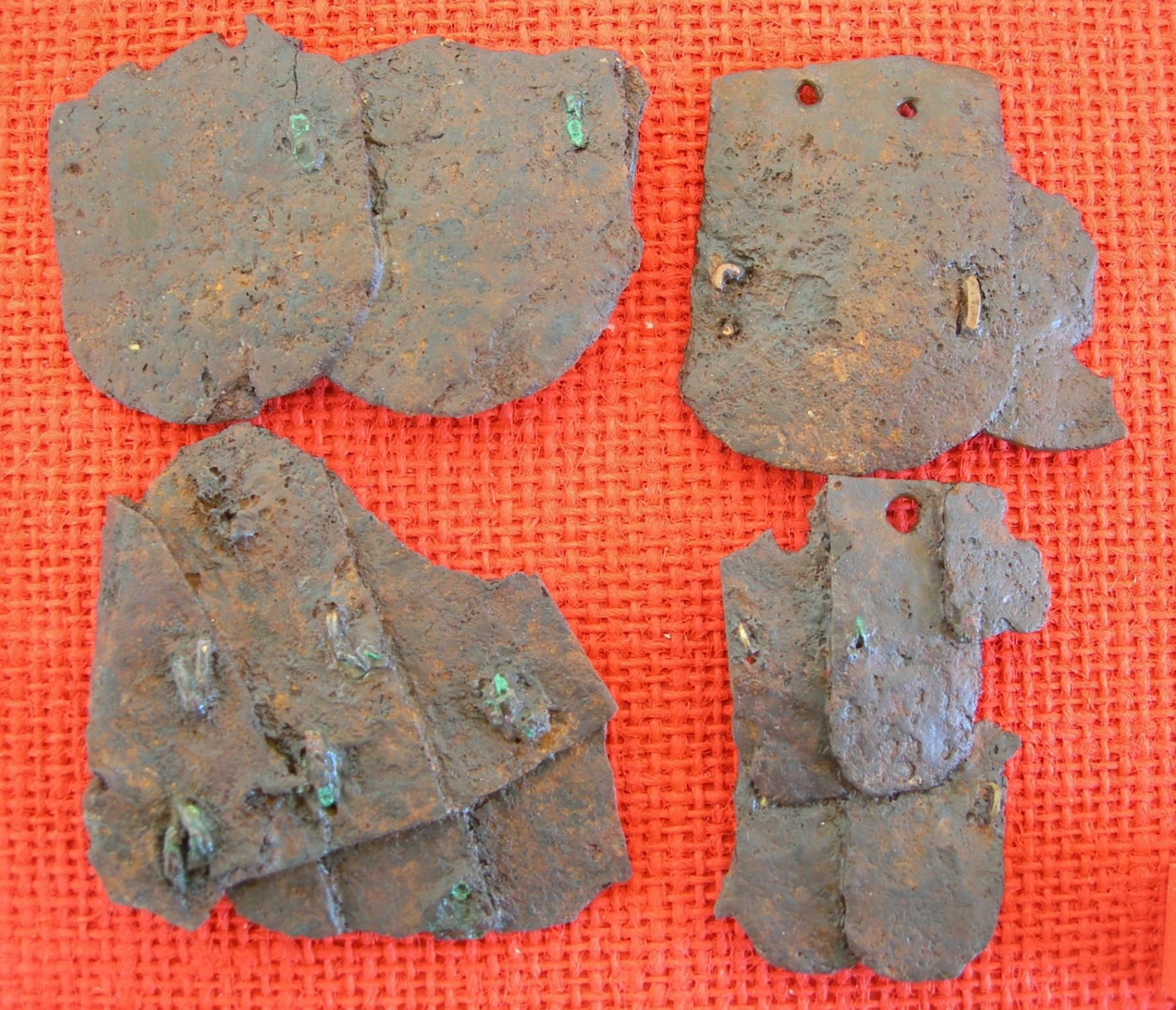 Lorica squamata plates from the Bad Deutsch-Altenburg / Carnuntum area. Roman period, probably second century AD.
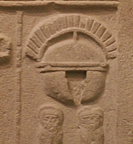 Fragment of a stela of a centurion of Legio XV Apollinaris from Carnuntum. Inscriptions connect the city with named units and people.
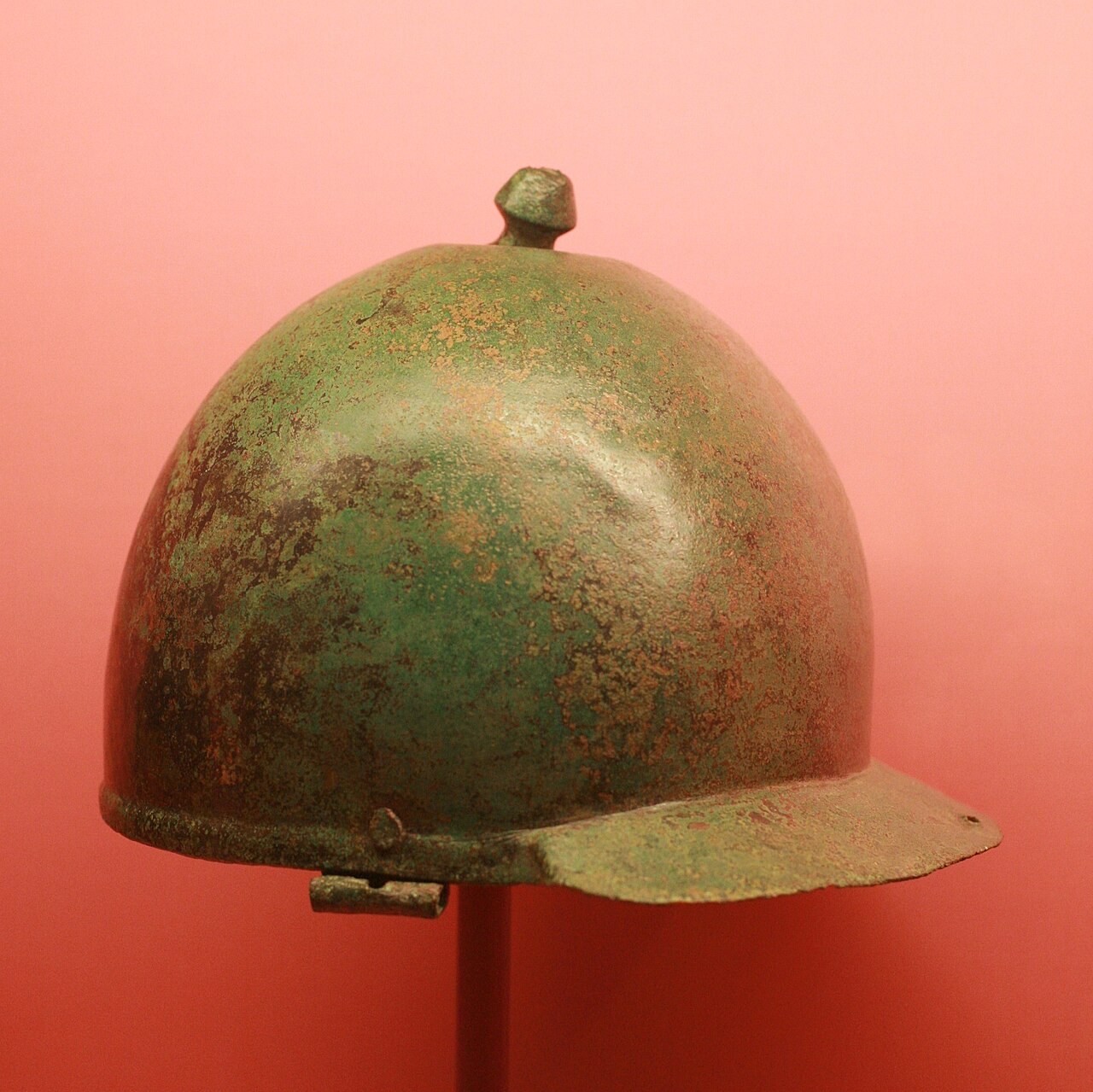 Montefortino-type helmet. Carnuntum.
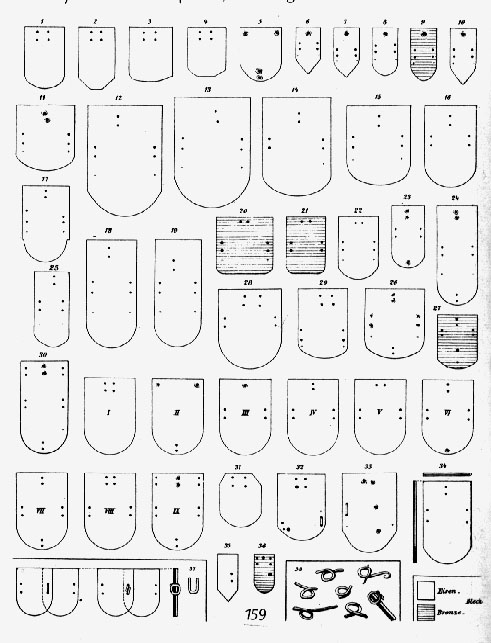 Scales from Roman armour found in the military complex of Carnuntum. Finds of this kind connect the city with the military environment of the Danube frontier.
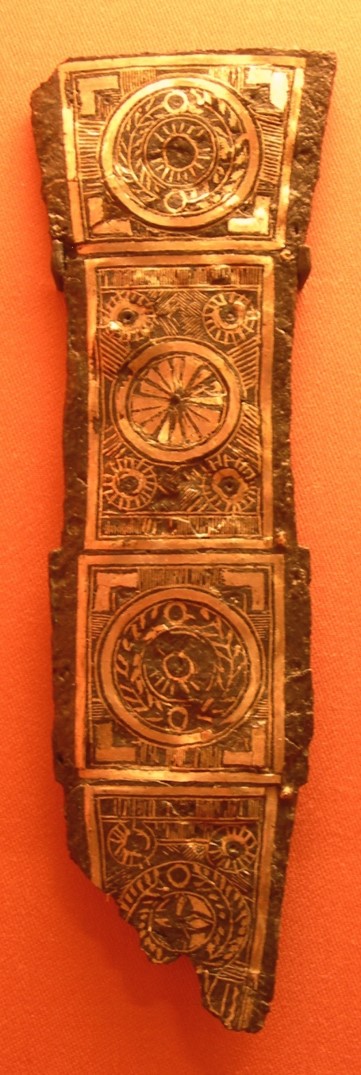 Pugio scabbard from Carnuntum. Archäologisches Museum Carnuntinum. Roman military context, first century AD.
 Stela of Titus Calidius from Carnuntum, a soldier of Legio XV Apollinaris. The tombstone shows military career and commemorative language in a Danubian garrison.
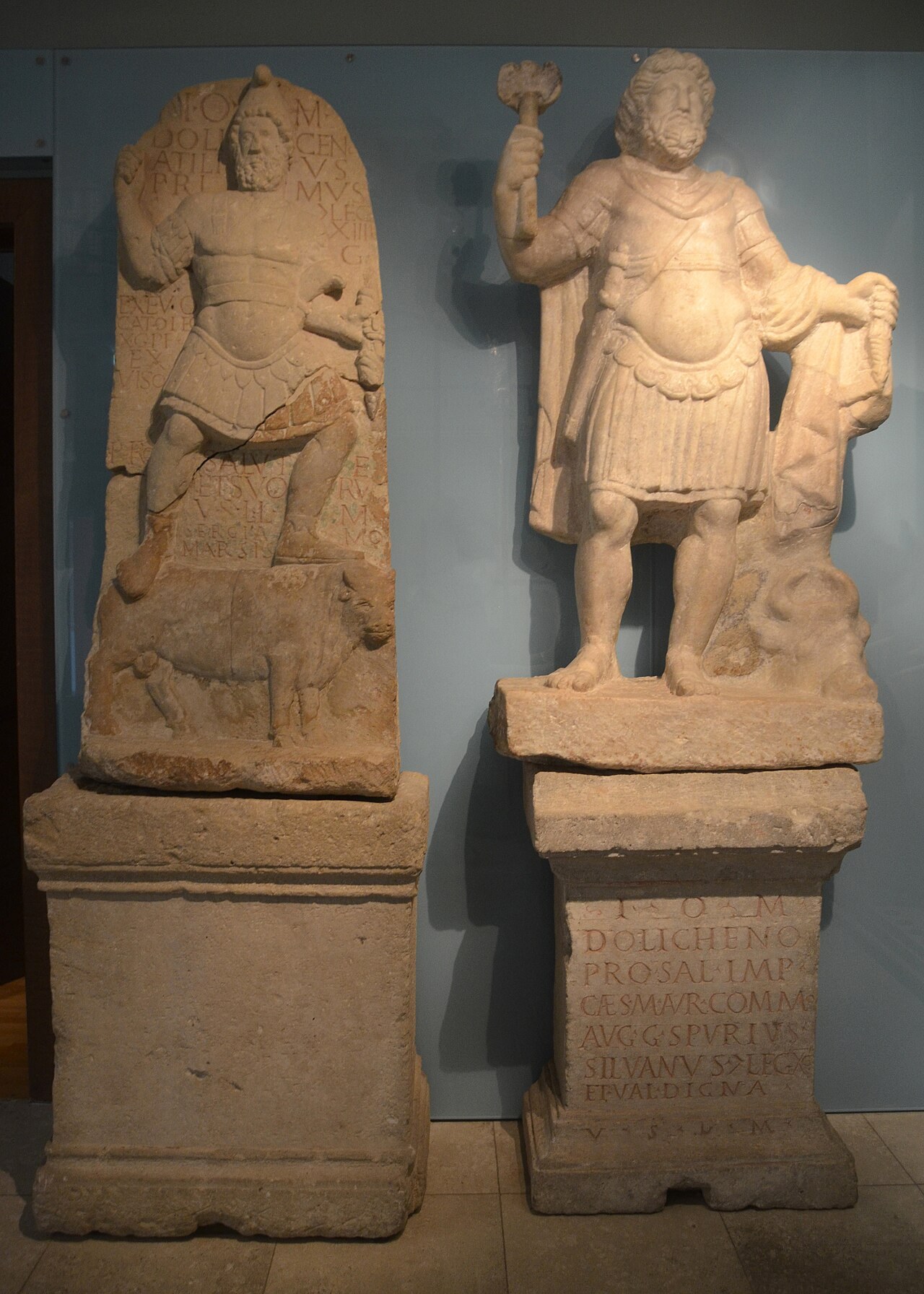 Relief and statue of Jupiter Dolichenus. Carnuntum.
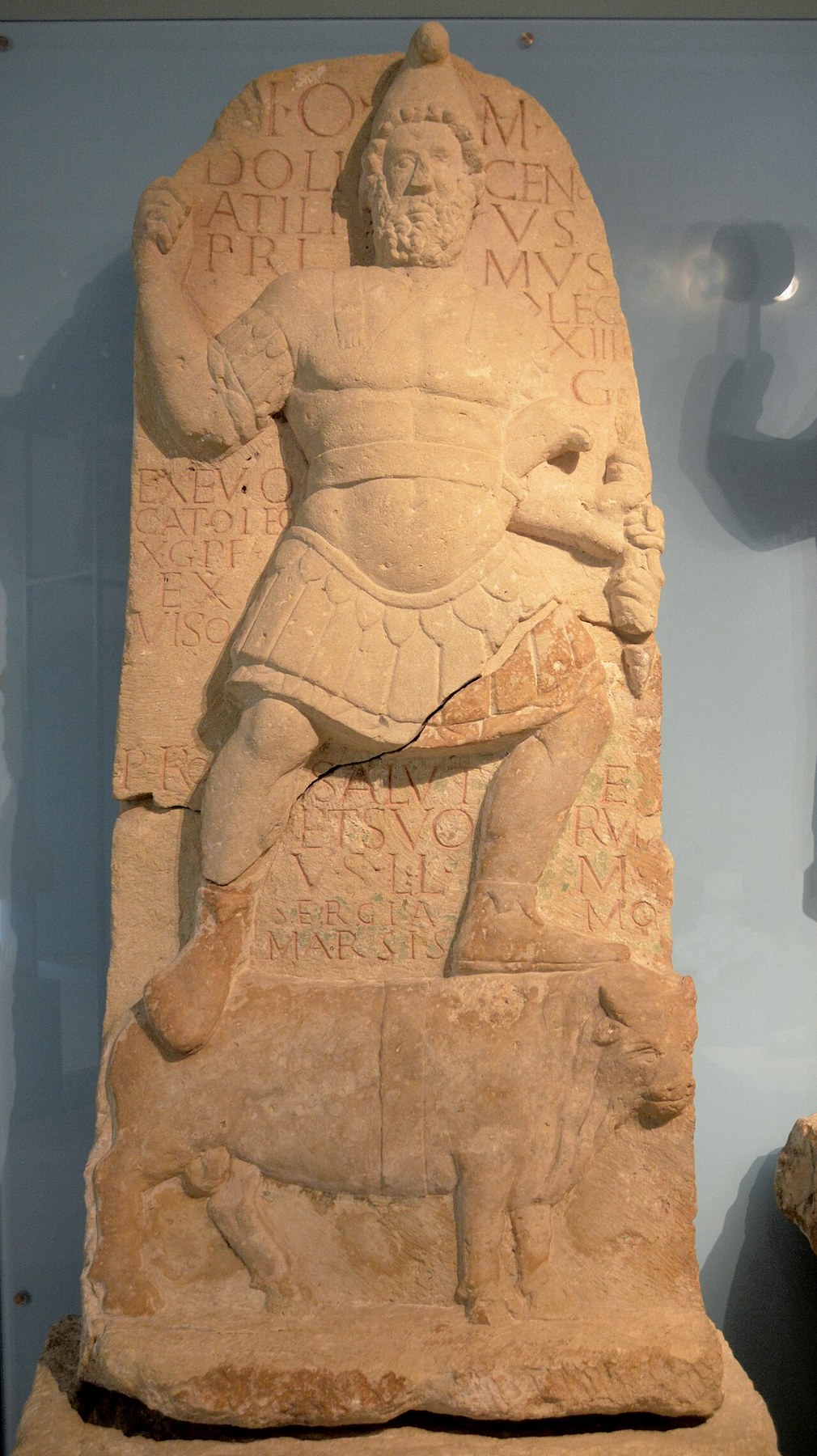 Limestone relief of Jupiter Dolichenus, AD 175–185. Carnuntum Archaeological Museum.
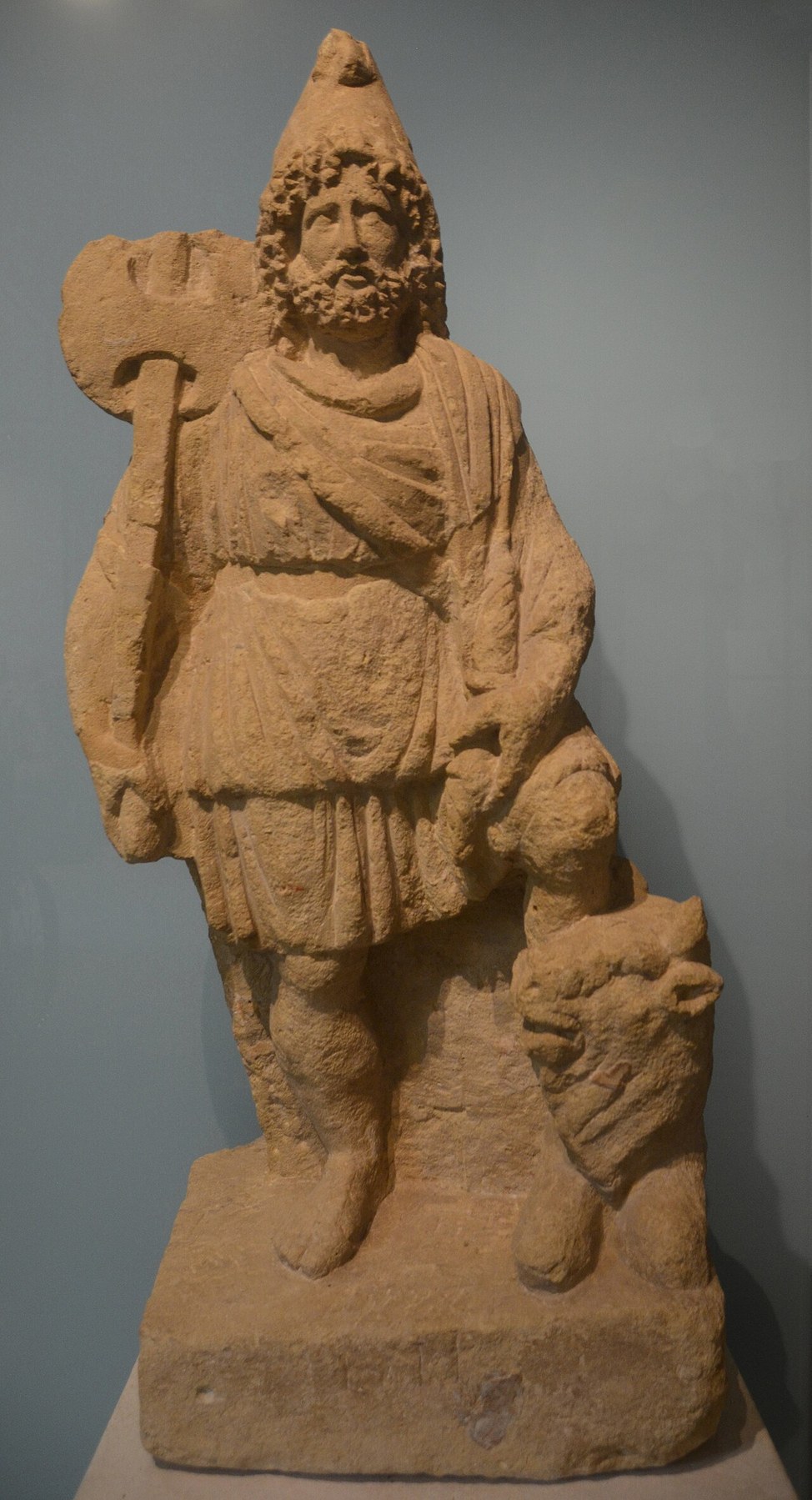 Statue of Jupiter Dolichenus, around AD 200–230. Carnuntum Archaeological Museum.
Interested in Ancient Rome beyond reading? Join Legio X Fretensis or explore our reenactment directions.


