Cleopatra VII
Cleopatra VII Philopator (69-30 BC) was the last ruler of Hellenistic Egypt from the Ptolemaic dynasty. Her policy was tied to the crisis of the late Roman Republic and the struggle among Caesar, Antony and Octavian. In brief: - state: Ptolemaic Egypt; - capital: Alexandria; - main allies: Gaius Julius Caesar and Mark Antony; - historical outcome: Egypt was absorbed into the Roman imperial system.
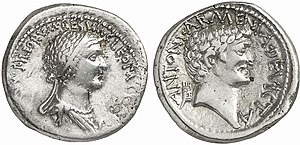 Denarius,minted in honor of the campaign in Armenia. Left — Cleopatra,right-Antony and the inscription "Antoni Armenia devicta"
Ptolemaic Egypt
Cleopatra inherited a kingdom in which a Greek dynasty had ruled an Egyptian population for almost three centuries. Alexandria was one of the great centers of the Mediterranean, but dynastic conflicts and dependence on Rome weakened the state. Unlike many Ptolemies, Cleopatra actively used the image of an Egyptian queen and, according to ancient tradition, knew several languages. This helped her address different groups of subjects and allies.
Cleopatra and Caesar
During the civil war between Caesar and Pompey, Egypt was drawn into Roman politics. After Caesar arrived in Alexandria, Cleopatra regained power with his support. Her connection with Caesar strengthened her position, but tied her fate to Roman struggles. After Caesar's assassination in 44 BC, the balance of power changed again.
Alliance with Mark Antony
After the formation of the Second Triumvirate, Cleopatra became the ally of Mark Antony. For Antony, Egypt supplied money, ships and prestige in the East; for Cleopatra, the alliance was a way to preserve her kingdom's independence. Octavian's propaganda presented their alliance as a threat to Roman order. In this conflict Cleopatra's image became a political weapon alongside armies and fleets.
Actium and Death
In 31 BC the fleet of Antony and Cleopatra was defeated off Actium. The following year Octavian entered Egypt. Antony and Cleopatra took their own lives, and Egypt became a Roman province under the victor’s control. After the victory Octavian, the future Augustus, controlled the richest kingdom of the eastern Mediterranean. This became one of the foundations of the new principate.
Cleopatra's Image
Cleopatra is known not only as a participant in Roman civil wars. She became a symbol of the last Hellenistic court, where Greek culture, Egyptian royal ideology and Roman politics met in one life. It is important to distinguish the historical Cleopatra from later legend. Ancient sources often wrote about her through the lens of Roman victory, so her image requires careful reading.
Related topics
- Great Figures of Antiquity
- Hellenistic Egypt
- Egypt
- Gaius Julius Caesar
- Mark Antony
- Octavian Augustus
Literature and sources
1. Plutarch. Antony. 2. Cassius Dio. Roman History. 3. Appian. Civil Wars. 4. Suetonius. Julius Caesar; Augustus. 5. Strabo. Geography.
Interested in Ancient Rome beyond reading? Join Legio X Fretensis or explore our reenactment directions.


