War chariots of Ancient Egypt
War chariots of Ancient Egypt became one of the main symbols of the New Kingdom army, but they were not the earliest Egyptian weapon. The light two-wheeled vehicle with horse team reached the Nile Valley through contacts with Western Asia in the age of the Second Intermediate Period and the Hyksos, and was then adapted to Egyptian military, court and temple culture.
The Egyptian chariot was not an ancient equivalent of a tank. It gave speed, visibility, prestige and a mobile platform for an archer, but it depended on open ground, trained horses, repairers, spare parts, fodder and cooperation with infantry. A chariot should therefore be seen not as one object, but as a complex: vehicle, pair of horses, harness, driver, warrior-archer, weapons, grooms and workshops.
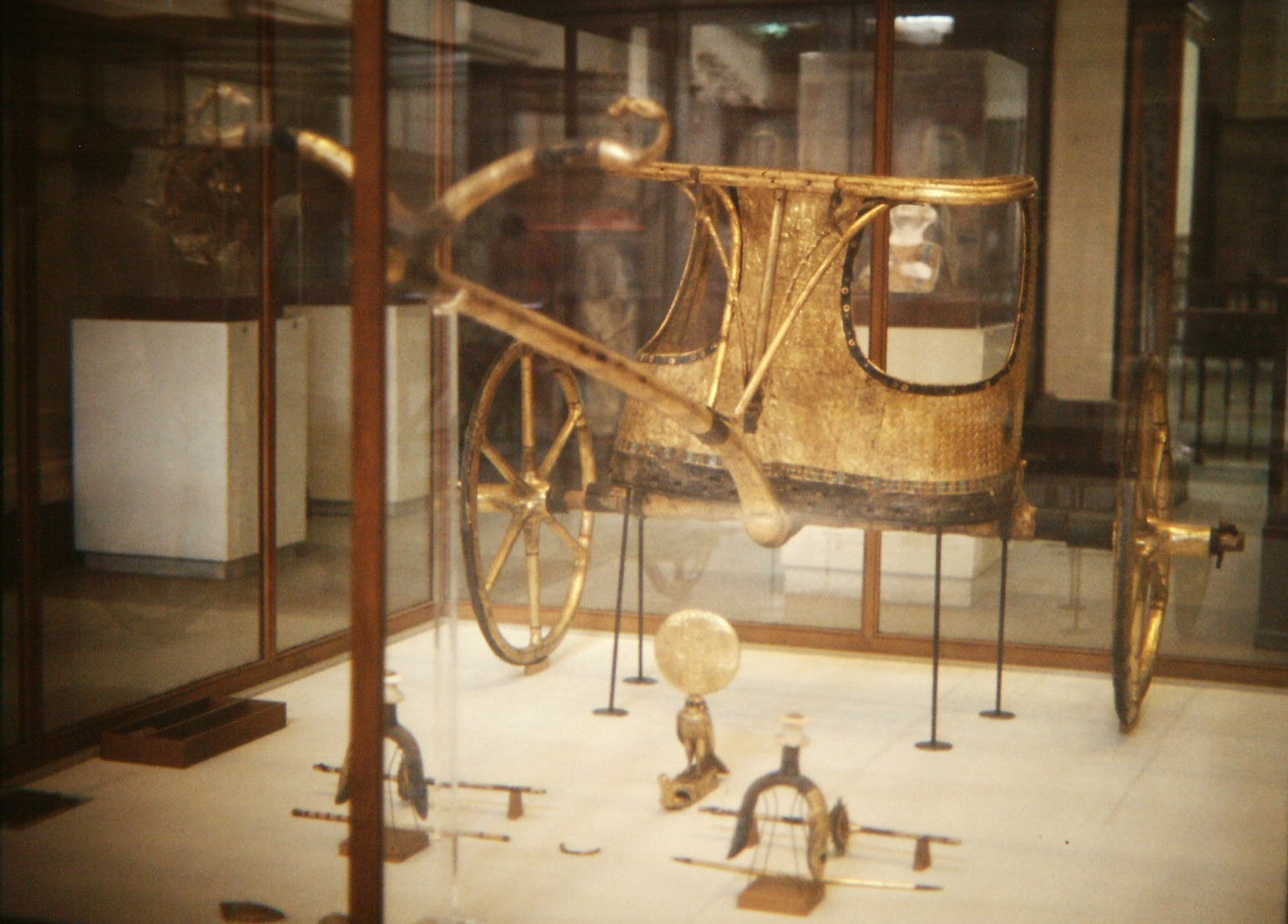 Chariot from the tomb of Tutankhamun, Egyptian Museum in Cairo. The light construction shows why the Egyptian chariot was designed for speed rather than heavy shock action.
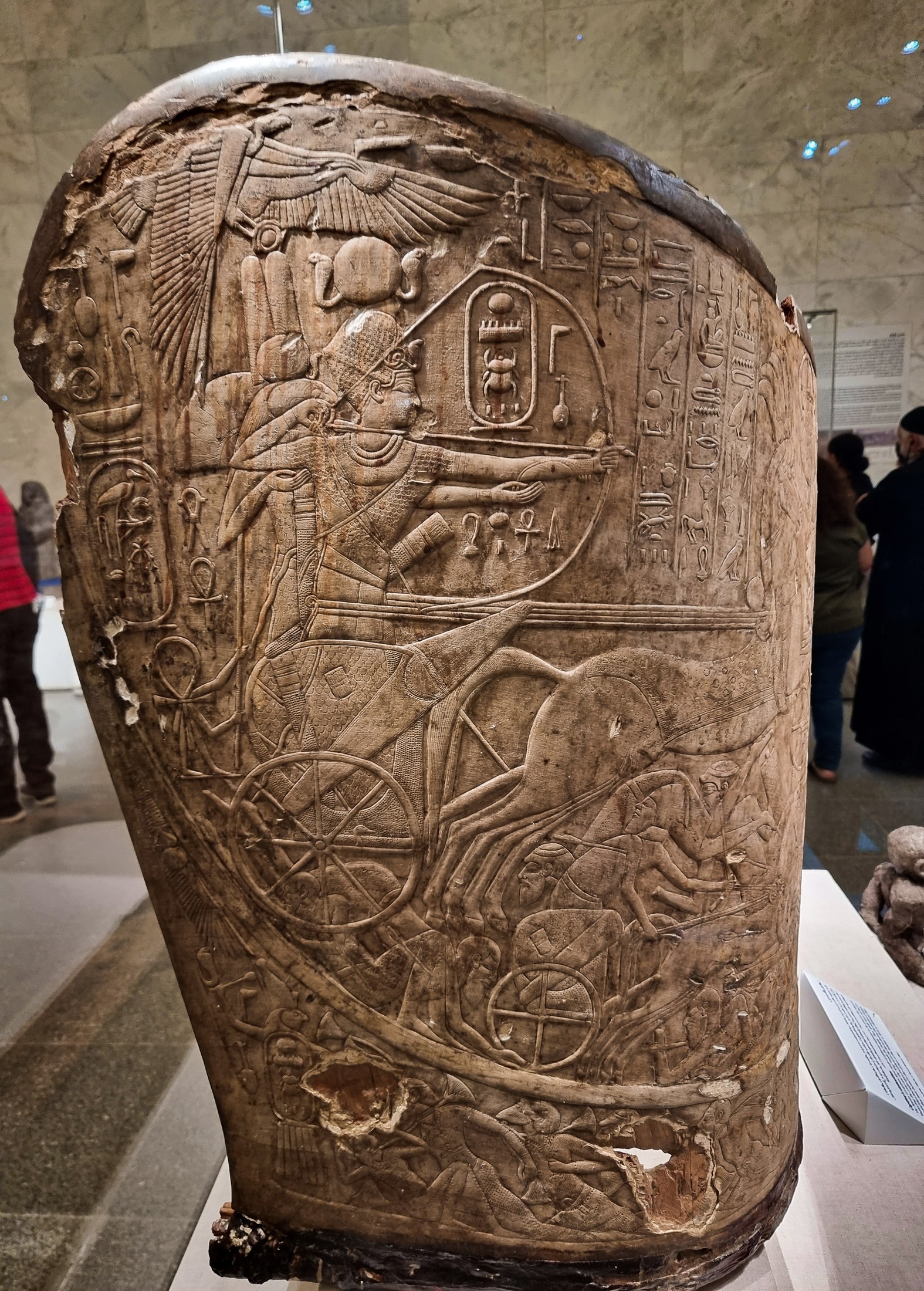 State chariot of Thutmose IV, National Museum of Egyptian Civilization, Cairo.
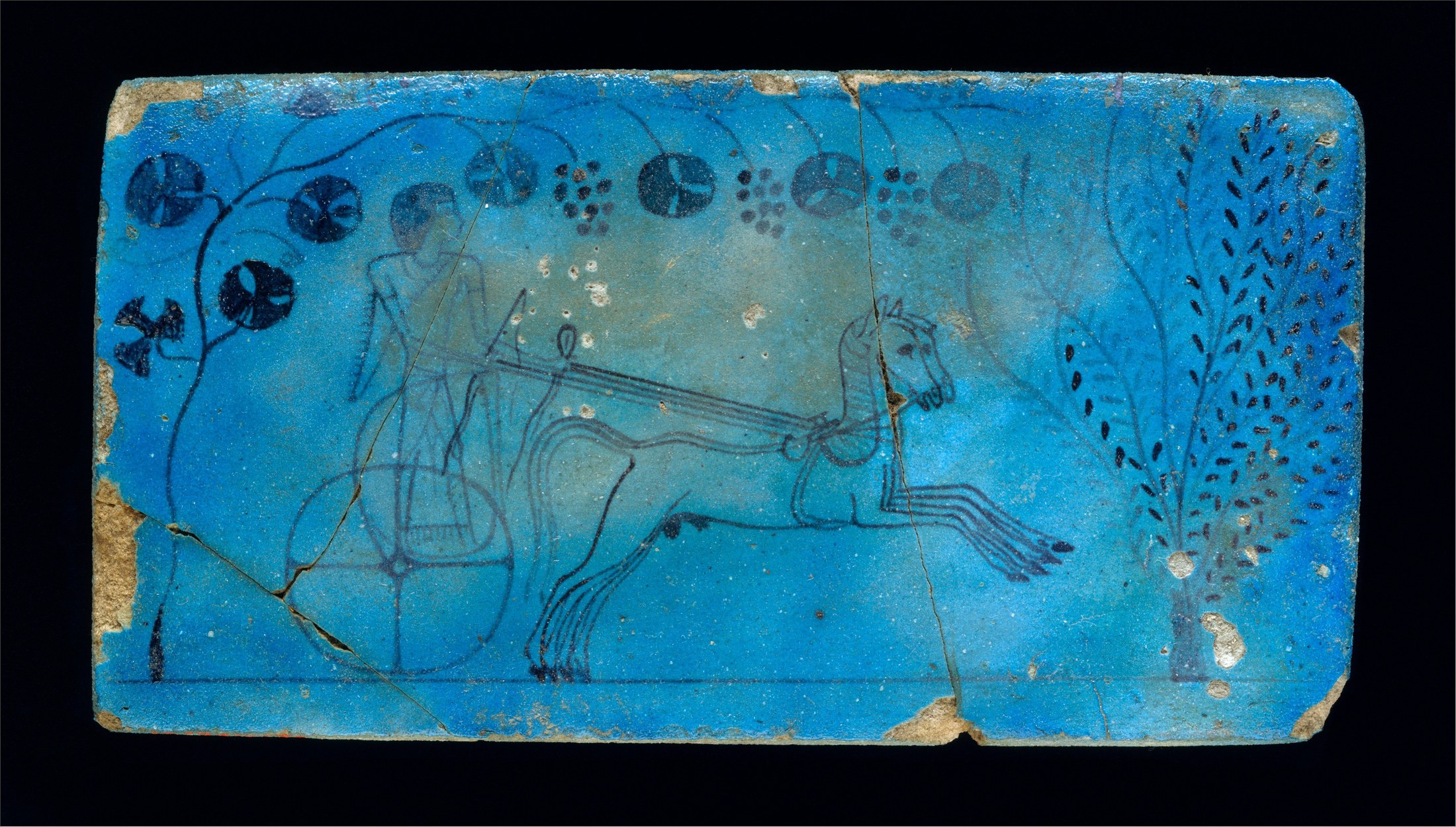 Faience tablet with a chariot scene, reign of Thutmose IV, Dynasty 18. Metropolitan Museum of Art.
Origins of Chariots in Egypt
Before chariots appeared, the Egyptian army relied on infantry, archers, river transport and garrisons. The horse and chariot entered the Egyptian military world relatively late. Their spread is connected with Western Asia, where light chariots were already used by royal courts and military elites. Egyptians did not simply borrow a ready-made technology: they integrated it into their own system of power and royal imagery.
After the expulsion of the Hyksos, chariots became especially important for rulers of the Eighteenth Dynasty. They suited campaigns in Syria-Palestine, where open stretches of road, plains and a network of towns made mobility valuable. In Nubia, desert regions or siege warfare the chariot was not always useful, so its role depended on terrain and task.
Tomb scenes with foreigners bringing chariots and horses show not only military technology but also diplomatic prestige. A chariot could be a trophy, gift, trade item and sign that Egypt belonged to the international culture of the Late Bronze Age.
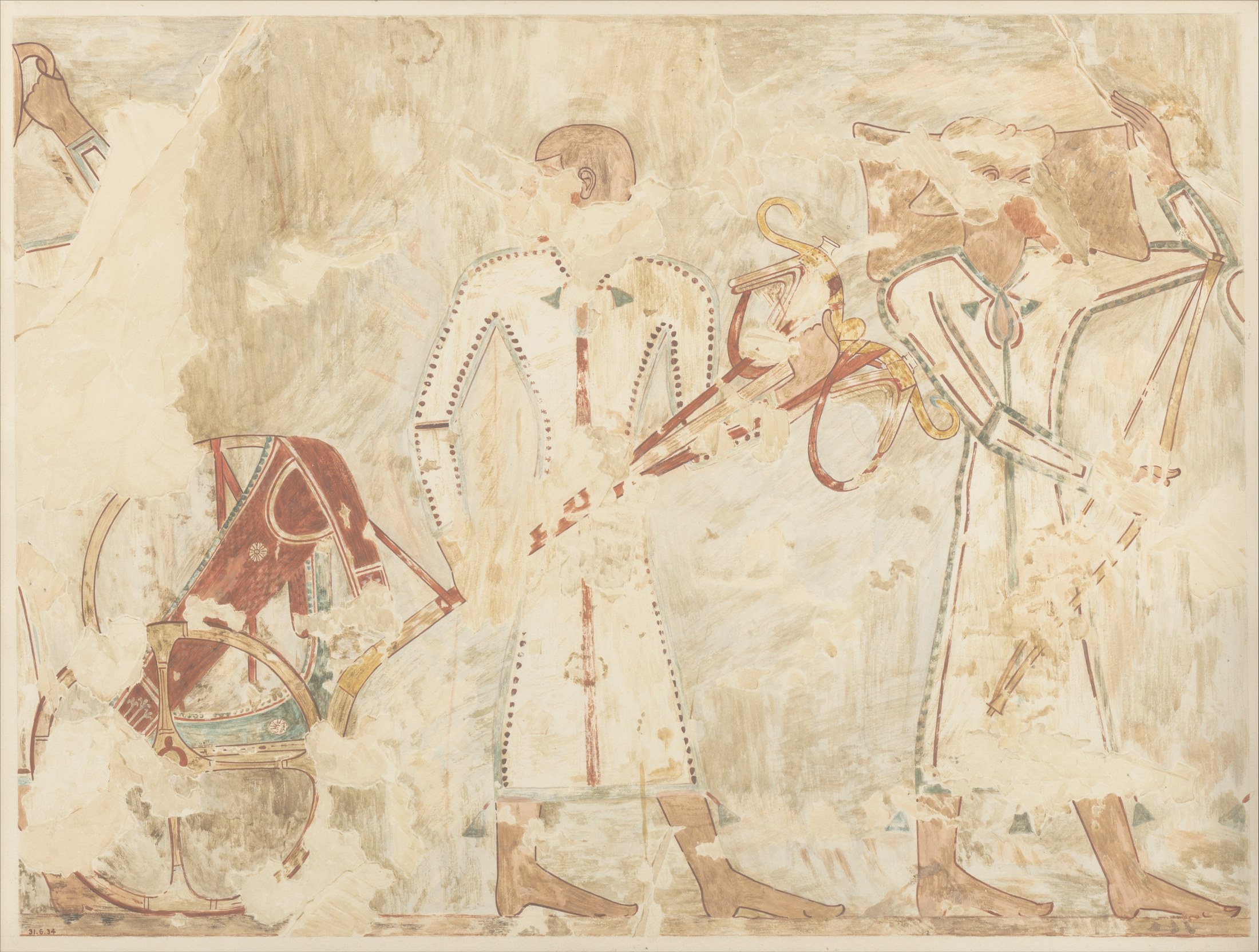 Syrians bringing an ingot and a chariot: facsimile of a scene from the tomb of Rekhmire, Dynasty 18. Metropolitan Museum of Art.
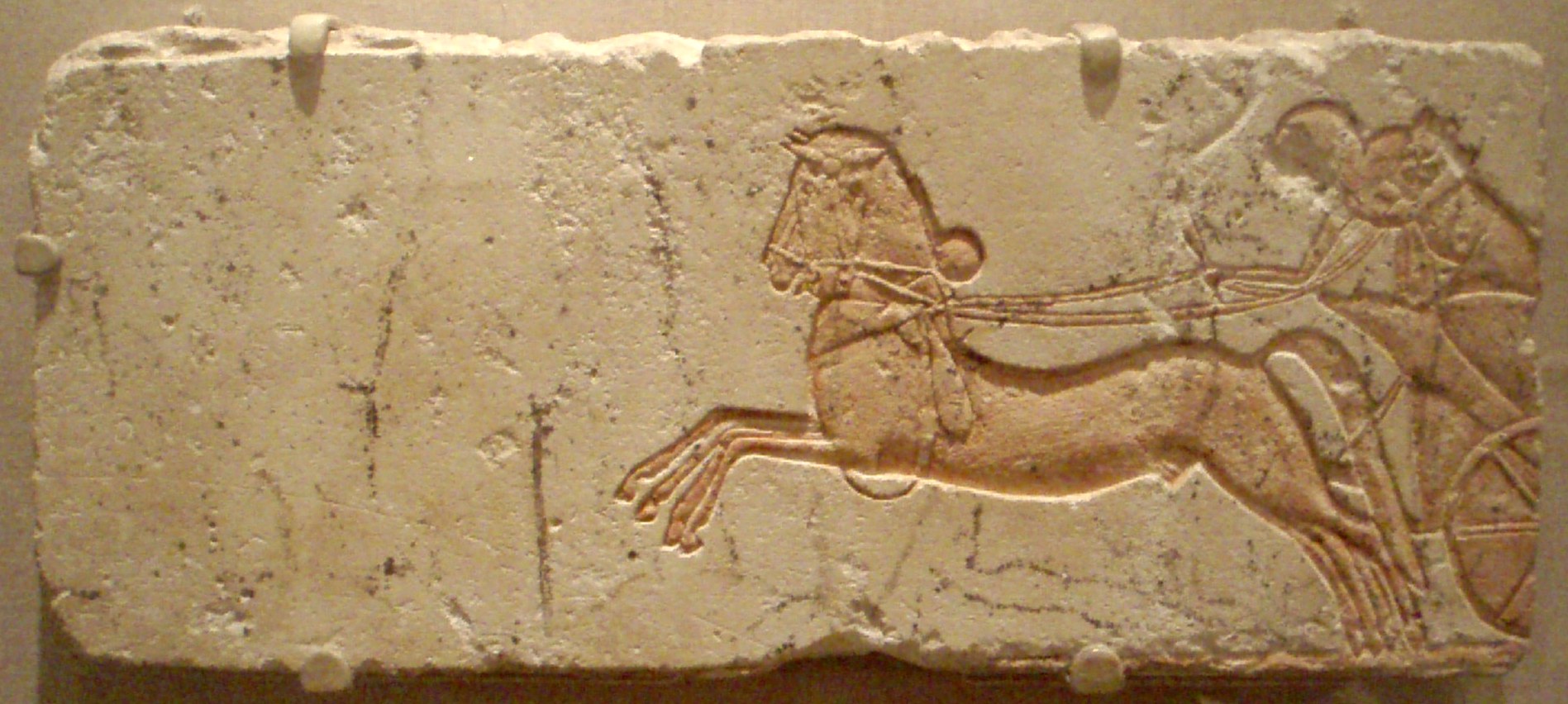 Amarna relief with a chariot scene, Brooklyn Museum.
 Talatat block from the Aten temple at Karnak with a horse and chariot, Amarna Period.
Construction
The Egyptian chariot was a light construction. Its body was made of wood, leather and organic bindings; the floor was often woven or stretched to reduce weight and soften jolts. Spoked wheels reduced mass and made it faster than a heavy solid-wheeled vehicle. The axle was usually set toward the rear of the platform, affecting balance and handling.
Lightness was both an advantage and a limitation. A chariot could change direction quickly, move with horses at trot or gallop, avoid infantry pressure and approach for archery. Yet such a construction required care: wheel, hub, rim, leather straps, pole and yoke all wore out. Campaigning required spare parts, craftsmen, raw materials and the ability to repair damage.
Actual chariots from royal burials and museum fragments matter because they show the technology that reliefs represent conventionally. In an image the artist may emphasise king, horses and movement, but the real object explains how delicate the parts were and why a breakdown could remove a crew from battle.
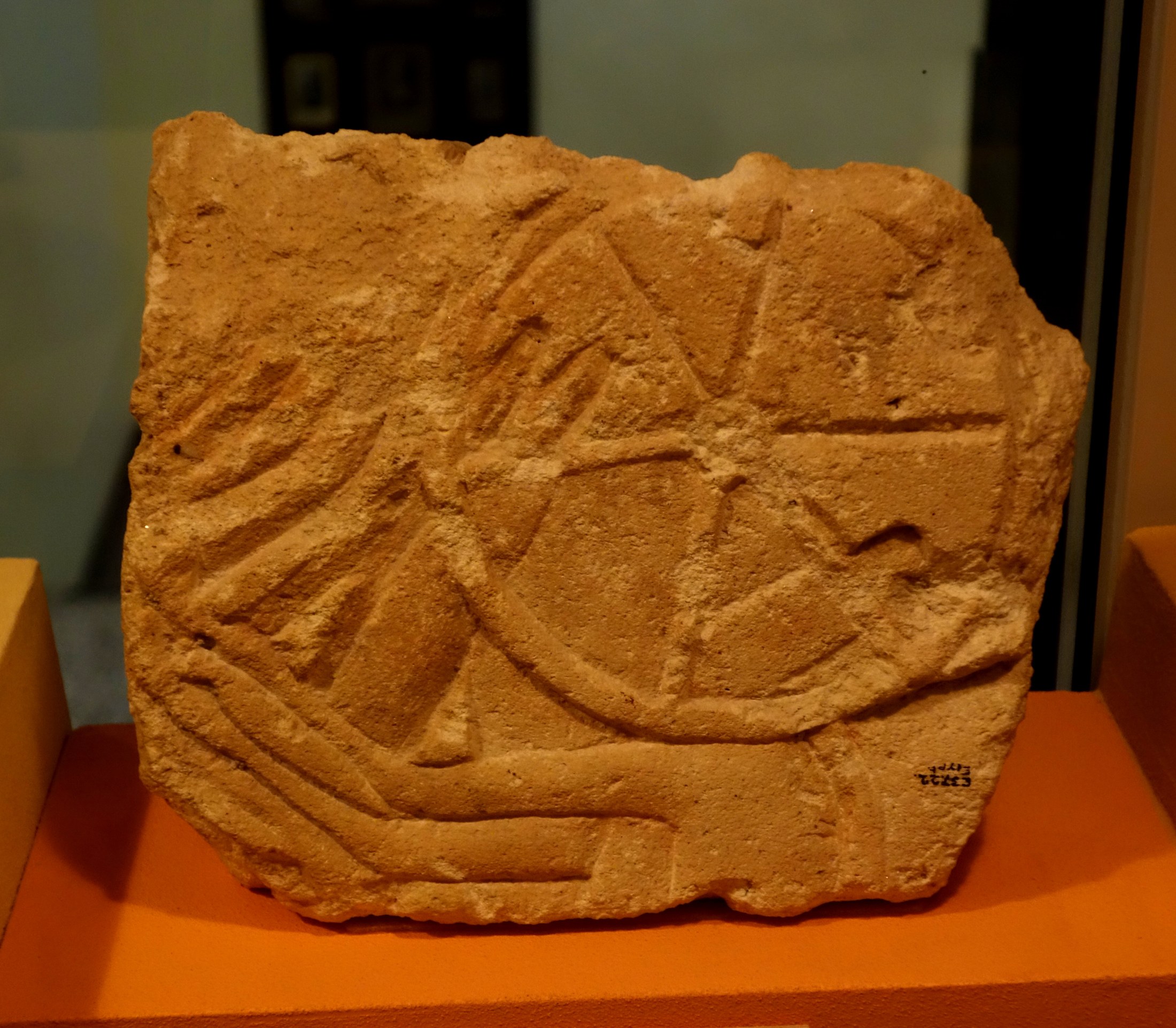 Relief fragment with a chariot wheel, Egypt, Dynasty 18, ca. 1350 BC; Otago Museum.
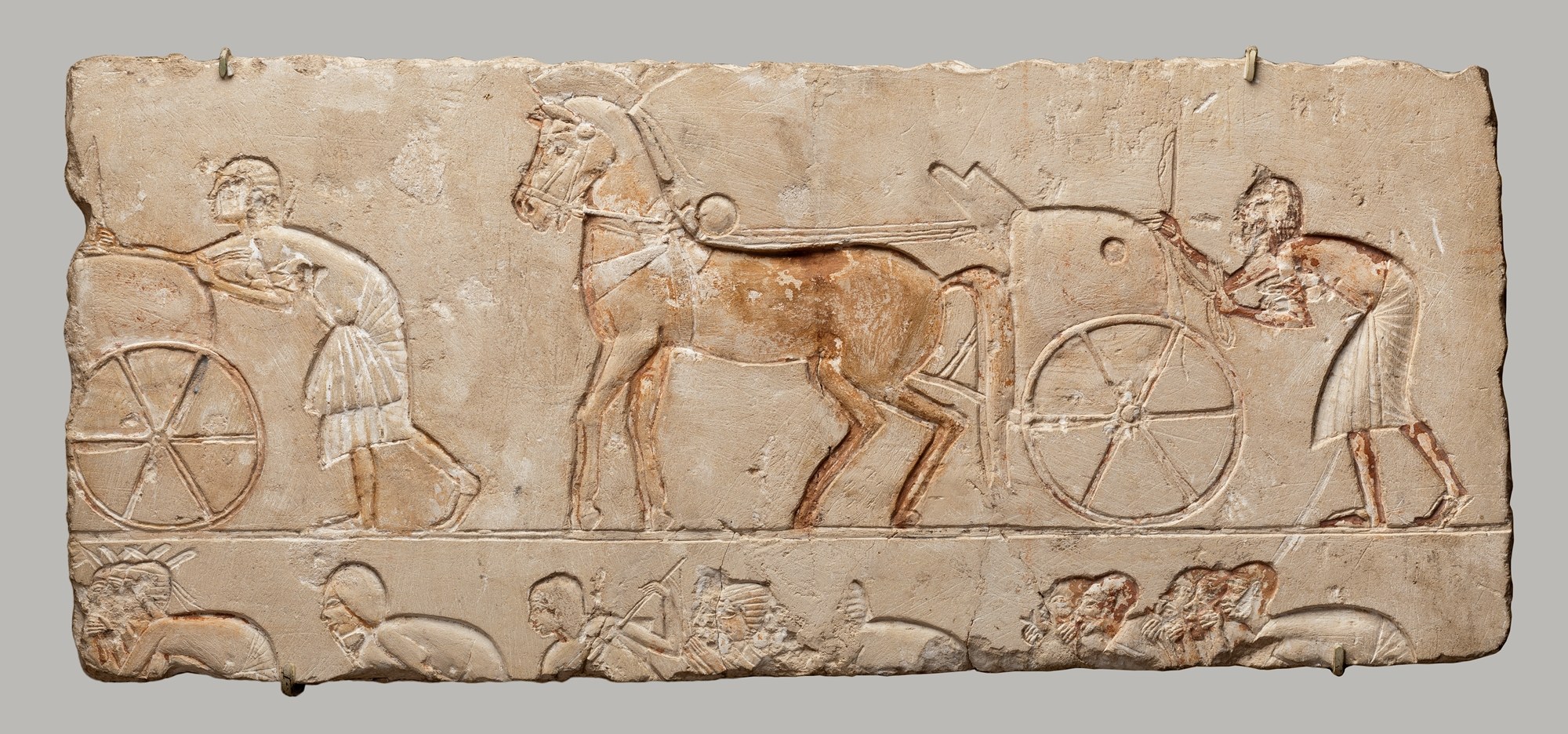 Amarna relief with chariots, reign of Akhenaten, Dynasty 18. Metropolitan Museum of Art.
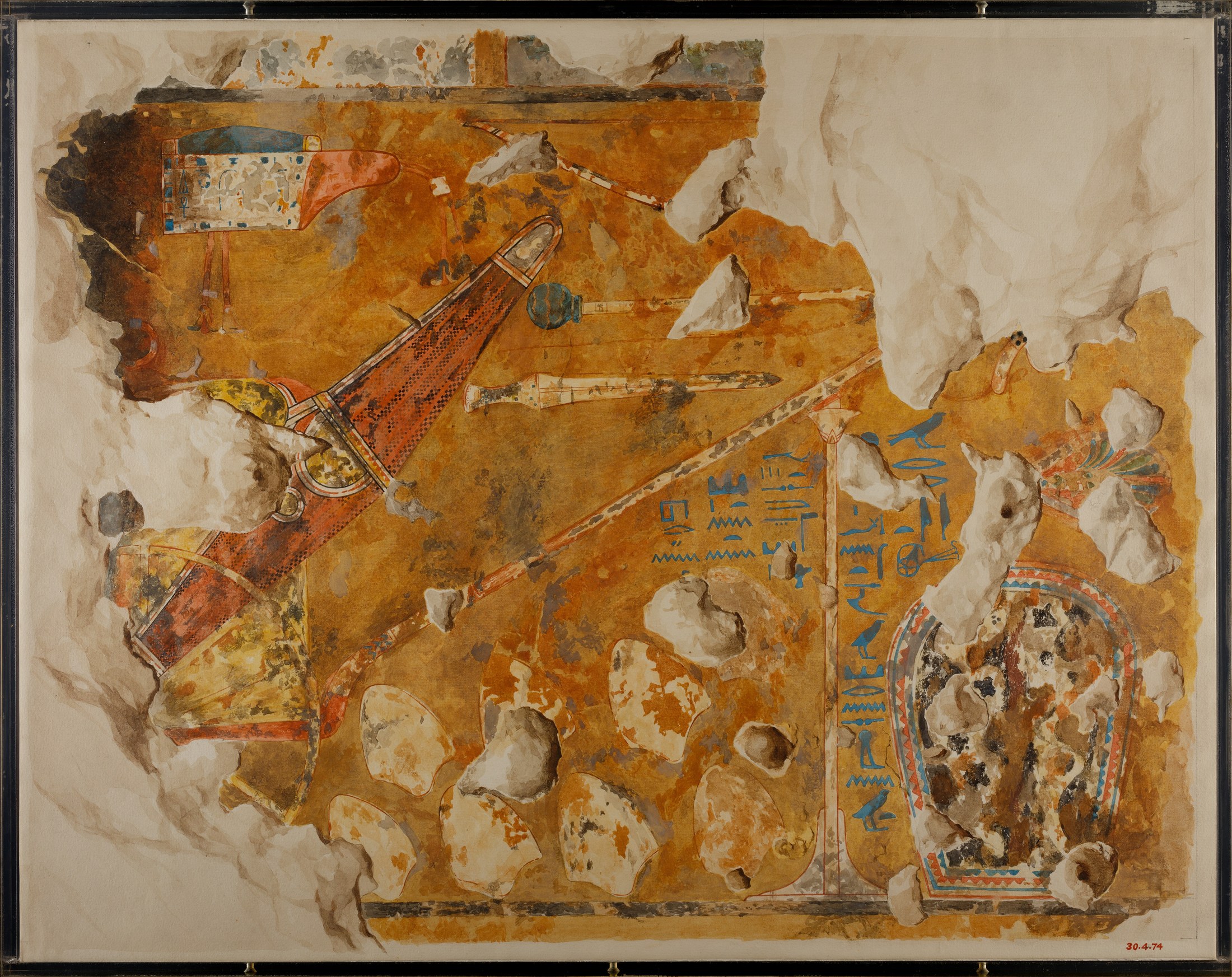 Chariot and weapons in the tomb of Qenamun, reign of Amenhotep II. Metropolitan Museum of Art.
Horses and Harness
The chariot depended on horses as much as on the vehicle itself. New Kingdom texts and images show that horses became a prestigious part of the royal economy. They had to be fed, trained, treated, transported and protected from exhaustion. For the army this created new categories of workers: grooms, drivers, harness-makers and people responsible for stables and fodder.
Harness included yoke, reins, straps, ornaments and protective elements. In ceremonial scenes horse cloth and decorative fittings stressed the owner's status, but behind them stood a practical task: keeping a pair of horses in rhythm and transferring force to the pole. Whip and reins were instruments of control, not merely attributes of an image.
Archaeological and visual evidence for harness is especially useful because organic materials rarely survive. Even a whip handle fragment or facsimile of a tomb scene helps reconstruct how the chariot complex looked outside an idealised battle scene.
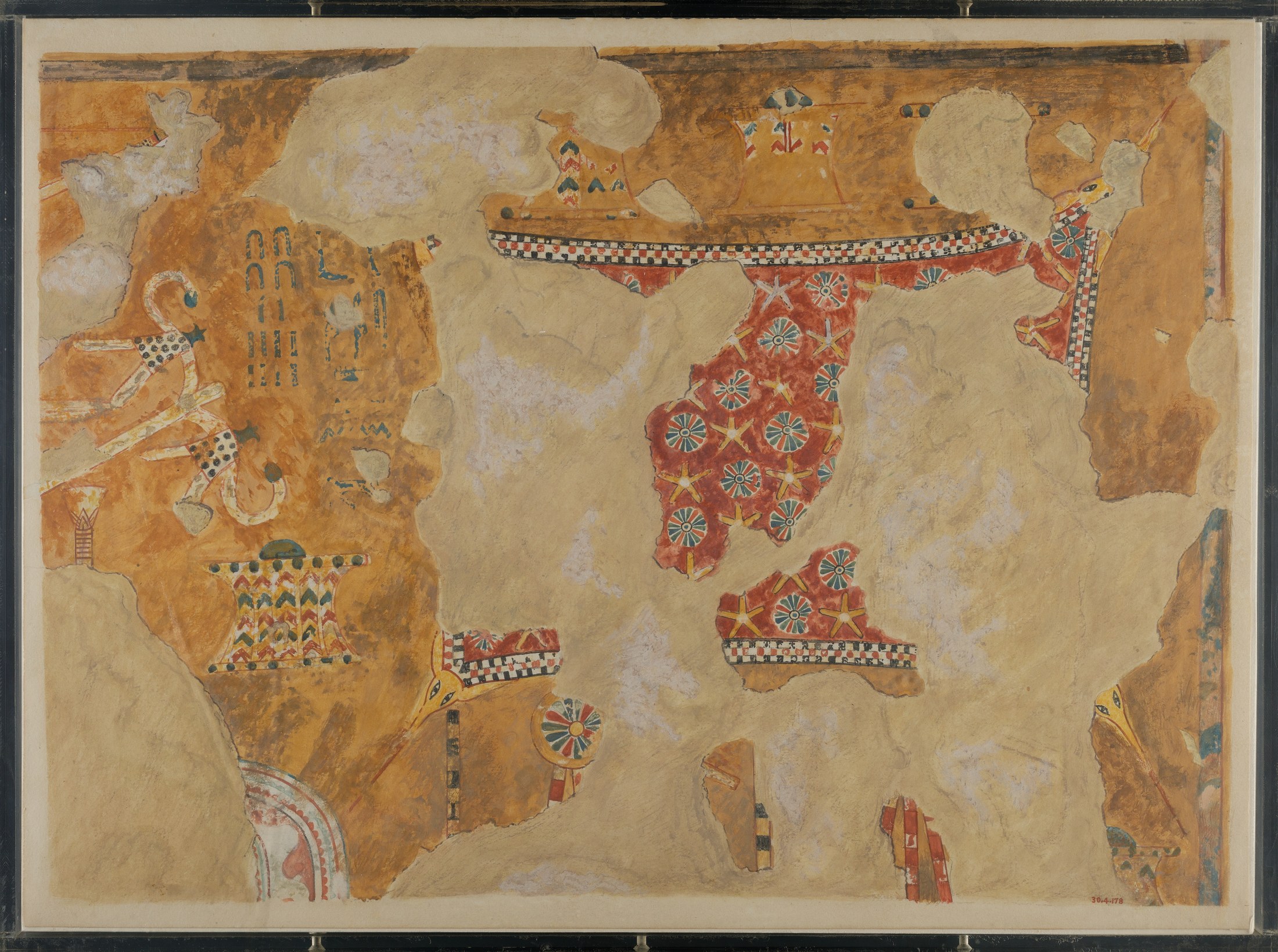 Horse cloth and chariot fittings in the tomb of Qenamun, reign of Amenhotep II. Metropolitan Museum of Art.
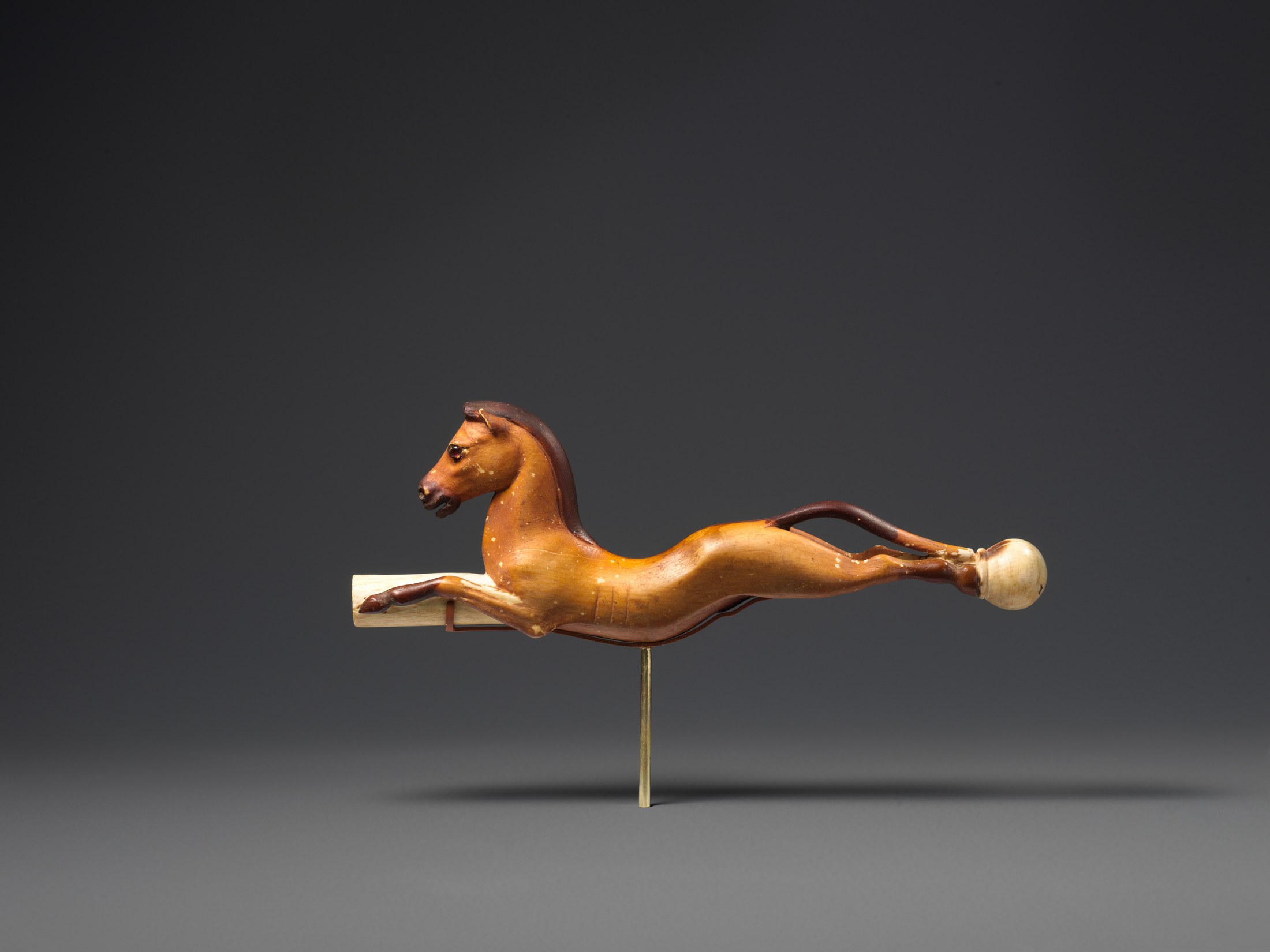 Whip handle in the shape of a horse, reign of Amenhotep III. Metropolitan Museum of Art.
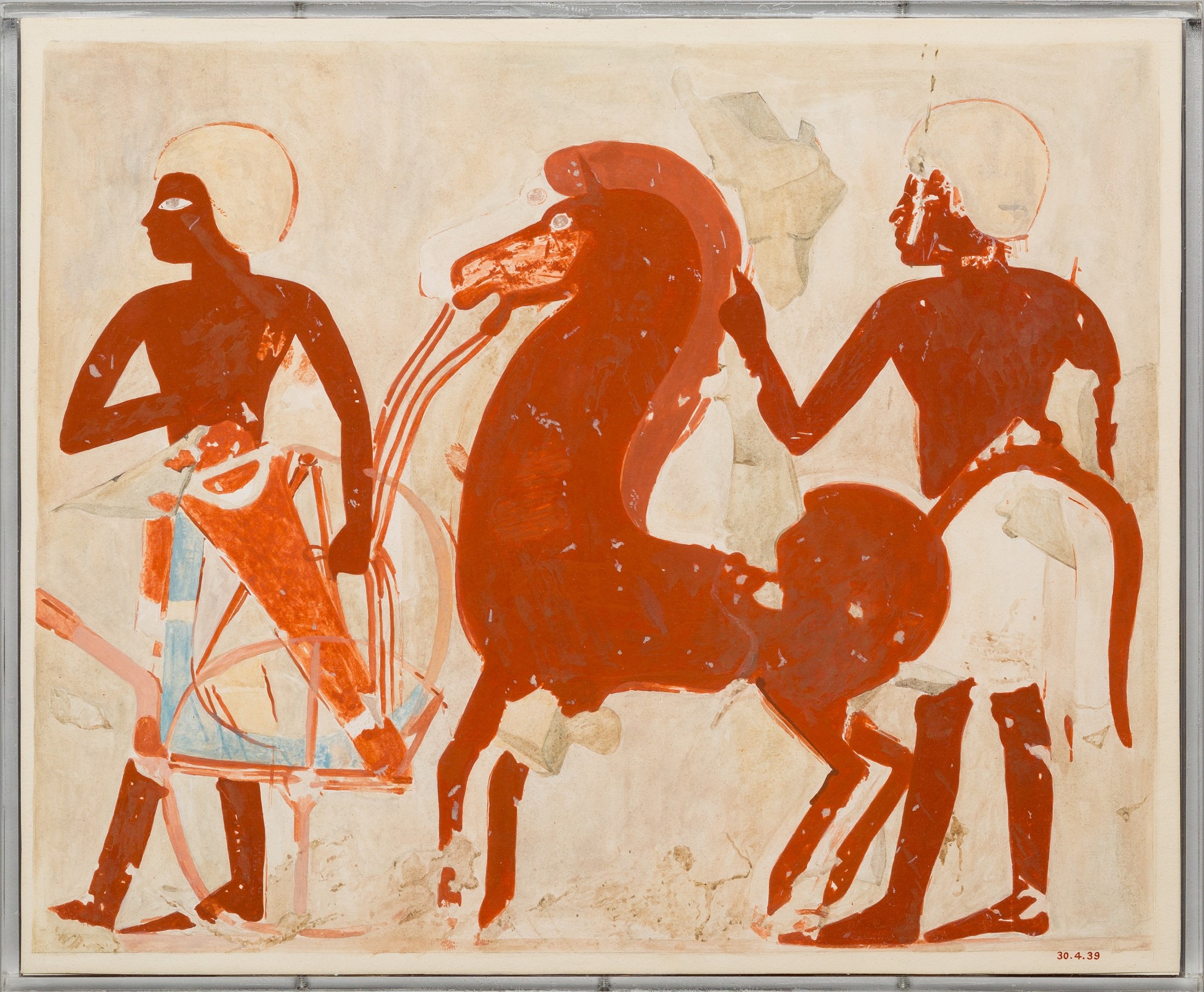 Offering of a chariot and horse in the tomb of Userhat, facsimile of a scene from the reign of Amenhotep II. Metropolitan Museum of Art.
Crew and Weapons
A normal battle crew consisted of a driver and a warrior, most often an archer. The driver controlled the horses and kept the chariot in position; the warrior shot the bow and could carry spare arrows, a javelin, axe, dagger or khopesh. Runners, arms-bearers and infantry support worked around chariot crews: they finished wounded enemies, guarded the vehicle when stopped and helped in case of breakdown.
Shooting from a chariot required special training. The archer had to keep balance and account for the moving platform, turns and the driver's actions. A chariot warrior therefore stood closer to a professional elite than to an ordinary seasonal levy. Training involved not only weapons but also cooperation with horses and partner.
Tomb scenes with chariot and weapons show that the crew was understood as a set of people and objects: bow, quiver, case, spare weapons, straps, horse cloths, whip and chariot parts. This matters for reconstruction: without supporting personnel and spare equipment, a chariot quickly changed from a prestigious weapon into a fragile vehicle.
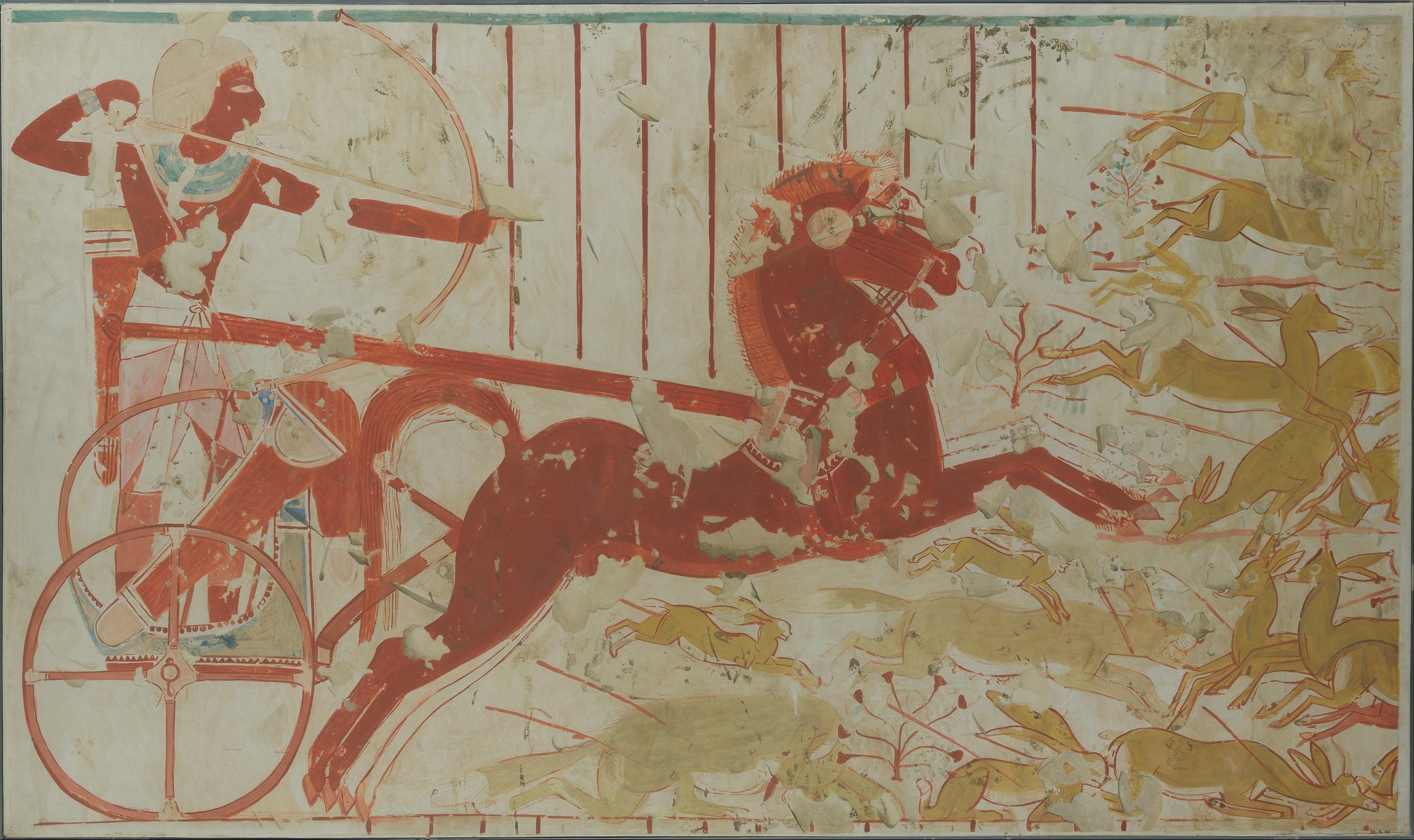 Hunting from a chariot, facsimile of a scene from the tomb of Userhat from the reign of Amenhotep II. Metropolitan Museum of Art.
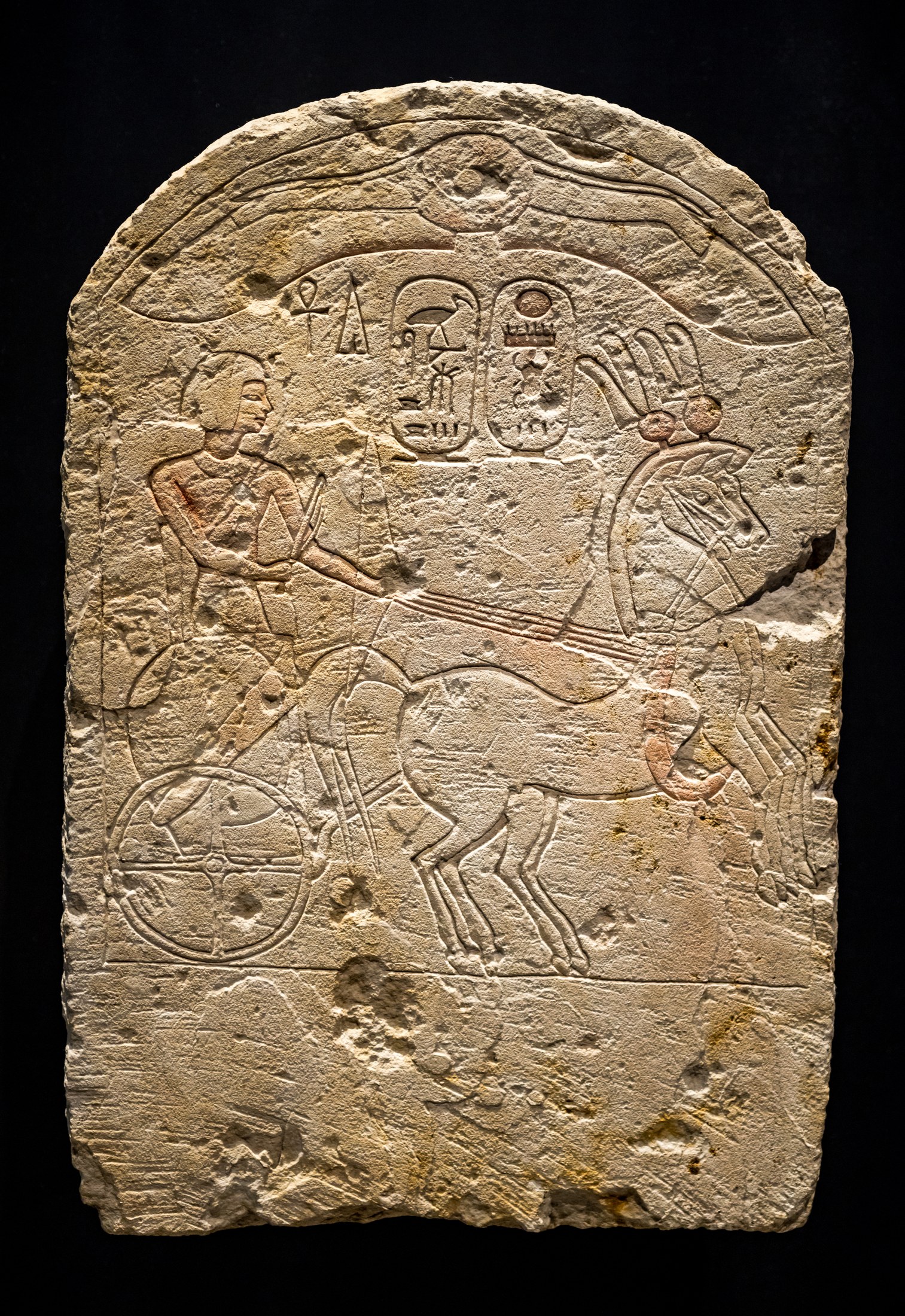 Stela showing Thutmose IV driving a chariot, Staatliches Museum Ägyptischer Kunst, Munich.
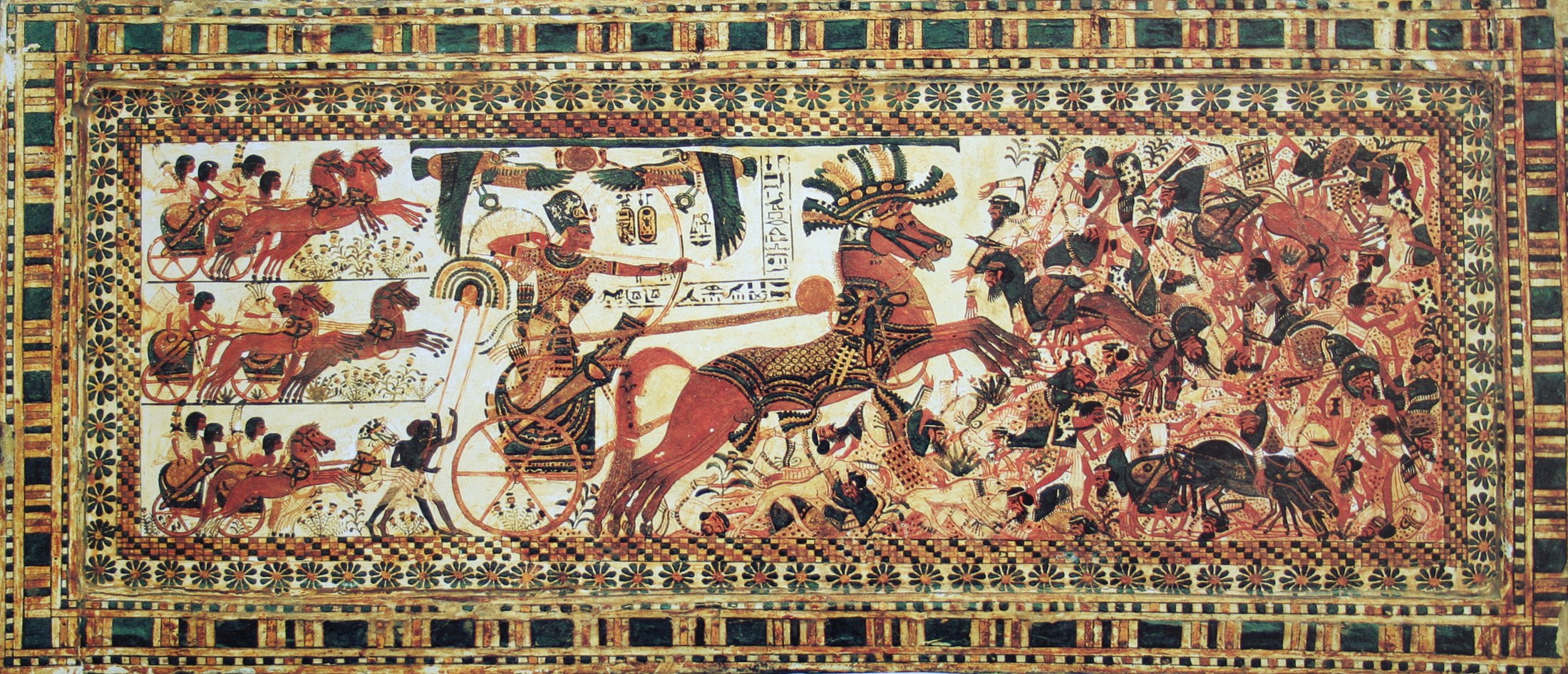 Tutankhamun striking enemies from a chariot: painting on a chest from tomb KV62. The image shows the royal ideology of chariot warfare.
Tactics
On the battlefield a chariot provided mobility. It could approach quickly, shoot at the enemy, withdraw, pursue fugitives and support infantry. In the hands of a trained crew it was especially dangerous against poorly organised or already disrupted infantry. Against dense formation, obstacles, walls, broken ground and bad roads its possibilities decreased.
Egyptian tactics probably combined shooting at range, manoeuvre and psychological pressure. Chariots could operate ahead of the army, on the flanks, in pursuit or around the king. They should not be imagined as the only striking force: infantry, archers, baggage and command had to work behind them.
In the Battle of Kadesh chariots showed both the strength and weakness of the system. The Hittite attack on the stretched Egyptian column was dangerous because of speed, but the later fighting near the camp depended on infantry resistance, arrival of reinforcements and Ramesses II's ability to keep control.
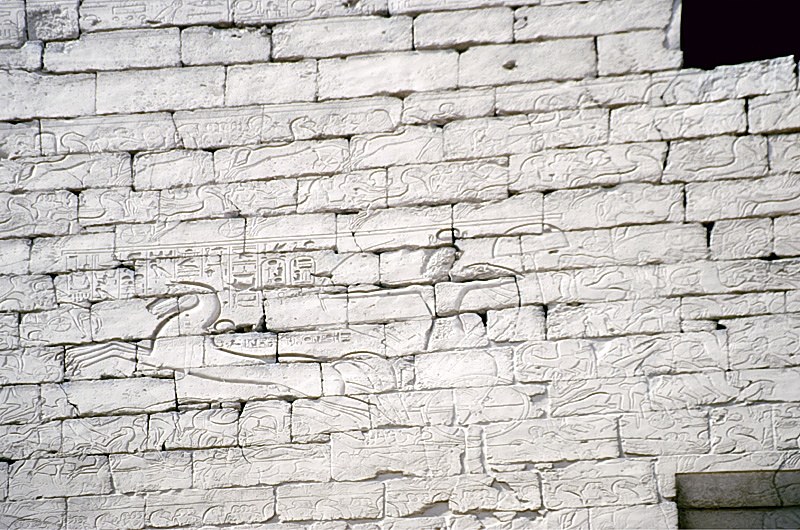 Battle of Kadesh scene on the pylon of Luxor Temple: the king's chariot in the temple version of the battle.
Status and Royal Symbolism
The chariot was an expensive and prestigious object. It required wood, leather, metal, wheelwrights, horses, harness and space within the palace economy. Charioteers were therefore connected with royal service, military elites and palace workshops. In tombs a chariot could show not only profession but also the owner's status.
In royal art the chariot became a language of power. The pharaoh in a chariot strikes enemies, hunts, controls horses and appears as the ideal warrior. Such scenes should not be read as a literal description of every battle: they place the king at the centre of order. Yet this is precisely why they matter: the chariot became a sign that pharaonic power was mobile, armed and able to reach distant frontiers.
State chariots, decorated fittings and offering scenes show another side of the subject. A chariot was not only a weapon, but also an object of diplomacy, gift exchange, trophy display, royal procession and memory of military glory.
Reliefs, Tombs and Finds
Chariots are known from several types of evidence. Actual vehicles and parts from royal burials show construction; reliefs and stelae show battle ideology; tomb facsimiles record harness, weapons and service; Kadesh scenes show how chariots were incorporated into a large narrative of royal victory.
Each source has limits. A temple relief enlarges the king and orders the chaos of battle. A tomb scene may show prestigious property rather than an ordinary army kit. A museum chariot from a burial preserves technology, but by itself does not tell how often such objects were available to the mass army. Reliable reconstruction therefore appears only by comparing different materials.
Textbook reconstructions are useful for explaining crew and harness, while dated monuments provide the historical evidence: chariots of Tutankhamun and Thutmose IV, Amarna reliefs, scenes from the tombs of Userhat, Qenamun and Rekhmire, and the Kadesh reliefs.
Chronology
- Ca. seventeenth-sixteenth centuries BC
- horse and chariot enter the Egyptian military world through contacts with Western Asia and the Hyksos period.
- Sixteenth-fifteenth centuries BC
- the early New Kingdom incorporates chariots into royal campaigns and military elites.
- Fifteenth century BC
- under Thutmose III, Thutmose IV and Amenhotep II chariot culture is well visible in hunting scenes, tombs and diplomatic gifts.
- Fourteenth century BC
- Amarna reliefs show chariots, horses and court movement.
- Ca. 1274 BC
- Kadesh becomes the central monument of chariot warfare in Egyptian tradition.
- Twelfth century BC
- in the scenes of Ramesses III chariots remain part of the royal military image, but the wider Late Bronze Age system is already changing.
Related topics
- Army of Ancient Egypt
- Weapons of Ancient Egypt
- Warriors of Ancient Egypt
- Battle of Kadesh
- New Kingdom Egypt
Literature and sources
- Littauer M. A., Crouwel J. H. Wheeled Vehicles and Ridden Animals in the Ancient Near East.
- Littauer M. A., Crouwel J. H. Chariots and Related Equipment from the Tomb of Tutankhamun.
- Spalinger A. J. War in Ancient Egypt: The New Kingdom.
- Schulman A. R. Chariots, Chariotry, and the Hyksos.
- McDermott B. Warfare in Ancient Egypt.
Interested in Ancient Rome beyond reading? Join Legio X Fretensis or explore our reenactment directions.


