Weapons of Ancient Egypt
Weapons of Ancient Egypt changed with the army, metalworking and the character of warfare. In the earliest periods Egyptians used stone points, maces, spears, simple bows, copper axes and shields made of wood, leather or woven materials. In the Middle Kingdom military garrisons, weapon models and burial assemblages with spears, bows and shields become more visible. In the New Kingdom equipment became more varied: composite bows, chariot equipment, bronze axes, daggers, khopesh swords and elite protective elements became more important.
Egyptian weapons cannot be described from reliefs alone. Temple art shows king and army in a ceremonial form, while real objects from tombs, magazines, fortresses and museums provide a different level of evidence: material, size, blade attachment, repairs, wear and the distinction between combat, ceremonial and funerary objects.
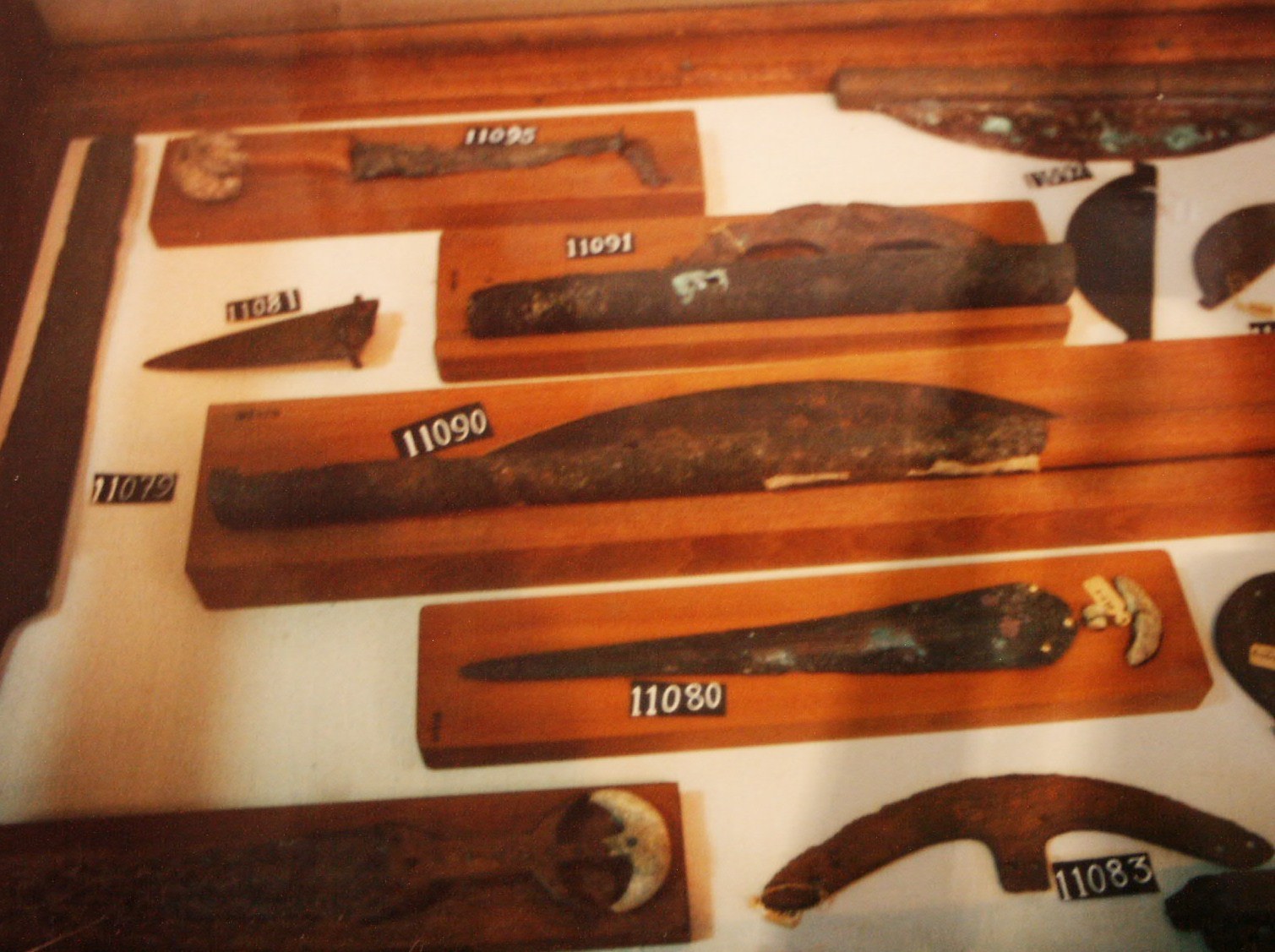 Bronze weapons in the Egyptian Museum in Cairo: archaeological finds are essential for checking forms that reliefs show conventionally.
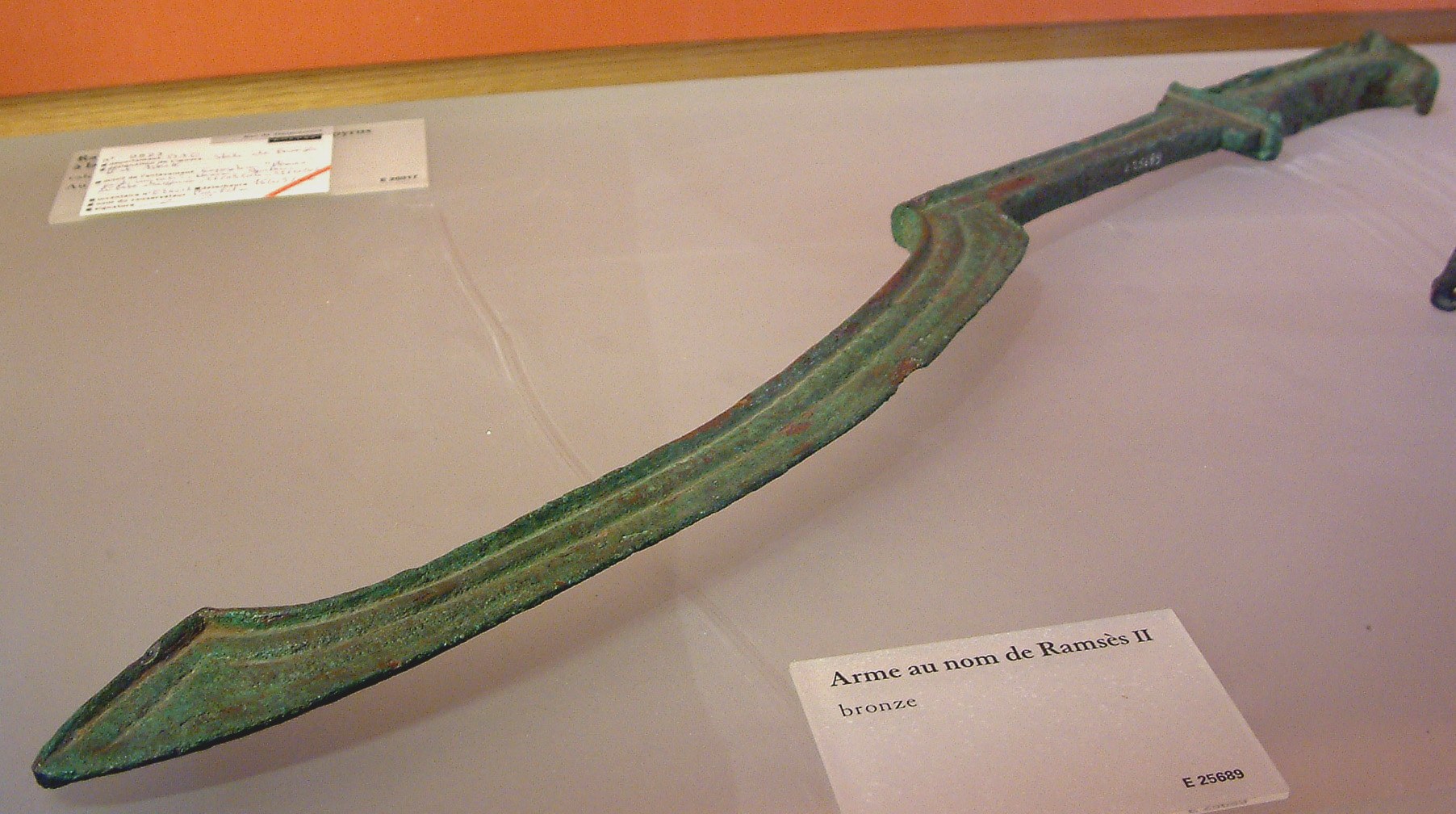 Egyptian khopesh: a sickle-shaped blade connected with New Kingdom weaponry and royal iconography. Louvre;.
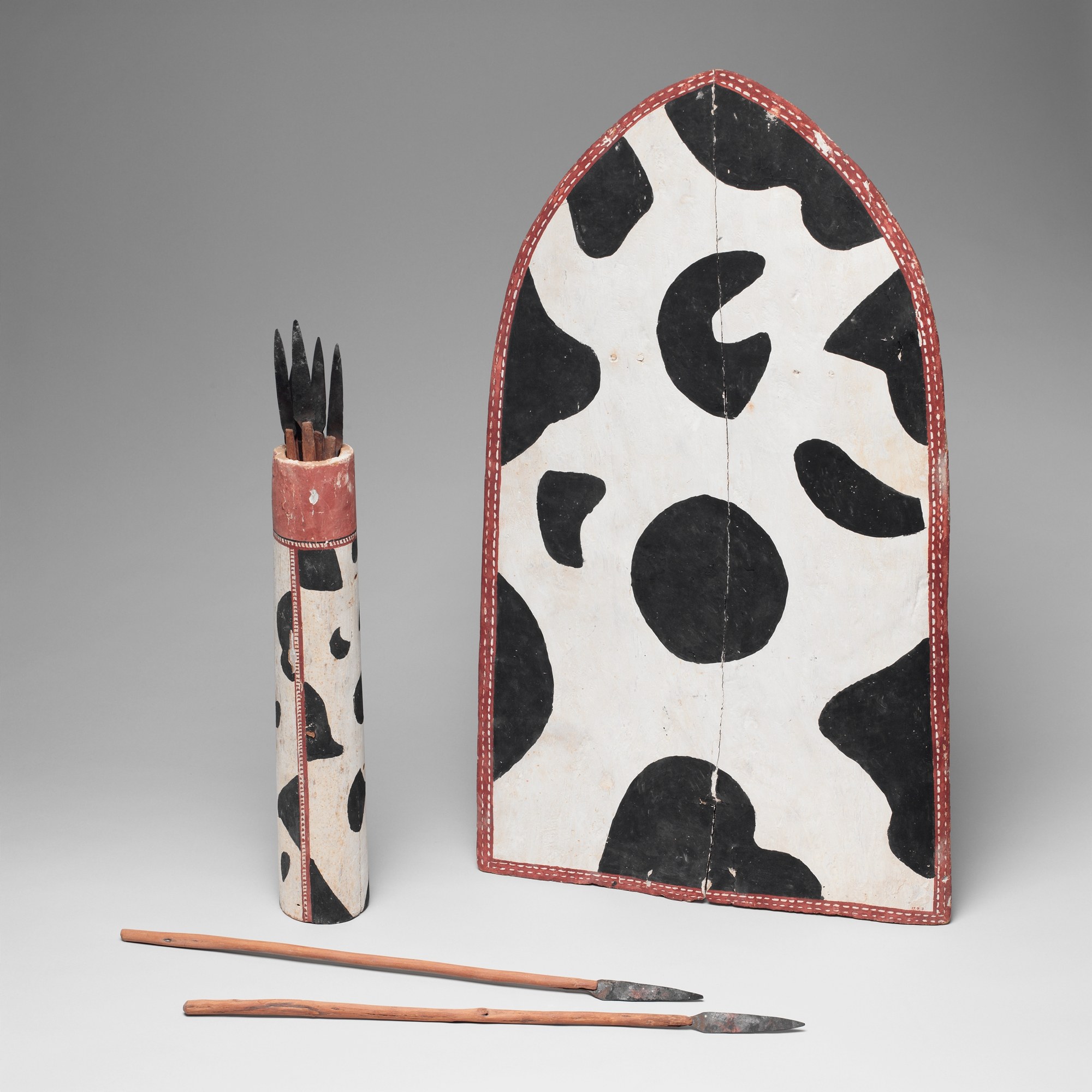 Model shield, spear case and spears, Dynasty 12, Middle Kingdom. Metropolitan Museum of Art.
Materials and Development
Early weapons were made from stone, bone, wood, leather and copper. Stone arrowheads and flint inserts remained in use alongside metal objects for a long time because they were sharp, cheap and familiar. Copper and copper alloys provided axes, daggers and points, but metal was costly and required workshops, fuel, raw materials and control over supply.
Bronze became more important in the second millennium BC, especially in elite equipment and the New Kingdom army. Older forms did not vanish at once: simple bows, wooden shields and stone elements could coexist with bronze blades. Iron remained a rare material in pharaonic Egypt for a long time and did not define mass weaponry until later periods.
An object's function depended on context. A weapon from a tomb could be a real combat item, a reduced model, an offering or a symbol of status. It is therefore important to distinguish a worn find, a model from a burial assemblage, a temple image and a royal sign of victory.
Bows, Arrows and Missile Weapons
The bow was the main long-range weapon of the Egyptian army. Simple wooden bows are known from early periods and are especially well represented in Middle Kingdom models and burial finds. They were relatively easy to make, but required constant training: the power of a shot depended not only on the bow's shape, but also on the archer's skill, the string and the arrows.
Arrows were made from reed or wood, with stone, bone, copper or bronze points. Points could be narrow and piercing, leaf-shaped or transverse; different forms suited different targets. A wrist guard protected the archer's arm from the bowstring, while quivers and bow cases show that archery involved a whole set of equipment.
Composite bows spread in the New Kingdom and were connected with western Asiatic military practice. They gave greater power and were useful for chariot warriors, but they were expensive, complex and required care. The composite bow was therefore important for elite and chariot units, while the simple bow continued to exist beside it.
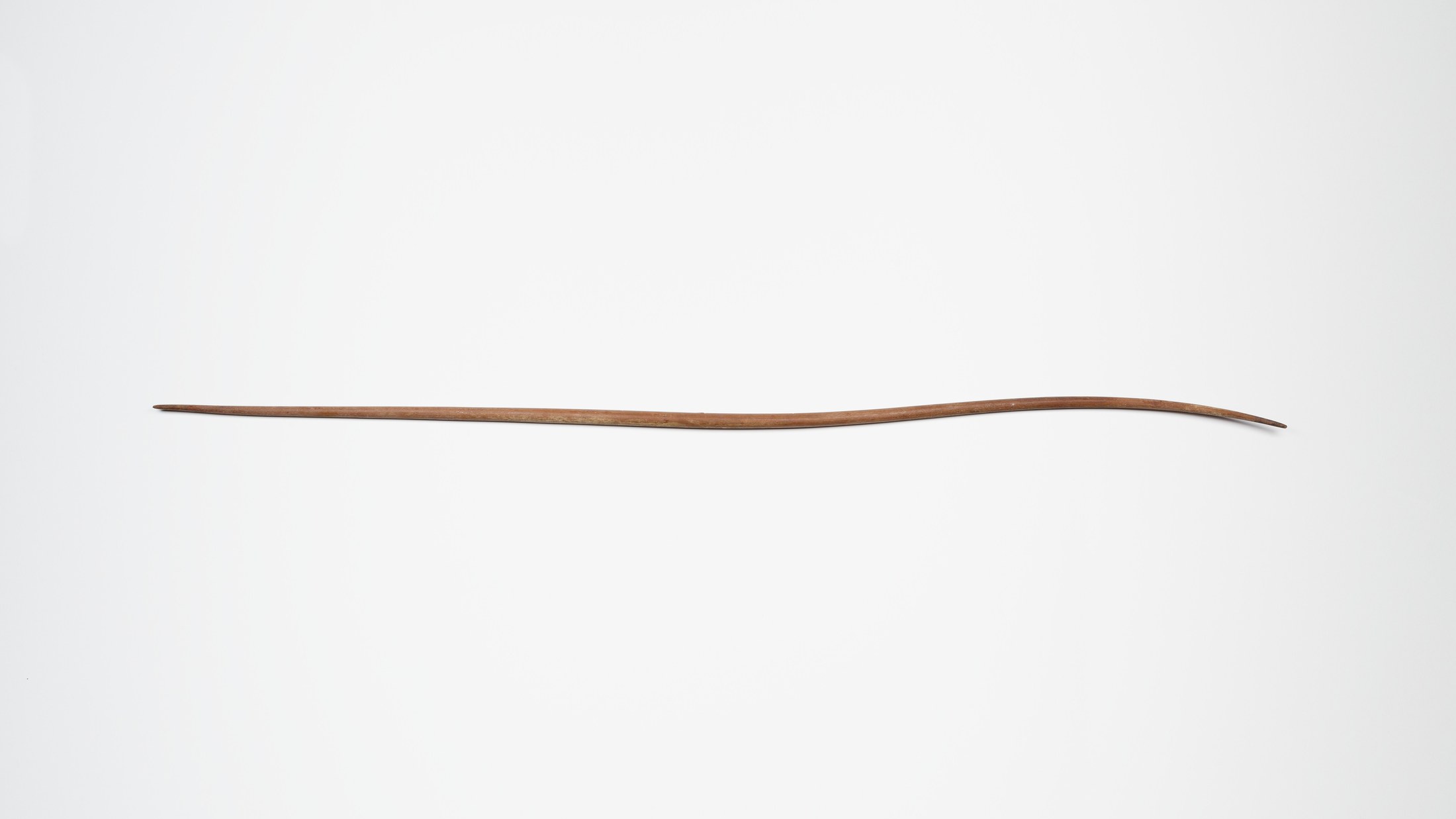 Wooden bow, Dynasty 11, Middle Kingdom. Metropolitan Museum of Art.
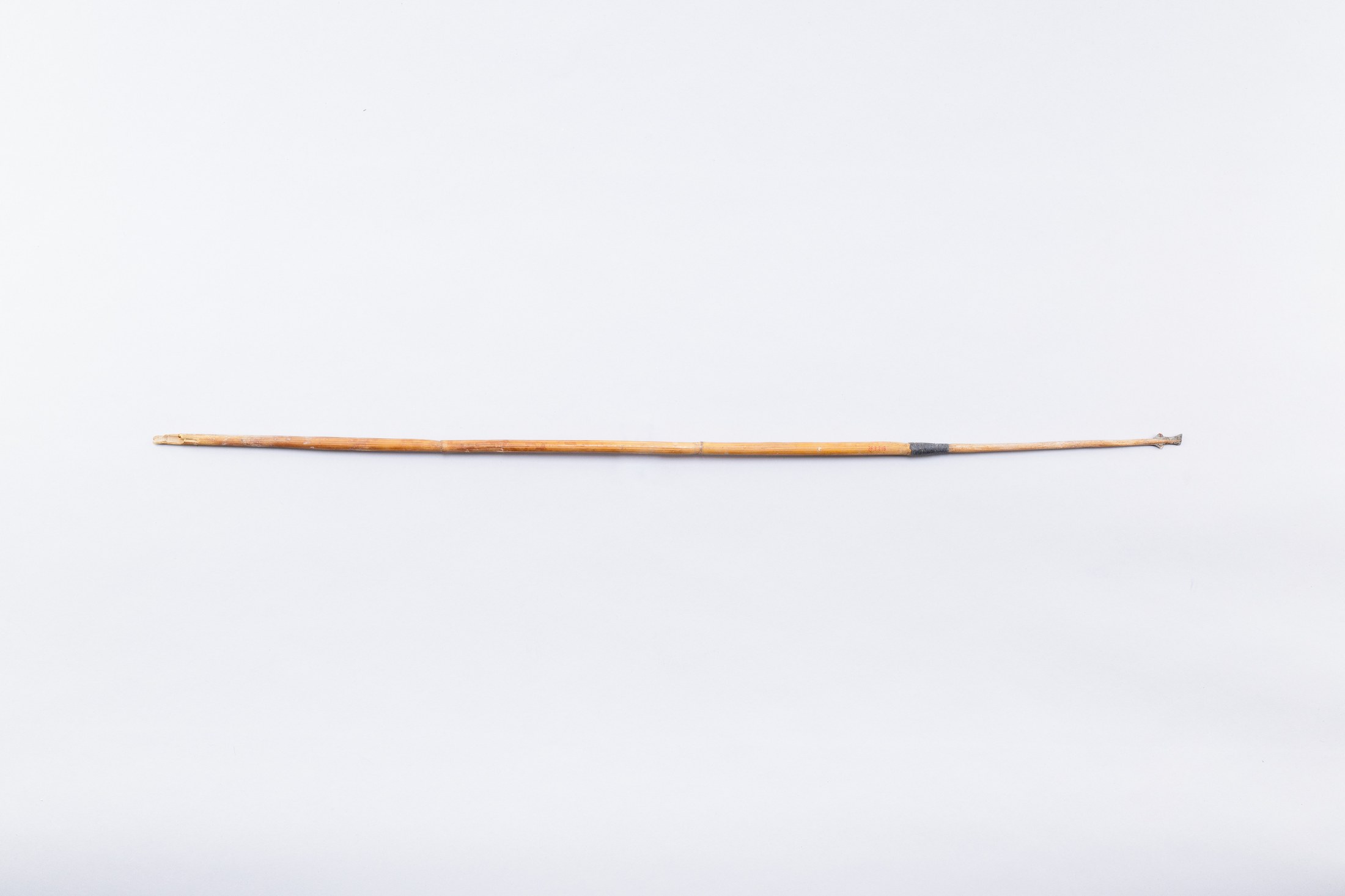 Arrow with composite stone tip, joint reign of Hatshepsut and Thutmose III, Dynasty 18. Metropolitan Museum of Art.
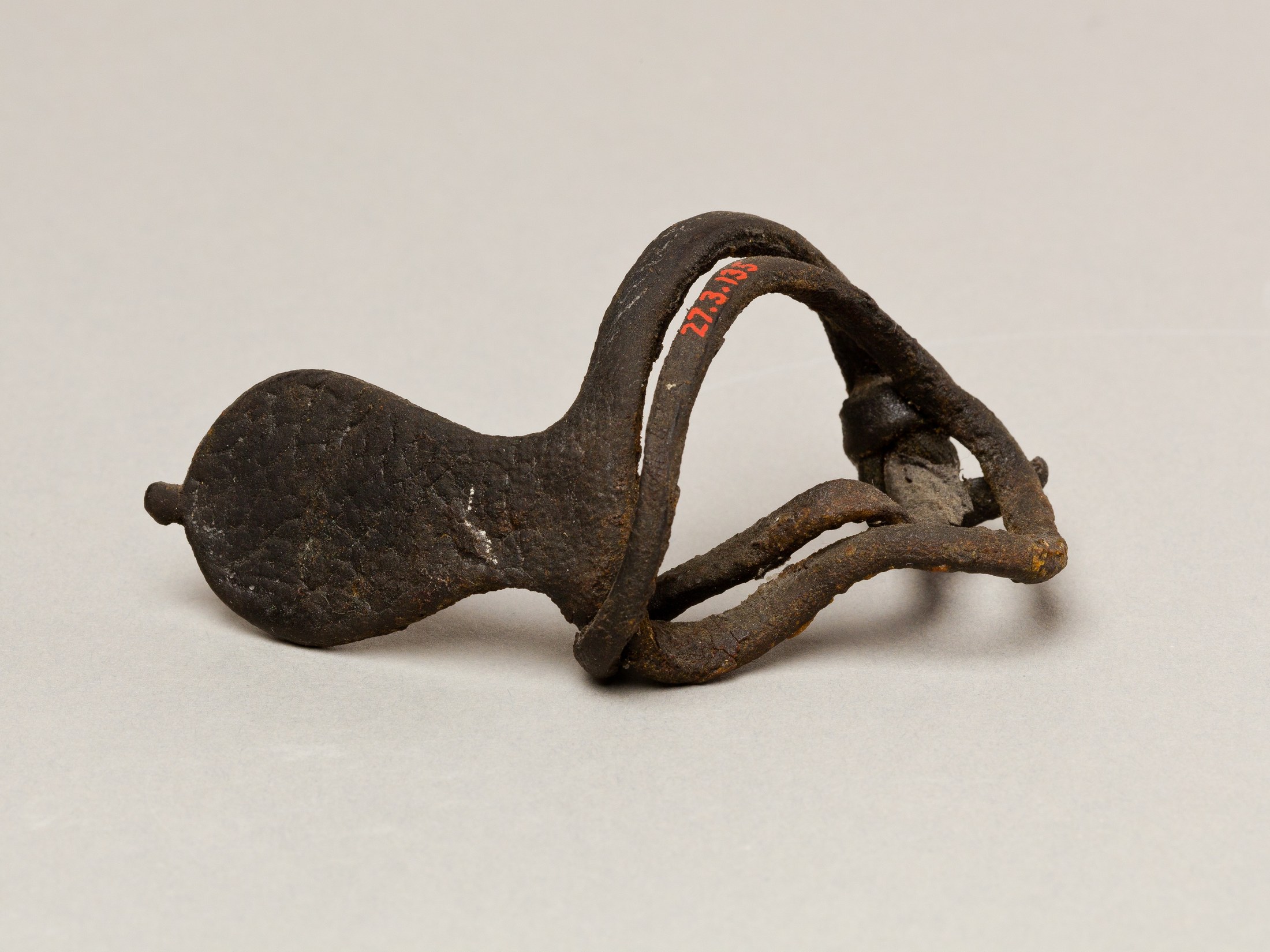 Leather archer's wrist guard, possibly reign of Senwosret I, Dynasty 12. Metropolitan Museum of Art.
Spears, Javelins and Shields
The spear was the clearest and most widespread weapon of close formation. A wooden shaft with a stone, copper or bronze head allowed a soldier to keep distance and defend a passage, camp or chariot unit. A spearman with a shield mattered not only in attack, but also in guard duty, escorting expeditions and garrison service.
Spearheads varied in shape and size. Narrow bronze heads suited thrusting, while broader ones could be used against an unarmoured body or light shields. The spear was cheaper and simpler than bladed weapons, so it retained its importance even when khopesh swords and battle axes became more visible in royal iconography.
Javelins and throwing spears complemented the bow. Infantrymen, hunters and chariot warriors could use them when a quick strike at medium distance was needed. In reliefs it is not always easy to distinguish a thrusting spear from a javelin: the artist represented the weapon conventionally, not as a technical drawing.
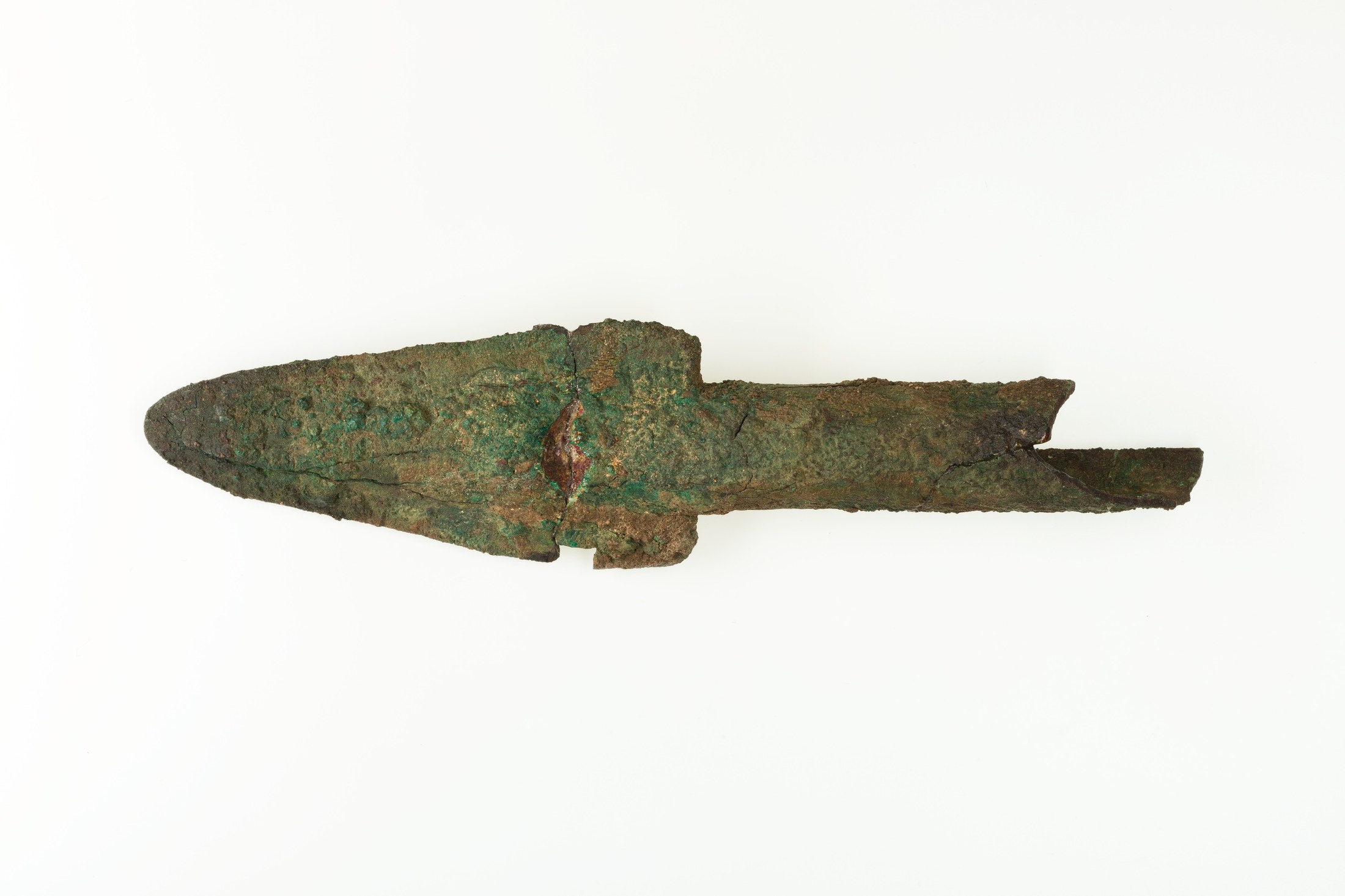 Spearhead of the late Middle Kingdom, Dynasties 12-13, bronze or copper alloy. Metropolitan Museum of Art.
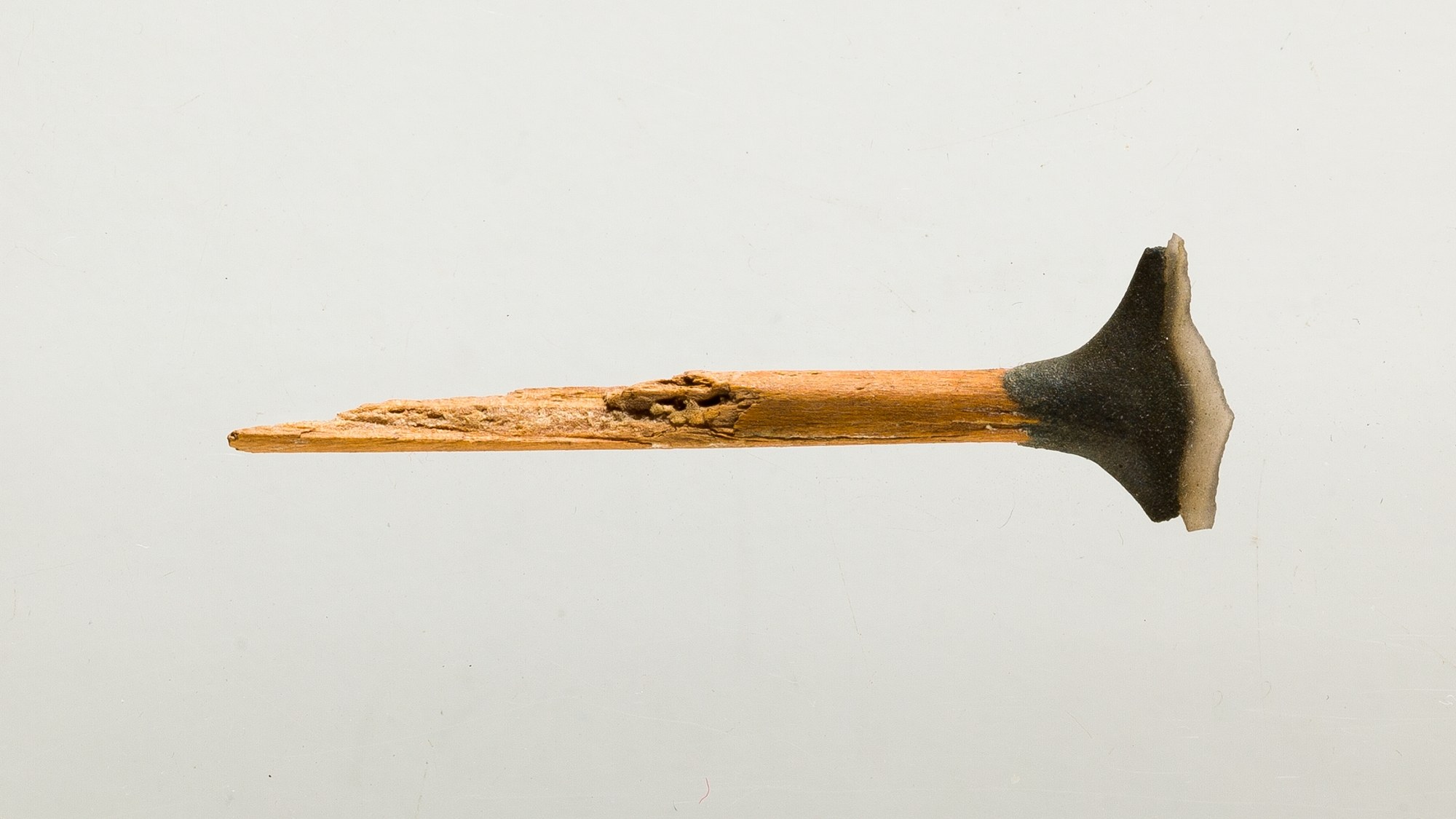 Transverse arrowhead hafted on an arrow fragment, Dynasty 11. Metropolitan Museum of Art.
Maces, Axes and Close Combat
The mace is one of the oldest signs of violence and authority in Egypt. In early royal iconography the pharaoh strikes an enemy with a mace, and this gesture outlived the weapon's practical military importance. In combat a mace was useful against lightly protected opponents, but with the development of shields, axes and blades it gradually moved into the sphere of symbol, ritual and royal image.
Axes were more practical. Early axes could have a flat copper or bronze blade tied to a shaft; later forms became more secure and the blow stronger. A battle axe could cut a shield, strike head, shoulder or arm, and serve as a commander's prestigious weapon. Surviving examples show how important lashing and attachment were: a weak joint between blade and shaft made the weapon unreliable.
In the New Kingdom axes remain visible in images of warriors beside bows and daggers. They were especially useful in close fighting, where a chariot or bow no longer decided the result.
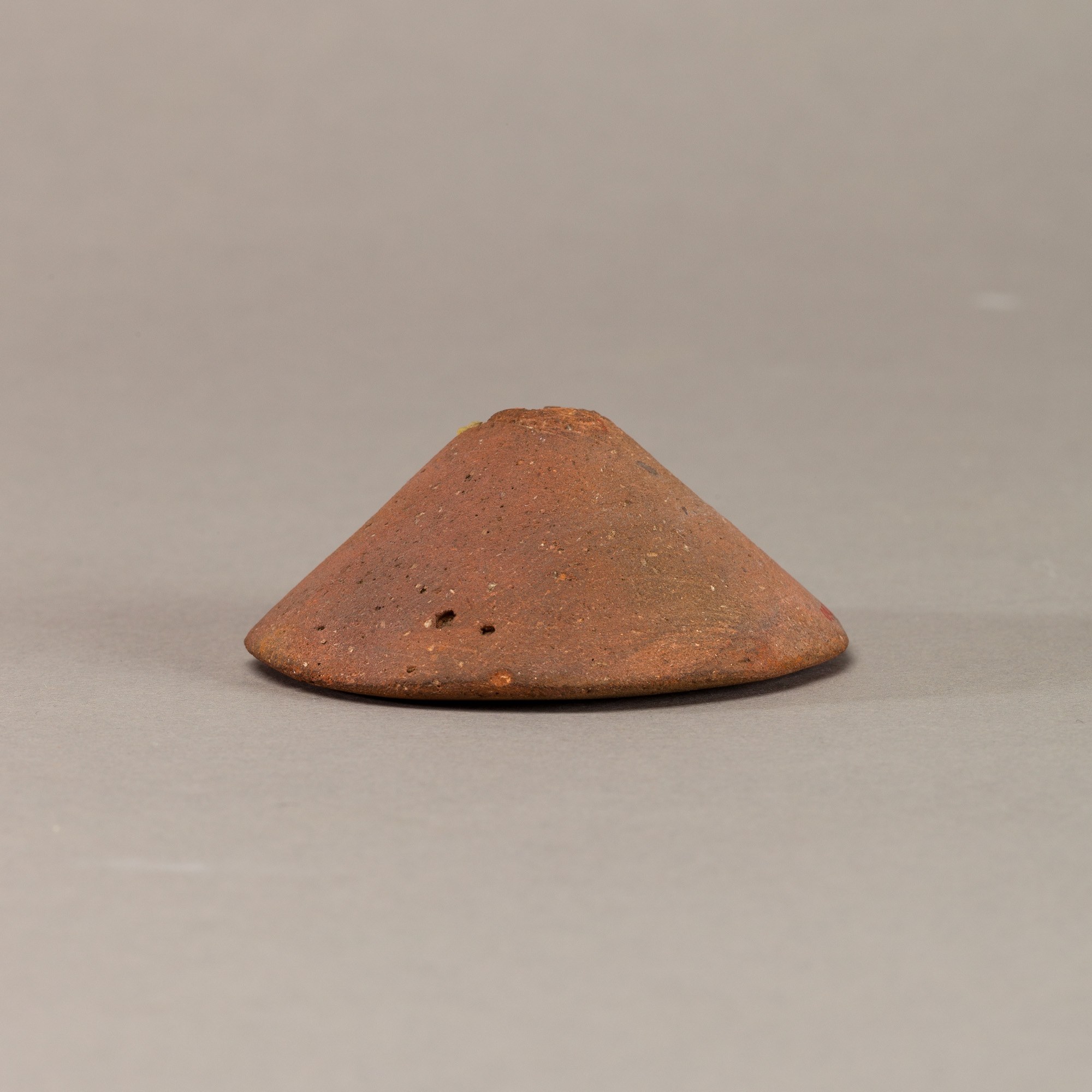 Model macehead of the Predynastic Period, ca. 3800-3600 BC. Metropolitan Museum of Art.
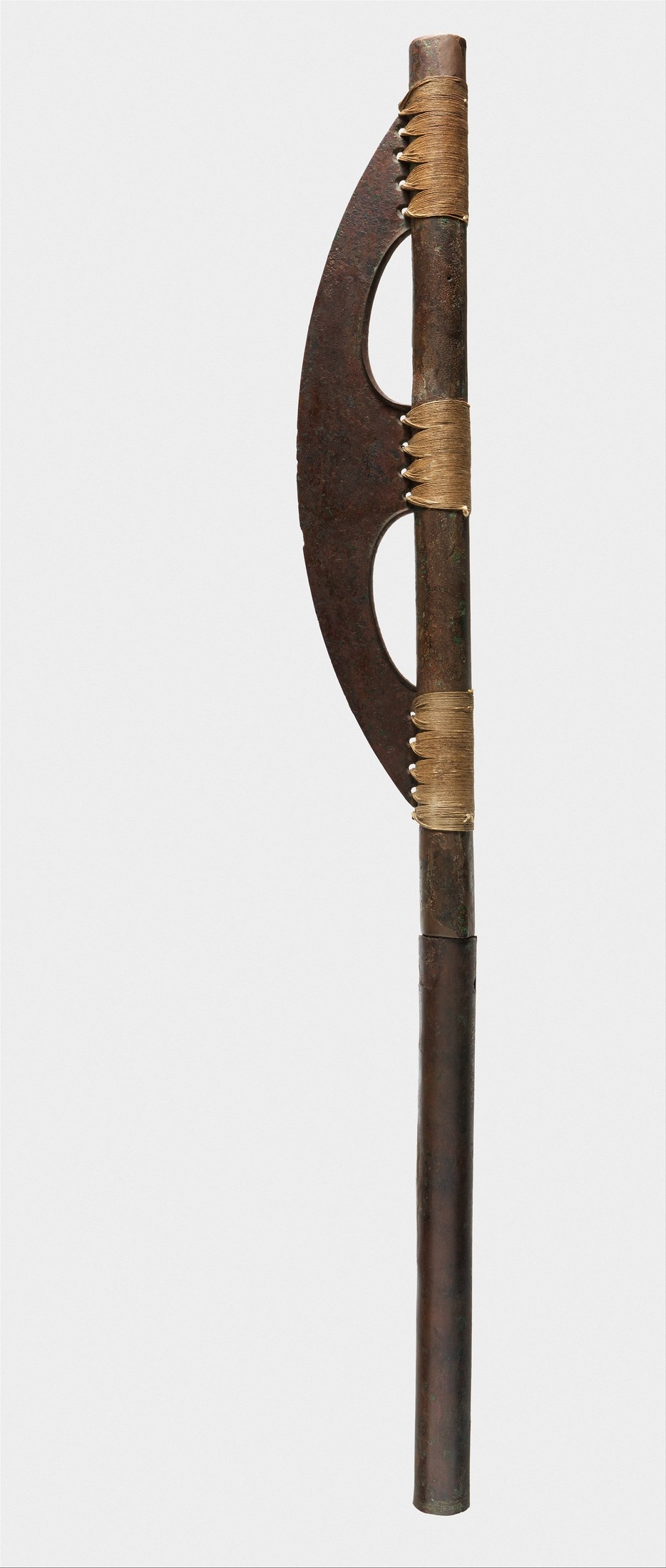 Middle Kingdom battle-ax, probably Dynasty 12: bronze blade with restored shaft and lashing. Metropolitan Museum of Art.
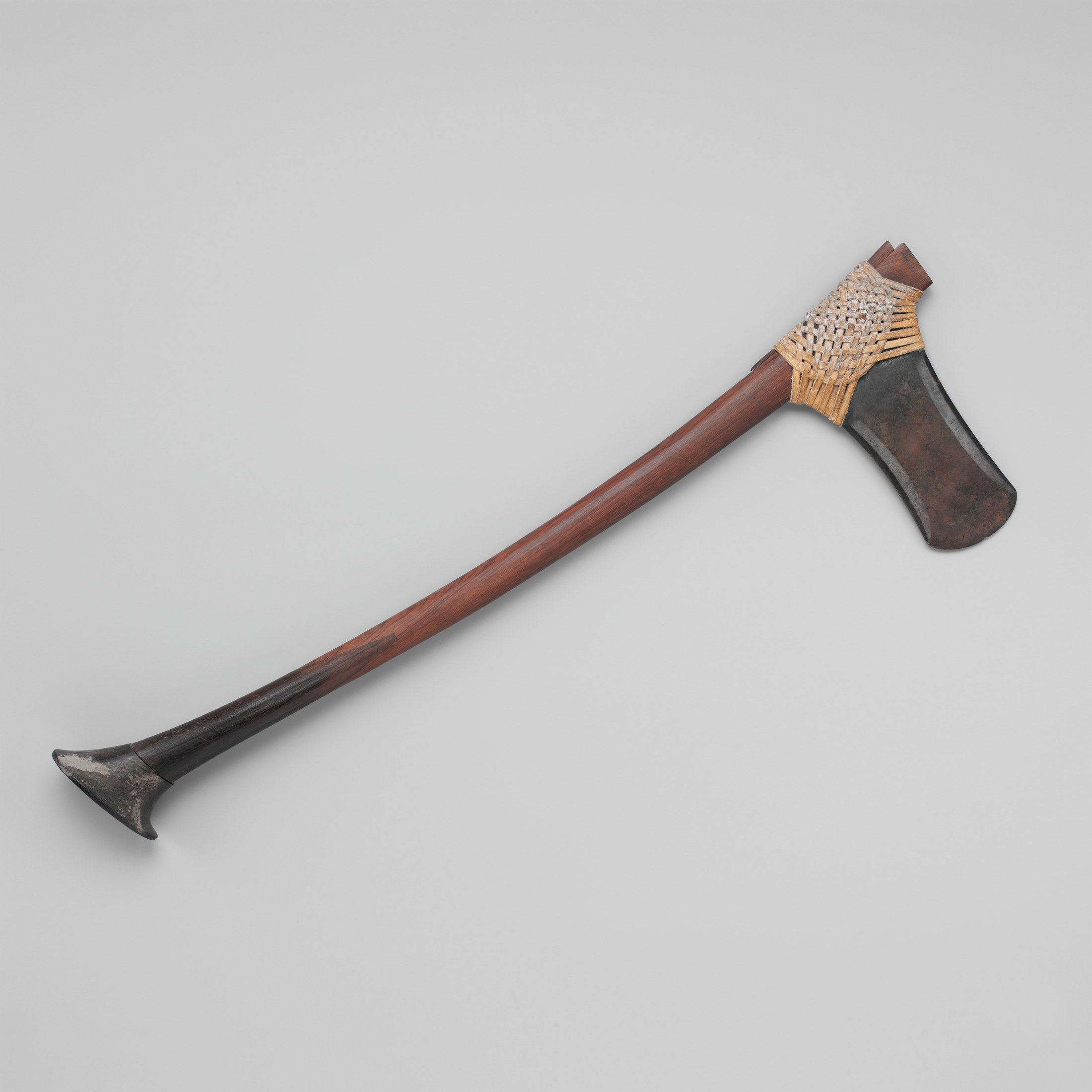 Battle Ax of Baki, early Dynasty 18, New Kingdom. Metropolitan Museum of Art.
Daggers, Swords and the Khopesh
Daggers and short blades were close-combat weapons, marks of status and parts of burial assemblages. They were carried on the body, used as a last resort in fighting and valued as prestigious objects. Handles of ivory, wood or metal show that a blade could be not only utilitarian but also elite.
The khopesh is a sickle-shaped sword or chopping-cutting blade, especially visible in the New Kingdom. Its form is connected with western Asiatic tradition, but in Egypt it became part of royal and military language. In reliefs the pharaoh may hold a khopesh as a sign of victory and control over enemies; in combat such a blade was suited to chopping blows and pressure against unprotected parts of the body.
The long sword was not as central in the Egyptian army as it was in some later cultures. Egyptian infantry more often relied on spear, shield, bow and axe, while bladed weapons remained important but did not dominate the equipment system.
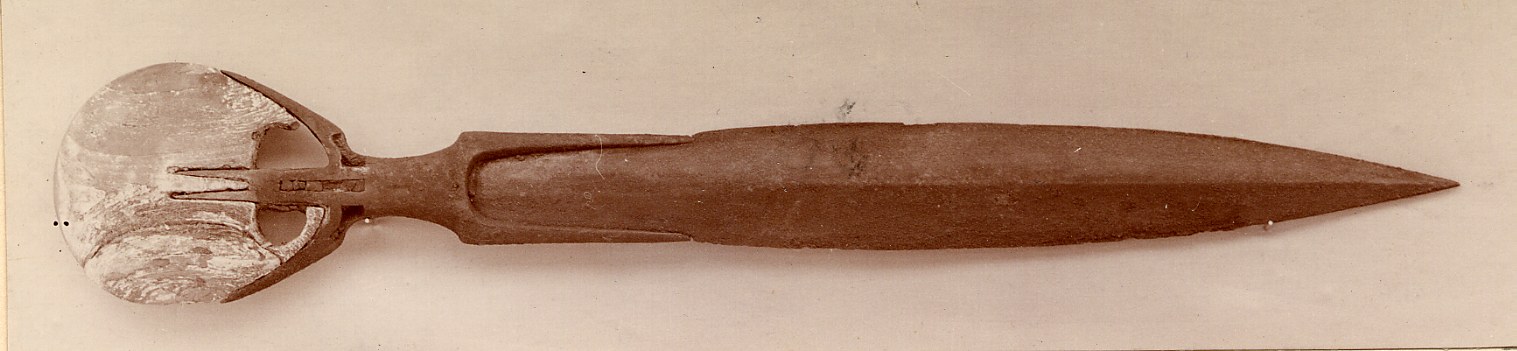 New Kingdom dagger, Dynasty 18: bronze or copper-alloy blade and ivory handle. Metropolitan Museum of Art.
Shields, Armour and Protection
Protective equipment was lighter than in many later armies. The infantryman's main protection was the shield: wooden, leather or woven, often with a rounded top. It covered the body, helped maintain formation and was cheaper than metal armour. The shield was especially important together with the spear because it allowed a soldier to withstand close contact.
Body armour existed, but it was not the mass norm for the whole army. Scale elements of bronze, leather or other materials are connected above all with elites, chariot warriors, royal guards and the influence of western Asiatic military practice. A relief may show armour conventionally, so individual archaeological scales are valuable: they confirm that protective systems existed as real objects, not only as an artistic motif.
Helmets are rarely shown on Egyptian soldiers themselves; wigs, bands, royal headgear or the headgear of foreigners are more common. This does not mean that head protection never existed, but the mass image of the Egyptian infantryman remains lightly equipped.
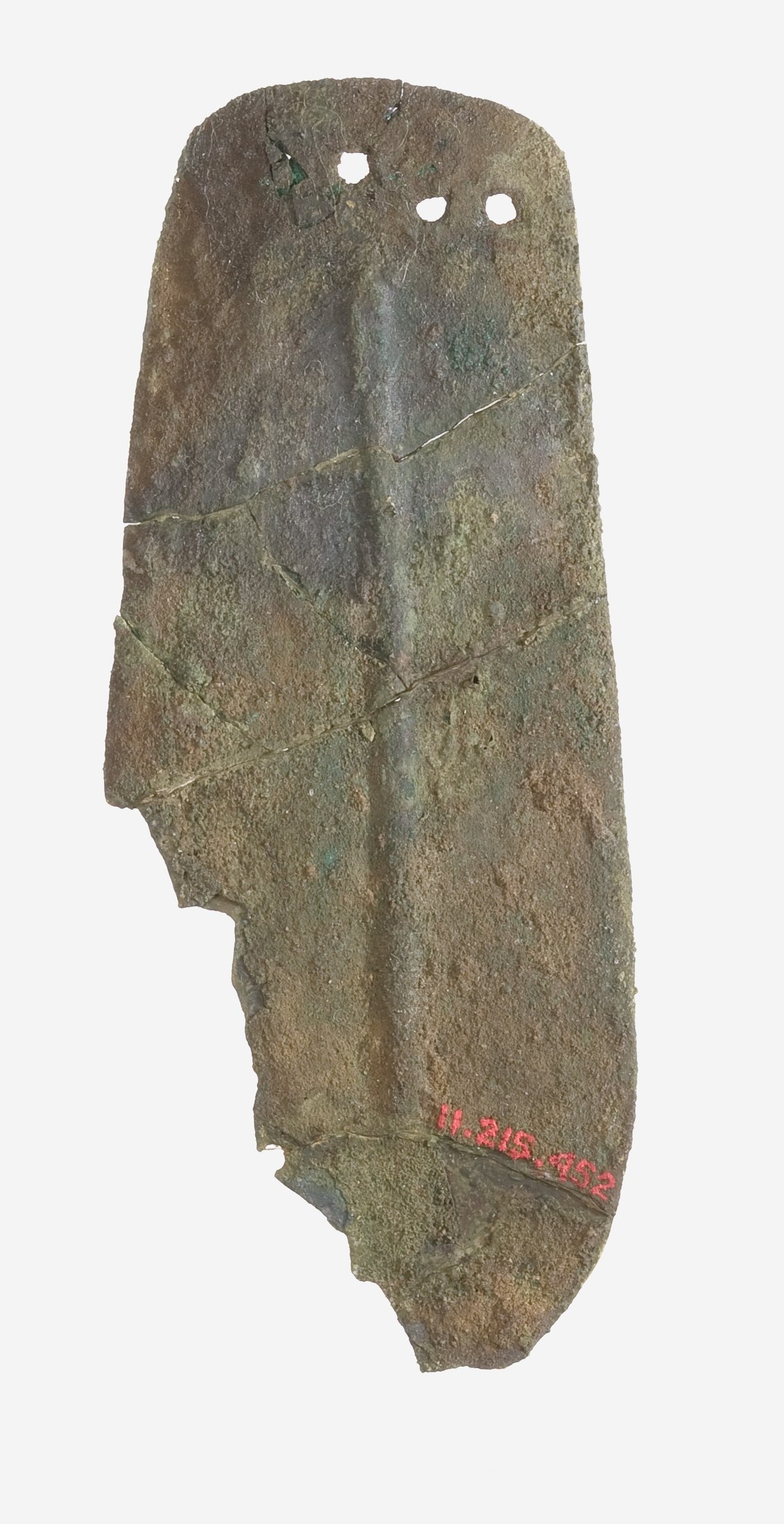 Bronze scale from armour from the reign of Amenhotep III, Dynasty 18. Metropolitan Museum of Art.
Chariot Weaponry
The chariot changed not only tactics but also the weapon set. A crew needed bow, arrows, quiver, spare weapons, sometimes javelins or an axe, and also the maintenance of horses, harness and wheels. A chariot warrior was not simply an infantryman on a vehicle: he operated at speed, had to shoot from a moving platform and keep balance.
In the scenes of the Battle of Kadesh Ramesses II is presented as the ideal chariot archer, striking enemies around him. This is royal propaganda, but it shows the prestige of the complex well: chariot, composite bow, quiver, horses and supporting infantry formed a single military system.
Chariot equipment was expensive. Its production depended on workshops, timber, leather, metal, glues and trained craftsmen. Chariot units were therefore socially and economically closer to the military elite than to ordinary seasonal levies.
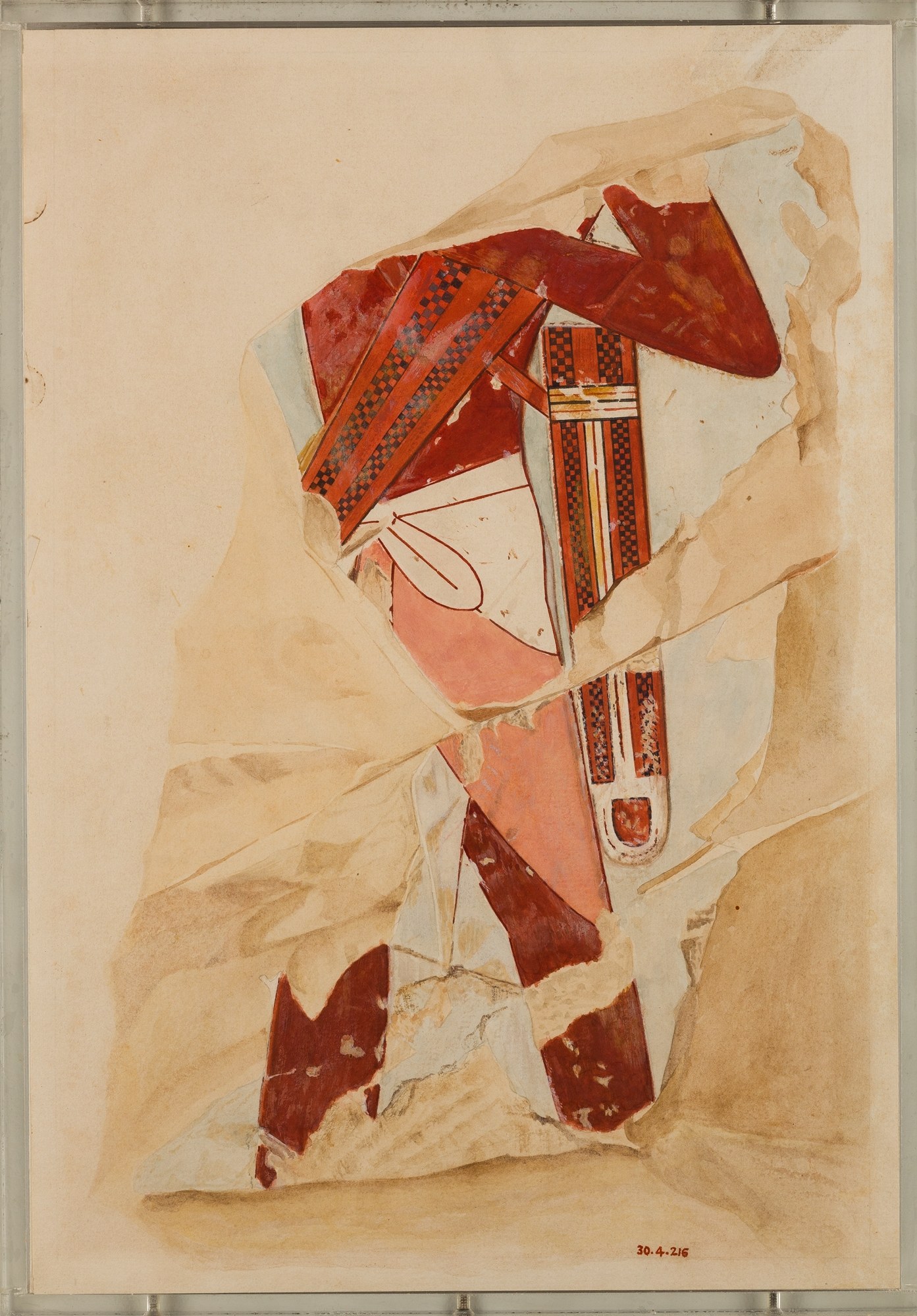 Man with bow case and quiver: museum facsimile of a tomb scene from the reign of Hatshepsut and Thutmose III. Metropolitan Museum of Art.
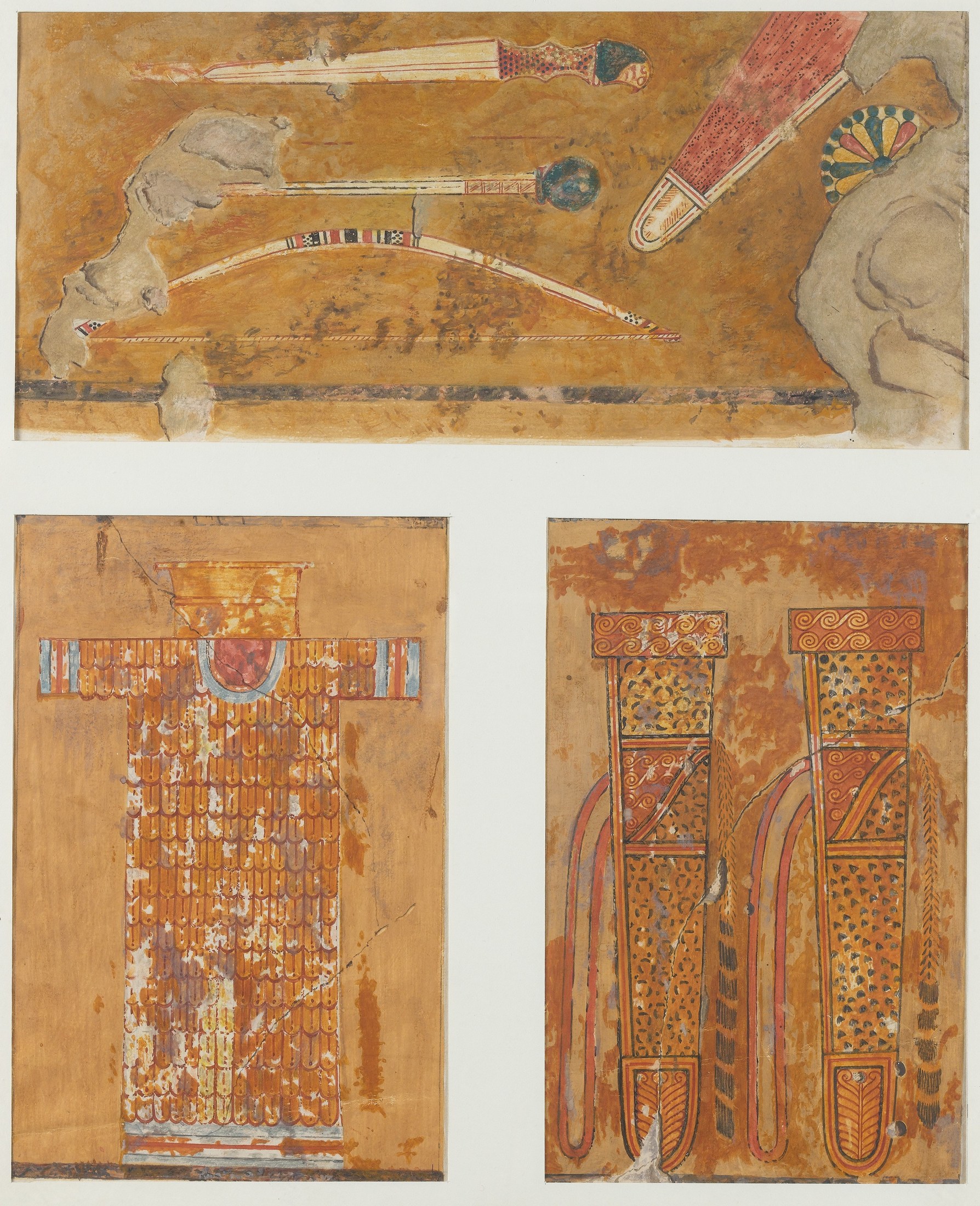 Items of warfare in a New Year gifts scene, facsimile of a tomb painting from the reign of Amenhotep II. Metropolitan Museum of Art.
Archaeological Objects and Images
Egyptian weapons are best studied by comparing objects and images. A relief shows how weapons were included in the royal image of victory; a tomb model records a set of objects; a museum blade shows material and technology; a find from a fortress or burial speaks to practical use.
The most reliable objects are those with a date, findspot and clear context. A bow, arrowhead, archer's wrist guard and quiver all belong to the same long-range complex, but answer different questions: what was shot, how the arrow was equipped, how the arm was protected and how gear was carried. Axe, dagger and khopesh show close fighting, but one object could be combat equipment, another ceremonial or funerary.
Comparing dated objects with images helps distinguish periods and functions. This helps avoid projecting the convention of temple reliefs onto real weapons, and also avoids the opposite error: treating one museum object as the norm for the whole Egyptian army.
Chronology
- Fourth-third millennia BC
- stone points, maces, early copper objects and weapons as signs of royal authority.
- Old Kingdom
- bows, spears, shields and axes in expeditions, guard service and frontier action.
- Middle Kingdom
- garrisons, spearmen, archers, weapon models and real burial finds are better documented.
- Second Intermediate Period
- stronger western Asiatic influence, horse, chariot and new equipment forms.
- New Kingdom
- composite bows, bronze axes, daggers, khopesh swords, chariot weaponry and armour elements.
- Late Period
- greater role of mercenaries and external traditions, gradual expansion of iron weaponry.
Related topics
- Army of Ancient Egypt
- Warriors of Ancient Egypt
- War chariots of Ancient Egypt
- Battle of Kadesh
- New Kingdom Egypt
Literature and sources
- Avdiev V. I. Military History of Ancient Egypt.
- McDermott B. Warfare in Ancient Egypt.
- Shaw I. Egyptian Warfare and Weapons.
- Spalinger A. J. War in Ancient Egypt: The New Kingdom.
- Schulman A. R. Military Rank, Title and Organization in the Egyptian New Kingdom.
Interested in Ancient Rome beyond reading? Join Legio X Fretensis or explore our reenactment directions.


