The Hermitage and Antiquity
The State Hermitage is one of the key museums for studying ancient art, Mediterranean material culture and the antiquities of the Northern Black Sea region. Its classical antiquities collection numbers more than 170,000 objects: painted vases, carved gems, sculpture, terracottas, bronzes, glass, jewellery, armour, inscriptions and archaeological complexes from Greek cities on the northern coast of the Black Sea.
The Hermitage joins two scales. On one side it presents the classical Mediterranean world: Greek vase painting, Roman portraiture, sarcophagi, decorative sculpture, Etruscan and Roman objects. On the other side it gives material from the periphery of the ancient world, above all from the Bosporus, Olbia, Panticapaeum, Chersonesus and other centres of the Northern Black Sea. This makes it possible to see not an abstract "antiquity in general", but a network of cultural contacts: import, local production, elite patronage, burial rites and everyday forms.
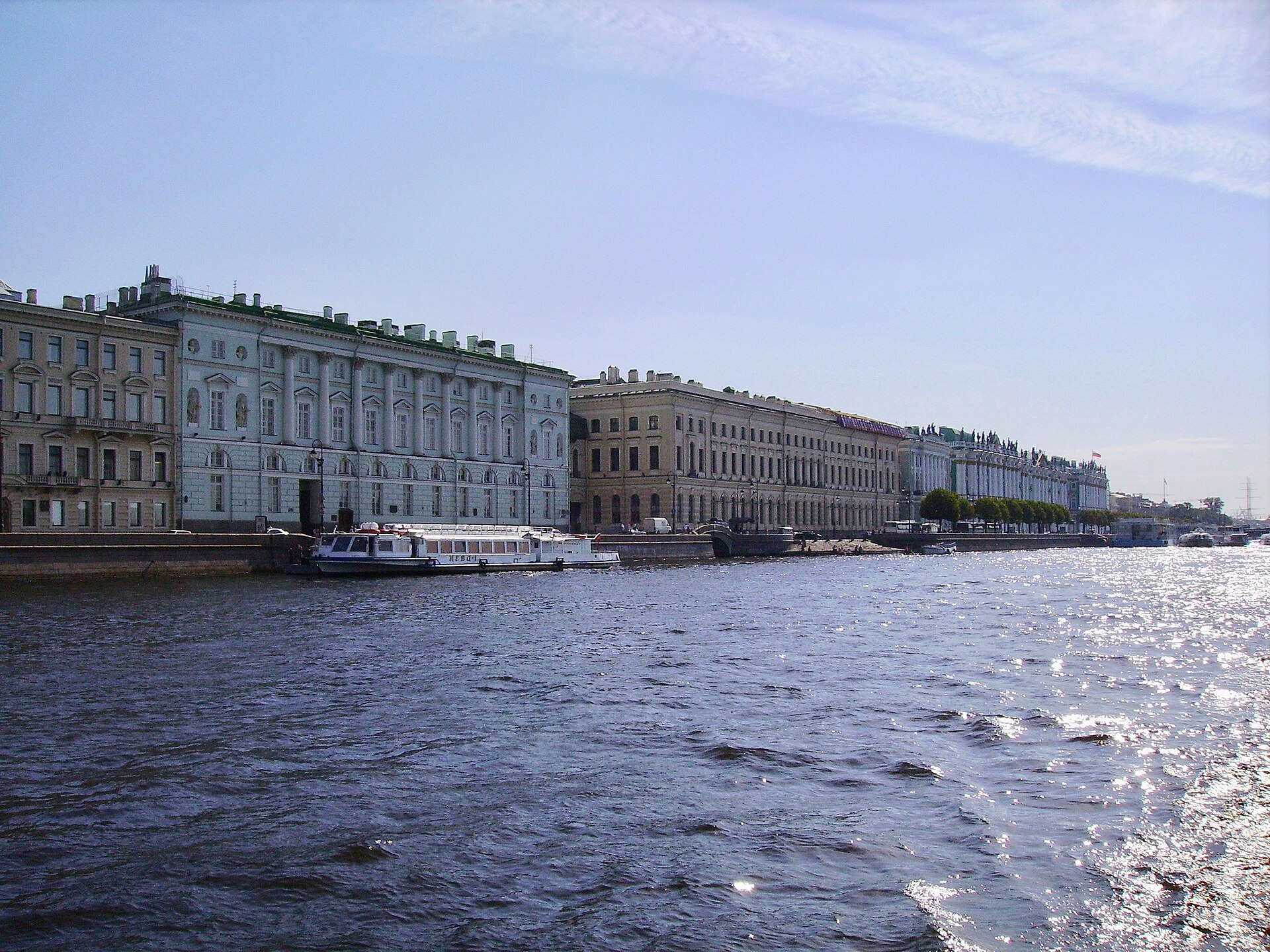 The State Hermitage buildings on Palace Embankment; the ancient collections form part of the museum route.
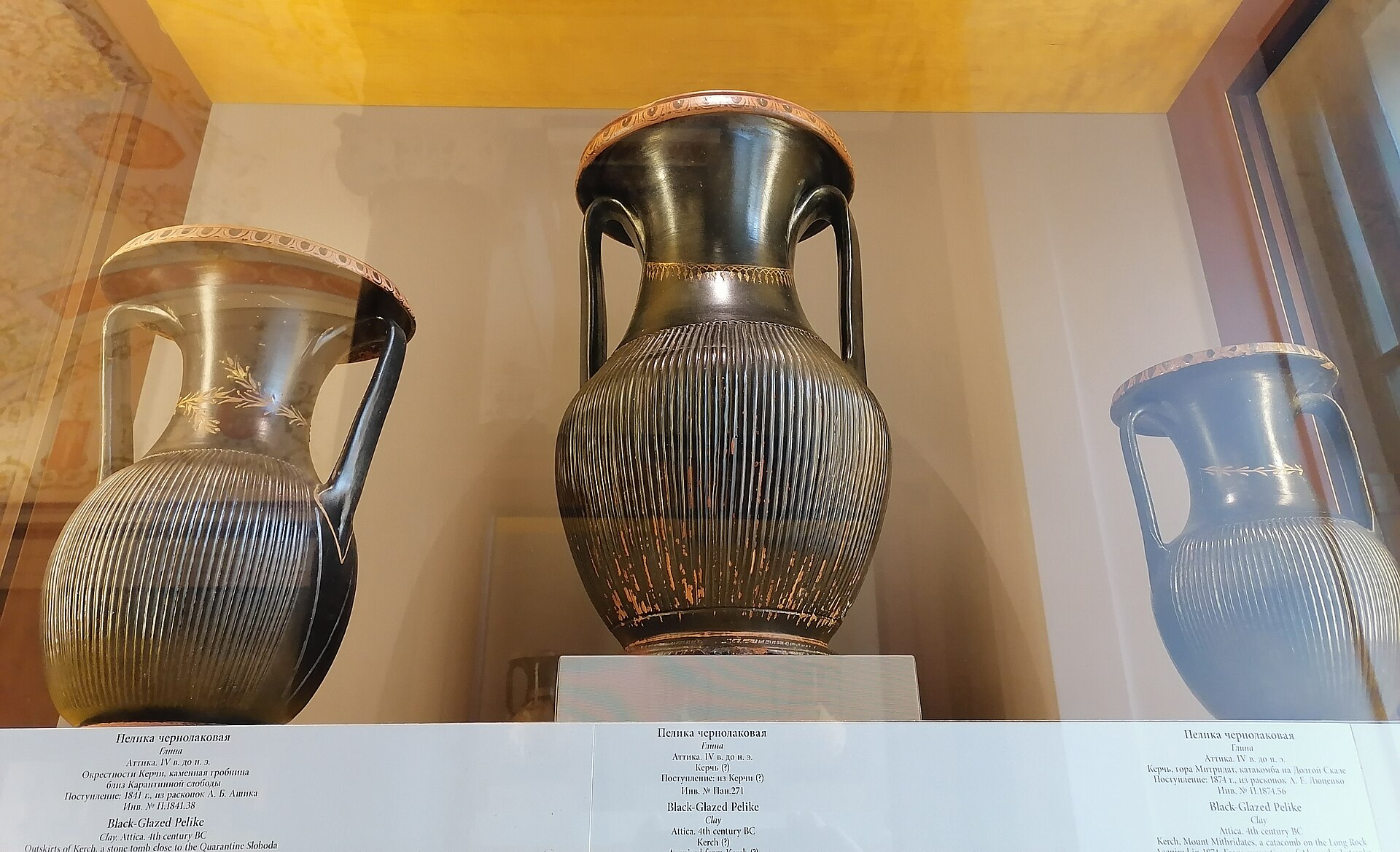 Black-glazed pelikai in the Hermitage Hall of Vases: ancient pottery from Northern Black Sea and Mediterranean contexts.
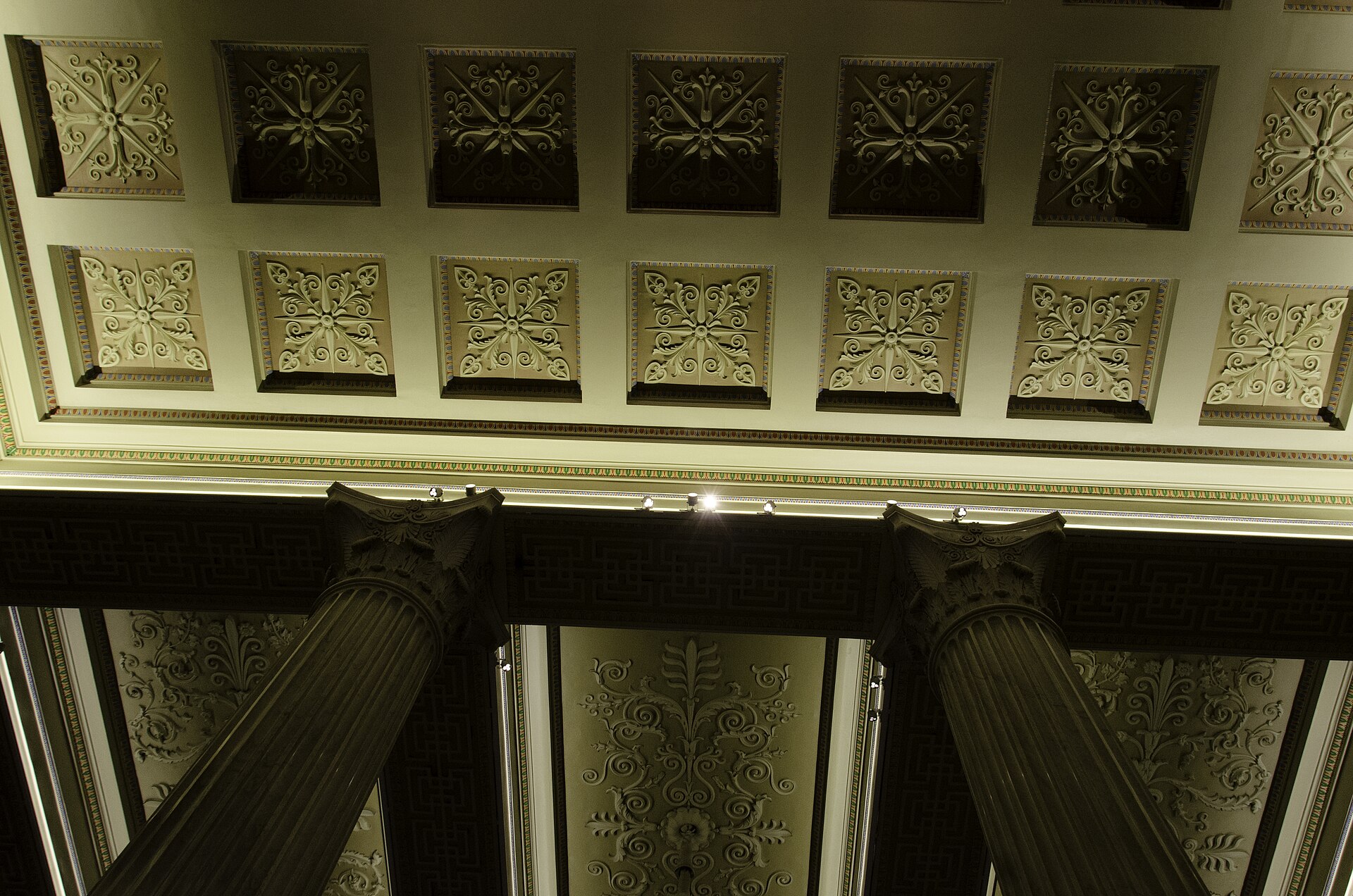 Interior of the Hermitage antiquities galleries: museum architecture frames the scale of ancient sculpture and decoration.
The Museum Route of Antiquity
The Hermitage antiquities rooms are set within a museum environment in which the interiors of the New Hermitage themselves shape perception. Halls with columns, stucco, display cases and large sculpture remind the visitor that a nineteenth-century museum does not simply preserve ancient things: it reorganises them in space, gives them a route and creates a modern way of seeing antiquity. When using Hermitage material, it is therefore important to separate the ancient context of an object from the museum context of display.
The route can be divided into several large blocks. Greek material includes vase painting, pottery, terracottas, bronzes, jewellery and glyptics. The Roman block is connected with sculpture, portraiture, sarcophagi, reliefs, decorative and cult objects. A special place belongs to finds from the Northern Black Sea region: objects from necropoleis, cities and sanctuaries where Greek forms stand next to local traditions, the Iranian steppe world, Bosporan elites and Roman influence.
This route is useful because it offers several levels of comparison. The same object type can be seen as an import from a Greek workshop, as an item from a burial in Kerch, as a museum exhibit in a case and as a source for reconstructing shape, material and ornament. But for the same reason the museum appearance cannot be transferred directly into an ancient setting: a display case groups objects by theme, period or collection logic, not always by the context in which they existed in antiquity.
Greek and Roman Collections
The Greek part of the collection is important above all as a body of objects that shows the development of forms from the Archaic period to Hellenism. Vases, terracottas, bronzes and ornaments make it possible to trace how vessel proportions, painting technique, ornamental zones, narrative schemes and ways of representing the body changed. For reconstruction this is not a ready set of attractive pictures, but evidence for refining date, function and social setting: a wine vessel, a cult terracotta, a seal and an ornament do not work in the same way.
The Roman material of the Hermitage gives another type of evidence. Portraits, sarcophagi, reliefs and cult sculpture show the language of status, memory and public image. It is especially important here to remember that sculpture often preserves ideal or official forms rather than everyday norms. Roman portraiture helps with hairstyle, age image, facial modelling and signs of status, but it has to be compared with dating, restorations and whether the object belonged to a tomb, a private collection, temple decoration or later museum history.
Together these blocks allow artistic tradition and object environment to be compared. Greek vase painting can show a mythological scene, but beside it stand actual vessels, domestic forms, ornaments and funerary complexes. Roman sculpture can look like the main source for appearance, but it is safer when read together with inscriptions, small finds, coin images and objects with known archaeological provenance.
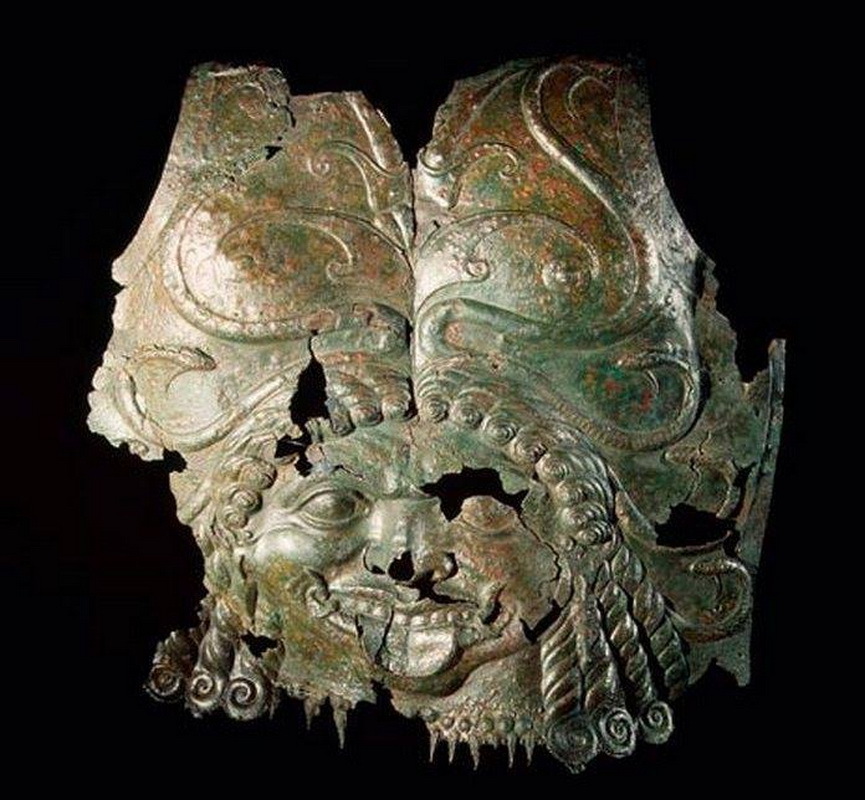 Greek bronze cuirass with a relief image of a Gorgon. Hermitage, Saint Petersburg, sixth-fifth century BC.
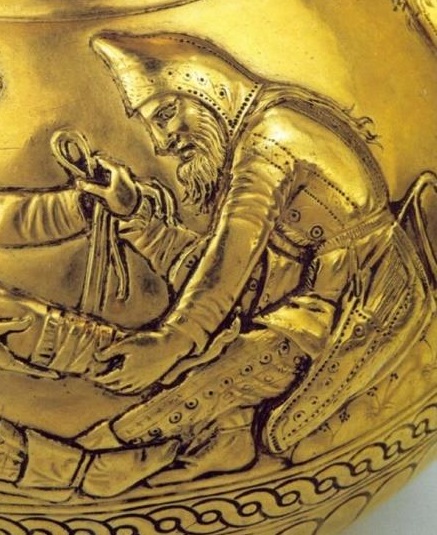 A golden vessel with images of Scythians. Kurgan Kul-Oba. Crimea,Kerch Peninsula. Inv. CO.No.-11. Displayed in the Golden Storeroom of the Hermitage. Second half of the 4th century BC
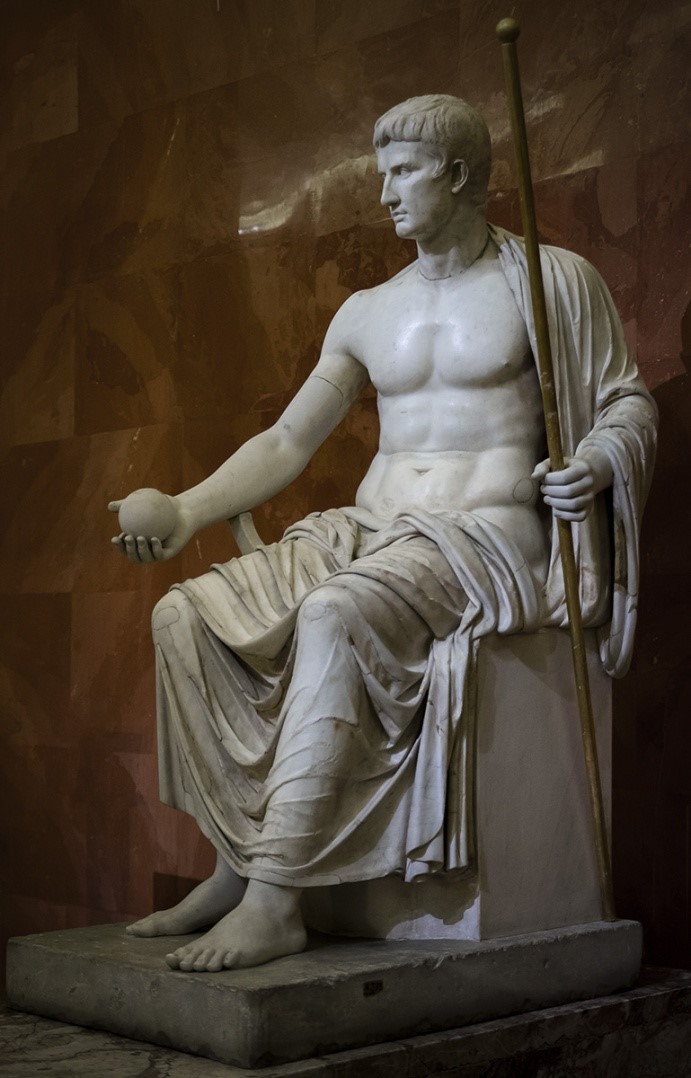 Octavian Augustus represented as Jupiter. Marble, first half of the 1st century AD; Hermitage Museum, St Petersburg.
The Northern Black Sea and the Bosporus
One of the strengths of the Hermitage is its material from the Northern Black Sea region. For a Russian-language reader this is an especially important bridge between classical antiquity and local archaeology. Olbia, Panticapaeum, Nymphaeum, the Taman necropoleis, Tauric Chersonesus and the smaller cities of the Bosporus show how Greek colonies and Hellenised centres existed beside the steppe world, local elites, trade routes and the later Roman periphery. An object from such a context often speaks not only about style, but also about cultural contact.
The Bosporus is characterised by the combination of Greek forms and local patronage. Tombstones, sarcophagi, ornaments, painted and black-glazed vessels, bronzes, military and horse fittings, portraits and inscriptions record an environment in which the ancient visual language was used to express power, family memory and status. Northern Black Sea material should therefore not be treated as a simple "provincial version" of Greece or Rome. It shows an independent zone of the ancient world in which import and local production constantly interacted.
For reconstruction this is especially productive. Within one body of material it is possible to compare an object from a Greek city, an item from a funerary complex, an ornament with eastern motifs, a Bosporan portrait and Roman influence on later forms. Such evidence helps work more carefully with costume, armour, ornament and status objects: sometimes the closest analogy for the Northern Black Sea lies not in Rome, but in Greek vase painting, steppe tradition or a local burial.
Material for Reconstruction
Hermitage material is useful not only for general education, but also for checking specific reconstruction decisions. Vases and terracottas can be used to study vessel proportions, ornamental bands, figure poses, furniture details, musical instruments and ritual scenes. Bronzes and glass show technology, wall thickness, traces of repair, handle shapes, fittings and decorative details. Sculpture and portraiture show ideal and status models of the body, hairstyles, drapery and attributes. Northern Black Sea archaeology gives regional variants, funerary environments and connections between Greek, local and Roman worlds.
Museum images, however, have to be used with discipline. The first step is to establish date, provenance, material and function; the next is to check whether the object is a unique rarity or part of a series; only then should it be compared with neighbouring finds and external parallels. If an item comes from an old collection without a precise context, it remains valuable, but it cannot be used with the same confidence as a find from an excavated complex. If an object has been restored, the ancient part has to be separated from the museum reconstruction.
Particular caution is needed with attractive halls and large sculpture. They create a strong visual impression, but often represent elite, cultic, funerary or collecting imagery. For everyday reconstruction it is safer to rely not on one impressive exhibit, but on a group of evidence: object, date, context, material, parallels and written or epigraphic data. In this sense the Hermitage is valuable precisely as a large system of comparisons.
Main Collection Areas
- Greek vase painting and pottery: vessel shape, painting technique, ornament, subject matter and connection with funerary or domestic contexts;
- ancient sculpture: Classical, Hellenistic and Roman types, portraits, reliefs, sarcophagi, cultic and decorative sculpture;
- Northern Black Sea material: Berezan, Olbia, Panticapaeum, Nymphaeum, Taman, Chersonesus, Bosporan necropoleis and local complexes;
- applied materials: bronze, glass, jewellery, terracottas, glyptics, armour and small finds;
- epigraphy and funerary monuments: inscriptions, names, statuses, formulas of memory, local cults and social structure;
- the museum environment: history of collecting, restoration, changing displays and the modern presentation of antiquity.
Context and Limits
The main limitation of the Hermitage antiquities collection is the diversity of provenance. Excavated material, old collection objects, precisely dated finds, items with lost contexts, restored sculpture and exhibits important mainly for museum history can stand side by side. This is not a problem if the source is read correctly. It becomes a mistake only when all objects are treated as equal evidence for the same everyday reality.
The second limitation is museum aesthetics. Lighting, display cases, modern labels, restoration, wall colour and neighbouring objects change perception. For scholarly and reconstruction use, the object has to be returned to its type: vessel, tombstone, portrait, cult figurine, harness fitting, ornament, sarcophagus or architectural fragment. Only then can its role in reconstruction be determined: form, ornament, technology, status, burial rite or historical image.
The Hermitage is therefore best used not as a set of isolated illustrations, but as a reference map. It helps show where the ancient centre is connected with the periphery, where a Greek subject continues to live in the Bosporus, where a Roman form enters a local context, and where a modern museum hall turns an object into part of the history of collecting.
Related Topics
Sources
- The State Hermitage Museum: Antiquity
- The State Hermitage Museum: Antiquity, Russian collection page
- The State Hermitage Museum: Room of the Art of the Archaic and Early Classical Periods
- The State Hermitage Museum: Jupiter Hall, Art of Ancient Rome
- Wikimedia Commons: Classical antiquities in the Hermitage


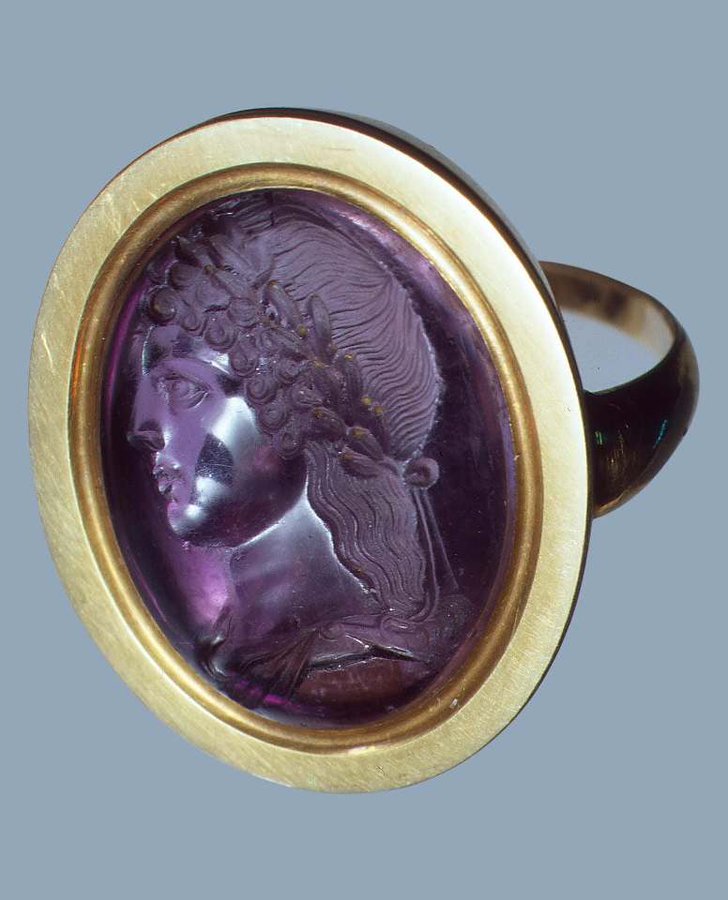 Roman gold ring with amethyst. State Hermitage Museum, St Petersburg; first century BCE.
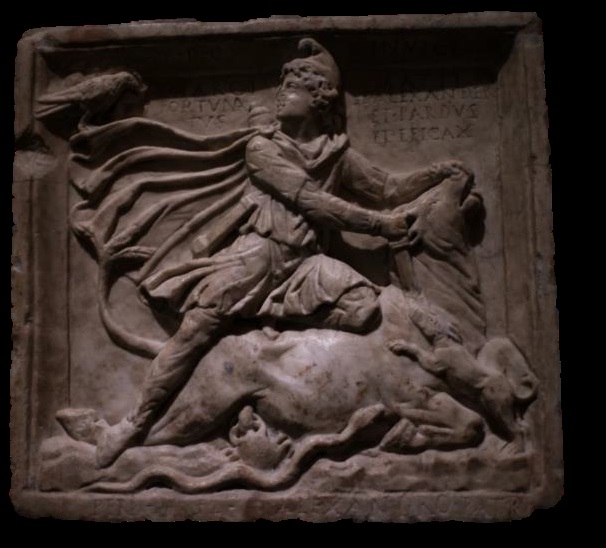 Mithras stabs a bull. Roman work. The Hermitage Museum. Russia. 2nd century AD
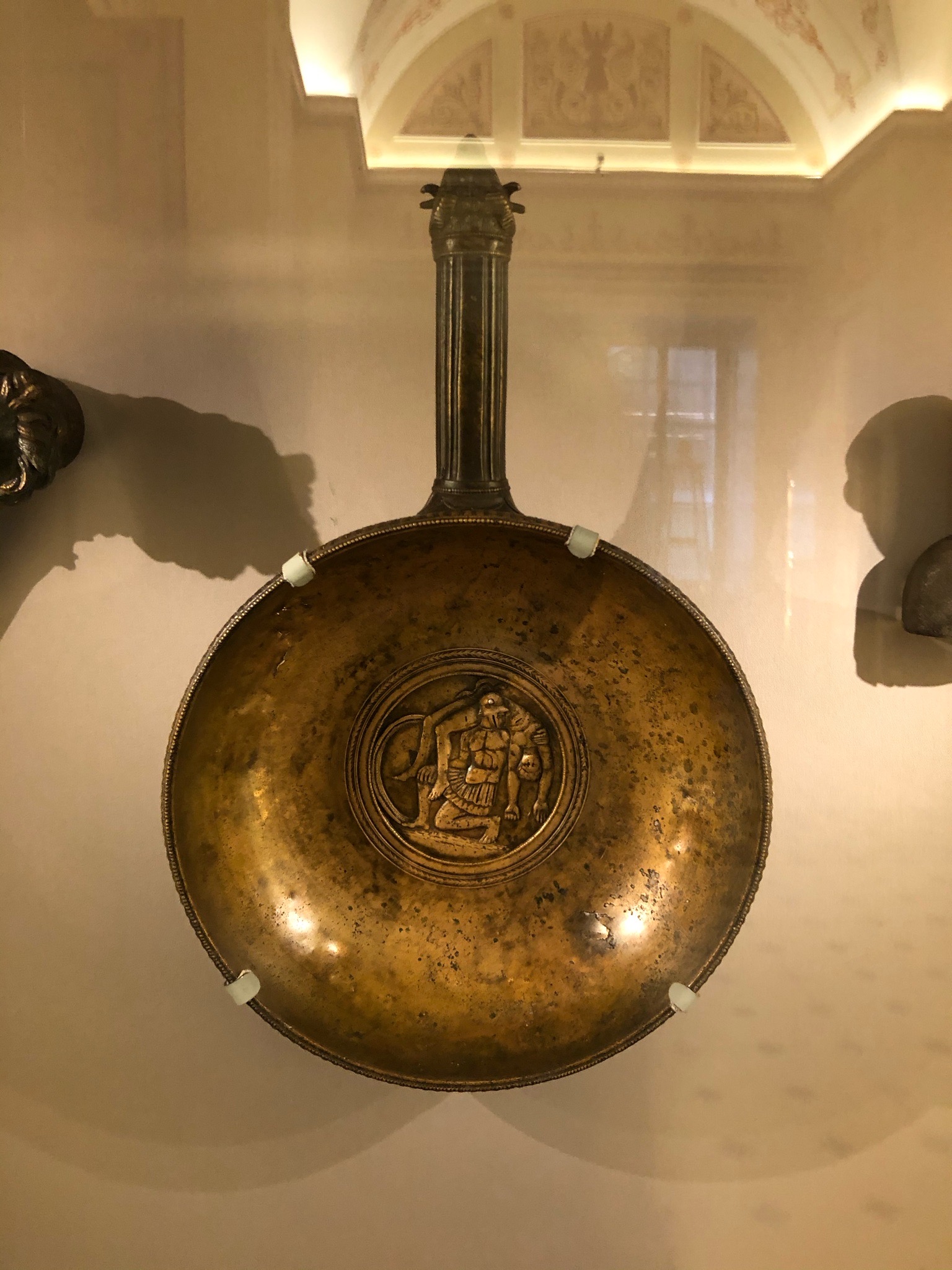 Bronze patera. Hermitage,St. Petersburg,1-2 century AD
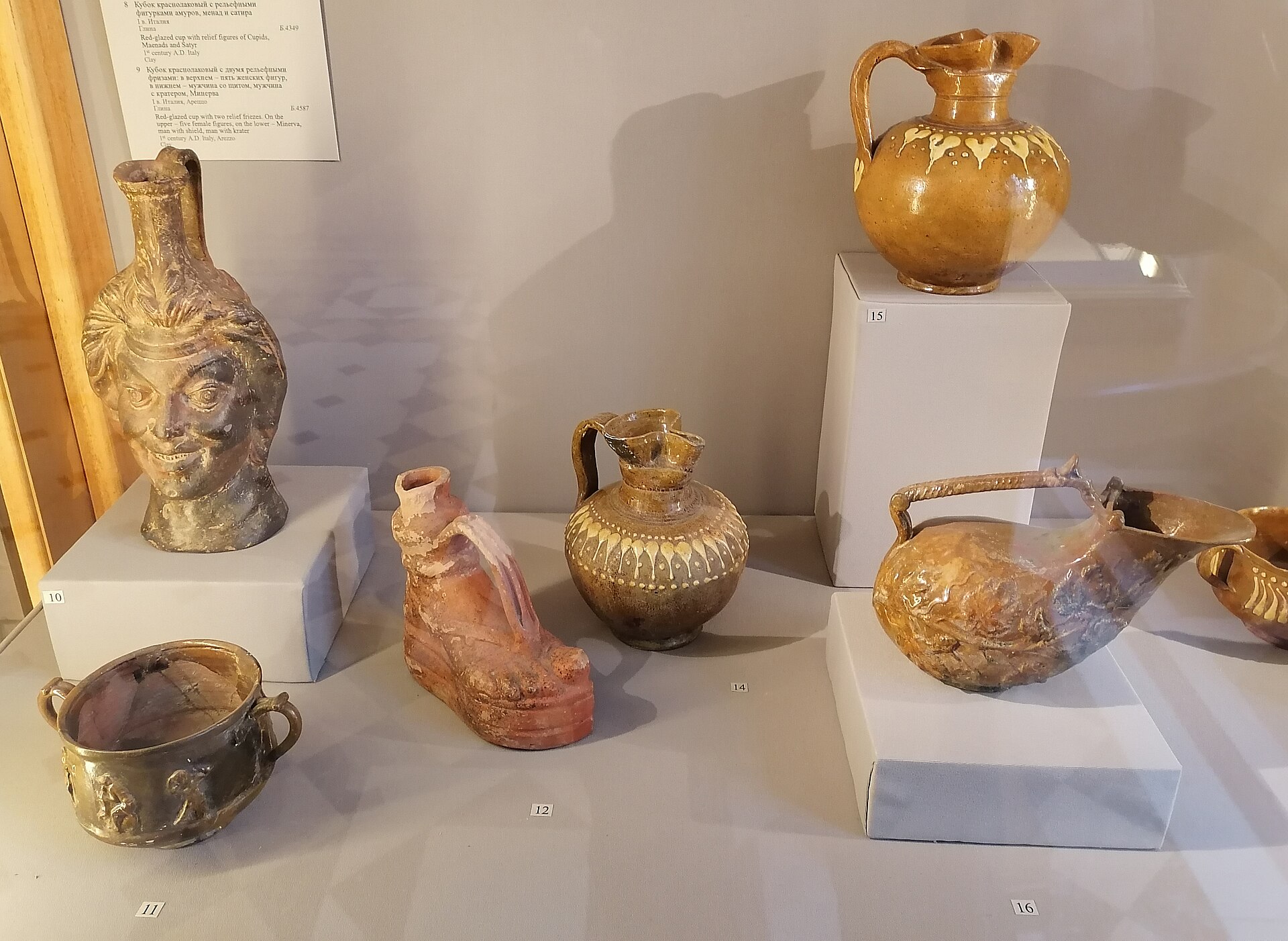 A Hermitage display of ancient pottery: vessels, lamps and small objects help read domestic and ritual contexts.
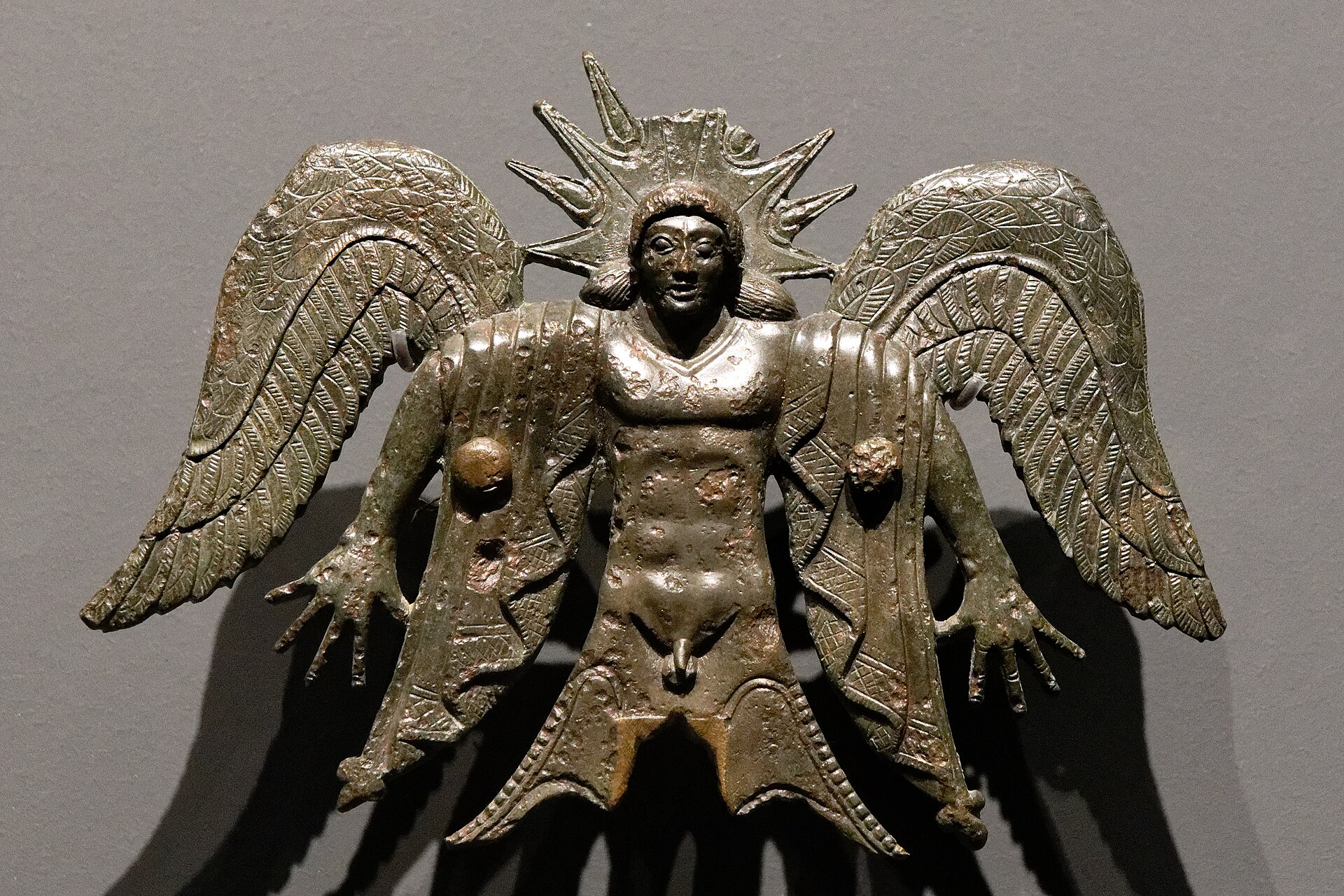 Bronze chariot fitting with Usil, Etruscan tradition; State Hermitage Museum.
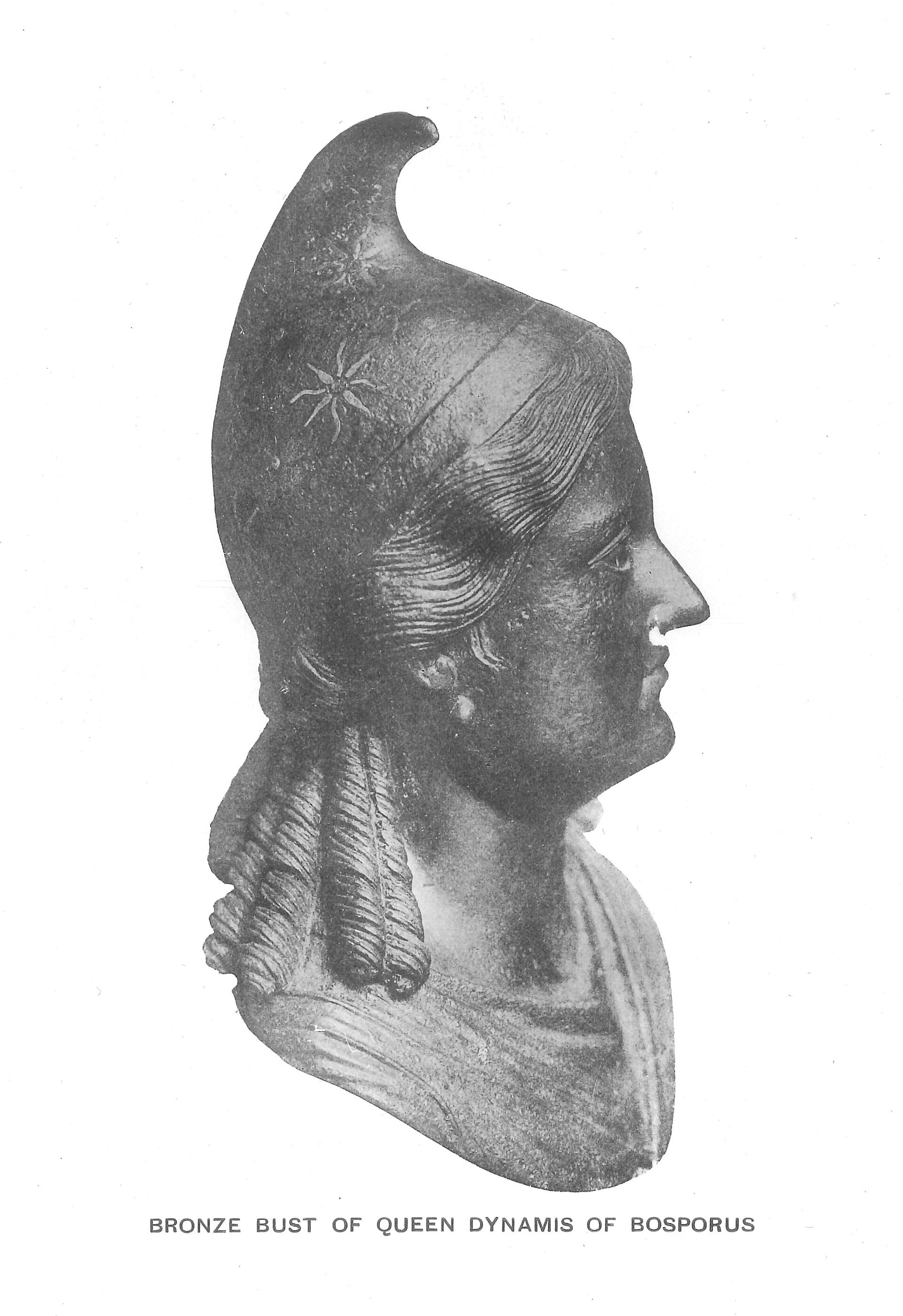 Bronze bust of Queen Dynamis of the Bosporus, material of Northern Black Sea antiquity; State Hermitage Museum.
Interested in Ancient Rome beyond reading? Join Legio X Fretensis or explore our reenactment directions.


