National Archaeological Museum of Naples
The National Archaeological Museum of Naples (MANN) is one of the key museums for studying the material culture of ancient Campania and the Roman Mediterranean. Its importance rests on two large cores: the Farnese collection, connected with Roman collecting and large marble sculpture, and the finds from the Vesuvian towns - Pompeii, Herculaneum, Stabiae and neighbouring villas, destroyed or sealed by the eruption of AD 79.
For reconstruction, MANN is especially important because it joins a museum collection with closed archaeological contexts. Frescoes, mosaics, bronzes, vessels, tools, cult objects, ornaments, inscriptions and sculpture show not only the ideal image of antiquity, but also objects found in houses, workshops, baths, sanctuaries and public spaces. In one museum it is possible to compare ceremonial marble, an everyday object and the decoration of a real interior.
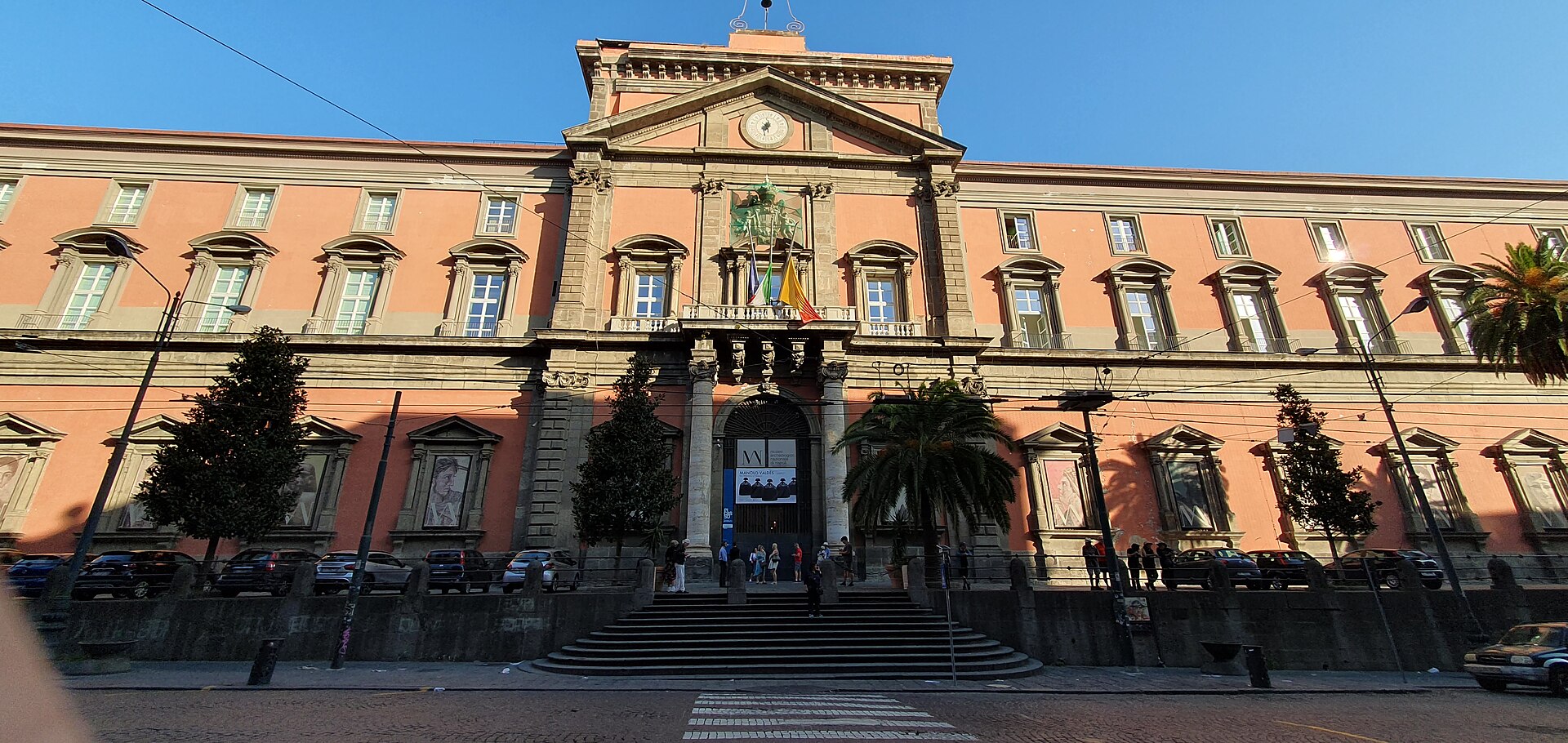 The facade of the National Archaeological Museum of Naples (MANN), one of the key museums for ancient Campania.
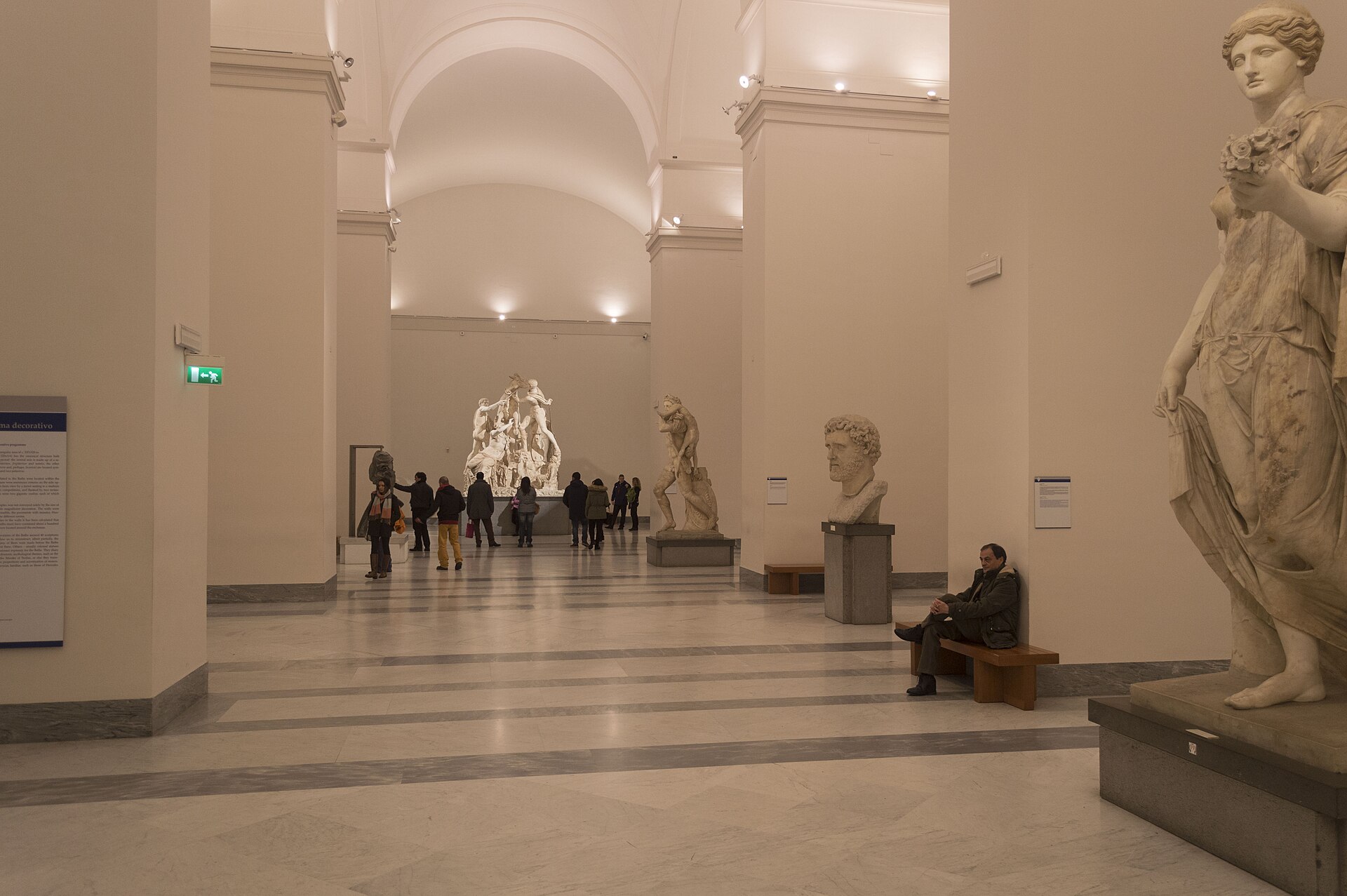 A MANN gallery with large ancient sculpture; the Farnese Bull group is visible in the background.
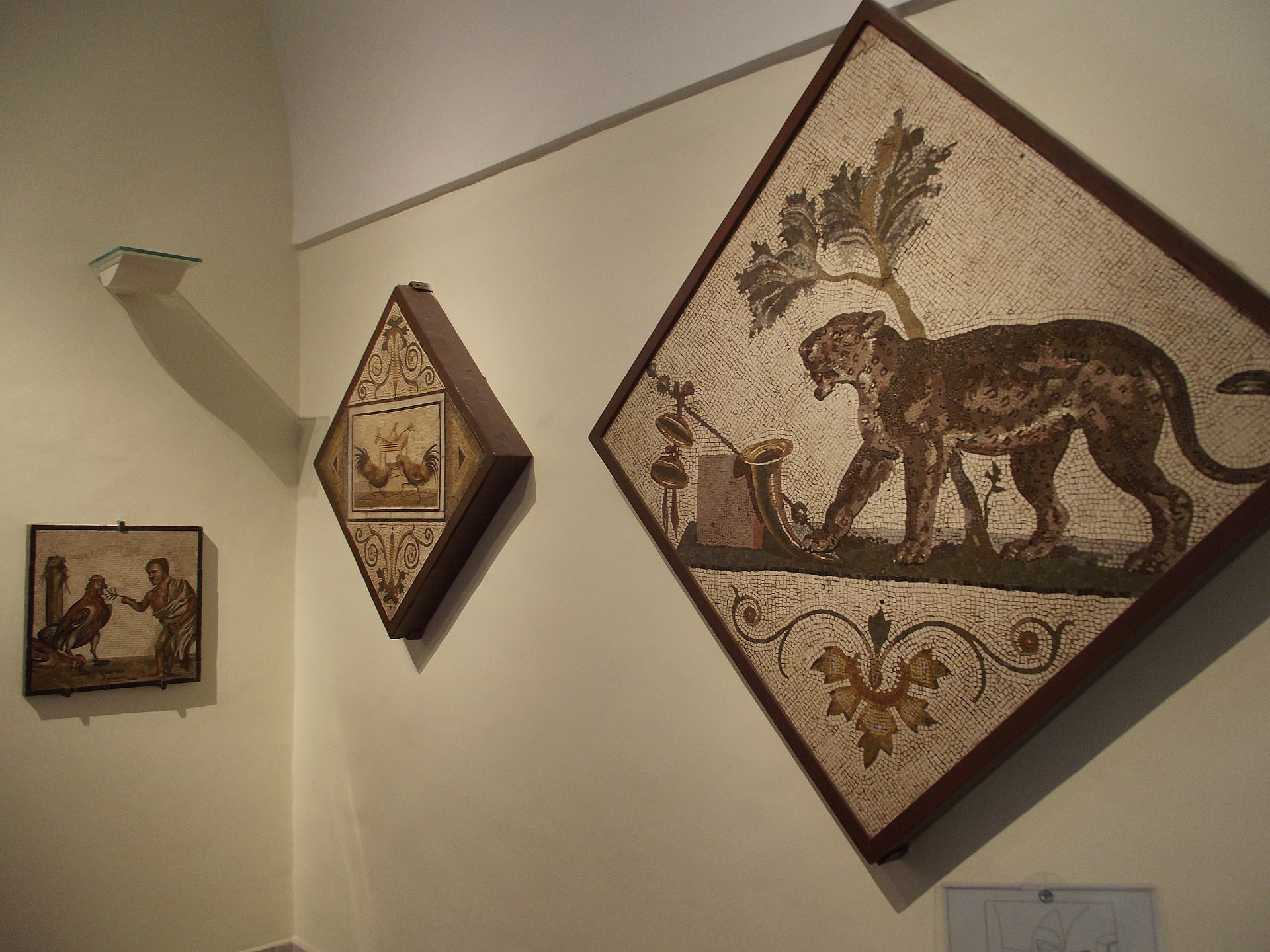 A gallery of mosaics from Pompeii and other Vesuvian towns in the National Archaeological Museum of Naples.
The Museum, Vesuvius and the Farnese Collection
The strength of MANN lies in the combination of two different histories. The first is connected with the Farnese collection: marble statues, portraits, gems and ancient works that became part of aristocratic and royal collecting in the early modern period. This material shows how ancient sculpture survived antiquity, was found, restored, moved and placed in new palace and museum contexts. It is especially important for understanding the ancient image as a language of power, memory and collecting prestige.
The second history is connected with the Vesuvian excavations. Pompeii, Herculaneum and Stabiae provide objects that often have a clearer context: a house, room, workshop, bath complex, shop or funerary space. Here the museum becomes not only a collection of attractive objects, but also an archive of environments. For historians and reenactors this is fundamental: a fresco, mosaic or bronze vessel is valuable not in isolation, but together with its place, function and neighbouring finds.
Vesuvian Material
The finds from the Vesuvian towns offer a rare combination of preservation and dating. The eruption of AD 79 did not mechanically and completely freeze life, but it created a dense archaeological cross-section in which interiors, kitchen vessels, lamps, bronze tableware, medical and craft tools, decorative objects, figurines, frescoes and mosaics can be studied. This material is especially important where written sources speak generally and the object environment clarifies actual practice.
For reconstruction, it is important to distinguish house, shop, villa, sanctuary and public space. The same type of object could have a different status depending on place: a vessel in a kitchen, a vessel in a triclinium and a vessel in a modern museum case have to be read differently. MANN helps keep this difference visible because many exhibits are linked with specific excavations and the Vesuvian horizon.
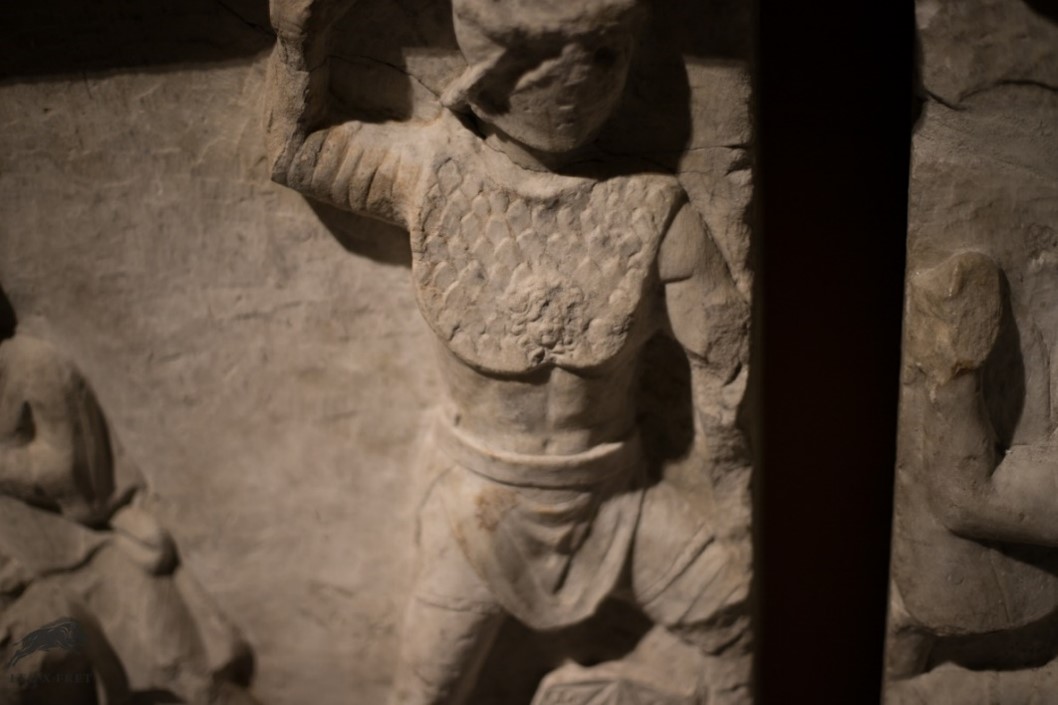 Relief with gladiators. Marble, AD 20-50; found near the Stabian Gate at Pompeii, National Archaeological Museum of Naples.
 Wall painting from the House of the Surgeon, Pompeii. National Archaeological Museum, Naples, inv. 9018. 50–79 CE.
 Roman round bread. National Archaeological Museum of Naples. 1st century AD
The Farnese Collection
The Farnese collection is the other side of the museum. It does not document one archaeological layer so much as it shows the life of antiquity within the history of collecting. Its marbles come from different sources, including Roman finds, older collections and palace contexts. At MANN they are important as one of the great corpora of ancient sculpture, but they also require careful reading: some statues were restored, some received a new display role, and some show Roman reception of Greek artistic types.
The Farnese Bull, the Farnese Hercules, portraits, busts and decorative groups are useful for studying scale, ideal anatomy, drapery, attributes and the political language of Roman elites. But they cannot be transferred directly to everyday dress or ordinary scenes. They work better as material for ideal imagery, prestige, mythological programmes and the later history of ancient art.
Mosaics and Frescoes
The mosaics and frescoes at MANN are especially important because they return antiquity to the space of the house. Pompeian mosaics show not only subject matter, but also taste, technique, the status of a room and the owner's relation to Greek culture. Large emblemata could function as the semantic centre of a room, while smaller images of animals, food, theatrical masks or mythological scenes connected the interior with daily viewing and festive culture.
Frescoes from the Vesuvian area provide material for Roman wall painting from the first century BC to the first century AD. They have to be read as part of a decorative system: colour, architectural illusion, panel, frame, figure and position on the wall worked together. Early excavations often cut paintings out of walls and turned them into museum pictures, so the modern display has to be supplemented by an understanding of the original interior.
Main Materials
- large marble sculpture of the Farnese collection: statues, groups, portraits and Roman versions of Greek artistic types;
- Vesuvian frescoes and mosaics from houses, villas and public spaces in Pompeii, Herculaneum and Stabiae;
- bronzes, lamps, vessels, furniture fittings, tools, ornaments and objects of the everyday environment;
- gladiatorial and military equipment from Pompeii, important for checking real forms of protection, decoration and technology;
- epigraphy, coins and small finds that connect an object with name, status, economy and local practice;
- museum displays as evidence for the history of restoration, collecting and modern presentation of antiquity.
The special value of MANN is the possibility of seeing high style and domestic context side by side. A marble group shows the language of elites, a fresco shows an interior, a helmet or vessel shows technology, and an object from the closed Vesuvian horizon helps hold date and setting together.
Context and Limits
MANN should not be used as a simple storehouse of illustrations. The museum contains several different kinds of source, and each requires its own method of reading. Farnese sculpture often speaks about collecting, ideal imagery and restoration; Vesuvian objects are more often connected with a specific archaeological horizon; frescoes and mosaics require understanding of the original room; small finds are useful only when date, material and function are known.
For reconstruction it is safer to begin with contextual finds and then compare them with ceremonial sculpture and museum analogies. If an object comes from Pompeii or Herculaneum, the date AD 79 helps, but it does not remove questions about the status of the house, the function of the room and the social setting of the owner. If an object belongs to an old collection, provenance, restorations and the possibility that its modern appearance is partly a product of museum history have to be checked separately.
Related Topics
Sources
- MANN: museum history
- MANN: Farnese Collection
- MANN: Mosaics
- MANN: Frescoes
- MANN: Epigraphic Collection
- Wikimedia Commons: Museo archeologico nazionale (Naples)


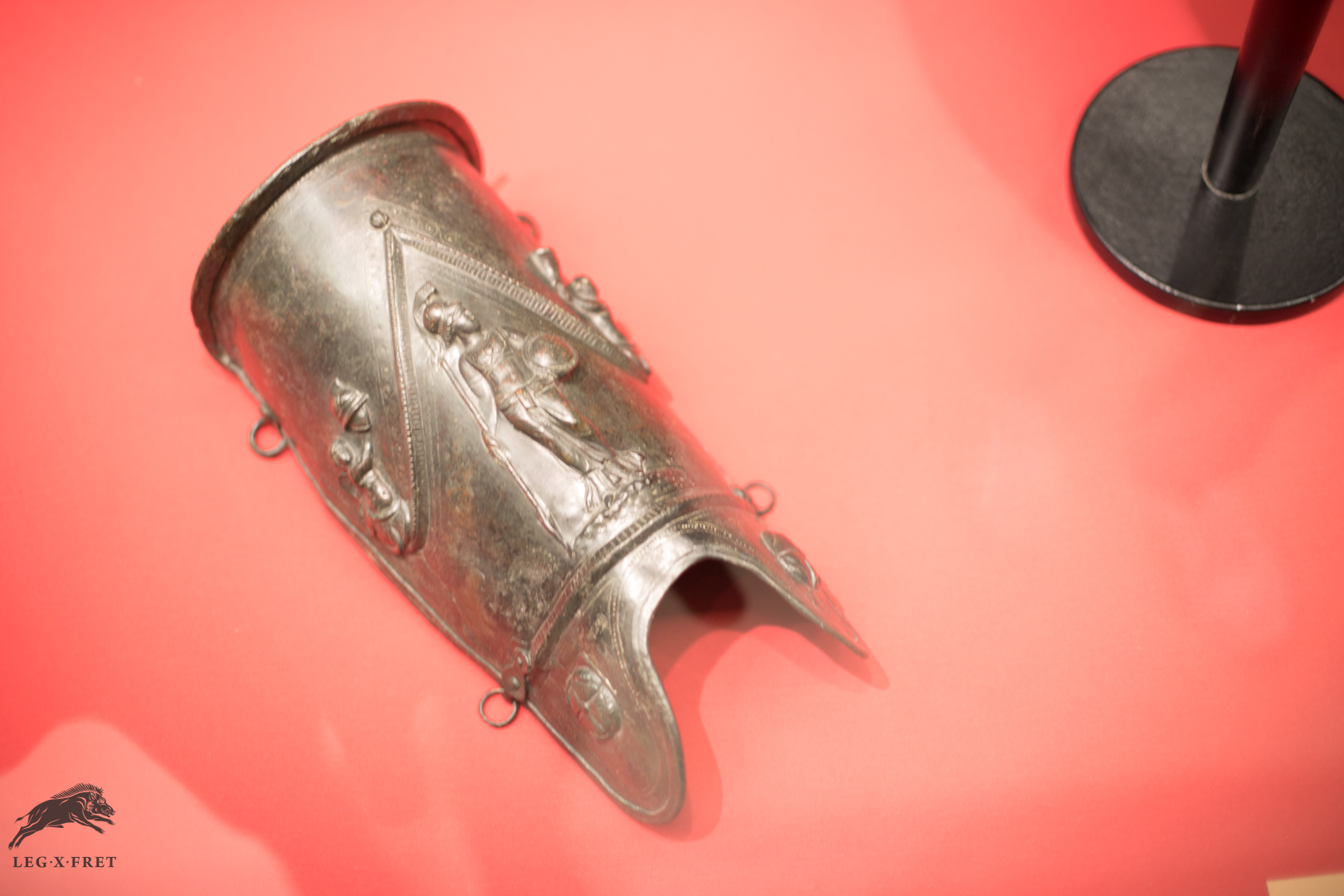 Short gladiator greave. Bronze,Pompeii,portico of theaters,National Archaeological Museum,Naples. First half of the 1st century AD
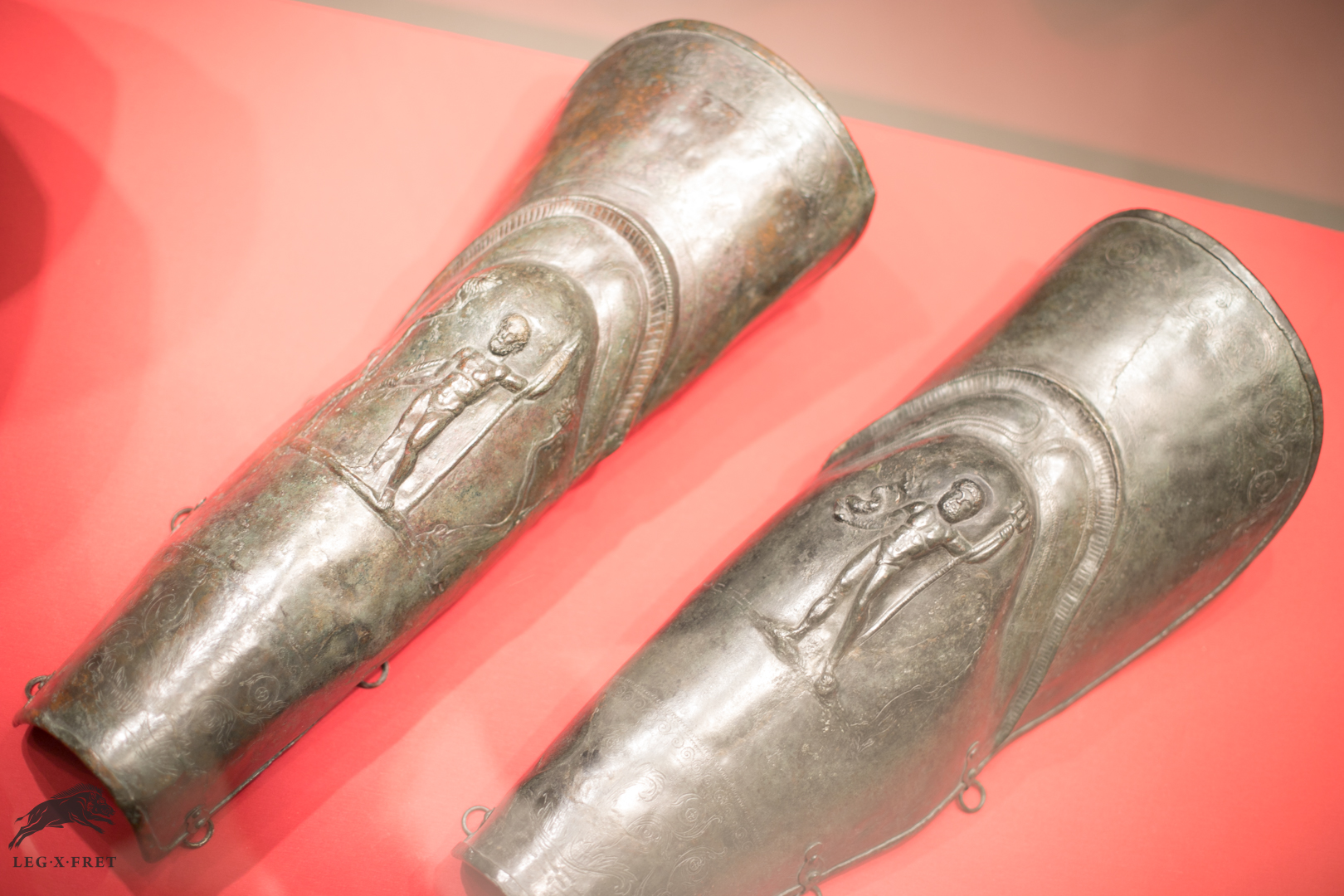 Long gladiator greaves. Bronze,Pompeii,portico of theaters,National Archaeological Museum,Naples. First half of the 1st century AD
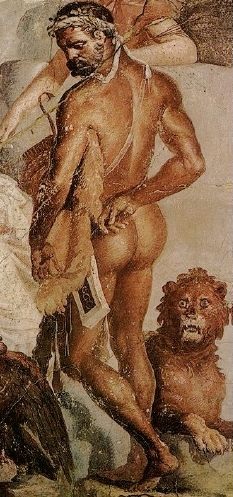 Detail from the fresco "Allegories of Hercules". Fresco from Herculaneum,National Archaeological Museum,Naples. 1st century AD
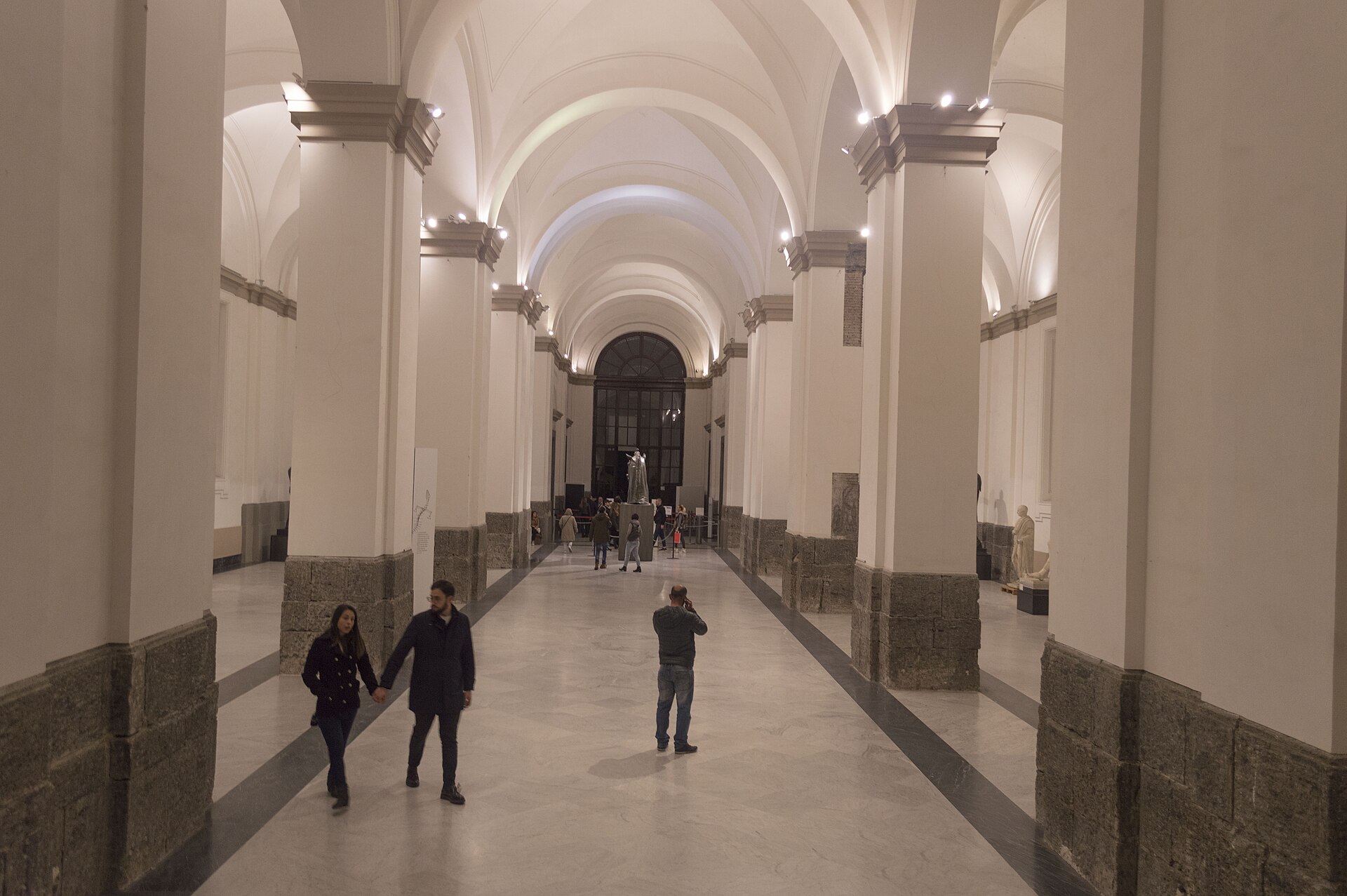 One of the large galleries of MANN: the museum architecture sets the scale for the display of ancient sculpture.
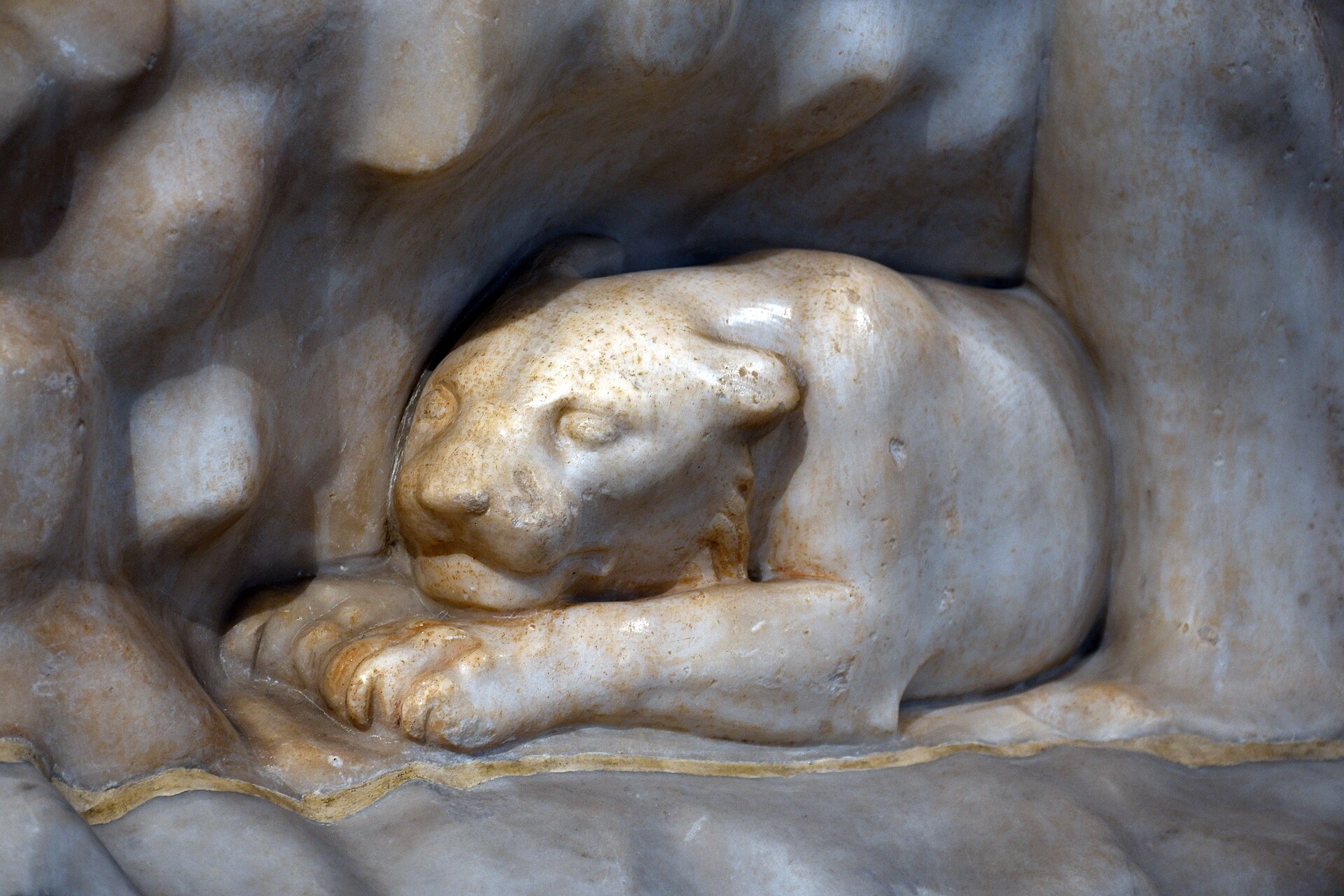 Detail of the Farnese Bull, a Roman marble group from the Baths of Caracalla; MANN, Naples.
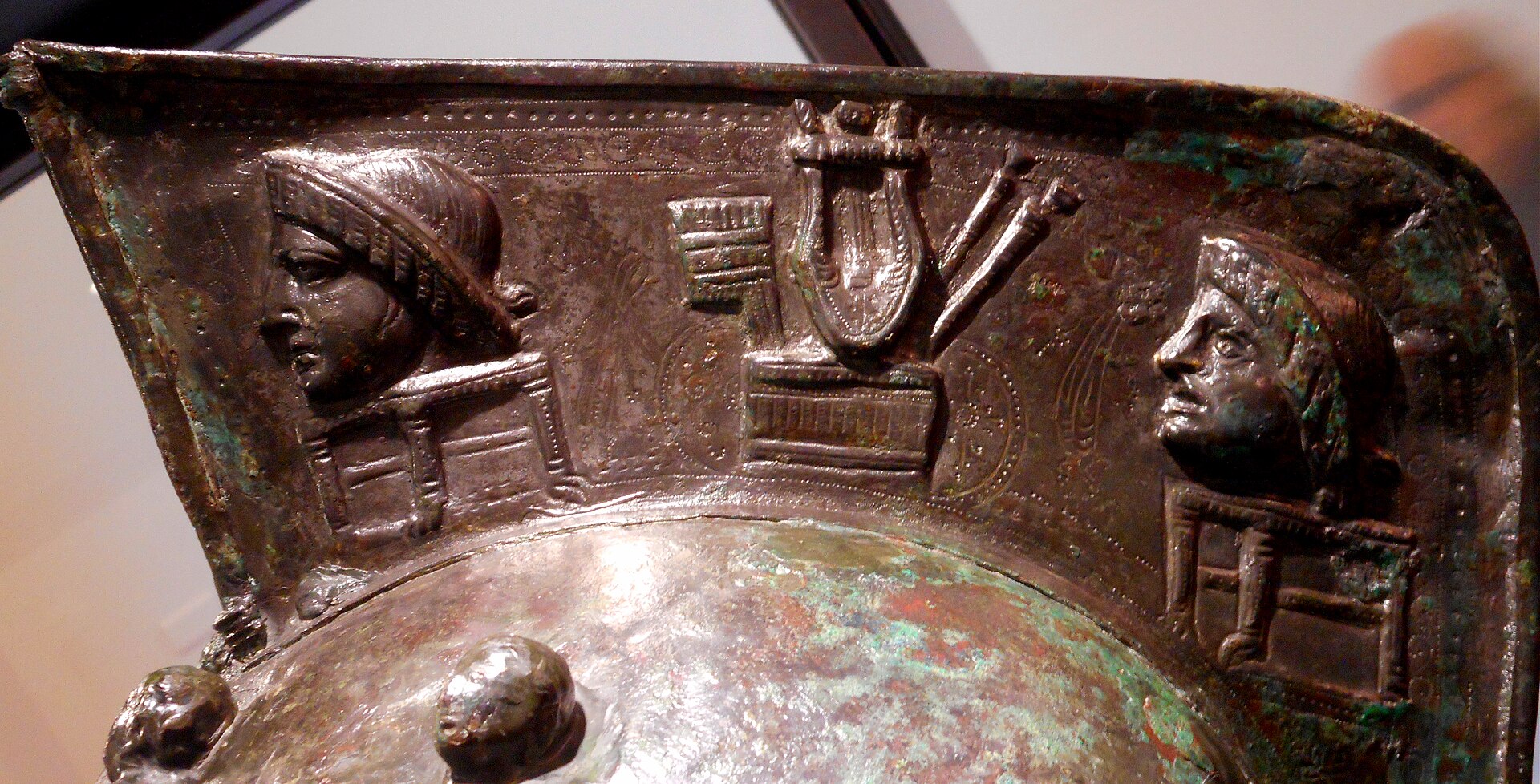 Detail of a bronze murmillo helmet from Pompeii, found in the portico area later associated with the gladiators' barracks; MANN.
Interested in Ancient Rome beyond reading? Join Legio X Fretensis or explore our reenactment directions.


