Oplontis
Oplontis at Torre Annunziata is important as a complex of villas buried by the eruption of Vesuvius in AD 79. It complements Pompeii and Herculaneum with evidence for elite architecture, wall painting, garden spaces, service areas and objects preserved in one catastrophe-dated context.
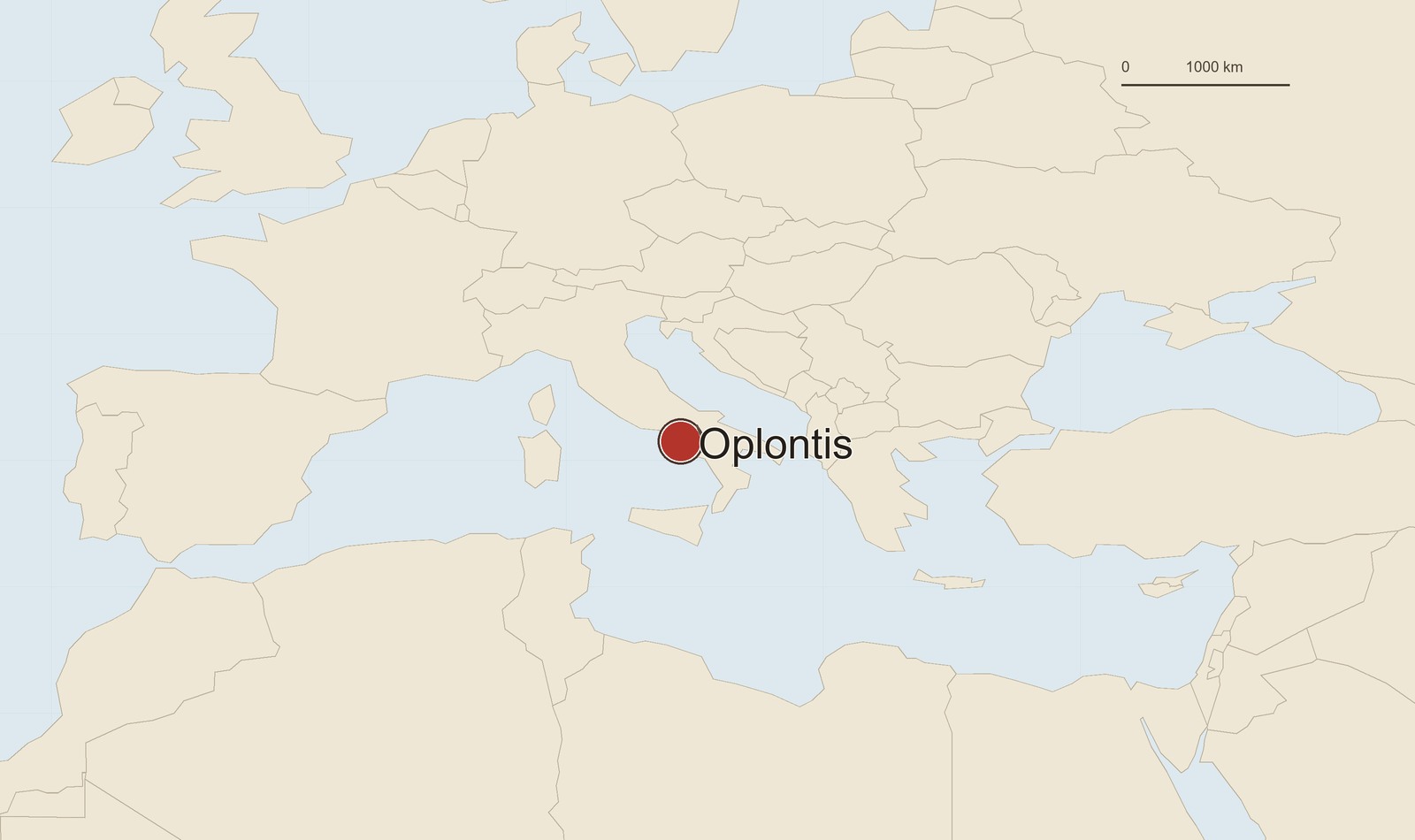 Location map: Oplontis / Torre Annunziata. The marker shows the ancient site or main archaeological complex.
Archaeological complex
The main monument is Villa A, traditionally associated with Poppaea Sabina, though that attribution requires caution. The complex offers a rich architectural sequence: reception rooms, peristyles, gardens, pool, kitchens and service areas. Nearby Villa B shows another world of storage, trade, amphorae and people caught by the catastrophe.
The excavations of Oplontis provide a rare view of an elite villa sealed by the AD 79 catastrophe: peristyles, reception rooms, pool, service zones and painted surfaces can be read as one residential complex. Excavation photographs help separate the architectural sequence from the museum-like impression of individual frescoes.
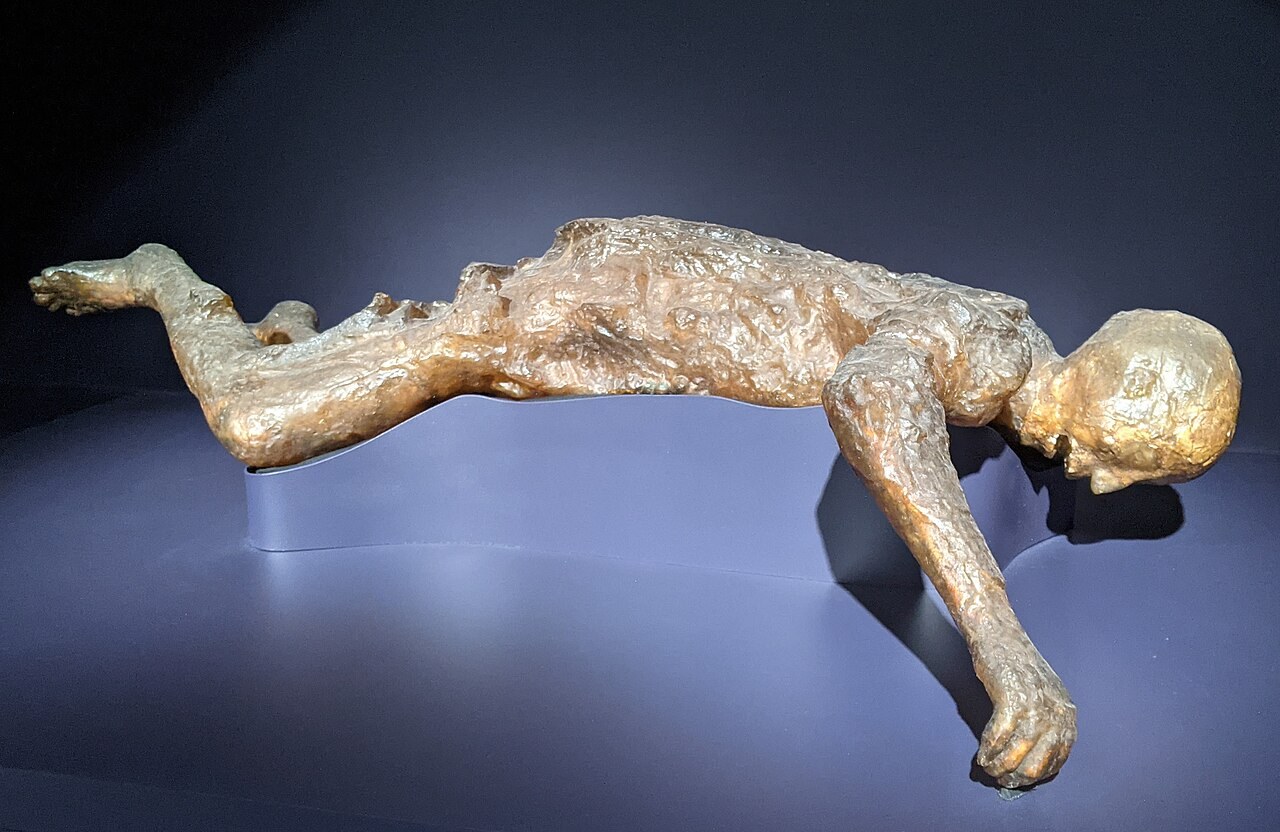 Oplontis: The Lady of Oplontis; general view or excavated sector, Roman period, AD 79 eruption horizon.
Finds and material setting
Oplontis is especially important for Second Style wall painting, decorative programmes, marble fittings, amphorae, coins, kitchen equipment and traces of room use. For reconstructing domestic life, frescoes should not be separated from architecture: colour, scale, light, garden space and movement through the villa worked together.
- architecture of Villa A and Complex B;
- wall paintings, peristyles, pool, kitchens and service rooms;
- objects and human remains from the AD 79 catastrophe horizon;
- relationship between elite villa and coastal service zone.
Interpretation and limits
Oplontis represents not an ordinary house but a wealthy villa and a neighbouring service-commercial complex. Its evidence cannot be transferred automatically to most Campanian households, but it is indispensable for elite space, service and visual culture in the late Republic and early Empire.
Related topics
Literature and sources
- John R. Clarke, Nayla K. Muntasser (eds.). Oplontis: Villa A at Torre Annunziata, Italy. New York, 2014.
- The Oplontis Project: excavation and publication material.
- Archaeological Park of Pompeii: Oplontis.


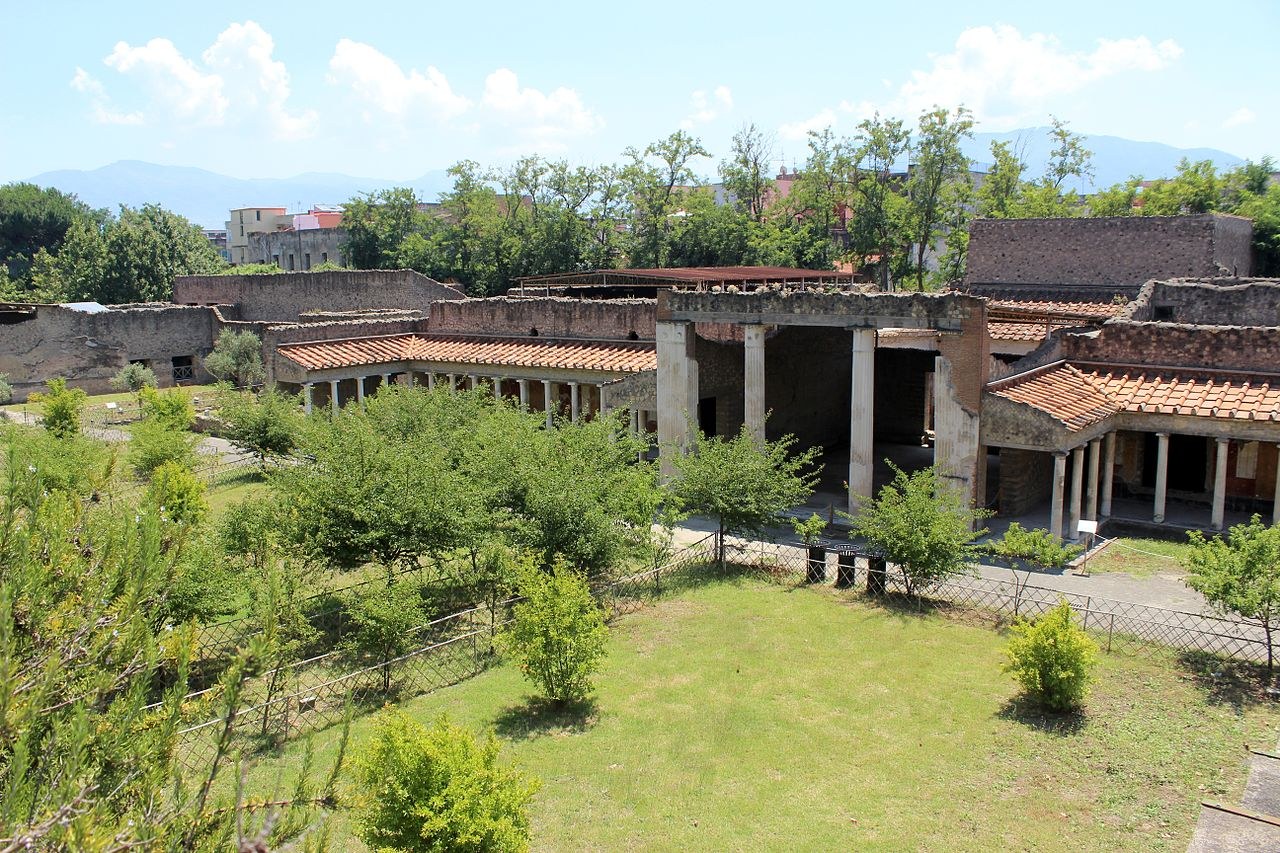 Oplontis: Jardín Villa Poppaea 04; visual evidence for the site, Roman period, AD 79 eruption horizon.
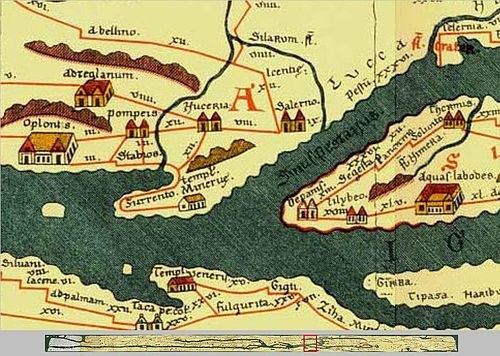 Oplontis: TabulaNuceria; visual evidence for the site, Roman period, AD 79 eruption horizon.
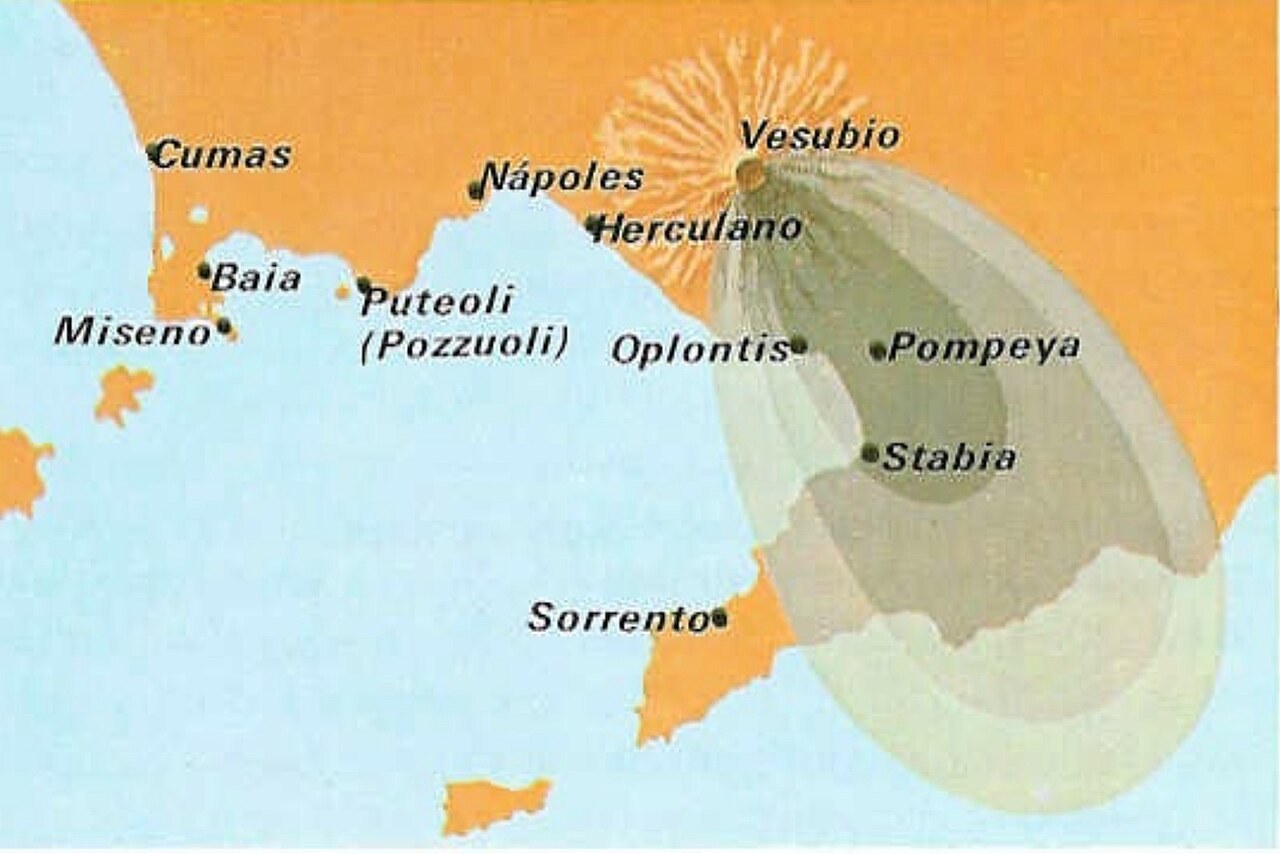 Oplontis: Pompeya, el Vesuvio y su alcance; visual evidence for the site, Roman period, AD 79 eruption horizon.
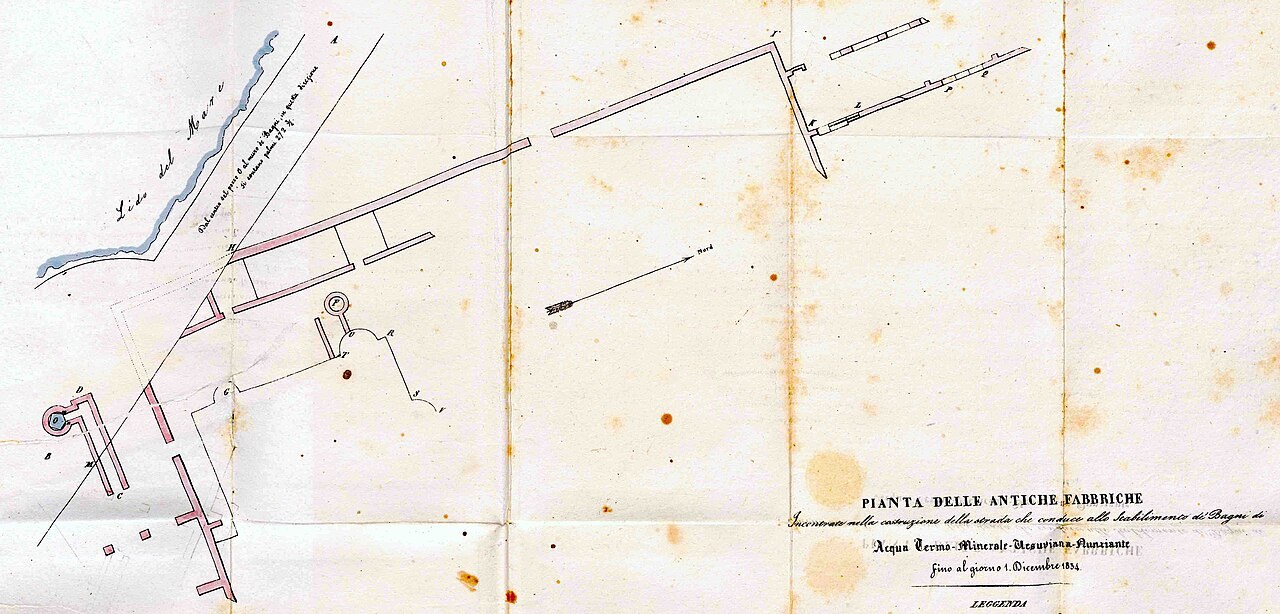 Oplontis: Baths1; visual evidence for the site, Roman period, AD 79 eruption horizon.
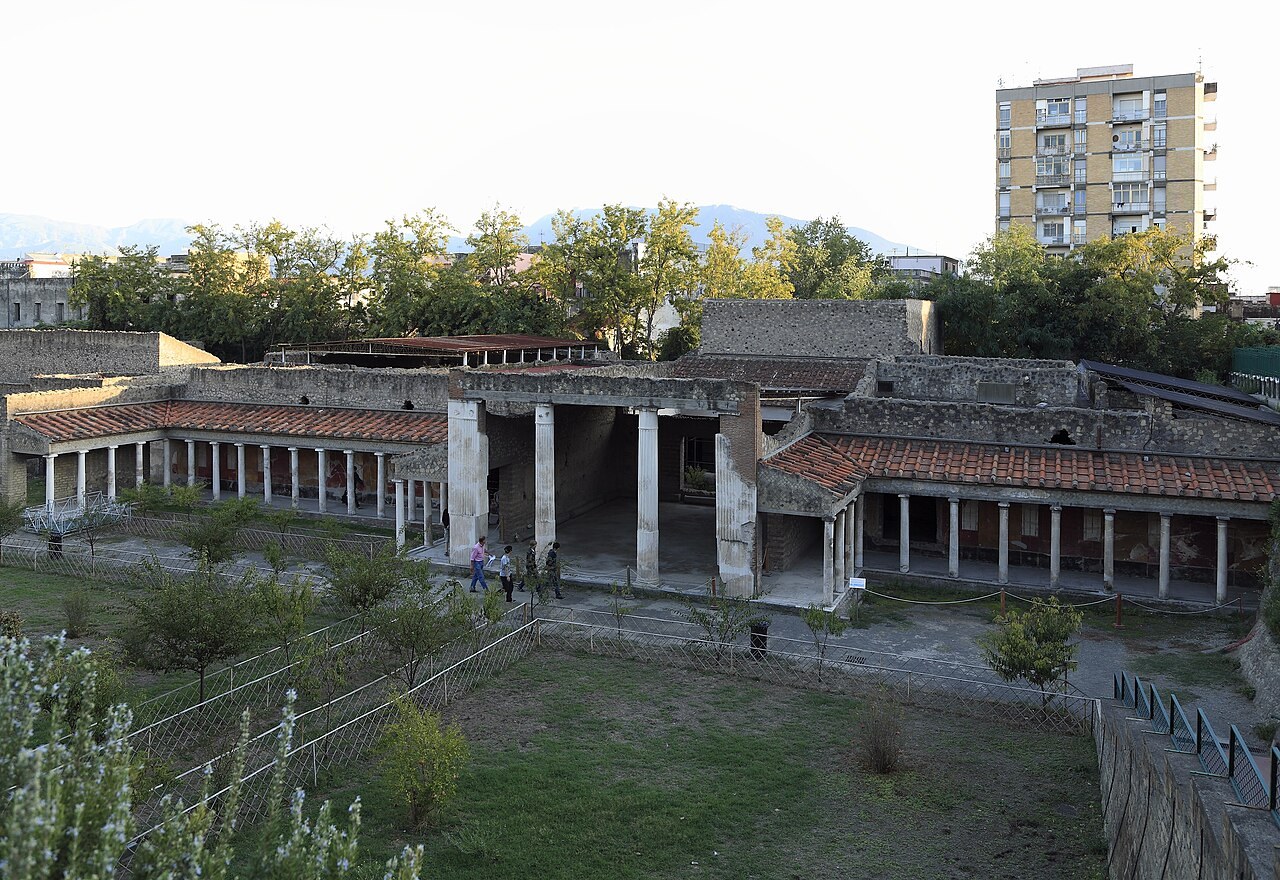 Oplontis: I08 217 Oplontis; visual evidence for the site, Roman period, AD 79 eruption horizon.
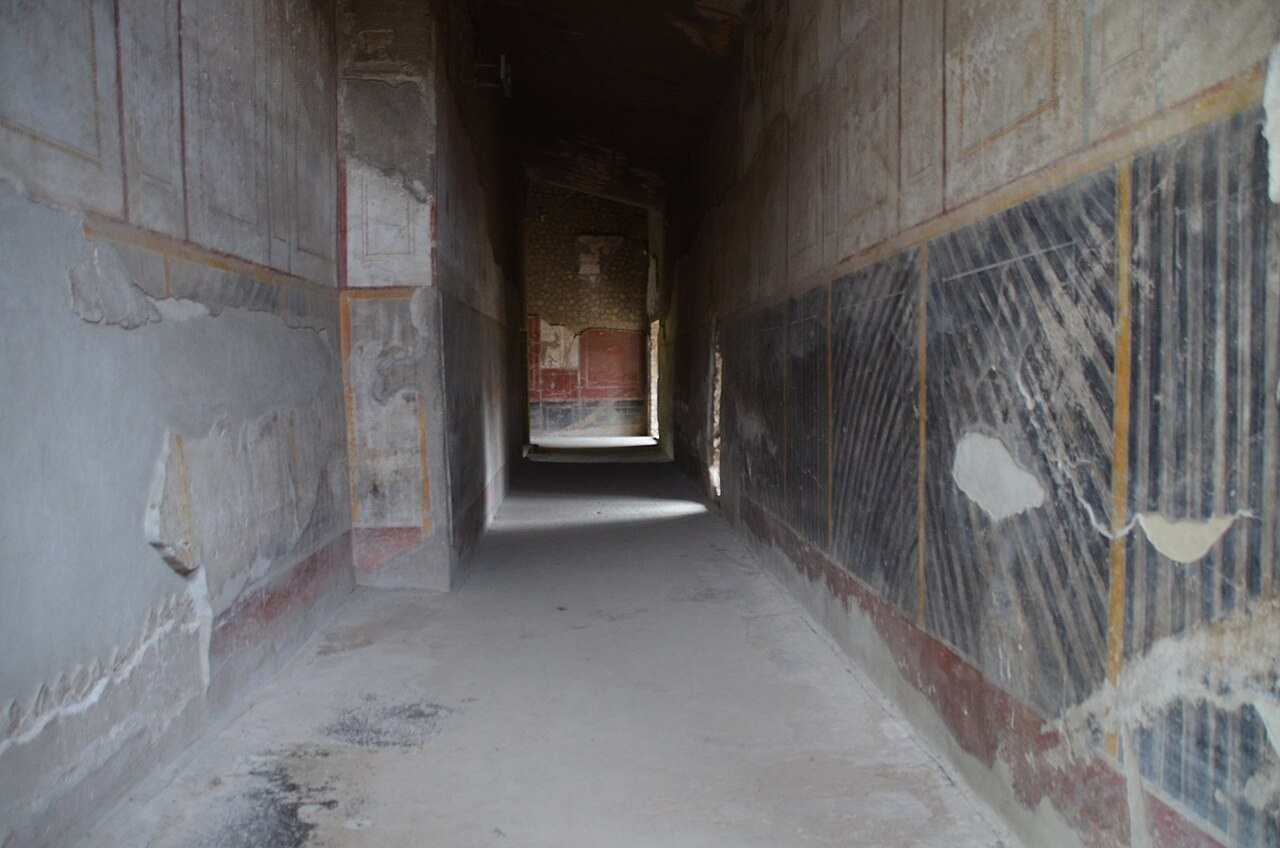 Oplontis: Oplontis (also known as Villa Poppaea and Oplontis Villa A), Italy - 48725872307; visual evidence for the site, Roman period, AD 79 eruption horizon.
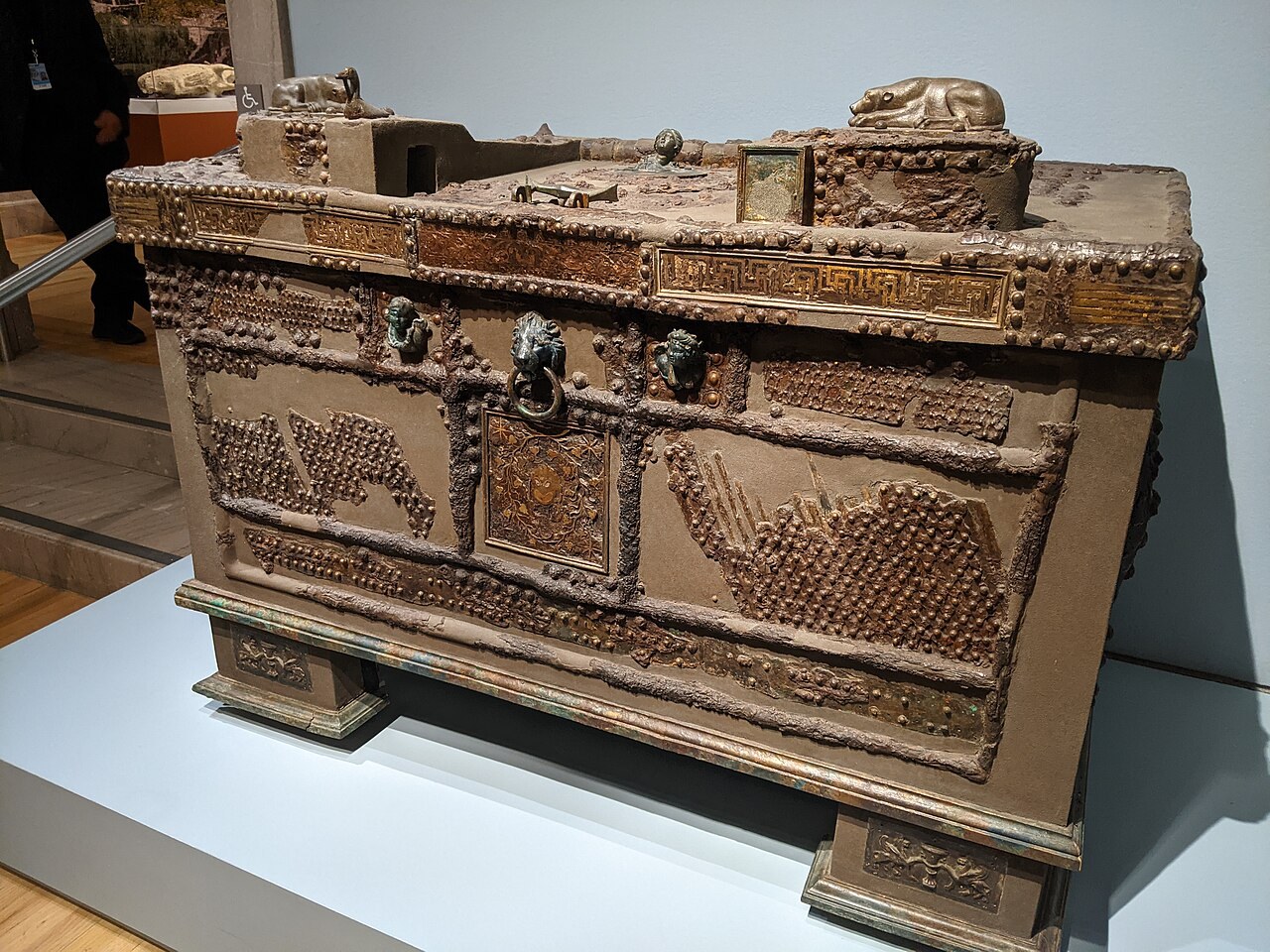 Oplontis: Arca (strongbox) with applied decoration; archaeological view, find or museum context connected with the site, Roman period or local archaeological context.
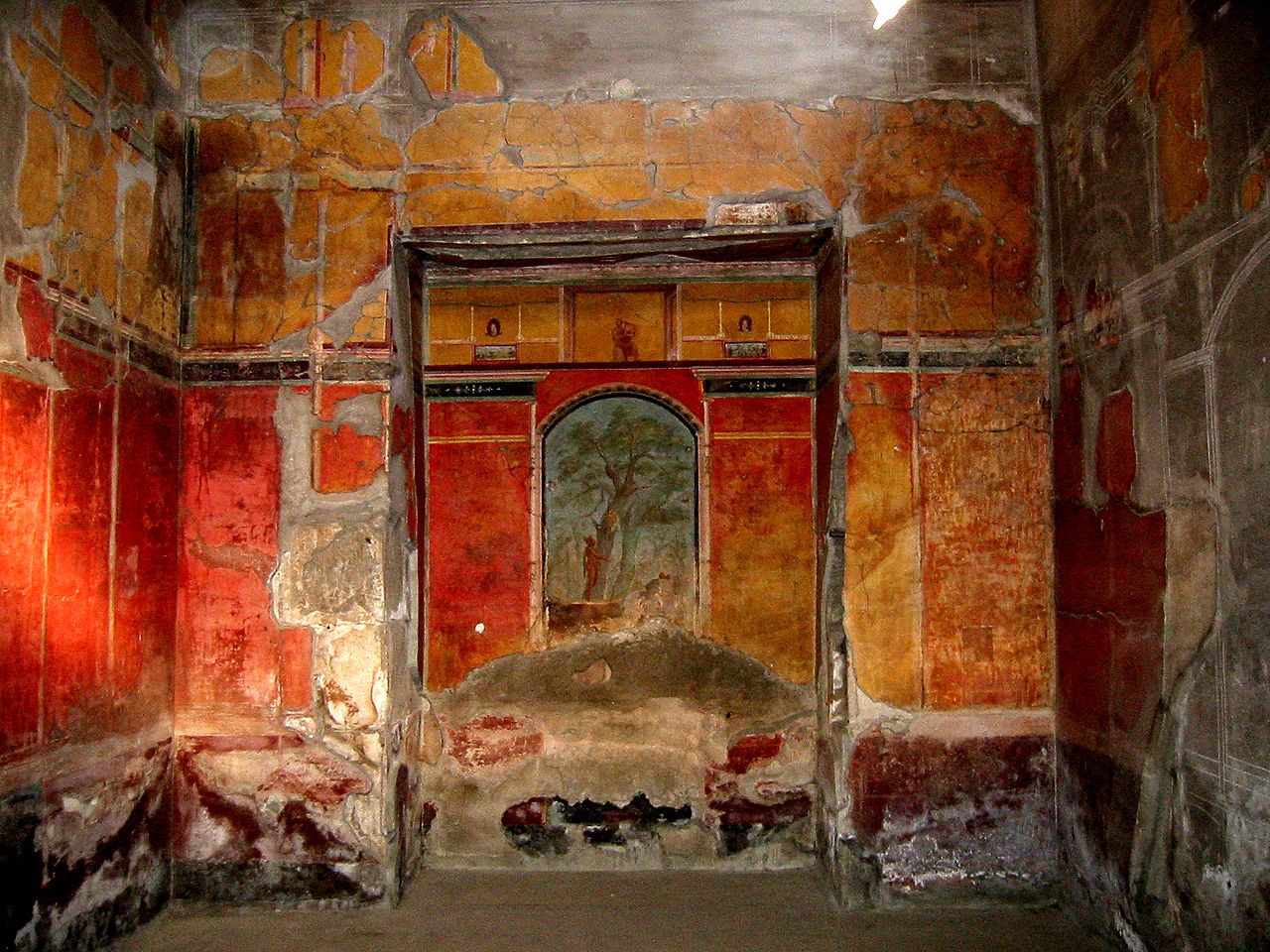 Oplontis: Oplontis Caldarium room8; material-culture object or museum find connected with the site, Roman period or local archaeological context.
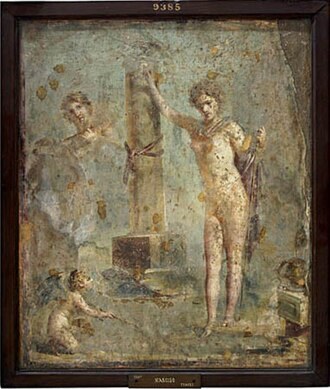 Oplontis: Narcissus and echo; visual evidence for the site, Roman period, AD 79 eruption horizon.
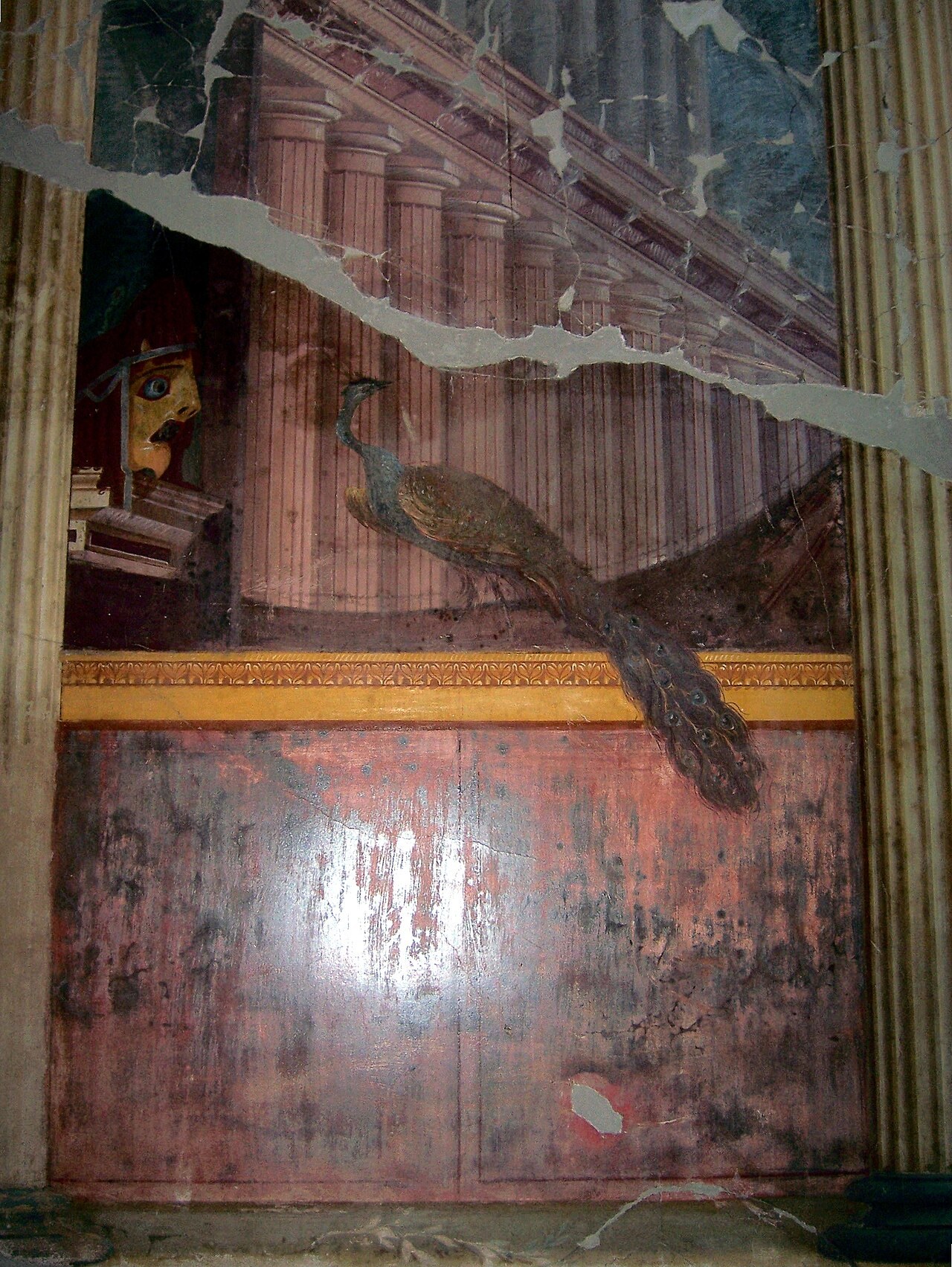 Oplontis: Fresco with a mask and peacock from the Villa Poppaea, Oplontis; material-culture object or museum find connected with the site, Roman period or local archaeological context.
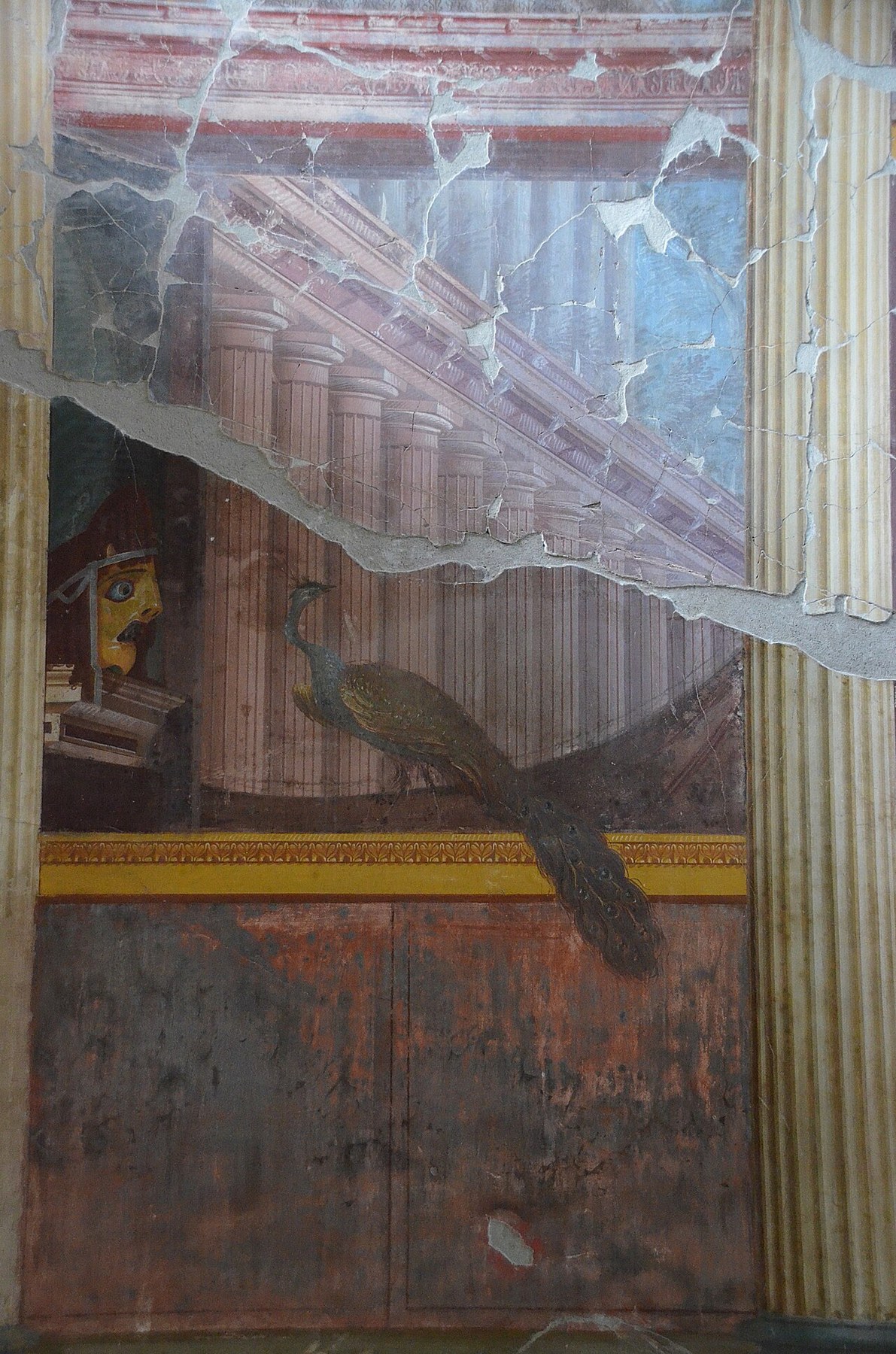 Oplontis: Fresco in the Second Style with a theatre mask and peacock, east wall of the large oecu...; material-culture object or museum find connected with the site, Roman period or local archaeological context.
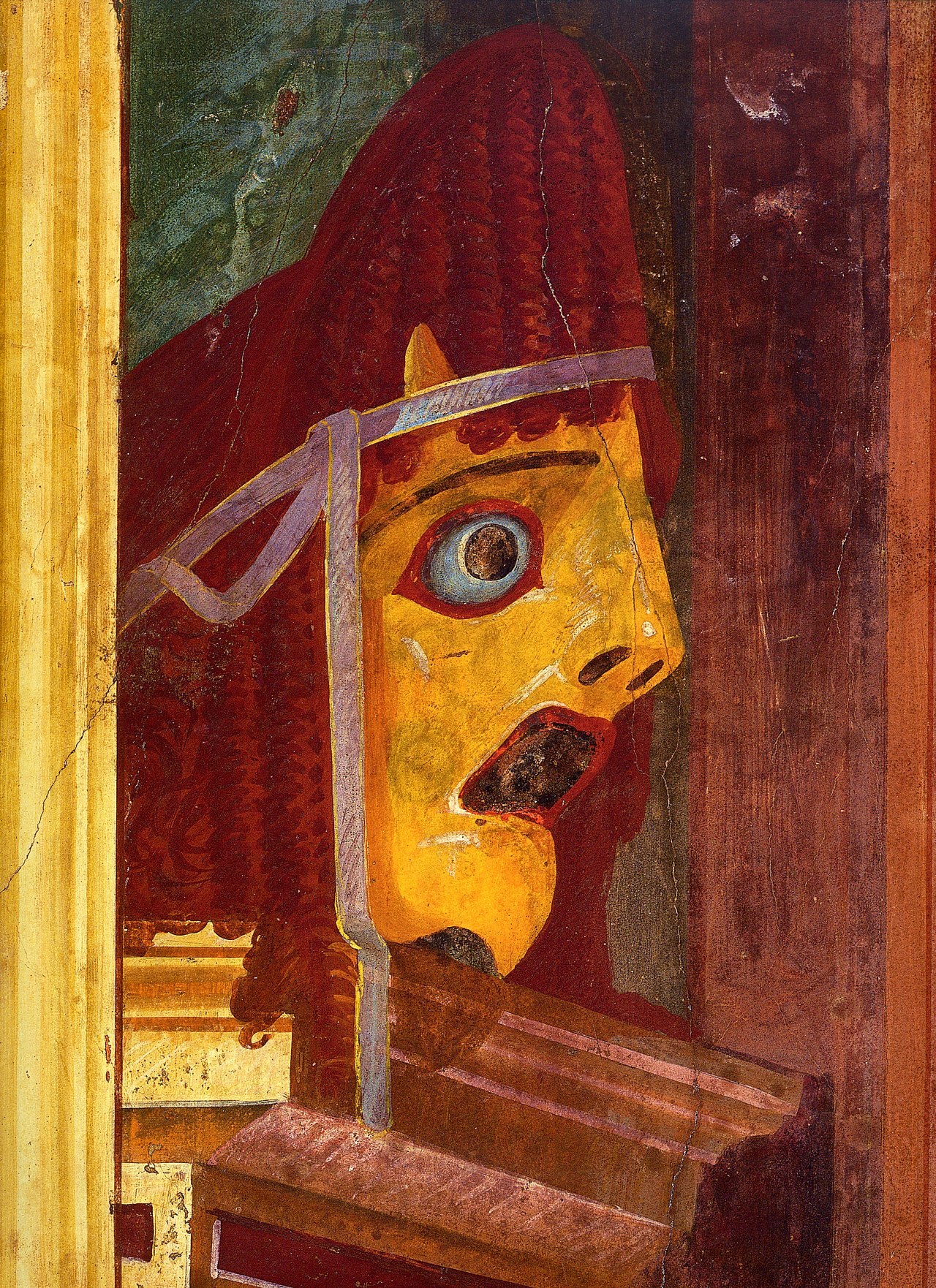 Oplontis: Oplontis - Tragic Mask; material-culture object or museum find connected with the site, Roman period or local archaeological context.
Interested in Ancient Rome beyond reading? Join Legio X Fretensis or explore our reenactment directions.


